
In this guide
What is vitamin K1?
Vitamin K1, or phylloquinone, is the predominant vitamin K form in green plants. It supplies a cofactor for gamma-glutamyl carboxylase, which modifies specific proteins so they can bind calcium. This reaction is essential for normal coagulation proteins and also affects osteocalcin and matrix Gla protein. [1]
That mechanism establishes nutrient necessity, but it does not prove that a K1 supplement prevents fractures or cardiovascular disease. K1 and the menaquinones grouped as K2 differ in sources and kinetics, and studies of one form do not automatically support another.
Typical Vitamin K1 Protocols
| Purpose or source | Form and amount each time | Frequency | Total per day | Duration |
|---|---|---|---|---|
| U.S. AI, adult men 19+ | Total vitamin K | Daily | 120 mcg | Ongoing reference intake |
| U.S. AI, adult women 19+, including pregnancy and lactation | Total vitamin K | Daily | 90 mcg | Ongoing reference intake |
| Binkley bone trial K1 arm | Phylloquinone, 1 mg | Once daily | 1 mg (1,000 mcg) | 12 months |
| Cointervention in every Binkley arm | Calcium 315 mg plus vitamin D3 200 IU | Twice daily | Calcium 630 mg + D3 400 IU | Two-month lead-in and 12-month trial |
The 1 mg K1 row is about eleven times the women’s AI and belongs to a blinded bone trial, not a public-health intake target. The 381 participants were healthy, nonosteoporotic postmenopausal North American women; all received calcium and D3. [2]
Where these amounts come from
The current NIH ODS monograph supplies the adult AIs, food sources, no-UL rationale, status limits and medication interactions. [1] The exact 1 mg K1 schedule, calcium-D3 cointervention and bone results come from the full primary Binkley report. [2]
No routine K1 treatment or fracture-prevention schedule is inferred from the trial.
Intake, interaction and trial
Each row answers a different question.
One milligram equals 1,000 micrograms; the trial amount is not an AI.
Does vitamin K1 need to be cycled?
No authority defines a general K1 cycle. Irregular intake is especially inappropriate as a casual strategy with warfarin, because sudden changes can destabilize anticoagulation.
What happens when vitamin K1 is stopped?
K1 does not cause withdrawal. Stopping a supplement changes total intake; for a person taking a vitamin K antagonist, that change can alter anticoagulant effect and should be coordinated with the anticoagulation team. A person treating a documented deficiency needs the underlying cause addressed.
Which foods provide vitamin K1?
Kale, collards, spinach, broccoli and other green vegetables are rich in K1. Soybean and canola oils also contribute. Because K1 is fat-soluble, eating vegetables with some dietary fat can improve absorption. Food content and absorption vary, so warfarin care emphasizes a reasonably consistent pattern rather than eliminating nutritious greens. [1]
How do K1 and K2 differ?
Phylloquinone and phytonadione name K1. Menaquinones such as MK-4 and MK-7 belong to K2. All can support vitamin K-dependent carboxylation, but their food sources, side chains, circulating kinetics, studied doses and regulatory uses differ. A positive or negative K2 study should not be relabelled as K1 evidence.
One milligram equals 1,000 micrograms. This matters because K1 bone trials often use milligram amounts while nutrition references use micrograms.
How should vitamin K1 be stored?
Follow the product label and protect it from light. Keep the exact form and concentration with liquid or multi-ingredient records, and store products away from children.
What is vitamin K1 commonly used for?
K1 supports adequate vitamin K intake and normal coagulation. Phytonadione is also used as a medicine in specific deficiency or anticoagulation contexts; a medicine protocol is not interchangeable with an over-the-counter supplement. K1 products are marketed for bone and vascular health, but biomarker changes are more consistent than proven reductions in fractures or cardiovascular events.
What does human evidence show?
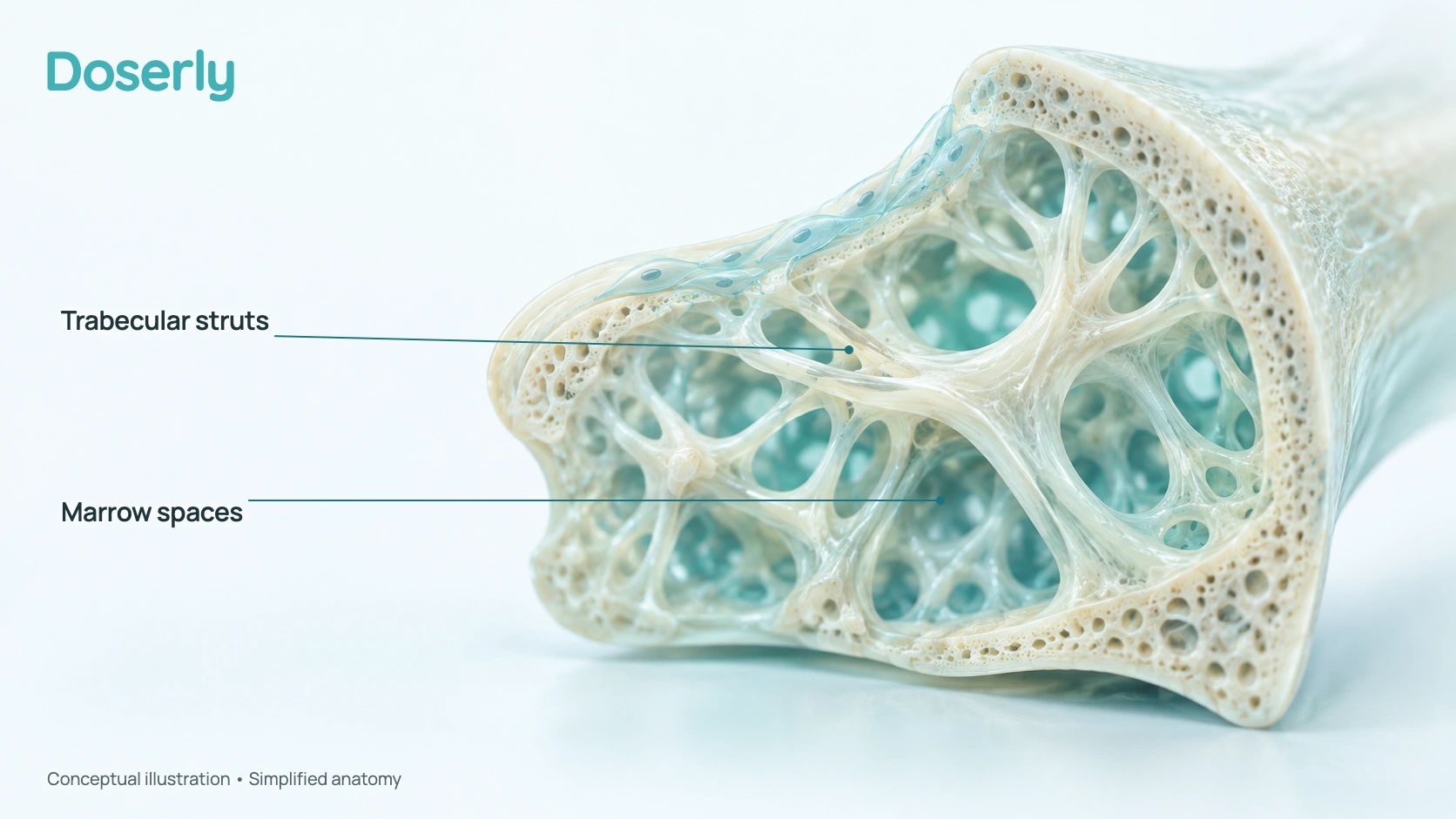
In the Binkley double-blind trial, 381 postmenopausal women received K1 1 mg/day, MK-4 45 mg/day or placebo for 12 months. Every group also received calcium 315 mg plus D3 200 IU twice daily. K1 and MK-4 promptly reduced undercarboxylated osteocalcin, showing biological activity. [2]
Neither form improved lumbar-spine or proximal-femur BMD, bone-turnover markers, femur geometry or calcaneal ultrasound compared with placebo. The study was one year long, included healthy nonosteoporotic women and did not assess fractures as an endpoint. It therefore cannot establish a fracture effect in either direction. [2]

How does vitamin K1 work?
Reduced vitamin K serves as a cofactor for gamma-glutamyl carboxylase. The reaction converts selected glutamate residues to gamma-carboxyglutamate so proteins can bind calcium. Vitamin K is oxidized and recycled through the vitamin K cycle. Warfarin inhibits vitamin K epoxide reductase, which is why changes in vitamin K intake can change its anticoagulant effect. [1]
What are the risks and interactions?
The Food and Nutrition Board did not establish a vitamin K UL because K1 and K2 have low observed toxicity. That absence is not proof that every amount is harmless, and it does not reduce the seriousness of vitamin K antagonist interactions. Synthetic menadione is a distinct compound and should not be treated as ordinary K1. [1]
In the United States, dietary supplements generally lack FDA premarket approval for safety or effectiveness. In Canada, natural health products require a licence and authorized labels carry an NPN or DIN-HM. Medicinal phytonadione has a different use context. [3], [4]
Health Canada’s current Prescription Drug List exempts vitamin K1 or K2 sold for external use and oral products whose maximum recommended daily dose is 0.120 mg or less. Product status outside that exception is a regulatory question, not a vitamin K intake target or a warfarin-management instruction. [5]
Which medicines interact with vitamin K1?
Warfarin, phenprocoumon, acenocoumarol and similar antagonists are the central interaction. Sudden intake decreases can increase anticoagulation and bleeding; increases can reduce anticoagulation and allow clotting. Longer antibiotic courses can reduce vitamin K-producing gut bacteria, while bile acid sequestrants and orlistat can reduce absorption. [1]
What should be monitored?
People using warfarin follow clinician-directed INR monitoring and should report diet or supplement changes. Prothrombin time responds mainly to clinically significant deficiency and is not a sensitive general nutrition marker. Plasma phylloquinone and undercarboxylated proteins each answer narrower questions; no single biomarker captures complete vitamin K status. [1]
What do public communities report?
Online discussions often advise avoiding all greens with warfarin, combine every vitamin K form, or treat a lower undercarboxylated-osteocalcin value as proof of fracture protection. Those shortcuts omit the importance of stable intake and the difference between biomarkers and outcomes. The prior Doserly dossier reviewed community material; this overhaul did not independently recrawl it.
How does vitamin K1 compare with nearby options?
| Guide | What it is | Key difference |
|---|---|---|
| Vitamin K2 | Menaquinone family | Different forms, kinetics and outcome evidence |
| Vitamin D3 | Vitamin D form | Different intake framework and calcium toxicity |
| Calcium | Essential mineral | Intake, absorption and kidney-stone context |
| Vitamin E | Fat-soluble antioxidant nutrient | High-dose bleeding and form-conversion issues |
Common questions about vitamin K1
Is K1 the same as K2?
No. They share vitamin K activity but differ in structure, kinetics and evidence. [1]
Is 1 mg/day an adequate intake?
No. It is the K1 arm of one bone trial. Adult AIs are 120 mcg for men and 90 mcg for women. [1], [2]
Does no UL mean unlimited intake is safe?
No. It reflects low observed toxicity; warfarin interaction remains serious. [1]
Should warfarin users avoid leafy vegetables?
The core advice is a reasonably consistent vitamin K intake and coordinated changes, not blanket removal of nutritious foods. [1]
Did the K1 trial prevent fractures?
It did not measure fractures. The biomarker improved, but BMD and other skeletal measures did not. [2]
Can antibiotics affect vitamin K status?
Long courses can reduce bacterial vitamin K production, especially when intake is low; discuss this in a relevant clinical context. [1]
Glossary
Plain explanations of K1, anticoagulation and bone-evidence terms.
- Phylloquinone
- Vitamin K1, the principal plant vitamin K form.
- Menaquinone
- A vitamin K2 family member such as MK-4 or MK-7.
- Gamma-carboxylation
- Vitamin K-dependent protein modification that enables calcium binding.
- INR
- Standardized clotting measure used to guide vitamin K antagonist therapy.
- Adequate Intake (AI)
- Reference used when evidence is insufficient to establish an RDA.
- Undercarboxylated osteocalcin
- A vitamin K-responsive bone biomarker that is not itself a fracture outcome.
How this guide was researched
This draft uses the current NIH ODS vitamin K monograph, the full primary Binkley bone trial and current FDA and Health Canada regulatory pages. Relevant source text was read on October 9, 2026.
How this guide was made
Research and drafting were AI-assisted. This draft awaits Doserly editorial and independent clinical review. Doserly makes a tracking app and operates Doserly Academy, both promoted here. Read the editorial policy.
Explore the sources
Official nutrient, primary trial and regulatory sources answer different questions.
Showing 5 sources
- 01
Vitamin K - Health Professional Fact Sheet ↗
Official nutrient monograph
Current relevant sections reviewed.
Detail: forms, AIs, foods, status, no-UL rationale, bone evidence and medicine interactions.
- 02
Vitamin K treatment reduces undercarboxylated osteocalcin but does not alter bone turnover, density, or geometry in healthy postmenopausal North American women. ↗
Randomized double-blind trial
Full primary report read.
Detail: 381 women; K1, MK-4 and placebo; exact calcium-D3 cointervention; biomarker, BMD and geometry outcomes.
- 03
Questions and Answers on Dietary Supplements ↗
Regulatory overview
Current official page reviewed.
Detail: U.S. supplement framework.
- 04
Product Licensing ↗
Regulatory overview
Current official page reviewed.
Detail: Canadian licensing and NPN or DIN-HM.
- 05
Prescription Drug List ↗
Canadian ingredient/status qualifiers
Current official row and qualifier reviewed.
Detail: Vitamin K1/K2 is excepted when external or when an oral product has a maximum recommended daily dose of 0.120 mg or less; this qualifier is not an intake target.
No matching sources
Try a different term or show the full list.