
In this guide
What is zenagamtide?
Zenagamtide is an experimental medicine for weight loss and type 2 diabetes, made by Novo Nordisk and formerly called amycretin. It is a single lab-made molecule that acts like two hormones at once, GLP-1 and amylin. It is still in clinical trials and is not approved anywhere.
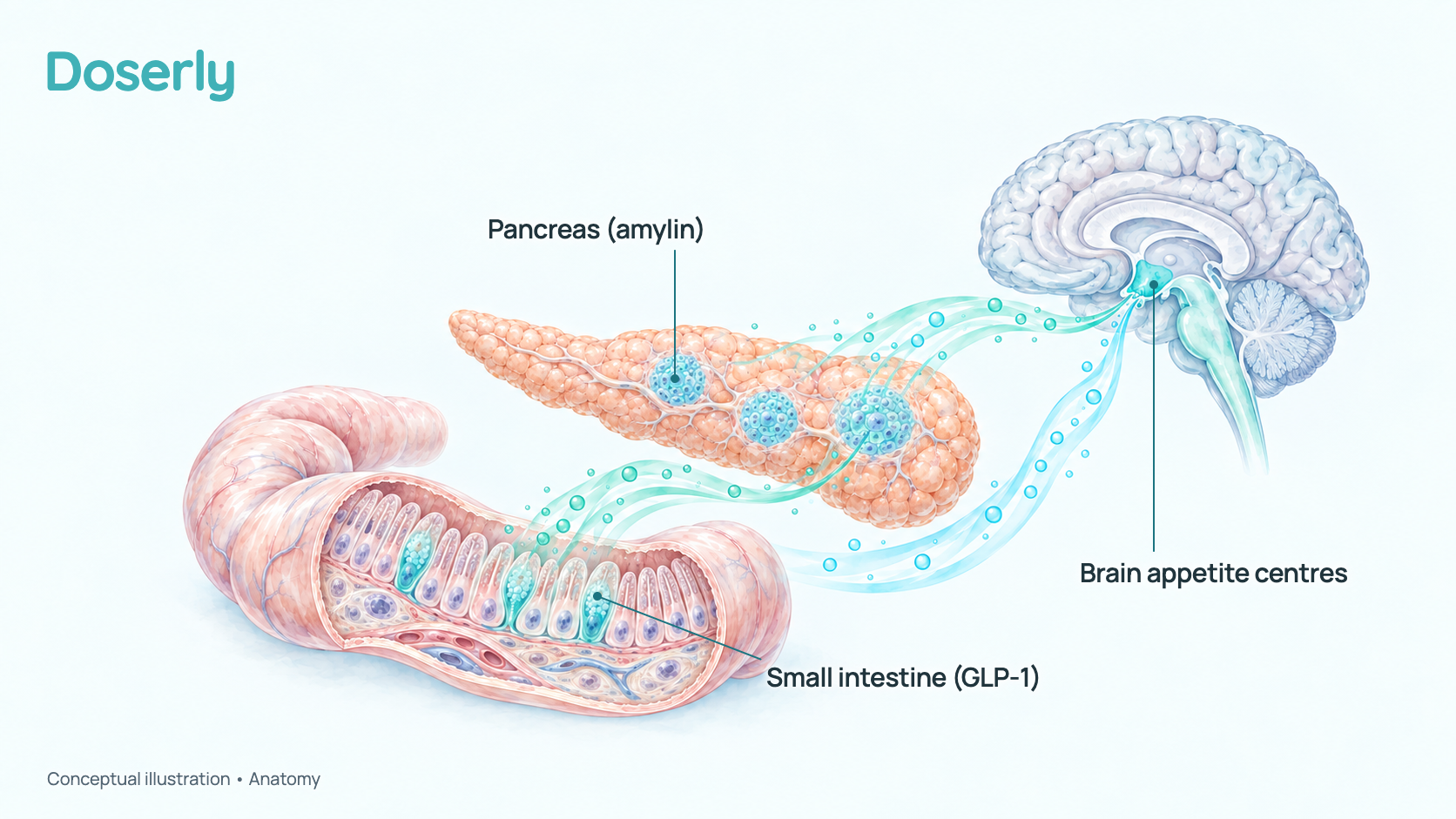
Both hormones help tell the brain that you have eaten enough. GLP-1 comes from the gut after meals, and amylin is released by the pancreas together with insulin. Zenagamtide is a peptide, a chain of 68 amino acids: the first part is closely based on human GLP-1, a short linker joins it to a second, specially designed part that switches on amylin receptors, and a fatty-acid tail keeps it in the blood for days. That is why it is called a unimolecular (one-molecule) drug. [1], [2], [3], [4]
The World Health Organization proposed the name zenagamtide in 2025. Earlier papers use amycretin, and trial records use the code NNC0487-0111. It is being tested as a once-weekly injection and as a once-daily tablet. [1], [5], [6]
The key word is investigational: no regulator has approved it and there is no approved dose. People mostly discuss it because of an early trial in which a small group lost an estimated 24% of their body weight on average in 36 weeks, and because it is often compared with CagriSema, which combines two separate molecules, semaglutide (GLP-1-type) and cagrilintide (amylin-type), given together each week. Large phase 3 trials started in 2026 and will not report until 2028 or later. [7], [8], [9]
Typical Zenagamtide Protocols
| Example | Amount each time | Frequency | Weekly total | Duration |
|---|---|---|---|---|
| Low | 1.25 mg | Once weekly | 1.25 mg | 20 weeks (last 12 at 1.25 mg) Started at 0.3 mg, then 0.6 mg, 4 weeks each; 1.25 mg from week 9. Average weight change −9.7%, versus +2.0% on placebo. |
| Mid | 5 mg | Once weekly | 5 mg | 28 weeks (last 12 at 5 mg) 0.3, 0.6, 1.25 and 2.5 mg for 4 weeks each; 5 mg from week 17. Average weight change −16.2%, versus +2.3% on placebo. |
| High | 20 mg | Once weekly | 20 mg | 36 weeks (last 12 at 20 mg) 0.3, 0.6, 1.25, 2.5, 5 and 10 mg for 4 weeks each; 20 mg from week 25. Average weight change −22.0%, versus +1.9% on placebo. |
| Highest tested | 60 mg | Once weekly | 60 mg | 36 weeks (last 4 at 60 mg) Not a target dose: a 17-person safety group testing how high the dose could go. It climbed 0.3, 0.6, 1.25, 2.5, 5, 10, 20 and 42 mg, 4 weeks each; doses above 30 mg were split into two injections. 7 of 17 finished. Average weight change −24.3%, versus −1.1% on placebo. |
The most common protocol in the reviewed sources is the trial approach: a once-weekly subcutaneous injection that starts low, roughly doubles every 4 weeks, then holds the assigned dose. In adults with overweight or obesity the trial started at 0.3 mg and targeted 1.25, 5 or 20 mg (60 mg in a small safety group); in adults with type 2 diabetes it started at 0.2 mg and targeted 0.4 to 40 mg. Most dosing websites simply restate these trial ranges. [10], [4], [11], [12]
- Titration Raising the dose in steps
- Every injection trial started low (0.3 mg a week in the obesity trial, 0.2 mg in the diabetes trial) and roughly doubled the dose every 4 weeks until the assigned dose, which was then held. The steps were fixed in advance: the diabetes trial had no dose reductions, and anyone who still could not tolerate a planned step after a short delay stopped treatment for good. [10], [4], [13]
Read the units: amounts are milligrams (mg) of zenagamtide itself; 0.3 mg is the same as 300 micrograms (mcg). Because trials gave one dose a week, the weekly total equals the amount each time, even when a large dose was split into two or three injections on the same day. Tablet amounts are daily and much larger, and they cannot be converted into injection amounts.
Each row is a complete schedule from the same trial: low, mid, high and highest tested are alternatives, not steps to move through, and the higher rows are also longer courses. These are research schedules from small, closely supervised early trials, not an approved dose, and the phase 3 trials keep their doses confidential. [7], [14]
Before reading these numbers as a plan, know what the trials show:
- Starting low matters. A single 0.6 mg dose made 3 of 6 adults with overweight or obesity vomit, and a single 1.0 mg dose made all 6 feel sick. Even one 0.3 mg dose caused vomiting in 3 of 14 people with healthy kidneys in another study. [10], [16]
- Trial participants were watched closely. In the first injection trial, people stayed in the clinic for 4 days after the first dose of every new step. [10]
- Many people stopped. In the type 2 diabetes trial, 17 of 38 people in each of the two highest-dose groups had stopped the drug for good by week 36, compared with 5 of 36 on placebo. [4]
- There is no legitimate product outside trials. Vials sold online as "research" material are unapproved and their contents are unverified. [17], [18], [19]
- Not studied in pregnancy, in anyone under 18, or together with other weight-loss drugs. [10], [4]
Injection schedules in people with type 2 diabetes
A larger phase 2 trial in adults with type 2 diabetes who were taking metformin started lower, at 0.2 mg, and fixed every step in advance. Its schedules are shown separately because the population was different.
| Example | Amount each time | Frequency | Weekly total | Duration |
|---|---|---|---|---|
| Low | 1.5 mg | Once weekly | 1.5 mg | 36 weeks (last 24 at 1.5 mg) 0.2, 0.4 and 0.8 mg for 4 weeks each; 1.5 mg from week 13. HbA1c −1.31 points and weight −7.6%, versus −0.14 points and −2.1% on placebo. |
| Mid | 10 mg | Once weekly | 10 mg | 36 weeks (last 12 at 10 mg) 0.2, 0.4, 0.8, 1.5, 2.5 and 5 mg for 4 weeks each; 10 mg from week 25. HbA1c −1.41 points and weight −12.9%. |
| High | 40 mg | Once weekly | 40 mg | 36 weeks (last 4 at 40 mg) 0.2, 0.4, 0.8, 1.5, 2.5, 5, 10 and 20 mg for 4 weeks each; 40 mg from week 33, given as three injections. HbA1c −1.71 points and weight −14.6%. |
The trial tested six target doses; the table shows three. The others were 0.4 mg (from week 5), 5 mg (from week 21) and 20 mg (from week 29). The two highest doses were reached late, so people spent only 8 weeks on 20 mg and 4 weeks on 40 mg before the trial ended. [4], [13]
Tablet schedules
Daily tablets have been tested in two trials. The larger one, in type 2 diabetes, is shown here. The tablets contain an absorption helper and must be taken on an empty stomach with only a little water, as explained in the routes section.
| Example | Amount each time | Frequency | Total per day | Duration |
|---|---|---|---|---|
| Low | 6 mg | Once daily | 6 mg | 36 weeks (last 28 at 6 mg) 1.5 and 3 mg for 4 weeks each; 6 mg from week 9. HbA1c −0.9 points, 0.5 more than placebo; weight about −5.5%, versus −2.5% on placebo. |
| Mid | 25 mg | Once daily | 25 mg | 36 weeks (last 20 at 25 mg) 1.5, 3, 6 and 12 mg for 4 weeks each; 25 mg from week 17. HbA1c −1.3 points, 1.0 more than placebo; weight about −10.1%. |
| High | 50 mg | Once daily | 50 mg | 36 weeks (last 16 at 50 mg) 1.5, 3, 6, 12 and 25 mg for 4 weeks each; 50 mg from week 21. HbA1c −1.4 points, 1.1 more than placebo; weight about −9.0%. |
An earlier 12-week tablet trial in adults with overweight or obesity climbed every 2–3 weeks from 3 or 6 mg to 50 mg, 2 × 25 mg or 2 × 50 mg a day (two tablets taken together, not twice daily). The top dose was taken only in the last 2 weeks. [21], [22]
Where protocols differ: website ladders, 60 mg, step speed, combinations and stopping ↓
Where these numbers come from
The four rows of the first table come from the phase 1b/2a trial in adults with overweight or obesity. Target doses and weight results are from the published abstract; the week-by-week steps are from the study-design figure in the trial's supplementary appendix, and the number who finished the 60 mg schedule from its withdrawal tables. [7], [10]
The diabetes rows come from the phase 2 trial's published abstracts and the trial protocol in their appendices, which lays out every step for all nine dose groups. Injection results are Novo Nordisk's per-dose figures presented in June 2026; tablet weight results are from the appendix's dose-response model. [6], [5], [4], [20], [13]
We did not merge schedules from different trials, routes or populations, and we did not average them. We left out PeptideDosage.org's week-by-week ladder, which joins four separate trial groups into one sequence; NowPatient's "how to take amycretin" page, which prints semaglutide's schedule; ClinicalPeptide.org's 2.4 mg figure, which cites a trial that does not exist; and a modeling paper's "therapeutic window". No website offers an independent, experience-based schedule, and we found no community reports of anyone using zenagamtide outside a trial. [23], [24], [25], [26]
What is zenagamtide commonly used for?
People look into zenagamtide for weight loss, usually after hearing about the 24% result, and for blood-sugar control in type 2 diabetes. Because nobody can use it outside a trial yet, most discussion is about what the trials show and when it might become available. [27], [28]
The trials show large, dose-dependent weight loss and lower blood sugar over 20 to 36 weeks. They do not yet show long-term results, effects on heart attacks or strokes, or how it performs against other weight-loss drugs in the same trial.
Weight loss in people without diabetes
This comes from one early trial of 125 adults with overweight or obesity at a single clinic in Texas. Average weight change, estimated as if everyone had kept taking the drug, was −9.7% after 20 weeks on 1.25 mg, −16.2% after 28 weeks on 5 mg, −22.0% after 36 weeks on 20 mg and −24.3% after 36 weeks on 60 mg. The placebo groups changed by between +2.3% and −1.1%. Weight was still falling when treatment ended. [7]
Those numbers deserve care. Each dose group had only 16 to 34 people on the drug and 4 or 5 on placebo, and about a third of all participants left the trial early, most for reasons unrelated to side effects. In the 60 mg group only 7 of 17 people finished. The next section explains how the trial doses were reached. [10]
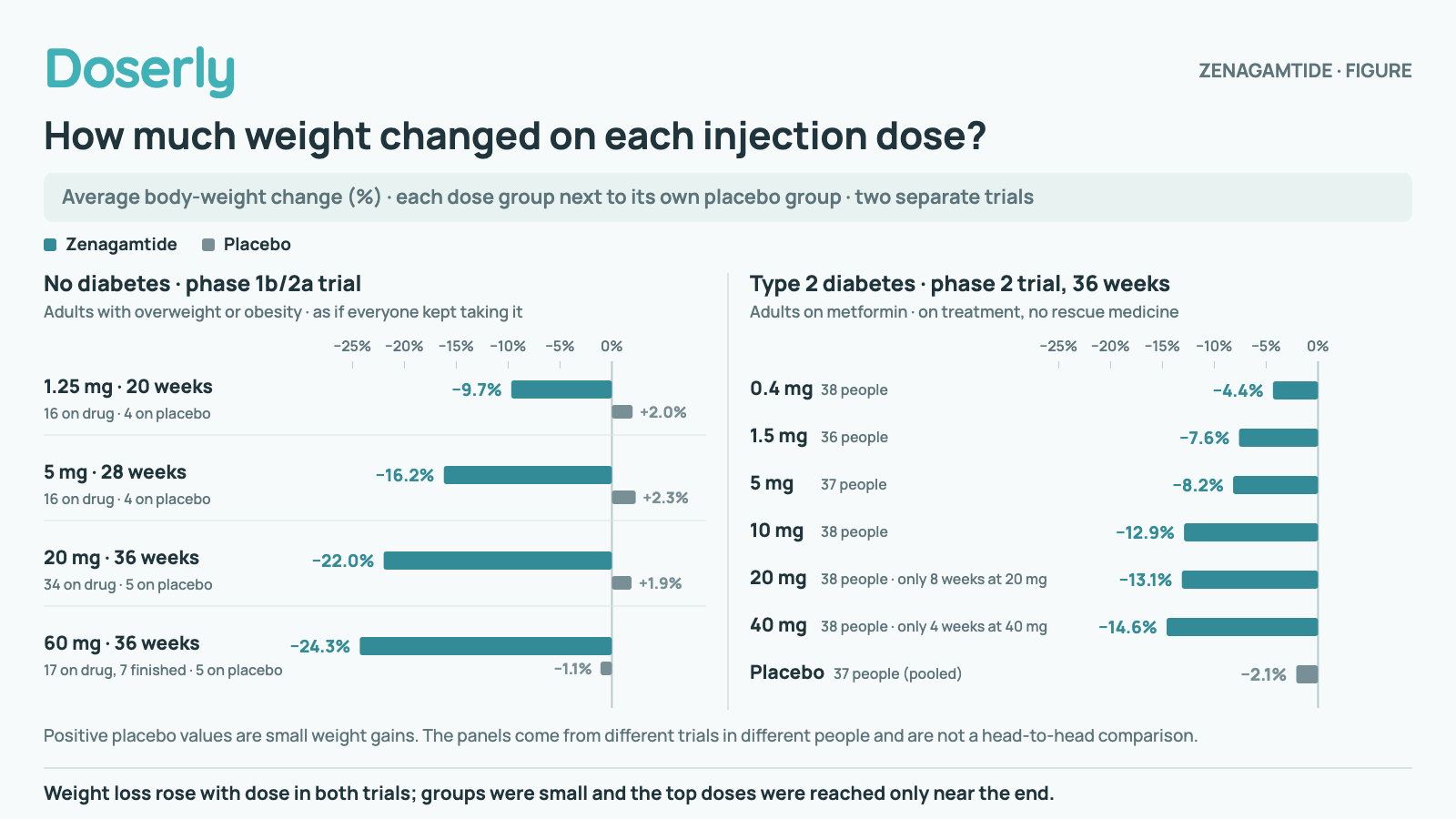
How much weight changed on each injection dose?
Average change in body weight (%); each dose group is compared with its own placebo group.
- No diabetes · phase 1b/2a trial · estimated as if everyone kept taking it
- 1.25 mg for 20 weeks (16 people): −9.7%; placebo (4 people) +2.0%
5 mg for 28 weeks (16 people): −16.2%; placebo (4 people) +2.3%
20 mg for 36 weeks (34 people): −22.0%; placebo (5 people) +1.9%
60 mg for 36 weeks (17 people; 7 of 17 finished): −24.3%; placebo (5 people) −1.1% - Type 2 diabetes · phase 2 trial · 36 weeks · on treatment, no rescue medicine
- 0.4 mg: −4.4%
1.5 mg: −7.6%
5 mg: −8.2%
10 mg: −12.9%
20 mg (only 8 weeks at 20 mg): −13.1%
40 mg (only 4 weeks at 40 mg): −14.6%
Placebo (37 people): −2.1%
36 to 38 people per dose group.
Positive placebo values are small weight gains. Panels come from different trials in different people and are not a head-to-head comparison.
Weight loss rose with dose in both trials, but the groups were small and the highest doses were reached only near the end.
Blood sugar and weight in type 2 diabetes
In the 36-week injection trial, HbA1c (a measure of average blood sugar over about three months) started at 7.8% and fell by 0.9 to 1.7 percentage points depending on the dose, compared with 0.1 on placebo. Up to 89.1% of people in the best dose group reached an HbA1c below 7%. Weight fell by 4.4% on 0.4 mg and up to 14.6% on 40 mg, compared with 2.1% on placebo, and was still falling at week 36. [6], [13], [4]
The tablet trial in the same population lowered HbA1c by 0.9 to 1.4 points, 0.5 to 1.1 points more than placebo. Weight fell by about 5.5% on 6 mg, 10.1% on 25 mg and 9.0% on 50 mg, compared with 2.5% on placebo. These model estimates were very imprecise, so the trial cannot say whether 50 mg gives more or less weight loss than 25 mg. [5], [20]
Appetite and eating less
In animal studies, most of the weight loss came from eating less: in obese rats, zenagamtide cut food intake by nearly half over three weeks. In people, how much comes from eating less has not been measured yet. After a single small dose, "decreased appetite" was the most common reported effect, affecting 17 of 42 people. A trial measuring how much people eat at test meals is under way. [3], [16], [29]
Other conditions under study
Phase 3 trials are testing zenagamtide in knee osteoarthritis, obstructive sleep apnoea, heart failure and people with heart disease, but none has results yet. Claims about fatty liver rest on a mouse study; claims about alcohol cravings come from one trial participant's online account; and effects on muscle have not been studied in people. [30], [31], [32], [33], [3], [34]
Where do zenagamtide protocols differ?
With no product available outside trials, the disagreements are not between different ways people use zenagamtide. They are between the trials themselves and the websites that restate them, sometimes wrongly.
Why do websites cite different amounts?
Most pages restate the trial ranges correctly: 0.3 to 60 mg a week from the first injection trial, 0.4 to 40 mg a week from the diabetes trial, and 6, 25 or 50 mg tablets a day. The numbers differ because they come from different trials, routes and populations, not because practice varies. Always check which trial, route and population a number belongs to. [11], [12], [35], [36]
Is 1.25, 5, 20, then 60 mg a real schedule?
No. One popular dosing calculator lays out 1.25 mg for weeks 1–4, 5 mg for weeks 5–12, 20 mg for weeks 13–20 and 60 mg from week 21. Those four numbers are the target doses of four separate trial groups. Nobody in the trial followed that sequence: everyone started at 0.3 mg, the 20 mg group took 24 weeks to reach 20 mg rather than 12, and the 60 mg group reached 60 mg only in week 33. [23], [10]
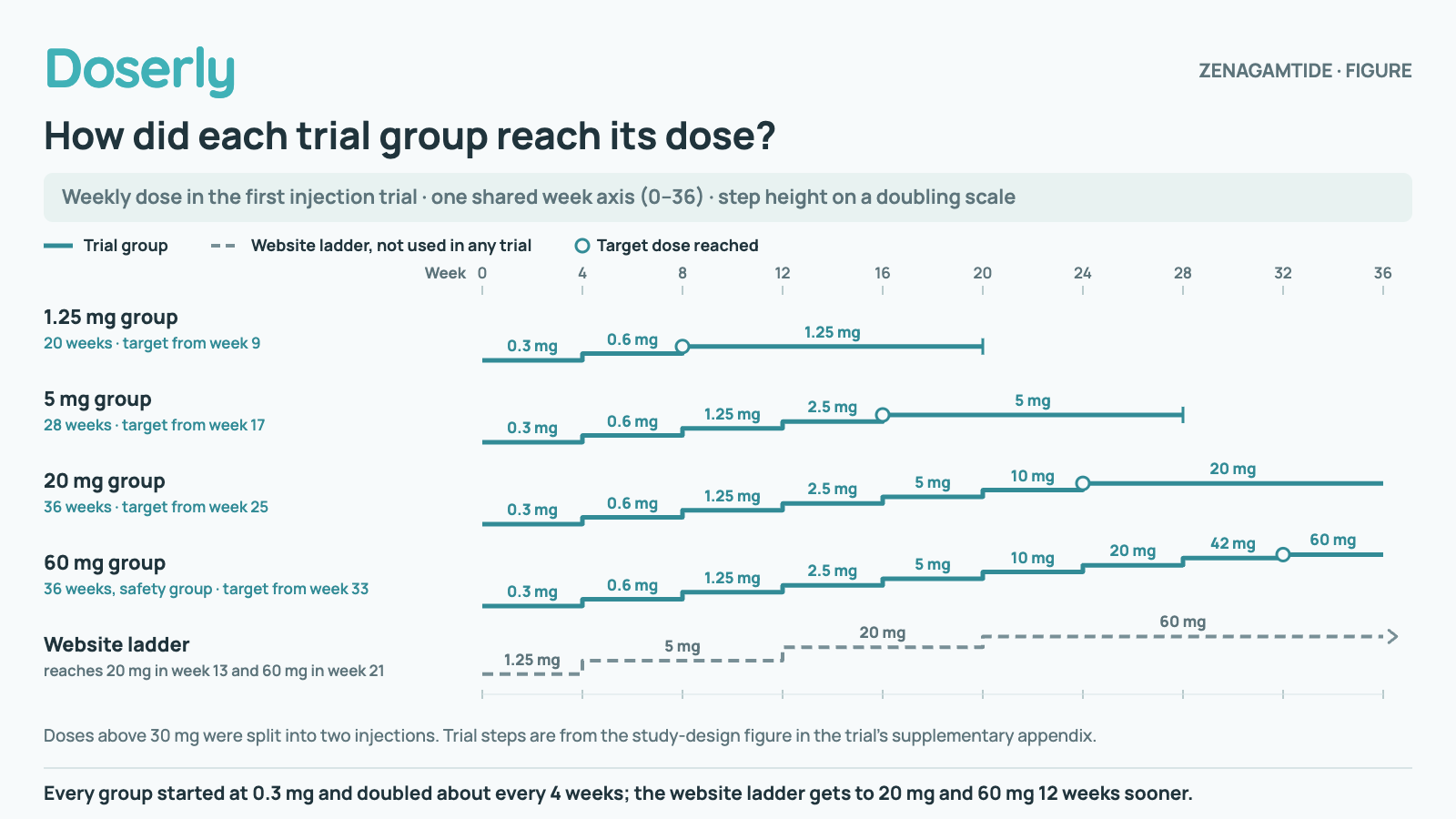
How did each trial group reach its dose?
Weekly dose in the first injection trial; each row is a separate group of people.
- Trial group: 1.25 mg (20 weeks)
- 0.3 mg in weeks 1–4; 0.6 mg in weeks 5–8; 1.25 mg in weeks 9–20.
- Trial group: 5 mg (28 weeks)
- 0.3 mg in weeks 1–4; 0.6 mg in weeks 5–8; 1.25 mg in weeks 9–12; 2.5 mg in weeks 13–16; 5 mg in weeks 17–28.
- Trial group: 20 mg (36 weeks)
- 0.3 mg in weeks 1–4; 0.6 mg in weeks 5–8; 1.25 mg in weeks 9–12; 2.5 mg in weeks 13–16; 5 mg in weeks 17–20; 10 mg in weeks 21–24; 20 mg in weeks 25–36.
- Trial group: 60 mg (36 weeks, safety group)
- 0.3 mg in weeks 1–4; 0.6 mg in weeks 5–8; 1.25 mg in weeks 9–12; 2.5 mg in weeks 13–16; 5 mg in weeks 17–20; 10 mg in weeks 21–24; 20 mg in weeks 25–28; 42 mg in weeks 29–32; 60 mg in weeks 33–36.
- Website ladder (not used in any trial)
- 1.25 mg in weeks 1–4; 5 mg in weeks 5–12; 20 mg in weeks 13–20; 60 mg from week 21.
Doses above 30 mg were split into two injections. Trial steps from the study-design figure in the trial's supplementary appendix.
Every trial group started at 0.3 mg and doubled about every 4 weeks; the website ladder reaches 20 mg and 60 mg 12 weeks sooner.
Why do some pages give a 0.25 mg starting dose?
That number belongs to semaglutide. A UK online pharmacy's "how to take amycretin" page prints the starting schedule of semaglutide (Ozempic), naming semaglutide in the text itself. Zenagamtide's trials started at 0.2 or 0.3 mg and used different steps. [24], [10], [4]
Is 60 mg the target dose?
No. It is the highest dose tested, in a 17-person safety group designed to find out how far the dose could go. That group climbed through eight 4-week steps, took 60 mg only in the last 4 weeks, and split doses above 30 mg into two injections at least an hour apart. Six of the 17 stopped because of side effects, mostly nausea, and four more left for other reasons. [10]
The diabetes trial stopped at 40 mg, and the phase 3 trials do not say which doses they use. A 2025 modeling paper suggested a "10–20 mg therapeutic window" from simulated data, while its own discussion also mentions 2.2–8.9 mg; either way, these are computer estimates, not tested doses. [6], [14], [26]
How fast does the dose go up?
Every 4 weeks, roughly doubling each time, in all the injection trials: 0.3, 0.6, 1.25, 2.5, 5, 10 and 20 mg in the obesity trial, and 0.2, 0.4, 0.8, 1.5, 2.5, 5, 10, 20 and 40 mg in the diabetes trial. The sponsor chose 4-week steps to reduce stomach and bowel side effects. [10], [4]
The steps were also rigid. The diabetes trial had no dose reductions: if a planned step was still not tolerated after delaying the next injection by 1 to 2 days and trying anti-sickness medicine, treatment stopped for good. Under that rule, anyone who could not manage a step left treatment, which may be part of why so many people in the higher-dose groups stopped. [13], [4]
How long, and are breaks needed?
The trials gave zenagamtide continuously for 20 to 36 weeks. The main phase 3 obesity trial measures its main result at 84 weeks, with some measurements continuing to week 136. No study has tested taking breaks or cycling it on and off, so a break schedule is not established. [7], [6], [14]
Can zenagamtide be combined with semaglutide, tirzepatide or cagrilintide?
There are no human data for any combination. Zenagamtide already switches on the GLP-1 receptor, which semaglutide targets and tirzepatide (which acts on GIP, another gut hormone, as well as GLP-1) also targets, and amylin receptors, which cagrilintide targets. Adding one of these drugs therefore doubles up on actions that were tested only on their own. Phase 3 trials compare zenagamtide with semaglutide rather than combining them. [3], [16], [37], [38]
In community education groups, the idea of adding zenagamtide to low-dose tirzepatide has come up. No one reported doing it, and nothing in the research supports it.
Do tablets and injections use the same amounts?
No. The tablet is taken every day at 6 to 50 mg, or up to 100 mg in the first trial, while injections are weekly. Tablets contain an absorption enhancer called SNAC, and how much of a swallowed dose reaches the blood (its bioavailability) has not been published. A tablet amount tells you nothing about an injection amount, or the reverse. [4], [21], [5]
How do milligrams convert to syringe units?
Research vials are sold as a powder to be mixed with water, and syringe units on an insulin syringe measure volume, not an amount of zenagamtide. For example, one website mixes a 10 mg vial with 2 mL of water, giving 5 mg per mL, so 0.3 mg is 0.06 mL, or 6 units on a U-100 syringe. The same 6 units from a vial mixed differently holds a different amount. [12]
The larger trial doses also show why copying them is not practical: 20 mg at that strength would be 4 mL, four full 1 mL insulin syringes. The trial product was a concentrated ready-made solution, and even then doses of 20 mg and above needed two or three injections. Doserly's reconstitution calculator works out the arithmetic for any vial and shows each step. [4]
What happens when you stop zenagamtide?
This has not been studied yet. We found no published results for weight, appetite or blood sugar after people stopped zenagamtide. [7], [6]
- Short follow-up only. The trials checked people 3 to 4 weeks after the last dose, mainly for safety. We found no published weight results from those visits. [10], [4]
- How long it stays in the body. With a half-life of about 3.5 to 4 days, most of the drug is gone within about 3 weeks. The diabetes trial set its 4-week follow-up to cover at least five half-lives. [10], [4]
- The trial designed to answer this. AMAZE 12 enrolled 606 people who reached their target dose during an initial period on the drug, then compares zenagamtide with placebo from week 40 to week 92. Its main results are expected after mid-2028. [39]
- What happened with a related drug. One year after stopping semaglutide, people in the STEP 1 trial had regained about two-thirds of the weight they had lost. That is a GLP-1 drug result, not a zenagamtide result. [40]
We found no study of withdrawal effects, rebound, or tapering off compared with stopping at once. One former trial participant said they started semaglutide after their trial ended and later switched to tirzepatide; they did not describe their weight after stopping. [41]
Source-by-source comparison and registered study plans
Which websites say what?
Most pages restate trial designs rather than describing practice. PeptidesCalculator.org and Peptide Decoding give the obesity trial's 0.3 to 60 mg weekly range; Peptide Hub's profile and dosing chart give the diabetes trial's 0.4 to 40 mg; PeptideDeck lists each trial's doses separately. [11], [12], [36], [42], [35]
Which pages contain errors?
PeptideDosage.org stitches four trial groups into one ladder starting at 1.25 mg. NowPatient prints semaglutide's 0.25 mg start. ClinicalPeptide.org cites a non-existent "2.4 mg versus semaglutide" trial whose PubMed number belongs to a horse study. PeptideKnow and WikiPep give a half-life of about 7 days, while measurements in people show about 3.5 to 4 days. iMedic claims about 25% weight loss for the tablet, and Trimi Health calls zenagamtide an oral pill only. Velox Peptides, which sells research vials, pairs the 20 mg result with the wrong placebo figure. [23], [24], [25], [43], [44], [45], [46], [19]
What are the registered studies planning?
These are study plans without posted results when checked on September 24, 2026. Every phase 3 record hides its dose levels.
Weight loss in adults with obesity
About 1,150 adults; one of four hidden dose levels or placebo once weekly; main result at 84 weeks.
Recruiting since February 2026. No results posted.
[14]What happens after stopping
606 people who reached their target dose during an initial period on the drug, then zenagamtide or placebo from week 40 to week 92.
Active, not recruiting. Main results expected after mid-2028.
[39]Head-to-head with semaglutide
About 650 adults with obesity (AMAZE 7) and 1,000 with type 2 diabetes (AMAZE 8), zenagamtide versus semaglutide.
Not yet recruiting on ClinicalTrials.gov; Novo Nordisk says AMAZE 8 has started.
[37], [38], [9]Daily tablet for obesity
About 950 adults; one of five hidden tablet doses or placebo for 76 weeks.
Not yet recruiting on the registry.
[15]Sleep apnoea and knee osteoarthritis
About 300 to 400 adults per trial with obesity and sleep apnoea or knee osteoarthritis; two hidden dose levels or placebo for 80 weeks.
Recruiting. No results posted.
[31], [47], [30], [48]Heart failure and obesity
About 5,600 people; time to heart-failure events or cardiovascular death, for up to 165 weeks.
Recruiting. Results expected in the second half of 2029.
[32], [9]Heart attacks, strokes and heart failure
About 2,500 people in the EU with established cardiovascular disease and overweight or obesity.
Authorised in nine EU countries in September 2026; not yet on ClinicalTrials.gov.
[33]How is zenagamtide taken, and how long does it last?
In trials, zenagamtide injections go into the fatty layer of the stomach area, thigh or upper arm once a week, on the same day each week, rotating the site. The phase 2 diabetes trial used cartridges in a reusable pen, with a new cartridge for every injection; phase 3 trials use prefilled pens. [4], [14]
The fatty-acid tail is what makes weekly dosing possible. It lets zenagamtide bind loosely to albumin, a common protein in the blood, which slows its removal. [3], [16]
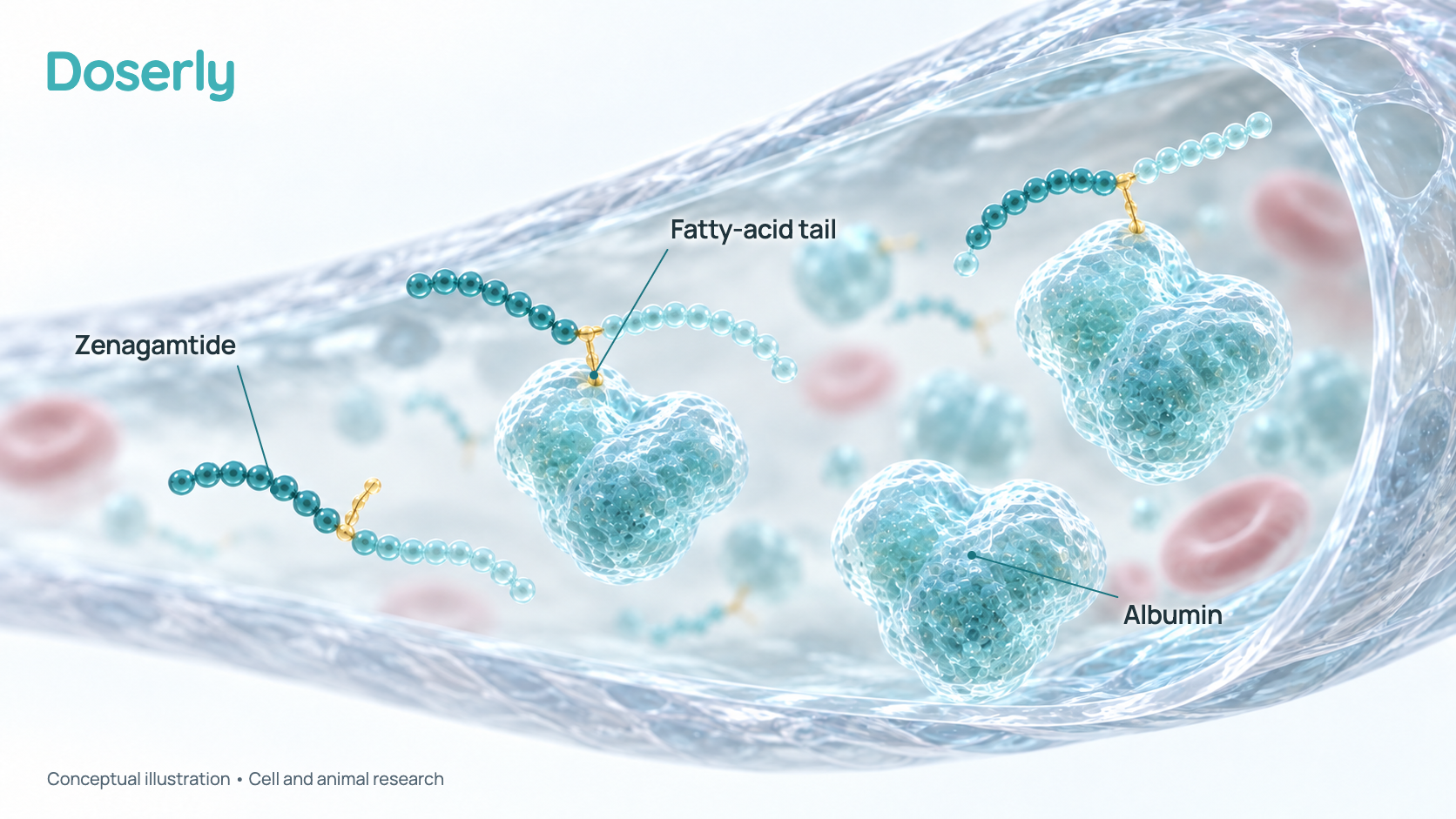
Its measured half-life, the time for blood levels to fall by half, was 79 to 88 hours after single doses and 88 to 99 hours with weekly use: about 3.5 to 4 days. Blood levels peaked about 1.5 to 2 days after a single injection. Some websites say "about 7 days", apparently borrowing semaglutide's figure, which conflicts with these measurements in people. One analyst blog cites a patent claiming 160 to 180 hours in minipigs, while the published minipig figure is 54 hours. [10], [16], [43], [44], [49], [3]
A half-life shows how quickly levels fall, not how long an effect lasts. The researchers judged it long enough for once-weekly injections, even in people with kidney disease. [16]
Is there a zenagamtide pill?
Yes, a tablet is in development, but it is not available and is not the same product as the injection. In trials it is taken once a day on an empty stomach in the morning, at least 30 minutes before food, drink or other tablets, with no more than half a glass of water (120 mL), swallowed whole. Taking it with food or other drinks, or eating sooner than 30 minutes, lessens its effect. A phase 3 tablet trial (AMAZE 9) is registered, and a study of meal timing and water volume is planned. [4], [15], [50]
Some pages call zenagamtide "the oral pill" or claim the tablet produced about 25% weight loss in phase 2. Both are wrong: the injection is the more advanced form, and the tablet's best average in phase 2 was about 10%. [46], [45], [20]
Do kidney or liver problems change the dose?
Kidney disease did not change blood levels enough to need a dose change in a study of 42 people, including people on dialysis, after one 0.3 mg injection. The half-life was somewhat longer with kidney impairment (about 3.9 to 4.7 days, versus 3.7 days with normal kidneys), which the researchers judged still suitable for weekly dosing. Vomiting and diarrhoea can still dehydrate people and strain the kidneys, which is why the trials advised drinking plenty of fluids. A liver-impairment study is registered but has not started. [16], [4], [51]
Is a vial sold online the same as the trial medicine?
No. Trial participants received a manufactured product made and labelled by Novo Nordisk. Research vials of "zenagamtide" or "amycretin" are listed by online sellers and chemical suppliers, and a self-described overseas supplier has advertised "oral amycretin" in a public forum. None of these is approved for human use, and their identity, strength and sterility are unknown. [4], [19], [52], [53]
The molecule is also long and complex to make: a 68-amino-acid chain with a fatty-acid tail, which is one reason people in public forums doubted it would appear on the grey market at all. [1], [54]
How should zenagamtide be stored, and how long does it last?
Nobody has published how long zenagamtide stays stable, and there is no approved label with storage instructions. What the public record shows:
- The trial product. A ready-made solution (2.5 or 30 mg per mL) in single-use cartridges, stored under conditions printed on the trial label, with temperature checks during shipping. Any product kept outside those conditions had to be cleared by Novo Nordisk before use. The label conditions themselves are not public. [4]
- Powder sold online. Websites and suppliers claim the freeze-dried powder keeps frozen at about −20 °C. For mixed (reconstituted) solution they disagree: use within 7 to 14 days, about 4 weeks, or 28 to 30 days in the fridge. None cites a stability test of zenagamtide. [23], [11], [12], [55]
- A patent claim. One analyst blog says a patent shows 24-month stability in pens at 5 °C, without naming the patent; we could not check it, and it would not apply to a mixed research vial anyway. [49]
- Advice for related drugs. For compounded GLP-1 medicines in multi-dose vials, FDA advises throwing a vial away 28 days after first use and not using an injectable that arrives warm. That is general advice for the drug class, not zenagamtide data. [18]
How long a mixed vial of zenagamtide stays usable is not established. This guide does not cover mixing or injection technique; the Academy note below covers practical handling.
What do we actually know about zenagamtide in people?
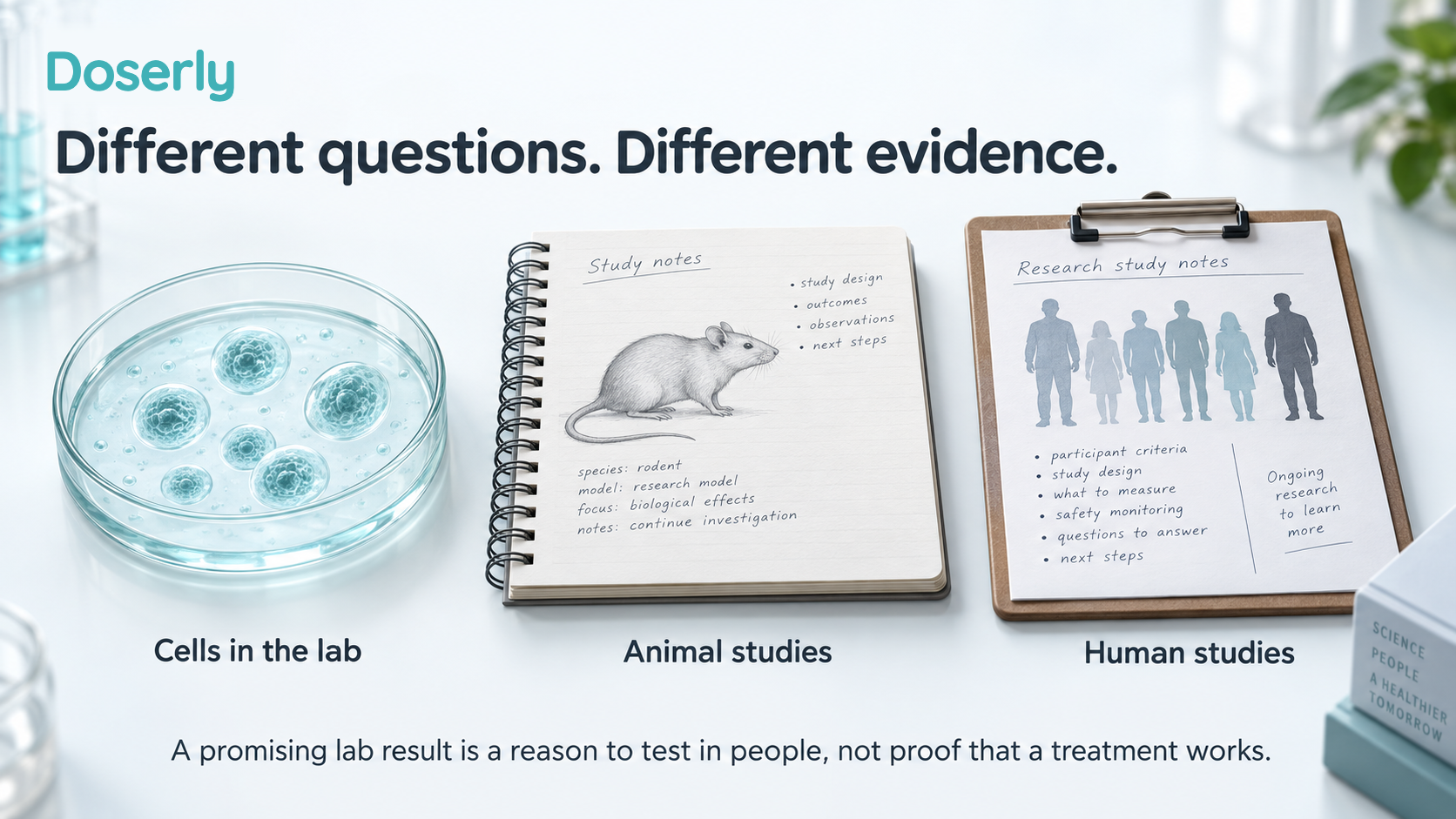
More than for most peptides discussed online, but less than the headlines suggest. Five human studies have been published, with 759 participants including those on placebo (the diabetes injection and tablet results come from one trial, reported in two papers), and the longest lasted 36 weeks. All were funded by Novo Nordisk. [21], [7], [5], [6], [16]
What did the trials find?
| Study | Who and how long | What researchers reported | What it cannot establish |
|---|---|---|---|
| First tablet trial, 2025 | 144 adults with overweight or obesity in Texas; single doses, 10 days, or 12 weeks of daily tablets | Weight −13.1% at 12 weeks on 2 × 50 mg a day versus −1.2% on placebo, in groups of 16. Side effects in 89 of 144, all mild or moderate; about half of all reported side effects were stomach and bowel effects | Longer-term effects; the top dose was taken for only 2 weeks [21], [56], [22] |
| First injection trial (phase 1b/2a), 2025 | 125 adults with overweight or obesity, no diabetes; 24 had a single injection, the rest weekly injections or placebo for 20 to 36 weeks | Weight −9.7% (1.25 mg, 20 weeks) to −24.3% (60 mg, 36 weeks), estimated if everyone kept taking it, versus −1.1% to +2.3% on placebo. 41 of 125 left early | Reliable averages: groups had 16 to 34 people on the drug and 4 or 5 on placebo [7], [10] |
| Injection trial in type 2 diabetes (phase 2), 2026 | 262 adults on metformin, with or without an SGLT2 inhibitor (a diabetes tablet that makes the kidneys remove extra sugar), in 11 countries; weekly 0.4 to 40 mg for 36 weeks | HbA1c −0.9 to −1.7 points versus −0.1; weight −4.4% to −14.6% versus −2.1% | The effect of a full course at the top doses, which were reached only in the last 4 to 8 weeks [6], [13], [4] |
| Tablet trial in type 2 diabetes (phase 2), 2026 | 186 adults on metformin; daily 6, 25 or 50 mg tablets for 36 weeks | HbA1c −0.9 to −1.4 points (0.5 to 1.1 more than placebo); weight −5.5% to −10.1% versus −2.5% | Precise weight effects: the weight estimates had wide margins of uncertainty [5], [20] |
| Kidney-impairment study, 2026 | 42 adults with normal kidneys through to dialysis; one 0.3 mg injection | Blood levels 13–35% higher with kidney impairment, judged too small to need a dose change | Anything about repeated doses [16] |
Why can the same trial give different numbers?
Trials often report more than one version of a result. The key difference is the estimand, the exact question a result answers. One version counts everyone as they were assigned, including people who stopped the drug. Another estimates what would have happened if everyone had kept taking it without extra treatment, which is usually larger. Most zenagamtide figures, including the 24.3% and the diabetes trial results, are the second kind. [7], [6]
Different statistical models can also shift a number slightly. Novo Nordisk reported the diabetes trial's top weight loss as 14.5% versus 2.6% on placebo in November 2025, and as 14.6% versus 2.1% in June 2026: the first came from a model fitted across all doses, the second from comparing each dose group directly. Same trial, same people, different calculation. [57], [13], [4]
With 10 of 17 people in the 60 mg group not finishing, a figure that counted everyone who started could be noticeably lower than 24.3%. [10]
How many people stayed on treatment?
- First injection trial: 41 of 125 participants withdrew. 17 withdrawals were linked to side effects; the others included changed personal circumstances and positive drug tests, which the trial did not allow. [10]
- Diabetes injection trial: by week 36, 21 of 38 people in each of the 20 mg and 40 mg groups were still taking the drug, compared with 33 of 36 on 1.5 mg and 31 of 36 on placebo. The published appendix does not give reasons. [4]
- Diabetes tablet trial: side effects that led people to stop included nausea, vomiting, weakness, loss of appetite, one raised pancreas enzyme and one case of acute kidney injury. [20]
What would a useful result look like in everyday life?
A trial average is not a prediction for one person. In the diabetes trial, a statistical model estimated that if everyone had stayed on 40 mg, 73.6% would have lost at least 10% of their weight and 26.9% at least 20%, while about 1 in 12 would have lost less than 5%. In reality 17 of the 38 people on 40 mg had stopped by week 36, so these figures describe people who kept taking it. Useful results for a person might include steady weight change while still eating enough, a lower HbA1c, or blood pressure and waist size moving in the right direction, without side effects that make daily life harder. [4]
That is why it helps to track more than weight. Appetite, energy, stomach symptoms and mood can move in different directions.
What don't the trials tell us?
- Anything beyond 36 weeks. The longest completed treatment was 36 weeks; phase 3 trials run 76 to 84 weeks or more. [7], [6], [14], [15]
- Effects on heart attacks, strokes and heart failure. Two large outcomes trials are registered or authorised, neither with results. [32], [33]
- Direct comparisons. No completed trial has compared zenagamtide with semaglutide, tirzepatide, CagriSema or retatrutide; two phase 3 trials against semaglutide are planned or under way. [37], [38]
- Who was studied. The early obesity trials took place at one clinic in Texas and enrolled adults aged 18 to 55 with no major illnesses; the diabetes trials excluded people using insulin. [22], [10], [4]
- What happens after stopping. See above.
How does zenagamtide work?
Zenagamtide copies the actions of two natural fullness signals. Its weight and blood-sugar effects are established in human trials; where and how it acts comes mostly from cell and animal studies.
Which receptors does it switch on?
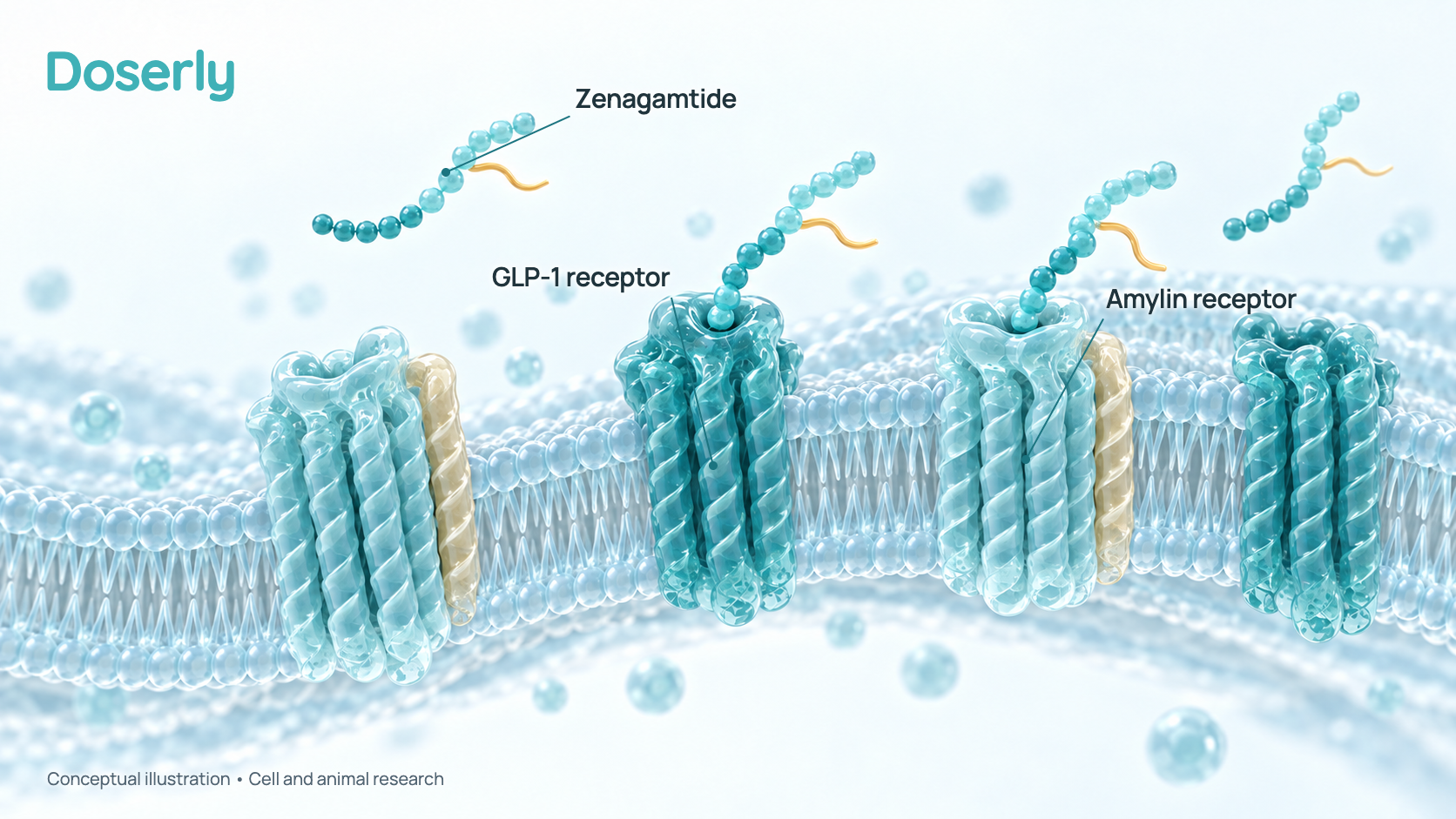
In cell studies, zenagamtide switched on the human GLP-1 receptor about as strongly as semaglutide, and also switched on all three amylin receptors and the calcitonin receptor. It had almost no effect on two related receptors, for CGRP (calcitonin gene-related peptide) and adrenomedullin. [3]
Why do some sources mention the calcitonin receptor?
Company press releases describe zenagamtide as a GLP-1 and amylin receptor agonist (an agonist is a molecule that switches a receptor on). The 2026 trial papers say GLP-1, amylin and calcitonin receptors. Both are accurate: each amylin receptor is built from the calcitonin receptor plus a partner protein, and zenagamtide acts on the calcitonin receptor by itself as well. What that extra action means in people is not known. [13], [5], [3]
Where does it act?
In mice, a glowing-labelled version of zenagamtide reached appetite areas of the brain within hours, including the area postrema and nucleus of the solitary tract in the brainstem and the arcuate nucleus in the hypothalamus. Labelled semaglutide reached similar areas. No such study has been done in people. [3]
What did animal studies show?
In obese rats given zenagamtide for 21 days, food intake fell by 47% and weight by about 18% compared with untreated rats, while the energy their bodies burned stayed the same. About 70% of the weight lost was fat, and insulin worked better. In mice with fatty liver disease, liver fat fell. These are animal studies by the drug's developer and cannot predict human results. [3]
Studies in people of eating behaviour, energy use and insulin sensitivity are registered but have no results yet. [29], [58], [59]
Is one molecule different from taking two drugs?
Yes, in how it is built, but whether that matters for results is unknown. CagriSema gives cagrilintide and semaglutide as two drugs in fixed amounts. Zenagamtide builds both actions into one chain, with a fixed balance between them set by its design. No trial has compared zenagamtide with CagriSema or with a GLP-1 drug plus a separate amylin drug, so results cannot be carried from one to the other. [3], [60]
What about muscle loss?
This is unknown in people. Any large weight loss includes some lean mass (muscle, organs and water) as well as fat. The only body-composition data come from rats, where about 70% of the weight lost was fat, measured with a method that cannot separate muscle from other lean tissue. None of the registered human trials lists a body-scan measure of fat and muscle as an outcome. [3], [14], [39]
What are the risks and unanswered questions?
Is zenagamtide safe?
Its safety has not been established. In trials lasting up to 36 weeks, most side effects were stomach and bowel problems, usually mild to moderate, but many people on higher doses stopped treatment, and rare or slow-developing harms cannot be ruled out in trials this small and short. [21], [7], [6]
Those trials also describe a pharmaceutical product given under close medical supervision. They say nothing about powders bought online. [10], [4]
What side effects did the trials find?
- Stomach and bowel effects were the most common in every trial: nausea, vomiting, diarrhoea, constipation, indigestion and burping. In the diabetes tablet trial they affected 26% of people on 6 mg, 41% on 25 mg and 47% on 50 mg, compared with 23% on placebo. [5], [10]
- Decreased appetite affected 40.5% of people after a single 0.3 mg injection in the kidney study, where nausea and vomiting each affected 16.7%. [16]
- Serious adverse events were reported in 8% of people in the diabetes injection trial, at a similar rate on placebo, and in 7 of 156 people on tablets versus none on placebo. No deaths were reported. [6], [5]
- Abnormal skin sensations (dysaesthesia, such as tingling or burning) were among the effects seen in at least 15% of people in a dose group in the first injection trial, and one person in the 60 mg group stopped partly because of it. [10]
In the first injection trial, one person in the 20 mg group stopped after gallstone-related (obstructive) pancreatitis with raised liver enzymes while on the 2.5 mg step, recorded as mild and not serious. One person in the 5 mg group stopped because of anhedonia (loss of pleasure in things), and one person on placebo stopped because of depression. [10]
In the diabetes tablet trial, one person on zenagamtide had a serious episode of acute pancreatitis (inflammation of the pancreas) on day 38, confirmed by a scan and not caused by gallstones; they recovered with antibiotics. [20]
What about heart rate?
Heart rate rose, most on the highest doses. In the diabetes injection trial, pulse at week 36 was 8.7 beats per minute higher than at the start on 40 mg and 2.0 to 6.5 higher on lower doses, compared with 1.4 lower on placebo; these estimates were imprecise. In the first tablet trial, average heart rate rose by up to 26 beats per minute in the day after a single 25 mg dose and returned to its starting level within about 10 days. [4], [22]
What about antibodies to the drug?
In the first injection trial, anti-drug antibodies appeared in 21% to 38% of people on 5 to 60 mg and in none on 1.25 mg. All were at low levels, and none reacted with the body's own GLP-1, which the sponsor had flagged as the main concern because zenagamtide's GLP-1 part closely resembles the natural hormone. Whether antibodies reduce the drug's effect over time is unknown. [10], [4]
Could product quality change the risk?
Yes. A correctly made drug and a vial bought online are separate questions. Zenagamtide is not sold legally anywhere, so any product outside a trial comes from sellers who label it "research use only". FDA has warned sellers of similar research-labelled GLP-1 drugs such as retatrutide that these products are illegal and of unknown quality, and Health Canada and the UK's Medicines and Healthcare products Regulatory Agency (MHRA) have warned people about unauthorised injectable peptides and weight-loss drugs bought online. [18], [61], [62]
Is zenagamtide legal? Is it FDA-approved?
Checked September 24, 2026. Rules differ by country and change quickly.
United States. Zenagamtide is not an FDA-approved medicine, and FDA's drug database has no entry for it. [17]
- May 2022. The first human trial, of tablets, begins in Texas. [21]
- June 2025. Novo Nordisk announces it will move both the injection and the tablet into phase 3 trials for weight management. [63]
- February 2026. The first phase 3 trial, AMAZE 1, starts recruiting. [14]
- September 2026. Still investigational. Novo Nordisk's latest report lists only new trial starts for zenagamtide, not an application for approval. [9]
Zenagamtide is not on FDA's lists of ingredients that pharmacies may use for compounding, and it is not part of any approved drug, so the usual legal routes for compounding do not appear to apply. FDA has named the similar experimental drugs retatrutide and cagrilintide as ingredients that cannot be compounded; it has not issued a statement naming zenagamtide. [64], [18]
Canada. Not authorised: it is not in Health Canada's Drug Product Database. In April 2026 Health Canada warned that unauthorised injectable peptides bought online can seriously harm people. [65], [61]
Australia. Not approved, since no application has been made anywhere, and zenagamtide is not named in the June 2026 Poisons Standard. The Therapeutic Goods Administration (TGA) treats peptide products that are not on its register as unapproved therapeutic goods and says "research use only" wording does not change that. [9], [66], [67]
Europe and the United Kingdom. Not authorised: it is not on the European Medicines Agency's list of medicines. In September 2026, nine EU countries authorised a large heart-outcomes trial (AMBIENCE), which permits a study, not sales. In July 2026 the UK's MHRA warned people not to buy weight-loss medicines from unregulated online sellers. [68], [33], [62]
A "research use only" label does not make a product legal to sell for human use, and it does not make it safe.
Is zenagamtide banned in sport? Does it show up on a drug test?
Treat it as banned. Zenagamtide is not named on the World Anti-Doping Agency's 2026 Prohibited List or on the 2027 list that takes effect on January 1, 2027. However, category S0 bans, at all times, any drug with no current government approval for human use, including drugs still in clinical development, and zenagamtide has no approval anywhere. WADA's separate monitoring of GLP-1 drugs names only semaglutide and tirzepatide. [69], [70], [71]
We found no published anti-doping test for zenagamtide, so how long it could be detected after use is unknown.
Does zenagamtide cause thyroid cancer?
There is no human evidence either way; the trials were too short. The trial protocols list thyroid C-cell tumours as a possible risk because they were seen in mice and rats given other GLP-1 drugs, a mechanism the sponsor considers less relevant to people. People with a personal or family history of medullary thyroid cancer or multiple endocrine neoplasia type 2 (MEN2) were excluded, and calcitonin, a marker of these tumours, was checked at entry. [4], [10]
Who should be especially cautious?
These groups have little or no safety data. That is a reason for caution, not proof of harm.
- Pregnancy and breastfeeding. No human data. The trial protocol notes harm to early pregnancy in rodents from drugs acting on the same receptors, required highly effective contraception, and tested for pregnancy every month. [4]
- A history of pancreatitis. Excluded from the trials; the protocol stops treatment if pancreatitis is suspected. [4], [10]
- Gallstones. Rapid weight loss raises gallstone risk, and the protocols told participants the symptoms to watch for. [4]
- Diabetes treated with insulin or sulfonylureas. Not studied; with GLP-1 drugs these combinations raise the risk of low blood sugar. [4]
- Diabetic eye disease. People with unstable retinopathy were excluded, and eye examinations were part of the diabetes trials, because fast drops in blood sugar can temporarily worsen it. [4]
- Depression, anxiety or eating disorders. Excluded from the first injection trial, and mood questionnaires were used throughout. [10]
- Under 18. Not studied. This guide is written for adults.
- Anyone taking other medicines. No interaction results have been published; see the interactions question below. [72], [4]
- Competitive athletes. Covered by WADA's ban on unapproved substances. [69]
Does zenagamtide interact with other medicines?
Interactions have not been reported yet. A study of zenagamtide with an oral contraceptive pill, which also measured how fast the stomach empties, finished in 2025 without published results. The trial protocol notes that zenagamtide may slow gastric emptying and so could change how other tablets are absorbed, and the zenagamtide tablet itself has to be taken at least 30 minutes before any other tablets. Bring a complete list of everything you take, including other peptides, to a pharmacist or doctor. [72], [4]
What should be monitored while using zenagamtide?
There is no official monitoring plan, because zenagamtide has no approved label. What exists is a record of what the trials checked, which shows what researchers were watching for. It can help you prepare questions for a clinician; it is not a personal testing plan. [10], [4]
What did the trials check?
- Weight and metabolism. Weight, waist, body mass index, HbA1c and fasting glucose, continuous glucose monitoring in the diabetes trials, cholesterol and triglycerides, C-reactive protein (a marker of inflammation) and 24-hour blood pressure. [10], [4], [73]
- Safety blood tests. Blood counts, liver and kidney tests, the pancreas enzymes amylase and lipase, calcium, parathyroid hormone, vitamin D and calcitonin, plus antibodies to the drug. [10], [4]
- Heart. Pulse, blood pressure and ECGs (recordings of the heart's electrical activity), with continuous heart monitoring after early doses. [10], [22]
- Mood. Depression and suicidal-thoughts questionnaires (the PHQ-9 depression questionnaire and the Columbia Suicide Severity Rating Scale). [10]
- Diabetes-specific checks. Low-blood-sugar diaries, urine albumin and eye examinations. [4]
- Pregnancy. Monthly tests for anyone who could become pregnant. [4]
Which signals matter, and why?
| Why it matters | What studies measured or flagged | Tracking category |
|---|---|---|
| The result you care about | Weight, waist and HbA1c; up to 14.6% weight loss in 36 weeks in type 2 diabetes | Weight Management; Fat Loss; Appetite & Satiety |
| Stomach and bowel | The most common side effects, dose-related; trials advised plenty of fluids to avoid dehydration | Nausea & GI Tolerance; Digestive Comfort |
| Pancreas and gallbladder | Amylase and lipase checked; two pancreatitis cases (one serious, without gallstones, in the tablet trial; one mild and gallstone-related in the first injection trial); gallstone risk flagged in the protocol | Blood work; Digestive Comfort |
| Heart | Pulse up to 8.7 beats per minute higher on 40 mg; short-lived rises after tablet doses | Heart Rate & Palpitations; Blood Pressure |
| Calcium and thyroid | Calcium, parathyroid hormone, vitamin D and calcitonin checked at entry | Blood work |
| Kidneys | Kidney function and urine albumin; vomiting and diarrhoea can dehydrate | Blood work |
| Mood | Mood questionnaires throughout; one person stopped because of anhedonia | Mood & Wellbeing; Emotional Aliveness |
| Immune reactions | Antibodies in 21–38% of people on 5–60 mg; injection-site checks | Side Effect Burden; Immune Function |
| Pregnancy | Harm in early pregnancy in rodents for this receptor class; monthly tests | Not applicable |
Approved GLP-1 medicines such as Wegovy come with labels that list their own checks, including pancreatitis, gallbladder disease, low blood sugar with insulin, kidney problems from dehydration and heart rate. Which checks make sense for you is a question for a clinician. [74]
What do people in public communities report?
Almost nobody outside a trial has used zenagamtide. Across public Reddit posts and comments mentioning it from 2024 to September 2026, we found three people describing their own experience, all of them trial participants, and none describing a product bought online. Most discussion is about trial news, share prices and when it might be available. [41], [75], [27]
What do trial participants describe?
One person said they had just finished an 8-month injection trial and later described losing 23 kg over about 9 months, with blood tests that "improved dramatically". They reported constant constipation, which they linked to not drinking enough water, and feeling "disconnected and quiet" for a day or two after each injection. They also said they lost their desire for alcohol. We could not match the trial they described to a registered zenagamtide trial. [41], [34]
Another person, about 7 weeks into a knee osteoarthritis phase 3 trial and not knowing whether they were on the drug or placebo, described a day or two of dizziness in the first week, more tiredness, diarrhoea followed by constipation, slight nausea, new burping after meals and feeling full sooner. They reported no weight change in the first month and 1 to 2 kg lost over the next two weeks. They had taken retatrutide in an earlier trial. [75]
A third said they were 12 hours into a trial and "pretty sure" the drug was amycretin, without being able to confirm it. [76]
These accounts match the stomach and bowel effects seen in trials. The emotional flatness comes from one person, but one participant in the first injection trial stopped because of anhedonia, so mood changes are worth noting and discussing with a clinician. Loss of interest in alcohol has not been reported in trial results. [10]
Is anyone using it outside trials?
Not that we found. Since 2024, people have asked when it will appear on "grey market" peptide sites, and replies say sellers do not carry it. Some commenters point out that the long, tail-carrying molecule would be hard to make cheaply. In June 2026, a self-described overseas supplier offered "oral amycretin" in a public forum; nobody reported using it. [77], [27], [28], [54], [53]
What claims circulate, and how do they hold up?
| Claim | What the evidence shows |
|---|---|
| "Phase 3 showed 24.5% weight loss at 68 weeks" | No phase 3 trial has reported; the earliest main results are due in 2028 [78], [9] |
| "It's a pill, not an injection" | Both forms are in development; the weekly injection is further along [78], [6] |
| "22% weight loss in phase 2" | The 22% came from the 20 mg group (34 people) of the small, early phase 1b/2a trial; the larger phase 2 injection trial, in type 2 diabetes, reached 14.6% after only 4 weeks on its top dose [7], [13] |
| "The oral version did 13% in phase 2" | 13.1% came from the 12-week phase 1 tablet trial; the phase 2 tablet trial reached about 10% [56], [20] |
| "89% reached normal blood sugar" | Up to 89.1% reached an HbA1c below 7% in the best dose group, not everyone [13] |
| "Half-life of about 7 days" | Measured at about 3.5 to 4 days [43], [10] |
| "Causes more vomiting than CagriSema" | No trial has compared them [79] |
| "Up to 34% stopped because of forced dose increases" | The rigid step rule is real; by week 36, 17 of 38 had stopped in each of the two highest-dose groups, for reasons the appendix does not give [80], [13], [4] |
What do community education groups teach?
In community education groups, zenagamtide comes up mainly as a pipeline drug and a possible rival to retatrutide, and we found no members reporting use. Some education materials repeat the phase mix-ups in the table above or call its phase 3 programme by CagriSema's name (REDEFINE) rather than AMAZE, while a later breakdown of the tablet trial summarised it accurately. Members' questions focus on how much of the weight lost is muscle, whether it equals a GLP-1 drug plus a separate amylin drug, and whether it could be added to tirzepatide; this guide answers each from the published research. See muscle loss and combinations.
How can you judge a weight-loss story?
Useful questions to ask: Was the person in a trial, and do they know whether they had the drug or a placebo? What dose, and for how long? Were they also eating much less or exercising more? Did they have side effects, and did they stay on it? What happened after they stopped?
Selected discussions help identify questions that research should examine. They are not a survey of all users, a response rate or a substitute for the trials described above.
How does zenagamtide compare with CagriSema, semaglutide, cagrilintide and retatrutide?
These are the medicines zenagamtide is most often weighed against. Semaglutide copies GLP-1, cagrilintide copies amylin, CagriSema combines the two as separate drugs, zenagamtide builds both into one molecule, and retatrutide acts on three different hormone receptors. Status was checked on September 24, 2026.
| Medicine | What it is | Route and schedule | Human evidence | Approval status |
|---|---|---|---|---|
| Zenagamtide (this guide) | One molecule acting on GLP-1 and amylin receptors [1], [3] | Weekly subcutaneous injection; daily tablet in development [6], [5] | Early trial: −22.0% at 36 weeks on 20 mg (34 people) versus +1.9% on placebo [7] | Not approved; in phase 3 [9] |
| CagriSema | Cagrilintide 2.4 mg plus semaglutide 2.4 mg, given together [60] | Weekly subcutaneous injection [60] | REDEFINE 1: −20.4% at 68 weeks versus −3.0% on placebo [60] | Not approved; submitted to FDA in December 2025, decision expected late 2026 [81], [9] |
| Semaglutide (Wegovy, Ozempic) | Copy of GLP-1 [74] | Weekly injection, or a daily Wegovy tablet [74] | STEP 1: −14.9% at 68 weeks versus −2.4% on placebo [82] | FDA-approved for weight management [74] |
| Cagrilintide | Long-acting copy of amylin [60] | Weekly subcutaneous injection [60] | REDEFINE 1: −11.5% at 68 weeks on 2.4 mg alone [60] | Not approved; FDA says it cannot be compounded [18] |
| Retatrutide | Acts on GIP, GLP-1 and glucagon receptors [83] | Weekly subcutaneous injection [83] | Phase 2: −24.2% at 48 weeks on 12 mg versus −2.1% on placebo [83] | Not approved; FDA says it cannot be compounded [18] |
The weight results come from separate trials of different lengths, in different people, analysed in different ways, so the table cannot rank these medicines. Zenagamtide's figures come from much smaller and shorter trials than CagriSema's or semaglutide's. Two phase 3 trials will compare zenagamtide directly with semaglutide; no trial compares it with CagriSema, tirzepatide or retatrutide. Each guide covers its own doses, risks and legal status. [37], [38]
Common questions about zenagamtide
Is zenagamtide the same as amycretin?
Yes. Zenagamtide is the official name, proposed by the World Health Organization in 2025, for the drug Novo Nordisk developed as amycretin. Older papers and news use amycretin, and trial records use the code NNC0487-0111. Novo Nordisk now describes it as "zenagamtide, also known as amycretin". [1], [13] See what it is.
Is zenagamtide a pill or an injection?
Both are in development. The once-weekly injection is further along, with several phase 3 trials running since early 2026. The once-daily tablet has finished a phase 2 trial in type 2 diabetes, and its first phase 3 trial is registered. Tablet and injection doses are very different and cannot be swapped. [14], [5], [15] See is there a pill.
What dose of zenagamtide was used in trials?
There is no approved dose. Injection trials started low and roughly doubled the dose every 4 weeks: from 0.3 mg to target doses of 1.25 to 60 mg a week in adults with obesity, and from 0.2 mg to 0.4 to 40 mg a week in type 2 diabetes. Tablet trials started at 1.5, 3 or 6 mg a day and went up to 50 or 100 mg a day. Phase 3 trials keep their doses confidential. [10], [4], [22] See the trial schedules.
How much weight do people lose on zenagamtide?
In the early trial of people without diabetes, average weight loss ranged from 9.7% after 20 weeks on 1.25 mg to 22.0% after 36 weeks on 20 mg, estimated as if everyone kept taking it and measured in small groups. In type 2 diabetes it reached 14.6% after 36 weeks on 40 mg, compared with 2.1% on placebo. Weight fell steadily from the first weeks and was still falling when the trials ended, and individual results varied widely. [7], [13], [4] See the trial results.
How long does zenagamtide stay in your system?
Its half-life in people is about 3.5 to 4 days, so blood levels halve roughly every four days and most of the drug is gone within about three weeks of the last dose. That is shorter than the "about 7 days" some websites claim. How long any effect lasts after stopping has not been studied. [10], [16] See how it is taken.
Can zenagamtide be taken with tirzepatide, semaglutide or cagrilintide?
No combination has been tested in people. Zenagamtide already acts on the receptors those drugs target, so combining them doubles up on actions that were studied only on their own. Phase 3 trials test it instead of semaglutide, not alongside it. [3], [37] See combinations.
Is zenagamtide better than retatrutide or CagriSema?
Nobody knows yet, because they have never been compared in the same trial. Zenagamtide's 22–24% results came from groups of 17 to 34 people over 36 weeks; retatrutide's and CagriSema's come from larger or longer trials. Cross-trial comparisons like these can mislead. [7], [83], [60] See the comparison.
When will zenagamtide be available, and is it legal to buy?
Not before its phase 3 trials report, and the earliest main results are expected in 2028. No company has applied for approval anywhere. Products sold online as "research use only" are unapproved and not legal to sell for human use, and rules differ by country. [39], [9], [18] See the dated legal-status summary.
Glossary
Plain explanations of the route, dosing and research terms used in this guide. Underlined terms in the text link here.
- Adverse event
- A harmful or unwanted medical event reported after someone used a treatment. A report alone does not prove the treatment caused it.
- Agonist
- A molecule that binds to a receptor and switches it on. Zenagamtide is an agonist at GLP-1 and amylin receptors.
- Albumin
- The most common protein in blood. Zenagamtide's fatty-acid tail lets it cling loosely to albumin, which slows its removal from the body.
- Amino acid
- A small chemical building block. Chains of amino acids make up peptides and proteins.
- Amylin
- A hormone released by the pancreas together with insulin after meals. It helps signal fullness to the brain and lowers the after-meal rise in glucagon.
- Amylin and calcitonin receptors
- Receptors are docking sites on cells that switch the cell on when the right molecule binds. Amylin receptors respond to amylin; calcitonin receptors respond to calcitonin, a hormone involved in calcium balance. Each amylin receptor is the calcitonin receptor paired with a partner protein. Zenagamtide activates both kinds in cell studies.
- Anhedonia
- Loss of pleasure or interest in things that are usually enjoyable. It can be a sign of depression.
- Animal study
- Research in animals such as rats or mice. It shows what a substance does in a living body, but results in people can differ.
- Anti-drug antibodies
- Antibodies the immune system makes against a medicine. Some have no noticeable effect; others can reduce how well the medicine works.
- Bioavailability
- The share of a dose that reaches the bloodstream. Swallowed peptides usually reach the blood far less well than injected ones; for zenagamtide tablets the figure has not been published.
- Cell study (in vitro)
- Research on cells grown in a dish. It gives early clues about biology, but it is far from proof of benefit in people.
- Compounding
- When a pharmacy prepares a customized medicine from individual ingredients. In the US, federal rules control which bulk ingredients pharmacies may use.
- Continuous glucose monitor (CGM)
- A small wearable sensor that measures glucose every few minutes, giving a round-the-clock picture of blood sugar.
- Controlled trial
- A study that compares people who receive a treatment with a similar group who do not, often receiving a placebo instead. Randomly assigning people to each group makes the comparison fairer.
- Course and cycle
- A course is the period of repeated use, such as 36 weeks. A cycle is a course plus a planned break before any further use.
- Daily total
- All the amounts taken in one day, added together. For example, two 25 mg tablets taken together make a 50 mg daily total.
- Dose (amount each time)
- The amount given on one occasion. A protocol lists both the dose and how often it is given.
- Dysaesthesia
- An unusual or unpleasant sensation in the skin, such as tingling, burning or sensitivity to touch, without an obvious cause.
- Estimand
- The exact question a trial result answers. One kind counts everyone as assigned, including people who stopped; another estimates what happens if everyone keeps taking the drug.
- FDA
- The US Food and Drug Administration, the government agency that approves medicines in the United States and oversees which ingredients pharmacies may use for compounding.
- Freeze-dried (lyophilized)
- A powder made by freezing a solution and removing the water. Research peptides sold online usually come this way and must be mixed with sterile water before injection.
- Gastric emptying
- How quickly food leaves the stomach. Slower emptying can make people feel full sooner and can change how fast some tablets are absorbed.
- GLP-1 and GLP-1 drugs
- GLP-1 (glucagon-like peptide-1) is a gut hormone released after meals that lowers appetite and helps control blood sugar. GLP-1 drugs such as semaglutide copy it; the first part of zenagamtide is based on it.
- Half-life
- The time it takes for the measured level of a substance in the blood to fall by half. It is not the same as how long an effect lasts.
- HbA1c
- A blood test that reflects average blood sugar over roughly the previous three months. It is the main measure in diabetes trials.
- Investigational
- Still being studied and not approved by a regulator, such as the FDA, to treat any condition.
- Lean mass
- Everything in the body that is not fat, including muscle, organs, bone and water. Body scans measure it separately from fat.
- mcg and mg
- Micrograms and milligrams. 1 mg equals 1,000 mcg, so 0.3 mg is 300 mcg. Zenagamtide amounts are written in mg.
- Oral
- Taken by mouth, as a capsule, tablet or liquid.
- Peptide
- A short chain of amino acids. Zenagamtide is a chain of 68 with a fatty-acid tail attached.
- Pharmacokinetics
- How the body absorbs, moves, breaks down and removes a substance.
- Placebo
- A dummy treatment with no active ingredient, used as a comparison in studies.
- Preclinical research
- Studies done before research in people: cell studies and animal studies.
- Reconstitution
- Mixing a freeze-dried powder with sterile water to make an injectable solution. The amount of water sets how much drug each syringe unit holds.
- Research use only
- A label on products sold for laboratory research. It does not mean a product is approved, tested for human use or legal to sell as a medicine.
- SNAC
- An absorption enhancer added to zenagamtide tablets to help the peptide get into the blood from the stomach. It is why the tablets must be taken on an empty stomach with little water.
- Subcutaneous (SC)
- Injected into the fatty layer just under the skin. This is the route used in every zenagamtide injection trial.
- Syringe units
- Markings on an insulin syringe that measure volume. On a U-100 syringe, 100 units equal 1 mL. The amount of drug per unit depends on the vial's concentration.
- Titration and maintenance dose
- Titration means raising a dose in steps, usually to reduce side effects. The maintenance dose is the amount kept once the steps are finished, such as 20 mg in one zenagamtide trial group.
- Trial phases
- Stages of testing in people. Phase 1 checks safety and blood levels, phase 2 tests doses in patients, and phase 3 confirms benefits and harms in large groups before approval.
- Unimolecular (one-molecule)
- Built as a single molecule. Zenagamtide combines GLP-1-like and amylin-like actions in one chain, whereas CagriSema combines two separate molecules.
- WADA
- The World Anti-Doping Agency, which publishes the list of substances banned in sport. Its category S0 covers drugs not approved for human use anywhere.
- Weekly total
- All the amounts given in one week, added together. In zenagamtide trials this equals the single weekly dose, even when it was split into two or three injections on the same day.
How this guide was researched
This guide is built from a thorough review of the sources cited throughout it: published clinical trials and their supplementary appendices, registered study plans, regulatory documents, a laboratory and animal study, and published protocol descriptions. We also reviewed public online forums and community education groups where people discuss zenagamtide.
The guide cites 83 sources, including 10 original scientific papers. Each type of source answers a different question. Trials show what researchers measured. Protocol descriptions show how websites present zenagamtide. Personal accounts show what individual people experienced. Every numbered citation links to its entry below, labeled by source type.
How this guide was made
Research and drafting were AI-assisted. Every cited source was checked against the original, and the guide was reviewed and edited by Doserly before publication. It has not had an independent clinical review, and Doserly does not currently have medical reviewers. Doserly makes a medication and health-tracking app and runs Doserly Academy, both of which are promoted in this guide. Read our editorial policy for how guides are researched, updated and corrected.
This guide is for educational purposes. It summarizes what the reviewed sources report so the research is easier to understand; it is not medical advice. For a deeper dive, or to check any point for yourself, go straight to the cited sources.
Explore the sources
These are the documents cited in this guide. Trials, website advice and personal accounts answer different questions. A source being listed does not mean every statement on its page is endorsed.
Showing 83 sources
- 01
Proposed International Nonproprietary Names: List 133 (zenagamtide) ↗
Nomenclature
Original list entry reviewed: chemical description, formula C343H550N94O116 and CAS number 3005889-81-3.
- 02
Global Substance Registration System record: zenagamtide (UNII T2EA5S9XJ5) ↗
Substance registry
Record reviewed: 68-residue sequence, fatty-acid side chain on lysine 31, estimated formula and molecular weight.
- 03
The effect of amycretin, a unimolecular glucagon-like peptide-1 and amylin receptor agonist, on body weight and metabolic dysfunction in mice and rats ↗
Cell / animal research
Full text reviewed. Written by the drug's developer.
Result detail: receptor activity in cells; in obese rats over 21 days, food intake −47% and weight about −18%, with about 70% of the loss from fat.
- 04
Supplementary appendix to: Efficacy and safety of once-weekly subcutaneous zenagamtide in type 2 diabetes (phase 2 trial), including the trial protocol ↗
Trial appendix and protocol
Appendix tables and figures reviewed, plus the redacted protocol (version 6.0, 15 May 2025): dosing scheme for all nine groups, trial product, risk assessment and safety checks.
- 05
Efficacy and safety of once-daily oral zenagamtide, a novel unimolecular GLP-1 and amylin receptor agonist, in adults with type 2 diabetes: a multicentre, randomised, parallel, double-blind, placebo-controlled, dose-finding, phase 2 trial ↗
Human trial
Original abstract reviewed; the full paper was not accessible. Its supplementary appendix is listed separately.
Result detail: 186 adults with type 2 diabetes; daily 6, 25 or 50 mg tablets for 36 weeks; HbA1c −0.9 to −1.4 points, 0.5 to 1.1 points more than placebo.
- 06
Efficacy and safety of once-weekly subcutaneous zenagamtide, a novel unimolecular GLP-1 and amylin receptor agonist, in type 2 diabetes: a multicentre, randomised, parallel, double-blind, placebo-controlled, dose-finding, phase 2 trial ↗
Human trial
Original abstract reviewed; the full paper was not accessible. Its supplementary appendix is listed separately.
Result detail: 262 adults with type 2 diabetes; weekly 0.4 to 40 mg for 36 weeks; HbA1c −0.9 to −1.7 points; 21 of 261 had serious adverse events, including 3 on placebo.
- 07
Amycretin, a novel, unimolecular GLP-1 and amylin receptor agonist administered subcutaneously: results from a phase 1b/2a randomised controlled study ↗
Human trial
Original abstract reviewed; the full paper was not accessible. Its supplementary appendix is listed separately.
Result detail: 125 adults; weekly injections escalated to 1.25, 5, 20 or 60 mg; estimated weight change −9.7% to −24.3% versus −1.1% to +2.3% on placebo.
- 08
Novo Nordisk financial report Q1 2026 ↗
Company report
Report reviewed: start of the AMAZE phase 3 programme.
- 09
Novo Nordisk financial report for the period 1 January 2026 to 30 June 2026 ↗
Company report
Report reviewed: zenagamtide phase 3 trial starts and expected milestones, which list trial starts but no regulatory submission.
- 10
Supplementary appendix to: Amycretin, a novel, unimolecular GLP-1 and amylin receptor agonist administered subcutaneously (phase 1b/2a trial) ↗
Trial appendix
Full appendix reviewed: study design with every dose step, eligibility, withdrawals by reason, side-effect tables, half-life and antibody results.
- 11
- 12
Amycretin: dosage, cost, and uses ↗
Dosing website
Page reviewed: trial range, vial arithmetic and storage claim; its statement that no human half-life has been published is out of date.
- 13
Novo Nordisk's investigational zenagamtide shows significant HbA1C reductions with up to 14.6% weight loss in adults with type 2 diabetes - presented at ADA 2026 ↗
Company statement
Press release reviewed, including the per-dose results table and the fixed-escalation rule.
- 14
Efficacy and Safety of NNC0487-0111 s.c. Once-weekly in Participants With Obesity (AMAZE 1) (NCT07339423) ↗
Study registry
Registered study plan checked: recruiting; dose levels masked; no results.
- 15
Efficacy and Safety of Once-daily Oral Zenagamtide in Participants With Obesity (AMAZE 9) (NCT07720271) ↗
Study registry
Registered study plan checked: not yet recruiting; five masked dose levels; no results.
- 16
Renal Impairment Does Not Affect Pharmacokinetics, Safety or Tolerability of Zenagamtide ↗
Human study (pharmacokinetics)
Full text reviewed.
Result detail: 42 adults, one 0.3 mg injection; half-life 88.1 hours with normal kidneys; decreased appetite in 40.5% and nausea and vomiting in 16.7% each.
- 17
Drugs@FDA and FDA drug label searches for zenagamtide and amycretin ↗
Regulatory database search
No matching approved product or label.
- 18
FDA's Concerns with Unapproved GLP-1 Drugs Used for Weight Loss ↗
Regulatory source
Official page reviewed: retatrutide and cagrilintide cannot be used in compounding; warnings to sellers of research-labelled GLP-1 drugs; 28-day advice for multi-dose vials. Zenagamtide is not named.
- 19
Retatrutide vs Zenagamtide (Amycretin) | Velox Peptides ↗
Vendor guide
Page reviewed: seller of research vials; pairs the 20 mg result with the wrong placebo figure.
- 20
Supplementary appendix to: Efficacy and safety of once-daily oral zenagamtide in adults with type 2 diabetes (phase 2 trial) ↗
Trial appendix
Appendix tables reviewed: HbA1c and weight by dose (dose-response model), pulse, side effects that led people to stop, and the serious acute pancreatitis case.
- 21
Safety, tolerability, pharmacokinetics, and pharmacodynamics of the first-in-class GLP-1 and amylin receptor agonist, amycretin: a first-in-human, phase 1, double-blind, randomised, placebo-controlled trial ↗
Human trial
Original abstract reviewed; the full paper was not accessible. Its supplementary appendix is listed separately.
Result detail: 144 adults; daily tablets up to 2 × 50 mg for 12 weeks; side effects in 89 of 144, all mild or moderate.
- 22
Supplementary appendix to: Safety, tolerability, pharmacokinetics, and pharmacodynamics of the first-in-class GLP-1 and amylin receptor agonist, amycretin (first-in-human phase 1 trial) ↗
Trial appendix
Full appendix reviewed, including the study-design figure, heart-rate summary and antibody table.
- 23
Amycretin Dosage Chart, Schedule & Reconstitution Protocol ↗
Dosing website
Page reviewed: week-by-week 1.25, 5, 20 and 60 mg ladder; storage claims.
- 24
How to Take Amycretin - NowPatient ↗
Pharmacy blog
Page reviewed: prints the semaglutide starting schedule under the heading of how to take amycretin.
- 25
Amycretin (Zenagamtide) | GLP-1 & Amylin Dual Agonist | Phase 3 Obesity Trials 2026 ↗
Dosing website
Page reviewed: cites a trial that does not exist; its PubMed number belongs to an unrelated horse study.
- 26
Synthetic target trial emulation and predictive modeling of amylin-pathway therapies for obesity and type 2 diabetes ↗
Modeling study
Full text reviewed. Simulations built from published summary data; not a trial and not dose guidance.
- 27
- 28
What are the most promising peptides that aren't widely available yet? ↗
Public community
Archived thread reviewed. Availability comment; no use reported.
- 29
Effect of Once-weekly Subcutaneous Administration of NNC0487-0111 on Energy Intake, Appetite and Postprandial Metabolism in Participants With Obesity - a Randomised, Placebo-controlled, Double Blinded Study (NCT07508020) ↗
Study registry
Registered study plan checked: recruiting; no results.
- 30
Efficacy and Safety of NNC0487-0111 s.c. Once-weekly in Participants With Overweight or Obesity, and Knee Osteoarthritis (AMAZE 5) (NCT07481630) ↗
Study registry
Registered study plan checked: recruiting; two masked dose levels; no results.
- 31
Efficacy and Safety of NNC0487-0111 s.c. Once-weekly in Participants With Overweight or Obesity, and Obstructive Sleep Apnoea Not Treated With Positive Airway Pressure (AMAZE 3) (NCT07571005) ↗
Study registry
Registered study plan checked: recruiting; two masked dose levels; no results.
- 32
Efficacy and Safety of NNC0487-0111 Compared to Placebo on Morbidity and Mortality in People With Heart Failure With Preserved or Mildly Reduced Ejection Fraction and Obesity (NCT07567001) ↗
Study registry
Registered study plan checked: recruiting; event-driven; no results.
- 33
AMBIENCE: Zenagamtide use for the reduction of risk of major adverse cardiovascular events in people with established atherosclerotic cardiovascular disease and either overweight or obesity (EU CT 2026-525182-53-00; NN9490-8037) ↗
Study registry
Registry record checked on 24 Sep 2026: authorised in nine EU countries between 16 and 22 Sep 2026; planned 2,505 participants. Authorisation of a trial is not approval of a medicine.
- 34
Current Phase 1b/2a Trial data ↗
Public community
Archived thread and comments reviewed. Same participant as the "Amycretin availability?" thread. Personal account, not a clinical outcome.
- 35
Amycretin Peptide: Weight Loss Data, Oral Form & Phase 3 Pipeline (2026) ↗
Dosing website
Page reviewed: lists each trial's doses separately.
- 36
Zenagamtide (GLP-1/Amylin): 10mg — Research Profile | Peptide Hub ↗
Dosing website
Page reviewed: diabetes-trial dose range; states that no therapeutic dose is established.
- 37
Efficacy and Safety of Zenagamtide s.c. Once-weekly Compared to Semaglutide s.c. Once-weekly in Participants With Obesity (AMAZE 7) (NCT07668414) ↗
Study registry
Registered study plan checked: not yet recruiting; no results.
- 38
Efficacy and Safety of NNC0487-0111 s.c. Once-weekly Compared to Semaglutide s.c. Once-weekly in Participants With Overweight or Obesity, and Type 2 Diabetes (AMAZE 8) (NCT07400107) ↗
Study registry
Registered study plan checked: listed as not yet recruiting; no results.
- 39
Efficacy and Safety of NNC0487-0111 s.c. Once Weekly in Participants With Obesity Who Have Reached Target Dose During run-in Period (AMAZE 12) (NCT07503210) ↗
Study registry
Registered study plan checked: active, not recruiting; 606 enrolled; no results.
- 40
Weight regain and cardiometabolic effects after withdrawal of semaglutide: the STEP 1 trial extension ↗
Human trial (semaglutide)
Original abstract reviewed; semaglutide result used as class context only.
- 41
Amycretin availability? ↗
Public community
Archived thread and comments reviewed. A self-described former trial participant; trial identity not verified. Personal account, not a clinical outcome.
- 42
Peptide Dosing Chart & Guide — Research Peptide Doses, BAC Water & Protocol Reference ↗
Dosing website
Page reviewed: diabetes-trial dose range and vial-mixing example.
- 43
Amycretin — Mechanism, Benefits, Research & Synergies ↗
Dosing website
Page reviewed: gives a half-life of about 7 days, which conflicts with human measurements.
- 44
Amycretin - Wikipep — The Peptide Encyclopedia ↗
Dosing website
Page reviewed: gives an estimated half-life of about 7 days.
- 45
Amycretin Phase 2 Results: How a Dual-Hormone Oral Pill ↗
Health news page
Page reviewed: claims about 25% weight loss for the tablet in phase 2, which is not supported.
- 46
Amycretin: The Oral Amylin/GLP-1 Combo Explained ↗
Telehealth blog
Page reviewed: describes amycretin as an oral pill only.
- 47
Efficacy and Safety of NNC0487-0111 s.c. Once-weekly in Participants With Overweight or Obesity, and Obstructive Sleep Apnoea Treated With Positive Airway Pressure (AMAZE 4) (NCT07571109) ↗
Study registry
Registered study plan checked: recruiting; two masked dose levels; no results.
- 48
Efficacy and Safety of NNC0487-0111 s.c. Once-weekly in Participants With Overweight or Obesity, and Knee Osteoarthritis (AMAZE 6) (NCT07509307) ↗
Study registry
Registered study plan checked: recruiting; two masked dose levels; no results.
- 49
Amycretin GLP-1/Amylin Dual Agonist Phase III — PatSnap Insights ↗
Analyst blog
Page reviewed: patent-based half-life and pen-stability claims, not linked to a named patent.
- 50
Investigating the Effect of Post-dose Meal Timings and Water Volume at Dosing on the Pharmacokinetic Properties of Oral Zenagamtide in Participants With Overweight or Obesity (NCT07815067) ↗
Study registry
Registered study plan checked: not yet recruiting.
- 51
A Study Investigating the Pharmacokinetic Properties, Safety and Tolerability of NNC0487-0111 in Participants With Various Degrees of Hepatic Impairment and Participants With Normal Hepatic Function (NCT07587710) ↗
Study registry
Registered study plan checked: not yet recruiting.
- 52
Zenagamtide datasheet (CAS 3005889-81-3) ↗
Supplier datasheet
Datasheet reviewed: research-reagent listing.
- 53
- 54
Novo's oral amycretin pill did 13.1% weight loss in 12 weeks... ↗
Public community
Archived thread reviewed. Discussion of the tablet result and grey-market availability.
- 55
Zenagamtide | GMP Supplier for Research Use ↗
Supplier product page
Page reviewed: bulk supplier storage statement; supplier claim, not a stability study.
- 56
Novo Nordisk advances early-stage obesity medication, amycretin, to phase 3 clinical development based on early-phase clinical trial results published in The Lancet ↗
Company statement
Press release reviewed; gives the 12-week tablet result (13.1% versus 1.2%).
- 57
Novo Nordisk phase 2 trial with amycretin reports significant weight loss and HbA1c reduction in type 2 diabetes ↗
Company statement
Company announcement reviewed; topline results, not peer reviewed.
- 58
The Effect of Once-weekly Subcutaneous NNC0487-0111 Compared to an Energy-restricted Diet or Placebo on Energy Metabolism in Adults Living With Obesity: a Randomised, Placebo-controlled Study (NCT07757087) ↗
Study registry
Registered study plan checked: recruiting; no results.
- 59
Effect of NNC0487-0111 on Insulin Sensitivity and Pancreatic Endocrine Function in Adults With Type 2 Diabetes (NCT07535307) ↗
Study registry
Registered study plan checked: recruiting; no results.
- 60
Coadministered Cagrilintide and Semaglutide in Adults with Overweight or Obesity (REDEFINE 1) ↗
Human trial (CagriSema)
Full text reviewed for Doserly's cagrilintide guide (verified 23 Sep 2026); used here for comparison only.
Result detail: 3,417 adults, 68 weeks: CagriSema −20.4%, semaglutide −14.9%, cagrilintide alone −11.5%, placebo −3.0%.
- 61
Think twice before injecting peptides bought online: unauthorized products can seriously harm you ↗
Safety advisory
Official advisory reviewed; general warning that does not name zenagamtide.
- 62
No summer shortcut for safe weight loss ↗
Safety advisory
Official press release reviewed; warns against buying weight-loss medicines from unregulated sellers; does not name zenagamtide.
- 63
Novo Nordisk to advance subcutaneous and oral amycretin for weight management into phase 3 clinical development ↗
Company statement
Company filing reviewed.
- 64
Bulk drug substances used in compounding under section 503A (and the 503B list) ↗
Regulatory source
Category lists searched: zenagamtide and amycretin are not listed.
- 65
Health Canada Drug Product Database: active ingredient list ↗
Regulatory database search
No zenagamtide or amycretin entry.
- 66
Therapeutic Goods (Poisons Standard—June 2026) Instrument 2026 ↗
Regulatory source
Full instrument text searched: zenagamtide and amycretin are not named (semaglutide and tirzepatide are).
- 67
How we regulate therapeutic peptide products ↗
Regulatory source
Guidance page checked for Doserly's cagrilintide guide on 23 Sep 2026 (the TGA website did not respond on 24 Sep 2026): products not in the ARTG are unapproved, and research-use disclaimers do not change that.
- 68
European Medicines Agency: medicines data (human medicines list) ↗
Regulatory database search
No zenagamtide or amycretin entry.
- 69
WADA 2026 Prohibited List ↗
Sport rules
S0 wording reviewed; zenagamtide is not named. Sport rules, not clinical evidence.
- 70
WADA 2027 Prohibited List ↗
Sport rules
S0 wording reviewed; adds peptides to its examples; zenagamtide is not named.
- 71
WADA 2027 Monitoring Program ↗
Sport rules
Reviewed: GLP-1 monitoring names semaglutide and tirzepatide only.
- 72
Investigation of the Effect of NNC0487-0111 on Pharmacokinetics of an Oral Combination Contraceptive (Ethinylestradiol and Levonorgestrel) and Gastric Emptying in Females of Non-childbearing Potential (NCT06461039) ↗
Study registry
Registered study checked: completed in 2025; no results posted.
- 73
Safety and Efficacy of Once-weekly Subcutaneous and Once-daily Oral NNC0487-0111 in Participants With Type 2 Diabetes - a Dose Finding Study (NCT06542874) ↗
Study registry
Registered study checked: completed; no results posted on the registry.
- 74
WEGOVY (semaglutide) injection, for subcutaneous use; WEGOVY (semaglutide) tablets, for oral use ↗
Label (US, semaglutide)
Full label reviewed for Doserly's cagrilintide guide (23 Sep 2026); used here for class context only.
- 75
Any upcoming trials? ↗
Public community
Archived thread and comments reviewed. A blinded phase 3 participant. Personal account, not a clinical outcome.
- 76
Something you wish you told yourself on day 1 of Ozempic?! ↗
Public community
Archived comment reviewed. Blinded participant; drug identity unconfirmed.
- 77
- 78
Novo Nordisk +16% after amycretin Phase 3 data shows 24.5% weight loss... ↗
Public community
Archived post reviewed. Contains false claims about phase 3 results.
- 79
What's so good about CagriSema in comparsion to GLPs like mounjaro? ↗
Public community
Archived thread reviewed. Unsupported comparison with CagriSema.
- 80
Zenagamtide discontinuation ↗
Public community
Archived thread reviewed. Investor claim about discontinuation; the percentage is unverified.
- 81
Novo Nordisk files for FDA approval of CagriSema, the first once-weekly combination of GLP-1 and amylin analogues for weight management ↗
Company statement
Company announcement checked for Doserly's cagrilintide guide (23 Sep 2026). Filing is not approval.
- 82
Once-Weekly Semaglutide in Adults with Overweight or Obesity ↗
Human trial (semaglutide)
Original abstract reviewed.
Result detail: 1,961 adults; −14.9% with semaglutide 2.4 mg versus −2.4% with placebo at 68 weeks.
- 83
Triple-Hormone-Receptor Agonist Retatrutide for Obesity - A Phase 2 Trial ↗
Human trial (retatrutide)
Original abstract reviewed.
Result detail: 338 adults; −24.2% on 12 mg versus −2.1% on placebo at 48 weeks.
No matching sources
Try a different term or show the full list.
Updates and corrections
Updated September 26, 2026. This is the first version of this guide in the Definitive Guide format. It replaces the earlier research reference page and adds the week-by-week trial dose schedules from the trials' supplementary appendices, side effects and withdrawal data, the measured half-life, storage, stopping, monitoring, a dated legal-status summary and a comparison with related medicines. It also updates the earlier page, which described the phase 3 programme as not yet recruiting. The date describes this revision, not a fresh check of every source.
Found an error or a relevant study we missed? Report a correction with the guide title, the specific passage and a supporting source if available. Please leave out personal health records. See our editorial policy for how we handle attribution, evidence limits and corrections.