
In this guide
What is Oyster Extract?
Oyster extract can mean concentrated oyster tissue, fermented oyster material or a formula standardized for components such as taurine or GABA. Oyster shell calcium is a different ingredient. Species, fermentation organism, extraction method and co-ingredients determine whether two products are comparable. [1]–[4]
Product identity matters because a milk protein can be measured chemically without proving that it reaches a target intact or changes a meaningful health outcome.
Typical Oyster Extract Protocols
| Source and question | Preparation | Amount each administration | Daily total | Frequency and duration | Main interpretation |
|---|---|---|---|---|---|
| Jeong 2021 · pediatric growth RCT · 100 children | Fermented oyster extract liquid stick | 500 mg | 500 mg/day | Once nightly before bed for 24 weeks | Height gain and height SDS favored extract; pediatric, product-specific result |
| Lee 2022 · muscle RCT · 54 randomized, 49 completed | L. brevis BJ20-fermented oyster extract; 400 mg capsules | 400 mg | 1,200 mg/day | Three times daily, 30 min after breakfast, lunch and dinner, for 12 weeks; walking prescribed | No between-group strength, muscle-mass, biomarker or adverse-event benefit |
| Osaki 2015 · liver-marker pilot · 84 randomized | Oyster-extract supplement with >50 mg taurine/day | Per-administration amount not reported | 1,000 mg/day | Daily for 12 weeks | GGT change differed between groups; pilot in habitual drinkers, not liver-disease treatment |
- Exact product
- Record form, standardization, comparator and added ingredients.
- Each administration
- Keep amount, timing and food context.
- Real endpoint
- Define the outcome to track before starting.
What is Oyster Extract commonly used for?
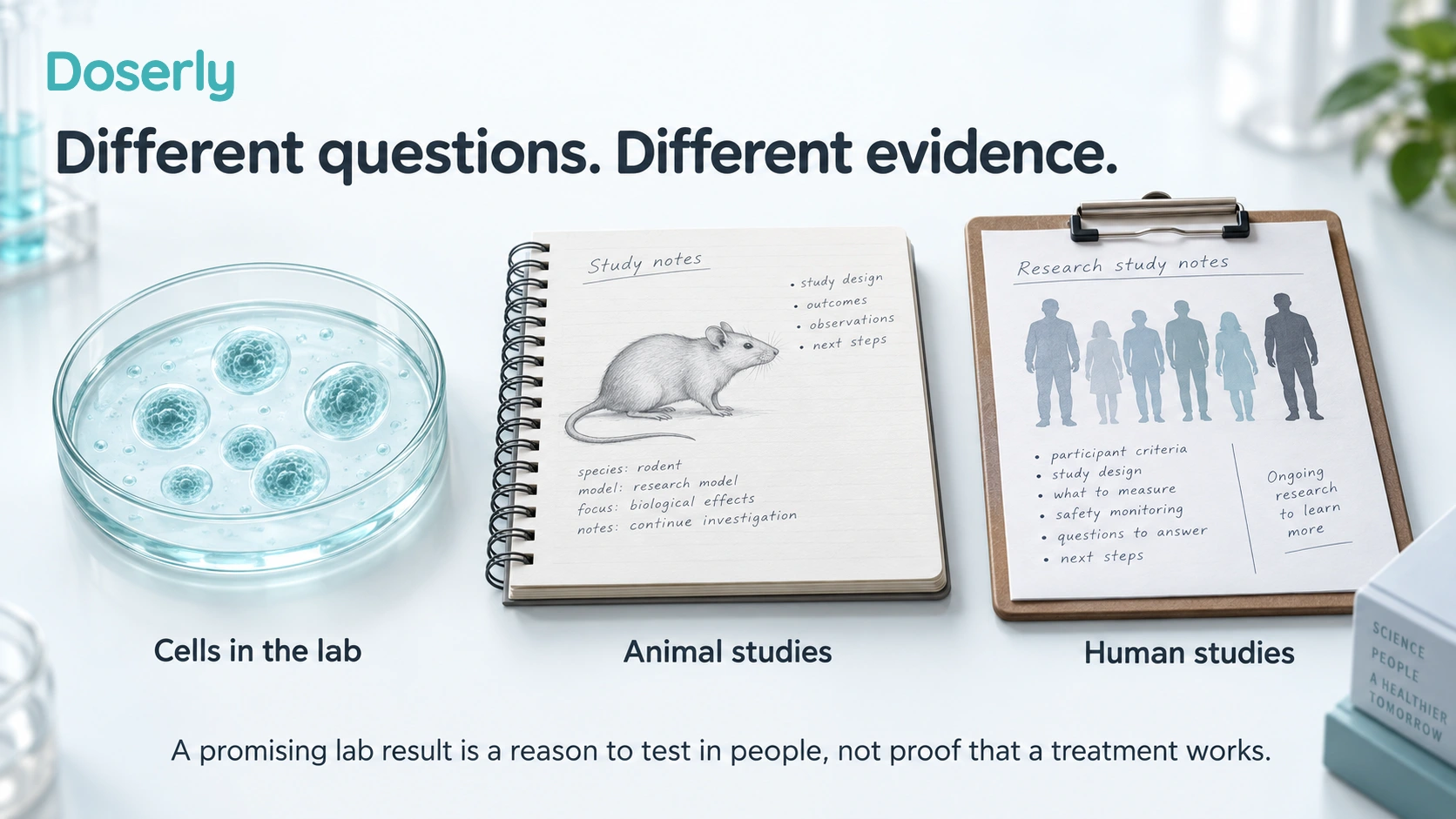
The direct human literature includes pediatric growth, older-adult muscle outcomes and liver markers in habitual drinkers or older women with obesity. A 24-week child trial found greater height gain with one fermented product. A 12-week older-adult trial found no muscle-strength or mass benefit beyond walking. Liver-marker trials were small and do not establish treatment of liver disease. [1], [2], [3], [4]
Evidence map
Specific signal, specific population
How do forms and labels differ?
Fermented oyster extract, unfermented oyster tissue, oyster powder, oyster shell calcium and zinc-containing oyster formulas are not interchangeable. Record oyster species, tissue versus shell, fermentation strain, standardized constituent, co-ingredients and exact milligrams.
How should the product be stored?
Follow the finished product’s labeled storage conditions, keep it dry in its original container and protect it from children. Discard a broken-seal, heat-damaged, expired or untraceable product.
What does human research show?
| Question | Best direct evidence | Finding | Boundary |
|---|---|---|---|
| Main signal | Jeong 2021 · pediatric growth RCT · 100 children | Height gain and height SDS favored extract; pediatric, product-specific result | One study, multiple endpoints |
| Synthesis | Lee 2022 · muscle RCT · 54 randomized, 49 completed | No between-group strength, muscle-mass, biomarker or adverse-event benefit | Mixed products and populations |
| Universal dose? | None | Not established | Rows cannot be combined |
Product boundary
A front label does not establish equivalence
What are the risks and interactions?
Shellfish allergy can be severe. A processed extract cannot be assumed free of allergenic proteins without validated testing. Product-specific concerns include sodium, zinc, added taurine, calcium from shell material and contamination from marine sourcing. Children, pregnancy, liver disease and anyone with shellfish allergy need conservative review. [5], [6]
Seek urgent care for trouble breathing, throat swelling, fainting, severe hives, repeated vomiting or a suspected overdose. Keep the package available for a poison centre or clinician.
What is the legal and regulatory status?
In the United States, FDA does not approve supplements for safety and effectiveness before sale. In Canada, verify the exact product and NPN. Tested athletes should review product-specific rules and contamination risk. [5], [6]
When should use stop?
Stop and seek advice for an allergic reaction, persistent gastrointestinal symptoms, worsening infection or an unexpected change in clinician-directed laboratory results.
What should be monitored?
Record brand, lot, species, tissue or shell, fermentation, amount per administration, daily total and every co-ingredient. Match monitoring to the goal: growth decisions belong in pediatric care; abnormal liver enzymes require diagnostic evaluation; strength outcomes need reproducible functional measures.
What can community experience add?
Reports can raise questions about taste, odor, nausea, allergy and capsule burden. They cannot establish height benefit, treat liver disease or explain a laboratory change. No systematic current community sample was assembled, so no consensus dose or fermented-product equivalence is reported.
How do related options compare?
| Option | Main distinction |
|---|---|
| Studied product | Exact source formulation and population |
| Different retail product | Uncertain transfer without comparable standardization |
| Clinical treatment | Diagnosis, dosing and monitoring matched to disease |
Common questions
Does it replace treatment?
No. Infection, anemia or gastrointestinal disease needs diagnosis and appropriate treatment.
What dose is proven?
No universal dose. The table shows protocols tied to their population, product and endpoint.
Are fermented and unfermented extracts equivalent?
No. Fermentation changes composition, and the human trials used named fermented products.
Is it safe with shellfish allergy?
Not without specialist review. Processing does not prove removal of allergenic proteins.
How should benefit be judged?
Choose a relevant outcome and review date in advance, then retain dose, adherence and competing factors.
Is an immune claim enough?
No. Immunoglobulins, symptoms, confirmed infections and inflammatory markers are different endpoints.
Glossary
Terms for reading the evidence.
- Endpoint
- A defined result measured in a study.
- Heterogeneity
- Variation among pooled study methods or results.
- Standardization
- A measured specification for a product component.
- Comparator
- The placebo, product or care against which an intervention is compared.
- Cow’s-milk protein allergy
- An immune reaction distinct from lactose intolerance.
How this guide was researched
NCBI identities, publication notices, indexed abstracts and available open methods were checked. Protocols preserve per-administration amount, daily total, population, comparator and null results.
Research record · checked October 9, 2026
Identity: every PMID/PMCID was checked through NCBI EFetch for title, authors, journal, DOI and publication notices. No linked retraction, correction or expression of concern appeared for the sources used.
Full methods: PMC6425115 and PMC10825996 were read for protocols, populations, outcomes and limitations.
Important correction: PMC7231218 maps to PMID 32276466; PMID 32290424 is an unrelated cattle-mobility paper and was excluded.
Community: no systematic current sample was assembled.
Explore the sources
Primary human evidence and official context.
Showing 6 sources
- 01
Efficacy and safety of fermented oyster extract for height of children with short stature: a randomized placebo-controlled trial. ↗
Randomized double-blind placebo-controlled trial
One hundred children; 500 mg liquid stick once nightly for 24 weeks; growth endpoints favored the specific fermented product.
- 02
Effect of fermented oyster (Crassostrea gigas) extracts and regular walking on muscle strength and mass in older adults with relatively low muscle mass: A randomized controlled trial. ↗
Randomized controlled trial
Fifty-four randomized, 49 completed; 400 mg after each of three meals for 12 weeks; no muscle benefit versus placebo plus walking.
- 03
Effects of fermented oyster extract supplementation on free fatty acid and liver enzymes in older women with obesity. ↗
Randomized double-blind placebo-controlled trial
Forty older women with obesity; 12-week laboratory-marker study with narrow generalizability.
- 04
Improvement of liver function by the administration of oyster extract as a dietary supplement to habitual alcohol drinkers: A pilot study. ↗
Pilot randomized double-blind feeding trial
Eighty-four randomized; 1,000 mg/day for 12 weeks; GGT-change signal in habitual drinkers with industry-linked context.
- 05
A Review of Bioactive Compounds in Oyster Shell and Tissues. ↗
Narrative review
Separates shell and tissue chemistry; many biological claims are preclinical rather than oral human outcomes.
- 06
FDA 101: Dietary Supplements ↗
Official supplement overview
FDA does not approve supplements for safety and effectiveness before sale.
No matching sources
Try a different term or show the full list.
Editorial note
This guide separates composition, mechanism, biomarker, symptom and clinical outcome. It does not turn a narrow signal into a general immune promise.