
Prebiotic Fibers (Inulin, FOS, GOS): The Complete Supplement Guide
On this page
Quick Reference Card
Attribute
Common Name
- Detail
- Prebiotic Fibers
Attribute
Other Names / Aliases
- Detail
- Inulin, fructooligosaccharides (FOS), oligofructose, galactooligosaccharides (GOS), chicory root fiber
Attribute
Category
- Detail
- Prebiotic fiber, added fiber, non-digestible carbohydrate
Attribute
Primary Forms & Variants
- Detail
- Inulin, short-chain FOS, oligofructose, GOS, and mixed prebiotic-fiber blends. These are related but not interchangeable in fermentation speed, tolerance, and evidence base.
Attribute
Typical Dose Range
- Detail
- Commonly studied ranges are roughly 3 to 12 g/day, but tolerance varies and some trials use lower or higher ranges depending on the substrate and goal [4][5][6]
Attribute
RDA / AI / UL
- Detail
- No specific RDA, AI, or UL exists for prebiotic fibers as a supplement class. Broader fiber-intake targets exist, but they are not specific to inulin, FOS, or GOS [1]
Attribute
Common Delivery Forms
- Detail
- Powders, sticks, flavored drink mixes, capsules, gummies, bars, and products with added chicory root fiber
Attribute
Best Taken With / Without Food
- Detail
- Product dependent. Many users take prebiotic fibers with meals or mixed into food or drinks, mainly for tolerability rather than because of a universally required timing rule.
Attribute
Key Cofactors
- Detail
- Adequate hydration, realistic fiber expectations, dose patience, and attention to IBS or FODMAP sensitivity
Attribute
Storage Notes
- Detail
- Usually stored sealed, dry, and away from heat and moisture. Powders are generally stable but clumping can occur if humidity gets into the container.
Overview
The Basics
Prebiotic fibers are not bacteria. They are food for bacteria. The simplest way to think about them is as specific non-digestible carbohydrates that pass through the small intestine and become fuel for selected microbes in the colon. If probiotics are the seeds, prebiotic fibers are the fertilizer [2][3].
The category usually centers on inulin, FOS, and GOS. These compounds are often grouped together in supplement marketing, but they do not behave identically. Some ferment faster, some are better tolerated, and some have stronger evidence for specific outcomes such as laxation or calcium absorption [2][4][6].
This is also one of the most misunderstood supplement categories in practice. A product labeled "prebiotic" is often marketed as universally gut-friendly, yet many real users experience the opposite, especially if they have IBS, FODMAP sensitivity, or a history of bloating. That does not mean prebiotic fibers are ineffective. It means response is highly context-dependent [2][5][8].
The Science
Prebiotics are now defined by selective utilization. The modern consensus standard is not simply "fermentable fiber," but rather a substrate that is selectively utilized by host microorganisms and confers a health benefit [2]. Inulin-type fructans and GOS remain the best-established examples in human research [2][4].
Regulatory and nutritional definitions partially overlap but are not identical. The Institute of Medicine framework separates intrinsic dietary fiber from isolated added fiber, while FDA labeling guidance focuses on which isolated or synthetic non-digestible carbohydrates can be declared as dietary fiber on labels [1][7]. That is why a reader will see the same ingredient described as prebiotic, added fiber, chicory root fiber, or dietary fiber depending on the context.
Human evidence is strongest for microbiota effects, improved laxation in selected populations, and some mineral-absorption outcomes. Evidence for broader metabolic or body-composition claims exists but is more heterogeneous and less settled [3][4][5][6].
Chemical & Nutritional Identity
Property
Classification
- Detail
- Non-digestible carbohydrate / added fiber / prebiotic substrate
Property
Main Substrates
- Detail
- Inulin, fructooligosaccharides, oligofructose, galactooligosaccharides
Property
Core Structural Note
- Detail
- Fructans such as inulin and FOS are fructose-based chains; GOS are galactose-based oligosaccharides
Property
Digestion Status
- Detail
- Not digested in the small intestine to any meaningful degree
Property
Primary Site of Activity
- Detail
- Colon, via microbial fermentation
Property
Molecular Formula
- Detail
- Not one single value, because this is a category of related carbohydrates rather than one molecule
Property
Molecular Weight
- Detail
- Varies by chain length and substrate type
Property
CAS Number
- Detail
- Not applicable as a category-wide identifier
Property
PubChem CID
- Detail
- Not applicable as a single category-wide identifier
Property
Nutritional Status
- Detail
- Added fiber rather than an essential nutrient
Property
Labeling Context
- Detail
- Often sold as isolated fiber ingredients and counted toward total fiber on labels when regulatory criteria are met [1][7]
Prebiotic fibers are better understood by function and structure than by a single chemical identity. Chain length, branching pattern, and source all matter because they affect where fermentation happens, how fast gas is produced, and which microbes are most likely to use the substrate [2][3][4].
Mechanism of Action
The Basics
Prebiotic fibers work by changing the gut environment from the bottom up. They are not absorbed like caffeine or an amino acid. Instead, they travel to the colon, where microbes ferment them and produce metabolites such as short-chain fatty acids. Those metabolites can influence the gut lining, stool characteristics, and local immune signaling [2][3].
That is why this category often has a two-sided reputation. The same fermentation process that may help stool regularity and microbial diversity can also produce gas and bloating, especially when the dose rises faster than a person can tolerate [3][4][8].
The Science
The consensus prebiotic model centers on selective microbial utilization and host benefit [2]. In practical terms, inulin-type fructans and GOS reach the colon largely intact, where they are fermented by organisms such as bifidobacteria and other saccharolytic taxa, leading to downstream metabolite production, lower luminal pH, and altered ecosystem competition [2][3][4].
Human and translational reviews link prebiotic fermentation to several biologically plausible effects: increased short-chain fatty acid production, improved barrier function, greater mineral solubility in the colon, and changes in microbial composition toward taxa commonly associated with gut resilience [3][4]. These mechanisms are credible, but they are not identical across all substrates or all users.
Pathway
The practical pathway for prebiotic fibers looks like this:
- the substrate is consumed as an isolated fiber or mixed prebiotic product;
- it resists small-intestinal digestion;
- it reaches the colon and is fermented by selected microbes;
- fermentation changes microbial composition and metabolite output;
- downstream effects may include changes in stooling, gas production, digestive comfort, mineral handling, and local gut-environment signaling [1][2][3][4].
The key point is that prebiotic fibers act indirectly. They influence host outcomes through microbial ecology and fermentation products rather than by entering circulation in the way most classic supplements do.
Absorption & Bioavailability
The Basics
Prebiotic fibers are unusual because "good absorption" is not the goal. In fact, the point is that they mostly avoid digestion in the upper gut and arrive in the colon available for fermentation. If you absorbed them like simple sugars, they would stop acting like prebiotics [1][2].
The bigger real-world question is not whether they are absorbed, but how they ferment. Faster fermentation can feel more powerful, but it can also feel rougher. Slower or differently structured fibers may be gentler for some users, though the evidence is not neat enough to promise that one form will be best for everyone [3][4].
The Science
The older IOM framework distinguishes intact dietary fiber from isolated added fiber but still emphasizes nondigestibility as a core feature [1]. The ISAPP consensus then adds a more specific prebiotic requirement: selective utilization by host microorganisms with evidence of host benefit [2]. Together, those frameworks explain why inulin, FOS, and GOS are discussed less in terms of plasma exposure and more in terms of fermentability, chain length, and site of action.
Human reviews suggest that inulin-type fructans differ in chain-length behavior, which may affect fermentation kinetics and downstream outcomes such as bloating, bifidogenic effects, and mineral absorption [3][4]. The field still lacks enough head-to-head data to present a single bioavailability ranking analogous to what guides use for magnesium salts or curcumin formulations.
Research & Clinical Evidence
The Basics
The strongest human story for prebiotic fibers is not "they fix the gut." It is more specific than that. Certain fibers, in certain doses, can improve stooling, shift the microbiota in a bifidogenic direction, and possibly support calcium absorption or related downstream effects [3][4][5][6].
Where the evidence becomes less certain is in the bigger lifestyle claims. Appetite, metabolic health, inflammation, and body composition all show some interesting signals in the literature, but the results are not consistent enough to treat them as guaranteed outcomes from any prebiotic-fiber supplement [3][4].
The Science
The 2022 systematic review of inulin-type fructans concluded that human trials support a prebiotic effect, with reported increases in Bifidobacterium, Lactobacillus, and Faecalibacterium prausnitzii, plus potential benefits in laxation, barrier function, insulin sensitivity, lipid profile, and calcium or magnesium absorption [4]. A 2024 review similarly describes microbiota, SCFA, immune, and mineral-related mechanisms while emphasizing host-level variability and substrate differences [3].
Clinical benefit is most concrete in bowel-function settings. In a randomized cross-over trial, 12 g/day chicory inulin improved stool frequency and constipation-related outcomes over 4 weeks, while also shifting the microbiota toward responder patterns involving bifidobacteria and butyrate-associated taxa [5]. A separate randomized trial found that GOS increased calcium absorption and bifidobacteria, which gives a mechanistic and clinical bridge between prebiotic fermentation and bone-related physiology [6].
Evidence & Effectiveness Matrix
Category
Gut Health
- Evidence Strength
- 7/10
- Reported Effectiveness
- 5/10
- Summary
- Human trials and reviews support real microbiota and gut-environment effects, but community experience is mixed and strongly host-dependent [3][4][5].
Category
Digestive Comfort
- Evidence Strength
- 6/10
- Reported Effectiveness
- 4/10
- Summary
- Bowel-function benefit is real in some users, yet community feedback shows frequent bloating, gas, and cramping, especially in IBS and FODMAP-sensitive users [4][5][8].
Category
Nausea & GI Tolerance
- Evidence Strength
- 5/10
- Reported Effectiveness
- 3/10
- Summary
- The research base supports dose-sensitive tolerability concerns, and anecdotal reports repeatedly frame GI tolerance as the main limiting factor [3][5][8].
Category
Side Effect Burden
- Evidence Strength
- 5/10
- Reported Effectiveness
- 3/10
- Summary
- Most risk is GI rather than systemic, but the practical burden can still be high enough to stop use early in sensitive users [3][8].
Category
Treatment Adherence
- Evidence Strength
- 4/10
- Reported Effectiveness
- 4/10
- Summary
- There is no major systemic safety barrier for most healthy users, but adherence is often undermined by bloating, hidden chicory root exposure, or poor fit with the rest of the diet [7][8].
Category
Bone Health
- Evidence Strength
- 6/10
- Reported Effectiveness
- Community data not yet collected
- Summary
- Human GOS data support calcium-absorption effects, but community discussion is too sparse to assign a reliable reported-effectiveness score [6].
Benefits & Potential Effects
The Basics
The most practical benefit of prebiotic fibers is bowel-pattern improvement when the substrate matches the person's tolerance. Some users care most about constipation relief. Others care about microbiome support, stool consistency, or adding fermentable fiber they are not getting from food [3][5].
The second real benefit is that these fibers may do more than just move stool. Some data suggest they can support calcium absorption and broader gut-environment changes that could matter for barrier function and metabolism. That is promising, but it still does not justify marketing them as a cure-all [3][4][6].
When you're taking multiple supplements, it's hard to know which one is doing the heavy lifting. The benefits described above may overlap with effects from other items in your stack, lifestyle changes, or seasonal variation. Doserly helps you untangle that by keeping everything in one place, with timestamps, doses, and outcomes logged together.
Over time, this builds something more valuable than any product review: your personal evidence record. You can see exactly when you started this supplement, what else was in your routine at the time, and how your tracked health markers responded. That clarity makes the difference between guessing and knowing, whether you're talking to a healthcare provider or simply deciding if it's worth reordering.
Capture changes while they are still fresh.
Log symptoms, energy, sleep, mood, and other observations alongside protocol events so patterns do not live only in memory.
Trend view
Symptom timeline
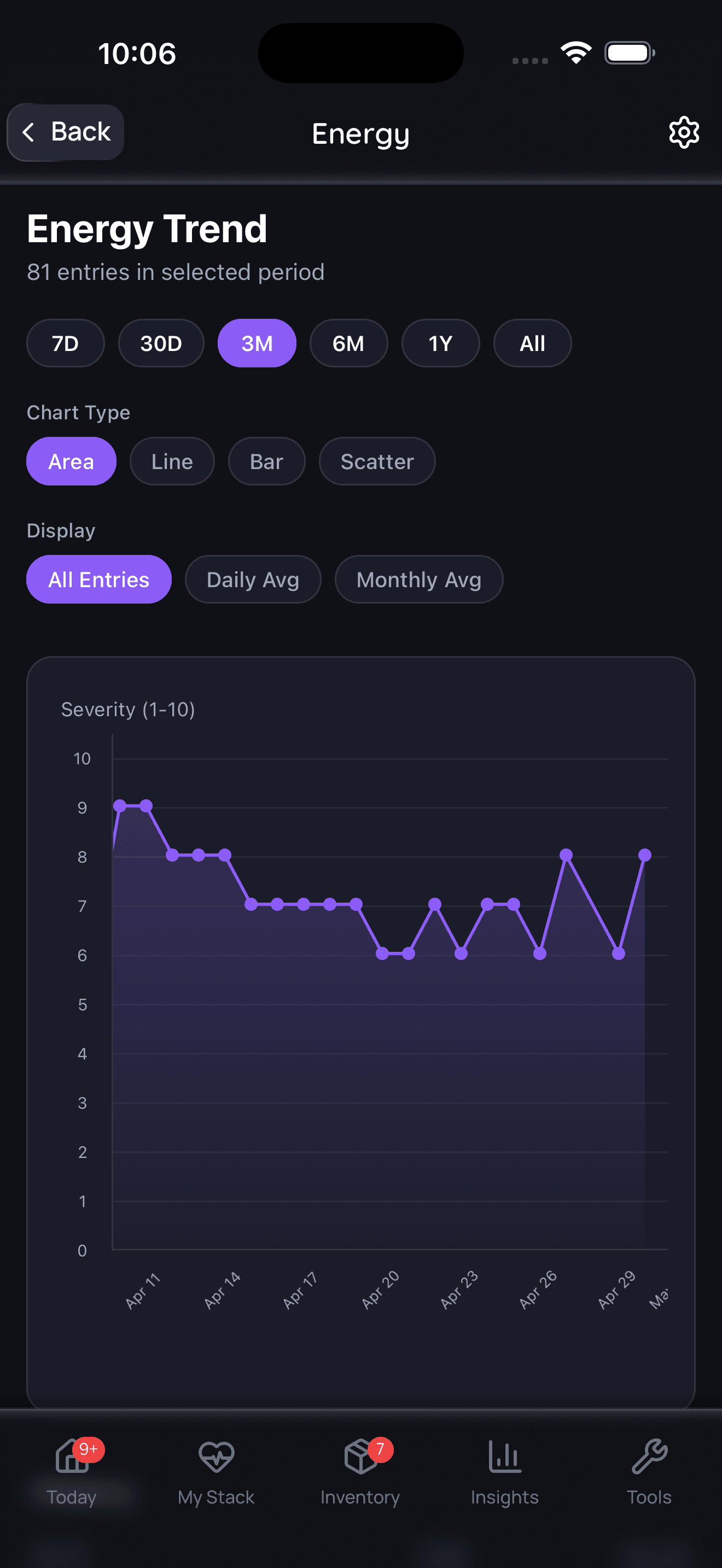
Symptom tracking is informational and should be interpreted with a qualified clinician.
The Science
Inulin-type fructans have the best-developed class-level human evidence for prebiotic activity, with reported increases in beneficial taxa and selected improvements in laxation, barrier function, and metabolic markers [4]. The strongest clinically useful digestive outcome in the current dossier is constipation-related benefit with chicory inulin in a 4-week randomized trial [5].
GOS contributes a second distinct benefit domain. In addition to bifidogenic effects, the randomized calcium-absorption study suggests a plausible bone-support angle through improved mineral handling [6]. The guide should still keep the tone restrained because these outcomes are substrate-specific and population-specific rather than universal to every "prebiotic blend."
Side Effects & Safety
The Basics
The main safety story with prebiotic fibers is not liver damage or stimulant-like systemic risk. It is tolerance. Gas, bloating, cramping, urgency, constipation shifts, and sometimes nausea are the issues most people actually notice [3][5][8].
That makes this one of the clearest cases where "natural" does not automatically mean "easy." A supplement can be biologically reasonable and still feel awful in the wrong gut context. IBS, low-FODMAP diets, recent GI flares, or very aggressive starting doses all make this category more likely to backfire [5][8].
Managing side effect risks across a multi-supplement stack can feel overwhelming, especially when interactions between supplements, medications, and foods add layers of complexity. Doserly brings all of that into a single safety view so nothing falls through the cracks.
Rather than researching every possible interaction yourself, the app checks your full stack automatically and flags supplement-drug and supplement-supplement interactions that warrant attention. If you do experience something unexpected, logging it takes seconds, and over time the app helps you spot patterns: whether symptoms correlate with specific doses, timing, or combinations. One place for the safety picture that matters most when your stack grows beyond a few bottles.
Connect protocol changes to labs and health markers.
Doserly can keep lab results, biomarkers, symptoms, and dose history close together so follow-up conversations have better context.
Insights
Labs and trends
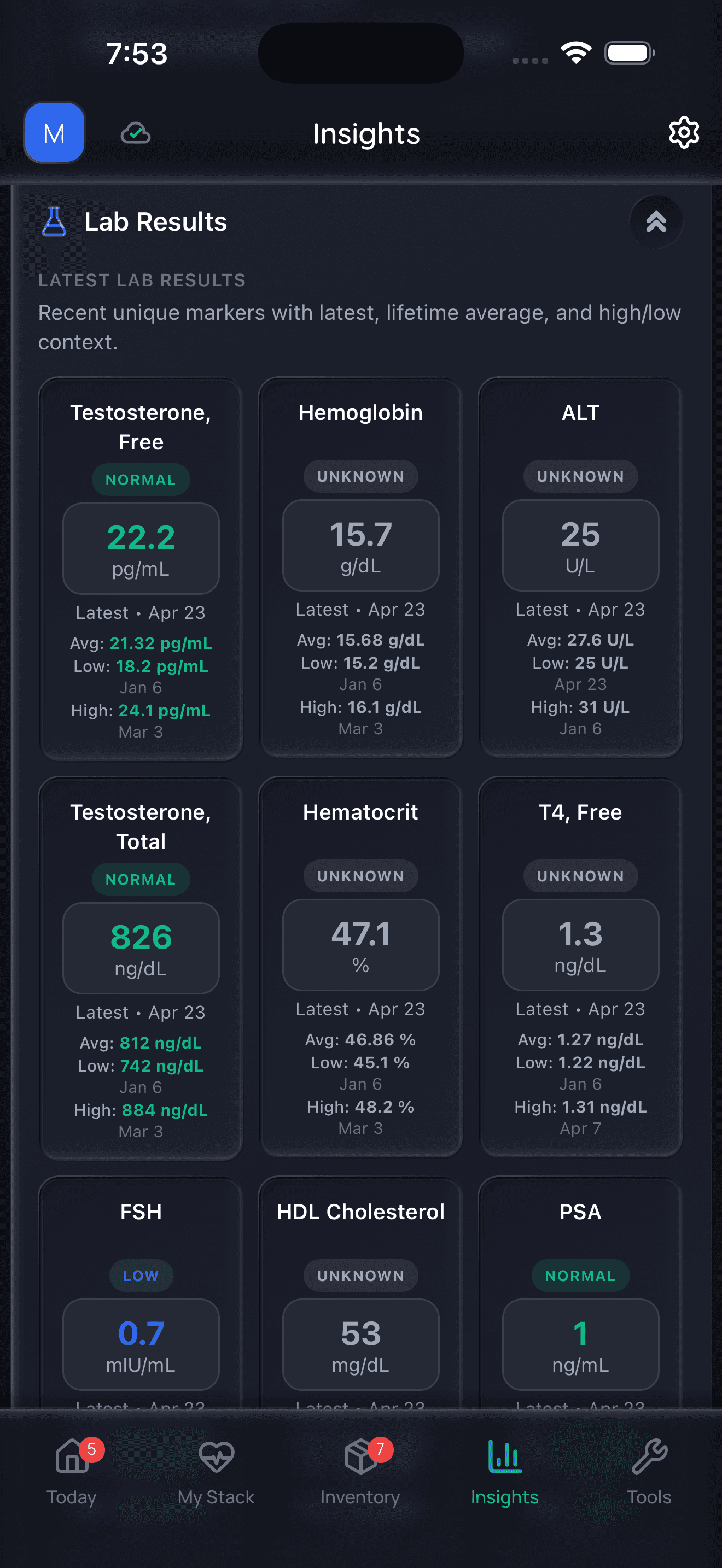
Doserly organizes data; it does not diagnose or interpret labs for you.
The Science
Research and community data point in the same broad direction: tolerability is the major limiter. Fermentation-driven gas and osmotic shifts can be expected when dose rises too quickly or when the chosen substrate is poorly matched to a person's tolerance profile [3][5][8]. General consumer-facing fiber guidance also frames rapid fiber escalation as a common reason for gas, bloating, and cramps in the broader fiber literature [8].
The important nuance is that these are often mechanism-linked side effects rather than signs of systemic toxicity. Fermentation is the point, but excessive or poorly tolerated fermentation is also the main reason people discontinue. In that sense, side effects and mechanism are tightly connected for this category [2][3].
Dosing & Usage
The Basics
There is no single standard prebiotic-fiber dose that works for every substrate or every goal. Published doses range from modest daily gram amounts to 12 g/day in constipation trials, and the right interpretation is usually "tolerance first, claims second" [4][5][6].
Many clinicians and experienced users treat this category as something to ramp carefully, not something to push hard on day one. That is not a universal rule, but it reflects the basic reality that fermentation speed and symptom sensitivity matter at least as much as the number on the scoop [3][8].
When your stack includes several supplements, each with its own dose, form, and timing requirements, the logistics alone can derail consistency. Doserly consolidates all of it into one protocol view, so every dose across your entire routine is accounted for without spreadsheets or guesswork.
The app also tracks cumulative intake for nutrients that appear in multiple products. If your multivitamin, standalone supplement, and fortified protein shake all contain the same nutrient, Doserly adds them up and shows you the total alongside recommended and upper limits. Managing a thoughtful supplement protocol shouldn't require a degree in nutrition science. The app handles the complexity so you can focus on staying consistent.
Turn symptom and safety notes into a clearer timeline.
Doserly helps you log doses, symptoms, and safety observations side by side so patterns are easier to discuss with a qualified clinician.
Pattern view
Logs and observations

Pattern visibility is informational and should be reviewed with a clinician.
The Science
The best concrete dose in the current dossier is 12 g/day chicory inulin over 4 weeks in functional constipation, where bowel outcomes improved [5]. GOS studies use different dose structures and population contexts, so there is no single transferable number that covers all prebiotic substrates [6]. Systematic-review data also emphasize that chain length and formulation may alter both effect and tolerability [4].
The most defensible way to present dosing is therefore as a range of commonly studied gram-level intakes, with the caveat that different fibers and different users tolerate those ranges differently. There is no meaningful mg-per-kg precision framework or universally accepted "best" dose for the prebiotic category.
What to Expect
Prebiotic fibers usually do not feel neutral. If someone responds, the first noticeable changes are often bowel-pattern changes, gas changes, or both. During the first few days, some users notice more fermentation, which can mean more gas or bloating before anything feels better [5][8].
Over two to four weeks, the people who tolerate the substrate may notice steadier stool frequency, easier bowel movements, or less constipation-related discomfort [5]. Beyond that point, any broader benefits are usually subtle and indirect rather than dramatic. The right expectation is gradual digestive change, not a fast transformation in whole-body health [3][4].
Interactions & Compatibility
SYNERGISTIC
- Lactobacillus, Bifidobacterium, and Saccharomyces boulardii: often paired conceptually with prebiotics, though response depends on the exact strains and the user's tolerance.
- Synbiotics: the whole synbiotic concept is built around combining selected microbes with selected substrates.
- Resistant Starch and Postbiotics: related gut-ecosystem strategies that may overlap in metabolic or digestive goals.
- Calcium and Magnesium: mechanistic and selected human data suggest some prebiotic fibers may influence mineral absorption [4][6].
CAUTION / AVOID
- Low-FODMAP or fructan-sensitive dietary patterns: inulin and related fructans may aggravate symptoms even when the label says "gut health."
- IBS, severe bloating, or SIBO-like symptom patterns: community reports and clinical context both support extra caution [5][8].
- Mixed bars, drinks, or powders with hidden chicory root fiber: the ingredient may be present in "healthy" foods and confound symptom tracking.
- Other aggressive fiber, laxative, or gut-active protocols started at the same time: interpretation becomes messy because GI response can no longer be attributed cleanly.
How to Take
Many practitioners and users treat prebiotic fibers as mixable support ingredients rather than as capsule-only supplements. Powders are commonly stirred into water, yogurt, oats, smoothies, or other foods. The practical advantage is flexible dosing. The practical downside is that the same flexibility can make it easy to overdo if the scoop size is not read carefully.
For people considering this category, the more cautious pattern in the literature and the community is to separate "fiber sounds healthy" from "this exact substrate fits my gut right now." Product choice, grams per serving, total stack, and dietary FODMAP load all matter. This is one of the clearest supplement categories where label literacy changes the experience.
Choosing a Quality Product
The most important quality marker is not a flashy microbiome claim. It is clear identification of the actual fiber substrate. A strong label should tell you whether the product contains inulin, oligofructose, FOS, GOS, or a mixed blend, and how many grams of each are present per serving [2][7].
Red flags include:
- proprietary blends that hide the amount of each fiber;
- "prebiotic" used as a marketing word with no actual substrate named;
- bars or powders that tuck chicory root fiber into a long ingredient list;
- broad promises about immunity, weight loss, and gut healing without specifying dose or fiber type.
For athletes and other contamination-sensitive users, third-party certification still matters even though the core fibers themselves are not prohibited by WADA. The main product-level concern is contamination or poor labeling, not the intrinsic status of inulin, FOS, or GOS [10][11].
Storage & Handling
Most prebiotic-fiber products are relatively straightforward to store. Powders and sticks are usually kept sealed, dry, and away from heat or humidity. Moisture matters more than temperature in day-to-day handling because clumping and scoop inaccuracy become more likely when powder pulls in water from the air.
Products that combine prebiotics with live probiotics may have stricter storage needs than prebiotic-only powders. In those cases, the probiotic component usually drives the storage rule, not the fiber itself.
Lifestyle & Supporting Factors
Prebiotic supplements make the most sense when viewed inside a broader fiber picture. If the rest of the diet is low in fruits, vegetables, legumes, or tolerated whole-food fibers, a supplement may help fill part of the gap, but it does not replace the larger food pattern [1][8].
Hydration matters because stool effects are easier to interpret when overall fluid intake is not lagging. Symptom tracking matters too. This category is unusually sensitive to the difference between "helpful fermentation" and "too much fermentation," and that difference is easier to catch when someone can connect symptoms to a named ingredient and a specific serving size.
Regulatory Status & Standards
In the United States, prebiotic fibers live inside the dietary-fiber and supplement-labeling framework rather than a drug framework. FDA guidance explicitly recognizes inulin and inulin-type fructans plus GOS as isolated non-digestible carbohydrates that can be declared as dietary fiber in appropriate contexts [7].
Canada approaches the category with a similar emphasis on evidence-backed claims and careful labeling. Claim language about "prebiotic" effects should stay tied to supported physiological effects rather than broad wellness promises [9].
In Europe, the concept is shaped more by food-claim and fiber definitions than by a distinct "prebiotic supplement" approval lane. Current sources in this dossier are thinner on EU product-specific detail than on U.S. and Canada framing.
Australia-specific regulatory detail is limited in the current dossier.
For athletes, the ingredient-level picture is straightforward. Inulin, FOS, and GOS do not fit the substance classes prohibited by the current WADA framework [10][11]. The practical athlete caveat is contamination risk from mixed products, not the prebiotic substrates themselves. Athletes should still verify current status, prefer certified products when possible, and check current sport-specific rules before use.
FAQ
Is prebiotic fiber the same thing as a probiotic?
No. Prebiotic fibers are non-digestible carbohydrates that feed selected microbes, while probiotics are live microorganisms. Many products are marketed as if the two are interchangeable, but they do different jobs [2].
Do prebiotic fibers always improve bloating?
No. Based on available research and community reports, prebiotic fibers can improve regularity and some gut outcomes for certain users, but they can also worsen bloating and cramping, especially in IBS or FODMAP-sensitive users [3][5][8].
Is chicory root fiber the same thing as inulin?
Chicory root is a common source of inulin and oligofructose. In labels and community discussion, "chicory root fiber" is often effectively functioning as an inulin warning or shorthand.
Are GOS and inulin interchangeable?
Not exactly. They are both prebiotic substrates, but they differ structurally and do not have identical evidence or tolerability patterns [2][4][6].
How much prebiotic fiber do studies usually use?
Based on available trials, commonly studied intakes are in the gram range rather than tiny capsule doses. Exact study amounts vary by substrate and goal, and the data do not support one universal dose for all users [4][5][6].
Can prebiotic fiber support bone health?
There is some human evidence that GOS can improve calcium absorption, which is one reason bone-health discussion appears in this category. That is promising, but it should not be interpreted as proof that every prebiotic supplement improves bone outcomes [6].
Why do some people love prebiotic fiber while others hate it?
The best explanation is context. Baseline gut sensitivity, total FODMAP load, exact substrate, and dose all seem to change the user experience. Community discussion is especially polarized in IBS-focused groups [3][5][8].
Are prebiotic fibers safe for athletes?
From an anti-doping-list perspective, the core substrates are not the issue. The bigger athlete concern is product contamination or undisclosed mixed ingredients, which is why certification still matters [10][11].
Do I need a supplement if I already eat plenty of fiber-rich foods?
That depends on the reason for using it. Whole-food fiber and supplement-grade prebiotic substrates overlap but are not identical. Some people use a supplement for a more targeted substrate, while others may get enough benefit from diet alone [1][2][8].
Myth vs. Fact
Myth
Prebiotic fiber is always gentle on the gut.
- Fact
- Prebiotic fibers often cause gas, bloating, or cramping before they cause any benefit, and some users do not tolerate them well at all [3][5][8].
Myth
Any fermentable fiber counts as a prebiotic.
- Fact
- The modern standard is more specific. A prebiotic must be selectively utilized by host microorganisms and confer a health benefit [2].
Myth
Inulin, FOS, and GOS all do the same thing.
- Fact
- They are related substrates, but chain length, structure, fermentation rate, and evidence base differ enough that they should not be treated as fully interchangeable [2][4][6].
Myth
If a bar says "prebiotic," it must be good for IBS.
- Fact
- Community reports often say the opposite. Hidden chicory root fiber is a frequent complaint in IBS and FODMAP-sensitive users [8].
Myth
More prebiotic fiber is always better.
- Fact
- Higher doses can mean stronger fermentation, but they can also mean worse tolerance. The category is highly dose-sensitive [3][5].
Myth
Prebiotic fibers are banned in sport because they change metabolism.
- Fact
- The current WADA framework does not treat core prebiotic fibers as prohibited substances. Product contamination remains the real athlete concern [10][11].
Sources & References
- Institute of Medicine (US) Panel on the Definition of Dietary Fiber. Dietary Reference Intakes Proposed Definition of Dietary Fiber. National Academies Press; 2001. NCBI Bookshelf. https://www.ncbi.nlm.nih.gov/books/NBK223591/
- Gibson GR, Hutkins R, Sanders ME, et al. Expert consensus document: the International Scientific Association for Probiotics and Prebiotics consensus statement on the definition and scope of prebiotics. Nat Rev Gastroenterol Hepatol. 2017;14(8):491-502. https://www.nature.com/articles/nrgastro.2017.75
- Recent PubMed-indexed review on prebiotics, gut health, SCFAs, and host-response variability. PMID: 41683196. https://pubmed.ncbi.nlm.nih.gov/41683196/
- Hughes RL, Alvarado DA, Swanson KS, Holscher HD. The Prebiotic Potential of Inulin-Type Fructans: A Systematic Review. Adv Nutr. 2022;13(2):492-529. PMID: 34555168. https://pubmed.ncbi.nlm.nih.gov/34555168/
- Randomized double-blind placebo-controlled cross-over trial of 12 g/day chicory inulin in adults with functional constipation. PMID: 41233756. https://pubmed.ncbi.nlm.nih.gov/41233756/
- Randomized double-blind cross-over trial of GOS on calcium absorption and bifidobacteria. PMID: 23507173. https://pubmed.ncbi.nlm.nih.gov/23507173/
- FDA. Guidance for Industry: Declaration of Certain Isolated or Synthetic Non-Digestible Carbohydrates as Dietary Fiber on Nutrition and Supplement Facts Labels. https://www.fda.gov/regulatory-information/search-fda-guidance-documents/guidance-industry-declaration-certain-isolated-or-synthetic-non-digestible-carbohydrates-dietary
- MedlinePlus. Dietary Fiber. https://medlineplus.gov/dietaryfiber.html
- Canadian food-label health-claim guidance relevant to fiber and prebiotic wording. https://inspection.canada.ca/en/food-labels/labelling/industry/health-claims
- USADA. Prohibited List overview. https://www.usada.org/substances/prohibited-list/
- WADA. 2026 Prohibited List resources. https://www.wada-ama.org/en/resources/2026-prohibited-list