
In this guide
What does this guide compare?
This ingredient collection is not the clinically studied AREDS2 formulation.
This collection compares products discussed around one topic. It is not a protocol to take in full. Links to individual profiles appear after the article.
| Reference point | Context |
|---|---|
| Products compared | 6 |
| Evidence scope | Ingredient, formulation, population and measured outcome |
| Complete combination | The cited studies do not automatically validate all members together |
Which products are compared?
Lutein, Zeaxanthin, Fish Oil (EPA/DHA), Vitamin C, Zinc, Astaxanthin.
Individual profiles describe formulation, source-reported amounts, tolerability and interactions. Those details remain ingredient-specific. An amount studied alone is not automatically appropriate in a combination.
How do their roles differ?
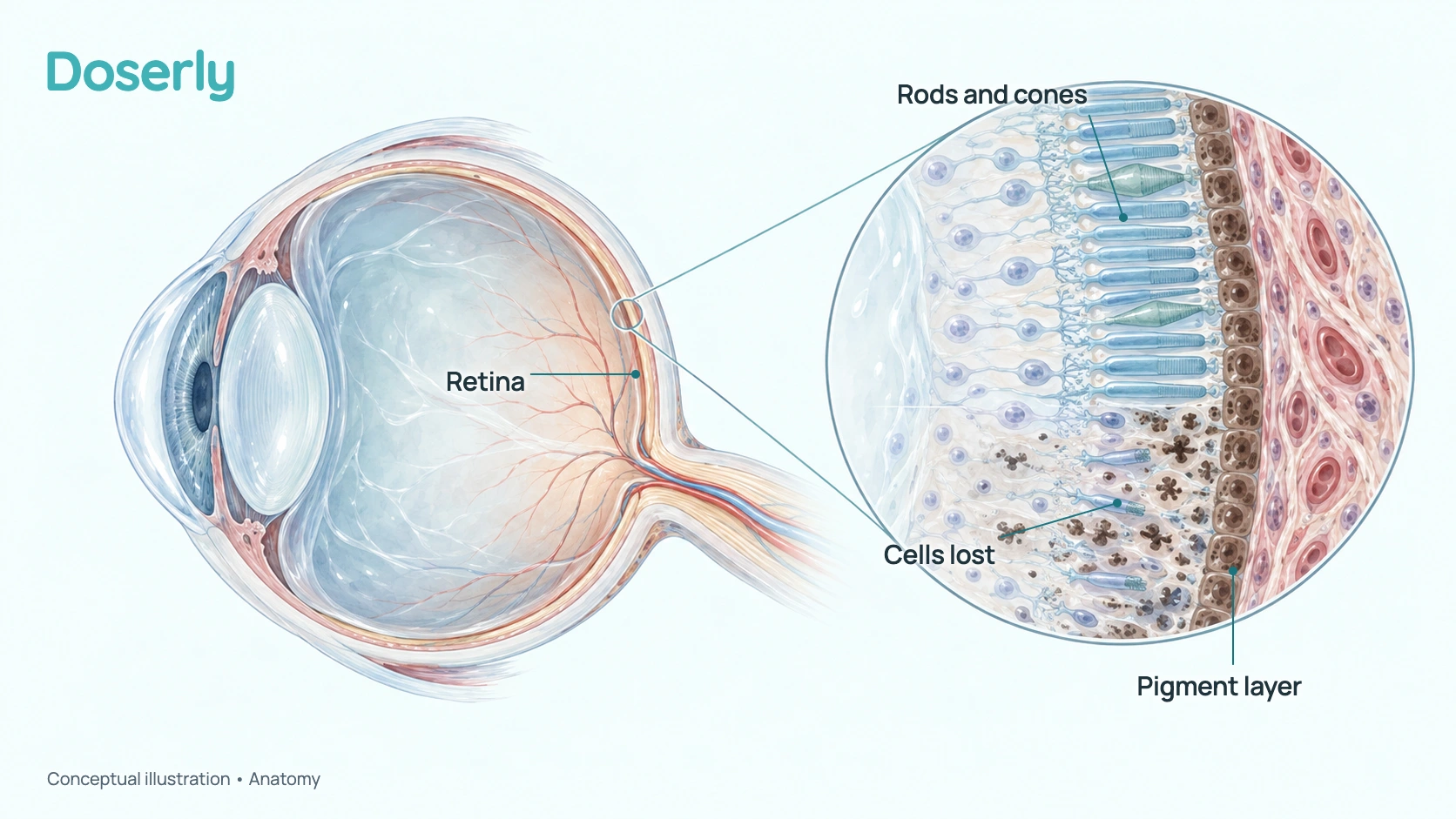
Lutein and zeaxanthin are macular pigments, while the AREDS2 formulation combines specific nutrients for a defined retinal-disease setting. Fish oil, astaxanthin or an arbitrary eye-health blend is not the same intervention. [1]
What does the research show?
AREDS2 applies to a defined retinal-disease setting
The collection is a comparison list, not the AREDS2 formulation.
Eligible clinical context
Evidence concerns intermediate AMD or selected people with late AMD in one eye. It is not general vision enhancement.
A specific combination
The studied formulation has defined nutrients and amounts. Adding fish oil or substituting astaxanthin does not reproduce that evidence.
Smoking history matters
Beta-carotene in the original AREDS formula increases lung-cancer concerns for current or former smokers. AREDS2 uses lutein and zeaxanthin instead.
National Eye Institute. An eye-care professional determines whether this disease-specific formulation applies.
NEI describes evidence for AREDS2 in intermediate age-related macular degeneration or selected people with late disease in one eye. The trials did not establish general vision enhancement or prevention of early AMD. The collection’s ingredient list is not an AREDS2 formula: formulation, amounts and clinical eligibility must all match. [1]
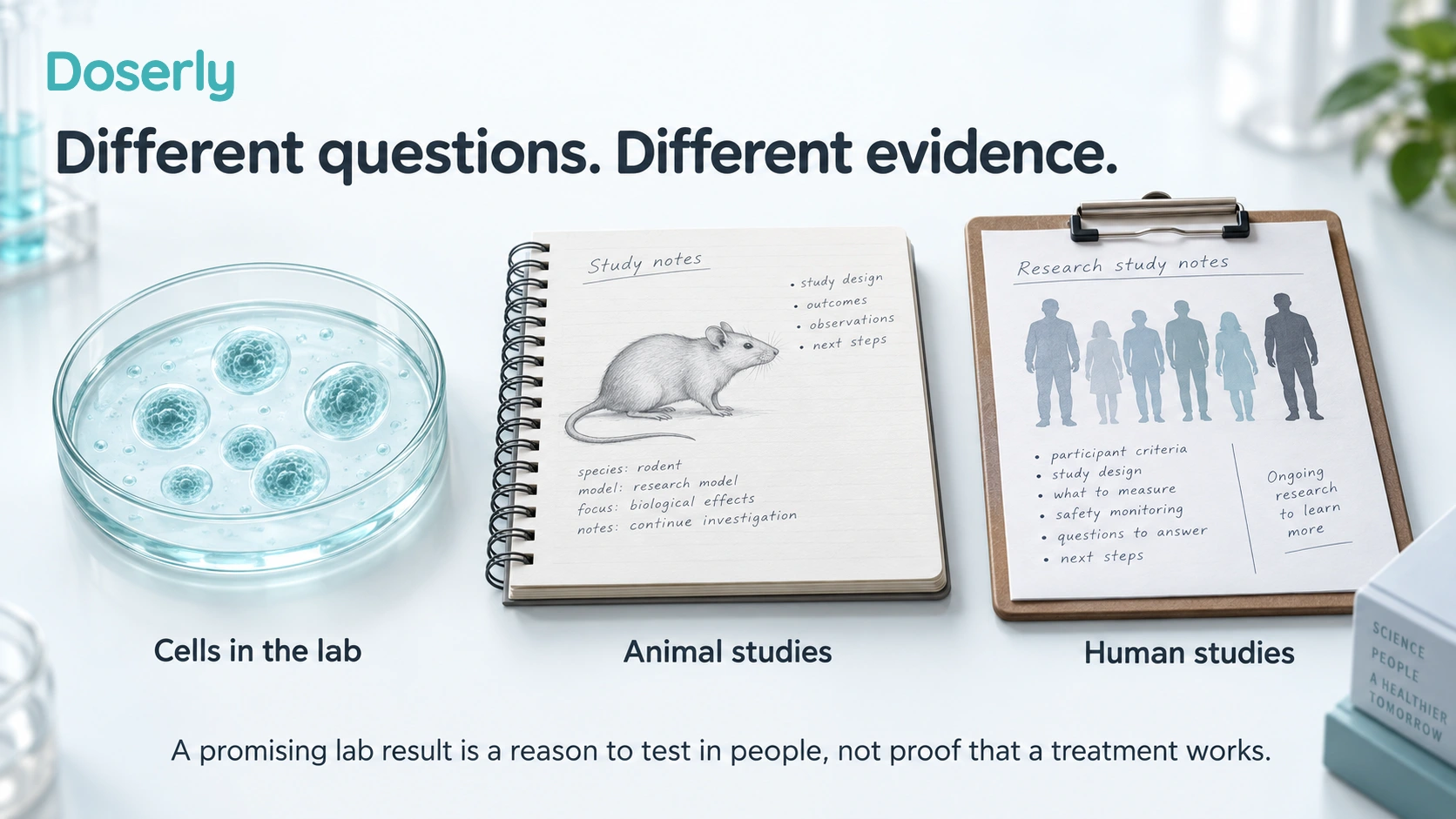
An observational association, a laboratory finding and a perceived benefit answer different questions. Randomized trials need their comparator, duration and population kept in view. An inconclusive result does not establish that an effect is impossible; it limits the claim that can be made.
Which overlaps and risks matter?
Cautions and interactions
The original beta-carotene-containing AREDS formula is a concern for current or former smokers because of lung-cancer risk. Large nutrient doses and duplicate zinc require review. Vision loss or new distortion needs eye-care assessment and cannot be evaluated by an app symptom trend alone. [1]
A complete product list includes prescription medicines, nonprescription products and supplements. Combination formulas can conceal duplicate ingredients. Timing and spacing from a medicine should follow its labeling and pharmacist guidance; this collection does not supply a universal timetable.
Regulatory status
In the United States, FDA does not approve dietary supplements for safety and effectiveness before marketing. In Canada, a natural health product requires a product licence before sale; its NPN or DIN-HM must match the finished product. An ingredient name or inclusion in this collection does not establish that every product or claim is authorized. Authorization also does not validate the complete combination. [2], [3]
What should be recorded and how should changes be interpreted?
Doserly brings dose logs, symptoms and routine changes together. For this collection, useful observations include ophthalmology recommendations, exact formulation, adherence, visual symptoms and appointment findings.
- Doses and adherence: record the formulation, amount actually taken, timing and missed doses so observations have context.
- Potential benefits and tolerability: compare consistent symptoms or measurements over time alongside sleep, food and activity changes. Personal trends help evaluate the experience without proving causal efficacy.
- Product list: maintain the full product list for review with a pharmacist or clinician.
- AI monthly reports: summarize recorded doses, symptoms and trends to prepare for a discussion. Reports depend on the data entered and are not a diagnosis or an instruction to change treatment.
Explore the topic further
Common questions
Are AREDS2 supplements intended for everyone with normal vision?
No. NEI describes use in selected stages of age-related macular degeneration, determined through an eye examination. The formula is not a universal prevention or vision-enhancement product. [1]
Is lutein alone interchangeable with AREDS2?
No. The disease-specific evidence concerns a defined combination. A single carotenoid or an unrelated eye-health blend is a different intervention. [1]
Why does beta-carotene matter when comparing labels?
Earlier formulas used beta-carotene, which presents a lung-cancer concern for current and former smokers. AREDS2 uses lutein and zeaxanthin instead; confirm the actual formula with an eye-care professional. [1]
Glossary
Terms for interpreting the comparisons.
- Formulation
- The exact preparation, including its ingredients, their forms and labeled amounts.
- Study population
- The people included in a study; their characteristics limit where its result applies.
- Comparator
- The placebo, treatment or condition used as the comparison.
- Measured outcome
- What the study evaluates, such as a symptom, laboratory result or clinical event.
- Overlap
- The same ingredient appearing in more than one product used together.
How was this guide researched?
Sources and limits
This AI-assisted educational guide compares the cited public references. Findings remain tied to the ingredients, preparations and populations studied. It is not a systematic review or independent medical peer review. Doserly develops a commercial tracking app. Illustrations explain concepts; app screens show example data. Report a correction with its source to Doserly support.
Explore the sources
The references below provide context for the claims and their limits.
Showing 3 sources
- 01
National Eye Institute — AREDS/AREDS2 questions and evidence ↗
Public reference
Check the reported population, preparation and limitations.
- 02
FDA — Questions and Answers on Dietary Supplements ↗
Regulatory reference
United States dietary supplement regulation.
- 03
No matching sources
Try a different term or show the full list.