
In this guide
What does this guide compare?
Stress, nutrient deficiency, sexual symptoms and diagnosed hypogonadism are not the same target. This collection is not a substitute for TRT.
This collection compares products discussed around one topic. It is not a protocol to take in full. Links to individual profiles appear after the article.
| Reference point | Context |
|---|---|
| Products compared | 6 |
| Evidence scope | Ingredient, formulation, population and measured outcome |
| Complete combination | The cited studies do not automatically validate all members together |
Which products are compared?
Ashwagandha, Tongkat Ali, Zinc, Vitamin D3 (Cholecalciferol), Fenugreek, Magnesium.
Individual profiles describe formulation, source-reported amounts, tolerability and interactions. Those details remain ingredient-specific. An amount studied alone is not automatically appropriate in a combination.
How do their roles differ?
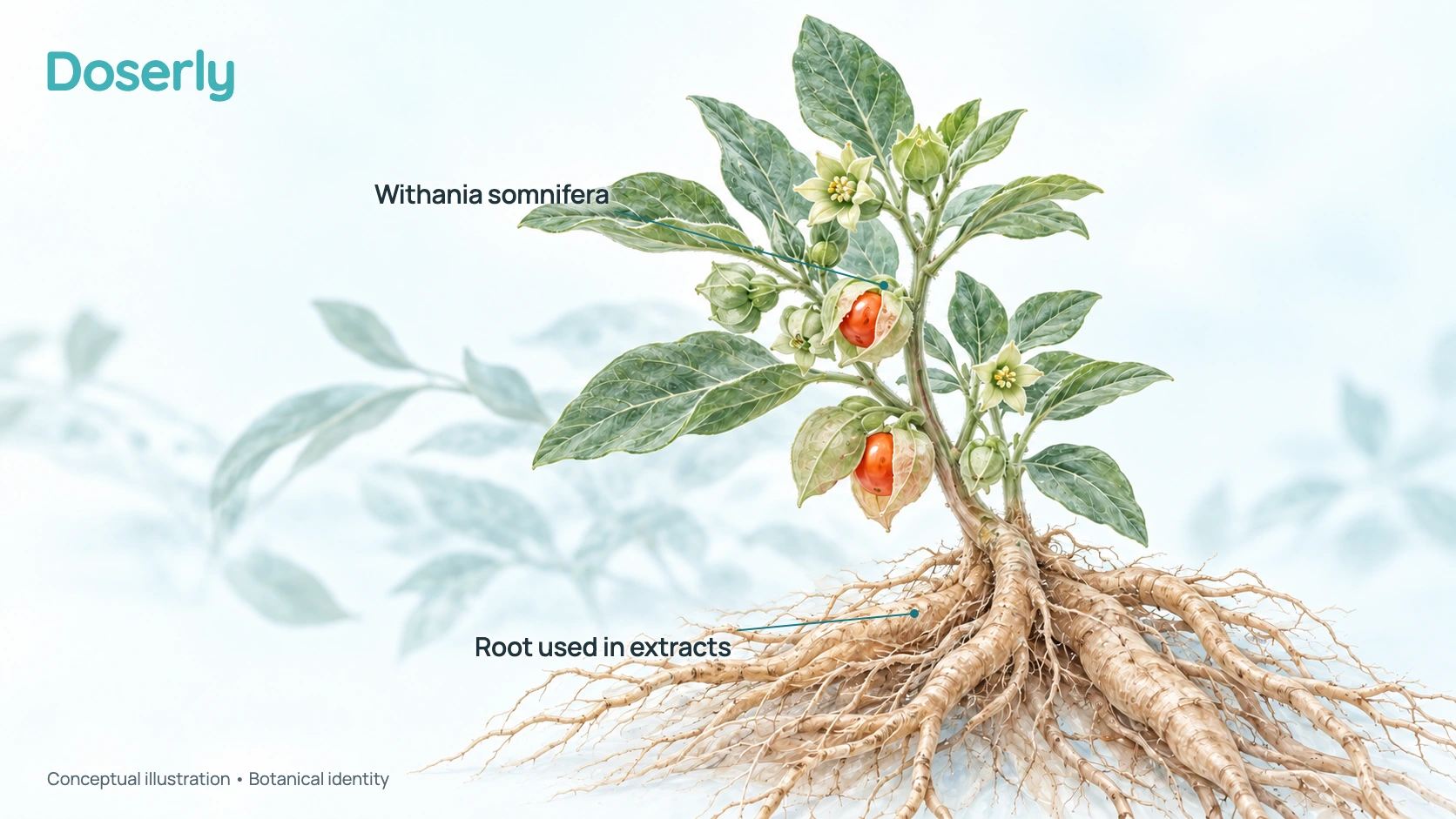
Ashwagandha, tongkat ali, zinc, vitamin D3, fenugreek and magnesium are grouped under a marketing goal, not a single established treatment. Stress symptoms, a low laboratory testosterone result, sexual symptoms and a nutritional deficiency are different clinical questions. Evidence about ashwagandha in stressed adults does not establish treatment of hypogonadism or validate all six ingredients together. [1], [2], [3]
Selected ingredient studies and their limits
These examples compare distinct preparations and outcomes. Their schedules describe research and are not a regimen to combine.
Ashwagandha. the 2026 AshwaSR trial randomized 135 stressed adults to the same sustained-release root extract at 150 or 300 mg once daily after breakfast, or placebo, for 60 days. Several questionnaire outcomes favored the extract; 126 completed. Manufacturer funding and sponsor/vendor author employment limit independence. This does not establish equivalence with another extract or a benefit from a multi-ingredient combination. [6], [2]
Stress-score changes do not establish correction of low testosterone or treatment of hypogonadism.
| Ingredient | Preparation and finding | Decisive limitation |
|---|---|---|
| Tongkat ali | Physta trial: 105 participants completed; 100 or 200 mg once daily after breakfast for 12 weeks in men aged 50–70 with total testosterone below 300 ng/dL. Selected total-testosterone outcomes favored the extract. [7] | No significant between-group free-testosterone difference; manufacturer funding and two manufacturer-employed authors. |
| Fenugreek | 2026 review: 13 included trials, six contributing to total testosterone; standardized effect 0.25 (95% CI 0.02–0.48). [9] | Free testosterone: 0.08 (−0.48 to 0.63); very-low-certainty evidence and no trial at low overall risk of bias. These are not 25% and 8% increases. |
| Zinc | Essential nutrient; need depends on diet and clinical context. Labels declare elemental zinc. [10] | A biological role does not prove that excess intake improves testosterone. |
| Vitamin D3 and magnesium | Individual profiles distinguish preparations, nutritional needs and risks. | Correcting a shortfall does not establish hormonal efficacy for all six products together. |
What does the research show?
The 2026 AshwaSR trial randomized 135 stressed adults and assessed outcomes over 60 days. Perceived stress and some related outcomes improved compared with placebo, but the study concerned one sustained-release extract. Its results cannot validate every extract, theanine-containing blend or combined stack, and a short trial cannot exclude rare liver injury. [1][2][3]
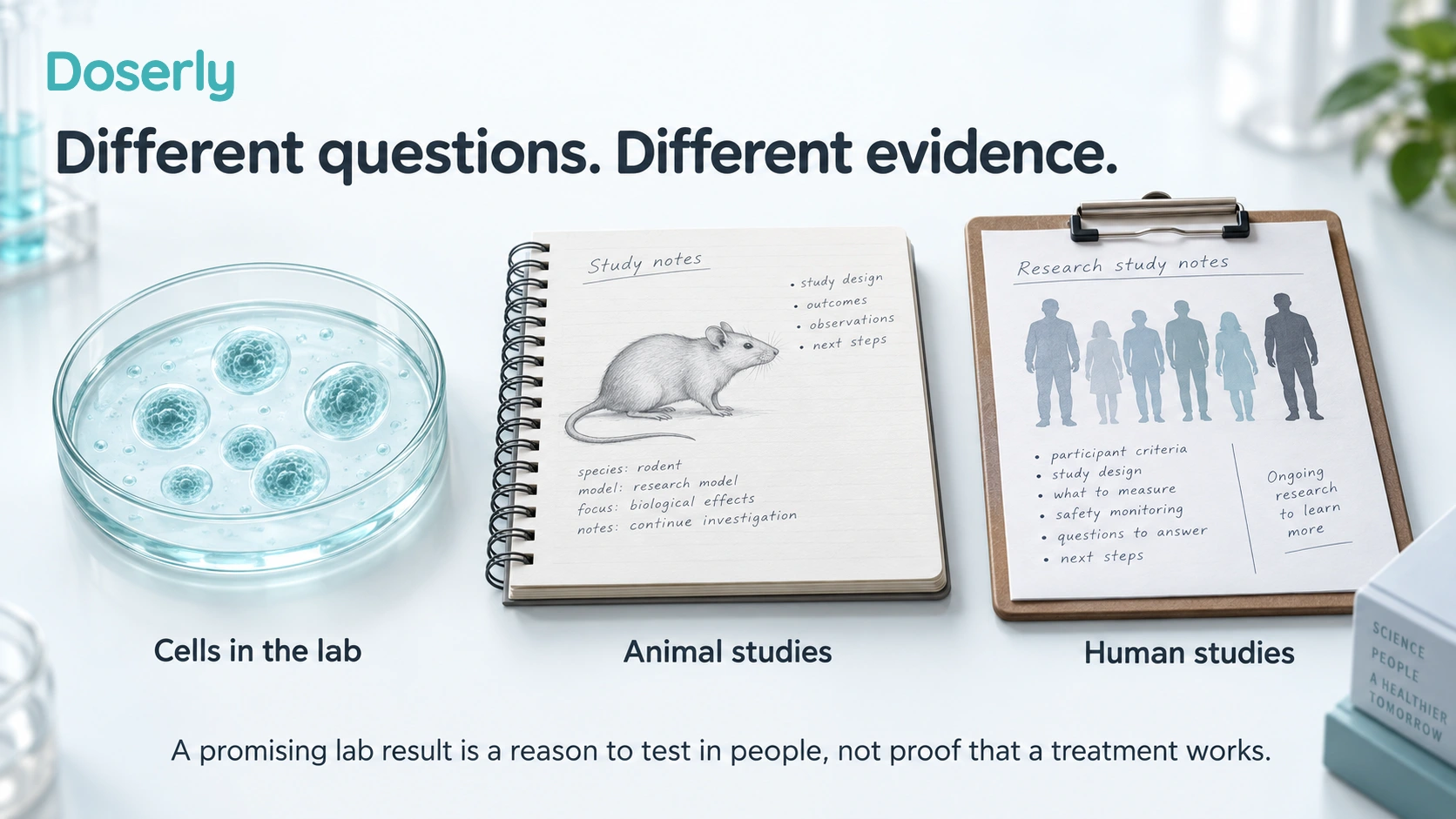
An observational association, a laboratory finding and a perceived benefit answer different questions. Randomized trials need their comparator, duration and population kept in view. An inconclusive result does not establish that an effect is impossible; it limits the claim that can be made.
Which overlaps and risks matter?
In 2021 EFSA concluded that safety had not been established for the aqueous tongkat ali root extract it assessed because of potential DNA damage. That assessment concerns the evaluated preparation; normal routine tests in a short trial do not resolve the concern, and it is not a measurement of clinical risk for every product. [8]
Cautions and interactions
Ashwagandha warrants pregnancy, thyroid, autoimmune and medication precautions. Sedative medicines and multiple calming products may overlap. A change in perceived stress can also reflect sleep, workload or concurrent therapy; it is not proof of a hormone-correcting effect. [1][2][3]
A complete product list includes prescription medicines, nonprescription products and supplements. Combination formulas can conceal duplicate ingredients. Timing and spacing from a medicine should follow its labeling and pharmacist guidance; this collection does not supply a universal timetable.
Regulatory status
In the United States, FDA does not approve dietary supplements for safety and effectiveness before marketing. In Canada, a natural health product requires a product licence before sale; its NPN or DIN-HM must match the finished product. An ingredient name or inclusion in this collection does not establish that every product or claim is authorized. Authorization also does not validate the complete combination. [4], [5]
What should be recorded and how should changes be interpreted?
Doserly brings dose logs, symptoms and routine changes together. For this collection, useful observations include perceived stress, sleep quality, daytime function, workload, medication changes and adverse effects.
- Doses and adherence: record the formulation, amount actually taken, timing and missed doses so observations have context.
- Potential benefits and tolerability: compare consistent symptoms or measurements over time alongside sleep, food and activity changes. Personal trends help evaluate the experience without proving causal efficacy.
- Product list: maintain the full product list for review with a pharmacist or clinician.
- AI monthly reports: summarize recorded doses, symptoms and trends to prepare for a discussion. Reports depend on the data entered and are not a diagnosis or an instruction to change treatment.
Explore the topic further
Common questions
Does higher total testosterone establish a benefit?
No. Free testosterone, symptoms and function are separate outcomes. The Physta trial did not show a significant between-group free-testosterone difference; the fenugreek review also found that outcome unstable. [7], [9]
Is fenugreek a proven testosterone booster?
The 2026 review does not support that claim. Despite a small pooled total-testosterone signal, certainty was very low; 11 trials had some risk-of-bias concerns and two had high risk. [9]
Why not combine the doses from each trial?
The studies concern different preparations and populations. Testing one extract does not test its combination with five other products. Zinc may already be present in a multivitamin, and botanical precautions still apply. [1], [7], [10]
What should be recorded in Doserly?
The exact product, extract, amount, dates, symptoms and concurrent medicines. A change in wellbeing does not establish a hormonal diagnosis; recorded data helps prepare a clinical discussion.
Glossary
Terms for interpreting the comparisons.
- Formulation
- The exact preparation, including its ingredients, their forms and labeled amounts.
- Study population
- The people included in a study; their characteristics limit where its result applies.
- Comparator
- The placebo, treatment or condition used as the comparison.
- Measured outcome
- What the study evaluates, such as a symptom, laboratory result or clinical event.
- Overlap
- The same ingredient appearing in more than one product used together.
How was this guide researched?
Sources and limits
This AI-assisted educational guide compares the cited public references. Findings remain tied to the ingredients, preparations and populations studied. It is not a systematic review or independent medical peer review. Doserly develops a commercial tracking app. Illustrations explain concepts; app screens show example data. Report a correction with its source to Doserly support.
Explore the sources
The references below provide context for the claims and their limits.
Showing 10 sources
- 01
- 02
Efficacy and safety of Ashwagandha root extract sustained-release (AshwaSR) capsules in healthy adult, stressed subjects: A randomized, double-blind, placebo-controlled, parallel-group, 3-arm clinical trial. ↗
Public reference
Check the reported population, preparation and limitations.
- 03
NCCIH — Herb–drug interactions ↗
Public reference
Check the reported population, preparation and limitations.
- 04
FDA — Questions and Answers on Dietary Supplements ↗
Regulatory reference
United States dietary supplement regulation.
- 05
- 06
Ashwagandha: Health Professional Fact Sheet ↗
Official summary
Stress, sleep, safety, thyroid and liver-injury overview.
Full text checked October 9, 2026.
- 07
Effect of Eurycoma longifolia standardised aqueous root extract-Physta® on testosterone levels and quality of life in ageing male subjects: a randomised, double-blind, placebo-controlled multicentre study. ↗
Verified reference
Interpret the preparation, findings and limitations in context.
- 08
Safety of Eurycoma longifolia (Tongkat Ali) root extract as a novel food ↗
Verified reference
Interpret the preparation, findings and limitations in context.
- 09
Effects of oral fenugreek-derived preparations on testosterone-related outcomes in adult men: a systematic review and meta-analysis of randomized placebo-controlled trials. ↗
Verified reference
Interpret the preparation, findings and limitations in context.
- 10
Zinc: Health Professional Fact Sheet ↗
Verified reference
Interpret the preparation, findings and limitations in context.
No matching sources
Try a different term or show the full list.