
Tongkat Ali: The Complete Supplement Guide
On this page
Quick Reference Card
Attribute
Common Name
- Detail
- Tongkat Ali
Attribute
Other Names / Aliases
- Detail
- Eurycoma longifolia, Longjack, Malaysian Ginseng, Pasak Bumi (Indonesian), Tung Sawa (Thai), Cay Ba Binh (Vietnamese), Ali's Walking Stick
Attribute
Category
- Detail
- Herbal Extract (Men's Health / Adaptogen)
Attribute
Primary Forms & Variants
- Detail
- Standardized water extract (most studied; LJ100/Physta, 22% eurypeptides, 40% glycosaponins); root powder (raw); ethanol extract (less studied, higher toxicity potential); standardized quassinoid extract (TAF 273, 23.6% eurycomanone). Water extracts are the most studied and safest form.
Attribute
Typical Dose Range
- Detail
- 100-400 mg/day standardized extract (most clinical trials use 200 mg/day)
Attribute
RDA / AI / UL
- Detail
- No RDA, AI, or UL established. Not an essential nutrient.
Attribute
Common Delivery Forms
- Detail
- Capsules, tablets, powder, liquid extract, blended into teas and coffees
Attribute
Best Taken With / Without Food
- Detail
- Sources vary. Some users report GI discomfort on an empty stomach; taking with food may improve tolerance.
Attribute
Key Cofactors
- Detail
- None established. Often stacked with zinc, vitamin D, boron, and magnesium in men's health protocols.
Attribute
Storage Notes
- Detail
- Store in a cool, dry place away from moisture and direct sunlight. Capsules are shelf-stable at room temperature.
Overview
The Basics
Tongkat ali is a slow-growing tree native to the rainforests of Southeast Asia, including Malaysia, Indonesia, Thailand, and Vietnam. For centuries, traditional healers in these regions have used decoctions of its roots as a general tonic for energy, vitality, and sexual health. The name itself comes from the Malay words for "Ali's walking stick," a reference to the plant's long, twisted roots and their traditional reputation as a male aphrodisiac.
In the modern supplement world, tongkat ali has gained significant popularity as a natural approach to supporting healthy testosterone levels, particularly among men concerned about age-related hormonal decline. It is one of the most widely discussed herbal supplements in men's health communities, and the Malaysian government has invested considerable resources into researching its properties [1][2].
It is important to set expectations accurately. While tongkat ali has a strong traditional reputation and some promising clinical data, it is not a hormone replacement. The available research suggests it may help restore testosterone levels toward normal ranges in those who are low, rather than pushing levels above their natural ceiling. Its effects appear most pronounced in men with suboptimal testosterone, and the evidence in healthy men with normal hormone levels is less convincing [3][4].
The Science
Eurycoma longifolia Jack belongs to the plant family Simaroubaceae and is the only species within the genus Eurycoma used medicinally [5]. Chemical analyses have identified more than 65 bioactive compounds in root extracts, including quassinoids (eurycomanone, eurycomanol, eurycomalactone), canthine-6-one alkaloids (9-hydroxycanthin-6-one), beta-carboline alkaloids, triterpene tirucallane derivatives, squalene derivatives, biphenyl neolignans, glycosaponins, and a bioactive peptide fraction referred to as "eurypeptides" (a 4,300-dalton glycopeptide consisting of 36 amino acids) [5][6].
Among these, eurycomanone is generally regarded as the primary bioactive quassinoid, typically present at approximately 1.6% of dry root weight [3]. Standardized extracts used in clinical research concentrate specific fractions: LJ100/Physta standardizes to 22% eurypeptides and 40% glycosaponins (100:1 concentration ratio), while TAF 273 concentrates quassinoid content to 23.6% eurycomanone [3][7].
A 2022 systematic review and meta-analysis of five randomized controlled trials reported a statistically significant increase in total testosterone levels in men receiving E. longifolia supplementation (SMD = 1.352, 95% CI 0.565 to 2.138, p = 0.001), with the effect confirmed in the hypogonadism subgroup [4]. However, the review noted that free testosterone levels and sex hormone binding globulin (SHBG) were not consistently affected across studies, and further research is needed before clinical application.
Chemical & Nutritional Identity
Property
Chemical Name
- Value
- Eurycomanone (primary bioactive quassinoid)
Property
Molecular Formula
- Value
- C20H24O9
Property
CAS Number
- Value
- 84633-29-4 (eurycomanone)
Property
PubChem CID
- Value
- SID: 135254161
Property
Category
- Value
- Herbal extract / Quassinoid-containing botanical
Property
Plant Family
- Value
- Simaroubaceae
Property
Plant Species
- Value
- Eurycoma longifolia Jack
Property
RDA / AI / UL
- Value
- Not established (not an essential nutrient)
Key bioactive compounds include:
- Quassinoids: Eurycomanone (major), eurycomanol, eurycomalactone, longilactone, eurylactone, laurycomalactone, eurycolactone. Over 150 quassinoids have been identified across the Eurycoma genus [5].
- Alkaloids: Canthine-6-one derivatives (9-hydroxycanthin-6-one, 9-methoxycanthin-6-one), beta-carboline alkaloids [5][6].
- Peptides/Glycoproteins: Eurypeptides (36 amino acid glycopeptide, 4,300 daltons), glycosaponins, mucopolysaccharides [3][7].
- Other: Squalene derivatives, tirucallane-type triterpenes, biphenyl neolignans, phenolic compounds, coumarin, tannins [5][6].
Common standardized extract forms:
- LJ100/Physta (water extract): 100:1 concentration, standardized to 22% eurypeptides and 40% glycosaponins. Used in the majority of published human clinical trials [7].
- TAF 273: Enriched for quassinoids (23.6% eurycomanone, 6.4% 13alpha(21)-epoxyeurycomanone, 4.8% eurycomanol) [3].
- Raw root powder: Variable composition depending on growing conditions, no standardization.
Mechanism of Action
The Basics
Tongkat ali appears to work through several interconnected pathways rather than a single mechanism. The simplest way to understand it is that it may help your body make better use of the testosterone it already produces.
One of the main ways it seems to do this is by encouraging the release of testosterone from a carrier protein called SHBG (sex hormone-binding globulin). When testosterone is bound to SHBG, your body cannot use it. If tongkat ali can reduce this binding, more free testosterone becomes available for your cells to use, even if total production does not change dramatically [7][8].
There is also evidence suggesting it may gently nudge testosterone production upward by supporting an enzyme called CYP17 in the testes, which is involved in converting precursor hormones into testosterone and related compounds [7]. Additionally, some research points to cortisol-lowering effects, which could indirectly support testosterone levels since chronic stress and elevated cortisol can suppress testosterone production [8].
Its traditional reputation as an aphrodisiac may involve additional mechanisms beyond testosterone, including direct effects on smooth muscle relaxation in erectile tissue. The compound 9-hydroxycanthin-6-one has been shown to relax smooth muscle tissue through calcium channel inhibition, which is mechanistically distinct from the hormonal pathway [3].
The Science
The proposed mechanisms of action for E. longifolia involve multiple biochemical pathways:
Hormonal modulation: The eurypeptide fraction has been proposed to enhance the activity of CYP17 (17-alpha-hydroxylase/17,20 lyase), a cytochrome P450 enzyme that catalyzes the conversion of pregnenolone and progesterone to DHEA and androstenedione, respectively. This would increase substrate availability for testosterone biosynthesis [7][9]. However, this mechanism derives primarily from a 1993 university dissertation and patent literature rather than peer-reviewed publications, and independent confirmation remains limited [3].
SHBG modulation: E. longifolia may increase the release rate of free testosterone from SHBG, effectively increasing bioavailable testosterone without altering total production [7][8]. This mechanism has led some researchers to characterize tongkat ali as a testosterone "maintainer" or "restorer" rather than a direct stimulant of synthesis [8].
Anti-estrogenic activity: Eurycomanone and 13alpha,21-dihydroeurycomanone have demonstrated anti-estrogenic effects in a 17-alpha-ethynylestradiol-induced uterotrophic assay, with eurycomanone showing potency comparable to tamoxifen at equivalent molar doses [3]. However, the oral bioavailability of eurycomanone is approximately 10.5% in rat models, which substantially limits the clinical relevance of this anti-estrogenic potential at standard oral doses [3].
HPA axis modulation: A randomized controlled trial demonstrated that 200 mg/day of standardized extract for 4 weeks significantly reduced salivary cortisol (-16%) while increasing salivary testosterone (+37%), resulting in a -36% improvement in the cortisol-to-testosterone ratio [8]. This suggests adaptogenic properties involving the hypothalamic-pituitary-adrenal axis.
Erectile mechanism: The canthine-6-one alkaloid 9-hydroxycanthin-6-one has demonstrated calcium channel antagonism in cavernosal smooth muscle tissue (EC50 = 6.7 +/- 0.9 microM), independent of nitric oxide pathways, suggesting a direct pro-erectile mechanism distinct from PDE5 inhibitors [3].
Absorption & Bioavailability
The Basics
The form of tongkat ali you take matters significantly for how much your body can actually use. Water-based extracts, which are the type used in most clinical research, are the best-studied form and appear to deliver bioactive compounds more safely than alcohol-based extracts. Raw root powder contains the full spectrum of compounds but at much lower concentrations than standardized extracts.
One practical consideration is that tongkat ali's primary bioactive compound (eurycomanone) has relatively low absorption when taken orally. In animal studies, only about 10% of the ingested eurycomanone actually reaches the bloodstream [3]. This is one reason standardized, concentrated extracts are preferred over raw root powder for supplementation, as they deliver meaningful amounts of the active compounds even accounting for this absorption limitation.
The Science
Pharmacokinetic data for eurycomanone in rat models show the following parameters after oral administration of 50 mg/kg via a concentrated extract: Cmax of 0.33 +/- 0.03 microg/mL, Tmax of 4.40 +/- 0.98 hours, and an oral bioavailability of 10.5%. The volume of distribution following 10 mg/kg intravenous injection was 0.68 +/- 0.30 L/kg, with an elimination half-life of 1.00 +/- 0.26 hours and clearance of 0.39 +/- 0.08 L/h/kg [3].
The relatively low oral bioavailability of eurycomanone has implications for dosing. Anti-estrogenic effects observed in vitro would require approximately 313 mg of eurycomanone orally to achieve bioequivalence with effective in vitro concentrations, equivalent to roughly 20 g of dried root [3]. This underscores the importance of concentrated, standardized extracts.
Eurycomanone has been detected in the testes of rats following chronic oral administration, indicating the compound can reach gonadal tissue and potentially accumulate with repeated dosing [3]. Human pharmacokinetic data remain limited.
Understanding how your body absorbs a supplement is only useful if you can act on it. Doserly lets you log exactly when you take each form, whether it's a capsule with a meal, a sublingual tablet on an empty stomach, or a liquid taken with a cofactor, so you can see how timing and form choices affect your results over time.
The app also tracks cofactor pairings that influence absorption. If a supplement works better alongside vitamin C, fat, or black pepper extract, Doserly reminds you to take them together and logs both. Over weeks, your personal data reveals whether those pairing strategies are translating into measurable differences in the biomarkers you're tracking.
Track injection timing, draw notes, and site rotation.
Doserly helps keep syringe-related notes, injection site history, reminders, and reconstitution context together for easier review.
Injection log
Site rotation
Injection logs support record-keeping; follow clinician instructions for administration.
Research & Clinical Evidence
The Basics
The research on tongkat ali is growing, but it is important to understand what the evidence actually shows versus what marketing claims suggest. The strongest evidence supports two primary uses: supporting testosterone levels in men with low-normal or clinically low testosterone, and enhancing libido. Evidence for other claimed benefits like athletic performance enhancement, muscle building, and stress reduction is more preliminary.
A major systematic review pooling data from five clinical trials found statistically significant increases in total testosterone in men taking tongkat ali [4]. However, most studies have been relatively small, short-term (4 to 12 weeks), and many used the same patented extract from the same manufacturer, which raises questions about how broadly the findings apply [3][10].
For stress and mood, one well-designed study found meaningful reductions in tension, anger, and confusion, along with lower cortisol and higher testosterone in moderately stressed adults [8]. These findings are promising but come from a single trial funded by the extract manufacturer.
For athletic performance specifically, the evidence is limited. While one pilot study suggested modest improvements in lean body mass during a weight training program, larger and more rigorous studies have generally failed to show significant performance benefits in healthy athletes [3][10].
The Science
Testosterone and Male Reproductive Health:
A 2022 systematic review and meta-analysis (Leisegang et al.) analyzed nine studies (five RCTs) and reported a significant pooled effect on total testosterone levels (SMD = 1.352, 95% CI 0.565 to 2.138, p = 0.001). The effect was confirmed in the hypogonadism subgroup [4]. Key individual trials include:
- Tambi et al. (2012): 320 men with late-onset hypogonadism (serum T < 6 umol/L), 200 mg/day water extract for 1 month. Mean testosterone increased from 5.66 +/- 1.51 to 8.31 +/- 2.47 umol/L (+46%). No placebo group [9].
- Chinnappan et al. (2021): 105 men ages 50-70 with T < 300 ng/dL, randomized to 100 mg, 200 mg, or placebo for 12 weeks. Total testosterone increased dose-dependently (+9% and +12.5% vs -3% placebo). Free testosterone and SHBG did not differ significantly between groups [10].
- Chen et al. (2019): 40 healthy males ages 19-25, 200 mg/day for 8 weeks with resistance training. Muscle strength increased with training but not with E. longifolia alone [10].
Fertility:
Tambi and Imran (2010) reported that 200 mg/day in men classified as infertile increased sperm concentration by 65.5% at 9 months, with approximately double the proportion of sperm exhibiting normal morphology (from 5.28% to 10.29%). Seminal volume increased 19.3% but did not reach statistical significance [3].
Stress and Mood:
Talbott et al. (2013): 63 moderately stressed subjects (32 men, 31 women), 200 mg/day Physta for 4 weeks. Significant improvements in Tension (-11%), Anger (-12%), and Confusion (-15%) on the POMS scale. Salivary cortisol decreased 16%, salivary testosterone increased 37% [8]. Study was funded by Biotropics Malaysia.
Exercise Performance:
Evidence is limited. A pilot study (Hamzah and Yusof, 2003) with 14 men found 100 mg/day for 5 weeks produced a 4% increase in lean body mass during circuit training [8]. However, Chen et al. (2014) found 400 mg/day for 6 weeks did not affect the testosterone-to-epitestosterone ratio in 13 recreational male athletes [10], and another study of 150 mg/day for 7 days found no improvement in running economy or treadmill performance [3].
Anxiolytic Effects:
Animal studies show anxiolytic activity comparable to diazepam. Ang and Cheang (1999) demonstrated that 0.3 g/kg of various E. longifolia extracts reduced immobility in elevated plus-maze tests to 31-36% of control values (diazepam: 25.9%) and reduced fighting episodes from 18 to 5.3-6.2 (diazepam: 3.5) [3].
Evidence & Effectiveness Matrix
Category
Libido
- Evidence Strength
- 7/10
- Reported Effectiveness
- 8/10
- Summary
- Multiple RCTs show 8-14% libido increases. Community reports are strongly and consistently positive. Effects more pronounced in those with lower baseline testosterone.
Category
Hormonal Symptoms
- Evidence Strength
- 7/10
- Reported Effectiveness
- 7/10
- Summary
- Meta-analysis supports total T increases, particularly in hypogonadal men. Community blood work reports are mixed but generally supportive in low-T individuals.
Category
Stress Tolerance
- Evidence Strength
- 5/10
- Reported Effectiveness
- 6/10
- Summary
- One RCT shows cortisol reduction (-16%) and mood improvements. Classified as an adaptogen traditionally. Community reports are positive but limited.
Category
Energy Levels
- Evidence Strength
- 4/10
- Reported Effectiveness
- 7/10
- Summary
- Traditional use as an energy tonic. Community reports are frequently positive, but clinical evidence specific to energy is limited to indirect measures.
Category
Motivation & Drive
- Evidence Strength
- 3/10
- Reported Effectiveness
- 7/10
- Summary
- No direct clinical evidence. Strong community reports of increased motivation and initiative, likely mediated by hormonal changes.
Category
Mood & Wellbeing
- Evidence Strength
- 5/10
- Reported Effectiveness
- 6/10
- Summary
- One RCT showed reduced tension/anger/confusion. Community reports mixed due to anger side effects in some long-term users.
Category
Sexual Function
- Evidence Strength
- 5/10
- Reported Effectiveness
- 6/10
- Summary
- Animal data shows pro-erectile effects via calcium channel mechanism. Community reports positive initially but ED reported with overuse.
Category
Muscle Growth
- Evidence Strength
- 4/10
- Reported Effectiveness
- 5/10
- Summary
- One pilot study showed 4% lean mass increase. Larger studies inconclusive. Community reports modest.
Category
Physical Performance
- Evidence Strength
- 3/10
- Reported Effectiveness
- 5/10
- Summary
- Multiple exercise studies show no significant performance improvement. Community reports mixed.
Category
Emotional Regulation
- Evidence Strength
- 3/10
- Reported Effectiveness
- 4/10
- Summary
- No clinical evidence addressing irritability. Community widely reports anger/irritability as a side effect of long-term daily use.
Category
Anxiety
- Evidence Strength
- 4/10
- Reported Effectiveness
- 5/10
- Summary
- Animal data shows anxiolytic effects comparable to diazepam. Limited human data. Mixed community reports.
Category
Nausea & GI Tolerance
- Evidence Strength
- 5/10
- Reported Effectiveness
- 4/10
- Summary
- Clinical studies report GI side effects as uncommon. Community reports nausea and diarrhea, particularly on empty stomach.
Category
Sleep Quality
- Evidence Strength
- 2/10
- Reported Effectiveness
- 5/10
- Summary
- No direct clinical evidence for sleep. A few community reports of improved sleep, but also some reports of insomnia.
Category
Side Effect Burden
- Evidence Strength
- 5/10
- Reported Effectiveness
- 5/10
- Summary
- Clinical studies report good tolerability at standard doses. Community identifies anger, GI issues, and hormonal disruption with overuse.
Benefits & Potential Effects
The Basics
Tongkat ali is primarily taken for its potential to support healthy testosterone levels, enhance libido, and provide adaptogenic stress relief. These three areas have the most supporting evidence, though the strength of that evidence varies considerably.
The libido-enhancing effect is the most consistently reported benefit in both clinical research and community experience. Many users notice an increase in sexual desire within the first week, though building to full effect may take several weeks of consistent use. This effect is not limited to men; some preliminary evidence suggests women may also experience improvements in sexual function [8][11].
For testosterone support, the benefit appears most relevant to men whose levels are below optimal. If your testosterone is already in a healthy range, tongkat ali is unlikely to push it significantly higher based on the current evidence. Think of it as helping to restore rather than amplify.
The stress-relief properties are less dramatic but still noteworthy. Reduced cortisol, improved mood scores, and better subjective reports of wellbeing have been documented in stressed populations [8]. Some users describe a general sense of increased confidence and resilience.
The Science
Testosterone restoration: The most robust evidence supports E. longifolia's ability to increase total serum testosterone in hypogonadal men. A meta-analysis of five RCTs demonstrated a significant pooled effect (SMD = 1.352, p = 0.001) [4]. In the largest clinical cohort (n=320), men with clinical hypogonadism (T < 6 umol/L) experienced a mean 46% increase in total testosterone over one month of supplementation at 200 mg/day [9]. The magnitude of effect in eugonadal men remains unclear.
Libido and sexual function: Human trials report libido increases of 8.4-14% with 200-300 mg/day over 6-12 weeks [3]. Mechanistically, the aphrodisiac effect may involve both hormonal (testosterone restoration) and non-hormonal pathways (smooth muscle relaxation via calcium channel inhibition) [3].
Male fertility: Supplementation with 200 mg/day for 9 months increased sperm concentration (65.5%), improved morphology (proportion of normal morphology approximately doubled), and showed a trend toward increased seminal volume in infertile men [3].
Cortisol reduction and stress management: In moderately stressed subjects (n=63), 200 mg/day for 4 weeks reduced salivary cortisol by 16% and improved cortisol-to-testosterone ratio by 36% [8].
Body composition: Limited evidence from one pilot study (n=14) suggests a possible 4% increase in lean body mass during a 5-week resistance training program at 100 mg/day, though this has not been replicated in larger trials [3][8].
Reading about potential benefits gives you a framework. Seeing whether those benefits are showing up in your own body turns knowledge into confidence. Doserly lets you track the specific health markers relevant to this supplement, building a personal dataset that captures what's actually changing week over week.
The app's AI analytics go further than simple logging. By correlating your supplement intake with the biomarkers and health outcomes you're tracking, Doserly surfaces patterns you might miss on your own, like whether a dose adjustment three weeks ago corresponds to the improvement you're noticing now. When it's time to evaluate whether a supplement is earning its place in your stack, you have your own data to guide the decision.
Connect protocol changes to labs and health markers.
Doserly can keep lab results, biomarkers, symptoms, and dose history close together so follow-up conversations have better context.
Insights
Labs and trends
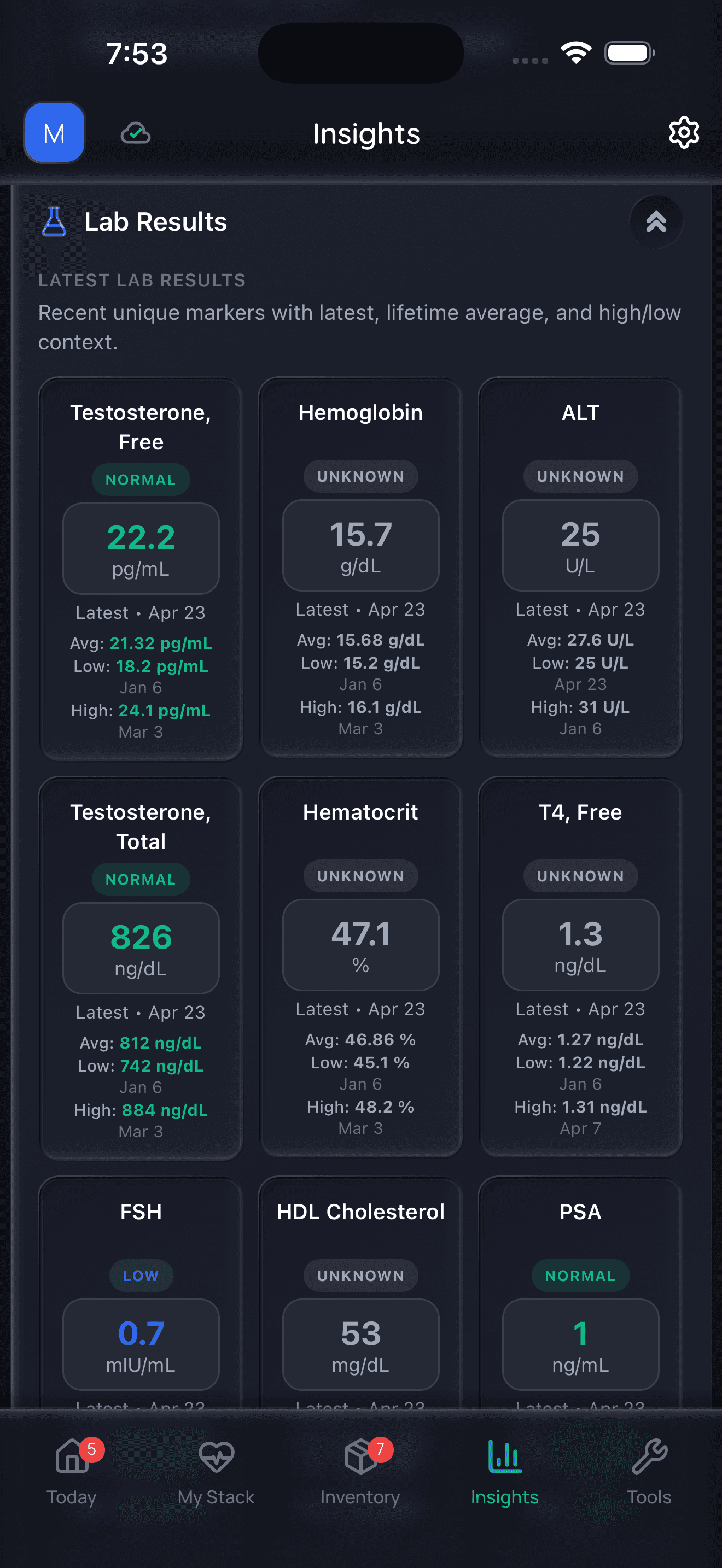
Doserly organizes data; it does not diagnose or interpret labs for you.
Side Effects & Safety
The Basics
At standard supplement doses (100-400 mg/day of standardized extract), tongkat ali is generally well tolerated by most users. The most commonly reported side effects are mild gastrointestinal discomfort, including nausea and diarrhea, particularly when taken on an empty stomach [10][12].
A more notable concern that emerges from long-term community experience is the development of irritability, short temper, and even irrational anger with prolonged daily use. This effect is not well-documented in clinical trials (which tend to be short-term), but it is consistently reported by users who take tongkat ali daily for months or longer. Most experienced users manage this by cycling their intake, taking breaks of several days per week or several weeks per month.
There have also been isolated reports of hormonal disruption, where tongkat ali's effects on estradiol levels (either lowering or raising them) lead to secondary issues such as erectile dysfunction or mood disturbances. This appears to be highly individual.
Regarding liver safety, animal toxicity studies show a very wide margin of safety, with oral LD50 values above 2,000 mg/kg in rats [5][6]. However, the NCBI LiverTox database assigns tongkat ali a "D" likelihood score as a possible rare cause of clinically apparent liver injury, based on a single published case report in a bodybuilder [10]. The European Food Safety Authority (EFSA) expressed concern about evidence of DNA damage in preclinical models and concluded in 2021 that the safety of E. longifolia root extract "has not been established under any condition of use" [10].
The Science
Tolerability in clinical trials: In the controlled trial by Talbott et al. (2013, n=63), only 3 subjects reported unusual fatigue in the first two weeks (2 in the tongkat ali group, 1 in placebo), with no other adverse events. No significant changes in liver enzymes (AST/ALT), body weight, or body fat were observed [8]. Chen et al. (2014) found no changes in liver or renal function markers with 400 mg/day for 6 weeks in healthy male athletes [10]. Chinnappan et al. (2021) similarly reported no change in ALT, AST, or bilirubin at 100-200 mg/day for 12 weeks [10].
Toxicology data: Acute oral LD50 for aqueous extract exceeds 3,000 mg/kg in mice; for alcoholic extract, 1,500-2,000 mg/kg [5][6]. A 13-week subchronic toxicity study found the NOAEL yielded a calculated acceptable daily intake (ADI) of up to 1.2 g/adult/day [6]. A dose of 1,200 mg/kg was associated with some pathological liver changes in rats, correlating roughly to 1,200 mg daily in humans [3].
Hepatotoxicity: One published case report describes a 47-year-old male bodybuilder who developed nausea, abdominal pain, and jaundice within one week of starting a tongkat ali supplement (bilirubin 7.5 rising to 14.1 mg/dL, ALT 470 U/L). The injury resolved after discontinuation [10]. The reporting authors noted that unacknowledged anabolic steroid use could not be excluded as a confounding factor. No other published cases of hepatotoxicity have been attributed to tongkat ali specifically [10].
EFSA safety assessment (2021): The European Food Safety Authority concluded that the safety of Eurycoma longifolia root extract as a novel food "has not been established under any condition of use," citing concern over evidence of DNA damage in preclinical models [10].
Hormonal side effects: Reports of estradiol modulation are bidirectional. Some evidence supports aromatase inhibition (lowering estradiol), while a recent study found 30% increases in estradiol alongside testosterone increases. The clinical significance of these estradiol changes is debated.
Dosing & Usage Protocols
The Basics
The most commonly used dose in clinical research is 200 mg per day of a standardized water extract, taken once daily. This is the dose used in the majority of published human trials [7][8][9][10].
Traditional medicine doses ranged from 100 to 400 mg daily. Some modern supplement products offer much higher doses (1,000-1,600 mg), but these have not been adequately studied for safety, and the higher doses may increase the risk of side effects [10].
Most experienced users recommend cycling tongkat ali rather than taking it continuously. Common cycling protocols include 5 days on and 2 days off, 4 weeks on and 1-2 weeks off, or every other day dosing. The rationale for cycling is to prevent tolerance, manage potential irritability, and avoid excessive suppression of estradiol. While there is no clinical trial data directly comparing cycling versus continuous use, community experience strongly favors some form of cycling.
The Science
Dose ranges from clinical trials:
Population
Hypogonadal men (n=320)
- Dose
- 200 mg/day
- Duration
- 4 weeks
- Extract
- LJ100/Physta
- Key Outcome
- +46% total testosterone [9]
Population
Moderately stressed adults (n=63)
- Dose
- 200 mg/day
- Duration
- 4 weeks
- Extract
- Physta
- Key Outcome
- -16% cortisol, +37% testosterone [8]
Population
Low-T men age 50-70 (n=105)
- Dose
- 100-200 mg/day
- Duration
- 12 weeks
- Extract
- Physta
- Key Outcome
- +9% to +12.5% total testosterone [10]
Population
Healthy male athletes (n=13)
- Dose
- 400 mg/day
- Duration
- 6 weeks
- Extract
- Water extract
- Key Outcome
- No T:E ratio change, no liver/renal changes [10]
Population
Men in strength training (n=14)
- Dose
- 100 mg/day
- Duration
- 5 weeks
- Extract
- Physta
- Key Outcome
- +4% lean body mass, increased strength [8]
Population
Infertile men
- Dose
- 200 mg/day
- Duration
- 9 months
- Extract
- Water extract
- Key Outcome
- +65.5% sperm concentration [3]
Safety ceiling: The calculated acceptable daily intake from toxicology studies is up to 1,200 mg/adult/day [6]. However, doses above 400 mg/day have not been well-studied in humans for long-term safety. The traditional dose range of 100-400 mg/day remains the evidence-based consensus.
Extract type matters: All positive human trials used standardized hot-water root extracts (1% eurycomanone, 22% protein, 30% polysaccharides, 35% glycosaponin). Alcohol extracts of E. longifolia have demonstrated toxicity at high doses (LD50 = 2.6 g/kg), which would preclude safe long-term supplementation [8].
Getting the dose right matters more than most people realize. Too little may be ineffective, too much wastes money or introduces risk, and inconsistency undermines both. Doserly tracks every dose you take, across every form, giving you a clear record of what you're actually consuming versus what you planned.
The app helps you compare RDA recommendations against therapeutic ranges discussed in the research, so you can see exactly where your intake falls. If you switch forms, say from a standard capsule to a liposomal liquid, Doserly adjusts your tracking to account for different bioavailabilities. Pair that with smart reminders that keep your timing consistent, and the precision that makes a real difference in outcomes becomes effortless.
Build reminders around the routine, not just the compound.
Doserly can keep timing, skipped doses, and schedule changes organized so the plan you read about becomes easier to follow and review.
Today view
Upcoming reminders

Reminder tracking supports consistency; it does not select a protocol for you.
What to Expect (Timeline)
Weeks 1-2: Some users report a noticeable increase in libido and energy within the first 3-7 days. Mild GI side effects (nausea, loose stools) may occur, especially on an empty stomach, but typically resolve within the first week. The initial effects may partly reflect placebo expectation, particularly given tongkat ali's strong reputation.
Weeks 3-4: Hormonal effects begin to become measurable. The Talbott et al. study documented significant changes in cortisol (-16%) and testosterone (+37%) at the 4-week mark [8]. Users typically report more stable energy levels, improved mood, and more consistent libido effects. Many describe a sense of increased confidence and motivation.
Weeks 5-8: Effects continue to consolidate. Testosterone changes documented in the Chinnappan et al. trial showed dose-dependent increases over 12 weeks [10]. Users who respond well tend to describe this as the period where changes feel most established and consistent.
Weeks 8-12+: Long-term users should monitor for irritability or anger, which some report developing after 6-8 weeks of continuous daily use. This is the primary reason experienced users recommend cycling protocols. For fertility outcomes, the Tambi and Imran study showed progressive improvements in sperm parameters over 3, 6, and 9 months, with the most significant changes at 9 months [3].
Important notes: Response is highly individual. Those with lower baseline testosterone appear to notice effects more quickly and dramatically than those with normal levels. Some users report no noticeable subjective effects at all, even at standard doses. Brand and extract quality significantly influence response, with standardized extracts generally producing more consistent results.
Timelines in the research give you a general idea of when to expect results, but your body has its own schedule. Doserly tracks your progress against those benchmarks, letting you see whether your experience aligns with typical response curves or whether something in your protocol might need adjusting.
By logging biomarkers and subjective outcomes alongside your supplement intake, you build a personal timeline that shows exactly when changes started appearing and how they've progressed. The app's trend analysis highlights inflection points, weeks where things shifted for better or worse, so you have concrete data when deciding whether to continue, adjust your dose, or try a different form.
Keep sensitive protocol records in a purpose-built app.
Doserly is designed for private health tracking with structured records, offline-ready workflows, and exportable history when you need it.
Privacy
Health records
Privacy controls help you manage records; keep clinical records where required.
Interactions & Compatibility
SYNERGISTIC
- Zinc: Zinc is a cofactor for testosterone synthesis. Combining with tongkat ali may support hormonal optimization from multiple angles. Commonly used together in men's health protocols.
- Vitamin D3: Low vitamin D is associated with low testosterone. Correcting vitamin D deficiency alongside tongkat ali supplementation may produce additive hormonal support.
- Magnesium: Magnesium supports over 300 enzymatic reactions including those involved in hormone synthesis. Frequently co-supplemented with tongkat ali.
- Ashwagandha: Both classified as adaptogens with cortisol-lowering and testosterone-supporting properties. Often stacked together, though careful monitoring is warranted as both affect the HPA axis.
- Boron: Supplemental boron (3-10 mg/day) has been associated with reductions in SHBG and increases in free testosterone, potentially complementing tongkat ali's mechanisms.
- Maca Root: Traditional pairing for libido and energy support. Maca works through different mechanisms (not directly hormonal), making it a complementary rather than redundant addition.
- Fadogia Agrestis: Frequently stacked with tongkat ali in men's health protocols. However, fadogia has limited human safety data and potential liver/kidney toxicity concerns. Exercise caution.
- Cistanche: Another men's health herb sometimes combined with tongkat ali for hormonal and libido support. Limited interaction data available.
CAUTION / AVOID
- Propranolol and beta-blockers: One pharmacokinetic study found that 200 mg tongkat ali water extract significantly reduced propranolol bioavailability (AUC decreased 28.7%, Cmax decreased 42.02%, Tmax delayed 86%), possibly through P-glycoprotein induction [3]. Individuals taking beta-blockers should consult their healthcare provider before using tongkat ali.
- Anticoagulant medications: E. longifolia has demonstrated anticoagulant activity in preclinical models [5][6]. Caution is warranted for individuals taking blood-thinning medications.
- Hormone-sensitive conditions: Given tongkat ali's effects on testosterone and estradiol, individuals with hormone-sensitive cancers (prostate, breast) or conditions should avoid use or consult an oncologist [10].
- CYP enzyme substrates: Preliminary evidence suggests E. longifolia may affect cytochrome P450 enzyme activity. Individuals taking medications with narrow therapeutic windows should consult their prescriber [5].
- DHEA and Pregnenolone: Stacking multiple testosterone-supporting supplements and hormonal precursors may produce unpredictable hormonal effects. Monitor blood work if combining.
- Aromatase inhibitors (pharmaceutical): Given conflicting evidence about tongkat ali's effects on estradiol, combining with pharmaceutical aromatase inhibitors could result in excessively low estrogen levels.
How to Take / Administration Guide
Form selection: Standardized water extracts (look for specifications like "100:1 extract," eurycomanone content of 1-2%, or eurypeptide content of 22%) are the most studied and recommended form. Raw root powder is less concentrated and less predictable in its effects.
Timing: Many practitioners suggest taking tongkat ali in the morning, as it may support energy and alertness. Some users report difficulty sleeping if taken late in the day. Taking with food can reduce the nausea that some users experience on an empty stomach.
Cycling protocols: While no clinical trial has directly compared cycling versus continuous use, experienced users and practitioners commonly recommend cycling. Popular protocols include:
- 5 days on, 2 days off (most common)
- 4 weeks on, 1-2 weeks off
- Every other day dosing (for those sensitive to hormonal fluctuations)
Stacking considerations: When combining tongkat ali with other testosterone-supporting supplements (zinc, vitamin D, boron, ashwagandha), consider starting with tongkat ali alone for 2-4 weeks to isolate its effects before adding other compounds. This makes it easier to identify which supplements are contributing to any changes you observe.
Reconstitution for powders: If using loose powder rather than capsules, tongkat ali has an extremely bitter taste. Quassinoids are recognized as some of the bitterest compounds in nature [8]. Mixing with a strongly flavored beverage or juice can help. The bitter taste is actually a quality indicator; products that do not taste bitter may not contain authentic E. longifolia root extract [8].
Choosing a Quality Product
Third-party certifications: Look for products with USP Verified, NSF Certified for Sport, or other third-party testing verification. Given that multiple reports have identified adulterated tongkat ali products, independent testing is particularly important for this supplement [8][10].
Standardization: The best-studied extract form is a standardized hot-water root extract. Key specifications to look for:
- Eurycomanone content: 1-2% (standard) or 2-10% (concentrated)
- Eurypeptide content: 22% (if using the LJ100/Physta extract type)
- Glycosaponin content: 40% (if using the LJ100/Physta extract type)
Red flags:
- Products claiming very high extract ratios (e.g., "200:1") without specifying bioactive compound levels may be misleading.
- Tongkat ali products that do not taste bitter (if taken in powder or liquid form) may not contain authentic root extract [8].
- Products spiked with pharmaceutical erectile dysfunction drugs (tadalafil, sildenafil, vardenafil) have been documented in tongkat ali supplements [8]. Purchase from reputable manufacturers with third-party testing.
- Proprietary blends that do not disclose the amount of tongkat ali per serving.
- Alcohol-based extracts, which have higher toxicity potential than water extracts [8].
Country of origin: Malaysian-sourced tongkat ali has the strongest research backing, as the majority of clinical trials used Malaysian-grown and processed extracts. Indonesian "Pasak Bumi" is also traditionally used but has less clinical data.
Excipient considerations: Standard capsule fillers (rice flour, cellulose, magnesium stearate) are generally acceptable. Avoid products with excessive artificial colors, flavors, or undisclosed proprietary blends.
Storage & Handling
Store tongkat ali capsules and powders in a cool, dry place at room temperature, away from direct sunlight and moisture. Keep containers tightly sealed. No refrigeration is required for most commercial capsule products.
Raw root powder is more sensitive to moisture degradation than capsules and should be stored in an airtight container. Shelf life for properly stored capsules is typically 2-3 years from the manufacture date. Check the expiration date on your product and discard if expired.
Lifestyle & Supporting Factors
Diet: A nutrient-rich diet supports the hormonal system that tongkat ali aims to optimize. Adequate zinc (found in oysters, beef, pumpkin seeds), vitamin D (sunlight exposure, fatty fish), and healthy fats (which are precursors to hormone production) are particularly relevant. Excessive alcohol consumption suppresses testosterone production and may counteract tongkat ali's effects.
Exercise: Resistance training is one of the most reliable natural methods for supporting testosterone levels. Combining tongkat ali with a consistent strength training program may produce additive benefits, as suggested by the pilot study showing 4% lean mass gains with the combination [3][8].
Sleep: Testosterone production peaks during deep sleep. Poor or insufficient sleep directly suppresses testosterone and elevates cortisol, potentially working against the effects tongkat ali is intended to support. Prioritizing 7-9 hours of quality sleep aligns with and amplifies the supplement's hormonal benefits.
Stress management: Chronic stress elevates cortisol, which suppresses testosterone. Given tongkat ali's documented cortisol-lowering effects [8], combining supplementation with stress-reduction practices (meditation, breathing exercises, time in nature) may enhance its adaptogenic benefits.
Body composition: Excess body fat, particularly visceral fat, increases aromatase activity, converting more testosterone to estradiol. Maintaining a healthy body composition may help maximize the testosterone-supporting effects of tongkat ali.
Signs of deficiency/low testosterone that may indicate relevance of tongkat ali: Persistent fatigue despite adequate sleep, low libido, reduced muscle mass, increased body fat (particularly around the midsection), mood changes, difficulty concentrating, and reduced motivation. Blood work (total and free testosterone, SHBG, estradiol) provides objective data.
Regulatory Status & Standards
United States (FDA): Tongkat ali is regulated as a dietary supplement under DSHEA. It does not have GRAS status. Some tongkat ali products have been the subject of FDA warning letters due to adulteration with pharmaceutical drugs (PDE5 inhibitors) or for making unapproved drug claims [10].
Canada (Health Canada): E. longifolia products are available as Natural Health Products (NHPs). Specific NPN numbers may vary by product.
European Union (EFSA): In 2021, EFSA assessed Eurycoma longifolia root extract as a novel food and concluded its "safety has not been established under any condition of use," citing concern over evidence of DNA damage in preclinical models [10]. This assessment may affect the availability and labeling of tongkat ali products in EU markets.
Australia (TGA): Available as a complementary medicine. Listed on the Australian Register of Therapeutic Goods for certain products.
Active clinical trials: Multiple ongoing trials are registered on ClinicalTrials.gov investigating E. longifolia for male hypogonadism, exercise performance, and menopausal symptoms.
Athlete & Sports Regulatory Status:
WADA: Tongkat ali (Eurycoma longifolia) is not currently listed on the WADA Prohibited List. However, adulterated products containing undeclared banned substances remain a risk for athletes.
NCAA: Tongkat ali is not on the NCAA banned substance list. However, the NCAA requires that any supplements provided by athletic departments carry NSF Certified for Sport or Informed Sport certification.
Athlete certification programs: Athletes should verify that their specific tongkat ali product has been batch-tested through programs such as Informed Sport (sport.wetestyoutrust.com), NSF Certified for Sport (nsfsport.com), or BSCG (bscg.org). Given the documented cases of tongkat ali products spiked with pharmaceutical erectile dysfunction drugs [8], third-party batch testing is particularly important for competitive athletes.
GlobalDRO: Athletes can check the status of specific supplements at GlobalDRO.com across US, UK, Canada, Australia, Japan, Switzerland, and New Zealand jurisdictions.
Regulatory status and prohibited substance classifications change frequently. Athletes should always verify the current status of any supplement with their sport's governing body, their national anti-doping agency, and a qualified sports medicine professional before use. Third-party certification (Informed Sport, NSF Certified for Sport) reduces but does not eliminate the risk of contamination with prohibited substances.
Frequently Asked Questions
Does tongkat ali actually increase testosterone?
Based on available clinical evidence, tongkat ali may modestly increase total testosterone levels, with the most consistent effects observed in men who start with below-optimal levels. A 2022 meta-analysis of five RCTs found a statistically significant effect on total testosterone [4]. However, effects on free testosterone and SHBG have been inconsistent across studies. Men with already-normal testosterone levels may see little to no measurable change.
How long does tongkat ali take to work?
Based on available research, measurable hormonal changes have been documented at 4 weeks in clinical trials [8][10]. Community reports suggest subjective effects on libido and energy may be noticeable within 3-7 days for some individuals, though this varies widely. For fertility endpoints, studies have documented progressive improvements over 3-9 months [3].
Should I cycle tongkat ali?
While no clinical trial has directly compared cycling versus continuous use, experienced users widely recommend cycling to prevent tolerance and manage potential side effects such as irritability. Common protocols include 5 days on/2 days off or 4 weeks on/1-2 weeks off. Individuals interested in cycling protocols should discuss this with their healthcare provider.
Can women take tongkat ali?
Some preliminary research includes female participants. The stress and mood study by Talbott et al. (2013) included 31 women and showed similar cortisol and testosterone improvements [8]. A small trial examined E. longifolia for menopausal hot flashes [10]. However, the research base in women is much smaller than in men, and the hormonal effects (particularly on testosterone and estradiol) warrant monitoring. Women interested in tongkat ali should consult their healthcare provider.
Is tongkat ali safe for the liver?
In clinical trials up to 12 weeks at standard doses (100-400 mg/day), liver enzyme levels (ALT, AST) have consistently remained within normal limits [8][10]. Animal toxicity studies show a wide safety margin. However, one case report describes liver injury in a bodybuilder, and EFSA has expressed safety concerns based on preclinical DNA damage data [10]. Individuals with preexisting liver conditions should consult their physician before use.
What is the best form of tongkat ali to take?
Standardized hot-water root extracts are the most studied and recommended form. Most published clinical trials used extracts standardized to specific eurypeptide and glycosaponin content (e.g., LJ100/Physta). Raw root powder is less predictable, and alcohol-based extracts have demonstrated higher toxicity potential [8].
Does tongkat ali cause anger or irritability?
This is one of the most commonly reported side effects in community experience, particularly with prolonged daily use. Clinical trials of 4-12 weeks duration have not specifically documented this, but the Talbott et al. study found reductions in anger (-12%) at 4 weeks [8]. The anger/irritability pattern appears to emerge with longer-term continuous use and may relate to cumulative hormonal changes. Cycling protocols are the most commonly recommended mitigation strategy.
Can tongkat ali cause erectile dysfunction?
Paradoxically, while tongkat ali is traditionally used for sexual function, some users report developing ED with prolonged use. This is hypothesized to result from excessive suppression of estradiol (estrogen is necessary for erectile function even in men). Taking breaks from supplementation and monitoring symptoms is recommended. Community reports suggest every-other-day dosing or cycling protocols can prevent this.
Does tongkat ali interact with medications?
Limited interaction data exists. One study documented reduced bioavailability of propranolol when co-administered with tongkat ali [3]. Caution is advised for individuals taking beta-blockers, anticoagulants, hormonal therapies, or medications with narrow therapeutic windows. Always consult a healthcare provider before combining tongkat ali with prescription medications.
What dose of tongkat ali should I take?
Based on available clinical evidence, commonly studied doses range from 100 to 400 mg per day of standardized extract, with 200 mg/day being the most frequently used dose in published trials [7][8][9][10]. The appropriate dose depends on individual factors including baseline testosterone levels, age, body weight, and sensitivity. Consulting with a healthcare professional can help determine an appropriate starting point.
Myth vs. Fact
Myth: Tongkat ali is a natural testosterone booster that will dramatically increase testosterone in anyone who takes it.
Fact: Available clinical data shows that tongkat ali primarily helps restore testosterone toward normal levels in those who are deficient or in the low-normal range. A meta-analysis found statistically significant increases in total testosterone, but the effect was most pronounced in hypogonadal men [4]. Healthy young men with normal testosterone levels are unlikely to see dramatic increases [3][10].
Myth: Higher doses of tongkat ali produce proportionally better results.
Fact: The dose most consistently supported by clinical evidence is 200 mg/day of standardized extract [7][8][9]. Doses of 1,000-1,600 mg/day are available commercially but have not been adequately studied for safety or efficacy. Higher doses may increase side effect risk without proportional benefit [10].
Myth: All tongkat ali products are the same.
Fact: Product quality varies enormously. Multiple reports have identified tongkat ali supplements spiked with pharmaceutical erectile dysfunction drugs (sildenafil, tadalafil) or containing little to no actual E. longifolia root [8]. Standardized water extracts with verified eurycomanone content are the only forms with clinical trial support.
Myth: Tongkat ali works just like testosterone replacement therapy (TRT).
Fact: Tongkat ali and TRT operate through fundamentally different mechanisms. TRT provides exogenous testosterone, suppressing natural production. Tongkat ali is proposed to support endogenous testosterone production and release. The magnitude of testosterone increase from tongkat ali (typically 10-50% from a low baseline) is far smaller than pharmacological TRT. Tongkat ali is not a substitute for medically indicated TRT [4][10].
Myth: Tongkat ali is a proven aphrodisiac with guaranteed results.
Fact: While libido enhancement is the most consistently reported benefit, response is highly individual. Clinical trials report modest libido increases of 8-14% on self-report measures [3]. Community experience is generally positive but includes a meaningful subset of non-responders. The aphrodisiac reputation is strongest in traditional use; the clinical evidence, while supportive, is not definitive.
Myth: Tongkat ali has no side effects because it is natural.
Fact: Community experience documents several side effects including GI discomfort (nausea, diarrhea), irritability and anger with long-term daily use, and potential hormonal disruption affecting estradiol levels. One case of liver injury has been published, and EFSA has flagged preclinical safety concerns [10]. Natural origin does not guarantee safety. Cycling and standard-dose use help manage risk.
Myth: Tongkat ali can replace a healthy lifestyle for testosterone optimization.
Fact: Sleep quality, resistance exercise, stress management, healthy body composition, and adequate micronutrient intake (zinc, vitamin D, magnesium) are the foundation of healthy testosterone levels. Tongkat ali, at best, provides a modest additional contribution on top of these lifestyle factors. Clinical studies showing the greatest benefits typically involved participants who were also engaging in exercise programs or making lifestyle changes [8].
Sources & References
Systematic Reviews & Meta-Analyses
[1] Bhat R, Karim AA. Tongkat Ali (Eurycoma longifolia Jack): a review on its ethnobotany and pharmacological importance. Fitoterapia. 2010;81:669-79. https://pubmed.ncbi.nlm.nih.gov/20434529/
[2] Ulbricht C, Conquer J, Flanagan K, et al. An evidence-based systematic review of tongkat ali (Eurycoma longifolia) by the Natural Standard Research Collaboration. J Diet Suppl. 2013;10:54-83. https://pubmed.ncbi.nlm.nih.gov/23419023/
[3] Multiple primary sources compiled. Individual studies cited throughout include Ang HH et al. (aphrodisia studies), Zanoli P et al. (2009), and pharmacokinetic data from Pan Y et al. Key quassinoid and eurypeptide research reviewed in references [5] and [6].
[4] Leisegang K, Finelli R, Sikka SC, Panner Selvam MK. Eurycoma longifolia (Jack) Improves Serum Total Testosterone in Men: A Systematic Review and Meta-Analysis of Clinical Trials. Medicina. 2022;58(8):1047. https://pmc.ncbi.nlm.nih.gov/articles/PMC9415500/
Clinical Trials & RCTs
[5] Rehman SU, Choe K, Yoo HH. Review on a Traditional Herbal Medicine, Eurycoma longifolia Jack (Tongkat Ali): Its Traditional Uses, Chemistry, Evidence-Based Pharmacology and Toxicology. Molecules. 2016;21(3):331. https://ncbi.nlm.nih.gov/pmc/articles/PMC6274257/
[6] Li CH, Liao JW, Liao PL, et al. Evaluation of Acute 13-Week Subchronic Toxicity and Genotoxicity of the Powdered Root of Tongkat Ali (Eurycoma longifolia Jack). Evid Based Complement Alternat Med. 2013;2013:102987. https://ncbi.nlm.nih.gov/pmc/articles/PMC3767077/
[7] Sambandan TG, Rha CK, Kadir AA, et al. Bioactive fraction of Eurycoma longifolia. United States Patent 7,132,117 B2. 2006.
[8] Talbott SM, Talbott JA, George A, Pugh M. Effect of Tongkat Ali on stress hormones and psychological mood state in moderately stressed subjects. J Int Soc Sports Nutr. 2013;10:28. https://ncbi.nlm.nih.gov/pmc/articles/PMC3669033/
[9] Tambi MI, Imran MK, Henkel RR. Standardised water-soluble extract of Eurycoma longifolia, Tongkat ali, as testosterone booster for managing men with late-onset hypogonadism? Andrologia. 2012;44 Suppl 1:226-30. https://pubmed.ncbi.nlm.nih.gov/21671978/
Government/Institutional Sources
[10] LiverTox: Clinical and Research Information on Drug-Induced Liver Injury. National Institute of Diabetes and Digestive and Kidney Diseases. Tongkat Ali. Updated 2024 Oct 18. https://www.ncbi.nlm.nih.gov/books/NBK609015/
[11] EFSA Panel on Nutrition, Novel Foods and Food Allergens (NDA). Safety of Eurycoma longifolia (Tongkat Ali) root extract as a novel food pursuant to Regulation (EU) 2015/2283. EFSA J. 2021;19:e06937. https://pubmed.ncbi.nlm.nih.gov/34987621/
Additional Clinical Evidence
[12] Chen CK, Mohamad WM, Ooi FK, et al. Supplementation of Eurycoma longifolia Jack extract for 6 weeks does not affect urinary testosterone: epitestosterone ratio, liver and renal functions in male recreational athletes. Int J Prev Med. 2014;5:728-33. https://pubmed.ncbi.nlm.nih.gov/25013692/
[13] Chinnappan SM, George A, Pandey P, et al. Effect of Eurycoma longifolia standardised aqueous root extract-Physta on testosterone levels and quality of life in ageing male subjects: a randomised, double-blind, placebo-controlled multicentre study. Food Nutr Res. 2021;65:5647. https://pubmed.ncbi.nlm.nih.gov/34262417/
[14] Tambi MI, Imran MK. Eurycoma longifolia Jack in managing idiopathic male infertility. Asian J Androl. 2010;12(3):376-80. https://pubmed.ncbi.nlm.nih.gov/20348942/
[15] Ang HH, Cheang HS. Studies on the anxiolytic activity of Eurycoma longifolia Jack roots in mice. Jpn J Pharmacol. 1999;79(4):497-500. https://pubmed.ncbi.nlm.nih.gov/10361891/
Related Supplement Guides
Same Category (Men's Health)
- Saw Palmetto
- Pygeum
- Stinging Nettle Root
- Fenugreek
- Tribulus Terrestris
- Pine Pollen
- Fadogia Agrestis
- Cistanche
Common Stacks / Pairings
- Ashwagandha (adaptogen stack for cortisol/testosterone)
- Zinc (testosterone cofactor)
- Vitamin D3 (hormonal support)
- Magnesium (enzymatic cofactor)
- Boron (SHBG modulation)
- Maca Root (libido support, complementary mechanism)
- DHEA (hormonal precursor)
Related Health Goal
- Creatine (strength and body composition)
- L-Citrulline (nitric oxide, vascular health)
- Rhodiola Rosea (adaptogen for stress/fatigue)
- Ginseng (energy and vitality)
- D-Aspartic Acid (testosterone support)