
Menopause in the Workplace: The Complete HRT Guide
On this page
This guide is educational, not personal medical or legal advice. HRT requires medical supervision, and workplace rights and policies vary by employer and jurisdiction.
Quick Reference Card
Attribute
Topic
- Value
- Menopause in the workplace
Attribute
Guide Type
- Value
- Educational guide focused on work function, symptom disclosure, and practical management
Attribute
Typical Affected Population
- Value
- Perimenopausal and postmenopausal workers, especially ages 40 to 60, but earlier or medically induced menopause can occur
Attribute
Core Work-Relevant Symptoms
- Value
- Hot flashes, night sweats, insomnia, fatigue, brain fog, anxiety, low mood, irritability, heavy or unpredictable bleeding
Attribute
Most Common Work Problems
- Value
- Reduced concentration, slower recall, stress intolerance, presenteeism, missed work, reluctance to disclose symptoms
Attribute
Helpful Workplace Supports
- Value
- Flexible hours, temperature control, break access, bathroom access, remote or hybrid work when feasible, manager training, private planning systems
Attribute
HRT Role
- Value
- Most effective treatment for vasomotor symptoms; may improve work function indirectly through better sleep and symptom control
Attribute
Non-Hormonal Role
- Value
- Menopause-specific CBT, sleep interventions, exercise, structured symptom tracking, and tailored workplace adjustments
Attribute
Disclosure Principle
- Value
- Strategic, need-based disclosure is often more practical than full personal disclosure
Attribute
Medical Supervision
- Value
- Required for HRT and prescription symptom treatments
Attribute
When to Seek Help
- Value
- Symptoms are causing mistakes, exhaustion, repeated absences, panic, severe insomnia, unsafe work, or thoughts of leaving work
Overview / What Is Menopause in the Workplace?
The Basics
Menopause in the workplace is not a separate diagnosis. It is the practical reality that hormonal symptoms, especially during perimenopause and early postmenopause, can spill into concentration, sleep, confidence, memory, patience, stamina, and attendance.
For some people, menopause has little or no effect on work. For others, symptoms arrive at the same time they are in senior roles, managing teams, caring for family members, or working in jobs with little flexibility. A person may still be outwardly competent and experienced while quietly struggling with insomnia, hot flashes in meetings, brain fog during detail-heavy tasks, or anxiety that makes normal work interactions feel harder.
This topic matters because the most common work problem is often not dramatic failure. It is a quieter pattern: taking longer to finish tasks, rereading emails, forgetting why you walked into a room, feeling less patient, making more small mistakes, or expending far more effort to deliver the same work. That is why many people describe menopause at work as a hidden tax on performance.
The goal is not to medicalize every hard day at work. It is to recognize when a real symptom pattern is affecting function, then respond practically. That response may involve treatment, workplace adjustments, better tracking, or a more strategic conversation with a manager. Often it is a combination.
The Science
Official guidance and observational research support the idea that bothersome menopause symptoms can impair work, but not in the same way for everyone [1][3]. The Menopause Society's 2024 consensus recommendations describe associations between menopause symptoms and reduced productivity, absenteeism, reduced hours, quitting, and early workforce exit, while also noting that work environments can worsen symptom burden [1].
The strongest evidence points to symptoms, not menopausal status alone, as the important variable. A 2025 systematic review of observational studies concluded that menopausal status by itself was not consistently associated with work outcomes, but symptom presence and severity may affect work ability and productivity [3]. That same review cautioned that the evidence base is mixed and confounded by broader midlife work and health pressures [3].
This means two things can be true at once. First, menopause symptoms can be professionally disruptive. Second, it is inaccurate to assume that menopause inevitably causes work decline. The practical question is not "Is menopause ruining work for everyone?" It is "Which symptoms, in which job context, are interfering with this person's function, and what will help?"
Medical / Chemical Identity
Property
Topic Classification
- Value
- Educational workplace-impact guide
Property
Related Clinical Context
- Value
- Perimenopause, menopause, post-menopause, early menopause, surgical menopause
Property
Relevant ICD-10 Context
- Value
- N95.1 Menopausal and female climacteric states; workplace impact is functional rather than a separate diagnosis
Property
Typical Hormonal Drivers
- Value
- Fluctuating and later declining estradiol, declining progesterone, sleep disruption, stress amplification
Property
Main Functional Domains
- Value
- Concentration, working memory, emotional regulation, sleep, stamina, confidence, attendance
Property
Main Occupational Domains
- Value
- Presenteeism, absenteeism, performance variability, disclosure decisions, accommodation needs
Property
Main Guidelines Referenced
- Value
- NICE updated menopause guidance, The Menopause Society workplace consensus, Acas and EHRC employer guidance
Property
Main Decision Settings
- Value
- Primary care, menopause specialty care, HR or manager conversations, occupational-health review
This guide sits between clinical menopause care and occupational functioning. It is not a prescribing guide and it is not a legal handbook. It is a practical decision guide for understanding how menopause symptoms can affect work and what responses are most evidence-based and realistic.
Mechanism of Action / Pathophysiology
The Basics
Work performance can change during menopause because the symptoms that interfere with work are tied to core brain and body functions. Sleep helps memory consolidation, attention, and patience. Stable hormone signaling supports thermoregulation, mood, and parts of cognitive performance. When estrogen fluctuates sharply in perimenopause, the result may be less like a neat decline and more like unpredictability.
That unpredictability matters at work. A person may feel mentally sharp for several days, then suddenly feel foggy, irritable, overheated, and exhausted after a week of poor sleep or a surge of vasomotor symptoms. This is one reason workers often doubt themselves before they recognize a pattern.
Brain fog is usually not dementia. In menopause, it usually refers to slower word retrieval, poorer short-term recall, distractibility, and reduced mental stamina. Sleep disruption is often a major driver. If hot flashes or night sweats repeatedly wake you, your next workday may feel cognitively blunted even if your hormone treatment plan looks otherwise reasonable.
Work itself can then push symptoms harder. Stress, long shifts, overheated rooms, little privacy, and no chance to reset can amplify both the symptoms and your awareness of them.
The Science
The relevant biology is not limited to vasomotor symptoms. Estrogen signaling influences thermoregulation, sleep, serotonergic tone, stress response, and aspects of attention and memory, while changing progesterone exposure can influence sedation, sleepiness, and mood sensitivity [1][2]. In practice, the work-relevant pathway is often indirect: sleep disruption and thermoregulatory instability degrade daytime cognitive and emotional function.
The Menopause Society consensus notes that vasomotor, psychological, and genitourinary symptoms have all been linked with worse work performance and that certain work conditions, such as heat, poor ventilation, inability to take breaks, and insufficient restroom access, can aggravate symptoms [1]. A 2023 U.S. survey found that greater vasomotor symptom severity tracked with worse sleep disturbance, greater sleep-related impairment, and greater work productivity impairment [7].
Qualitative workplace research adds another layer. In NHS staff focus groups, participants described brain fog, tiredness, poor concentration, and confusion about symptom attribution as central work barriers, not just background complaints [6]. In other words, the pathophysiology that matters at work is often a combined pathway of hormonal fluctuation, poor sleep, stress load, and environmental triggers.
Pathway & System Visualization
Diagram placeholder: future versions will map the symptom-to-work pathway linking hormonal fluctuation, sleep disruption, cognitive load, workplace stressors, and accommodation options.
Pharmacokinetics / Hormone Physiology
The Basics
From a workplace perspective, the most important hormone-physiology concept is not a lab number. It is that perimenopause often produces fluctuating hormone exposure rather than a smooth decline. This is why workers may feel inconsistent rather than uniformly worse.
Estradiol affects thermoregulation and many people notice that hot flashes and night sweats are what first begin to damage work function. Those nighttime symptoms can disrupt sleep, and poor sleep then shows up as slower recall, less resilience, more mistakes, and lower frustration tolerance the next day.
The route of hormone therapy can matter for how symptoms feel day to day. Transdermal estrogen generally gives steadier delivery than oral estrogen and avoids first-pass liver metabolism. Oral micronized progesterone is commonly taken at night because it can feel sedating, which may help sleep for some people but can be unhelpful if taken at the wrong time or if morning grogginess matters for work.
That is why treatment planning for work function often focuses on patterns: Are symptoms worse after poor sleep? Are meetings in warm rooms a trigger? Is the issue mainly hot flashes, mood swings, or cognition? Those patterns usually matter more than a one-time hormone reading in a typical worker over age 45.
The Science
NICE's updated menopause guidance continues to support clinical diagnosis over routine hormone testing in most symptomatic people aged 45 and over, emphasizing treatment decisions based on symptoms, risk factors, and goals rather than repeated laboratory confirmation [2]. For work-focused management, this is useful because it shifts attention from chasing numbers to tracking function.
Transdermal estrogen is often favored when stability and lower thrombotic burden matter, and oral micronized progesterone may aid sleep because of its sedative profile. Although this guide is not about prescribing one formulation over another, the work implication is clear: route and timing can affect whether a treatment plan helps or hinders daytime function.
The symptom-to-work link is especially strong for vasomotor symptoms. In the 2023 U.S. survey of women with frequent vasomotor symptoms, higher symptom severity was associated with greater sleep disturbance and greater work impairment [7]. This supports a practical physiological model in which work performance often worsens because untreated symptoms fragment sleep and amplify stress, not only because "hormones are low."
Research & Clinical Evidence
The Basics
The research says three important things.
First, symptom burden can affect work. People with worse menopause symptoms are more likely to report poorer work ability, emotional exhaustion, reduced productivity, and trouble sustaining full performance.
Second, the strongest work-disrupting symptoms are often not the ones people expect. Hot flashes matter, but sleep loss, brain fog, fatigue, and mood changes may be even more relevant in office, leadership, healthcare, or detail-heavy roles.
Third, there is some evidence that workplaces can do something useful about this. The strongest intervention evidence so far supports self-help CBT, menopause awareness training, and flexible, customizable support rather than one rigid policy.
The Science
Work ability and productivity: The 2025 systematic review found that menopausal status alone was not consistently associated with work outcomes, but symptom presence and severity may impair work ability and productivity [3]. The Dutch worker study adds population-scale support: among 4,010 female workers, menopausal symptoms were associated with lower work ability, poorer self-rated health, and greater emotional exhaustion, especially in perimenopausal workers with frequent symptoms [5].
Sleep and daytime function: The 2023 U.S. survey of 619 women with frequent vasomotor symptoms found that symptom severity tracked with worse sleep disturbance and greater presenteeism and overall work impairment [7]. More than 90% said vasomotor symptoms affected sleep, and 83.1% of those respondents said those sleep effects hurt productivity [7]. This is one of the clearest work-relevant pathways in the literature.
Cognition and brain fog: Qualitative work in NHS staff found that poor concentration, fatigue, and brain fog were central to the experience of workplace disruption [6]. Although high-quality objective cognition-at-work studies are limited, the repeated qualitative pattern is that workers experience reduced mental sharpness long before any formal performance process begins.
Workplace interventions: The 2023 systematic review of workplace-based interventions found the clearest evidence for self-help CBT, which improved menopausal symptoms, presenteeism, and work and social adjustment, and for awareness training, which improved manager knowledge and attitudes [4]. The evidence base remains small and heterogeneous, so no single intervention can be called definitive.
Evidence & Effectiveness Matrix
Category
Cognitive Function
- Evidence Strength (1-10)
- 6
- Reported Effectiveness (1-10)
- 4
- Summary
- Qualitative and survey evidence consistently links brain fog and poor concentration with work impairment, but intervention evidence for cognitive-specific workplace fixes remains limited. Community reports are dominated by coping systems rather than symptom resolution.
Category
Sleep Quality
- Evidence Strength (1-10)
- 8
- Reported Effectiveness (1-10)
- 4
- Summary
- Strong evidence connects vasomotor symptom severity with sleep disruption and reduced daytime productivity [7]. Community reports consistently describe insomnia as one of the most job-damaging symptoms.
Category
Mood & Emotional Wellbeing
- Evidence Strength (1-10)
- 6
- Reported Effectiveness (1-10)
- 5
- Summary
- Mood symptoms are repeatedly described as work-relevant in consensus guidance and qualitative research [1][6]. Community reports show mixed outcomes, with some stabilization after treatment or schedule changes but frequent distress before support is in place.
Category
Anxiety & Stress Response
- Evidence Strength (1-10)
- 5
- Reported Effectiveness (1-10)
- 4
- Summary
- Work stress appears to worsen symptom burden and symptom burden worsens work stress [1][6]. Community signals are predominantly negative, especially around disclosure anxiety and fear of being judged.
Category
Vasomotor Symptoms
- Evidence Strength (1-10)
- 7
- Reported Effectiveness (1-10)
- 5
- Summary
- Hot flashes and night sweats are well established as work-relevant symptoms, especially through sleep disruption and overheating in meetings or uniforms [1][7]. Community reports suggest environmental cooling helps but rarely solves the problem alone.
Category
Energy & Fatigue
- Evidence Strength (1-10)
- 6
- Reported Effectiveness (1-10)
- 4
- Summary
- Fatigue is a recurring work-limiting symptom in qualitative studies and worker reports, often tied to sleep disruption and emotional exhaustion [5][6]. Community sentiment is mainly negative until treatment or workload changes occur.
Category
Menstrual & Reproductive
- Evidence Strength (1-10)
- 4
- Reported Effectiveness (1-10)
- 4
- Summary
- The evidence base is thinner, but heavy or unpredictable bleeding is recognized as stressful and practically disruptive where breaks or bathroom access are limited [1][8]. Community reports suggest it is under-discussed rather than rare.
Category
Other Physical Symptoms
- Evidence Strength (1-10)
- 4
- Reported Effectiveness (1-10)
- 4
- Summary
- Somatic symptoms such as aches, palpitations, and heat intolerance can reduce work comfort and confidence, but they are less well studied in workplace-specific research. Community reports suggest they add to cognitive and emotional load.
Categories scored: 8Categories with community data: 7Categories not scored (insufficient data for this guide): Sexual Function & Libido, Genitourinary Health (GSM), Bone Health & Osteoporosis, Cardiovascular Health, Metabolic Health & Insulin Sensitivity, Body Composition & Weight, Joint & Musculoskeletal Health, Skin, Hair & Appearance, Headache & Migraine, Breast Cancer Risk, Endometrial Safety, Thrombotic Risk
Benefits & Therapeutic Effects
The Basics
The main benefit of recognizing menopause at work is not that work becomes easy. It is that the situation becomes interpretable. Once you can see the pattern, you can stop treating every bad day as proof that you are failing.
Effective treatment and practical accommodations can improve several work-relevant outcomes:
- better sleep and therefore better concentration
- fewer heat-related interruptions and less anticipatory anxiety about meetings or public-facing work
- less exhaustion and more stable pacing across the week
- greater confidence in memory, follow-through, and communication
- reduced temptation to quit, step back, or hide symptoms
This benefit is often indirect. For example, HRT may not "improve productivity" as a direct drug effect, but if it reduces night sweats and sleep fragmentation, work may feel more manageable within weeks. Likewise, CBT may not change a hormonal trigger directly, but it may reduce catastrophic thinking, improve coping, and make symptom flares less destabilizing during work.
The other major benefit is relational. When a manager is calm, informed, and practical, workers are more likely to ask for small, useful changes before the problem turns into absence, performance conflict, or thoughts of leaving.
The Science
The Menopause Society consensus describes work-related gains that may follow supportive workplaces, including retention, reduced lost productivity, and better capacity to remain effective in role [1]. Acas and EHRC both frame support as a way to help employees continue doing their jobs confidently and effectively rather than dropping out of work or hiding symptoms [8][9].
Intervention data, while limited, points in the same direction. The 2023 systematic review found that self-help CBT improved presenteeism and work and social adjustment, while awareness training improved manager knowledge, attitudes, and confidence [4]. Qualitative NHS data further suggests that flexible working, remote work when feasible, peer support, and uniform changes can reduce symptom burden at work [6].
For people whose work function is being degraded by vasomotor symptoms and sleep disruption, guideline-supported menopause treatment may improve work indirectly by improving sleep and symptom control [2][7]. This is one reason the practical treatment target is often not "career confidence" in the abstract but sleep, overheating, and mental stamina.
Reading about the potential benefits gives you a framework for what to watch for. Tracking whether focus, sleep, and symptom burden are actually improving at work turns vague hope into usable evidence. Doserly lets you log the symptom changes that matter most, from sleep disruption and hot flashes to mood and energy, so you can see whether your treatment is changing daily function.
When it is time for a follow-up appointment or a work-planning conversation, that record gives you specifics instead of guesswork. You can point to when symptoms eased, which workdays were hardest, and whether better sleep translated into better performance.
Connect protocol changes to labs and health markers.
Doserly can keep lab results, biomarkers, symptoms, and dose history close together so follow-up conversations have better context.
Insights
Labs and trends
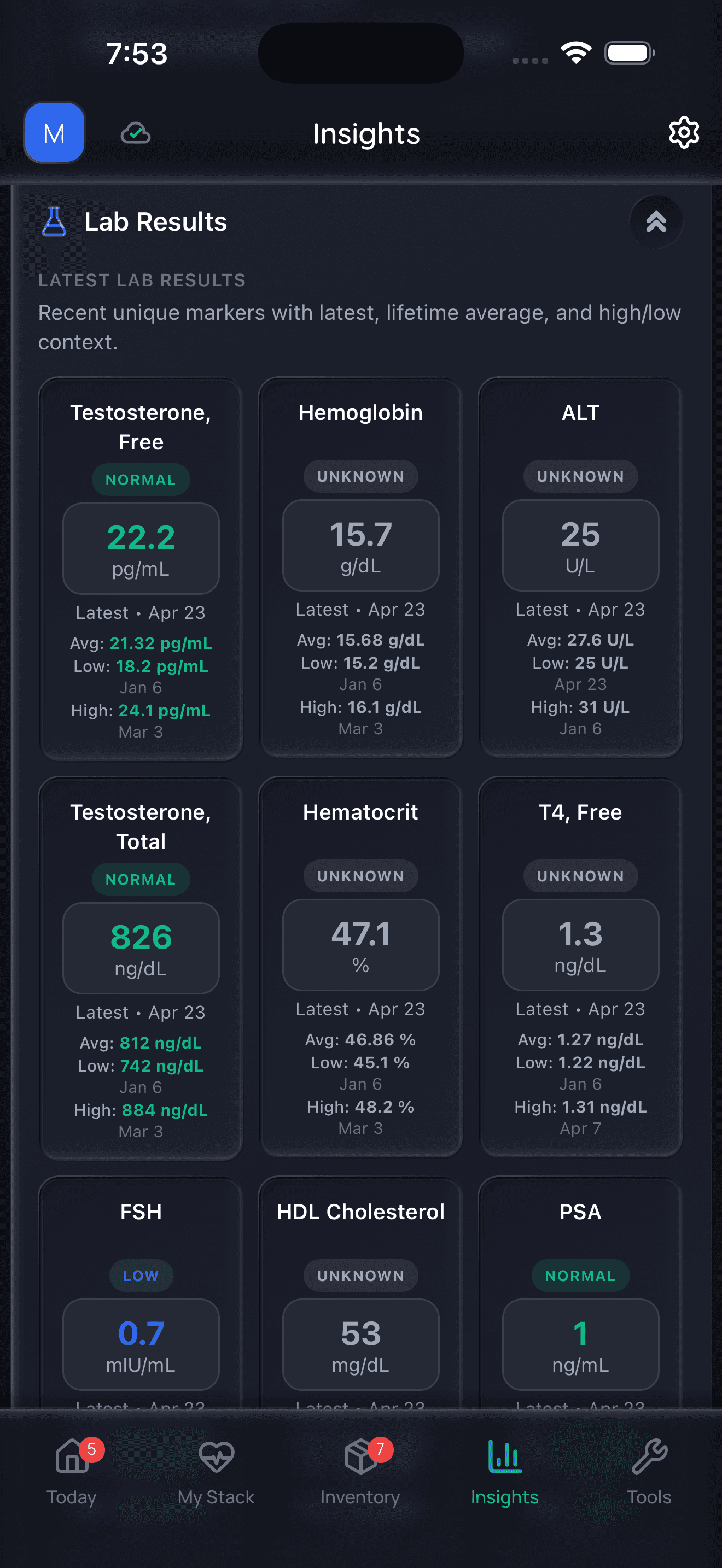
Doserly organizes data; it does not diagnose or interpret labs for you.
Risks, Side Effects & Safety
The Basics
There are two kinds of risk here: the risks of treatment and the risks of doing nothing helpful while symptoms keep interfering with work.
Treatment risks matter and should not be minimized. HRT is highly effective for vasomotor symptoms, but it is not risk-free and it is not appropriate for everyone. Common short-term side effects include breast tenderness, bloating, headache, nausea, and breakthrough bleeding. More serious risks depend on route, age, timing of initiation, duration, and whether progestogen is used.
At the same time, untreated symptoms have risks too. Repeated sleep loss, emotional exhaustion, quiet mistakes, fear-driven concealment, and pushing through severe symptoms can damage confidence, safety, and career decisions. That does not mean everyone needs medication. It means risk assessment should include the effect of symptoms on actual function.
There are also workplace safety issues. If a job involves driving, patient care, financial accuracy, machinery, or crisis response, poorly controlled insomnia or severe brain fog is not just uncomfortable. It may be unsafe.
The Science
NICE continues to recommend individualized discussion of HRT risks and benefits, including route, dose, progestogen type, and duration [2]. For symptomatic women under 60 or within 10 years of menopause onset without contraindications, the benefit-risk balance is generally considered favorable when treatment is indicated, but this varies by person and regimen [2].
Absolute risk still matters in workplace discussions because fear often drives avoidance. With combined estrogen-progestogen therapy, the WHI reported about 8 additional breast cancer cases per 10,000 women per year compared with placebo. Oral conjugated estrogen in WHI was associated with about 18 additional venous thromboembolism events per 10,000 women per year, while transdermal estrogen is generally associated with lower thrombotic burden than oral estrogen [2]. These are population estimates, not personal predictions, but they are more useful than saying only "risk goes up."
For work function, sedating or cognitively impairing side effects also matter. Some people feel groggy on oral progesterone, some feel worse with ongoing sleep loss, and some non-hormonal agents may help vasomotor symptoms but cause fatigue or dizziness. This is why treatment cannot be judged only by whether hot flashes fall. It also has to be judged by whether daytime functioning improves.
Red flags for urgent medical review: new chest pain, unilateral leg swelling, severe shortness of breath, severe neurologic symptoms, suicidal thinking, rapidly worsening bleeding, or any symptom pattern that makes work unsafe.
Contraindications to systemic HRT: active or unexplained vaginal bleeding, active breast cancer, active venous thromboembolism, severe liver disease, or other clinician-defined contraindications remain major reasons to avoid or rethink therapy [2].
Dosing & Treatment Protocols
The Basics
This is not a self-prescribing guide. But from a work-function perspective, there are recognizable treatment patterns.
If the main problem is hot flashes plus poor sleep: guideline-based menopause treatment is often the most direct route to improving work function. For eligible people, systemic HRT is usually the most effective treatment for vasomotor symptoms. Menopause-specific CBT can be added, especially if sleep anxiety, symptom dread, or stress spirals are part of the picture [2][4].
If the main problem is insomnia, mood change, and brain fog: treatment may still involve HRT if symptoms are menopause-related, but standard mental-health treatment may also be needed. Menopause is not a reason to ignore depression, panic, or ADHD-like functioning problems if they have become severe.
If the main problem is workday coping: accommodations matter. A treatment plan that reduces symptoms but leaves a worker in a hot uniform with no toilet access and no breaks may still fail in practice.
Typical clinical approaches: many clinicians start low-dose transdermal estradiol and add endometrial protection if the uterus is intact. Menopause-specific CBT, CBT-I, SSRIs/SNRIs, gabapentin, or other non-hormonal options may be used depending on the symptom cluster and contraindications. Medication choice should fit both symptom pattern and job demands.
The Science
NICE states that HRT is the most effective treatment for vasomotor symptoms and that menopause-specific CBT should also be considered for vasomotor symptoms and may help sleep and mood [2]. Accommodating this in work planning is important because the symptom cluster usually matters more than the label alone.
Common clinical regimens for vasomotor symptom control include transdermal estradiol at lower starting doses with titration based on symptom response and tolerability, alongside appropriate progestogen protection when needed. Oral micronized progesterone is often taken at bedtime because of its sedating profile. For some workers, that is helpful. For others, especially if morning grogginess affects driving or early-shift performance, timing and formulation need careful review.
Non-hormonal treatment protocols also matter at work. CBT-based interventions had the clearest workplace outcome signal in the intervention review, improving presenteeism and work and social adjustment [4]. This makes CBT especially relevant for workers who cannot take HRT, do not want HRT, or need better coping skills even after symptoms begin improving.
Work-focused treatment rules:
- Do not self-adjust hormone doses to "get through" a high-pressure work period.
- Do not treat persistent errors, panic, or unsafe fatigue as a character problem.
- Reassess after a reasonable trial, often 4 to 12 weeks, instead of assuming failure too early or persisting indefinitely without review.
What to Expect (Timeline)
Days 1 to 14: If you start a new treatment plan, work performance may not improve immediately. Some people notice better sleep first. Others notice only side effects or no change yet. This is a poor time to conclude that nothing will help.
Weeks 2 to 6: If vasomotor symptoms and sleep are major drivers, some people begin to notice fewer night sweats, slightly better sleep, and a bit more resilience during the day. This may show up at work as less dread about mornings, slightly faster recall, or less irritability rather than dramatic transformation.
Weeks 6 to 12: This is often a better window to judge whether work function is improving. Ask practical questions: Are you rereading emails less? Are you making fewer small errors? Are you sleeping longer? Are meetings more tolerable? Are you still spending enormous effort to seem normal?
Months 3 to 6: This is often where the bigger pattern becomes visible. If treatment is working, the main work gain is usually steadier function, not perfection. If nothing has changed, the plan may need revision: dose review, different formulation, more aggressive sleep treatment, CBT, or more explicit workplace support.
For accommodations: very small changes can help quickly if they target the real problem. A fan, cooler desk location, flexible start time after a bad night, better bathroom access, or permission to keep written task systems can improve function faster than waiting for a full treatment effect.
Realistic expectation: improvement is often uneven. Menopause, especially perimenopause, can still produce symptom volatility even after you have a better plan.
Timing Hypothesis & Window of Opportunity
The Basics
The timing hypothesis is usually discussed in relation to cardiovascular and cognitive effects of hormone therapy, but it also matters for workplace thinking because many people wait until symptoms are already hurting work before seeking help.
The practical version is simple: for appropriate candidates, treatment started closer to the menopause transition generally has a more favorable benefit-risk balance than treatment started much later [2]. For work, that matters because the main aim is often to treat symptoms while they are actively degrading sleep, mood, and concentration, not years after the damage to confidence or job fit has already accumulated.
This does not mean everyone should start HRT early. It means that delayed, avoidant care can have a cost. Workers often spend months or years assuming their concentration problem is personal failure, burnout, or "normal aging" before menopause is even raised. If symptoms clearly cluster around the transition, earlier evaluation may reduce unnecessary suffering and work disruption.
The Science
NICE's updated guidance reinforces that treatment choice should be individualized and based on current symptoms, age, and risk factors [2]. The workplace implication is that treatment is most useful when it is matched to the active symptom pattern rather than delayed until symptoms have become normalized or career-damaging.
The most defensible work-related use of the timing hypothesis is therefore not "start treatment immediately or you will lose your career." It is "do not assume you must simply endure significant symptoms for years before asking whether evidence-based treatment could help." In practice, earlier symptom recognition may reduce cumulative sleep debt, repeated performance anxiety, and avoidable self-doubt even if not every worker chooses HRT.
Interactions & Compatibility
Medication interactions that matter for work function:
- Estrogen and lamotrigine: estrogen can reduce lamotrigine levels, which matters for seizure disorders and bipolar treatment.
- Oral progesterone and daytime sedation: useful for sleep in some people, but mistimed dosing can worsen morning grogginess.
- SSRIs/SNRIs and job demands: these may help mood or hot flashes, but early adverse effects can include nausea, sleep changes, or jitteriness that temporarily affect work tolerance.
- Alcohol and sleep: alcohol may feel helpful in the evening but often worsens sleep quality and next-day cognitive function.
- Caffeine and hot flashes/anxiety: helpful for alertness in some people, but it can worsen heat sensation, palpitations, or anxiety in others.
Work-pattern compatibility:
- Shift work: difficult because circadian disruption can worsen sleep and symptom burden [1].
- High-heat or uniformed jobs: require extra attention to cooling, layering, hydration, and breaks.
- High-cognitive-load roles: may benefit from written systems, reduced interruption, protected focus time, and explicit confirmation habits.
- Remote or hybrid work: often improves symptom management by giving greater control over temperature, privacy, rest, and clothing, but it does not replace treatment when symptoms are severe.
Related guides: Getting Started With HRT, Transdermal HRT (Patches, Gels, Sprays), Menopause and Mental Health, Menopause Nutrition & Lifestyle
Decision-Making Framework
The most useful work question is rarely "Should I tell my boss I am in menopause?" It is "What problem am I trying to solve, and what information does the other person actually need to solve it?"
If the problem is poor sleep leading to slower mornings, you may only need to ask for a temporary later start or more flexible first meeting times. If the problem is overheating in a uniform, you may need a practical conversation about clothing, fans, breaks, or a cooler workspace. If the problem is severe symptoms and you are considering HRT or CBT, the first decision may belong in the clinic, not with a manager.
Decision questions for yourself:
- Which symptoms are affecting work most: sleep, heat, memory, mood, bleeding, fatigue?
- What is the real job impact: errors, slower processing, attendance, safety, patience, confidence?
- What adjustment would actually help?
- Do I need formal disclosure, symptom-focused disclosure, or private self-accommodation first?
- Is the work culture psychologically safe enough for a direct menopause conversation?
Decision questions for your healthcare visit:
- Are my symptoms menopause-related, and if so which treatments best match my work-limiting symptoms?
- Is HRT appropriate for me, or should non-hormonal options lead?
- Which part of my work function should improve if treatment is working: sleep, focus, energy, heat tolerance?
- When should I reassess if work is still suffering?
Decision questions for a manager conversation:
- What change would help me stay effective?
- What minimum information do I need to share to justify that change?
- Do I want a one-time adjustment, a temporary experiment, or an ongoing accommodation?
The best HRT and workplace decisions happen when you enter the conversation prepared. Doserly helps you organize symptom patterns, treatment changes, side effects, and the questions you want answered, so appointments and planning conversations are more precise.
Instead of trying to reconstruct months of bad sleep, hot flashes, and concentration problems from memory, you can walk in with a clean record of what changed, when it changed, and what is still interfering with work.
Keep side effects, flags, and follow-up notes visible.
Doserly helps you document safety observations, side effects, medication changes, and follow-up questions so important context is not scattered.
Safety log
Flags and notes
Safety notes are not emergency guidance; seek medical help when appropriate.
Administration & Practical Guide
This section is about how to make work more survivable while treatment, recovery, or evaluation is still in progress.
For sleep-related performance problems:
- Protect the first hour of the workday when possible.
- Batch cognitively demanding work for your sharpest window.
- Use written task captures, meeting recaps, and one-document project logs.
- Avoid treating memory slips as a moral failure. Externalize memory on purpose.
For hot flashes and overheating:
- Layer clothing.
- Ask for airflow, desk fans, cooler seating, or access to cold water.
- If uniforms are mandatory, ask whether breathable or alternate options exist.
- In public-facing work, plan a quick step-away routine rather than waiting for panic.
For heavy or unpredictable bleeding:
- Keep spare clothing and products at work.
- Map the nearest restrooms in advance.
- If breaks are restricted, ask for a practical exception before an emergency happens.
For brain fog in meetings:
- Read back key points aloud.
- Ask for written follow-up when possible.
- Use checklists, agendas, and decision logs.
- Reduce multitasking aggressively.
For stressful manager conversations:
- Lead with impact and solution, not with embarrassment.
- Example: "My sleep symptoms have been affecting early-morning concentration. A later first meeting on bad nights would help me stay accurate."
For travel or long days:
- Do not skip meals, hydration, or scheduled treatment.
- Build cooldown and bathroom access into the plan.
- If symptoms are severe, reconsider whether the schedule is realistic.
Monitoring & Lab Work
Monitoring for workplace improvement should include both medical and functional markers.
Medical review points:
- symptom burden
- treatment side effects
- sleep quality
- mood and anxiety
- bleeding changes
- blood pressure and other routine risk monitoring as appropriate
Functional review points:
- concentration at work
- error rate or rework burden
- attendance and lateness
- recovery time after bad nights
- confidence in meetings or client-facing work
- whether current adjustments are actually helping
Useful tools:
- a symptom diary
- sleep tracking
- a short note of "work interference" events
- validated mood screening if mood symptoms are significant
When to escalate:
- performance is becoming unsafe
- insomnia is persistent
- panic, depression, or severe mood symptoms are escalating
- bleeding is heavy or abnormal
- the person is considering resignation because symptoms feel unmanageable
Routine hormone panels are often less useful here than consistent symptom and function tracking. The most important monitoring question is whether the plan is improving real life.
Complementary Approaches & Lifestyle
Workplace coping improves when treatment is paired with realistic lifestyle support. The goal is not to build a perfect wellness routine. It is to reduce symptom load enough that work stops consuming all available resilience.
Sleep protection: consistent wake times, cooler rooms, light exposure in the morning, and reducing late alcohol can make symptoms less punishing even when they do not eliminate them.
Exercise: regular aerobic and resistance training can improve sleep, stress tolerance, and psychological wellbeing, and may help workers feel more physically resilient during the transition. Exercise is helpful, but it should not be oversold as a replacement for HRT when vasomotor symptoms are severe.
CBT and CBT-I: these are among the most evidence-supported non-hormonal options in both menopause guidance and workplace-intervention evidence [2][4].
Hydration, meal timing, and caffeine awareness: useful because overheating, skipped meals, or high-caffeine coping loops can worsen anxiety and heat intolerance.
Stress-load reduction: if work and home stress are both maximal, symptoms may feel worse. Sometimes the most effective menopause intervention is not a supplement but a less punishing schedule or clearer boundaries.
Peer support: workers often feel less isolated and more strategic when they can compare notes with trusted peers or support groups. This does not replace clinical care, but it can reduce shame and improve self-advocacy.
HRT does not exist in a vacuum. Sleep, stress, movement, and daily routine all shape how symptoms feel and how well treatment works. Doserly lets you track these factors alongside your protocol and symptom changes so you can see what is actually helping your workdays.
Log sleep quality, stress, activity, and symptom flares in one place. Over time, patterns become obvious, including which routines support better concentration and which ones make bad days worse.
See how each compound fits into the whole protocol.
Doserly organizes compounds, supplements, peptides, medications, and hormone protocols together so overlapping routines are easier to understand.
Stack view
Connected protocol
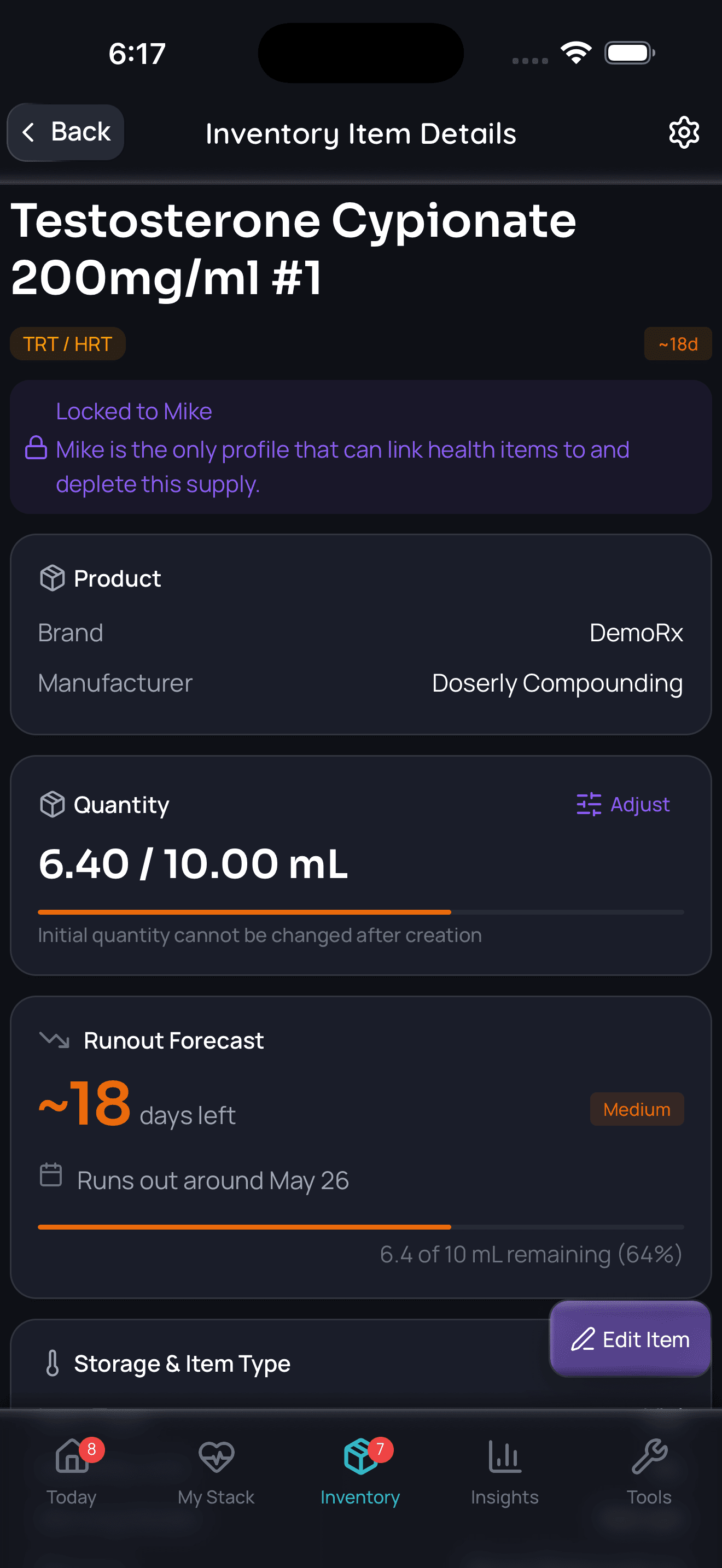
Stack views improve organization; they do not determine compatibility.
Stopping HRT / Discontinuation
Stopping HRT is relevant to work because symptom recurrence can be disruptive, especially if treatment was the main thing controlling sleep or vasomotor symptoms.
Current guidance does not support arbitrary time limits for everyone. Decisions about continuing or stopping HRT should be individualized and revisited with a clinician [2]. From a workplace point of view, abrupt discontinuation is often a poor idea if symptom recurrence would hit performance quickly.
If discontinuation is appropriate, gradual tapering is often easier to monitor than a sudden stop. Workers should ask practical questions:
- What symptom is most likely to return first?
- If sleep worsens again, how will that affect work?
- What is the fallback plan?
- Should CBT, non-hormonal medication, or more structured accommodations be in place first?
Stopping treatment should be a planned transition, not a last-minute decision before a stressful work period.
Special Populations & Situations
Breast cancer survivorsSystemic HRT is often not appropriate, which makes non-hormonal symptom management and workplace support especially important. These workers may need stronger emphasis on CBT, sleep treatment, cooling strategies, and manager flexibility.
Premature ovarian insufficiency (POI)Earlier menopause can affect workers before colleagues or managers expect it. The workplace stigma may be different because the age signal is different. Specialist menopause care is especially important.
Surgical menopauseSymptoms can arrive abruptly and intensely. Workers may need faster reassessment of schedule, treatment, and cognitive load than in natural menopause.
Cardiovascular or thrombotic riskRoute and formulation matter if HRT is being considered. Workplace discussions should not drive unsafe self-treatment.
Migraine with auraStable hormone strategies are often preferred because fluctuating exposure can worsen migraine.
Shift workersThis group may be hit hardest by the combination of circadian disruption and symptom burden. Light exposure, schedule review, breaks, and sleep-protection planning are especially important [1].
Workers in heat, PPE, or customer-facing rolesCooling, breathing space, fabric options, and short reset breaks become more important than generic wellness advice.
Neurodivergent or high-cognitive-load workersPerimenopause may worsen attention, overwhelm, and sensory stress. Externalized systems and lower interruption load can be especially valuable.
Regulatory, Insurance & International
This topic becomes legally specific very quickly, so the safest approach is to separate broad principles from local legal advice.
United StatesThere is no single federal menopause statute. Support generally arises through existing discrimination, disability, leave, occupational-health, and benefits frameworks. Some workers may qualify for accommodation because of the functional impact of symptoms, but that is context-dependent, not automatic [1].
United KingdomThe UK currently has some of the clearest menopause-at-work guidance. Acas and EHRC both frame support through existing sex, age, disability, and health-and-safety law, along with practical adjustment and policy guidance [8][9].
Canada, Australia, and the EUAwareness and policy interest are increasing, but the exact legal route and accommodation framework vary by province, territory, or country. In general, workers should expect support to arise through broader human-rights, health-and-safety, and flexible-working structures rather than through a universal menopause-specific rule.
Insurance and care accessBecause treatment access affects work outcomes, benefits matter. Coverage for HRT, specialist care, CBT, and mental-health care can shape whether a worker can actually follow through on treatment recommendations.
Whenever the issue becomes legal, contractual, or disciplinary, workers should check local HR, union, occupational-health, or legal resources rather than relying on generalized online guidance.
Frequently Asked Questions
Q: Do I have to tell my boss I am in menopause?A: No universal rule says you must. Many workers choose symptom-focused disclosure instead, such as discussing insomnia, heat intolerance, or a need for flexibility. The best approach depends on workplace safety, trust, and what support you actually need.
Q: Is brain fog during perimenopause real?A: Yes. Workers commonly describe slower recall, distractibility, and mental fatigue. It is usually a functional menopause symptom pattern, often made worse by poor sleep, not automatically a sign of dementia.
Q: Can HRT help me work better?A: Indirectly, yes, especially if hot flashes and sleep disruption are the main reasons work feels harder. HRT is not a productivity drug, but symptom control can improve daytime function.
Q: What if I do not want HRT?A: Menopause-specific CBT, CBT-I, exercise, sleep interventions, cooling strategies, and workplace adjustments can still help. If mood symptoms are significant, standard mental-health care may also be needed.
Q: What should I ask for at work?A: Ask for the smallest change that solves the real problem. Examples include flexibility after a bad night, a cooler workspace, bathroom access, a uniform adjustment, or protected focus time.
Q: Should I say "menopause" or just describe symptoms?A: Either can be reasonable. In safer workplaces, direct naming may reduce confusion. In less safe workplaces, symptom-based disclosure may feel more practical.
Q: Can menopause symptoms count as a disability?A: In some jurisdictions and situations, yes, but that depends on how significantly symptoms affect day-to-day function and on local law. This is where local advice matters.
Q: Why do I feel fine one week and terrible the next?A: Perimenopause often involves hormone fluctuation, not steady decline. Symptom variability is common.
Q: Is remote work the answer?A: It can help because it improves control over temperature, clothing, rest, and privacy. But it does not replace treatment if symptoms remain severe.
Q: When should I get medical help urgently?A: If symptoms are causing unsafe work, severe insomnia, panic, major depression, suicidal thinking, heavy or abnormal bleeding, or sudden severe neurologic or vascular symptoms.
Q: What if I am making mistakes at work and feel ashamed?A: Shame is common, but it is not a treatment plan. Start by tracking the pattern, getting evaluated, and reducing cognitive load while you work out what is driving the mistakes.
Q: Can I just push through until retirement?A: Some people do, but that is rarely the best strategy if symptoms are already harming sleep, confidence, and job performance. Earlier support usually gives you more options.
Myth vs. Fact
Myth: Menopause at work is mainly about hot flashes.Fact: Sleep disruption, brain fog, anxiety, fatigue, and heavy bleeding may be just as work-limiting as vasomotor symptoms [1][6][7].
Myth: If work is getting harder, it means your competence is declining.Fact: Symptom-related performance variability is not the same as global decline. Many people remain highly capable while symptoms temporarily increase the effort required to perform.
Myth: Everyone should disclose menopause openly at work.Fact: Open culture is ideal, but disclosure strategy should match workplace safety and the support needed.
Myth: If research is mixed, menopause probably does not affect work.Fact: Mixed evidence means the effect is not universal and study quality varies. It does not mean the problem is imaginary [3].
Myth: A menopause policy automatically fixes the problem.Fact: Written policy helps only if managers are informed and accommodations are actually usable [4][8][9].
Myth: HRT is only about symptom comfort, not work function.Fact: If HRT reduces vasomotor symptoms and restores sleep, work function may improve indirectly [2][7].
Myth: Brain fog means dementia is starting.Fact: Menopause-related brain fog is usually about attention, recall, and mental stamina, often worsened by poor sleep and stress.
Myth: If you can still do your job, you do not deserve support.Fact: Support is most useful before a worker reaches crisis, burnout, or formal performance problems.
Myth: Requesting accommodations proves weakness.Fact: Good accommodations are tools that help people stay effective and safe at work.
Myth: You need one perfect menopause fix.Fact: Most people need a combination of symptom treatment, work changes, and better tracking.
Sources & References
- Faubion SS, Bigler JK, Christmas MM, et al. Menopause and the workplace: consensus recommendations from The Menopause Society. Menopause. 2024;31(9):741-749.
- NICE. Updated menopause guidance includes discussion aid to support conversations about HRT. National Institute for Health and Care Excellence. November 2024.
- Taylor S, Davis SR, et al. Menopause and work performance: a systematic review of observational studies. Menopause. 2025.
- Rodrigo CH, Sebire E, Bhattacharya S, Paranjothy S, Black M. Effectiveness of workplace-based interventions to promote wellbeing among menopausal women: a systematic review. Post Reprod Health. 2023;29(2):99-108.
- Oude Hengel KM, et al. Perimenopause: Symptoms, work ability and health among 4010 Dutch workers. Maturitas. 2023.
- Hobson G, Dennis N. "I can't be dealing with this brain fog": A workplace focus group study investigating factors underpinning the menopausal experience for NHS staff. Women Birth. 2023.
- DePree B, Shiozawa A, et al. Association of menopausal vasomotor symptom severity with sleep and work impairments: a US survey. Menopause. 2023.
- Acas. Supporting staff through the menopause. Advisory, Conciliation and Arbitration Service. Updated November 6, 2024.
- Equality and Human Rights Commission. Menopause in the workplace: Guidance for employers. Published February 22, 2024; updated August 25, 2025.
Related Guides & Cross-Links
Same Category
Related Conditions
Related Treatment Approaches
- Transdermal HRT (Patches, Gels, Sprays)
- Non-Hormonal Menopause Treatments
- Micronized Progesterone (Prometrium)
- 17B-Estradiol (Bioidentical)