
In this guide
What is IGF-1 LR3?
IGF-1 LR3 is a lab-made version of insulin-like growth factor 1 (IGF-1), a growth signal the body makes in the liver and other tissues in response to growth hormone. It was engineered in the early 1990s to help cells grow in laboratory cultures, and it is now sold online as an injectable “research peptide” for building muscle. [1], [2], [3]
The name describes the changes. “Long” refers to 13 extra amino acids added to the front of the chain, taken mostly from the start of pig growth hormone. “R3” means that the amino acid at position 3 of the IGF-1 chain was swapped for arginine (written R). The finished chain is 83 amino acids long, compared with 70 in natural IGF-1, and weighs about 9.1 kilodaltons (kDa). It also appears as Long R3 IGF-I, LR3 IGF-1 and LongR3-IGF-I. [2], [4], [3]
Those two changes make it bind much more weakly to the binding proteins that normally keep most IGF-1 in reserve in the blood, so more of each dose circulates free to act on cells. That is why companies that make cell-culture ingredients use it, and why bodybuilders became interested in it. [5]
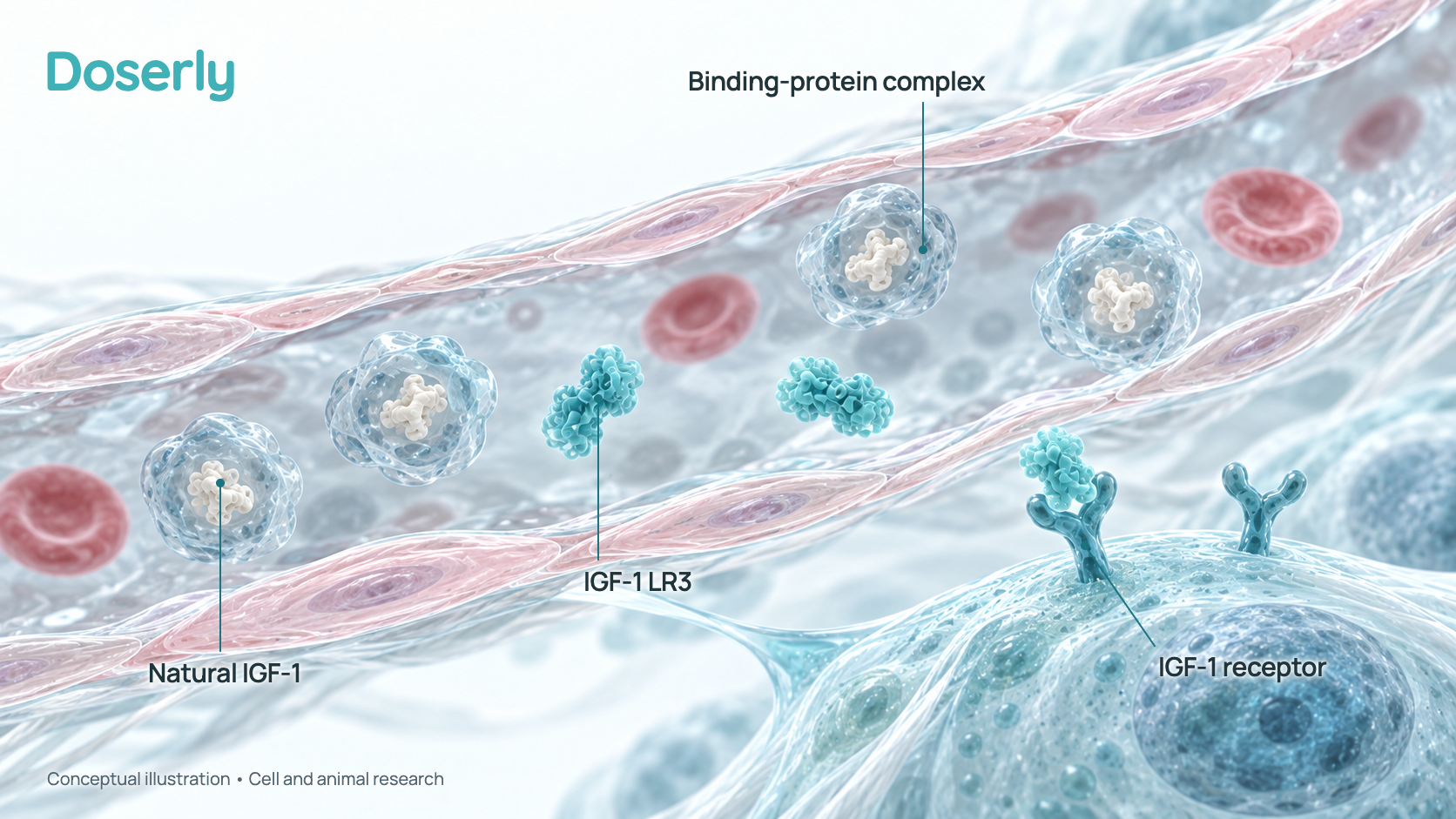
It is not an approved medicine. The companies that make it for cell culture state that it is not approved or permitted for any human use, and no study has given it to people. The approved relative is mecasermin (brand name Increlex), which is natural IGF-1 made in the lab for a rare childhood growth disorder. The two are different molecules, and the medicine's doses do not apply to IGF-1 LR3. [6], [7], [1]
Typical IGF-1 LR3 Protocols
| Example | Amount each time | Frequency | Total per day | Duration |
|---|---|---|---|---|
| Low | 20 mcg | Once daily | 20 mcg | 4 weeks The page's beginner plan, followed by 4–6 weeks off |
| Mid | 40 mcg | Once daily | 40 mcg | 4–6 weeks |
| High | 80 mcg | Once daily | 80 mcg | 4–6 weeks The page calls this level “aggressive” |
The most common pattern in the reviewed sources is 20–50 mcg once a day by subcutaneous injection, usually right after training and followed by a meal, for 4–6 weeks. The pages differ in timing, route and course length, and none of their schedules has been tested in people. [8], [9], [10], [11], [12], [13]
- Titration Changing the amount in steps
- The usual approach starts at 20 mcg a day and holds it for one to two weeks before stepping up. One widely copied eight-week plan uses 20 mcg in weeks 1–2, 40 mcg in weeks 3–4 and 50 mcg in weeks 5–8; another moves from 20 to 40 mcg and then 60 mcg from week 5. Other sources keep a single amount for the whole course, and one says to wait 3–5 days before any increase. [14], [15], [8], [16]
- Timing and food
- Sources place the injection after training or in the morning and say to eat carbohydrate and protein within 15–30 minutes, because IGF-1 LR3 lowers blood sugar. The label of the approved IGF-1 medicine has a similar rule for its own drug: give it within 20 minutes of a meal or snack, and skip the dose if you cannot eat. [8], [1]
Read the units: mcg means micrograms; 1 mg equals 1,000 mcg, so a typical 1 mg vial holds 1,000 mcg. The amounts refer to IGF-1 LR3 itself. Doses of the approved IGF-1 medicine are written in milligrams per kilogram of body weight and belong to a different molecule.
Each row is a complete schedule from one source, and low, mid and high are alternatives, not steps to move through. These schedules come from dosing websites, not clinical trials: no study has given IGF-1 LR3 to people, so no human dose has been tested. The cited references give the full details. [8], [7]
Cautions for every schedule above. None of these amounts has been tested in people. Low blood sugar is the main danger: it was the most consistent finding in animal studies, and four growth-restricted fetal lambs died with low blood sugar and low oxygen. The label of the approved IGF-1 medicine warns that severe episodes can cause unconsciousness, seizures or death. [19], [20], [21], [22], [1] For people with diabetes, insulin or other blood-sugar-lowering medicines could add to that effect, and so could a skipped meal. [1] Animal studies also found faster growth of existing tumours and worse kidney injury, so a current or past cancer and kidney disease are specific reasons for concern. [23], [24] It has not been studied in pregnancy, breastfeeding or anyone under 18. Products sold online are not made or tested to medicine standards: the reagent's makers say it is not for human use, and a 2018 FDA inspection recorded an IGF-1 LR3 batch among sterility failures at a US compounding pharmacy. [6], [25] Check whether an amount is written in mcg or mg before drawing it; Doserly's reconstitution calculator shows each step. IGF-1 LR3 is banned in sport at all times. [26] Read the full risks section
Where protocols differ: timing, food, breaks and injection sites ↓
Where these numbers come from
The complete low, mid and high rows come from one protocol page (Peptide Schedule), which lists beginner 20 mcg, moderate 40 mcg and aggressive 80 mcg once daily, a four-week beginner plan followed by 4–6 weeks off, and 4–6-week cycles in general. The same page states that no human trial has tested these schedules. [8]
Other pages cross-check the recurring amounts; they do not independently confirm every row. Peptide Database lists 20–30, 40–60 and 80–100 mcg levels with a 4–6-week maximum, Peptide Dosing Hub shows 80 mcg once daily with 50 and 100 mcg options for 4–8 weeks, and PeptideDosages.com gives the 20, 40 and 50 mcg eight-week plan that other pages repeat. [9], [27], [14]
How the pages were compared. The 29 dosing pages reviewed give 21 single-number amounts, from 11 to 200 mcg, but they mix once-daily use, five-days-a-week schedules, split muscle injections and an older 11 mcg rule. Because these are different schedules, we did not calculate a single middle dose. The 20–50 mcg band is where most once-daily amounts and ranges fall. Many pages copy one another, so repetition online is not independent agreement. [8], [28], [18]
What we left out of the typical comparison. Amounts written per side for injections into two muscles, per-kilogram doses copied from the approved IGF-1 medicine's label, a clinic handout's 100–200 mcg into a muscle five days a week, a forum rule of 11 mcg a day, and single accounts of 300–500 mcg. They appear in Where do IGF-1 LR3 protocols differ? instead. [29], [30], [31]
What is IGF-1 LR3 commonly used for?
Most people who look into IGF-1 LR3 want more muscle. A 2026 review lists it among the peptides most often found in online self-administration protocols, and personal accounts show it is usually added to programs that already include growth hormone, peptides that release growth hormone, testosterone or anabolic steroids. [32], [33], [34] In community education groups it is often described as the research peptide closest to an anabolic drug.
People describe practical goals: bigger and fuller-looking muscles, more strength, keeping muscle while losing weight, and faster recovery. None has been tested in a human study of IGF-1 LR3, so the evidence below comes from animal research, related medicines and personal accounts. [7], [32]
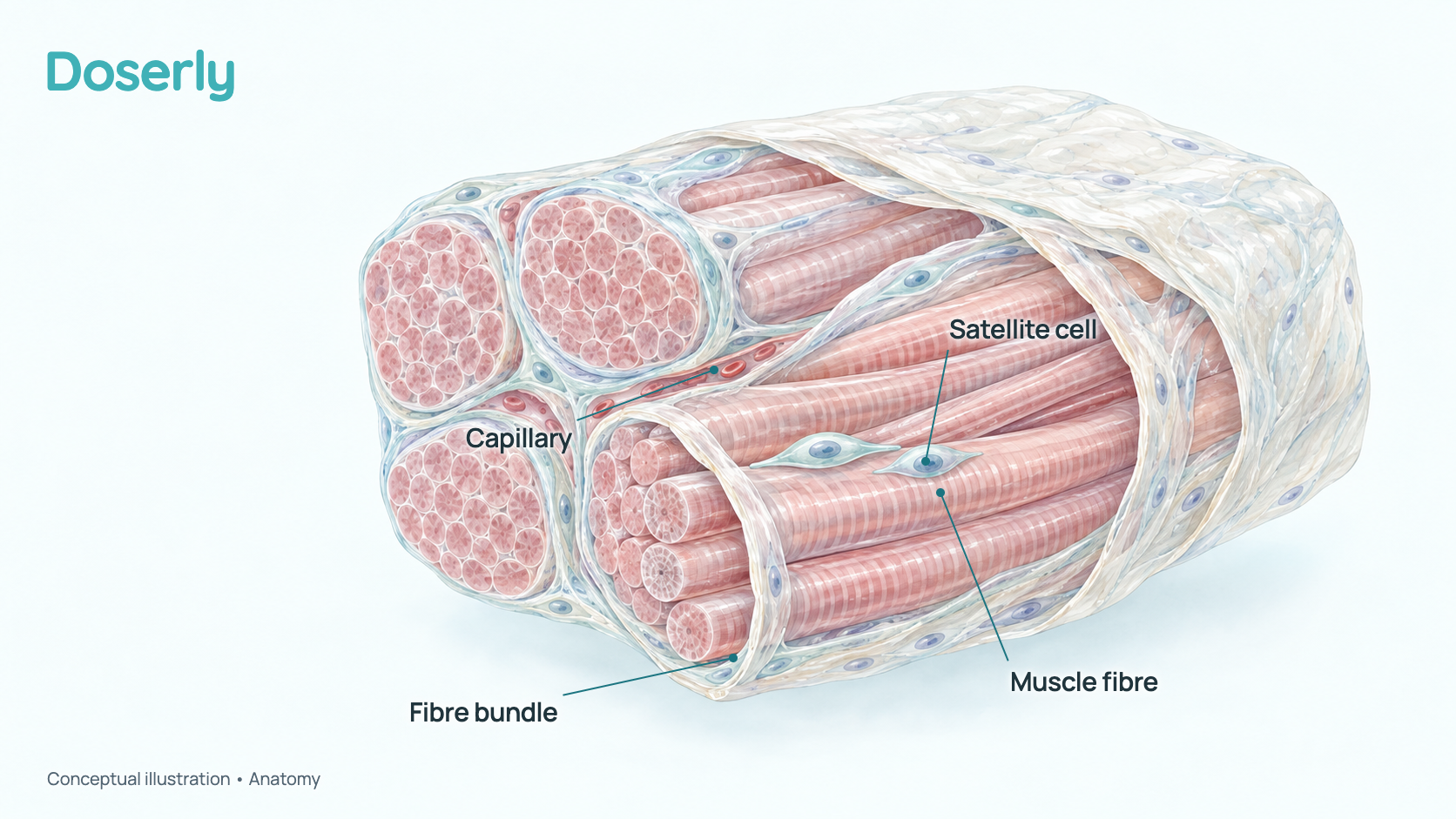
Muscle size and strength
The hope is simple: more muscle and more strength from the same training. The idea comes from biology. Natural IGF-1 is one of the signals that tells muscle cells to build protein, and IGF-1 LR3 reaches those cells more freely. [5]
The animal results are more mixed than that idea suggests. In rats made to lose muscle with a steroid medicine (dexamethasone), IGF-1 LR3 partly reversed the loss and was about 2.5 times as potent as natural IGF-1. In normal growing female rats, 44 mcg a day for two weeks matched the growth produced by 278 mcg of natural IGF-1. In a later study comparing injections with a slow pump, it was “barely equipotent” with natural IGF-1 at reversing muscle loss, and in growing pigs a four-day infusion reduced growth and food intake. [35], [36], [37], [38]
In people, the only information comes from personal accounts. Many describe fuller muscles and stronger “pumps” during training; others notice nothing. Almost all of them were also using other drugs that build muscle. The community section follows these accounts. [39], [40], [34]
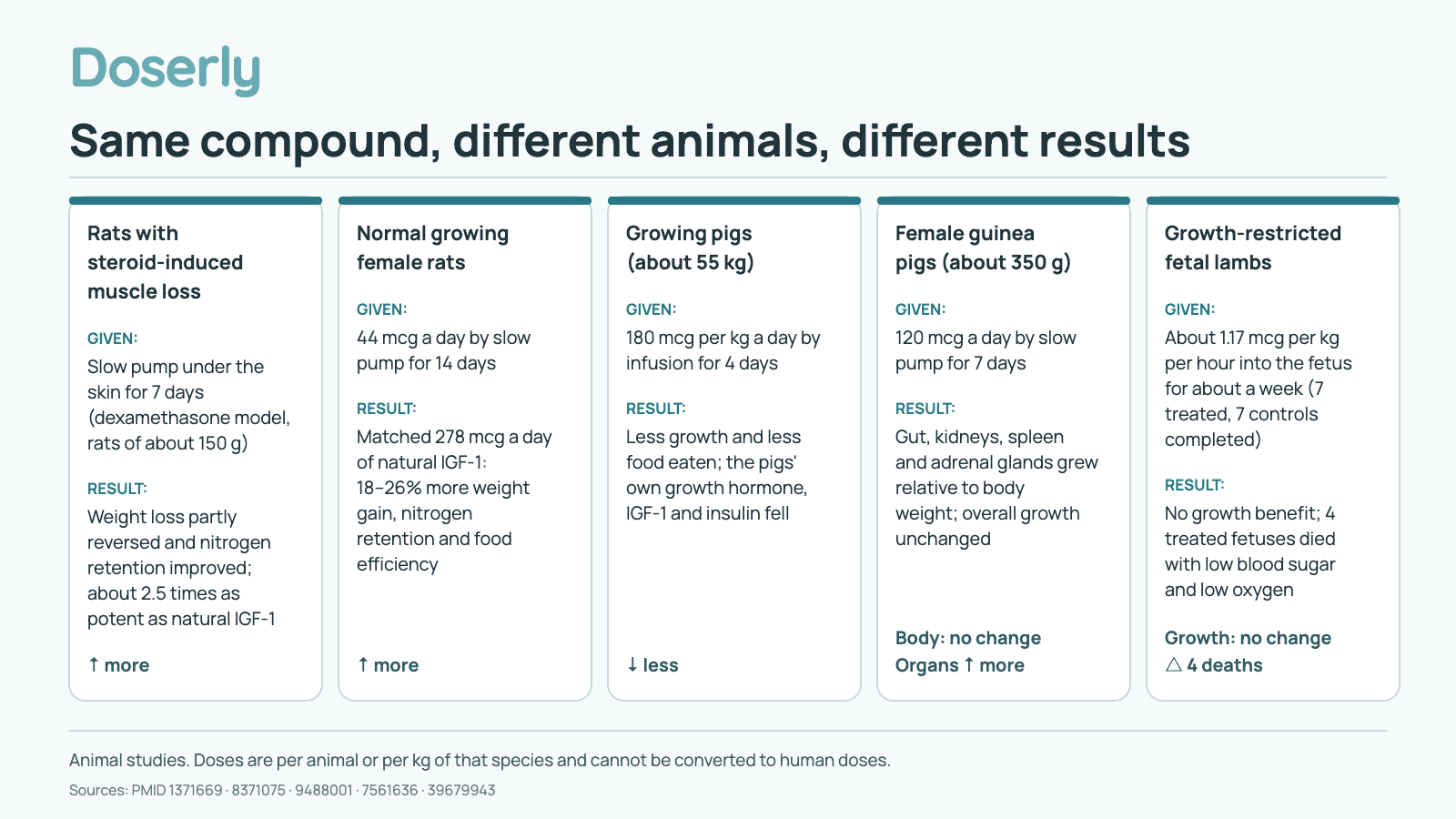
Same compound, different animals, different results
Rats with steroid-induced muscle loss
- Given
- Slow pump under the skin for 7 days (dexamethasone model, rats of about 150 g)
- Result
- Weight loss partly reversed and nitrogen retention improved; about 2.5 times as potent as natural IGF-1
- Direction
- ↑ more
Normal growing female rats
- Given
- 44 mcg a day by slow pump for 14 days
- Result
- Matched 278 mcg a day of natural IGF-1: 18–26% more weight gain, nitrogen retention and food efficiency
- Direction
- ↑ more
Growing pigs (about 55 kg)
- Given
- 180 mcg per kg a day by infusion for 4 days
- Result
- Less growth and less food eaten; the pigs' own growth hormone, IGF-1 and insulin fell
- Direction
- ↓ less
Female guinea pigs (about 350 g)
- Given
- 120 mcg a day by slow pump for 7 days
- Result
- Gut, kidneys, spleen and adrenal glands grew relative to body weight; overall growth unchanged
- Direction
- Body: no change; Organs ↑ more
Growth-restricted fetal lambs
- Given
- About 1.17 mcg per kg per hour into the fetus for about a week (7 treated, 7 controls completed)
- Result
- No growth benefit; 4 treated fetuses died with low blood sugar and low oxygen
- Direction
- Growth: no change; △ 4 deaths
Animal studies. Doses are per animal or per kg of that species and cannot be converted to human doses.
Keeping muscle while losing weight
A newer reason is weight loss. People taking a glucagon-like peptide-1 (GLP-1) weight-loss medicine such as semaglutide, tirzepatide or the investigational drug retatrutide sometimes add IGF-1 LR3 hoping to keep muscle while fat comes off. Public accounts describe this combination. [41], [42] In community education groups, most members describing IGF-1 LR3 use were also taking one of these medicines.
No study has tested this combination. The closest animal evidence points in both directions: in rats with a mammary tumour, IGF-1 LR3 reduced food intake and did not add muscle protein, while in guinea pigs recovering from surgery it improved weight regain. Using IGF-1 LR3 alongside a medicine that also lowers blood sugar raises its own questions, covered in the risks section. [23], [43]
Recovery and injuries
Some people use it after hard training or for tendon, ligament and muscle injuries. The accounts usually include other peptides such as BPC-157 or TB-500, growth hormone, rehabilitation and time, so the effect of IGF-1 LR3 cannot be separated. [44], [45], [46]
Animal research on injuries is narrow. IGF-1 LR3 released from a gel placed into a surgically created muscle defect in rats increased muscle weight at 28 days, but did not improve muscle force, scarring, fibre size or fibre number. A nerve tube releasing it helped cut nerves regrow in rats about as well as a nerve graft. These were devices placed at the injury, not injections. [47], [48]
Fat loss
Some accounts describe a leaner look or a smaller waist during a course. Those reports usually involved diet changes and other drugs. In animals, carcass fat fell by 30% in rats with a mammary tumour given IGF-1 LR3, but they were also eating less, and the authors could not separate a direct effect from the drop in food intake. [49], [50], [23]
Other uses you may come across
Websites also mention anti-ageing, brain health, cartilage and bone repair, and even growing taller. None of these has human evidence. The only brain study gave IGF-1 LR3 through the nose to mice bred to develop Alzheimer's-like changes; it altered some plaque features but did not preserve memory. No study has measured whether injected IGF-1 LR3 reaches the brain at all. Growing taller is covered in the common questions. [51], [32]
Where do IGF-1 LR3 protocols differ?
Sources disagree about timing, food, how the amount is split, which days to inject, how long a course runs and where to inject. Here is what those differences mean.
Before or after training, fed or fasted?
Most sources say to inject after training and eat soon afterward. The reason given is blood sugar: IGF-1 LR3 acts partly like insulin, and a meal gives the body sugar to work with. Some pages instead allow a fasted morning dose “with food ready”. [8], [13]
The sources clash here. In community education groups, one group's summary sheet says IGF-1 LR3 can be taken fasted, while other groups say to take it with or after food.
In public accounts, people who injected without eating described dizziness and feeling unwell, while one person at 200 mcg described no symptoms on a fasted day. [52], [53], [54] Symptoms are not measurements, and few of these people checked their blood sugar.
Every day, training days only, or five days on and two off?
Most current pages describe one injection every day. Others inject only on training days, every other day, or five days a week with two days off. Some split the day's amount into two injections around training. [8], [55], [18], [34]
Splitting or spacing the same weekly total has not been compared in people. The only relevant experiment is in rats: continuous delivery by a slow pump worked better than one or two injections a day, although IGF-1 LR3 still beat natural IGF-1 for several effects when injected once daily. [37]
Start low, or go straight to the top amount?
Some pages start at 20 mcg and step up every week or two, as in the table's titration note; others keep one amount for the whole course. [14], [8] In community education groups, some members start at 100 mcg with no titration, because one group treats 100 mcg as its upper limit.
A few accounts go far higher, up to about 500 mcg a day. [56], [57] Those are single reports, not tested doses. In the community education groups, the handful of members using more than 100 mcg described most of the joint pain, fluid retention and glucose-monitor drops reported there.
How long is a course, and why do sources insist on breaks?
Most pages describe 4–6 weeks of use, and older forum posts cap a course at 30–50 days. Breaks are usually explained as a way to prevent “receptor desensitization”, meaning cells becoming less responsive. No study of IGF-1 LR3 has tested that idea or compared courses with and without breaks. [8], [58], [59]
Real practice is looser. Public accounts describe courses of a few weeks to two months, repeated cycles over a year, and one 16-week run. [60], [61], [62] In community education groups, “8 weeks on, 4 weeks off” is common, and some members keep other growth-hormone drugs going during the “break”.
Subcutaneous, or into the muscle that was trained?
Most pages describe subcutaneous injection. An older forum tradition injects into the muscle just trained, often split between both sides of the body, in the hope of “local” growth; one page even calls this “purported”. The practice matters for reading doses: “20 mcg bilateral” means 40 mcg in total. No study has compared the two sites. [8], [29], [63]
Injected into a muscle, it does not stay there. After an injection into a muscle in rats, intact IGF-1 LR3 was measurable in the blood for about four hours. [64]
Is there a consensus dose?
No. The recurring amounts show what circulates online, and many pages copy one another. Of 29 pages reviewed, 8 repeat the same unsupported half-life claim, and none cites a human study of an IGF-1 LR3 dose. Agreement between websites is not evidence that an amount is safe or effective. [8], [16], [32]
Why do some pages list doses in milligrams per kilogram?
A few pages copy the dosing of the approved IGF-1 medicine: 0.04–0.08 mg per kilogram twice daily, up to 0.12 mg per kilogram. For an 80 kg adult that would be thousands of micrograms a day, far above any IGF-1 LR3 page. Those numbers belong to natural IGF-1 in children with a rare deficiency, given under medical supervision, and cannot be transferred to IGF-1 LR3. [30], [1]
How do micrograms convert to syringe units?
Many people measure doses in “units” on an insulin syringe. A U-100 syringe holds 100 units per millilitre, so units measure volume, not an amount of IGF-1 LR3. How much each unit holds depends on how much liquid was added to the vial.
For example, 1 mg (1,000 mcg) mixed into 1 mL gives 10 mcg per unit, so 40 mcg is 4 units. The same vial mixed into 2 mL gives 5 mcg per unit, so 40 mcg is 8 units. A number of units copied from someone else's protocol can be wrong by half or double. Doserly's reconstitution calculator works this out for any vial and shows each step. [8]
Source-by-source comparison of older and outlying schedules
Modern dosing pages
Most current pages sit inside one overlapping band of 20–100 mcg a day for 4–6 weeks, often with the same half-life claim and the same explanation for breaks. Peptide Schedule gives 20, 40 and 80 mcg levels. Peptide Database lists 20–30, 40–60 and 80–100 mcg, plus 10–20 mcg for women. PeptideWiki lists 20–40 mcg for beginners and 60–100 mcg as advanced, and 40–80 mcg into a muscle right after training. [8], [9], [16]
The eight-week titration plan
PeptideDosages.com describes 20 mcg in weeks 1–2, 40 mcg in weeks 3–4 and 50 mcg in weeks 5–8, using a 1 mg vial mixed with 3 mL of liquid. Two other pages show the same sequence; one cites it directly. Optimal Dosages gives a similar staged plan ending at 60 mcg. [14], [65], [15]
Older forums
A 2006 forum post that later pages link to describes 20 mcg into each side of a trained muscle right after training (40 mcg in total). A 2013 thread describes 100 mcg every other day for 20 injections, and calls 40–60 mcg a starting amount. Two pages attribute an 11 mcg-a-day rule to a bodybuilding media personality; we could not find the original. [63], [29], [58], [28]
Clinic handouts
Two nearly identical documents describe 100 mcg rising to 200 mcg injected into a muscle, five days on and two days off, after a meal or before the gym. They are the highest routine schedules found and share a template. [18], [31]
A product monograph
One seller's monograph lists 10–20 mcg as “clinical (if used)”, 20–50 mcg as “research” and 50–100 mcg for athletic use, daily or every other day. The labels do not reflect any clinical trial. [66]
What happens when you stop IGF-1 LR3?
This has not been studied in people. No study has followed anyone after a course of IGF-1 LR3, and no animal study measured blood sugar, hormones or organ size after the last dose to see whether they returned to normal. [7], [32]
- The body's own growth hormone. Animal studies show that IGF-1 LR3 suppresses growth hormone and the body's own IGF-1 while it is being given (see how it works). The closest human evidence comes from natural IGF-1: in healthy young adults given a four-hour IGF-1 drip during a fast, growth hormone stayed suppressed for two hours afterward, then rebounded above normal 5–7 hours after the drip ended before settling. That is natural IGF-1, not IGF-1 LR3, and it describes hours, not weeks. [67], [38]
- Blood sugar. After a two-hour drip of natural IGF-1 in healthy volunteers, blood sugar recovered more slowly than after insulin, because IGF-1 had blocked glucagon, a hormone that raises blood sugar. [68]
- Insulin-making cells. In fetal lambs, insulin-making cells removed right after a 90-minute IGF-1 LR3 infusion released insulin normally in a dish, while cells removed after a week-long infusion released less. Neither study followed the lambs after treatment ended. [69], [70]
- Personal accounts. Some people say they kept most of their gains after stopping; one said a fuller-looking upper belly went back to normal once the course ended, and another said hand tingling faded within days. Nobody reported blood tests after stopping. [60], [71], [72]
The breaks that protocols describe are a source convention. There is no evidence about withdrawal or rebound effects after stopping IGF-1 LR3.
Does IGF-1 LR3 have to be injected?
In practice, yes. IGF-1 LR3 is sold as a freeze-dried powder that is mixed with liquid and injected, usually subcutaneously (into the fatty layer under the skin) and sometimes intramuscularly (into a muscle). No pill or skin product of IGF-1 LR3 has been tested. [8], [3]
Swallowing it is unlikely to work. In newborn calves given IGF-1 LR3 in their milk, none appeared in the blood and it had no effect on blood sugar or insulin, while the same amount injected subcutaneously raised blood levels and lowered blood sugar. [73], [20]
Bioavailability, the share of a dose that reaches the blood, has not been measured for any route in people. The only non-injected study used nose drops in mice, and it measured brain plaque and memory, not blood levels. Sprays and lozenges taken by mouth and sold as “IGF-1” supplements are a separate product type; a US military supplement-safety program warns that they are banned in sport and can cause serious side effects. [51], [74]
How should IGF-1 LR3 be stored, and how long does it last?
No study has measured how long IGF-1 LR3 keeps its strength once it is mixed for injection, so the answer is not established. What exists is handling guidance from companies that make it as a laboratory reagent, which differs between makers, and conflicting claims on dosing websites. None of the reagent sheets reviewed gives a shelf life in bacteriostatic water. [75], [76], [77]
- Powder, before mixing. The manufacturers of the cell-culture reagent say the sealed freeze-dried powder lasts at least two years in a fridge (2–8 °C), or five years in one company's testing, and about six months at room temperature. Those figures apply to their own sealed vials, not to vials of unknown origin. [3], [75], [76]
- Mixing liquid. Two manufacturers dissolve it in weak acid (100 mM acetic acid or 10 mM hydrochloric acid), not in bacteriostatic water. One of them warns that dissolving it in plain water or a salt buffer gives the wrong acidity and “may result in precipitation”, meaning the peptide can come out of solution. It says a solution in acid, kept in its original vial or special low-binding tubes at 2–8 °C, can be used for 12 months; the other maker says its acid stock keeps for at least three months frozen at −20 °C or colder and should not be thawed and refrozen. A third maker gives one month at 2–8 °C after mixing under sterile conditions. All of these are laboratory conditions for cell culture, not instructions for injection. [75], [76], [77]
- Sticking to surfaces. One manufacturer warns that very dilute solutions (below 1 mg per mL) lose peptide by sticking to plastic or glass unless a carrier protein is added. [76]
- Dosing websites say to mix it with bacteriostatic water and use it within 7 to 30 days, while one says a solution in acetic acid lasts a year. None cites a stability test. [8], [9]
The label of bacteriostatic water itself says not to store drugs mixed in it unless the drug's maker directs it, and none of the reagent makers cited here describes bacteriostatic water. For comparison, the approved IGF-1 medicine, a ready-made solution, must be refrigerated, protected from light, never frozen and used within 30 days of first opening; that rule applies to that product only. [78], [1]
Community education groups argue about this more than any other practical question. One side says IGF-1 LR3 breaks down within days in bacteriostatic water and must be kept in acid; the other reports weeks of use in bacteriostatic water with no obvious change. Neither side has tested potency, and many people mix the two to reduce the sting of the acid. Acidic injections do tend to sting more than neutral ones, but that has not been studied for IGF-1 LR3 specifically. Analyses of black-market IGF analogue products have found damaged (oxidized) forms of the peptide, so storage and product quality both matter. [64]
This guide does not cover mixing or injection technique; the Academy note below covers practical handling.
What is the half-life of IGF-1 LR3?
It has never been measured in people. A 2026 review of growth-hormone-related peptides lists its human half-life as not documented. The popular claim of a 20–30 hour half-life, repeated on 8 of the 29 dosing pages reviewed, has no primary source, and the animal evidence points the other way. [32], [8], [9]
Half-life is the time it takes for the level of something in the blood to fall by half. It is not the same as how long an effect lasts, or how long a drug test can detect it.
- In rats, IGF-1 LR3 leaves the blood faster than natural IGF-1. After an injection into a vein, it was cleared about 11 times faster than natural IGF-1 in non-pregnant rats and about 3 times faster in pregnant rats, because most of it circulated free instead of inside binding proteins. Kidney failure sped its clearance up further. [79], [5], [80]
- Where the long numbers come from. In a tracer study in two adults, natural IGF-1 that was free in the blood had a half-life of 10–12 minutes, IGF-1 in a medium-sized binding-protein complex about 20–30 minutes, and IGF-1 locked in the large complex 12–15 hours. That large complex is the reservoir IGF-1 LR3 was designed to avoid, so the 12–15 hour figure describes natural IGF-1, not the analogue. [81], [82]
- What does last longer is the effect on blood sugar. In pigs, a group of four analogues that included IGF-1 LR3 kept blood sugar down much longer than natural IGF-1: over four hours, the total drop was about 4 to 8 times larger. The study reports that figure for the group, not for IGF-1 LR3 alone. A short time in the blood can still leave a longer-lasting effect. [19]
- Detection is a different question. After an injection into a muscle in rats, intact IGF-1 LR3 disappeared from the blood after about 4 hours, while one breakdown product could still be found for up to 16 hours. [64]
For comparison, the approved IGF-1 medicine has a half-life of about 5.8 hours in children after a subcutaneous dose, and the label notes that it clears faster when binding-protein levels are low. Once-daily dosing on websites is a convention; no study links it to IGF-1 LR3 levels in people. [83]
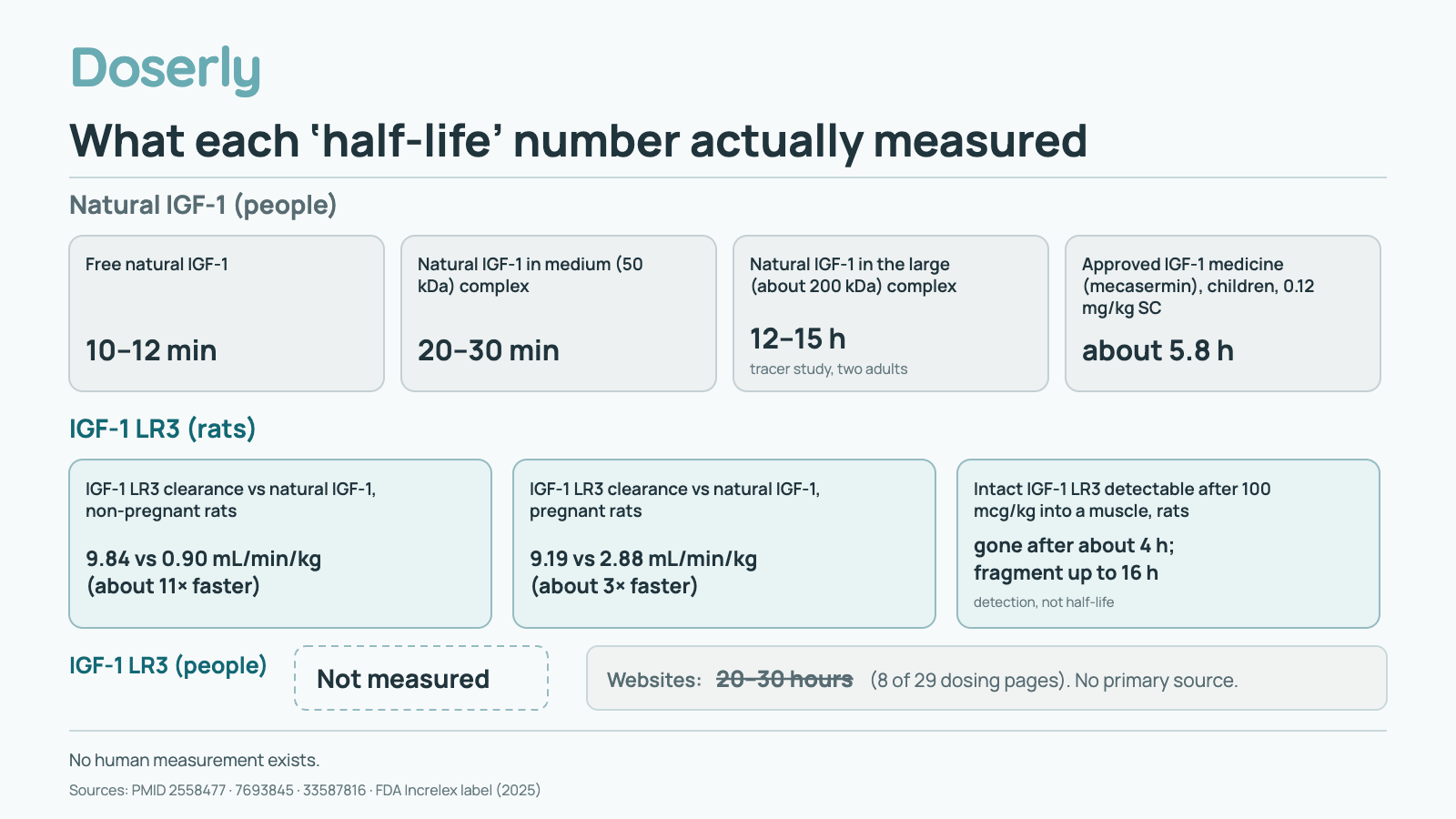
What each ‘half-life’ number actually measured
Natural IGF-1 (people)
- Free natural IGF-1
- 10–12 min
- Natural IGF-1 in medium (50 kDa) complex
- 20–30 min
- Natural IGF-1 in the large (about 200 kDa) complex
- 12–15 h (tracer study, two adults)
- Approved IGF-1 medicine (mecasermin), children, 0.12 mg/kg SC
- about 5.8 h
IGF-1 LR3 (rats)
- IGF-1 LR3 clearance vs natural IGF-1, non-pregnant rats
- 9.84 vs 0.90 mL/min/kg (about 11× faster)
- IGF-1 LR3 clearance vs natural IGF-1, pregnant rats
- 9.19 vs 2.88 mL/min/kg (about 3× faster)
- Intact IGF-1 LR3 detectable after 100 mcg/kg into a muscle, rats
- gone after about 4 h; fragment up to 16 h (detection, not half-life)
IGF-1 LR3 (people)
- IGF-1 LR3 in people
- Not measured
Websites: 20–30 hours (8 of 29 dosing pages). No primary source.
What do we actually know about IGF-1 LR3 in people?
No study has given IGF-1 LR3 to people. Searches of ClinicalTrials.gov and the ISRCTN registry on September 23, 2026 found no registered trial, a 2026 review found no peer-reviewed human study, and we found no case report that confirmed IGF-1 LR3 by laboratory testing. Several other national registries could not be searched fully, so the accurate statement is that none was found. [7], [84], [32]
That leaves three kinds of indirect evidence: animal studies of IGF-1 LR3 itself, human studies of natural IGF-1, and one IGF-1 variant, joined to a cancer drug, tested in people with cancer. Each answers a different question.
What is the closest human evidence?
| Evidence | What researchers reported | Why it does not settle the question for IGF-1 LR3 |
|---|---|---|
| Approved IGF-1 medicine (mecasermin) in children | In 71 children with severe IGF-1 deficiency, 30 (42%) had low blood sugar at least once; 5 had severe episodes and 4 had seizures or lost consciousness. [1] | Natural IGF-1, in children who lack it, at supervised doses with meals. |
| High-dose natural IGF-1 in 7 adults with type 2 diabetes, 1994 | At 120–160 mcg per kg twice daily, side effects forced every patient to stop early: swelling of the face and hands, jaw tenderness, joint and muscle pain, tiredness, a fast heart rate and dizziness on standing. [85] | Natural IGF-1 at very high doses; seven people. |
| Natural IGF-1 in older women for 4 weeks, 1995 | In a 16-woman study, 5 received the higher dose (0.060 mg per kg twice daily), which increased lean mass but caused headaches, lethargy, joint swelling and pain, and bloating; the 6 on the lower dose (0.015 mg per kg twice daily) tolerated it well. [86] | Natural IGF-1; groups of five or six; short. |
| Natural IGF-1 in 16 older women for a year, 2001 | At 15 mcg per kg twice daily, blood IGF-1 rose from about 66 to about 300 ng/mL, but bone density, lean mass, fat, strength, mood and memory did not change compared with placebo. [87] | Natural IGF-1 at a low dose; the study was stopped early because nothing was changing. |
| Natural IGF-1 in amyotrophic lateral sclerosis (ALS) trials, 1997–2008 | Three placebo-controlled trials (266, 183 and 330 patients) gave 0.05–0.10 mg per kg a day for 9 months to 2 years. One found slower decline at the higher dose, the other two found no benefit, and the European trial described the treatment as safe and well tolerated. In the two-year trial, suspected low blood sugar was recorded in 21 people on IGF-1 and 9 on placebo. [88], [89], [90] | Natural IGF-1 at low daily doses, in a nerve disease; muscle growth was not the goal. |
| An IGF-1 variant joined to a cancer drug, 2019 | In 17 adults with advanced cancer given it into a vein, the dose was limited by severe (grade 3) low blood sugar; severe drug-related effects included abdominal pain (26%), low blood sugar (10%) and low blood pressure (10%). [91] | A different IGF-1 variant joined to the cancer drug methotrexate. The trial tested the joined product, so it cannot show which part caused the low blood sugar. |
Together, these studies show what IGF-1 signalling can do in people: lower blood sugar, sometimes severely, and cause swelling and joint pain at high doses. They do not tell anyone what dose of IGF-1 LR3 is safe, because IGF-1 LR3 behaves differently in the blood.
Were there human burn studies of IGF-1 LR3?
No. Some websites describe “LR3 trials” in burned patients, but those studies gave natural IGF-1 bound to its main binding protein, IGFBP-3 (a combination written IGF-1/IGFBP-3), which is almost the opposite of IGF-1 LR3's design. [92], [93]
Why can't the approved IGF-1 medicine's dose be used?
Because it is a different molecule used in a different way. Mecasermin is natural 70-amino-acid IGF-1. It is approved in the United States for growth failure in children aged 2 and over with severe primary IGF-1 deficiency, starting at 0.04–0.08 mg per kg twice daily with food, under a doctor's supervision. IGF-1 LR3 is 83 amino acids long, binds the IGF-1 receptor about three times less strongly, escapes the binding proteins that control natural IGF-1, and leaves the blood at a different rate. None of those differences has been measured in people. [1], [35], [5]
How might IGF-1 LR3 work?
IGF-1 is one of the main growth signals in the body. Growth hormone from the pituitary gland prompts the liver and other tissues to make IGF-1, which then acts on the IGF-1 receptor in many tissues. That receptor is closely related to the insulin receptor, which is why IGF-1 can also lower blood sugar. [1]
What do binding proteins do, and why does escaping them matter?
Most natural IGF-1 in the blood is held by binding proteins. The largest complex, IGF-1 plus a binding protein called IGFBP-3 and a third protein, acts as a slow-release reservoir; only a small share of IGF-1 circulates free. [82], [81]
IGF-1 LR3 was designed to escape that system. In laboratory tests, natural IGF-1 bound IGFBP-3, IGFBP-4 and the binding proteins in rat blood about 1,000 times more strongly than IGF-1 LR3 did. As a result, IGF-1 LR3 was 5 to 10 times more potent than natural IGF-1 on rat muscle cells in a dish, and about 6 times more potent for growth in normal rats. [5]
Is it stronger than natural IGF-1?
It depends on the measurement. IGF-1 LR3 actually binds the IGF-1 receptor about three times less strongly than natural IGF-1, and in chicken cells that make no binding proteins it was less potent. Its extra strength comes only from escaping the binding proteins, so the advantage ranged from roughly none (reversing muscle loss with injections in rats) to about 6 times (growth in normal rats). The “2–3 times more potent” figure on websites comes from blood-sugar tests in pigs that grouped several analogues together. [35], [2], [37], [5], [19]
Why does it affect organs besides muscle?
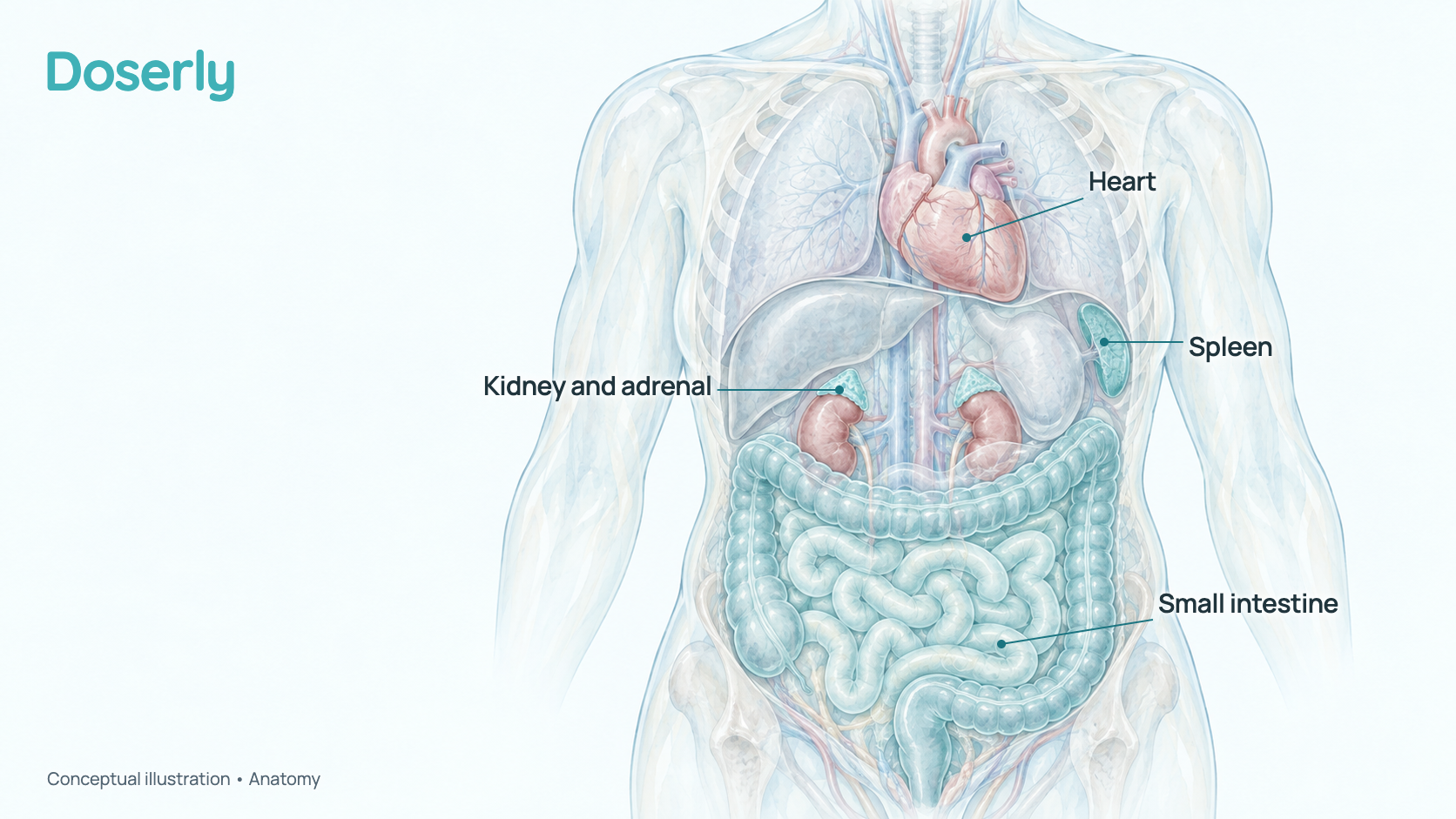
Because the IGF-1 receptor is everywhere. In guinea pigs given IGF-1 LR3 for a week, the adrenal glands, gut, kidneys and spleen grew relative to body weight, but overall growth did not change. In rats, two weeks at the highest dose tested increased total gut weight by 43% and small-intestine length by 13%. In fetal lambs, the heart, adrenal glands and spleen grew heavier. [94], [95], [96]
These organ changes are the reason sources warn about “IGF gut”, a term people use for a fuller-looking belly. Nobody has measured organ size in people using IGF-1 LR3, and a fuller stomach can have many causes. The risks section covers what the animal findings do and do not show.
Does it make new muscle cells?
That is a common claim, and it is not supported. Muscle can grow by making existing fibres larger (hypertrophy) or, in theory, by adding new fibres (hyperplasia). No study has shown IGF-1 LR3 creating new muscle fibres in adult animals or people. In the rat muscle-injury study, fibre number did not change. In fetal lambs, muscle precursor cells (satellite cells) multiplied faster while fibre size and muscle weight stayed the same, and in a dish the cells fused into fibres more readily, but a growing fetus and a cell culture are not an adult muscle. [47], [96], [97]
Why does it lower blood sugar?
IGF-1 acts partly like insulin, moving sugar out of the blood and into tissues. Because IGF-1 LR3 is mostly free, that effect was stronger and longer: in pigs, IGF-1 LR3 and three similar analogues lowered blood sugar 2 to 3 times more potently than natural IGF-1 and for much longer, even though they left the blood faster. In newborn calves it lowered blood sugar and insulin, and in cattle it sharply reduced blood sugar and amino acids during an eight-hour infusion. [19], [20], [21]
Does it switch off the body's own growth hormone?
In animals, yes. IGF-1 normally tells the pituitary gland to release less growth hormone, a feedback loop. In growing pigs, a four-day IGF-1 LR3 infusion cut average growth hormone by 23%, reduced the size of growth-hormone pulses by 60%, and lowered the body's own IGF-1, IGFBP-3 and insulin. Calves, guinea pigs and cattle showed similar drops in their own IGF-1 or growth hormone, and fetal lambs made less insulin. [38], [73], [94], [21], [70]
The same loop works in people with natural IGF-1: in 10 fasting healthy men, a six-hour low-dose IGF-1 drip suppressed growth-hormone release within an hour and cut the amount released per pulse by 84%. That experiment is the likely source of the “85% suppression” figure repeated online; it used natural IGF-1, and whether IGF-1 LR3 does the same in people has not been tested. [98]
What are the risks and unanswered questions?
Is IGF-1 LR3 safe?
Its safety in people is unknown, because no one has studied it in humans, and animal studies found real harms. The consistent signals are low blood sugar, growth of internal organs, faster growth of existing tumours and suppression of the body's own hormones. Related human evidence adds low blood sugar, swelling and joint pain with natural IGF-1. [7], [19], [94], [23], [85]
The makers of the cell-culture reagent say it is not approved or permitted for any human application, and products sold online are not made or tested to medicine standards. “Research use only” describes how a product is sold; it is not a safety assessment. [6], [99]
Why is low blood sugar the main concern?
Low blood sugar (hypoglycemia) is the most consistent animal finding: it occurred in pigs after single injections, in injected calves, in cattle and in fetal lambs, four of which died with low blood sugar and low oxygen. It was not seen in every experiment; blood sugar was unchanged during a four-day infusion in older pigs. [19], [20], [21], [22], [38] It is also the main warning on the label of the approved IGF-1 medicine, and it limited the dose of an IGF-1 variant joined to a cancer drug in people with cancer. [1], [91]
Signs listed on that medicine's label include dizziness, tiredness, restlessness, hunger, irritability, trouble concentrating, sweating, nausea and a fast or irregular heartbeat; severe episodes can cause unconsciousness, seizures or death. The label advises avoiding driving and exercise for 2–3 hours after a dose until a stable dose is established, because exercise also lowers blood sugar. [1]
Natural IGF-1 also blunts one of the body's defences. In healthy volunteers, it switched off the rise in glucagon that normally corrects low blood sugar, and blood sugar recovered more slowly after the drip ended than after insulin. [68]
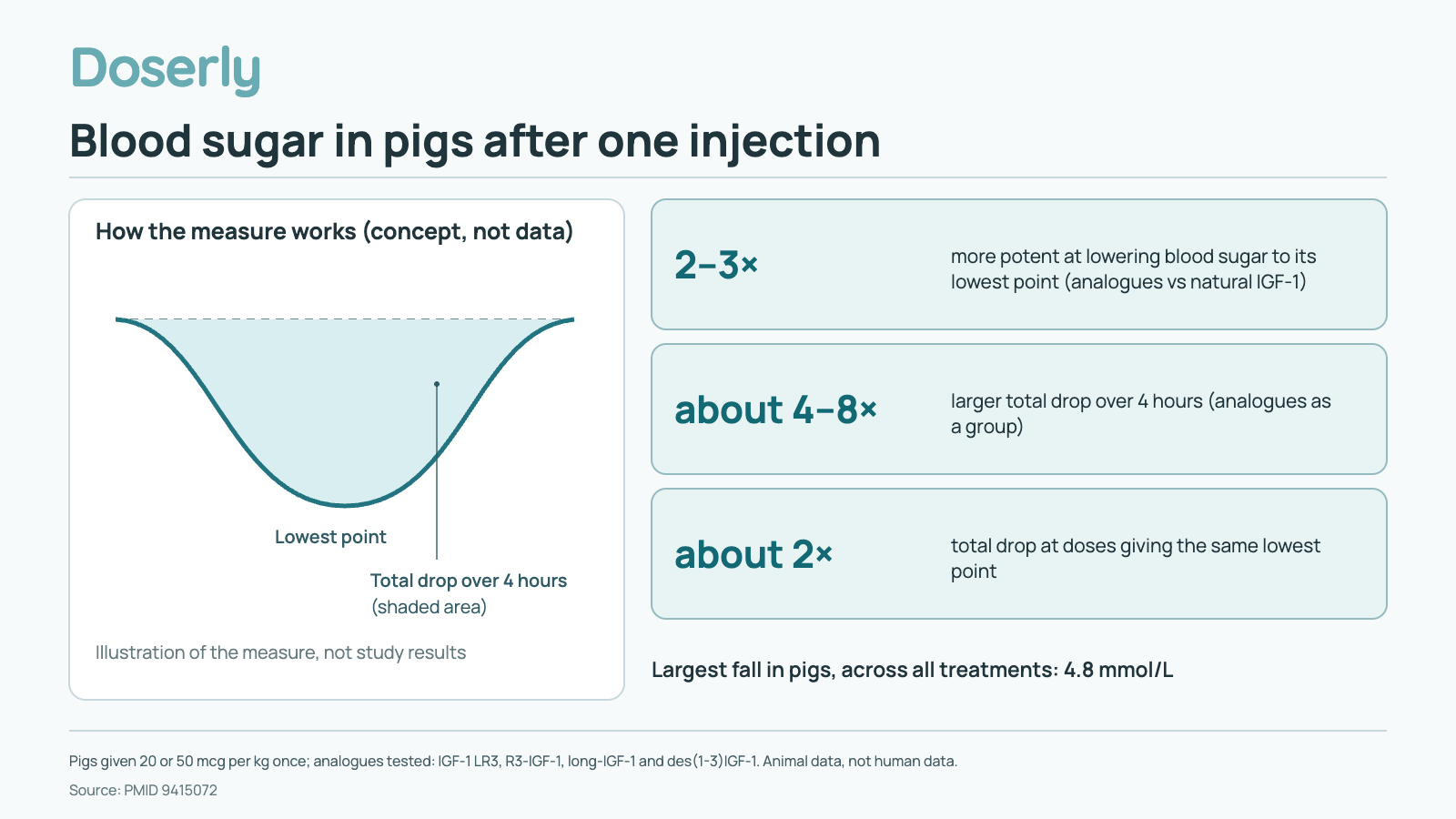
Blood sugar in pigs after one injection
How the measure works (concept, not data): total drop over 4 hours is the shaded area between a flat baseline and a generic dip. Lowest point marks the bottom of the dip. Illustration of the measure, not study results.
- 2–3×
- more potent at lowering blood sugar to its lowest point (analogues vs natural IGF-1)
- about 4–8×
- larger total drop over 4 hours (analogues as a group)
- about 2×
- total drop at doses giving the same lowest point
Largest fall in pigs, across all treatments: 4.8 mmol/L
Pigs given 20 or 50 mcg per kg once; analogues tested: IGF-1 LR3, R3-IGF-1, long-IGF-1 and des(1-3)IGF-1. Animal data, not human data.
What side effects have people reported?
Without human studies, the reports come from personal accounts and are not verified. They include symptoms people took to be low blood sugar, strong hunger, water retention, hand tingling or numbness, joint aches, headaches at higher amounts, injection-site stinging, a fuller-looking upper belly and, in one case, a racing heart; the community section describes them. [100], [49], [60], [101], [102], [72], [103]
Those accounts match the side effects that stopped the high-dose natural IGF-1 study: swelling, joint and muscle pain, jaw tenderness, a fast heart rate and dizziness on standing. Most people describing IGF-1 LR3 were also taking growth hormone or other drugs with similar side effects, so the cause is rarely clear. [85], [104]
Hunger probably has a simple explanation. It is listed as a sign of low blood sugar on the approved IGF-1 medicine's patient information, while in animal studies IGF-1 LR3 left food intake unchanged or lower, so sudden hunger is better read as a possible low-sugar signal than as an appetite effect. [1], [23], [38], [94]
Mood and skin changes have only indirect evidence. The European label of the approved medicine lists depression and nervousness as uncommon side effects, and in one small study, 4 of 6 women with a rare growth disorder developed acne and raised male hormones on natural IGF-1, which settled when the dose was lowered or paused. Neither has been studied with IGF-1 LR3. [105], [106]
Does IGF-1 LR3 cause cancer?
Nobody knows, and there are no human data either way. What exists is animal evidence that it can speed up tumours that are already present, and a cautious approach on the approved IGF-1 medicine's label.
- Animal studies. In rats with a mammary tumour, IGF-1 infusions increased tumour growth, “especially” IGF-1 LR3, even though the tumour cells did not grow faster with it in a dish. In mice with a bowel-cancer tumour, IGF-1 LR3 limited muscle loss, but tumours were heavier on average (911 versus 635 mg); the difference was not statistically significant, although the paper's summary describes “accelerated tumour growth”. [23], [97]
- The approved IGF-1 medicine. Its label rules out use in children with cancer or a history of it, reports benign and malignant tumours in treated children (more often at higher-than-recommended doses or when IGF-1 levels ran above normal), and says to stop if a malignancy develops. [1]
- Natural IGF-1 levels. In large population studies, people with higher natural IGF-1 had modestly higher rates of some cancers. In the UK Biobank study of about 394,000 people, each 5 nmol/L higher IGF-1 was linked with an 8–18% higher risk of colorectal, breast and thyroid cancer. That is an association with the body's own IGF-1, not a test of IGF-1 LR3. [107], [108]
- Figures that circulate online. A “fourfold” prostate-cancer risk comes from a 1998 study of 152 men with prostate cancer and 152 without, comparing the highest and lowest quarters of blood IGF-1; a 2026 analysis that pooled 16 studies found a much smaller link (odds about 10% higher). A “70% higher risk of kidney-cancer death” refers to IGF-1 receptors seen in the tumour tissue itself, not to IGF-1 in the blood or to any injected product. People born with very low IGF-1 because of a growth-hormone receptor defect had one nonfatal cancer among them over 22 years, compared with 17% of their unaffected relatives. None of these studies measures the risk of using IGF-1 LR3. [109], [110], [111], [112]
These points make a cancer history a strong reason for caution, but they do not show that IGF-1 LR3 causes cancer in a healthy person.
Can it make organs or the stomach grow?
In animals, yes, as described in how it works; the effect was dose-related in rats. Nobody has measured organ size in people using IGF-1 LR3. A few public accounts describe a thicker upper abdomen during long courses at 80–100 mcg a day; one person said it went away after stopping. [95], [94], [72], [113]
What about the kidneys, heart and blood pressure?
- Kidneys. In rats with a sudden kidney injury, IGF-1 LR3 did not help recovery, and in a closer three-day study it caused a larger fall in filtering function than no treatment. Kidney failure also changed how fast it was cleared. [24], [80]
- Blood pressure. In anaesthetised rats, IGF-1 LR3 given into a vein lowered blood pressure by 15% within 20 minutes while greatly increasing blood flow to muscle. Low blood pressure and a fast heart rate were also side effects of high-dose natural IGF-1 in people. [114], [85]
- Heart. The heart grew in fetal lambs. The Canadian monograph for the approved IGF-1 medicine recommends a heart ultrasound (echocardiogram) before starting and when stopping, after heart enlargement or valve changes were seen in a few patients, without symptoms and without a clear link to the drug. [96], [115]
Could product quality change the risk?
Yes. The manufacturers' reagent and what is sold online are not the same thing. Anti-doping laboratories analysing black-market vials have found IGF-1 LR3 with an extra laboratory tag attached, unpurified IGF-1 LR3 and damaged, oxidized forms of IGF analogues. An FDA inspection in 2018 recorded an IGF-1 LR3 batch among five products that failed sterility testing at a US compounding pharmacy. [116], [117], [64], [25]
Labels such as “receptor grade” or “media grade” come from the reagent makers' own product lines. They describe purity and bacterial-toxin (endotoxin) limits for laboratory work, not a grade made for injection, and no study has measured endotoxin or sterility in IGF-1 LR3 sold online. [118], [3]
In community education groups, nobody reported having a vial independently tested, and amounts were often uncertain because of mixing and unit errors.
Is IGF-1 LR3 legal? Is it FDA-approved?
Checked September 23, 2026. Rules differ by country and change.
United States. IGF-1 LR3 is not an FDA-approved medicine. Its makers sell it for cell culture and say it is not permitted for any human use. The regulatory record so far:
- 2018. FDA inspectors recorded an IGF-1 LR3 batch among five sterility failures at a Kentucky compounding pharmacy (an inspection observation, not a final agency decision). [25]
- April 2020. FDA's warning letter to that pharmacy listed IGF1-LR3 among ingredients that “have not been nominated for inclusion on the 503A bulks list”, meaning products compounded from it did not qualify for the legal exemptions pharmacies rely on. [119]
- March 2026. An FDA inspection of a Houston pharmacy listed “Long R3-IGF” among the sterile products it compounded. [120]
- Bulk-ingredient lists. IGF-1 LR3 does not appear in FDA's posted 503A categories (updated May 2026), its 503B categories (updated March 2025) or its list of bulk substances that may pose significant safety risks. [121], [122], [123]
The US military's supplement-safety program says synthetic IGF-1 is a drug, not a dietary-supplement ingredient, and IGF-1 and related growth factors are on the Department of Defense prohibited supplement ingredient list. [74]
Canada. No authorized IGF-1 LR3 product was found: Health Canada's Drug Product Database returned no product for “LR3”, “long R3” or “insulin-like growth factor”. Its approved relative, mecasermin (Increlex), is a marketed prescription drug. In April 2026 Health Canada warned people not to inject peptides bought online; that advisory names 14 peptides but not IGF-1 LR3, and it states that research-use labelling “does not make these products legal or exempt from regulatory requirements”. [124], [125], [126], [127]
Australia. Insulin-like growth factors are prescription-only (Schedule 4) medicines, and they are also listed among substances that are illegal to possess without authority, such as a prescription. Importing them needs permission. [128], [129]
European Union and United Kingdom. No authorization of IGF-1 LR3 was found. The approved relative, Increlex (mecasermin), has been authorized in the EU since August 2007, and in 2020 the UK medicines regulator told prescribers to stop mecasermin permanently if a benign or malignant tumour develops. We found no UK regulator or UK Anti-Doping statement that names IGF-1 LR3 itself; in sport it is covered by the ban below. [130], [131]
A “research use only” label does not make a product legal to sell or use as a medicine.
Is IGF-1 LR3 banned in sport? Does it show up on a drug test?
Yes, it is banned at all times. The World Anti-Doping Agency's 2026 Prohibited List, and the 2027 list that takes effect on January 1, 2027, ban “insulin-like growth factor 1 (IGF-1, mecasermin) and its analogues” in category S2.3, in and out of competition. The US Anti-Doping Agency (USADA) states that all forms of IGF-1 taken from outside the body are prohibited at all times. [26], [132], [133]
Anti-doping laboratories have validated blood and urine tests that pick out IGF-1 LR3 and its breakdown products separately from the body's own IGF-1. So far those methods have been shown on samples spiked with IGF-1 LR3 in the laboratory and on rats, not on people who injected it, so how long it stays detectable in people has not been published. In rats, intact IGF-1 LR3 disappeared after about 4 hours and a breakdown product lasted up to 16 hours. In a 2023 World Athletics case that ended in a six-year ban for several substances, the evidence included a bag labelled “IGF LR3” containing three vials. [134], [135], [64], [136]
Who should be especially cautious?
These groups have no safety data in people. For some, the animal findings above are a specific reason for concern.
- Pregnancy and breastfeeding. In growth-restricted fetal lambs given IGF-1 LR3 for a week, four died with low blood sugar and low oxygen, one of them within two days on a higher dose. There are no human data. [22]
- Diabetes, or anyone taking insulin or other blood-sugar-lowering medicines. The effects on blood sugar could add together; see the next question.
- A current or past cancer. Because of the tumour findings in animals and the approved IGF-1 medicine's cancer warnings. [23], [1]
- Kidney disease. Because of the rat kidney-injury study. [24]
- Under 18. No studies include young people outside the approved medicine's narrow use. This guide is written for adults.
- Competitive athletes, military personnel and anyone tested for drugs. It is banned in sport and on the US military's prohibited list. [26], [74]
Has IGF-1 LR3 been tested alongside other medicines?
Not in people. No study reports how IGF-1 LR3 interacts with prescription medicines. The main theoretical concern is blood sugar. The approved IGF-1 medicine's label says to give it with food because of its insulin-like effect, so diabetes medicines that lower blood sugar, or a skipped meal, could add to that effect. Growth hormone pushes the other way: its label warns that it can unmask impaired glucose tolerance and diabetes, and it prompts the body to make more IGF-1. In a small crossover study of adults with growth-hormone deficiency, five days of growth hormone made the body up to 2.7 times more resistant to insulin, while natural IGF-1 made it more sensitive. [1], [137], [138]
Combining IGF-1 LR3 with growth hormone or peptides that release it therefore stacks two influences on the same hormone system, and the effect on blood sugar in a given person is hard to predict. Bring a complete list of everything you take to a pharmacist or doctor.
What should be monitored while using IGF-1 LR3?
There is no official monitoring plan, because no regulator has approved IGF-1 LR3 or written a label for it. What exists is a record of what animal studies measured, and the checks the approved IGF-1 medicine's label asks doctors to make for natural IGF-1. It can help you prepare questions for a clinician; it is not a personal testing plan. [1]
What did the animal studies measure?
The IGF-1 LR3 studies tracked blood sugar and insulin; the body's own growth hormone, IGF-1 and binding proteins; kidney filtering after an injury; blood pressure and blood flow; organ weights; tumour size; and, in fetal lambs, oxygen and amino acids. None followed these measures after the last dose to see whether they returned to normal. [19], [38], [24], [114], [23], [22]
What does the approved IGF-1 medicine's label ask doctors to check?
For natural IGF-1 (mecasermin), the label and Canadian monograph ask for:
- Blood sugar before meals when starting and until a well-tolerated dose is found, and at the time of any low-sugar symptoms. [1]
- Eye examinations of the back of the eye at the start and periodically, to catch raised pressure around the brain. [1]
- Ears, nose and throat for enlarged tonsils or adenoids, snoring, sleep apnoea and ear fluid. [1]
- Tumours: watching for any new growth, and stopping if a malignancy develops. [1]
- Allergic reactions, including rare severe ones. [1]
- Heart ultrasound before starting and when stopping (Canadian monograph). [115]
These are checks for a different molecule used in children, shown here because they are the only official list for any IGF-1 medicine.
Can an IGF-1 blood test show how much IGF-1 LR3 is in your system?
Not reliably. A routine IGF-1 blood test is designed to measure the body's own IGF-1. Telling IGF-1 LR3 apart takes a purpose-built test: researchers developed an assay that detects IGF-1 LR3 while reacting less than 0.01% to natural IGF-1, and anti-doping laboratories use antibody capture with mass spectrometry. [139], [134]
How the everyday tests react to IGF-1 LR3 is simply unknown. The instructions for four widely used clinical IGF-1 tests list the substances checked for interference (such as IGF-2, insulin and proinsulin), and none includes IGF-1 LR3. The only measured figure comes from a research-only kit, in which IGF-1 LR3 registered at about 4% of its true amount and interfered above 10 ng/mL. [140], [141], [142], [143], [144]
At the same time, IGF-1 LR3 lowered the body's own IGF-1 in animals, and it registered weakly in the one research kit that tested it. So a routine IGF-1 result cannot show how much IGF-1 LR3 is circulating, especially in someone also taking growth hormone or peptides that raise it. [38], [94], [144]
Community education groups disagree sharply here: some say IGF-1 LR3 is invisible on an IGF-1 test, others treat a rising IGF-1 result as proof that a vial is genuine. Neither claim is supported.
Which signals matter, and why?
| Why it matters | What studies measured or labels ask for | Tracking category |
|---|---|---|
| Low blood sugar | Blood sugar fell in pig, calf, cattle and fetal-lamb studies; the medicine label's glucose checks | Blood work; Energy Levels; Appetite & Satiety |
| The body's own hormones | Growth hormone, IGF-1 and IGFBP-3 fell in animals | Blood work |
| Swelling and joints | Swelling, joint and jaw pain with high-dose natural IGF-1 | Fluid Retention; Joint Health |
| Heart and circulation | Blood pressure fell in rats; fast heart rate with natural IGF-1; heart ultrasound in the Canadian monograph | Blood Pressure; Heart Rate & Palpitations |
| Kidneys | Filtering function after kidney injury in rats | Blood work |
| Gut | Gut growth in animals; bloating in personal accounts | Digestive Comfort |
| Mood and skin | Depression and nervousness (uncommon) on the medicine's European label; acne with raised male hormones in a small study | Mood & Wellbeing; Emotional Regulation; Skin Health |
| Injection sites | Stinging and welts in personal accounts | Side Effect Burden |
| The goal you care about | Muscle, strength and body composition | Muscle Growth; Physical Performance; Weight Management |
The animal findings show what researchers flagged, not what a person will experience. Discuss any testing with a clinician.
What do people in public communities report?
Public discussions of IGF-1 LR3 contain enthusiastic reports, shrugs and a few frightening episodes. Almost none can be read on their own terms, because the people posting were nearly always using several drugs at once and none had their product tested. The most useful accounts say what else was going on and come back with an update. [34], [33]
What do the positive reports look like?
The most consistent positive description is a “pump”: fuller, tighter-feeling muscles during and after training. One person on 100 mcg a day described pumps and visible muscle gain by weeks two and four while eating in a calorie surplus. Another, who started at 20 mcg and worked up to 80 mcg over four weeks, reported gaining 2 lb while his caliper-measured body fat fell from 12% to 8%; he had also changed how much he ate. [39], [49]
Many strength stories come from people also using testosterone, anabolic steroids or growth hormone. One described gaining 13 lb and adding 20 lb to his bench press within a few weeks, while also taking testosterone and a second anabolic steroid at high doses and eating up to 800–1,000 g of carbohydrate a day. Another said he could not tell whether his gains came from IGF-1 LR3 or the steroid he started the same week. [71], [145]
How long did those changes last?
Follow-ups are rare. One person who ran 30, 40 and then 50 mcg over six weeks said he kept most of what he gained after stopping while holding his diet steady, by his own estimate and without a scan. Another said some weight came off after each course but he believed the muscle stayed. [60], [71]
Others describe effects that faded. In one older forum log, the appetite and pumps disappeared after the seventh injection day even though the amount was increased; the product had never been tested. [146]
Does everyone notice a difference?
No, and nonresponse is a large part of the public record. People describe “nothing notable” after several injections, no value from a three-week course, no change by day six, “pump only” after a month, and products they came to believe were fake or weak. Several said they preferred growth hormone. [40], [54], [39], [61], [147]
The same scepticism appears in community education groups, where some members call IGF-1 LR3 overrated or question whether it is worth its cost and risks. Without a tested product, a nonresponse cannot be separated from an inactive vial.
Does a higher amount work better?
The accounts do not show a clear dose effect. One person noticed little difference between 40 and 50 mcg, another none between 100 and 200 mcg, and a third felt no added benefit above 50 mcg. Others preferred 80–100 mcg and felt lower amounts did nothing. [60], [148], [53], [149]
What does rise with amount is the risk of side effects. One person who worked up to 200 mcg reported no low-sugar symptoms but doubted the product was genuine; another reported headaches at 200 mcg. [150], [102]
What about unwanted effects?
- Low-sugar symptoms. Several people described dizziness, tiredness or feeling unwell within about 30 minutes of a dose when they had not eaten, and almost none measured their blood sugar. [100], [53], [33] In community education groups, a few members who wore glucose monitors recorded drops, mostly at high amounts or without food.
- Hunger and appetite. Some described strong hunger, including waking at night to eat. Hunger is also a classic sign of low blood sugar, and in animal studies IGF-1 LR3 did not increase food intake (see side effects). [151], [49], [152]
- Swelling, joints and hands. Accounts include water retention, sore knuckles and hand tingling that faded within days of stopping, hand numbness, and hand swelling and pain in someone also taking growth hormone after carpal-tunnel surgery. [60], [101], [104]
- Injection sting. Acid-mixed injections were described as painful enough that one person gave up subcutaneous injections. [72], [153]
- A fuller upper belly. A few people on 80–100 mcg a day for about two months described abdominal bloating or a thicker upper abdomen. [72], [113]
- Heart and mood. One person reported a racing heart that led to an emergency-department visit and returned at a lower dose; another felt low and tired within a week and stopped. [103], [154] Community education groups also mention mood changes such as irritability. These unverified reports cannot establish a cause.
In community education groups, the harms members described most often were low blood sugar, stinging or welts at the injection site, joint and back pain, and fluid retention, with the most severe cases at amounts above 100 mcg or alongside growth hormone. Because most of these members were also using growth hormone, the cause of joint or back pain usually stayed unclear. These are personal accounts: they cannot show how often an effect occurs or that IGF-1 LR3 caused it. The risks section covers the research.
Why are these stories so hard to interpret?
Four problems appear again and again:
- Stacking. Most people were also taking growth hormone, peptides that release it, testosterone or steroids, and increasingly a GLP-1 weight-loss medicine. Fluid retention, joint pain and blood-sugar changes are known effects of growth hormone too. [34], [155], [137]
- Unknown products. Nobody tested a vial, and products with the wrong structure or damaged peptide have been found. [116], [64]
- Units. Amounts were given in syringe units without the concentration, or in mg when mcg was meant. [148], [156]
- Short follow-up. Most reports cover days to one course; almost nobody reported blood tests.
How can you judge a muscle-gain story?
Useful questions to ask: What exactly was used, how much, and for how long? What else changed at the same time, including diet, training and other drugs? Was anything measured, such as a body scan, a tape measure or blood sugar? And what happened weeks after stopping? A pump in the gym, water in the muscle and new muscle tissue are different outcomes.
These selected discussions are not a survey of all users. They cannot give a response rate, an average gain or a safe dose.
How does IGF-1 LR3 compare with PEG-MGF, MK-677 and follistatin?
These compounds are often discussed alongside IGF-1 LR3 for muscle, and all of them act on the growth-hormone and muscle-growth pathways. None has been compared with another in people.
| Compound | What it is | Route and frequency | Human evidence | Approval and sport status |
|---|---|---|---|---|
| IGF-1 LR3 (this guide) | Lab-made 83-amino-acid IGF-1 that escapes the binding proteins [2], [5] | Subcutaneous injection, usually once daily on dosing websites; no schedule tested in people [8] | None found [7] | Not approved; banned in sport (WADA S2.3) [6], [26] |
| PEG-MGF | A modified fragment related to a muscle form of IGF-1 (mechano growth factor) | No route or schedule tested in people | None. A cell study tested MGF and a different stabilized form, not PEG-MGF; neither switched on the IGF-1 receptor [157] | Not approved; banned in sport (WADA S2.3, “mechano growth factors”) [26] |
| MK-677 (ibutamoren) | A pill that mimics the hunger hormone ghrelin, raising growth hormone and IGF-1 | By mouth once daily in trials [158] | Several trials; in healthy older adults, 25 mg a day increased fat-free mass by about 1.1 kg after 12 months without improving strength [158] | Not approved; banned in sport (WADA S2.2) [26] |
| Follistatin-344 | A protein that blocks myostatin, a brake on muscle growth | Gene therapy given once as injections into muscles; no schedule tested for the peptide sold online [159] | None for the injected peptide; a gene-therapy version was tested in 6 men with Becker muscular dystrophy [159] | Not approved; banned in sport (WADA S4.3, myostatin inhibitors) [26] |
The real differences are in how each one acts and how much it has been tested. IGF-1 LR3 delivers an IGF-1-like signal directly, while MK-677 works upstream by raising the body's own growth hormone and IGF-1, and it is the only one tested against a placebo in people. The closest approved medicine is mecasermin, natural IGF-1 for a rare childhood condition, which has no Doserly guide. [158], [1]
Common questions about IGF-1 LR3
Is IGF-1 LR3 a steroid, or the same as growth hormone?
Neither. IGF-1 LR3 is a lab-made protein chain of 83 amino acids, a modified version of IGF-1. Anabolic steroids are ring-shaped molecules that act on hormone receptors inside cells, and growth hormone is a separate, larger hormone from the pituitary gland that prompts the body to make IGF-1. IGF-1 LR3 bypasses growth hormone and acts on the IGF-1 receptor directly, which is also why it can suppress the body's own growth hormone. [2], [1], [38] See how it works.
Is IGF-1 LR3 the same as mecasermin (Increlex) or IGF-1 DES?
No. Mecasermin is natural 70-amino-acid IGF-1, an approved prescription medicine for a rare childhood growth disorder. IGF-1 DES, or des(1-3)IGF-1, is a shorter version with the first three amino acids removed; it also escapes the binding proteins but is a different molecule. IGF-1 LR3 is the longer 83-amino-acid version. Doses and research for one cannot be transferred to another, and IGF-1 LR3 is not a substitute for the medicine in someone with IGF-1 deficiency. [1], [35], [19] See why the medicine's dose cannot be used.
How long does IGF-1 LR3 take to work?
There is no reliable answer. No study has measured results in people. In personal accounts, some people describe pumps within days or visible changes within two to four weeks, while others notice nothing after a full course. Those reports involve different products, amounts, diets and other drugs, so they cannot give an expected timeline. [39], [40], [54] See what people reported over time.
How long does IGF-1 LR3 stay in your system?
This has not been measured in people. In rats, IGF-1 LR3 left the blood about 3 to 11 times faster than natural IGF-1, and intact IGF-1 LR3 disappeared from the blood about 4 hours after an injection into a muscle, although a breakdown product lasted up to 16 hours. In pigs, it and similar analogues kept blood sugar down for longer than natural IGF-1. The widely repeated 20–30 hour half-life has no primary source. [79], [64], [19] See the half-life evidence.
Does IGF-1 LR3 show up on a drug test or an IGF-1 blood test?
Anti-doping laboratories have validated tests that pick out IGF-1 LR3 and its breakdown products separately from natural IGF-1, although they have been shown only on laboratory-spiked samples and in rats, and how long it remains detectable in people has not been published. A routine IGF-1 blood test is a different thing: none of the four major clinical tests checked whether IGF-1 LR3 interferes, and IGF-1 LR3 lowered the body's own IGF-1 in animals, so the result says little about how much IGF-1 LR3 is in the blood. [134], [140], [38] See what an IGF-1 test can show.
Can IGF-1 LR3 make you taller or change your jaw?
No study has tested it for height or face shape, and adults are unlikely to grow taller from any IGF-1 product. Bones lengthen at growth plates (epiphyses), which close after puberty, and the labels of the approved IGF-1 medicine in the US and Canada say it should not be used for growth promotion once they have closed. Jaw tenderness and facial swelling were reported at high doses of natural IGF-1, but no study shows IGF-1 LR3 reshaping the jaw. [1], [115], [85] See the closest human evidence.
Can you take IGF-1 LR3 with a GLP-1 medicine, HGH or peptides like CJC-1295 and ipamorelin?
These combinations are common but have never been studied. Stacks such as “HGH plus LR3” or “CJC/ipamorelin plus LR3” add IGF-1 signalling on top of growth hormone (HGH is a growth-hormone medicine). Growth hormone raises IGF-1 and can raise blood sugar, while the approved IGF-1 medicine can lower it; these label facts do not predict what a combination will do. Adding a GLP-1 weight-loss medicine means eating less alongside a compound that lowered blood sugar in animals. [137], [1] Community education groups disagree about combining IGF-1 LR3 with growth-hormone peptides. Read the guides to CJC-1295, ipamorelin and the CJC-1295 no-DAC and ipamorelin blend, and see interactions.
Is it legal to buy IGF-1 LR3?
It depends on where you live. It is not an approved medicine in the United States, where FDA has cited a pharmacy for compounding with it; in Australia, insulin-like growth factors are prescription-only and illegal to possess without authority. [119], [128] A “research use only” label does not make an unauthorized product legal to sell or use as a medicine. [127] See the dated legal-status summary.
Glossary
Plain explanations of the route, dosing and research terms used in this guide. Underlined terms in the text link here.
- Adverse event
- A harmful or unwanted medical event reported after someone used a treatment. A report alone does not prove the treatment caused it.
- Amino acid
- A small chemical building block. Chains of amino acids make up peptides and proteins.
- Analogue
- A lab-made variant of a natural molecule, changed on purpose to behave differently. IGF-1 LR3 is an analogue of IGF-1.
- Animal study
- Research in animals such as rats, pigs or sheep. It shows what a substance does in a living body, but results in people can differ.
- Bacteriostatic water
- Sterile water containing a small amount of benzyl alcohol to slow bacterial growth, often used to mix peptides. Its label says not to store drugs mixed in it unless the drug's maker directs it.
- Bioavailability
- How much of a dose reaches the bloodstream in a usable form. It depends heavily on the route.
- Cell study (in vitro)
- Research on cells grown in a dish. It gives early clues about biology, but it is far from proof of benefit in people.
- Compounding
- When a pharmacy prepares a customized medicine from individual ingredients. In the US, the law sets conditions on which bulk ingredients pharmacies may use, including official quality standards, use in an approved drug and FDA lists.
- Course and cycle
- A course is the period of repeated use, such as six weeks. A cycle is a course plus a planned break before any further use.
- Daily total
- All the amounts given in one day, added together. For example, 20 mcg into each of two muscles is a 40 mcg daily total.
- Dose (amount each time)
- The amount given on one occasion. A protocol lists both the dose and how often it is given.
- Freeze-dried (lyophilized)
- Dried by freezing and removing the water, leaving a powder. IGF-1 LR3 is sold this way and mixed with liquid before use.
- FDA
- The US Food and Drug Administration, which approves medicines and oversees pharmacy compounding.
- GLP-1 medicines
- Medicines such as semaglutide and tirzepatide that act like the gut hormone glucagon-like peptide-1. They reduce appetite and are used for diabetes and weight loss.
- Glucagon
- A hormone that raises blood sugar when it falls too low. Natural IGF-1 blunted the glucagon response in healthy volunteers.
- Growth hormone (GH, HGH)
- A hormone made by the pituitary gland that prompts the liver and other tissues to make IGF-1. HGH usually means a growth-hormone medicine.
- Growth plates (epiphyses)
- Areas of cartilage near the ends of long bones where growth in height happens. They close after puberty.
- Half-life
- The time it takes for the measured level of a substance in the blood to fall by half. It is not the same as how long an effect lasts.
- Hypertrophy and hyperplasia
- Hypertrophy is growth of existing muscle fibres; hyperplasia is the creation of new ones. No study has shown IGF-1 LR3 causing hyperplasia in adult animals or people.
- Hypoglycemia
- Blood sugar that is too low. It can cause dizziness, sweating, hunger and confusion, and severe episodes can cause seizures or unconsciousness. Hyperglycemia is the opposite: blood sugar that is too high.
- IGF-1 (insulin-like growth factor 1)
- A growth signal made mainly in response to growth hormone. It helps tissues grow and also lowers blood sugar, partly like insulin.
- IGF-1 receptor
- The docking site on cells that IGF-1 and IGF-1 LR3 activate. It is found in many tissues and is closely related to the insulin receptor.
- IGF binding proteins (IGFBPs)
- Proteins that hold most IGF-1 in the blood, controlling how much is free to act. In laboratory tests, IGF-1 LR3 bound IGFBP-3 and IGFBP-4 about 1,000 times more weakly than natural IGF-1.
- Intramuscular (IM)
- Injected into a muscle.
- Intravenous (IV)
- Given directly into a vein, so it enters the bloodstream immediately.
- Investigational
- Still being studied and not approved by a regulator, such as the FDA, to treat any condition. IGF-1 LR3 has not been studied in people at all.
- mcg and mg
- Micrograms and milligrams. 1 mg equals 1,000 mcg. IGF-1 LR3 amounts are usually written in mcg.
- Mecasermin (Increlex)
- Natural IGF-1 made in the lab, approved for growth failure in children with severe primary IGF-1 deficiency. It is a different molecule from IGF-1 LR3.
- Metabolite (breakdown product)
- A smaller piece left after the body breaks a substance down. Drug tests sometimes look for metabolites because they last longer.
- Pharmacokinetics
- How the body absorbs, moves, breaks down and removes a substance.
- Placebo
- A dummy treatment with no active ingredient, used as a comparison in studies.
- Preclinical research
- Studies done before research in people: cell studies and animal studies. All IGF-1 LR3 research is preclinical.
- Reconstitution
- Mixing a freeze-dried powder with a liquid so it can be measured and injected. The amount of liquid sets how much peptide each unit holds.
- Research use only
- A label on products sold for laboratory research. It does not mean a product is approved, tested for human use or legal to sell as a medicine.
- Schedule 4 (Australia)
- Australia's prescription-only medicine category. Insulin-like growth factors are listed there.
- Subcutaneous (SC)
- Injected into the fatty layer just under the skin. This is the route most IGF-1 LR3 protocol descriptions use.
- Syringe units
- Markings on an insulin syringe that measure volume. On a U-100 syringe, 100 units equal 1 mL. The amount of drug per unit depends on the vial's concentration.
- Titration
- Adjusting a dose in steps, usually starting lower and increasing if needed.
- WADA
- The World Anti-Doping Agency, which publishes the list of substances banned in sport.
- Withdrawal and rebound
- Withdrawal effects are symptoms caused by stopping a substance. A rebound is a problem returning worse than before after stopping. Neither has been studied for IGF-1 LR3.
Explore more of the research
Go deeper into the animal experiments behind the claims. Across this guide, the citations include 65 original scientific papers, of which 43 are animal, cell or laboratory-testing studies and 22 are human studies of natural IGF-1 or related drugs, not of IGF-1 LR3. The library below groups the IGF-1 LR3 animal studies by question. Several come from the same research groups, so paper counts are not counts of independent teams.
Muscle and growth · 8 papers
Can it reverse muscle loss caused by a steroid medicine?
Model: Male rats of about 150 g given dexamethasone for 7 days, with IGF-1 or IGF-1 LR3 by a slow subcutaneous pump.
Finding: IGF-1 LR3 and another analogue were about 2.5 times as potent as natural IGF-1 at restoring weight and nitrogen balance, even though IGF-1 LR3 binds the receptor about three times less strongly.
Limit: A drug-induced wasting model in young rats; continuous pump delivery, not daily injection. [35]
Does it make normal young animals grow?
Model: Growing female rats given pumps for 14 days.
Finding: 44 mcg a day of IGF-1 LR3 matched the effect of 278 mcg of natural IGF-1: 18–26% more weight gain, nitrogen retention and food efficiency. Growth hormone at 213 mcg a day did not stimulate growth.
Limit: Body proportions stayed the same, so this was general growth, not muscle-specific gain. [36]
Does injecting it work as well as a slow pump?
Model: Normal and dexamethasone-treated rats; 320 or 400 mcg a day for 7 days by pump or once- or twice-daily injection.
Finding: The pump worked better than injections. IGF-1 LR3 kept an edge over natural IGF-1 for several effects when injected once daily, but was “barely equipotent” for reversing carcass muscle loss.
Limit: Rat doses per animal, not per kilogram, and not scalable to people. [37]
What happened in diabetic rats?
Model: Rats with chemically induced diabetes given infusions.
Finding: IGF-1 LR3 was 2.5 to 3 times more potent for growth than natural IGF-1, but neither reduced sugar loss in the urine.
Limit: A model of insulin-deficient diabetes. [160]
Why did it reduce growth in pigs?
Model: Finisher pigs of about 55 kg given 180 mcg per kg a day for 4 days.
Finding: Daily gain and food intake fell, along with the pigs' own IGF-1, IGFBP-3, insulin and growth hormone.
Limit: Short infusion in a different species; it shows that more IGF signal does not mean more growth in every animal. [38]
What about young piglets?
Model: Newborn pigs infused at 2–16 mcg per hour.
Finding: No overall growth effect while feeding was limited; weight gain rose in a second period when they could eat freely, while their own IGF-1 fell.
Limit: Results depended on feeding. [161]
Did it help recovery after surgery?
Model: Guinea pigs losing weight after surgery, given 120 mcg a day (0.28 mg per kg) for 7 days, alone or with pig growth hormone.
Finding: Weight regain improved, and kidney and spleen weight increased; the animals' own IGF-1 fell.
Limit: Organ growth came with the weight gain. [43]
Did it rebuild lost muscle?
Model: Rats with a surgically removed piece of muscle, treated with a gel releasing 28 or 280 mcg.
Finding: Muscle weight was higher at 28 days with the high dose, but force, scarring and fibre size and number did not differ.
Limit: A local device, not an injection. [47]
Gut and organs · 6 papers
How much did the gut grow?
Model: Female rats of 115 g given 0, 44, 111 or 278 mcg a day for 14 days.
Finding: At the top dose, total gut weight rose 43%, small-intestine weight 47% and small-intestine length 13%, with deeper crypts and taller villi.
Limit: Rat doses; no human measurement. [95]
Was the gut effect seen elsewhere?
Model: Dexamethasone-treated rats for 7 days; separately, rats given 2.5 mg per kg a day for 3 days.
Finding: IGF analogues were several times more potent than natural IGF-1 for gut growth, and even a 3-day course of IGF-1 LR3 raised intestinal weight by about 20%.
Limit: Short studies in young rats. [162], [163]
Could gut growth ever be useful?
Model: Rats after removal of 70% of the small intestine, given 111–700 mcg a day for 7 days.
Finding: 278 mcg a day reduced malabsorption in the remaining gut.
Limit: A surgical model studied for a medical purpose, not for muscle building. [164]
Which organs grew in guinea pigs?
Model: Female guinea pigs of 350 g given 120 mcg a day by pump for 7 days.
Finding: The adrenal glands, gut, kidneys and spleen grew relative to body weight, while overall growth did not change, and the animals' own IGF-1, IGF-2 and binding proteins fell.
Limit: One week; no follow-up after stopping. [94]
Does it reach the gut more easily than natural IGF-1?
Model: Young and adult rats given a small tagged dose into a vein.
Finding: 37–50% more IGF-1 LR3 than natural IGF-1 reached gut tissue per gram, while less stayed in the blood.
Limit: Measured over 10 minutes. [165]
Blood sugar and hormones · 5 papers
How strongly did it lower blood sugar?
Model: Pigs given a single injection of 20 or 50 mcg per kg of IGF-1 or one of four analogues, including IGF-1 LR3. (Marmoset monkeys in the same paper received natural IGF-1 and a different analogue, not IGF-1 LR3.)
Finding: As a group, the analogues were 2 to 3 times more potent for the lowest blood-sugar point and kept it down longer, so the total drop over 4 hours was about 4 to 8 times larger; IGF-1 LR3 ranked among the more potent ones. The largest fall in pigs, across all treatments, was 4.8 mmol/L. The summary does not give separate figures for IGF-1 LR3.
Limit: Single doses; four hours of sampling. [19]
What happened in newborn calves?
Model: Calves given 50 mcg per kg a day for 7 days, either injected subcutaneously or fed with milk.
Finding: Injected IGF-1 LR3 appeared in the blood, lowered blood sugar and insulin, and lowered the calves' own IGF-1 and growth hormone. Fed IGF-1 LR3 did not appear in the blood and had no effect.
Limit: Newborn animals. [73], [20]
What happened in cattle?
Model: Beef heifers losing weight on restricted feed, given an 8-hour infusion.
Finding: Blood levels of every amino acid measured and of sugar fell sharply, and the animals' own IGF-1 dropped, with a trend toward conserving muscle protein.
Limit: A single short infusion. [21]
Why did binding proteins fall?
Model: Pigs given IGF-1 LR3 infusions.
Finding: IGFBP-3 fell without a fall in the gene that makes it, pointing to faster removal of the protein.
Limit: Mechanism study in pigs. [166]
Kidneys, circulation and heart · 4 papers
Did it help injured kidneys?
Model: Rats whose kidney arteries were clamped for 45 minutes, given 1.5 mg per kg a day by pump.
Finding: Weight gain and nitrogen balance improved, but kidney filtering did not. In a closer 3-day study, IGF-1 LR3 caused a larger fall in filtering function, more salt loss and more calcium deposits in the kidney tubules than no treatment.
Limit: A severe injury model; abstract-level detail. [24]
How does kidney failure change its clearance?
Model: Rats with long-term kidney failure given tagged IGF-1, IGF-1 LR3 or another analogue.
Finding: IGF-1 LR3 was cleared faster, and broken down more, than in normal rats.
Limit: Clearance only; no effect measures. [80]
What did it do to blood pressure?
Model: Anaesthetised rats given 125 mcg per kg per hour into a vein.
Finding: Blood pressure fell by 15% within 20 minutes; with longer infusions it fell 25% and blood flow to leg muscle rose about fourfold.
Limit: Anaesthesia and a vein infusion, very different from a daily injection. [114]
Did the heart's blood supply keep up with heart growth?
Model: Late-pregnancy fetal lambs given IGF-1 LR3 for a week.
Finding: The heart grew, and the growth of its blood vessels matched it.
Limit: Fetal animals. [167]
Pregnancy (fetal lamb studies) · 5 papers
Why were fetal lambs given IGF-1 LR3?
Researchers are exploring treatments for babies who grow poorly in the womb (fetal growth restriction). These studies infused IGF-1 LR3 directly into the fetus through a catheter, a very different situation from adult injections.
Did it make healthy fetuses grow?
Model: Late-pregnancy fetal lambs given 6.6 mcg per kg per hour for a week (8 treated, 8 controls in the abstract).
Finding: Final weight was not significantly different, but the heart, adrenal glands and spleen were heavier, insulin was lower and fewer amino acids reached the fetus.
Limit: Randomized but small. [96]
What happened to insulin-making cells?
Model: Fetal lambs given IGF-1 LR3 for one week, or for 90 minutes.
Finding: After a week, blood sugar and insulin were lower and insulin release stayed low even in cells removed from the body. After 90 minutes, insulin during a sugar test was 66% lower, but the removed cells worked normally.
Limit: Fetal pancreas; not adults. [70], [69]
What happened in growth-restricted fetuses?
Model: Growth-restricted fetal lambs given about 1.17 mcg per kg per hour for about a week (7 treated, 7 controls completed).
Finding: No growth benefit. Four treated fetuses died, all male, with low blood sugar and low oxygen; one of them received a higher dose (6.78 mcg per kg per hour) and died within 48 hours.
Limit: A vulnerable model; the authors note the deaths limit what dose can be tested. [22]
Does adding insulin change the result?
Model: Fetal lambs given IGF-1 LR3 alone or with insulin and sugar to keep insulin normal.
Finding: IGF-1 LR3 alone did not increase weight; with insulin and sugar, fetuses were 23% heavier.
Limit: A research strategy, not a treatment. [168]
Tumours and newer uses · 4 papers
What happened in rats with a tumour?
Model: Rats with a mammary tumour given 200 or 500 mcg a day of IGF-1 or IGF-1 LR3 by pump for 6–7 days.
Finding: Tumour growth increased, especially with IGF-1 LR3, although the tumour cells did not grow faster with it in a dish. The rats ate less, gained no carcass protein and lost 30% of their carcass fat.
Limit: A tumour already present; abstract-level detail. [23]
And in mice with bowel cancer?
Model: Mice carrying a C26 bowel-cancer tumour, which causes muscle wasting, given 200 mcg into a muscle every other day.
Finding: IGF-1 LR3 limited muscle loss, but average tumour weight was 911 mg versus 635 mg without treatment. The difference was not statistically significant (p = 0.08), although the summary calls it “accelerated tumour growth”.
Limit: 12 treated mice. [97]
Can it help damaged nerves regrow?
Model: Rats with a 1 cm gap in the sciatic nerve, repaired with a plant-based tube releasing IGF-1 LR3 (5 per group).
Finding: Nerve regrowth was comparable to a nerve graft.
Limit: A local device in a small study. [48]
Did it help Alzheimer's-like disease in mice?
Model: Male mice bred to develop Alzheimer's-like plaques, given IGF-1 LR3 through the nose for 7 months.
Finding: Body composition and some plaque features improved, but memory and behaviour were not preserved.
Limit: A nasal route in mice; no human data. [51]
How this guide was researched
This guide is built from a thorough review of the sources cited throughout it: published scientific studies, trial registries, regulatory documents, official medicine labels and published protocol descriptions. We also reviewed public online forums and community education groups where people describe their own experiences with IGF-1 LR3.
The guide cites 168 sources, including 65 original scientific papers. Each type of source answers a different question. Studies show what researchers measured. Protocol descriptions show how IGF-1 LR3 is typically used. Personal accounts show what individual people experienced. Every numbered citation links to its entry below, labeled by source type.
How this guide was made
Research and drafting were AI-assisted. Every cited source was checked against the original, and the guide was reviewed and edited by Doserly before publication. It has not had an independent clinical review, and Doserly does not currently have medical reviewers. Doserly makes a medication and health-tracking app and runs Doserly Academy, both of which are promoted in this guide. Read our editorial policy for how guides are researched, updated and corrected.
This guide is for educational purposes. It summarizes what the reviewed sources report so the research is easier to understand; it is not medical advice. For a deeper dive, or to check any point for yourself, go straight to the cited sources.
Explore the sources
These are the documents cited in this guide. Studies, product labels, website advice and personal accounts answer different questions. A source being listed does not mean every statement on its page is endorsed.
Showing 168 sources
- 01
INCRELEX (mecasermin) injection, for subcutaneous use ↗
Official product label
Selected original full-text sections reviewed.
- 02
- 03
Human LR3 IGF-I (Media Grade) ↗
Manufacturer information
Selected original full-text sections reviewed.
- 04
Solution structure and backbone dynamics of long-[Arg(3)]insulin-like growth factor-I ↗
Cell study
Original abstract reviewed.
- 05
Effects of interactions between IGFBPs and IGFs on the plasma clearance and in vivo biological activities of IGFs and IGF analogs ↗
Animal study
Original abstract reviewed.
- 06
- 07
ClinicalTrials.gov searches for IGF-1 LR3, LR3-IGF-1, Long R3 and related names ↗
Study registry
Registry search reviewed 23 Sep 2026. No study of IGF-1 LR3 was found.
- 08
IGF-1 LR3 Peptide: Dosage, Benefits & Effects ↗
Dosing website
Original page reviewed 23 Sep 2026. Describes practice; not clinical validation.
- 09
IGF-1 LR3 Reconstitution Calculator ↗
Dosing website
Original page reviewed 23 Sep 2026. Describes practice; not clinical validation.
- 10
IGF-1 LR3: dosing evidence ↗
Dosing website
Original page reviewed 23 Sep 2026. Describes practice; not clinical validation.
- 11
IGF-1 LR3 Evidence Summary ↗
Dosing website
Original page reviewed 23 Sep 2026. Describes practice; not clinical validation.
- 12
IGF-1 LR3 — Protocolo de Dosagem e Reconstituição ↗
Dosing website
Original page reviewed 23 Sep 2026. Describes practice; not clinical validation.
- 13
IGF-1 LR3 Complete Dosing & Administration Guide ↗
Dosing website
Original page reviewed 23 Sep 2026. Describes practice; not clinical validation.
- 14
IGF-1 LR3 Dosage Chart – 1 mg Vial Protocol ↗
Dosing website
Original page reviewed 23 Sep 2026. Describes practice; not clinical validation.
- 15
IGF-1 LR3 Dosage Calculator & Chart ↗
Dosing website
Original page reviewed 23 Sep 2026. Describes practice; not clinical validation.
- 16
IGF-1 LR3 Dosage Guide: Protocols & Safety ↗
Dosing website
Original page reviewed 23 Sep 2026. Describes practice; not clinical validation.
- 17
IGF-1 LR3 Peptide Dosage Guide: Cycle, Side Effects & Safety (2026) ↗
Dosing website
Original page reviewed 23 Sep 2026. Describes practice; not clinical validation.
- 18
IGF-1 LR3 Dosing Guide ↗
Dosing website
Original page reviewed 23 Sep 2026. Describes practice; not clinical validation.
- 19
- 20
Endocrine and metabolic changes in neonatal calves in response to growth hormone and long-R3-insulin-like growth factor-I administration ↗
Animal study
Original abstract reviewed.
- 21
Action of long(R3)-insulin-like growth factor-1 on protein metabolism in beef heifers ↗
Animal study
Original abstract reviewed.
- 22
IGF-1 LR3 does not promote growth in late-gestation growth-restricted fetal sheep ↗
Animal study
Selected original full-text sections reviewed.
- 23
Effects of insulin and insulin-like growth factors on protein and energy metabolism in tumour-bearing rats ↗
Animal study
Original abstract reviewed.
- 24
Effects of insulin-like growth factor-I peptides in rats with acute renal failure ↗
Animal study
Original abstract reviewed.
- 25
Tailor Made Compounding, LLC, Nicholasville, KY. 483 Issued 10/24/2018 ↗
Regulatory source
Selected original full-text sections reviewed.
- 26
- 27
IGF-1 LR3 — Dosing, Protocols & Research ↗
Dosing website
Original page reviewed 23 Sep 2026. Describes practice; not clinical validation.
- 28
IGF-1 LR3 ↗
Dosing website
Original page reviewed 23 Sep 2026. Describes practice; not clinical validation.
- 29
IGF1-LR3 Dosing Protocol ↗
Dosing website
Original page reviewed 23 Sep 2026. Describes practice; not clinical validation.
- 30
IGF-1 LR3 Dosage: The Reagent, Not the Drug ↗
Dosing website
Original page reviewed 23 Sep 2026. Describes practice; not clinical validation.
- 31
Peptide Education Center ↗
Dosing website
Original page reviewed 23 Sep 2026. Describes practice; not clinical validation.
- 32
The emerging landscape of performance-enhancing peptides modulating GH-IGF1 axis: bridging the gap between clinical evidence and patient self-administration ↗
Review
Selected original full-text sections reviewed.
- 33
[Compound Experience Thread] IGF-1 LR3 ↗
Public community
Archived post and replies reviewed. Personal accounts, not clinical outcomes.
- 34
- 35
Insulin-like growth factor-I (IGF-I) and especially IGF-I variants are anabolic in dexamethasone-treated rats ↗
Animal study
Original abstract reviewed.
- 36
Anabolic effects of insulin-like growth factor-I (IGF-I) and an IGF-I variant in normal female rats ↗
Animal study
Original abstract reviewed.
- 37
Superior potency of infused IGF-I analogues which bind poorly to IGF-binding proteins is maintained when administered by injection ↗
Animal study
Original abstract reviewed.
- 38
Long [R3] insulin-like growth factor-I reduces growth, plasma growth hormone, IGF binding protein-3 and endogenous IGF-I concentrations in pigs ↗
Animal study
Original abstract reviewed.
- 39
IGF1-LR3 Timeline ↗
Public community
Archived post and replies reviewed. Personal accounts, not clinical outcomes.
- 40
What's your experience with IGF1-LR3 for muscle building with proper diet and training? ↗
Public community
Archived post and replies reviewed. Personal accounts, not clinical outcomes.
- 41
Off Season log - Female edition 2.0 ↗
Public community
Forum thread reviewed. Personal accounts, not clinical outcomes.
- 42
Follistatin and IGF-1 LR3 expierences ↗
Public community
Archived post and replies reviewed. Personal accounts, not clinical outcomes.
- 43
Porcine growth hormone and LongR(3)IGF-I can improve recovery from surgery-induced weight loss in guinea pigs ↗
Animal study
Original abstract reviewed.
- 44
Peptides for Tendinitis ↗
Public community
Archived post and replies reviewed. Personal accounts, not clinical outcomes.
- 45
BPC 157 healing miracles ↗
Public community
Archived post and replies reviewed. Personal accounts, not clinical outcomes.
- 46
Torn Rotator Cuff and Biceps Tendinosis... Awaiting Stem Cell therapy BUT... ↗
Public community
Archived post and replies reviewed. Personal accounts, not clinical outcomes.
- 47
Provisional Treatment of Volumetric Muscle Loss With Insulin-like Growth Factor 1 Releasing Muscle Void Fillers ↗
Animal study
Original abstract reviewed.
- 48
- 49
First time IGF-1 LR3 impressions ↗
Public community
Forum thread reviewed. Personal accounts, not clinical outcomes.
- 50
IGF-1 LR3 ↗
Public community
Archived post and replies reviewed. Personal accounts, not clinical outcomes.
- 51
- 52
IGF1 LR3 Sides ↗
Public community
Archived post and replies reviewed. Personal accounts, not clinical outcomes.
- 53
- 54
IGF1-LR3 for muscle building: has anyone tried it? How was you experience? ↗
Public community
Archived post and replies reviewed. Personal accounts, not clinical outcomes.
- 55
IGF-1 LR3: Research Profile & Guide ↗
Dosing website
Original page reviewed 23 Sep 2026. Describes practice; not clinical validation.
- 56
- 57
IGF1 LR3 experiences ↗
Public community
Forum thread reviewed. Personal accounts, not clinical outcomes.
- 58
IGF-1 lr3- Info Inside! ↗
Dosing website
Original page reviewed 23 Sep 2026. Describes practice; not clinical validation.
- 59
CJC 1295 DAC and Igf 1 Lr3 dosage ↗
Dosing website
Original page reviewed 23 Sep 2026. Describes practice; not clinical validation.
- 60
IGF-1LR3 experience ↗
Public community
Archived post and replies reviewed. Personal accounts, not clinical outcomes.
- 61
IGF-1LR3 Experiences/Advice ↗
Public community
Archived post and replies reviewed. Personal accounts, not clinical outcomes.
- 62
Long term IGF-1 LR3 usage? Thoughts on this ↗
Public community
Forum thread reviewed. Personal accounts, not clinical outcomes.
- 63
My take on IGF-1 ↗
Dosing website
Original page reviewed 23 Sep 2026. Describes practice; not clinical validation.
- 64
Detection of LongR3 -IGF-I, Des(1-3)-IGF-I, and R3 -IGF-I using immunopurification and high resolution mass spectrometry for antidoping purposes ↗
Laboratory test method
Original abstract reviewed.
- 65
IGF-1 LR3 dosage and protocol evidence ↗
Dosing website
Original page reviewed 23 Sep 2026. Describes practice; not clinical validation.
- 66
IGF-1 LR3 Product Monograph ↗
Dosing website
Original page reviewed 23 Sep 2026. Describes practice; not clinical validation.
- 67
Recovery of growth hormone release from suppression by exogenous insulin-like growth factor I (IGF-I): evidence for a suppressive action of free rather than bound IGF-I ↗
Human study (native IGF-1)
Original abstract reviewed.
- 68
Effect of insulin-like growth factor-1 on the responses to and recognition of hypoglycemia in humans. A comparison with insulin ↗
Human study (native IGF-1)
Original abstract reviewed.
- 69
Attenuated glucose-stimulated insulin secretion during an acute IGF-1 LR3 infusion into fetal sheep does not persist in isolated islets ↗
Animal study
Original abstract reviewed.
- 70
Reduced glucose-stimulated insulin secretion following a 1-wk IGF-1 infusion in late gestation fetal sheep is due to an intrinsic islet defect ↗
Animal study
Original abstract reviewed.
- 71
Igf 1 LR3 has been magic for me ↗
Public community
Archived post and replies reviewed. Personal accounts, not clinical outcomes.
- 72
- 73
The somatotropic axis in neonatal calves can be modulated by nutrition, growth hormone, and Long-R3-IGF-I ↗
Animal study
Original abstract reviewed.
- 74
- 75
LONG® R3 IGF-I Cell Culture Supplement FAQs ↗
Manufacturer information
Selected original full-text sections reviewed.
- 76
Handling of GroPep Bioreagents IGF-I, IGF-II and IGF Analogues, WDHN-01.04 ↗
Manufacturer information
Selected original full-text sections reviewed.
- 77
Recombinant Human LR3 IGF-I/IGF-1 Protein, CF, 8335-G1 ↗
Manufacturer information
Selected original full-text sections reviewed.
- 78
Bacteriostatic Water for Injection, USP ↗
Official product label
Selected original full-text sections reviewed.
- 79
Plasma clearance and tissue distribution of labelled insulin-like growth factor-I (IGF-I) and an analogue LR3IGF-I in pregnant rats ↗
Animal study
Original abstract reviewed.
- 80
Effects of chronic renal failure on plasma clearance of insulin-like growth factor I, des-(1-3)IGF-I, and LR3IGF-I ↗
Animal study
Original abstract reviewed.
- 81
Insulin-like growth factors I and II in healthy man. Estimations of half-lives and production rates ↗
Human study (native IGF-1)
Original abstract reviewed.
- 82
IPLEX (mecasermin rinfabate) US prescribing information ↗
Official product label
Selected original full-text sections reviewed.
- 83
INCRELEX (mecasermin) US prescribing information ↗
Official product label
Selected original full-text sections reviewed.
- 84
ISRCTN registry searches for IGF-1 LR3, Long R3 and mecasermin ↗
Study registry
Registry search reviewed 23 Sep 2026. No study of IGF-1 LR3 was found.
- 85
Adverse effects of recombinant human insulin-like growth factor I in obese insulin-resistant type II diabetic patients ↗
Human study (native IGF-1)
Original abstract reviewed.
- 86
The effects of recombinant human insulin-like growth factor-I and growth hormone on body composition in elderly women ↗
Human study (native IGF-1)
Original abstract reviewed.
- 87
One year of insulin-like growth factor I treatment does not affect bone density, body composition, or psychological measures in postmenopausal women ↗
Human study (native IGF-1)
Original abstract reviewed.
- 88
Effect of recombinant human insulin-like growth factor-I on progression of ALS. A placebo-controlled study. The North America ALS/IGF-I Study Group ↗
Human study (native IGF-1)
Original abstract reviewed.
- 89
A placebo-controlled trial of insulin-like growth factor-I in amyotrophic lateral sclerosis. European ALS/IGF-I Study Group ↗
Human study (native IGF-1)
Original abstract reviewed.
- 90
Subcutaneous IGF-1 is not beneficial in 2-year ALS trial ↗
Human study (native IGF-1)
Original abstract reviewed.
- 91
Phase I Study of IGF-Methotrexate Conjugate in the Treatment of Advanced Tumors Expressing IGF-1R ↗
Human study (related IGF-1 drug)
Original abstract reviewed.
- 92
Anabolic effects of insulin-like growth factor in combination with insulin-like growth factor binding protein-3 in severely burned adults ↗
Human study (related IGF-1 drug)
Original abstract reviewed.
- 93
Muscle protein catabolism after severe burn: effects of IGF-1/IGFBP-3 treatment ↗
Human study (related IGF-1 drug)
Original abstract reviewed.
- 94
- 95
Prolonged administration of IGF peptides enhances growth of gastrointestinal tissues in normal rats ↗
Animal study
Original abstract reviewed.
- 96
IGF-1 infusion to fetal sheep increases organ growth but not by stimulating nutrient transfer to the fetus ↗
Animal study
Selected original full-text sections reviewed.
- 97
Inhibition of activin-like kinase 4/5 attenuates cancer cachexia associated muscle wasting ↗
Animal study
Selected original full-text sections reviewed.
- 98
A low dose euglycemic infusion of recombinant human insulin-like growth factor I rapidly suppresses fasting-enhanced pulsatile growth hormone secretion in humans ↗
Human study (native IGF-1)
Original abstract reviewed.
- 99
Safety Data Sheet for liquid LONG R3 IGF-I ↗
Manufacturer information
Selected original full-text sections reviewed.
- 100
IGF 1 LR3 First experience ↗
Public community
Forum thread reviewed. Personal accounts, not clinical outcomes.
- 101
- 102
IGF-1 LR3 questions about dosing and protocol ↗
Public community
Forum thread reviewed. Personal accounts, not clinical outcomes.
- 103
Igf-1 lr3 heart side effects ↗
Public community
Archived post and replies reviewed. Personal accounts, not clinical outcomes.
- 104
Help with reconstitute IGF 0.1mg vials kits with acetic acid ↗
Public community
Forum thread reviewed. Personal accounts, not clinical outcomes.
- 105
INCRELEX EU product information ↗
Official product label
Selected sections of the product information reviewed (warnings and side effects).
- 106
Development of hyperandrogenism during treatment with insulin-like growth factor-I (IGF-I) in female patients with Laron syndrome ↗
Human study (native IGF-1)
Original abstract reviewed.
- 107
Circulating Insulin-like Growth Factor-I Concentrations and Risk of 30 Cancers: Prospective Analyses in UK Biobank ↗
Population study (native IGF-1)
Original abstract reviewed.
- 108
Insulin-like growth factors, their binding proteins, and prostate cancer risk: analysis of individual patient data from 12 prospective studies ↗
Population study (native IGF-1)
Original abstract reviewed.
- 109
Plasma insulin-like growth factor-I and prostate cancer risk: a prospective study ↗
Population study (native IGF-1)
Original abstract reviewed.
- 110
Serum insulin-like growth factor-1 and epidemiological evidence of the risk of prostate cancer ↗
Meta-analysis (native IGF-1)
Full text reviewed.
- 111
Expression of insulin-like growth factor I receptor and survival in patients with clear cell renal cell carcinoma ↗
Population study (tumour IGF-1 receptor)
Original abstract reviewed.
- 112
Growth hormone receptor deficiency is associated with a major reduction in pro-aging signaling, cancer, and diabetes in humans ↗
Population study (native IGF-1)
Original abstract reviewed.
- 113
stomach igf bloat??? ↗
Public community
Forum thread reviewed. Personal accounts, not clinical outcomes.
- 114
Effects of insulin-like growth factor-I and LR3IGF-I on regional blood flow in normal rats ↗
Animal study
Original abstract reviewed.
- 115
INCRELEX (mecasermin) Canadian product monograph ↗
Official product label (Canada)
Selected original full-text sections reviewed.
- 116
Detection of His-tagged Long-R³-IGF-I in a black market product ↗
Product testing
Original abstract reviewed.
- 117
Confiscated black market products and nutritional supplements with non-approved ingredients analyzed in the Cologne Doping Control Laboratory 2009 ↗
Product testing
Original abstract reviewed.
- 118
Human LR3IGF-I (Receptor Grade) ↗
Manufacturer information
Selected original full-text sections reviewed.
- 119
Tailor Made Compounding LLC - 594743 - 04/01/2020 ↗
Regulatory source
Selected original full-text sections reviewed.
- 120
Revive Rx LLC dba Revive Rx Pharmacy. Houston, TX. 483 issued 3/27/2026 ↗
Regulatory source
Selected original full-text sections reviewed.
- 121
FDA 503A bulk drug substance categories ↗
Regulatory source
Selected original full-text sections reviewed.
- 122
FDA 503B bulk drug substance categories ↗
Regulatory source
Selected original full-text sections reviewed.
- 123
Certain Bulk Drug Substances for Use in Compounding that May Present Significant Safety Risks ↗
Regulatory source
Full page reviewed 23 Sep 2026; IGF-1 LR3 is not listed.
- 124
Drug Product Database API: searches for LR3, long R3 and insulin-like growth factor ↗
Regulatory source
Database search reviewed 23 Sep 2026. No product was returned.
- 125
- 126
Prescription Drug List: Multiple Additions ↗
Regulatory source
Selected original full-text sections reviewed.
- 127
Think twice before injecting peptides bought online: unauthorized products can seriously harm you (RA-81874) ↗
Regulatory source
Selected original full-text sections reviewed.
- 128
Therapeutic Goods (Poisons Standard—June 2026) Instrument 2026 ↗
Regulatory source
Selected original full-text sections reviewed.
- 129
Customs (Prohibited Imports) Regulations 1956 ↗
Regulatory source
Selected original full-text sections reviewed.
- 130
- 131
Mecasermin (Increlex): risk of benign and malignant neoplasia ↗
Regulatory source
Selected original full-text sections reviewed.
- 132
- 133
IGF-1 and the World Anti-Doping Agency Prohibited List ↗
Regulatory source
Selected original full-text sections reviewed.
- 134
Determination of LongR3-IGF-I, R3-IGF-I, Des1-3 IGF-I and their metabolites in human plasma samples by means of LC-MS ↗
Laboratory test method
Original abstract reviewed.
- 135
Determination of IGF-1 and IGF-2, their degradation products and synthetic analogues in urine by LC-MS/MS ↗
Laboratory test method
Original abstract reviewed.
- 136
World Athletics v Divine Oduduru, Final Decision ↗
Regulatory source
Selected original full-text sections reviewed.
- 137
GENOTROPIN (somatropin) US prescribing information ↗
Official product label
Selected original full-text sections reviewed.
- 138
Changes in insulin sensitivity induced by short-term growth hormone (GH) and insulin-like growth factor I (IGF-I) treatment in GH-deficient adults are not associated with changes in adiponectin levels ↗
Human study (native IGF-1)
Original abstract reviewed.
- 139
Measurement of an analog of insulin-like growth factor-I in blood plasma using a novel enzyme-linked immunosorbent assay ↗
Laboratory test method
Original abstract reviewed.
- 140
IDS-iSYS IGF-I instructions for use, IS-3900 v06 ↗
Laboratory test instructions
Manufacturer's instructions reviewed (cross-reactivity section).
- 141
LIAISON IGF-I instructions for use, REF 313231, EN20 ↗
Laboratory test instructions
Manufacturer's instructions reviewed (cross-reactivity section).
- 142
IMMULITE 2000 IGF-I instructions for use, PIL2KIGF-05 ↗
Laboratory test instructions
Manufacturer's instructions reviewed (cross-reactivity section).
- 143
Elecsys IGF-1 method sheet, version 2 ↗
Laboratory test instructions
Manufacturer's instructions reviewed (cross-reactivity section).
- 144
Quantikine ELISA Human IGF-I/IGF-1 Immunoassay (DG100B) package insert ↗
Laboratory test instructions
Manufacturer's instructions reviewed (cross-reactivity section).
- 145
Anyone have any experience with IGF1-LR3? ↗
Public community
Archived post and replies reviewed. Personal accounts, not clinical outcomes.
- 146
IGF-1 LR3 with acetic acid 0.6, effects nil after 7 days ↗
Public community
Forum thread reviewed. Personal accounts, not clinical outcomes.
- 147
Rejuvenation and anti-aging peptides ↗
Public community
Forum thread reviewed. Personal accounts, not clinical outcomes.
- 148
Experience with IGF1LR3 ↗
Public community
Archived post and replies reviewed. Personal accounts, not clinical outcomes.
- 149
Your thoughts on IGF-1 lr3 ↗
Public community
Forum thread reviewed. Personal accounts, not clinical outcomes.
- 150
Going to start TB500 and IGF1 LR3, any input please ↗
Public community
Forum thread reviewed. Personal accounts, not clinical outcomes.
- 151
What to do inbetween my igf1-lr3 ↗
Public community
Archived post and replies reviewed. Personal accounts, not clinical outcomes.
- 152
IGF-1 LR3 experiences ↗
Public community
Forum thread reviewed. Personal accounts, not clinical outcomes.
- 153
Adverse Event Reports Megathread ↗
Public community
Archived post and replies reviewed. Personal accounts, not clinical outcomes.
- 154
I Want To Hear About Your Experiences With IGF 1-LR3 ↗
Public community
Archived post and replies reviewed. Personal accounts, not clinical outcomes.
- 155
Anyone stacking Test, HGH, and IGF-1 LR3? ↗
Public community
Archived post and replies reviewed. Personal accounts, not clinical outcomes.
- 156
Has anyone taken IGF1-Lr3? Any thoughts, results, or lessons learned to share? ↗
Public community
Archived post and replies reviewed. Personal accounts, not clinical outcomes.
- 157
Potency of Full-Length MGF to Induce Maximal Activation of the IGF-I R Is Similar to Recombinant Human IGF-I at High Equimolar Concentrations ↗
Cell study
Original abstract reviewed.
- 158
Effects of an oral ghrelin mimetic on body composition and clinical outcomes in healthy older adults: a randomized trial ↗
Human trial (MK-677)
Original abstract reviewed.
- 159
A phase 1/2a follistatin gene therapy trial for becker muscular dystrophy ↗
Human study (follistatin gene therapy)
Original abstract reviewed.
- 160
Insulin-like growth factor-I and more potent variants restore growth of diabetic rats without inducing all characteristic insulin effects ↗
Animal study
Original abstract reviewed.
- 161
Insulin-like growth factor-I and analogues increase growth in artificially-reared neonatal pigs ↗
Animal study
Original abstract reviewed.
- 162
Insulin-like growth factor-I and its N-terminal modified analogues induce marked gut growth in dexamethasone-treated rats ↗
Animal study
Original abstract reviewed.
- 163
Administration of insulin-like growth factor-I (IGF-I) peptides for three days stimulates proliferation of the small intestinal epithelium in rats ↗
Animal study
Original abstract reviewed.
- 164
Treatment with IGF-I peptides improves function of the remnant gut following small bowel resection in rats ↗
Animal study
Original abstract reviewed.
- 165
Preferential intestinal delivery of long[Arg3] insulin-like growth factor (LR3IGF-I) over IGF-I in preweaning and adult rats ↗
Animal study
Original abstract reviewed.
- 166
Short-term infusion of LongR(3) insulin-like growth factor (IGF)-I decreases hepatic IGF-I mRNA but not IGF binding protein-3 mRNA expression in pigs ↗
Animal study
Original abstract reviewed.
- 167
Coronary vascular growth matches IGF-1-stimulated cardiac growth in fetal sheep ↗
Animal study
Original abstract reviewed.
- 168
IGF-1 infusion increases growth in fetal sheep when euinsulinemia is maintained ↗
Animal study
Original abstract reviewed.
No matching sources
Try a different term or show the full list.
Updates and corrections
Updated September 23, 2026. This new version replaces the earlier IGF-1 LR3 page. It corrects the earlier description of IGF-1 LR3 as long-lasting in the blood (in rats it is cleared faster than natural IGF-1; only its effect on blood sugar lasted longer), removes monkey doses that were never IGF-1 LR3 doses, and widens the range of amounts found on dosing websites to 10–200 mcg. It adds animal findings on kidney injury, tumour growth, pregnancy and hormone suppression, a dated legal-status summary, storage, monitoring, stopping and comparison sections, and answers to common questions. The date describes this revision, not a fresh check of every source.
Found an error or a relevant study we missed? Report a correction with the guide title, the specific passage and a supporting source if available. Please leave out personal health records. See our editorial policy for how we handle attribution, evidence limits and corrections.