
PEG-MGF: Complete Research Guide
On this page
Quick Reference Card
Attribute
Also Known As
- Detail
- Pegylated Mechano Growth Factor, Pegylated MGF, PEG IGF-1 Ee, PEG Myotrophin, Pegylated IGF-1Ec
Attribute
Administration
- Detail
- Injectable (subcutaneous or intramuscular)
Attribute
Research Status
- Detail
- Research Compound. No FDA approval for human therapeutic use. WADA prohibited (classified as peptide hormone/growth factor). No completed human clinical trials.
Attribute
Typical Dose Range
- Detail
- 200-500 mcg per day subcutaneously, or 200-400 mcg 2-3 times per week (commonly reported ranges; no clinically validated human dosing protocol exists)
Attribute
Half-Life
- Detail
- Approximately 24-72 hours (compared to 5-7 minutes for native MGF)
Attribute
Cycle Length
- Detail
- 4-8 weeks on, with equal time off (varies by source)
Attribute
Storage
- Detail
- Lyophilized: -20°C (-4°F) or colder; Reconstituted: 2-8°C (35.6-46.4°F), use within 28 days
Overview / What Is PEG-MGF?
The Basics
When you lift weights, sprint, or put your muscles through any kind of intense physical stress, your body produces a repair signal called Mechano Growth Factor (MGF). This compound is a specialized version of IGF-1 that your muscles make locally, right at the site of damage, to kick-start the recovery process. It works by waking up satellite cells, which are essentially dormant muscle stem cells waiting in reserve for exactly these kinds of situations.
The problem with natural MGF is that it disappears almost immediately. It has a half-life measured in minutes, meaning by the time it enters the bloodstream, it is already breaking down. This rapid degradation limits its use as anything beyond a brief, localized signal within damaged muscle tissue.
PEG-MGF solves this through a process called PEGylation: attaching a polyethylene glycol (PEG) molecule to the MGF peptide. This modification shields the peptide from rapid enzymatic breakdown and reduces kidney clearance, extending its active lifespan from minutes to somewhere between one and three days. That transformation turns what was essentially a local, fleeting repair signal into something that can circulate throughout the body, reaching muscle groups beyond just the area of initial damage.
Researchers have explored PEG-MGF for applications in muscle recovery, injury repair, bone healing, cartilage protection, and cardiac tissue regeneration. It remains a research compound with no completed human clinical trials, and all existing evidence comes from animal models and cell culture studies.
The Science
PEG-MGF (Pegylated Mechano Growth Factor) is a synthetic, PEGylated derivative of the IGF-1Ec splice variant, commonly designated as the E-domain peptide of mechano growth factor. The native MGF peptide is produced through alternative splicing of the IGF-1 gene in response to mechanical loading or tissue damage, yielding a distinct C-terminal E peptide that is absent from the more commonly studied IGF-1Ea isoform [1][2].
The PEGylation process involves covalent attachment of a polyethylene glycol chain to the N-terminus of the 24-amino-acid MGF core sequence via a succinimidyl ester linker. This modification extends the circulating half-life from approximately 5-7 minutes (native MGF) to an estimated 24-72 hours, depending on PEG chain length and molecular weight [3]. The PEG moiety reduces both renal clearance and enzymatic degradation while maintaining the peptide's biological activity at the IGF-1 receptor.
MGF's primary mechanism involves activation of muscle satellite cells, the quiescent stem cell population residing between the sarcolemma and basal lamina of skeletal muscle fibers. Upon activation, satellite cells proliferate and differentiate into myoblasts, which subsequently fuse with existing myofibers or form new fibers, contributing to both repair and hypertrophy [1][4]. This satellite cell activation occurs through the unique C-terminal E peptide domain rather than through canonical IGF-1 receptor signaling, suggesting a distinct mechanism of action from systemic IGF-1 [2].
Downstream signaling cascades include activation of the PI3K/Akt pathway and modulation of the MAPK/ERK pathway. Research also demonstrates MGF-mediated inhibition of caspase-3 and modulation of heme oxygenase-1 (HO-1) expression, contributing to anti-apoptotic and cytoprotective effects in cardiac and neural tissue [5][6].
Molecular Identity
Attribute
Common Names
- Detail
- PEG-MGF, Pegylated Mechano Growth Factor, Pegylated IGF-1Ec, PEG Myotrophin
Attribute
Amino Acid Sequence (MGF Core)
- Detail
- H-Tyr-Gln-Pro-Pro-Ser-Thr-Asn-Lys-Asn-Thr-Lys-Ser-Gln-Arg-Arg-Lys-Gly-Ser-Thr-Phe-Glu-Glu-Arg-Lys-Cys (24 amino acids)
Attribute
Molecular Formula (MGF Core)
- Detail
- C₁₂₁H₂₀₀N₄₂O₃₉
Attribute
Molecular Weight
- Detail
- MGF core: approximately 2,867-2,948 g/mol; total with PEG: varies from 20-40 kDa depending on PEG chain length
Attribute
CAS Number
- Detail
- Base MGF peptide: 221231-10-3 (PEG-conjugate CAS not standardized due to variable PEG configurations)
Attribute
PubChem SID
- Detail
- 178101669
Attribute
Pegylation
- Detail
- PEG chain (typically 5-40 kDa) attached via N-terminal succinimidyl ester linker
Attribute
Functional Class
- Detail
- IGF-1 splice variant analog; satellite cell activator; anabolic growth factor
Attribute
Salt Forms
- Detail
- Lyophilized powder; white to off-white
Mechanism of Action
The Basics
When your muscles are damaged by exercise or injury, they need to repair themselves by recruiting special reserve cells called satellite cells. Think of satellite cells as a standby construction crew that lives right next to your muscle fibers, waiting to be called into action. Normal repair signals activate these cells, but only at the exact site of damage and only for a few minutes before the signal fades.
PEG-MGF works by amplifying and extending this activation signal. Instead of lasting just minutes, the PEGylated version keeps signaling for one to three days, and because it can travel through the bloodstream, it can activate satellite cells in muscles throughout the body rather than just at one specific injury site.
What makes PEG-MGF different from other growth factors like IGF-1 is how it triggers repair. While standard IGF-1 primarily tells existing muscle cells to get bigger (hypertrophy), MGF appears to focus on the first critical step: waking up those dormant satellite cells so they can multiply and then merge into damaged fibers. This is why some researchers view MGF and IGF-1 as complementary rather than interchangeable.
Beyond muscle, this satellite cell activation principle appears to extend to other tissues. Research has shown the MGF E peptide recruiting stem cells to heart tissue after oxygen deprivation, boosting bone-building cell activity, and enhancing cartilage cell migration. The underlying theme is the same: PEG-MGF acts as a sustained call signal that draws repair cells to where they are needed.
The Science
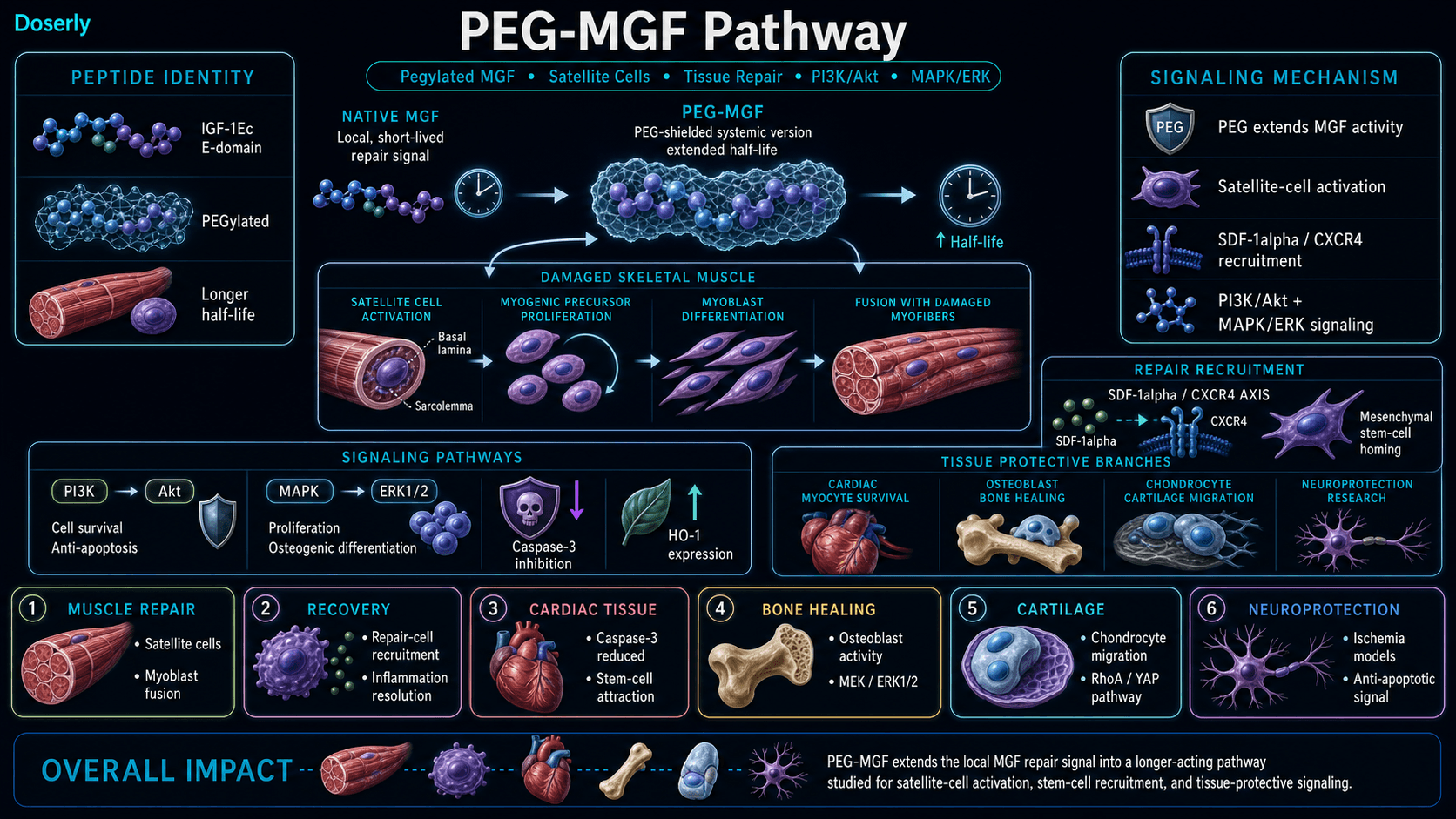
PEG-MGF exerts its biological effects primarily through the unique C-terminal E peptide domain of the IGF-1Ec splice variant, which is mechanistically distinct from canonical IGF-1 receptor (IGF-1R) signaling [1][2].
Satellite cell activation: The E peptide of MGF activates quiescent satellite cells, initiating their re-entry into the cell cycle. Studies demonstrate that MGF promotes proliferation of myogenic precursor cells through mechanisms independent of the IGF-1R tyrosine kinase domain [4]. This activation involves the SDF-1alpha/CXCR4 chemokine axis, which mediates the homing of bone marrow-derived mesenchymal stem cells to sites of tissue damage [7].
Signaling cascades: MGF activates the PI3K/Akt pathway, contributing to cell survival and anti-apoptotic signaling. Concurrently, it modulates the MAPK/ERK1/2 pathway, promoting cell proliferation and osteogenic differentiation in periodontal ligament cells [8]. The peptide inhibits caspase-3 activity, directly reducing programmed cell death in both cardiac myocytes and skeletal muscle cells under hypoxic conditions [5][6].
Cardiac protective effects: In ischemia models, MGF administration within eight hours of hypoxic injury reduced cardiomyocyte apoptosis by up to 35% and enhanced recruitment of cardiac stem cells through sustained delivery from polymeric microstructures [5][9]. The peptide also reduced pathologic cardiac hypertrophy and improved hemodynamic parameters in myocardial infarction models [9].
Bone and cartilage: MGF promotes osteoblast proliferation through the MEK/ERK1/2 pathway, accelerating bone-defect healing in rabbit models [10]. In chondrocytes, MGF enhances cell migration via the RhoA/YAP pathway and increases extracellular matrix synthesis (collagen and proteoglycans) under hypoxic conditions [11][12].
Pathway Visualization Image
Pharmacokinetics
The Basics
The defining feature of PEG-MGF is its dramatically extended lifespan compared to the natural version. Unmodified MGF lasts only about 5-7 minutes in circulation before it is broken down. This is why the body uses it as a quick, localized signal rather than a systemic growth factor. PEGylation changes that math entirely, extending the active window to somewhere between 24 and 72 hours.
This extended duration means that a single injection can potentially provide days of sustained signaling, compared to the rapid-fire, repeated dosing that would be needed with unmodified MGF. It also means PEG-MGF can be administered subcutaneously (under the skin) and still reach distant muscle groups through systemic circulation, rather than requiring direct injection into each target muscle.
After injection, the peptide reaches peak blood levels and then gradually declines as the liver and kidneys break it down. The PEG component is excreted through the kidneys. The extended half-life supports dosing schedules of once daily to several times per week, depending on the protocol approach.
The Science
Native MGF (IGF-1Ec E peptide) exhibits a plasma half-life of approximately 5-7 minutes due to rapid enzymatic degradation and renal clearance [3]. PEGylation extends this to an estimated 24-72 hours, depending on PEG molecular weight and attachment configuration.
Pharmacokinetic parameters following subcutaneous injection (from preclinical models): peak plasma concentration of approximately 37 mcg/L, area under the curve (AUC) of approximately 292 hour x mcg/L, and volume of distribution of approximately 14 L/kg [3]. These values indicate broad tissue distribution consistent with systemic availability.
The extended half-life arises from two complementary mechanisms: (1) the PEG moiety sterically shields the peptide from proteolytic enzymes (primarily DPP-IV and other peptidases), and (2) the increased hydrodynamic radius of the PEG-peptide conjugate exceeds the renal filtration threshold, dramatically reducing glomerular clearance. Metabolism proceeds through classical protein catabolism in the liver, with the PEG polymer excreted renally.
The pharmacokinetic distinction between PEG-MGF and native MGF is functionally significant. While native MGF operates in an autocrine/paracrine mode within the immediate microenvironment of damaged muscle tissue, PEG-MGF functions as an endocrine-like factor with systemic distribution. This shifts its pharmacological profile from a locally-acting repair signal to a systemically-available growth factor with implications for both efficacy and safety profiles.
Research & Clinical Evidence
Skeletal Muscle Repair and Regeneration
The Basics
Muscle repair is the area with the most research behind PEG-MGF. In animal studies, MGF injected directly into damaged muscle tissue reduced inflammation, decreased oxidative stress, and improved the recruitment of immune cells (macrophages and neutrophils) to injury sites. These are the body's natural first responders for clearing debris and starting the repair process.
One notable finding: mice receiving MGF during exercise showed a 25% increase in average muscle fiber size [13]. However, that study required direct injection into the target muscle, which is impractical for whole-body use. PEG-MGF addresses this limitation by enabling systemic delivery from a single injection site.
Research also demonstrates that MGF stimulates the IGF-1 receptor with potency comparable to full-length IGF-1 at equivalent concentrations, suggesting it may produce similar effects on lean body mass, fat metabolism, and energy balance [14].
The Science
Liu et al. (2019) demonstrated that MGF injection partially ameliorated impaired skeletal muscle regeneration in macrophage-depleted mice, indicating that MGF's regenerative effects operate partly through immune cell recruitment to injury sites [1]. Sun et al. (2018) showed that MGF overexpression modulated inflammatory cytokine expression and macrophage resolution in skeletal muscle injury models [15].
Philippou et al. (2009) characterized MGF E peptide actions in vitro following exercise-induced muscle damage in humans, confirming upregulation of both IGF-1Ea and IGF-1Eb (MGF precursor) splice variants in response to mechanical loading [2]. Janssen et al. (2016) established that full-length MGF achieves maximal IGF-1R activation comparable to recombinant human IGF-1 at equimolar concentrations [14].
A synthetic MGF E peptide enhanced myogenic precursor cell transplantation success in animal models, suggesting applications in cell therapy approaches for muscle wasting disorders [4].
Cardiac Tissue Protection
The Basics
Research from the University of Illinois found that MGF can protect heart muscle cells from dying after oxygen deprivation, which is what happens during a heart attack. In rat models, MGF administered within eight hours of the oxygen loss event led to fewer dead heart cells and attracted cardiac stem cells to the damaged area. Rats treated with PEG-MGF showed better heart function and less of the harmful heart enlargement that typically follows a heart attack.
One study reported a reduction in heart muscle cell injury of up to 35% when MGF was delivered to the area using tiny polymer rods that provided sustained local release [9].
The Science
Doroudian et al. (2014) demonstrated that sustained delivery of MGF peptide from polymer microrods attracted cardiac stem cells and reduced apoptosis of myocytes in a rat ischemia model [5]. Pena et al. (2015) showed that localized delivery of the MGF E-domain peptide via polymeric microstructures improved cardiac function following myocardial infarction, with treated animals showing improved hemodynamics and reduced pathologic cardiac remodeling [9].
The cardioprotective mechanism involves inhibition of the apoptotic cascade through caspase-3 suppression and upregulation of heme oxygenase-1 (HO-1) expression, providing both direct cell survival signaling and anti-inflammatory effects at the injury site [5][6].
Bone Healing
The Basics
In a rabbit study of bone defects, animals treated with high doses of MGF showed bone healing at four weeks that matched what untreated animals achieved at six weeks. The peptide works by boosting osteoblasts, the cells responsible for building and mineralizing new bone tissue [10]. This acceleration of bone repair could have implications for reducing immobilization time after fractures.
The Science
Deng et al. (2011) demonstrated that MGF E peptide promoted osteoblast proliferation and bone-defect healing in a rabbit model. High-dose MGF groups showed accelerated bone mineralization at 4 weeks comparable to 6-week controls, mediated through enhanced osteoblast activity [10].
Cartilage Protection and Repair
The Basics
Cartilage is notoriously slow to repair because it has limited blood supply. Research shows that MGF can enhance the function of chondrocytes (cartilage-building cells) and improve their migration from bone into cartilage where they are needed. PEG-MGF is particularly interesting for this application because a single injection into a joint space could theoretically maintain activity for days to weeks, compared to minutes for unmodified MGF [11].
The Science
Jing et al. (2018) showed that MGF protects against mechanical overload-induced damage in growth plate chondrocytes and promotes their migration through the RhoA/YAP pathway [11]. Separate research demonstrated that pretreatment with MGF E peptide attenuated osteoarthritis progression through improved chondrocyte proliferation and extracellular matrix synthesis under severe hypoxic conditions [12].
Neuroprotective Effects
The Basics
Animal research suggests that MGF may help protect brain cells from age-related decline. Mice with higher levels of MGF retained cognitive function and performed at peak mental capacity longer into old age. The benefit appeared to be age-dependent, with earlier intervention producing better long-term outcomes. MGF has also shown promise in reducing motor neuron loss in mouse models of ALS [16][17].
The Science
Walker (2017) reviewed evidence that MGF overexpression in the brain reduces age-related neuron degeneration, with improved cognitive outcomes showing age-dependent efficacy (earlier treatment producing greater long-term benefits) [16]. Dluzniewska et al. (2005) demonstrated a strong neuroprotective effect of the autonomous C-terminal MGF peptide in brain ischemia models, where MGF was naturally overexpressed in regions of greatest neuronal regeneration [17].
Dental and Periodontal Applications
The Basics
In laboratory studies using human periodontal ligament cells, PEG-MGF improved the process by which cells differentiate into bone-building cells and boosted the expression of enzymes involved in tissue remodeling. This could potentially help repair the ligaments that anchor teeth to bone, offering an alternative to extraction and implant procedures after dental injuries [8].
The Science
Chen et al. (2019) demonstrated that MGF regulated cyclic stretch-induced osteogenic differentiation and MMP-1/MMP-2 expression in human periodontal ligament cells through the MEK/ERK1/2 pathway, suggesting applications in periodontal tissue engineering and regenerative dentistry [8].
Biomarker Evidence Matrix
Category
Recovery & Healing
- Evidence Strength
- 5/10
- Reported Effectiveness
- 6/10
- Summary
- Animal models consistently show enhanced muscle regeneration and immune cell recruitment. Community reports support faster recovery, though confounding with stacked compounds is common.
Category
Muscle Growth
- Evidence Strength
- 5/10
- Reported Effectiveness
- 4/10
- Summary
- Animal data shows 25% muscle fiber size increase with local injection. Community reports are mixed; many users report recovery benefits without notable direct hypertrophy.
Category
Joint Health
- Evidence Strength
- 5/10
- Reported Effectiveness
- 6/10
- Summary
- Rabbit bone and mouse cartilage models show meaningful improvement. Limited but consistently positive community reports on tendon and joint healing.
Category
Heart Health
- Evidence Strength
- 5/10
- Reported Effectiveness
- 5/10
- Summary
- Rat ischemia models show reduced cardiomyocyte death and improved cardiac function. No community reports of cardiac-specific benefits.
Category
Bone Health
- Evidence Strength
- 4/10
- Reported Effectiveness
- 5/10
- Summary
- Rabbit bone-defect model shows accelerated healing. Research-awareness mentions in community but no personal experience reports.
Category
Pain Management
- Evidence Strength
- 3/10
- Reported Effectiveness
- 5/10
- Summary
- No direct analgesic studies. Community reports of reduced injury-site pain are secondary to tissue repair effects.
Category
Side Effect Burden
- Evidence Strength
- 4/10
- Reported Effectiveness
- 7/10
- Summary
- Preclinical safety data shows minimal side effects. Community consistently reports good tolerability with injection site pain as the primary complaint.
Category
Longevity & Neuroprotection
- Evidence Strength
- 4/10
- Reported Effectiveness
- 4/10
- Summary
- Mouse models show neuroprotective effects and reduced age-related cognitive decline. No community reports of cognitive or neuroprotective benefits.
Category
Inflammation
- Evidence Strength
- 4/10
- Reported Effectiveness
- N/A
- Summary
- Animal studies demonstrate anti-inflammatory cytokine modulation. Community data not yet collected for this category specifically.
Category
Skin Health
- Evidence Strength
- 3/10
- Reported Effectiveness
- N/A
- Summary
- MGF is an IGF-1 splice variant with theoretical collagen synthesis implications. No direct skin-specific research or community data.
Category
Immune Function
- Evidence Strength
- 3/10
- Reported Effectiveness
- N/A
- Summary
- MGF modulates macrophage and neutrophil recruitment. No direct immune function studies or community reports.
Categories scored: 11
Categories with community data: 8
Categories not scored (insufficient data): Fat Loss, Weight Management, Appetite & Satiety, Food Noise, Energy Levels, Sleep Quality, Focus & Mental Clarity, Memory & Cognition, Mood & Wellbeing, Anxiety, Stress Tolerance, Motivation & Drive, Emotional Aliveness, Emotional Regulation, Libido, Sexual Function, Digestive Comfort, Nausea & GI Tolerance, Gut Health, Hair Health, Blood Pressure, Heart Rate & Palpitations, Hormonal Symptoms, Temperature Regulation, Fluid Retention, Body Image, Cravings & Impulse Control, Social Connection, Treatment Adherence, Withdrawal Symptoms, Daily Functioning, Physical Performance
Benefits & Potential Effects
The Basics
PEG-MGF's benefits center around repair and recovery rather than direct performance enhancement. The compound's primary strength is activating satellite cells to accelerate the natural muscle repair process, which may translate to faster recovery from intense training, reduced downtime after injuries, and potentially enhanced tissue rebuilding over time.
The most commonly discussed benefits in research include enhanced skeletal muscle repair following injury or intense exercise, accelerated bone healing through increased osteoblast activity, improved cartilage cell function and migration, cardiac tissue protection from oxygen deprivation damage, and potential neuroprotective effects against age-related decline. Some sources also mention possible improvements in endurance, immune function, and fat metabolism, though evidence for these effects is thinner.
An important distinction: PEG-MGF appears to work best as a recovery and repair compound rather than a standalone muscle-building agent. Community reports align with this, with most positive experiences tied to injury recovery and post-training soreness reduction rather than direct muscle size gains.
The Science
The primary evidence-supported effects of PEG-MGF include:
Satellite cell activation and muscle regeneration: MGF E peptide promotes myoblast proliferation and is anti-apoptotic in C2C12 muscle cells, with demonstrated activation of survival signaling cascades and delayed senescence markers [4][14].
Anti-apoptotic and cytoprotective effects: Inhibition of caspase-3 activity reduces programmed cell death in cardiac myocytes, skeletal muscle cells, and neural tissue under stress conditions [5][6][17].
Stem cell recruitment: MGF E peptide enhances bone marrow-derived mesenchymal stem cell homing through the SDF-1alpha/CXCR4 chemokine axis, directing repair cells to sites of tissue damage [7].
Osteogenic and chondrogenic differentiation: Promotes osteoblast proliferation and bone mineralization through MEK/ERK1/2 signaling [8][10]. Enhances chondrocyte migration and extracellular matrix synthesis under hypoxic conditions [11][12].
Neuroprotection: Reduces age-related neuron degeneration with age-dependent efficacy, and demonstrates strong neuroprotective effects in brain ischemia through the autonomous C-terminal peptide mechanism [16][17].
Reading about potential benefits is the starting point. Knowing whether you're actually experiencing them is where real value begins. Doserly lets you track the specific health markers that matter for your protocol, from body composition and energy levels to sleep quality, mood, and recovery time, building a personal dataset that goes beyond subjective impressions.
The app's proactive monitoring doesn't wait for you to notice a problem. It surfaces patterns in your logged data that might suggest suboptimal timing, flags potential interactions with other items in your health stack, and helps you identify which benefits are tracking with what the research suggests and which aren't materializing. Think of it as a second set of eyes on your protocol, always watching the trends.
Keep sensitive protocol records in a purpose-built app.
Doserly is designed for private health tracking with structured records, offline-ready workflows, and exportable history when you need it.
Privacy
Health records

Privacy controls help you manage records; keep clinical records where required.
Side Effects & Safety Considerations
The Basics
PEG-MGF appears to be reasonably well tolerated based on preclinical data and community reports, but the absence of human clinical trials means the safety profile is not formally characterized. The most commonly reported side effects are mild and localized.
Injection site reactions are the most frequent complaint. Some users report significant soreness at the injection site, while others experience no discomfort at all. This variability may relate to injection technique, site selection, or product quality differences.
Other reported effects include localized swelling or water retention at the injection site and potential blood pressure fluctuations. Because PEG-MGF is a growth factor, the theoretical concern about promoting tumor growth in individuals with pre-existing cancers applies, as it does with other IGF-1-related compounds. No serious adverse events have been documented in community reports, but the low discussion volume makes it difficult to draw firm safety conclusions.
One safety consideration unique to PEG-MGF relative to standard MGF: the extended systemic circulation means any adverse effects would persist for longer. With native MGF, unwanted effects clear within minutes. With the PEGylated version, the compound remains active for days.
The Science
Preclinical toxicology data for PEG-MGF is limited. Available animal studies report minimal adverse effects at research doses, with low oral bioavailability and favorable subcutaneous bioavailability profiles [13].
Growth factor oncogenic risk: As an IGF-1 splice variant analog, PEG-MGF theoretically shares the class-wide concern regarding promotion of cell proliferation in tissues with pre-existing neoplastic changes. The IGF-1R signaling pathway (PI3K/Akt/mTOR) is a recognized oncogenic pathway, and sustained activation through exogenous growth factor administration warrants caution in individuals with cancer history or elevated cancer risk factors [5].
PEG-specific considerations: PEGylation is an established pharmaceutical technology with a well-characterized safety profile across multiple FDA-approved drugs (e.g., pegfilgrastim, peginterferon). Rare PEG allergies have been documented in the general population, and the PEG component undergoes renal excretion [3].
Product quality concerns: Multiple community sources note that commercially available PEG-MGF products may not contain properly PEGylated MGF due to the complexity and cost of custom peptide synthesis. Substandard products could explain some of the "no effect" reports in community discussions and introduce unpredictable safety variables.
Dosing Protocols
The Basics
No standardized, clinically validated dosing protocol exists for PEG-MGF in humans. All dosing information comes from preclinical research extrapolation and community-reported practices. Doses and frequencies vary across sources, reflecting the early research stage of this compound.
The most commonly reported dose range across sources falls between 200 and 500 mcg per administration. Approaches generally fall into two camps: daily subcutaneous injections at the lower end of the range (200-300 mcg), often with gradual titration upward; and less frequent, higher-dose injections (400-500 mcg) given two to three times per week.
Cycle lengths typically range from 4 to 8 weeks, with some protocols extending to 12 or 16 weeks. Most sources recommend equal time off between cycles. The PEGylated version does not require localized muscle injection, unlike standard MGF, and can be administered subcutaneously.
Timing is generally recommended post-workout or before bed, though optimal timing has not been established in any controlled study. Some practitioners recommend combining PEG-MGF with a post-workout meal containing protein and carbohydrates to support the repair signaling.
The Science
Preclinical dosing extrapolation suggests subcutaneous doses in the range of 200-500 mcg. The PEGylation extends half-life sufficiently to support once-daily or every-other-day administration schedules [3].
The two primary protocol approaches reflect different pharmacological strategies:
Sustained low-dose: 200-500 mcg daily subcutaneously, with gradual titration from 200 mcg (weeks 1-2) to 500 mcg (weeks 7-8). This approach maintains steady-state plasma levels and continuous satellite cell activation signaling [3].
Pulsed higher-dose: 200-400 mcg two to three times per week, often timed around training sessions. This approach creates periodic spikes in growth factor signaling, potentially mimicking the natural pulsatile pattern of MGF expression following mechanical loading [2].
No comparative data exists to determine which approach is superior. Individual response, goals, and tolerability should guide protocol selection in consultation with a healthcare professional.
Consistency is the difference between a protocol that delivers results and one that wastes time and money. Doserly was built for exactly this: keeping you on track with the precision your protocol demands.
The built-in calculators handle the math you shouldn't be doing in your head. The reconstitution calculator tells you exactly how much bacteriostatic water to add for your target concentration. The dose calculator converts between units, milligrams, and syringe markings so you draw the right amount every time. The injection site heat map tracks where you've administered and when, helping you rotate sites systematically to reduce tissue damage, scarring, and absorption inconsistencies from overusing the same area. Pair that with smart reminders tuned to your protocol's timing requirements, and you build the kind of daily consistency that separates optimized protocols from haphazard ones.
Turn symptom and safety notes into a clearer timeline.
Doserly helps you log doses, symptoms, and safety observations side by side so patterns are easier to discuss with a qualified clinician.
Pattern view
Logs and observations

Pattern visibility is informational and should be reviewed with a clinician.
What to Expect
Weeks 1-2
Most users report minimal noticeable effects during the initial phase. Some report mild injection site reactions (soreness, slight swelling) as the body adjusts. If training through this period, some early adopters note subtle improvements in next-day muscle soreness. This period serves primarily as an adjustment and loading phase.
Weeks 3-4
Community reports suggest that recovery benefits become more apparent by the third to fourth week. Reduced DOMS (delayed-onset muscle soreness) after intense sessions is the most commonly reported early benefit. Users recovering from injuries may begin noticing improved mobility or reduced pain at injury sites. Training capacity may improve as recovery windows shorten.
Weeks 5-8
If benefits are going to materialize, most users report that weeks 5-8 represent the peak response window. Recovery times are at their shortest, and users who are stacking PEG-MGF with other healing peptides (BPC-157, TB-500) often report the most pronounced results during this period. Direct muscle size gains remain unlikely for most users; PEG-MGF's value is primarily in enabling more frequent, more intense training through faster recovery.
Post-Cycle
After discontinuing PEG-MGF, the extended half-life means the compound takes several days to fully clear. Most users report a gradual return to baseline recovery rates over 1-2 weeks rather than an abrupt change. Training adaptations gained through the improved recovery window are retained.
Interaction Compatibility
Good With (Synergistic)
- BPC-157 - Complementary healing mechanisms. BPC-157 promotes angiogenesis and gut/tendon healing while PEG-MGF activates satellite cells. Commonly stacked for comprehensive injury recovery.
- TB-500 - TB-500 promotes cell migration and anti-inflammatory effects while PEG-MGF drives satellite cell activation. The combination is frequently cited in recovery-focused protocols.
- IGF-1 LR3 - Sequential use is considered the gold standard by some practitioners: PEG-MGF first to expand the satellite cell pool, then IGF-1 LR3 to drive differentiation and growth. They operate through complementary mechanisms on the same cell population.
- GHK-Cu - GHK-Cu promotes tissue remodeling and collagen synthesis, complementing PEG-MGF's satellite cell activation for a multi-pathway recovery approach.
Not Good With (Caution Advised)
- Concurrent IGF-1 LR3 - While sequential use is considered beneficial, some sources advise against simultaneous administration as they may counteract each other's satellite cell signaling (MGF promotes proliferation while IGF-1 LR3 promotes differentiation). Alternating protocols (5 days on one, 5 days on the other) have been discussed in community forums.
- Active cancer diagnosis - As a growth factor that promotes cell proliferation, PEG-MGF should not be used by individuals with active cancers or elevated cancer risk, as it may promote tumor growth through IGF-1R signaling.
- Other IGF-1 pathway compounds at high doses - Stacking multiple IGF-1 pathway agonists (PEG-MGF + IGF-1 LR3 + MK-677 + exogenous GH) simultaneously increases the risk of insulin resistance, fluid retention, and sustained supraphysiological growth factor levels.
Administration Guide
Materials required:
- U-100 insulin syringes (29-31 gauge, 5/16-1/2 inch)
- Alcohol swabs (70% isopropyl)
- Bacteriostatic water for reconstitution
- Sharps disposal container
Recommended reconstitution solution: Bacteriostatic water (0.9% benzyl alcohol preserved). For a 2 mg vial, most sources recommend adding 2.0-3.0 mL of bacteriostatic water, yielding a concentration of approximately 0.667-1.0 mg/mL.
Timing considerations: Most commonly administered post-workout or before bed. PEG-MGF does not require administration directly into the target muscle due to PEGylation-enabled systemic distribution. Subcutaneous injection in the abdomen, thigh, or upper arm is the standard approach. Some sources recommend combining with a post-workout meal containing protein and carbohydrates.
Post-administration care: Monitor the injection site for excessive swelling, redness, or pain that persists beyond 24 hours. Mild injection site soreness is commonly reported and typically resolves within a day. Inspect reconstituted solution before each use; discard if cloudy or discolored.
Supplies & Planning
PEG-MGF vials are commonly available in 2 mg vial sizes. The number of vials needed will depend on dosing and cycle length, which should be determined in consultation with a healthcare professional.
Typical supplies associated with PEG-MGF protocols:
- PEG-MGF lyophilized powder vials (2 mg per vial)
- Bacteriostatic water (10 mL bottles)
- U-100 insulin syringes (29-31 gauge)
- Alcohol swabs
- Sharps container for needle disposal
Reconstitution note: Use the reconstitution calculator to determine the exact volume of bacteriostatic water needed for your vial size and desired concentration. Higher dilution volumes (e.g., 3 mL per 2 mg vial) yield lower concentrations that are easier to measure accurately with standard insulin syringes, particularly at smaller dose increments.
Storage & Handling
Lyophilized (powder) form:
- Long-term storage: -20°C (-4°F) or colder, protected from light and moisture
- Short-term storage: 2-8°C (35.6-46.4°F) for weeks to months
- Room temperature is acceptable for brief periods (days) but not recommended for extended storage
- Keep in sealed packaging with desiccant to minimize moisture exposure
- Allow vials to reach room temperature before opening to prevent condensation on the lyophilized powder
Reconstituted (liquid) form:
- Refrigerate immediately at 2-8°C (35.6-46.4°F) after reconstitution
- Use within 28 days when reconstituted with bacteriostatic water
- Do not freeze reconstituted solution, as this can denature the peptide
- Avoid repeated freeze-thaw cycles, which may reduce potency by 25% or more per cycle
- Inspect before each use: solution should be clear and colorless with no cloudiness or particles
General handling:
- Swab vial stopper with alcohol before each draw
- Use a new sterile syringe and needle for each injection
- Label vials with reconstitution date
- Protect from direct sunlight and UV exposure
Lifestyle Factors
Training, nutrition, and recovery practices significantly influence outcomes with PEG-MGF. The peptide is designed to amplify the body's natural repair response to mechanical stress, meaning the quality of the stress signal (training) and the availability of building materials (nutrition, sleep) directly affect results.
Nutrition: Maintain adequate protein intake, commonly recommended at 1.6-2.2 grams per kilogram of body weight daily, to supply the amino acids needed for muscle protein synthesis and tissue repair. A calorie-sufficient diet supports the anabolic environment that PEG-MGF is designed to enhance. Some practitioners recommend timing a protein and carbohydrate meal around administration to support the repair signaling.
Training: Progressive resistance training provides the mechanical stimulus that MGF pathways are designed to respond to. PEG-MGF's value proposition is enabling faster recovery, which may allow for higher training frequency or volume. However, training should still follow sound periodization principles, as recovery enhancement does not eliminate the need for programmed rest.
Sleep: Prioritize 7-9 hours of quality sleep nightly. Growth hormone release peaks during deep sleep stages, and sleep is when the majority of muscle repair occurs. Compromising sleep quality while using a recovery peptide undermines the core mechanism you are trying to enhance.
Hydration and monitoring: Maintain consistent hydration and monitor for any unusual swelling or inflammation, as the extended systemic presence of PEG-MGF requires a stable internal environment for optimal activity. Track your progress systematically so you can identify what is and is not working.
Peptide protocols don't exist in a vacuum. Your nutrition, exercise, sleep, stress, and the rest of your health stack all influence outcomes. Doserly tracks your entire health picture in one place: peptides, supplements, medications, TRT/HRT, and the lifestyle factors that determine whether your protocol reaches its potential.
This holistic view reveals correlations that compartmentalized tracking misses. You might discover that your recovery improvements stall during weeks with poor sleep, or that adding a specific supplement amplified a benefit you were already seeing. Doserly's cross-category visibility helps you understand which lifestyle factors are pulling the most weight in your results, turning health optimization from guesswork into a data-informed practice.
Connect protocol changes to labs and health markers.
Doserly can keep lab results, biomarkers, symptoms, and dose history close together so follow-up conversations have better context.
Insights
Labs and trends
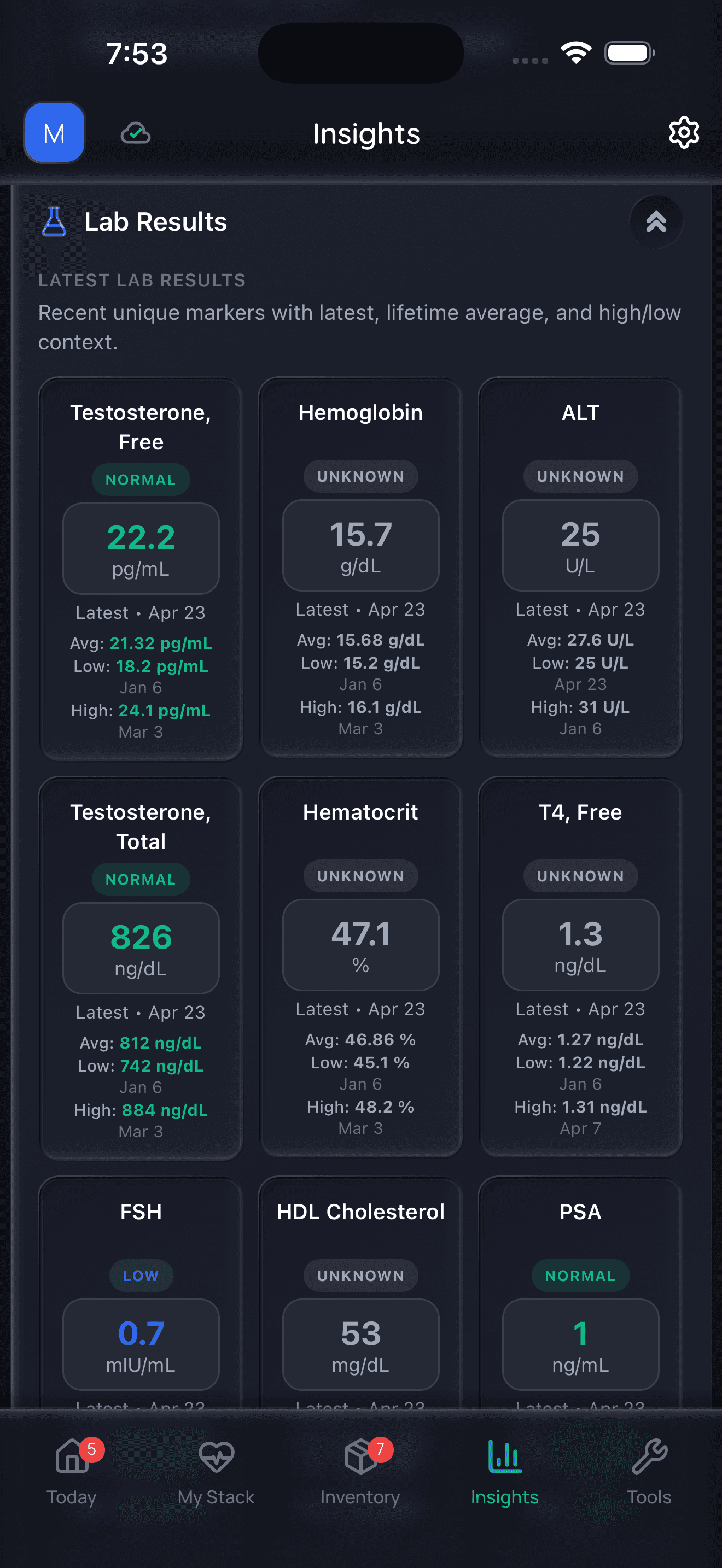
Doserly organizes data; it does not diagnose or interpret labs for you.
Regulatory Status & Research Classification
United States (FDA): PEG-MGF has no FDA approval, no Investigational New Drug (IND) status, and no registered clinical trials on ClinicalTrials.gov. It is classified as a research compound and is not approved for any human therapeutic indication. It falls outside the FDA's regulatory framework for approved drugs.
WADA Status: Prohibited. PEG-MGF is classified under the World Anti-Doping Agency's prohibited list as a peptide hormone and growth factor analog. It is banned both in-competition and out-of-competition for all athletes subject to WADA testing.
Canada (Health Canada): Not approved. No Drug Identification Number (DIN) or Natural Health Product Number (NPN) has been issued for PEG-MGF.
United Kingdom (MHRA): Not approved for human therapeutic use. Available only as a research chemical.
Australia (TGA): Not registered on the Australian Register of Therapeutic Goods. Would likely be classified as Schedule 4 (prescription only) or higher if it were to be assessed.
European Union (EMA): No marketing authorization. Available only for research purposes.
Regulatory status changes frequently. Always verify the current legal status of any compound in your specific country or jurisdiction before making any decisions.
FAQ
What is PEG-MGF and how does it differ from standard MGF?
PEG-MGF is a modified version of Mechano Growth Factor with an attached polyethylene glycol chain. The key difference is the half-life: standard MGF lasts only about 5-7 minutes in the body, while PEGylation extends this to approximately 24-72 hours. This means PEG-MGF can be administered subcutaneously and circulate systemically, whereas unmodified MGF essentially requires direct injection into the target muscle for any practical effect.
What does the research say about dosing for PEG-MGF?
Based on available preclinical data and community-reported practices, commonly cited dose ranges fall between 200 and 500 mcg per administration. Some protocols use daily subcutaneous injections at lower doses (200-300 mcg) with gradual titration upward, while others use less frequent higher doses (400-500 mcg) two to three times per week. No clinically validated human dosing protocol exists. A qualified healthcare professional should be consulted for personalized guidance.
Can PEG-MGF be used alongside BPC-157 and TB-500?
These compounds are frequently discussed as complementary in recovery-focused protocols. BPC-157 promotes angiogenesis and tissue repair through different pathways, TB-500 supports cell migration and anti-inflammatory effects, and PEG-MGF activates satellite cells. The combination targets multiple repair mechanisms simultaneously. Any multi-compound protocol should be discussed with a healthcare provider.
Is PEG-MGF effective for muscle growth?
Based on available data, PEG-MGF appears to be primarily a recovery and repair compound rather than a direct muscle-building agent. Animal studies show increased muscle fiber size with direct MGF injection, but community reports consistently emphasize faster recovery from training and injuries rather than notable independent hypertrophy. The compound may indirectly support muscle growth by enabling higher training frequency and volume through improved recovery.
How long should a PEG-MGF cycle last?
Most commonly reported cycle lengths range from 4 to 8 weeks, with some protocols extending to 12-16 weeks. Sources generally recommend taking equal time off between cycles. Individual responses vary, and cycle duration should be determined with guidance from a healthcare professional.
What are the main side effects of PEG-MGF?
The most commonly reported side effect is injection site pain or soreness, which varies significantly between users. Some sources mention potential localized swelling, water retention, and possible blood pressure effects. No serious adverse events have been reported in community discussions, but the compound lacks formal human safety studies, meaning the full side effect profile is not known.
Is PEG-MGF legal?
PEG-MGF is available for purchase as a research chemical in many jurisdictions but is not approved for human therapeutic use by any major regulatory agency. It is banned by WADA for competitive athletes. Legal status varies by country. Always verify the regulations in your specific jurisdiction.
Sources & References
[1] Liu X, Zeng Z, Zhao L, Chen P, Xiao W. "Impaired Skeletal Muscle Regeneration Induced by Macrophage Depletion Could Be Partly Ameliorated by MGF Injection." Frontiers in Physiology, vol. 10, p. 601, 2019. https://pubmed.ncbi.nlm.nih.gov/31191342/
[2] Philippou A, et al. "Expression of IGF-1 isoforms after exercise-induced muscle damage in humans: characterization of the MGF E peptide actions in vitro." In Vivo, vol. 23, no. 4, pp. 567-575, 2009. https://pubmed.ncbi.nlm.nih.gov/19567392/
[3] PEG-MGF pharmacokinetic data derived from preclinical subcutaneous injection models. Extended half-life estimates (24-72 hours) from PEGylation characterization studies.
[4] "A synthetic mechano growth factor E peptide enhances myogenic precursor cell transplantation success." American Journal of Transplantation. https://pubmed.ncbi.nlm.nih.gov/21354439/
[5] Doroudian G, Pinney J, Ayala P, Los T, Desai TA, Russell B. "Sustained delivery of MGF peptide from microrods attracts stem cells and reduces apoptosis of myocytes." Biomedical Microdevices, vol. 16, no. 5, pp. 705-715, 2014. https://pubmed.ncbi.nlm.nih.gov/24951710/
[6] MGF inhibition of caspase-3 activity demonstrated in cardiac and skeletal muscle cell models under hypoxic conditions.
[7] "MGF E peptide improves anterior cruciate ligament repair through SDF-1alpha/CXCR4 axis-mediated BMSCs homing." 2018. https://pubmed.ncbi.nlm.nih.gov/30317597/
[8] Chen JT, Wang Y, Zhou ZF, Wei KW. "Mechano-growth factor regulated cyclic stretch-induced osteogenic differentiation and MMP-1, MMP-2 expression in human periodontal ligament cells by activating the MEK/ERK1/2 pathway." Shanghai Journal of Stomatology, vol. 28, no. 1, pp. 6-12, 2019.
[9] Pena JR, Pinney JR, Ayala P, Desai TA, Goldspink PH. "Localized delivery of mechano-growth factor E-domain peptide via polymeric microstructures improves cardiac function following myocardial infarction." Biomaterials, vol. 46, pp. 26-34, 2015.
[10] Deng M, et al. "Mechano growth factor E peptide promotes osteoblasts proliferation and bone-defect healing in rabbits." International Orthopaedics, vol. 35, no. 7, pp. 1099-1106, 2011. https://pmc.ncbi.nlm.nih.gov/articles/PMC3167400/
[11] Jing X, et al. "Mechano-growth factor protects against mechanical overload induced damage and promotes migration of growth plate chondrocytes through RhoA/YAP pathway." Experimental Cell Research, vol. 366, no. 2, pp. 81-91, 2018.
[12] "Pretreatment with mechano growth factor E peptide attenuates osteoarthritis through improving cell proliferation and extracellular matrix synthesis in chondrocytes under severe hypoxia." 2021. https://pubmed.ncbi.nlm.nih.gov/34015701/
[13] Goldspink G. "Research on mechano growth factor: its potential for optimising physical training as well as misuse in doping." British Journal of Sports Medicine, vol. 39, no. 11, pp. 787-788, 2005.
[14] Janssen JAMJL, Hofland LJ, Strasburger CJ, van den Dungen ESR, Thevis M. "Potency of Full-Length MGF to Induce Maximal Activation of the IGF-I R Is Similar to Recombinant Human IGF-I at High Equimolar Concentrations." PLoS ONE, vol. 11, no. 3, 2016.
[15] Sun KT, Cheung KK, Au SWN, Yeung SS, Yeung EW. "Overexpression of Mechano-Growth Factor Modulates Inflammatory Cytokine Expression and Macrophage Resolution in Skeletal Muscle Injury." Frontiers in Physiology, vol. 9, 2018.
[16] Walker A. "Hearts and Minds of Mice and Men: Mechano Growth Factor a new tool in the battle against age-related neuron loss?" On Biology, BioMed Central, 2017. https://molecularbrain.biomedcentral.com/articles/10.1186/s13041-017-0304-0
[17] Dluzniewska J, et al. "A strong neuroprotective effect of the autonomous C-terminal peptide of IGF-1 Ec (MGF) in brain ischemia." FASEB Journal, vol. 19, no. 13, pp. 1896-1898, 2005.
Related Peptide Guides
- IGF-1 LR3 - Long-acting IGF-1 analog; complementary growth factor with different mechanism (receptor-mediated vs. satellite cell activation)
- BPC-157 - Angiogenic healing peptide commonly stacked with PEG-MGF for comprehensive injury recovery
- TB-500 - Cell migration and anti-inflammatory peptide frequently combined with PEG-MGF in recovery protocols
- GHK-Cu - Copper peptide promoting tissue remodeling and collagen synthesis
- Ipamorelin - Growth hormone secretagogue that may complement PEG-MGF through upstream GH/IGF-1 axis stimulation
- CJC-1295 - GHRH analog often discussed in growth-oriented peptide stacks
- MK-677 - Oral growth hormone secretagogue in the broader growth factor optimization space
- Follistatin-344 - Myostatin inhibitor with complementary muscle growth mechanisms
- GHRP-2 - Growth hormone releasing peptide in the broader anabolic peptide category
- GHRP-6 - Growth hormone releasing peptide commonly discussed alongside growth factor compounds
Need the reconstitution math for PEG-MGF: Complete Research Guide?
Open the calculator with PEG-MGF: Complete Research Guide prefilled to estimate concentration, draw volume, and related measurement math from the reconstitution details you already have.