
5-HTP: The Complete Supplement Guide
On this page
Quick Reference Card
Attribute
Common Name
- Detail
- 5-HTP (5-Hydroxytryptophan)
Attribute
Other Names / Aliases
- Detail
- L-5-Hydroxytryptophan, Oxitriptan (INN), 5-OHTrp, L-5-HTP
Attribute
Category
- Detail
- Amino Acid Derivative (Serotonin Precursor)
Attribute
Primary Forms & Variants
- Detail
- Standard immediate-release capsules/tablets (most common); Time-release tablets (slower absorption, extended effects); Sublingual spray (Griffonia simplicifolia extract)
Attribute
Typical Dose Range
- Detail
- 50-300 mg per day (commonly cited range across sources)
Attribute
RDA / AI / UL
- Detail
- Not established. 5-HTP is not classified as an essential nutrient. No formal dietary reference values exist.
Attribute
Common Delivery Forms
- Detail
- Capsule, tablet, time-release tablet, sublingual spray
Attribute
Best Taken With / Without Food
- Detail
- Can be taken with or without food. Absorption is not affected by other amino acids or food. Some sources suggest taking with food to reduce GI side effects such as nausea.
Attribute
Key Cofactors
- Detail
- Vitamin B6 (pyridoxal-5-phosphate, required for conversion of 5-HTP to serotonin); Magnesium (supports tryptophan hydroxylase function); EGCG (green tea extract, suggested to reduce peripheral serotonin conversion)
Attribute
Storage Notes
- Detail
- Store in a cool, dry place away from direct sunlight and moisture. No refrigeration required for capsule or tablet forms.
Overview
The Basics
5-HTP is a naturally occurring compound that your body makes from the amino acid tryptophan, the same amino acid found in foods like turkey, chicken, and pumpkin seeds. Think of it as the middle step in a production line: tryptophan gets converted into 5-HTP, which then gets converted into serotonin, one of your brain's key chemical messengers. Serotonin plays a role in regulating mood, sleep, appetite, and pain perception.
The reason people take 5-HTP as a supplement is to give that production line a boost. By providing the body with pre-formed 5-HTP, you skip the slowest step in serotonin production (the conversion of tryptophan to 5-HTP), which means more raw material is available for your brain to make serotonin. This is why 5-HTP is primarily studied for conditions where serotonin levels may be low, such as depression, anxiety, insomnia, and appetite regulation.
Most commercial 5-HTP supplements are derived from the seeds of Griffonia simplicifolia, an African shrub with naturally high concentrations of this compound [1]. It has been available as a dietary supplement since the mid-1990s and has accumulated a modest but interesting body of research, particularly around mood, sleep, and appetite.
The Science
5-Hydroxytryptophan (5-HTP) is the immediate biosynthetic precursor of serotonin (5-hydroxytryptamine, 5-HT) in the tryptophan-serotonin metabolic pathway. It is produced endogenously by the hydroxylation of the essential amino acid L-tryptophan via the enzyme tryptophan hydroxylase (TPH), which catalyzes the rate-limiting step in serotonin synthesis [2].
Exogenous 5-HTP administration bypasses the TPH-catalyzed step entirely, providing a direct substrate for aromatic L-amino acid decarboxylase (AADC), which converts 5-HTP to serotonin. This bypass is pharmacologically significant because TPH activity can be inhibited by numerous factors, including vitamin B6 deficiency, magnesium deficiency, chronic stress, and insulin resistance [2][3].
Unlike L-tryptophan, which can be diverted into competing metabolic pathways including the kynurenine pathway (producing NAD+/niacin) and protein synthesis, 5-HTP is committed exclusively to serotonin production. This metabolic specificity is one of the primary theoretical advantages of 5-HTP supplementation over L-tryptophan supplementation [4].
5-HTP is primarily extracted from the seeds of Griffonia simplicifolia (Baill.), a woody climbing shrub native to West and Central Africa, which contains 5-HTP concentrations of up to 20% dry weight [1]. In the United States, 5-HTP is regulated as a dietary supplement. No FDA-approved drug product containing 5-HTP as an active pharmaceutical ingredient exists [5].
Chemical & Nutritional Identity
Property
Chemical Name
- Value
- (2S)-2-amino-3-(5-hydroxy-1H-indol-3-yl)propanoic acid
Property
Synonyms
- Value
- H-Trp(5-OH)-OH; L-5-Hydroxytryptophan; Oxitriptan (INN)
Property
Molecular Formula
- Value
- C₁₁H₁₂N₂O₃
Property
Molecular Weight
- Value
- 220.23 g/mol
Property
CAS Number
- Value
- 56-69-9
Property
PubChem CID
- Value
- 144
Property
Category
- Value
- Amino acid derivative; Serotonin precursor
Property
Natural Stereoisomer
- Value
- L-5-HTP (the biologically active form)
Property
Primary Natural Source
- Value
- Griffonia simplicifolia seeds
Property
RDA / AI / UL
- Value
- Not established (not an essential nutrient)
5-HTP is a hydroxylated derivative of the amino acid tryptophan, distinguished by a hydroxyl group at the 5-position of the indole ring. It is a white to off-white crystalline powder that is freely soluble in water. The naturally occurring and biologically active stereoisomer is the L-form.
5-HTP exists in a single supplemental form (there are no chelate, oxide, or salt variants as seen with mineral supplements). Differences between products relate primarily to delivery mechanism: standard immediate-release capsules versus time-release tablets versus sublingual spray formulations. These delivery differences affect the pharmacokinetic profile but not the molecule itself.
Mechanism of Action
The Basics
Your body converts 5-HTP into serotonin through a straightforward, one-step chemical reaction. Once you swallow a 5-HTP supplement, it enters your bloodstream and crosses into your brain, where an enzyme converts it into serotonin. This is different from how prescription antidepressants work: SSRIs (like Prozac or Zoloft) don't create new serotonin, they simply recycle the serotonin your brain already has. 5-HTP, by contrast, provides the building blocks for your brain to make additional serotonin.
Serotonin does a lot of jobs in your body. In your brain, it helps regulate your mood, how easily you fall asleep, how anxious you feel, and how much you want to eat. Outside your brain, serotonin produced in your gut influences digestion and gut motility. This is worth knowing because a significant portion of the serotonin your body makes from supplemental 5-HTP gets produced in your gut rather than your brain, which is why nausea is one of the more common side effects.
5-HTP can also indirectly increase levels of melatonin (your body's sleep hormone, which is made from serotonin), dopamine, and norepinephrine, though these secondary effects are less well-characterized [3].
The Science
5-HTP exerts its biological effects primarily through increasing the availability of serotonin (5-HT) in the central nervous system. The conversion pathway is:
L-Tryptophan → (tryptophan hydroxylase/TPH) → 5-HTP → (aromatic L-amino acid decarboxylase/AADC) → Serotonin (5-HT)
The key pharmacological advantage of exogenous 5-HTP is that it bypasses the TPH-catalyzed rate-limiting step. TPH requires tetrahydrobiopterin (BH4) as a cofactor and molecular oxygen as a co-substrate, and its activity is subject to end-product inhibition by serotonin. Multiple factors can impair TPH activity, including B6 and magnesium deficiencies, chronic psychological stress, and insulin resistance [2][3].
5-HTP crosses the blood-brain barrier (BBB) freely and increases CNS serotonin synthesis in a dose-dependent manner [6]. Unlike L-tryptophan, 5-HTP does not require a specific amino acid transporter (Large Neutral Amino Acid Transporter, LAT1) to cross the BBB, and its absorption is not competitively inhibited by other dietary amino acids [4].
Within the CNS, elevated serotonin levels modulate activity at multiple receptor subtypes:
- 5-HT1A receptors: Involved in anxiolytic and antidepressant effects [7]
- 5-HT2A receptors: Implicated in mood regulation and cognitive function [8]
- 5-HT3 receptors (peripheral): Mediate nausea and emetic responses, explaining the GI side effects of 5-HTP [2]
5-HTP has been shown to augment the neuroendocrine response to SSRIs via increased presynaptic serotonin availability, enhancing 5-HT release into the synapse [9]. This mechanism supports the theoretical rationale for adjunctive 5-HTP in treatment-resistant depression.
In the periphery, gut bacteria metabolize 5-HTP to 5-hydroxyindole, which can accelerate GI motility. This conversion is dependent on microbial composition and intestinal pH [10]. Additionally, serotonin synthesized peripherally from 5-HTP cannot cross the BBB, meaning peripheral serotonin elevation and central serotonin elevation are somewhat independent processes [2].
5-HTP can also increase downstream production of melatonin (via N-acetyltransferase and hydroxyindole-O-methyltransferase) and may influence dopamine and norepinephrine levels through serotonergic modulation of catecholaminergic neurons [3][11].
Absorption & Bioavailability
The Basics
One of 5-HTP's practical advantages is how easily your body absorbs it. About 70% of an oral dose makes it into your bloodstream, which is quite high for a supplement [4]. Better yet, its absorption is not affected by other amino acids, proteins, or food in general. This means you can take it with meals if you prefer, without worrying about reduced effectiveness.
Once absorbed, 5-HTP crosses readily from your bloodstream into your brain, where it can be converted to serotonin. This is different from serotonin itself, which cannot cross the blood-brain barrier. It is also different from L-tryptophan, which has to compete with other amino acids for transport into the brain.
The main drawback of standard 5-HTP is its short duration of action. Your body processes and clears it relatively quickly, which is why some people prefer time-release formulations that deliver 5-HTP more gradually. There is also a pharmacokinetic consideration: because 5-HTP is converted to serotonin both in the brain and in the gut, a portion of each dose contributes to peripheral serotonin production rather than the desired central (brain) effects.
The Science
5-HTP demonstrates favorable oral bioavailability characteristics:
- Oral bioavailability: Approximately 70% of an oral dose reaches systemic circulation [4]
- Absorption mechanism: Passive diffusion; does not require a specific transport molecule for intestinal absorption [4]
- Effect of food: Absorption is not competitively inhibited by dietary amino acids or affected by meal composition [4]
- BBB penetration: Freely crosses the blood-brain barrier without requiring the Large Neutral Amino Acid Transporter (LAT1) [6]
- Elimination: Rapid absorption and elimination kinetics; the compound has a short half-life in its immediate-release form, which has been identified as a limitation for clinical utility [5]
The rapid pharmacokinetic profile of standard 5-HTP has been cited as a barrier to its development as a clinical drug. Jacobsen et al. (2016) proposed that a slow-release formulation would substantially enhance 5-HTP's therapeutic potential by maintaining more stable serotonin elevation over time, reducing the peak-trough fluctuations seen with immediate-release dosing [5].
A significant pharmacokinetic consideration is the dual-site conversion of 5-HTP to serotonin. AADC is expressed both centrally (in serotonergic neurons) and peripherally (in the gut, liver, and kidneys). Peripheral conversion produces serotonin that cannot cross the BBB and contributes to GI and cardiovascular effects rather than mood or sleep benefits. Co-administration of a peripheral AADC inhibitor (such as carbidopa, used clinically) theoretically shifts more 5-HTP conversion to the CNS, though carbidopa co-administration has been associated with scleroderma-like adverse effects in case reports [12].
Research & Clinical Evidence
Depression
The Basics
Depression is the most-studied application for 5-HTP, though the evidence base comes with significant caveats. Several studies have found that 5-HTP may help reduce depressive symptoms, and two short-term trials even found it comparable to the prescription antidepressant fluoxetine (Prozac) over 6 to 8 weeks [13]. That sounds promising on the surface, but the reality is more nuanced. Most of the depression research on 5-HTP was conducted in the 1970s and 1980s, using study designs that would not meet today's standards for rigor. Many of these trials lacked placebo groups, had small sample sizes, and used inconsistent dosing.
A 2020 systematic review that pooled the available data found that 5-HTP did appear to reduce depression scores, but also noted that the results were highly variable and the studies were relatively weak in quality [14]. The bottom line is that 5-HTP shows preliminary evidence of antidepressant activity, likely through boosting serotonin levels, but it would be premature to consider it a proven treatment for clinical depression.
The Science
A systematic review and meta-analysis by Javelle et al. (2020) evaluated the antidepressant effects of 5-HTP, including 13 investigations in the systematic review and 7 in the meta-analysis (PROSPERO: CRD42018104415). The analysis revealed a depression remission rate of 0.65 (95% CI: 0.55-0.78; k=13) and a large effect size on depression questionnaires (Hedges' g = 1.11; 95% CI: 0.53-1.69). However, substantial heterogeneity was present (I² = 76%, τ² = 0.379) due to variability in treatment duration, depression type, experimental design, and dosing. The OHAT risk of bias tool rated the overall study quality as relatively weak, with few studies including placebo control groups [14].
Jangid et al. (2013) conducted a comparative trial of 5-HTP versus fluoxetine in patients with first depressive episodes. Both interventions showed comparable reductions in depression severity scores over 8 weeks, though the study was small [13].
Nolen et al. (1985, 1988) investigated 5-HTP in treatment-resistant depression. Results were inconsistent: 5-HTP showed limited efficacy in depression resistant to reuptake inhibitors [15][16]. Jacobsen et al. (2016) proposed that the poor pharmacokinetics of standard immediate-release 5-HTP, rather than a lack of pharmacological activity, may explain these failures, and hypothesized that a slow-release formulation could be effective as adjunctive therapy for treatment-resistant depression [5].
Sleep
The Basics
Sleep improvement is one of the more commonly reported benefits of 5-HTP, and there is a logical biological explanation: serotonin is a precursor to melatonin, your body's primary sleep hormone. By increasing serotonin availability, 5-HTP may indirectly support melatonin production and improve sleep quality.
A 2024 randomized controlled trial in older adults found that 100 mg of 5-HTP daily for 12 weeks improved subjective sleep quality, but primarily in people who were poor sleepers to begin with. Those who already slept well did not see significant changes [17]. Community experience reports frequently describe faster sleep onset and improved sleep depth, though vivid or even disturbing dreams are a very commonly reported side effect.
The Science
A single-blinded, 12-week parallel RCT (NCT04078724) randomized 30 older adults (66 +/- 3 years) to 100 mg 5-HTP daily or no supplementation. In poor sleepers (PSQI GSS > 5), 5-HTP supplementation significantly improved subjective sleep quality at week 12 (change in sleep latency: -2.80 +/- 1.10 min, p = 0.005). Good sleepers showed no significant improvement. Additionally, poor sleepers in the 5-HTP group demonstrated increased gut microbiota diversity (Simpson index: 0.037 +/- 0.032 vs. -0.007 +/- 0.022; p_interaction = 0.013) and relative abundance of SCFA-producing bacteria [17].
The melatonin connection is well-established biochemically: serotonin is converted to N-acetylserotonin by arylalkylamine N-acetyltransferase (AANAT) and then to melatonin by acetylserotonin O-methyltransferase (ASMT). Elevated serotonin substrate availability via 5-HTP supplementation would be expected to increase downstream melatonin production [3][11].
Bruni et al. (2004) found that 5-HTP improved sleep terrors in children in a clinical study, suggesting serotonergic involvement in parasomnias [18].
Appetite and Obesity
The Basics
5-HTP has shown some of its most consistent evidence in the area of appetite control. Serotonin plays a key role in signaling fullness after eating, and several studies have found that 5-HTP supplementation can help reduce caloric intake and promote feelings of satiety. In studies with people who were overweight or obese, including those with type 2 diabetes, participants taking 5-HTP ate less and lost more weight compared to control groups [19][20][21].
More recently, a sublingual spray formulation of 5-HTP (derived from Griffonia simplicifolia extract) was studied in overweight women and found to increase appetite control and reduce food intake [22][23].
The Science
Multiple controlled studies have demonstrated 5-HTP's effects on appetite regulation:
Cangiano et al. (1992) conducted a study in obese adult subjects showing that 5-HTP (900 mg/day for 12 weeks) improved adherence to dietary prescriptions and resulted in significant weight loss compared to placebo. The 5-HTP group spontaneously reduced caloric intake, particularly from carbohydrate sources [20].
Cangiano et al. (1998) studied non-insulin dependent diabetic patients and found that oral 5-HTP reduced energy intake and altered macronutrient selection [19].
Ceci et al. (1989) observed that oral 5-HTP administration affected feeding behavior in obese adult female subjects [21].
Rondanelli et al. (2009, 2012) evaluated a sublingual Griffonia simplicifolia extract spray in overweight women and found increased satiety and improved amino acid profiles associated with appetite control [22][23].
Anxiety
The Basics
There is limited but interesting evidence that 5-HTP may help with anxiety. One study found that a single dose of 5-HTP could block panic responses triggered by carbon dioxide inhalation in people with panic disorder [7]. Another compared 5-HTP to the antidepressant clomipramine for anxiety, finding some benefit [8]. Community reports frequently mention anxiety reduction as a notable benefit, though experiences are highly individual.
The Science
Schruers et al. (2002) demonstrated that acute L-5-HTP administration inhibited carbon dioxide-induced panic in panic disorder patients, suggesting a rapid anxiolytic effect mediated through serotonergic pathways [7].
Kahn et al. (1987) conducted a double-blind comparison of 5-HTP, clomipramine, and placebo in anxiety disorders. Results suggested some anxiolytic properties of 5-HTP, though the study was small [8].
The anxiolytic properties of 5-HTP are attributed to its ability to elevate CNS serotonin levels, particularly at 5-HT1A receptors, which are key targets for anxiolytic pharmacotherapy [2][3].
Fibromyalgia
The Basics
Fibromyalgia involves widespread pain, fatigue, and sleep disturbances, and abnormalities in serotonin pathways have long been suspected as a contributing factor. One double-blind study found that 5-HTP supplementation improved symptoms compared to placebo, which makes sense if the condition is partly driven by low serotonin signaling [24].
The Science
Caruso et al. (1990) conducted a double-blind, placebo-controlled study of 5-HTP (100 mg three times daily for 30 days) in patients with primary fibromyalgia syndrome. The 5-HTP group showed significant improvements in pain, morning stiffness, sleep quality, anxiety, and overall clinical assessment compared to placebo. These findings are consistent with the hypothesis that serotonin dysfunction contributes to fibromyalgia symptomatology [24].
Headaches
The Basics
5-HTP has been studied for headache prevention, but the results have been disappointing. A placebo-controlled study found it did not reduce the frequency of chronic tension headaches, though interestingly, people taking 5-HTP did use fewer painkillers [25]. It was also found ineffective for preventing childhood migraines [26].
The Science
Ribeiro (2000) conducted a double-blind, randomized, placebo-controlled study of L-5-HTP in chronic tension-type headache prophylaxis. While 5-HTP did not significantly reduce headache frequency, a notable reduction in analgesic consumption was observed, suggesting possible modulation of pain perception pathways without clinically meaningful headache prevention [25].
Santucci et al. (1986) found 5-HTP ineffective as prophylaxis for childhood migraine in a double-blind crossover study [26].
Evidence & Effectiveness Matrix
Category
Sleep Quality
- Evidence Strength
- 6/10
- Reported Effectiveness
- 7/10
- Summary
- One recent RCT shows benefit in poor sleepers (100 mg/day, 12 weeks). Community reports consistently positive for sleep onset and depth. Vivid dreams commonly noted.
Category
Mood & Wellbeing
- Evidence Strength
- 5/10
- Reported Effectiveness
- 6/10
- Summary
- Meta-analysis shows large effect size but weak study quality. Community reports divided between enthusiastic supporters and those reporting worsening after extended use.
Category
Anxiety
- Evidence Strength
- 4/10
- Reported Effectiveness
- 6/10
- Summary
- Limited clinical data (2 small trials) but consistent community reports of acute anxiety relief. Panic disorder evidence is preliminary but promising.
Category
Appetite & Satiety
- Evidence Strength
- 6/10
- Reported Effectiveness
- 5/10
- Summary
- Multiple controlled studies support appetite reduction and weight loss in obese subjects. Less community discussion of this benefit.
Category
Stress Tolerance
- Evidence Strength
- 3/10
- Reported Effectiveness
- 6/10
- Summary
- No dedicated clinical trials for stress. Community reports suggest stress-buffering, possibly secondary to improved sleep and mood.
Category
Focus & Mental Clarity
- Evidence Strength
- 3/10
- Reported Effectiveness
- 4/10
- Summary
- One small RCT in older adults suggests cognitive improvement. Community reports inconsistent; some report mental fog as a side effect.
Category
Emotional Regulation
- Evidence Strength
- 3/10
- Reported Effectiveness
- 5/10
- Summary
- Limited direct evidence. May follow from mood improvements but can paradoxically worsen in some individuals.
Category
Libido
- Evidence Strength
- 2/10
- Reported Effectiveness
- 3/10
- Summary
- No dedicated clinical studies. Community reports indicate potential libido reduction consistent with serotonin elevation pharmacology.
Category
Pain Management
- Evidence Strength
- 4/10
- Reported Effectiveness
- N/A
- Summary
- Fibromyalgia trial showed pain improvement. Tension headache trial showed reduced analgesic use but not headache frequency.
Category
Nausea & GI Tolerance
- Evidence Strength
- 5/10
- Reported Effectiveness
- 4/10
- Summary
- GI side effects (nausea, vomiting, diarrhea) are the most consistently documented adverse effects across clinical and community data.
Category
Side Effect Burden
- Evidence Strength
- 5/10
- Reported Effectiveness
- 5/10
- Summary
- Moderate side effect profile. GI effects are common; vivid dreams near-universal. Serious risks (serotonin syndrome) limited to drug interactions.
Category
Treatment Adherence
- Evidence Strength
- N/A
- Reported Effectiveness
- 5/10
- Summary
- Community recommends cycling protocols. Short half-life of standard form creates adherence challenges. Time-release preferred by experienced users.
Categories scored: 12
Categories with community data: 12
Categories not scored (insufficient data): Fat Loss, Muscle Growth, Weight Management, Food Noise, Energy Levels, Memory & Cognition, Motivation & Drive, Emotional Aliveness, Sexual Function, Joint Health, Inflammation, Recovery & Healing, Physical Performance, Gut Health, Digestive Comfort, Skin Health, Hair Health, Heart Health, Blood Pressure, Heart Rate & Palpitations, Hormonal Symptoms, Temperature Regulation, Fluid Retention, Body Image, Immune Function, Bone Health, Longevity & Neuroprotection, Cravings & Impulse Control, Social Connection, Daily Functioning
Benefits & Potential Effects
The Basics
5-HTP is primarily valued for its potential to improve mood, sleep quality, and appetite control. These three areas have the most research support and the most community discussion. For mood, many people find that 5-HTP takes the edge off depression and anxiety, particularly in the first few weeks of use. For sleep, it appears most helpful for people who are currently sleeping poorly rather than those who already sleep well. For appetite, it may help reduce overall caloric intake and promote a feeling of fullness after meals.
Beyond these primary effects, some people report benefits for fibromyalgia symptoms (including pain, stiffness, and sleep disturbances) and for acute anxiety episodes. The evidence for headache prevention is weak.
It is important to note that 5-HTP's benefits appear most pronounced in people who may have suboptimal serotonin levels, whether from genetic factors, nutrient deficiencies (B6, magnesium, iron), chronic stress, or other causes. People with adequate serotonin function may see little to no benefit.
The Science
The clinical evidence for 5-HTP's benefits spans several domains, though the overall evidence quality is limited by small sample sizes and older study designs:
Mood and Depression: Meta-analytic data suggest a meaningful antidepressant effect (Hedges' g = 1.11), with remission rates of approximately 65% across pooled studies. Two head-to-head comparisons with fluoxetine showed comparable short-term efficacy [13][14]. However, these findings are qualified by high heterogeneity and methodological limitations.
Sleep Quality: The most recent RCT (2024) demonstrated significant improvement in subjective sleep quality metrics in poor sleepers supplementing with 100 mg/day over 12 weeks, with concurrent increases in serum serotonin and favorable shifts in gut microbiota composition [17].
Appetite Regulation: Controlled studies in obese and diabetic populations consistently show reduced caloric intake and increased satiety with 5-HTP supplementation at doses of 750-900 mg/day [19][20][21]. A sublingual spray formulation also demonstrated appetite control benefits at lower doses [22][23].
Anxiety: Preliminary evidence from panic challenge and double-blind comparison studies suggests anxiolytic properties, likely mediated through 5-HT1A receptor modulation [7][8].
Fibromyalgia: One double-blind RCT demonstrated improvements in pain, stiffness, sleep, and anxiety scores at 300 mg/day [24].
Side Effects & Safety
The Basics
The most common side effects of 5-HTP are related to the digestive system: nausea, vomiting, and diarrhea. These occur because 5-HTP gets converted to serotonin not just in your brain but also in your gut, where serotonin accelerates digestive motility. Taking 5-HTP with food can help reduce these effects.
Vivid or lucid dreams are a near-universal experience reported by 5-HTP users, though they are not consistently documented in clinical studies. Some people find these dreams interesting, while others find them disturbing enough to stop taking 5-HTP.
Less commonly reported side effects include headache, insomnia (paradoxically, in some individuals), and heart palpitations. In rare cases, heart valve concerns have been raised due to the role of peripheral serotonin in cardiac valve function, though this is based largely on theoretical mechanisms and animal data rather than documented human cases at typical supplement doses.
The most serious safety concern with 5-HTP is the risk of serotonin syndrome when combined with other medications that increase serotonin levels. This is a potentially life-threatening condition with symptoms including rapid heartbeat, high blood pressure, agitation, confusion, tremor, and fever. Anyone taking SSRIs, SNRIs, MAOIs, tricyclic antidepressants, or other serotonergic drugs should not use 5-HTP without direct medical supervision.
A historical concern involves contaminated 5-HTP products linked to eosinophilia-myalgia syndrome (EMS) in the 1990s. Modern manufacturing standards have largely addressed this issue, but it underscores the importance of purchasing from reputable, third-party tested manufacturers [27][28].
The Science
Common adverse effects: GI disturbances (nausea, vomiting, diarrhea) are the most frequently reported side effects in clinical trials, consistent with peripheral serotonin's role in stimulating 5-HT3 receptors on vagal afferents and enterochromaffin cells [2][4].
Less common adverse effects: Headache, insomnia, and palpitations have been reported [2][3].
Case reports of serious adverse events:
- Serotonin syndrome: Documented following interaction between linezolid (an antibiotic MAOI) and 5-HTP [29]
- Mania induction: Reported following combined use of an MAOI and 5-HTP in a patient without personal or family history of bipolar disorder [30]
- Scleroderma-like illness: Pain, swelling of hands and feet, skin rash, and weight loss in a patient receiving combination therapy with carbidopa and 5-HTP [12]
- Eosinophilia-myalgia syndrome: Linked to contaminated 5-HTP products containing "Peak X" impurities. Symptoms resolved after switching to uncontaminated products [27][28]
Cardiovascular considerations: Peripheral serotonin elevation has been associated with cardiac valve fibrosis in pharmacological contexts (e.g., carcinoid syndrome, fenfluramine). The theoretical concern is that chronic 5-HTP supplementation could elevate peripheral serotonin sufficiently to affect cardiac valves. However, at typical supplement doses, no clinical evidence of cardiac valve damage has been documented in humans [5].
Neurotransmitter depletion concern: Community and some clinical sources raise the concern that chronic 5-HTP supplementation without concurrent dopamine precursor support (e.g., L-tyrosine) may deplete catecholamine levels over time, as AADC also converts L-DOPA to dopamine and may be competitively occupied by 5-HTP [31]. This theoretical concern lacks robust clinical validation but is widely discussed in supplement communities.
Knowing the possible side effects is the first step. Catching them early in your own experience is what keeps a supplement routine safe. Doserly lets you log any symptoms as they arise, tagging them with severity, timing relative to your dose, and whether they resolve on their own or persist.
The app's interaction checker cross-references everything in your stack, supplements and medications alike, flagging known interactions before they become a problem. It also monitors your total intake against established upper limits, alerting you if your combined sources of a nutrient are approaching thresholds where risk increases. Think of it as a safety net that works quietly in the background while you focus on the benefits.
Connect protocol changes to labs and health markers.
Doserly can keep lab results, biomarkers, symptoms, and dose history close together so follow-up conversations have better context.
Insights
Labs and trends
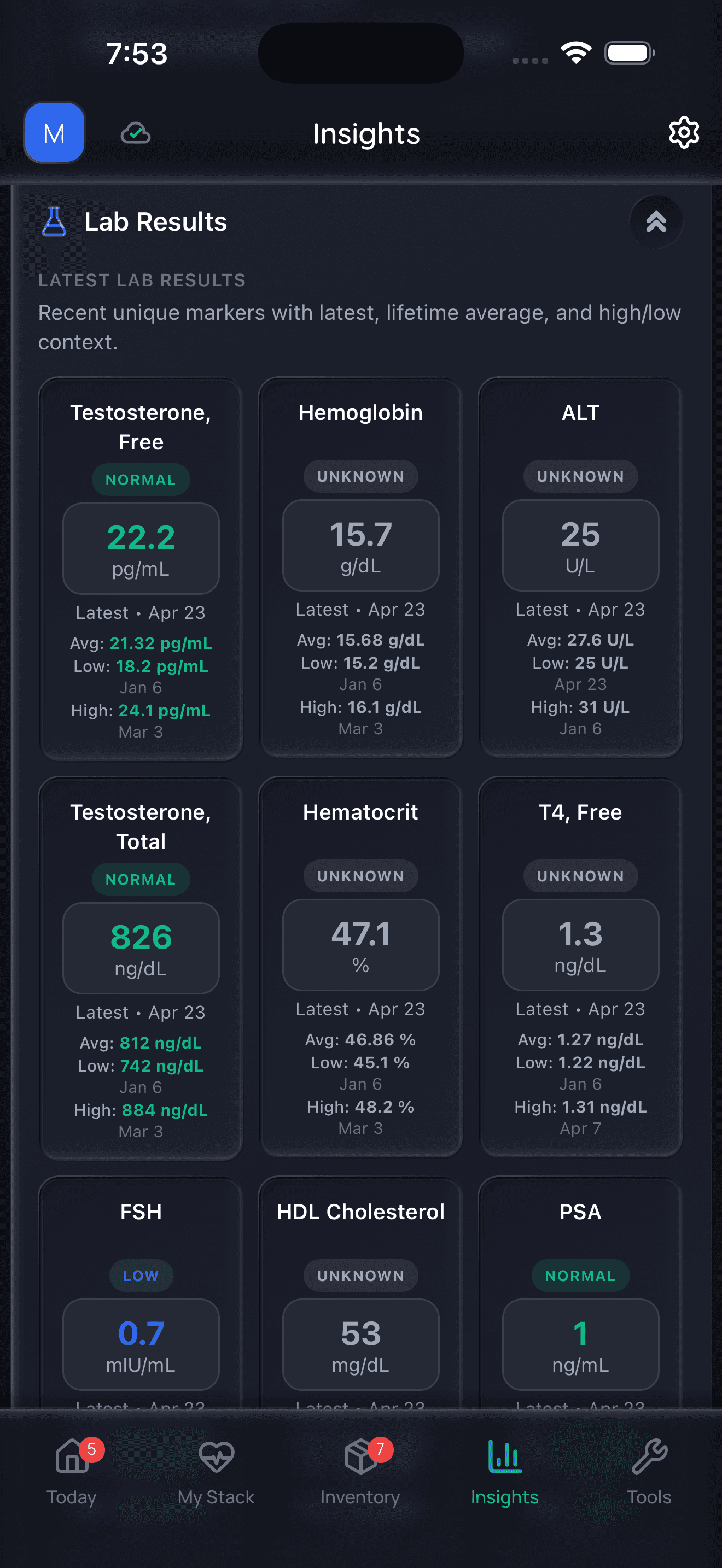
Doserly organizes data; it does not diagnose or interpret labs for you.
Dosing & Usage Protocols
The Basics
5-HTP dosing varies significantly depending on the purpose. The most commonly cited range across sources is 50 to 300 mg per day, with many people starting at 50 to 100 mg and adjusting based on response. Some clinical studies have used higher doses (up to 900 mg/day for appetite suppression), but these doses are well above what most supplement users take.
For mood support, sources commonly reference 100 to 300 mg per day, often divided into two or three doses. For sleep, many users take a single dose of 100 to 200 mg approximately 30 to 60 minutes before bedtime. For appetite control, the clinical research used doses of 250 to 900 mg per day, typically divided with meals.
There is no established Upper Tolerable Intake Level for 5-HTP, so there is no official safety ceiling. However, higher doses increase the likelihood of side effects, particularly nausea and GI discomfort.
Experienced supplement users frequently recommend cycling 5-HTP (for example, taking it for 2 to 4 weeks and then taking a break for a week or more) rather than using it continuously. This approach is based on community experience suggesting that continuous long-term use may lead to diminishing benefits or worsening symptoms, possibly related to serotonin receptor adaptation.
The Science
No consensus dosing guidelines exist for 5-HTP, as it has not undergone the regulatory process that establishes standardized dosing. Published clinical data span a wide range:
Indication
Depression
- Dose Range
- 150-300 mg/day
- Duration
- 2-8 weeks
- Study Reference
- Jangid et al. 2013 [13]; various older trials [14]
Indication
Sleep quality
- Dose Range
- 100 mg/day
- Duration
- 12 weeks
- Study Reference
- RCT in older adults, 2024 [17]
Indication
Appetite/obesity
- Dose Range
- 750-900 mg/day
- Duration
- 5-12 weeks
- Study Reference
- Cangiano et al. 1992, 1998 [19][20]
Indication
Fibromyalgia
- Dose Range
- 300 mg/day (100 mg TID)
- Duration
- 30 days
- Study Reference
- Caruso et al. 1990 [24]
Indication
Panic disorder
- Dose Range
- 200 mg (acute)
- Duration
- Single dose
- Study Reference
- Schruers et al. 2002 [7]
Formulation considerations: Jacobsen et al. (2016) argued that the poor pharmacokinetics of standard immediate-release 5-HTP (rapid absorption and elimination) limit its clinical utility and that a slow-release formulation would substantially enhance its therapeutic potential [5]. Community users echo this sentiment, with time-release formulations frequently preferred for sustained effects.
Cofactor recommendations from the literature: Vitamin B6 (as pyridoxal-5-phosphate) is a required cofactor for AADC, the enzyme that converts 5-HTP to serotonin. Magnesium supports upstream tryptophan hydroxylase activity [2][3].
Getting the dose right matters more than most people realize. Too little may be ineffective, too much wastes money or introduces risk, and inconsistency undermines both. Doserly tracks every dose you take, across every form, giving you a clear record of what you're actually consuming versus what you planned.
The app helps you compare RDA recommendations against therapeutic ranges discussed in the research, so you can see exactly where your intake falls. If you switch forms, say from a standard capsule to a liposomal liquid, Doserly adjusts your tracking to account for different bioavailabilities. Pair that with smart reminders that keep your timing consistent, and the precision that makes a real difference in outcomes becomes effortless.
Turn symptom and safety notes into a clearer timeline.
Doserly helps you log doses, symptoms, and safety observations side by side so patterns are easier to discuss with a qualified clinician.
Pattern view
Logs and observations

Pattern visibility is informational and should be reviewed with a clinician.
What to Expect (Timeline)
Weeks 1-2: Many users report noticing initial effects relatively quickly, often within the first few days to two weeks. Sleep improvements tend to appear first: faster sleep onset, more vivid dreams, and a sense of sleeping more deeply. Some people notice a subtle mood lift during this period. GI side effects (primarily nausea) are most common in the first few days and often diminish with continued use or by taking 5-HTP with food.
Weeks 3-4: Mood and anxiety improvements become more noticeable for many users during this window. One community report described near-complete resolution of anxiety by the 4-week mark. Appetite effects, if present, typically become apparent during this period as well. The initial "honeymoon" intensity of mood improvement may begin to moderate, settling into a more consistent baseline elevation.
Weeks 5-8: For those who respond well, benefits tend to stabilize during this period. Sleep and mood improvements plateau at their new level. This is also the window where some longer-term users begin to report diminishing returns, which is one reason cycling is commonly recommended.
Beyond 8 weeks: Long-term patterns are highly individual. Some people report sustained benefits for months or even years (with one community user reporting 24 years of daily use at 100 mg). Others describe a pattern where benefits diminish and side effects emerge, particularly jitteriness, increased anxiety, or mood instability. The community consensus favors periodic cycling (2-4 weeks on, 1 week off) for sustained long-term use.
Important note: The timeline above is based on commonly reported patterns rather than controlled clinical data on onset kinetics. Individual responses vary considerably based on baseline serotonin status, genetics, concurrent medications, and lifestyle factors.
Timelines in the research give you a general idea of when to expect results, but your body has its own schedule. Doserly tracks your progress against those benchmarks, letting you see whether your experience aligns with typical response curves or whether something in your protocol might need adjusting.
By logging biomarkers and subjective outcomes alongside your supplement intake, you build a personal timeline that shows exactly when changes started appearing and how they've progressed. The app's trend analysis highlights inflection points, weeks where things shifted for better or worse, so you have concrete data when deciding whether to continue, adjust your dose, or try a different form.
Capture changes while they are still fresh.
Log symptoms, energy, sleep, mood, and other observations alongside protocol events so patterns do not live only in memory.
Trend view
Symptom timeline
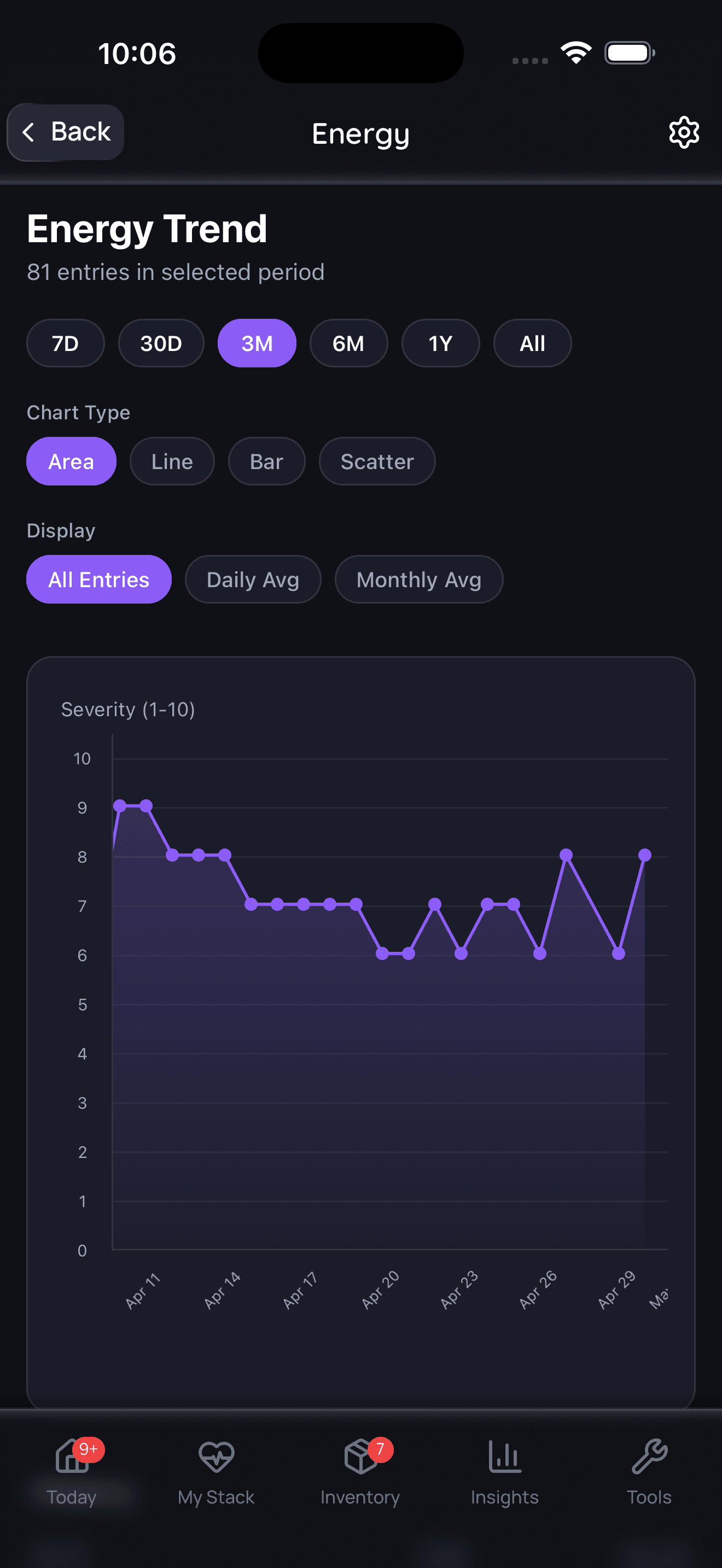
Symptom tracking is informational and should be interpreted with a qualified clinician.
Interactions & Compatibility
Synergistic
- Vitamin B6 (P5P): Required cofactor for the AADC enzyme that converts 5-HTP to serotonin. Ensuring adequate B6 status may improve the efficiency of 5-HTP conversion.
- Magnesium: Supports tryptophan hydroxylase activity upstream and has complementary effects on sleep quality and anxiety. Frequently stacked with 5-HTP by community users.
- L-Tyrosine: Often recommended alongside 5-HTP for longer-term use to prevent potential catecholamine (dopamine, norepinephrine) depletion. Community users frequently recommend a 1:1 ratio of tryptophan or 5-HTP to tyrosine.
- Melatonin: Some users combine 5-HTP with low-dose melatonin for sleep. The rationale is that 5-HTP increases serotonin (melatonin's precursor) while melatonin provides a direct sleep signal. Monitor for excessive sedation.
- GABA: Sometimes stacked for combined sleep and anxiety support. Works through a separate neurotransmitter pathway (GABAergic vs. serotonergic).
- EGCG (Green Tea Extract): Community-recommended co-supplement intended to inhibit peripheral AADC and reduce peripheral serotonin production, directing more 5-HTP toward central conversion. Clinical validation of this strategy is limited.
Caution / Avoid
- SSRIs (Fluoxetine, Sertraline, Paroxetine, Citalopram, Escitalopram): Do NOT combine with 5-HTP without direct medical supervision. Both increase serotonin levels through different mechanisms, creating a significant risk of serotonin syndrome, a potentially life-threatening condition [2][3].
- SNRIs (Venlafaxine, Duloxetine): Same serotonin syndrome risk as SSRIs. Avoid combination without medical supervision.
- MAOIs (Tranylcypromine, Phenelzine, Selegiline): High risk of serotonin syndrome and documented case of mania induction when combined with 5-HTP [30].
- Tricyclic Antidepressants (Amitriptyline, Nortriptyline): Theoretical serotonin syndrome risk due to serotonin reuptake inhibition properties.
- Linezolid (Zyvox): An antibiotic with MAOI properties. Documented case report of serotonin syndrome when combined with 5-HTP [29].
- Carbidopa (Lodosyn): Case report of scleroderma-like illness with combination therapy [12]. Despite the theoretical rationale for reducing peripheral 5-HTP conversion, this combination has documented adverse effects.
- St. John's Wort: Affects serotonin levels through multiple mechanisms. Combining with 5-HTP increases the risk of excessive serotonin activity [2].
- SAMe: May also affect serotonin levels. The combination should be avoided to reduce the risk of serotonin excess [2].
- Tramadol and other serotonergic pain medications: Can increase serotonin activity and should not be combined with 5-HTP without medical oversight.
- Triptans (Sumatriptan, etc.): Serotonin receptor agonists used for migraines. Theoretical interaction risk with 5-HTP.
Lab Test Interaction: 5-HTP increases urinary 5-HIAA excretion and serum chromogranin A levels. This can cause false-positive results in the 5-HIAA urine test used to diagnose and monitor carcinoid tumors. Inform your healthcare provider if you are taking 5-HTP before undergoing these tests [32][33].
How to Take / Administration Guide
Recommended forms: Standard immediate-release capsules are the most widely available. Time-release tablets (Natrol is a commonly cited brand in community discussions, though Doserly does not endorse specific brands) may provide more sustained effects due to 5-HTP's short half-life. Sublingual sprays derived from Griffonia simplicifolia extract have been studied for appetite control.
Timing considerations:
- For sleep: Many sources suggest taking 5-HTP 30 to 60 minutes before bedtime
- For mood: Divided doses (e.g., 50-100 mg two to three times daily) are common in the research literature
- For appetite: Taking with meals is most practical, as 5-HTP absorption is not affected by food, and food may reduce GI side effects
Stacking guidance:
- If combining with L-tyrosine (recommended for longer-term use), many community users take tyrosine in the morning and 5-HTP in the evening to align with their respective effects on alertness and sleep
- Vitamin B6 (as P5P) and magnesium can be taken alongside 5-HTP to support the conversion pathway
- EGCG (green tea extract) is suggested by community users to take alongside 5-HTP to reduce peripheral serotonin conversion, though clinical validation is limited
Cycling guidance: Many experienced users and community sources recommend cycling 5-HTP rather than taking it indefinitely. Common cycling patterns include:
- 2-4 weeks on, 1 week off
- Weekdays on, weekends off
- As-needed use for acute episodes rather than daily maintenance
There is no clinical consensus on optimal cycling protocols. The cycling recommendation stems primarily from community experience with diminishing benefits during extended continuous use.
Choosing a Quality Product
Third-party certifications to look for: USP Verified, NSF Certified for Sport, or ConsumerLab approved products provide independent verification of identity, purity, and potency. GMP (Good Manufacturing Practice) certification is a minimum baseline.
Form considerations: 5-HTP is 5-HTP, regardless of the manufacturer. Unlike minerals (where oxide vs. glycinate matters enormously) or vitamins (where methylated vs. synthetic forms differ), the molecule itself does not vary. The differences between products are:
- Delivery mechanism: Immediate-release capsule vs. time-release tablet vs. sublingual spray
- Source material quality: Griffonia simplicifolia extract purity and 5-HTP concentration
- Excipients and fillers: Check for unnecessary additives, especially if you have allergen sensitivities
Red flags:
- Products making therapeutic claims ("cures depression," "treats insomnia")
- Absence of third-party testing or Certificate of Analysis (COA)
- Proprietary blends that hide the actual 5-HTP dose
- Extremely low pricing that may indicate poor source material quality
- Products that combine 5-HTP with serotonergic herbs (like St. John's Wort) in the same formulation, which could increase serotonin syndrome risk
Historical purity concern: In the 1990s, certain 5-HTP products were found to contain a contaminant known as "Peak X" linked to eosinophilia-myalgia syndrome. Modern manufacturing standards and third-party testing have largely addressed this concern, but it reinforces the importance of purchasing from transparent, tested manufacturers [27][28].
Storage & Handling
5-HTP supplements in capsule or tablet form should be stored in a cool, dry place at room temperature, away from direct sunlight and moisture. No refrigeration is required. Keep containers tightly sealed. Typical shelf life is 2 to 3 years when stored properly; check the expiration date on your specific product.
Sublingual spray formulations may have different storage requirements specified by the manufacturer. Follow product-specific instructions.
Lifestyle & Supporting Factors
Dietary sources of tryptophan: While you cannot get 5-HTP directly from food, you can support your body's natural 5-HTP production by eating foods rich in L-tryptophan, the precursor amino acid. Good sources include turkey, chicken, eggs, cheese, pumpkin seeds, spinach, milk, bananas, and nuts. However, dietary tryptophan faces competition from other amino acids for brain uptake, which is part of why supplemental 5-HTP bypasses this bottleneck.
Nutrient cofactors: Vitamin B6 (particularly the active P5P form), magnesium, and iron all support the tryptophan-to-serotonin conversion pathway. Iron is specifically needed for the tryptophan hydroxylase enzyme that converts tryptophan to 5-HTP. If 5-HTP is effective but tryptophan is not, some sources suggest this may indicate suboptimal iron status.
Exercise: Regular physical activity, particularly aerobic exercise and resistance training, independently increases serotonin production and release. Community users often describe exercise as a complementary strategy alongside 5-HTP supplementation.
Sleep hygiene: If using 5-HTP for sleep, combining it with good sleep practices (consistent bedtime, reduced blue light exposure, cool bedroom environment, limiting caffeine after early afternoon) is likely to produce better results than supplementation alone.
Stress management: Chronic stress suppresses tryptophan hydroxylase activity through cortisol-mediated pathways, potentially reducing endogenous 5-HTP production. Stress management practices (meditation, breathwork, nature exposure) may complement 5-HTP's effects.
Signs that you may benefit from 5-HTP: Low mood, difficulty falling asleep, carbohydrate cravings, anxiety, and low stress tolerance can all be associated with suboptimal serotonin levels. However, these symptoms have many possible causes, and serotonin testing is not straightforward (serum serotonin does not reliably reflect brain serotonin levels). Consultation with a healthcare professional is advisable before attributing these symptoms to serotonin deficiency.
Regulatory Status & Standards
United States (FDA): 5-HTP is regulated as a dietary supplement under DSHEA. It is not an FDA-approved drug. No New Dietary Ingredient (NDI) notification is required for 5-HTP as it was marketed prior to the 1994 DSHEA cutoff date. The FDA has not established GRAS (Generally Recognized as Safe) status specifically for 5-HTP. No drug product containing 5-HTP as an active pharmaceutical ingredient has ever been approved by the FDA [5].
European Union: 5-HTP is available as a food supplement in most EU member states, though regulations vary by country. Some EU countries restrict the maximum dose per serving.
Canada (Health Canada): 5-HTP is available as a Natural Health Product (NHP). Products require a Natural Product Number (NPN) before sale.
Australia (TGA): 5-HTP products are regulated as complementary medicines under the Listed Medicines program.
Athlete & Sports Regulatory Status:
5-HTP is not on the current WADA Prohibited List (categories S0-S9, M1-M3, P1). It is not classified as a prohibited substance by any major anti-doping organization (USADA, UKAD, Sport Integrity Canada, Sport Integrity Australia, NADA Germany).
5-HTP is not on the NCAA banned substance list and does not appear to be restricted by NFL, NBA, MLB, NHL, or MLS substance policies.
Athletes seeking additional assurance can verify the status of specific 5-HTP products through GlobalDRO (globaldro.com). Products with NSF Certified for Sport, Informed Sport (sport.wetestyoutrust.com), Cologne List (koelnerliste.com), or BSCG (bscg.org) certification provide an additional layer of purity verification and banned substance testing.
Regulatory status and prohibited substance classifications change frequently. Athletes should always verify the current status of any supplement with their sport's governing body, their national anti-doping agency, and a qualified sports medicine professional before use. Third-party certification (Informed Sport, NSF Certified for Sport) reduces but does not eliminate the risk of contamination with prohibited substances.
Frequently Asked Questions
Is 5-HTP safe to take every day?
Based on available data, short-term daily use (up to 12 weeks at 100 mg/day) has been studied in controlled trials without significant safety concerns. However, long-term daily use lacks robust clinical evaluation. Many experienced users recommend cycling (2-4 weeks on, 1 week off) rather than indefinite daily use, based on community observations of diminishing benefits with continuous use. Consult a healthcare provider for guidance on long-term supplementation.
Can I take 5-HTP with my antidepressant?
This is a critical safety question. 5-HTP should not be combined with SSRIs, SNRIs, MAOIs, or tricyclic antidepressants without direct supervision from a prescribing physician. The combination can lead to excessive serotonin levels and serotonin syndrome, a potentially life-threatening condition.
When is the best time to take 5-HTP?
This depends on the primary goal. For sleep support, many sources suggest 30 to 60 minutes before bedtime. For mood support, divided doses throughout the day (with or without food) are commonly referenced in the literature. 5-HTP absorption is not significantly affected by food timing.
Why does 5-HTP give me vivid dreams?
Vivid or lucid dreams are one of the most commonly reported effects of 5-HTP supplementation. The likely mechanism involves increased serotonin (and downstream melatonin) influencing REM sleep architecture. Increased REM sleep duration and intensity can produce more vivid, emotionally charged, or memorable dreams.
Should I take 5-HTP with green tea extract (EGCG)?
This combination is widely recommended in supplement communities. The rationale is that EGCG may inhibit peripheral AADC, reducing the conversion of 5-HTP to serotonin in the gut and periphery and directing more toward brain conversion. While the pharmacological reasoning is plausible, clinical studies specifically validating this strategy in humans are lacking.
Can 5-HTP help with weight loss?
Several controlled studies have found that 5-HTP supplementation at higher doses (250-900 mg/day) reduced caloric intake and increased satiety in overweight and obese subjects. However, the weight loss observed was modest and the studies were small. 5-HTP is not a weight loss drug; it may support appetite regulation as one component of a broader approach.
Why does 5-HTP work for me but L-tryptophan does not?
5-HTP bypasses the rate-limiting tryptophan hydroxylase enzyme, which can be impaired by various factors including B6 deficiency, magnesium deficiency, iron deficiency, chronic stress, and insulin resistance. If the enzymatic conversion of tryptophan to 5-HTP is your bottleneck, then providing pre-formed 5-HTP directly addresses the issue. Additionally, tryptophan can be diverted into other metabolic pathways (niacin production, protein synthesis, kynurenine pathway) while 5-HTP is committed exclusively to serotonin production.
Is 5-HTP addictive?
5-HTP is not considered addictive in the classical sense (it does not produce euphoria or drug-seeking behavior). However, some users report a rebound effect or worsening of mood symptoms when discontinuing after extended use, which may reflect a return to pre-supplementation serotonin levels rather than pharmacological dependence.
How much serotonin is too much?
Serotonin syndrome occurs when serotonin levels become dangerously high, typically from combining multiple serotonergic agents. At typical supplemental doses of 5-HTP alone (50-300 mg/day), serotonin syndrome is not expected in otherwise healthy individuals. The risk increases substantially when 5-HTP is combined with prescription serotonergic medications.
Can 5-HTP trigger mania in people with bipolar disorder?
There is a documented case report of 5-HTP triggering a manic episode when combined with an MAOI, even in a patient without personal or family history of bipolar disorder. People with known or suspected bipolar disorder should exercise particular caution with any serotonergic supplement, including 5-HTP, and consult their psychiatrist before use.
Myth vs. Fact
Myth: 5-HTP is a natural, completely safe alternative to antidepressants with no side effects.
Fact: While 5-HTP is naturally derived and available without a prescription, it is not without risks. Common side effects include nausea, GI disturbances, and vivid dreams. More serious risks include serotonin syndrome when combined with prescription serotonergic medications, and there are documented case reports of mania induction and scleroderma-like illness in specific drug combination contexts [2][12][29][30].
Myth: 5-HTP is the same thing as tryptophan.
Fact: 5-HTP and L-tryptophan are different molecules at different points in the same metabolic pathway. Tryptophan is an essential amino acid found in food that must be converted to 5-HTP before becoming serotonin. 5-HTP bypasses this conversion step. Tryptophan can also be diverted into other metabolic pathways (niacin production, protein synthesis), while 5-HTP is exclusively committed to serotonin production [4].
Myth: Taking more 5-HTP will always make you feel better.
Fact: The relationship between dose and benefit is not linear. Higher doses increase the risk of side effects, particularly nausea and GI discomfort, without necessarily providing proportional benefit. Some community users report that lower doses (50-100 mg) are more effective for them than higher doses, and clinical studies have used widely varying doses with no clear dose-response curve established [14].
Myth: 5-HTP is proven to cure depression.
Fact: While preliminary evidence suggests 5-HTP may reduce depressive symptoms, the overall evidence base is limited by small sample sizes, older study designs, and high methodological variability. The meta-analytic effect size is large but the study quality is weak. 5-HTP should not be considered a proven or first-line treatment for clinical depression [14].
Myth: You can safely take 5-HTP with any medication.
Fact: 5-HTP has significant and potentially dangerous interactions with a wide range of medications, particularly serotonergic drugs including SSRIs, SNRIs, MAOIs, tricyclic antidepressants, certain antibiotics (linezolid), and some pain medications (tramadol, triptans). The risk of serotonin syndrome, a medical emergency, is the primary concern [2][3][29].
Myth: 5-HTP should not be confused with serotonin, but they are essentially the same.
Fact: 5-HTP (5-hydroxytryptophan) and 5-HT (5-hydroxytryptamine, serotonin) are distinct compounds. 5-HTP is the precursor that crosses the blood-brain barrier; serotonin cannot cross the BBB. This distinction is critical: supplementing with serotonin directly would not produce central nervous system effects, which is why 5-HTP supplementation is the strategy used instead [2].
Myth: Long-term 5-HTP use always depletes dopamine.
Fact: The dopamine depletion theory, while widely discussed in supplement communities, lacks robust clinical validation in humans at typical supplement doses. The concern is based on the fact that the same enzyme (AADC) converts both 5-HTP to serotonin and L-DOPA to dopamine, creating potential competition. Some practitioners recommend co-supplementation with L-tyrosine as a precaution. Whether this is necessary at standard supplement doses remains unproven [31].
Sources & References
Clinical Trials & RCTs
[7] Schruers K, van Diest R, Overbeek T, et al. Acute L-5-hydroxytryptophan administration inhibits carbon dioxide-induced panic in panic disorder patients. Psychiatry Res. 2002;113(3):237-243. https://pubmed.ncbi.nlm.nih.gov/12559282/
[8] Kahn RS, Westenberg HG, Verhoeven WM, et al. Effect of a serotonin precursor and uptake inhibitor in anxiety disorders; a double-blind comparison of 5-hydroxytryptophan, clomipramine and placebo. Int Clin Psychopharmacol. 1987;2(1):33-45. https://pubmed.ncbi.nlm.nih.gov/3312397/
[13] Jangid P, Malik P, Singh P, et al. Comparative study of efficacy of l-5-hydroxytryptophan and fluoxetine in patients presenting with first depressive episode. Asian J Psychiatr. 2013;6(1):29-34. https://pubmed.ncbi.nlm.nih.gov/23380314/
[17] The impact of 5-hydroxytryptophan supplementation on sleep quality and gut microbiota composition in older adults: A randomized controlled trial. Clin Nutr. 2024. https://pubmed.ncbi.nlm.nih.gov/38309227/ ClinicalTrials.gov: NCT04078724
[19] Cangiano C, Laviano A, Del Ben M, et al. Effects of oral 5-hydroxy-tryptophan on energy intake and macronutrient selection in non-insulin dependent diabetic patients. Int J Obes Relat Metab Disord. 1998;22(7):648-654. https://pubmed.ncbi.nlm.nih.gov/9705024/
[20] Cangiano C, Ceci F, Cascino A, et al. Eating behavior and adherence to dietary prescriptions in obese adult subjects treated with 5-hydroxytryptophan. Am J Clin Nutr. 1992;56(5):863-867. https://pubmed.ncbi.nlm.nih.gov/1384305/
[21] Ceci F, Cangiano C, Cairella M, et al. The effects of oral 5-hydroxytryptophan administration on feeding behavior in obese adult female subjects. J Neural Transm. 1989;76(2):109-117. https://pubmed.ncbi.nlm.nih.gov/2468734/
[24] Caruso I, Sarzi Puttini P, Cazzola M, et al. Double-blind study of 5-hydroxytryptophan versus placebo in the treatment of primary fibromyalgia syndrome. J Int Med Res. 1990;18(3):201-209. https://pubmed.ncbi.nlm.nih.gov/2193835/
[25] Ribeiro CA. L-5-Hydroxytryptophan in the prophylaxis of chronic tension-type headache: a double-blind, randomized, placebo-controlled study. Headache. 2000;40(6):451-456. https://pubmed.ncbi.nlm.nih.gov/10849039/
[26] Santucci M, Cortelli P, Rossi PG, et al. L-5-hydroxytryptophan versus placebo in childhood migraine prophylaxis: a double-blind crossover study. Cephalalgia. 1986;6(3):155-157. https://pubmed.ncbi.nlm.nih.gov/3533271/
Systematic Reviews & Meta-Analyses
[14] Javelle F, et al. Effects of 5-hydroxytryptophan on distinct types of depression: a systematic review and meta-analysis. Nutr Neurosci. 2020;23(10):757-766. https://pubmed.ncbi.nlm.nih.gov/31504850/ PROSPERO: CRD42018104415
Reviews & Pharmacology
[2] Turner EH, Loftis JM, Blackwell AD. Serotonin a la carte: supplementation with the serotonin precursor 5-hydroxytryptophan. Pharmacol Ther. 2006;109(3):325-338. https://pubmed.ncbi.nlm.nih.gov/16023217/
[3] Iovieno N, Dalton ED, Fava M, et al. Second-tier natural antidepressants: review and critique. J Affect Disord. 2011;130(3):343-357. https://pubmed.ncbi.nlm.nih.gov/20579741/
[4] Birdsall TC. 5-Hydroxytryptophan: a clinically-effective serotonin precursor. Altern Med Rev. 1998;3(4):271-280. https://pubmed.ncbi.nlm.nih.gov/9727088/
[5] Jacobsen JPR, Krystal AD, Krishnan KRR, et al. Adjunctive 5-Hydroxytryptophan Slow-Release for Treatment-Resistant Depression: Clinical and Preclinical Rationale. Trends Pharmacol Sci. 2016;37(11):933-944. https://pubmed.ncbi.nlm.nih.gov/27692695/
[6] 5-HTP crosses the blood-brain barrier and increases serotonin synthesis. Referenced across multiple sources including Turner et al. 2006 and Birdsall 1998.
[9] Lowe SL, Yeo KP, Teng L, et al. L-5-Hydroxytryptophan augments the neuroendocrine response to a SSRI. Psychoneuroendocrinology. 2006;31(4):473-484. https://pubmed.ncbi.nlm.nih.gov/16378695/
[10] Waclawiková B, Bullock A, Schwalbe M, et al. Gut bacteria-derived 5-hydroxyindole is a potent stimulant of intestinal motility via its action on L-type calcium channels. PLoS Biol. 2021;19(1):e3001070. https://pubmed.ncbi.nlm.nih.gov/33434190/
[11] Maffei ME. 5-Hydroxytryptophan (5-HTP): Natural Occurrence, Analysis, Biosynthesis, Biotechnology, Physiology and Toxicology. Int J Mol Sci. 2020;22(1):181. https://pubmed.ncbi.nlm.nih.gov/33375030/
[15] Nolen WA, et al. L-5HTP in depression resistant to re-uptake inhibitors. An open comparative study with tranylcypromine. Br J Psychiatry. 1985;147:16-22. https://pubmed.ncbi.nlm.nih.gov/3931094/
[16] Nolen WA, et al. Treatment strategy in depression. II. MAO inhibitors in depression resistant to cyclic antidepressants. Acta Psychiatr Scand. 1988;78(6):676-683. https://pubmed.ncbi.nlm.nih.gov/3232536/
[18] Bruni O, Ferri R, Miano S, et al. L-5-Hydroxytryptophan treatment of sleep terrors in children. Eur J Pediatr. 2004;163(7):402-407. https://pubmed.ncbi.nlm.nih.gov/15148571/
[22] Rondanelli M, Klersy C, Iadarola P, et al. Satiety and amino-acid profile in overweight women after a new treatment using a natural plant extract sublingual spray formulation. Int J Obes. 2009;33(10):1174-1182. https://pubmed.ncbi.nlm.nih.gov/19667285/
[23] Rondanelli M, Opizzi A, Faliva M, et al. Relationship between the absorption of 5-hydroxytryptophan from Griffonia simplicifolia extract and satiety in overweight females. Eat Weight Disord. 2012;17(1):e22-28. https://pubmed.ncbi.nlm.nih.gov/22142813/
Government/Institutional Sources
[1] Lemaire PA, Adosraku RK. An HPLC method for the direct assay of the serotonin precursor, 5-hydroxytrophan, in seeds of Griffonia simplicifolia. Phytochem Anal. 2002;13(6):333-337. https://pubmed.ncbi.nlm.nih.gov/12494719/
Safety & Adverse Events
[12] Sternberg EM, Van Woert MH, Young SN, et al. Development of a scleroderma-like illness during therapy with L-5-hydroxytryptophan and carbidopa. N Engl J Med. 1980;303(14):782-787. https://pubmed.ncbi.nlm.nih.gov/6997735/
[27] Klarskov K, Johnson KL, Benson LM, et al. Eosinophilia-myalgia syndrome case-associated contaminants in commercially available 5-hydroxytryptophan. Adv Exp Med Biol. 1999;467:461-468. https://pubmed.ncbi.nlm.nih.gov/10721089/
[28] Michelson D, Page SW, Casey R, et al. An eosinophilia-myalgia syndrome related disorder associated with exposure to L-5-hydroxytryptophan. J Rheumatol. 1994;21(12):2261-2265. https://pubmed.ncbi.nlm.nih.gov/7699627/
[29] Ostabal Artigas MI. Serotoninergic syndrome due to interaction between linezolid and 5-hydroxytryptophan. Med Clin (Barc). 2015;145(12):e37-38. https://pubmed.ncbi.nlm.nih.gov/26371576/
[30] Pardo JV. Mania following addition of hydroxytryptophan to monoamine oxidase inhibitor. Gen Hosp Psychiatry. 2012;34(1):102.e113-104. https://pubmed.ncbi.nlm.nih.gov/22055551/
[31] Hinz M, Stein A, Uncini T. 5-HTP efficacy and contraindications. Neuropsychiatr Dis Treat. 2012;8:323-328. https://pubmed.ncbi.nlm.nih.gov/22888252/ (Note: This paper has an Expression of Concern and its claims about catecholamine depletion are debated.)
[32] Joy T, Walsh G, Tokmakejian S, et al. Increase of urinary 5-hydroxyindoleacetic acid excretion but not serum chromogranin A following over-the-counter 5-hydroxytryptophan intake. Can J Gastroenterol. 2008;22(1):49-53. https://pubmed.ncbi.nlm.nih.gov/18209781/
[33] Hallin ML, Mahmoud K, Viswanath A, et al. 'Sweet Dreams', 'Happy Days' and elevated 24-h urine 5-hydroxyindoleacetic acid excretion. Ann Clin Biochem. 2013;50(Pt 1):80-82. https://pubmed.ncbi.nlm.nih.gov/23184965/
Related Supplement Guides
Same Category
- L-Tryptophan — The amino acid precursor that 5-HTP is derived from
- SAMe — Another supplement studied for mood support through different mechanisms
Common Stacks / Pairings
- Magnesium — Cofactor for tryptophan hydroxylase; commonly stacked for sleep and mood
- Vitamin B6 — Required cofactor for 5-HTP to serotonin conversion (AADC)
- L-Tyrosine — Recommended companion for longer-term 5-HTP use to support dopamine levels
- Melatonin — Downstream product of serotonin; sometimes combined for sleep
- GABA — Complementary neurotransmitter pathway for anxiety and sleep
Related Health Goal
- Ashwagandha — Adaptogen studied for anxiety and stress tolerance
- St. John's Wort — Herbal serotonergic mood support (do NOT combine with 5-HTP)
- Valerian — Herbal sleep support through GABAergic mechanisms
- Glycine — Amino acid studied for sleep quality improvement
- Inositol — Studied for anxiety and mood through different mechanisms