
L-Tryptophan: The Complete Supplement Guide
On this page
Quick Reference Card
Attribute
Common Name
- Detail
- L-Tryptophan
Attribute
Other Names / Aliases
- Detail
- Tryptophan, Trp, W, (S)-2-Amino-3-(1H-indol-3-yl)propanoic acid
Attribute
Category
- Detail
- Essential Amino Acid
Attribute
Primary Forms & Variants
- Detail
- L-Tryptophan free base (most common supplement form); L-Tryptophan hydrochloride
Attribute
Typical Dose Range
- Detail
- 250-2,000 mg per day for supplementation (sleep: 1,000-2,000 mg; mood: 500-1,000 mg)
Attribute
RDA / AI / UL
- Detail
- No formal RDA, AI, or UL established. WHO estimated average requirement: 4 mg/kg/day. Typical dietary intake: 900-1,000 mg/day. Provisional NOAEL: ~4,500 mg/day from supplementation
Attribute
Common Delivery Forms
- Detail
- Capsules, tablets, powder
Attribute
Best Taken With / Without Food
- Detail
- Best taken on an empty stomach or with a small carbohydrate snack (not with protein-rich foods). Carbohydrates enhance brain uptake by reducing competing amino acids.
Attribute
Key Cofactors
- Detail
- Vitamin B6 (P-5-P form preferred; required for conversion to serotonin); Iron (supports niacin conversion); Riboflavin/B2 (supports niacin conversion); Magnesium (supports enzymatic processes)
Attribute
Storage Notes
- Detail
- Store in a cool, dry place away from direct sunlight and moisture. No refrigeration required.
Overview
The Basics
L-Tryptophan is one of the nine essential amino acids your body absolutely needs but cannot make on its own. You have to get it from food or supplements. Despite being the least abundant amino acid in the body, tryptophan punches well above its weight in terms of importance. It serves as the sole raw material your body uses to produce serotonin, the neurotransmitter most closely linked to mood, sleep, and emotional regulation. From serotonin, your body then produces melatonin, the hormone that governs your sleep-wake cycle [1][2].
First isolated from milk protein in the early 1900s, tryptophan has been the subject of intense scientific interest for over a century. Most people get enough tryptophan from a balanced diet that includes turkey, chicken, fish, eggs, dairy, nuts, and seeds. The reason people supplement with it is that the amount of tryptophan reaching the brain depends less on total dietary intake and more on a competitive race. Tryptophan competes with several other amino acids to cross the blood-brain barrier, and when those competitors are present in large amounts (as they are after a protein-rich meal), less tryptophan gets through [1].
Beyond serotonin and melatonin, tryptophan feeds into the kynurenine pathway, which produces compounds involved in immune function, neuroprotection, and the synthesis of niacin (vitamin B3). Roughly 90% of the tryptophan your body processes goes through this kynurenine route rather than toward serotonin, which is part of why the balance between these pathways is so important to overall health [1][3].
The Science
L-Tryptophan ((S)-2-amino-3-(1H-indol-3-yl)propanoic acid) is an indole-containing essential amino acid with the lowest tissue concentration of all proteinogenic amino acids. It was first isolated by Hopkins and Cole from casein hydrolysate in 1901 and its structure was elucidated by Ellinger and Flamand shortly thereafter [1].
Tryptophan participates in three major metabolic pathways: protein synthesis (its principal role), kynurenine synthesis (approximately 90% of tryptophan catabolism), and serotonin synthesis (approximately 3% of total tryptophan, with only ~1% contributing to central nervous system serotonin) [1][3]. The kynurenine pathway, catalyzed initially by indoleamine 2,3-dioxygenase (IDO) in peripheral tissues and tryptophan 2,3-dioxygenase (TDO) in the liver, produces metabolites including kynurenic acid (an NMDA receptor antagonist with neuroprotective properties), quinolinic acid (an NMDA receptor agonist with potential neurotoxic effects), and NAD+/NADP (essential redox coenzymes) [1][3][4].
Tryptophan also serves as the precursor for tryptamine (a trace amine neuromodulator of serotonin) and, through the serotonin pathway, melatonin (N-acetyl-5-methoxytryptamine), which regulates circadian rhythms and has immunomodulatory functions [1][5]. The conversion of dietary tryptophan to niacin occurs via the kynurenine-quinolinic acid pathway at an efficiency of approximately 60:1 (60 mg tryptophan per 1 mg niacin) [1].
Gut microbiota-mediated tryptophan metabolism through the indole pathway represents a third major metabolic route, producing indole derivatives that activate aryl hydrocarbon receptors (AhR) and influence gut-brain axis signaling, intestinal barrier function, and immune homeostasis [3][4].
Chemical & Nutritional Identity
Property
Chemical Name
- Value
- (S)-2-Amino-3-(1H-indol-3-yl)propanoic acid
Property
Synonyms
- Value
- L-Tryptophan, Trp, W, (S)-alpha-Amino-1H-indole-3-propanoic acid
Property
Molecular Formula
- Value
- C₁₁H₁₂N₂O₂
Property
Molecular Weight
- Value
- 204.23 g/mol
Property
CAS Number
- Value
- 73-22-3
Property
PubChem CID
- Value
- 6305
Property
Category
- Value
- Essential amino acid (indole-containing)
Property
Natural Stereoisomer
- Value
- L-Tryptophan (biologically active; only the L-isomer crosses the blood-brain barrier and participates in protein synthesis)
Property
Isoelectric Point
- Value
- 5.89
Property
pKa Values
- Value
- 2.38 (carboxyl), 9.39 (amino)
Property
RDA / AI / UL
- Value
- Not formally established by IOM. WHO recommended intake: 4 mg/kg/day for adults (~280 mg/day for 70 kg adult). Estimated daily allowance range: 250-425 mg/day
L-Tryptophan is the only amino acid containing an indole ring, which gives it unique spectroscopic properties (UV absorption at 280 nm, intrinsic fluorescence) and biochemical reactivity. It is also the rarest of the 20 standard amino acids in human proteins, making it a potential rate-limiting factor during protein synthesis [1].
The primary supplement form is L-Tryptophan free base. Unlike many other amino acid supplements that come in multiple salt forms with different bioavailability profiles, L-Tryptophan is typically available only as the free amino acid. The distinction between L-Tryptophan and its metabolite 5-HTP (5-hydroxytryptophan) is important: 5-HTP bypasses the rate-limiting tryptophan hydroxylase step and directly enters serotonin synthesis, which confers different dosing, timing, and safety considerations [1][6].
Mechanism of Action
The Basics
Tryptophan works in your body through several distinct routes, but the one that gets the most attention is serotonin production. When tryptophan crosses into your brain, an enzyme called tryptophan hydroxylase converts it to 5-HTP, and then a second enzyme quickly converts 5-HTP into serotonin. This two-step process is the only way your brain can make serotonin, which is why tryptophan availability directly influences how much serotonin your brain produces [1].
What makes this process unique is the bottleneck. The tryptophan hydroxylase enzyme is only about 50% occupied with tryptophan under normal conditions. This means that unlike most other neurotransmitter systems, adding more raw material (tryptophan) to the system can actually increase the rate of production. It is one of the few cases in brain chemistry where you can meaningfully influence neurotransmitter levels through a dietary precursor [1].
Tryptophan also feeds into melatonin production. Your body converts serotonin into melatonin in the pineal gland, primarily during darkness. This is part of why tryptophan supplementation tends to affect both mood and sleep: it supplies the building blocks for both the daytime "feel good" signal (serotonin) and the nighttime "time to sleep" signal (melatonin) [1][5].
The other major pathway, called the kynurenine pathway, handles about 90% of the tryptophan your body processes. This pathway produces a mix of protective and potentially harmful compounds in the brain, and its balance is influenced by inflammation, stress, and immune activation. When your immune system is activated, more tryptophan gets diverted toward kynurenine and less is available for serotonin, which is one proposed mechanism linking chronic inflammation to mood disturbances [3][4].
The Science
L-Tryptophan is the sole precursor of central serotonin (5-hydroxytryptamine, 5-HT) synthesis, which occurs via a two-step enzymatic process [1][7]:
- Rate-limiting step: Tryptophan hydroxylase (TPH; EC 1.14.16.4) converts L-tryptophan to 5-hydroxytryptophan (5-HTP). TPH exists in two isoforms: TPH1 (peripheral tissues, primarily enterochromaffin cells of the gut) and TPH2 (CNS raphe nuclei). TPH requires molecular oxygen, iron (Fe²⁺), and tetrahydrobiopterin (BH4) as cofactors [1][7].
- Rapid conversion: Aromatic L-amino acid decarboxylase (AADC; EC 4.1.1.28) converts 5-HTP to serotonin, requiring pyridoxal-5'-phosphate (P-5-P, the active form of vitamin B6) as a cofactor [1][6].
The critical pharmacological feature of this pathway is that TPH2 is normally only ~50% saturated with its tryptophan substrate. This means that changes in brain tryptophan concentration directly modulate the rate of serotonin synthesis, a relationship that has been confirmed by positron emission tomography (PET) imaging showing reductions in serotonin synthesis across multiple brain regions following tryptophan depletion [1][8].
Serotonin is subsequently N-acetylated by arylalkylamine N-acetyltransferase (AANAT) and then O-methylated by hydroxyindole O-methyltransferase (HIOMT) to produce melatonin. This conversion is regulated by the suprachiasmatic nucleus in response to light-dark cycles [1][5].
The kynurenine pathway, initiated by IDO (induced by pro-inflammatory cytokines including IFN-γ) and TDO (regulated by cortisol and tryptophan concentration), produces metabolites with opposing neurological effects. Kynurenic acid acts as an antagonist at NMDA, α7 nicotinic acetylcholine, and GPR35 receptors, conferring neuroprotective properties. Quinolinic acid acts as an NMDA receptor agonist and, at elevated concentrations, promotes excitotoxicity and oxidative stress [1][3][4].
Additional demonstrated mechanisms include effects on dopamine, norepinephrine, and beta-endorphin levels following oral tryptophan loading [1], and modulation of the endocrine system including cortisol, prolactin, and growth hormone secretion [1].
Absorption & Bioavailability
The Basics
When you take a tryptophan supplement, your small intestine absorbs it and releases it into the bloodstream. From there, tryptophan faces a challenge that most other supplements do not: it has to compete with five other amino acids (isoleucine, leucine, phenylalanine, tyrosine, and valine) for the same transport system to cross the blood-brain barrier. This competition is the single most important factor determining how much tryptophan actually reaches your brain [1].
This competitive dynamic has a practical consequence. If you take tryptophan with a protein-rich meal, the flood of competing amino acids from the protein will crowd tryptophan out and reduce how much gets into the brain. On the other hand, a small carbohydrate snack triggers an insulin response that pulls competing amino acids into muscle tissue, giving tryptophan a relative advantage for brain entry. This is why most experienced users take tryptophan on an empty stomach or with a light carbohydrate snack rather than alongside a steak dinner [1].
In the bloodstream, approximately 75% to 85% of tryptophan is bound to a protein called albumin. While bound tryptophan might seem unavailable, tryptophan actually has a stronger attraction to the blood-brain barrier transporter than to albumin, so some of the bound fraction can still dissociate and cross over. Researchers estimate that up to 75% of albumin-bound tryptophan may eventually become available for brain entry [1].
Alcohol is worth mentioning here: even moderate drinking reduces the tryptophan-to-competitor ratio by 10% to 25% within a couple of hours, which can impair serotonin synthesis. This effect may be tolerable for most people but could be significant for anyone already operating on the edge of serotonin adequacy [1].
The Science
L-Tryptophan absorption occurs in the small intestine via active transport and is generally efficient from the gastrointestinal tract. Once absorbed, approximately 75-85% (some estimates up to 95%) of circulating tryptophan is bound to serum albumin, with the remaining free fraction available for tissue uptake [1].
Transport across the blood-brain barrier (BBB) occurs via the large neutral amino acid transporter (LAT1/SLC7A5), which is shared with other large neutral amino acids (LNAAs): isoleucine, leucine, phenylalanine, tyrosine, and valine. The LAT1 transporter operates near saturation at physiological amino acid concentrations, making it uniquely susceptible to competitive inhibition [1]. The bioavailability of tryptophan for brain serotonin synthesis is therefore best characterized by the tryptophan/competing amino acid (Trp/CAA) ratio rather than absolute tryptophan concentration [1][8].
Carbohydrate ingestion increases the Trp/CAA ratio by stimulating insulin-mediated uptake of branched-chain amino acids into muscle, thereby reducing competition at the BBB. Conversely, protein ingestion decreases the ratio by elevating plasma CAA concentrations. As little as 4% protein in a carbohydrate meal can prevent the insulin-mediated increase in Trp/CAA ratio [1].
Acute alcohol consumption reduces the Trp/CAA ratio by approximately 10% at 30 minutes and 20-25% at 1.5-2 hours post-ingestion, suggesting impaired brain serotonin synthesis under these conditions [1].
Maillard reactions during cooking (heating tryptophan with reducing sugars) can irreversibly bind dietary tryptophan, reducing its bioavailability from food. This is most relevant for populations consuming heavily processed grain-based diets [1].
Research & Clinical Evidence
Sleep Quality
Sleep improvement is the most well-supported use of tryptophan supplementation. A meta-analysis examining the available clinical data found that tryptophan supplementation can meaningfully reduce the time spent awake during the night (known as wake-after-sleep-onset, or WASO), particularly at doses of 1 gram or more. Earlier research also demonstrated that doses as low as 250 mg could increase deep sleep (Stage 4 sleep), though higher doses appear necessary for most people to notice meaningful changes in overall sleep quality [9][10].
The effect on sleep is thought to be indirect: tryptophan increases serotonin production, and serotonin in turn serves as the precursor for melatonin. Taking tryptophan in the evening essentially primes your body to produce more of the raw material it needs for the nighttime melatonin surge. Some practitioners and researchers have noted that tryptophan may work better for maintaining sleep (staying asleep) than for initiating sleep (falling asleep), though the evidence is not entirely consistent on this point [9].
A systematic review and meta-analysis (18 articles reviewed, 4 analyzed quantitatively) found that L-tryptophan supplementation significantly reduced WASO (SMD -1.08 [95% CI: -1.89 to -0.28]; meta-regression: -81.03 min/g, P = 0.017). Participants receiving ≥1 g demonstrated significantly shorter WASO than those receiving <1 g (28.91 vs. 56.55 min; P = 0.001). However, tryptophan supplementation did not significantly affect sleep onset latency or total sleep time in the pooled analysis [9].
Earlier dose-response studies in insomniac patients demonstrated that 250 mg L-tryptophan increased Stage 4 (slow-wave) sleep duration, while doses of 1 g or more reduced sleep onset latency [1][10]. In a study of five healthy volunteers, L-tryptophan supplementation increased average total sleep time [1].
Mood and Depression
Research on tryptophan for mood improvement shows promising but somewhat mixed results. A systematic review of 11 randomized controlled trials found that taking 0.14 to 3 grams of tryptophan daily, in addition to a normal diet, may improve mood and reduce anxiety in healthy adults. Four of these studies found significant reductions in negative feelings and increases in positive feelings [11].
For clinical depression, the picture is more complicated. Some trials have found tryptophan to be comparable to tricyclic antidepressants, while others have shown inconsistent results. The most consistent positive findings come from studies combining tryptophan with other treatments, particularly monoamine oxidase inhibitors (MAOIs), rather than using tryptophan alone. As a standalone treatment for diagnosed depression, the evidence is not strong enough to draw firm conclusions [1].
A systematic review by Kikuchi et al. (2021) of 11 RCTs evaluating tryptophan supplementation in healthy adults found that 4 RCTs demonstrated statistically significant effects on mood states, including reductions in negative affect and increases in positive affect. The effective dose range across studies was 0.14-3 g/day. The review found no significant effect on aggressive feelings [11].
In clinical populations, L-tryptophan has demonstrated efficacy comparable to tricyclic antidepressants (e.g., amitriptyline) in several trials, with one study demonstrating superiority of both tryptophan alone and combined tryptophan/amitriptyline over placebo [1]. Augmentation studies with MAOIs have shown more consistent positive results: depressed patients unresponsive to phenelzine (60 mg/day) showed significant improvement when supplemented with 12-18 g tryptophan [1].
A double-blind, placebo-controlled fMRI study (n=77) demonstrated that a 4-week tryptophan-enriched diet improved recognition of positive emotions and influenced moral evaluation, with effects modulated by age, suggesting a compensatory role for tryptophan in age-related cognitive decline in social cognition [12].
Tryptophan depletion studies have established that transient reduction of brain serotonin synthesis produces mood-lowering effects primarily in individuals with pre-existing serotonergic vulnerability (family history of mood disorders, prior depressive episodes, concurrent antidepressant use) rather than in rigorously screened healthy individuals [1].
Cognitive Function
Research on tryptophan and cognition has primarily used the "depletion" approach, where researchers temporarily lower tryptophan levels to see what happens. These studies consistently show that when tryptophan drops, long-term memory consolidation suffers. People can still learn new information and recall it immediately, but their ability to retain and retrieve that information hours later is impaired. This effect has been replicated across various types of material, including words, pictures, and abstract shapes [1].
Acute tryptophan depletion studies have reliably demonstrated impairments in declarative episodic memory, specifically memory consolidation and delayed recall, in both healthy volunteers and clinical populations. When a word list was learned during peak depletion and tested 30 minutes later, both recall and word recognition were impaired; immediate testing showed no effect, implicating consolidation rather than encoding [1]. Additional cognitive domains affected by tryptophan depletion include visual discrimination, stimulus-reward learning, and cognitive flexibility, though these findings require further replication [1].
Evidence & Effectiveness Matrix
Category
Sleep Quality
- Evidence Strength
- 7/10
- Reported Effectiveness
- 8/10
- Summary
- Meta-analysis supports WASO reduction at ≥1 g. Strong community consensus on improved sleep continuity and depth.
Category
Anxiety
- Evidence Strength
- 5/10
- Reported Effectiveness
- 7/10
- Summary
- RCTs show modest effects in healthy adults. Community reports consistent positive experiences for general anxiety.
Category
Mood & Wellbeing
- Evidence Strength
- 6/10
- Reported Effectiveness
- 7/10
- Summary
- Systematic review of 11 RCTs supports mood improvement. Consistent community reports of emotional stability.
Category
Stress Tolerance
- Evidence Strength
- 4/10
- Reported Effectiveness
- 5/10
- Summary
- Mechanistic support via serotonin pathway. Limited direct clinical evidence for stress resilience.
Category
Focus & Mental Clarity
- Evidence Strength
- 5/10
- Reported Effectiveness
- 4/10
- Summary
- Depletion studies show memory impairment from low tryptophan. Community reports mixed; daytime use may reduce focus.
Category
Memory & Cognition
- Evidence Strength
- 6/10
- Reported Effectiveness
- —
- Summary
- Strong depletion evidence shows tryptophan is necessary for memory consolidation. Community data not yet collected for this category specifically.
Category
Appetite & Satiety
- Evidence Strength
- 3/10
- Reported Effectiveness
- 5/10
- Summary
- Limited direct evidence. Some community and animal model reports of reduced emotional eating via serotonin pathway.
Category
Libido
- Evidence Strength
- 3/10
- Reported Effectiveness
- 4/10
- Summary
- Serotonin increase associated with reduced libido in some individuals. Few but consistent community reports.
Category
Motivation & Drive
- Evidence Strength
- 3/10
- Reported Effectiveness
- 4/10
- Summary
- Community reports suggest daytime tryptophan may reduce motivation due to serotonin/dopamine competition.
Category
Side Effect Burden
- Evidence Strength
- 7/10
- Reported Effectiveness
- 3/10
- Summary
- Good safety data at recommended doses. Low side effect burden reported by community (mild drowsiness, vivid dreams).
Category
Treatment Adherence
- Evidence Strength
- —
- Reported Effectiveness
- 6/10
- Summary
- Simple dosing protocol but requires timing awareness and cofactor consideration. Some report need for cycling.
Benefits & Potential Effects
The Basics
The primary benefits people seek from tryptophan supplementation center around sleep and mood, and these are the areas where both research and user experience converge most strongly.
For sleep, tryptophan appears to work best for people who wake up during the night rather than those who struggle to fall asleep in the first place. By increasing the raw material available for melatonin production, tryptophan can help extend uninterrupted sleep and improve sleep depth. The effects tend to emerge gradually rather than immediately and appear to be most pronounced in people who may be marginally deficient in tryptophan or who have higher-than-usual demand for serotonin [1][9].
For mood, tryptophan supplementation may help maintain a more stable emotional baseline. The research suggests that it is most effective in people with subclinical mood fluctuations rather than diagnosed clinical depression. Many users describe feeling "more at ease" and "less reactive" rather than experiencing a dramatic mood elevation [11].
An underappreciated aspect of tryptophan's benefit profile is its role as a niacin precursor. While the conversion rate is inefficient (roughly 60 mg of tryptophan yields 1 mg of niacin), tryptophan does contribute to the body's niacin status, which is relevant for energy metabolism and DNA repair [1].
The Science
Evidence-supported benefits of L-tryptophan supplementation include:
Sleep quality improvement: Meta-analytic evidence demonstrates significant reduction in WASO at doses ≥1 g (SMD -1.08 [95% CI: -1.89 to -0.28]). This effect is dose-dependent, with ≥1 g showing superior outcomes versus <1 g [9]. Mechanistically, this is attributed to increased substrate availability for melatonin synthesis via the serotonin pathway [1][5].
Mood modulation in healthy adults: A systematic review of 11 RCTs indicates that 0.14-3 g/day of supplemental tryptophan can reduce negative affect and increase positive mood states [11]. The effect is more consistent in individuals with higher baseline negative mood scores and in women compared to men [1].
Premenstrual dysphoric disorder (PMDD): Limited evidence suggests 6 g/day may reduce irritability and mood instability associated with PMDD [1][6].
Niacin/NAD+ precursor function: Through the kynurenine-quinolinic acid pathway, tryptophan contributes to de novo NAD+ synthesis, supporting cellular energy metabolism and redox balance [1][3].
Serotonin-mediated anxiolysis: Tryptophan supplementation may exert anxiolytic effects through increased serotonin availability, though clinical evidence in diagnosed anxiety disorders remains limited [1][11].
Side Effects & Safety
The Basics
At commonly supplemented doses (500 to 2,000 mg per day), tryptophan is generally well tolerated by most adults. The most frequently reported side effects are mild and include drowsiness (which is often the desired effect when taken at bedtime), occasional nausea, and vivid or unusually intense dreams. Some users report morning grogginess during the first week or two of supplementation, which typically diminishes with continued use [6][13].
The most important safety concern with tryptophan is the risk of serotonin syndrome when combined with medications that also increase serotonin levels. This is not a theoretical worry. Serotonin syndrome can be life-threatening, causing symptoms like agitation, rapid heartbeat, high blood pressure, muscle twitching, and dangerously elevated body temperature. Anyone taking SSRIs, SNRIs, MAOIs, triptans (migraine medications), tramadol, or dextromethorphan should not take supplemental tryptophan without explicit guidance from their prescribing physician [6][13].
The historical concern around tryptophan is the 1989 eosinophilia-myalgia syndrome (EMS) outbreak, which sickened approximately 1,500 people and caused 38 deaths. Extensive investigation traced the outbreak to a contaminant introduced during manufacturing by a single Japanese company, not to tryptophan itself. The FDA banned L-tryptophan supplements in 1990 and gradually reinstated access, lifting the import alert in 2005. Since reintroduction with modern manufacturing standards, there have been very few reported cases of EMS, and the consensus among researchers is that the 1989 episode was a manufacturing contamination event [14][15][16].
Pregnancy is a clear caution: L-tryptophan supplementation is generally considered unsafe during pregnancy, and there is insufficient safety data for breastfeeding mothers [6].
The Science
Common adverse effects at supplemental doses include: somnolence, nausea, dizziness, headache, dry mouth, blurred vision, decreased coordination, and vivid dreaming [6][13]. The no-observed-adverse-effect level (NOAEL) for supplemental tryptophan in humans is approximately 4.5 g/day, though the upper limit for long-term supplementation remains unestablished [13].
Serotonin syndrome represents the most clinically significant risk. It can occur when tryptophan is co-administered with serotonergic agents including: SSRIs, SNRIs, MAOIs, tricyclic antidepressants, triptans, tramadol, meperidine, dextromethorphan, linezolid, methylene blue, and herbal serotonergics (5-HTP, St. John's wort, SAMe) [6][13]. Serotonin syndrome is characterized by the triad of mental status changes (agitation, confusion), autonomic instability (tachycardia, hyperthermia, diaphoresis), and neuromuscular abnormalities (clonus, hyperreflexia, tremor) [6].
Eosinophilia-myalgia syndrome (EMS): The 1989 epidemic was linked to L-tryptophan manufactured by Showa Denko K.K. using genetically modified bacteria. Among approximately 60 minor impurities detected, 1'1'-ethylidenebis[tryptophan] (EBT) was identified as a primary contaminant of concern, though the precise causative agent remains unconfirmed [14][15]. Toxico-epidemiologic studies demonstrated 98% of EMS cases consumed product from this single manufacturer, with implicated lots produced from January-June 1989 [16]. A post-reintroduction case of EMS was documented in 2011, suggesting possible immunogenetic susceptibility factors (IL-28B polymorphism) [14]. The FDA lifted the L-tryptophan import alert in 2005 [14].
Competitive amino acid effects: Tryptophan supplementation may reduce tyrosine and branched-chain amino acid (BCAA) absorption through competition at the LAT1 transporter, potentially affecting dopamine synthesis. This bidirectional competition is cited by some users as causing reduced motivation and drive when tryptophan is taken during daytime hours [1].
Knowing the possible side effects is the first step. Catching them early in your own experience is what keeps a supplement routine safe. Doserly lets you log any symptoms as they arise, tagging them with severity, timing relative to your dose, and whether they resolve on their own or persist.
The app's interaction checker cross-references everything in your stack, supplements and medications alike, flagging known interactions before they become a problem. It also monitors your total intake against established upper limits, alerting you if your combined sources of a nutrient are approaching thresholds where risk increases. Think of it as a safety net that works quietly in the background while you focus on the benefits.
Keep side effects, flags, and follow-up notes visible.
Doserly helps you document safety observations, side effects, medication changes, and follow-up questions so important context is not scattered.
Safety log
Flags and notes
Safety notes are not emergency guidance; seek medical help when appropriate.
Dosing & Usage Protocols
The Basics
Tryptophan dosing varies significantly depending on the goal. For sleep support, most sources and user experiences suggest 1,000 to 2,000 mg taken 30 to 60 minutes before bedtime. For general mood support in healthy adults, commonly cited ranges fall between 500 and 1,000 mg, often taken once or twice daily. Some people start with a lower "trial dose" of 250 to 500 mg for the first few days to assess tolerance before increasing [1][9][11][13].
Timing matters. Because tryptophan competes with other large neutral amino acids at the blood-brain barrier, taking it away from protein-rich foods and ideally with a small carbohydrate source (a piece of fruit, a few crackers) can enhance its effectiveness for brain-related effects [1].
There is no formally established Tolerable Upper Intake Level (UL) for tryptophan. The provisional no-observed-adverse-effect level from supplementation studies is approximately 4.5 g/day. Daily intakes above 3 g do not appear to show proportionally greater benefits and may increase the risk of side effects [13].
The Science
Dosing by indication (commonly reported ranges from clinical and observational data):
Indication
Sleep quality (WASO reduction)
- Dose Range
- 1,000-2,000 mg
- Notes
- Meta-analysis supports ≥1 g for sleep continuity [9]
Indication
Sleep onset / deep sleep enhancement
- Dose Range
- 250-1,000 mg
- Notes
- Early studies show Stage 4 sleep increase at 250 mg [1]
Indication
Mood support (healthy adults)
- Dose Range
- 500-1,000 mg
- Notes
- Systematic review range: 0.14-3 g/day [11]
Indication
Depression (adjunctive, clinical)
- Dose Range
- 3,000-12,000 mg
- Notes
- Used in clinical trials; requires medical supervision [1]
Indication
PMDD symptom relief
- Dose Range
- ~6,000 mg
- Notes
- Limited evidence; administered divided doses [1]
Indication
Sensitivity testing (initial trial)
- Dose Range
- 250-500 mg
- Notes
- 2-3 nights before potential titration [13]
NOAEL: ~4,500 mg/day [13]. Doses above 8 g/day for 8 weeks have not shown adverse effects in controlled settings, but long-term safety data at high doses is limited [13].
Cofactor requirements: Vitamin B6 as pyridoxal-5'-phosphate (P-5-P) is required for the AADC-catalyzed conversion of 5-HTP to serotonin. Iron and riboflavin are required for the tryptophan-to-niacin conversion pathway [1][2]. Magnesium and adequate thyroid function support optimal enzymatic activity in the serotonin pathway [1].
Administration: Oral, taken on an empty stomach or with a low-protein carbohydrate snack to optimize the Trp/CAA ratio. Avoid concurrent ingestion with high-protein foods, which elevate competing amino acids and reduce brain tryptophan availability [1].
Getting the dose right matters more than most people realize. Too little may be ineffective, too much wastes money or introduces risk, and inconsistency undermines both. Doserly tracks every dose you take, across every form, giving you a clear record of what you're actually consuming versus what you planned.
The app helps you compare RDA recommendations against therapeutic ranges discussed in the research, so you can see exactly where your intake falls. If you switch forms, say from a standard capsule to a liposomal liquid, Doserly adjusts your tracking to account for different bioavailabilities. Pair that with smart reminders that keep your timing consistent, and the precision that makes a real difference in outcomes becomes effortless.
Build reminders around the routine, not just the compound.
Doserly can keep timing, skipped doses, and schedule changes organized so the plan you read about becomes easier to follow and review.
Today view
Upcoming reminders

Reminder tracking supports consistency; it does not select a protocol for you.
What to Expect (Timeline)
Week 1-2:
Most people notice the sedative and sleep-promoting effects relatively quickly, often within the first few nights when taking 1 g or more before bedtime. The initial experience may include drowsiness within 30-60 minutes of dosing, slightly deeper sleep, and potentially vivid dreams. Some users report morning grogginess during this period, which typically resolves as the body adapts. A minority of individuals notice no effect, which may indicate adequate baseline tryptophan status or insufficient dosing [9].
Week 2-4:
Sleep effects generally stabilize and become more consistent. Users who respond positively often report reduced nighttime waking and feeling more rested in the morning. Mood-related effects may begin to emerge during this window, typically described as a subtle sense of greater calm and emotional stability rather than a dramatic shift. Some users notice reduced carb cravings or a slight decrease in appetite [11].
Month 1-3:
For mood and anxiety benefits, the research suggests that at least 4 weeks of consistent use is often necessary before meaningful changes become apparent. By this point, users who benefit from tryptophan typically report a sustained improvement in emotional baseline. The combination of better sleep and more stable mood creates a compounding effect on overall wellbeing. Cofactors (B6, magnesium) should be adequate to support ongoing conversion efficiency [1][11].
Month 3+:
Some long-term users report that the initial dramatic improvements in sleep gradually become less pronounced, potentially indicating that an initial deficiency has been corrected. This is not necessarily tolerance in the pharmacological sense but rather a normalization of tryptophan status. Some experienced users adopt a cycling approach, taking tryptophan for 4-6 weeks followed by a brief break, though this practice is based on anecdotal reports rather than clinical evidence [1].
Important note: Individual responses vary considerably. Factors that influence outcomes include baseline tryptophan status, dietary protein intake, gut microbiome composition, inflammation levels, B6/iron/magnesium status, genetic variations in tryptophan-metabolizing enzymes (IDO, TPH), and concurrent medications or supplements that affect serotonin pathways [1][3].
Timelines in the research give you a general idea of when to expect results, but your body has its own schedule. Doserly tracks your progress against those benchmarks, letting you see whether your experience aligns with typical response curves or whether something in your protocol might need adjusting.
By logging biomarkers and subjective outcomes alongside your supplement intake, you build a personal timeline that shows exactly when changes started appearing and how they've progressed. The app's trend analysis highlights inflection points, weeks where things shifted for better or worse, so you have concrete data when deciding whether to continue, adjust your dose, or try a different form.
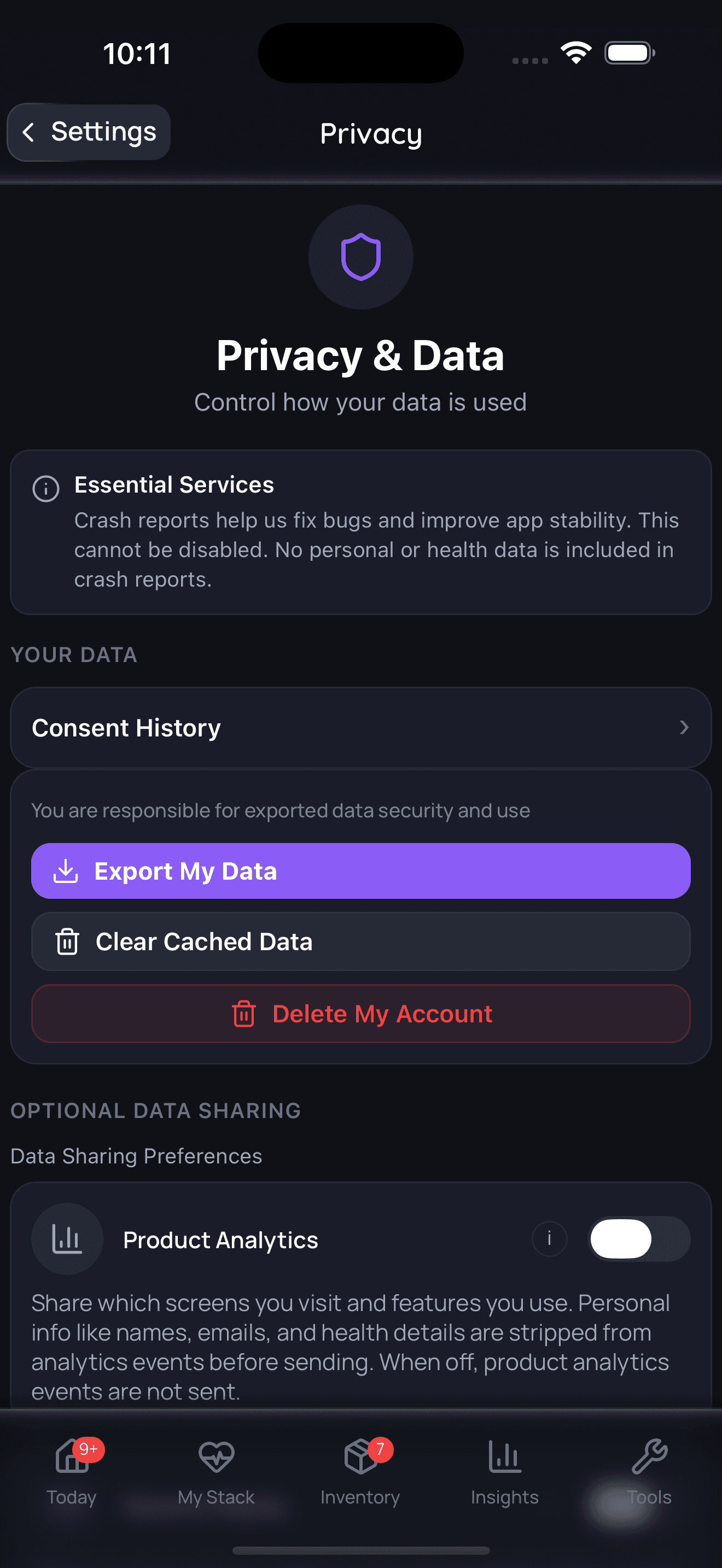
Keep sensitive protocol records in a purpose-built app.
Doserly is designed for private health tracking with structured records, offline-ready workflows, and exportable history when you need it.
Privacy
Health records
Privacy controls help you manage records; keep clinical records where required.
Interactions & Compatibility
Synergistic
- Vitamin B6 (P-5-P): Essential cofactor for the AADC enzyme that converts 5-HTP to serotonin. Using the active P-5-P form bypasses potential conversion bottlenecks. Commonly co-supplemented at 25-50 mg.
- Magnesium: Supports enzymatic processes in the serotonin pathway and may independently improve sleep quality. Magnesium glycinate and threonate forms are commonly paired with tryptophan for bedtime stacks.
- Zinc: May support tryptophan metabolism and immune function. Some users include zinc in their bedtime supplement stack.
- Iron: Required for tryptophan hydroxylase activity (the rate-limiting enzyme in serotonin synthesis) and for tryptophan-to-niacin conversion.
- Vitamin C: Supports iron absorption and may play a role in BH4 recycling (a TPH cofactor).
- Carbohydrates (dietary): A small carbohydrate snack taken with tryptophan enhances brain uptake by stimulating insulin-mediated clearance of competing amino acids from the bloodstream.
Caution / Avoid
- SSRIs (fluoxetine, sertraline, escitalopram, etc.): Risk of serotonin syndrome. Do not combine without explicit physician guidance.
- SNRIs (venlafaxine, duloxetine, etc.): Risk of serotonin syndrome.
- MAOIs (phenelzine, tranylcypromine, selegiline, rasagiline): Severe serotonin syndrome risk. Contraindicated.
- Triptans (sumatriptan, rizatriptan, etc.): Serotonin syndrome risk when combined with serotonin precursors.
- Tramadol: Serotonin reuptake inhibition adds to serotonin syndrome risk.
- Dextromethorphan: Serotonin reuptake inhibitor at higher doses; avoid concurrent use.
- Linezolid, methylene blue: Weak MAO inhibitors with serotonin syndrome risk.
- 5-HTP: Both are serotonin precursors. Concurrent use may excessively elevate serotonin levels. Choose one or the other, not both simultaneously.
- St. John's wort: Serotonergic herb; concurrent use increases serotonin syndrome risk.
- SAMe (S-adenosylmethionine): May increase serotonin; use caution when combining.
- L-Tyrosine: Competes with tryptophan for the AADC enzyme and LAT1 transporter. Not contraindicated, but the serotonin/dopamine balance should be considered. Some practitioners suggest taking them at different times of day (tyrosine in the morning, tryptophan in the evening).
- Sedatives (benzodiazepines, zolpidem): Additive sedation. Use caution.
- Alcohol: Reduces Trp/CAA ratio by 10-25%, impairing serotonin synthesis. May also add to sedative effects.
How to Take / Administration Guide
Recommended forms: L-Tryptophan free base is the standard supplement form, available in capsules (typically 500 mg) and powder. The free-base form is the most widely available and well-studied. There is no significant difference between capsule and powder forms in terms of bioavailability.
Timing considerations: The most commonly recommended timing is 30-60 minutes before bedtime, on an empty stomach or with a small carbohydrate snack. Taking tryptophan with a protein-rich meal significantly reduces its effectiveness for brain-related effects due to competitive amino acid absorption. Morning dosing is generally discouraged for most users, as the sedative and motivation-dampening effects may interfere with daytime function.
Stacking guidance: Tryptophan is commonly stacked with vitamin B6 (as P-5-P, 25-50 mg), magnesium (200-400 mg of glycinate or threonate form), and sometimes zinc (15-30 mg). These cofactors support the enzymatic conversion of tryptophan to serotonin. If also supplementing with L-Tyrosine, consider taking tyrosine in the morning and tryptophan in the evening to avoid direct competition for the AADC enzyme.
Powder considerations: Tryptophan powder has a mildly bitter taste. It mixes reasonably well in water or juice. Some users prefer capsules for convenience, particularly for bedtime dosing.
Cycling guidance: While there is no clinical evidence mandating cycling, some long-term users report that periodic breaks (1-2 weeks off after 4-6 weeks of use) help maintain effectiveness. This pattern is anecdotal and may reflect normalization of an initial deficiency rather than true pharmacological tolerance.
Choosing a Quality Product
Third-party certifications: Look for products verified by USP, NSF, or ConsumerLab. These certifications verify identity, potency, purity, and absence of contaminants. Given tryptophan's history with the EMS contamination event, purity verification is especially important for this supplement.
Manufacturing standards: GMP (Good Manufacturing Practices) certification is a minimum baseline. Given the 1989 EMS episode was traced to a manufacturing process change, sourcing tryptophan from manufacturers with well-documented and stable production processes is prudent.
Active form verification: Ensure the label specifies "L-Tryptophan" (the natural, bioactive isomer). D-Tryptophan does not participate in human protein synthesis or cross the blood-brain barrier.
Red flags: Proprietary blends that obscure the actual tryptophan dose; products combining tryptophan with 5-HTP (redundant and potentially unsafe); products claiming to be "pharmaceutical grade" without third-party verification; unusually low prices that may indicate inadequate quality control.
Excipient considerations: Most L-Tryptophan supplements are relatively clean formulations. Common fillers include rice flour, cellulose, and magnesium stearate. Hypoallergenic options (free of gluten, soy, dairy, corn) are widely available.
Certificate of Analysis (COA): Reputable manufacturers should provide COAs showing purity testing, heavy metal testing (especially relevant given historical contamination concerns), and microbial analysis. Some manufacturers specifically test for EBT (the contaminant implicated in the 1989 EMS outbreak).
Storage & Handling
L-Tryptophan should be stored at room temperature (15-25°C / 59-77°F) in a cool, dry place away from direct sunlight and moisture. No refrigeration is required. The supplement is stable under standard storage conditions with a typical shelf life of 2-3 years from the date of manufacture. Keep containers tightly sealed to minimize moisture exposure. Powder forms may be more sensitive to humidity than capsules and should be stored with particular attention to dryness.
Lifestyle & Supporting Factors
Dietary sources: Rich food sources of tryptophan include turkey (410 mg per pound raw), chicken, tuna (472 mg per ounce canned), eggs, dairy products (whole milk: 732 mg per quart), cheese, peanuts, pumpkin seeds, sesame seeds, sunflower seeds, soybeans, oats, and bananas. While dietary tryptophan alone is unlikely to produce the therapeutic brain effects seen with supplementation (due to competition from other amino acids in whole protein), ensuring adequate dietary intake supports overall tryptophan status [1][2].
Signs of potential deficiency: Low serotonin symptoms that may indicate inadequate tryptophan availability include disturbed sleep patterns, depressed or anxious mood, increased carbohydrate cravings, difficulty with emotional regulation, and pain sensitivity. Populations at higher risk for functional tryptophan deficiency include those on heavily processed grain-based diets, individuals with chronic inflammation (which diverts tryptophan toward the kynurenine pathway), and those with malabsorption conditions [1][3].
Exercise: Regular physical activity independently supports serotonin production and may enhance the mood-related benefits of tryptophan supplementation. Exercise also improves sleep quality, creating a complementary effect.
Sleep hygiene: Tryptophan supplementation for sleep works best in conjunction with good sleep practices: consistent sleep/wake times, limited blue light exposure in the evening (which supports melatonin production from the tryptophan-derived serotonin pathway), cool sleeping environment, and limited caffeine after early afternoon.
Stress management: Chronic psychological stress increases cortisol, which activates tryptophan 2,3-dioxygenase (TDO) in the liver, diverting more tryptophan toward the kynurenine pathway and away from serotonin synthesis. Stress reduction practices may help preserve more tryptophan for serotonin production [3][4].
Gut health: The gut microbiome metabolizes a significant portion of dietary tryptophan through the indole pathway. Maintaining gut microbial diversity (through dietary fiber, fermented foods, and probiotic-rich foods) supports balanced tryptophan metabolism and healthy gut-brain axis signaling [3][4].
Regulatory Status & Standards
United States (FDA): L-Tryptophan is available as a dietary supplement under DSHEA. It was banned from the OTC supplement market in 1990 following the EMS outbreak. The FDA began lifting restrictions around 2001, with the import alert formally lifted in 2005. It is now widely available as a dietary supplement. L-Tryptophan is also available by prescription in some clinical contexts (brand name: Tryptan). It is not GRAS-designated separately from its presence in food protein.
Canada (Health Canada): L-Tryptophan is available as a prescription medication (e.g., Tryptan, APO-Tryptophan, TEVA-Tryptophan) for the treatment of depression as an adjunct to antidepressants. It is regulated as a pharmaceutical product rather than a natural health product in this context.
European Union (EFSA): L-Tryptophan is permitted as a food supplement in most EU member states. EFSA has evaluated tryptophan in the context of amino acid supplements and has not established specific maximum permitted levels for supplements, deferring to national regulations.
Australia (TGA): L-Tryptophan may be available as a listed medicine or complementary medicine, depending on the claims made and formulation. Regulatory status varies.
Active clinical trials: Ongoing research includes investigations of tryptophan for sleep disorders, mood regulation, cognitive function in aging populations, and inflammatory bowel disease (via the kynurenine pathway).
Athlete & Sports Regulatory Status:
- WADA: L-Tryptophan is NOT on the WADA Prohibited List. It is a naturally occurring amino acid and standard food component.
- National Anti-Doping Agencies: No specific guidance or alerts from USADA, UKAD, Sport Integrity Canada, Sport Integrity Australia, or NADA Germany regarding L-Tryptophan supplementation.
- Professional Sports Leagues: Not prohibited by NFL, NBA, MLB, NHL, MLS, or NCAA substance policies.
- NCAA: L-Tryptophan is not on the NCAA banned substance list. However, NCAA institutions providing supplements to athletes should source from NSF Certified for Sport or Informed Sport certified products to minimize contamination risk.
- Athlete Certification Programs: Informed Sport, NSF Certified for Sport, Cologne List, and BSCG certified L-Tryptophan products may be available, though amino acid supplements are less commonly certified than other categories.
- GlobalDRO: Athletes can verify L-Tryptophan status through GlobalDRO.com.
Regulatory status and prohibited substance classifications change frequently. Athletes should always verify the current status of any supplement with their sport's governing body, their national anti-doping agency, and a qualified sports medicine professional before use. Third-party certification (Informed Sport, NSF Certified for Sport) reduces but does not eliminate the risk of contamination with prohibited substances.
Frequently Asked Questions
Q: Is L-Tryptophan the same as 5-HTP?
A: They are related but distinct compounds in the same pathway. L-Tryptophan is an amino acid that must be converted to 5-HTP by the enzyme tryptophan hydroxylase before it can become serotonin. 5-HTP bypasses this rate-limiting step and converts directly to serotonin. This makes 5-HTP faster-acting but also carries different safety considerations, including concerns about peripheral serotonin elevation with long-term use. Most practitioners consider L-Tryptophan the more conservative choice for sustained supplementation. They should not be taken together.
Q: Does turkey actually make you sleepy because of tryptophan?
A: This is one of the most persistent food myths. While turkey does contain tryptophan, it contains no more than chicken, cheese, or many other protein sources. The post-Thanksgiving drowsiness is more likely due to the large caloric load, carbohydrate-heavy side dishes (which shift the amino acid ratio in favor of tryptophan brain uptake), and alcohol consumption rather than the tryptophan content of turkey specifically [1].
Q: Can I take L-Tryptophan with my SSRI?
A: This is a question for your prescribing physician, not a supplement guide. Both SSRIs and tryptophan increase serotonin activity, and combining them can potentially cause serotonin syndrome, a serious and potentially life-threatening condition. Some clinicians do prescribe tryptophan alongside antidepressants under careful monitoring, but this should never be done without medical supervision [6][13].
Q: How long does it take to notice effects?
A: Based on available research and user reports, sleep effects are often noticed within the first few days at doses of 1 g or more. Mood effects typically require 2-4 weeks of consistent use to become apparent. Some individuals notice nothing, which may indicate adequate baseline tryptophan status or a need for cofactor optimization (B6, iron, magnesium) [1][9][11].
Q: Is L-Tryptophan safe after the 1989 EMS scare?
A: The 1989 EMS outbreak was traced to a contaminant (likely 1'1'-ethylidenebis[tryptophan]) introduced during manufacturing by a single Japanese company, not to tryptophan itself. The FDA investigated extensively, identified the contamination source, and gradually restored access to L-Tryptophan supplements over the following decade. Modern manufacturing processes differ significantly from the implicated 1989 methods. Purchasing from reputable manufacturers with third-party testing (USP, NSF, ConsumerLab) provides an additional layer of quality assurance [14][15][16].
Q: Should I take tryptophan with food or on an empty stomach?
A: For brain-related effects (sleep, mood), most sources recommend taking tryptophan on an empty stomach or with a small carbohydrate snack. Protein-rich foods flood the bloodstream with competing amino acids that reduce tryptophan's ability to cross the blood-brain barrier. A light carbohydrate snack (fruit, crackers) can actually enhance brain uptake by triggering insulin, which clears competing amino acids from the blood [1].
Q: Can I take L-Tryptophan every day long term?
A: Based on available data, there is no established time limit for L-Tryptophan supplementation at commonly used doses (500-2,000 mg/day). The NOAEL is approximately 4.5 g/day. However, long-term safety data from rigorous clinical trials is limited. Some users report diminishing effects over several months, which may indicate normalization of an initial deficiency. Some practitioners suggest periodic breaks (1-2 weeks off after 4-6 weeks of use), though this is based on clinical experience rather than clinical trial data [13].
Q: What is the best form of L-Tryptophan to take?
A: L-Tryptophan is primarily available as a single form (the free amino acid), unlike many other supplements that come in multiple bioavailability-varying forms. The main consideration is quality of manufacturing rather than form selection. Capsules and powder offer equivalent bioavailability. Choose products with third-party verification from established certification bodies.
Q: Does L-Tryptophan lower dopamine?
A: There is a pharmacological basis for this concern. Tryptophan and tyrosine (the dopamine precursor) share the aromatic L-amino acid decarboxylase (AADC) enzyme. High doses of tryptophan may competitively reduce dopamine synthesis by occupying more of this shared enzyme. Some users report reduced motivation and drive when taking tryptophan during the day. This is one reason most experienced users take tryptophan exclusively in the evening and, if also supplementing with tyrosine, take tyrosine in the morning [1].
Myth vs. Fact
Myth: Turkey makes you sleepy because it's loaded with tryptophan.
Fact: Turkey contains roughly the same amount of tryptophan as chicken and many other protein sources (approximately 250-410 mg per pound of raw meat). Post-holiday drowsiness is better attributed to the combination of large caloric intake, carbohydrate-heavy side dishes that shift the amino acid ratio to favor tryptophan brain uptake, and often alcohol consumption. Eating turkey in a normal-sized portion does not produce appreciable sedation [1].
Myth: L-Tryptophan itself caused the 1989 EMS outbreak, so it is inherently dangerous.
Fact: Extensive epidemiological investigation traced the EMS outbreak to a contaminant introduced during manufacturing by a single Japanese company (Showa Denko K.K.) that had recently altered its production process. Among 60 minor impurities detected in the implicated product, several were associated with EMS. The outbreak resolved completely when the contaminated product was removed from the market. Since L-Tryptophan was reintroduced under modern manufacturing standards, it has been used safely in numerous clinical trials [14][15][16].
Myth: More tryptophan always means more serotonin.
Fact: Tryptophan's conversion to serotonin involves a rate-limiting enzyme (tryptophan hydroxylase) that is normally about 50% saturated. While increasing tryptophan availability does increase serotonin synthesis to a point, the relationship is not linear at higher doses. Furthermore, approximately 90% of tryptophan metabolism occurs through the kynurenine pathway rather than the serotonin pathway. The amount reaching the brain depends critically on the ratio of tryptophan to competing amino acids, not just the absolute dose [1][3].
Myth: Tryptophan supplements are just as good as antidepressants for treating depression.
Fact: While some clinical trials have shown tryptophan to be comparable to tricyclic antidepressants in certain populations, results have been inconsistent as a standalone treatment for clinical depression. The most positive outcomes have been observed when tryptophan is used as an adjunct to existing antidepressant therapy rather than as a replacement. Tryptophan supplementation is better supported for subclinical mood support in healthy adults than for treating diagnosed depressive disorders [1][11].
Myth: 5-HTP is simply a better, more efficient version of tryptophan.
Fact: 5-HTP bypasses the rate-limiting tryptophan hydroxylase step, which makes it more direct but not necessarily better. This bypass means 5-HTP is more potent per milligram for raising serotonin, but it also raises serotonin peripherally (outside the brain) to a greater degree, which has been linked to potential cardiac concerns with long-term use. L-Tryptophan is subject to the body's natural rate-limiting step, which provides a built-in safety mechanism against excessive serotonin production. Most researchers and clinicians consider tryptophan the safer option for long-term supplementation [1][6].
Myth: You need a high-protein diet to get enough tryptophan.
Fact: High-protein meals actually decrease the relative brain availability of tryptophan by flooding the bloodstream with competing amino acids. Adequate tryptophan for basic nutrition is easily obtained from a balanced diet. For supplemental brain effects, the key factor is the tryptophan-to-competing amino acid ratio, which is improved by taking tryptophan separately from protein and potentially with a small carbohydrate source [1].
Sources & References
Comprehensive Reviews
[1] Richard DM, Dawes MA, Mathias CW, Acheson A, Hill-Kapturczak N, Dougherty DM. L-Tryptophan: Basic Metabolic Functions, Behavioral Research and Therapeutic Indications. Int J Tryptophan Res. 2009;2:45-60. doi:10.4137/IJTR.S2129. PMID: 20651948. PMC: PMC2908021.
Systematic Reviews & Meta-Analyses
[9] Sutanto CN, Loh WW, Kim JE. The impact of tryptophan supplementation on sleep quality: a systematic review, meta-analysis, and meta-regression. Nutr Res Rev. 2022;35(2):236-246. PMID: 33942088.
[11] Kikuchi AM, Tanabe A, Iwahori Y. A systematic review of the effect of L-tryptophan supplementation on mood and emotional functioning. J Diet Suppl. 2021;18(3):316-333. PMID: 32272859.
Clinical Trials & RCTs
[8] Nishizawa S, Benkelfat C, Young SN, et al. Differences between males and females in rates of serotonin synthesis in human brain. Proc Natl Acad Sci USA. 1997;94(10):5308-5313.
[10] Hartmann E, Spinweber CL. Sleep induced by L-tryptophan. Effect of dosages within the normal dietary intake. J Nerv Ment Dis. 1979;167(8):497-499.
[12] Zamoscik V, et al. Tryptophan-enriched diet or 5-hydroxytryptophan supplementation given in a randomized controlled trial impacts social cognition on a neural and behavioral level. Sci Rep. 2021;11(1):21637. PMID: 34737364.
Government / Institutional Sources
[2] MedlinePlus Medical Encyclopedia. Tryptophan. National Library of Medicine. Updated May 4, 2024. https://medlineplus.gov/ency/article/002332.htm
[6] Drugs.com. L-tryptophan Uses, Side Effects & Warnings. Updated April 28, 2025. https://www.drugs.com/mtm/l-tryptophan.html
Tryptophan Metabolism Reviews
[3] Modoux M, Rolhion N, Mani S, Sokol H. Tryptophan Metabolism as a Pharmacological Target. Trends Pharmacol Sci. 2021;42(1):60-73. doi:10.1016/j.tips.2020.11.006.
[4] Xue C, Li G, Zheng Q, et al. Tryptophan metabolism in health and disease. Cell Metab. 2023;35(8):1304-1326. doi:10.1016/j.cmet.2023.06.004.
[5] Claustrat B, Brun J, Chazot G. The basic physiology and pathophysiology of melatonin. Sleep Med Rev. 2005;9(1):11-24.
[7] Walther DJ, Peter JU, Bashammakh S, et al. Synthesis of serotonin by a second tryptophan hydroxylase isoform. Science. 2003;299(5603):76.
EMS / Safety Literature
[13] Performance Lab. Is L-tryptophan Safe? A Deep Dive into Side Effects, Long-Term Use. 2026. (NOAEL and dosing safety review based on multiple clinical sources.)
[14] Allen JA, Peterson A, Sufit R, et al. Post-epidemic eosinophilia myalgia syndrome associated with L-Tryptophan. Arthritis Rheum. 2011;63(11):3633-3639. PMCID: PMC3848710. PMID: 21702023.
[15] Belongia EA, Hedberg CW, Gleich GJ, et al. An Investigation of the Cause of the Eosinophilia-Myalgia Syndrome Associated with Tryptophan Use. N Engl J Med. 1990;323:357-365. doi:10.1056/NEJM199008093230601.
[16] Slutsker L, Hoesly FC, Miller L, et al. Eosinophilia-Myalgia Syndrome Associated With Exposure to Tryptophan From a Single Manufacturer. JAMA. 1990;264(2):213-217. doi:10.1001/jama.1990.03450020065028.
Related Supplement Guides
Same Category
Common Stacks / Pairings
- 5-HTP (alternative serotonin precursor; do NOT combine)
- Magnesium (commonly stacked for sleep)
- Vitamin B6 (essential cofactor)
- Zinc (cofactor for enzymatic support)
- Melatonin (downstream product; some users combine, others consider it redundant)
- L-Tyrosine (dopamine precursor; morning/evening split)
Related Health Goal
- Vitamin B3 (Niacin) (tryptophan is a niacin precursor)
- Iron (cofactor for tryptophan hydroxylase)
- Inositol (anxiety and mood support)
- GABA (sleep and relaxation support)
- Ashwagandha (stress and sleep support)