
Coconut Water Powder: The Complete Supplement Guide
On this page
Quick Reference Card
Attribute
Common Name
- Detail
- Coconut Water Powder
Attribute
Other Names / Aliases
- Detail
- Dehydrated coconut water, powdered coconut water, coconut juice powder, tender coconut water powder
Attribute
Category
- Detail
- Plant-derived hydration powder / food-based electrolyte support
Attribute
Primary Forms & Variants
- Detail
- Single-ingredient dried coconut water powder; instantized powders with carrier ingredients; flavored hydration blends that combine coconut water powder with sodium, magnesium, or sweeteners
Attribute
Typical Dose Range
- Detail
- No clinically established supplement dose. Commercial servings vary widely, often 1 scoop or 1 stick pack mixed into water, with potassium and sodium content differing substantially by product
Attribute
RDA / AI / UL
- Detail
- No supplement-specific target. Potassium AI: 3,400 mg/day for adult men and 2,600 mg/day for adult women. No potassium UL established for healthy adults, but caution is warranted with impaired potassium excretion [1]
Attribute
Common Delivery Forms
- Detail
- Tub powder, single-serve stick pack, flavored electrolyte blend, smoothie mix
Attribute
Best Taken With / Without Food
- Detail
- Usually mixed with water. Can be taken with or without food. Taking it with a meal or snack may improve tolerance for users prone to stomach upset
Attribute
Key Cofactors
- Detail
- Sodium and chloride in high-sweat settings; Magnesium in broader electrolyte strategies
Attribute
Storage Notes
- Detail
- Keep tightly sealed in a cool, dry place. Humidity can cause clumping and shorten shelf stability
Overview
The Basics
Coconut water powder is dried coconut water. In practice, it gives people a portable way to use coconut water without carrying cans or cartons. Most buyers use it for one of three reasons: to make plain water more appealing, to get some potassium in a food-like format, or to build a lighter hydration routine that feels less artificial than many commercial sports-drink packets [2][3].
The most important point is that coconut water powder is not a magic hydration category. It is usually potassium-forward and sodium-light. That can be useful for gentle daily hydration or for people who simply want a pleasant beverage, but it also means the product category often gets marketed more broadly than the evidence justifies [1][2].
That difference matters because the word "electrolyte" can hide very different real-world uses. A powder that helps you drink more water during the workday is not automatically the same thing as a product designed for heavy sweat losses, nor is it the same thing as an oral rehydration solution used in medical dehydration [5][8][9].
The Science
Coconut water is the liquid endosperm of Cocos nucifera and contains naturally occurring sugars, potassium, smaller amounts of sodium and phosphorus, and minor amounts of amino acids and other compounds [2][3]. Drying it into powder changes the delivery form, but not the core fact that this is a food-derived matrix, not a single defined electrolyte compound.
Its composition varies with maturity, cultivar, and processing. Recent chemistry data show that potassium, phosphorus, and sodium change across maturity stages, while sugars, ash, protein, and acidity also shift over time [2][3]. That means two products sold as coconut water powder can differ materially in taste, sweetness, mineral load, and hydration behavior.
The strongest human evidence around coconut water is not broad wellness evidence. It is exercise-hydration research comparing coconut water to sports drinks or water. That literature supports a cautious position: coconut water can be similar to sports drinks in some settings, but it is not consistently superior to either sports drinks or water, and it is not a substitute for WHO-style oral rehydration solutions in medical dehydration [4][5][6][7][8][9].
Chemical & Nutritional Identity
Property
Botanical source
- Value
- Cocos nucifera L.
Property
Raw material
- Value
- Coconut water, the liquid endosperm inside the coconut
Property
Common commercial identity
- Value
- Dried coconut water solids
Property
Typical processing approaches
- Value
- Spray-drying, concentration plus drying, or other dehydration methods; some products add carrier ingredients for flow and mixability
Property
Dominant nutrient theme
- Value
- Potassium-forward beverage ingredient with naturally occurring sugars and lower sodium than many sports-drink formulas
Property
Maturity sensitivity
- Value
- Mineral profile, pH, sugar pattern, and volatile profile shift with coconut maturity [2][3]
Property
Electrolyte positioning
- Value
- Better described as a potassium-rich beverage ingredient than as a complete electrolyte formula
Property
RDA / AI / UL
- Value
- No coconut-water-powder-specific DRI values established
Coconut water powder inherits the strengths and weaknesses of coconut water itself. It is often attractive because it feels minimally processed compared with laboratory-style electrolyte salts, but this also means its composition is less standardized than single-mineral products [2][3]. In practical terms, readers should expect more variability across labels than they would with plain potassium chloride or sodium chloride products.
Mechanism of Action
The Basics
Coconut water powder works mostly by helping you do two simple things: take in fluid and take in some electrolytes, especially potassium. If you mix it with water and actually drink it, you improve hydration behavior in the same broad sense that any palatable beverage can. The potassium then contributes to normal fluid balance, nerve signaling, and muscle function in the body [1].
The catch is that potassium is only part of the hydration story. Heavy sweat loss is mostly a sodium and chloride problem. That is why people sometimes feel coconut water products are “healthy” yet still not quite enough during long hot workouts or high sodium-loss situations. Coconut water powder may help, but it does not automatically provide the composition that optimized sports or medical rehydration strategies aim for [5][8][9].
The Science
Potassium is the major intracellular cation and is required for maintaining intracellular fluid volume and transmembrane electrochemical gradients [1]. It is absorbed largely through passive diffusion in the small intestine, and about 90% of ingested potassium is absorbed in healthy adults [1]. That makes coconut-water-derived potassium nutritionally relevant, but not uniquely special relative to other potassium-containing foods.
Water absorption during medically optimized oral rehydration depends strongly on glucose-electrolyte balance, especially sodium-glucose cotransport. WHO and UNICEF oral rehydration guidance is built around that principle, not around potassium richness alone [9]. This is one reason coconut water, despite its positive nutrient image, does not clearly outperform sports drinks or water across the hydration studies in this dossier [4][5][6][7][8].
Absorption & Bioavailability
The Basics
Once reconstituted, coconut water powder behaves more like a beverage ingredient than a conventional “active” supplement. Its usefulness depends on whether you mix it well, tolerate it well, and drink enough of it to matter. If a powder tastes good and encourages you to drink more fluid, that can be a real advantage. If it tastes off, clumps badly, or feels too sweet or too flat, people often drink less of it and erase any theoretical benefit.
Potassium absorption is not usually the limiting factor. Product composition and use context are more important. A low-sodium coconut water powder may fit daily hydration just fine, but it may underdeliver in heavy sweating, heat, or diarrhea-related dehydration where sodium and glucose balance are more important [1][5][8][9].
The Science
NIH ODS notes that potassium is well absorbed and that the kidneys rapidly regulate potassium excretion in healthy individuals [1]. For coconut water products, the main bioavailability question is not whether potassium can be absorbed, but whether the overall beverage composition is optimized for the context in which it is being used.
The chemistry papers in this dossier show that coconut water composition varies by maturity, including changes in sugar type, pH, mineral concentration, and other solids [2][3]. For the finished powder consumer, that translates into likely variation in sweetness, solubility, and rehydration feel from one product to another. The WHO ORS comparator makes the stakes clear: a beverage can be pleasant and still not be compositionally ideal for clinical dehydration [9].
Research & Clinical Evidence
Post-Exercise Rehydration
The Basics
This is the strongest evidence area for coconut water. Several small human trials suggest it can support post-exercise rehydration reasonably well. The more careful interpretation is that it often works about as well as expected for a beverage, not that it clearly beats standard options [4][5][6].
The central lesson is composition. Coconut water may be good enough in some rehydration situations, but higher sodium formulas still have a structural advantage in scenarios where sodium loss is the real problem [5][8].
The Science
In a 2012 crossover study, coconut water, coconut water from concentrate, water, and a carbohydrate-electrolyte sports drink all promoted rehydration after about 2% body-mass loss, with no significant performance differences. However, coconut water produced more bloating and stomach upset [4].
In a 2014 post-exercise rehydration study, fresh coconut water was not significantly different from the comparison beverages on urine output, but extra potassium did not create extra rehydration benefit beyond a conventional sports drink [5]. This is one of the most useful clinical anchors in the entire dossier.
Exercise Performance and Endurance Use
The Basics
The performance literature does not support dramatic promises. Coconut water can sometimes behave similarly to a sports drink in endurance-style testing, but it has not shown consistent performance enhancement compared with water or sports drinks in the available human trials [6][7].
That means the fairest wording is that coconut water powder may be a reasonable personal-preference option, not a proven ergogenic upgrade.
The Science
In a 2017 randomized cycling study, coconut water did not improve hydration markers or 10 km time-trial performance versus water, and participants voluntarily drank less of it late in the session because of palatability differences [6].
In a 2023 randomized crossover trial in experienced cyclists, coconut water and an iso-caloric sports drink produced no meaningful differences in physiology or 20 km time-trial performance [7]. Put together, the endurance evidence supports “roughly comparable in some setups,” not “performance superior.”
Water, Sports Drinks, and ORS Comparison
The Basics
This is where coconut water marketing often outruns the literature. Coconut water sits awkwardly between plain water and more purpose-built rehydration products. It is usually more mineral-rich than plain water, but often much lower in sodium than formulas designed specifically for rehydration in heat, sweat loss, or diarrheal dehydration [5][8][9].
The Science
The 2025 systematic review of alternatives to carbohydrate-electrolyte drinks found that the coconut-water trials showed no meaningful differences versus water on multiple hydration outcomes [8]. Meanwhile, WHO guidance makes clear that ORS is a deliberately designed glucose-electrolyte solution used for dehydration treatment, especially in diarrheal illness, and is not interchangeable with a generic potassium-rich beverage [9].
Evidence & Effectiveness Matrix
Category
Physical Performance
- Evidence Strength
- 5/10
- Reported Effectiveness
- 5/10
- Summary
- Small exercise trials show coconut water can be comparable to sports drinks in some settings, but not clearly better than sports drinks or water [4][6][7][8].
Category
Recovery & Healing
- Evidence Strength
- 5/10
- Reported Effectiveness
- 5/10
- Summary
- Reasonable support for post-exercise fluid replacement, but not for unique recovery effects beyond hydration support [4][5].
Category
Energy Levels
- Evidence Strength
- 3/10
- Reported Effectiveness
- 5/10
- Summary
- Any energy-related effect is more likely from better hydration or sugar intake than from a unique coconut-water mechanism.
Category
Blood Pressure
- Evidence Strength
- 4/10
- Reported Effectiveness
- 5/10
- Summary
- Potassium is relevant to blood-pressure biology, but coconut water powder is not a proven antihypertensive treatment and may not suit all users [1].
Category
Nausea & GI Tolerance
- Evidence Strength
- 4/10
- Reported Effectiveness
- 4/10
- Summary
- Some users tolerate it well, but bloating, stomach upset, and sweetness fatigue are recurring issues in both studies and community discussion [4].
Category
Digestive Comfort
- Evidence Strength
- 3/10
- Reported Effectiveness
- 4/10
- Summary
- Comfort varies by dose, sweetness, carrier ingredients, and mixing quality.
Category
Fluid Retention
- Evidence Strength
- 5/10
- Reported Effectiveness
- 4/10
- Summary
- Better than plain water in some contexts, but extra potassium alone does not clearly outperform sodium-containing sports drinks [5].
Category
Treatment Adherence
- Evidence Strength
- 6/10
- Reported Effectiveness
- 6/10
- Summary
- Convenience, portability, and lighter taste can support better routine compliance.
Category
Side Effect Burden
- Evidence Strength
- 4/10
- Reported Effectiveness
- 5/10
- Summary
- Usually modest in healthy users, but risk rises with kidney disease, potassium-sensitive medications, or inappropriate use in severe dehydration contexts [1][9].
Categories scored: 9Categories with community data: 9Categories not scored (insufficient data): Fat Loss, Muscle Growth, Weight Management, Appetite & Satiety, Food Noise, Sleep Quality, Focus & Mental Clarity, Memory & Cognition, Mood & Wellbeing, Anxiety, Stress Tolerance, Motivation & Drive, Emotional Aliveness, Emotional Regulation, Libido, Sexual Function, Joint Health, Inflammation, Pain Management, Gut Health, Skin Health, Hair Health, Heart Health, Heart Rate & Palpitations, Hormonal Symptoms, Temperature Regulation, Body Image, Immune Function, Bone Health, Longevity & Neuroprotection, Cravings & Impulse Control, Social Connection, Withdrawal Symptoms, Daily Functioning, Other
Benefits & Potential Effects
The Basics
The most defensible benefit of coconut water powder is that it can make hydration easier, more pleasant, and more potassium-rich than plain water alone. That is a real benefit for some users. It is especially relevant for people who want a portable, food-derived beverage ingredient rather than an aggressively salty electrolyte packet.
The second realistic benefit is contextual rehydration support after lighter or moderate exercise. The evidence does not show a major advantage over sports drinks or water, but it does support coconut water as a viable option in some exercise settings [4][5][7].
The third benefit is practical rather than biochemical: many users simply stick with it more consistently when they like the taste and ritual better than mainstream sports beverages.
The Science
Human exercise trials show that coconut water can support rehydration and can perform similarly to sports drinks in some protocols, while systematic review evidence suggests no clear superiority over water across the available coconut-water trials [4][5][7][8]. That creates a narrow but credible benefit profile:
- reasonable support for routine hydration
- possible post-exercise use
- some potassium contribution
- no strong evidence for unique performance enhancement
The benefit ceiling is limited by the same feature that makes coconut water attractive: it is usually not sodium-dense enough to behave like a purpose-built rehydration solution in higher-loss situations [5][9].
When you're taking multiple supplements, it's hard to know which one is doing the heavy lifting. The benefits described above may overlap with effects from other items in your stack, lifestyle changes, or seasonal variation. Doserly helps you untangle that by keeping everything in one place, with timestamps, doses, and outcomes logged together.
Over time, this builds something more valuable than any product review: your personal evidence record. You can see exactly when you started this supplement, what else was in your routine at the time, and how your tracked health markers responded. That clarity makes the difference between guessing and knowing, whether you're talking to a healthcare provider or simply deciding if it's worth reordering.
Connect protocol changes to labs and health markers.
Doserly can keep lab results, biomarkers, symptoms, and dose history close together so follow-up conversations have better context.
Insights
Labs and trends
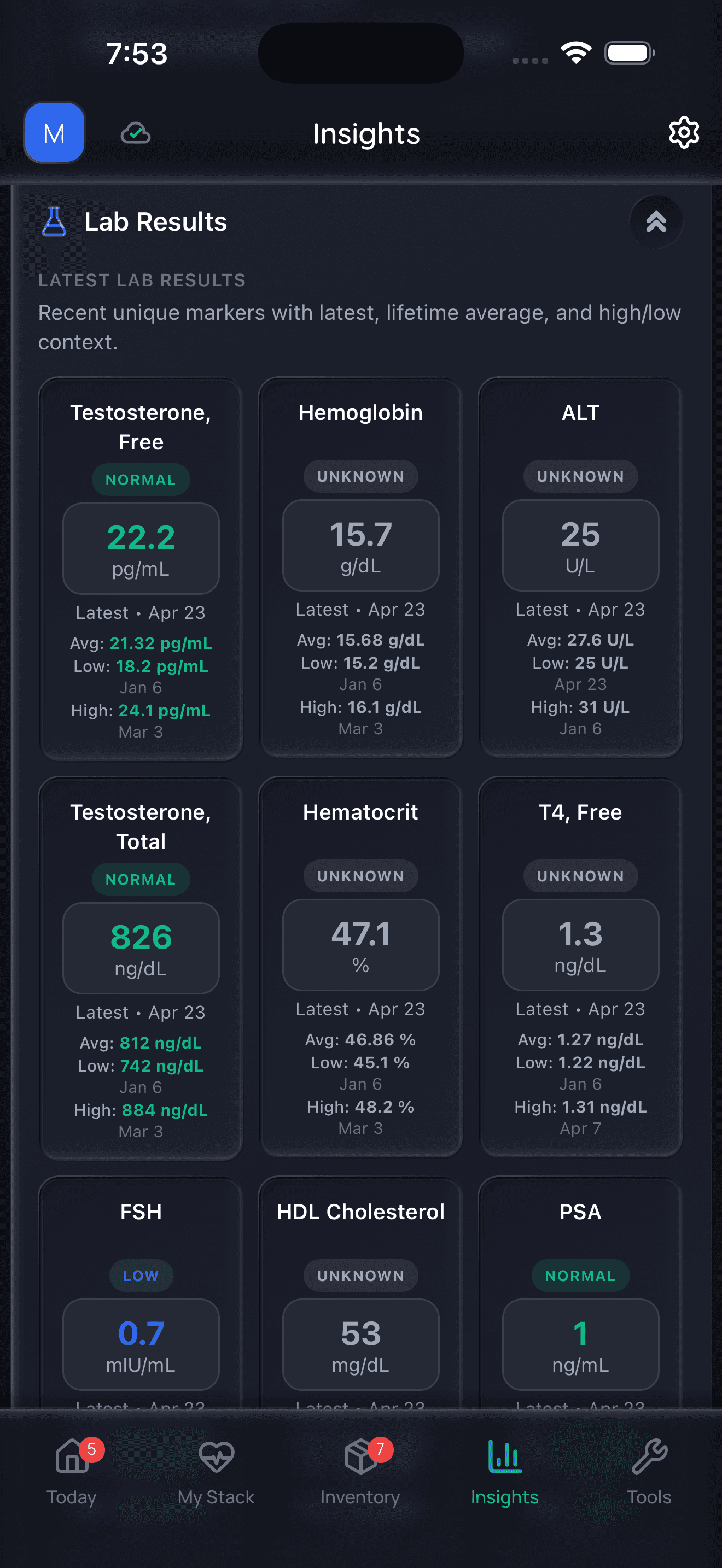
Doserly organizes data; it does not diagnose or interpret labs for you.
Side Effects & Safety
The Basics
Coconut water powder is often perceived as extremely safe because it is food-derived. That is partly true and partly misleading. For most healthy adults using ordinary servings, the risk profile is modest. But “food-like” does not mean appropriate for every body or every use case.
The main safety issues are:
- too much potassium in people with impaired kidney handling or potassium-raising medications
- too little sodium for heavy sweat loss or clinical dehydration
- GI discomfort such as bloating, stomach fullness, sweetness fatigue, or loose stools
- hidden extras in flavored blends, such as sweeteners, added sugars, stimulants, or poorly disclosed carrier ingredients
The Science
NIH ODS explicitly warns that potassium handling becomes riskier with kidney disease and with medications that reduce potassium excretion, including RAAS-active therapies and potassium-sparing diuretics [1]. That means a “natural potassium source” can still be the wrong choice for some users.
The exercise studies reinforce tolerability concerns. The 2012 study found more bloating and greater stomach upset with coconut-water conditions than with the sports drink [4]. The 2017 cycling study also found meaningful palatability differences that reduced voluntary intake [6]. These are not catastrophic side effects, but they matter when the product’s main job is to be something you will keep drinking.
Managing side effect risks across a multi-supplement stack can feel overwhelming, especially when interactions between supplements, medications, and foods add layers of complexity. Doserly brings all of that into a single safety view so nothing falls through the cracks.
Rather than researching every possible interaction yourself, the app checks your full stack automatically and flags supplement-drug and supplement-supplement interactions that warrant attention. If you do experience something unexpected, logging it takes seconds, and over time the app helps you spot patterns: whether symptoms correlate with specific doses, timing, or combinations. One place for the safety picture that matters most when your stack grows beyond a few bottles.
Capture changes while they are still fresh.
Log symptoms, energy, sleep, mood, and other observations alongside protocol events so patterns do not live only in memory.
Trend view
Symptom timeline
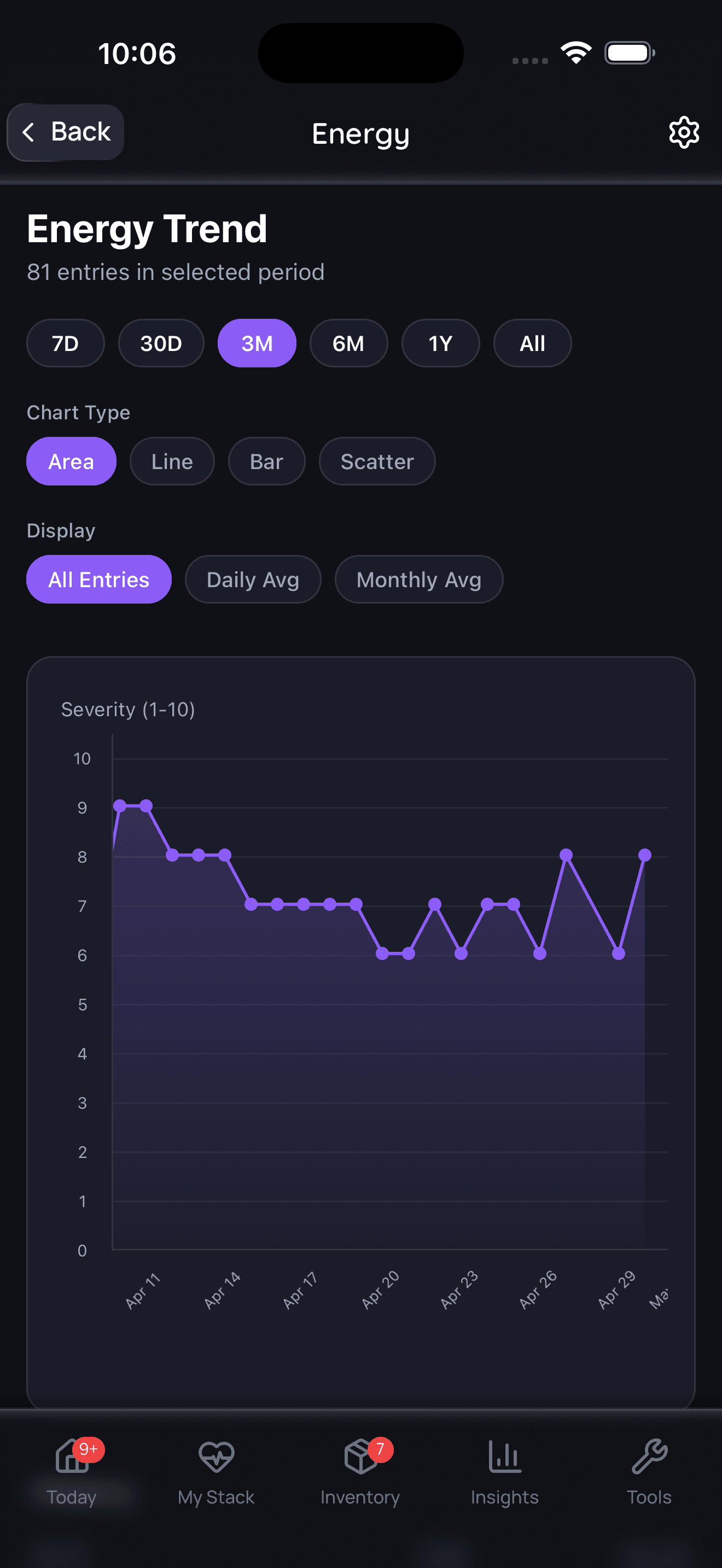
Symptom tracking is informational and should be interpreted with a qualified clinician.
Dosing & Usage Protocols
The Basics
There is no established clinical supplement dose for coconut water powder itself. The most practical dosing rule is to start with the label serving and work backward from your actual goal:
- Daily hydration support: 1 label serving in 12 to 16 ounces of water
- Light exercise or heat exposure: 1 label serving before or after activity, depending on tolerance
- Longer or hotter training sessions: coconut water powder may be used, but many users will need additional sodium from food or a sodium-containing electrolyte product
- Diarrheal or medical dehydration: use a clinician-recommended oral rehydration solution instead of improvising with coconut water powder
The Science
The research in this dossier does not justify a universal “performance dose.” The human trials compare beverage strategies, not standardized powder doses, and the systematic review does not show coconut water clearly beating water across hydration outcomes [4][5][6][7][8]. That is why label variability matters so much here.
The most evidence-shaped way to use the category is:
- Let the product serve as a palatable hydration aid.
- Match sodium support to sweat-loss context.
- Do not confuse it with ORS.
- Respect potassium-related medication and kidney cautions [1][9].
When your stack includes several supplements, each with its own dose, form, and timing requirements, the logistics alone can derail consistency. Doserly consolidates all of it into one protocol view, so every dose across your entire routine is accounted for without spreadsheets or guesswork.
The app also tracks cumulative intake for nutrients that appear in multiple products. If your multivitamin, standalone supplement, and fortified protein shake all contain the same nutrient, Doserly adds them up and shows you the total alongside recommended and upper limits. Managing a thoughtful supplement protocol shouldn't require a degree in nutrition science. The app handles the complexity so you can focus on staying consistent.
Track injection timing, draw notes, and site rotation.
Doserly helps keep syringe-related notes, injection site history, reminders, and reconstitution context together for easier review.
Injection log
Site rotation
Injection logs support record-keeping; follow clinician instructions for administration.
What to Expect (Timeline)
- First serving: Better taste than plain water for some users; no dramatic “feel it working” effect should be expected.
- First few hours: If you were mildly underhydrated, you may feel more settled or less flat simply because you drank fluid and some electrolytes.
- First 1 to 2 weeks of routine use: The main differentiator is adherence. People who like the taste or convenience often drink more consistently.
- Longer term: Any meaningful benefit usually reflects improved hydration habits, potassium intake context, or better protocol consistency, not a unique long-term pharmacologic effect.
- If it is the wrong product for you: Signs usually show up quickly as stomach heaviness, clumping frustration, taste fatigue, or a sense that you still need sodium-focused hydration support.
Interactions & Compatibility
Synergistic
- Sodium/Electrolyte Formulas: Useful when sweat sodium losses are high and coconut water powder alone feels underbuilt.
- Electrolyte Powders/Tablets: Can provide broader sodium, chloride, and magnesium support around training or heat.
- Magnesium: May fit broader hydration or cramp-management strategies.
- Chloride: Relevant when the hydration goal is true electrolyte replacement rather than potassium intake alone.
- Trace Mineral Drops: Sometimes used by consumers who want more mineral coverage without strong flavor.
Caution / Avoid
- Potassium: Cumulative potassium load may become unnecessary or inappropriate, especially with kidney impairment or relevant medications.
- ACE inhibitors, ARBs, spironolactone, eplerenone, and some NSAID patterns: Can increase hyperkalemia risk [1].
- Severe dehydration, vomiting, or diarrhea: Do not rely on coconut water powder as a substitute for formal ORS or medical evaluation [9].
- Pre-Workout Blends: Some users stack everything into one bottle, but added caffeine or extra sodium can change tolerance and hydration feel substantially.
How to Take / Administration Guide
Mix the powder exactly as directed on the label first. Coconut water powders vary enough in density and mineral load that “eyeballing it” is how people end up with a drink that tastes weak, overly sweet, or strangely heavy.
For general use, mix it in cold water and drink it steadily rather than as a huge bolus. For people using it around exercise, a simple approach is to take it before or after moderate sessions, then decide whether you also need sodium support based on sweat rate, climate, and how you feel afterward.
If you want to use it in smoothies, remember that you are changing the hydration equation. Once you add fruit, yogurt, protein powder, or nut butter, the product may still be nutritious, but it is no longer functioning like a light hydration drink. That is not wrong. It is just a different use case.
Choosing a Quality Product
Look for products that make the formula easy to understand. A good coconut water powder label should tell you:
- whether it is a plain dried coconut water powder or a broader hydration blend
- the amount of potassium per serving
- the amount of sodium per serving
- whether the formula contains added sugars, sweeteners, carrier ingredients, flavors, or caffeine
For athletes, third-party testing matters more than the “natural” label. Coconut water powder itself is not the anti-doping problem. Contaminated or aggressively blended performance products are the problem [13][14][15].
Red flags include vague proprietary blend language, performance claims that sound drug-like, or a formula that hides the actual sodium and potassium amounts. In Canada, an NPN can add a layer of authorization when the product is sold as a natural health product [11]. In Australia, products that cross into therapeutic-good territory face different rules [13].
Storage & Handling
Store coconut water powder in a tightly sealed container away from heat, moisture, and direct sunlight. Humidity is the enemy. Once moisture gets in, clumping becomes more likely and taste consistency often worsens.
Use a dry scoop. If the product is sold in stick packs, keep them sealed until use. If the powder already smells stale or oddly fermented after opening, treat that as a quality warning and stop using it.
Lifestyle & Supporting Factors
The best way to make coconut water powder useful is to fit it into a broader hydration strategy rather than expecting it to do everything.
- If you sweat heavily, pay attention to sodium intake from food or a sodium-focused hydration product.
- If you have high blood pressure, kidney disease, or take blood-pressure or potassium-sensitive medications, review the full hydration plan with a clinician [1].
- If you mostly want to drink more water during the day, choose the powder mainly on tolerability and label transparency.
- If you train in heat, weigh yourself before and after long sessions occasionally. That tells you more about your hydration needs than marketing copy ever will.
Regulatory Status & Standards
In the United States, coconut water powder sold as a supplement falls under DSHEA. Companies are responsible for safety and labeling, and FDA does not pre-approve products before sale [10].
In Canada, products sold as natural health products may be reviewed and authorized by Health Canada and carry an NPN or DIN-HM. Unauthorized products increase adulteration and quality risk [11].
In the European Union, food supplements are regulated as foods, with responsibility for safety resting on the food business operator. Disease-style claims are not permitted, and ingredients without safe-use history may trigger additional review [12].
In Australia, some sport supplements are foods and some are therapeutic goods. Powders may still be foods, but restricted ingredients, WADA-listed substances, or certain performance-oriented claims can move a product into tighter therapeutic-good regulation [13].
Athlete & Sports Regulatory Status
- WADA: Coconut water powder itself is not a named prohibited substance. Still, athletes are strictly liable for what enters their bodies, and contaminated blended products remain a real risk [14].
- National anti-doping agencies: USADA directs athletes to verify substances through GlobalDRO and to remain cautious about supplement contamination [14].
- NCAA: The NCAA does not approve any specific dietary supplement and warns that many supplements contain banned ingredients not listed on the label [15].
- Third-party certification: For athletes, favor products with programs such as NSF Certified for Sport or Informed Sport when available.
No coconut-water-powder-specific active clinical trial program was identified during this run that materially changes the practical takeaways in this guide.
Regulatory status and prohibited substance classifications change frequently. Athletes should always verify the current status of any supplement with their sport's governing body, their national anti-doping agency, and a qualified sports medicine professional before use. Third-party certification reduces but does not eliminate the risk of contamination with prohibited substances.
Frequently Asked Questions
Is coconut water powder the same as electrolyte powder?
Not exactly. Coconut water powder is one type of hydration-oriented powder, but many electrolyte powders are more sodium-focused and intentionally formulated for sweat replacement.
Is coconut water powder as good as sports drinks for workouts?
Sometimes it can be comparable, but the evidence does not show a consistent advantage. It often depends on the workout, the climate, and how much sodium you are losing [4][5][6][7][8].
Is coconut water powder the same as ORS?
No. WHO-style ORS is a specifically designed glucose-electrolyte solution used for dehydration treatment. Coconut water powder is not a substitute for that [9].
Can coconut water powder help with blood pressure?
It contributes potassium, which is relevant to blood-pressure biology, but that does not make it a treatment for hypertension. Medication and disease management decisions should not be based on this supplement alone [1].
Can I use coconut water powder every day?
Many healthy adults can use it daily in ordinary servings, but daily use is not automatically appropriate if you have kidney disease, potassium-sensitive medications, or no real hydration reason to add it.
Does coconut water powder contain sugar?
Often yes, unless the formula is specifically modified or blended differently. Coconut water naturally contains sugars, and sweetened blends may contain more.
Is it good for heavy sweaters?
It can be part of the plan, but many heavy sweaters need more sodium than coconut water powder alone typically provides.
Is coconut water powder good for people with POTS?
Some people may like it, but POTS hydration strategies often emphasize substantial sodium intake. Coconut water powder alone is usually not enough for that type of protocol.
Can athletes use coconut water powder safely?
Usually the ingredient itself is not the issue. The quality and purity of the final product are the issue. Athletes should verify labels, prefer third-party tested products when possible, and check anti-doping tools when needed [14][15].
Myth vs. Fact
Myth: Coconut water powder is basically a natural ORS.
Fact: ORS is a purpose-built glucose-electrolyte medical formulation. Coconut water powder is not the same thing and should not be used interchangeably in dehydration treatment [9].
Myth: More potassium means better workout hydration.
Fact: Potassium matters, but sodium is usually the dominant electrolyte lost in sweat. High-potassium, low-sodium products can underperform in higher-loss scenarios [5][8].
Myth: If it comes from coconut water, it must be safe for everyone.
Fact: Food-derived potassium is still a risk issue for people with impaired kidney handling or potassium-raising medications [1].
Myth: Coconut water powder clearly improves performance.
Fact: Current exercise trials do not show consistent performance superiority over sports drinks or water [4][6][7].
Myth: Powdered coconut water is nutritionally identical to fresh coconut water.
Fact: Source maturity, processing, drying, and added ingredients can all change the final product profile [2][3].
Myth: If it tastes gentle, it must be the best electrolyte option.
Fact: Pleasant taste can improve adherence, but it does not guarantee the mineral profile is right for your use case.
Sources & References
- National Institutes of Health Office of Dietary Supplements. Potassium: Fact Sheet for Health Professionals. Accessed March 25, 2026.
- Zhang Y, Kan J, Liu X, et al. Chemical Components, Nutritional Value, Volatile Organic Compounds and Biological Activities In Vitro of Coconut (Cocos nucifera L.) Water with Different Maturities. Foods. 2024;13(6):863.
- Tan TC, Cheng LH, Bhat R, Rusul G, Easa AM. Composition, physicochemical properties and thermal inactivation kinetics of polyphenol oxidase and peroxidase from coconut (Cocos nucifera) water obtained from immature, mature and overly-mature coconut. Food Chem. 2014;142:121-128.
- Kalman DS, Feldman S, Krieger DR, Bloomer RJ. Comparison of coconut water and a carbohydrate-electrolyte sport drink on measures of hydration and physical performance in exercise-trained men. J Int Soc Sports Nutr. 2012;9(1):1.
- Pérez-Idárraga A, Aragón-Vargas LF. Postexercise rehydration: potassium-rich drinks versus water and a sports drink. Appl Physiol Nutr Metab. 2014;39(10):1167-1174.
- Peart DJ, Hensby A, Shaw MP. Coconut Water Does Not Improve Markers of Hydration During Sub-maximal Exercise and Performance in a Subsequent Time Trial Compared with Water Alone. Int J Sport Nutr Exerc Metab. 2017;27(3):279-284.
- O'Brien BJ, Bell LR, Hennessy D, Denham J, Paton CD. Coconut Water: A Sports Drink Alternative? Sports (Basel). 2023;11(9):183.
- De Brier N, Borra V, Berry DC, et al. Oral Rehydration Beverages for Treating Exercise-Associated Dehydration: A Systematic Review, Part II. The Effectiveness of Alternatives to Carbohydrate-Electrolyte Drinks. J Athl Train. 2025;60(1):55-69.
- World Health Organization. Oral Rehydration Salts. WHO/FCH/CAH/06.1.
- U.S. Food and Drug Administration. Understanding Dietary Supplements / How are Dietary Supplements Regulated? May 2022.
- Health Canada. Adulteration of Natural Health Products. Updated May 7, 2019.
- European Food Safety Authority. Food Supplements. Last reviewed January 6, 2026.
- Therapeutic Goods Administration. Importing or Supplying Sport Supplements. Updated October 2, 2024.
- United States Anti-Doping Agency. Athlete Advisory: What’s New on the 2026 WADA Prohibited List? Published October 16, 2025.
- NCAA. FAQs About NCAA Banned Substances and Medical Exceptions Process. Updated June 2025.