
Rapamycin (Research-Context): The Complete Supplement Guide
On this page
Quick Reference Card
Attribute
Common Name
- Detail
- Rapamycin
Attribute
Other Names / Aliases
- Detail
- Sirolimus, Rapamune, rapalog-class reference compound
Attribute
Category
- Detail
- Research-context mTOR inhibitor / prescription macrolide lactam
Attribute
Primary Forms & Variants
- Detail
- Approved oral tablets and oral solution; some longevity users discuss compounded oral products, but forum reports suggest compounded versions may not match standard-tablet exposure [1][2]
Attribute
Typical Dose Range
- Detail
- Current longevity-oriented human trials are studying 5 mg to 15 mg once weekly, while some community users describe 2 mg run-in dosing and 4 mg to 6 mg weekly maintenance; approved medical dosing for transplant use follows a different clinician-managed daily framework and should not be treated as an anti-aging template [2][5][7]
Attribute
RDA / AI / UL
- Detail
- No RDA, AI, or UL established because rapamycin is not an essential nutrient or standard dietary supplement [1][2]
Attribute
Common Delivery Forms
- Detail
- Oral tablet, oral solution, compounded capsule in some off-label self-experiment settings
Attribute
Best Taken With / Without Food
- Detail
- Take consistently either with food or without food, and avoid grapefruit or grapefruit juice because exposure can change materially [1][2]
Attribute
Key Cofactors
- Detail
- No essential nutrient cofactor established; practical "cofactors" are clinician oversight and laboratory monitoring of CBC, lipids, glucose, liver markers, and kidney-related chemistry [2][5]
Attribute
Storage Notes
- Detail
- Tablets: room temperature, protected from heat, moisture, and light. Oral solution: refrigerated, protected from light, not frozen, and discarded one month after opening [2]
Overview
The Basics
Rapamycin is not a normal supplement. It is a prescription drug, more specifically sirolimus, that became famous in transplant medicine and later became famous again in longevity circles because it blocks part of the mTOR pathway that helps cells decide when to grow, store, repair, or recycle [1][2][6].
That second life is why people keep calling it an anti-aging supplement even though that label is not technically right. The excitement comes mostly from animal work and mechanism. The caution comes from the fact that human evidence is still early, mixed, and tied to a compound that can also suppress immune function and complicate wound healing if used carelessly [3][6].
The Science
PubChem classifies sirolimus as a macrolide lactam isolated from Streptomyces hygroscopicus, with recognized roles as an immunosuppressive and antineoplastic drug plus an mTOR inhibitor with geroprotection interest [1]. The current human aging literature is promising but incomplete. A 2024 systematic review of 19 human studies found the strongest translational signals in immune, cardiovascular, and integumentary domains, while muscular, endocrine, and neurological effects remained inconsistent or not significant overall [3]. A recent full-text longevity review makes the preclinical story look unusually strong in mammals, but it also warns that human chronic-use safety and broad healthspan impact are far from settled [6].
Chemical & Nutritional Identity (Molecular Identity)
Property
Chemical Name
- Value
- Sirolimus
Property
Common Research Name
- Value
- Rapamycin
Property
Molecular Formula
- Value
- C51H79NO13
Property
Molecular Weight
- Value
- 914.2 g/mol
Property
CAS Number
- Value
- 53123-88-9
Property
PubChem CID
- Value
- 5284616
Property
Compound Class
- Value
- Macrolide lactam; mTOR inhibitor
Property
Origin
- Value
- Originally isolated from Streptomyces hygroscopicus [1]
Property
Regulatory Category
- Value
- Prescription drug, not an over-the-counter dietary supplement [1][2]
Property
Common Oral Forms
- Value
- Tablets, oral solution, compounded oral preparations in some off-label settings
Property
Nutritional Status
- Value
- Not an essential nutrient
Property
RDA / AI / UL
- Value
- None established
Rapamycin does not fit the usual vitamin, mineral, or botanical framework. There is no deficiency syndrome that rapamycin corrects, and there is no daily intake target that healthy adults are expected to meet. It is better understood as a research-context pharmacologic compound being explored for healthspan questions, not as a nutrient replacement tool [1][2][6].
Mechanism of Action
The Basics
The simplest explanation is that rapamycin tells the body to ease off one of its major growth and nutrient-sensing switches. When that switch, mTOR, runs too hard, cells stay biased toward growth and protein-building. When rapamycin turns the signal down, cells tend to spend more effort on maintenance, stress resistance, and cleanup [1][6].
That sounds attractive in aging science because older tissue often struggles with cleanup and metabolic flexibility. It also explains why the drug is not automatically a wellness win. The same signal that may support repair or stress resistance can also interfere with muscle-building, immune readiness, and wound healing if the context is wrong [3][4][6].
The Science
Rapamycin binds FKBP12 and inhibits mTOR signaling, with the central anti-aging interest focused on mTORC1 suppression [1][6]. The longevity review describes mTORC1 as a nutrient- and growth-factor-sensitive kinase system that coordinates anabolism, autophagy, glucose homeostasis, and cell growth [6]. In that framework, intermittent mTORC1 inhibition is being investigated as a pharmacologic way to reproduce selected features of calorie-restriction biology without literal calorie restriction [6]. The unresolved part is dose separation. The same pathway shift that may improve autophagy and selected immune or skin outcomes can also reduce exercise-induced muscle protein synthesis and alter metabolic markers such as lipids or glucose in some contexts [3][4][5].
Pathway Visualization
Nutrients, growth factors, energy status, and inflammatory cues all feed into the mTOR network. When mTORC1 activity stays high, cells prioritize protein synthesis, proliferation, and anabolic programs. When rapamycin suppresses that signaling, autophagy and cellular housekeeping become more favored, while some growth-linked programs become less dominant [1][6].
For readers, the practical implication is that rapamycin is not a simple booster. It shifts cellular priorities. That is why the same compound can look protective in some aging models, neutral in others, and counterproductive in specific muscle or disease settings. The pathway rationale is strong. The human optimization strategy is not solved [3][4][6].
Absorption & Bioavailability (Pharmacokinetics)
The Basics
Bioavailability matters because rapamycin is not a forgiving compound. Taking it "kind of the same way" each time is not good enough when meal timing, formulation quality, and CYP3A4-related interactions can all shift exposure. The current practical rule from approved-drug guidance is consistency: choose with food or without food and stay consistent [1][2].
The other major issue is that not all oral products appear equivalent. Community discussions repeatedly question whether compounded longevity products behave like standard sirolimus tablets. That does not prove standard tablets are perfect or compounded products are always poor, but it does mean formulation shortcuts are a real uncertainty, not a cosmetic concern [1][2].
The Science
PubChem describes sirolimus as very poorly water soluble and lipophilic, which helps explain why formulation quality matters [1]. The linked drug information also flags grapefruit as a CYP3A4-related interaction risk and St. John's wort as a likely exposure-lowering inducer [1][2]. MedlinePlus adds the real-world administration rule that oral dosing should be taken consistently with food or consistently without food, while the solution requires dilution and refrigerated handling [2].
The accessible dossier is stronger on interaction-driven variability than on full pharmacokinetic values such as half-life or tissue retention. That is enough to support a conservative conclusion: dosing consistency, product reliability, and interaction avoidance matter more here than they do for a routine supplement [1][2].
Research & Clinical Evidence
Human aging and healthy-aging signals
The Basics
The best current human summary is encouraging but not definitive. Rapamycin and related rapalogs seem to show the cleanest signals in immune aging, selected cardiovascular markers, and some skin-related outcomes. What the evidence does not show yet is broad proof that healthy adults will age better across every major system, let alone live longer [3].
The Science
The 2024 human systematic review included 19 studies and found improvements in immune, cardiovascular, and integumentary parameters in healthy adults or adults with aging-related disease [3]. The same review found no significant overall effects for endocrine, muscular, or neurological systems and noted that respiratory, digestive, renal, and reproductive domains were not meaningfully assessed [3]. The paper is useful because it supports measured optimism while directly rejecting the idea that human anti-aging efficacy is already established.
Musculoskeletal and exercise-related outcomes
The Basics
Muscle and physical-function claims are where rapamycin gets especially controversial. Some people hope it will preserve function with age. Others worry it will blunt training adaptation. The current literature supports both sides enough that a simple answer would be misleading [4][5].
The Science
The musculoskeletal systematic review concluded that rapamycin and rapalogs may reduce bone-resorption markers and may help inflammatory disease contexts such as rheumatoid arthritis, while also being associated with reduced muscle protein synthesis in response to exercise [4]. A newer protocol in older adults is actively testing 6 mg once weekly during a 13-week exercise program, with endpoints including chair-stand performance, 6-minute walk, handgrip strength, adverse events, and biomarker monitoring [5]. That ongoing design is important because it shows the field itself still treats performance effects as an unanswered question, not a settled benefit.
Active trials and the direction of the field
The Basics
ClinicalTrials.gov is one of the strongest reality checks in this guide. The research world is still trying to figure out which weekly dose makes sense, who should be studied, and what biomarkers are worth following. That is what an investigational category looks like [5][7].
The Science
Current registered aging-related trials include the RAP PAC study testing sirolimus at 5 mg, 10 mg, or 15 mg once weekly for 6 weeks in adults aged 55 to 89, and a Columbia-led ovarian-aging study using 5 mg once weekly for 12 weeks in women during perimenopausal transition [7]. The older-adult protocol adds a separate weekly 6 mg design with formal laboratory monitoring that includes hematology, urea and electrolytes, liver function, HbA1c, lipids, IGF-1, and hs-CRP [5]. Across these trials, the theme is consistent: intermittent weekly dosing is the dominant research frame, but no single regimen has graduated into an accepted anti-aging standard [5][7].
Evidence & Effectiveness Matrix (Biomarker Evidence Matrix)
Category
Longevity & Neuroprotection
- Evidence Strength
- 4/10
- Reported Effectiveness
- 5/10
- Summary
- The longevity rationale is strong in animals and mechanism, but direct human healthy-aging proof remains early and mixed [3][6]. Community enthusiasm is higher than lived-outcome certainty.
Category
Immune Function
- Evidence Strength
- 6/10
- Reported Effectiveness
- Community data not yet collected
- Summary
- Human studies reviewed to date show some of the clearest positive aging-related signals in immune parameters, but outcomes are still heterogeneous and short term [3].
Category
Heart Health
- Evidence Strength
- 5/10
- Reported Effectiveness
- Community data not yet collected
- Summary
- The current human review reports selected cardiovascular improvements, but the dataset is still too small for a broad cardioprotective claim [3].
Category
Skin Health
- Evidence Strength
- 4/10
- Reported Effectiveness
- 5/10
- Summary
- Integumentary signals appear in the systematic review, and some users describe better-looking skin, but community reports also include skin flares and skin-cancer vigilance [2][3].
Category
Physical Performance
- Evidence Strength
- 4/10
- Reported Effectiveness
- 4/10
- Summary
- Performance and muscle data are conflicted. Some preservation signals are discussed, but anabolic tradeoffs remain a major concern [4][5].
Category
Weight Management
- Evidence Strength
- 2/10
- Reported Effectiveness
- 5/10
- Summary
- Weight change appears in anecdotes more than in formal aging evidence. Reports range from welcome fat loss to concerning loss of body mass in community discussion.
Category
Side Effect Burden
- Evidence Strength
- 6/10
- Reported Effectiveness
- 4/10
- Summary
- Formal human aging studies have not shown major safety catastrophes in healthy adults, yet real-world complaints around mouth sores, GI issues, edema, and abnormal labs are common enough to matter [2][3].
Category
Treatment Adherence
- Evidence Strength
- 4/10
- Reported Effectiveness
- 3/10
- Summary
- The main barrier is not pill-taking convenience. It is prescription access, cost, lab burden, and uncertainty about whether the benefits justify the work [2][5].
Category
Blood Pressure
- Evidence Strength
- 2/10
- Reported Effectiveness
- Community data not yet collected
- Summary
- The current dossier does not show a reliable blood-pressure effect. Any cardio signal should be treated as exploratory rather than hypertensive therapy [3].
Category
Hormonal Symptoms
- Evidence Strength
- 2/10
- Reported Effectiveness
- Community data not yet collected
- Summary
- Ovarian-aging trials are active, but outcome data are not established yet [7].
Benefits & Potential Effects (CTA)
The Basics
The strongest benefit case for rapamycin is not "it helps everything." It is narrower than that. The human literature supports selective promise in immune aging, some cardiovascular or skin-related readouts, and possibly specific healthspan markers that still need longer follow-up [3].
The weakest benefit case is the internet favorite that rapamycin is already the proven king of anti-aging medicine. That statement confuses animal success, mechanism excitement, and early human signals with confirmed long-term benefit. The honest version is that rapamycin is one of the most scientifically interesting longevity compounds and still one of the least settled for broad self-experiment use [3][6].
The Science
The 2024 systematic review found the most convincing human signals in immune, cardiovascular, and integumentary parameters, not in universal lifespan or whole-body function outcomes [3]. The musculoskeletal review adds a more mixed picture, including possible improvements in inflammatory joint disease or bone-turnover markers alongside concern about reduced exercise-linked muscle protein synthesis [4]. The longevity update reinforces why the field stays interested: rapamycin remains the standout mammalian longevity drug in preclinical work, but the authors explicitly caution that human chronic use may be dangerous or highly context-dependent [6].
Reading about potential benefits gives you a framework. Seeing whether those benefits are showing up in your own body turns knowledge into confidence. Doserly lets you track the specific health markers relevant to this compound, building a personal dataset that captures what is actually changing week over week.
The app's AI analytics go further than simple logging. By correlating your supplement intake with the biomarkers and health outcomes you are tracking, Doserly surfaces patterns you might miss on your own, like whether a dose adjustment three weeks ago corresponds to the improvement you are noticing now. When it is time to evaluate whether a compound is earning its place in your stack, you have your own data to guide the decision.
Connect protocol changes to labs and health markers.
Doserly can keep lab results, biomarkers, symptoms, and dose history close together so follow-up conversations have better context.
Insights
Labs and trends
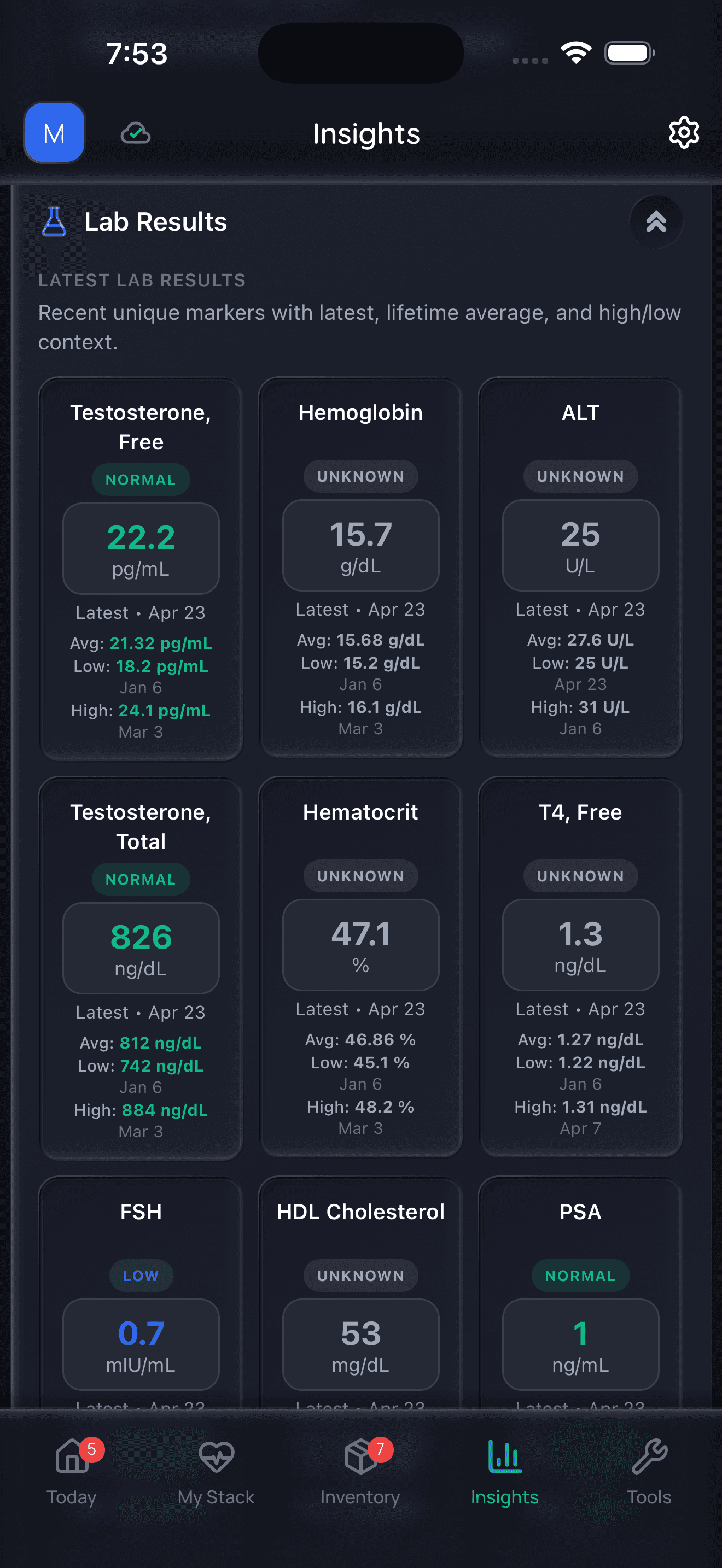
Doserly organizes data; it does not diagnose or interpret labs for you.
Side Effects & Safety
The Basics
Rapamycin is not a side-effect-free wellness tool. The formal human aging literature looks calmer than many people expect, but the everyday safety conversation is still serious because the compound touches immunity, wound healing, skin-cancer vigilance, metabolic labs, and fertility-related questions [2][3].
One practical mistake is to think that "few serious adverse events in a short healthy-adult study" means broad safety for unsupervised longevity use. That leap is not justified. The real-world experience is messier, and many of the most important downsides are not dramatic symptoms on day one. They are things like mouth sores, lipid drift, glucose drift, low blood counts, edema, infection risk, or slower recovery after surgery [2][5].
The Science
MedlinePlus flags infection risk, cancer warnings including lymphoma and skin cancer, slow wound healing, respiratory symptoms, unusual bleeding or bruising, swelling, rash, neurologic changes, and reduced fertility potential, along with common issues such as diarrhea, constipation, nausea, headache, mouth sores, acne, and joint or muscle pain [2]. The systematic review of aging studies reported no serious adverse events attributed to rapamycin or rapalogs in healthy people, but highlighted infections and lipid elevations more clearly in aging-related disease cohorts [3]. Ongoing and planned weekly-dosing studies reinforce the need for blood counts, lipids, HbA1c, inflammatory markers, and general lab surveillance [5][7].
Knowing the possible side effects is the first step. Catching them early in your own experience is what keeps a supplement routine safe. Doserly lets you log any symptoms as they arise, tagging them with severity, timing relative to your dose, and whether they resolve on their own or persist.
The app's interaction checker cross-references everything in your stack, supplements and medications alike, flagging known interactions before they become a problem. It also monitors your total intake against established upper limits, alerting you if your combined sources of a nutrient are approaching thresholds where risk increases. Think of it as a safety net that works quietly in the background while you focus on the benefits.
Capture changes while they are still fresh.
Log symptoms, energy, sleep, mood, and other observations alongside protocol events so patterns do not live only in memory.
Trend view
Symptom timeline
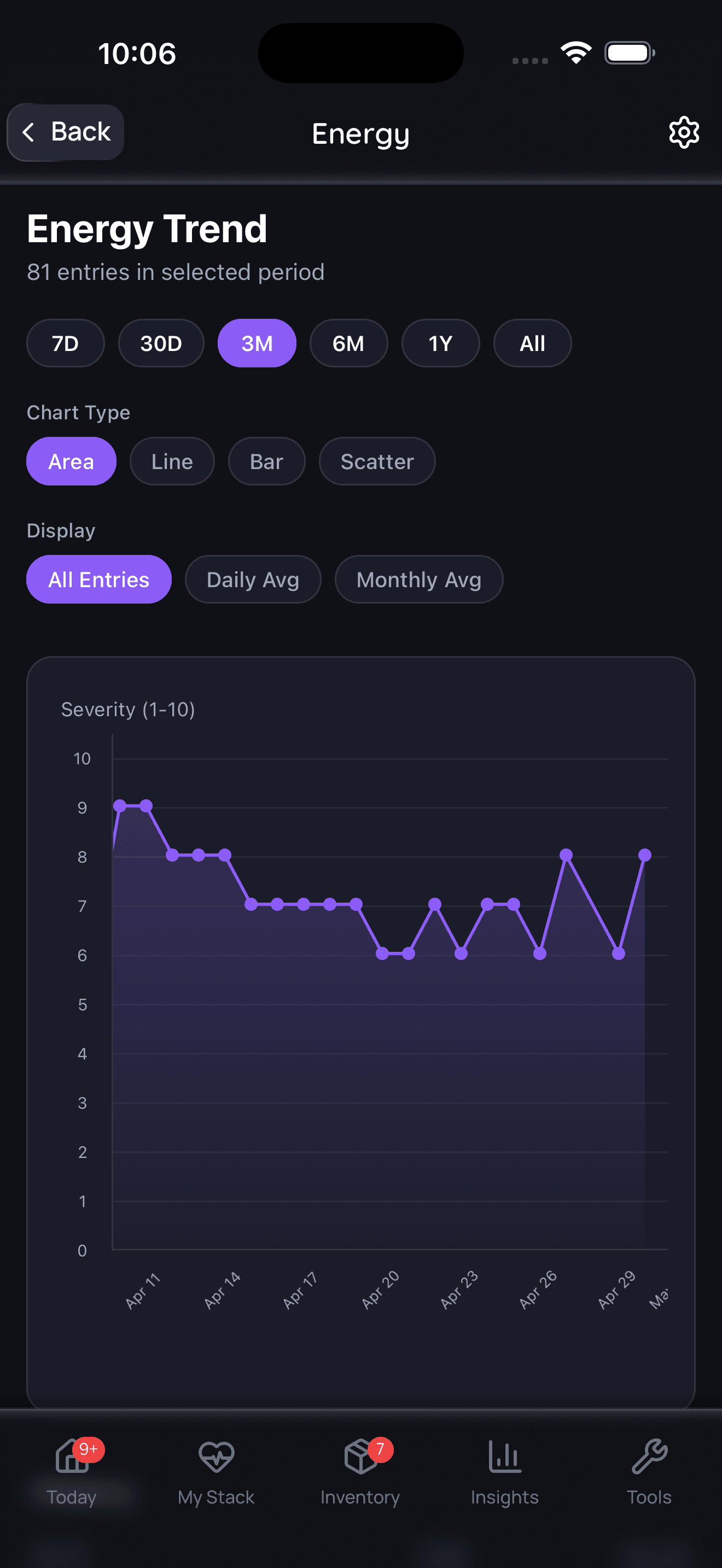
Symptom tracking is informational and should be interpreted with a qualified clinician.
Dosing & Usage Protocols (Dosing Protocol / Calculator)
The Basics
There is no accepted anti-aging dose of rapamycin. The best available answer is that current human research clusters around once-weekly oral dosing, most often in the 5 mg to 15 mg range, while community experimenters often start lower and adjust based on tolerability, access, and lab monitoring [5][7].
That does not make those regimens safe or appropriate to copy. It means that weekly intermittent dosing is the active research pattern. Approved medical uses rely on different goals, different populations, and different clinician-managed dosing logic. It is a mistake to drag transplant dosing into healthy-aging conversations as if the contexts were interchangeable [2].
The Science
ClinicalTrials.gov currently lists weekly sirolimus protocols at 5 mg, 10 mg, and 15 mg for 6 weeks in the RAP PAC study and 5 mg weekly for 12 weeks in the ovarian-aging study [7]. A separate older-adult protocol uses 6 mg once weekly over 13 weeks with structured safety labs and physical-function testing [5]. In community longevity discussion, run-in dosing around 2 mg weekly and maintenance patterns around 4 mg to 6 mg weekly are common, while some users discuss 10 mg every two weeks or larger monthly pulses.
Getting the dose right matters more than most people realize. Too little may be ineffective, too much wastes money or introduces risk, and inconsistency undermines both. Doserly tracks every dose you take, across every form, giving you a clear record of what you are actually consuming versus what you planned.
The app helps you compare RDA recommendations against therapeutic ranges discussed in the research, so you can see exactly where your intake falls. If you switch forms, say from a standard capsule to a liposomal liquid, Doserly adjusts your tracking to account for different bioavailabilities. Pair that with smart reminders that keep your timing consistent, and the precision that makes a real difference in outcomes becomes effortless.
Track injection timing, draw notes, and site rotation.
Doserly helps keep syringe-related notes, injection site history, reminders, and reconstitution context together for easier review.
Injection log
Site rotation
Injection logs support record-keeping; follow clinician instructions for administration.
What to Expect (Timeline)
The first thing many users notice is not a dramatic anti-aging effect. It is the absence of an obvious feeling. That is normal. Rapamycin is more likely to influence labs, biomarkers, or subtle medium-term changes than to feel like a stimulant or acute recovery aid on day one [3][5][7].
In the first 1 to 2 weeks, the main practical events are scheduling, meal consistency, and watching for mouth sores, GI upset, headache, or unusual fatigue if the compound does not agree with you [2]. Between weeks 3 and 6, formal studies focus more on safety labs, metabolic markers, inflammatory markers, and tolerability than on dramatic visible benefits [5][7]. Over 2 to 4 months, some users and some studies report selective changes in skin appearance, energy, or aging-related biomarkers, but the field still does not support a guaranteed timeline for meaningful healthspan improvement [3][6].
The key expectation is subtlety plus uncertainty. If a reader expects rapid, obvious rejuvenation, they are likely to be disappointed. If they approach rapamycin as a careful, monitored, investigational intervention, the published evidence becomes much easier to interpret honestly [3][5][6].
Interactions & Compatibility (Interaction Compatibility)
SYNERGISTIC OR COMMONLY PAIRED
- Metformin: Frequently discussed in longevity circles as a co-stack, but the current dossier does not establish additive benefit. The main practical issue is that glucose, GI, and biomarker interpretation become harder when both are changed together.
- NMN, NR, and Spermidine: Commonly grouped with rapamycin in healthy-aging discussions because they target overlapping longevity themes. Human combination evidence is sparse, so these are conceptual pairings rather than proven synergies.
- Quercetin, Fisetin, and Senolytics: Often discussed as part of senescence-focused stacks. The current rapamycin dossier does not prove that stacking them improves outcomes, but readers will encounter this pairing language often.
- Resveratrol and Berberine: Commonly added by self-experimenters chasing metabolic or longevity goals, yet mixed-stack use makes side effects and biomarker changes much harder to attribute.
CAUTION / AVOID
- St. John's Wort: Official drug information specifically flags it as an interaction risk that may lower sirolimus exposure [1][2].
- Grapefruit and grapefruit juice: Avoid because CYP3A4-related exposure changes are specifically flagged in the dossier [1][2].
- Cyclosporine and other prescription immunomodulation contexts: MedlinePlus specifically notes timing separation and clinician supervision issues [2].
- Surgery, slow wound healing, and active infection: Community discussions and official warnings both treat these as times when unsupervised use becomes especially risky [2].
- Vaccination and acute illness changes: MedlinePlus advises against unsupervised vaccination decisions while taking sirolimus because immune effects matter [2].
How to Take / Administration Guide
Rapamycin in this dossier is an oral-only discussion. Approved products are tablets and oral solution, not typical retail supplement formats [2]. Tablets should be swallowed whole. The oral solution must be diluted before use and kept refrigerated according to labeled instructions [2].
The most defensible practical rule is consistency. If a clinician directs use with food, stay with food. If the plan is without food, keep it without food. Switching back and forth can make interpretation harder, and that matters more with rapamycin than with ordinary wellness products because exposure variability has more clinical consequence [1][2].
Readers should also separate administration from experimentation hype. Changing source material, switching between standard tablets and compounded products, stacking in multiple longevity compounds, and ignoring labs all make the final result harder to interpret. If the goal is to learn anything from use, keep the form stable, avoid grapefruit, record timing, and do not treat dose escalation like a badge of seriousness [1][2][5].
Choosing a Quality Product (Supplies)
This section is different from normal supplement buying advice because rapamycin is not a normal supplement category. The first quality question is legality and source integrity, not which bottle has the nicest marketing. Officially labeled prescription products and legitimate pharmacy supply chains are far more defensible than gray-market powders or anonymous imported capsules [1][2].
Community discussion also raises a second quality issue: formulation reliability. Some users believe compounded products can behave differently from standard tablets, especially for exposure and consistency. That claim is not fully resolved, but it is credible enough to justify extra caution around nonstandard formulations.
Practical quality markers include documented strength, lot traceability, clear storage instructions, reputable dispensing, and a clinician who can align product choice with monitoring. Red flags include unlabeled strengths, megadose positioning, informal procurement, unsupported claims of "safer anti-aging rapamycin," and any source that treats lab monitoring as optional [2][5][7].
Storage & Handling
Tablets should be stored at room temperature and protected from heat, moisture, and light [2]. The oral solution needs stricter handling. Keep it refrigerated, protect it from light, do not freeze it, and discard the bottle one month after opening [2].
Because rapamycin is exposure-sensitive, storage errors matter more than they do for a benign pantry supplement. Readers using a liquid formulation should take label handling seriously and not assume that room-temperature storage or long-opened bottles are harmless shortcuts [2].
Lifestyle & Supporting Factors
The most helpful lifestyle support for rapamycin is not a special food or cofactor. It is disciplined monitoring. Regular bloodwork, attention to infections, sunscreen and skin checks, and realistic expectations do more to improve safety than adding more compounds to the stack [2][5].
Exercise deserves special mention. Physical activity remains important for healthy aging, but the musculoskeletal literature suggests rapamycin may create tension between longevity goals and exercise-linked anabolic signaling in some contexts [4]. That does not mean people should avoid training. It means training quality, recovery, muscle retention, and subjective performance should be watched carefully rather than assumed to improve.
Lifestyle restraint also matters. Community discussion shows a strong temptation to combine rapamycin with fasting, metformin, berberine, senolytics, NAD precursors, and other interventions all at once. That may feel sophisticated, but it makes cause and effect almost impossible to read. A slower and more controlled approach is more informative and usually safer.
Regulatory Status & Standards (FDA)
In the United States, rapamycin is an FDA-approved prescription drug, not a DSHEA dietary supplement. PubChem links its approval history back to 1999 for renal-transplant rejection prophylaxis and notes additional approved uses including lymphangioleiomyomatosis and certain newer sirolimus-containing products [1]. MedlinePlus likewise presents sirolimus strictly as prescription medication with approved transplant and LAM contexts, not as an anti-aging consumer product [2].
Outside the United States, the current dossier confirms EMA linkage for Rapamune through PubChem, which supports a prescription-drug framing in Europe as well [1]. The accessible KB does not provide enough direct Health Canada, EFSA, or TGA detail to make a full country-by-country regulatory summary without overreaching, so readers should treat rapamycin as a regulated medication first and a supplement discussion topic second.
Active clinical-trial status reinforces that framing. Current studies are still testing weekly dosing, biomarker responses, and reproductive-aging or geroprotection questions rather than reflecting any approved longevity indication [5][7].
For athletes, the 2026 WADA Prohibited List does not explicitly name rapamycin or sirolimus, and the guide should state that carefully as an inference from the published list rather than as a blanket guarantee [8]. Because rapamycin is an approved prescription drug, the WADA S0 language for non-approved substances does not automatically apply on the face of the list [8]. That said, athletes should still verify status through WADA, GlobalDRO, and their sport's governing body, because contamination, therapeutic-use issues, and league-specific policies can change.
Frequently Asked Questions (FAQ)
Is rapamycin actually a supplement?
No. Based on the current dossier, rapamycin is a prescription medication discussed in supplement guides only for research and educational context [1][2].
Why do longevity communities care so much about rapamycin?
Mostly because preclinical longevity data is unusually strong and the mTOR mechanism is central to aging biology. Human evidence remains promising but incomplete [3][6].
What dose do people usually talk about for longevity use?
Based on current trials and community discussion, the most common conversation centers on once-weekly oral dosing in the 5 mg to 15 mg research range, with some self-experimenters starting lower. That should not be treated as personal medical advice [5][7].
Does rapamycin help muscle or hurt muscle?
The current answer is mixed. Some aging discussions hope it preserves function, but the musculoskeletal review also highlights reduced exercise-related muscle protein synthesis as a legitimate concern [4][5].
What side effect shows up most often in real-world discussion?
Mouth sores are one of the most repeated practical complaints, alongside GI issues, headaches, edema, skin problems, and lab changes such as lipid or glucose drift [2][3].
Should grapefruit really be avoided?
Yes. Grapefruit and grapefruit juice are specifically flagged in the dossier as exposure-altering interaction risks [1][2].
Can I take rapamycin with St. John's wort?
That is specifically flagged as a problematic interaction in official drug information because St. John's wort may lower sirolimus exposure [1][2].
Does rapamycin have proven human lifespan benefits?
No. The human literature does not yet prove lifespan extension, and even broad healthspan benefit remains selective and heterogeneous [3][6].
Is rapamycin allowed in sport?
The current 2026 WADA list does not explicitly name it, but that should not be treated as a blanket clearance. Athletes should verify with GlobalDRO, WADA, and their governing body before use [8].
What should I monitor if I am discussing rapamycin use with a clinician?
Current trial designs and official guidance make CBC, lipids, glucose-related markers, liver function, kidney-related chemistry, inflammatory markers, infection risk, and wound healing especially relevant [2][5].
Myth vs. Fact
Myth
Rapamycin is just another longevity supplement.
- Fact
- It is a prescription drug with significant safety and regulatory implications, not an ordinary dietary supplement [1][2].
Myth
Strong mouse longevity data means human anti-aging efficacy is already proven.
- Fact
- Preclinical longevity evidence is unusually strong, but human data remains selective, heterogeneous, and far from proving lifespan extension [3][6].
Myth
If a weekly dose feels fine, safety concerns are basically solved.
- Fact
- Short-term comfort does not rule out infections, lipid changes, glucose changes, mouth sores, low blood counts, or wound-healing issues that require monitoring [2][3][5].
Myth
All rapamycin products are interchangeable as long as the label shows the same milligrams.
- Fact
- Formulation quality and exposure consistency matter, and community reports specifically question whether compounded products always match standard tablets [1][2].
Myth
Rapamycin is obviously good for fitness because it targets aging pathways.
- Fact
- Musculoskeletal evidence is mixed, with concern about reduced muscle protein synthesis in exercise contexts [4][5].
Myth
Not appearing by name on the WADA list means athletes can use it without concern.
- Fact
- Absence from the named list is not the same as universal sport safety. Athletes still need governing-body verification and contamination awareness [8].
Myth
More rapamycin is more anti-aging.
- Fact
- Current trials are still exploring weekly dosing ranges because the field does not have a validated longevity dose, and higher exposure may simply increase risk [5][7].
Sources & References
Governmental / Institutional Sources
- PubChem. "Sirolimus." National Center for Biotechnology Information. https://pubchem.ncbi.nlm.nih.gov/compound/rapamycin
- MedlinePlus. "Sirolimus." U.S. National Library of Medicine. https://medlineplus.gov/druginfo/meds/a602026.html
Systematic Reviews and Research Reviews
- Targeting ageing with rapamycin and its derivatives in humans: a systematic review. PubMed PMID: 38310895. https://pubmed.ncbi.nlm.nih.gov/38310895/
- The effect of rapamycin and its analogues on age-related musculoskeletal diseases: a systematic review. PubMed PMID: 35861940. https://pubmed.ncbi.nlm.nih.gov/35861940/
- A single-center, double-blind, randomized, placebo-controlled, two-arm study to evaluate the safety and efficacy of once-weekly sirolimus (rapamycin) on muscle strength and endurance in older adults following a 13-week exercise program. PubMed PMID: 39354527. https://pubmed.ncbi.nlm.nih.gov/39354527/
- Rapamycin, the only drug that consistently demonstrated to increase mammalian longevity. An update. PMCID: PMC10868408. https://pmc.ncbi.nlm.nih.gov/articles/PMC10868408/
Clinical Trials and Regulatory Sources
- ClinicalTrials.gov. Aging-related sirolimus studies including "Safer mTOR Inhibition for Human Geroprotection (RAP PAC Study)" (NCT05949658) and "Effect of Rapamycin in Ovarian Aging" (NCT05836025). https://clinicaltrials.gov/study/NCT05949658 and https://clinicaltrials.gov/study/NCT05836025
- World Anti-Doping Agency. "World Anti-Doping Code International Standard, Prohibited List 2026." Effective January 1, 2026. https://www.wada-ama.org/sites/default/files/2025-09/2026list_en_final_clean_september_2025.pdf