
Cardiogen: Complete Research Guide
On this page
Quick Reference Card
Attribute
Also Known As
- Detail
- AEDR, Ala-Glu-Asp-Arg peptide, Tetrapeptide AEDR, Cardiac bioregulator, Khavinson cardiac peptide, DNA-stabilizing tetrapeptide
Attribute
Administration
- Detail
- Subcutaneous injection (primary); oral bioavailability reported in animal models
Attribute
Research Status
- Detail
- Research Compound — No FDA Approval. Preclinical bioregulator peptide. No human clinical trials published.
Attribute
Typical Dose Range
- Detail
- Sources vary: 200-500 mcg/day (conservative) to 1-4 mg/day (higher range). See Dosing Protocols for details.
Attribute
Half-Life
- Detail
- Approximately 30-75 seconds (plasma). Biological activity duration not well characterized.
Attribute
Cycle Length
- Detail
- 10-20 days (short Khavinson protocol) or 8-16 weeks (extended protocol)
Attribute
Storage
- Detail
- Lyophilized: -20°C long-term. Reconstituted: 2-8°C, use within 28 days. Protect from light. Avoid freeze-thaw cycles.
Overview / What Is Cardiogen?
The Basics
Cardiogen is a tetrapeptide, a chain of just four amino acids (Alanine, Glutamic Acid, Aspartic Acid, and Arginine), developed through decades of Russian bioregulator research at the St. Petersburg Institute of Bioregulation and Gerontology. Unlike peptides that interact with receptors on the cell surface, Cardiogen is small enough to pass through cell membranes and travel directly into the cell nucleus, where it influences which genes are active and which are silent.
The core idea behind Cardiogen is tissue-specific bioregulation. Your heart cells naturally produce short peptide signals that keep cardiac tissue functioning properly. As you age, production of these signals declines, and heart cells begin to underperform. Cardiogen is designed to replicate those signals, essentially re-sending the maintenance instructions that aging has dimmed.
What makes Cardiogen stand out from other cardiac compounds is its proposed selectivity. Rather than flooding the body with broad signals, it appears to target specific genes in cardiac tissue, promoting heart muscle cell survival while reducing excessive scar tissue formation. In preclinical models, this translates to improved outcomes after heart injury, reduced fibrosis, and better overall cardiac function [1][2].
It is important to note that Cardiogen remains a preclinical research compound. All dosing information is extrapolated from animal studies, primarily conducted in Russian laboratories. No human clinical trials have been published in major Western medical journals, and the compound has no regulatory approval in any jurisdiction for therapeutic use.
The Science
Cardiogen (H-Ala-Glu-Asp-Arg-OH, molecular formula C18H31N7O9, MW 489.48 Da) is a synthetic bioregulatory tetrapeptide belonging to the Khavinson class of short peptide bioregulators. It was developed from amino acid analysis of natural cardiac tissue extracts, following the methodology established by Professor Vladimir Khavinson at the Institute of Bioregulation and Gerontology in St. Petersburg, Russia [1][3].
The compound functions as a DNA-binding peptide with affinity for CpG dinucleotides in both nuclear and mitochondrial DNA. Its exceptionally small molecular weight (the smallest peptide in the documented Khavinson bioregulator series) enables facile cellular penetration without receptor-mediated endocytosis, allowing direct access to the nucleus and nucleolus [3][4].
Khavinson's research program, spanning over 40 years, has produced multiple bioregulatory peptides targeting specific organ systems (Bronchogen for lungs, Pinealon for brain, Pancragen for pancreas). Cardiogen represents the cardiac-specific member of this class, with its four amino acid sequence proposed to interact selectively with cardiac chromatin through epigenetic modulation of gene expression [1][3].
Six peptide-based pharmaceuticals and 64 peptide food supplements have been introduced into clinical practice by Khavinson's group, though primarily in Russia. The broader international scientific community has not independently validated these findings through large-scale replication studies [3].
Molecular Identity
Attribute
Common Names
- Detail
- Cardiogen, AEDR, Ala-Glu-Asp-Arg peptide, Tetrapeptide AEDR, Cardiac bioregulator, Khavinson cardiac peptide
Attribute
Amino Acid Sequence
- Detail
- H-Ala-Glu-Asp-Arg-OH (AEDR)
Attribute
Sequence Length
- Detail
- 4 amino acids (tetrapeptide)
Attribute
Molecular Formula
- Detail
- C18H31N7O9
Attribute
Molecular Weight
- Detail
- 489.48-489.5 g/mol
Attribute
CAS Number
- Detail
- Not assigned
Attribute
PubChem CID
- Detail
- 11583989
Attribute
Structural Type
- Detail
- Linear peptide
Attribute
Source
- Detail
- Fully synthetic; produced via solid-phase peptide synthesis (SPPS)
Attribute
Net Charge at Physiological pH
- Detail
- Weakly negative (-1); two acidic residues (Glu, Asp) vs. one basic residue (Arg)
Attribute
Solubility
- Detail
- Water-soluble; readily dissolves in physiological buffers
Attribute
Appearance
- Detail
- White crystalline lyophilized powder
Attribute
Salt Forms
- Detail
- Free base (primary), hydrochloride variant, trifluoroacetate (TFA) salt from HPLC purification
Mechanism of Action
The Basics
Cardiogen works differently from most peptides you may have encountered. While many peptides bind to receptors on the outside of cells to trigger cascading signals, Cardiogen is small enough to slip directly through the cell membrane and enter the nucleus, where your DNA lives.
Think of your DNA as a massive instruction manual with most of its pages stuck together. As you age, certain pages that keep your heart cells healthy become harder to read. Cardiogen appears to help "unstick" specific pages, particularly the ones that instruct cardiac cells to grow, repair themselves, and function efficiently. This process is called epigenetic regulation: changing which parts of your DNA are active without altering the DNA sequence itself.
The practical effects of this in animal studies are notable. In heart cells under stress (such as after a heart attack), Cardiogen seems to do two important things simultaneously. First, it promotes the survival of healthy heart muscle cells by dialing down a protein called p53 that triggers cell death. Second, and somewhat paradoxically, it appears to encourage the death of abnormal or cancerous cells. This dual action, protecting the healthy while targeting the abnormal, is one of the most intriguing aspects of the compound [1][2][4].
The Science
Cardiogen operates primarily as a gene expression modulator at the epigenetic level. The tetrapeptide's small size (489.48 Da) enables passive cellular penetration, bypassing receptor-mediated signaling to directly interact with nuclear chromatin [3].
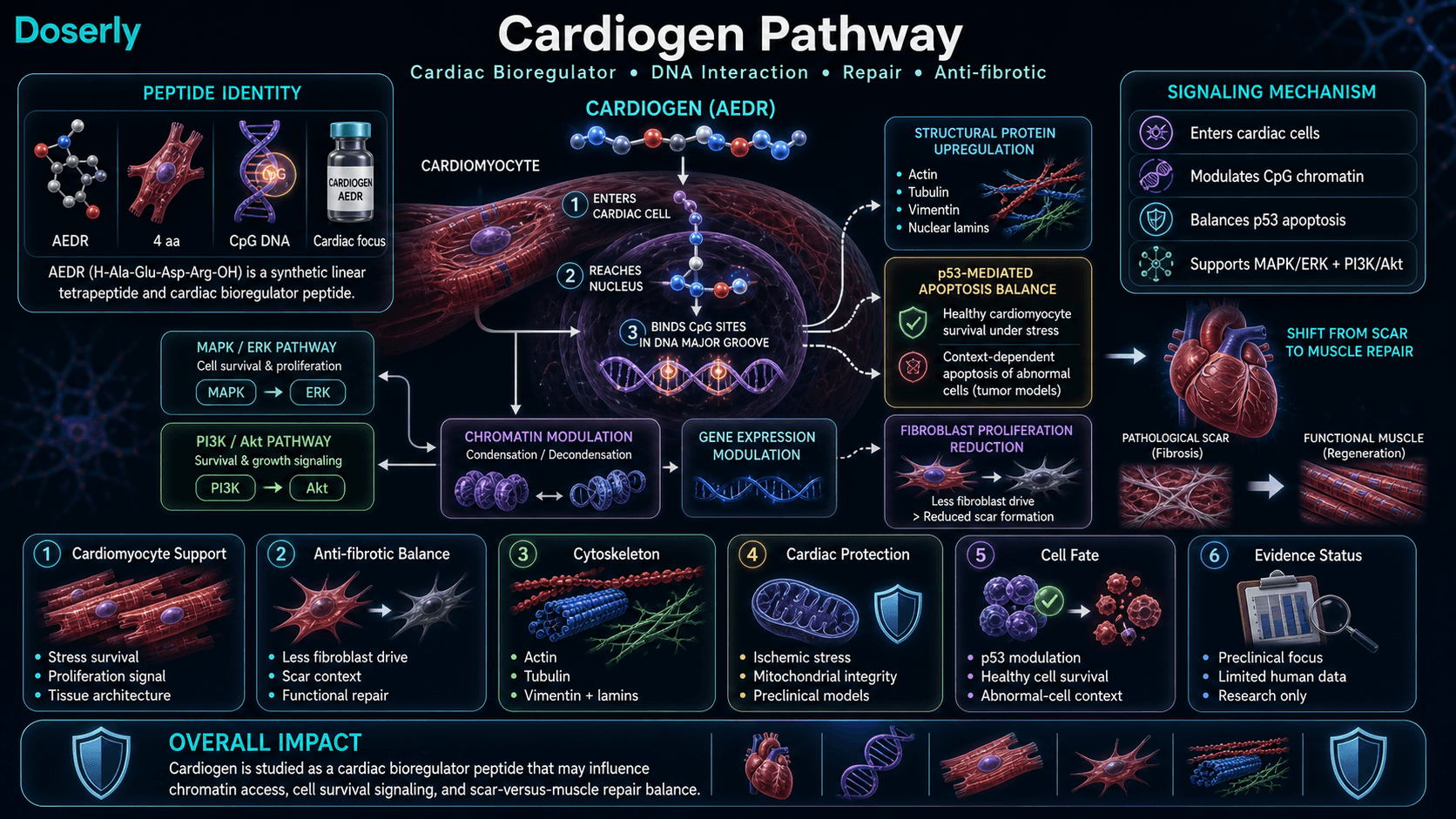
Chromatin interaction and gene expression: Research demonstrates that Cardiogen binds to DNA at CpG dinucleotide sites, influencing chromatin condensation and decondensation states. This modulates the accessibility of specific gene promoter regions, upregulating transcription of structural and functional proteins in cardiac tissue [3][4].
Cytoskeletal and nuclear matrix proteins: In cell culture models, Cardiogen upregulates expression of actin, tubulin, vimentin, and nuclear lamins [3]. These structural proteins are critical for maintaining cytoskeletal integrity and nuclear matrix function, supporting cellular mechanical resilience and repair capacity.
p53-mediated apoptosis modulation: Cardiogen suppresses overactive p53-mediated apoptosis signaling under stress conditions in cardiac tissue, allowing healthy cardiomyocytes to survive ischemic injury. Paradoxically, in M-1 sarcoma models, Cardiogen promotes apoptosis in tumor cells in a dose-dependent manner, suggesting context-dependent regulation of the p53 pathway [2][4].
MAPK/ERK and PI3K/Akt pathway modulation: Cardiogen functions as a modulator of the MAPK/ERK pathway and a substrate of the PI3K/Akt pathway, both of which are central to cell survival, proliferation, and stress response signaling [1].
Cardiomyocyte proliferation: In myocardial tissue culture from both young and aged rats, Cardiogen stimulates cardiomyocyte proliferation while simultaneously reducing fibroblast proliferation, shifting the balance from pathological scar formation toward functional cardiac muscle regeneration [5][6].
Pathway Visualization Image
Pharmacokinetics
The Basics
Cardiogen has an extremely short plasma half-life, estimated at roughly 30 to 75 seconds. This means the peptide itself is cleared from your bloodstream almost immediately after administration. If that sounds like it would not have time to work, consider that Cardiogen's mechanism does not depend on sustained plasma levels. Instead, it rapidly penetrates cells and exerts its effects inside the nucleus at the DNA level. The biological effects downstream of that nuclear interaction persist long after the peptide itself has been cleared.
Think of it like pressing a light switch: the press (the peptide in your blood) is momentary, but the light (the gene expression changes) stays on. This is why protocols typically use daily dosing despite the near-instantaneous clearance, to reinforce the gene expression signal regularly.
Cardiogen has been reported to have good oral bioavailability in animal models in addition to excellent subcutaneous bioavailability, which is unusual for a peptide. However, subcutaneous injection remains the primary administration route in research contexts, as it provides more predictable absorption. The compound dissolves readily in water and bacteriostatic water for injection.
The Science
Pharmacokinetic data for Cardiogen is limited and derives primarily from preclinical models. The reported plasma half-life of approximately 30-75 seconds classifies it among the most rapidly cleared peptides in therapeutic development [7].
This extremely short circulating half-life reflects the peptide's small molecular weight (489.48 Da) and rapid renal clearance, but does not capture the duration of its biological effect. As a DNA-binding epigenetic modulator, Cardiogen's pharmacodynamic activity extends well beyond its plasma residence time. Gene expression changes induced by chromatin remodeling persist through cell division cycles, potentially explaining the sustained effects observed in multi-day protocols [3][4].
Bioavailability data from mouse models indicates excellent subcutaneous absorption and good oral bioavailability, though specific bioavailability percentages have not been published in the accessible literature [2]. The compound's hydrophilic character (water-soluble, small molecular weight) facilitates both absorption routes. Per-kilogram dosing in mice does not scale directly to humans due to differences in metabolic rate and body surface area [2].
No human pharmacokinetic studies have been conducted, and all clearance parameters are extrapolated from animal data. The extremely short half-life suggests that frequent or high-dose administration may be necessary to achieve sustained nuclear concentrations, though optimal human dosing remains undefined.
The dosing protocols above involve numbers that matter: specific microgram amounts, reconstitution ratios, and timing windows. Getting any of these wrong compounds across every subsequent dose from that vial.
Doserly's dose and reconstitution calculators eliminate the guesswork. Enter your vial size, peptide amount, and target dose, and get the exact bacteriostatic water volume, units per tick mark, and doses per vial. The injection site tracker maps your administration history as a visual heat map across your body, flagging areas that need rest and suggesting rotation patterns. Combined with dose reminders that include compound name, amount, and route, every aspect of your daily protocol is handled with the precision it requires.
Keep multi-step protocols organized from start to finish.
Use Doserly to map compounds, timing, cycle windows, notes, and review points so complex protocols stay readable in one place.
Plan view
Protocol schedule
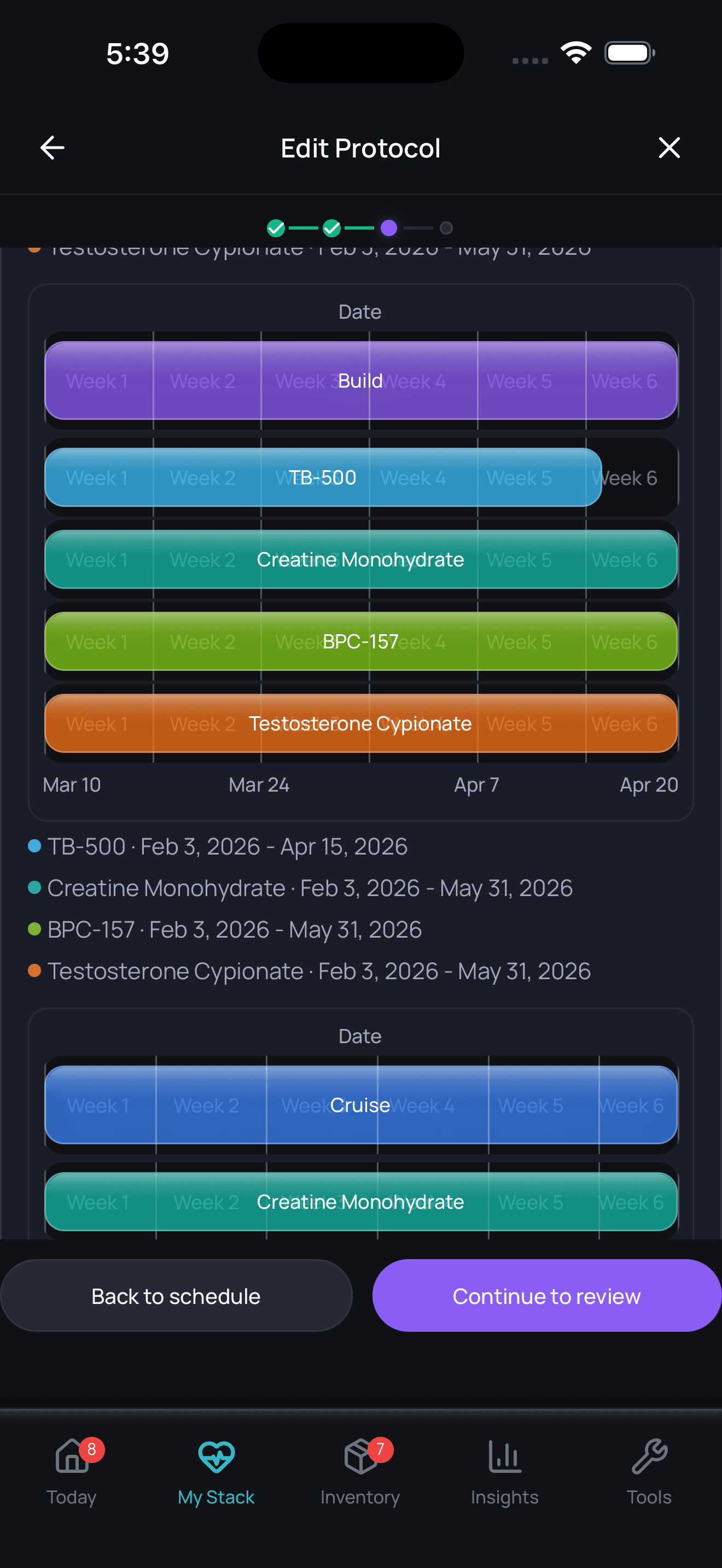
Planning views are organizational and should be aligned with professional guidance.
Research & Clinical Evidence
Cardiogen and Cardiac Protection
The Basics
The most studied application of Cardiogen is its ability to protect heart tissue during and after injury. In animal models of heart attack (myocardial infarction), daily Cardiogen administration reduced mortality by approximately threefold compared to untreated controls. The heart tissue of treated animals showed less dead tissue, better preserved structure, and higher energy reserves [1][2].
What researchers found particularly interesting is how Cardiogen supports heart cells during stress. Rather than adding something foreign, it appears to amplify the heart's own survival mechanisms, keeping cells alive that would otherwise die from the stress of inadequate blood flow. In aged animals, where the natural healing capacity is significantly diminished, Cardiogen still produced measurable improvements in cardiac tissue, suggesting potential relevance for age-related heart dysfunction [5][6].
The Science
In rodent myocardial infarction models, daily Cardiogen administration reduced post-infarction mortality approximately threefold, preserved cardiac tissue architecture, and maintained higher glycogen reserves in surviving cardiomyocytes [1][2]. The peptide reduced necrotic tissue formation and preserved metabolic function, including mitochondrial integrity and energy stores during ischemic stress [2].
Mechanistically, the cardioprotective effect correlates with upregulation of cytoskeletal proteins (actin, tubulin, vimentin) and nuclear matrix proteins (lamins), supporting structural integrity of stressed cardiomyocytes [3]. Simultaneously, Cardiogen reduces p53-mediated apoptosis in healthy cardiac tissue, allowing cell survival under conditions that would normally trigger programmed cell death [2][4].
Cardiogen and Cardiac Fibrosis
The Basics
When heart tissue is damaged, the body typically repairs it with scar tissue (fibrosis) rather than new heart muscle. While this prevents immediate failure, over time excessive scarring stiffens the heart and progressively reduces its pumping efficiency, a process called adverse cardiac remodeling that can lead to heart failure.
Cardiogen appears to shift this balance. In tissue culture studies, it stimulates the growth of heart muscle cells (cardiomyocytes) while actually slowing the growth of the cells that produce scar tissue (fibroblasts). This dual action, more muscle regeneration and less scarring, is precisely what researchers want to see in a cardiac repair compound [5][6].
The Science
In myocardial tissue culture models from both young and aged rats, Cardiogen stimulates cardiomyocyte proliferation while simultaneously inhibiting fibroblast proliferation. This differential effect reduces pathological fibrosis and promotes functional tissue regeneration rather than scar formation [5][6].
The anti-fibrotic mechanism appears to operate through modulation of fibroblast signaling factors. Research in prostate fibroblast cultures demonstrated that Cardiogen alters expression of key signaling molecules, including CXCL12, that regulate the tissue microenvironment. In senescent fibroblasts, Cardiogen normalized signaling factor levels to match or exceed those observed in young cell cultures, suggesting reversal of age-associated fibroblast dysfunction [8].
Cardiogen and Cancer (Preclinical)
The Basics
One of the more unexpected findings in Cardiogen research is its potential effect on tumor cells. While Cardiogen protects healthy heart cells from dying (by suppressing the cell death signal p53), it appears to do the opposite in cancerous cells, actually increasing the rate at which tumor cells self-destruct. This dual behavior, context-dependent rather than universal, has generated interest in the compound as a potential adjunct to cancer therapy.
In rat models of M-1 sarcoma, Cardiogen administration increased tumor cell death in a dose-dependent manner, meaning higher doses produced stronger effects. Researchers have proposed that this selectivity may relate to the abnormal blood vessel supply in tumors, though the exact mechanism remains under investigation [4].
The Science
In senescent rat models of M-1 sarcoma, Cardiogen demonstrated dose-dependent promotion of tumor cell apoptosis, a paradoxical effect given its anti-apoptotic action in cardiac tissue [4]. This context-dependent p53 modulation, suppressive in healthy cardiomyocytes and permissive or promotive in tumor cells, suggests tissue-specific or phenotype-specific regulation rather than a blanket effect on apoptosis pathways.
Researchers Levdik and Knyazkin, working through the St. Petersburg Institute of Bioregulation and Gerontology, have proposed Cardiogen as a candidate for sarcoma treatment approval in Russia based on these findings. The peptide may also enhance the efficacy of standard cancer treatments, acting synergistically rather than as a standalone agent [2][4].
Biomarker Evidence Matrix
The Evidence Strength scores below reflect the quality and volume of published research for each category. The Reported Effectiveness scores reflect community-reported outcomes from the sentiment analysis. Cardiogen's research base is predominantly preclinical (animal and in vitro studies), which caps Evidence Strength for most categories.
Category
Heart Health
- Evidence Strength (1-10)
- 5
- Reported Effectiveness (1-10)
- 7
- Summary
- Animal models show cardioprotection, reduced post-MI mortality (~3x), and preserved cardiac architecture. Community reports generally positive but extremely limited volume.
Category
Blood Pressure
- Evidence Strength (1-10)
- 3
- Reported Effectiveness (1-10)
- 5
- Summary
- Sources describe hypertension as a target condition. Community reports mixed: one user reported BP reduction, another experienced elevated resting heart rate.
Category
Heart Rate & Palpitations
- Evidence Strength (1-10)
- 2
- Reported Effectiveness (1-10)
- 4
- Summary
- No direct research on heart rate modulation. Contradictory community reports (elevated vs. reduced RHR).
Category
Inflammation
- Evidence Strength (1-10)
- 4
- Reported Effectiveness (1-10)
- 5
- Summary
- Anti-inflammatory properties described in research context (fibroblast signaling normalization). No specific community reports.
Category
Physical Performance
- Evidence Strength (1-10)
- 2
- Reported Effectiveness (1-10)
- 6
- Summary
- Limited preclinical basis. One community report of improved HIIT cardiovascular performance.
Category
Recovery & Healing
- Evidence Strength (1-10)
- 5
- Reported Effectiveness (1-10)
- 5
- Summary
- Tissue repair is a primary mechanism (fibroblast modulation, cardiomyocyte proliferation). Community discussion theoretical rather than experiential.
Category
Longevity & Neuroprotection
- Evidence Strength (1-10)
- 4
- Reported Effectiveness (1-10)
- 5
- Summary
- Epigenetic bioregulator with geroprotective framing in Khavinson research. No specific longevity outcome data.
Category
Side Effect Burden
- Evidence Strength (1-10)
- 4
- Reported Effectiveness (1-10)
- 7
- Summary
- Generally well-tolerated in preclinical models and community reports. One report of transient elevated RHR.
Categories not scored (insufficient data): Fat Loss, Muscle Growth, Weight Management, Appetite & Satiety, Food Noise, Energy Levels, Sleep Quality, Focus & Mental Clarity, Memory & Cognition, Mood & Wellbeing, Anxiety, Stress Tolerance, Motivation & Drive, Emotional Aliveness, Emotional Regulation, Libido, Sexual Function, Joint Health, Pain Management, Gut Health, Digestive Comfort, Nausea & GI Tolerance, Skin Health, Hair Health, Hormonal Symptoms, Temperature Regulation, Fluid Retention, Body Image, Immune Function, Bone Health, Cravings & Impulse Control, Social Connection, Treatment Adherence, Withdrawal Symptoms, Daily Functioning
Benefits & Potential Effects
The Basics
Cardiogen's benefits center primarily around cardiovascular support, with some intriguing secondary effects observed in preclinical research. Here is what the available data suggests:
Cardiac protection and repair: This is the strongest area of evidence. Animal studies consistently show that Cardiogen helps heart cells survive stressful conditions that would normally cause them to die. After simulated heart attacks in rats, treated animals had significantly less tissue damage, better heart structure, and lower mortality rates [1][2].
Reduced cardiac scarring: When the heart heals from injury, it typically forms scar tissue that does not contract like normal muscle. Cardiogen appears to promote new heart muscle growth while slowing scar tissue formation, potentially preserving pumping efficiency after cardiac events [5][6].
Potential anti-cancer effects: The compound shows dose-dependent promotion of tumor cell death in sarcoma models, while simultaneously protecting healthy cells. This selectivity, if confirmed in further research, could be significant [4].
Synergistic effects with standard therapies: Cardiogen may enhance the effectiveness of established heart failure and cardiac treatments, acting as a complement rather than a replacement [2].
The Science
Demonstrated preclinical benefits of Cardiogen include:
Cardioprotection: Reduced post-myocardial infarction mortality (~3-fold) in rodent models, with preservation of cardiac tissue architecture, glycogen reserves, and mitochondrial integrity during ischemic stress [1][2].
Anti-fibrotic activity: Differential stimulation of cardiomyocyte proliferation over fibroblast proliferation in tissue culture, reducing pathological fibrosis and promoting functional tissue regeneration [5][6].
Cytoskeletal reinforcement: Upregulation of actin, tubulin, vimentin, and nuclear lamins, supporting cellular structural integrity under stress conditions [3].
Context-dependent apoptosis modulation: Suppression of p53-mediated apoptosis in healthy cardiomyocytes, with paradoxical promotion of apoptosis in M-1 sarcoma tumor cells [2][4].
SASP pathway modulation: Normalization of senescence-associated secretory phenotype (SASP) markers in aging cardiovascular cells, with implications for inflammaging and age-related cardiac decline [1].
Fibroblast signaling normalization: Reversal of age-associated fibroblast dysfunction through modulation of CXCL12 and related signaling factors, restoring youthful expression profiles in senescent cells [8].
The benefits outlined above span multiple body systems, and your experience will be uniquely yours. Rather than guessing which effects are attributable to this compound versus other factors in your life, Doserly helps you log specific outcomes alongside your protocol details, building a clear picture of what's changing and when.
Over weeks and months, this creates something more useful than any anecdotal report: your own evidence-based record of how this compound affects you personally, at your specific dose, within the context of your full health protocol. When it's time to decide whether to continue, adjust, or discontinue, you have real data to inform that conversation with your healthcare provider.
Capture changes while they are still fresh.
Log symptoms, energy, sleep, mood, and other observations alongside protocol events so patterns do not live only in memory.
Trend view
Symptom timeline
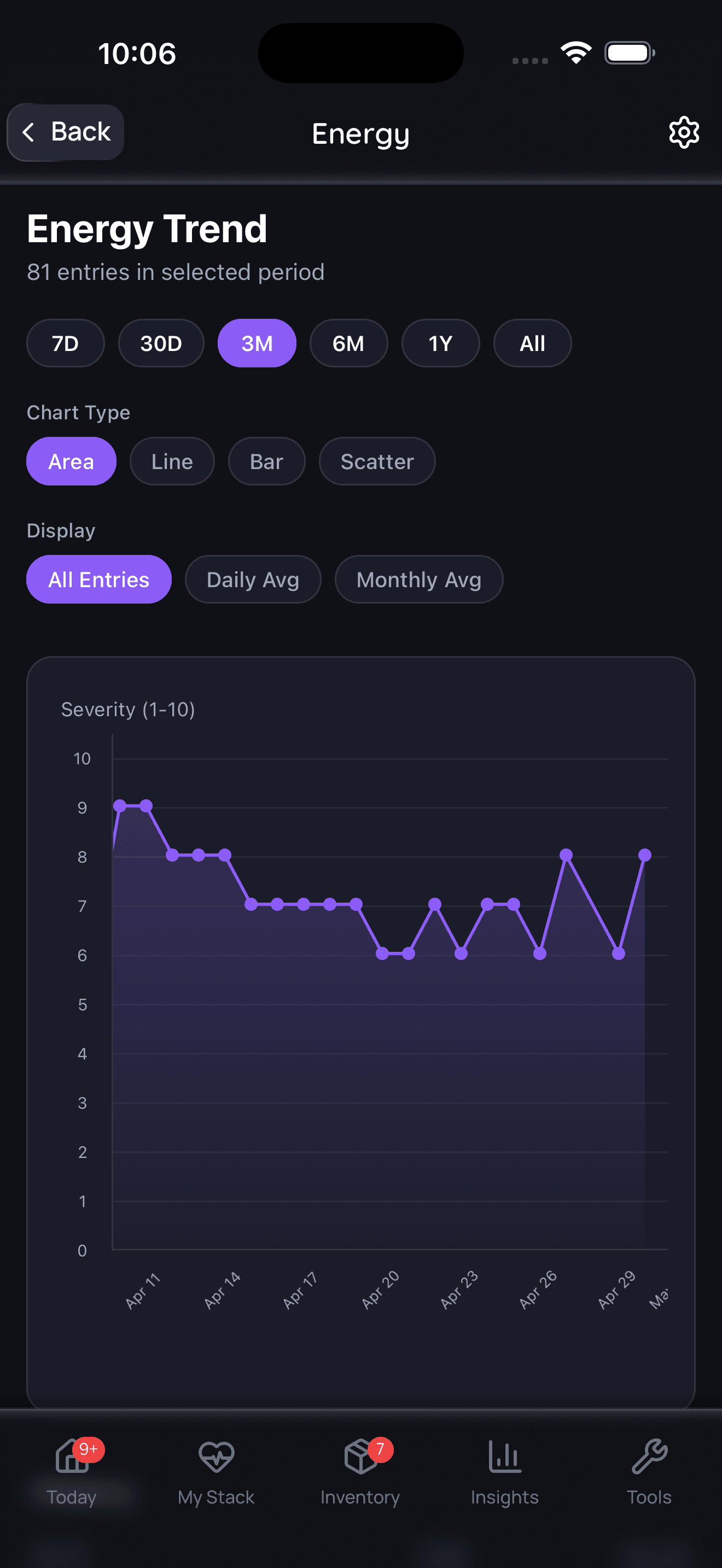
Symptom tracking is informational and should be interpreted with a qualified clinician.
Side Effects & Safety Considerations
The Basics
Based on the available preclinical data, Cardiogen appears to be well tolerated. Animal studies have not reported significant adverse effects at the doses studied, and community reports are consistent with a favorable safety profile. The most commonly mentioned issue is mild injection site reactions (redness, slight itching) which are common across all subcutaneous peptide administrations and not specific to Cardiogen.
One community member reported elevated resting heart rate when taking 2 mg daily before bed, which resolved after shifting the dose to morning administration. Another user reported the opposite effect, a reduction in heart rate and blood pressure. These contradictory reports highlight the uncertainty inherent in a compound without established human safety data.
The critical safety consideration with Cardiogen is not what side effects have been reported, but rather how little is known. No human clinical trials have been published, which means the absence of reported side effects should not be confused with established safety. Any individual considering research use should discuss this with a healthcare professional, particularly those with existing cardiac conditions, as the compound directly targets cardiac tissue and gene expression.
The Science
Preclinical toxicology data for Cardiogen indicates minimal adverse effects at therapeutic research doses in rodent models [2]. The compound's mechanism as a gene expression bioregulator operating through epigenetic modulation introduces theoretical concerns that have not been addressed through long-term safety studies:
Known observations:
- Generally well tolerated in animal models at studied doses
- Mild, transient injection site reactions (erythema, pruritus) consistent with subcutaneous peptide administration
- No significant systemic adverse effects reported in available preclinical literature [1][2]
Theoretical considerations:
- Gene expression modulation carries inherent theoretical risks of unintended transcriptional changes
- The compound's differential effect on apoptosis (suppressive in cardiac tissue, promotive in tumor tissue) suggests complex p53 pathway modulation that could have unpredictable effects in individuals with undiagnosed malignancies [4]
- The extremely short plasma half-life (30-75 seconds) means rapid clearance, which may limit the duration of any adverse effects but also requires repeated dosing that increases cumulative exposure [7]
Evidence gaps:
- No human clinical trial data
- No long-term safety studies (>6 months) in any species
- No pharmacovigilance data or adverse event registries
- No drug interaction studies
Dosing Protocols
The Basics
Dosing for Cardiogen is one of the areas where available sources diverge significantly. Because no human clinical trials have established standardized dosing, all protocols are extrapolated from animal studies and community practice, and different sources arrive at quite different numbers.
There are two general approaches that emerge from the literature. The first follows the traditional Khavinson bioregulator model: short cycles of 10 to 20 days at moderate doses, repeated two to three times per year. The second approach uses longer cycles of 8 to 16 weeks with daily dosing and gradual titration. Both approaches use once-daily subcutaneous injection.
The most frequently cited range across sources is 200 to 500 mcg daily, particularly for those following the traditional bioregulator cycling approach. Higher dosing protocols of 1 to 4 mg daily also appear in the literature, though with less consensus behind them. The variation likely reflects the complete absence of dose-finding studies in humans and different approaches to accounting for the compound's extremely short plasma half-life.
Sources generally recommend subcutaneous injection as the primary administration route. Reconstitution typically uses 2 to 3 mL of bacteriostatic water per 20 mg vial, yielding concentrations of approximately 6.67 to 10 mg/mL. A consistent daily injection time with site rotation is standard practice.
Any individual considering research with Cardiogen should consult a healthcare professional to determine an appropriate approach based on their individual health status and goals.
The Science
No standardized human dosing has been established for Cardiogen. Available dosing information derives entirely from extrapolation of preclinical data and community practice patterns [2].
Protocol A: Traditional Khavinson bioregulator cycling
- Dose: 200-500 mcg/day subcutaneously
- Duration: 10-30 days per cycle
- Frequency: 1-2 cycles per year, with 4-12 months between cycles
- Rationale: Follows established Khavinson bioregulator research protocols, which generally use short courses based on the premise that gene expression changes persist beyond the active dosing period [3]
Protocol B: Extended titration
- Starting dose: 200 mcg/day for 2 weeks
- Titration: Increase by approximately 100 mcg every 1-2 weeks
- Target: 400-500 mcg/day by weeks 5-12
- Duration: 8-16 weeks
- Rationale: Gradual titration approach designed for sustained cardiovascular support with assessment of individual tolerance [9]
Protocol C: Higher-dose extended
- Starting dose: 1,000 mcg/day (1 mg)
- Titration: Increase by approximately 1,000 mcg every 1-2 weeks
- Target: 4,000 mcg/day (4 mg) by weeks 7-12
- Duration: 8-12 weeks
- Rationale: Attempts to achieve higher nuclear concentrations given the extremely short plasma half-life. Volumes remain within subcutaneous administration norms (up to 0.6 mL per injection) [9]
Reconstitution: 3.0 mL bacteriostatic water per 20 mg vial yields approximately 6.67 mg/mL. At this concentration, 1 unit on a U-100 insulin syringe equals 0.01 mL, approximately 66.7 mcg [9].
The dosing protocols above involve numbers that matter: specific microgram amounts, reconstitution ratios, and timing windows. Getting any of these wrong compounds across every subsequent dose from that vial.
Doserly's dose and reconstitution calculators eliminate the guesswork. Enter your vial size, peptide amount, and target dose, and get the exact bacteriostatic water volume, units per tick mark, and doses per vial. The injection site tracker maps your administration history as a visual heat map across your body, flagging areas that need rest and suggesting rotation patterns. Combined with dose reminders that include compound name, amount, and route, every aspect of your daily protocol is handled with the precision it requires.
Track injection timing, draw notes, and site rotation.
Doserly helps keep syringe-related notes, injection site history, reminders, and reconstitution context together for easier review.
Injection log
Site rotation
Injection logs support record-keeping; follow clinician instructions for administration.
What to Expect
Cardiogen's effects are subtle and primarily internal. Unlike peptides that produce noticeable changes in energy, body composition, or mood, Cardiogen's primary mechanism (epigenetic gene expression modulation in cardiac tissue) operates below the level of daily awareness. What follows is synthesized from the limited community reports and general bioregulator class behavior.
Weeks 1-2: Most users report no perceptible changes during the initial phase. Some community members have noted changes in resting heart rate (both increases and decreases have been reported, which may be dose-timing dependent). One report suggests that morning dosing is better tolerated than evening dosing for some individuals.
Weeks 3-4: Continued administration. Some users in the bioregulator community describe a general sense of cardiovascular ease during exercise, though this is difficult to distinguish from placebo or fitness progression. No dramatic changes should be expected.
Weeks 5-8+: For those on extended protocols, one community member reported noticeable improvement in cardiovascular performance during high-intensity interval training (HIIT) after approximately one month of use. This represents a single anecdotal data point and should not be generalized.
Post-cycle: Bioregulator proponents suggest that epigenetic changes may persist after the active dosing period ends, which is the theoretical basis for the short-cycle approach (10-20 days, repeated periodically). No data directly validates this persistence claim in the context of Cardiogen specifically.
Important perspective: The effects of Cardiogen, if real, are likely to be most meaningful for individuals with existing cardiac concerns or age-related cardiovascular decline, not for healthy individuals seeking performance enhancement. The preclinical evidence base supports a repair and protection role, not an acute performance-boosting role.
Interaction Compatibility
Potentially Synergistic
- Vesugen — A vascular bioregulator peptide (KED: Lys-Glu-Asp) that targets blood vessel health and endothelial function. Community discussions frequently recommend pairing Cardiogen (cardiac tissue) with Vesugen (vascular tissue) for comprehensive cardiovascular support.
- Epithalon — Another Khavinson bioregulator, Epithalon targets telomerase activation and is commonly stacked with organ-specific bioregulators in longevity protocols.
- SS-31 — A mitochondria-targeting tetrapeptide that protects cardiolipin in the inner mitochondrial membrane. Both compounds have cardioprotective properties through different mechanisms, suggesting potential complementarity.
- MOTS-C — A mitochondrial-derived peptide that supports metabolic function and cellular energy production. Both compounds operate in the cardiovascular and cellular energy space through distinct pathways.
- TB-500 — Thymosin Beta-4, a tissue repair peptide with demonstrated cardiovascular regenerative applications. Both compounds target cardiac tissue repair but through different mechanisms (actin regulation vs. epigenetic modulation).
- BPC-157 — A tissue repair peptide with broad systemic effects. May complement Cardiogen's organ-specific approach with general tissue protection.
Caution / Unknown Interactions
- No formal drug interaction studies have been conducted with Cardiogen.
- Individuals using cardiovascular medications (antihypertensives, antiarrhythmics, anticoagulants) should exercise particular caution and consult their healthcare provider, as Cardiogen directly targets cardiac tissue and gene expression.
- Stacking with other cardiac-active compounds should be approached conservatively.
Not Recommended
- No specific contraindicated combinations have been identified in the available literature. This reflects a lack of interaction studies rather than confirmed safety.
Administration Guide
Materials typically required:
- Cardiogen lyophilized peptide vial (commonly available as 20 mg vials)
- Bacteriostatic water (BAC water) for reconstitution
- U-100 insulin syringes (29-31 gauge, 5/16 to 1/2 inch)
- Alcohol swabs for site preparation
- Sharps disposal container
Recommended reconstitution solution: Bacteriostatic water (0.9% benzyl alcohol) is standard for Cardiogen reconstitution. The compound dissolves readily and does not require special buffers.
Timing considerations: Sources are not unanimous on optimal timing. Most protocols specify once-daily administration at a consistent time. At least one community report suggests morning administration may be better tolerated than evening administration, as nighttime dosing was associated with elevated resting heart rate in one individual. Cardiogen does not require fasting or meal timing coordination based on available data.
Post-administration care: Monitor for injection site reactions (mild redness, itching), which are common with subcutaneous peptide administration and typically resolve within hours. Those with existing cardiac conditions should monitor heart rate and blood pressure and report any unusual changes to their healthcare provider.
Supplies & Planning
The following materials are generally associated with Cardiogen protocols:
- Peptide vials: Cardiogen is commonly available in 20 mg lyophilized vials
- Reconstitution solution: Bacteriostatic water in 10 mL bottles (approximately 2-3 mL used per vial depending on desired concentration)
- Syringes: U-100 insulin syringes (29-31 gauge). For small-volume dosing (under 10 units), 30-unit or 50-unit syringes provide better measurement precision
- Alcohol swabs: For vial stopper and injection site preparation
- Sharps container: For safe disposal of used syringes
- Storage: Refrigerator space for reconstituted vials
The number of vials needed depends on the dosing protocol selected (which varies significantly across sources) and the cycle length chosen. Consult a healthcare provider for protocol planning and use a reconstitution calculator for precise preparation measurements.
Storage & Handling
Lyophilized (powder) storage:
- Optimal: -20°C (-4°F) or below for long-term storage (36+ months stability reported)
- Acceptable: 2-8°C (35.6-46.4°F) for short-term storage (weeks to months)
- Keep in original sealed packaging with desiccant to minimize moisture exposure
- Store in a dark environment; peptides are light-sensitive
- Allow vials to reach room temperature before opening to prevent condensation inside the vial
Reconstituted (liquid) storage:
- Refrigerate immediately at 2-8°C (35.6-46.4°F) after reconstitution
- Use within 28 days when reconstituted with bacteriostatic water
- Do not freeze reconstituted solutions; freezing denatures peptides
- Avoid freeze-thaw cycles, which cause irreversible degradation
- Protect from light by wrapping vials in foil or using opaque containers
Handling best practices:
- Swab vial stopper with alcohol before each draw
- Use new sterile syringes for each administration
- Inspect reconstituted solution for clarity before each use; discard if cloudy, discolored, or containing particles
- Label vials with reconstitution date
Lifestyle Factors
Cardiogen targets cardiac tissue specifically, so lifestyle factors that support cardiovascular health are naturally complementary to any research protocol.
Cardiovascular exercise: Regular aerobic activity (zone 2 cardio, brisk walking, cycling, swimming) supports the same cardiovascular improvements Cardiogen is designed to promote. One community user who reported positive results was an active individual who performed regular HIIT training alongside Cardiogen use.
Heart-healthy nutrition: Diets rich in omega-3 fatty acids, antioxidants, and anti-inflammatory foods may complement Cardiogen's anti-fibrotic and antioxidant mechanisms. Reducing processed food intake, excessive sodium, and inflammatory seed oils supports baseline cardiovascular function.
Monitoring: For those using Cardiogen in a research context, systematic documentation of heart rate (resting and during exercise), blood pressure, and aerobic capacity provides a framework for assessing any changes. A wearable heart rate monitor or blood pressure cuff offers objective data beyond subjective impressions.
Stress management: Chronic psychological stress directly impacts cardiac health through elevated cortisol, inflammation, and sympathetic nervous system activation. Stress reduction practices (adequate sleep, meditation, social connection) support the physiological environment Cardiogen is designed to optimize.
Consistent timing: Maintaining a regular daily administration time helps establish stable biological signaling. Cardiogen's mechanism depends on consistent gene expression modulation, and routine dosing supports this.
Regulatory Status & Research Classification
United States (FDA): Cardiogen is not approved by the FDA for any therapeutic use. It is classified as a research compound and is available from research peptide suppliers for in vitro and laboratory use only. No Investigational New Drug (IND) applications have been filed, and no U.S. clinical trials are registered on ClinicalTrials.gov.
Russia: Cardiogen has been primarily researched at the St. Petersburg Institute of Bioregulation and Gerontology under Professor Vladimir Khavinson. While several Khavinson bioregulators have received Russian regulatory approval (six peptide-based pharmaceuticals), Cardiogen's specific approval status for therapeutic use in Russia is not clearly documented in the English-language literature. It may be available as a food supplement (biologically active supplement, or BAD) in Russia.
European Union (EMA): No marketing authorization has been issued for Cardiogen by the European Medicines Agency.
United Kingdom (MHRA): No approval or classification by the MHRA.
Canada (Health Canada): Not approved. No DIN or NPN assigned.
Australia (TGA): Not scheduled or approved by the Therapeutic Goods Administration.
WADA status: Cardiogen does not appear on the World Anti-Doping Agency prohibited substance list as of the most recent available list. However, athletes subject to anti-doping testing should verify current WADA status independently, as regulatory status changes frequently.
Active clinical trials: No clinical trials for Cardiogen are registered on ClinicalTrials.gov or other major international trial registries.
Regulatory status changes frequently. Always verify the current legal status of any compound in your specific country or jurisdiction before making any decisions.
FAQ
What is Cardiogen and what is it used for?
Cardiogen is a synthetic tetrapeptide bioregulator (four amino acids: Ala-Glu-Asp-Arg) developed through Russian peptide research for cardiovascular tissue support. It is classified as a research compound and has been studied in preclinical models for its potential to support cardiac cell survival, reduce fibrosis, and promote heart tissue repair. It is not approved for human therapeutic use in any jurisdiction.
How does Cardiogen differ from other heart-supporting peptides?
Unlike peptides such as TB-500 or BPC-157 that promote tissue repair through receptor-mediated signaling, Cardiogen is proposed to work at the epigenetic level by entering cell nuclei and directly modulating gene expression. It belongs to the Khavinson bioregulator class, which differs from most Western peptide therapeutics in its mechanism and research tradition.
What dosage of Cardiogen do sources report?
Based on available sources, commonly reported dosing ranges vary significantly. Conservative protocols describe 200-500 mcg daily, while other sources report ranges up to 1-4 mg daily. Cycle lengths range from 10-20 days (traditional bioregulator cycling) to 8-16 weeks (extended protocols). No standardized human dosing has been established through clinical trials. Anyone considering research use should consult a qualified healthcare professional.
Is Cardiogen safe?
Preclinical data from animal studies suggests general tolerability with minimal reported adverse effects. However, no human clinical trials have been published, which means the safety profile in humans is not established. The absence of reported side effects in animals does not guarantee safety in humans. Individuals with existing cardiac conditions should exercise particular caution and consult their healthcare provider.
Can Cardiogen be taken orally?
Animal studies have reported good oral bioavailability for Cardiogen, which is unusual for a peptide. However, subcutaneous injection is the primary administration route in research protocols, as it provides more predictable absorption. The Khavinson bioregulator tradition also includes capsule formulations, though these are more common in Russia.
Is there any human clinical evidence for Cardiogen?
No. All published evidence for Cardiogen derives from in vitro cell culture studies and animal (primarily rodent) models. The research originates primarily from the St. Petersburg Institute of Bioregulation and Gerontology in Russia. No human clinical trials have been registered or published in major international medical journals.
How long does it take for Cardiogen to show effects?
Based on the limited community reports available, perceptible effects (if any) may take several weeks to become noticeable. One community member reported improved cardiovascular performance during high-intensity exercise after approximately one month of daily use. Bioregulator proponents suggest that gene expression changes may persist beyond the active dosing period, though this is not directly validated.
Sources & References
- Khavinson VKh et al. "Senescence-Associated Secretory Phenotype of Cardiovascular System Cells and Inflammaging: Perspectives of Peptide Regulation." MDPI Cells Journal, 2023. Review of peptide bioregulators including Cardiogen in cardiovascular inflammaging.
- Khavinson VKh et al. "Peptide Regulation of Gene Expression: A Systematic Review." International Journal of Molecular Sciences, MDPI. Comprehensive review of cardiovascular bioregulator mechanisms including Cardiogen gene expression effects.
- Khavinson VKh. "Tetrapeptide H-Ala-Glu-Asp-Arg-OH stimulates expression of cytoskeletal and nuclear matrix proteins." Bulletin of Experimental Biology and Medicine, vol. 154, 2012. https://pubmed.ncbi.nlm.nih.gov/23330070/ — Primary study demonstrating Cardiogen's upregulation of actin, tubulin, vimentin, and nuclear lamins.
- Levdik NV, Knyazkin IV. "Tumor-modifying effect of cardiogen peptide on M-1 sarcoma in senescent rats." Bulletin of Experimental Biology and Medicine, vol. 148, no. 3, pp. 433-436, 2009. doi: 10.1007/s10517-010-0730-9. https://pubmed.ncbi.nlm.nih.gov/19442080/ — Demonstrates dose-dependent pro-apoptotic effect in tumor cells.
- Chalisova NI et al. "The effect of the amino acids and cardiogen on the development of myocard tissue culture from young and old rats." Advances in Gerontology (Uspekhi Gerontologii), vol. 22, no. 3, pp. 409-413, 2009. https://pubmed.ncbi.nlm.nih.gov/20210189/ — Key study showing differential effects on cardiomyocyte vs. fibroblast proliferation.
- Khavinson VKh et al. "Short peptides and the prevention of cardiac pathology." Biogerontology, 2018. https://pubmed.ncbi.nlm.nih.gov/30151145/ — Review of short peptide bioregulators in cardiac protection.
- Khavinson VKh et al. "Peptides and ageing: molecular mechanisms of peptide bioregulation." Biogerontology, 2003. — Foundational review of Khavinson peptide bioregulator mechanisms including pharmacokinetic considerations.
- Khelfets OV, Poliakova VO, Kvetnoi IM. "Peptidergic regulation of the expression of signal factors of fibroblast differentiation in the human prostate gland in cell aging." Advances in Gerontology (Uspekhi Gerontologii), vol. 23, no. 1, pp. 68-70, 2010. — Demonstrates Cardiogen's normalization of fibroblast signaling factors.
- Khavinson VKh et al. "Peptide bioregulators: experimental and clinical studies of geroprotective agents." Advances in Gerontology, 2016. https://pubmed.ncbi.nlm.nih.gov/27081554/ — Review of clinical applications and dosing approaches for bioregulatory peptides.
- Khavinson VKh. "Epigenetic regulation of heart tissue by short peptides." Cell Cycle, 2016. https://pubmed.ncbi.nlm.nih.gov/27081554/ — Mechanism of epigenetic cardiac tissue regulation by short peptides.
- Khavinson VKh. "Cardiogen: Potential for stimulating heart regeneration." 2014. https://pubmed.ncbi.nlm.nih.gov/24711542/ — Study on Cardiogen's cardiac regeneration potential.
- Begley L, Monteleon C, Shah RB, Macdonald JW, Macoska JA. "CXCL12 overexpression and secretion by aging fibroblasts enhance human prostate epithelial proliferation in vitro." Aging Cell, vol. 4, no. 6, pp. 291-298, 2005. doi: 10.1111/j.1474-9726.2005.00173.x. — Referenced for fibroblast aging and CXCL12 signaling context.
Related Peptide Guides
- SS-31 (Elamipretide) — Mitochondria-targeting tetrapeptide with cardioprotective properties
- TB-500 (Thymosin Beta-4) — Tissue repair peptide with cardiovascular regenerative applications
- BPC-157 — Broad-spectrum tissue repair peptide
- MOTS-C — Mitochondrial-derived peptide supporting metabolic and cellular energy function
- Epithalon — Khavinson bioregulator targeting telomerase activation
- GHK-Cu — Copper peptide with tissue remodeling and gene expression effects
- Bronchogen — Lung-specific Khavinson bioregulator (same research lineage)
- Pinealon — Brain-specific Khavinson bioregulator (same research lineage)
- Humanin — Mitochondrial-derived peptide with cytoprotective properties
- Vilon — Immune Khavinson bioregulator peptide
Need the reconstitution math for Cardiogen: Complete Research Guide?
Open the calculator with Cardiogen: Complete Research Guide prefilled to estimate concentration, draw volume, and related measurement math from the reconstitution details you already have.