
KPV: Complete Research Guide
On this page
Quick Reference Card
Attribute
Also Known As
- Detail
- alpha-MSH(11-13), Lys-Pro-Val, alpha-MSH C-terminal tripeptide
Attribute
Administration
- Detail
- Injectable (subcutaneous), Oral, Topical
Attribute
Research Status
- Detail
- Research Compound. FDA Category 2 ("Substance with Safety Concerns"). No FDA approval. No human clinical trials registered. Compounding prohibited under both 503A and 503B pathways.
Attribute
Typical Dose Range
- Detail
- SubQ: 200-500 mcg/day; Oral: 500-1,500 mcg/day
Attribute
Half-Life
- Detail
- Approximately 1-2 hours (estimated from preclinical data)
Attribute
Cycle Length
- Detail
- 4-12 weeks, with some protocols extending to 16 weeks
Attribute
Storage
- Detail
- Lyophilized: -20C or below; Reconstituted: 2-8C, use within 30 days
Overview / What Is KPV?
The Basics
KPV is a tiny fragment of a naturally occurring hormone called alpha-MSH (alpha-melanocyte-stimulating hormone). It consists of just three amino acids: lysine, proline, and valine. Your body produces alpha-MSH as part of its inflammatory control system, and KPV represents the specific piece of that hormone responsible for calming inflammation.
What makes KPV unusual is what it does not do. Its parent hormone, alpha-MSH, causes skin darkening, affects appetite, and activates various receptors throughout the body. KPV strips all of that away and retains only the anti-inflammatory action. There are no pigmentation changes, no appetite effects, and no receptor binding. It works through a completely different pathway than its parent molecule.
People are interested in KPV primarily for three reasons: gut inflammation (particularly inflammatory bowel conditions), skin conditions (eczema, psoriasis, rosacea), and general immune modulation (including mast cell-related issues). It is one of the few peptides that shows meaningful activity through both oral and injectable routes, which expands how it can be used depending on the target tissue.
The evidence base is entirely preclinical. Over two decades of research across multiple organ systems have produced zero human clinical trials. The strongest data comes from colitis models in mice, where KPV consistently reduces inflammation markers and preserves tissue integrity. The scientific question has largely shifted from "does KPV work?" to "can it be delivered effectively to the right tissue in humans?"
The Science
KPV (Lys-Pro-Val) is the C-terminal tripeptide (residues 11-13) of alpha-melanocyte-stimulating hormone (alpha-MSH), a 13-amino acid neuropeptide cleaved from the precursor protein proopiomelanocortin (POMC). Despite its derivation from alpha-MSH, KPV does not bind melanocortin receptors (MC1R-MC5R) and does not elevate intracellular cyclic AMP (cAMP), distinguishing it from the receptor-dependent pharmacology of the parent molecule [1][2].
The functional dissociation between the two regions of alpha-MSH was established by Getting et al. (2003), who demonstrated that the core pharmacophore (HFRW, residues 6-9) mediates receptor-dependent signaling, while the C-terminal KPV sequence mediates receptor-independent anti-inflammatory activity through intracellular NF-kB blockade [2]. This makes KPV the only known alpha-MSH fragment that operates through an entirely receptor-independent anti-inflammatory mechanism.
At 342.43 daltons, KPV is one of the smallest bioactive peptides studied for anti-inflammatory applications. Its molecular formula is C16H30N4O4, with a CAS number of 67727-97-3 [3]. The small size facilitates efficient cellular uptake via peptide transporters but also contributes to rapid enzymatic degradation, which represents the primary pharmacokinetic challenge for therapeutic development.
Molecular Identity
Attribute
Common Names
- Detail
- KPV, alpha-MSH(11-13), Lys-Pro-Val
Attribute
Amino Acid Sequence
- Detail
- Lys-Pro-Val (H-Lys-Pro-Val-OH)
Attribute
Sequence Length
- Detail
- 3 amino acids (tripeptide)
Attribute
Molecular Formula
- Detail
- C16H30N4O4
Attribute
Molecular Weight
- Detail
- 342.43 Da
Attribute
CAS Number
- Detail
- 67727-97-3
Attribute
Target
- Detail
- NF-kB pathway (importin-alpha3 blockade); PepT1 transporter-mediated uptake
Attribute
Functional Class
- Detail
- Anti-inflammatory tripeptide; alpha-MSH fragment
Attribute
Origin
- Detail
- Endogenous; C-terminal fragment of alpha-MSH, derived from POMC
Attribute
Solubility
- Detail
- Water-soluble (sterile water, bacteriostatic water)
Attribute
Stability
- Detail
- Optimal at pH 5.0-6.5; susceptible to peptidase degradation
Mechanism of Action
The Basics
Most anti-inflammatory compounds work by attaching to a receptor on the outside of a cell and sending a signal inward. KPV takes a different approach entirely. It uses a nutrient transporter called PepT1 to enter cells directly, travels to the nucleus (the cell's command center), and physically prevents the cell's master inflammation switch from turning on.
This inflammation switch is called NF-kB. Think of NF-kB as a control panel for inflammatory genes. When NF-kB reaches the nucleus and flips the switch, your cells start producing inflammatory molecules (cytokines) like TNF-alpha, IL-6, and IL-1beta. KPV blocks NF-kB from reaching that control panel in the first place, so the inflammatory genes never get activated.
There is an especially clever feature in how KPV works in the gut. The PepT1 transporter that KPV uses to enter cells is normally found only in the small intestine. But when the colon becomes inflamed (as in IBD), PepT1 gets upregulated in the inflamed tissue. This means the more inflamed the tissue is, the more efficiently it absorbs KPV. Healthy tissue, which does not express PepT1 in the colon, remains largely unaffected. It is essentially a self-targeting system.
KPV also has direct antimicrobial properties against bacteria like Staphylococcus aureus and fungi like Candida albicans. This is the opposite of conventional anti-inflammatory drugs (like corticosteroids), which reduce inflammation but increase infection risk. KPV reduces inflammation while simultaneously fighting certain microbes.
The Science
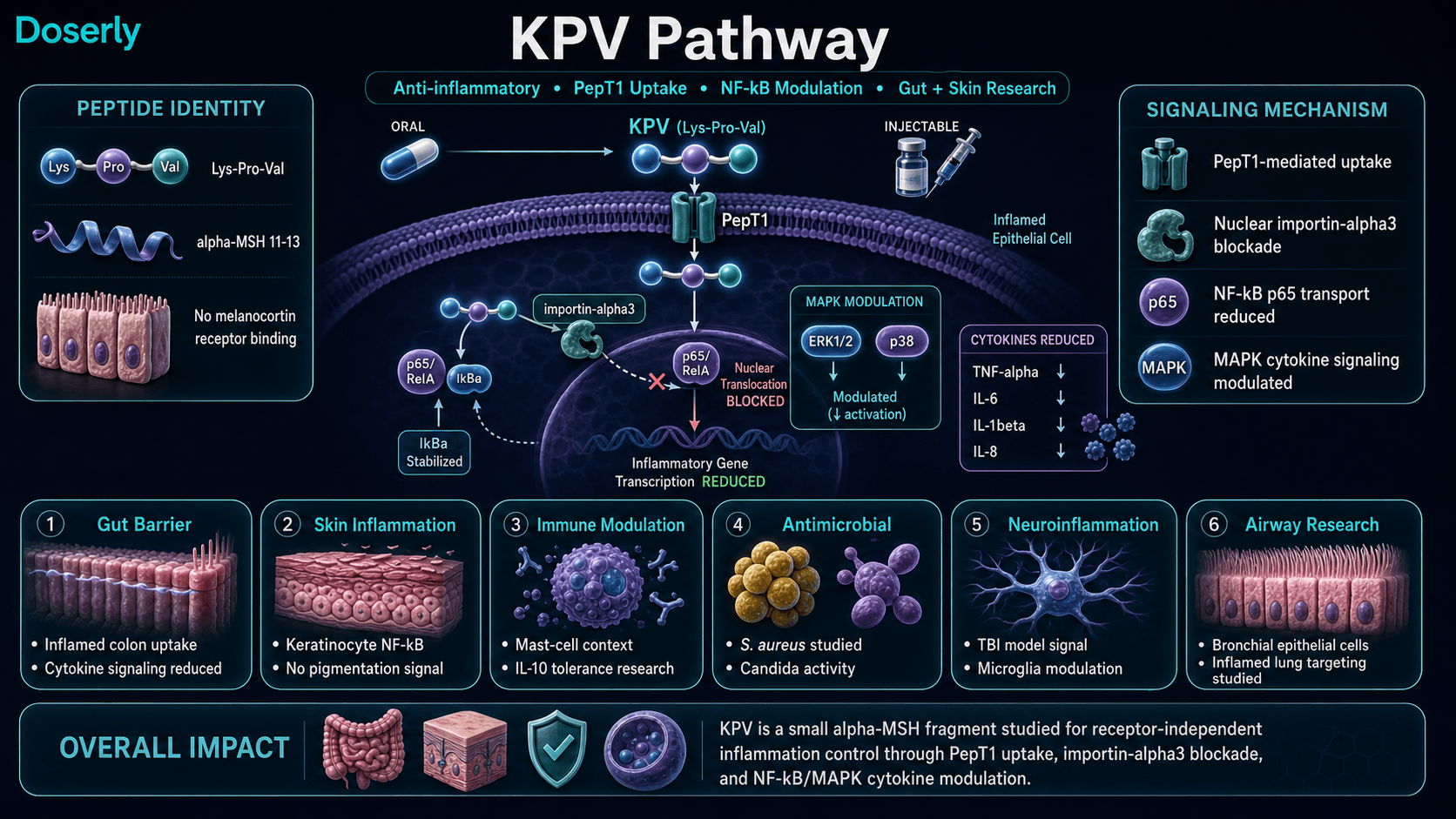
KPV's mechanism of action proceeds through three distinct steps, as characterized primarily by Dalmasso et al. (2008) and Land (2012) [4][5].
Step 1: PepT1-mediated cellular uptake. PepT1 (SLC15A1) is a proton-coupled oligopeptide transporter expressed on the apical membrane of intestinal epithelial cells. KPV enters cells via PepT1 with a Michaelis constant (Km) of approximately 160 micromolar, among the lowest Kms reported for any hPepT1 substrate, indicating exceptionally high transporter affinity [4]. Blocking PepT1 with competitive substrates (glycyl-leucine) or using PepT1-deficient cells abolishes KPV's anti-inflammatory effect entirely [4]. Critically, PepT1 expression is induced in inflamed colonic tissue during IBD, creating disease-site-specific uptake that concentrates KPV where inflammation is active [4].
Step 2: Nuclear accumulation and importin-alpha3 blockade. Following cellular entry, KPV migrates to the nucleus, achieving exclusive nuclear localization by approximately five hours post-treatment [5]. The intranuclear target is importin-alpha3, a nuclear transport receptor that shuttles the p65/RelA subunit of NF-kB into the nucleus. KPV competitively binds importin-alpha3, preventing p65 nuclear translocation in a dose-dependent manner [5]. Computational modeling predicts KPV interacts with armadillo repeats 7 and 8 of the importin molecule, the same region responsible for shuttling NF-kB, HIF-1alpha, and STAT1 [5]. No crystal structure of the KPV-importin complex has been resolved.
Step 3: Downstream cytokine suppression. With p65 retained in the cytoplasm, IkBa (the inhibitory protein that normally sequesters NF-kB) is stabilized. Half-maximal IkBa accumulation occurs at approximately 66 minutes, with statistically significant peaks by 120 minutes [5]. KPV additionally suppresses the MAPK pathway (ERK1/2, p38) at nanomolar concentrations in intestinal epithelial cells and T cells [4]. The combined NF-kB and MAPK inhibition reduces production of multiple pro-inflammatory cytokines: IL-6, IL-8, IL-12, IFN-gamma, TNF-alpha, and IL-1beta [4][1].
KPV also demonstrates direct antimicrobial activity. Cutuli et al. (2000) showed that alpha-MSH peptides, including KPV, inhibit Staphylococcus aureus colony formation at picomolar concentrations and reduce Candida albicans viability through cAMP elevation in the pathogen, not in host cells. Neutrophil killing capacity is enhanced rather than impaired [6][7].
Pathway Visualization Image
Pharmacokinetics
The Basics
KPV clears from the body relatively quickly, with an estimated half-life of 1 to 2 hours based on preclinical data. This means the peptide itself does not stay in your system very long, but its effects can persist beyond its physical presence because once NF-kB is blocked, the inflammatory genes remain suppressed even after KPV is cleared.
Oral KPV has a specific advantage for gut-related applications. Because PepT1 is expressed in intestinal tissue, orally administered KPV can be absorbed directly at the site of gut inflammation without needing to enter systemic circulation first. This means oral KPV can work locally in the gut even though it has limited systemic bioavailability.
For systemic effects (skin conditions, general inflammation), subcutaneous injection provides more reliable delivery. Free KPV is nearly completely degraded in simulated gastric and intestinal fluid, with only about 9% surviving two hours in simulated stomach acid. This is why advanced delivery systems (nanoparticles, prodrugs) are a major focus of current research.
The Science
No formal pharmacokinetic studies have been published in humans for KPV. The available data derives from preclinical models and physicochemical estimates.
Half-life: Estimated at 1-2 hours based on theoretical first-order elimination kinetics for a 342 Da unmodified tripeptide [3]. As an endogenous peptide fragment, KPV is subject to rapid peptidase degradation. Published rodent colitis studies demonstrate effective oral dosing at approximately 200 mcg per mouse daily (~8-10 mg/kg), which translates to a human equivalent dose (HED) of approximately 0.65-0.81 mg/kg by FDA body surface area conversion (45-57 mg/day for a 70 kg individual) [3][4].
Oral bioavailability: Free KPV survival in simulated GI fluid is poor (approximately 9% at 2 hours in simulated gastric fluid) [8]. However, the PepT1-mediated uptake mechanism in intestinal epithelium provides a local absorption pathway that partially circumvents the need for systemic bioavailability when targeting gut inflammation.
Steady state: With regular dosing, theoretical steady-state concentrations are reached at approximately 9 hours (4-5 half-lives with a ~2-hour half-life) [3].
Pharmacodynamic persistence: Effects persist beyond peptide clearance. IkBa stabilization (a proxy for NF-kB suppression) reaches half-maximal levels at ~66 minutes and peaks at 120 minutes post-treatment [5]. In colitis models, therapeutic benefit is assessed over days to weeks of daily dosing [4][9].
Drug delivery advances (2024): The proKPV self-immolative prodrug conjugate (Zhao et al., 2024) wraps KPV in a PEG stealth corona with an ROS-responsive release module. The ~81 nm nanoparticles survive GI transit intact and release active KPV selectively at inflamed sites where ROS concentrations are elevated, achieving 3.8-fold greater colonic accumulation and therapeutic efficacy at 20-fold lower doses compared to unformulated KPV [8].
Research & Clinical Evidence
KPV and Gut Inflammation
The Basics
Gut health is where KPV has the strongest research backing. In animal studies of colitis (inflammation of the colon), oral KPV consistently reduces disease severity, preserves colon length, and lowers inflammatory markers. The self-targeting mechanism, where inflamed gut tissue absorbs more KPV due to increased PepT1 expression, makes it particularly well-suited for this application.
Community reports align with the preclinical data. Multiple individuals with IBD, Crohn's disease, or general gut inflammation report improvements in digestive comfort, Bristol stool scale normalization, and reduced bloating. Some report noticeable improvement within two weeks, while others note that benefits disappear quickly after stopping, suggesting KPV suppresses inflammation rather than resolving its underlying cause.
The Science
Dalmasso et al. (2008) demonstrated that oral KPV significantly reduced inflammation in both DSS-induced and TNBS-induced colitis models in mice. KPV reduced loss of body weight, colonic myeloperoxidase (MPO) activity, and histological signs of inflammation, while decreasing pro-inflammatory cytokine mRNA levels (IL-6, IL-12, IL-1beta, TNF-alpha) [4]. The 2008 study by Kannengiesser et al. confirmed these findings in additional murine IBD models [9].
Advanced delivery formulations have built on this foundation. Xiao et al. (2017) developed hyaluronic acid-functionalized KPV nanoparticles (HA-KPV-NPs) that exploit CD44 overexpression on inflamed colonocytes, adding a second targeting layer. Oral delivery in chitosan/alginate hydrogel for pH-triggered colonic release showed stronger mucosal protection and TNF-alpha downregulation than uncoated nanoparticles [10]. A 2024 co-assembled KPV+FK506 (tacrolimus) nanodrug combined anti-inflammatory and immunosuppressive mechanisms, outperforming either agent alone in DSS colitis and restoring tight junction proteins (ZO-1, Claudin-5, Occludin-1) [11]. No human clinical trials have been conducted for any KPV gut application.
KPV and Skin Health
The Basics
KPV shows promise for inflammatory skin conditions. In research models, it reduces redness, irritation, and inflammatory markers in skin cells at levels comparable to its parent hormone, all without causing any pigmentation changes. Community members report improvements in eczema, rosacea, and post-procedure skin recovery.
What sets KPV apart from conventional topical anti-inflammatories is its concurrent antimicrobial activity. Corticosteroids, the standard treatment for inflammatory skin conditions, reduce inflammation but make the skin more vulnerable to infection. KPV does the opposite: it reduces inflammation while simultaneously fighting skin pathogens like Staphylococcus aureus and Candida albicans.
One practical challenge remains: KPV does not penetrate intact skin well on its own. Passive transdermal delivery is negligible, meaning simple topical creams without active enhancement technology may not deliver meaningful amounts to the target tissue.
The Science
KPV suppresses NF-kB activation in human keratinocytes and dermal microvascular endothelial cells to a degree comparable to full-length alpha-MSH, without melanotropic effects [1]. In mouse models, topical and intravenous KPV suppress chemical-induced contact dermatitis and induce hapten-specific tolerance through an IL-10-dependent mechanism [1]. This tolerance induction represents an immune memory effect distinct from symptomatic relief.
Sung et al. (2025) demonstrated that KPV at 50 mcg/mL restored cell viability in keratinocytes exposed to PM10 fine particulate matter by blocking caspase-1 activation and reducing IL-1beta secretion, validated in three-dimensional skin models [12]. Antimicrobial activity against S. aureus occurs at picomolar concentrations, while neutrophil killing capacity is enhanced rather than impaired [6][7].
Transdermal delivery of free KPV yields permeation below detection limits (0.01 mcg/mL) through intact skin. Combined iontophoresis and microneedle pretreatment increases penetration 35-fold, with KPV reaching beyond 100 micrometers into the lower epidermis [13]. Two expired US patents (6,894,028 and 7,232,804) covered KPV in dermatological formulations at 0.5-5% concentration [14].
KPV and Neuroinflammation
The Basics
There is limited but intriguing evidence suggesting KPV may have neuroprotective properties. In a single animal study of traumatic brain injury, a single dose of KPV given shortly after injury reduced brain damage by approximately 24%. However, this study has not been independently replicated, and no human data exists for neurological applications.
The Science
Schaible et al. (2013) conducted a blinded, randomized study in mice with controlled cortical impact (CCI). A single intraperitoneal injection of KPV at 1 mg/kg, administered 30 minutes post-injury, reduced secondary brain lesion volume by approximately 24% versus vehicle at 24 hours and decreased neuronal apoptosis and microglial activation in peri-lesional tissue. MC1R expression increased 3-fold by 12 hours post-TBI [15]. KPV's small molecular weight (342 Da) makes blood-brain barrier penetration plausible, though direct pharmacokinetic demonstration has not been performed. This study has not been replicated by an independent group.
KPV and Airway Inflammation
The Basics
Early research suggests KPV may suppress inflammation in airway cells through the same mechanism it uses elsewhere, blocking NF-kB signaling. A recent advance showed that a KPV prodrug delivered orally actually accumulated in inflamed lungs in animal models, suggesting potential applications beyond the gut.
The Science
Land (2012) demonstrated NF-kB suppression in human bronchial epithelial cells through the importin-alpha3 mechanism [5]. The 2024 proKPV prodrug unexpectedly accumulated in inflamed lungs and showed anti-inflammatory efficacy in acute lung injury mice, expanding the potential therapeutic landscape beyond GI and dermatological applications [8].
Biomarker Evidence Matrix
Category
Inflammation
- Evidence Strength
- 6/10
- Reported Effectiveness
- 8/10
- Summary
- Strong preclinical anti-inflammatory activity across multiple organ systems. Consistent positive community reports. Zero human data.
Category
Gut Health
- Evidence Strength
- 6/10
- Reported Effectiveness
- 7/10
- Summary
- Robust multi-study preclinical data in colitis models (DSS, TNBS). PepT1-mediated targeting is well-characterized. Community reports align with preclinical findings.
Category
Digestive Comfort
- Evidence Strength
- 4/10
- Reported Effectiveness
- 6/10
- Summary
- Preclinical gut data is strong but focused on inflammation markers rather than comfort endpoints. Mixed community reports; some initial GI upset.
Category
Skin Health
- Evidence Strength
- 5/10
- Reported Effectiveness
- 7/10
- Summary
- In-vitro and animal data showing NF-kB suppression in keratinocytes. Antimicrobial co-activity unique advantage. Community reports of eczema and inflammatory skin improvement.
Category
Immune Function
- Evidence Strength
- 5/10
- Reported Effectiveness
- 6/10
- Summary
- Mast cell stabilization and immune modulation supported by mechanism. MCAS community reports are positive. Data thin on direct immunological endpoints.
Category
Hair Health
- Evidence Strength
- 3/10
- Reported Effectiveness
- 5/10
- Summary
- L'Oreal patent exists for anagen phase extension. Very limited community data. Confounded with multi-peptide stacks.
Category
Pain Management
- Evidence Strength
- 3/10
- Reported Effectiveness
- 6/10
- Summary
- No direct analgesic studies. Pain relief likely secondary to inflammation reduction. Community reports positive but heavily confounded.
Category
Joint Health
- Evidence Strength
- 3/10
- Reported Effectiveness
- 5/10
- Summary
- Theoretical benefit via anti-inflammatory mechanism. Expert opinion supportive. Community data thin and confounded.
Category
Recovery & Healing
- Evidence Strength
- 4/10
- Reported Effectiveness
- 6/10
- Summary
- Wound healing support demonstrated in preclinical models. Community reports of shortened flare-ups and faster recovery.
Category
Energy Levels
- Evidence Strength
- 2/10
- Reported Effectiveness
- 5/10
- Summary
- No direct evidence for energy effects. Mixed community reports; some report increased energy, others fatigue (herx).
Category
Sleep Quality
- Evidence Strength
- 2/10
- Reported Effectiveness
- 4/10
- Summary
- No preclinical sleep data. Conflicting community reports.
Category
Focus & Mental Clarity
- Evidence Strength
- 3/10
- Reported Effectiveness
- 5/10
- Summary
- One TBI neuroprotection study. Mixed community reports; some brain fog resolution, others report headaches.
Category
Side Effect Burden
- Evidence Strength
- 4/10
- Reported Effectiveness
- 6/10
- Summary
- Generally well-tolerated in preclinical studies. No LD50 at 100 mg/kg. Herx reactions notable in community. Zero human safety data.
Category
Mood & Wellbeing
- Evidence Strength
- 2/10
- Reported Effectiveness
- 5/10
- Summary
- No direct mood studies. Limited community data.
Category
Nausea & GI Tolerance
- Evidence Strength
- 3/10
- Reported Effectiveness
- 5/10
- Summary
- Initial GI discomfort reported with oral administration. Generally resolves.
Category
Treatment Adherence
- Evidence Strength
- 3/10
- Reported Effectiveness
- 6/10
- Summary
- Multiple routes (oral, injectable, topical) increase flexibility. Herx reactions challenge some users.
Categories scored: 16
Categories with community data: 16
Categories not scored (insufficient data): Fat Loss, Muscle Growth, Weight Management, Appetite & Satiety, Food Noise, Memory & Cognition, Anxiety, Stress Tolerance, Motivation & Drive, Emotional Aliveness, Emotional Regulation, Libido, Sexual Function, Physical Performance, Heart Health, Blood Pressure, Heart Rate & Palpitations, Hormonal Symptoms, Temperature Regulation, Fluid Retention, Body Image, Bone Health, Longevity & Neuroprotection, Cravings & Impulse Control, Social Connection, Withdrawal Symptoms, Daily Functioning
Benefits & Potential Effects
The Basics
KPV's benefits center on one core capability: reducing inflammation. Nearly everything positive that has been observed in research or reported by community members traces back to this single mechanism. The inflammation switch (NF-kB) that KPV blocks is involved in conditions ranging from gut disease to skin problems to autoimmune flares, which is why the same peptide shows up in discussions about such different health concerns.
The strongest evidence supports gut inflammation reduction. In animal models of colitis, oral KPV reduces disease severity scores, preserves colon tissue, and lowers inflammatory markers. For skin, KPV offers a unique combination: anti-inflammatory effects comparable to established treatments, plus antimicrobial activity that conventional anti-inflammatories lack. Community members with mast cell activation syndrome (MCAS) report that KPV calms histamine-related symptoms, sometimes noticeably within hours.
Some community members report secondary benefits that likely stem from reduced inflammation: improved energy, better mental clarity, reduced pain, and improved sleep. These are harder to attribute directly to KPV, especially since many users take it alongside other compounds.
It is important to note that all evidence is preclinical. No human clinical trials exist for any KPV application. Community reports, while numerous and often specific, represent uncontrolled observations that cannot establish causation.
The Science
Intestinal inflammation: Oral KPV reduces disease activity index, preserves colon length, decreases MPO activity, and downregulates pro-inflammatory cytokine mRNA in both DSS and TNBS colitis models [4][9]. PepT1-mediated uptake concentrates therapeutic effect at inflamed mucosa [4].
Dermatological inflammation: KPV suppresses NF-kB in keratinocytes and endothelial cells without melanotropic effects [1]. Induces hapten-specific tolerance via IL-10 signaling [1]. Protects keratinocytes from particulate matter-induced apoptosis [12].
Antimicrobial activity: Bactericidal against S. aureus at picomolar concentrations; fungicidal against C. albicans. Mechanism involves pathogen cAMP elevation. Neutrophil function is preserved [6][7]. This dual anti-inflammatory/antimicrobial profile is the inverse of conventional immunosuppressants [7].
Neuroprotection (preliminary): Single-dose IP injection reduced secondary TBI lesion volume by ~24% in mice [15]. Not replicated.
Mast cell stabilization: Mechanistically plausible via NF-kB inhibition. No published dose-response studies on specific mast cell activation markers (tryptase, histamine, prostaglandin D2) [1].
Reading about potential benefits is the starting point. Knowing whether you're actually experiencing them is where real value begins. Doserly lets you track the specific health markers that matter for your protocol, from body composition and energy levels to sleep quality, mood, and recovery time, building a personal dataset that goes beyond subjective impressions.
The app's proactive monitoring doesn't wait for you to notice a problem. It surfaces patterns in your logged data that might suggest suboptimal timing, flags potential interactions with other items in your health stack, and helps you identify which benefits are tracking with what the research suggests and which aren't materializing. Think of it as a second set of eyes on your protocol, always watching the trends.
Connect protocol changes to labs and health markers.
Doserly can keep lab results, biomarkers, symptoms, and dose history close together so follow-up conversations have better context.
Insights
Labs and trends
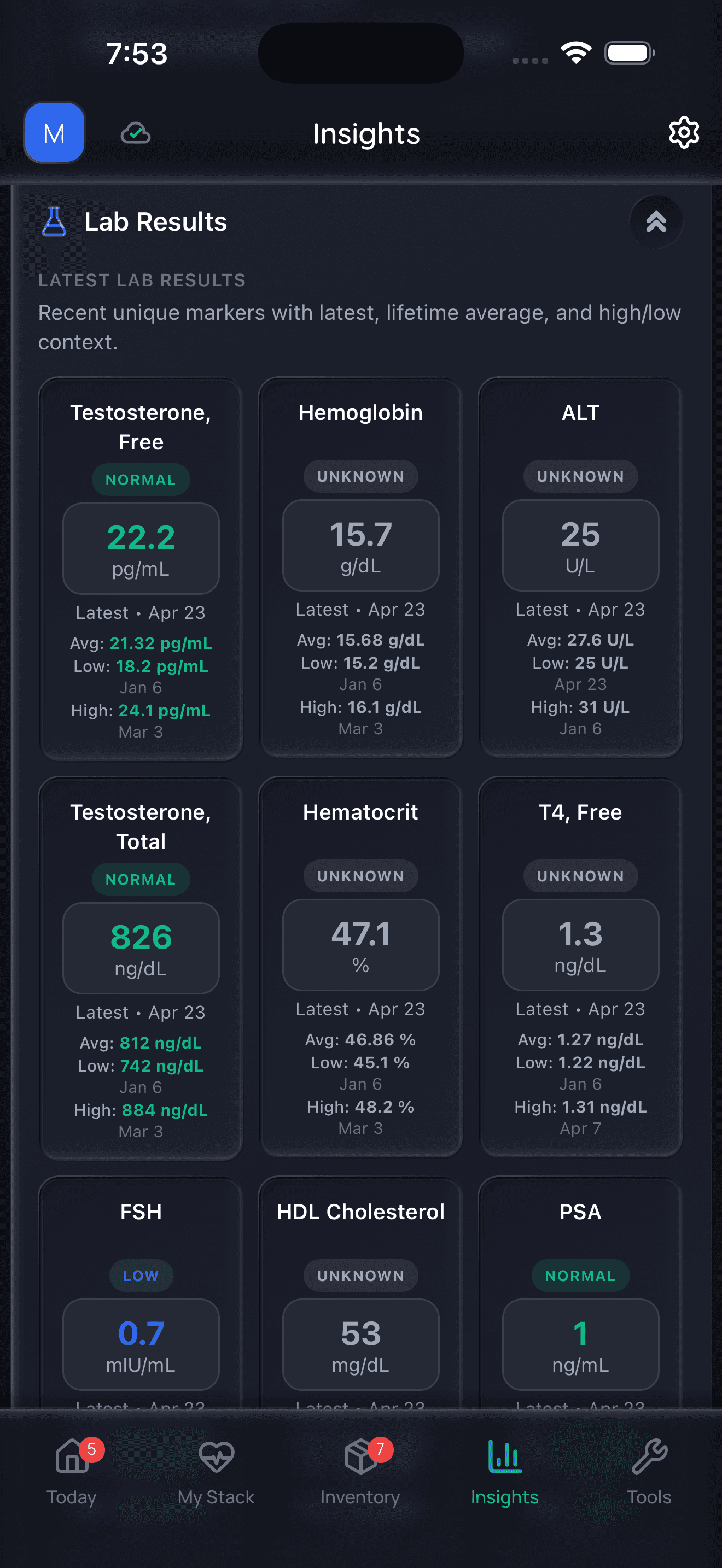
Doserly organizes data; it does not diagnose or interpret labs for you.
Side Effects & Safety Considerations
The Basics
KPV has a favorable safety profile in preclinical research. In rodent studies, no lethal dose was identified even at extremely high levels (100 mg/kg), and repeated dosing over 4 to 12 weeks produced minimal adverse effects. It does not cause skin darkening, appetite changes, or the side effects associated with its parent hormone alpha-MSH.
The most notable safety finding from community reports is the Herxheimer-like reaction (often called "herx"). Some users, particularly those with MCAS, mold illness, or chronic infections, report flu-like symptoms, headaches, fatigue, dizziness, or temporary worsening of symptoms when starting KPV. Community consensus attributes this to KPV's antimicrobial activity killing off pathogens and releasing inflammatory debris, though this interpretation is unverified. Most users who experience herx reactions report that symptoms resolve with dose reduction, slower titration, or continued use.
Other reported side effects are generally mild: occasional injection-site redness or irritation (subcutaneous), initial GI upset or bubbling sensation (oral), and transient headaches. A small number of users report flushing or elevated heart rate, though cardiovascular effects attributed to alpha-MSH peptides in the literature are associated with the HFRW core sequence (which KPV does not contain), not the C-terminal fragment.
The critical caveat is that zero published human safety data exists. The FDA has explicitly stated it "has not identified any human exposure data on drug products containing KPV administered via any route of administration" and "lacks important information regarding any safety issues raised by KPV." No formal drug interaction studies have been conducted. Pregnancy and breastfeeding are considered hard contraindications by practitioner consensus.
The Science
Preclinical safety: No LD50 identified at doses up to 100 mg/kg in rodents. Repeated dosing protocols of 4-12 weeks at therapeutic and supratherapeutic doses showed minimal adverse effects [3][1].
Melanotropic effects: Absent. The melanotropic activity of alpha-MSH is mediated by the HFRW core sequence (residues 6-9) binding MC1R. KPV's C-terminal position makes this structurally impossible [1][2].
Cardiovascular: Hypotensive and bradycardic effects documented in the literature are for full-length alpha-MSH microinjected into the medullary dorsal vagal complex (a central nervous system mechanism). Peripheral KPV administration has not been shown to produce direct cardiovascular effects [16].
FDA regulatory classification: KPV is FDA Category 2 ("Substance with Safety Concerns"), prohibiting compounding under both Section 503A and Section 503B pathways. This classification was part of a broader 2023-2024 action moving 19 peptides to Category 2. Reclassification efforts via the Pharmacy Compounding Advisory Committee (PCAC) are ongoing [17][18].
Contraindications (practitioner consensus): Pregnancy and breastfeeding (no reproductive toxicity data); active uncontrolled infections (may mask symptoms through anti-inflammatory effects); concurrent strong immunosuppression or biologics (theoretical additive immune suppression); known hypersensitivity to alpha-MSH peptides [3].
The side effects and contraindications above give you a map of what to watch for. Doserly turns that map into a daily practice. Log the specific biomarkers and symptoms associated with this compound's known risk profile, and the app builds a timeline of how your body is responding across your cycle.
Trending in the wrong direction on a key marker? Noticing a pattern that started two weeks into your protocol? Doserly connects the dots between your protocol timeline and your logged data, making it easier to spot emerging issues early and have informed, data-backed conversations with your healthcare provider about what's working and what needs attention.
Capture changes while they are still fresh.
Log symptoms, energy, sleep, mood, and other observations alongside protocol events so patterns do not live only in memory.
Trend view
Symptom timeline
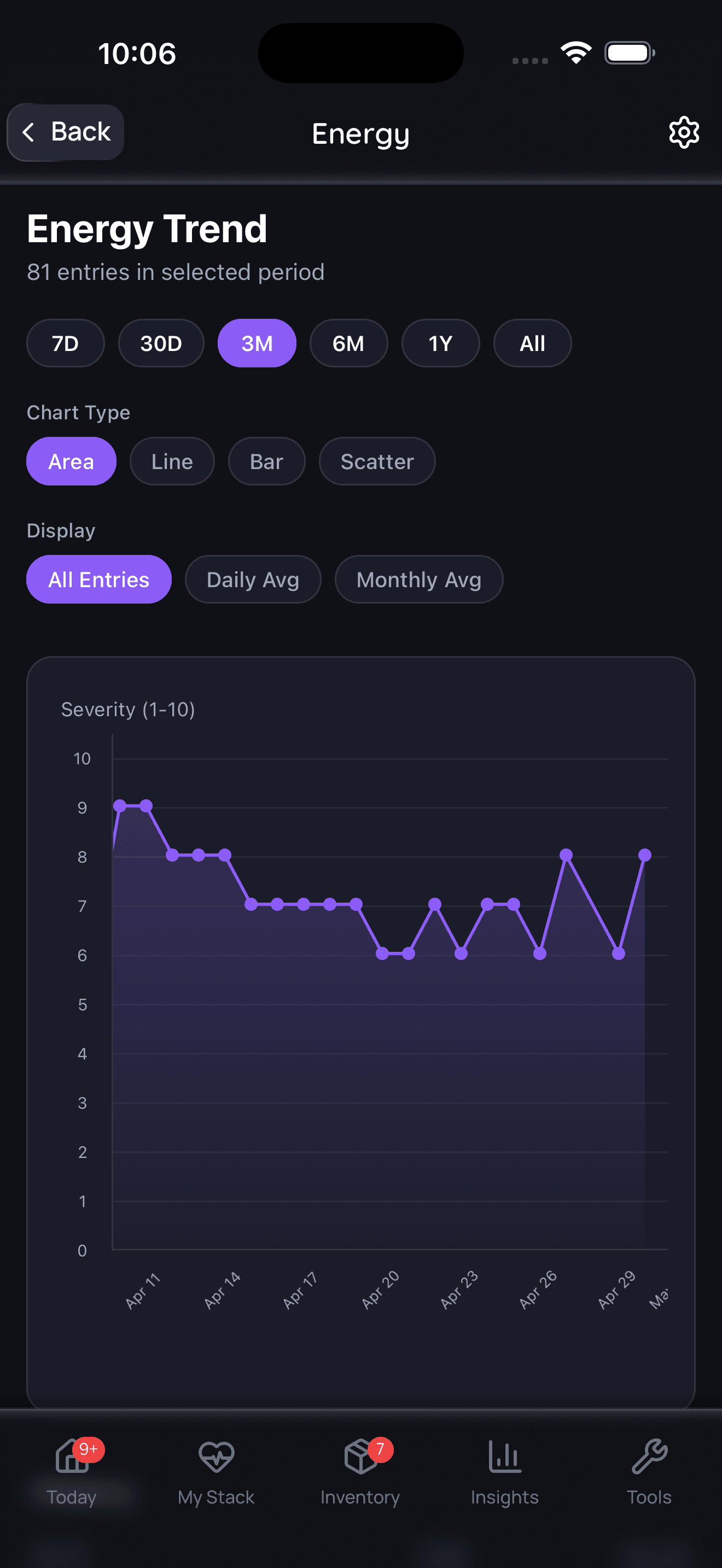
Symptom tracking is informational and should be interpreted with a qualified clinician.
Dosing Protocols
The Basics
KPV dosing varies depending on the administration route and target condition. There is no standardized protocol based on human clinical data; all dosing information comes from practitioner experience and extrapolation from preclinical studies.
For subcutaneous injection (systemic effects including skin, joints, general inflammation), commonly reported ranges are 200 to 500 mcg once daily. Most protocols suggest starting at the lower end (200 mcg) and increasing by approximately 100 mcg per week as tolerated, reaching a maintenance dose of 400 to 500 mcg by weeks 3 to 4.
For oral administration (primarily targeting gut inflammation), commonly reported ranges are 500 to 1,500 mcg per day, with some practitioners using up to 2 to 3 mg daily for gut-specific goals. Oral dosing is typically taken on an empty stomach with water to maximize PepT1-mediated absorption. Some community sources recommend dual-route protocols: oral for gut targeting and subcutaneous for systemic effects, used simultaneously given the non-overlapping delivery mechanisms.
Cycle lengths typically range from 4 to 12 weeks for acute conditions and up to 16 weeks for chronic patterns. Some practitioners recommend maintenance pulses (5 days on, 2 days off) for longer-term use. KPV's receptor-independent mechanism means it does not produce tolerance buildup through receptor desensitization, providing a theoretical rationale for extended use.
For individuals sensitive to herx reactions (particularly those with MCAS or chronic infections), community experience strongly recommends starting at very low doses and titrating slowly. Some report starting as low as one-hundredth of a standard dose and increasing every other day.
The Science
No human dose-finding trials exist for KPV. Practitioner protocols are extrapolated from preclinical data and clinical experience.
Preclinical reference doses: Effective daily dose in DSS colitis mice was approximately 200 mcg per mouse (~8-10 mg/kg in a 20-25 g mouse). FDA body surface area HED conversion yields approximately 0.65-0.81 mg/kg (45-57 mg/day for a 70 kg individual) [3][4]. This wide translational range (50 mcg to ~60 mg/day depending on the reference trial) underscores the challenge of extrapolating rodent data to human protocols.
Injectable protocol (practitioner consensus): Subcutaneous, 200-500 mcg once daily, gradual titration. 8-12 week cycles with optional 16-week extension. Inject subcutaneously with standard site rotation [19].
Oral protocol (practitioner consensus): 500-1,500 mcg once or twice daily on empty stomach. 4-12 week cycles. PepT1-dependent uptake supports local gut activity without requiring systemic absorption [4].
Reconstitution: Standard 10 mg vials reconstituted with 3.0 mL bacteriostatic water yield approximately 3.33 mg/mL concentration. At this concentration, 1 unit on a U-100 insulin syringe equals 0.01 mL, approximately 33.33 mcg [19].
Consistency is the difference between a protocol that delivers results and one that wastes time and money. Doserly was built for exactly this: keeping you on track with the precision your protocol demands.
The built-in calculators handle the math you shouldn't be doing in your head. The reconstitution calculator tells you exactly how much bacteriostatic water to add for your target concentration. The dose calculator converts between units, milligrams, and syringe markings so you draw the right amount every time. The injection site heat map tracks where you've administered and when, helping you rotate sites systematically to reduce tissue damage, scarring, and absorption inconsistencies from overusing the same area. Pair that with smart reminders tuned to your protocol's timing requirements, and you build the kind of daily consistency that separates optimized protocols from haphazard ones.
Track injection timing, draw notes, and site rotation.
Doserly helps keep syringe-related notes, injection site history, reminders, and reconstitution context together for easier review.
Injection log
Site rotation
Injection logs support record-keeping; follow clinician instructions for administration.
What to Expect
Weeks 1-2: Most users report minimal noticeable changes during the first week, especially at starting doses of 200 mcg. Those prone to herx reactions (MCAS, mold illness, chronic infections) may experience flu-like symptoms, headaches, or temporary symptom flares during this period. Some community members with acute inflammatory conditions (eczema, IBD flares) report initial improvement within 5 to 12 days. One individual with Crohn's disease reported "significant improvements on the Bristol scale" and relief from nighttime duodenal pain within 12 days of starting subcutaneous KPV.
Weeks 3-4: As doses reach maintenance levels (400-500 mcg subcutaneous or 500-1,000 mcg oral), more consistent anti-inflammatory effects are commonly reported. Herx reactions, if present, typically resolve by this point. Community reports suggest reduced bloating, improved skin appearance (less redness and irritation for eczema/rosacea), and a general sense of reduced "inflammatory noise."
Weeks 5-8: Most protocols operate at full maintenance dose during this window. Individuals targeting gut health may notice more substantive improvements in digestive regularity and comfort. Skin conditions often show progressive improvement. Some community members report secondary benefits becoming apparent: improved energy, reduced brain fog, better sleep, and decreased pain levels.
Weeks 8-12+: Extended cycles for chronic conditions. Some practitioners recommend transitioning to maintenance pulses (5 on / 2 off) at this stage. An important observation from community reports: benefits commonly disappear relatively quickly after cessation, suggesting KPV suppresses active inflammation rather than resolving underlying causes. This is consistent with its mechanism of action (blocking NF-kB while present, with no lasting structural changes).
Important caveat: These timelines are assembled from community reports and practitioner observations, not from controlled human studies. Individual responses vary significantly based on the underlying condition, route of administration, concurrent protocols, and individual biology.
Interaction Compatibility
Good With (Synergistic)
- BPC-157 — KPV handles inflammation suppression (NF-kB blockade), while BPC-157 promotes structural tissue repair through angiogenesis and nitric oxide pathways. The two address different phases of the healing process: KPV calms the fire, BPC-157 rebuilds the structure.
- TB-500 — TB-500 facilitates cell migration to injury sites and coordinates tissue organization. Combined with KPV's anti-inflammatory action and BPC-157's vascular repair, this forms the basis of the "Wolverine" and "KLOW" stack concepts.
- GHK-Cu — GHK-Cu stimulates collagen synthesis and tissue remodeling. Paired with KPV for skin applications, this combination addresses both the inflammatory component and the regenerative component.
- Thymosin Alpha-1 — TA-1 provides immune education and rebalancing, while KPV suppresses inflammatory noise. Multiple community members with MCAS and long COVID report positive experiences combining these two compounds.
- Zinc carnosine — Commonly paired with oral KPV for gut protocols. Supports mucosal barrier integrity.
- L-glutamine — Amino acid that supports intestinal lining repair. Frequently included in KPV gut health stacks.
Use with Caution
- Strong immunosuppressants / biologics — Theoretical risk of additive immunosuppression. Coordinate with prescribing physician.
- Other NF-kB inhibitors — Additive inhibition could theoretically over-suppress inflammatory responses needed for infection clearance.
Not Good With
- Active uncontrolled infections — KPV's anti-inflammatory effects may mask infection symptoms while the immune response is needed. Despite KPV's antimicrobial properties, clinical judgment is required.
Administration Guide
Materials typically required: Insulin syringes (U-100, 30 or 50-unit for low-volume precision), alcohol swabs, bacteriostatic water (for reconstitution of lyophilized powder), sharps container for disposal.
Recommended reconstitution solution: Bacteriostatic water (0.9% benzyl alcohol). For standard 10 mg vials, 3.0 mL is a commonly used volume, yielding approximately 3.33 mg/mL. For topical preparations, sterile water with optional glycerin or propylene glycol co-solvent at pH 5.0-6.5.
Timing considerations: For subcutaneous injection, no specific timing requirements have been established. Community practice varies between morning and evening administration. For oral KPV, administration on an empty stomach is commonly recommended to maximize PepT1-mediated absorption without competition from dietary peptides. For individuals experiencing herx-type reactions, some community members report better tolerance with evening administration.
Post-administration care: Monitor for injection site reactions (mild redness or swelling), which typically resolve without intervention. For those starting KPV for the first time, particularly individuals with MCAS or chronic infection, monitor for herx-like symptoms (flu-like feelings, headaches, temporary symptom flares) during the first 1 to 2 weeks. If persistent reactions occur, reducing the dose and titrating more slowly is the commonly recommended approach.
Supplies & Planning
Typical vial sizes available: 5 mg and 10 mg lyophilized powder.
Syringe types: U-100 insulin syringes. For low-volume injections (under 10 units / 0.10 mL), 30-unit or 50-unit syringes provide improved readability and precision.
Reconstitution solution: Bacteriostatic water (BAC), typically supplied in 10 mL or 30 mL bottles.
Additional supplies: Alcohol swabs (one for vial stopper, one for injection site per administration), sharps disposal container, clean storage area in refrigerator.
For oral administration: Some users obtain KPV in capsule form from specialty suppliers. Others reconstitute injectable-grade KPV in bacteriostatic water and dose orally by volume.
For topical preparation: Compatible bases include VersaCream PRO, HelixGel Anhydrous Gel Base, or PentraCream Anhydrous Hybrid Base. Concentrations of 0.05-0.20% are typical for cosmeceutical applications. Topical preparations should be stored refrigerated (2-8C) and used within 14 days unless preservative efficacy is validated.
Consult your healthcare provider for specific quantities based on your protocol, and use the Doserly reconstitution calculator for preparation math.
Storage & Handling
Lyophilized (unreconstituted) powder: Store at -20C or below for long-term storage. Short-term storage at 2-8C (refrigerated) is acceptable. Protect from moisture and light. Keep in original sealed vial until ready for reconstitution.
Reconstituted solution: Refrigerate at 2-8C. Use within approximately 30 days. Do not refreeze reconstituted peptide solutions. If long-term storage is needed, prepare aliquots before freezing.
General handling: Allow vials to reach room temperature before opening to minimize condensation uptake. Avoid repeated freeze-thaw cycles. Gently swirl or roll to dissolve during reconstitution; do not shake, as this can cause foaming and peptide degradation. Label reconstituted vials with date and concentration.
Topical preparations: Store refrigerated at 2-8C, protected from light. Use clean fingertips or a sanitized applicator. Conservative beyond-use date of 14 days refrigerated unless preservative efficacy has been validated. Maintain pH 5.0-6.5 for optimal peptide stability. Avoid combining with strong acids, oxidizers, retinoids, or high-concentration AHAs that may lower pH excessively.
Lifestyle Factors
Anti-inflammatory diet: KPV targets inflammatory pathways, so dietary choices that reduce background inflammation may complement its effects. Emphasize whole foods, omega-3 fatty acids (fatty fish, walnuts, flaxseed), and polyphenol-rich foods (berries, leafy greens, turmeric). Minimize processed foods, refined sugars, and known personal food triggers. For gut-focused protocols, a low-irritant elimination diet during the initial weeks may help isolate KPV's contribution.
Gut health support: For oral KPV protocols, supporting the microbiome through probiotic-rich foods and adequate fiber intake may enhance outcomes. Zinc carnosine and L-glutamine are commonly co-administered for gut lining repair in practitioner-designed protocols.
Stress management: Chronic stress elevates NF-kB activity, potentially working against KPV's mechanism. Incorporating stress reduction practices (meditation, adequate rest, reasonable exercise volume) may support KPV's anti-inflammatory effects.
Sleep: Prioritize 7 to 9 hours of quality sleep per night. Sleep deprivation activates NF-kB signaling and elevates inflammatory markers, which could partially counteract KPV's mechanism.
Exercise: Regular moderate exercise supports healthy inflammatory balance. Avoid overtraining, which can elevate inflammatory markers. For recovery-focused protocols, KPV may be most beneficial during higher training volumes when exercise-induced inflammation is elevated.
Monitoring: Track relevant biomarkers and symptoms consistently across your protocol. For gut-focused protocols, consider tracking hs-CRP, ESR, bloating scores, and stool consistency. For skin protocols, photo logging with consistent lighting and itch/burn scores (0-10 scale). Evaluate trends at 4 to 6 weeks and 8 to 12 weeks rather than reacting to individual data points.
Regulatory Status & Research Classification
United States (FDA): KPV is classified as FDA Category 2 ("Substance with Safety Concerns"). This designation prohibits compounding under both Section 503A (traditional compounding) and Section 503B (outsourcing facility) pathways. This classification was established as part of a broader 2023-2024 regulatory action that moved 19 peptides to Category 2 on the bulk drug substance list. The Pharmacy Compounding Advisory Committee (PCAC) is considering petitions for reclassification. As of March 2026, no FDA announcement has confirmed removal of any peptide from Category 2, though the regulatory landscape continues to evolve [17][18]. Zero human clinical trials are registered on ClinicalTrials.gov for KPV in any indication.
WADA status: KPV is not listed on the WADA Prohibited List as of the current year.
Canada (Health Canada): KPV does not have a Drug Identification Number (DIN) or Natural Product Number (NPN). Available as a research compound.
United Kingdom (MHRA): No marketing authorization. Available as a research chemical.
Australia (TGA): Not scheduled. Available as a research compound.
European Union (EMA): No marketing authorization. Available as a research compound.
Active clinical trials: None registered globally for KPV as of March 2026. The proKPV prodrug platform (published in Science Advances, 2024) represents the most advanced preclinical delivery system, but no sponsor has publicly committed to clinical development [8].
Regulatory status changes frequently. Always verify the current legal status of any compound in your specific country or jurisdiction before making any decisions.
FAQ
What does KPV do?
KPV is a three-amino-acid fragment of alpha-MSH that suppresses inflammation by blocking the NF-kB signaling pathway inside cells. Based on available preclinical data, it reduces production of inflammatory cytokines (TNF-alpha, IL-6, IL-8, IL-1beta) across multiple tissue types. Community members most commonly use it for gut inflammation, inflammatory skin conditions, and immune-related issues like MCAS.
Is KPV safe?
In preclinical rodent studies, no lethal dose was found at up to 100 mg/kg, and KPV uniquely combines anti-inflammatory action with antimicrobial properties rather than increasing infection risk. However, zero published human safety studies exist, and the FDA classifies KPV as Category 2 ("Substance with Safety Concerns"). Anyone considering KPV should discuss it with a qualified healthcare professional and understand the distinction between preclinical tolerability and demonstrated human safety.
Does KPV cause skin darkening?
No. The pigmentation effects of alpha-MSH are mediated by its HFRW core sequence (residues 6-9) binding melanocortin receptors. KPV is the C-terminal fragment (residues 11-13) and does not bind melanocortin receptors. No tanning or pigmentation changes have been reported.
Can KPV be taken orally?
Based on available research, KPV shows activity through both oral and injectable routes. Oral KPV leverages the PepT1 transporter in intestinal tissue for local absorption, making it particularly relevant for gut-focused applications. However, free KPV has poor survival in gastric fluid (approximately 9% at 2 hours), and advanced delivery systems are an active area of research to improve oral bioavailability.
What is the Herxheimer reaction from KPV?
Some community members, particularly those with MCAS, mold illness, or chronic infections, report flu-like symptoms, headaches, fatigue, or temporary symptom worsening when starting KPV. This is commonly attributed to KPV's antimicrobial activity causing pathogen die-off, though this interpretation is unverified. Most reports suggest herx reactions resolve with dose reduction, slower titration, or continued use over 1 to 2 weeks. Consult a healthcare professional if symptoms are severe or persistent.
How long does KPV take to work?
Based on community reports, some individuals with acute inflammatory conditions report initial improvement within 5 to 12 days. More commonly, noticeable effects develop over 3 to 4 weeks at maintenance doses. In cell culture, KPV begins suppressing NF-kB within approximately 66 minutes and peaks by 2 hours. No human timeline data exists.
Can KPV be taken long-term?
In preclinical studies, repeated dosing over 4 to 12 weeks showed minimal adverse effects. KPV's receptor-independent mechanism means it does not produce tolerance buildup through receptor desensitization. Some practitioners recommend maintenance pulses (5 days on, 2 days off) for extended use. No human long-term safety data exists.
What is the KLOW blend?
KLOW is a pre-mixed peptide blend containing KPV (10 mg), BPC-157 (10 mg), TB-500 (10 mg), and GHK-Cu (50 mg). It is designed primarily for cosmetic skin applications. The ratios are optimized for skincare rather than injury recovery or therapeutic anti-inflammatory use. For more targeted dosing, individual peptides allow dose adjustment per compound.
Sources & References
[1] Luger TA, Brzoska T. "Alpha-MSH related peptides: a new class of anti-inflammatory and immunomodulating drugs." Ann Rheum Dis. 2007;66(Suppl 3):iii52-55. PMC2095288
[2] Getting SJ, Christian HC, Lam CW, et al. "Dissection of the anti-inflammatory effect of the core and C-terminal (KPV) alpha-melanocyte-stimulating hormone peptides." J Pharmacol Exp Ther. 2003;306:631-637. PubMed: 12750433
[3] Brzoska T, Luger TA, Maaser C, et al. "Alpha-melanocyte-stimulating hormone and related tripeptides: biochemistry, antiinflammatory and protective effects in vitro and in vivo, and future perspectives for the treatment of immune-mediated inflammatory diseases." Endocr Rev. 2008;29:581-602. PubMed: 18612139
[4] Dalmasso G, Charrier-Hisamuddin L, Nguyen HT, et al. "PepT1-Mediated Tripeptide KPV Uptake Reduces Intestinal Inflammation." Gastroenterology. 2008;134:166-178. PubMed: 18068698. PMC2431115
[5] Land SC. "Inhibition of cellular and systemic inflammation cues in human bronchial epithelial cells by melanocortin-related peptides: mechanism of KPV action and a role for MC3R agonists." Int J Physiol Pathophysiol Pharmacol. 2012;4(2):59-73. PMC3403564
[6] Cutuli M, Cristiani S, Lipton JM, Catania A. "Antimicrobial effects of alpha-MSH peptides." J Leukoc Biol. 2000;67(2):233-239. PubMed: 10670585
[7] Singh M, Mukhopadhyay K. "Alpha-Melanocyte Stimulating Hormone: An Emerging Anti-Inflammatory Antimicrobial Peptide." Biomed Res Int. 2014;2014:874610. PMC4130143
[8] Zhao Y, et al. "Inflammation-triggered self-immolative conjugates enable oral peptide delivery by overcoming gastrointestinal barriers." Sci Adv. 2024.
[9] Kannengiesser K, Maaser C, Heidemann J, et al. "Melanocortin-derived tripeptide KPV has anti-inflammatory potential in murine models of inflammatory bowel disease." Inflamm Bowel Dis. 2008;14(3):324-331. DOI: 10.1002/ibd.20334
[10] Xiao B, Xu Z, Viennois E, et al. "Orally Targeted Delivery of Tripeptide KPV via Hyaluronic Acid-Functionalized Nanoparticles Efficiently Alleviates Ulcerative Colitis." Mol Ther. 2017;25(7):1628-1640. PubMed: 28143741. PMC5498804
[11] Zhang et al. "PepT1-targeted nanodrug based on co-assembly of anti-inflammatory peptide and immunosuppressant for combined treatment of acute and chronic DSS-induced colitis." Front Pharmacol. 2024;15.
[12] Sung YY, et al. "Lysine-Proline-Valine peptide mitigates fine dust-induced keratinocyte apoptosis and inflammation." Tissue Cell. 2025;95:102837. PubMed: 40073467
[13] Dubey S, Kalia YN. "Transdermal Iontophoretic Delivery of Lysine-Proline-Valine (KPV) Peptide Across Microporated Human Skin." J Pharm Sci. 2017. PubMed: 28343991
[14] US Patent 6,894,028 B2. Lipton & Catania, 2005. "Use of KPV tripeptide for dermatological disorders." Expired 2021.
[15] Schaible EV, Steinstrasser A, Jahn-Eimermacher A, et al. "Single Administration of Tripeptide alpha-MSH(11-13) Attenuates Brain Damage by Reduced Inflammation and Apoptosis after Experimental Traumatic Brain Injury in Mice." PLoS One. 2013;8(8):e71056. PMC3733710
[16] Li SJ, Varga K, Archer P, et al. "Melanocortin Antagonists Define Two Distinct Pathways of Cardiovascular Control by Alpha- and Gamma-Melanocyte-Stimulating Hormones." J Neurosci. 1996;16(16):5182-5188.
[17] Holt Law. "Deep Dive: Regulatory Status of Popular Compounded Peptides." 2025.
[18] LumaLex Law. "RFK Jr, Peptides & FDA Category 2: What's Really Changing?" 2026.
[19] Pawar K, et al. "KPV as an alpha-MSH fragment retains potent anti-inflammatory activity without melanotropic side effects." J Pharm Drug Delivery Res. 2022.
Related Peptide Guides
- BPC-157 — Tissue repair peptide commonly stacked with KPV for complementary healing (anti-inflammatory + angiogenic repair)
- TB-500 — Cell migration and tissue organization peptide; forms the "Wolverine stack" with BPC-157 and KPV
- GHK-Cu — Copper peptide for collagen synthesis and tissue remodeling; paired with KPV in the KLOW blend for skin applications
- Thymosin Alpha-1 — Immune modulator frequently combined with KPV for MCAS and autoimmune terrain support
- LL-37 — Antimicrobial peptide with immune-modulating properties
- VIP — Vasoactive intestinal peptide for immune modulation and neuroprotection
- Semaglutide — GLP-1 agonist; some community protocols combine with KPV for metabolic and inflammatory support
- NAD+ — Cellular energy coenzyme; included in some advanced healing stacks alongside KPV
- Glutathione — Antioxidant; some practitioners include in KPV protocols for detoxification support
Need the reconstitution math for KPV: Complete Research Guide?
Open the calculator with KPV: Complete Research Guide prefilled to estimate concentration, draw volume, and related measurement math from the reconstitution details you already have.