
Ginkgo Biloba: The Complete Supplement Guide
On this page
Quick Reference Card
Attribute
Common Name
- Detail
- Ginkgo Biloba
Attribute
Other Names / Aliases
- Detail
- Ginkgo biloba, Maidenhair Tree, Fossil Tree, Bai Guo Ye, Yinhsing, Kew Tree, Japanese Silver Apricot, EGb-761
Attribute
Category
- Detail
- Herbal Nootropic / Botanical Extract
Attribute
Primary Forms & Variants
- Detail
- EGb-761 (standardized leaf extract, 24% flavone glycosides / 6% terpene lactones, most studied), LI1370 / Kaveri (25% flavone glycosides only), Geriaforce tincture (65% ethanolic, lower terpene exposure), whole leaf powder (unstandardized)
Attribute
Typical Dose Range
- Detail
- 120-240 mg/day of standardized extract (EGb-761 or equivalent 50:1 extract)
Attribute
RDA / AI / UL
- Detail
- No established RDA, AI, or UL (herbal supplement, not an essential nutrient)
Attribute
Common Delivery Forms
- Detail
- Capsule, tablet, liquid extract, tincture, tea
Attribute
Best Taken With / Without Food
- Detail
- Take with meals; food slightly delays absorption but does not reduce total amount absorbed
Attribute
Key Cofactors
- Detail
- Often combined with phosphatidylserine for enhanced cognitive effects; combined with Panax ginseng in some formulations
Attribute
Storage Notes
- Detail
- Store in a cool, dry place away from direct sunlight and moisture. No refrigeration required.
Overview
The Basics
Ginkgo biloba is one of the most widely used herbal supplements in the world, with a reputation built almost entirely around brain health. The tree itself is extraordinary: a "living fossil" that has existed for roughly 190 million years, making it the sole surviving species of an ancient plant family that once thrived alongside dinosaurs. Its leaves have been used in traditional Chinese medicine for centuries, initially for respiratory conditions and circulatory problems.
In modern supplement culture, ginkgo is primarily taken with the hope of sharpening memory, clearing brain fog, or protecting cognitive function with age. The reality is more nuanced than the marketing suggests. While there is some evidence that standardized ginkgo extracts may modestly benefit people who already have cognitive decline, the largest and most rigorous trials have consistently shown that ginkgo does not prevent dementia in healthy older adults [1][2]. That said, ginkgo does appear to improve blood flow, particularly cerebral blood flow, which may explain the brain fog reduction and circulation improvements that some users report.
Beyond cognition, ginkgo has been investigated for anxiety, tinnitus, peripheral circulation, sexual function, and even mountain sickness. Its bioactive compounds include unique terpene trilactones (ginkgolides and bilobalide) and flavonoid glycosides, both of which contribute to its pharmacological profile.
The Science
Ginkgo biloba L. (family Ginkgoaceae) is the sole extant representative of the order Ginkgoales, with fossil records extending to the Jurassic period [3]. The plant has been classified within traditional Chinese medicine (TCM) pharmacopeia, where the seeds (Bai-guo) were historically used for respiratory and urinary conditions, with leaf preparations entering use around 1505 AD [4].
The primary bioactive constituents of therapeutic interest are divided into two groups: terpene trilactones (ginkgolides A, B, C, J, K, M, Q, P and bilobalide, comprising 5-7% of standardized extracts) and flavonoid glycosides (quercetin, kaempferol, and isorhamnetin glycosides, comprising 22-27% of standardized extracts) [4][5]. Ginkgolic acids, which are potentially allergenic and cytotoxic, are limited to less than 5 ppm in quality-controlled extracts [4].
Ginkgo biloba has achieved phytopharmaceutical status in several European countries, notably Germany, where EGb-761 is prescribed for dementia-related cognitive symptoms [4]. In the United States, it remains classified as a dietary supplement under DSHEA. Despite its commercial popularity, the National Center for Complementary and Integrative Health (NCCIH) states that "there's no conclusive evidence that ginkgo is helpful for any health condition" [6], a conclusion supported by the results of the Ginkgo Evaluation of Memory (GEM) study [1].
Chemical & Nutritional Identity
Property
Scientific Name
- Value
- Ginkgo biloba L.
Property
Plant Family
- Value
- Ginkgoaceae
Property
Part Used
- Value
- Leaves (primary); seeds (traditional, less common)
Property
Active Compound Classes
- Value
- Terpene trilactones (ginkgolides, bilobalide), flavonoid glycosides (quercetin, kaempferol, isorhamnetin derivatives)
Property
Key Terpene Trilactones
- Value
- Ginkgolide A (3-3.6% DW), Ginkgolide B, Ginkgolide C, Bilobalide (2.6-3.4% DW)
Property
Key Flavonoids
- Value
- Quercetin glycosides, Kaempferol glycosides, Isorhamnetin glycosides, Biflavones (amentoflavone, bilobetin, ginkgetin)
Property
Procyanidins
- Value
- 7% of EGb-761; 4-12% of dry leaf
Property
Ginkgolic Acids
- Value
- Potentially allergenic; limited to <5 ppm in standardized extracts
Property
CAS Number
- Value
- 90045-36-6 (EGb-761 extract)
Property
Category
- Value
- Herbal supplement / Botanical extract
Standardized Extract Forms
Extract
EGb-761 (Tanakan, Tebonin, Rokan)
- Standardization
- 24% flavone glycosides, 6% terpene lactones, <5 ppm ginkgolic acids
- Key Notes
- Most studied; 50:1 concentration (300mg = 15g dried leaves)
Extract
LI1370 (Kaveri)
- Standardization
- 25% flavone glycosides
- Key Notes
- Flavonoid-only standardization
Extract
Cp202
- Standardization
- Excludes terpene trilactones
- Key Notes
- Research variant
Extract
BN52063
- Standardization
- Terpenes only, no flavonoids
- Key Notes
- Research variant
Extract
Geriaforce tincture
- Standardization
- 65% ethanol, 1:9 drug:extract
- Key Notes
- Lower bioactive exposure than EGb-761
Mechanism of Action
The Basics
Ginkgo biloba works through several complementary pathways, all of which center on improving blood flow and protecting brain cells. Think of it as a compound that opens up your blood vessels and shields your cells from damage at the same time.
Its most distinctive mechanism involves blocking a substance called platelet activating factor, or PAF. PAF normally tells blood platelets to clump together (useful for wound healing, but problematic when excessive). By dialing down PAF activity, ginkgo helps blood flow more freely through small vessels, including the tiny capillaries in the brain. This is the likely explanation for why some people notice rapid improvements in brain fog and cold hands or feet.
Ginkgo also functions as an antioxidant, with a particular talent for protecting the mitochondria (the energy generators inside every cell). When mitochondria are shielded from oxidative damage, cells produce energy more efficiently. The terpene compound bilobalide appears to be especially potent in this role.
There is also evidence that ginkgo may promote the growth of new brain cells and support BDNF (brain-derived neurotrophic factor), a protein that plays a key role in learning, memory, and neural maintenance.
The Science
The pharmacological activity of Ginkgo biloba is attributed to the synergistic action of its terpene trilactones and flavonoid glycosides across multiple molecular targets [4][5].
Platelet Activating Factor (PAF) Inhibition: The ginkgolides, particularly ginkgolides A and B, are competitive antagonists at the PAF receptor. PAF is both a platelet aggregation mediator and a neuromodulator that enhances presynaptic glutamate release. In physiological conditions, PAF contributes to long-term potentiation (LTP), but in pathological states (hypoxia, ischemia), elevated PAF exacerbates excitotoxic neuronal damage [4]. Ginkgo's PAF antagonism reduces both thrombotic risk and neuroinflammatory cascading.
Mitochondrial Protection: Bilobalide at concentrations as low as 0.8 ug/mL preserves mitochondrial membrane potential, cytochrome C oxidase activity, and ATP production during oxidative insult. This has been demonstrated in neuronal, endothelial, and hepatic cell models against H2O2, beta-amyloid proteins, and complex III inhibitors [4]. In vivo, oral bilobalide (8 mg/kg) and EGb-761 attenuate hypoxia/ischemia-induced decline in complex I and complex III activity [4].
Neuroprotection via Heme Oxygenase-1 (HO-1): EGb-761 upregulates HO-1 expression in a dose- and time-dependent manner, mediating cytoprotection against oxidative neuronal death [4].
Neurotransmitter Modulation: Chronic EGb-761 supplementation increases extracellular dopamine in the prefrontal cortex (85-134% above baseline in rats), mediated primarily by acylated flavonoid glycosides [4]. These same acylated flavonoids increase acetylcholine concentrations in the medial prefrontal cortex to 181% of baseline within 90 minutes [4]. Acetylcholinesterase activity is modestly inhibited (~20%) at oral doses of 30-60 mg/kg in rats [4].
Neurogenesis and BDNF: Bilobalide at 5-15 uM increases hippocampal cell proliferation by 55-80%, exceeding the potency of rolipram. This effect is associated with increased BDNF expression independent of CREB phosphorylation. Oral EGb-761 (240 mg) elevates plasma BDNF concentrations in human subjects [7][4].
Cerebral Blood Flow Enhancement: In human studies, EGb-761 at 120-240 mg/day increases cerebral blood flow by 13-15% in white and grey matter respectively in elderly subjects. When combined with aspirin (40 mg thrice daily), improvements in middle cerebral artery flow of 54.5% have been reported in post-infarct patients [4][8].
Absorption & Bioavailability
The Basics
One advantage ginkgo has over many herbal supplements is that its key active compounds are actually well absorbed. The terpene compounds (ginkgolides A and B, bilobalide) have bioavailability in the range of 79-88%, which means the vast majority of what you swallow reaches your bloodstream.
These compounds reach their peak blood levels within about an hour and have relatively short half-lives of roughly 2 hours, which is why many dosing protocols suggest splitting the daily dose into two or three servings throughout the day rather than taking it all at once.
Taking ginkgo with food slightly delays absorption but does not meaningfully reduce the total amount that reaches your system. Some users report that taking it with meals also reduces the occasional headache or stomach discomfort that can occur with fasted dosing.
The standardized 50:1 extract (EGb-761) delivers substantially more bioactives per milligram than crude leaf preparations or tinctures. Three hundred milligrams of EGb-761 provides the terpene and flavonoid equivalent of roughly 15 grams of dried leaf.
The Science
Oral bioavailability of the principal terpene trilactones is high: ginkgolide A (80%), ginkgolide B (88%), and bilobalide (79%) [4]. Ginkgolide C demonstrates negligible plasma concentrations following oral administration.
Pharmacokinetic parameters following 80-240 mg EGb-761 administration show dose-dependent plasma peaks: ginkgolide A (Cmax 15.2-42.9 ng/mL), ginkgolide B (Cmax 6.53-18.11 ng/mL), and bilobalide (Cmax 30.2-58.6 ng/mL), with Tmax uniformly within 1 hour [4]. Terminal half-lives are short: bilobalide 1.8 hours, ginkgolide A 2.2 hours, and ginkgolide B 2.3 hours [4].
Flavonoid absorption has been demonstrated at physiologically relevant levels: oral administration of EGb-761 in rats yields plasma concentrations of quercetin (12 ug/mL), kaempferol (7 ug/mL), and isorhamnetin (50 ug/mL) [4]. Water-soluble formulations increase the AUC of both flavonoids (4.2 to 7.9 ug/h/mL) and terpenoids (154-162% of control) [4].
Co-administration with food attenuates Tmax and Cmax to approximately 50-66% of fasted values without significantly altering AUC, indicating that meal timing affects absorption rate but not overall extent [4].
Renal excretion of unconjugated terpenoids is substantial: 72.3% of ginkgolide A, 41.4% of ginkgolide B, and 31.2% of bilobalide are eliminated unchanged in urine [4]. Flavonoid metabolites (4-hydroxybenzoic acid, hippuric acid, vanillic acid) represent the primary urinary flavonoid excretion products [4].
Understanding how your body absorbs a supplement is only useful if you can act on it. Doserly lets you log exactly when you take each form, whether it's a capsule with a meal, a sublingual tablet on an empty stomach, or a liquid taken with a cofactor, so you can see how timing and form choices affect your results over time.
The app also tracks cofactor pairings that influence absorption. If a supplement works better alongside vitamin C, fat, or black pepper extract, Doserly reminds you to take them together and logs both. Over weeks, your personal data reveals whether those pairing strategies are translating into measurable differences in the biomarkers you're tracking.
Turn symptom and safety notes into a clearer timeline.
Doserly helps you log doses, symptoms, and safety observations side by side so patterns are easier to discuss with a qualified clinician.
Pattern view
Logs and observations

Pattern visibility is informational and should be reviewed with a clinician.
Research & Clinical Evidence
The Basics
Ginkgo biloba is one of the most studied herbal supplements in the world. Unfortunately for its reputation, the biggest and best-designed trials have been disappointing for its marquee claim: preventing age-related cognitive decline.
The GEM study, which followed over 3,000 adults aged 75 and older for a median of 6 years, found that 240 mg/day of ginkgo extract was no better than placebo at preventing dementia or Alzheimer's disease [1]. Two other large trials reached the same conclusion [2][9]. This is important because it directly contradicts the common marketing claim that ginkgo "prevents memory loss."
Where ginkgo may show modest benefit is in people who already have dementia or mild cognitive impairment. Several meta-analyses of smaller trials suggest that EGb-761 at 240 mg/day can modestly stabilize or slow the decline of cognitive symptoms over 3 to 6 months, though the evidence quality is inconsistent [10][11].
For other conditions, the evidence is scattered: some small studies suggest benefits for anxiety (a 4-week trial showed symptom reduction at 240-480 mg/day), tinnitus (mixed results), and peripheral circulation. Two trials suggest potential benefit in acute stroke recovery, but the overall evidence is too weak and biased to draw firm conclusions [12].
The Science
Dementia Prevention (Negative): Three large RCTs have failed to demonstrate efficacy of Ginkgo biloba in preventing dementia onset. The GEM study (n=3,069; median follow-up 6.1 years; EGb-761 240 mg/day) found no difference between ginkgo and placebo groups in rates of all-cause dementia or Alzheimer's disease (HR 1.12, 95% CI 0.94-1.33) [1]. The GuidAge study (n=2,854; 5-year median follow-up; EGb-761 240 mg/day) similarly found no reduction in Alzheimer's disease conversion [2]. A smaller trial by Dodge et al. (n=118; 42-month follow-up) confirmed these negative findings [9].
Existing Dementia Symptoms (Modest Positive): A 2020 meta-analysis of 7 RCTs (n=939) in patients with established Alzheimer's disease found statistically significant cognitive improvement with EGb-761 at 120-240 mg/day over 3-6 months [10]. A 2015 systematic review concluded that EGb-761 at 240 mg/day stabilized or slowed decline in cognition, activities of daily living, and behavioral symptoms in patients with mild cognitive impairment or dementia [11]. However, a 2009 Cochrane review noted inconsistent evidence and methodological concerns across studies [13].
Anxiety (Preliminary Positive): In a 4-week RCT of young adults with GAD, EGb-761 at 240 mg and 480 mg daily produced HAMA score reductions of 12.1 and 14.3 points respectively, compared to 7.8 points for placebo (p<0.05) [4]. Benefits required 4 weeks to manifest. A systematic review and network meta-analysis of medicinal herbs for anxiety included ginkgo among potentially beneficial compounds [14].
Stroke Recovery (Preliminary): Two RCTs suggest benefit in acute ischemic stroke rehabilitation. Li et al. (2017) found improved cognitive and neurological outcomes with ginkgo diterpene lactone meglumine injection [15]. However, a meta-analysis concluded the evidence base is weak with high risk of bias, and the GEM study actually noted increased stroke incidence in the ginkgo group [12][1].
Tinnitus (Inconclusive): Results are mixed. A 2022 Cochrane review found insufficient evidence to support ginkgo for tinnitus [16]. However, a meta-analysis of EGb-761 in dementia patients found it alleviated tinnitus and dizziness as secondary outcomes [17]. Individual RCTs have produced contradictory results [18][19].
Cardiovascular Outcomes (Negative): The GEM study found no benefit of ginkgo supplementation for cardiovascular disease incidence or mortality over 6 years [20]. Ginkgo was also ineffective for blood pressure reduction in the same cohort [1].
Cognition in Healthy Adults (Inconsistent): Acute supplementation studies in young adults show variable effects: 120-360 mg EGb-761 may improve working memory and speed of attention at higher doses, but results are inconsistent and effect sizes are small [4][21].
Evidence & Effectiveness Matrix
Category
Focus & Mental Clarity
- Evidence Strength
- 5/10
- Reported Effectiveness
- 6/10
- Summary
- Inconsistent clinical evidence in healthy adults; community reports of brain fog reduction strongest in post-COVID/impaired populations
Category
Memory & Cognition
- Evidence Strength
- 6/10
- Reported Effectiveness
- 5/10
- Summary
- Large prevention trials negative; modest evidence for existing dementia symptom management at 240 mg/day
Category
Mood & Wellbeing
- Evidence Strength
- 3/10
- Reported Effectiveness
- 4/10
- Summary
- Limited clinical data; community reports are polarized (some improved, some report agitation)
Category
Anxiety
- Evidence Strength
- 4/10
- Reported Effectiveness
- N/A
- Summary
- One positive RCT at 240-480 mg/day for GAD; small evidence base
Category
Libido
- Evidence Strength
- 3/10
- Reported Effectiveness
- 7/10
- Summary
- Minimal clinical evidence; strong positive community signal, likely circulation-mediated
Category
Sexual Function
- Evidence Strength
- 4/10
- Reported Effectiveness
- 6/10
- Summary
- Preliminary positive data for antidepressant-induced sexual dysfunction; community reports consistently positive
Category
Energy Levels
- Evidence Strength
- 2/10
- Reported Effectiveness
- 5/10
- Summary
- No dedicated clinical trials; mixed community reports
Category
Heart Health
- Evidence Strength
- 6/10
- Reported Effectiveness
- 4/10
- Summary
- GEM study (n=3,000+) found no cardiovascular benefit; PAF inhibition mechanism well-established but clinical outcomes negative
Category
Emotional Regulation
- Evidence Strength
- 2/10
- Reported Effectiveness
- 3/10
- Summary
- No clinical evidence; multiple community reports of irritability and mood disturbance
Category
Longevity & Neuroprotection
- Evidence Strength
- 5/10
- Reported Effectiveness
- N/A
- Summary
- Strong preclinical evidence (mitochondrial protection, BDNF, neurogenesis); human translation unclear
Categories scored: 10
Categories with community data: 10
Categories not scored (insufficient data): Fat Loss, Muscle Growth, Weight Management, Appetite & Satiety, Sleep Quality, Stress Tolerance, Motivation & Drive, Joint Health, Inflammation, Pain Management, Recovery & Healing, Physical Performance, Gut Health, Skin Health, Hair Health, Blood Pressure, Bone Health, Immune Function, and others
Benefits & Potential Effects
The Basics
The benefits of ginkgo biloba are more modest and more specific than its marketing often suggests. Based on the available evidence, the areas where ginkgo shows the most promise include improved blood flow (particularly to the brain), modest cognitive support for people who already have some decline, and potential support for sexual function.
The most reliable benefit appears to be improved circulation. Many users report that cold hands and feet improve, brain fog clears, and overall peripheral blood flow feels better. This tracks with ginkgo's well-established mechanism of PAF inhibition and vasodilation.
For cognitive function, the picture is complicated. Ginkgo probably does not help healthy young adults think faster or remember better in any meaningful way. Where it may help is in older adults who are already experiencing cognitive decline, where 240 mg/day of standardized extract has shown modest stabilizing effects in some studies.
Community reports also highlight sexual function as a notable benefit, likely related to the same circulatory improvements. Anxiety reduction has some preliminary clinical support as well, though the evidence base is small.
It is important to set realistic expectations. Ginkgo is not a "brain pill" that will dramatically enhance cognition. It is a mild circulatory and neuroprotective agent whose benefits, when they occur, tend to be gradual and subtle.
The Science
Cerebral and Peripheral Blood Flow Enhancement: EGb-761 demonstrates consistent hemodynamic effects across multiple human studies. In elderly subjects, 120 mg/day over 4 weeks increased cerebral blood flow by approximately 13-15% in white and grey matter [4]. Combined with low-dose aspirin (40 mg thrice daily), EGb-761 improved middle cerebral artery flow by 54.5% and anterior cerebral artery flow by 51.4% in post-cerebral-infarct patients [8]. Peripheral circulation improvements are consistent with the PAF-antagonist mechanism [4].
Cognitive Symptom Stabilization in Dementia: Multiple meta-analyses converge on a modest signal: EGb-761 at 240 mg/day may stabilize or modestly improve cognitive scores (ADAS-Cog, MMSE), activities of daily living, and behavioral symptoms in patients with mild-to-moderate Alzheimer's disease or vascular dementia over treatment periods of 12-26 weeks [10][11]. Effect sizes are small, and the evidence quality is moderate at best.
Anxiolytic Effects: Dose-dependent reduction in HAMA scores (12.1-14.3 points vs. 7.8 for placebo) in a 4-week GAD trial, with onset at week 4 [4]. Mechanistically, ginkgo may act as an adaptogen, reducing basal corticosterone/cortisol levels and attenuating stress-induced HPA axis activation [4].
Neuroprotection: Preclinical evidence is robust: beta-amyloid-induced neuronal loss is fully prevented by 1 uM bilobalide in vitro [4]; hippocampal neurogenesis is promoted in both young and aged mice [4]; and BDNF elevation has been confirmed in human plasma following 240 mg EGb-761 [7]. Translation to clinical neuroprotective outcomes, however, remains undemonstrated in large trials [1][2].
Reading about potential benefits gives you a framework. Seeing whether those benefits are showing up in your own body turns knowledge into confidence. Doserly lets you track the specific health markers relevant to this supplement, building a personal dataset that captures what's actually changing week over week.
The app's AI analytics go further than simple logging. By correlating your supplement intake with the biomarkers and health outcomes you're tracking, Doserly surfaces patterns you might miss on your own, like whether a dose adjustment three weeks ago corresponds to the improvement you're noticing now. When it's time to evaluate whether a supplement is earning its place in your stack, you have your own data to guide the decision.
Capture changes while they are still fresh.
Log symptoms, energy, sleep, mood, and other observations alongside protocol events so patterns do not live only in memory.
Trend view
Symptom timeline
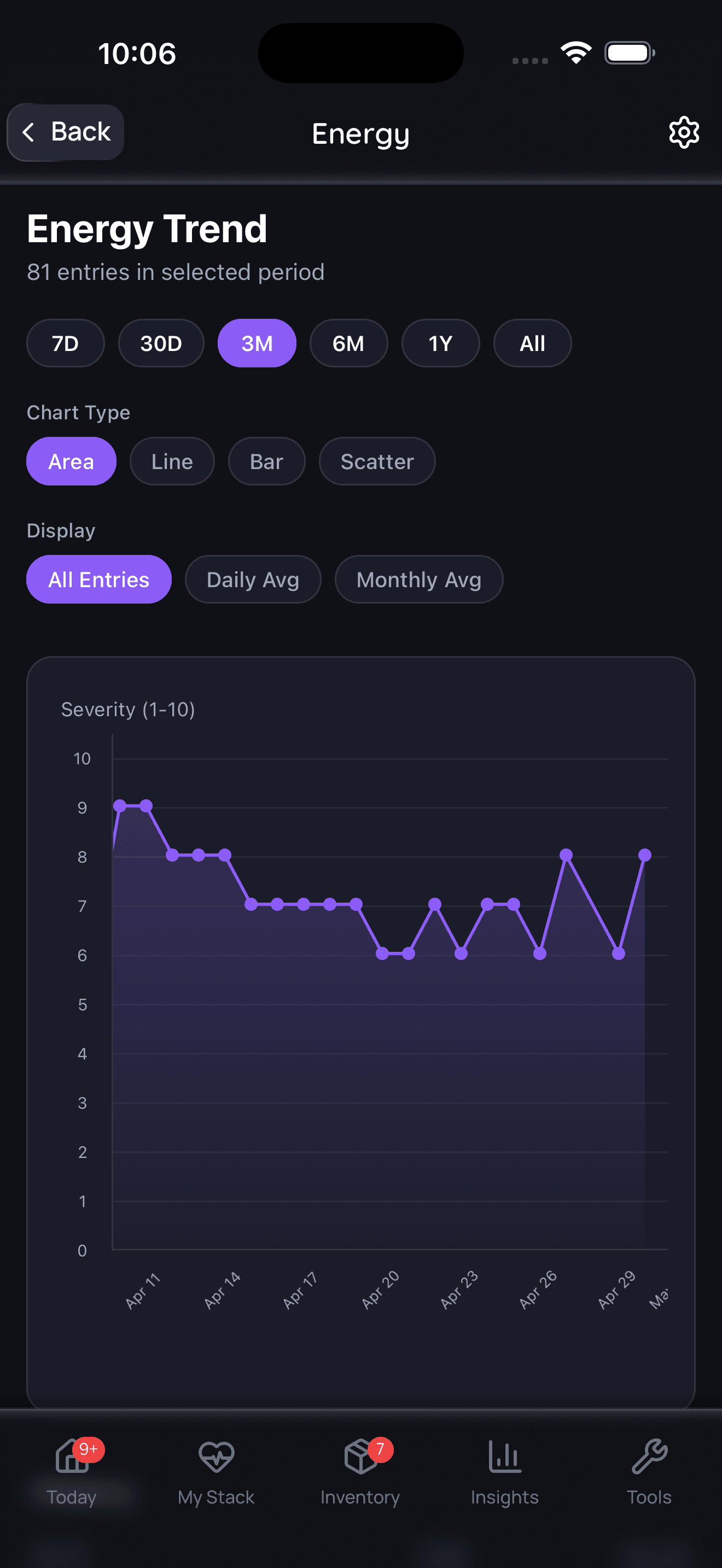
Symptom tracking is informational and should be interpreted with a qualified clinician.
Side Effects & Safety
The Basics
Ginkgo biloba is generally well tolerated in the short and medium term. Clinical studies lasting up to 6 years have used standardized extracts without major safety concerns in healthy older adults [1]. The most common side effects are mild and include headache, dizziness, and stomach discomfort.
The side effect that deserves the most attention is bleeding risk. Ginkgo inhibits platelet aggregation, which means it can thin the blood and potentially increase bleeding. For most healthy people, this is not a problem at standard doses. But for anyone taking blood-thinning medications (warfarin, aspirin, clopidogrel), NSAIDs, or planning surgery, ginkgo should only be used under medical supervision. Case reports exist of spontaneous bleeding events (including subdural hematomas and intracerebral hemorrhage) in ginkgo users [22][23][24].
Community reports also flag an underappreciated side effect: mood disturbance. Multiple users report increased irritability, agitation, anger, and mood swings, particularly when combining ginkgo with antidepressant medications. While clinical trials have not prominently flagged this, it appears frequently enough in user reports to warrant awareness.
Fresh ginkgo seeds are toxic and should never be consumed raw. Even roasted seeds can cause adverse effects. Supplements are made from leaf extracts, not seeds.
Ginkgo should be avoided during pregnancy due to potential antiplatelet effects that could increase bleeding risk during delivery [25].
The Science
Common Adverse Effects: In clinical trials, the most frequently reported side effects include headache, gastrointestinal disturbance (nausea, diarrhea), dizziness, and allergic skin reactions [6][26].
Bleeding Risk: Case reports document spontaneous subdural hematomas [22], hyphema [23], and intracerebral hemorrhage [24] associated with ginkgo use. A pharmacodynamic study in healthy volunteers demonstrated prolonged bleeding time with EGb-761 [27]. The mechanism involves PAF receptor antagonism and additive effects with antiplatelet and anticoagulant agents.
Hyponatremia: Several case reports document symptomatic hyponatremia (confused state, malaise, headaches, fatigue) during ginkgo supplementation, with plasma sodium normalization upon cessation [28].
Seizure Risk: Case reports document seizures in predisposed patients and those taking medications that lower the seizure threshold (e.g., prochlorperazine). Ginkgolic acids in poorly standardized products may contribute to seizure risk [29].
Hepatocarcinogenicity (Preclinical): Animal models (B6C3F1 mice treated for 2 years) suggest potential hepatocarcinogenic effects at high doses [30][31]. The clinical relevance to human supplementation at standard doses is uncertain, but this finding has prompted ongoing monitoring.
Drug Interactions: Ginkgo has a complex CYP450 interaction profile. It can both induce (CYP3A4, CYP2B6) and inhibit (CYP2B6, CYP1A2) various isoenzymes [26][32]. Clinically relevant interactions have been documented with efavirenz (reduced serum levels via CYP induction) [33], and potential interactions exist with midazolam, tacrolimus, and insulin [26]. The interaction with warfarin is debated: while pharmacokinetic studies suggest no effect on warfarin metabolism, the additive antiplatelet effect creates a clinically meaningful bleeding risk [26][27].
Pregnancy and Lactation: Ginkgo is potentially unsafe during pregnancy due to antiplatelet properties that may prolong bleeding during delivery. Safety during lactation is unknown [25].
Dosing & Usage Protocols
The Basics
The dosing of ginkgo biloba is relatively straightforward compared to many supplements. The vast majority of clinical research uses the standardized EGb-761 extract (or equivalent 50:1 extracts standardized to 24% flavone glycosides and 6% terpene lactones), and this is the form worth considering.
Most sources report commonly cited ranges of 120-240 mg per day of standardized extract, often divided into two or three doses. For general brain health support, 120 mg/day (taken as 60 mg twice daily or 40 mg three times daily) is the most commonly referenced starting point. Studies examining cognitive effects in dementia populations have typically used 240 mg/day [1][2][10].
For acute cognitive performance (before a test or demanding mental task), some research has examined single doses of 120-360 mg taken 1-4 hours before the task. Higher single doses (240-360 mg) appear more effective for attention-related tasks [4].
Because the key bioactive compounds have short half-lives (around 2 hours), splitting the daily dose across the day rather than taking it all at once is the approach used in most clinical trials.
Unstandardized leaf preparations, whole leaf powders, and tinctures deliver significantly less bioactive content per serving and have less research support.
The Science
Standardized Extract Dosing (EGb-761 or equivalent):
Goal
General cognitive support
- Commonly Cited Range
- 120-240 mg/day
- Division
- 60-120 mg BID or 40-80 mg TID
- Duration Notes
- Minimum 4-8 weeks for assessment
Goal
Dementia symptom management
- Commonly Cited Range
- 240 mg/day
- Division
- 120 mg BID
- Duration Notes
- 12-26 weeks in positive trials
Goal
Acute cognitive performance
- Commonly Cited Range
- 120-360 mg single dose
- Division
- 1-4 hours before task
- Duration Notes
- Higher doses (240-360 mg) may favor attention
Goal
Anxiety support
- Commonly Cited Range
- 240-480 mg/day
- Division
- Divided doses
- Duration Notes
- Benefits noted at 4 weeks in one trial
Goal
Peripheral circulation
- Commonly Cited Range
- 120-240 mg/day
- Division
- Divided BID or TID
- Duration Notes
- Chronic use
Standardization Requirements: Products should contain 24% flavone glycosides (22-27% range) and 6% terpene lactones (5-7% range), with ginkgolic acids below 5 ppm. This corresponds to the EGb-761 specification used in the majority of clinical research [4].
Concentration Factor: EGb-761 is a 50:1 concentrate, meaning 300 mg of extract is pharmacologically equivalent to approximately 15 g of dried leaf material [4].
Getting the dose right matters more than most people realize. Too little may be ineffective, too much wastes money or introduces risk, and inconsistency undermines both. Doserly tracks every dose you take, across every form, giving you a clear record of what you're actually consuming versus what you planned.
The app helps you compare RDA recommendations against therapeutic ranges discussed in the research, so you can see exactly where your intake falls. If you switch forms, say from a standard capsule to a liposomal liquid, Doserly adjusts your tracking to account for different bioavailabilities. Pair that with smart reminders that keep your timing consistent, and the precision that makes a real difference in outcomes becomes effortless.
Track injection timing, draw notes, and site rotation.
Doserly helps keep syringe-related notes, injection site history, reminders, and reconstitution context together for easier review.
Injection log
Site rotation
Injection logs support record-keeping; follow clinician instructions for administration.
What to Expect (Timeline)
Weeks 1-2: Some users report noticeable improvements in brain fog and peripheral circulation (warmer hands/feet) within the first few days, particularly those with pre-existing circulatory issues or post-COVID symptoms. Mild headache is the most commonly reported early side effect, typically transient. Others may notice nothing at all during this period.
Weeks 2-4: Cognitive effects, if they occur, begin to become more noticeable. One clinical trial for anxiety found no significant benefit at week 2 but significant improvement at week 4. Circulation improvements typically stabilize. Mood effects (positive or negative) usually manifest within this window.
Weeks 4-8: This is the minimum assessment period suggested by most research. Cerebral blood flow changes have been documented at 4 weeks (120 mg/day in elderly subjects). If no benefit is perceived by 8 weeks, the supplement is unlikely to produce significant effects for that individual.
Months 2-6: Studies in dementia populations typically run 12-26 weeks. Long-term users in community discussions report sustained benefits in circulation and sexual function. The large prevention trials (6-year median) showed no cumulative cognitive protection, suggesting that the acute circulatory benefits do not translate to long-term neuroprotection in healthy adults.
Individual Variation: Community reports emphasize wide variability. Some users describe immediate and dramatic brain fog improvement, while others notice nothing after months of use. Users with pre-existing circulation issues, brain fog, or cognitive impairment appear more likely to report positive effects than baseline-healthy individuals.
Interactions & Compatibility
SYNERGISTIC
- Phosphatidylserine: Combination appears to enhance memory effects beyond either compound alone. Phosphatidylserine supports cell membrane fluidity while ginkgo enhances blood flow and neuroprotection.
- Panax Ginseng: The combination product "Gincosan" has been studied for cognitive enhancement. Complementary adaptogenic and circulatory mechanisms.
- Bacopa Monnieri: May have complementary cognitive effects through different mechanisms (bacopa primarily via serotonergic/cholinergic modulation vs. ginkgo via PAF inhibition and blood flow).
- Vinpocetine: Both enhance cerebral blood flow through different mechanisms. Community reports suggest some users transition between or stack the two.
- Lion's Mane Mushroom: Complementary nootropic with NGF-promoting activity vs. ginkgo's BDNF and circulation support.
CAUTION / AVOID
- Anticoagulants (Warfarin, Heparin): Ginkgo's antiplatelet activity through PAF inhibition creates additive bleeding risk. Multiple case reports of hemorrhagic events. While pharmacokinetic studies suggest ginkgo does not alter warfarin metabolism, the pharmacodynamic interaction is clinically significant. Requires medical supervision.
- Antiplatelet agents (Aspirin, Clopidogrel, Ticlopidine): Additive antiplatelet effects may prolong bleeding time. Clinical aspirin combination studied for post-stroke cerebral blood flow with positive results but increased bleeding potential [8][27].
- NSAIDs (Ibuprofen, Naproxen): Adverse event reports indicate additive anticoagulant/antiplatelet effects with concurrent use [26].
- Efavirenz (HIV treatment): Case reports document reduced serum concentrations of efavirenz to sub-therapeutic levels, likely via CYP2B6 and CYP3A4 induction [33].
- Midazolam (Versed): Study in healthy subjects suggests ginkgo decreases serum concentrations, potentially reducing efficacy [26].
- Trazodone: Associated with coma in a patient with Alzheimer's disease taking both compounds [26].
- Insulin and Glucose-Lowering Agents: Laboratory and human studies suggest ginkgo can alter insulin secretion and blood glucose levels [26].
- Seizure-Threshold-Lowering Medications (Prochlorperazine, certain antidepressants): Case reports suggest increased seizure risk when combined [29].
- Vitamin E: Both have mild anticoagulant properties; theoretical additive bleeding risk at high doses of either.
- Fish Oil: High-dose omega-3s have mild antiplatelet activity; theoretical additive bleeding risk when combined with ginkgo.
How to Take / Administration Guide
Recommended Form: Standardized extract (EGb-761 or equivalent) containing 24% flavone glycosides and 6% terpene lactones with ginkgolic acids below 5 ppm. This is the form used in virtually all clinical research.
Timing Relative to Meals: Taking ginkgo with food is generally recommended. While food slightly delays peak absorption (Tmax and Cmax reduced to 50-66% of fasted values), total absorption (AUC) is not meaningfully affected. Meals may also reduce the mild headache or gastrointestinal discomfort some users experience.
Dose Splitting: Because the active terpene compounds have short half-lives (1.8-2.3 hours), splitting the daily dose into 2-3 servings throughout the day maintains more consistent blood levels than a single large dose. Most clinical trials use BID (twice daily) or TID (three times daily) dosing.
Forms to Avoid: Unstandardized leaf powders, crude leaf preparations, and ginkgo seed products. Seeds are toxic and should never be consumed. Non-standardized leaf products provide unpredictable bioactive content and may contain elevated ginkgolic acid levels.
Cycling: There is no established need for cycling ginkgo biloba. The large prevention trials used continuous daily dosing for up to 6 years without significant safety issues. However, if mood disturbance (irritability, agitation) develops, discontinuation should be considered.
Stacking Guidance: Ginkgo is commonly combined with phosphatidylserine for cognitive support or with Panax ginseng as a general adaptogenic/cognitive stack. When stacking, be mindful of cumulative effects on blood thinning if also taking other compounds with antiplatelet or anticoagulant properties.
Choosing a Quality Product
Third-Party Certifications: Look for products verified by independent testing organizations such as USP (United States Pharmacopeia), NSF Certified for Sport, or other recognized third-party testing programs. These certifications verify that the product contains what the label claims, is free from harmful contaminants, and meets manufacturing quality standards.
Active vs. Cheap Forms: The distinction matters significantly with ginkgo biloba. A quality product should be standardized to the EGb-761 specification: 24% flavone glycosides (range 22-27%), 6% terpene lactones (range 5-7%), and ginkgolic acids below 5 ppm. Products listing only "ginkgo biloba leaf" without standardization percentages are likely providing unstandardized material with variable potency.
Ginkgolic Acid Content: This is a critical quality marker. Ginkgolic acids are potentially allergenic and cytotoxic. High-quality extracts maintain levels below 5 ppm (5 ug/g dry weight). Products that do not test for or disclose ginkgolic acid content should be viewed with caution.
Red Flags:
- Products containing ginkgo seeds (toxic) rather than leaf extract
- Lack of standardization percentages on the label
- Proprietary blends hiding the actual ginkgo dose
- Labels claiming "whole plant" without specifying leaf
- Products with no Certificate of Analysis (COA) available
- Extremely low-priced products (quality standardized extract is not cheap to produce)
Concentration and Equivalency: The 50:1 concentration ratio means 120 mg of EGb-761 provides bioactives equivalent to about 6 grams of dried leaf. Products selling "500 mg ginkgo" of unstandardized leaf powder deliver a fraction of the bioactive content of a 120 mg standardized extract capsule.
Storage & Handling
Ginkgo biloba supplements should be stored at room temperature in a cool, dry location away from direct sunlight, excessive heat, and humidity. No refrigeration is required for capsules, tablets, or dried extract forms.
Liquid tinctures (such as Geriaforce) may have shorter shelf lives after opening and should be stored according to manufacturer guidelines, typically in a cool dark place with the cap tightly sealed.
Shelf life for properly stored standardized extracts is typically 2-3 years from manufacture. Check expiration dates on the label. Degradation of the terpene trilactones and flavonoid glycosides over time may reduce efficacy.
Keep all ginkgo products out of reach of children. Fresh ginkgo seeds, if encountered, are toxic and should not be consumed.
Lifestyle & Supporting Factors
Dietary Considerations: Ginkgo biloba is an herbal supplement with no dietary equivalent. Unlike vitamins or minerals, you cannot obtain meaningful amounts of ginkgolides or bilobalide from food. The closest dietary interaction involves foods rich in flavonoids (berries, dark chocolate, green tea) which may complement ginkgo's antioxidant actions through overlapping but distinct pathways.
Exercise: Aerobic exercise independently improves cerebral blood flow, the same primary mechanism through which ginkgo operates. Regular cardiovascular exercise may enhance or complement ginkgo's circulatory effects. One long-term community user specifically noted improved jogging endurance while supplementing.
Cognitive Engagement: Mental stimulation through learning, problem-solving, or creative activities works synergistically with any circulatory or neuroprotective intervention. Ginkgo's modest cognitive effects are more likely to be noticed when the brain is being actively challenged.
Hydration: Adequate water intake supports overall circulation and may optimize the delivery of ginkgo's water-soluble bioactive compounds.
Monitoring: For anyone using ginkgo alongside anticoagulant or antiplatelet medications, regular monitoring of bleeding time and INR values with a healthcare provider is essential. Users should also monitor for mood changes (irritability, agitation) and discontinue if these persist.
Signs That May Indicate Benefit from Supplementation: Cold extremities, brain fog (particularly post-viral), poor peripheral circulation, mild age-related cognitive complaints. These are the populations most likely to notice improvement based on both clinical data and community reports.
Regulatory Status & Standards
United States (FDA): Ginkgo biloba is regulated as a dietary supplement under DSHEA. It holds no GRAS designation and has no New Dietary Ingredient (NDI) requirements as it was marketed before 1994. The FDA has not evaluated ginkgo for efficacy in preventing, treating, or curing any disease. The NTP (National Toxicology Program) conducted a 2-year study in rodents that raised concerns about hepatocarcinogenicity at high doses.
Canada (Health Canada): Ginkgo biloba leaf extract is available as a licensed Natural Health Product (NHP). Approved monograph indications include cognitive function support and peripheral circulation. Products require an NPN (Natural Product Number).
European Union (EFSA): Ginkgo has a long history of medicinal use in Europe, particularly Germany, where EGb-761 is available as a registered phytopharmaceutical (prescription or pharmacy-only). EFSA health claims assessments are ongoing. The European Medicines Agency (EMA) has published a community herbal monograph for Ginkgo biloba leaf.
Australia (TGA): Available as a complementary medicine on the Australian Register of Therapeutic Goods (ARTG). Low-risk classification for leaf extracts in oral dosage forms.
Athlete & Sports Regulatory Status:
- WADA: Ginkgo biloba does not appear on the current WADA Prohibited List. It is not classified as a prohibited substance in any category (S0-S9, M1-M3, P1).
- National Anti-Doping Agencies: No major NADOs (USADA, UKAD, Sport Integrity Canada, Sport Integrity Australia, NADA Germany) have issued specific prohibitions or alerts regarding ginkgo biloba supplements.
- Professional Sports Leagues: Ginkgo biloba is not specifically restricted by NFL, NBA, MLB, NHL, MLS, or NCAA substance policies.
- NCAA: Not on the NCAA banned substance list. However, NCAA recommends that supplements provided by athletic departments carry NSF Certified for Sport or Informed Sport certification to guard against contamination with prohibited substances.
- Athlete Certification Programs: Athletes may seek products bearing Informed Sport, NSF Certified for Sport, Cologne List, or BSCG certification for reduced contamination risk. Ginkgo-containing products with these certifications are available from select manufacturers.
- GlobalDRO: Athletes can verify the status of ginkgo-containing products at GlobalDRO.com.
Regulatory status and prohibited substance classifications change frequently. Athletes should always verify the current status of any supplement with their sport's governing body, their national anti-doping agency, and a qualified sports medicine professional before use. Third-party certification (Informed Sport, NSF Certified for Sport) reduces but does not eliminate the risk of contamination with prohibited substances.
Frequently Asked Questions
Does ginkgo biloba actually improve memory?
Based on available evidence, the answer depends on who is taking it. For healthy adults with normal cognition, the evidence for memory improvement is inconsistent and mostly negative. Large, well-designed trials have not found ginkgo effective for preventing cognitive decline. For people already experiencing dementia or mild cognitive impairment, some meta-analyses suggest modest benefits at 240 mg/day of standardized extract over several months. A healthcare provider can help evaluate whether the evidence supports its use for a specific individual.
How long does it take for ginkgo to work?
Based on community reports and clinical data, some users notice circulation improvements (reduced brain fog, warmer extremities) within days. However, clinical trials for anxiety found no significant benefit until week 4, and dementia trials typically run 12-26 weeks. Most sources recommend a minimum of 4-8 weeks before evaluating whether ginkgo is producing meaningful effects.
Is ginkgo biloba safe to take every day?
Clinical studies have used daily supplementation at 240 mg/day continuously for up to 6 years without major safety concerns in otherwise healthy older adults. The primary risks involve bleeding (particularly for those on blood-thinning medications) and potential drug interactions. A healthcare provider should be consulted before starting daily use, especially if taking other medications.
Can ginkgo biloba thin the blood?
Yes. Ginkgo inhibits platelet activating factor (PAF), which can reduce platelet aggregation and potentially prolong bleeding time. This is the basis for its interaction warnings with anticoagulants and antiplatelet drugs. Anyone on blood-thinning medications, planning surgery, or with bleeding disorders should consult their healthcare provider before using ginkgo.
Does ginkgo help with tinnitus?
Study results on tinnitus are genuinely mixed. A 2022 Cochrane review found insufficient evidence to recommend ginkgo for tinnitus. However, some individual trials and a meta-analysis in dementia patients reported improvements in tinnitus and dizziness as secondary outcomes. Community reports also vary, with one user reporting worsened tinnitus. It remains an unresolved question in the literature.
Can I take ginkgo with my antidepressant?
Ginkgo has documented interactions with several medication classes. It can interact with serotonergic medications and has been associated with case reports of coma when combined with trazodone. Multiple community users report increased irritability and mood swings when combining ginkgo with antidepressants. Any combination with psychiatric medications requires discussion with a prescribing healthcare provider.
What is the best form of ginkgo to take?
The most studied and recommended form is a standardized leaf extract matching the EGb-761 specification: 24% flavone glycosides, 6% terpene lactones, and ginkgolic acids below 5 ppm. This is a 50:1 concentrated extract, meaning a small amount (120-240 mg) delivers the bioactives found in grams of raw leaf. Unstandardized leaf powders and tinctures deliver less predictable bioactive content.
Is ginkgo biloba good for younger people?
The majority of positive clinical evidence is in older populations with existing cognitive decline. For younger, cognitively healthy adults, the evidence for cognitive enhancement is weak and inconsistent. Some community members report benefits for brain fog (particularly post-COVID) regardless of age, but this is anecdotal. The decision to supplement should consider the limited evidence for younger adults and be discussed with a healthcare provider.
Can ginkgo seeds be eaten?
Fresh (raw) ginkgo seeds are toxic and should never be consumed. Even roasted ginkgo seeds have been associated with adverse effects including seizures and GI toxicity. All commercial ginkgo supplements are made from leaf extracts, not seeds. This is an important safety distinction.
Does ginkgo help with sexual function?
Some preliminary research suggests ginkgo may help with antidepressant-induced sexual dysfunction, potentially through improved blood flow. Community reports from male users are consistently positive regarding erectile function and libido. However, the clinical evidence base for this use is small. Anyone considering ginkgo for sexual function should discuss it with their healthcare provider.
Myth vs. Fact
Myth: Ginkgo biloba prevents Alzheimer's disease and dementia.
Fact: Three large, well-designed clinical trials (including the GEM study with over 3,000 participants followed for a median of 6 years) have consistently shown that ginkgo supplementation does not prevent or slow the onset of dementia or Alzheimer's disease in older adults [1][2][9]. This is one of the most thoroughly debunked supplement claims in clinical research.
Myth: Ginkgo dramatically improves memory in healthy people.
Fact: Acute supplementation studies in healthy young adults show inconsistent and small effects on specific cognitive tasks. A 2002 JAMA trial and multiple systematic reviews have concluded that there is insufficient evidence to support ginkgo as a cognitive enhancer for healthy individuals [21][13]. Where modest benefits have been observed, they typically involve older adults with pre-existing cognitive decline [10][11].
Myth: All ginkgo supplements are the same.
Fact: The form matters enormously. The vast majority of positive clinical evidence comes from EGb-761, a specific standardized extract (24% flavone glycosides, 6% terpene lactones, <5 ppm ginkgolic acids). Generic "ginkgo biloba" leaf powders and unstandardized extracts provide unpredictable amounts of active compounds and may contain elevated levels of potentially toxic ginkgolic acids. The difference between 120 mg of EGb-761 and 120 mg of crude leaf powder is substantial.
Myth: Ginkgo is completely safe because it's natural.
Fact: Ginkgo has a well-documented bleeding risk through PAF inhibition. Case reports include subdural hematomas, intracerebral hemorrhage, and hyphema [22][23][24]. It interacts with multiple drug classes including anticoagulants, antiretrovirals, benzodiazepines, and insulin. Animal studies have also raised concerns about hepatocarcinogenicity at high doses [30]. "Natural" does not mean risk-free.
Myth: Ginkgo seeds are a traditional food and can be eaten freely.
Fact: Fresh ginkgo seeds are toxic when consumed raw, containing compounds (4'-O-methylpyridoxine) that can cause seizures and neurological symptoms. Even roasted seeds should be consumed with extreme caution and in limited quantities. All modern ginkgo supplements use leaf extracts, not seeds, precisely because of seed toxicity [6].
Myth: Ginkgo works quickly as a "brain pill."
Fact: While some users report rapid circulation improvements (brain fog clearing within days), the clinical evidence for cognitive benefits shows a delayed onset. The only positive anxiety trial required 4 weeks for significant effects. Dementia symptom trials run 12-26 weeks. Ginkgo is not a stimulant and does not produce the immediate "nootropic high" that some marketing materials imply.
Myth: Ginkgo is the most effective natural nootropic available.
Fact: In head-to-head evaluations of herbal nootropics, ginkgo's evidence base for healthy-adult cognitive enhancement is weaker than several alternatives. Bacopa monnieri and lion's mane mushroom, for example, have more consistently positive results in memory and learning paradigms in healthy populations. Ginkgo's strongest niche is cerebral blood flow enhancement, not broad cognitive enhancement.
Sources & References
Clinical Trials & RCTs
[1] DeKosky ST, Williamson JD, Fitzpatrick AL, et al. Ginkgo biloba for prevention of dementia: a randomized controlled trial. JAMA. 2008;300(19):2253-2262. https://pubmed.ncbi.nlm.nih.gov/19017911/
[2] Vellas B, Coley N, Ousset PJ, et al. Long-term use of standardised Ginkgo biloba extract for the prevention of Alzheimer's disease (GuidAge): a randomised placebo-controlled trial. Lancet Neurol. 2012;11(10):851-859. https://pubmed.ncbi.nlm.nih.gov/22959217/
[7] Oral supplementation of EGb-761 elevates plasma BDNF concentrations in schizophrenic patients. Referenced in clinical measurement data from multiple pharmacokinetic studies.
[8] Li S, Zhang X, Fang Q, et al. Ginkgo biloba extract improved cognitive and neurological functions of acute ischaemic stroke: a randomised controlled trial. Stroke Vasc Neurol. 2017;2(4):189-197. https://pubmed.ncbi.nlm.nih.gov/29507779/
[9] Dodge HH, Zitzelberger T, Oken BS, et al. A randomized placebo-controlled trial of Ginkgo biloba for the prevention of cognitive decline. Neurology. 2008;70(19 Pt 2):1809-1817. https://pubmed.ncbi.nlm.nih.gov/18305232/
[15] Chen C, Lv H, Shan L, et al. Antiplatelet effect of ginkgo diterpene lactone meglumine injection in acute ischemic stroke: a randomized, double-blind, placebo-controlled clinical trial. Phytother Res. 2023;37(5):1986-1996.
[21] Solomon PR, Adams F, Silver A, et al. Ginkgo for memory enhancement: a randomized controlled trial. JAMA. 2002;288(7):835-840. https://pubmed.ncbi.nlm.nih.gov/12186600/
Systematic Reviews & Meta-Analyses
[10] Liao Z, Cheng L, Li X, et al. Meta-analysis of Ginkgo biloba preparation for the treatment of Alzheimer's disease. Clinical Neuropharmacology. 2020;43(4):93-99.
[11] Tan MS, Yu JT, Tan CC, et al. Efficacy and adverse effects of ginkgo biloba for cognitive impairment and dementia: a systematic review and meta-analysis. J Alzheimers Dis. 2015;43(2):589-603.
[12] Ji H, Zhou X, Wei W, et al. Ginkgol biloba extract as an adjunctive treatment for ischemic stroke: a systematic review and meta-analysis of randomized clinical trials. Medicine. 2020;99(2):e18568.
[13] Birks J, Grimley Evans J. Ginkgo biloba for cognitive impairment and dementia. Cochrane Database Syst Rev. 2009;(1):CD003120.
[14] Zhang W, Yan Y, Wu Y, et al. Medicinal herbs for the treatment of anxiety: a systematic review and network meta-analysis. Pharmacological Research. 2022;179:106204.
[16] Sereda M, Xia J, Scutt P, et al. Ginkgo biloba for tinnitus. Cochrane Database Syst Rev. 2022;11(11):CD013514.
Observational Studies & Case Reports
[22] Rowin J, Lewis SL. Spontaneous bilateral subdural hematomas associated with chronic Ginkgo biloba ingestion. Neurology. 1996;46(6):1775-1776.
[23] Rosenblatt M, Mindel J. Spontaneous hyphema associated with ingestion of Ginkgo biloba extract. N Engl J Med. 1997;336(15):1108.
[24] Matthews MK Jr. Association of Ginkgo biloba with intracerebral hemorrhage. Neurology. 1998;50(6):1933-1934.
[27] Aruna D, Naidu MU. Pharmacodynamic interaction studies of Ginkgo biloba with cilostazol and clopidogrel in healthy human subjects. Br J Clin Pharmacol. 2007;63(3):333-338.
[28] Hamilton N, Alamri Y, Allan C, et al. Ginkgo biloba-related hyponatraemia. Intern Med J. 2019;49(11):1458-1460.
[29] Gregory PJ. Seizure associated with Ginkgo biloba? Ann Intern Med. 2001;134(4):344.
[33] Naccarato M, Yoong D, Gough K. A potential drug-herbal interaction between Ginkgo biloba and efavirenz. J Int Assoc Physicians AIDS Care. 2012;11(2):98-100.
Government/Institutional Sources
[6] NCCIH. Ginkgo. National Center for Complementary and Integrative Health. Updated February 2025. https://www.nccih.nih.gov/health/ginkgo
[20] Kuller LH, Ives DG, Fitzpatrick AL, et al. Does Ginkgo biloba reduce the risk of cardiovascular events? Circ Cardiovasc Qual Outcomes. 2010;3(1):41-47.
[25] Dugoua JJ, Mills E, Perri D, Koren G. Safety and efficacy of ginkgo (Ginkgo biloba) during pregnancy and lactation. Can J Clin Pharmacol. 2006;13(3):e277-84.
[26] Memorial Sloan Kettering Cancer Center. Ginkgo. About Herbs database. Updated August 9, 2023. https://www.mskcc.org/cancer-care/integrative-medicine/herbs/ginkgo
[30] Hoenerhoff MJ, Pandiri AR, Snyder SA, et al. Hepatocellular carcinomas in B6C3F1 mice treated with Ginkgo biloba extract for two years. Toxicol Pathol. 2013;41(6):826-841.
[31] Mei N, Guo X, Ren Z, et al. Review of Ginkgo biloba-induced toxicity, from experimental studies to human case reports. J Environ Sci Health. 2017;35(1):1-28.
[32] Czigle S, Nagy M, Mladenka P, et al. Pharmacokinetic and pharmacodynamic herb-drug interactions. PeerJ. 2023;11:e16149.
Comprehensive Reviews
[3] Liu Y, Xin H, Zhang Y, et al. Leaves, seeds and exocarp of Ginkgo biloba L. (Ginkgoaceae): a comprehensive review of traditional uses, phytochemistry, pharmacology, resource utilization and toxicity. J Ethnopharmacol. 2022;298:115645.
[4] Compiled from multiple primary pharmacological studies on Ginkgo biloba bioactive constituents, pharmacokinetics, and neuropharmacological mechanisms. Individual study citations embedded within relevant guide sections.
[5] Le TT, McGrath SR, Fasinu PS. Herb-drug interactions in neuropsychiatric pharmacotherapy. Current Neuropharmacology. 2022;20(9):1736-1751.
[17] Spiegel R, Kalla R, Mantokoudis G, et al. Ginkgo biloba extract EGb 761 alleviates neurosensory symptoms in patients with dementia: a meta-analysis. Clin Interv Aging. 2018;13:1121-1127.
[18] Rejali D, Sivakumar A, Balaji N. Ginkgo biloba does not benefit patients with tinnitus: a randomized placebo-controlled double-blind trial and meta-analysis. Clin Otolaryngol. 2004;29(3):226-231.
[19] Prochazkova K, Sejna I, Skutil J, et al. Ginkgo biloba extract EGb 761 versus pentoxifylline in chronic tinnitus: a randomized, double-blind clinical trial. Int J Clin Pharm. 2018;40(5):1335-1341.
Related Supplement Guides
Same Category (Herbal Nootropics / Botanicals)
- Bacopa Monnieri
- Ginseng (Panax/Korean)
- Lion's Mane Mushroom
- Ashwagandha
- Rhodiola Rosea
- Holy Basil (Tulsi)
Common Stacks / Pairings
- Phosphatidylserine (cognitive enhancement stack)
- Vinpocetine (cerebral blood flow stack)
- Alpha-GPC (cholinergic support)
- Fish Oil (EPA/DHA) (brain health, though monitor combined antiplatelet effects)
Related Health Goal (Cognitive Function / Brain Health)
- L-Theanine (calm focus)
- Choline (acetylcholine precursor)
- Vitamin B12 (neurological function)
- Vitamin E (antioxidant neuroprotection)