
BAM15: Complete Research Guide
On this page
Quick Reference Card
Attribute
Also Known As
- Detail
- BAM15, BAM-15, (2-fluorophenyl){6-(2-fluorophenyl)amino}amine
Attribute
Administration
- Detail
- Oral (primary route), Injectable (subcutaneous, intraperitoneal in research)
Attribute
Research Status
- Detail
- Research Compound — No FDA Approval. Preclinical only.
Attribute
Typical Dose Range
- Detail
- Preclinical animal data only. Oral: 0.1% w/w diet admixture (mice); 0.033% (mg/g) chow admixture. Injectable: 1-5 mg/kg i.p. (mice). No established human dosing.
Attribute
Half-Life
- Detail
- ~1.7 hours (oral, mice)
Attribute
Cycle Length
- Detail
- No established cycling data. Animal studies range from single dose to 8-week continuous administration.
Attribute
Storage
- Detail
- Lyophilized powder: -20°C (3 years), 4°C (2 years); In solvent: -80°C (1 year), -20°C (6 months)
Overview / What Is BAM15?
The Basics
BAM15 is a synthetic small molecule that works at the cellular level to increase your body's energy expenditure. It does this by making your mitochondria, the tiny power plants inside every cell, run less efficiently on purpose. Instead of converting all the fuel from your food into usable energy (ATP), BAM15 causes some of that energy to be released as heat. The result is that your body burns through more calories, particularly from fat, without requiring you to eat less or exercise more.
This concept is called mitochondrial uncoupling, and it has been studied since the 1930s when a compound called DNP was used for weight loss. DNP worked, but it was dangerous because the uncoupling effect could spiral out of control, causing fatal overheating. BAM15 was specifically designed to avoid that problem. It targets mitochondria selectively without affecting the outer cell membrane, giving it a much wider safety margin in preclinical testing.
It is important to note that BAM15 is not a peptide. It is a synthetic organic molecule that falls within the broader category of research compounds often discussed alongside peptides in metabolic health communities. All available data on BAM15 comes from animal studies and cell experiments. No human clinical trials have been published as of early 2026, and there is no established human dosing protocol.
The Science
BAM15, formally N5,N6-bis(2-fluorophenyl)[1,2,5]oxadiazolo[3,4-b]pyrazine-5,6-diamine, is a synthetic mitochondrial protonophore uncoupler structurally unrelated to classical uncouplers such as 2,4-dinitrophenol (DNP) or carbonyl cyanide p-trifluoromethoxyphenylhydrazone (FCCP) [1]. It was first characterized as a novel mitochondrial uncoupler in 2014 by Kenwood et al., who demonstrated its ability to dissipate the mitochondrial membrane potential without depolarizing the plasma membrane [1].
BAM15 functions as a lipophilic weak acid that transports protons across the inner mitochondrial membrane, bypassing ATP synthase. This protonophoric activity increases the permeability of the inner membrane to protons, dissipating the electrochemical gradient that normally drives oxidative phosphorylation [2]. The resulting uncoupling of electron transport from ATP synthesis forces cells to upregulate substrate oxidation rates to maintain energy homeostasis.
Unlike DNP and FCCP, which exhibit narrow therapeutic windows due to concurrent plasma membrane depolarization, BAM15 demonstrates sustained maximal mitochondrial respiration across concentrations from 1 to 50 micromolar without respiratory collapse or significant cytotoxicity [1]. This selectivity for the mitochondrial membrane over the plasma membrane is the compound's defining pharmacological advantage.
Molecular Identity
Attribute
Common Names
- Detail
- BAM15, BAM-15
Attribute
Chemical Name
- Detail
- N5,N6-bis(2-Fluorophenyl)[1,2,5]oxadiazolo[3,4-b]pyrazine-5,6-diamine
Attribute
Alternate Chemical Name
- Detail
- (2-fluorophenyl){6-(2-fluorophenyl)amino}amine
Attribute
Structural Class
- Detail
- Synthetic small molecule; oxadiazolopyrazine derivative
Attribute
Source
- Detail
- Synthetic organic chemistry
Attribute
Solubility (DMSO)
- Detail
- 50 mg/mL (146.93 mM; requires ultrasonication)
Attribute
Solubility (in vivo formulation)
- Detail
- >= 2.5 mg/mL in 10% DMSO / 40% PEG300 / 5% Tween-80 / 45% saline
Note: Molecular formula and molecular weight are not consistently reported across sources. BAM15 is a small molecule, not a peptide, and does not have an amino acid sequence.
Mechanism of Action
The Basics
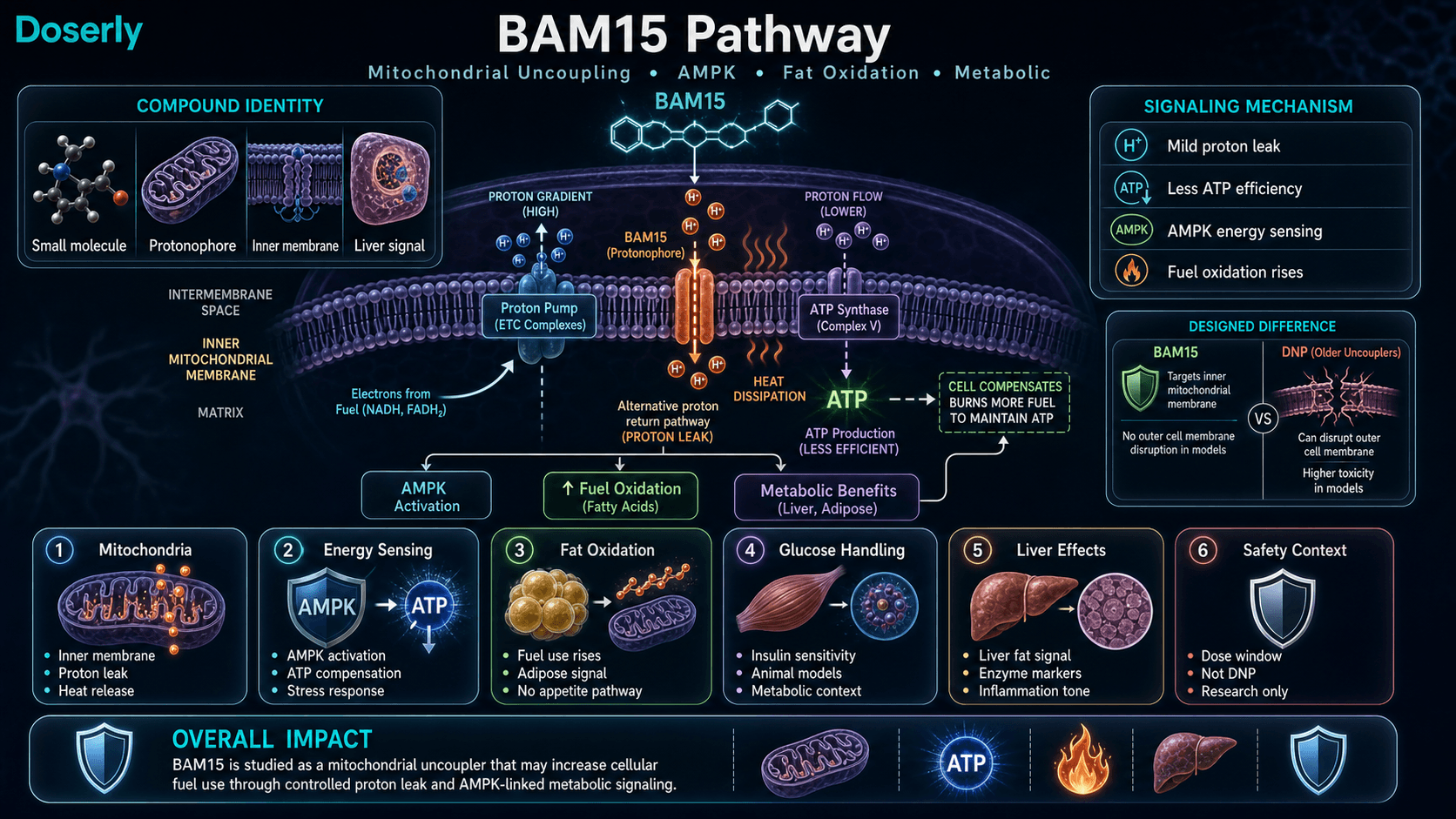
To understand how BAM15 works, think about how your cells produce energy. Inside nearly every cell, mitochondria act like tiny generators. They burn fuel (from fats, sugars, and proteins) and use the energy to pump protons (hydrogen ions) to one side of an internal membrane. Those protons then flow back through a special turbine-like enzyme called ATP synthase, which captures their movement to produce ATP, the energy currency your cells use for everything.
BAM15 creates an alternative pathway for those protons. Instead of passing through the ATP synthase turbine, some of them leak back across the membrane through BAM15 molecules. The energy that would have made ATP is instead released as heat. This forces the mitochondria to burn more fuel to compensate for the "wasted" energy, particularly fat.
What makes BAM15 different from older uncouplers like DNP is that it only affects the inner mitochondrial membrane. DNP also disrupts the outer cell membrane, which is why it could cause uncontrolled energy release and fatal overheating. BAM15's selectivity means the uncoupling effect stays controlled even at higher concentrations in laboratory experiments.
Beyond the direct fat-burning effect, BAM15 triggers a cascade of protective responses. When cells sense that ATP production has dropped, they activate AMPK, a master energy sensor that promotes fat burning and glucose uptake. They also increase production of new, healthier mitochondria through a process called mitochondrial biogenesis. These downstream effects contribute to improved insulin sensitivity and reduced inflammation.
The Science
BAM15 acts as a protonophore, facilitating the translocation of protons across the inner mitochondrial membrane independent of ATP synthase [1]. This dissipation of the proton motive force (PMF) uncouples the electron transport chain (ETC) from oxidative phosphorylation, increasing the rate of substrate oxidation required to maintain cellular energy homeostasis [2].
The compound activates several key signaling cascades downstream of mitochondrial uncoupling:
AMPK Activation: BAM15-induced reduction in intracellular ATP/AMP ratio activates AMP-activated protein kinase (AMPK), a central metabolic sensor. Activated AMPK promotes glucose uptake, enhances fatty acid beta-oxidation, and inhibits lipogenic gene expression [3]. Specifically, BAM15 downregulates sterol regulatory element binding transcription factor 1 (Srebf1) and carbohydrate response element-binding protein (ChREBP), along with their downstream targets stearoyl-CoA desaturase-1 (Scd1) and fatty acid synthase (Fasn) [3].
PGC-1alpha Induction: BAM15-mediated uncoupling stimulates the expression and activity of peroxisome proliferator-activated receptor gamma coactivator 1-alpha (PGC-1alpha), triggering upregulation of genes involved in mitochondrial biogenesis, oxidative metabolism, and antioxidant defense [4][5].
Mitochondrial Quality Control: BAM15 initiates PINK1-ubiquitin-dependent mitophagy pathways and enhances LC3II-mediated autophagosome formation, promoting selective clearance of damaged mitochondria [6]. This is accompanied by enhanced citrate synthase activity and mitochondrial complex II function.
Anti-inflammatory Modulation: BAM15 inhibits NLRP3 inflammasome activation through AMPK-mediated blockade of IkappaBalpha degradation and NF-kappaB nuclear translocation [7]. It also facilitates macrophage polarization from pro-inflammatory M1 to anti-inflammatory M2 phenotypes by suppressing glycolytic activity in macrophages [8].
ROS Reduction: By increasing electron flow through the ETC without proportional ATP production, BAM15 reduces the probability of single-electron transfer to oxygen at complexes I and III, thereby decreasing mitochondrial superoxide production [4].
Pathway Visualization Image
Pharmacokinetics
The Basics
BAM15 is orally bioavailable, meaning it can be taken by mouth and still reach its targets inside your cells. In mouse studies, roughly two-thirds of an oral dose makes it into the bloodstream (67% oral bioavailability). Once absorbed, it concentrates primarily in the liver, which is where a large portion of the body's metabolic activity takes place.
The compound has a relatively short half-life of about 1.7 hours, meaning it is cleared from the body fairly quickly. It is efficiently cleared from tissues within about four hours. This short duration is both a feature and a limitation: it means effects do not linger dangerously (unlike DNP), but it also means that maintaining consistent levels requires frequent dosing or formulation strategies to extend exposure.
BAM15 has low water solubility, which might sound like a drawback but is actually part of what makes it work. Its lipophilic (fat-loving) nature allows it to penetrate cell membranes and reach the inner mitochondrial membrane where it needs to be.
The Science
Pharmacokinetic evaluation in C57BL/6 mice reveals the following parameters for BAM15 [2]:
- Oral bioavailability: 67%
- Elimination half-life: 1.7 hours (oral administration)
- Primary tissue distribution: Liver (highest concentration), with measurable levels in quadriceps and serum
- Tissue clearance: Efficiently cleared from tissues within 4 hours
- Route evaluation: Intravenous injection at 1 mg/kg (n=4) and oral gavage at 10 mg/kg (n=3) demonstrated dose-dependent pharmacokinetics
- Tissue partition coefficient (Kp): Evaluated following oral gavage at 50 mg/kg, with liver showing the highest partitioning
BAM15 exhibits high lipophilicity, which enables efficient membrane penetration and mitochondrial targeting but presents formulation challenges for sustained delivery. In vitro solubility in DMSO reaches 50 mg/mL (146.93 mM), while in vivo preparations typically use a vehicle of 10% DMSO, 40% PEG300, 5% Tween-80, and 45% saline to achieve concentrations of at least 2.5 mg/mL [9].
The rapid clearance profile (t1/2 = 1.7 hours) has been identified as a limitation for clinical translation. Research groups have explored formulation strategies including drug-albumin nanocomposites (BAM15@BSA NPs) that improve hepatic targeting and extend effective exposure windows [10].
Research & Clinical Evidence
Obesity and Fat Loss
The Basics
The strongest body of research on BAM15 focuses on its effects on body weight and fat. In mouse studies, animals fed a high-fat "Western" diet supplemented with BAM15 gained significantly less fat than control animals eating the same diet without the compound. In animals that were already obese, BAM15 reversed the obesity, reducing body fat without changing how much the animals ate.
What makes this particularly notable is what did not change: the mice did not eat less food, did not lose lean muscle mass, and did not experience changes in body temperature. This stands in stark contrast to most weight loss approaches, whether caloric restriction, appetite suppressants, or thermogenic compounds like DNP, which typically involve trade-offs in at least one of those areas.
The Science
The landmark 2020 study by Alexopoulos et al. in Nature Communications demonstrated that BAM15 administered at 0.1% w/w in a Western diet (WD) prevented diet-induced obesity in C57BL/6 mice [2]. Key findings include:
- Significant reduction in body fat mass without changes in food intake or lean body mass
- No alteration in core body temperature
- No changes in biochemical or hematological markers of toxicity
- Reduction in hepatic fat content and inflammatory lipid profiles
- Strong antioxidant effects
- Hyperinsulinemic-euglycemic clamp studies confirmed improved insulin sensitivity in liver, muscle, and adipose tissue
BAM15 increased oxygen consumption (VO2) primarily through enhanced fat oxidation rather than increased physical activity [3]. The compound was significantly taken up into the portal system, resulting in increased lipolysis and depletion of hepatic lipids.
Notably, BAM15 is described as a "rare mitochondrial uncoupler that prevents and reverses obesity without affecting food intake or lean mass" [2]. Other uncouplers tested in comparable models, including controlled-release DNP, methyl ether prodrug DNP, and OPC-163493, failed to alter adiposity under similar conditions.
Diabetes and Insulin Resistance
The Basics
Research suggests BAM15 may improve how the body handles blood sugar. In diabetic mouse models, treatment with the compound improved blood glucose control and made tissues more responsive to insulin. It also reduced liver fat and lowered glucagon levels, which contribute to high blood sugar. Importantly, these metabolic improvements occurred without the animals eating less or losing muscle mass.
The Science
In db/db mice (a genetic model of type 2 diabetes), high-dose BAM15 effectively ameliorated multiple metabolic parameters [11]: reduced liver triglycerides, improved blood glucose control, and reversed insulin resistance across multiple tissue types. BAM15 lowered glucagon secretion and hepatic glucose output while preserving pancreatic alpha cell mass, attributed to downregulation of glucose-6-phosphatase and fructose-1,6-bisphosphatase, critical enzymes in late-stage hepatic gluconeogenesis [11].
The insulin-sensitizing effects have been validated through hyperinsulinemic-euglycemic clamp studies, the gold standard for insulin sensitivity assessment [2].
NAFLD and Liver Protection
The Basics
BAM15 shows particular promise for fatty liver conditions. Because the compound concentrates in the liver after oral administration, it directly targets the organ most affected by metabolic dysfunction. Animal studies show reductions in liver fat content, improvements in liver enzymes, and decreased inflammation and fibrosis.
The Science
In models of NAFLD/NASH, BAM15 reduced liver triglyceride levels and improved liver enzymes, inflammation, and fibrosis without affecting body temperature or food intake [12]. The compound inhibits NLRP3 inflammasome activation through AMPK-mediated suppression of NF-kappaB nuclear translocation [7]. BAM15@BSA nanoparticle formulations demonstrated enhanced hepatic targeting with potent anti-steatosis effects [10].
Sepsis and Kidney Protection
The Basics
In animal models of severe infection (sepsis), BAM15 protected the kidneys from damage. Sepsis can trigger a destructive cycle where damaged mitochondria release their DNA, which causes more inflammation and more mitochondrial damage. BAM15 appears to break this cycle by reducing the release of damaging molecules from stressed mitochondria.
The Science
Tsuji et al. (2023) demonstrated in a sepsis mouse model that BAM15 reduced mtDNA release, lowered mitochondrial ROS (mtROS) levels, and mitigated septic acute kidney injury (AKI) [4]. The compound activated AMPK in early sepsis stages and SIRT1 in later stages, increasing NAD+ levels and promoting PGC-1alpha-mediated mitochondrial biogenesis. BAM15 also promoted TFAM expression in septic kidneys, hampered neutrophil infiltration, and facilitated M1-to-M2 macrophage polarization shift [4][8].
Cancer
The Basics
Early-stage laboratory research has explored whether BAM15 can affect cancer cell growth. Because cancer cells depend heavily on mitochondrial energy production to fuel their rapid growth, disrupting this energy supply could theoretically slow tumor progression. Several laboratory and animal studies have shown promising results, but this area of research is very early.
The Science
BAM15-induced sustained depolarization of mitochondrial membrane potential (delta-psi-m) restrains ATP-linked oxidative phosphorylation in cancer cells, increasing superoxide production and enhancing caspase-3/7 activity [13]. In breast cancer models, BAM15 suppressed tumor growth and proliferation. In melanoma cells with mutated RAS-MAPK pathways, BAM15 disrupted mitochondrial function and enhanced apoptosis when combined with MAPK pathway inhibitors [14]. In acute myeloid leukemia (AML), BAM15 induced apoptosis, inhibited proliferation, and extended lifespan in mouse models [15].
Sarcopenia and Skeletal Muscle
The Basics
A recent study examined whether BAM15 could help with age-related muscle loss (sarcopenia). Aged mice given BAM15-supplemented food for eight weeks showed improved muscle contractile function and better mitochondrial efficiency in their muscles, though body weight and muscle mass were not significantly changed.
The Science
In 24-month-old MitoQC mice supplemented with 0.033% BAM15 in chow for 8 weeks, BAM15 preserved extensor digitorum longus (EDL) contractile function and improved skeletal muscle mitochondrial efficiency without affecting body mass, organ mass, or food intake [16]. These findings suggest potential applications for maintaining muscle function during aging, though the compound did not reverse age-related muscle mass loss.
Neuroprotection
The Basics
Limited research suggests BAM15 may support brain cell health by improving mitochondrial function in neurons. In a study using the roundworm C. elegans (a common model for aging research), BAM15 relieved neurodegeneration and extended lifespan.
The Science
Cho et al. (2022) demonstrated that BAM15 relieved neurodegeneration in aged Caenorhabditis elegans models and extended lifespan, suggesting neuroprotective potential through enhanced mitochondrial respiration and energy generation [17].
Cardiovascular Effects
The Basics
Research on BAM15 and heart health shows a dose-dependent pattern. At lower doses, the compound appears to activate protective pathways in heart cells. At higher doses, however, it may reduce energy production in those same cells. This highlights the importance of appropriate dosing, which has not yet been established for humans.
The Science
BAM15 elicits biphasic effects on STAT3 activity in cardiomyocytes [18]. Low-dose BAM15 activates STAT3 through the mitoROS/JAK/STAT3 pathway (Tyr705 phosphorylation), resulting in reduced injury and increased ATP production. High-dose BAM15 hinders STAT3 activation by blocking AMPK-induced Ser727 phosphorylation, leading to decreased ATP production and cardiomyocyte injury. Additionally, BAM15 suppresses NLRP3 inflammasome activation in cardiac macrophages through inhibition of NF-kappaB nuclear translocation [7].
Biomarker Evidence Matrix
Category
Fat Loss
- Evidence Strength
- 7/10
- Reported Effectiveness
- 7/10
- Summary
- Multiple animal studies demonstrate robust fat reduction without food intake changes. Community reports align with preclinical findings.
Category
Weight Management
- Evidence Strength
- 7/10
- Reported Effectiveness
- 6/10
- Summary
- Preclinical data shows prevention and reversal of obesity. Community reports positive but confounded by multi-compound stacks.
Category
Energy Levels
- Evidence Strength
- 4/10
- Reported Effectiveness
- 6/10
- Summary
- Mechanism supports increased cellular energy expenditure but no direct measurements of subjective energy in animal models. Limited community reports positive.
Category
Muscle Growth
- Evidence Strength
- 4/10
- Reported Effectiveness
- 5/10
- Summary
- Animal data shows no loss of lean mass (preservation), but no evidence of muscle building. Community views it as preservation only.
Category
Physical Performance
- Evidence Strength
- 3/10
- Reported Effectiveness
- 5/10
- Summary
- Sarcopenia study shows improved muscle contractile function in aged mice [16]. Community reports limited and confounded by SLU-PP-332 stacking.
Category
Gut Health
- Evidence Strength
- 5/10
- Reported Effectiveness
- 4/10
- Summary
- Significant NAFLD/NASH evidence via liver protection pathways. No direct gut lining or microbiome data.
Category
Inflammation
- Evidence Strength
- 6/10
- Reported Effectiveness
- N/A
- Summary
- Strong preclinical evidence for NLRP3 inflammasome inhibition and M1-to-M2 macrophage shift. No community data.
Category
Heart Health
- Evidence Strength
- 4/10
- Reported Effectiveness
- N/A
- Summary
- Biphasic STAT3 effects in cardiomyocytes. Promising at low doses but concerning at high doses. No community data.
Category
Immune Function
- Evidence Strength
- 5/10
- Reported Effectiveness
- N/A
- Summary
- Macrophage polarization and neutrophil modulation data from sepsis models. No community data.
Category
Longevity & Neuroprotection
- Evidence Strength
- 3/10
- Reported Effectiveness
- N/A
- Summary
- C. elegans lifespan extension. Very early preclinical data only. No community data.
Category
Side Effect Burden
- Evidence Strength
- 5/10
- Reported Effectiveness
- 7/10
- Summary
- Animal safety data encouraging (no toxicity markers). Community reports low side effect burden but short usage periods.
Category
Temperature Regulation
- Evidence Strength
- 4/10
- Reported Effectiveness
- 5/10
- Summary
- Animal data: no core temperature change. Community: mixed reports on sweating during exercise.
Categories scored: 12
Categories with community data: 8
Categories not scored (insufficient data): Appetite & Satiety, Food Noise, Sleep Quality, Focus & Mental Clarity, Memory & Cognition, Mood & Wellbeing, Anxiety, Stress Tolerance, Motivation & Drive, Emotional Aliveness, Emotional Regulation, Libido, Sexual Function, Joint Health, Pain Management, Recovery & Healing, Digestive Comfort, Nausea & GI Tolerance, Skin Health, Hair Health, Blood Pressure, Heart Rate & Palpitations, Hormonal Symptoms, Fluid Retention, Body Image, Bone Health, Cravings & Impulse Control, Social Connection, Treatment Adherence, Withdrawal Symptoms, Daily Functioning, Body Image
Benefits & Potential Effects
The Basics
The primary interest in BAM15 centers on its metabolic effects. Based on animal studies, the compound has shown potential in several areas:
Fat reduction without appetite suppression. Unlike most weight loss approaches, BAM15 reduced body fat in animal studies without the animals eating less food. The mechanism works by making cells burn more fuel, particularly fat, which creates an energy deficit at the cellular level without requiring caloric restriction.
Insulin sensitivity improvement. Multiple animal studies show that BAM15 makes tissues more responsive to insulin, which could have implications for blood sugar management and metabolic health.
Liver health. Because BAM15 concentrates in the liver after oral administration, it has shown effects on reducing liver fat content, improving liver enzyme markers, and reducing liver inflammation in animal models.
Muscle preservation. In contrast to many weight loss interventions, BAM15 did not reduce lean body mass in any of the published animal studies. One study in aged mice showed improved muscle contractile function.
Antioxidant and anti-inflammatory effects. By reducing mitochondrial stress and modulating inflammatory pathways (particularly the NLRP3 inflammasome), BAM15 has demonstrated anti-inflammatory and antioxidant properties in preclinical models.
All of these findings come from animal studies and cell experiments. No human clinical data is available.
The Science
The therapeutic effects of BAM15 can be organized by the underlying molecular pathways:
Metabolic Enhancement: AMPK activation drives increased fatty acid beta-oxidation, glucose uptake, and suppression of lipogenic transcription factors (Srebf1, ChREBP, Scd1, Fasn) [3]. Enhanced PGC-1alpha expression promotes mitochondrial biogenesis and oxidative capacity [5].
Hepatoprotective Effects: Portal absorption concentrates BAM15 in the liver, where it depletes hepatic lipids, reduces triglycerides, and mitigates oxidative stress [2]. NLRP3 inflammasome inhibition reduces hepatic inflammation [7]. In NASH models, fibrosis markers improved [12].
Insulin Sensitization: Hyperinsulinemic-euglycemic clamp studies demonstrate improved insulin sensitivity in liver, skeletal muscle, and adipose tissue [2]. BAM15 reduces expression of gluconeogenic enzymes and lowers circulating glucagon [11].
Anti-inflammatory and Antioxidant: Reduced mitochondrial ROS production via increased electron transport chain flux. NLRP3 inflammasome suppression through AMPK/NF-kappaB pathway modulation. M1-to-M2 macrophage polarization in sepsis models [4][8]. Decreased expression of pro-inflammatory cytokines (IL-6, TNF-alpha, IL-10, iNOS) [8].
The benefits outlined above span multiple body systems, and your experience will be uniquely yours. Rather than guessing which effects are attributable to this compound versus other factors in your life, Doserly helps you log specific outcomes alongside your protocol details, building a clear picture of what's changing and when.
Over weeks and months, this creates something more useful than any anecdotal report: your own evidence-based record of how this compound affects you personally, at your specific dose, within the context of your full health protocol. When it's time to decide whether to continue, adjust, or discontinue, you have real data to inform that conversation with your healthcare provider.
Capture changes while they are still fresh.
Log symptoms, energy, sleep, mood, and other observations alongside protocol events so patterns do not live only in memory.
Trend view
Symptom timeline
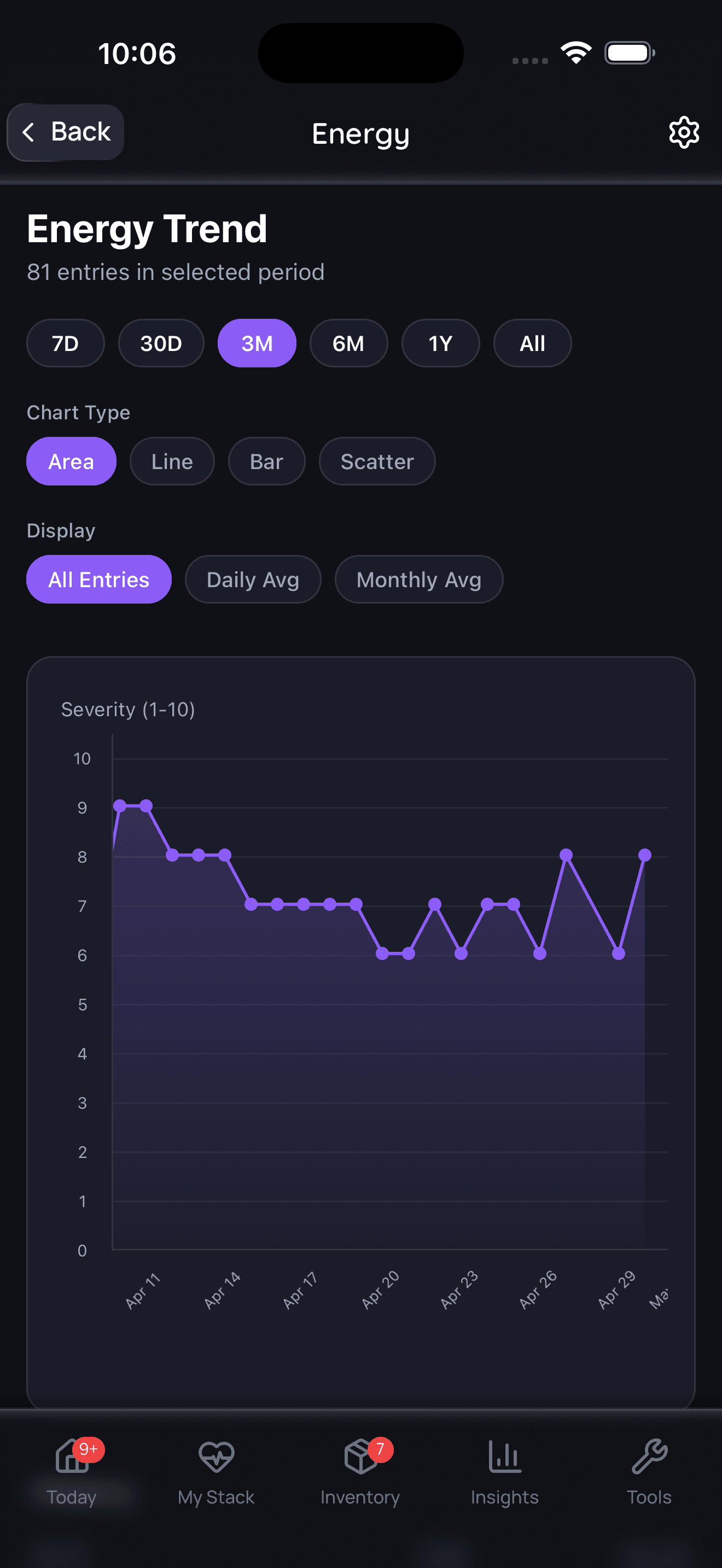
Symptom tracking is informational and should be interpreted with a qualified clinician.
Side Effects & Safety Considerations
The Basics
The safety profile of BAM15 is one of its most frequently discussed features, primarily because it stands in contrast to older mitochondrial uncouplers like DNP, which have caused deaths. In animal studies, BAM15 has shown a notably clean safety profile:
- No changes in biochemical markers that would indicate organ damage
- No changes in blood cell counts or other hematological markers
- No effects on core body temperature (unlike DNP, which causes dangerous overheating)
- No loss of lean body mass
- No adverse effects on skeletal muscle at tested doses
Community members who have used BAM15 generally report minimal side effects. The most commonly mentioned observation is increased sweating during exercise, particularly at higher self-reported doses. Some users have raised theoretical concerns about long-term safety and the presence of fluorine atoms in the molecular structure, though no adverse effects attributable to fluorinated metabolites have been documented in published research.
There are important caveats. All formal safety data comes from animal studies of relatively short duration (up to 8 weeks). No human clinical trials have evaluated long-term safety, toxicity, or side effects. The biphasic effect on heart cells (protective at low doses, potentially harmful at high doses) suggests that dose selection matters significantly, and an appropriate dose range for humans has not been determined.
The Science
Extensive preclinical evaluation demonstrates a favorable safety profile for BAM15 [2][3]:
- In vitro toxicity: Lower cytotoxicity compared to DNP and FCCP across multiple cell lines. BAM15-treated cells maintain greater viability than FCCP-treated cells at concentrations up to 50 micromolar [1].
- Biochemical markers: No alterations in markers of tissue damage (liver enzymes, kidney function) in mice receiving BAM15 via diet supplementation [2].
- Hematological markers: No changes in complete blood count parameters [2].
- Core body temperature: No change at effective anti-obesity doses, distinguishing BAM15 from DNP and thyroid-mimetic compounds [2].
- Plasma membrane selectivity: BAM15 selectively depolarizes mitochondria without affecting plasma membrane potential, reducing off-target cellular effects [1].
- Skeletal muscle: No detrimental systemic, cellular, or molecular effects identified in muscle tissue [3].
- Dose-dependent cardiac effects: Low-dose BAM15 activates cardioprotective STAT3 pathways, while high doses block STAT3 activation, potentially reducing cardiac ATP production [18]. This biphasic response underscores the importance of dose optimization.
Known limitations of current safety data:
- All data from rodent models (primarily C57BL/6 mice); no human safety data exists
- Maximum study duration: 8 weeks continuous dosing
- No formal dose-ranging safety studies in larger animal models (e.g., non-human primates)
- Gender differences in response require further investigation (female septic mice showed higher survival rates than males) [4]
Side effect profiles are most useful when you can compare them against your own experience in real time. Doserly lets you log symptoms, severity, and timing alongside your dosing data, creating a side-by-side view of your protocol and your body's response.
This kind of systematic tracking catches things that memory alone misses. A subtle mood shift that began three days after a dose increase. Sleep disruption that correlates with evening administration. These patterns become visible when the data is laid out on a timeline, and they give your healthcare provider actionable information rather than vague concerns. Early detection of emerging side effects means earlier intervention.
Keep side effects, flags, and follow-up notes visible.
Doserly helps you document safety observations, side effects, medication changes, and follow-up questions so important context is not scattered.
Safety log
Flags and notes

Safety notes are not emergency guidance; seek medical help when appropriate.
Dosing Protocols
The Basics
There are no established human dosing protocols for BAM15. All available dosing information comes from animal studies, and translating animal doses to human equivalents requires caution because metabolism, body composition, and drug clearance differ significantly between species.
In published research, mice received BAM15 through their food at concentrations of 0.033% to 0.1% mixed into chow, or by injection at 1 to 5 mg/kg body weight. These doses were effective for metabolic outcomes in mice but cannot be directly extrapolated to human use.
Community members who discuss BAM15 usage report a wide range of self-selected doses, from as low as 50 micrograms per day (in combination products) to 200-350 milligrams per day as a standalone compound. These self-reported doses have not been validated in any clinical setting and carry unknown risks.
The Science
Published preclinical dosing:
Study
Alexopoulos et al. 2020 [2]
- Model
- C57BL/6 mice, WD
- Route
- Oral (diet admixture)
- Dose
- 0.1% w/w
- Duration
- Continuous
Study
Alexopoulos et al. 2020 [2]
- Model
- C57BL/6 mice
- Route
- Oral gavage
- Dose
- 10 mg/kg
- Duration
- PK study
Study
Kenwood et al. 2014 [1]
- Model
- C57BL/6 mice
- Route
- i.p. injection
- Dose
- 1-5 mg/kg
- Duration
- Pre-treatment (1 hr)
Study
bioRxiv 2025 [16]
- Model
- MitoQC mice (aged)
- Route
- Oral (diet admixture)
- Dose
- 0.033% (mg/g)
- Duration
- 8 weeks
Study
MedChemExpress [9]
- Model
- C57BL/6 mice
- Route
- i.p. injection
- Dose
- 1-5 mg/kg
- Duration
- Pre-treatment (1 hr)
In vitro concentration range: 100 nM to 50 micromolar, with optimal uncoupling at 1-10 micromolar depending on cell type [1][9].
Community-reported protocols (not clinically validated):
Community discussions reference doses ranging from 50 micrograms (in combination products with SLU-PP-332) to 350 milligrams per day as a standalone compound. The most commonly mentioned standalone dose is 50-200 mg per day taken orally, split across 1-3 administrations, typically in cycles of 2-8 weeks. These are self-reported experimental protocols with no clinical validation and carry unknown risks. Readers should consult a healthcare professional before considering any compound.
What to Expect
Community data on BAM15 timelines is limited and heavily confounded by multi-compound stacking. Based on available community reports and preclinical data, practitioners note the following general pattern:
Week 1-2: Subtle changes may include increased sweating during exercise and a slight boost in perceived energy levels. Body composition changes are unlikely to be visible this early. Some community members report nootropic-like effects during this initial period.
Week 3-4: Users in community forums report beginning to notice body composition changes if combining with exercise and reasonable nutrition. The 16-day experiment log posted on Reddit noted visible changes by this timeframe, though the user was also taking SLU-PP-332 alongside BAM15.
Week 5-8: Community reports suggest this is when the most visible fat loss changes accumulate. Animal study data supports sustained metabolic effects at the 8-week mark, including improved mitochondrial efficiency and preserved muscle function.
Beyond 8 weeks: No published animal studies extend beyond 8 weeks of continuous BAM15 administration, and most community protocols include breaks of 2-4 weeks between cycles. Long-term effects of continuous use are unknown.
These timelines are speculative and based on limited community reports that are nearly always confounded by concurrent use of other compounds. Individual responses will vary.
Interaction Compatibility
Commonly Combined With (Synergistic)
- SLU-PP-332 — The most frequently discussed pairing in community forums. SLU-PP-332 is an ERRalpha agonist that promotes mitochondrial biogenesis (building more mitochondria), while BAM15 increases energy demand through uncoupling. Together they address both the supply and demand sides of mitochondrial metabolism. Available as a pre-formulated blend.
- 5-Amino-1MQ — Another metabolic compound that inhibits NNMT, preserving NAD+ in fat cells. Targets a different metabolic bottleneck than BAM15.
- MOTS-C — Mitochondrial-derived peptide that activates AMPK and enhances metabolic flexibility. Addresses metabolic regulation through a complementary mitochondrial pathway.
- Retatrutide — GLP-1/GIP/glucagon triple agonist that addresses appetite suppression while BAM15 increases energy expenditure. Different mechanisms that may complement each other.
Exercise Caution With
- DNP (2,4-dinitrophenol) — Combining two mitochondrial uncouplers could create additive or unpredictable uncoupling effects. DNP has caused deaths due to uncontrolled thermogenesis. Not recommended.
- Thyroid hormones — Both increase metabolic rate. Combination could create excessive metabolic demand.
- Stimulant-based fat burners — Adding metabolic demand from uncoupling to sympathetic nervous system stimulation may increase cardiovascular strain.
Insufficient Data
- Interactions with most pharmaceutical medications have not been studied
- No drug interaction studies have been conducted for BAM15
Administration Guide
BAM15 is primarily used orally in published research, administered either mixed into food (in animal studies) or taken as a capsule/liquid (in community-reported protocols).
Materials typically used:
- BAM15 powder, capsules, or liquid formulation
- For research preparations: DMSO, PEG300, Tween-80, saline (standard in vivo vehicle)
Timing considerations:
- Community protocols typically suggest morning administration, fasted
- The short half-life (~1.7 hours) means some community members report splitting doses across the day
- Fasted administration is preferred in community protocols, though no clinical data confirms improved bioavailability with fasting
Post-administration monitoring:
- Monitor for excessive sweating, especially during exercise
- Track body temperature if concerned about thermogenic effects
- Community members recommend tracking body weight, body composition, and energy levels
BAM15 is not a traditional injectable peptide and does not require reconstitution from a lyophilized powder in most available formulations. Readers should follow the specific preparation instructions provided with their product and consult a healthcare professional.
Supplies & Planning
Common formulations available:
- Capsules/tablets (often in combination products with SLU-PP-332)
- Liquid solutions (typically 25 mg/mL in oral-compatible vehicles)
- Raw powder (for research use)
Storage supplies:
- Refrigerator or freezer space (depending on formulation)
- Dark storage container (protect from light)
Monitoring supplies:
- Scale for body weight tracking
- Body composition measurement tool (calipers, DEXA, bioimpedance)
- Thermometer (for temperature monitoring if desired)
Specific quantities depend on the chosen protocol and should be determined in consultation with a healthcare professional. Use the Doserly reconstitution calculator for any preparation calculations.
Storage & Handling
Based on manufacturer specifications for BAM15 powder [9]:
Lyophilized/powder form:
- Long-term storage: -20°C (up to 3 years)
- Short-term storage: 4°C (up to 2 years)
In solution:
- Storage at -80°C: up to 1 year
- Storage at -20°C: up to 6 months
Handling notes:
- Soluble in DMSO at 50 mg/mL (requires ultrasonication)
- For in vivo preparations: add solvents sequentially (10% DMSO, then 40% PEG300, then 5% Tween-80, then 45% saline)
- Discard if solution becomes cloudy or discolored
- Protect from light and moisture
- Gently invert or swirl to mix if separation occurs; do not shake vigorously
Lifestyle Factors
Nutrition: While BAM15 does not suppress appetite in animal studies, maintaining adequate protein intake is important for supporting lean mass preservation during any period of increased metabolic rate. Community members frequently emphasize prioritizing protein and staying well-hydrated.
Exercise: Animal and community data suggest that BAM15's metabolic effects may be complemented by regular physical activity. The sarcopenia study showed improved muscle contractile function with BAM15 supplementation [16]. Community members commonly pair BAM15 use with regular cardiovascular exercise and note increased sweating intensity during cardio sessions.
Hydration and electrolytes: Increased metabolic rate and potential thermogenesis effects make hydration and electrolyte balance important considerations. Community protocols frequently include supplemental electrolytes (sodium, potassium) alongside BAM15 use.
Sleep: No specific sleep interactions have been documented for BAM15 in published research. Community discussions do not commonly report sleep disruption.
Monitoring: Given the absence of human clinical data, community members recommend regular blood work monitoring (liver function, complete metabolic panel, lipid panel) during any experimental protocol.
The lifestyle factors above, nutrition, exercise, sleep, stress management, are not just nice-to-haves alongside a peptide protocol. They're force multipliers. Doserly lets you track these inputs alongside your compounds, building a complete picture of what your body is receiving and how it's responding.
When everything lives in one dashboard, patterns emerge. You can see whether training days correlate with better biomarker trends, whether your sleep scores predict next-day recovery quality, or whether stress spikes derail your progress in measurable ways. This kind of integrated tracking turns the lifestyle recommendations in this section from abstract advice into actionable, personalized insight.
See how each compound fits into the whole protocol.
Doserly organizes compounds, supplements, peptides, medications, and hormone protocols together so overlapping routines are easier to understand.
Stack view
Connected protocol
Stack views improve organization; they do not determine compatibility.
Regulatory Status & Research Classification
United States (FDA): BAM15 is not approved by the FDA for any therapeutic indication. It is classified as a research compound. No Investigational New Drug (IND) applications have been publicly disclosed for BAM15 specifically. The FDA has granted IND approval for the related compound DNP to re-enter clinical testing for Huntington's disease, indicating renewed regulatory interest in the mitochondrial uncoupler class.
Canada (Health Canada): Not approved. No DIN or NPN assignment. Classified as a research chemical.
United Kingdom (MHRA): Not approved for therapeutic use. Available as a research chemical.
Australia (TGA): Not scheduled or approved. Available for research purposes.
European Union (EMA): No marketing authorization. Research compound only.
WADA Status: Not specifically listed on the World Anti-Doping Agency prohibited list as of current available data. Athletes should verify current status before using any compound, as WADA lists are updated regularly.
Active clinical trials: No registered clinical trials for BAM15 were identified on ClinicalTrials.gov as of early 2026. All published data derives from preclinical (animal and in vitro) studies.
Regulatory status changes frequently. Always verify the current legal status of any compound in your specific country or jurisdiction before making any decisions.
FAQ
What is the difference between BAM15 and DNP?
Both are mitochondrial uncouplers, meaning they increase energy expenditure by dissipating the proton gradient in mitochondria. However, they differ significantly in safety profile. DNP affects both the mitochondrial membrane and the plasma membrane, leading to uncontrolled uncoupling that can cause fatal hyperthermia. BAM15 selectively targets the mitochondrial membrane without depolarizing the plasma membrane, which allows it to sustain uncoupling within a controlled range [1]. DNP has caused multiple deaths and is banned for human consumption in most countries.
Is BAM15 a peptide?
No. Despite being discussed in peptide communities, BAM15 is a synthetic small molecule (an oxadiazolopyrazine derivative) with a distinct chemical structure from peptides. It does not have an amino acid sequence and is not synthesized through peptide manufacturing processes.
What is the recommended dose for humans?
There is no established or recommended human dose for BAM15. All dosing data comes from animal studies, and animal doses cannot be directly translated to human equivalents. Community members report a wide range of self-selected experimental doses. Anyone considering this compound should consult a healthcare professional.
Does BAM15 raise body temperature?
In published animal studies, BAM15 did not raise core body temperature at effective anti-obesity doses [2]. Community reports are mixed, with some users noting increased sweating during exercise and others reporting no temperature changes. This contrasts with DNP, which can cause dangerous and sometimes fatal increases in body temperature.
Can BAM15 be stacked with SLU-PP-332?
This is the most commonly discussed combination in community forums, and a pre-formulated blend exists. SLU-PP-332 promotes mitochondrial biogenesis while BAM15 increases mitochondrial energy demand. No clinical studies have evaluated this combination, and anyone considering compound stacking should consult a healthcare professional.
Are there any human clinical trials?
No human clinical trials for BAM15 have been registered or published as of early 2026. All available evidence comes from preclinical studies (cell cultures and animal models).
How long can BAM15 be taken continuously?
The longest published animal study duration is 8 weeks of continuous administration [16]. Long-term effects of extended use are unknown. Community protocols typically include rest periods of 2-4 weeks between cycles of use.
Sources & References
Reviews:
[1] Kenwood BM, Weaver JL, Bajwa A, et al. Identification of a novel mitochondrial uncoupler that does not depolarize the plasma membrane. Mol Metab. 2014;3(2):114-123. doi:10.1016/j.molmet.2013.11.005 — Original identification and characterization of BAM15.
[2] Alexopoulos SJ, Chen SY, et al. Mitochondrial uncoupler BAM15 reverses diet-induced obesity and insulin resistance in mice. Nat Commun. 2020;11(1):2397. doi:10.1038/s41467-020-16298-2 — Landmark anti-obesity study demonstrating oral bioavailability and metabolic effects.
[3] Axelrod CL, King WT, Davuluri G, et al. BAM15-mediated mitochondrial uncoupling protects against obesity and improves glycemic control. EMBO Mol Med. 2020;12(7):e12088. doi:10.15252/emmm.202012088 — AMPK activation and glycemic control mechanisms.
Preclinical Studies (Sepsis/AKI):
[4] Tsuji N, Tsuji T, Yamashita T, et al. BAM15 treats mouse sepsis and kidney injury, linking mortality, mitochondrial DNA, tubule damage, and neutrophils. J Clin Invest. 2023;133(7):e152401. doi:10.1172/JCI152401 — Sepsis and kidney protection via mitochondrial pathways.
Preclinical Studies (Metabolic):
[5] Xiong G, Zhang K, Ma Y, et al. BAM15 as a mitochondrial uncoupler: a promising therapeutic agent for diverse diseases. Front Endocrinol (Lausanne). 2023;14:1252141. doi:10.3389/fendo.2023.1252141 — Comprehensive review of BAM15 mechanisms and therapeutic applications.
[6] Dantas WS, Zunica E, Heintz EC, et al. Mitochondrial uncoupling attenuates sarcopenic obesity by enhancing skeletal muscle mitophagy and quality control. J Cachexia Sarcopenia Muscle. 2022;13:1821-1836. doi:10.1002/jcsm.12982 — PINK1/mitophagy and mitochondrial quality control mechanisms.
[7] Hu N, Fu Y, Li WF, et al. Chemical mitochondrial uncouplers share common inhibitory effect on NLRP3 inflammasome activation through inhibiting NF-kappaB nuclear translocation. Toxicol Appl Pharmacol. 2021;414:115426. doi:10.1016/j.taap.2021.115426 — NLRP3 inflammasome inhibition.
[8] Dang CP, Issara-Amphorn J, Charoensappakit A, et al. BAM15, a mitochondrial uncoupling agent, attenuates inflammation in the LPS injection mouse model: an adjunctive anti-inflammation on macrophages and hepatocytes. J Innate Immun. 2021;13:359-375. doi:10.1159/000516348 — Macrophage M1-to-M2 polarization and anti-inflammatory effects.
Product Data:
[9] MedChemExpress BAM15 Product Data Sheet (HY-110284) — Solubility, storage, and in vivo formulation data.
Preclinical Studies (Liver):
[10] Jing W, Jiang M, Fu X, et al. Self-assembly drug-albumin nanocomposites for nonalcoholic fatty liver disease treatment. Int J Biol Macromol. 2022;214:697-707. doi:10.1016/j.ijbiomac.2022.06.167 — BAM15@BSA nanoparticle hepatic targeting.
[11] Chen SY, Beretta M, Olzomer EM, et al. Targeting negative energy balance with calorie restriction and mitochondrial uncoupling in db/db mice. Mol Metab. 2023;69:101684. doi:10.1016/j.molmet.2023.101684 — Diabetic mouse model metabolic improvements.
[12] Childress ES, Salamoun JM, Hargett SR, et al. [1,2,5]Oxadiazolo[3,4-b]pyrazine-5,6-diamine derivatives as mitochondrial uncouplers for the potential treatment of nonalcoholic steatohepatitis. J Med Chem. 2020;63:2511-2526. doi:10.1021/acs.jmedchem.9b01440 — NASH treatment potential.
Preclinical Studies (Cancer):
[13] Zunica E, Axelrod CL, Cho E, et al. Breast cancer growth and proliferation is suppressed by the mitochondrial targeted furazano[3,4-b]pyrazine BAM15. Cancer Metab. 2021;9:36. doi:10.1186/s40170-021-00274-5 — Anti-tumor effects.
[14] Serasinghe MN, Gelles JD, Li K, et al. Dual suppression of inner and outer mitochondrial membrane functions augments apoptotic responses to oncogenic MAPK inhibition. Cell Death Dis. 2018;9:29. doi:10.1038/s41419-017-0044-1 — Melanoma and MAPK pathway interaction.
[15] Gao ZX, Cui ZL, Zhou MR, et al. The new mitochondrial uncoupler BAM15 induces ROS production for treatment of acute myeloid leukemia. Biochem Pharmacol. 2022;198:114948. doi:10.1016/j.bcp.2022.114948 — AML treatment potential.
Preclinical Studies (Aging):
[16] Unpublished preprint: Mitochondrial uncoupler BAM15 improves skeletal muscle function in aged mice. bioRxiv. 2025. doi:10.1101/2025.10.30.685477 — Sarcopenia study in aged MitoQC mice.
[17] Cho I, Song HO, Ji HE, et al. BAM15 relieves neurodegeneration in aged Caenorhabditis elegans and extends lifespan. Metabolites. 2022;12(11):1129. doi:10.3390/metabo12111129 — Neuroprotection and lifespan extension.
Preclinical Studies (Cardiovascular):
[18] Gao JL, Zhao J, Zhu HB, et al. Characterizations of mitochondrial uncoupling induced by chemical mitochondrial uncouplers in cardiomyocytes. Free Radic Biol Med. 2018;124:288-298. doi:10.1016/j.freeradbiomed.2018.06.020 — Biphasic STAT3 effects in cardiomyocytes.
Related Peptide Guides
- SLU-PP-332 — ERRalpha agonist, mitochondrial biogenesis. Most commonly paired with BAM15.
- SLU-PP-332 + BAM15 Blend — Pre-formulated combination product.
- 5-Amino-1MQ — NNMT inhibitor, complementary metabolic mechanism.
- MOTS-C — Mitochondrial-derived peptide, AMPK activator.
- SS-31 — Mitochondrial-targeted peptide, cardiolipin interaction.
- Retatrutide — GLP-1/GIP/glucagon triple agonist for weight management.
- AOD-9604 — Growth hormone fragment for fat metabolism.
- Tesofensine — Monoamine reuptake inhibitor for weight management.
- Methylene Blue — Mitochondrial electron carrier, complementary mitochondrial support.
- NAD+ — Coenzyme for mitochondrial energy metabolism.