
SLU-PP-332: Complete Research Guide
On this page
Quick Reference Card
Attribute
Also Known As
- Detail
- SLU-PP-332, SLUPP332, pan-ERR agonist, exercise mimetic
Attribute
Administration
- Detail
- Oral (most commonly reported); also injectable (subcutaneous). Published murine studies used intraperitoneal injection.
Attribute
Research Status
- Detail
- Preclinical research compound only. No human clinical trials. Not FDA-approved.
Attribute
Typical Dose Range
- Detail
- 250 mcg to 5 mg daily (community-reported); allometric HED approximately 280 mg/day based on murine 50 mg/kg
Attribute
Half-Life
- Detail
- Unknown in humans; no published pharmacokinetic data
Attribute
Cycle Length
- Detail
- 4 to 16 weeks, followed by 4 to 8 week break (community-derived)
Attribute
Storage
- Detail
- Lyophilized: -20C (-4F). Reconstituted: 2-8C (35.6-46.4F), protected from light.
Overview / What Is SLU-PP-332?
The Basics
SLU-PP-332 is a synthetic small molecule that has earned the nickname "exercise in a bottle" among the biohacking community. It belongs to a class of compounds called exercise mimetics, substances designed to replicate some of the cellular benefits of physical training without the mechanical stress of actual exercise.
Despite being sold alongside peptides by many vendors, SLU-PP-332 is technically not a peptide. It is a small-molecule drug that activates a family of cellular receptors called estrogen-related receptors, or ERRs. The name is misleading. These receptors have nothing to do with estrogen or estrogenic effects. They were named because their structure resembles estrogen receptors, but they operate entirely independently of estrogen signaling. SLU-PP-332 will not cause estrogenic side effects.
What ERRs actually control is energy production. They regulate the genes responsible for building mitochondria (your cells' power plants), burning fat for fuel, and increasing oxidative capacity. These are the same metabolic adaptations your body makes in response to endurance training. SLU-PP-332 essentially flips those metabolic switches without requiring the training stimulus.
The compound was developed at Saint Louis University by Thomas Burris and colleagues, and the name "SLU-PP-332" reflects its origin (SLU = Saint Louis University, PP = the lab's naming convention). All published research to date has been conducted in mice, with no human clinical trials completed or registered. The compound is currently in the very early stages of its research life cycle.
The Science
SLU-PP-332 is a synthetic pan-agonist of the estrogen-related receptor family (ERRalpha, ERRbeta, ERRgamma), classified as orphan nuclear receptors that regulate transcription of genes involved in mitochondrial energy metabolism, fatty acid oxidation, and oxidative phosphorylation [1]. The compound exhibits highest potency at ERRalpha (EC50 = 98 nM), with lower but significant activity at ERRbeta (EC50 = 230 nM) and ERRgamma (EC50 = 430 nM) [1].
ERRs function as constitutive transcription factors that do not require endogenous ligand binding for basal activity but whose transcriptional output is substantially amplified by synthetic agonists. SLU-PP-332 represents a novel pharmacological approach to exercise mimicry distinct from earlier AMPK activators such as AICAR, targeting the ERR-PGC-1alpha axis that coordinates the endurance exercise transcriptional program [1][2].
The compound was first described by Billon et al. (2023) at Saint Louis University in collaboration with the Salk Institute, and subsequent studies have expanded its characterized effects to metabolic syndrome, heart failure, renal aging, and age-related muscle atrophy [1][2][3][4][5].
Molecular Identity
Property
Common Names
- Detail
- SLU-PP-332, SLUPP332
Property
Molecular Type
- Detail
- Synthetic small molecule (not a peptide)
Property
Molecular Formula
- Detail
- C18H14N2O2
Property
Molecular Weight
- Detail
- ~500.0 g/mol
Property
Target Receptors
- Detail
- ERRalpha (primary), ERRbeta, ERRgamma
Property
EC50 Values
- Detail
- ERRalpha: 98 nM; ERRbeta: 230 nM; ERRgamma: 430 nM
Property
Compound Class
- Detail
- Pan-ERR agonist, exercise mimetic, nuclear receptor agonist
Note: SLU-PP-332 is not a peptide. It is a synthetic small molecule that is commonly sold and discussed within the peptide community due to vendor overlap and similar use-case demographics.
Mechanism of Action
The Basics
Your cells contain tiny power generators called mitochondria that convert food into usable energy. The more mitochondria you have and the better they function, the more efficiently your body burns fuel, sustains endurance, and manages fat. Normally, the way to get more and better mitochondria is through consistent aerobic exercise.
SLU-PP-332 works by activating a group of switches inside your cells called ERRs (estrogen-related receptors). When these switches are turned on, they tell your cells to build more mitochondria, burn more fat for fuel, and shift your muscle fibers toward the type that handles endurance work best. These are the same changes that happen when you train for a marathon or commit to regular cardio, but SLU-PP-332 initiates them chemically.
Think of it like this: exercise sends a signal through physical stress that tells your body to adapt. SLU-PP-332 sends a similar signal through a chemical shortcut. The result is that your cells start producing more energy, oxidizing more fat, and developing greater oxidative capacity, even without the physical training stimulus.
One important distinction is that SLU-PP-332 does not appear to affect appetite or food intake. Unlike GLP-1 drugs such as semaglutide or retatrutide, which reduce hunger to create a caloric deficit, SLU-PP-332 increases the rate at which your body burns calories. The fat loss comes from a higher metabolic rate, not from eating less.
The Science
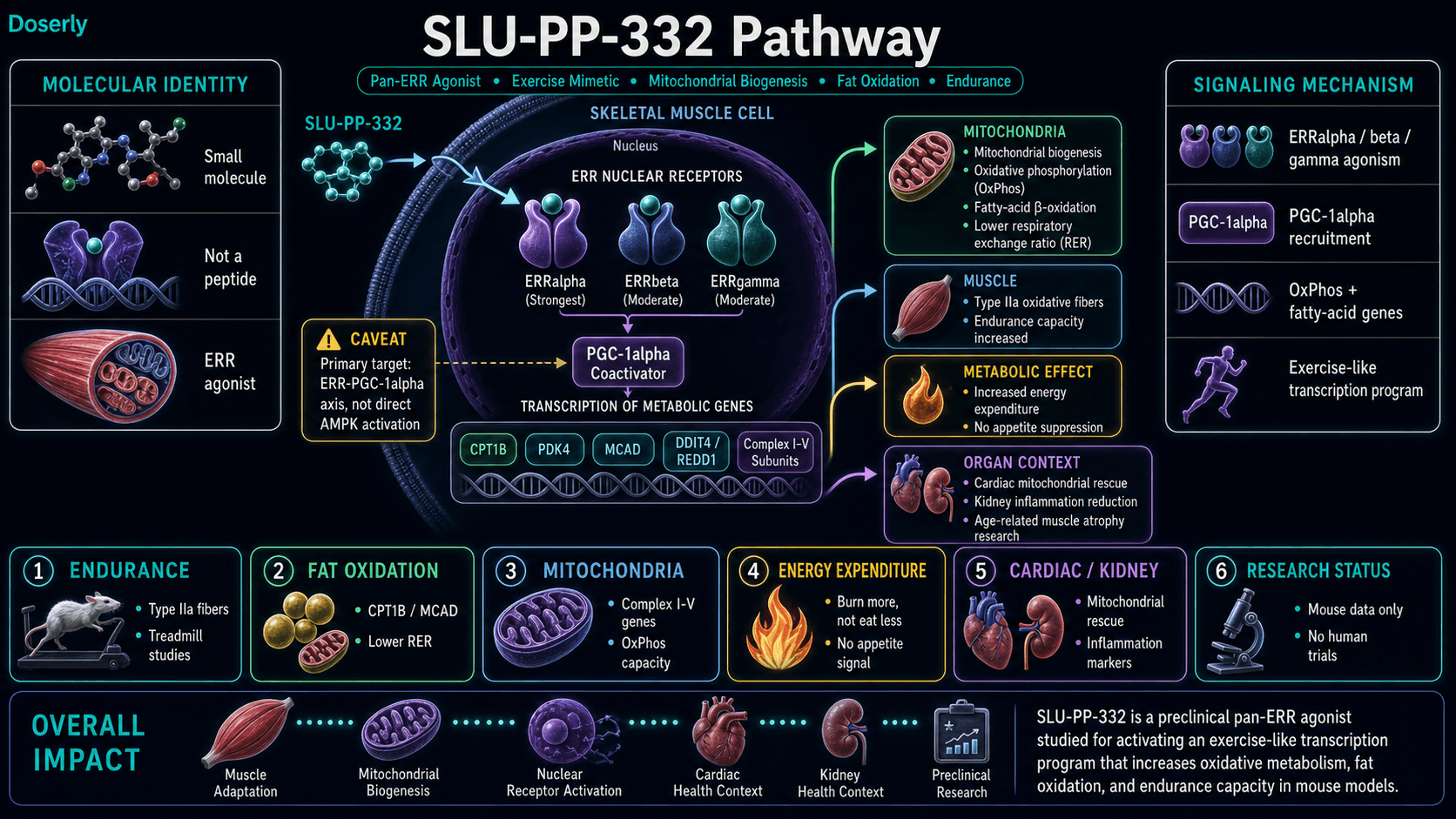
SLU-PP-332 exerts its pharmacological effects through agonism of ERRalpha, ERRbeta, and ERRgamma, orphan nuclear receptors that heterodimerize with co-activators (primarily PGC-1alpha) to regulate transcription of genes governing mitochondrial biogenesis, oxidative phosphorylation, and fatty acid beta-oxidation [1][2].
Upon binding, SLU-PP-332 stabilizes the active conformation of ERRs, enhancing recruitment of PGC-1alpha and subsequent transcription of target genes including:
- CPT1B (carnitine palmitoyltransferase 1B): rate-limiting enzyme for mitochondrial fatty acid import and beta-oxidation [1]
- PDK4 (pyruvate dehydrogenase kinase 4): shifts fuel preference from glucose toward fatty acid oxidation [2]
- MCAD (medium-chain acyl-CoA dehydrogenase): key enzyme in fatty acid beta-oxidation [2]
- DDIT4/REDD1: acute exercise-responsive gene induced by SLU-PP-332, part of the aerobic exercise transcriptional signature [1]
- Complex I-V subunits: components of the mitochondrial electron transport chain, increasing oxidative phosphorylation capacity [1]
In skeletal muscle, ERRalpha activation increased the proportion of Type IIa (fast oxidative, fatigue-resistant) muscle fibers, recapitulating the fiber-type shift observed in endurance-trained athletes [1]. This shift was ERRalpha-dependent, as demonstrated by genetic knockout experiments.
Notably, SLU-PP-332 did not alter food intake, appetite, or feeding behavior in any published study, distinguishing its mechanism from GLP-1 receptor agonists. All metabolic effects were attributed to increased energy expenditure and substrate utilization rather than caloric restriction [2].
Pathway Visualization Image
Pharmacokinetics
The Basics
Honest answer: almost nothing is known about how SLU-PP-332 behaves in the human body. There are no published pharmacokinetic studies in humans, which means we do not have reliable data on how quickly it is absorbed, how long it stays active, when it peaks, or how the body eliminates it.
What we know from mouse studies is that the compound was administered via intraperitoneal injection (directly into the abdominal cavity) at doses of 25 to 50 mg/kg, twice daily [1][2]. This route was chosen for research convenience and does not translate directly to human oral or subcutaneous use.
Community users report feeling effects within 1 to 4 hours after oral dosing, with the perceived effects lasting approximately 3 to 5 hours. This aligns with the twice-daily dosing pattern many users adopt. However, these are subjective observations, not measured pharmacokinetic parameters.
The lack of PK data is one of the most significant gaps in the SLU-PP-332 evidence base. Without knowing the compound's bioavailability, half-life, or clearance rate in humans, any dosing protocol is fundamentally speculative.
The Science
No human pharmacokinetic data exists for SLU-PP-332. The following parameters are derived exclusively from murine studies and should not be extrapolated to human use:
Parameter
Route studied
- Value (Murine)
- Intraperitoneal (IP)
Parameter
Dose range
- Value (Murine)
- 25-50 mg/kg, twice daily
Parameter
Study duration
- Value (Murine)
- 15-28 days
Parameter
Oral bioavailability
- Value (Murine)
- Explored at 10-25 mg/kg; less consistent than IP [4]
Parameter
Human Equivalent Dose (theoretical)
- Value (Murine)
- ~4.05 mg/kg (Km scaling: mouse 3 / human 37)
Parameter
For 70 kg adult
- Value (Murine)
- ~280 mg/day (theoretical)
The theoretical human equivalent dose (HED) calculation uses standard allometric Km scaling (FDA Guidance for Industry, 2005), dividing the murine dose by 12.3 to arrive at an approximate human equivalent. This method provides a rough estimate for initial dose-finding but does not account for species-specific differences in metabolism, receptor density, or bioavailability [4].
Secondary studies explored oral dosing at 10-25 mg/kg in mice with less consistent bioavailability, raising questions about whether the oral route achieves comparable tissue concentrations to IP administration [4].
Research & Clinical Evidence
The Basics
All research on SLU-PP-332 has been conducted in mice. There are no human clinical trials, no human safety studies, and no registered human trials as of early 2026. This places SLU-PP-332 firmly in the preclinical category, which means all evidence must be interpreted with appropriate caution.
That said, the preclinical data is consistent and spans multiple research groups and disease models:
Exercise capacity: Mice given SLU-PP-332 ran nearly 50% farther on treadmill tests compared to untreated mice. Their muscles shifted toward endurance-type fibers, and their overall oxidative capacity increased [1].
Obesity and metabolic syndrome: In mice fed a high-fat diet, SLU-PP-332 reduced fat mass accumulation, improved blood lipid profiles, enhanced insulin sensitivity, and lowered the respiratory exchange ratio (indicating more fat being burned for fuel). Importantly, treated mice did not eat less; they simply burned more [2].
Heart failure: Mice lacking ERRs in heart muscle developed fatal heart failure. Treatment with SLU-PP-332 improved heart function and restored mitochondrial structure in cardiac tissue [3].
Aging kidney: In aging mouse kidneys, SLU-PP-332 reversed mitochondrial dysfunction and reduced inflammation, suggesting potential for age-related organ protection [4].
The Science
Exercise Capacity and Muscle Adaptation
Billon et al. (2023) demonstrated that acute SLU-PP-332 administration (25-50 mg/kg IP, twice daily) induced an ERRalpha-specific transcriptional program in murine skeletal muscle, characterized by upregulation of oxidative phosphorylation genes, fatty acid oxidation enzymes (CPT1B, PDK4, MCAD), and the acute exercise marker DDIT4/REDD1. Chronic administration increased Type IIa (fast oxidative) muscle fiber proportion and enhanced treadmill endurance capacity (approximately 50% increase in running distance versus vehicle control). Genetic knockout of ERRalpha abolished these effects, confirming pathway specificity [1].
Metabolic Syndrome
Billon et al. (2024) administered SLU-PP-332 to diet-induced obese (DIO) and ob/ob mice for 28 and 15 days, respectively. In the DIO model, SLU-PP-332 significantly reduced fat mass gain (p < 0.01), improved total cholesterol, HDL, and triglyceride profiles, reduced adipocyte size, and improved glucose, insulin, and pyruvate tolerance test results. Respiratory exchange ratio (RER) decreased during both day and night cycles, indicating increased fatty acid oxidation. Fasting insulin levels improved under high-fat diet conditions. Liver enzyme profiles showed no significant hepatotoxicity. In ob/ob mice, SLU-PP-332 increased energy expenditure and fatty acid oxidation despite continued chow feeding [2].
Heart Failure
Xu et al. (2024) demonstrated that cardiac-specific ERR knockout induced lethal heart failure in mice. Treatment with SLU-PP-332 and a related compound (SLU-PP-915) significantly improved cardiac function, restored mitochondrial ultrastructure, and enhanced cardiac fatty acid metabolism. The mechanism was ERR-dependent cardioprotection through metabolic rescue of failing cardiomyocytes [3].
Aging Kidney
Wang et al. (2023) showed that SLU-PP-332 reversed mitochondrial dysfunction and inflammation in aging murine kidneys, with improvements in mitochondrial function markers and reduced inflammatory gene expression. The findings suggest potential application for age-related renal decline through ERR-mediated mitochondrial rescue [4].
Age-Related Muscle Atrophy
A 2025 pilot study by Bonanni et al. explored targeting ERRs to counteract age-related muscle atrophy associated with physical inactivity, providing early support for the compound class in sarcopenia contexts [5].
Biomarker Evidence Matrix
Category
Fat Loss
- Evidence Strength
- 5/10
- Reported Effectiveness
- 7/10
- Summary
- Strong preclinical signal (reduced fat mass in DIO and ob/ob mice). Community reports consistent fat loss, though heavily confounded by concurrent interventions.
Category
Energy Levels
- Evidence Strength
- 4/10
- Reported Effectiveness
- 7/10
- Summary
- No direct clinical evidence; mechanism supports increased cellular energy production. Community consistently reports increased energy as a primary early effect.
Category
Physical Performance
- Evidence Strength
- 5/10
- Reported Effectiveness
- 7/10
- Summary
- Murine treadmill endurance increased ~50%. Community reports improved cardio capacity and endurance at various doses.
Category
Weight Management
- Evidence Strength
- 5/10
- Reported Effectiveness
- 6/10
- Summary
- Preclinical data shows decreased fat mass without appetite suppression. Community reports body recomposition effects.
Category
Heart Health
- Evidence Strength
- 5/10
- Reported Effectiveness
- 5/10
- Summary
- ERR agonism improved cardiac function in heart failure mouse models. Limited human anecdotal data; theoretical concerns about cardiac remodeling exist.
Category
Sleep Quality
- Evidence Strength
- 1/10
- Reported Effectiveness
- 5/10
- Summary
- No research evidence. Community reports are mixed and timing-dependent.
Category
Side Effect Burden
- Evidence Strength
- 3/10
- Reported Effectiveness
- 4/10
- Summary
- No formal safety studies. Murine data shows no hepatotoxicity/nephrotoxicity at 4 weeks. Community reports vary dramatically by dose.
Category
Withdrawal Symptoms
- Evidence Strength
- 1/10
- Reported Effectiveness
- 4/10
- Summary
- No research on cessation effects. Emerging community discussion with mixed reports.
Evidence Strength scoring: Based on quality and type of published research. Murine in-vivo studies = 4-5/10. No human data caps the maximum.
Reported Effectiveness scoring: Based on community sentiment analysis across community discussions.
Categories not scored (insufficient data from both research and community): Muscle Growth, Appetite & Satiety, Focus & Mental Clarity, Mood & Wellbeing, Joint Health, Inflammation, Recovery & Healing, Gut Health, Skin Health, Immune Function, Longevity & Neuroprotection, and all remaining biomarker categories.
Benefits & Potential Effects
The Basics
The primary benefits attributed to SLU-PP-332 center around mitochondrial enhancement and metabolic optimization. Based on preclinical data and community reports, the most consistently noted effects include:
Increased endurance and work capacity. This is the most reliably reported benefit. Users describe being able to sustain cardio sessions longer, at lower perceived effort, and at lower heart rates for the same workload. One community member noted reaching the same distance on a stationary bike faster and at a lower heart rate within the first week.
Enhanced fat oxidation. SLU-PP-332 appears to shift the body's fuel preference toward fat. In mouse studies, this was measured directly through respiratory exchange ratio changes. In the community, users report visible fat loss, particularly in the midsection, often without changes to diet or appetite.
Improved metabolic markers. Preclinical data shows improvements in blood lipid profiles, glucose tolerance, and insulin sensitivity. Some community members report improved blood work, though these reports are anecdotal and uncontrolled.
Organ-protective effects. Mouse studies suggest benefits for heart, kidney, and muscle tissue through mitochondrial rescue. These findings remain theoretical for humans but represent an interesting dimension beyond simple fat loss.
SLU-PP-332 is not a stimulant. The energy increase most users describe feels qualitatively different from caffeine or other stimulants, described more as sustained metabolic capacity rather than central nervous system excitation.
The Science
Preclinical evidence supports the following benefit categories:
- Metabolic efficiency: Increased energy expenditure, enhanced fatty acid oxidation, decreased RER, and reduced fat mass accumulation in DIO and ob/ob mice without altered food intake [2]
- Endurance capacity: Approximately 50% increase in treadmill running distance, increased Type IIa muscle fiber proportion, and upregulated oxidative phosphorylation gene expression [1]
- Insulin sensitivity: Improved glucose tolerance, insulin tolerance, and pyruvate tolerance in metabolically challenged mouse models [2]
- Lipid profile: Improved total cholesterol, HDL, and triglyceride levels in DIO mice [2]
- Cardiac protection: Restored cardiac function and mitochondrial structure in ERR-knockout heart failure models [3]
- Renal protection: Reversed mitochondrial dysfunction and inflammation in aging kidney tissue [4]
- Muscle preservation: Early evidence for ERR-mediated protection against age-related muscle atrophy [5]
All benefits are derived from preclinical murine studies. No human efficacy data exists.
The benefits outlined above span multiple body systems, and your experience will be uniquely yours. Rather than guessing which effects are attributable to this compound versus other factors in your life, Doserly helps you log specific outcomes alongside your protocol details, building a clear picture of what's changing and when.
Over weeks and months, this creates something more useful than any anecdotal report: your own evidence-based record of how this compound affects you personally, at your specific dose, within the context of your full health protocol. When it's time to decide whether to continue, adjust, or discontinue, you have real data to inform that conversation with your healthcare provider.
Keep sensitive protocol records in a purpose-built app.
Doserly is designed for private health tracking with structured records, offline-ready workflows, and exportable history when you need it.
Privacy
Health records
Privacy controls help you manage records; keep clinical records where required.
Side Effects & Safety Considerations
The Basics
The honest starting point for SLU-PP-332 safety is that no human safety data exists. The compound has never been through a formal toxicology study in humans, and the preclinical safety window is relatively narrow (4 weeks of murine data).
From published preclinical studies, no significant liver toxicity (hepatotoxicity) or kidney toxicity (nephrotoxicity) was observed over 28 days of treatment in mice [2]. This is encouraging but far from sufficient for safety assurance.
From community reports, the most commonly noted side effects include:
- Afternoon energy crash and fatigue (particularly at higher doses)
- Warmth or increased body temperature (consistent with increased metabolic rate)
- Insomnia (when taken too late in the day; most users find a 5-hour cutoff before bedtime resolves this)
- Injection site pain (reported as "horrible" by at least one injectable user)
- Dizziness (reported at higher doses)
- Transient liver enzyme elevation (reported at approximately 1 mg dose equivalent in one observation)
Theoretical safety concerns raised by researchers include the possibility of mitochondrial overstimulation (running the cellular engines too hard for too long), off-target nuclear receptor activation at high concentrations (non-specific ERRbeta/gamma binding above 5 microM), cardiac remodeling from sustained metabolic drive, and effects on hormonal and proliferative signaling that have not yet been evaluated [4].
The withdrawal question is emerging in community discussion but unresolved. Some users report a period of reduced energy after stopping, which may reflect normal physiological adjustment rather than a true withdrawal syndrome.
The Science
Preclinical safety profile (murine, 15-28 days):
- No significant hepatotoxicity: liver enzyme profiles (AST, ALT) remained within normal ranges in DIO mice treated for 28 days [2]
- No significant nephrotoxicity: renal function markers stable over study duration [2]
- No effect on food intake or feeding behavior [2]
- Adipocyte size reduction observed without evidence of adipose tissue necrosis [2]
Theoretical risks requiring investigation:
- Pan-ERR activity at supratherapeutic concentrations (>5 microM) may trigger non-specific ERRbeta/gamma activation with poorly characterized downstream effects [6]
- Sustained ERR-driven metabolic acceleration raises theoretical concerns about cardiac hypertrophy and oxidative stress from chronic mitochondrial overstimulation [6]
- Effects on proliferative signaling pathways have not been evaluated; ERRalpha is expressed in multiple tissue types including some tumors [6]
- Long-term histological assessment is lacking; all preclinical studies were 28 days or shorter [2]
No human adverse event data exists. Community-reported side effects are anecdotal and uncontrolled.
Dosing Protocols
The Basics
Dosing for SLU-PP-332 is among the most contentious topics in the peptide community, and for good reason. There is a massive gap between what published research shows and what most vendors sell.
Here is the core problem: in mouse studies, the compound was given at 25 to 50 mg/kg by injection into the abdominal cavity, twice a day [1][2]. When you use standard allometric scaling to convert that to a human equivalent, you get roughly 280 mg per day for a 70 kg person [4]. Most commercial products are sold in 250 to 500 microgram capsules, which is roughly 500 to 1,000 times lower than the scaled research dose.
Community-reported dosing ranges fall into roughly three tiers:
Conservative (250-500 mcg/day): The dose range most commonly sold. Some users report benefits at this level (improved energy, subtle endurance improvements). Others report no noticeable effect.
Moderate (1-5 mg/day): A middle ground adopted by some practitioners. Split into 2 to 3 doses per day. This range appears in some vendor protocol guides.
High/Megadose (36-400 mg/day): A trend driven by biohackers who calculated the allometric HED and concluded that standard doses are ineffective. Users at these doses report pronounced effects but also increased side effects (fatigue, temperature changes).
Most community protocols suggest daily dosing, split into morning and pre-workout or morning and early afternoon, with a cutoff of approximately 5 hours before bedtime to avoid sleep disruption. Cycle lengths typically range from 4 to 16 weeks, followed by a 4 to 8 week break, though no published data supports any specific cycling protocol.
The Science
Published murine protocol (only validated regimen):
Parameter
Dose
- Value
- 25-50 mg/kg
Parameter
Route
- Value
- Intraperitoneal (IP)
Parameter
Frequency
- Value
- Twice daily
Parameter
Duration
- Value
- 15-28 days
Parameter
Model organisms
- Value
- C57BL/6 mice (lean and DIO) and ob/ob mice
Allometric Human Equivalent Dose (HED):
Using standard FDA Km body surface area scaling (mouse Km = 3, human Km = 37):
50 mg/kg x (3/37) = 4.05 mg/kg
For a 70 kg adult: approximately 280 mg/day [4]
With a 10-fold safety factor applied (standard for first-in-human dose estimation): approximately 28 mg/day as a starting exploratory dose [4].
Critical caveats:
- IP administration bypasses first-pass hepatic metabolism; oral bioavailability may be substantially lower
- Murine metabolic rate is approximately 7x higher per unit body mass than human metabolic rate
- No dose-response data exists in humans
- Secondary murine studies explored oral dosing at 10-25 mg/kg with less consistent results, suggesting route-dependent bioavailability differences [4]
- One community observation reported elevated liver enzymes at doses as low as 1 mg/day, raising questions about whether side effects may preclude reaching pharmacologically relevant doses in humans [4]
The dosing protocols above involve numbers that matter: specific microgram amounts, reconstitution ratios, and timing windows. Getting any of these wrong compounds across every subsequent dose from that vial.
Doserly's dose and reconstitution calculators eliminate the guesswork. Enter your vial size, peptide amount, and target dose, and get the exact bacteriostatic water volume, units per tick mark, and doses per vial. The injection site tracker maps your administration history as a visual heat map across your body, flagging areas that need rest and suggesting rotation patterns. Combined with dose reminders that include compound name, amount, and route, every aspect of your daily protocol is handled with the precision it requires.
Turn symptom and safety notes into a clearer timeline.
Doserly helps you log doses, symptoms, and safety observations side by side so patterns are easier to discuss with a qualified clinician.
Pattern view
Logs and observations

Pattern visibility is informational and should be reviewed with a clinician.
What to Expect
Based on community reports across various dosing levels, the following timeline represents commonly described experiences. Individual responses vary significantly, and these are not guaranteed outcomes.
Week 1-2:
Most users who report feeling effects notice increased energy and warmth within the first few days. One community member observed improved cardio metrics (same distance, lower heart rate) by day 4 at 500 mcg/day. Others report no noticeable changes at lower doses during this period. Sleep disruption may occur initially if dosing is not timed correctly. Some users report a period of adjustment where fatigue follows the initial energy boost.
Week 3-4:
Endurance improvements become more apparent. Users describe cardio sessions feeling easier and more sustainable. Some report early signs of body composition changes, particularly subtle reductions in waist circumference. Energy levels tend to stabilize, and the initial timing-related sleep issues typically resolve as the body adapts.
Week 5-8:
This is where most users who respond favorably report the most noticeable changes: visible fat loss (especially visceral/abdominal), sustained endurance improvements, and improved work capacity. Some users report improved blood lipid and metabolic markers when checked at this stage.
Week 9-16 (extended cycles):
Continued but more gradual improvements in body composition and metabolic markers. Some community protocols recommend cycling off at 8 to 12 weeks, while others extend to 16 weeks. The rationale for cycling is not supported by published data but is based on general biohacking precautionary principles around mitochondrial adaptation.
After cessation:
Most users report a gradual return to baseline over 1 to 3 weeks. Some describe a brief period of reduced energy compared to pre-supplementation levels, which typically resolves within 2 weeks. Tapering rather than abrupt cessation is preferred by some community members who report sensitivity.
Interaction Compatibility
Commonly Combined With (Synergistic)
- SS-31 (Elamipretide): Mitochondrial membrane stabilization complements SLU-PP-332's mitochondrial biogenesis effects. Frequently co-administered in "mito stack" protocols.
- MOTS-C: Mitochondrial-derived peptide that activates AMPK and enhances metabolic flexibility. Mechanistically complementary (different mitochondrial targets).
- 5-Amino-1MQ: NNMT inhibitor that preserves NAD+ in adipose tissue. Often stacked for metabolic recomposition.
- NAD+: Foundational cofactor for mitochondrial energy production. Frequently co-administered as the energy substrate that SLU-PP-332 drives demand for.
- Retatrutide: Triple-receptor GLP-1 agonist for appetite suppression. Mechanistically distinct (demand-side vs. supply-side metabolic intervention).
- BAM15: Mitochondrial uncoupler. Sometimes stacked for amplified metabolic rate.
- Methylene Blue: Mitochondrial electron carrier. Complementary mitochondrial support.
- L-Carnitine (injectable): Fatty acid transport to mitochondria. Directly supports the increased fatty acid oxidation driven by ERR activation.
- Tesamorelin: Growth hormone releasing hormone analog. Stacked for body recomposition.
- Ipamorelin: Growth hormone secretagogue. Stacked for recovery and body composition.
- IGF-1 LR3: Growth factor for tissue repair. Occasionally combined for anabolic support.
Exercise Caution With
- Other metabolic accelerators at high doses: Stacking multiple compounds that increase metabolic rate (SLU-PP-332 + BAM15 + DNP, for example) may create unsustainable metabolic demand and oxidative stress.
- Compounds with hepatic burden: Given the preliminary observation of liver enzyme elevation at some doses, caution is warranted when combining with other compounds that stress liver function.
- Stimulants: While SLU-PP-332 is not itself a stimulant, adding stimulants to an already-elevated metabolic state may exacerbate heart rate, temperature, and sleep issues.
Administration Guide
SLU-PP-332 is administered orally or by subcutaneous injection, depending on the product form. Published murine research used intraperitoneal injection, which is not a practical or recommended route for human use.
Oral administration is the most common route in the community. SLU-PP-332 is available as capsules (typically 250-500 mcg), liquid drops, or bulk powder. Capsules and drops are taken with or without food, though some users prefer fasting administration for perceived improved absorption.
Subcutaneous injection is used by those with injectable formulations. For injectable forms, reconstitution with bacteriostatic water is required if the product is supplied as lyophilized powder.
Materials typically required:
- For oral: capsules, liquid dropper, or analytical scale for powder dosing
- For injectable: bacteriostatic water, insulin syringes (U-100), alcohol swabs, sharps container
Timing considerations:
- Most practitioners split the daily dose into 2 administrations: morning and early afternoon (or pre-training)
- A minimum 5-hour window before bedtime is commonly recommended to avoid sleep disruption
- Consistent timing each day is emphasized across community protocols
Post-administration monitoring:
- Monitor energy levels, body temperature, and sleep quality during the first 1 to 2 weeks
- Track heart rate at rest and during exercise to assess metabolic response
- Note any signs of excessive fatigue, dizziness, or temperature dysregulation
Supplies & Planning
SLU-PP-332 is available in several product formats, and supply requirements vary accordingly.
Common product formats:
- Lyophilized powder in vials (typically 5 mg per vial, for reconstitution and injection)
- Oral capsules (typically 250-500 mcg per capsule)
- Liquid/drops for oral administration
- Bulk powder (for advanced users calculating their own doses)
For injectable use:
- SLU-PP-332 vials (5 mg)
- Bacteriostatic water (for reconstitution: 3.0 mL per 5 mg vial yields approximately 1.67 mg/mL)
- Insulin syringes (U-100, 1 mL capacity)
- Alcohol swabs
- Sharps container
For oral use:
- SLU-PP-332 capsules or liquid
- No additional supplies typically required
Readers should consult their healthcare provider for specific quantities and duration planning. The reconstitution calculator can help determine exact volumes for injectable preparations.
Storage & Handling
Proper storage is critical for maintaining compound stability:
- Lyophilized (powder) form: Store at -20C (-4F) in dry, dark conditions. Minimize moisture exposure. Lyophilized powder can remain stable for extended periods when stored properly.
- Reconstituted solution: Refrigerate at 2-8C (35.6-46.4F). Protect from light. Use within 2 to 4 weeks of reconstitution.
- Oral capsules/liquid: Follow manufacturer storage recommendations, typically room temperature or refrigerated depending on formulation.
- General handling: Allow vials to reach room temperature before opening to prevent condensation. Avoid repeated freeze-thaw cycles. Use sterile technique when handling injectable preparations.
Lifestyle Factors
SLU-PP-332 is an exercise mimetic, but this does not mean it replaces exercise. Preclinical data suggests that the compound may work synergistically with physical training rather than as a substitute for it. Community practitioners consistently emphasize that best results come from combining SLU-PP-332 with an active lifestyle.
Exercise: Regular aerobic exercise (zone 2 cardio) complements the compound's mechanism by providing the physical training stimulus alongside the pharmacological metabolic signal. Resistance training supports lean mass preservation, which is important when any metabolic accelerator is in use. Users who train while using SLU-PP-332 report more pronounced results than those who rely on the compound alone.
Nutrition: A protein-rich diet (1.6 to 2.2 g/kg body weight) is recommended across community protocols to protect lean tissue while fat oxidation is elevated. Since SLU-PP-332 does not suppress appetite, caloric intake remains under the user's conscious control. Adequate micronutrient intake, particularly B-vitamins, CoQ10, and alpha-lipoic acid, may support the increased mitochondrial activity.
Sleep: Quality sleep is when much of the body's repair and metabolic optimization occurs. Given that SLU-PP-332 can disrupt sleep if taken too late, consistent morning dosing is important. Most community members who resolve initial sleep issues do so by adjusting their dosing schedule.
Hydration and electrolytes: Increased metabolic rate can increase fluid and electrolyte turnover. Adequate hydration and mineral intake (sodium, potassium, magnesium) are commonly recommended, particularly by community members who experienced fatigue that resolved with electrolyte supplementation.
Monitoring: Baseline blood work before starting and follow-up at 4 to 6 weeks and 8 to 12 weeks is the most commonly recommended monitoring approach. Key markers include fasting glucose, insulin (HOMA-IR), triglycerides, HDL/LDL, liver enzymes (AST, ALT), and creatinine. Body composition measurement (DEXA or consistent skinfolds) and subjective tracking (energy, sleep quality, soreness, appetite stability) provide additional data points.
The lifestyle factors above, nutrition, exercise, sleep, stress management, are not just nice-to-haves alongside a peptide protocol. They're force multipliers. Doserly lets you track these inputs alongside your compounds, building a complete picture of what your body is receiving and how it's responding.
When everything lives in one dashboard, patterns emerge. You can see whether training days correlate with better biomarker trends, whether your sleep scores predict next-day recovery quality, or whether stress spikes derail your progress in measurable ways. This kind of integrated tracking turns the lifestyle recommendations in this section from abstract advice into actionable, personalized insight.
Connect protocol changes to labs and health markers.
Doserly can keep lab results, biomarkers, symptoms, and dose history close together so follow-up conversations have better context.
Insights
Labs and trends
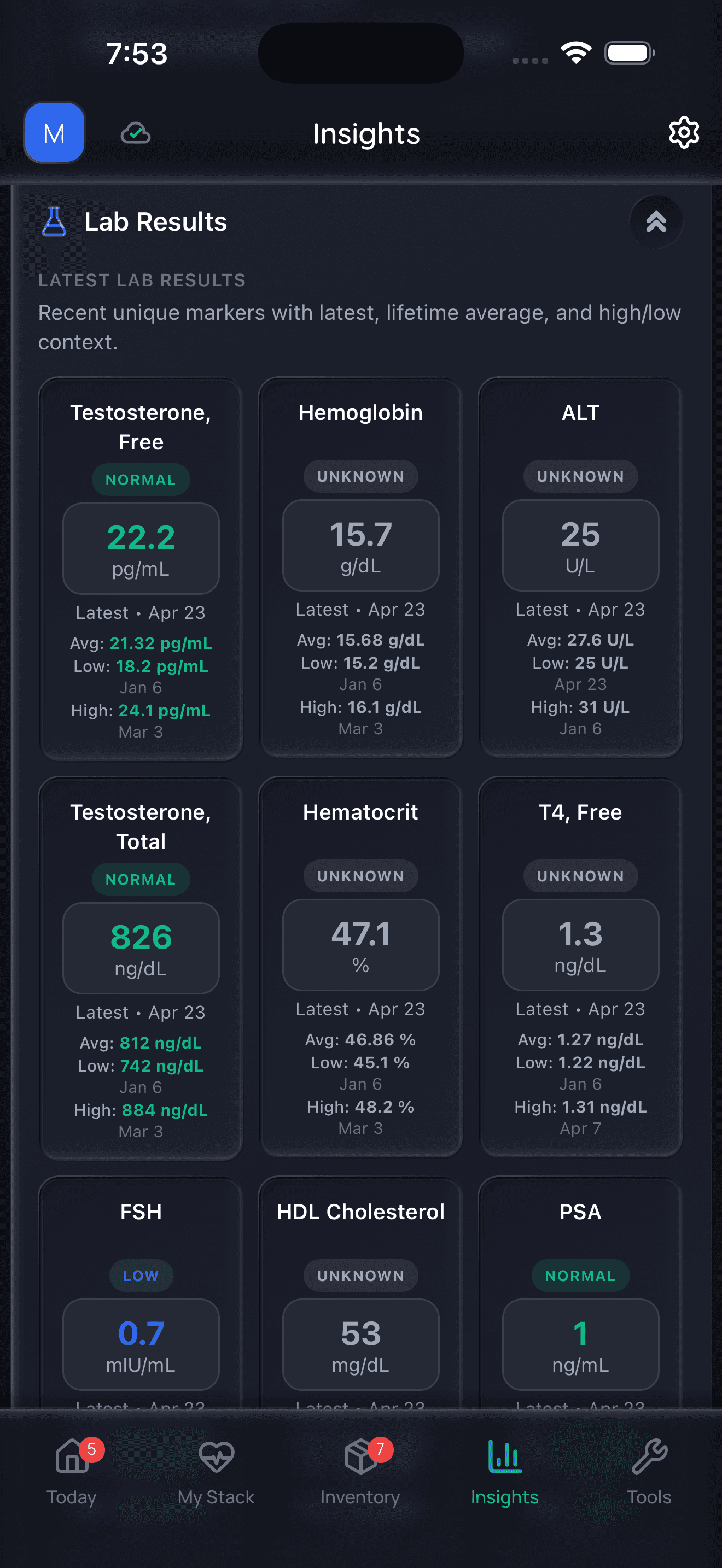
Doserly organizes data; it does not diagnose or interpret labs for you.
Regulatory Status & Research Classification
United States (FDA): SLU-PP-332 is not approved by the FDA for any indication. It is not classified as a dietary supplement, pharmaceutical drug, or investigational new drug. No Investigational New Drug (IND) applications have been publicly registered. No clinical trials are listed on ClinicalTrials.gov as of March 2026. The compound is sold as a "research chemical" and is not intended for human consumption under current regulatory frameworks.
Canada (Health Canada): Not approved. No DIN, NPN, or Natural Health Product classification.
United Kingdom (MHRA): Not approved. No marketing authorization.
Australia (TGA): Not scheduled or approved. No TGA classification data available.
European Union (EMA): No marketing authorization or assessment.
WADA status: SLU-PP-332 is not explicitly listed on the World Anti-Doping Agency Prohibited List as of 2026. However, exercise mimetics as a class fall under scrutiny, and compounds with metabolic-modulating properties may be captured under the general prohibition of "metabolic modulators" (WADA category S4.5). Athletes should consult WADA guidance directly and assume potential risk.
Active clinical trials: None registered as of March 2026.
Regulatory status changes frequently. Always verify the current legal status of any compound in your specific country or jurisdiction before making any decisions.
FAQ
What exactly is SLU-PP-332?
SLU-PP-332 is a synthetic small molecule that activates estrogen-related receptors (ERRs) to mimic some of the metabolic effects of endurance exercise. Despite being sold alongside peptides, it is not technically a peptide. It was developed at Saint Louis University and has been studied exclusively in mouse models.
Does SLU-PP-332 have estrogenic effects?
No. Despite the word "estrogen" in the receptor name, estrogen-related receptors (ERRs) are a completely separate receptor family from estrogen receptors. SLU-PP-332 does not bind to estrogen receptors and does not produce estrogenic effects.
Has SLU-PP-332 been tested in humans?
No human clinical trials have been conducted or registered as of March 2026. All published scientific data comes from mouse studies. Community experience reports are anecdotal and uncontrolled.
Why are community doses so different from the mouse study doses?
This is a central debate. Mouse studies used 25-50 mg/kg via intraperitoneal injection. When scaled to a human equivalent dose using standard allometric methods, this translates to approximately 280 mg/day for a 70 kg person. Most commercial products are sold in doses 500 to 1,000 times lower than this. Some community members who have experimented with higher doses report more pronounced effects, while others report benefits at standard commercial doses. The discrepancy is not resolved and reflects the absence of human pharmacokinetic data.
Is SLU-PP-332 a replacement for exercise?
Based on available data, most sources suggest it is better viewed as a complement to exercise rather than a replacement. While it can induce some of the cellular adaptations associated with endurance training, exercise provides cardiovascular, musculoskeletal, neurological, and psychological benefits that a single metabolic compound cannot replicate. Some preclinical evidence suggests synergistic effects when combined with physical training.
What side effects should someone watch for?
Based on community reports, the most commonly discussed effects include afternoon energy crashes (especially at higher doses), warmth or temperature increase, insomnia (if taken too late in the day), and occasional dizziness. One observation noted transient liver enzyme elevation. No formal safety profile exists.
Can SLU-PP-332 be taken orally?
Most community users take SLU-PP-332 orally, though the published research used intraperitoneal injection in mice. Oral bioavailability in humans is unknown, and secondary murine studies found oral dosing produced less consistent results than injection.
Sources & References
- Billon C, Sitaula S, Banerjee S, Welch R, Elgendy B, Hegazy L, Oh TG, Kazantzis M, Chatterjee A, Chrivia J, Hayes ME, Xu W, Hamilton A, Huss JM, Zhang L, Walker JK, Downes M, Evans RM, Burris TP. Synthetic ERRalpha/beta/gamma Agonist Induces an ERRalpha-Dependent Acute Aerobic Exercise Response and Enhances Exercise Capacity. ACS Chemical Biology. 2023;18:756-771. doi: 10.1021/acschembio.2c00720. PubMed
- Billon C, Schoepke E, Avdagic A, Chatterjee A, Butler AA, Elgendy B, Walker JK, Burris TP. A Synthetic ERR Agonist Alleviates Metabolic Syndrome. Journal of Pharmacology and Experimental Therapeutics. 2024;388(2):232-240. doi: 10.1124/jpet.123.001733. PubMed
- Xu W, Billon C, Li H, Wilderman A, Qi L, Graves A, Rideb JRDC, Zhao Y, Hayes M, Yu K, Losby M, Hampton CS, Adeyemi CM, Hong SJ, Nasiotis E, Fu C, Oh TG, Fan W, Downes M, Welch RD, Evans RM, Milosavljevic A, Walker JK, Jensen BC, Pei L, Burris T, Zhang L. Novel Pan-ERR Agonists Ameliorate Heart Failure Through Enhancing Cardiac Fatty Acid Metabolism and Mitochondrial Function. Circulation. 2024.
- Wang XX, Myakala K, Libby AE, Krawczyk E, Panov J, Jones BA, Bhasin K, Shults N, Qi Y, Krausz KW, Zerfas PM, Takahashi S, Daneshpajouhnejad P, Titievsky A, Taranenko E, Billon C, Chatterjee A, Elgendy B, Walker JK, Albanese C, Kopp JB, Rosenberg AZ, Gonzalez FJ, Guha U, Brodsky L, Burris TP, Levi M. Estrogen-Related Receptor Agonism Reverses Mitochondrial Dysfunction and Inflammation in the Aging Kidney. American Journal of Pathology. 2023;193:1969-1987. doi: 10.1016/j.ajpath.2023.07.008.
- Bonanni R, Falvino A, Matticari A, Rinaldi AM, D'Arcangelo G, Cifelli P, Iundusi R, Gasbarra E, Tancredi V, Cariati I, Tarantino U. Targeting ERRs to counteract age-related muscle atrophy associated with physical inactivity: a pilot study. 2025.
- Eissa ME. SLU-PP-332 and Related ERRalpha Agonists: A Focused Minireview of Metabolic Regulation, and Therapeutic Potential. Universal Journal of Pharmaceutical Research. 2024;10(3). doi: 10.22270/ujpr.v10i3.1355.
- Audet-Walsh E, Giguere V. The multiple universes of estrogen-related receptor alpha and gamma in metabolic control and related diseases. Acta Pharmacologica Sinica. 2015;36:51-61.
Related Peptide Guides
- SS-31 - Mitochondrial membrane stabilizer, frequently co-administered
- MOTS-C - Mitochondrial-derived exercise mimetic peptide
- 5-Amino-1MQ - NNMT inhibitor for metabolic optimization
- NAD+ - Foundational mitochondrial energy cofactor
- BAM15 - Mitochondrial uncoupler
- Methylene Blue - Mitochondrial electron carrier
- Retatrutide - Triple-receptor GLP-1 agonist
- Tesamorelin - GH-releasing hormone for visceral fat
- Ipamorelin - GH secretagogue
- IGF-1 LR3 - Growth factor
- Semaglutide - GLP-1 receptor agonist (mechanistic comparison)
- SLU-PP-332 + 5-Amino - Pre-mixed metabolic blend
- SLU-PP-332 + BAM15 - Pre-mixed mitochondrial blend
- SLU-PP-332 + Orforglipron - Pre-mixed metabolic blend