
FOXO4-DRI: Complete Research Guide
On this page
Quick Reference Card
Attribute
Also Known As
- Detail
- Proxofim, FOXO4-D-Retro-Inverso, FOXO4 DRI Peptide
Attribute
Administration
- Detail
- Injectable (subcutaneous)
Attribute
Research Status
- Detail
- Research compound. No FDA approval. No human clinical trials completed. All data from preclinical (animal and in vitro) models.
Attribute
Typical Dose Range
- Detail
- Highly variable and unestablished. Low-dose protocols: 250-500 mcg/day. Research-extrapolated protocols: 2-5 mg/kg body weight. See Dosing Protocols section for full conflict details.
Attribute
Half-Life
- Detail
- Estimated 4-16 hours (no human pharmacokinetic data available)
Attribute
Cycle Length
- Detail
- Intermittent pulsing: 3-7 days on, 4-7 days off, repeated for 3-6 cycles. Extended protocols: 8-16 weeks daily.
Attribute
Storage
- Detail
- Lyophilized: -20°C or below; Reconstituted: 2-8°C, use within 14-28 days
Overview / What Is FOXO4-DRI?
The Basics
FOXO4-DRI is a synthetic peptide designed to target and remove senescent cells from the body. Senescent cells are sometimes called "zombie cells" because they've stopped dividing and stopped doing useful work, but they refuse to die. Instead, they linger in tissues and pump out inflammatory chemicals that damage their neighbors and contribute to age-related decline.
Think of it like a building with some apartments occupied by tenants who no longer pay rent but keep throwing trash into the hallway. The trash damages the building and drives away good tenants. FOXO4-DRI is designed to evict those problematic tenants while leaving the productive ones untouched.
The peptide was developed by researchers at Erasmus University Medical Center in the Netherlands and made international headlines in 2017 when it reversed visible signs of aging in mice, including restoring fur density, improving kidney function, and increasing physical fitness. The mechanism is elegant: it disrupts a specific protein interaction that senescent cells depend on for survival, triggering their natural self-destruction program while leaving healthy cells alone.
FOXO4-DRI falls into a category of compounds called senolytics, substances that selectively destroy senescent cells. It represents a fundamentally different approach to aging compared to most longevity compounds, which tend to focus on cellular energy, antioxidant defense, or hormone optimization. Instead, FOXO4-DRI addresses a root cause of aging at the cellular level.
Important context: as of 2026, FOXO4-DRI has never been tested in human clinical trials. All the data supporting its effects comes from cell cultures and animal studies. It remains a highly experimental research compound, and self-experimenters are working without an established safety profile or optimized dosing protocol.
The Science
FOXO4-DRI is a D-retro-inverso (DRI) peptide derived from the transactivation domain of the FOXO4 transcription factor. The compound was first described in a landmark 2017 publication in Cell by Baar et al. at Erasmus University Medical Center [1]. It is classified as a senolytic agent, a compound that selectively induces apoptosis in senescent cells.
The peptide targets the FOXO4-p53 protein-protein interaction that serves as a critical survival mechanism in senescent cells. In these cells, FOXO4 is upregulated and sequesters the tumor suppressor p53 within promyelocytic leukemia (PML) nuclear bodies, preventing p53-mediated apoptosis [1][2]. By competitively displacing endogenous FOXO4 from p53, the exogenous DRI peptide liberates p53 to execute its pro-apoptotic program.
The D-retro-inverso modification confers two key properties: (1) resistance to proteolytic degradation by endogenous peptidases due to the use of D-amino acids, and (2) maintained binding affinity for the disordered p53 transactivation domain despite sequence reversal [2]. The result is a peptide with substantially longer biological activity than its L-amino acid counterpart.
In the original study, FOXO4-DRI demonstrated an 11.73-fold selectivity for senescent cells over non-senescent cells in human fibroblast cultures. In naturally aged (24-month-old) wild-type mice, treatment improved renal function as measured by reduced plasma creatinine and urea. In fast-aging XpdTTD/TTD mice, the peptide restored liver and kidney function, improved coat condition, and increased running wheel activity [1].
The peptide carries the CAS number 1627580-64-6. Its also known by the name Proxofim.
Molecular Identity
Attribute
Common Names
- Detail
- FOXO4-DRI, Proxofim, FOXO4-D-Retro-Inverso
Attribute
Molecular Formula
- Detail
- C₂₂₈H₃₈₈N₈₆O₆₄
Attribute
Molecular Weight
- Detail
- ~5,000 Da (approximately 5 kDa)
Attribute
CAS Number
- Detail
- 1627580-64-6
Attribute
Peptide Length
- Detail
- 49 amino acids
Attribute
Amino Acid Configuration
- Detail
- D-amino acids in retro-inverso sequence
Attribute
Structural Type
- Detail
- Cell-penetrating peptide with D-retro-inverso modification
Attribute
Key Features
- Detail
- Contains both the FOXO4-derived p53-binding region and a cationic cell-permeability sequence
Attribute
Origin
- Detail
- Derived from the forkhead domain / transactivation domain of human FOXO4 transcription factor
Attribute
Developer
- Detail
- Erasmus University Medical Center, Netherlands (Peter de Keizer lab)
Mechanism of Action
The Basics
To understand how FOXO4-DRI works, you first need to understand the problem it solves.
As you age, cells throughout your body accumulate damage from things like DNA stress, oxidative damage, and normal wear. When the damage becomes too severe, cells enter a state called senescence. They stop dividing permanently. In small numbers, this is actually protective: it prevents damaged cells from turning into cancer. Your immune system is supposed to clean up these senescent cells over time.
The problem is that this cleanup system slows down with age. Senescent cells pile up in your joints, kidneys, blood vessels, skin, and other tissues. Worse, they secrete a mix of inflammatory chemicals (researchers call this the SASP, or senescence-associated secretory phenotype) that damages neighboring healthy cells and can even convert those neighbors into senescent cells. This creates a spreading wave of dysfunction that drives many age-related conditions.
Here is where FOXO4-DRI enters the picture. In senescent cells, a protein called FOXO4 latches onto another protein called p53. Normally, p53 would trigger the cell's self-destruct sequence. But FOXO4 holds p53 hostage in the cell's nucleus, preventing it from doing its job. This is how senescent cells survive when they should not.
FOXO4-DRI mimics the part of FOXO4 that grabs p53, but does so more aggressively. It elbows FOXO4 out of the way and takes its place. Once the real FOXO4 is displaced, p53 is free to leave the nucleus and trigger apoptosis, the cell's natural death program. Because healthy cells don't rely on this particular FOXO4-p53 interaction for survival, they are largely unaffected.
The Science
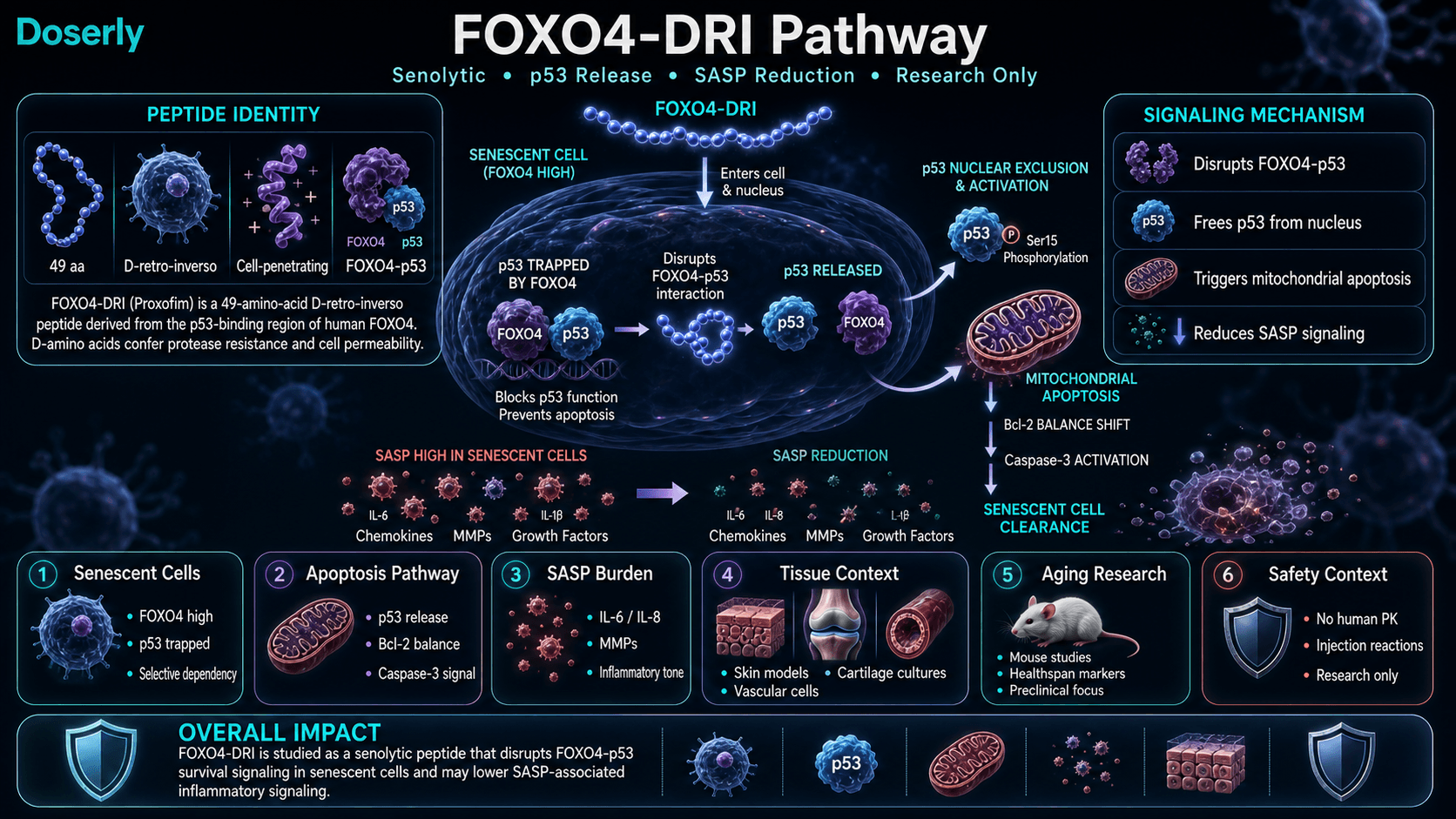
FOXO4-DRI's mechanism centers on competitive disruption of the FOXO4-p53 protein-protein interaction within senescent cells. The pathway proceeds through several well-characterized steps:
- FOXO4 upregulation in senescent cells. Cellular senescence, triggered by DNA damage, telomere attrition, oncogenic stress, or oxidative damage, leads to elevated FOXO4 expression in the affected cells. FOXO4 translocates to the nucleus and accumulates in PML nuclear bodies [1][2].
- p53 sequestration. Nuclear FOXO4 binds to the intrinsically disordered transactivation domain of p53, forming a complex that prevents p53 from activating its downstream apoptotic program. NMR structural analysis confirms this binding occurs at disordered regions of p53, with p53 phosphorylation (particularly at serine 15) enhancing binding affinity [2].
- Competitive displacement. FOXO4-DRI, as a D-retro-inverso peptide, competitively binds to the same p53 transactivation domain, displacing endogenous FOXO4 from the complex. The cell-penetrating properties of the peptide's cationic sequence enable it to cross cellular membranes and access the nuclear compartment [1][2].
- p53 nuclear exclusion. Freed from FOXO4 sequestration, p53 undergoes nuclear exclusion with serine-15 phosphorylation [3]. Cytoplasmic p53 then activates the intrinsic mitochondrial apoptotic pathway through the p53/Bcl-2/Caspase-3 signaling cascade [4].
- Selective apoptosis. The apoptotic cascade proceeds specifically in senescent cells where the FOXO4-p53 interaction is a survival dependency. Non-senescent cells, which do not exhibit elevated FOXO4 expression or rely on this interaction for viability, demonstrate minimal response to the peptide. The original study measured an 11.73-fold selectivity ratio in human fibroblasts [1].
- SASP reduction. Elimination of senescent cells reduces the local SASP burden, which comprises pro-inflammatory cytokines (IL-6, IL-8, IL-1beta), chemokines, matrix metalloproteinases, and growth factors that collectively drive chronic sterile inflammation and paracrine senescence induction in neighboring cells [1][5].
Pathway Visualization Image
Pharmacokinetics
The Basics
FOXO4-DRI's pharmacokinetics are among the least understood aspects of this peptide, largely because no human pharmacokinetic studies have been conducted. What is known comes from its molecular design and inferences from the original mouse studies.
The D-retro-inverso design gives FOXO4-DRI a major advantage over conventional peptides: resistance to the enzymes that normally break down peptides in your body within minutes. Standard L-amino acid peptides can be degraded very quickly after injection. By using mirror-image D-amino acids, FOXO4-DRI sidesteps this problem, allowing it to remain active long enough to reach senescent cells and do its work.
Estimates from community discussions and limited preclinical data suggest a half-life somewhere in the range of 4 to 16 hours, though these numbers carry significant uncertainty. In the original mouse study, the peptide was administered every other day, implying the researchers expected the biological effects to persist for at least 24-48 hours per dose.
The peptide is administered subcutaneously in most community protocols (the mouse studies used intravenous injection). It appears to distribute broadly through tissues, accessing senescent cells in multiple organ systems based on the diverse tissue effects observed in animal studies (kidney, liver, skin, testes, lungs).
The Science
No formal pharmacokinetic profiling has been published for FOXO4-DRI in any species. The following assessment is inferred from structural characteristics and study design parameters.
The D-retro-inverso configuration provides substantially enhanced proteolytic stability compared to the native L-peptide sequence. D-amino acids are not recognized by endogenous proteases, conferring resistance to degradation by peptidases that would rapidly cleave the corresponding L-form [1][2]. Community estimates place the elimination half-life at approximately 4-16 hours, although these figures lack experimental validation.
In the Baar et al. (2017) study, mice received FOXO4-DRI at 5 mg/kg via intravenous injection on alternating days over approximately three weeks [1]. This dosing schedule implies that the peptide's biological effects, whether pharmacological or downstream, are sustained long enough to justify every-other-day administration rather than continuous infusion.
The peptide's molecular weight (approximately 5 kDa for the 49-amino acid sequence) places it at the upper end of cell-penetrating peptides. The incorporated cationic cell-permeability sequence facilitates transmembrane transport [2]. Distribution appears to be multi-organ, based on demonstrated effects across kidneys, liver, reproductive tissue, lungs, and cartilage in various animal models [1][5][6][7].
Subcutaneous bioavailability has not been formally compared to intravenous administration. The mouse studies used IV dosing, while community self-experimentation predominantly employs subcutaneous injection, introducing an unknown variable regarding absorption kinetics and bioavailability.
Understanding half-life data points and clearance rates is informative, but seeing how they play out across your specific dosing schedule makes them actionable. Doserly's half-life estimator models your compound's concentration curve based on your dose, frequency, and route of administration, showing projected peaks, troughs, and steady-state levels over time.
Adjusting your dose or experimenting with timing? The estimator recalculates in real time, so you can visualize how titrating up, splitting doses, or changing frequency affects your blood levels before committing to a change. It transforms the pharmacokinetic data in this section from abstract numbers into a practical planning tool for your protocol.
Keep multi-step protocols organized from start to finish.
Use Doserly to map compounds, timing, cycle windows, notes, and review points so complex protocols stay readable in one place.
Plan view
Protocol schedule
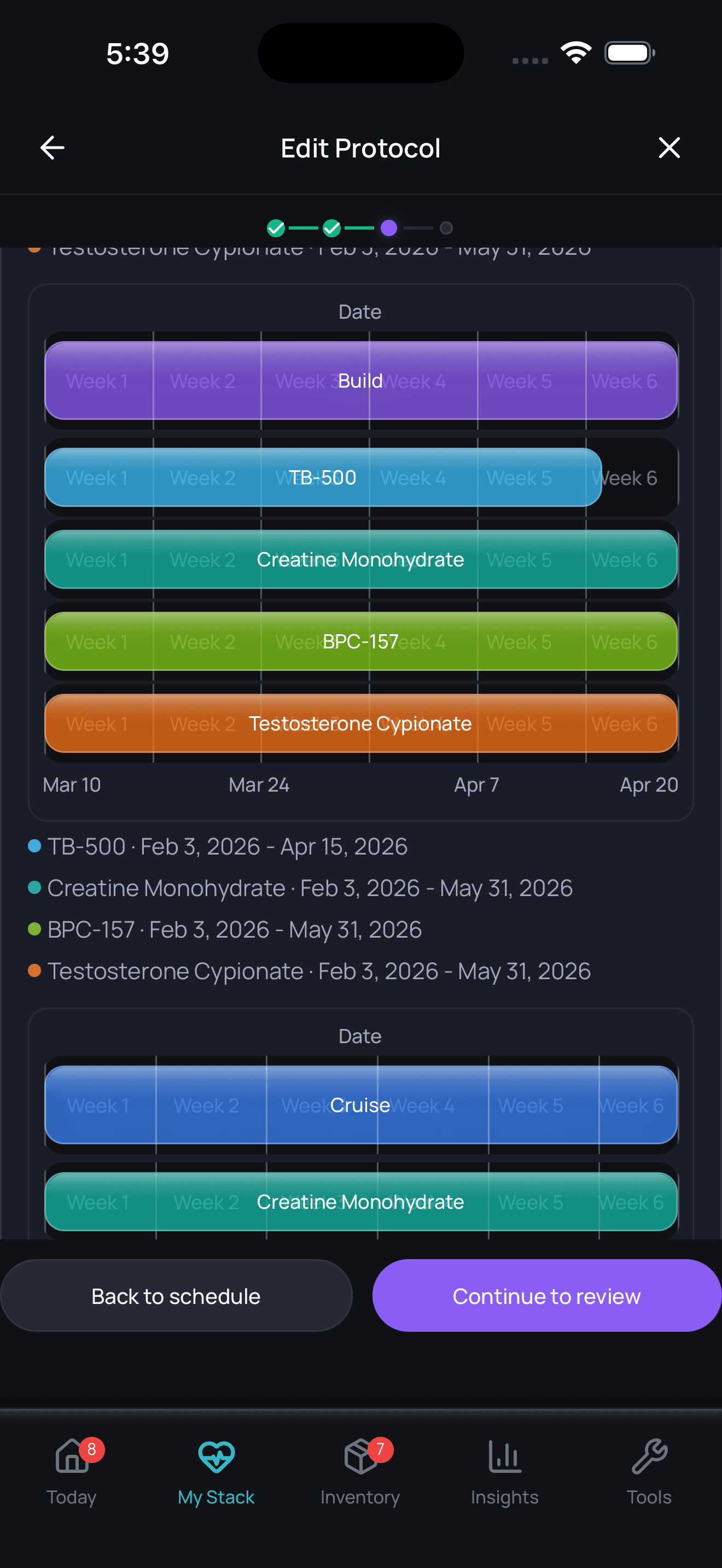
Planning views are organizational and should be aligned with professional guidance.
Research & Clinical Evidence
Tissue Homeostasis and Aging
The Basics
The foundational research on FOXO4-DRI came from a team at Erasmus University Medical Center in the Netherlands. In 2017, they published results showing that treating old mice with FOXO4-DRI reversed several visible and measurable signs of aging. Mice regrew lost fur, ran twice as far on their exercise wheels, and showed improved kidney function. The effects became observable within 10-14 days of starting treatment.
Two types of mice were tested. Fast-aging mice (genetically engineered to age rapidly) showed the most dramatic improvements, including restored fur, better liver function, and increased physical activity. Naturally aged mice (the equivalent of elderly humans) also benefited, particularly in kidney function markers. Importantly, the researchers treated mice for over 10 months with three injections per week without observing obvious adverse effects.
The Science
The Baar et al. (2017) study in Cell remains the foundational reference for FOXO4-DRI [1]. Key quantitative findings from naturally aged (24-month-old) C57BL/6 mice include reduced plasma creatinine and urea (indicators of improved renal function) following treatment. In fast-aging XpdTTD/TTD mice, treatment restored coat condition, improved liver function markers, and increased voluntary running wheel activity compared to vehicle controls. The peptide demonstrated 11.73-fold selectivity for inducing apoptosis in senescent versus non-senescent human fibroblasts (IMR90 cells) in vitro [1]. Krimpenfort and Berns provided an accompanying commentary highlighting the significance of targeted senolytic approaches [8].
Reproductive and Endocrine Function
The Basics
As men age, testosterone production declines partly because the Leydig cells responsible for making testosterone accumulate senescent cells in the testicular environment. Research has shown that FOXO4-DRI can clear these senescent Leydig cells in aged mice, improving the testicular environment and partially restoring testosterone levels. This is one of the more specific and well-documented applications of the peptide in animal models.
A related study found that clearing senescent cells from the testes also improved spermatogenesis (sperm production) in aged mice, suggesting broader reproductive health benefits from senolytic therapy in this tissue.
The Science
Zhang et al. (2020) demonstrated that FOXO4 translocates to the nucleus in aged murine Leydig cells, correlating with decreased testosterone synthesis. Administration of FOXO4-DRI selectively induced apoptosis in senescent Leydig cells by disrupting the FOXO4-p53 interaction, improving the testicular microenvironment and partially restoring age-related hormonal parameters [5]. Li et al. (2024) extended these findings, showing that FOXO4-DRI improved spermatogenesis in aged mice through reduction of SASP secretion from senescent Leydig cells [9].
Pulmonary Fibrosis
The Basics
Pulmonary fibrosis involves excessive scarring in the lungs, often driven by cells called myofibroblasts that have become senescent. Research in mouse models of lung fibrosis found that FOXO4-DRI could reduce the population of these problematic cells, decrease collagen buildup, and improve lung structure. The peptide appeared to specifically target the senescent myofibroblasts while allowing healthy lung cells to increase in number.
The Science
Han et al. (2022) demonstrated that FOXO4-DRI decreased senescent cell populations and downregulated SASP gene expression in bleomycin-induced pulmonary fibrosis models. The treatment reduced collagen deposition and improved lung morphology, with myofibroblasts identified as a preferential target. Type 2 alveolar epithelial cell populations increased following treatment, while myofibroblast populations decreased. The study identified the ECM-receptor interaction pathway as a key downstream pathway affected by senescent cell clearance [6].
Keloid and Fibrotic Scarring
The Basics
Keloids are raised, overgrown scars that form when the body's wound-healing process goes into overdrive. Researchers found that keloid tissue contains elevated numbers of senescent fibroblasts. When treated with FOXO4-DRI, these senescent cells were driven to self-destruct, suggesting the peptide could have applications in managing pathological scarring.
The Science
Kong et al. (2025) identified elevated p16 expression and increased senescent fibroblast populations in keloid tissue. FOXO4-DRI treatment induced apoptosis in senescent keloid fibroblasts by promoting nuclear exclusion of p53 phosphorylated at serine 15. The peptide decreased the proportion of cells in G0/G1 phase and altered cell cycle distribution in both keloid organ cultures and isolated fibroblasts [3].
Chondrocyte Senescence and Cartilage
The Basics
Cartilage repair is a major challenge in medicine because cartilage cells (chondrocytes) grown in the lab tend to become senescent over time, reducing the quality of cultured tissue. Research found that FOXO4-DRI could selectively remove these senescent chondrocytes from lab-grown cartilage, improving the overall quality of the cell cultures. This finding has implications for cartilage repair therapies and potentially for age-related joint conditions.
The Science
Zhu et al. (2021) demonstrated that FOXO4-DRI selectively removed senescent cells from in vitro expanded human chondrocytes, reducing SA-beta-gal staining and improving culture quality. The findings have implications for autologous chondrocyte implantation therapies and broader research into senescence-related cartilage degeneration [7].
Cardiovascular and Vascular Aging
The Basics
Blood vessel health declines with age partly due to accumulation of senescent endothelial cells (the cells that line your blood vessels). Preclinical research suggests FOXO4-DRI may help restore endothelial function by clearing these senescent cells, potentially delaying vascular aging.
The Science
Preclinical evidence suggests FOXO4-DRI can restore endothelial function by clearing senescent endothelial cells, activating the p53/Bcl-2/Caspase-3 apoptotic cascade specifically in senescent vascular cells [4]. This represents a potential application in delaying vascular aging, although dedicated cardiovascular studies remain limited.
Neonatal Lung Development
The Basics
Research on premature infant lung disease (bronchopulmonary dysplasia) found that cellular senescence contributes to lung damage caused by oxygen therapy. In animal models, FOXO4-DRI reduced senescence markers and improved lung development. While not a direct clinical application, this research expands understanding of how senescent cell clearance could benefit tissue development and repair.
The Science
Jing et al. (2024) identified cellular senescence as a contributor to hyperoxic bronchopulmonary dysplasia progression in neonatal rats. FOXO4-DRI administration decreased cellular senescence markers and improved alveolar complexity. Single-cell RNA sequencing revealed increased senescence signatures across multiple cell types in hyperoxia-exposed lungs [10].
Biomarker Evidence Matrix
Category
Longevity & Neuroprotection
- Evidence Strength
- 5/10
- Reported Effectiveness
- 7/10
- Summary
- Core design purpose of FOXO4-DRI. Animal studies demonstrate senescent cell clearance restores tissue homeostasis, improves fitness markers, and extends healthspan. All evidence preclinical. Community discussion centers on anti-aging potential with strong theoretical conviction but limited outcome data.
Category
Inflammation
- Evidence Strength
- 5/10
- Reported Effectiveness
- 5/10
- Summary
- SASP reduction is a direct downstream effect of senescent cell clearance. Animal models show decreased inflammatory cytokine burden (IL-6, IL-8, IL-1beta). Community reports of anti-inflammatory effects are sparse but mechanistically expected.
Category
Pain Management
- Evidence Strength
- 3/10
- Reported Effectiveness
- 6/10
- Summary
- No formal pain studies. However, one community report describes permanent resolution of 20-year chronic lower back pain. Mechanism (clearing senescent cells driving local inflammation) is plausible for chronic pain conditions.
Category
Joint Health
- Evidence Strength
- 4/10
- Reported Effectiveness
- 5/10
- Summary
- In vitro evidence of senescent chondrocyte clearance from human cartilage cultures [7]. No in vivo joint studies. Community discussion extrapolates from preclinical data.
Category
Recovery & Healing
- Evidence Strength
- 4/10
- Reported Effectiveness
- 5/10
- Summary
- Pulmonary fibrosis and keloid research demonstrate tissue repair following senescent cell clearance [3][6]. One community report of improved fibrotic nodule pliability.
Category
Skin Health
- Evidence Strength
- 4/10
- Reported Effectiveness
- 4/10
- Summary
- Mouse fur density restoration is the most visible result from the original study [1]. Community reports in humans are inconsistent, with many noting no visible skin changes.
Category
Hair Health
- Evidence Strength
- 3/10
- Reported Effectiveness
- 3/10
- Summary
- Based on mouse fur restoration data only. Human community reports suggest minimal or undetectable effects on hair.
Category
Side Effect Burden
- Evidence Strength
- 3/10
- Reported Effectiveness
- 5/10
- Summary
- Animal studies report no overt adverse effects [5]. Community reports note injection-site pain and transient flu-like symptoms. No formal safety characterization exists.
Category
Immune Function
- Evidence Strength
- 3/10
- Reported Effectiveness
- 4/10
- Summary
- Senescent cell clearance theoretically reduces chronic immune activation. Theoretical concern about immune system burden from processing large quantities of apoptotic cell debris.
Category
Energy Levels
- Evidence Strength
- 3/10
- Reported Effectiveness
- 3/10
- Summary
- Mouse studies showed increased running wheel activity [1]. Human community reports do not consistently report energy improvements.
Categories not scored (insufficient data): Fat Loss, Muscle Growth, Weight Management, Appetite & Satiety, Food Noise, Sleep Quality, Focus & Mental Clarity, Memory & Cognition, Mood & Wellbeing, Anxiety, Stress Tolerance, Motivation & Drive, Emotional Aliveness, Emotional Regulation, Libido, Sexual Function, Physical Performance, Gut Health, Digestive Comfort, Nausea & GI Tolerance, Heart Health, Blood Pressure, Heart Rate & Palpitations, Hormonal Symptoms, Temperature Regulation, Fluid Retention, Body Image, Bone Health, Cravings & Impulse Control, Social Connection, Treatment Adherence, Withdrawal Symptoms, Daily Functioning
Benefits & Potential Effects
The Basics
FOXO4-DRI's benefits center on removing the senescent cells that accumulate with age and contribute to tissue dysfunction. Because senescent cells exist throughout the body and affect multiple organ systems, the potential benefits are broad rather than targeted at one specific condition.
The most directly observed benefits from animal research include improved kidney function, restored physical fitness and endurance, improved coat/skin quality, and partial restoration of testosterone levels in aged males. These reflect the diverse tissues where senescent cell accumulation causes measurable decline.
The appeal of FOXO4-DRI lies in its approach to addressing aging at a root level rather than treating individual symptoms. By removing the cells that produce chronic inflammatory signals, the peptide theoretically creates a healthier environment for remaining healthy cells to function. Think of it as removing the source of pollution rather than installing air purifiers.
However, it is critical to maintain perspective: these benefits have only been demonstrated in mice. No human clinical trials have confirmed whether these effects translate to people, what the optimal dose would be, or what the long-term consequences of repeated senolytic therapy might be.
The Science
Demonstrated preclinical benefits of FOXO4-DRI include:
- Renal function restoration: Reduced plasma creatinine and urea in naturally aged mice, indicating improved glomerular filtration and kidney function [1]
- Physical fitness improvement: Increased running wheel activity in fast-aging mice, suggesting improved musculoskeletal function and endurance capacity [1]
- Coat/integumentary restoration: Recovery of fur density in fast-aging mice with age-related alopecia, observable within 10-14 days of treatment initiation [1]
- Hepatic function improvement: Restored liver function markers in fast-aging XpdTTD/TTD mice [1]
- Testosterone restoration: Partial restoration of age-related testosterone secretion insufficiency through targeted clearance of senescent Leydig cells in aged mice [5]
- Spermatogenesis improvement: Enhanced sperm production in aged mice through reduction of SASP secretion in the testicular microenvironment [9]
- Fibrosis reduction: Decreased collagen deposition and improved tissue architecture in pulmonary fibrosis models [6]
- Cartilage quality improvement: Selective removal of senescent chondrocytes from in vitro expanded human cartilage cell cultures [7]
- Keloid fibroblast clearance: Induction of apoptosis in senescent fibroblasts from pathological scar tissue [3]
- SASP reduction: Decreased secretion of pro-inflammatory cytokines (IL-6, IL-8, IL-1beta), chemokines, and matrix metalloproteinases across multiple tissue types [1][5]
All evidence is preclinical. No human efficacy data exists.
Side Effects & Safety Considerations
The Basics
The safety profile of FOXO4-DRI is largely unknown because no human clinical trials have been conducted. What is known comes from animal studies and anecdotal community reports from self-experimenters.
In animal studies, the news has been cautiously encouraging. The original study treated mice for over 10 months with three injections per week and reported no obvious adverse effects. Body and organ weights remained unchanged in testicular aging studies.
From community self-experimentation, the most commonly reported effects include pain, stinging, or soreness at the injection site (the most consistent report), flu-like symptoms in the 24-72 hours after injection (potentially reflecting immune activation as the body processes dying senescent cells), temporary fatigue lasting 1-3 days post-injection, and mild nausea or digestive upset in some individuals.
Several theoretical concerns deserve attention. A "senolytic storm" could occur if too many senescent cells are destroyed at once, potentially overwhelming the immune system with cellular debris. Some senescent cells may be pre-cancerous cells held in check by senescence; eliminating them could theoretically release them from cell-cycle arrest (though the p53-mediated apoptosis mechanism should address this). Senescent cells also play temporary beneficial roles in wound healing, so timing senolytic therapy during active healing could be counterproductive.
The Science
Preclinical safety data: In the Baar et al. (2017) study, mice received FOXO4-DRI three times weekly for over 10 months without reported adverse effects [1]. Zhang et al. (2020) reported that body and organ weights remained unchanged following treatment in aged mice [5]. These observations, while encouraging, represent limited safety characterization insufficient for human risk assessment.
Community-reported adverse effects (anecdotal, no controlled data):
- Injection-site reactions: redness, swelling, stinging. Commonly reported across community sources, consistent with large-volume subcutaneous peptide injections
- Flu-like symptoms: mild fever, fatigue, malaise within 24-72 hours post-injection, theorized to reflect immune activation during processing of apoptotic cell debris
- Temporary fatigue: 1-3 days post-injection
- GI discomfort: nausea and mild digestive upset in some individuals
Theoretical risks requiring consideration:
- Immune burden from rapid senescent cell clearance ("senolytic storm"): massive simultaneous apoptosis could release inflammatory intracellular contents
- Tumor suppression compromise: some senescent cells represent pre-malignant cells held in growth arrest by the senescence program
- Wound healing impairment: transient beneficial senescence during tissue repair could be disrupted by concurrent senolytic therapy
- Off-target cell death: while selectivity is demonstrated in vitro (11.73-fold), no compound achieves perfect cell-type specificity. Healthy cells with transiently elevated FOXO4 during stress responses could theoretically be affected [1]
Theoretical contraindications:
- Active cancer treatment (complex interactions with therapy-induced senescence)
- Pregnancy or breastfeeding
- Immunocompromised states
- Active wound healing or recent surgery
- Active infections or acute illness
The side effects and contraindications above give you a map of what to watch for. Doserly turns that map into a daily practice. Log the specific biomarkers and symptoms associated with this compound's known risk profile, and the app builds a timeline of how your body is responding across your cycle.
Trending in the wrong direction on a key marker? Noticing a pattern that started two weeks into your protocol? Doserly connects the dots between your protocol timeline and your logged data, making it easier to spot emerging issues early and have informed, data-backed conversations with your healthcare provider about what's working and what needs attention.
Connect protocol changes to labs and health markers.
Doserly can keep lab results, biomarkers, symptoms, and dose history close together so follow-up conversations have better context.
Insights
Labs and trends
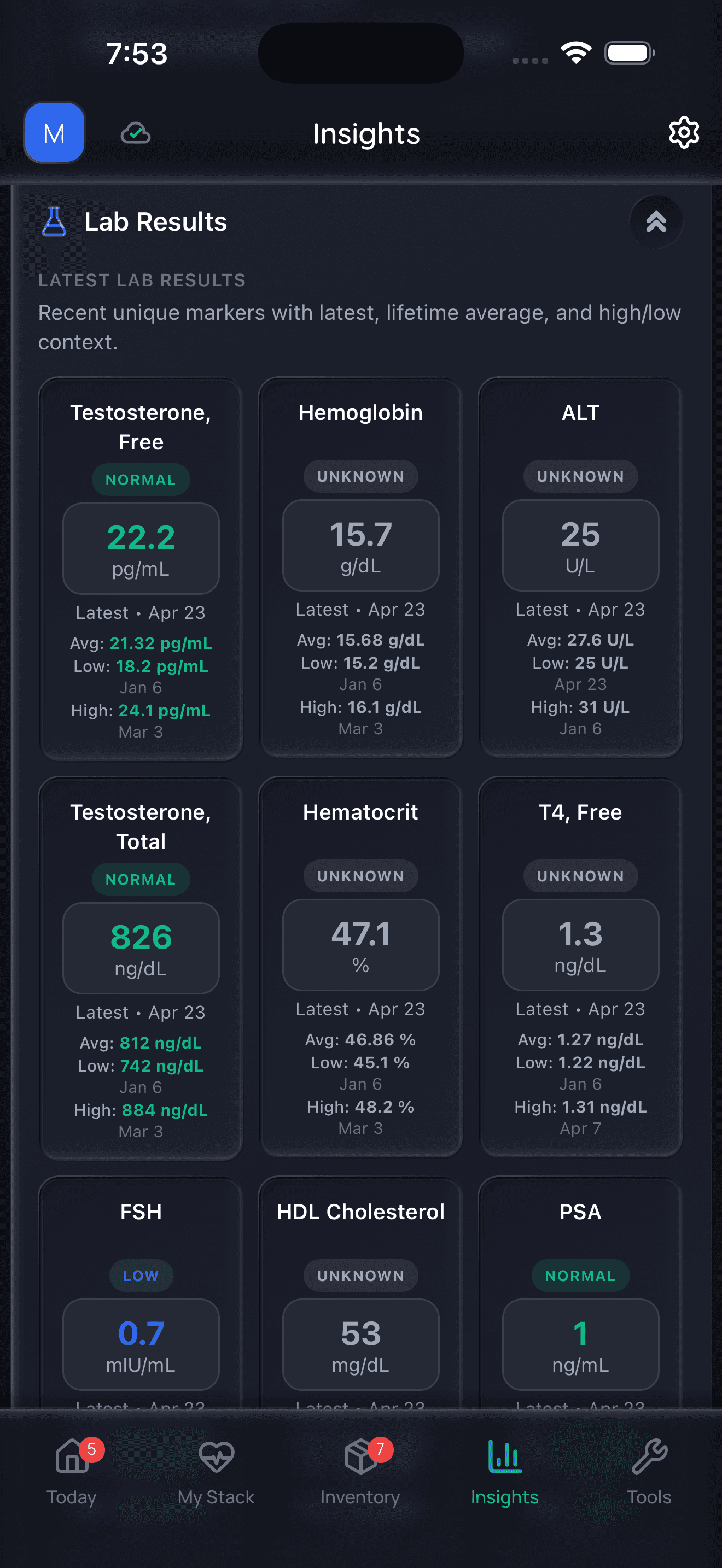
Doserly organizes data; it does not diagnose or interpret labs for you.
Dosing Protocols
The Basics
FOXO4-DRI dosing is one of the most contested and uncertain areas in the peptide community. There is no established human dose, and the protocols discussed online vary by orders of magnitude. This is not a minor disagreement between sources. It reflects a fundamental gap: no one knows the right dose for humans.
There are two broadly different approaches being discussed.
The first is a lower-dose daily approach, with doses in the range of 250-500 mcg per day, administered daily or in on/off cycling patterns. These protocols use standard peptide vials (typically 10 mg) reconstituted with bacteriostatic water, with injection volumes similar to other peptide protocols.
The second approach extrapolates directly from the original mouse study, which used 5 mg/kg body weight. For a 75 kg person, that translates to 375 mg per injection day. This makes FOXO4-DRI one of the most expensive peptide protocols in existence and requires splitting doses across multiple injection sites due to the large volumes involved.
Why the enormous gap? The mouse study used intravenous injection at 5 mg/kg. Standard allometric scaling (adjusting for body surface area differences between mice and humans) would suggest a much lower human-equivalent dose, but community protocols using the mg/kg approach chose not to apply this correction, reasoning that the peptide's unusual D-amino acid structure may alter pharmacokinetics in ways standard scaling doesn't account for.
There is no way to know which approach, if either, is correct without human pharmacokinetic and dose-finding studies.
The Science
Protocol 1: Low-dose daily/intermittent (from community dosing sources)
Phase
Gradual: Weeks 1-4
- Daily Dose
- 250 mcg
- Schedule
- Daily subcutaneous
Phase
Gradual: Weeks 5-8
- Daily Dose
- 375 mcg
- Schedule
- Daily subcutaneous
Phase
Gradual: Weeks 9-16
- Daily Dose
- 500 mcg
- Schedule
- Daily subcutaneous
Phase
Intermittent: Week 1
- Daily Dose
- 300 mcg
- Schedule
- Daily for 7 days
Phase
Intermittent: Week 2
- Daily Dose
- Off
- Schedule
- No injection
Phase
Intermittent: Week 3
- Daily Dose
- 400 mcg
- Schedule
- Daily for 7 days
Phase
Intermittent: Week 4
- Daily Dose
- Off
- Schedule
- No injection
Reconstitution: 3.0 mL bacteriostatic water per 10 mg vial yields approximately 3.33 mg/mL. At this concentration, 1 unit on a U-100 insulin syringe equals approximately 33.3 mcg.
Protocol 2: Research-extrapolated intermittent (from community discussion)
Parameter
Dose
- Value
- 2-5 mg/kg body weight
Parameter
Route
- Value
- Subcutaneous
Parameter
Schedule
- Value
- 3 days on, 4 days off
Parameter
Course
- Value
- 3-6 weekly cycles
Parameter
Rest
- Value
- 3-6 months between courses
Parameter
Titration
- Value
- Start 1-2 mg/kg, increase to 3-5 mg/kg as tolerated
The rationale for intermittent dosing across both protocols is that senolytic activity follows a "hit-and-clear" pattern: once apoptosis is triggered in senescent cells, the immune system requires time to phagocytose debris and remodel cleared tissue. Pulsed administration may also reduce theoretical risk of off-target effects on healthy cells.
The Baar et al. (2017) study administered 5 mg/kg intravenously on alternating days over approximately three weeks in mice [1]. Simple allometric scaling using the FDA's body surface area conversion factor of approximately 12.3 would suggest a substantially lower human-equivalent dose, but this correction has not been uniformly adopted in community protocols.
Consistency is the difference between a protocol that delivers results and one that wastes time and money. Doserly was built for exactly this: keeping you on track with the precision your protocol demands.
The built-in calculators handle the math you shouldn't be doing in your head. The reconstitution calculator tells you exactly how much bacteriostatic water to add for your target concentration. The dose calculator converts between units, milligrams, and syringe markings so you draw the right amount every time. The injection site heat map tracks where you've administered and when, helping you rotate sites systematically to reduce tissue damage, scarring, and absorption inconsistencies from overusing the same area. Pair that with smart reminders tuned to your protocol's timing requirements, and you build the kind of daily consistency that separates optimized protocols from haphazard ones.
Track injection timing, draw notes, and site rotation.
Doserly helps keep syringe-related notes, injection site history, reminders, and reconstitution context together for easier review.
Injection log
Site rotation
Injection logs support record-keeping; follow clinician instructions for administration.
What to Expect
FOXO4-DRI has very limited community experience data, and expectations should be calibrated accordingly. The following timeline is synthesized from the small number of user reports available and may not reflect typical outcomes.
Days 1-3: Injection-site reactions are the most commonly reported early experience. Stinging, redness, and localized soreness may persist for hours to a day. Some users report a sensation similar to a deep-tissue massage soreness. With higher-dose protocols, splitting injections across multiple sites may help manage discomfort.
Days 3-7: Some users report mild flu-like symptoms during this window, including low-grade fatigue, slight malaise, or mild digestive upset. This is theorized to represent immune activation as the body processes apoptotic cell debris from senescent cell clearance. Not all users experience this; several report feeling nothing at all.
Weeks 2-4: In the mouse studies, observable effects (fur regrowth, improved activity levels) began appearing within 10-14 days. For human users, this is the earliest window where any effects might become noticeable, though many community members report detecting no subjective changes at all.
Weeks 4-8+: The most notable community report describes permanent resolution of chronic lower back pain after brief dosing, with effects becoming apparent within the first few weeks. Other users report gradual improvements in tissue pliability for fibrotic conditions. However, the majority of community reports note no subjective changes they can attribute to the peptide.
Off-cycle period: For intermittent protocols, off weeks are intended to allow immune clearance of apoptotic debris and tissue remodeling. No specific expectations are established for this phase.
Important context: The "felt nothing" response from multiple users is a key data point. It could mean the peptide is working silently at a cellular level with no subjective signal, that doses were insufficient, or that efficacy varies substantially between individuals. Without biomarkers to measure senescent cell burden before and after treatment, it is difficult to assess whether the peptide is working for any individual user.
Interaction Compatibility
Good With (Potential Synergistic Compounds)
- Epithalon: Complementary mechanisms. FOXO4-DRI clears damaged senescent cells while Epithalon supports telomere maintenance in healthy cells through telomerase activation. Typically run as separate, non-overlapping protocols to avoid compounding unknown variables.
- GHK-Cu: Tissue remodeling and repair peptide. Some protocols use GHK-Cu in the weeks following a FOXO4-DRI course, with the rationale that clearing senescent cells creates a favorable window for tissue regeneration that GHK-Cu could support.
- NAD+: NAD+ precursors (NMN, NR) address age-related decline in cellular energy metabolism. Boosting NAD+ levels may support the function of remaining healthy cells after senescent cell clearance. NAD+ decline is considered a separate hallmark of aging from cellular senescence.
- MOTS-C: Mitochondrial-derived peptide for metabolic health. Addresses mitochondrial function, a separate aging mechanism from senescence. Complementary rather than synergistic.
- SS-31: Mitochondrial-targeting peptide. One community user combined FOXO4-DRI with SS-31 (followed by KLOW and MOTS-C) for fibrotic tissue improvement, reporting increased tissue pliability.
Not Good With (Cautions)
- Dasatinib + Quercetin (D+Q): Another senolytic combination targeting different anti-apoptotic pathways. Never combine simultaneously with FOXO4-DRI. The additive senolytic effect is unpredictable and could cause excessive cell death. Some protocols alternate FOXO4-DRI and D+Q courses, but this carries increased theoretical risk with no safety data.
- Fisetin: Senolytic flavonoid. Same caution as D+Q regarding simultaneous use with FOXO4-DRI. Avoid combining senolytics in the same dosing window.
- Active wound-healing compounds during FOXO4-DRI dosing: Senescent cells play a temporary beneficial role in wound healing. Timing senolytic therapy during active tissue repair protocols may be counterproductive.
Note: All interaction information is speculative. No combination studies have been conducted with FOXO4-DRI in any species.
Administration Guide
FOXO4-DRI is administered via subcutaneous injection. The original mouse research used intravenous injection, but community protocols have adopted the subcutaneous route for practical accessibility.
Materials typically required:
- FOXO4-DRI lyophilized vial (commonly 10 mg or 50 mg)
- Bacteriostatic water for reconstitution
- U-100 insulin syringes (29-31 gauge, 0.5 inch needle)
- Alcohol swabs for vial stopper and injection site
- Sharps disposal container
Reconstitution solution: Bacteriostatic water is the standard reconstitution solution for FOXO4-DRI. A common preparation is 3.0 mL bacteriostatic water per 10 mg vial, yielding approximately 3.33 mg/mL concentration.
Timing considerations: Most community protocols administer at a consistent daily time. No specific meal timing or fasting requirements have been established. For intermittent protocols, consistency within dosing windows (same time each dosing day) is generally recommended. Some users report administering in the evening, noting that any flu-like response may be less disruptive during sleep.
Post-administration care: Monitor injection site for redness, swelling, or prolonged soreness. Transient flu-like symptoms (fatigue, mild malaise) may occur in the 24-72 hours following injection. These are generally self-limiting. Document each dose, injection site, and any observed effects for tracking purposes and for informed discussions with healthcare providers.
Supplies & Planning
Vial sizes typically available:
- 10 mg lyophilized vials (most common)
- 50 mg lyophilized vials (available from some suppliers)
Reconstitution supplies:
- Bacteriostatic water (10 mL bottles)
- Sterile mixing syringe with appropriate gauge needle
Administration supplies:
- U-100 insulin syringes (29-31 gauge, 0.5 inch needle). For doses under 0.10 mL, 30-unit or 50-unit syringes provide improved readability.
- Alcohol swabs (two per injection: one for vial stopper, one for injection site)
- Sharps disposal container
Storage supplies:
- Refrigerator access for reconstituted solution (2-8°C)
- Freezer access for long-term lyophilized storage (-20°C or below)
Cost consideration: FOXO4-DRI is among the most expensive peptide compounds available due to the complexity of D-retro-inverso synthesis using D-amino acids. Cost varies significantly by supplier and vial size. For research-extrapolated dose protocols (mg/kg body weight), multiple vials may be required per dosing day, making total protocol costs substantially higher than most peptide protocols. Consult the Doserly reconstitution calculator and a healthcare provider for specific quantity planning based on your individual protocol.
Storage & Handling
Lyophilized (unreconstituted) powder:
- Optimal long-term storage: -20°C (-4°F) or below. -80°C is ideal for extended storage.
- Acceptable short-term storage: 2-8°C (36-46°F) for several months
- Store in dry, dark conditions
- Minimize moisture exposure; keep vial stoppers secure
- Stable at -20°C for 12+ months
Reconstituted solution:
- Refrigerate at 2-8°C (36-46°F)
- Protect from light
- Use within 14-28 days when reconstituted with bacteriostatic water
- Do not freeze reconstituted solution
- Discard any remaining solution after 28 days regardless of remaining volume
Handling best practices:
- Allow vials to reach room temperature before opening to reduce condensation uptake
- Use gentle swirling or rolling to dissolve; do not shake vigorously. FOXO4-DRI is a large peptide that can denature with aggressive agitation
- Inject bacteriostatic water slowly down the vial wall to avoid foaming
- If long-term storage of reconstituted solution is needed, aliquot into single-use vials and freeze to minimize degradation from repeated freeze-thaw cycles
Lifestyle Factors
Complementary lifestyle practices may support the goals of a senolytic protocol by reducing the rate at which new senescent cells form and by supporting the body's natural cleanup processes.
Nutrition: A balanced, nutrient-dense diet rich in antioxidants and anti-inflammatory compounds may help reduce oxidative stress, one of the primary triggers of cellular senescence. Caloric restriction and intermittent fasting have shown senolytic effects in preclinical research, potentially complementing exogenous senolytic compounds.
Physical activity: Regular resistance training and cardiovascular exercise support metabolic health and cellular function. Exercise itself has mild senolytic effects and promotes the immune surveillance mechanisms responsible for clearing senescent cells naturally. Maintaining activity during off-cycle periods may help sustain the benefits of senolytic therapy.
Sleep: Quality sleep supports tissue repair processes and immune function. Given that FOXO4-DRI's effects depend on immune-mediated clearance of apoptotic senescent cells, adequate sleep may optimize this cleanup process.
Stress management: Chronic psychological stress accelerates cellular senescence through telomere shortening and oxidative damage. Stress management practices may reduce the rate at which new senescent cells accumulate, complementing the clearance effects of senolytic therapy.
Avoid accelerators of senescence: Excessive alcohol consumption, smoking, chronic sleep deprivation, and sedentary behavior are associated with accelerated cellular senescence. Minimizing these factors may improve the net benefit of senolytic protocols.
Rest during off-cycles: For intermittent protocols, allow adequate rest during off-weeks to support senescent cell clearance and tissue remodeling. The body needs time to process apoptotic cell debris and recruit healthy cells to fill the vacated niches.
Regulatory Status & Research Classification
United States (FDA): FOXO4-DRI is not FDA-approved for any indication. It is classified as a research compound. No Investigational New Drug (IND) applications have been publicly disclosed. No clinical trials involving FOXO4-DRI are registered on ClinicalTrials.gov as of 2026.
Canada (Health Canada): Not approved. No DIN/NPN assigned. Not classified as a Natural Health Product.
United Kingdom (MHRA): Not approved for human therapeutic use.
Australia (TGA): Not approved. Not scheduled.
European Union (EMA): No marketing authorization. The compound originated from Erasmus University Medical Center in the Netherlands, but has not progressed to clinical-stage development in any EU member state.
WADA status: Not specifically listed on the WADA Prohibited List as of 2026. However, athletes should exercise caution as novel peptides may fall under broader prohibition categories.
Active clinical trials: None registered in any jurisdiction as of March 2026.
Development status: The compound was published in a landmark 2017 Cell paper but has not progressed through the typical pharmaceutical development pipeline (IND filing, Phase I safety trials, etc.). Dr. Peter de Keizer, the lead researcher, indicated in 2018 interviews that his team was working on optimizing selectivity (version 4 of the peptide) before pursuing human trials.
Regulatory status changes frequently. Always verify the current legal status of any compound in your specific country or jurisdiction before making any decisions.
FAQ
What is FOXO4-DRI and how does it work?
FOXO4-DRI is a D-retro-inverso peptide designed to selectively eliminate senescent cells. It works by disrupting the FOXO4-p53 protein interaction that keeps senescent cells alive. When this interaction is broken, p53 is freed to trigger apoptosis (programmed cell death) specifically in senescent cells, while healthy cells that don't depend on this interaction remain unaffected.
Has FOXO4-DRI been tested in humans?
No human clinical trials have been completed or registered for FOXO4-DRI as of 2026. All efficacy and safety data comes from cell culture (in vitro) and animal (primarily mouse) studies. Community self-experimentation exists but is anecdotal and uncontrolled.
What dose is typically discussed in the community?
Based on available community discussion, dosing protocols vary enormously. Some sources describe ranges of 250-500 mcg per day in daily or intermittent patterns, while others reference 2-5 mg/kg body weight based on direct extrapolation from the mouse studies. This represents an unresolved disagreement in the community. There is no established or consensus human dose. Anyone considering this compound should consult a qualified healthcare professional.
Why is FOXO4-DRI so expensive?
FOXO4-DRI is a 49-amino acid peptide synthesized entirely from D-amino acids in a retro-inverso configuration. This manufacturing process is substantially more complex and costly than standard peptide synthesis using natural L-amino acids.
What is the difference between FOXO4-DRI and dasatinib + quercetin?
Both are senolytics (compounds that clear senescent cells), but they work through different mechanisms. Dasatinib + quercetin targets senescent cell anti-apoptotic pathways (SCAPs) using a small-molecule drug and a flavonoid. FOXO4-DRI specifically disrupts the FOXO4-p53 nuclear interaction. FOXO4-DRI offers greater theoretical selectivity for senescent cells but is far more expensive and lacks human clinical data. Dasatinib + quercetin has more extensive (though still limited) human data.
Can I combine FOXO4-DRI with other senolytics?
Combining multiple senolytics simultaneously is not recommended. The additive cell-killing effect is unpredictable and could result in excessive cell death or overwhelm the immune system's ability to process debris. Some community protocols alternate between different senolytics (e.g., FOXO4-DRI one month, D+Q the next), separated by adequate recovery periods, but no combination studies exist.
What side effects should I watch for?
Based on anecdotal community reports, the most commonly noted effects include injection-site reactions (stinging, redness, soreness), flu-like symptoms in the 24-72 hours following injection, temporary fatigue, and mild GI discomfort. Many users report no noticeable effects at all. As with any experimental compound, unexpected reactions should be discussed with a healthcare provider immediately.
How do I know if FOXO4-DRI is working?
This is a significant practical challenge. Unlike compounds that produce subjective effects (energy, mood, pain relief), senolytic therapy may work silently at the cellular level with no detectable subjective signal. Without before-and-after measurement of senescent cell biomarkers (such as SA-beta-gal staining or p16INK4a levels), it is difficult to assess efficacy for any individual. Some community members monitor for grey hair reduction or skin improvements as proxy indicators, but these are unreliable markers.
Sources & References
Landmark Studies:
- Baar MP, Brandt RMC, Putavet DA, et al. Targeted apoptosis of senescent cells restores tissue homeostasis in response to chemotoxicity and aging. Cell. 2017;169(1):132-147.e16. PMID: 28340339. DOI: 10.1016/j.cell.2017.02.031 — The foundational FOXO4-DRI study demonstrating selective senolysis and tissue homeostasis restoration in aged mice.
Structural and Mechanistic Studies:
2. Bourgeois B, Spreitzer E, Platero-Rochart D, et al. The disordered p53 transactivation domain is the target of FOXO4 and the senolytic compound FOXO4-DRI. Nature Communications. 2025. DOI: 10.1038/s41467-025-60844-9 — NMR structural analysis of the FOXO4-DRI/p53 binding interaction. PMID: 40593617.
Fibrotic Disease Research:
3. Kong YX, Li ZS, Liu YB, et al. FOXO4-DRI induces keloid senescent fibroblast apoptosis by promoting nuclear exclusion of upregulated p53-serine 15 phosphorylation. Nature Communications Biology. 2025. DOI: 10.1038/s42003-025-07738-0 — Keloid fibroblast senescence and FOXO4-DRI treatment.
Vascular Aging:
4. Vascular aging study demonstrating FOXO4-DRI restoration of endothelial function through the p53/Bcl-2/Caspase-3 signaling cascade. PMID: 41625068.
Endocrine and Reproductive Studies:
5. Zhang C, Xie Y, Chen H, et al. FOXO4-DRI alleviates age-related testosterone secretion insufficiency by targeting senescent Leydig cells in aged mice. Aging (Albany NY). 2020;12(2):1272-1284. PMID: 31959736. DOI: 10.18632/aging.102682.
Pulmonary Research:
6. Han X, Yuan T, Zhang J, et al. FOXO4 peptide targets myofibroblast ameliorates bleomycin-induced pulmonary fibrosis in mice. Journal of Cellular and Molecular Medicine. 2022. DOI: 10.1111/jcmm.17333. PMID: 35510614.
Cartilage Research:
7. Zhu Y, Tchkonia T, Pirtskhalava T, et al. Senolytic Peptide FOXO4-DRI Selectively Removes Senescent Cells From in vitro Expanded Human Chondrocytes. Frontiers in Bioengineering and Biotechnology. 2021;9:677576. PMID: 33996787.
Commentary:
8. Krimpenfort P, Berns A. Rejuvenation by therapeutic elimination of senescent cells. Cell. 2017;169(1):3-5. PMID: 28340347.
Reproductive Studies:
9. Li Y, Zhang C, Cheng H, et al. FOXO4-DRI improves spermatogenesis in aged mice through reducing senescence-associated secretory phenotype secretion. Aging. 2024. PMID: 39025385.
Developmental Biology:
10. Jing X, Jia S, Teng M, et al. Cellular senescence contributes to the progression of hyperoxic bronchopulmonary dysplasia. American Journal of Respiratory Cell and Molecular Biology. 2024. DOI: 10.1165/rcmb.2023-0038oc.
Reviews and Background:
11. van Deursen JM. The role of senescent cells in ageing. Nature. 2014;509(7501):439-446. PMID: 24954210.
- McHugh D, Gil J. Senescence and aging: causes, consequences, and therapeutic avenues. Journal of Cell Biology. 2017. DOI: 10.1083/jcb.201708092.
Related Peptide Guides
- Epithalon — Telomerase-activating peptide for telomere maintenance. Complementary longevity mechanism (telomere preservation vs. senescent cell clearance).
- GHK-Cu — Copper peptide for tissue remodeling and repair. Often discussed as a follow-up to senolytic courses.
- NAD+ — Essential coenzyme for cellular energy and DNA repair. Addresses NAD+ decline, a separate hallmark of aging.
- MOTS-C — Mitochondrial-derived peptide for metabolic health and exercise performance. Targets mitochondrial function, another aging pathway.
- SS-31 — Mitochondrial-targeting peptide for cellular energy optimization. Used in combination protocols for tissue repair.
- KPV — Anti-inflammatory tripeptide. Occupies a different niche (inflammation modulation vs. senescent cell clearance) but may be complementary.
- Thymosin Alpha-1 — Immune-modulating peptide. Community members have drawn parallels between senolytic and immunomodulatory approaches.
- BPC-157 — Body protection compound for tissue healing. May complement senolytic therapy during post-clearance tissue repair phases.
- Humanin — Mitochondrial peptide with neuroprotective and anti-aging properties.
- Pinealon — Brain bioregulator peptide from the Khavinson peptide bioregulator family.
Need the reconstitution math for FOXO4-DRI: Complete Research Guide?
Open the calculator with FOXO4-DRI: Complete Research Guide prefilled to estimate concentration, draw volume, and related measurement math from the reconstitution details you already have.