
Oxytocin: Complete Research Guide
On this page
Quick Reference Card
Attribute
Also Known As
- Detail
- Pitocin (synthetic), Syntocinon, the "love hormone," the "bonding hormone," OXT
Attribute
Administration
- Detail
- Intranasal (spray), Subcutaneous (injection), Intravenous (obstetric), Sublingual/Buccal (compounded)
Attribute
Research Status
- Detail
- FDA-approved for labor induction and postpartum hemorrhage (Pitocin). Not approved for behavioral, psychiatric, or metabolic indications. Investigational for autism, social anxiety, PTSD, obesity.
Attribute
Typical Dose Range
- Detail
- Intranasal: 20-40 IU per administration (33-67 mcg); Subcutaneous: 100-500 mcg/day (research protocols)
Attribute
Half-Life
- Detail
- Plasma: 3-6 minutes; CNS effects: 1-4 hours; pharmacodynamic duration: 1-2 hours
Attribute
Cycle Length
- Detail
- As-needed or intermittent use (2-5x per week); 8-12 weeks in research protocols
Attribute
Storage
- Detail
- Lyophilized: -20C or refrigerate 2-8C; Reconstituted: 2-8C for up to 28-30 days; protect from light
Overview / What Is Oxytocin?
The Basics
Oxytocin is a naturally occurring hormone that your body already produces. It is made in a brain region called the hypothalamus and released by the pituitary gland. With just nine amino acids, it is one of the smallest hormones in the human body, yet it influences some of the most complex aspects of human experience: trust, bonding, sexual arousal, stress resilience, and social connection.
Most people know oxytocin as the "love hormone" or "bonding hormone." It surges during physical touch, hugging, breastfeeding, childbirth, and sexual activity. In medicine, a synthetic version called Pitocin has been used for decades to induce labor and control bleeding after delivery. That remains its only FDA-approved use.
What makes oxytocin interesting beyond the delivery room is its emerging research profile. Scientists are investigating whether supplemental oxytocin (usually delivered as a nasal spray) can help with social anxiety, autism spectrum challenges, PTSD, depression, and even metabolic issues like obesity and insulin resistance. The results are promising but inconsistent, and the effects appear to be highly context-dependent. Oxytocin does not simply make you feel good; it amplifies the social signals around you, for better or worse.
The Science
Oxytocin (Cys-Tyr-Ile-Gln-Asn-Cys-Pro-Leu-Gly-NH2; CAS 50-56-6) is a cyclic nonapeptide neurohypophyseal hormone with a molecular weight of 1,007.19 Da. It is synthesized in magnocellular neurons of the paraventricular nucleus (PVN) and supraoptic nucleus (SON) of the hypothalamus, then transported along axonal projections to the posterior pituitary for systemic release [1].
Oxytocin is also produced peripherally in the placenta, ovaries, testes, retina, adrenal glands, thymus, and pancreas, indicating a scope of function that extends well beyond the classical neurohypophyseal model [2]. Central release occurs via dendritic exocytosis, allowing oxytocin to act as a volume-transmitted neuromodulator affecting limbic regions including the amygdala, nucleus accumbens, hippocampus, and prefrontal cortex [3].
The peptide contains an intramolecular disulfide bridge between Cys-1 and Cys-6 that stabilizes its cyclic conformation and is essential for receptor binding and biological activity. Oxytocin shares structural homology with vasopressin, differing at only two amino acid positions (Ile-3 vs. Phe-3, Leu-8 vs. Arg-8), which accounts for partial cross-reactivity at vasopressin V1a and V2 receptors [1][4].
Molecular Identity
Attribute
Chemical Name
- Detail
- Oxytocin
Attribute
Amino Acid Sequence
- Detail
- Cys-Tyr-Ile-Gln-Asn-Cys-Pro-Leu-Gly-NH2 (cyclic, disulfide bridge Cys1-Cys6)
Attribute
Molecular Formula
- Detail
- C43H66N12O12S2
Attribute
Molecular Weight
- Detail
- 1,007.19 Da
Attribute
CAS Number
- Detail
- 50-56-6
Attribute
PubChem CID
- Detail
- 439302
Attribute
Structure Type
- Detail
- Cyclic nonapeptide with intramolecular disulfide bridge
Attribute
Solubility
- Detail
- Sterile water, saline
Mechanism of Action
The Basics
Oxytocin works by binding to specific receptors (called OXTR) found throughout your body and brain. Think of these receptors as locks that only oxytocin and a few closely related molecules can open. When the lock opens, it triggers a cascade of effects inside the cell.
In the brain, oxytocin's primary job is to calm the fear center (the amygdala) and amplify social signals. This is why people feel more trusting, more connected, and less anxious after physical touch or during bonding experiences. Oxytocin does not just create good feelings on its own; it increases your sensitivity to the social cues around you. In a positive environment, that means enhanced connection. In a threatening or competitive environment, it can actually increase hostility toward outsiders.
Outside the brain, oxytocin causes smooth muscle to contract. This is why it triggers uterine contractions during labor and milk release during breastfeeding. It also has effects on pain perception, metabolism, and even wound healing, though these functions are still being mapped by researchers.
One important quirk: oxytocin does not easily cross the blood-brain barrier from the bloodstream. This means that injecting oxytocin under the skin primarily affects the body (peripheral effects), while nasal spray delivery is thought to reach the brain more directly through olfactory and trigeminal nerve pathways [5].
The Science
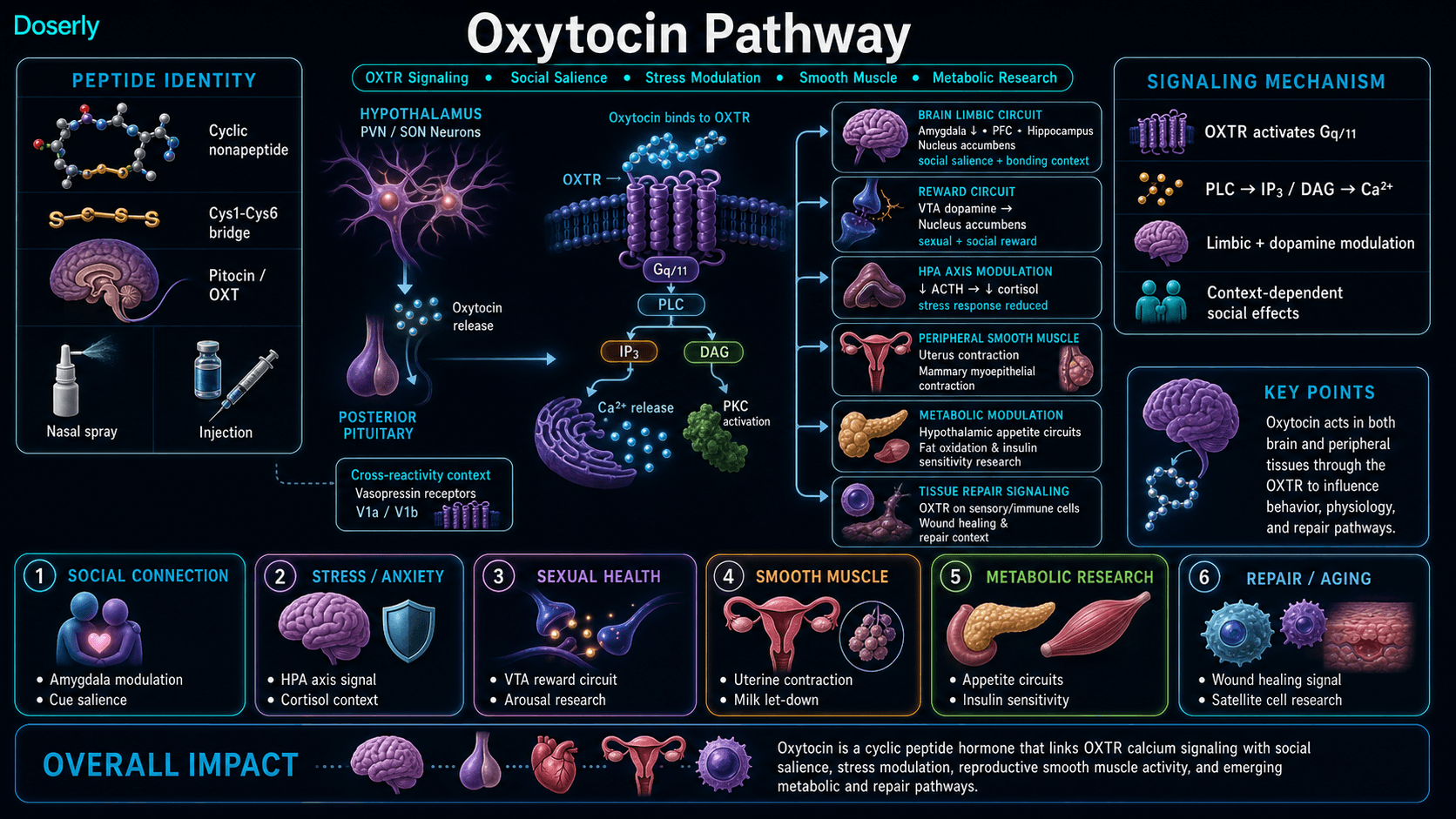
Oxytocin is a high-affinity agonist at the oxytocin receptor (OXTR), a Gq/11-coupled G-protein coupled receptor (GPCR). Upon binding, OXTR activates phospholipase C (PLC), generating inositol trisphosphate (IP3) and diacylglycerol (DAG), leading to intracellular calcium release and protein kinase C activation [1][6].
Recent structural studies reveal that oxytocin and vasopressin receptors form functional heterodimers, with antagonist binding at one protomer allosterically modulating the partner subunit through transmembrane helix 4 interactions [6]. This dimerization may explain why oxytocin exhibits partial agonist activity at vasopressin V1a and V1b receptors.
Central nervous system effects include:
- Amygdala modulation: Oxytocin dampens amygdala reactivity to threatening social stimuli, reducing fear and anxiety responses [7]
- Dopaminergic modulation: Enhancement of reward sensitivity to social and sexual cues via the VTA-nucleus accumbens dopaminergic pathway [3]
- HPA axis inhibition: Reduction of cortisol and ACTH release, lowering the stress response [8]
- GABAergic modulation: Interaction with inhibitory neurotransmitter systems that contribute to anxiolysis [6]
In the PVN, distinct anterior and posterior oxytocin neuron populations exhibit different electrophysiological profiles and regulate distinct behaviors. PVN oxytocin neurons also receive inhibitory input from the FGF21-activated pathway, which negatively regulates alcohol intake via downstream VTA dopamine signaling [6].
Peripheral actions include smooth muscle contraction (uterus, mammary myoepithelial cells), modulation of pain perception through OXTR expression on sensory neurons and immune cells in skin tissue [9], and metabolic effects via hypothalamic appetite-regulating circuits [10].
Pathway Visualization Image
Pharmacokinetics
The Basics
Oxytocin is one of the fastest-acting and fastest-clearing peptides you will encounter. After an intravenous dose, it has a plasma half-life of only 3 to 6 minutes. It is broken down rapidly by an enzyme called oxytocinase. However, the effects you actually feel (reduced anxiety, increased social warmth, enhanced bonding) persist for 1 to 4 hours because the downstream changes in brain signaling outlast the presence of the molecule itself.
Route of administration matters significantly with oxytocin:
- Intranasal: Reaches the brain within 15-40 minutes via olfactory and trigeminal nerve pathways, bypassing the blood-brain barrier. This is the most studied route for behavioral and psychological effects.
- Subcutaneous: Primarily affects peripheral tissues (metabolism, pain, cardiovascular), with limited central nervous system penetration. Onset is relatively quick, with effects emerging within minutes.
- Intravenous: Primarily obstetric use. Immediate onset, with effects primarily on uterine smooth muscle.
- Sublingual/Buccal: Variable absorption and less predictable onset compared to intranasal.
The rapid clearance means oxytocin does not accumulate in the body the way many other compounds do. Each dose is essentially an independent event, which is why most sources describe its effects as acute rather than cumulative. That said, some users who take oxytocin consistently over weeks report that the benefits become more pronounced over time, which may reflect changes in receptor sensitivity or downstream neuroplastic adaptation rather than accumulation of the peptide itself.
The Science
Oxytocin follows first-order elimination kinetics with a plasma half-life of approximately 3-5 minutes, driven primarily by enzymatic degradation via oxytocinase (cystine aminopeptidase) and renal clearance [1][11].
Intranasal pharmacokinetics: Peak plasma concentrations are achieved at Tmax 15-40 minutes after intranasal administration. Central nervous system penetration occurs via olfactory and trigeminal nerve pathways, with evidence of CSF concentration increases detectable by 75 minutes post-administration. The fraction reaching the brain is small (estimated 0.002-0.005 of the administered dose), but sufficient to produce measurable behavioral effects at standard doses (24-40 IU) [5][11].
Subcutaneous pharmacokinetics: Limited formal PK data exists for subcutaneous oxytocin. Absorption is expected to be more gradual than IV, with primarily peripheral OXTR engagement. One RCT demonstrated that a 4 mcg subcutaneous injection produced measurable analgesic effects on the treated arm [9].
Key pharmacokinetic parameters:
- Bioavailability: 100% IV; low and variable intranasal (estimated 2-5%)
- Steady state: approximately 23 minutes with regular dosing (IV context)
- Protein binding: moderate
- Metabolism: oxytocinase (primary), aminopeptidases
- Excretion: renal
Research & Clinical Evidence
Oxytocin and Social Cognition / Autism
The Basics
This is one of the most actively researched areas for oxytocin. People on the autism spectrum often experience challenges with reading social cues, maintaining eye contact, and feeling comfortable in social situations. Researchers have tested whether intranasal oxytocin can improve these specific challenges, with mixed but sometimes encouraging results.
Some clinical trials have found that oxytocin improves eye gaze, face recognition, and emotion reading in participants with autism. A meta-analysis published in 2021 found modest improvements across several social cognition measures [12]. However, the results are not consistent across all studies, and researchers have noted that the benefits may depend on individual factors like baseline oxytocin levels and the social context in which the peptide is administered.
Community reports from individuals with autism who have used intranasal oxytocin echo this pattern. Effects are often described as subtle but real: slightly longer comfortable eye contact, somewhat reduced social anxiety, and an increased desire to connect with others. Some users report that the benefits become clearer over weeks of consistent use rather than being immediately obvious.
The Science
A multilevel meta-analysis of intranasal oxytocin in autism spectrum disorder found small-to-moderate improvements in social cognition measures, though with significant heterogeneity across studies [12]. An fMRI study demonstrated that intranasal oxytocin reduces amygdala hyperactivity to fearful faces and decreases connectivity between the amygdala and brainstem in individuals with social anxiety [7].
Yamasue and Domes (2017) reviewed oxytocin effects in ASD, finding improved eye gaze and face recognition, enhanced emotion recognition, and better social interaction in some trials, though variable results suggest the need for patient selection based on individual oxytocin system characteristics [13].
In zebrafish models of autism, oxytocinergic signaling modulation provides translational perspectives for understanding OXTR-mediated social behavior regulation [6]. The context-dependent nature of oxytocin effects (the "social salience hypothesis") explains why outcomes vary: oxytocin amplifies attention to social cues, which may be beneficial in supportive environments but potentially harmful in threatening ones [14].
Oxytocin and Anxiety / Stress
The Basics
Oxytocin appears to function as a natural anti-anxiety agent in many people. It calms the brain's fear center and reduces the stress hormone cortisol. Research in both animals and humans suggests that oxytocin can buffer the negative effects of social stress, reduce anxiety in social situations, and promote resilience.
Clinical interest extends to conditions like PTSD, social anxiety disorder, and borderline personality disorder. Early studies using intranasal oxytocin in these populations show modifications in threat perception and social behavior, though the effects are not always straightforward and may depend on the individual's relationship with social connection.
Community users consistently describe oxytocin as calming. Reports from people using it for anxiety include feeling "wrapped in cotton wool," having ruminating thoughts stop, and experiencing increased stress resilience throughout the day.
The Science
Oxytocin reduces HPA axis activity, lowering cortisol and ACTH release [8]. An fMRI study in social anxiety disorder demonstrated that 24 IU intranasal oxytocin reduced amygdala hyperactivity to fearful faces and decreased amygdala-brainstem functional connectivity [7]. Carbetocin, a synthetic oxytocin analog, has been shown to prevent anxiety-related behaviors caused by social stress in animal models [15].
Genetic polymorphisms in the oxytocin receptor gene (OXTR) have been associated with social anxiety disorder, and epigenetic changes in OXTR methylation have been observed in untreated patients with social anxiety, suggesting that the oxytocin system may be dysregulated in anxiety disorders at a molecular level [16].
In borderline personality disorder, characterized by hypervigilance toward threats and altered social behavior, intranasal oxytocin administration has shown modification of these behaviors [17].
Oxytocin and Metabolic Health
The Basics
Beyond its social and emotional effects, oxytocin influences appetite and metabolism in ways researchers are still working to understand. A single intranasal dose has been shown to reduce food intake at a test meal and increase the rate at which the body burns fat. In longer studies, chronic oxytocin treatment has been associated with modest weight loss, improved insulin sensitivity, and reduced belly fat.
One clinical study in patients with diabetes found that intranasal oxytocin treatment led to reduced glucose and insulin levels along with significant weight loss (approximately 9 kg over eight weeks). Research also suggests that circulating oxytocin levels are lower in people with type 2 diabetes compared to those with normal blood sugar, and that these lower levels correlate with worse insulin resistance.
The Science
Oxytocin modulates energy homeostasis through hypothalamic circuits regulating hunger and energy expenditure. In humans, a single intranasal dose reduced caloric intake at a test meal and increased fat oxidation [10]. Chronic administration in animal models demonstrates reductions in visceral fat, improved glucose tolerance, and enhanced insulin sensitivity [18].
In diabetic mouse models, oxytocin reduced body fat accumulation by 19%, lowered fasting glucose levels by 23%, and decreased cardiomyocyte hypertrophy, fibrosis, and apoptosis through reductions in insulin resistance [19]. Oxytocin deficiency has been shown to cause obesity even in the setting of normal food intake and exercise activity, suggesting critical roles in energy homeostasis [20].
Barengolts (2019) reported in a review of randomized controlled trials that "circulating oxytocin is lower in type 2 diabetes versus normoglycemic subjects and negatively correlated with glycosylated hemoglobin A1C and insulin resistance" [21]. An 8-week trial using 96 IU/day intranasally showed weight loss and metabolic improvements without serious adverse events [22].
Oxytocin and Cardiovascular Health
The Basics
Research suggests that oxytocin may protect the heart and blood vessels. The peptide has been found to lower fat mass, improve glucose tolerance, decrease blood pressure, and relieve anxiety, all factors relevant to cardiovascular disease. Some animal studies have even shown that oxytocin can protect heart muscle cells during a heart attack and may help reverse atherosclerosis in certain contexts.
The Science
Oxytocin has demonstrated cardioprotective properties across multiple study models. In rat ischemia models, direct cardiac infusion of oxytocin protected cardiomyocytes from death [19]. Chronic oxytocin treatment prevented late-term development of dilated cardiomyopathy in animal models [23]. Evidence suggests that atherosclerosis may develop in part through suppression of oxytocin receptor expression, and that increasing oxytocin levels can maintain cardiovascular integrity [24].
Oxytocin also protects against ischemia-reperfusion injury in non-cardiac tissues, suggesting a generalized protective mechanism against ischemic damage [2].
Oxytocin and Sexual Health
The Basics
Oxytocin plays a natural role in sexual arousal, orgasm, and pair bonding. Research is exploring whether supplemental oxytocin can enhance these experiences, particularly for people with sexual dysfunction. Some clinical trials have found that intranasal oxytocin improved arousal and partner satisfaction in women with low sexual desire, and increased perceived attractiveness and empathy toward partners in men. Practitioners in sexual wellness settings sometimes use compounded oxytocin formulations (intranasal or sublingual) before intimate encounters.
The Science
Oxytocin enhances reward sensitivity to sexual cues via dopaminergic VTA-nucleus accumbens signaling [3]. Clinical evidence includes: Anders et al. (2019) found 24 IU intranasal oxytocin improved arousal and partner satisfaction in women with hypoactive sexual desire disorder [25]; Burri and Heinrichs (2008) showed 24 IU improved sexual arousal and orgasmic intensity in partnered women [26]; and Behnia et al. (2014) found 24 IU increased perceived attractiveness and empathy toward partners in men [27].
Oxytocin and Muscle Repair / Aging
The Basics
A surprising finding from aging research is that oxytocin appears to be critical for muscle maintenance and repair. As oxytocin levels decline with age, so do the numbers of oxytocin receptors on muscle stem cells. Research at UC Berkeley found that administering oxytocin to aged mice restored their muscle repair capacity to about 80% of what was seen in younger mice, and this improvement happened within days. This suggests oxytocin may play a meaningful role in combating age-related muscle wasting (sarcopenia).
The Science
Elabd et al. demonstrated that plasma oxytocin levels decline with age, paralleled by reduced OXTR expression on muscle stem (satellite) cells. Exogenous oxytocin administration in aged mice rapidly restored satellite cell activation and proliferation, resulting in muscle repair at approximately 80% of young mouse capacity [28]. This finding positions oxytocin as a potential therapeutic for sarcopenia, the age-related loss of muscle mass and function.
Oxytocin and Wound Healing
The Basics
Higher oxytocin levels have been linked to faster wound healing. In a study of couples, those with more positive social interactions (and correspondingly higher oxytocin levels) healed faster from standardized wounds. Conversely, hostile interactions reduced healing rates by as much as 40%.
The Science
Gouin et al. (2010) demonstrated in a study of 37 couples that higher circulating oxytocin levels correlated with accelerated wound healing rates, with corresponding elevations in IL-6, TNF-alpha, and IL-1beta at wound sites indicating enhanced inflammatory resolution [29]. Kiecolt-Glaser et al. (2005) found that hostile marital interactions reduced wound healing rates by up to 40% [30].
Biomarker Evidence Matrix
Category
Anxiety
- Evidence Strength
- 7/10
- Reported Effectiveness
- 7/10
- Summary
- Multiple RCTs demonstrate amygdala modulation and anxiolysis. Community reports consistently describe reduced anxiety and improved calm.
Category
Mood & Wellbeing
- Evidence Strength
- 6/10
- Reported Effectiveness
- 7/10
- Summary
- Mechanistic evidence for dopaminergic mood modulation. Community reports describe improved mood, reduced irritability, restored engagement.
Category
Social Connection
- Evidence Strength
- 7/10
- Reported Effectiveness
- 8/10
- Summary
- Strongest community signal. Multiple human trials show prosocial effects. Community users report enhanced connection, reduced social withdrawal.
Category
Libido
- Evidence Strength
- 6/10
- Reported Effectiveness
- 6/10
- Summary
- Three RCTs (Anders, Burri, Behnia) show improvements in arousal and desire. Community data thin for sexual function specifically.
Category
Sexual Function
- Evidence Strength
- 6/10
- Reported Effectiveness
- 6/10
- Summary
- Clinical trial evidence for improved arousal and orgasm quality. Limited community experience reports.
Category
Stress Tolerance
- Evidence Strength
- 6/10
- Reported Effectiveness
- 7/10
- Summary
- HPA axis inhibition demonstrated. Community reports consistently describe improved stress resilience.
Category
Emotional Regulation
- Evidence Strength
- 5/10
- Reported Effectiveness
- 6/10
- Summary
- Some evidence for reduced irritability. Conflicting data in BPD populations. Context-dependent effects are a major caveat.
Category
Focus & Mental Clarity
- Evidence Strength
- 4/10
- Reported Effectiveness
- 6/10
- Summary
- Limited direct evidence. Some community reports of improved focus, likely secondary to anxiety reduction.
Category
Emotional Aliveness
- Evidence Strength
- 4/10
- Reported Effectiveness
- 6/10
- Summary
- Menopause-related oxytocin decline associated with anhedonia. Autism users report restored engagement.
Category
Cravings & Impulse Control
- Evidence Strength
- 4/10
- Reported Effectiveness
- 5/10
- Summary
- Emerging preclinical evidence for alcohol intake regulation via PVN-VTA pathway. Single community anecdote for addiction cravings.
Category
Weight Management
- Evidence Strength
- 5/10
- Reported Effectiveness
- 5/10
- Summary
- Human and animal data showing reduced caloric intake, improved insulin sensitivity. Diabetes study showed 9 kg weight loss.
Category
Recovery & Healing
- Evidence Strength
- 5/10
- Reported Effectiveness
- 5/10
- Summary
- Wound healing study in couples. Sarcopenia restoration in aged mice. Primarily preclinical data.
Category
Side Effect Burden
- Evidence Strength
- 7/10
- Reported Effectiveness
- 7/10
- Summary
- Systematic reviews report placebo-like safety profile at standard intranasal doses. Generally well-tolerated.
Category
Treatment Adherence
- Evidence Strength
- 4/10
- Reported Effectiveness
- 6/10
- Summary
- Intranasal route is convenient. Receptor desensitization risk with daily use is a concern.
Category
Fat Loss
- Evidence Strength
- 5/10
- Reported Effectiveness
- N/A
- Summary
- Animal data showing 19% fat reduction. Human metabolic data limited. Community data not yet collected for this category.
Category
Heart Health
- Evidence Strength
- 5/10
- Reported Effectiveness
- N/A
- Summary
- Preclinical cardioprotection demonstrated. No human cardiovascular outcome trials. Community data not yet collected.
Category
Muscle Growth
- Evidence Strength
- 4/10
- Reported Effectiveness
- N/A
- Summary
- Sarcopenia research in aged mice. No human muscle growth data. Community data not yet collected.
Benefits & Potential Effects
The Basics
Oxytocin's benefits span an unusually wide range of body systems, though most people are drawn to it for its social and emotional effects. The most consistent benefit reports center on improved social connection, reduced anxiety, and enhanced bonding with partners and family. Beyond these headline effects, research points to potential benefits for metabolism, cardiovascular health, pain perception, and even muscle repair as you age.
It is worth noting that oxytocin's effects are strongly context-dependent. The same dose can enhance trust and warmth in a supportive social setting while potentially increasing vigilance or hostility in a competitive one. This is not a "feel-good" molecule in the simple sense; it is a social amplifier that makes you more attuned to whatever social dynamics surround you.
The most well-supported benefits based on current evidence include:
- Enhanced social connection and bonding (strongest signal across both research and community)
- Reduced anxiety, particularly social anxiety (multiple RCTs and consistent community reports)
- Stress resilience and cortisol reduction (well-characterized HPA axis mechanism)
- Improved sexual arousal and intimacy (several clinical trials in both men and women)
- Potential metabolic benefits (reduced food intake, improved insulin sensitivity, fat oxidation)
- Wound healing acceleration (correlation with positive social interaction)
- Muscle repair support in aging (preclinical evidence from UC Berkeley)
The Science
Oxytocin's therapeutic potential derives from its broad receptor distribution and multi-system signaling:
Neuropsychiatric: Anxiolysis via amygdala modulation and HPA axis inhibition [7][8]. Prosocial effects through enhancement of social salience and dopaminergic reward signaling [3]. Meta-analytic evidence supports modest improvements in social cognition in ASD [12].
Metabolic: Hypothalamic appetite suppression, increased fat oxidation, improved insulin sensitivity via both central and peripheral OXTR activation [10][20][21]. Effects are more pronounced in metabolically compromised states (obesity, T2DM) than in lean, healthy subjects [20].
Cardiovascular: Cardioprotection during ischemia, anti-atherosclerotic effects through OXTR-mediated vascular signaling, blood pressure reduction [19][24].
Musculoskeletal: Restoration of satellite cell activation and proliferation in aged muscle tissue [28].
Wound healing: Enhancement of inflammatory resolution and cellular regeneration at wound sites, modulated by social context [29][30].
Reading about potential benefits is the starting point. Knowing whether you're actually experiencing them is where real value begins. Doserly lets you track the specific health markers that matter for your protocol, from body composition and energy levels to sleep quality, mood, and recovery time, building a personal dataset that goes beyond subjective impressions.
The app's proactive monitoring doesn't wait for you to notice a problem. It surfaces patterns in your logged data that might suggest suboptimal timing, flags potential interactions with other items in your health stack, and helps you identify which benefits are tracking with what the research suggests and which aren't materializing. Think of it as a second set of eyes on your protocol, always watching the trends.
Keep sensitive protocol records in a purpose-built app.
Doserly is designed for private health tracking with structured records, offline-ready workflows, and exportable history when you need it.
Privacy
Health records
Privacy controls help you manage records; keep clinical records where required.
Side Effects & Safety Considerations
The Basics
Oxytocin has a remarkably favorable safety profile at the doses used in research. Systematic reviews of intranasal oxytocin trials have found no reliable side effects at doses of 18-40 IU, with adverse event rates comparable to placebo. Even at higher daily doses (96 IU, approximately 160 mcg), an 8-week trial reported no serious adverse events [22].
Common mild effects that some people report include:
- Mild nasal irritation (intranasal route)
- Headache
- Flushing
- Fatigue
- Transient hypotension or tachycardia in sensitive individuals
More significant safety concerns apply primarily to higher doses or specific populations:
- Hyponatremia (low sodium): Oxytocin has antidiuretic effects at high doses, which can cause dangerous water retention and sodium dilution. This is the most serious risk with excessive dosing.
- Uterine contractions: Oxytocin can trigger premature labor in pregnant women. It is absolutely contraindicated in pregnancy except for indicated obstetric use.
- Mood lability: In certain psychiatric populations (bipolar disorder, borderline personality disorder), oxytocin may paradoxically increase emotional instability.
- Receptor desensitization: Multiple sources flag the risk of reduced responsiveness with daily continuous use. Intermittent dosing (2-5 times per week) is generally recommended to maintain receptor sensitivity.
The Science
A systematic review of safety and side effects across intranasal oxytocin trials found no reliable adverse effects at standard doses (18-40 IU), with a safety profile comparable to placebo [31]. An 8-week trial using 96 IU/day (24 IU four times daily) in adults reported no serious adverse events [22].
Contraindications:
- Pregnancy (risk of uterine contraction outside indicated obstetric use)
- Chronic hyponatremia or SIADH
- Cardiovascular instability
- Hypersensitivity to oxytocin
- Concurrent use of other labor-inducing drugs [1]
Receptor desensitization: Unlike most peptides, oxytocin does require cycling due to OXTR desensitization with chronic administration. Intermittent use is key: short, as-needed or every-other-day dosing appears to preserve receptor responsiveness. Daily continuous use (especially multiple doses per day) can blunt emotional and sexual effects over time [3].
The side effects and contraindications above give you a map of what to watch for. Doserly turns that map into a daily practice. Log the specific biomarkers and symptoms associated with this compound's known risk profile, and the app builds a timeline of how your body is responding across your cycle.
Trending in the wrong direction on a key marker? Noticing a pattern that started two weeks into your protocol? Doserly connects the dots between your protocol timeline and your logged data, making it easier to spot emerging issues early and have informed, data-backed conversations with your healthcare provider about what's working and what needs attention.
Keep side effects, flags, and follow-up notes visible.
Doserly helps you document safety observations, side effects, medication changes, and follow-up questions so important context is not scattered.
Safety log
Flags and notes
Safety notes are not emergency guidance; seek medical help when appropriate.
Dosing Protocols
The Basics
Oxytocin dosing is uniquely complex because two completely different dosing conventions exist depending on who you ask. Clinical researchers use International Units (IU), while the biohacking and peptide community often uses micrograms (mcg). The conversion is 1 IU = 1.67 mcg.
Intranasal protocols (most studied for behavioral effects):
Most clinical trials use 20-40 IU per administration (about 33-67 mcg), delivered as one spray per nostril. This is the best-studied route for social, emotional, and psychiatric effects. Effects typically onset within 15-30 minutes and last 1-4 hours. Most sources recommend as-needed use or 2-5 times per week rather than continuous daily dosing to preserve receptor sensitivity.
Subcutaneous protocols (research/wellness community):
Some research protocols use subcutaneous injection at significantly higher mcg doses, typically starting at 100 mcg/day and titrating up to 500 mcg/day over 8-12 weeks. This route primarily engages peripheral oxytocin receptors and is explored for metabolic, anti-inflammatory, and analgesic effects rather than the central (brain) effects that intranasal delivery targets.
Sublingual/buccal protocols (compounded formulations):
Typical range of 20-50 IU (33-84 mcg) as needed. Absorption is variable and onset less predictable than intranasal. Sometimes combined with other compounds in sexual wellness formulations.
Important dosing considerations:
- Intranasal delivery requires tilting the head forward for proper absorption
- Effects are acute per dose (not cumulative) due to rapid clearance
- Most sources emphasize intermittent rather than daily use for sustained benefit
- There is no established consensus on an optimal dose for non-obstetric indications
The Science
Intranasal dosing conventions derive from clinical trial protocols. Standard research doses range from 24-40 IU (approximately 40-67 mcg), with Tmax of 15-40 minutes and pharmacodynamic effects persisting 1-4 hours [5][11]. The landmark 8-week obesity trial used 96 IU/day (24 IU four times daily, approximately 160 mcg/day cumulative) [22]. A safety review found no reliable adverse effects at single doses of 18-40 IU [31].
Subcutaneous protocols reported in research literature include 100-500 mcg/day with gradual titration (100 mcg increase every 2 weeks) over 8-12 week cycles [9]. One RCT demonstrated analgesic effects from a single 4 mcg subcutaneous injection [9].
Dose conversion reference: 1 IU oxytocin = 1.67 mcg. Therefore, 24 IU = 40 mcg, 40 IU = 67 mcg, 96 IU = 160 mcg.
Consistency is the difference between a protocol that delivers results and one that wastes time and money. Doserly was built for exactly this: keeping you on track with the precision your protocol demands.
The built-in calculators handle the math you shouldn't be doing in your head. The reconstitution calculator tells you exactly how much bacteriostatic water to add for your target concentration. The dose calculator converts between units, milligrams, and syringe markings so you draw the right amount every time. The injection site heat map tracks where you've administered and when, helping you rotate sites systematically to reduce tissue damage, scarring, and absorption inconsistencies from overusing the same area. Pair that with smart reminders tuned to your protocol's timing requirements, and you build the kind of daily consistency that separates optimized protocols from haphazard ones.
Build reminders around the routine, not just the compound.
Doserly can keep timing, skipped doses, and schedule changes organized so the plan you read about becomes easier to follow and review.
Today view
Upcoming reminders

Reminder tracking supports consistency; it does not select a protocol for you.
What to Expect
Weeks 1-2:
If using intranasal oxytocin, most users report subtle effects from the first dose. Common early observations include a mild warm feeling, a sense of calm, and reduced social anxiety in the hours following administration. Effects may feel fleeting initially. Some people notice reduced irritability and improved willingness to engage socially. Others report no obvious change at first.
Weeks 3-4:
With consistent use (several times per week), the effects tend to become more noticeable. Users commonly describe feeling more emotionally connected to partners and family, less irritable in daily interactions, and more comfortable in social situations. The effects are generally described as "subtle but real" rather than dramatic. Some individuals notice improved stress resilience.
Weeks 5-8:
Longer-term users report that the benefits become more integrated into daily experience. Improvements in social confidence, emotional warmth, and relationship quality are the most commonly mentioned long-term benefits. If using subcutaneous protocols for metabolic effects, changes in appetite and body composition may begin to emerge during this period.
Important note: Oxytocin's effects are highly individual and context-dependent. Some people experience strong benefits from the first dose, while others require weeks of consistent use before noticing changes. A minority of users, particularly those with certain psychiatric conditions, may experience paradoxical effects (increased emotional instability or anxiety). If you notice worsening symptoms, consult your healthcare provider.
Interaction Compatibility
Good With (Potentially Synergistic)
- PT-141: Often combined in sexual wellness protocols. PT-141 targets melanocortin receptors for arousal while oxytocin enhances bonding and emotional connection.
- Selank: Both have anxiolytic profiles. Selank via GABA modulation, oxytocin via amygdala dampening and HPA axis inhibition.
- Semax: Nootropic and neuroprotective complement. Semax for cognitive performance, oxytocin for social cognition.
- DSIP: For stress and sleep optimization protocols. Both modulate stress pathways through different mechanisms.
- Semaglutide / Tirzepatide: Metabolic stacking. Oxytocin's appetite-suppressing effects via different pathways may complement GLP-1 agonist mechanisms.
Not Good With (Use Caution)
- Prostaglandins / labor-inducing agents: Concurrent use with oxytocin dramatically increases risk of uterine hyperstimulation.
- Excessive fluid intake protocols: Oxytocin's antidiuretic effects at high doses can be compounded by high fluid intake, increasing hyponatremia risk.
- Vasopressin / desmopressin: Cross-reactivity at V1a/V2 receptors creates potential for unpredictable additive effects on fluid balance and blood pressure.
Administration Guide
Materials required:
- Oxytocin nasal spray device (for intranasal use) or lyophilized oxytocin vial with insulin syringes (for subcutaneous use)
- Bacteriostatic water (for reconstitution of lyophilized peptide)
- Alcohol swabs
- Sharps disposal container (if using syringes)
Recommended reconstitution solution:
For subcutaneous injection protocols, bacteriostatic water is standard. A common reconstitution ratio for a 10 mg vial is 3.0 mL bacteriostatic water, yielding a concentration of approximately 3.33 mg/mL [9].
Timing considerations:
- Intranasal: 15-45 minutes before the desired social, sexual, or stress-management situation for acute effects. Morning dosing for general daily effects.
- Subcutaneous: Any consistent time of day. Oxytocin has rapid clearance, so effects are acute per dose.
- No food interaction reported.
- Tilt head forward when using intranasal spray for proper absorption.
Post-administration care:
- Monitor for mild nasal irritation (intranasal) or injection site reactions (subcutaneous)
- Note any headache, flushing, or transient hypotension
- Track mood and social interaction quality to assess response
- Monitor for signs of hyponatremia (confusion, headache, nausea) especially at higher doses
- Consult a healthcare provider if uterine cramping occurs (women of reproductive age)
Supplies & Planning
Common vial sizes available:
- 5 mg lyophilized powder
- 10 mg lyophilized powder
- Pre-made nasal spray (various concentrations, OTC and compounded)
Typical supplies for subcutaneous injection protocols:
- Insulin syringes: U-100, 29-31 gauge
- Bacteriostatic water: 10 mL bottles
- Alcohol swabs
- Sharps disposal container
For intranasal use:
- Commercially available oxytocin nasal spray (various brands)
- Compounded nasal spray (via prescription from compounding pharmacy)
Consult your healthcare provider for specific quantities based on your individual protocol. Use the Doserly reconstitution calculator for preparation math based on your specific vial size and target dose.
Storage & Handling
Lyophilized (powder) form:
- Long-term storage: -20C or below, protected from light and moisture
- Short-term storage: 2-8C (standard refrigerator)
- Shelf life: typically 12-24 months when stored properly
Reconstituted (liquid) form:
- Refrigerate at 2-8C
- Stable for up to 28-30 days with bacteriostatic water
- Mark the date of reconstitution and discard after 4 weeks
- Avoid repeated freeze-thaw cycles
- Discard if solution becomes cloudy, discolored, or contains particles
Nasal spray form:
- Follow manufacturer storage instructions (typically room temperature or refrigerated)
- Most commercially available nasal sprays have shorter shelf lives once opened
General handling:
- Allow vials to reach room temperature before opening to reduce condensation
- Use aseptic technique when withdrawing doses
- Gently swirl or roll reconstituted vial to mix; do not shake
Lifestyle Factors
Social environment matters: Oxytocin amplifies social signals. Using it in positive, supportive social contexts is likely to enhance its benefits. Using it in stressful or hostile environments may not produce the desired effects and could potentially increase negative social responses.
Physical activity: Regular exercise (both resistance training and aerobic activity) supports the neuroendocrine systems that oxytocin modulates. Exercise itself promotes natural oxytocin release and complements supplemental protocols.
Sleep: Prioritize 7-9 hours of quality sleep. Adequate sleep supports overall neuroendocrine function, stress recovery, and the hormonal balance that influences oxytocin receptor sensitivity.
Stress management: Chronic stress elevates cortisol, which can inhibit oxytocin release and reduce receptor sensitivity. Practices that reduce cortisol (meditation, deep breathing, social connection, time in nature) may enhance oxytocin's effectiveness.
Nutrition: A balanced, nutrient-dense diet supports overall hormonal health. The probiotic L. Reuteri has been mentioned in community discussions as potentially supporting endogenous oxytocin production, though evidence is preliminary.
Monitoring: Track mood, social connection quality, anxiety levels, and any side effects. Because oxytocin's effects are often described as subtle, consistent logging helps identify patterns that might otherwise go unnoticed.
Regulatory Status & Research Classification
United States (FDA):
Oxytocin (marketed as Pitocin, Syntocinon) is FDA-approved for labor induction and control of postpartum hemorrhage. It is available by prescription. For non-obstetric uses (behavioral, psychiatric, metabolic, sexual wellness), oxytocin is not FDA-approved and is typically obtained through compounding pharmacies. Some OTC nasal spray products are available but are not FDA-regulated therapeutics.
WADA Status:
Conditional. Oxytocin is not explicitly prohibited by WADA in most competition contexts but may be subject to restrictions depending on the specific sport and governing body.
Active Clinical Trials:
Multiple trials are registered on ClinicalTrials.gov investigating oxytocin for:
- Autism spectrum disorder (social cognition improvement)
- Social anxiety disorder
- Post-traumatic stress disorder
- Obesity and metabolic syndrome
- Loneliness and social isolation
- Prader-Willi syndrome
International availability:
Oxytocin is available by prescription in most countries for obstetric indications. Availability for non-obstetric compounded formulations varies significantly by jurisdiction.
Regulatory status changes frequently. Always verify the current legal status of any compound in your specific country or jurisdiction before making any decisions.
FAQ
What does oxytocin feel like?
Based on community reports, the effects of intranasal oxytocin are generally described as subtle rather than dramatic. Commonly reported sensations include a mild warmth, reduced anxiety, increased desire for social interaction, and feeling more emotionally connected to others. Some users describe it as feeling "wrapped in cotton wool" or experiencing a quiet calm. Effects typically onset within 15-30 minutes of intranasal administration and last 1-4 hours.
Is oxytocin the same as Oxycontin?
No. Oxytocin is a natural hormone involved in social bonding, produced in the hypothalamus. OxyContin (oxycodone) is a synthetic opioid pain medication in the same family as morphine and fentanyl. They are completely different substances with different mechanisms, effects, and risk profiles.
How often should oxytocin be used?
Based on available sources, most practitioners recommend intermittent rather than continuous daily use to preserve receptor sensitivity. Commonly cited frequencies range from as-needed to 2-5 times per week. Some research protocols use daily administration for defined periods (8-12 weeks). Consult a healthcare professional for guidance specific to your situation.
Can oxytocin help with autism?
Research into intranasal oxytocin for autism spectrum disorder has shown mixed but sometimes promising results. A 2021 meta-analysis found modest improvements in social cognition measures [12]. Individual responses vary significantly. Some community users with autism describe subtle but meaningful improvements in social comfort and connection. This remains an active area of research, and oxytocin is not approved for this indication.
Does oxytocin help with weight loss?
Based on available research, oxytocin has demonstrated effects on appetite suppression and fat metabolism in both human and animal studies. One clinical trial in diabetic subjects showed approximately 9 kg weight loss over 8 weeks with intranasal oxytocin [21]. However, these results are preliminary, and oxytocin is not approved or widely used as a weight loss intervention. Consult a healthcare professional.
Can you build a tolerance to oxytocin?
Receptor desensitization with chronic daily use is a documented concern. Multiple sources recommend intermittent dosing (2-5 times per week rather than daily) to maintain receptor responsiveness. The specific cycling recommendations vary between sources, ranging from 2-3 times weekly to no more than 4-5 administrations per week.
Is oxytocin safe?
At standard intranasal research doses (18-40 IU), systematic reviews have found a safety profile comparable to placebo [31]. The most significant risks are hyponatremia at high doses, uterine contraction risk in pregnancy, and potential mood instability in certain psychiatric populations. Long-term safety data for non-obstetric use is limited. Consult a healthcare professional before use.
Sources & References
[1] Cleveland Clinic. "Oxytocin: What It Is, Function & Effects." Cleveland Clinic Health Library. https://my.clevelandclinic.org/health/articles/oxytocin
[2] Gouin JP, et al. "Marital behavior, oxytocin, vasopressin, and wound healing." Psychoneuroendocrinology. 2010;35(7):1082-1090. Also: Jankowski M, et al. BMC Endocr Disord. 2016;16(1):34. Also: Plante E, et al. Endocrinology. 2015;156(4):1416-1428.
[3] Quintana DS, Glaser BD, Kang H, et al. "The interplay of oxytocin and sex hormones." 2024. Peer-reviewed publication.
[4] Wikipedia. "Oxytocin." Comprehensive encyclopedia entry on oxytocin biochemistry and physiology.
[5] Quintana DS, Alvares GA, Hickie IB, Guastella AJ. "Do delivery routes of intranasally administered oxytocin account for observed effects on social cognition and behavior? A two-level model." Neurosci Biobehav Rev. 2015.
[6] Structural studies of oxytocin-vasopressin receptor dimerization (PMID:41545407). PVN oxytocin neuron subpopulations (PMID:41548026). FGF21-PVH oxytocin-VTA dopamine pathway (PMID:41533444).
[7] Labuschagne I, Phan KL, Wood A, et al. "Oxytocin attenuates amygdala reactivity to fear in generalized social anxiety disorder." Neuropsychopharmacology. 2010;35(12):2403-2413. DOI: 10.1038/npp.2010.123. PubMed: 20631689.
[8] Carter CS, Kenkel WM, MacLean EL. "Is Oxytocin 'Nature's Medicine'?" Pharmacol Rev. 2020 Oct;72(4):829-861. PubMed: 32912963.
[9] PubMed. "Subcutaneous Oxytocin Injection Reduces Heat Pain: A Randomized-Controlled Trial." Randomized controlled trial demonstrating analgesic effects of 4 mcg subcutaneous oxytocin.
[10] PubMed. "The effects of oxytocin on eating behaviour and metabolism in humans." Review of oxytocin's metabolic effects.
[11] Reference site research summary. "Oxytocin Research Profile." Pharmacokinetic data including Tmax, half-life, and theoretical decay curve.
[12] Huang Y, Huang X, Ebstein RP, Yu R. "Intranasal oxytocin in the treatment of autism spectrum disorders: A multilevel meta-analysis." 2021.
[13] Yamasue H, Domes G. "Oxytocin and social cognition in autism." Biological Psychiatry. 2017. DOI: 10.1016/j.biopsych.2017.03.024. PubMed: 28479124.
[14] Shamay-Tsoory SG, Abu-Akel A. "The Social Salience Hypothesis of Oxytocin." Biol Psychiatry. 2016;79(3):194-202.
[15] "Synthetic oxytocin may prevent anxiety caused by social stress." Progress in Neurobiology. 2026. Sao Paulo State University.
[16] Ziegler C, et al. "Oxytocin receptor gene methylation: converging multilevel evidence for a role in social anxiety." Neuropsychopharmacology. 2015;40(6):1528-1538. PubMed.
[17] Brune M. "On the role of oxytocin in borderline personality disorder." Br J Clin Psychol. 2016;55(3):287-304. PubMed.
[18] "Peripheral oxytocin treatment ameliorates obesity by reducing food intake and visceral fat mass." Aging Journal.
[19] Plante E, et al. "Oxytocin treatment prevents the cardiomyopathy observed in obese diabetic male db/db mice." Endocrinology. 2015;156(4):1416-1428.
[20] Ding C, Leow MK, Magkos F. "Oxytocin in metabolic homeostasis: implications for obesity and diabetes management." Obes Rev. 2019;20(1):22-40. PubMed.
[21] Barengolts E. "Oxytocin: An Emerging Treatment for Obesity and Dysglycemia: Review of Randomized Controlled Trials and Cohort Studies." Endocr Pract. 2019;22(7):885-894. PubMed.
[22] PubMed. "Intranasal Oxytocin for Obesity." 8-week trial using 96 IU per day in adults.
[23] Jankowski M, Broderick TL, Gutkowska J. "Oxytocin and cardioprotection in diabetes and obesity." BMC Endocr Disord. 2016;16(1):34. PubMed.
[24] Wang P, et al. "Therapeutic Potential of Oxytocin in Atherosclerotic Cardiovascular Disease: Mechanisms and Signaling Pathways." Front Neurosci. 2019;13:454.
[25] Anders SM, et al. "Intranasal oxytocin improved arousal and partner satisfaction in women with HSDD." Psychoneuroendocrinology. 2019.
[26] Burri A, Heinrichs M. "Intranasal oxytocin improved sexual arousal and orgasmic intensity in partnered women." J Sex Med. 2008.
[27] Behnia B, et al. "Intranasal oxytocin increased perceived attractiveness and empathy toward partners in men." Biol Psychiatry. 2014.
[28] Elabd C, et al. "Oxytocin is an age-specific circulating hormone that is necessary for muscle maintenance and regeneration." Nat Commun. 2014;5:4082. UC Berkeley.
[29] Gouin JP, et al. "Marital behavior, oxytocin, vasopressin, and wound healing." Psychoneuroendocrinology. 2010;35(7):1082-1090. PubMed.
[30] Kiecolt-Glaser JK, et al. "Hostile marital interactions, proinflammatory cytokine production, and wound healing." Arch Gen Psychiatry. 2005;62(12):1377-1384. PubMed.
[31] MacDonald E, et al. "A review of safety, side-effects and subjective reactions to intranasal oxytocin in human research." Psychoneuroendocrinology. PubMed.
Related Peptide Guides
- PT-141 — Melanocortin receptor agonist for sexual arousal; commonly paired with oxytocin in sexual wellness protocols
- Selank — Anxiolytic peptide with complementary GABA-modulating mechanism
- Semax — Nootropic peptide for cognitive enhancement and neuroprotection
- DSIP — Delta sleep-inducing peptide for stress and sleep optimization
- Semaglutide — GLP-1 agonist; potential metabolic stack partner
- Tirzepatide — Dual GLP-1/GIP agonist; potential metabolic stack partner
- Melanotan II — Melanocortin agonist with overlapping sexual health and social effects
- Kisspeptin — Reproductive peptide with hormonal regulation overlap
- BPC-157 — Healing peptide; complementary for wound healing and tissue repair
- Gonadorelin — GnRH analog for hormonal axis support
Need the reconstitution math for Oxytocin: Complete Research Guide?
Open the calculator with Oxytocin: Complete Research Guide prefilled to estimate concentration, draw volume, and related measurement math from the reconstitution details you already have.