
Electrolyte Powders: The Complete Supplement Guide
On this page
Quick Reference Card
Attribute
Common Name
- Detail
- Electrolyte Powders
Attribute
Other Names / Aliases
- Detail
- Hydration powder, electrolyte drink mix, hydration packet, electrolyte sachet, sports hydration mix, hydration tablets
Attribute
Category
- Detail
- Specialty Hydration
Attribute
Primary Forms & Variants
- Detail
- Powder sticks and tubs, effervescent tablets, ready-to-drink hydration mixes, high-sodium endurance formulas, low-calorie daily hydration mixes, ORS-like formulas with glucose and sodium
Attribute
Typical Dose Range
- Detail
- Highly context-dependent. Light daily hydration products commonly provide 100-300 mg sodium per serving; endurance-focused formulas often provide 500-1,000 mg sodium per serving; ORS-style formulas target roughly 45-75 mmol/L sodium when mixed as directed [1][5][7][8]
Attribute
RDA / AI / UL
- Detail
- Sodium AI: 1,500 mg/day for adults; reduce if above 2,300 mg/day. Potassium AI: 3,400 mg/day for adult men, 2,600 mg/day for adult women. No formal UL established for sodium or potassium in the generally healthy population, but this does not mean no risk [1][2]
Attribute
Common Delivery Forms
- Detail
- Powder packets, bulk tubs, effervescent tablets, hydration chews, ready-to-drink bottles
Attribute
Best Taken With / Without Food
- Detail
- Usually taken with water. For prolonged exercise or ORS-style use, some carbohydrate can improve sodium and water absorption. Many users tolerate concentrated high-sodium formulas better when diluted more aggressively or taken with some food [3][4][5]
Attribute
Key Cofactors
- Detail
- Glucose or carbohydrate for SGLT1-mediated sodium and water uptake; adequate magnesium to support potassium handling; overall fluid volume matters as much as mineral content [2][5]
Attribute
Storage Notes
- Detail
- Store in a cool, dry place. Keep packets and tubs sealed against moisture. Effervescent tablets are especially moisture-sensitive. Mixed drinks are best used the same day unless the manufacturer states otherwise.
Overview
The Basics
Electrolyte powders are hydration-focused formulas built around sodium, potassium, chloride, and often smaller amounts of magnesium or calcium. They are sold as a way to replace minerals lost in sweat, support fluid retention, and make hydration more effective during training, heat exposure, travel, illness recovery, or long active days. In practice, the category includes products that range from lightly flavored "daily hydration" packets to high-sodium endurance formulas that function more like portable sports nutrition tools than casual wellness drinks [3][4][6].
This guide is intentionally narrower than the older mineral-complex electrolyte guide. The emphasis here is on specialty hydration formulas used for sport and wellness scenarios, not on electrolyte minerals as a broad nutrition category. That distinction matters because the strongest evidence for these products is not "electrolytes are healthy" in the abstract. It is that certain sodium-and-fluid combinations can improve rehydration under specific conditions, especially after prolonged sweating or dehydration [1][5][7][8].
The biggest mistake people make with electrolyte powders is treating them as universally necessary. Most healthy adults who are eating a varied diet and doing ordinary activity do not need a concentrated electrolyte packet every day. Water, regular meals, and a normal diet already cover most people's day-to-day electrolyte needs. The category becomes more relevant when sweating is prolonged, when total fluid intake is high enough to dilute sodium, when diet is unusually restrictive, or when a clinician has specifically recommended higher sodium intake for a condition such as dysautonomia [1][3][4][6].
At the same time, the category is not pure hype. The official and primary literature does support electrolyte-containing beverages over plain water in a number of rehydration settings. The nuance is that "better than water in selected situations" is not the same claim as "everyone should use a packet for better energy and wellness every morning" [4][5][7][8].
The Science
Electrolyte powders work through a combination of fluid replacement, osmotic effects, and ion transport. Sodium is the key extracellular cation and plays the largest role in maintaining plasma volume and extracellular fluid balance. Potassium is the major intracellular cation and is essential for membrane potential, nerve transmission, muscle contraction, and the sodium-potassium ATPase that keeps electrical gradients functioning normally [1][2].
What makes hydration formulas physiologically interesting is not just the presence of minerals but the way they are combined with fluid and, in some cases, glucose. The World Health Organization's reduced-osmolarity oral rehydration solution remains the clearest formal example: glucose and sodium are paired in concentrations that exploit sodium-glucose cotransport in the small intestine, allowing water absorption to follow more efficiently. That mechanism explains why some glucose-containing rehydration formulas outperform plain water and some sugar-free formulas in dehydration recovery settings [5].
Sweat loss is dominated by sodium and chloride, with potassium, magnesium, and calcium lost in smaller amounts. Because sweat sodium losses vary substantially between individuals, there is no universally correct packet strength. Some heavy sweaters lose far more sodium than others, which helps explain why one person experiences real benefit from a high-sodium formula while another just gets a salty drink and an unnecessary sodium load [4][8][10].
Chemical & Nutritional Identity
Electrolyte powders are a category of mixed formulations rather than one single compound. Their identity depends on the ingredients chosen to supply sodium, potassium, magnesium, chloride, and optional carbohydrate.
Property
Core electrolyte sources
- Typical Category-Level Details
- Sodium chloride, sodium citrate, potassium chloride, potassium citrate, magnesium citrate, magnesium glycinate, magnesium malate, calcium citrate, calcium carbonate
Property
Functional carbohydrate sources
- Typical Category-Level Details
- Glucose, dextrose, sucrose, maltodextrin, or mixed carbohydrate systems in some sport formulas
Property
Major electrolyte roles
- Typical Category-Level Details
- Sodium: extracellular fluid balance; Potassium: intracellular fluid balance; Chloride: major extracellular anion; Magnesium: cofactor and neuromuscular support; Calcium: muscle contraction and signaling
Property
Sodium guidance
- Typical Category-Level Details
- Adult AI 1,500 mg/day; reduce intake if above 2,300 mg/day [1]
Property
Potassium guidance
- Typical Category-Level Details
- Adult AI 3,400 mg/day for men and 2,600 mg/day for women [1][2]
Property
Supplement-form nuance
- Typical Category-Level Details
- Tablet and capsule potassium often remains around 99 mg per serving, while powders and liquids can contain more [2]
Property
Defining product difference
- Typical Category-Level Details
- Sodium density per serving, sugar content, osmolarity, and intended use case matter more than marketing labels like "premium" or "clean"
Briefly, this means specialty electrolyte powders should be evaluated more like formulas than like isolated nutrients. Two products can both be called "electrolyte powders" while behaving very differently in the body because one is a light flavored hydration aid and the other is closer to an ORS or endurance-rehydration product.
Mechanism of Action
The Basics
Electrolyte powders help when your body is losing both water and minerals together. Sodium helps your body hold onto circulating fluid, potassium helps maintain the electrical balance inside cells, and chloride helps maintain osmotic balance alongside sodium. In formulas that include glucose, the sugar is not just there for calories or taste. It can improve how sodium and water are absorbed in the gut [2][5].
This is why the same "electrolyte powder" label can cover products that behave differently. A low-sodium, sugar-free mix may mainly encourage you to drink more and add some minerals. A higher-sodium formula, especially one with some carbohydrate, can do more to support fluid retention and rehydration after prolonged sweating. The mechanism is more about matching the formula to the situation than about a magical universal effect [4][5][7][8].
The Science
Sodium is the principal extracellular cation, and extracellular sodium concentration is a major determinant of osmolality and extracellular fluid volume. Potassium is the principal intracellular cation and is central to the membrane potentials that underlie muscle contraction and nerve transmission. The Na+/K+ ATPase maintains this ion separation and consumes substantial cellular energy to do so [1][2].
In the gut, sodium and glucose are co-transported by SGLT1, which allows water absorption to follow the osmotic gradient. WHO's ORS guidance states directly that glucose is essential because when it is absorbed it promotes sodium and water absorption in the small intestine. This is the classic mechanism behind ORS and explains why some glucose-containing formulas can outperform water or some sugar-free formulas in dehydration recovery [5].
During exercise or heat stress, the usefulness of electrolyte formulas depends on net fluid balance, urine suppression, and replacement of sodium lost in sweat. Post-exercise rehydration trials show that higher-sodium beverages and ORS-style formulas improve fluid retention compared with water. Some data also suggest early recovery urine suppression is better with ORS-like beverages than with lower-sodium comparators [7][8][9].
Absorption & Bioavailability
The Basics
Electrolyte powders are absorbed quickly because the main ingredients are minerals that dissolve into ions in water. The key practical question is not whether the body can absorb sodium or potassium. It can. The more important question is how the total formula affects water movement and retention.
For this category, sodium concentration, glucose presence, and dilution matter more than exotic ingredient claims. A packet that tastes "cleaner" or uses a boutique salt source is not necessarily better absorbed. A formula with a more appropriate sodium level and a useful transport substrate is often the more functional choice [2][5][7][8].
The Science
Potassium is absorbed primarily in the small intestine, and the body uses most ingested potassium to maintain intracellular and extracellular concentrations. About 90% of ingested potassium is absorbed [2]. Sodium salts used in electrolyte powders are also readily absorbed. The physiologically relevant performance difference usually comes from beverage composition, not from whether the sodium originated as a chloride or citrate salt.
WHO reduced-osmolarity ORS is formulated at 245 mOsm/L with sodium 75 mmol/L, glucose 75 mmol/L, potassium 20 mmol/L, chloride 65 mmol/L, and citrate 10 mmol/L [5]. In modern exercise rehydration trials, beverages with higher sodium content consistently improve fluid retention over water, and ORS-style beverages can suppress urine production earlier in recovery [7][8]. A 2023 commercial ORS comparison also found that glucose-based and amino-acid-based formulas produced better net fluid balance and sodium/chloride balance than a sugar-free comparator after exercise-induced dehydration [9].
Understanding how your body absorbs a supplement is only useful if you can act on it. Doserly lets you log exactly when you take each form, whether it's a capsule with a meal, a sublingual tablet on an empty stomach, or a liquid taken with a cofactor, so you can see how timing and form choices affect your results over time.
The app also tracks cofactor pairings that influence absorption. If a supplement works better alongside vitamin C, fat, or black pepper extract, Doserly reminds you to take them together and logs both. Over weeks, your personal data reveals whether those pairing strategies are translating into measurable differences in the biomarkers you're tracking.
Turn symptom and safety notes into a clearer timeline.
Doserly helps you log doses, symptoms, and safety observations side by side so patterns are easier to discuss with a qualified clinician.
Pattern view
Logs and observations

Pattern visibility is informational and should be reviewed with a clinician.
Research & Clinical Evidence
Prolonged Exercise and Heat
The Basics
This is the strongest evidence area for specialty electrolyte powders. When exercise lasts long enough to create meaningful sweat loss, especially in heat, electrolyte-containing beverages can help maintain fluid balance better than water alone. This does not mean every workout needs a packet. It means the category performs best when sweat loss is large enough to matter [4][6][7][8].
The Science
The NIH ODS athletic-performance fact sheet notes that endurance activity lasting more than 1 hour or activity in extreme environments may require replacement of fluids and electrolytes, often along with carbohydrates [6]. A 2020 randomized cycling study found that a higher-electrolyte oral rehydration solution produced significantly greater fluid retention than either water or a standard sports drink during recovery after exercise in the heat [7]. A 2025 crossover trial in endurance-trained female cyclists found that pre-exercise sodium hyperhydration improved time-trial performance in the heat, although that protocol involved a targeted sodium-loading strategy rather than an ordinary consumer packet [10].
Post-Exercise Rehydration
The Basics
The best evidence often shows up after exercise rather than during it. If you finish a hot, sweaty session and need to restore fluid effectively, higher-sodium hydration beverages tend to outperform plain water.
The Science
A 2023 randomized trial in athletes found that both an ORS and a sports drink produced greater fluid retention than water by 3.5 hours after dehydration, with the ORS showing greater urine suppression early in recovery [8]. Another 2023 trial comparing three commercial ORS products found that glucose-based and amino-acid-based formulas produced better net fluid balance than a sugar-free comparator, and only the amino-acid-based formula achieved positive sodium and chloride balance [9].
Illness-Related Dehydration and ORS
The Basics
Specialty electrolyte powders and true oral rehydration salts overlap, but they are not identical categories. Medical ORS has the strongest formal evidence for dehydration from diarrhea and vomiting. Many wellness hydration packets borrow the language of ORS without actually matching its composition [5].
The Science
WHO's reduced-osmolarity ORS remains the clearest evidence-backed formula for dehydration therapy. WHO reports reductions in unscheduled IV therapy, stool output, and vomiting compared with the older standard ORS, and explains that glucose is essential because it drives sodium and water uptake in the intestine [5]. This matters because many "daily hydration" products are built for lifestyle use, not for formal rehydration therapy.
Daily Wellness and General Hydration
The Basics
The evidence is weakest here. Most people do not have a clinical or athletic reason to assume that a concentrated electrolyte packet improves ordinary daily hydration better than water plus a normal diet.
The Science
CDC NIOSH guidance recommends water alone for moderate heat activity lasting less than 2 hours and reserves sports drinks with balanced electrolytes for sweating that lasts for several hours [4]. MedlinePlus takes a similar approach by describing sports drinks as helpful when electrolytes have been lost, not as a general daily necessity [3].
Evidence & Effectiveness Matrix
Category
Physical Performance
- Evidence Strength
- 7/10
- Community-Reported Effectiveness
- 7/10
- Summary
- Good evidence supports electrolyte-containing beverages for prolonged exercise and heat, with the clearest signal in endurance or high-sweat settings rather than routine short workouts [6][7][8][10].
Category
Recovery & Healing
- Evidence Strength
- 7/10
- Community-Reported Effectiveness
- 6/10
- Summary
- Rehydration studies consistently favor sodium-containing beverages over water after dehydration, particularly for fluid retention and early recovery [7][8][9].
Category
Energy Levels
- Evidence Strength
- 3/10
- Community-Reported Effectiveness
- 5/10
- Summary
- Community reports often describe more stable energy, but primary evidence mostly shows benefit through correcting dehydration rather than boosting energy directly [3][4].
Category
Focus & Mental Clarity
- Evidence Strength
- 3/10
- Community-Reported Effectiveness
- 5/10
- Summary
- Mild dehydration can affect how people feel and function, but electrolyte powders do not have strong direct cognition evidence independent of hydration status [3][4].
Category
Heart Rate & Palpitations
- Evidence Strength
- 4/10
- Community-Reported Effectiveness
- 6/10
- Summary
- Mechanistically plausible and clinically relevant in some contexts, especially dysautonomia or depletion states, but not well established as a general-population benefit [2].
Category
Blood Pressure
- Evidence Strength
- 6/10
- Community-Reported Effectiveness
- 4/10
- Summary
- Strong evidence connects higher sodium exposure with chronic blood-pressure risk, while higher potassium intake can lower blood pressure in some populations; net effect depends on user context [1][2][16][17].
Category
Nausea & GI Tolerance
- Evidence Strength
- 4/10
- Community-Reported Effectiveness
- 4/10
- Summary
- GI tolerance varies widely by concentration, sweeteners, and magnesium form. Community reports are mixed and product-specific [9].
Category
Treatment Adherence
- Evidence Strength
- 2/10
- Community-Reported Effectiveness
- 7/10
- Summary
- Formal evidence is limited, but users clearly report that portable packets and flavoring help them hydrate more consistently.
Category
Side Effect Burden
- Evidence Strength
- 5/10
- Community-Reported Effectiveness
- 6/10
- Summary
- Side effects are usually mild when formulas fit the situation, but sodium load, GI upset, and inappropriate daily use remain meaningful concerns [1][2][3].
Category
Daily Functioning
- Evidence Strength
- 4/10
- Community-Reported Effectiveness
- 6/10
- Summary
- Community feedback suggests usefulness for long hot days, travel, hiking, and dysautonomia, but direct trial evidence for general wellness outcomes is limited [3][4].
Benefits & Potential Effects
The Basics
Electrolyte powders can be genuinely helpful, but mainly when the user has an actual replacement need. The best-supported benefits are better rehydration after prolonged sweating, better fluid retention than water alone in some recovery settings, and a more convenient way to match sodium intake to heat or endurance demands [4][6][7][8].
For some users, the practical benefit is not exotic physiology. It is simply that packets are portable, easy to dose, and more pleasant than trying to salt food or improvise a drink in the middle of a long training day. That convenience matters, but it should not be confused with proof that every branded formula is superior.
The Science
The strongest evidence-backed benefits include:
- Post-exercise fluid retention: higher-sodium and ORS-like beverages outperform water in dehydration recovery protocols [7][8].
- More efficient rehydration in illness-style formulas: WHO ORS shows clear benefits in dehydration treatment by optimizing sodium-glucose transport [5].
- Heat and endurance support: certain sodium-loading or higher-sodium strategies may help maintain hydration status and, in selected settings, performance [6][10].
- Functional support for edge populations: people under clinician guidance for higher sodium intake may use these formulas as a more structured delivery method, though that use case is separate from general wellness claims [2].
The evidence is much weaker for broad claims like "more energy every day," "better focus," or "superior hydration for everyone." Those benefits may occur in underhydrated individuals, but the current literature does not justify treating them as universal effects.
Side Effects & Safety
The Basics
Electrolyte powders are usually well tolerated when matched to the right situation, but they are easy to misuse. The most common problems are salty taste, nausea, bloating, and stomach discomfort from overly concentrated drinks or certain magnesium forms. The more serious concern is using a high-sodium formula daily when you do not have a clear need for it [1][2][3].
High-potassium or potassium-enriched formulas deserve extra care for anyone with kidney disease or who takes ACE inhibitors, ARBs, or potassium-sparing diuretics. These products are still sold over the counter, but that does not make them harmless in people with impaired potassium handling [2].
The Science
The National Academies sodium framework emphasizes that adult sodium intake above 2,300 mg/day should be reduced because of chronic disease risk, mainly cardiovascular risk [1]. EFSA similarly considers 2.0 g sodium/day safe and adequate for the general EU adult population, reinforcing that more sodium is not automatically better outside of a specific replacement context [17].
The NIH ODS potassium fact sheet warns that hyperkalemia risk rises with kidney dysfunction and with medications that reduce urinary potassium excretion, such as ACE inhibitors, ARBs, and potassium-sparing diuretics [2]. It also notes that many salt substitutes contain large amounts of potassium chloride. This matters because some hydration enthusiasts combine electrolyte powders, salty foods, and potassium salt substitutes without realizing their total exposure.
Dosing & Usage Protocols
The Basics
There is no single dose for electrolyte powders because the right formula depends on what problem you are trying to solve. Light daily hydration, a two-hour hike in the heat, a six-hour ride, and diarrhea recovery are not the same scenario. The most useful starting point is to match sodium density, carbohydrate content, and total fluid volume to the use case rather than to the branding.
Practical context bands:
- Ordinary daily use: often no specialty product is needed at all if diet and hydration are adequate.
- Hot active day or several hours of sweating: a balanced electrolyte drink is more defensible, especially if water alone is not keeping up [4].
- Endurance exercise or heavy-sweat sessions: higher-sodium formulas become more relevant [6][7][8].
- Illness-related dehydration: ORS-style formulas are more evidence-based than generic "hydration" packets [5].
The Science
WHO's ORS benchmark is sodium 75 mmol/L with equimolar glucose and lower total osmolarity [5]. Exercise trials show benefit from formulas in the rough range of 45-60 mmol/L sodium during recovery settings [7][8]. Consumer packets, however, often label sodium in milligrams per serving rather than mmol/L, and the final concentration depends on how much water the user adds.
Useful dosing logic by goal:
- Casual hydration: start by asking whether you actually need a packet at all.
- Sweating for several hours: choose a product with clear sodium labeling and enough fluid volume to avoid drinking it overly concentrated.
- Endurance recovery: higher-sodium or ORS-like formulas make more sense than very low-sodium flavored water.
- Clinician-guided sodium loading: follow the medical plan, not general supplement marketing.
Getting the dose right matters more than most people realize. Too little may be ineffective, too much wastes money or introduces risk, and inconsistency undermines both. Doserly tracks every dose you take, across every form, giving you a clear record of what you're actually consuming versus what you planned.
The app helps you compare RDA recommendations against therapeutic ranges discussed in the research, so you can see exactly where your intake falls. If you switch forms, say from a standard capsule to a liposomal liquid, Doserly adjusts your tracking to account for different bioavailabilities. Pair that with smart reminders that keep your timing consistent, and the precision that makes a real difference in outcomes becomes effortless.
Build reminders around the routine, not just the compound.
Doserly can keep timing, skipped doses, and schedule changes organized so the plan you read about becomes easier to follow and review.
Today view
Upcoming reminders
Reminder tracking supports consistency; it does not select a protocol for you.
What to Expect (Timeline)
Electrolyte powders are mostly an acute-effect category, not a slow-build category.
Within 15-60 minutes: If you were mildly dehydrated or sodium-depleted, you may notice reduced thirst, less lightheadedness, and a subjective improvement in steadiness or comfort during continued activity [3][5].
During long activity: The main benefit is often prevention. Users may experience fewer headaches, less decline in perceived endurance, or fewer "I suddenly fell apart" moments late in a session, particularly in heat [4][6][7].
First few uses: Many users mainly notice taste, GI tolerance, and whether the concentration feels right. Overly concentrated formulas commonly feel too salty or sit poorly until diluted more.
Over days to weeks: If you are using electrolyte powders for a real recurring reason, such as long training blocks, hot outdoor work, or clinician-guided sodium loading, the main long-term value is operational consistency, not biological buildup.
What you should not expect: Specialty electrolyte powders are not expected to create progressive mood, cognition, or body-composition effects in the way some other supplements are marketed. If a product is making you feel dramatically better every day, the more likely explanation is that it is correcting a hydration or sodium mismatch, not acting like a broad tonic.
Interactions & Compatibility
Synergistic
- Oral Rehydration Salts: Useful comparison point for illness-related dehydration and glucose-sodium transport.
- Coconut Water Powder: Can complement hydration mixes by contributing potassium, though it is usually lower in sodium than dedicated formulas.
- Magnesium: Supports neuromuscular function and may help when low magnesium is contributing to cramps or low potassium handling [2].
- Potassium: Relevant when a formula is sodium-heavy and diet is otherwise low in potassium, but total potassium intake must still be considered.
- Pre-Workout Blends: Sometimes paired during long or hot training blocks when both stimulation and hydration strategy matter.
- Carbohydrate intake during endurance events: Not a supplement guide link, but physiologically relevant for transport and fueling during longer sessions [5][6].
Caution / Avoid
- ACE inhibitors and ARBs: Can reduce potassium excretion and raise hyperkalemia risk when electrolyte products also contain potassium [2].
- Potassium-sparing diuretics: Same hyperkalemia concern; clinician guidance is appropriate [2].
- Loop and thiazide diuretics: May create electrolyte losses, but replacement should be matched to medical monitoring rather than guessed [2].
- Lithium: Changes in sodium intake can alter lithium handling and blood levels.
- Kidney disease: Raises risk from both sodium and potassium mismanagement.
- Hypertension or heart failure: High-sodium formulas may be inappropriate as casual daily hydration tools [1][17].
- Certain antibiotics: High-calcium or magnesium formulas may reduce absorption of tetracyclines and fluoroquinolones if taken together.
How to Take / Administration Guide
- Match the packet to the situation before you match it to taste.
- Mix according to the label first, then adjust dilution upward if the drink is uncomfortably salty or causes stomach discomfort.
- For long or hot sessions, start the hydration strategy before obvious dehydration symptoms appear, rather than waiting until the end of the session.
- For everyday casual use, question whether water and food are enough before defaulting to a packet.
- For diarrhea or vomiting, use a true ORS-style product when the goal is formal rehydration, not just a generic electrolyte mix [5].
- If you are combining packets with salt capsules, salty foods, or potassium-based salt substitutes, track the totals rather than treating each source in isolation.
- If taste is the main barrier, more dilution often solves the problem better than switching immediately to a weaker formula.
Choosing a Quality Product
The quality questions for electrolyte powders are mostly about transparency and fit-for-purpose design:
- Look for clearly disclosed amounts of sodium, potassium, magnesium, and chloride per serving.
- Check whether the listed serving assumes 16 oz, 20 oz, 500 mL, or 1 liter of water. That changes the functional concentration.
- Distinguish sport and wellness products from ORS-style formulas instead of treating them as interchangeable.
- Be skeptical of vague claims like "cellular hydration," "premium mineral source," or "hospital-grade hydration" without actual composition details.
- For athletes, favor third-party tested products because contamination risk matters more than the electrolyte minerals themselves [12][13].
- Avoid proprietary blends that do not tell you how much sodium or potassium you are actually getting.
Storage & Handling
- Keep powders tightly sealed and dry.
- Protect effervescent tablets from humidity.
- Do not leave opened tubs in hot, damp gym bags for long periods.
- For travel, packets are more stable and predictable than carrying premixed liquid.
- Once mixed, follow label guidance. In the absence of specific manufacturer instructions, same-day use is the safest practical assumption.
Lifestyle & Supporting Factors
The usefulness of electrolyte powders depends heavily on the lifestyle around them:
- Heat exposure: sweat rate and sweat sodium losses can change dramatically with weather and acclimatization [4].
- Duration of activity: the best case for specialty formulas shows up when sweating lasts for several hours, not during ordinary low-demand activity [4][6].
- Diet quality: potassium-rich foods, adequate meals, and ordinary fluid intake still do most of the daily electrolyte work [2].
- Carbohydrate strategy: during longer training, carbohydrate content can matter for both fueling and intestinal fluid transport [5][6].
- Medical context: dysautonomia, GI fluid loss, or medication-related electrolyte issues change the decision completely.
- Self-monitoring: recurring headaches, cramping, wooziness, dark urine, or overly salty cravings may be clues that the issue is contextual hydration management rather than a need for constant supplementation.
The lifestyle factors above, nutrition, exercise, sleep, stress, are not just nice-to-haves alongside a supplement routine. They're the foundation that determines whether a supplement can do its job effectively. Doserly lets you track these inputs alongside every supplement in your stack, building a complete picture of what your body is receiving and how it's responding.
With AI-powered health analytics, the app surfaces correlations that are nearly impossible to spot on your own. You might discover that your supplement delivers noticeably better results during weeks when your sleep is consistent, or that exercise timing amplifies the benefits you're tracking. That kind of insight transforms general lifestyle advice into specific, actionable intelligence tailored to your body.
Keep sensitive protocol records in a purpose-built app.
Doserly is designed for private health tracking with structured records, offline-ready workflows, and exportable history when you need it.
Privacy
Health records
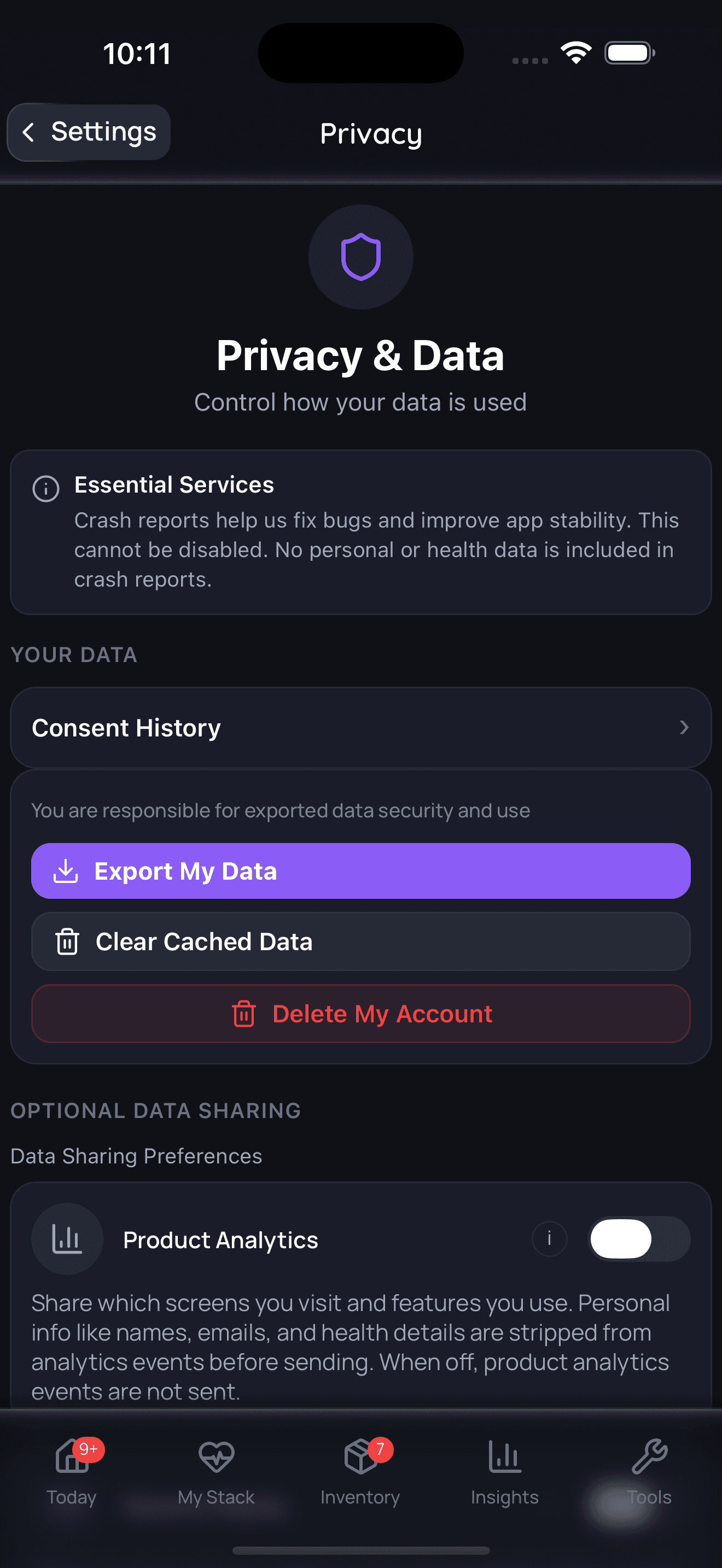
Privacy controls help you manage records; keep clinical records where required.
Regulatory Status & Standards
United States (FDA)
Electrolyte powders marketed as supplements generally fall under DSHEA. FDA does not pre-approve these products for efficacy before sale, and manufacturers are responsible for safety and labeling compliance [11].
Canada (Health Canada)
Canada regulates both natural health products and non-prescription drugs. Depending on claims and presentation, hydration formulas may fall into different regulatory pathways rather than one universal category [14].
European Union (EFSA / EU context)
EU materials support function-based claims for potassium, including normal muscle and neurological function and maintenance of normal blood pressure, while EFSA's sodium reference work emphasizes a safe and adequate adult intake of about 2.0 g/day [16][17].
Australia (TGA)
Australia regulates lower-risk complementary medicines as listed medicines in the ARTG, generally with AUST L labeling and sponsor certification rather than full pre-market efficacy review for each low-risk product [15].
Active clinical-trial and evidence reality
This category is supported more by hydration physiology and targeted exercise trials than by long-term trials of specific branded consumer packets. Evidence is strongest for rehydration outcomes, not for broad daily-wellness claims.
Athlete & Sports Regulatory Status
- WADA: core electrolyte minerals are not prohibited on the 2026 WADA list [12].
- NCAA: the minerals are not the problem, but NCAA warns that supplements can be contaminated and that no specific supplement is approved for student-athletes [13].
- National anti-doping agencies and leagues: the general principle is the same. A simple electrolyte formula is lower risk than a complex "performance hydration" product with extra stimulants or adaptogens, but contamination risk still remains.
- Certification programs: Informed Sport, NSF Certified for Sport, Cologne List, and similar programs are relevant for athlete-facing product selection.
- GlobalDRO: useful for checking medication status, but product-level supplement contamination risk still requires separate judgment.
Regulatory status and prohibited substance classifications change frequently. Athletes should always verify the current status of any supplement with their sport's governing body, their national anti-doping agency, and a qualified sports medicine professional before use. Third-party certification reduces but does not eliminate contamination risk.
FAQ
Do most people need electrolyte powders every day?Usually no. Most healthy adults can meet ordinary hydration and electrolyte needs with water and a normal diet. Specialty electrolyte powders become more relevant when sweating is prolonged, heat exposure is high, illness is causing fluid loss, or a clinician has recommended a higher-sodium strategy [3][4].
Are electrolyte powders the same as oral rehydration salts?No. Some overlap in ingredients exists, but formal ORS follows a specific rehydration logic built around sodium, glucose, potassium, chloride, and osmolarity. Many wellness packets borrow the language of ORS without matching its composition or clinical purpose [5].
Is sugar-free always better?Not necessarily. Sugar-free formulas can be useful when calories or taste preferences matter, but glucose-containing formulas can support sodium and water uptake more efficiently in dehydration recovery settings [5][9].
Will electrolyte powders prevent muscle cramps?They might help when cramping is related to fluid and mineral mismatch, but cramps are not caused by sodium loss alone in every case. If cramps persist despite adequate hydration and nutrition, the answer may not be a stronger packet.
Can I use these instead of water?No. They are mixed with water and still depend on adequate total fluid intake. A packet cannot compensate for chronically low fluid intake by itself.
What is a good sodium range for an electrolyte powder?There is no single best number. Lower-sodium products may fit casual use better, while higher-sodium products make more sense for heavy sweating, endurance recovery, or clinician-guided sodium loading. Context matters more than the absolute label number [4][7][8].
Can electrolyte powders raise blood pressure?They can contribute meaningful sodium, especially if used often on top of a high-sodium diet. People with hypertension, heart failure, or sodium-sensitive blood pressure should be careful with high-sodium formulas [1][17].
Are potassium-containing electrolyte powders risky?For healthy people with normal kidney function, usual product amounts are often manageable. Risk rises with kidney disease, ACE inhibitor or ARB therapy, potassium-sparing diuretics, or heavy use of potassium-based salt substitutes [2].
Why do some people swear by them and others say they are useless?Because both can be right in different contexts. A heavy sweater doing long sessions in heat is not the same user as someone drinking a packet after an ordinary one-hour class in climate-controlled conditions.
Are expensive hydration packets worth it?Sometimes the real value is convenience, flavor, and pre-measured dosing rather than superior science. The ingredient label and the use case matter more than the marketing story.
Myth vs. Fact
Myth: Everyone is chronically low on electrolytes and should supplement daily.Fact: The best official guidance does not support that claim. Water and a normal diet are enough for most healthy adults under ordinary conditions. Specialty formulas make more sense during prolonged sweating, heat, illness, or clinician-guided higher-sodium use [3][4].
Myth: Any product called an electrolyte powder hydrates like ORS.Fact: ORS has a specific sodium, glucose, potassium, chloride, and osmolarity logic. Many lifestyle hydration packets do not match that profile [5].
Myth: Sugar in hydration formulas is always unnecessary junk.Fact: In true rehydration formulas, glucose can improve sodium and water uptake. That is different from saying every consumer packet needs sugar or that more sugar is always better [5][8][9].
Myth: More sodium always means a better hydration product.Fact: Higher sodium can be useful in heavy-sweat or rehydration scenarios, but it can also be excessive for casual use and may worsen chronic sodium load for some users [1][17].
Myth: If core electrolytes are not banned by WADA, any hydration product is athlete-safe.Fact: The minerals are not banned, but contamination and extra add-on ingredients still matter. NCAA and anti-doping guidance both warn against assuming supplements are automatically safe [12][13].
Myth: Premium hydration packets are physiologically superior to DIY mixes by default.Fact: Community experience suggests the paid convenience is often real, but that is not the same as proven physiological superiority. Clear composition and fit-for-purpose design matter more than premium branding.
Sources & References
[1] National Academies of Sciences, Engineering, and Medicine. Dietary Reference Intakes for Sodium and Potassium. 2019. doi:10.17226/25353
[2] National Institutes of Health Office of Dietary Supplements. Potassium: Fact Sheet for Health Professionals. https://ods.od.nih.gov/factsheets/Potassium-HealthProfessional/
[3] MedlinePlus. Dehydration. https://medlineplus.gov/dehydration.html
[4] CDC NIOSH. Heat Stress - Recommendations. https://www.cdc.gov/niosh/topics/heatstress/recommendations.html
[5] World Health Organization. The Treatment of Diarrhoea: A Manual for Physicians and Other Senior Health Workers; WHO reduced osmolarity ORS formulation. https://iris.who.int/
[6] National Institutes of Health Office of Dietary Supplements. Dietary Supplements for Exercise and Athletic Performance: Fact Sheet for Health Professionals. https://ods.od.nih.gov/factsheets/ExerciseAndAthleticPerformance-HealthProfessional/
[7] Fan PW, Burns SF, Lee JKW. Efficacy of Ingesting an Oral Rehydration Solution after Exercise on Fluid Balance and Endurance Performance. Nutrients. 2020;12(12):3826. PMID: 33333771
[8] Horswill CA, Miller KC, Montain SJ, et al. Post-Exercise Rehydration in Athletes: Effects of Sodium and Carbohydrate in Commercial Hydration Beverages. Nutrients. 2023. PMID: 38004153
[9] Peden DL, James LJ, James RM, et al. Post-exercise rehydration: Comparing the efficacy of three commercial oral rehydration solutions. Front Nutr. 2023. PMID: 37181252
[10] Convit L, Minahan C, Lee JKW, et al. Sodium Hyperhydration Improves Performance With No Change in Thermal and Cardiovascular Strain in Female Cyclists Exercising in the Heat Across the Menstrual Cycle. Int J Sport Nutr Exerc Metab. 2025. PMID: 39591960
[11] U.S. Food and Drug Administration. Dietary Supplements. https://www.fda.gov/food/dietary-supplements
[12] World Anti-Doping Agency. Prohibited List, in force January 1, 2026. https://www.wada-ama.org/en/resources/world-anti-doping-code-and-international-standards/prohibited-list
[13] NCAA. FAQs About NCAA Banned Substances and Medical Exceptions Process. Updated June 2025. https://www.ncaa.org/sports/2024/7/8/faqs-about-ncaa-banned-substances-and-medical-exceptions-procedures.aspx
[14] Health Canada. Regulating Natural and Non-prescription Health Products: The Path Forward. https://www.canada.ca/en/health-canada/services/drugs-health-products/natural-non-prescription.html
[15] Therapeutic Goods Administration. Understanding listed and registered complementary medicine regulation. https://www.tga.gov.au/resources/guidance/understanding-listed-and-registered-complementary-medicine-regulation
[16] European Food Safety Authority. Scientific Opinion on potassium-related health claims. EFSA Journal. 2010;8(2):1469. doi:10.2903/j.efsa.2010.1469
[17] European Food Safety Authority. Dietary reference values for sodium. EFSA Journal. 2019;17(9):5778. doi:10.2903/j.efsa.2019.5778