
Pine Pollen: The Complete Supplement Guide
On this page
Quick Reference Card
Attribute
Common Name
- Detail
- Pine Pollen
Attribute
Other Names / Aliases
- Detail
- Song Hua Fen (松花粉), pine tree pollen, pine flower pollen, Pinus pollen
Attribute
Category
- Detail
- Herbal Extract / Phytoandrogen / Men's Health
Attribute
Primary Forms & Variants
- Detail
- Raw powder (cell-wall cracked or whole); hydroethanolic tincture (sublingual, considered superior for phytoandrogen delivery); capsules. Species include Pinus sylvestris (Scots pine), P. massoniana (Masson pine), P. tabulaeformis, P. densiflora, P. ponderosa, P. contorta.
Attribute
Typical Dose Range
- Detail
- Powder: 1-5 g per day (commonly 1.5-3 g). Tincture: 0.5-2 mL, 1-3 times daily (sublingual).
Attribute
RDA / AI / UL
- Detail
- No RDA, AI, or UL established. Not an essential nutrient.
Attribute
Common Delivery Forms
- Detail
- Powder (loose or capsule), tincture (hydroethanolic sublingual), tablets
Attribute
Best Taken With / Without Food
- Detail
- Powder can be mixed into food, smoothies, or lukewarm water. Tincture is taken sublingually (under the tongue) independent of meals.
Attribute
Key Cofactors
- Detail
- None required. Pine pollen is typically taken as a standalone or in men's health stacks alongside herbs such as tongkat ali or nettle root.
Attribute
Storage Notes
- Detail
- Store in a cool, dry place away from direct sunlight. Freshness is important: shelf life significantly affects sterol concentration. One-year-old pollen shows reduced brassinosteroid and mammalian sterol levels compared to freshly harvested pollen.
Overview
The Basics
Pine pollen is the fine yellow powder produced by the male cones of pine trees. You have probably seen it covering cars, sidewalks, and patio furniture in spring. While most people think of it as an allergen, pine pollen has been used as a food and traditional medicine in China for centuries, where it is known as Song Hua Fen.
What has drawn modern supplement interest is the discovery that pine pollen contains trace amounts of testosterone and other steroid-like molecules. This finding has fueled marketing claims that pine pollen can "naturally boost testosterone," and it has become a popular supplement in men's health and biohacking communities. The reality is more nuanced. The amount of testosterone present in pine pollen is extremely small, and whether it translates to any meaningful hormonal effect in humans is not well established by clinical research.
Beyond the testosterone angle, pine pollen is genuinely nutrient-dense. It contains a broad spectrum of amino acids, vitamins (B3, B9, B12, C, E), minerals (potassium, magnesium, calcium, chromium), flavonoids, polysaccharides, and phytosterols. In Traditional Chinese Medicine, it has been used for supporting the heart and lungs, promoting energy, and as a general health tonic [1][2].
The Science
Pine pollen refers to the male gametophytes of trees in the genus Pinus. The most commonly supplemented species include Pinus sylvestris (Scots pine), Pinus massoniana (Masson pine), Pinus tabulaeformis, Pinus densiflora (Japanese red pine), Pinus ponderosa (Ponderosa pine), and Pinus contorta (Lodgepole pine). The chemical composition varies by species, geographic origin, harvest timing, and processing method [1][3].
The pollen has been documented in the Pharmacopoeia of the People's Republic of China as a traditional medicine with applications including wound healing, prostatitis, rhinitis, colds, and fatigue [2]. It is classified as a food-grade material in China and sold as a dietary supplement in Western markets.
Key macronutrient composition by weight includes fiber (50-66%), sugars (13.6-17.9%), protein (11.7-17.2%), polysaccharides (14.2-17%), and fats (3.2-3.6%) [3]. The bioactive fraction includes polyphenols, flavonoids (quercetin, kaempferol, naringenin), phytosterols (beta-sitosterol, stigmasterol), brassinosteroids, and trace mammalian steroids [3][4].
Chemical & Nutritional Identity
Property
Chemical Name
- Value
- Pinus spp. pollen (complex biological matrix)
Property
Molecular Formula
- Value
- Not applicable (complex mixture)
Property
CAS Number
- Value
- Not assigned for whole pollen
Property
PubChem CID
- Value
- Not applicable
Property
Category
- Value
- Herbal extract / Phytoandrogen / Functional food
Property
RDA / AI / UL
- Value
- Not established
Steroid content (Pinus sylvestris, per gram of pollen):
- Testosterone: 80 ng/g [4]
- Epitestosterone: 110 ng/g [4]
- Androstenedione: 590 ng/g [4]
- Vitamin D3: 200 ng/g (8 IU/g) [4]
Steroid content (Pinus ponderosa, total mammalian sterols):
- Testosterone, DHEA, progesterone, estriol, 17beta-estradiol, androstadienedione, 4-androstene-3,17-dione: 350 ug/g total [3]
Phytosterols (P. ponderosa):
- Beta-sitosterol, 24-methylenecholesterol, stigmasterol: 34 ug/g [3]
Brassinosteroids (P. ponderosa):
- Campesterol, campestanol and analogs: 185 ug/g [3]
Polyphenols:
- P. ponderosa: 2.74 g/100 g total polyphenol content [3]
- Dominant flavonoids: quercetin, kaempferol, naringenin, esters of p-coumaric acid [3]
Common supplement forms:
- Raw powder (cell-wall cracked): The most common form. Cell-wall cracking (mechanical or enzymatic) is marketed as improving nutrient release, though comparative absorption data in humans is lacking.
- Hydroethanolic tincture: An alcohol-based extract typically at 1:4 concentration. Taken sublingually to bypass first-pass metabolism. Considered by practitioners to be superior for delivering phytoandrogens [3][5].
- Capsules: Encapsulated powder, typically 500-1000 mg per capsule.
Mechanism of Action
The Basics
Pine pollen's proposed mechanisms work through two main pathways. The first is direct androgenic activity: the pollen contains small amounts of actual testosterone and related androgens. The idea is that these plant-sourced steroids can enter your body and supplement your own hormone levels. However, the amounts are very small compared to what your body produces naturally, and whether they survive digestion and reach meaningful levels in the blood is unclear.
The second pathway is antioxidant and anti-inflammatory activity. Pine pollen contains polyphenols, flavonoids, and polysaccharides that have shown genuine biological activity in laboratory and animal studies. These compounds can scavenge free radicals, reduce inflammatory signaling molecules, and protect cells from oxidative stress. This is the more established mechanism, though it applies to many plant-based supplements and is not unique to pine pollen.
There is also evidence from animal studies that pine pollen may inhibit the formation of advanced glycation endproducts (AGEs), which are associated with aging and age-related diseases. This anti-aging mechanism has been demonstrated in mice, although at doses much higher than typical human supplements [6].
The Science
Androgenic pathway: Pinus sylvestris pollen contains testosterone (80 ng/g), epitestosterone (110 ng/g), and androstenedione (590 ng/g), with these steroids likely present in glucuronidated forms [4]. The testosterone content is notably low relative to physiological requirements. For context, an adult male produces approximately 3-10 mg of testosterone daily. Even consuming 5 grams of pine pollen would provide approximately 0.4 mcg of testosterone, roughly 0.004-0.013% of daily endogenous production. Additionally, oral bioavailability of testosterone without an ester modification is poor due to extensive first-pass hepatic metabolism [4][7].
Sublingual delivery (via tincture) may partially bypass first-pass metabolism, which is the theoretical rationale for tincture formulations being considered superior for androgenic effects. However, no pharmacokinetic studies have confirmed this for pine pollen specifically [5].
Anti-inflammatory pathway: Ethanolic extracts of P. densiflora pollen demonstrate antioxidative properties at concentrations above 500 ug/mL in vitro. At 50-100 ug/mL in macrophages, the extract reduces nitric oxide production from LPS stimulation, inhibits TNF-alpha and IL-1 secretion, and completely prevents JNK phosphorylation while leaving p38 and ERK MAPKs unaffected [4][8]. In collagen-induced arthritis models (DBA/1J mice), oral administration (100-200 mg/kg for 49 days) normalized swelling, clinical scores, and cytokine levels (IL-1beta, IL-6, TNF-alpha) [8].
Anti-aging pathway: Pine pollen (1-2 mg/mL) delayed replicative senescence in human diploid fibroblast 2BS cells, increasing population doublings by 12-15% and reducing SA-beta-galactosidase activity from 81.7% to 25-27% at PD55. In D-galactose-induced aging mice, oral pine pollen (500-1,500 mg/kg for 8 weeks) reduced serum and cerebral AGEs, improved memory in step-down tests, decreased IL-6 and TNF-alpha, and restored SOD activity and MDA levels [6].
Absorption & Bioavailability
The Basics
How well your body can use what is in pine pollen depends largely on which form you take and what you are hoping to get from it. If you are taking pine pollen primarily for its nutritional content (vitamins, minerals, amino acids, flavonoids), the powder form mixed into food or water is a reasonable delivery method. Cell-wall cracked powder is marketed as improving access to nutrients locked inside the tough outer shell of the pollen grain, though direct human comparison data is limited.
If the goal is to deliver the androgenic compounds (testosterone, DHEA, and related steroids), the story changes. These molecules are poorly absorbed through the digestive tract because the liver breaks them down before they can reach the bloodstream. This is why some practitioners recommend sublingual tinctures, where the liquid is held under the tongue, allowing compounds to absorb directly into the blood vessels there, bypassing the liver entirely. Whether this actually delivers meaningful amounts of androgens has not been confirmed in clinical studies, but it is the theoretical basis for the tincture preference.
Freshness also matters. Research on P. ponderosa and P. contorta pollen shows that sterol concentrations decline significantly within one year of harvest, with brassinosteroids dropping by 50-80% in aged samples [3].
The Science
No formal pharmacokinetic studies have been conducted on pine pollen in humans. The following represents theoretical and indirect evidence:
Oral bioavailability of phytoandrogens: Unmodified testosterone has approximately 1-6% oral bioavailability in humans due to extensive first-pass hepatic metabolism via CYP3A4 and 5-alpha-reductase enzymes [7]. The testosterone and androstenedione in pine pollen appear to be present in glucuronidated forms, which may further reduce absorption [4]. No study has measured serum androgen levels after oral pine pollen consumption in a controlled setting.
Sublingual delivery: Sublingual absorption bypasses hepatic first-pass metabolism, which is the rationale for tincture formulations. Ethanol-based tinctures may enhance the solubility and mucosal permeability of lipophilic steroid compounds. While this route is established for pharmaceutical testosterone preparations, its efficacy for the concentrations present in pine pollen extracts has not been validated [5].
Cell-wall cracking: Pine pollen grains have a robust outer wall (exine and intine layers) composed of sporopollenin, one of the most chemically resistant biopolymers known. Cell-wall cracking via mechanical processing at low temperature is standard in the industry to improve nutrient accessibility. The degree to which this actually enhances bioavailability of specific compounds is not well quantified [2].
Polyphenol and flavonoid absorption: The quercetin, kaempferol, and other flavonoids in pine pollen follow established polyphenol absorption pathways. Oral bioavailability of quercetin is typically 3-17% in humans, with peak plasma levels occurring 1-3 hours after ingestion [9].
Research & Clinical Evidence
The Basics
Pine pollen is one of those supplements where the gap between marketing claims and clinical evidence is wide. The research that exists falls into three main buckets, and it is important to understand the limits of each.
First, there are cell and animal studies showing real biological activity: anti-inflammatory effects, antioxidant protection, and anti-aging properties in mice. These are genuinely interesting findings, but they used doses much higher than what humans typically take, and results in mice do not always translate to humans.
Second, there is one small pilot study in men that specifically looked at testosterone. It found a positive trend in testosterone levels and significant improvement in quality-of-life scores over eight weeks. While encouraging, this study had no placebo control, involved only ten participants, and was funded by the supplement manufacturer, making it impossible to draw firm conclusions [5].
Third, there is a long history of traditional use in Chinese medicine spanning centuries, which provides some comfort around basic safety but does not constitute evidence of efficacy for specific modern claims.
The bottom line is that pine pollen has interesting biological properties, but it is heavily underresearched in humans and cannot be recommended for any specific health condition based on current evidence [4].
The Science
Anti-inflammatory and Anti-arthritic Effects (Animal/In Vitro)
Ethanolic extracts of P. densiflora pollen (100-200 mg/kg oral) demonstrated anti-inflammatory and analgesic effects in multiple mouse models. In acetic acid writhing and formalin injection tests, analgesic potency was comparable to 50 mg/kg aminopyrine. In TPA-induced ear edema, potency was comparable to 10 mg/kg indomethacin. In Freund's Complete Adjuvant-induced arthritis, three weeks of treatment normalized spleen weight and reduced IL-1beta, IL-6, and TNF-alpha to control levels. In collagen-induced arthritis (49-day treatment), the extract normalized swelling and clinical scores, with near-complete prevention of collagen-specific antibody production [8].
Anti-aging Effects (Cell/Animal)
In human diploid fibroblast 2BS cells, pine pollen (1-2 mg/mL) extended replicative lifespan by at least 7 population doublings, reduced SA-beta-galactosidase activity, and reversed expression of senescence markers p53, p21Waf1, p16INK4a, PTEN, and p27Kip1. In D-galactose-induced aging mice, pine pollen (500-1,500 mg/kg daily for 8 weeks) reduced AGEs, improved memory performance, decreased inflammatory cytokines (IL-6, TNF-alpha), reduced MDA (lipid peroxidation marker), and increased SOD activity. The highest dose (1,500 mg/kg) achieved neuroprotective effects comparable to the reference AGE inhibitor aminoguanidine (100 mg/kg) [6].
Testosterone and Men's Health (Human Pilot)
The only human trial (Wolkodoff et al., 2024) was an open-label, 8-week study in 10 men (mean age 63) using a proprietary P. massoniana tincture (300 mg/mL, 1 mL daily sublingual, 5 days on/2 days off). Mean total testosterone increased from 362.5 to 448.4 ng/dL (p = 0.0584, not reaching standard significance). The qADAM symptom score improved from 23.9 to 31.7 (p = 0.0035). No adverse effects were reported. Study limitations include open-label design, small sample size, no placebo control, wide baseline variability (209-563 ng/dL), one dramatic outlier (+421 ng/dL), and manufacturer sponsorship [5].
Evidence & Effectiveness Matrix
Category
Libido
- Evidence Strength
- 2/10
- Reported Effectiveness
- 6/10
- Summary
- No controlled human studies on libido. Single open-label pilot showed improved qADAM scores including libido items. Community reports frequently cite libido increase, especially with tincture form.
Category
Energy Levels
- Evidence Strength
- 2/10
- Reported Effectiveness
- 5/10
- Summary
- No human evidence. Community reports are mixed, with some describing intense energy boosts and others noting fatigue.
Category
Hormonal Symptoms
- Evidence Strength
- 2/10
- Reported Effectiveness
- 5/10
- Summary
- One underpowered pilot study showed trending testosterone increase (p=0.0584). Community discussion is highly divided on hormonal effects.
Category
Mood & Wellbeing
- Evidence Strength
- 1/10
- Reported Effectiveness
- 5/10
- Summary
- No direct evidence. Community reports split between improved confidence/drive and increased irritability.
Category
Emotional Regulation
- Evidence Strength
- 1/10
- Reported Effectiveness
- 4/10
- Summary
- No evidence. Community consistently reports aggression and irritability as negative effects.
Category
Inflammation
- Evidence Strength
- 5/10
- Reported Effectiveness
- N/A
- Summary
- Strong preclinical evidence in animal arthritis models. No human inflammation studies. Community data not yet collected for this category.
Category
Longevity & Neuroprotection
- Evidence Strength
- 4/10
- Reported Effectiveness
- N/A
- Summary
- Promising cell and animal studies on AGE inhibition and neuroprotection. Doses used were substantially higher than typical supplementation. Community data not yet collected.
Category
Sleep Quality
- Evidence Strength
- 1/10
- Reported Effectiveness
- 4/10
- Summary
- No evidence. Community reports mixed: vivid dreams for some, insomnia for others.
Category
Physical Performance
- Evidence Strength
- 1/10
- Reported Effectiveness
- 4/10
- Summary
- No evidence. Very limited community reports of gym improvements, confounded with lifestyle changes.
Category
Skin Health
- Evidence Strength
- 3/10
- Reported Effectiveness
- 3/10
- Summary
- Some clinical evidence for topical use in skin conditions (diaper dermatitis, bedsores). Community reports note acne as a negative side effect.
Category
Side Effect Burden
- Evidence Strength
- 3/10
- Reported Effectiveness
- 5/10
- Summary
- Pilot study reported no adverse effects. Community reports aggression, anxiety, insomnia, and allergic reactions.
Categories scored: 11
Categories with community data: 10
Categories not scored (insufficient data): Fat Loss, Muscle Growth, Weight Management, Appetite & Satiety, Food Noise, Focus & Mental Clarity, Memory & Cognition, Anxiety, Stress Tolerance, Motivation & Drive, Emotional Aliveness, Sexual Function, Joint Health, Pain Management, Recovery & Healing, Gut Health, Digestive Comfort, Nausea & GI Tolerance, Hair Health, Heart Health, Blood Pressure, Heart Rate & Palpitations, Temperature Regulation, Fluid Retention, Body Image, Immune Function, Bone Health, Cravings & Impulse Control, Social Connection, Treatment Adherence, Withdrawal Symptoms, Daily Functioning
Benefits & Potential Effects
The Basics
Pine pollen's potential benefits fall into two categories: those with some scientific basis (even if only in animals) and those based primarily on traditional use and user reports.
The best-supported benefit is antioxidant and anti-inflammatory activity. Pine pollen is rich in polyphenols and flavonoids that combat oxidative stress, and animal studies show meaningful reductions in inflammation markers. This could theoretically support joint health, immune function, and healthy aging, though these effects have not been confirmed in human trials.
The most popular claimed benefit, testosterone boosting, has the weakest evidence. While pine pollen does contain small amounts of real testosterone, the quantities are far too small to act as a meaningful hormone replacement. The single human pilot study showed a promising trend but was too small and poorly controlled to be conclusive. Some individuals report subjective improvements in energy, libido, and vitality, but these could reflect placebo effects, the nutritional content of the pollen, or genuine but modest androgenic activity that varies between individuals.
Pine pollen's dense nutritional profile (amino acids, B vitamins, minerals, antioxidants) may offer general health support as a functional food, independent of any hormonal claims.
The Science
Established in preclinical research:
- Anti-inflammatory activity: IL-1beta, TNF-alpha, and IL-6 reduction in macrophages and arthritis models via JNK inhibition [8]
- Antioxidant capacity: SOD restoration, MDA reduction, free radical scavenging (DPPH, superoxide) at concentrations above 500 ug/mL [6][8]
- Anti-glycation: Inhibition of AGE formation in D-galactose-induced aging models, comparable to aminoguanidine at high doses [6]
- Anti-arthritic: Normalization of joint swelling, cytokines, and collagen-specific antibodies in mouse arthritis models [8]
- Hepatoprotective: Protection against CCl4-induced oxidative damage in human hepatic cells (Pinus massoniana polysaccharides) [2]
- Immune modulation: Enhancement of innate immunity via NF-kB pathway activation (P. densiflora polysaccharides) [2]
Preliminary human evidence:
- Testosterone trend: Mean increase from 362.5 to 448.4 ng/dL in 10 older men (p=0.0584) [5]
- Quality of life improvement: qADAM scores improved from 23.9 to 31.7 (p=0.0035), indicating subjective improvements in energy, libido, mood, strength, and erectile function [5]
- Topical skin effects: Clinical benefits reported for diaper dermatitis, mucositis, and bedsores (different preparation from oral supplements) [3]
When you're taking multiple supplements, it's hard to know which one is doing the heavy lifting. The benefits described above may overlap with effects from other items in your stack, lifestyle changes, or seasonal variation. Doserly helps you untangle that by keeping everything in one place, with timestamps, doses, and outcomes logged together.
Over time, this builds something more valuable than any product review: your personal evidence record. You can see exactly when you started this supplement, what else was in your routine at the time, and how your tracked health markers responded. That clarity makes the difference between guessing and knowing, whether you're talking to a healthcare provider or simply deciding if it's worth reordering.
Capture changes while they are still fresh.
Log symptoms, energy, sleep, mood, and other observations alongside protocol events so patterns do not live only in memory.
Trend view
Symptom timeline
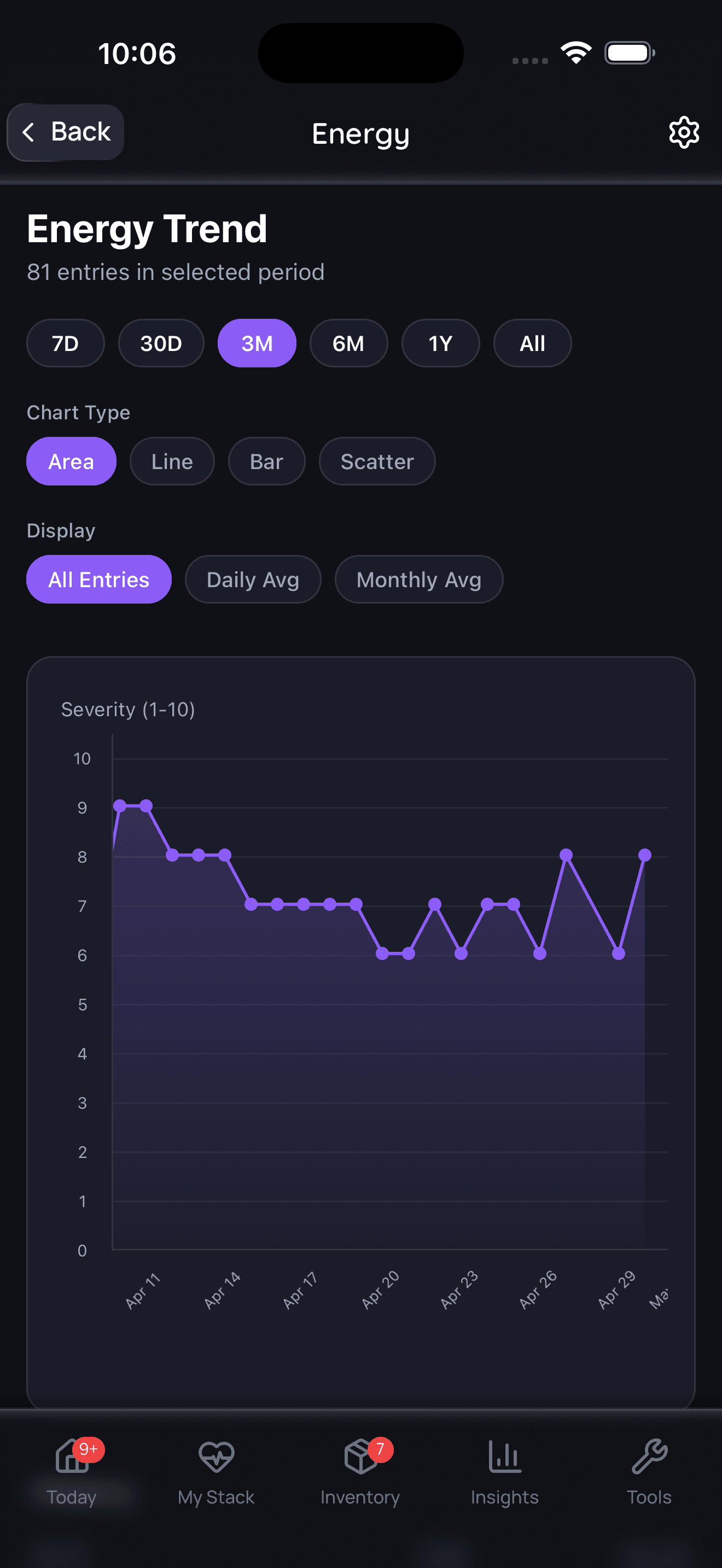
Symptom tracking is informational and should be interpreted with a qualified clinician.
Side Effects & Safety
The Basics
Pine pollen is generally considered safe for most people when taken at commonly recommended doses. The most commonly reported issues from community feedback are increased aggression or irritability, anxiety (especially at higher doses), insomnia, and allergic reactions in people sensitive to pollen.
The aggression and irritability reports are notable because they appear consistently across independent user reports and may reflect genuine androgenic activity. If you notice yourself becoming more short-tempered or aggressive, reducing the dose or stopping the supplement is the sensible approach.
Allergic reactions are a real concern. While pine pollen allergy is less common than allergies to birch or grass pollens, people who are allergic to pine trees may react to all species within the Pinus genus. Symptoms can include sneezing, itching, skin rashes, and in rare cases, more serious reactions. Anyone with known pollen allergies should proceed with particular caution [4].
Pine pollen is not recommended for pregnant or breastfeeding women, and individuals with hormone-sensitive conditions (including certain breast, uterine, ovarian, or prostate cancers) should avoid it due to its androgenic content [3].
The Science
Safety profile from available data:
The Wolkodoff pilot study (n=10, 8 weeks) reported no adverse effects and no allergic reactions with sublingual tincture use [5]. However, the small sample size and short duration limit conclusions about long-term safety.
Allergy considerations: Pine trees (genus Pinus) possess antigens that can trigger IgE-mediated allergic responses. Cross-reactivity exists between pine species within the genus but appears limited between Pinus and Cupressaceae (cypress, cedar), despite both belonging to the order Coniferales [4]. Pine pollen allergy is less prevalent than birch pollen allergy, but individuals with known tree pollen sensitivities should exercise caution.
Androgenic side effects: Community reports consistently describe aggression, irritability, acne, and insomnia at higher doses. These effects are consistent with androgenic activity and parallel the side effect profile of other androgenic herbs (tongkat ali, tribulus). No clinical data exists on dose-response relationships for these side effects.
Populations requiring caution:
- Individuals with pollen allergies (risk of allergic reaction)
- Women with PCOS or hyperandrogenism (risk of exacerbating androgen excess)
- Individuals with hormone-sensitive cancers (theoretical risk from phytoandrogens)
- Pregnant or breastfeeding women (insufficient safety data)
- Children (no safety data available)
- Individuals taking anticoagulant medications (theoretical interaction with polyphenol content)
Toxicity: No toxicity has been observed in cell culture (MTT assay negative up to 5 mg/mL in 2BS fibroblasts) or animal studies (doses up to 1,500 mg/kg for 8 weeks in mice without observed adverse effects) [6].
Dosing & Usage Protocols
The Basics
There is no officially established dose for pine pollen. Available guidance comes from traditional use, practitioner recommendations, and the single pilot study. The appropriate dose depends on the form you choose and what you are trying to achieve.
For general nutritional support using powder, commonly cited ranges are 1 to 5 grams per day, with many sources suggesting starting at about 1.5 grams (roughly half a teaspoon) and adjusting from there. Some traditional sources recommend up to 2.4 grams (about 800 mg) taken 2-3 times daily [3].
For those specifically seeking androgenic effects, tincture formulations taken sublingually are generally considered the preferred delivery method. The pilot study used 1 mL daily (0.5 mL morning, 0.5 mL evening) of a 300 mg/mL tincture with a 5-days-on, 2-days-off cycling protocol [5]. Community experience suggests starting with a lower amount and working up gradually, as individual responses vary widely.
Cycling (taking regular breaks) is commonly recommended by practitioners and users alike, with 5 days on and 2 days off being the most frequently cited protocol. This is intended to prevent adaptation, though no research exists to confirm or deny the necessity of cycling.
The Science
No dose-response studies have been conducted for pine pollen in humans. Available dosing data:
Tincture (sublingual):
- Pilot study protocol: 300 mg pine pollen per 1 mL tincture, 1 mL daily (split into 0.5 mL morning and evening), 5 days on / 2 days off, for 8 weeks [5]
- Practitioner recommendation: 2 mL of 1:4 tincture (equivalent to 500 mg pine pollen), 2-3 times daily [3]
Powder (oral):
- Practitioner recommendation: 800 mg (approximately 1/2 teaspoon), 2-3 times daily [3]
- Community range: 1-15 grams daily (highly variable)
- TCM traditional use: recorded but specific doses vary by preparation
Animal study doses (for reference, not direct translation):
- Anti-aging studies: 500-1,500 mg/kg in mice for 8 weeks [6]
- Anti-arthritis studies: 100-200 mg/kg in mice [8]
- Using standard allometric scaling (mouse to human), 500 mg/kg mouse dose approximates 40 mg/kg in a 70 kg human, or roughly 2.8 g/day. The higher mouse doses (1,500 mg/kg) would scale to approximately 8.5 g/day.
When your stack includes several supplements, each with its own dose, form, and timing requirements, the logistics alone can derail consistency. Doserly consolidates all of it into one protocol view, so every dose across your entire routine is accounted for without spreadsheets or guesswork.
The app also tracks cumulative intake for nutrients that appear in multiple products. If your multivitamin, standalone supplement, and fortified protein shake all contain the same nutrient, Doserly adds them up and shows you the total alongside recommended and upper limits. Managing a thoughtful supplement protocol shouldn't require a degree in nutrition science. The app handles the complexity so you can focus on staying consistent.
Track injection timing, draw notes, and site rotation.
Doserly helps keep syringe-related notes, injection site history, reminders, and reconstitution context together for easier review.
Injection log
Site rotation
Injection logs support record-keeping; follow clinician instructions for administration.
What to Expect (Timeline)
Pine pollen does not have a well-documented clinical timeline. The following is based on the pilot study data and community experience reports, which should be interpreted cautiously.
Days 1-3: Some users report acute effects, particularly with tincture formulations: increased energy, heightened libido, vivid dreams. Others report nothing at this stage. Those who respond quickly often describe the effect as intense, sometimes uncomfortably so (anxiety, restlessness). If using powder, effects at this stage are less commonly reported.
Weeks 1-2: The most commonly reported window for noticing subjective changes. Users who respond typically describe increased energy, improved mood or drive, and libido changes. Some report negative effects emerging (irritability, aggression, insomnia), particularly at higher doses. This is the stage where dose adjustment is most often discussed in community reports.
Weeks 3-4: Initial intensity may stabilize. Some users report effects becoming more consistent and manageable. Community discussions frequently mention finding an optimal personal dose by this point.
Weeks 5-8: The pilot study measured outcomes at 8 weeks, finding statistically significant improvements in quality-of-life scores (qADAM) and a trending increase in testosterone levels [5]. This suggests that whatever effects pine pollen produces may continue to develop over this timeframe.
Beyond 8 weeks: No data exists beyond 8 weeks. Community discussions frequently mention cycling (5 days on / 2 days off, or month-on / month-off) to maintain effectiveness, though this is based on anecdotal experience rather than clinical evidence.
One of the hardest parts of any supplement routine is knowing whether it's working when results unfold gradually over weeks or months. Without a record, it's easy to abandon something too early or keep taking something that isn't delivering. Doserly solves that by giving you a visual timeline of your entire supplementation history mapped against the outcomes you care about.
When everything is in one view, you can compare how different supplements in your stack are performing over the same period. You can see whether adding this supplement coincided with the improvement you've noticed, or whether the timing points to something else entirely. That kind of clarity turns patience into a strategy rather than a gamble.
Connect protocol changes to labs and health markers.
Doserly can keep lab results, biomarkers, symptoms, and dose history close together so follow-up conversations have better context.
Insights
Labs and trends
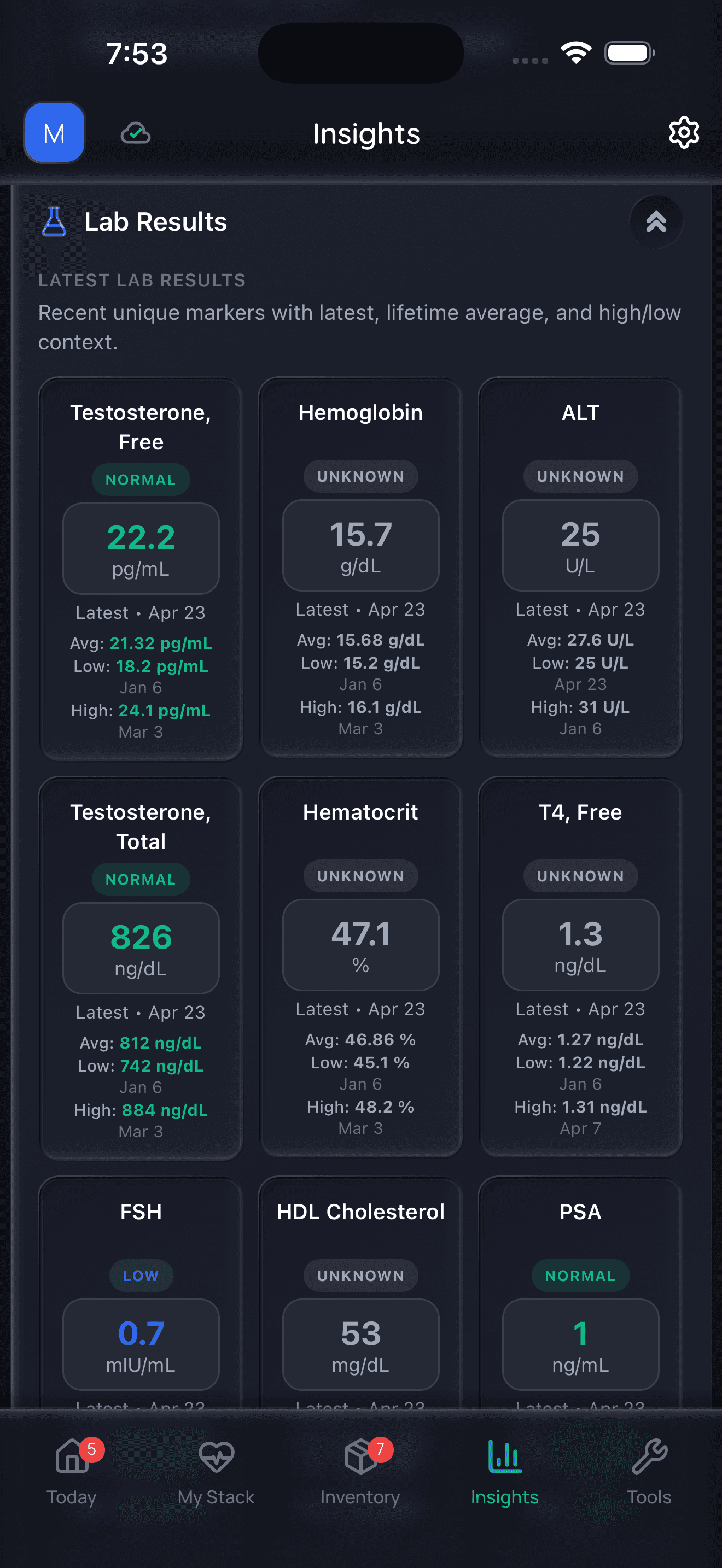
Doserly organizes data; it does not diagnose or interpret labs for you.
Interactions & Compatibility
Synergistic
- Tongkat Ali: Frequently stacked with pine pollen in men's health protocols. Both target androgenic pathways through different mechanisms (tongkat ali via luteinizing hormone stimulation, pine pollen via direct phytoandrogens). Community reports suggest the combination may amplify effects but also side effects (aggression, irritability).
- Stinging Nettle Root: Often combined in men's health formulations. Nettle root may inhibit SHBG (sex hormone-binding globulin), theoretically increasing free testosterone availability, while pine pollen provides direct phytoandrogens.
- Ashwagandha: Sometimes combined to balance the stimulating effects of pine pollen with ashwagandha's adaptogenic and anxiolytic properties. May help mitigate anxiety side effects reported with pine pollen.
- Vitamin D3: Pine pollen contains trace vitamin D3 (8 IU/g). Supplemental vitamin D3 may support overall hormonal health. No known negative interactions.
Caution / Avoid
- Anticoagulant medications (warfarin, heparin): Pine pollen's polyphenol content may have mild antiplatelet effects. Individuals on blood thinners should consult a healthcare provider before use.
- Hormone-sensitive medications: Due to androgenic content, pine pollen may theoretically interact with hormone therapies, antiandrogens, aromatase inhibitors, or oral contraceptives. No clinical interaction data exists.
- Other androgenic supplements (Tribulus Terrestris, Fadogia Agrestis, D-Aspartic Acid, DHEA): Stacking multiple androgenic compounds may increase the risk of side effects (aggression, acne, hormonal disruption). Monitor carefully if combining.
- Fenugreek: Both have androgenic claims. Combining may increase total androgenic burden.
How to Take / Administration Guide
Recommended forms based on goal:
- General nutritional support: Raw powder (cell-wall cracked) mixed into smoothies, lukewarm water, or food. The taste is mildly nutty with an earthy quality.
- Androgenic/hormonal goals: Hydroethanolic tincture taken sublingually. Hold under the tongue for 60-90 seconds before swallowing for optimal mucosal absorption.
Timing considerations:
- Powder can be taken with or without food. Some sources recommend taking with a meal to reduce potential GI discomfort.
- Tincture is typically taken on an empty stomach (sublingual delivery is not food-dependent).
- Morning dosing is most common, as energy-boosting effects may interfere with sleep if taken late in the day. Some protocols split the dose between morning and evening.
Temperature caution: Multiple community sources and practitioners advise against mixing pine pollen powder with very hot liquids, as heat may denature sensitive bioactive compounds. Lukewarm or room-temperature liquids are preferred.
Cycling guidance: Most practitioners and community users recommend cycling rather than continuous daily use. The most commonly cited protocol is 5 days on, 2 days off. Some users take longer breaks (1 month on, 1 week off). The rationale is to prevent hormonal adaptation, though no clinical evidence supports or refutes this practice.
Stacking guidance: Pine pollen is often combined with other men's health herbs (tongkat ali, nettle root, ashwagandha). When stacking, practitioners generally recommend introducing one supplement at a time to isolate effects before adding others.
Choosing a Quality Product
Third-party certifications:
- No major third-party certification programs (USP, NSF Certified for Sport) currently cover standalone pine pollen supplements.
- Look for products with independent Certificates of Analysis (COA) showing identity confirmation, heavy metal testing (lead, mercury, arsenic, cadmium), and microbial testing.
Species and source:
- Product labeling should specify the Pinus species used (P. massoniana, P. sylvestris, P. ponderosa, etc.). "Pine pollen" without species identification is a transparency concern.
- Much of the commercial supply comes from China (P. massoniana, P. tabulaeformis). North American species (P. ponderosa, P. contorta) are available from domestic harvesters but at higher cost.
Processing indicators:
- Cell-wall cracked pollen is generally preferred for powder forms to improve nutrient release.
- For tinctures, look for the extraction ratio (e.g., 1:4) and alcohol percentage. Hydroethanolic extraction using 40-60% ethanol is standard.
- Freshness matters significantly for sterol content. Products should ideally be harvested within the current year. Check for harvest or expiration dates.
Red flags:
- Products claiming specific testosterone increases or guaranteed hormonal effects
- Proprietary blends that obscure the amount of pine pollen
- No species identification or COA available
- Products marketed primarily through aggressive social media testimonials without disclosing whether reviews are incentivized
Excipient/filler considerations: Pure pine pollen powder should contain only pine pollen. Capsule formulations may include standard excipients (rice flour, magnesium stearate, cellulose). Tinctures should contain only pine pollen extract, ethanol, and water.
Storage & Handling
Pine pollen should be stored in a tightly sealed container in a cool, dry place away from direct sunlight. Moisture exposure can degrade the pollen and promote microbial growth. Tinctures have a longer shelf life due to the alcohol content but should still be stored away from heat and light.
Freshness is particularly important for pine pollen. Research shows that sterol concentrations (including brassinosteroids and mammalian hormones) decline significantly within the first year after harvest [3]. When possible, select products with recent harvest dates. Once opened, consume powder within 3-6 months for optimal potency.
The powder can stain surfaces and clothing due to its intense yellow color. Handle with care during preparation.
Lifestyle & Supporting Factors
Diet: A balanced diet rich in zinc, healthy fats, and adequate protein supports overall hormonal health and may complement any subtle androgenic effects of pine pollen. Foods naturally high in zinc (oysters, beef, pumpkin seeds) and healthy fats (olive oil, avocado, fatty fish) support testosterone production.
Exercise: Resistance training is one of the most evidence-based methods for supporting healthy testosterone levels. Combined with pine pollen supplementation, regular strength training may amplify any subjective benefits, though isolating the contribution of each factor is difficult.
Sleep: Adequate sleep (7-9 hours) is essential for testosterone production, with most testosterone release occurring during sleep. Poor sleep can negate any potential hormonal benefits from supplementation.
Stress management: Chronic stress elevates cortisol, which can suppress testosterone production. Stress management practices (meditation, adequate rest, social connection) complement any hormonal support strategy.
Signs that may indicate low testosterone levels: Persistent fatigue, reduced libido, difficulty maintaining muscle mass, mood changes, and poor exercise recovery. These symptoms have many possible causes beyond testosterone deficiency and warrant evaluation by a healthcare provider rather than self-treatment with supplements.
Regulatory Status & Standards
United States (FDA): Pine pollen is sold as a dietary supplement under DSHEA. It is not approved as a drug and no health claims have been evaluated by the FDA. No NDI (New Dietary Ingredient) notification appears to be specifically required, as pine pollen has a history of traditional use predating 1994.
Canada (Health Canada): Pine pollen does not appear to have a specific Natural Health Product (NHP) monograph. Products may be sold under general NHP regulations with appropriate disclaimers.
European Union (EFSA): Pine pollen is not listed as a Novel Food. It may be sold as a food supplement in member states subject to national regulations. No authorized health claims exist under the EU Nutrition and Health Claims Regulation.
Australia (TGA): Pine pollen is not listed in the Australian Register of Therapeutic Goods as a standard ingredient. Products would need to comply with TGA regulations for complementary medicines.
Active clinical trials: As of the guide generation date, no registered clinical trials on ClinicalTrials.gov specifically investigate pine pollen supplementation in humans (the Wolkodoff pilot was published but does not appear as a registered trial).
Athlete & Sports Regulatory Status:
- WADA: Pine pollen is not specifically listed on the WADA Prohibited List. However, because it contains trace amounts of testosterone and androstenedione (both prohibited substances), contamination risk exists. Athletes should be aware that while the concentrations in pine pollen are extremely low, any detectable exogenous testosterone in a drug test could trigger a violation.
- USADA, UKAD, Sport Integrity Canada, Sport Integrity Australia: No specific guidance has been issued on pine pollen by major national anti-doping agencies.
- NCAA: The NCAA does not specifically ban pine pollen, but its substance policies prohibit testosterone and anabolic agents. The trace androgen content creates theoretical risk.
- Athlete Certification Programs: No pine pollen products are currently certified by Informed Sport, NSF Certified for Sport, Cologne List, or BSCG.
- GlobalDRO: Pine pollen is not listed on GlobalDRO.com as it is not a medication. Athletes should check directly with their sport's governing body.
Regulatory status and prohibited substance classifications change frequently. Athletes should always verify the current status of any supplement with their sport's governing body, their national anti-doping agency, and a qualified sports medicine professional before use. Third-party certification (Informed Sport, NSF Certified for Sport) reduces but does not eliminate the risk of contamination with prohibited substances.
Frequently Asked Questions
Does pine pollen actually raise testosterone?
Pine pollen contains trace amounts of real testosterone (approximately 80 ng/g in Pinus sylvestris), but whether this translates to meaningful increases in blood testosterone levels is not established. One small pilot study (n=10) showed a trending increase that did not reach standard statistical significance. Most independent analyses suggest the quantities are too small to act as a meaningful hormone replacement. Some individuals report subjective improvements consistent with increased androgen activity, but this could reflect other mechanisms or placebo effects.
Is pine pollen tincture better than powder?
The theoretical rationale for tinctures is that sublingual absorption bypasses first-pass liver metabolism, potentially delivering more of the androgenic compounds to the bloodstream. This is consistent with how pharmaceutical testosterone preparations work, but it has not been specifically validated for the concentrations present in pine pollen. Community experience generally favors tinctures for hormonal goals and powder for general nutritional support.
Can women take pine pollen?
Pine pollen has been used by women in traditional medicine contexts and is sometimes marketed for menopausal support. However, women with hormone-sensitive conditions (PCOS, certain cancers, endometriosis) should exercise particular caution due to the androgenic content. There is very limited female-specific research, and most human data comes from male subjects.
Is pine pollen safe?
Available data suggests pine pollen is generally well-tolerated at commonly recommended doses. The main safety concerns are allergic reactions (in individuals with pollen sensitivities), androgenic side effects (aggression, acne, irritability at higher doses), and unknown long-term effects (no studies beyond 8 weeks). It is not recommended for pregnant or breastfeeding women.
What species of pine is best?
There is insufficient comparative data to definitively recommend one species over another. P. massoniana is most commonly used in the Chinese supplement market and was used in the only human study. P. sylvestris (Scots pine) is where testosterone was first identified. P. ponderosa appears to have the highest overall nutrient density in available analyses but has not been studied in human trials.
Should I cycle pine pollen?
Cycling (taking regular breaks) is commonly recommended by practitioners and users. The most cited protocol is 5 days on, 2 days off. The rationale is to prevent hormonal adaptation, but no clinical evidence supports or refutes this practice. It is a precautionary approach borrowed from traditional use patterns.
How quickly does pine pollen work?
This varies widely between individuals. Some users report acute effects within hours to days (especially with tincture formulations), while others notice nothing after weeks. The only clinical data point comes from an 8-week study, suggesting any measurable hormonal effects develop over weeks, not days.
Can pine pollen cause allergic reactions?
Yes. While pine pollen allergy is less common than allergies to birch or grass pollens, individuals with known tree pollen sensitivities may react to pine pollen supplements. Symptoms can include sneezing, nasal congestion, itching, skin rashes, and in rare cases, more serious allergic responses. Cross-reactivity exists between different pine species.
Is pine pollen the same as bee pollen?
No. Pine pollen comes directly from pine tree cones and contains the pollen of a single species. Bee pollen is a mixture of pollens from many different plant species, collected and processed by bees with added honey and enzymes. Their compositions and purported benefits differ significantly.
Does pine pollen interact with medications?
No clinical drug interaction studies exist for pine pollen specifically. Based on its composition, theoretical interactions include anticoagulant medications (due to polyphenol content) and hormone-related medications (due to androgenic content). Anyone on prescription medications should consult a healthcare provider before use.
Myth vs. Fact
Myth: Pine pollen is a natural testosterone replacement that can replace TRT (testosterone replacement therapy).
Fact: Pine pollen contains approximately 80 ng of testosterone per gram. Even at a generous daily dose of 5 grams, this provides roughly 0.4 micrograms of testosterone, a fraction of the 3-10 milligrams an adult male produces naturally each day. No evidence supports pine pollen as a replacement for clinical TRT. The one pilot study showed a modest trend, not a clinically meaningful testosterone replacement effect [4][5].
Myth: All pine pollen supplements are the same regardless of species or preparation.
Fact: Nutrient and sterol profiles vary significantly between pine species. P. ponderosa pollen contains roughly twice the total mammalian sterol content of P. contorta, for example (350 vs. 170 ug/g). Processing method, extraction technique, and shelf life also substantially affect the final product's composition. Year-old pollen has dramatically lower sterol concentrations than freshly harvested material [3].
Myth: Cell-wall cracked pine pollen is always necessary for absorption.
Fact: Cell-wall cracking may improve access to nutrients locked inside the sporopollenin shell, but comparative human bioavailability studies for cracked vs. non-cracked pine pollen have not been conducted. For tincture preparations, the extraction process already breaks open the pollen cells, making cell-wall cracking less relevant [2].
Myth: Pine pollen is dangerous because it contains actual hormones.
Fact: While pine pollen does contain detectable levels of testosterone and other steroids, the concentrations are extremely low, far below therapeutic doses. The levels are comparable to those found in some common foods. No adverse hormonal effects have been documented in the available (limited) clinical data. The real risk is for individuals with hormone-sensitive conditions who should avoid any source of exogenous androgens [4][5].
Myth: Pine pollen works immediately, and you should feel effects within hours.
Fact: Some community users report rapid acute effects (particularly with tincture), but the only clinical data showed measurable changes developing over 8 weeks. Rapid subjective effects may reflect placebo response, the stimulating effects of other pollen compounds, or genuine individual variation in sensitivity. Many users report feeling nothing at all [5].
Myth: Pine pollen is the same as pine bark extract (Pycnogenol).
Fact: These are entirely different supplements. Pine pollen comes from the male reproductive cones and contains phytoandrogens, amino acids, and nutritional compounds. Pine bark extract (Pycnogenol) comes from the bark of Pinus pinaster and is rich in procyanidins with antioxidant and cardiovascular research behind it. They have different compositions, mechanisms, and evidence bases [4][10].
Sources & References
Clinical Trials & Human Studies
[5] Wolkodoff NE, Haase GM, Mordkin RM, Beal SG. Pine Pollen Impacts Testosterone-Related Symptoms in Older Men: A Pilot Report. Annals of Clinical and Medical Case Reports. 2024; 14(5): 1-9.
Preclinical Studies (In Vitro / Animal)
[6] Mao GX, Zheng LD, Cao YB, et al. Antiaging Effect of Pine Pollen in Human Diploid Fibroblasts and in a Mouse Model Induced by D-Galactose. Oxidative Medicine and Cellular Longevity. 2012; 2012: 750963. doi: 10.1155/2012/750963. PMID: 22577492.
[8] Lee KH, Choi EM. Effect of pine pollen extract on experimental chronic arthritis. Phytotherapy Research. 2009; 23(5): 651-657. doi: 10.1002/ptr.2526.
[9] Lee KH, Kim AJ, Choi EM. Antioxidant and antiinflammatory activity of pine pollen extract in vitro. Phytotherapy Research. 2009; 23(1): 41-48. doi: 10.1002/ptr.2525.
Review Articles & Compositional Studies
[1] Liang SB, Liang N, Bu FL, et al. The potential effects and use of Chinese herbal medicine pine pollen (Pinus pollen): A bibliometric analysis of pharmacological and clinical studies. World Journal of Traditional Chinese Medicine. 2020; 6(2): 163-170.
[2] Cheng Y, Wang Z, Quan W, et al. Pine pollen: A review of its chemical composition, health effects, processing, and food applications. Trends in Food Science & Technology. 2023; 138: 599-614.
[3] Mushtagh S, Tarkowska A, Strnad M. Functional Nutrients in Pinus ponderosa and Pinus contorta. 2024. [As cited in NDNR review article, November 2025].
[4] Saden-Krehula M, Tajic M, Kolbah D. Testosterone, epitestosterone and androstenedione in the pollen of Scotch pine P. silvestris L. Experientia. 1971; 27(1): 108-109.
Government/Institutional Sources
[7] Pharmacopoeia of the People's Republic of China, Volume 1. Beijing: Chinese Pharmacopoeia Commission; 2005. p 180.
Additional References
[10] Saden-Krehula M, Tajic M. Vitamin D and its metabolites in the pollen of pine. Part 5: steroid hormones in the pollen of pine species. Pharmazie. 1987; 42(7): 471-472.
Related Supplement Guides
Same Category (Herbal — Men's Health):
Common Stacks / Pairings:
- Ashwagandha (adaptogenic support, anxiety mitigation)
- Vitamin D3 (hormonal health cofactor)
- Zinc (testosterone production support)
- Magnesium (muscle function, sleep support)
Related Health Goal (Hormonal / Anti-Aging):
- DHEA
- D-Aspartic Acid
- Maca Root
- Resveratrol (anti-aging)
- CoQ10 (anti-aging, antioxidant)