
Sustanon 250
On this page
Quick Reference Card
Attribute
Brand Name(s)
- Value
- Sustanon 250 (Aspen Pharma, formerly Organon)
Attribute
Generic Name
- Value
- Testosterone propionate / phenylpropionate / isocaproate / decanoate blend
Attribute
Drug Class / Type
- Value
- Testosterone ester blend (four esters), androgen
Attribute
DEA Schedule
- Value
- Schedule III (US); POM (UK); Schedule 4 (Australia)
Attribute
Approved Indications
- Value
- Testosterone replacement therapy for confirmed male hypogonadism; supportive therapy for female-to-male gender-affirming care
Attribute
Composition per 1 mL
- Value
- Testosterone propionate 30 mg, testosterone phenylpropionate 60 mg, testosterone isocaproate 60 mg, testosterone decanoate 100 mg
Attribute
Total Testosterone per mL
- Value
- 176 mg (bioavailable after ester hydrolysis)
Attribute
Route of Administration
- Value
- Deep intramuscular injection
Attribute
Standard Dosing
- Value
- 1 mL (250 mg) every 2-3 weeks
Attribute
Vehicle
- Value
- Arachis (peanut) oil with benzyl alcohol (100 mg/mL)
Attribute
Key Monitoring Requirements
- Value
- Hematocrit, PSA, testosterone levels, lipid profile, liver function
Attribute
Unique Considerations
- Value
- Not FDA-approved in the US; primary TRT injectable in UK, Europe, Australia; contains peanut oil (contraindicated in peanut/soya allergy); not suitable for neonates (benzyl alcohol)
Overview / What Is Sustanon 250?
The Basics
Sustanon 250 is an injectable testosterone medication that takes a different approach from the single-ester formulations most people are familiar with. Instead of using one type of testosterone ester, it combines four different esters in a single injection. Each ester has a different "release speed," and the original idea behind this design was to create a medication that would provide both an immediate testosterone boost and a sustained release over several weeks, potentially reducing how often injections were needed.
Developed by Organon Pharmaceuticals in the Netherlands and introduced in the early 1970s, Sustanon 250 quickly became one of the most widely prescribed testosterone preparations outside the United States. Today, it remains the standard injectable testosterone in the United Kingdom's National Health Service (NHS), and it is available across Europe, Australia, New Zealand, and many countries in Asia and South America. In the US, however, Sustanon 250 has never been approved by the FDA, so it is not available through American pharmacies.
The four esters in each 1 mL ampoule are testosterone propionate (30 mg, the fastest-acting), testosterone phenylpropionate (60 mg), testosterone isocaproate (60 mg), and testosterone decanoate (100 mg, the slowest-acting). Together they deliver approximately 176 mg of actual testosterone once the body's enzymes remove the ester "tags." The standard prescribed protocol is one injection every three weeks, though many providers and patients have found that more frequent injections produce more stable hormone levels and fewer side effects.
The Science
Sustanon 250 (ATC code G03B A03) is a depot intramuscular injection containing four testosterone esters of varying carbon chain length dissolved in arachis (peanut) oil with benzyl alcohol as a preservative. The formulation was designed by Organon Pharmaceuticals with the rationale that combining esters of differing lipophilicity and hydrolysis rates would produce a more sustained testosterone release profile than any single ester alone [1].
The four component esters and their pharmacokinetic characteristics are:
Ester
Testosterone propionate
- Amount
- 30 mg
- Carbon Chain
- 3 carbons
- Approximate Half-Life
- 0.8-2 days
Ester
Testosterone phenylpropionate
- Amount
- 60 mg
- Carbon Chain
- Phenyl + 3 carbons
- Approximate Half-Life
- 1.5-3 days
Ester
Testosterone isocaproate
- Amount
- 60 mg
- Carbon Chain
- 6 carbons (branched)
- Approximate Half-Life
- 4-5 days
Ester
Testosterone decanoate
- Amount
- 100 mg
- Carbon Chain
- 10 carbons
- Approximate Half-Life
- 7-15 days
First authorised in the United Kingdom on 28 February 1973 (PL 39699/0059), Sustanon 250 has been in continuous clinical use for over five decades. The marketing authorisation is currently held by Aspen Pharma Trading Limited (Dublin, Ireland), with manufacturing by Ever Pharma Jena GmbH (Germany) [1]. In Australia, it is registered on the ARTG (AUST R 14521) and supplied by Aspen Pharmacare [2].
Medical / Chemical Identity
Property
Generic Name
- Detail
- Testosterone propionate / phenylpropionate / isocaproate / decanoate
Property
ATC Code
- Detail
- G03BA03
Property
Pharmacotherapeutic Group
- Detail
- Androgens
Property
Total Testosterone per mL
- Detail
- 176 mg
Property
Vehicle
- Detail
- Arachis oil (refined peanut oil)
Property
Preservative
- Detail
- Benzyl alcohol (100 mg/mL)
Property
Original Developer
- Detail
- Organon Pharmaceuticals (Netherlands, 1970s)
Property
Current MAH
- Detail
- Aspen Pharma Trading Limited (Ireland)
Property
UK Marketing Authorisation
- Detail
- PL 39699/0059 (first authorised 28/02/1973)
Property
Australian Registration
- Detail
- AUST R 14521 (registered 20/09/1991)
Property
US FDA Status
- Detail
- Not approved
Component Esters
Ester
Testosterone propionate
- Amount (mg)
- 30
- CAS Number
- 57-85-2
- Chemical Name
- 3-oxoandrost-4-en-17β-yl propionate
- Molecular Formula
- C22H32O3
Ester
Testosterone phenylpropionate
- Amount (mg)
- 60
- CAS Number
- 1255-49-8
- Chemical Name
- 3-oxoandrost-4-en-17β-yl 3-phenylpropionate
- Molecular Formula
- C28H36O3
Ester
Testosterone isocaproate
- Amount (mg)
- 60
- CAS Number
- 15262-86-9
- Chemical Name
- 3-oxoandrost-4-en-17β-yl 4-methylpentanoate
- Molecular Formula
- C25H38O3
Ester
Testosterone decanoate
- Amount (mg)
- 100
- CAS Number
- 5721-91-5
- Chemical Name
- 3-oxoandrost-4-en-17β-yl decanoate
- Molecular Formula
- C29H46O3
All four esters are white to creamy white crystals or powder. They are practically insoluble in water but soluble in chloroform, ethanol, and fixed oils. Melting points exceed 50°C. They are prepared synthetically from plant-derived precursors and are fatty acid esters of naturally occurring testosterone [2].
Regulatory Classification by Country
Country/Region
United Kingdom
- Classification
- Prescription Only Medicine (POM)
- Schedule
- CD Anab POM
Country/Region
Australia
- Classification
- Prescription Only Medicine
- Schedule
- Schedule 4
Country/Region
New Zealand
- Classification
- Prescription Medicine
- Schedule
- —
Country/Region
European Union
- Classification
- Prescription required
- Schedule
- Varies by member state
Country/Region
United States
- Classification
- Not approved
- Schedule
- N/A (testosterone products are Schedule III)
Mechanism of Action
The Basics
Sustanon 250 works the same way as any other testosterone replacement. Once injected into a muscle, the oily solution forms a small reservoir. Your body's enzymes then gradually clip off the ester "tags" from each of the four testosterone components, releasing free testosterone into your bloodstream. From there, it functions identically to the testosterone your body produces naturally.
The clever part of Sustanon's design is the mix of fast-acting and slow-acting esters. The propionate component releases testosterone within hours, giving an immediate effect. The phenylpropionate follows over 1-3 days. The isocaproate sustains levels over several days, and the decanoate maintains some testosterone release for up to two weeks. In theory, this creates a smooth, steady supply of testosterone without the dramatic peaks and troughs of a single-ester injection.
In practice, the picture is more nuanced. All four esters begin releasing testosterone simultaneously after injection, which means the initial peak can be quite high (since all esters are contributing at once), and levels then decline as the shorter esters are used up first. This is why many providers have moved toward more frequent injection protocols: splitting the standard 250 mg dose into smaller, more frequent administrations helps flatten out the hormone curve.
The Science
Following deep intramuscular injection of Sustanon 250, the arachis oil vehicle creates a lipophilic depot in muscle tissue. The four testosterone esters undergo first-order absorption into the systemic circulation at rates determined by their respective lipophilicity and carbon chain length. Non-specific esterases in plasma and peripheral tissues hydrolyze the ester bonds at the C17-beta hydroxyl position, liberating free testosterone [1][2].
Free testosterone exerts biological effects through binding to the intracellular androgen receptor (AR), a member of the nuclear receptor superfamily. The classical genomic pathway involves ligand-AR binding, receptor dimerization, nuclear translocation, and interaction with androgen response elements (AREs) in target gene promoters. Non-genomic signaling through membrane-associated AR and SHBG receptor complexes activates rapid second messenger cascades (MAPK/ERK, PI3K/Akt) within seconds to minutes [3].
Testosterone undergoes two primary metabolic conversions: (1) 5-alpha reductase (types I and II) irreversibly converts testosterone to dihydrotestosterone (DHT), with approximately 2-3 times greater AR binding affinity, mediating androgenic effects in skin, hair follicles, and prostate tissue; (2) aromatase (CYP19A1), expressed predominantly in adipose tissue, brain, and bone, converts testosterone to 17-beta-estradiol (E2), essential for bone mineral density, cardiovascular protection, and neuroendocrine feedback [3].
Exogenous testosterone from Sustanon 250 suppresses the hypothalamic-pituitary-gonadal (HPG) axis via negative feedback on GnRH pulse frequency, resulting in reduced LH and FSH secretion. Intratesticular testosterone concentrations decline, leading to Sertoli cell dysfunction and suppression of spermatogenesis [3][4].
The SmPC pharmacodynamic data confirms that treatment of hypogonadal men with Sustanon 250 results in clinically significant rises in plasma concentrations of testosterone, DHT, estradiol, and androstenedione, along with decreased SHBG. LH and FSH are restored to the normal range. Improvements in bone mineral density, lean body mass, body fat reduction, and sexual function (including libido and erectile function) have been documented [1].
Pathway & System Visualization
Pharmacokinetics / Hormone Physiology
The Basics
Understanding how Sustanon 250 moves through your body helps explain why injection frequency matters so much with this particular formulation.
After a single 1 mL injection, testosterone levels rise rapidly, reaching a peak of approximately 70 nmol/L (about 2,017 ng/dL) within 24-48 hours. This peak reflects the simultaneous release from all four esters, not just the fast-acting propionate. Over the following days, levels decline as the shorter-acting esters are used up first. By approximately 21 days, plasma testosterone has returned to the lower limit of the normal male range [1].
Think of it like having four different timed-release capsules in one injection. But instead of releasing one after another in a perfectly choreographed sequence, they all start dissolving at once, each just finishing at a different time. This means the first few days after injection can push levels above the normal range, while the last several days before the next injection may leave levels at or below the lower limit.
This pharmacokinetic pattern explains why the online TRT community (particularly in the UK) often recommends more frequent injections than the standard every-three-weeks prescription. Splitting the dose, for example injecting half the ampoule every 10 days or a smaller amount twice weekly, produces a flatter testosterone curve with less dramatic highs and lows.
The Science
Sustanon 250 pharmacokinetic data from the UK SmPC [1]:
Absorption: Single-dose administration produces a Cmax of approximately 70 nmol/L total plasma testosterone, reached at tmax of 24-48 hours. Plasma testosterone returns to the lower limit of the normal male range (approximately 10-12 nmol/L) in approximately 21 days. The esters are hydrolyzed into free testosterone upon entering the general circulation [1].
Distribution: Testosterone displays over 97% non-specific binding to plasma proteins and sex hormone-binding globulin (SHBG). Approximately 44% is bound to SHBG, approximately 54% is bound to albumin, and approximately 2% circulates as free (bioavailable) testosterone [1][3].
Biotransformation: Testosterone is metabolized to dihydrotestosterone (via 5-alpha reductase) and estradiol (via aromatase CYP19A1), which are further metabolized via normal hepatic pathways [1].
Elimination: Excretion occurs mainly via the urine as conjugates of etiocholanolone and androsterone [1].
Comparative PK Table:
Parameter
Cmax timing
- Sustanon 250
- 24-48 h
- Testosterone Cypionate
- 24-48 h
- Testosterone Enanthate
- 24-48 h
- Testosterone Undecanoate (IM)
- 7-14 days
Parameter
Return to baseline
- Sustanon 250
- ~21 days
- Testosterone Cypionate
- ~14-21 days
- Testosterone Enanthate
- ~14-21 days
- Testosterone Undecanoate (IM)
- ~10-14 weeks
Parameter
Standard dosing
- Sustanon 250
- 250 mg q3wk
- Testosterone Cypionate
- 100-200 mg q1-2wk
- Testosterone Enanthate
- 100-200 mg q1-2wk
- Testosterone Undecanoate (IM)
- 750-1000 mg q10-14wk
Parameter
Bioavailable T per dose
- Sustanon 250
- 176 mg
- Testosterone Cypionate
- Full dose (no ester losses)
- Testosterone Enanthate
- Full dose
- Testosterone Undecanoate (IM)
- 63% of dose weight
Understanding how Sustanon 250 works pharmacokinetically is the first step toward working with your prescriber to find the right dosing schedule. Doserly lets you log every injection with ester-specific detail, building a clear record of your testosterone protocol over time.
Whether you're on the standard every-three-weeks protocol or splitting doses into more frequent injections, the app tracks your schedule and flags when your next dose is due. When your provider asks how your protocol has been going, you'll have a precise answer instead of a best guess.
See how each compound fits into the whole protocol.
Doserly organizes compounds, supplements, peptides, medications, and hormone protocols together so overlapping routines are easier to understand.
Stack view
Connected protocol
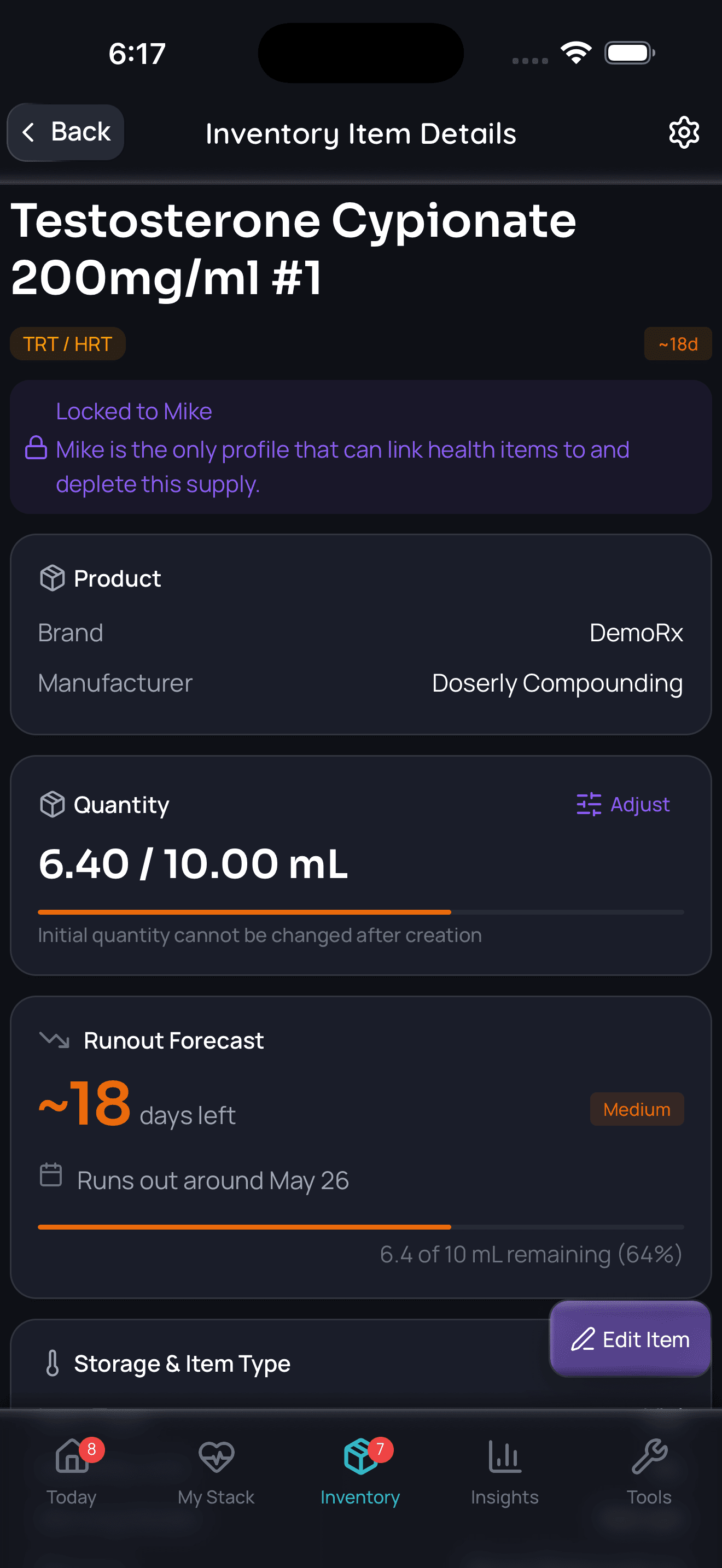
Stack views improve organization; they do not determine compatibility.
Research & Clinical Evidence
The Basics
The clinical evidence for Sustanon 250 is somewhat different from single-ester formulations like testosterone cypionate or enanthate. Because Sustanon has never been approved by the FDA, it was not included in the major US-based clinical trials that shape modern TRT evidence. The TRAVERSE trial, the largest randomized controlled trial on testosterone therapy and cardiovascular safety, used testosterone gel rather than any injectable formulation.
However, the active ingredient in Sustanon is testosterone, the same hormone studied extensively in all other TRT formulations. Once the esters are cleaved, the free testosterone delivered by Sustanon is biologically identical to that from cypionate, enanthate, or gel formulations. The clinical benefits and risks of testosterone replacement therapy, therefore, largely apply to Sustanon as well.
The SmPC data confirms that treatment of hypogonadal men with Sustanon 250 increases bone mineral density, lean body mass, and improves sexual function while decreasing body fat mass. It also decreases serum LDL-C, HDL-C, and triglycerides, and increases hemoglobin and hematocrit [1].
The Science
Cardiovascular Safety: The TRAVERSE trial (n=5,246, men aged 45-80 with hypogonadism and preexisting or high cardiovascular risk) demonstrated non-inferiority of transdermal testosterone vs placebo for the primary composite endpoint of major adverse cardiovascular events (MACE: cardiovascular death, nonfatal MI, nonfatal stroke) with a hazard ratio of 0.96 (95% CI: 0.78-1.17) over a mean follow-up of 33 months. The upper bound of the 95% CI (1.17) was below the prespecified non-inferiority margin of 1.20 [5]. While TRAVERSE used transdermal testosterone rather than injectable formulations, its findings are generally considered applicable to all TRT formulations for the MACE endpoint, though injectable preparations may differ in polycythemia and hematocrit effects [5].
Sexual Function: The SmPC reports improvements in libido and erectile function in hypogonadal men treated with Sustanon 250. The Testosterone Trials (TTrials) demonstrated significant improvements in sexual desire and erectile function in men aged 65+ with low testosterone, effects that are expected to apply across testosterone formulations [6].
Body Composition: The SmPC confirms increased lean body mass and decreased fat mass with Sustanon 250 treatment, consistent with the body composition changes documented in meta-analyses of TRT across all delivery methods [1].
Bone Density: Improvements in bone mineral density are documented in the SmPC, consistent with the TTrials bone trial that demonstrated increased volumetric BMD and estimated bone strength with testosterone treatment [1][6].
Metabolic Effects: In hypogonadal diabetic patients, improvement of insulin sensitivity and/or reduction in blood glucose have been reported with Sustanon 250 [1].
Evidence & Effectiveness Matrix
Category
Sexual Function & Libido
- Evidence Strength
- 8/10
- Reported Effectiveness
- 7/10
- Summary
- Strong clinical evidence for improvement in libido and erectile function. Community reports positive but frequency-dependent.
Category
Energy & Vitality
- Evidence Strength
- 7/10
- Reported Effectiveness
- 6/10
- Summary
- Well-supported by clinical data. Community reports energy improvement but "rollercoaster" on infrequent protocols.
Category
Mood & Emotional Wellbeing
- Evidence Strength
- 6/10
- Reported Effectiveness
- 5/10
- Summary
- Moderate clinical evidence. Community reports mixed; mood stability strongly influenced by injection frequency.
Category
Anxiety & Stress Response
- Evidence Strength
- 5/10
- Reported Effectiveness
- 4/10
- Summary
- Limited TRT-specific evidence. Community reports anxiety as a notable concern, especially during trough periods.
Category
Cognitive Function
- Evidence Strength
- 5/10
- Reported Effectiveness
- N/A
- Summary
- Moderate evidence from TTrials. Community data not yet collected for Sustanon specifically.
Category
Muscle Mass & Strength
- Evidence Strength
- 8/10
- Reported Effectiveness
- 6/10
- Summary
- Strong evidence for lean mass increase with TRT. Limited Sustanon-specific community data.
Category
Body Fat & Composition
- Evidence Strength
- 7/10
- Reported Effectiveness
- N/A
- Summary
- SmPC confirms decreased fat mass. Community data not yet collected.
Category
Bone Health
- Evidence Strength
- 7/10
- Reported Effectiveness
- N/A
- Summary
- SmPC confirms increased BMD. Community data not yet collected.
Category
Cardiovascular Health
- Evidence Strength
- 7/10
- Reported Effectiveness
- N/A
- Summary
- TRAVERSE non-inferiority applies generally to TRT. No Sustanon-specific CV data.
Category
Metabolic Health
- Evidence Strength
- 6/10
- Reported Effectiveness
- N/A
- Summary
- SmPC reports improved insulin sensitivity in hypogonadal diabetic patients.
Category
Sleep Quality
- Evidence Strength
- 4/10
- Reported Effectiveness
- N/A
- Summary
- Limited evidence; sleep apnea exacerbation is a known risk. Community data not yet collected.
Category
Fertility & Reproductive
- Evidence Strength
- 8/10
- Reported Effectiveness
- 4/10
- Summary
- Strong evidence for spermatogenesis suppression. SmPC and clinical guidelines confirm.
Category
Polycythemia & Hematologic
- Evidence Strength
- 8/10
- Reported Effectiveness
- 5/10
- Summary
- Well-documented hematocrit elevation. SmPC lists as common adverse effect.
Category
Prostate Health
- Evidence Strength
- 6/10
- Reported Effectiveness
- N/A
- Summary
- PSA monitoring required per SmPC. Current evidence does not support TRT-initiated prostate cancer.
Category
Skin & Hair
- Evidence Strength
- 6/10
- Reported Effectiveness
- 5/10
- Summary
- Acne and oily skin listed in SmPC. Consistent with general TRT profile.
Category
Gynecomastia & Estrogen
- Evidence Strength
- 6/10
- Reported Effectiveness
- 5/10
- Summary
- Gynecomastia listed in SmPC. Aromatization expected with all testosterone formulations.
Category
Fluid Retention & Edema
- Evidence Strength
- 6/10
- Reported Effectiveness
- 4/10
- Summary
- SmPC warns of fluid retention, especially in cardiac/hepatic/renal insufficiency.
Category
Overall Quality of Life
- Evidence Strength
- 7/10
- Reported Effectiveness
- 6/10
- Summary
- SmPC confirms symptom improvement. Community satisfaction correlates strongly with injection protocol optimization.
Benefits & Therapeutic Effects
The Basics
For men with confirmed testosterone deficiency, Sustanon 250 can provide the same meaningful improvements that other testosterone replacement therapies deliver. The most commonly reported benefits include restored sex drive and improved erectile function, increased energy and motivation, better mood stability (when levels are kept consistent), increased muscle mass and reduced body fat, and stronger bones.
Many men describe the return of libido and sexual function as the most noticeable early benefit, often within the first few weeks of treatment. Energy improvements tend to follow, with body composition changes becoming apparent over months of consistent therapy. These benefits are not unique to Sustanon; they reflect the effects of normalizing testosterone levels regardless of which formulation is used.
One practical advantage of Sustanon 250 is its widespread availability outside the United States. In countries where testosterone cypionate is not readily available (much of Europe, the UK, and Australia), Sustanon provides an affordable and well-established treatment option. It is also commonly used in gender-affirming hormone therapy for transgender men, where the standard dose of 250 mg every 2-3 weeks has a long clinical track record.
The Science
The pharmacodynamic profile documented in the Sustanon 250 SmPC confirms the following clinical benefits in hypogonadal men [1]:
- Clinically significant increases in plasma testosterone, DHT, estradiol, and androstenedione
- Decreased SHBG with restoration of LH and FSH to the normal range
- Increased bone mineral density and lean body mass
- Decreased body fat mass
- Improved sexual function, including libido and erectile function
- Decreased serum LDL-C, HDL-C, and triglycerides
- Increased hemoglobin and hematocrit
- Improved insulin sensitivity and/or reduced blood glucose in hypogonadal diabetic patients
- In female-to-male gender-affirming care: induction of masculinization [1][2]
These benefits are consistent with the established evidence base for testosterone replacement therapy across all formulations. The Endocrine Society Clinical Practice Guideline confirms that testosterone therapy in hypogonadal men improves sexual function, mood, body composition, and bone density [7].
Risks, Side Effects & Safety
The Basics
Like all testosterone replacement therapies, Sustanon 250 carries real risks alongside its benefits. Understanding these risks, and knowing which ones require monitoring, helps you and your provider manage treatment safely.
The most common side effects are generally manageable: weight gain (often from fluid retention and muscle growth), acne or oily skin, and changes in blood counts. The side effect that requires the most consistent monitoring is polycythemia, an increase in red blood cell production that thickens the blood and can raise the risk of blood clots. Your provider should check your hematocrit levels regularly, and if they rise above 54%, dose reduction, more frequent smaller injections, therapeutic phlebotomy (blood donation), or a switch to a transdermal formulation may be needed.
Sustanon 250 has some formulation-specific considerations. The arachis (peanut) oil vehicle means it is strictly contraindicated for anyone with a peanut or soya allergy. The benzyl alcohol preservative (100 mg per mL) makes it unsafe for premature babies and neonates under 3 years of age. Side effects cannot be quickly reversed after injection because the depot slowly releases testosterone over weeks.
On cardiovascular safety, the TRAVERSE trial provides the most relevant data. This large randomized controlled trial found no significant increase in major adverse cardiovascular events (heart attack, stroke, or cardiovascular death) with testosterone therapy compared to placebo, with a hazard ratio of 0.96 (95% CI: 0.78-1.17) over 33 months of follow-up in men aged 45-80 with cardiovascular risk factors. However, TRAVERSE also noted increased incidence of atrial fibrillation, pulmonary embolism, and acute kidney injury in the testosterone group [5].
The Science
Common adverse effects (from SmPC, ≥1/100 to <1/10): Weight increase, hematocrit increase, red blood cell count increase, hemoglobin increase [1].
Hematologic risk (polycythemia): Testosterone stimulates erythropoiesis via EPO upregulation. Injectable formulations produce higher peak testosterone levels than transdermal preparations and are associated with higher rates of erythrocytosis. The clinical threshold for intervention is hematocrit >54%, at which point dose reduction, route change, or therapeutic phlebotomy should be considered [1][7]. The SmPC also warns about increased erythrocytosis risk when Sustanon is used concomitantly with SGLT-2 inhibitors [1].
Cardiovascular risk: The TRAVERSE trial (n=5,246) demonstrated non-inferiority for the MACE composite endpoint (HR 0.96, 95% CI: 0.78-1.17). However, the absolute incidence of atrial fibrillation was higher in the testosterone group (3.5% vs 2.4%), as was pulmonary embolism (0.9% vs 0.5%) and acute kidney injury (2.3% vs 1.5%) [5]. These findings applied to transdermal testosterone; injectable formulations including Sustanon were not directly studied in TRAVERSE.
Prostate effects: The SmPC lists PSA increase and progression of sub-clinical prostatic cancer. Monitoring with DRE and PSA at quarterly intervals for the first 12 months and yearly thereafter is recommended. Current evidence does not support a causal link between TRT at physiological levels and prostate cancer initiation (saturation model), but monitoring remains standard of care [1][7].
Fertility suppression: Exogenous testosterone suppresses spermatogenesis via HPG axis suppression. The SmPC explicitly states: "In men, treatment with androgens can lead to fertility disorders by repressing sperm formation" [1]. This is a class effect of all exogenous testosterone. See Section Section 13 for full coverage.
Venous thromboembolism: Post-marketing reports include deep-vein thrombosis, pulmonary embolism, and ocular thrombosis, particularly in patients with thrombophilia or VTE risk factors [1].
Pulmonary oil microembolism: Rare. The oily solution may reach the lungs, causing cough, dyspnoea, chest pain, dizziness, or syncope during or immediately after injection. Reversible with supportive care [1].
Contraindications: Known or suspected prostate or breast carcinoma; pregnancy; hypersensitivity to active substances or excipients (including arachis oil/peanut allergy); children under 3 years (benzyl alcohol content) [1][2].
Understanding your personal risk profile is not a one-time calculation; it evolves as your treatment progresses. Doserly helps you see the bigger picture by analyzing side effect patterns over time, showing whether issues are resolving, persisting, or emerging as your body adjusts to testosterone therapy.
The app's analytics can reveal connections between side effects and specific aspects of your protocol, like whether hematocrit creep correlates with a recent dose increase, or whether splitting your weekly dose into two injections reduced estrogen-related symptoms. This kind of insight helps you and your provider make informed adjustments based on your actual experience, not just population-level averages.
Connect protocol changes to labs and health markers.
Doserly can keep lab results, biomarkers, symptoms, and dose history close together so follow-up conversations have better context.
Insights
Labs and trends
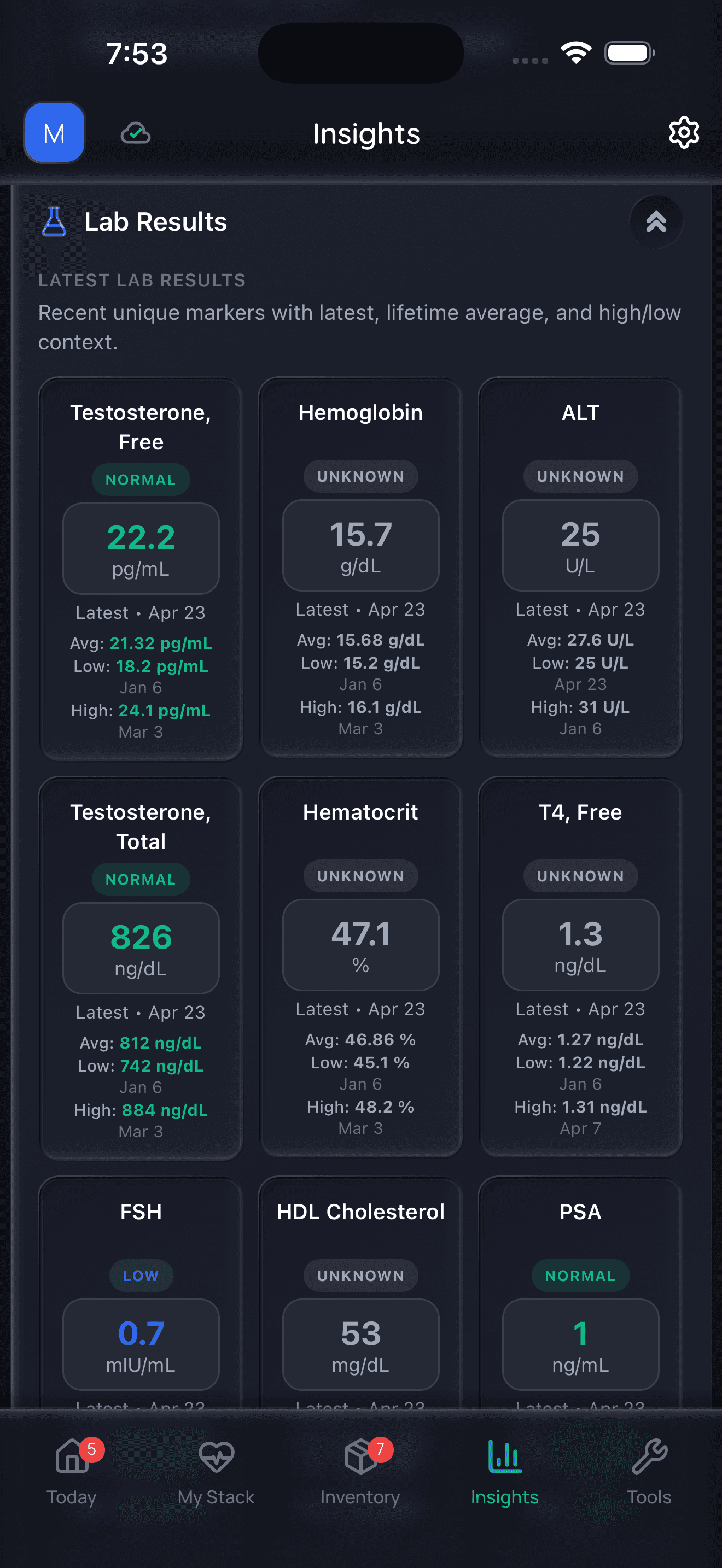
Doserly organizes data; it does not diagnose or interpret labs for you.
Dosing & Treatment Protocols
The Basics
The standard prescribed dose for Sustanon 250 is one full ampoule (1 mL, containing 250 mg of testosterone esters) injected deep into a muscle every three weeks. This is the protocol recommended in the SmPC and commonly prescribed by the NHS in the United Kingdom and by providers in Australia and Europe.
However, this standard protocol has become one of the most debated topics in the TRT community, particularly in the UK. Many providers and patients have found that injecting every three weeks leads to significant peaks and troughs in testosterone levels: too-high levels in the first few days followed by below-normal levels in the final week before the next injection. This "rollercoaster" effect can cause mood swings, fluctuating energy, and inconsistent libido.
More modern approaches involve splitting the dose into smaller, more frequent injections. Common alternatives include 125 mg (0.5 mL) every 10 days, 100 mg every week, or even smaller amounts every 3-5 days. These more frequent protocols aim to maintain more stable testosterone levels throughout the dosing cycle. Some UK private TRT clinics recommend injecting every 5 days to account for the blend of ester half-lives.
For gender-affirming hormone therapy in transgender men, Sustanon 250 dosing varies from 250 mg every two weeks to every four weeks, adjusted based on testosterone levels and virilization goals [1][2].
The Science
SmPC-recommended dosing: 1 mL (250 mg) every 3 weeks by deep intramuscular injection. Dose adjusted to individual patient response [1].
UK paediatric dosing (BSPED guideline, off-label):
- Pubertal induction: 50-100 mg monthly, increasing by 50 mg every 6 months until 200-250 mg reached
- Post-pubertal maintenance: 200-250 mg every 2-3 weeks [8]
Gender-affirming care (Endotext): 250 mg every 2-3 weeks. For virilization of transgender men, 50-75% of conventional cisgender male dosing may be sufficient [9].
What to Expect (Timeline)
Days 1-7: Initial testosterone surge from propionate and phenylpropionate esters. Some patients report increased energy, mood lift, and early libido changes. Possible injection site soreness. On standard 3-weekly protocol, this is typically the "best" week.
Weeks 2-3: On standard 3-weekly protocol, testosterone levels are declining. The isocaproate ester is largely spent by mid-week 2; only the decanoate maintains some release into week 3. Some patients experience "trough" symptoms: lower energy, declining mood, reduced libido. On optimized (more frequent) protocols, these troughs are minimized.
Months 1-3: Sexual function improvements become more consistent. Energy and mood stabilization. Body composition changes beginning (subtle). Hematocrit starting to rise. First blood test typically at 3 months to assess trough levels and hematocrit.
Months 3-6: Body composition changes more apparent. Strength improvements in those who exercise. Mood benefits more stable (especially on optimized protocols). Hematocrit monitoring important.
Months 6-12: Full sexual function benefits. Significant body composition changes. Bone density improvements measurable. PSA and hematocrit monitoring continuing.
Ongoing maintenance: Annual review of treatment indication, dose optimization, continued monitoring (hematocrit, PSA, lipids, testosterone levels). Dose reassessment if symptoms change.
Individual response varies widely. Not all symptoms resolve with TRT alone. Dose adjustment is common in the first 6 months. Those on standard 3-weekly protocols who experience significant trough symptoms should discuss more frequent dosing with their provider.
Fertility Preservation & HPG Axis
Exogenous testosterone from Sustanon 250 suppresses the HPG axis through negative feedback on GnRH, LH, and FSH secretion. This suppression reduces intratesticular testosterone concentrations (normally 40-100 times higher than serum levels) to near-serum levels, resulting in impaired Sertoli cell function and suppression of spermatogenesis [3][4].
The Sustanon 250 SmPC explicitly states: "In men, treatment with androgens can lead to fertility disorders by repressing sperm formation" [1]. The Australian PI classifies it as Category D in pregnancy [2].
Timeline of suppression: Sperm count decline typically begins within 2-3 months of TRT initiation. Approximately 40-60% of men on TRT achieve azoospermia by 6 months, with the remainder typically showing severe oligospermia (<1 million/mL).
HCG co-administration: 250-500 IU subcutaneously 2-3 times weekly may maintain intratesticular testosterone and spermatogenesis during TRT. Evidence supports partial preservation of fertility, though it is not universally effective.
Clomiphene/enclomiphene alternatives: For men desiring fertility, selective estrogen receptor modulators (SERMs) can raise endogenous testosterone by stimulating LH/FSH without suppressing spermatogenesis. These are used off-label and represent an alternative to exogenous testosterone for men who prioritize fertility.
Sperm banking: Recommended before TRT initiation for men of reproductive age who may want biological children in the future.
Recovery after discontinuation: Variable timeline (6-24+ months). Recovery of spermatogenesis is not guaranteed. Factors affecting recovery include duration of TRT use, age, pre-TRT hormonal status, and whether HCG was used during treatment. Primary hypogonadism (testicular failure) carries a more limited prognosis for recovery than secondary hypogonadism (pituitary/hypothalamic dysfunction).
Clinical importance: Fertility counseling should be part of every TRT initiation conversation for men of reproductive age. This is not a minor side effect; it is a predictable consequence of exogenous testosterone therapy that requires proactive discussion and planning.
Interactions & Compatibility
Drug-Drug Interactions
- Anticoagulants (warfarin, DOACs): Testosterone may enhance anticoagulant activity of coumarin-type agents. Close monitoring of prothrombin time required [1][2].
- Insulin and diabetes medications: Androgens may improve glucose tolerance, potentially decreasing the need for insulin or oral hypoglycemics. Monitor blood glucose closely at initiation and discontinuation [1][2].
- Corticosteroids/ACTH: Concurrent use may enhance oedema formation. Use cautiously in patients with cardiac or hepatic disease [1][2].
- SGLT-2 inhibitors: Increased risk of erythrocytosis (cumulative hematocrit elevation). Monitor hematocrit and hemoglobin when both are prescribed [1].
- Cyclosporin: May potentiate effects and increase nephrotoxicity risk [2].
- Enzyme-inducing agents (e.g., phenobarbital, phenytoin, carbamazepine): May decrease testosterone levels [1].
- Enzyme-inhibiting drugs: May increase testosterone levels [1].
Supplement Interactions
- DHEA: Additive androgenic effects; may increase DHT and estradiol
- Boron: May increase free testosterone by reducing SHBG
- Zinc: Supports testosterone production; complementary to TRT
- Saw palmetto: 5-alpha reductase inhibition may modify DHT-mediated effects
Lifestyle Factors
- Alcohol: Suppresses testosterone production and increases aromatization to estradiol
- Sleep: Critical for hormonal regulation; TRT may worsen obstructive sleep apnea
- Exercise: Resistance training is synergistic with TRT for body composition
- Body composition: Weight loss in obese men may normalize testosterone, potentially reducing or eliminating the need for TRT
Lab Test Interference
Androgens may decrease thyroxine-binding globulin (TBG) levels, resulting in decreased total T4 and increased T3/T4 resin uptake. Free thyroid hormone levels remain unchanged; no clinical thyroid dysfunction results [1].
Related guides: Testosterone Cypionate | Testosterone Enanthate | Testosterone Propionate | Anastrozole | HCG
Decision-Making Framework
Sustanon 250 is typically considered in clinical situations where:
- The patient is in a country where Sustanon is the standard or only available injectable testosterone (UK, much of Europe, Australia, New Zealand)
- The patient requires intramuscular testosterone replacement and Sustanon is the most accessible or affordable option
- The patient is undergoing gender-affirming hormone therapy and Sustanon is the preferred formulation at their treating center
When discussing Sustanon 250 with your provider, important questions include:
- What injection frequency will you prescribe? (Standard 3-weekly, or more frequent?)
- How will my testosterone levels be monitored? (Trough levels are most informative for injectable TRT)
- What is the plan if I experience significant peaks and troughs?
- Are there alternative formulations available in my country if Sustanon does not suit me?
- What fertility preservation options should I consider before starting?
Finding a qualified provider varies by country. In the UK, NHS endocrinology services prescribe Sustanon, though some patients find the standard protocols rigid. Private TRT clinics in the UK often offer more flexible dosing. In Australia, GPs and endocrinologists can prescribe Sustanon under PBS listing. In countries where Sustanon is not available, testosterone cypionate or enanthate are the standard alternatives.
Administration & Practical Guide
Sustanon 250 is administered by deep intramuscular injection only. The SmPC specifies injection into a large muscle such as the gluteal (buttock), vastus lateralis (upper thigh), or deltoid (upper arm) [1].
Injection technique:
- The standard presentation is a 1 mL glass ampoule (not a multi-dose vial in most markets)
- Use a filter needle to draw from the glass ampoule to prevent glass particle aspiration
- Inject slowly using a 21-25 gauge needle, 1-1.5 inches long
- Injection sites should be rotated to prevent local tissue reactions
- The SmPC notes that patients should be observed during and immediately after each injection for signs of pulmonary oil microembolism (cough, dyspnoea, chest pain) [1]
Ampoule handling: Since Sustanon is typically supplied in single-use glass ampoules, patients who wish to split doses for more frequent injections may need to transfer the remaining solution to a sterile vial. This requires a multi-dose vial, filter needles, and sterile technique. Some UK private clinics provide multi-dose vials or pre-filled syringes to facilitate dose splitting.
Practical considerations:
- Sustanon 250 contains arachis (peanut) oil. Patients with peanut or soya allergy must NOT use this product [1]
- The benzyl alcohol preservative means it should not be given to children under 3 years [1]
- Store below 30°C, do not refrigerate or freeze, protect from light [1]
- The solution should appear clear and pale yellow; do not use if cloudy or discolored
Monitoring & Lab Work
Pre-TRT baseline labs:
- Two morning total testosterone measurements confirming deficiency
- Free testosterone (calculated or equilibrium dialysis)
- LH, FSH (to distinguish primary vs secondary hypogonadism)
- Estradiol, SHBG
- CBC with hematocrit and hemoglobin
- PSA (age-appropriate)
- Lipid panel
- Comprehensive metabolic panel
- DEXA if osteoporosis risk indicated
Initial follow-up (SmPC-guided):
- Quarterly monitoring for first 12 months [1]:
- DRE and PSA
- Hematocrit and hemoglobin
- Testosterone trough levels (draw immediately before next injection)
- Symptom assessment
Ongoing monitoring (yearly after first year):
- Hematocrit and hemoglobin (threshold >54% for intervention)
- PSA per age-appropriate guidelines
- Testosterone levels (trough for injectables)
- Lipid profile
- Liver function tests (for long-term androgen therapy) [1]
- Estradiol if symptomatic (gynecomastia, fluid retention)
Annual review: Symptom reassessment, continued indication, risk-benefit discussion, dose optimization.
Estrogen Management on TRT
Testosterone from Sustanon 250 aromatizes to estradiol via the aromatase enzyme (CYP19A1), primarily in adipose tissue. This is a normal and physiologically important process. Estradiol is essential for bone mineral density, cardiovascular health, libido, and cognitive function in men.
The SmPC lists gynecomastia and lipid changes among possible adverse effects, reflecting estradiol-mediated effects [1].
When estrogen management matters: Only when clinical symptoms or clearly elevated E2 levels are present. Neither the Endocrine Society nor the AUA recommends routine aromatase inhibitor (AI) use during TRT.
Aromatase inhibitor considerations: Anastrozole (0.25-0.5 mg 2-3x/week) is sometimes used when symptoms of high estradiol are present (gynecomastia, significant fluid retention, emotional lability). However, aggressive E2 suppression is associated with joint pain, mood disturbance, decreased libido, and bone density loss. Low E2 symptoms can be worse than high E2 symptoms.
Community perspective vs clinical evidence: The online TRT community places heavy emphasis on managing estradiol levels, often targeting specific numerical ranges (e.g., 20-35 pg/mL). Clinical guidelines do not support routine E2 monitoring or AI use during TRT. The balanced approach is to treat symptoms rather than target specific numbers.
Sustanon-specific consideration: The rapid initial peak from the propionate and phenylpropionate esters may transiently elevate estradiol more than single-ester formulations, though this has not been well-studied. More frequent dosing may mitigate this by reducing peak testosterone levels.
Stopping TRT / Post-Cycle Considerations
HPG axis recovery: When Sustanon 250 is discontinued, LH and FSH remain suppressed for weeks to months. The SmPC notes: "When treatment with this medicine is stopped, complaints such as those experienced before treatment may re-occur within a few weeks" [1]. Endogenous testosterone production may take 6-24+ months to recover, and recovery to pre-TRT levels is not guaranteed.
PCT protocols (community-derived, limited formal study):
- HCG taper: 1000-2000 IU every other day for 2-4 weeks
- Clomiphene citrate: 25-50 mg daily for 4-8 weeks
- Enclomiphene: newer SERM with potentially fewer side effects
- These are not standardized in clinical guidelines for TRT discontinuation
Primary vs secondary hypogonadism: Primary (testicular failure): limited recovery capacity. Secondary (pituitary/hypothalamic): better prognosis for HPG axis recovery.
Is TRT lifelong? For many men with classical hypogonadism, yes. For secondary causes (obesity, sleep apnea, opioid use), addressing the underlying condition may restore endogenous production.
Realistic expectations: Not everyone recovers fully after stopping TRT. This should be discussed before initiating treatment.
Special Populations & Situations
Obese Men
Weight loss alone may normalize testosterone levels. If TRT is initiated, higher aromatization may occur in men with greater adiposity, potentially requiring attention to estrogen management.
Men with Sleep Apnea
The SmPC warns that testosterone may cause or exacerbate pre-existing sleep apnea [1]. CPAP optimization should be considered before and during TRT.
Men with Prostate Cancer History
Historically an absolute contraindication. Evolving evidence (saturation model) suggests exogenous testosterone may not further stimulate prostate growth at physiological levels. Requires specialized urological consultation.
Cardiovascular Disease History
TRAVERSE data provides reassurance for non-inferiority (HR 0.96 for MACE). Hematocrit monitoring is especially important in this population. Transdermal formulations may be preferred for hematocrit management.
Type 2 Diabetes
The SmPC reports improved insulin sensitivity in hypogonadal diabetic patients [1]. Diabetes medication doses may need adjustment after TRT initiation.
Peanut/Soya Allergy
Sustanon 250 is CONTRAINDICATED in patients with peanut or soya allergy due to the arachis oil vehicle. Alternative testosterone formulations in cottonseed oil (cypionate), sesame oil (enanthate), or castor oil (undecanoate) should be considered [1][2].
Older Men (>65)
The SmPC notes limited experience in patients over 65 [2]. Lower starting doses may be appropriate. Increased polycythemia risk. PSA monitoring heightened.
Transgender Men (FTM)
Sustanon 250 is specifically indicated for supportive therapy in female-to-male gender-affirming care. Standard dosing of 250 mg every 2-4 weeks, with 50-75% of standard male doses often sufficient for virilization [1][9].
Children and Adolescents
Safety and efficacy not adequately determined. BSPED guidelines support off-label use for pubertal induction at lower doses (50-100 mg monthly). Benzyl alcohol content contraindicates use in children under 3 years [1][8].
Regulatory, Insurance & International
United Kingdom (MHRA):
- Prescription Only Medicine (POM)
- Available on NHS. Standard prescription: 250 mg every 3 weeks
- First authorised 28/02/1973
- MAH: Aspen Pharma Trading Limited
- Cost: Relatively affordable on NHS; approximately £3-5 per ampoule
Australia (TGA):
- Schedule 4 (Prescription Only Medicine)
- ARTG registered (AUST R 14521, since 20/09/1991)
- Available through PBS
- Supplied by Aspen Pharmacare
New Zealand (Medsafe):
- Prescription Medicine
- Supplied by Pharmacy Retailing (NZ) Ltd / Healthcare Logistics
European Union:
- Available in multiple member states under various national authorisations
- Widely used in Netherlands (country of origin), Germany, and across EU
United States (FDA/DEA):
- NOT FDA-approved
- Not available through US pharmacies
- Some US compounding pharmacies prepare testosterone ester blends, but these are not equivalent to branded Sustanon 250
- US patients requiring TRT use FDA-approved alternatives: testosterone cypionate, enanthate, undecanoate (Aveed), gels, patches
Travel considerations:
- Sustanon 250 is a controlled substance in most jurisdictions
- Carry prescription documentation when traveling internationally
- Quantity limits may apply; check destination country regulations
Frequently Asked Questions
Q: Is Sustanon 250 available in the United States?
A: No. Sustanon 250 has never been approved by the FDA and is not available through US pharmacies. US patients requiring injectable TRT typically use testosterone cypionate or enanthate. Some compounding pharmacies create testosterone blends, but these are not equivalent to branded Sustanon 250.
Q: Why does my NHS doctor prescribe Sustanon every 3 weeks when the internet says that's too infrequent?
A: The 3-weekly interval is based on the SmPC recommendation, which reflects the original design intention of the multi-ester blend. Many providers and patients find that more frequent injections produce more stable testosterone levels. Discuss your symptoms and blood test results with your provider to determine if a different protocol might work better for you.
Q: Is Sustanon 250 better than testosterone cypionate or enanthate?
A: Neither is inherently "better." They all deliver the same active hormone. Sustanon offers theoretical convenience of less frequent injections due to its multi-ester design, but in practice many users find they need similar injection frequencies. Cypionate and enanthate offer simpler single-ester pharmacokinetics. The best choice depends on what is available in your country, your provider's recommendation, and your individual response.
Q: Can I split a Sustanon ampoule for more frequent injections?
A: Yes, but it requires careful technique. Since Sustanon is supplied in single-use glass ampoules, you would need to draw the full ampoule into a syringe, inject part of it, and store the remainder in a sterile vial for later use. Discuss this approach with your provider and pharmacist.
Q: Will Sustanon 250 affect my fertility?
A: Yes. All exogenous testosterone suppresses sperm production by suppressing the HPG axis. This effect is usually reversible but recovery is not guaranteed and may take 6-24 months or longer. If fertility is a concern, discuss sperm banking and alternative treatments (such as clomiphene or HCG) with your provider before starting.
Q: Does Sustanon cause heart attacks?
A: The TRAVERSE trial, the largest cardiovascular safety trial of testosterone therapy, found no significant increase in major cardiovascular events (heart attack, stroke, cardiovascular death) with testosterone therapy vs placebo (HR 0.96, 95% CI: 0.78-1.17). However, TRAVERSE used gel, not injectable testosterone. Regular cardiovascular monitoring remains important during TRT.
Q: I have a peanut allergy. Can I use Sustanon?
A: No. Sustanon 250 contains arachis (peanut) oil and is contraindicated in patients with peanut or soya allergy. Alternative testosterone formulations using different oil vehicles (cottonseed oil, sesame oil, castor oil) are available.
Q: How do I know if Sustanon is working?
A: Your provider should check trough testosterone levels (drawn just before your next injection) after 2-3 doses to assess whether you are reaching adequate levels. Symptom improvement (energy, libido, mood) typically becomes noticeable within 4-12 weeks, with full effects developing over 6-12 months.
Q: Should I take an aromatase inhibitor with Sustanon?
A: Most men on TRT do not need an aromatase inhibitor. Clinical guidelines do not recommend routine AI use. AI should only be considered if you develop symptoms of high estradiol (gynecomastia, significant fluid retention) confirmed by blood testing. Excessive estrogen suppression causes its own harmful side effects.
Q: What monitoring do I need while on Sustanon?
A: Regular blood tests including hematocrit (to monitor for polycythemia, threshold >54%), PSA (prostate screening), testosterone levels (trough), and periodic lipid panels and liver function tests. Your provider should also perform periodic prostate examinations.
Myth vs. Fact
Myth: Sustanon 250 provides smoother testosterone levels than single-ester injections because it has four different esters.
Fact: While the four-ester design was intended to provide sequential release, clinical pharmacokinetic data shows that all four esters are absorbed simultaneously with a peak at 24-48 hours and return to baseline by approximately 21 days. The PK profile is not demonstrably smoother than single-ester formulations given at similar intervals [1].
Myth: TRT causes heart attacks.
Fact: The TRAVERSE trial (n=5,246, largest RCT for testosterone cardiovascular safety) found no significant increase in major adverse cardiovascular events with testosterone therapy (HR 0.96, 95% CI: 0.78-1.17) over 33 months. Earlier observational studies that raised concerns had significant limitations including confounding by indication [5].
Myth: TRT causes prostate cancer.
Fact: Current evidence does not support a causal link between testosterone replacement at physiological levels and prostate cancer initiation. The androgen receptor saturation model suggests that prostate tissue is maximally stimulated at normal physiological testosterone levels, and adding exogenous testosterone does not further promote growth. PSA monitoring remains standard of care [7].
Myth: Once you start TRT, you can never stop.
Fact: This depends on the underlying cause of testosterone deficiency. Men with secondary hypogonadism (pituitary/hypothalamic causes) may recover endogenous production, especially if the underlying cause is addressed (weight loss, sleep apnea treatment, opioid cessation). Men with primary hypogonadism (testicular failure) are more likely to require lifelong treatment [7].
Myth: TRT will make you permanently infertile.
Fact: Testosterone-induced suppression of spermatogenesis is usually reversible, with most men recovering sperm production within 6-24 months of discontinuation. However, recovery is not guaranteed. Sperm banking before TRT initiation is recommended for men who may want biological children [3][4].
Myth: Sustanon is "just steroids."
Fact: Sustanon 250 is a licensed prescription medication for the treatment of diagnosed hypogonadism. At replacement doses (maintaining levels within the normal physiological range of approximately 300-1000 ng/dL), it restores what the body cannot produce. Supraphysiological abuse (doses exceeding replacement) carries significantly greater risks and is a different clinical scenario entirely [1].
Myth: Higher testosterone doses are always better.
Fact: The goal of TRT is to restore levels to the normal physiological range, not to maximize them. Higher doses increase the risk of polycythemia, estradiol elevation, and other adverse effects without proportional benefit. "Optimization" should target symptom resolution within the therapeutic range [7].
Myth: The 3-weekly injection protocol is the only correct way to use Sustanon.
Fact: While 3-weekly is the SmPC recommendation, clinical experience and community feedback strongly suggest that many patients benefit from more frequent dosing. Splitting the standard dose into twice-weekly or every-5-day administrations may produce more stable levels with fewer trough-related symptoms. The optimal protocol should be individualized based on symptoms and blood work.
Sources & References
Clinical Guidelines
[1] Sustanon 250, 250mg/ml solution for injection. Summary of Product Characteristics (SmPC). Electronic Medicines Compendium (eMC). Aspen Pharma Trading Limited. Last updated: Dec 2025. https://www.medicines.org.uk/emc/product/5373
[2] Sustanon '250' Injection. NPS MedicineWise / Australian Product Information. Aspen Pharmacare. Published by MIMS July 2025. https://www.nps.org.au/medicine-finder/sustanon-250-injection
[3] Nassar GN, Leslie SW. Physiology, Testosterone. StatPearls [Internet]. StatPearls Publishing; 2026 Jan-. Updated Jan 2, 2023. https://www.ncbi.nlm.nih.gov/books/NBK526128/
[4] Sizar O, Leslie SW, Pico J. Androgen Replacement. StatPearls [Internet]. StatPearls Publishing; 2026 Jan-. Updated Nov 25, 2023. https://www.ncbi.nlm.nih.gov/books/NBK534853/
Landmark Trials
[5] Lincoff AM, Bhasin S, Flevaris P, et al. Cardiovascular Safety of Testosterone-Replacement Therapy. N Engl J Med. 2023;389(2):107-117. (TRAVERSE trial)
[6] Snyder PJ, Bhasin S, Cunningham GR, et al. Lessons From the Testosterone Trials. Endocr Rev. 2018;39(3):369-386. (TTrials)
Clinical Practice Guidelines
[7] Bhasin S, Brito JP, Cunningham GR, et al. Testosterone Therapy in Men With Hypogonadism: An Endocrine Society Clinical Practice Guideline. J Clin Endocrinol Metab. 2018;103(5):1715-1744.
Specialty Guidelines
[8] BSPED Clinical Committee. Testosterone Replacement Therapy Guideline. British Society for Paediatric Endocrinology and Diabetes. Updated August 2024. https://www.bsped.org.uk
Gender-Affirming Care
[9] Hembree WC, et al. Endocrine Treatment of Gender-Dysphoric/Gender-Incongruent Persons: An Endocrine Society Clinical Practice Guideline. J Clin Endocrinol Metab. 2017;102(11):3869-3903.
Government/Institutional Sources
[10] Therapeutic Goods Administration (TGA). ARTG Entry 14521: Sustanon 250. https://www.tga.gov.au/resources/artg/14521
Related Guides & Cross-Links
Same Category (Injectable Testosterone)
- Testosterone Cypionate (Depo-Testosterone)
- Testosterone Enanthate (Delatestryl)
- Testosterone Undecanoate Injectable (Aveed/Nebido)
- Testosterone Propionate
- Testosterone Cypionate Auto-Injector (Azmiro)
- Testosterone Enanthate Auto-Injector (Xyosted)
Related Treatment Options
Ancillary Medications
Conditions
Treatment Overviews
- Testosterone Injections Guide
- TRT for Beginners
- Fertility Preservation on TRT
- Estrogen Management on TRT