
In this guide
What is the difference between primary and secondary hypogonadism?
Primary and secondary hypogonadism are the two main types of low testosterone, named for where the fault lies. In primary hypogonadism the testes themselves fail, so the pituitary's LH and FSH run high. In secondary hypogonadism the brain and pituitary send too little signal, so LH and FSH are low or normal. The type decides which causes to look for and which treatments can work. [1]
Testosterone is made in a relay. The hypothalamus, at the base of the brain, sends GnRH to the pituitary gland. The pituitary answers with two hormones. LH tells the Leydig cells in the testes to make testosterone, and FSH drives sperm production. Rising testosterone turns the signal down, like a thermostat. The low testosterone guide explains the relay in more detail. [1]
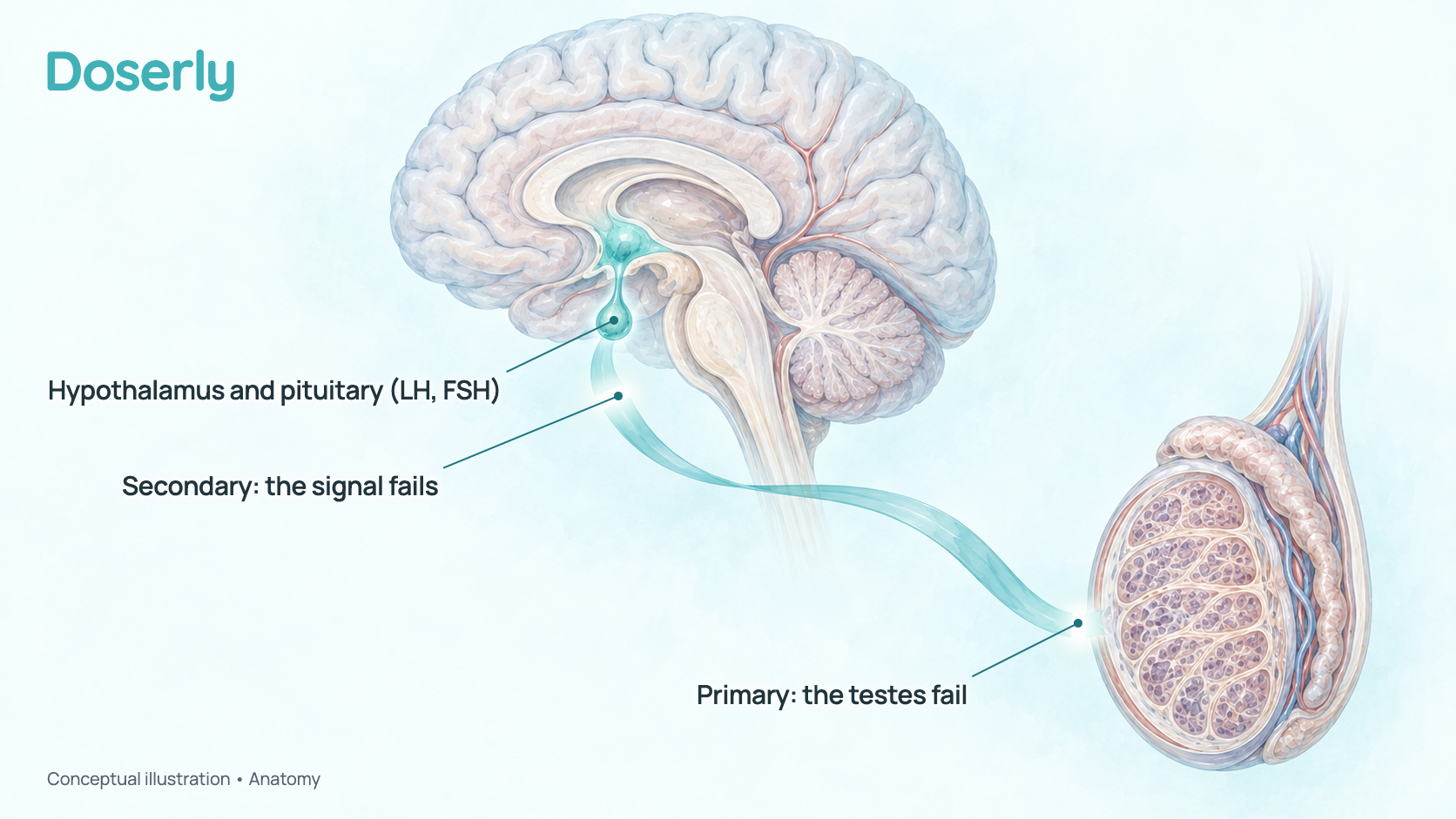
Doctors use a few more terms alongside the two main types:
- Primary (hypergonadotropic): low testosterone with high LH and FSH, and usually impaired sperm production. [1]
- Secondary (hypogonadotropic): low testosterone with LH and FSH that are low or "inappropriately normal". That means inside the lab range, but not raised the way they should be when testosterone is low. [1]
- Mixed: both levels affected, so LH and FSH can be anywhere. Causes include sickle cell disease, iron overload, thalassemia, steroid medicines and alcoholism, and a combined pattern is common in older men. [12], [13]
- Compensated: normal testosterone with a high LH, a pattern to watch rather than a diagnosis (see compensated hypogonadism). [4], [14]
A second sorting cuts across the first. Organic hypogonadism comes from permanent damage or a genetic cause, such as Klinefelter syndrome or pituitary surgery. Functional hypogonadism is a suppression that may reverse when its cause is treated, such as obesity, opioids or serious illness, and it usually has a secondary or mixed pattern. [1], [4], [15]
How is primary vs secondary hypogonadism diagnosed?
In two steps. First, low testosterone is confirmed the same way for both types: symptoms plus low results on at least two early-morning tests. Then LH and FSH show the type. The type decides the next tests: prolactin, iron and sometimes a pituitary scan for secondary, and a chromosome test for unexplained primary. [1], [3], [4], [16]
Which clues point to a type or a cause?
The symptoms of low testosterone are the same in both types, and sexual symptoms are the most specific. In the European Male Ageing Study (EMAS), they were more common with both the primary and the secondary pattern. The low testosterone guide covers symptoms in depth. Some clues point further: [2]
- Very small testes (under 6 mL) point toward primary hypogonadism and Klinefelter syndrome. [1]
- Puberty that never fully happened, with or without a poor sense of smell, points toward congenital hypogonadotropic hypogonadism (Kallmann syndrome when smell is affected). [17]
- Breast growth (gynecomastia), low sex drive, erectile dysfunction, infertility or a milky nipple discharge with a secondary pattern should prompt a prolactin test, says the Pituitary Society. [18]
- New headaches or vision changes can mean a pituitary growth and are a reason for a scan. [1]
- History: opioids, steroid tablets, past anabolic steroids, cancer treatment, mumps after puberty or undescended testes. [1], [4]
How low is low?
Each major guideline's testosterone line applies to both types; none sets a different number for primary and secondary. Checked September 2026.
| Guideline (version, year) | Threshold | How measured | Next step for the type |
|---|---|---|---|
| AUA, American Urological Association (2018, reconfirmed 2024) | Below 300 ng/dL (about 10.4 nmol/L) | Two early-morning tests on separate days | LH in every man with low testosterone |
| Endocrine Society (2018) | 264 ng/dL (9.2 nmol/L), CDC-certified assays | Fasting, two separate mornings | LH and FSH to tell the types apart |
| Endocrine Society statement (July 2026) | "Near 300 ng/dL" | At least two early-morning fasting tests | Same definition at any age |
| VA, US Department of Veterans Affairs (2026) | 264 ng/dL, CDC-certified assays | Fasting, 6–10 am, at least twice | Endocrinology if below 150 ng/dL with low or normal LH and FSH |
| EAU, European Association of Urology (2026) | 12 nmol/L (about 350 ng/dL) | Fasting, 07:00–10:00, at least twice | LH and FSH to tell the types apart |
| ICSM, International Consultation on Sexual Medicine (2024) | 12 nmol/L | Fasting, 07:00–11:00, at least twice | Diagnose with symptoms |
| BSSM, British Society for Sexual Medicine (2023) | Below 12 nmol/L, or free testosterone below 225 pmol/L | Two samples, 8–11 am | LH and FSH when below 12 nmol/L |
| CUA, Canadian Urological Association (2021) | Below 10 nmol/L (about 290 ng/dL) | Morning, 7–11 am | LH to classify |
| Society for Endocrinology, UK (2022) | Bands: below 8 nmol/L; below 11 with low free testosterone | Standardized morning samples | Telling primary from central is "mandatory" |
| ESA, Endocrine Society of Australia (2016) | No single number | With LH and FSH, 08:00–10:00, at least twice | Pituitary tests if suspected |
| EAA, European Academy of Andrology (2020) | Borderline about 8–12 nmol/L | Fasting morning, two days | Rule out organic causes first |
[3], [1], [19], [20], [4], [21], [12], [13], [22], [23], [15]
Every body wants symptoms plus at least two low morning results. The line falls between 264 ng/dL and about 350 ng/dL, depending on the body and the lab method. The type is then decided by LH and FSH, not by the testosterone number. The testosterone unit converter switches between ng/dL and nmol/L. [3], [1], [4]
How do doctors tell primary from secondary?
With LH and FSH, then tests that depend on the pattern:
| Guideline | LH and FSH | Prolactin | Iron | Pituitary MRI | Chromosome test |
|---|---|---|---|---|---|
| Endocrine Society 2018 | All men with hypogonadism (strong); stop biotin 72 hours before | In secondary | Iron saturation in secondary | Whole-pituitary failure, persistent high prolactin, below 150 ng/dL, or mass symptoms | Unexplained primary, especially testes under 6 mL |
| AUA 2018 | LH in all; FSH if fertility matters | If LH is low or low-normal | Not specified | Below 150 ng/dL with low or low-normal LH, whatever the prolactin | Sperm count under 5 million/mL, or no sperm without a blockage |
| EAU 2026 | To tell the types apart (strong) | Secondary with low desire or other signs (strong) | Not in its recommendations | Secondary with high prolactin, mass symptoms or other pituitary deficits (strong); below 6 nmol/L (weak) | No sperm, or under 5 million/mL (its recommendation; its text cites 10 million/mL) |
| VA 2026 | Once low testosterone is confirmed | If LH and FSH are low or inappropriately normal | Same trigger | "In some cases"; refer below 150 ng/dL | Unexplained primary, especially small testes |
| BSSM 2023 | Below 12 nmol/L | When LH and FSH are both low | Not specified | Below 5.2 nmol/L (150 ng/dL) with raised prolactin or low LH and FSH | Not specified |
| ESA 2016 | With testosterone | Suspected pituitary cause | Iron studies and blood count | Suspected pituitary disease | Suspected primary, if it guides fertility care |
| EAA 2020 | In all men | Suspected organic secondary | Iron saturation | Consider below 6 nmol/L (about 175 ng/dL) | Not specified |
| Society for Endocrinology 2022 | "Mandatory" | In central (secondary) | Screen in central | Imaging in central | In primary |
[1], [3], [4], [9], [20], [12], [23], [15], [22]
All of them use LH, and usually FSH, to split the types, check prolactin for a secondary pattern and chromosomes for unexplained primary. They differ on when to scan the pituitary. A result below 150 ng/dL (5.2 nmol/L) with an LH that is not raised is the scan line for the AUA, the Endocrine Society and the BSSM. The VA refers men below that line to an endocrinologist. The EAU and EAA use a slightly higher line of 6 nmol/L (about 175 ng/dL). High prolactin, other pituitary problems and mass symptoms are triggers in most of them. [3], [1], [12], [20], [4], [15]
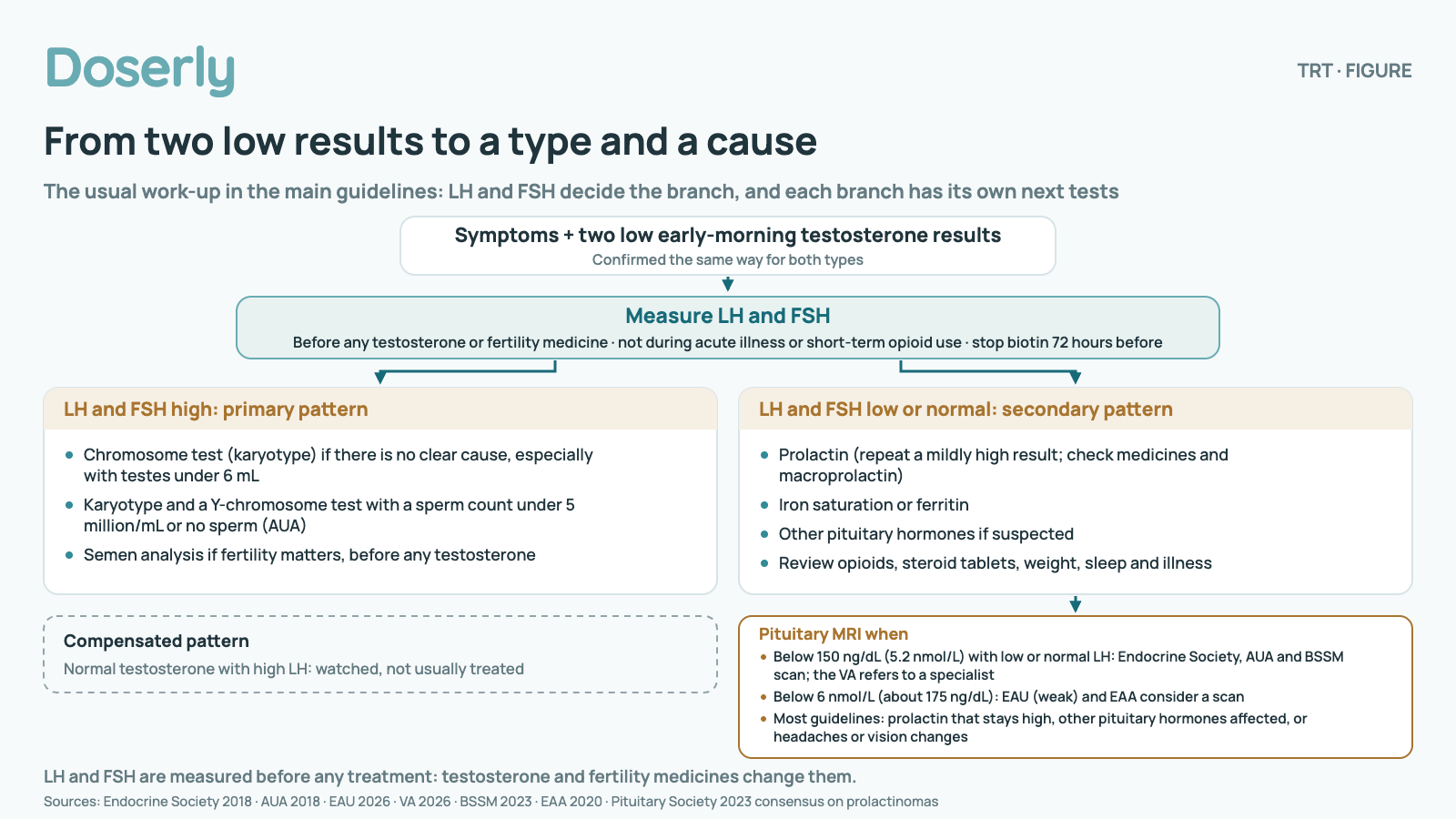
From two low results to a type and a cause
- 1. Symptoms + two low early-morning testosterone results
Confirmed the same way for both types.
- 2. Measure LH and FSH
Before any testosterone or fertility medicine; not during acute illness or short-term opioid use; stop biotin 72 hours before.
LH and FSH high: primary pattern
- Chromosome test (karyotype) if there is no clear cause, especially with testes under 6 mL
- Karyotype and a Y-chromosome test with a sperm count under 5 million/mL or no sperm (AUA)
- Semen analysis if fertility matters, before any testosterone
LH and FSH low or normal: secondary pattern
- Prolactin (repeat a mildly high result; check medicines and macroprolactin)
- Iron saturation or ferritin
- Other pituitary hormones if suspected
- Review opioids, steroid tablets, weight, sleep and illness
Pituitary MRI when
- Below 150 ng/dL (5.2 nmol/L) with low or normal LH: Endocrine Society, AUA and BSSM scan; the VA refers to a specialist
- Below 6 nmol/L (about 175 ng/dL): EAU (weak) and EAA consider a scan
- Most guidelines: prolactin that stays high, other pituitary hormones affected, or headaches or vision changes
Compensated pattern: Normal testosterone with high LH: watched, not usually treated.
LH and FSH are measured before any treatment: testosterone and fertility medicines change them.
How do you read the LH and FSH pattern?
By comparing LH with testosterone drawn at the same time. High LH with low testosterone means the testes are not answering. Low LH with low testosterone means the signal is weak. The trap is a "normal" LH: a healthy pituitary should push LH up when testosterone is low, so an LH inside the lab range still counts as the secondary pattern. [1], [13]
| Pattern | Testosterone | LH | How EMAS defined it | How common |
|---|---|---|---|---|
| Secondary | Low | Low or normal | Below 10.5 nmol/L (about 303 ng/dL) with LH of 9.4 U/L or less | 11.8% of men aged 40–79; 15% at an infertility clinic |
| Primary | Low | High | Low testosterone with LH above 9.4 U/L | 2.0% of men aged 40–79; 2% at an infertility clinic |
| Compensated | Normal | High | 10.5 nmol/L or more with LH above 9.4 U/L | 9.5% of men aged 40–79; 3% at an infertility clinic |
These cut-offs are research definitions; no guideline sets its own LH number, so a result is read against the lab's range and the testosterone level. At an infertility clinic, men with the primary pattern had by far the highest odds of having no sperm (odds ratio 24.54). The AUA notes that a raised FSH with low testosterone typically means impaired sperm production. [24], [3]
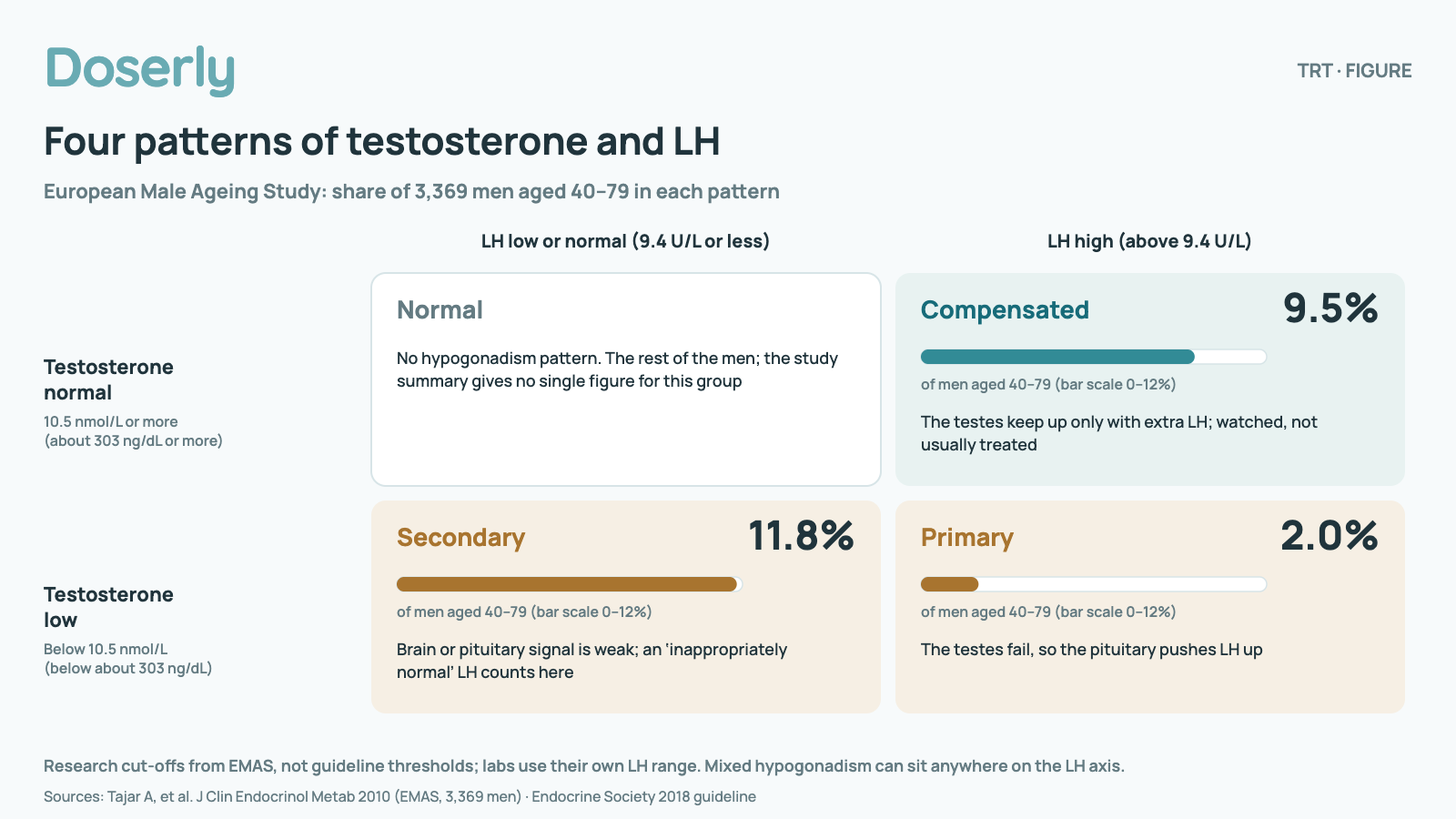
Four patterns of testosterone and LH
European Male Ageing Study: share of 3,369 men aged 40–79 in each pattern. Bars run from 0 to 12%.
- Secondary: 11.8%
- Testosterone low, LH low or normal. Brain or pituitary signal is weak; an ‘inappropriately normal’ LH counts here.
- Primary: 2.0%
- Testosterone low, LH high. The testes fail, so the pituitary pushes LH up.
- Compensated: 9.5%
- Testosterone normal, LH high. The testes keep up only with extra LH; watched, not usually treated.
- Normal: no single figure
- Testosterone normal, LH low or normal. No hypogonadism pattern. The rest of the men; the study summary gives no single figure for this group.
EMAS cut-offs: testosterone 10.5 nmol/L (about 303 ng/dL), LH 9.4 U/L. These are research definitions, not guideline thresholds. Mixed hypogonadism can sit anywhere on the LH axis.
What can throw the pattern off?
- Treatment already started. Outside testosterone switches off LH and FSH: in trials both fell on testosterone gel and rose on enclomiphene. An LH measured on treatment says nothing about the cause. [25]
- Illness. Testosterone fell below normal in 62% of acutely ill men in hospital, with both patterns appearing and then passing. The Endocrine Society advises against testing during acute illness or short-term opioid use. [26], [1]
- Biotin supplements can make LH and FSH read falsely high or low; stop them at least 72 hours before. [1]
- Recent anabolic steroids shut the signal down for months after stopping. [27]
When is a pituitary scan needed?
When testosterone is very low with a low or normal LH, prolactin stays high, other pituitary hormones are affected, or there are headaches or vision changes. Scans find something important mostly in those men. Among 164 men with erectile dysfunction and the secondary pattern, 11 (6.7%) had a potentially serious lesion. The larger ones were all in men at 104 ng/dL or less. In another 51 men, 3 of the 4 with a small tumor had prolactin more than twice the upper limit of normal. Only 1 of the 17 men with testosterone under 200 ng/dL had one. [3], [1], [28], [29]
A high prolactin is checked again first. The Pituitary Society advises three checks. Repeat a result under five times the upper limit of normal. Review medicines that raise prolactin, such as some antipsychotics. Test for macroprolactin, an inactive form that raises the reading without symptoms; it explained 6.28% of high results in men in one cohort. An underactive thyroid and kidney or liver failure can also raise prolactin mildly. [18], [30]
Which tests suit a primary pattern?
- A chromosome test (karyotype) when primary hypogonadism has no clear cause. The Endocrine Society stresses testes under 6 mL, and the VA says small testes. The AUA tests with a sperm count under 5 million/mL or no sperm, adding a Y-chromosome test. Among 1,663 infertile men with no sperm, a chromosome problem was found in 20.2% with a high FSH against 4.9% with a normal FSH. Klinefelter syndrome made up 83% of those in the high-FSH group. [1], [20], [3], [31]
- A semen analysis when fertility matters, before any testosterone. [32], [1]
Where these numbers come from
The threshold and work-up tables come from each body's current document: the AUA testosterone deficiency guideline (2018, validity reconfirmed 2024), the Endocrine Society guideline (2018) and its statement of 16 July 2026, the VA recommendations (January 2026), the EAU guidelines on sexual and reproductive health (2026 edition, male hypogonadism and male infertility chapters), the ICSM 2024 recommendations (published 2025), the BSSM guidelines (2023), the Society for Endocrinology guideline (2022), the CUA guideline (2021), the EAA guideline on functional hypogonadism (2020) and the Endocrine Society of Australia position statement (2016). [3], [1], [19], [20], [4], [9], [21], [12], [22], [13], [15], [23]
The pattern table uses the European Male Ageing Study's research definitions (testosterone 10.5 nmol/L, LH 9.4 U/L) and an Italian infertility-clinic study that used the same LH line. We converted nmol/L to ng/dL with 1 nmol/L = 28.84 ng/dL and rounded. The 6 nmol/L scan line is shown as about 175 ng/dL, the figure the EAU and EAA themselves give. [2], [24]
Not used: LH and FSH bands such as "complete failure above 20 IU/L" that circulate online without a guideline or study behind them, and an older 230 ng/dL and 350 ng/dL banding that current guidelines have replaced.
What causes primary and secondary hypogonadism?
Primary hypogonadism comes from damage to the testes: genetic conditions, injury, infection, cancer treatment and age. Secondary hypogonadism comes from anything that quiets the brain's signal: pituitary disease, conditions present from birth and, far more often, obesity, opioids and other medicines. In EMAS, a body mass index (BMI) of 30 or more was strongly linked with the secondary pattern (relative risk ratio 8.74), while older age was linked mainly with the primary pattern (3.04). [1], [4], [2]
What damages the testes themselves?
- Klinefelter syndrome (an extra X chromosome, 47,XXY), the most common genetic cause. It affects about 153 in 100,000 males (about 1 in 650). Only about 1 in 4 adult men with it have been diagnosed, most of them as adults. Among 1,581 men with it who had testosterone measured in a large international records network, 70.4% were under 300 ng/dL. Only 59.0% of those were prescribed testosterone. [5], [33], [34]
- Undescended testes. About 1–2% of boys have a testicle still undescended after 3–4 months of age. In 6,376 young men, a history of it went with a 28% lower sperm concentration and a 6% lower testosterone-to-LH ratio, a sign of slightly weaker testes. [22], [35]
- Mumps orchitis. After puberty, mumps inflames the testes (orchitis) in about 25% of cases, two-thirds of them on one side. Fertility is kept in about 75%. When both sides are affected, sperm production recovers in only about a third. How often it lowers testosterone is not known. [22]
- Cancer treatment. After testicular cancer, 11% of men treated with surgery alone had low testosterone and 41% a raised FSH; after chemotherapy plus radiotherapy, 37% had low testosterone. In survivors followed for decades it rose from 12% to 41%, against 5% to 11% in similar men without cancer. Among 143 long-term lymphoma survivors, 15% had low calculated free testosterone, more often after intensive Hodgkin lymphoma treatment. [6], [36], [37]
- Varicocele (enlarged veins around a testicle). Testosterone was about 82 ng/dL higher after repair in pooled studies, and about 114 ng/dL higher in men who were low beforehand. These were mostly before-and-after comparisons without an untreated group. Whether a varicocele causes low testosterone is still debated (low testosterone guide). [38], [39], [40]
- Other causes: injury or twisting (torsion), removal of the testes, testes absent from birth, myotonic dystrophy, HIV, some chemotherapy and radiation, the antifungal ketoconazole, alcohol-related liver disease, spinal cord injury and older age. [1], [4], [2]
What switches off the brain's signal?
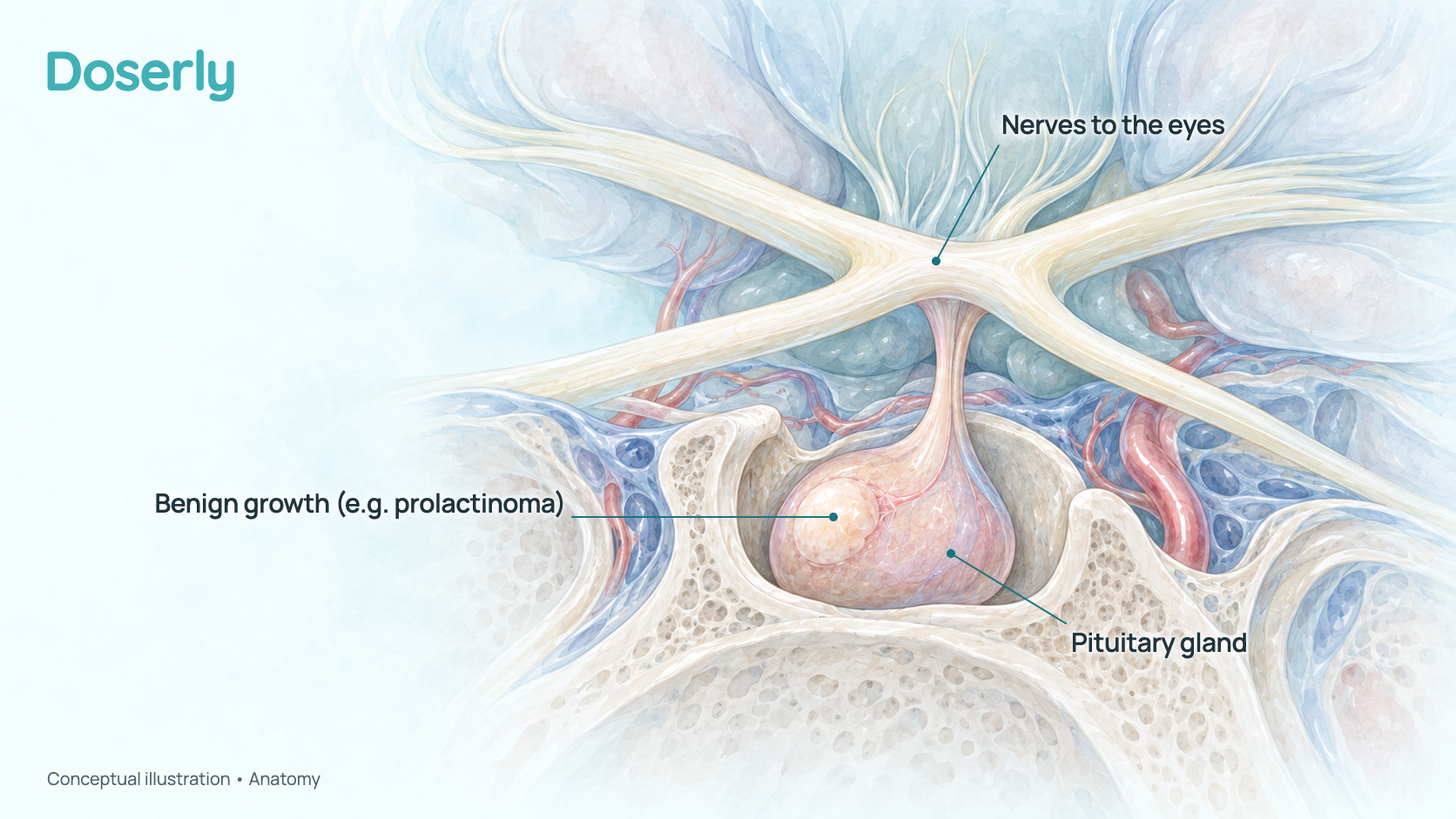
- Prolactin-making tumors (prolactinomas). Too much prolactin switches off the brain's signal. In men most prolactinomas are large (about 4 large to every small one). The Pituitary Society says large ones in men are more aggressive and respond less often to medicine. [18]
- Other pituitary and hypothalamic disease: other tumors, pituitary surgery or radiation, head injury, bleeding into the pituitary and inflammation. These can affect thyroid and cortisol signals too, which is why other pituitary hormones are tested. [1], [22]
- Conditions present from birth. Congenital hypogonadotropic hypogonadism affects about 1 in 4,000 to 10,000 males. More than 25 genes are linked to it, and about half of those affected have a poor or missing sense of smell. [22], [17]
- Iron overload (hemochromatosis). In 141 men with the inherited form, 9 (6.4%) had low testosterone with low LH and FSH, and 8 of them had liver cirrhosis. [41]
- Steroid tablets. Testosterone was 33% lower on long-term prednisolone tablets, but not significantly lower with inhaled steroids. [42]
- Obesity and type 2 diabetes, the most common drivers in middle-aged men. In EMAS, new secondary hypogonadism appeared in 155.9 per 10,000 men a year, driven by obesity and weight gain. In another study, a third of men with type 2 diabetes had low free testosterone with lower LH and FSH. See obesity-related hypogonadism. [8], [43]
- Anabolic steroids, after stopping. About 2.5 years later, 27% of former users still had testosterone below 12.1 nmol/L. See TRT vs steroids. [44]
- Serious illness, severe dieting and heavy training, usually reversibly. [1], [22]
Do not stop a prescribed medicine on your own to test this: steroid tablets and opioids need a supervised plan.
Opioid-induced androgen deficiency: how do opioids lower testosterone?
Opioid painkillers and opioid treatment medicines such as methadone suppress the brain's signal to the testes, a secondary hypogonadism called opioid-induced androgen deficiency (OPIAD). In pooled studies, 63% of men using opioids had low testosterone. It is common, often missed, and at least partly reversible when the dose falls. [7]
How it works. US opioid labels say opioids inhibit LH and stimulate prolactin. Since March 2016 the FDA has required every opioid label to warn that long-term use may cause androgen deficiency. The warning notes that a causal role has not been proven and says people with symptoms should have lab tests. Testosterone can fall by more than half within hours of a dose and usually returns 24–72 hours after a short course, or up to a month depending on the dose. [45], [46], [47]
How common. The pooled 63% comes from 15 studies and 3,250 patients. Reviews give 20–80% and 21–86%, because studies differ in opioid, dose, duration, age and definition. On average, testosterone was about 165 ng/dL lower in men using opioids. [7], [48], [47], [49]
Which opioids and doses matter.
- The Endocrine Society says nearly all opioids at doses equal to 30 mg of methadone a day suppress testosterone, and longer-acting ones more so. In men taking opioids daily, 57% on long-acting opioids were deficient against 35% on short-acting ones (odds ratio 3.39), and higher doses raised the odds. [1], [50], [51]
- Buprenorphine suppresses it less than methadone. In one study, men on buprenorphine averaged 5.1 ng/mL (17.7 nmol/L) against 2.8 ng/mL (9.7 nmol/L) on methadone. In another, 28% against 65% were under 12 nmol/L. Testicular failure was uncommon, and there was no link with the methadone dose. [52], [53]
- Spinal pumps and sustained-action tablets. With long-term intrathecal opioids (given by a pump into the fluid around the spinal cord), 25 of 29 men had testosterone under 9 nmol/L. With sustained-action oral opioids, total testosterone was low in 74%, and 39 of 45 men reported severe erectile dysfunction or low libido. [54], [55]
- Tramadol and kratom have thin evidence: one study in men dependent on very high tramadol doses (lower testosterone, higher prolactin) and one of 19 kratom users (no suppression found). [56], [57]
Often missed. Among US men on long-term opioids, only 17.15% had testosterone tested within 5 years and 9.44% were diagnosed. In a 20-year study of people with heroin dependence, none of those found to have hypogonadism had been diagnosed before. The AUA suggests considering a test in long-term opioid users even without symptoms. [58], [59], [3]
Does it recover? Often, when opioids fall. In 25 men tapering opioids after head and neck cancer, testosterone rose within a month. In the heroin-dependence study, hypogonadism affected 3.3% of those who became opioid-free against 26.7% of those still using. Changing an opioid is a decision for your prescriber, because stopping suddenly can bring withdrawal and pain. [60], [59]
What are compensated and mixed hypogonadism?
Compensated hypogonadism is normal testosterone with a high LH, found in 9.5% of EMAS men aged 40–79. It often returned to normal and was not clearly linked with androgen deficiency. But men with it were much more likely to develop primary hypogonadism later (odds ratio 15.97). The EAU calls its significance unclear. The UK Society for Endocrinology expects lifelong treatment for a confirmed diagnosis, but makes a possible exception for this pattern. [2], [14], [4], [22]
Australia's subsidy rules use a high LH as evidence of true deficiency. The rule covers men 40 and older without a known pituitary or testicular disorder. For them, testosterone of 6–15 nmol/L qualifies only with an LH more than 1.5 times the young-male upper limit or above 14 IU/L, whichever is higher. A known disorder qualifies through a specialist with no level stated. Checked September 2026. [61]
Mixed hypogonadism affects both the testes and the pituitary (see the types). [12]
How is primary vs secondary hypogonadism usually treated?
By type and cause. Primary hypogonadism is treated with testosterone, because failing testes cannot respond to anything else. Secondary hypogonadism is treated first by fixing the cause where possible, then with testosterone, or with medicines that restart the testes when children are wanted. This section describes the choices clinicians weigh; it is not a personal plan. [1], [4]
| Option | Primary | Secondary | Effect on fertility | Read more |
|---|---|---|---|---|
| Treat the cause: weight loss, reviewing opioids or steroid tablets, treating illness | Rarely helps | First for functional causes (EAU); weight loss first with a BMI over 27 and no other cause (Endocrine Society 2026) | Keeps the body's own production | Obesity-related hypogonadism |
| Cabergoline | Not applicable | Prolactinoma or other high prolactin | Often restores it as prolactin falls | Prolactinoma |
| Testosterone therapy | The standard treatment | When the cause cannot be fixed and children are not wanted soon | Switches off sperm production | TRT: the definitive guide |
| hCG, with FSH if needed | Does not work | When fertility is wanted; the EAU's standard choice | Can restart sperm production | hCG |
| Clomiphene or enclomiphene (off-label tablets) | Cannot work | Functional secondary with a working pituitary | Usually keeps sperm production going | Clomiphene, enclomiphene |
| Sperm retrieval for IVF with ICSI, donor sperm or adoption | The fertility options | Rarely needed | Direct route to a pregnancy | TRT and fertility |
Why does the type change the treatment?
Because fertility medicines work by pushing the testes harder, and failing testes cannot respond. The EAU says SERMs such as clomiphene need a working hypothalamus–pituitary–testis chain, so they cannot work in primary hypogonadism or in secondary hypogonadism caused by organic damage. It also finds no substantial evidence that gonadotropins help in classic testicular failure. As the Endocrine Society puts it, gonadotropins can restore fertility in secondary hypogonadism but not in primary. [4], [9], [1]
How is primary hypogonadism treated?
With testosterone therapy, usually for life. When the testes have failed, stopping returns a man to his low starting point, and the UK Society for Endocrinology expects lifelong treatment. The type does not change the dose. The forms each have a guide (cypionate, enanthate, undecanoate injection, gel, oral capsules, nasal gel, pellets). The TRT dosage guide covers labeled doses and the TRT dose calculator turns a dose into mL and syringe units. Testosterone for women uses different products and doses; see testosterone therapy for women. [1], [22]
Fertility comes first if children are wanted. US labels warn that testosterone suppresses sperm production and that reduced fertility may not be reversible. Men who may want children can bank sperm before starting if they have any. For men with none, the options are surgical sperm retrieval for IVF with a single sperm injected into each egg (ICSI), donor sperm or adoption. [16], [1]
Klinefelter syndrome and fertility. Most men with it have no sperm in their semen, but surgery can still find some:
- Microsurgical retrieval (micro-TESE) finds sperm in about 50–60% of men with 47,XXY, according to the AUA and the American Society for Reproductive Medicine (ASRM). A meta-analysis found sperm in 44% of attempts, with pregnancy and live-birth rates of about 43% per ICSI cycle. [32], [62]
- Counted per man, results are lower: in one clinic, 14 of 138 men who started (10.1%) had their own biological child. [63]
- Retrieval rates were similar in adolescents (45%) and adults (42%), and hormone treatment beforehand raised testosterone without improving the chance of finding sperm. [64], [65]
How is secondary hypogonadism treated?
Cause first. The EAU strongly recommends losing weight, stopping medicines that interfere and treating other illnesses before starting testosterone. The Endocrine Society's 2026 statement calls weight loss typically first-line when obesity (a BMI over 27) is the only cause. How much testosterone comes back is in the research. [4], [19]
Prolactinoma. The Pituitary Society prefers cabergoline, a dopamine agonist that lowers prolactin and shrinks the tumor. US labels start cabergoline at 0.25 mg twice a week. The dose can rise by 0.25 mg twice a week, no sooner than every 4 weeks, up to 1 mg twice a week, until prolactin is normal. The labels ask for a heart-valve check (echocardiogram) before starting. Testosterone often recovers as prolactin falls. A level below 7.4 nmol/L (about 213 ng/dL) after 6 months predicted that it would stay low. The Society suggests considering testosterone when hypogonadism lasts more than 6 months on treatment, with caution for large tumors. For men who want children, it advises against testosterone and says hCG with FSH can be considered. [18], [66], [67]
Fertility: hCG, with FSH if needed. The EAU calls gonadotropins the standard for men with secondary hypogonadism who want to father children. hCG acts like LH to restart testosterone production in the testes. FSH is added when sperm production needs it. Both are FDA-approved for men with hypogonadotropic hypogonadism: hCG labels list regimens for hypogonadotropic hypogonadism, and an FSH (follitropin) label covers starting sperm production. The hCG guide covers doses. Checked September 2026. [4], [68], [69]
Tablets that raise LH and FSH (SERMs). Clomiphene and enclomiphene block estrogen's feedback in the brain, so they suit functional secondary hypogonadism with a working pituitary. The AUA says men with a low or low-normal LH are candidates. Clomiphene is approved only for women, and its label says no adequate studies show it works for male infertility. Enclomiphene is approved nowhere. The EU refused it in 2018 over unproven benefit and a blood-clot risk. In the US it is under evaluation for pharmacy compounding, which is not an approval. The Endocrine Society says clomiphene's benefits and safety have not been shown in randomized trials. Checked September 2026. [3], [70], [71], [72], [1]
Testosterone therapy is used when the cause cannot be fixed and fertility is not a near-term goal, as in pituitary damage or congenital hypogonadotropic hypogonadism. [1], [4]
How is opioid-related low testosterone treated?
The first question is whether the opioid can be reduced or changed; low testosterone is much less common with buprenorphine. The Endocrine Society suggests considering testosterone for men with sexual symptoms who are unlikely to stop opioids. The EAA says it may be withdrawn later if opioids can be stopped or swapped. [1], [15]
In two randomized trials, testosterone did not improve reported pain. In 84 men randomized to gel or placebo for 14 weeks (65 analyzed), it improved pain sensitivity on lab tests, sexual desire and body composition, but not self-reported pain. In 41 men given undecanoate injections or placebo for 24 weeks, lean mass rose 3.6 kg against 0.1 kg with no change in pain. Office systolic blood pressure rose 6.2 mm Hg on testosterone and fell 7.0 mm Hg on placebo, a 13.2 mm Hg difference. A records study of 27 men and a small open-label patch study were more positive, but neither had a fair comparison group. [73], [74], [75], [76], [77]
Is treatment lifelong?
- Primary, and organic secondary: usually. [22]
- Congenital hypogonadotropic hypogonadism: usually, but 10–20% of men recover. In one series, 5 of 50 men recovered after a pause in treatment. In the 15 men with recovery in that study, their own testosterone went from an average of 55 to 386 ng/dL. In a larger cohort of 308 patients (men and women), 44 recovered, an estimated lifetime chance of 22%, though 5 men later relapsed. [17], [78], [79]
- Functional secondary: sometimes not, after weight loss or opioid changes. [15]
- Iron overload: removing iron rarely brings testosterone back after age 40. [80]
After testosterone stops, LH and FSH return slowly: after two years of injections in the T4DM trial, they recovered gradually over 12 months. No study has measured recovery specifically in true secondary hypogonadism. See stopping TRT. [81]
What does the research show?
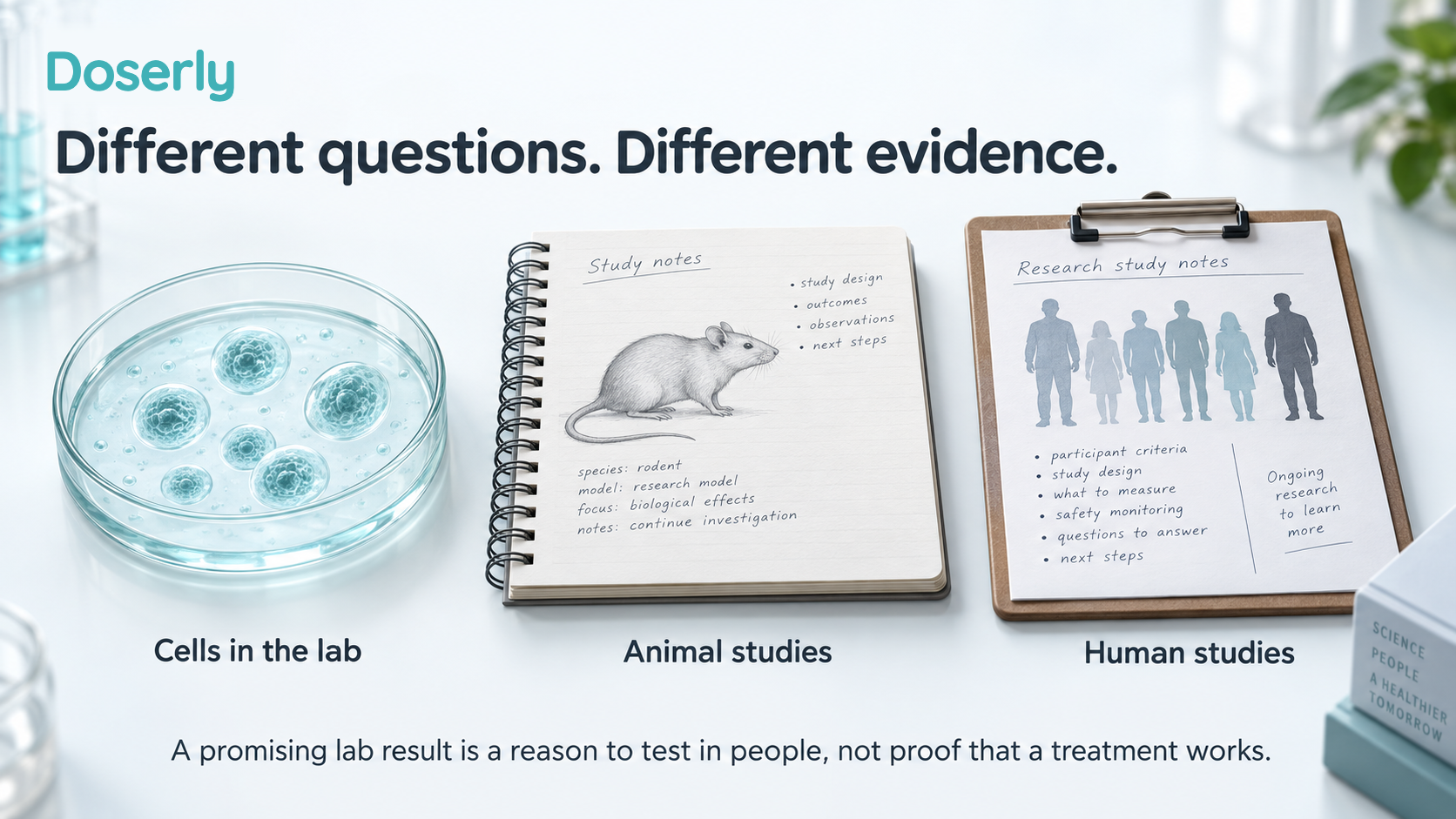
Most of the evidence on the types comes from population and clinic studies. Testosterone trials enrolled men by testosterone level and symptoms rather than by type, and trials of fertility-sparing tablets were small. [2], [82], [83], [84]
Does fixing the cause bring testosterone back?
Often in functional and prolactin-related secondary hypogonadism, rarely otherwise.
| Cause fixed | Who | What happened | Limits |
|---|---|---|---|
| Weight loss | EMAS men with the secondary pattern, about 4 years | 42.9% returned to normal, more often without obesity, with weight loss (odds ratio 2.24) and under 60 | Symptoms did not improve at the same time [8] |
| Weight loss | Meta-analyses | Testosterone up about 2.5–2.9 nmol/L after diet, 7.2–8.7 nmol/L after bariatric surgery | Men with obesity [85], [86] |
| Weight-loss medicine | 16-week trial, men with obesity | Liraglutide: up 2.6 nmol/L with 7.9 kg lost; testosterone gel: up 5.9 nmol/L with 0.9 kg lost | Small, short [87] |
| Prolactinoma treatment | Three series on cabergoline | Normal again in about 60% at 6 months; 43%, 50% and 54% at 6, 12 and 24 months; 89.4% with small tumors | No comparison groups [88], [67], [89] |
| Stopping opioids | 20-year heroin-dependence cohort | Hypogonadism in 3.3% of those opioid-free against 26.7% still using | Observational [59] |
| Iron removal | Men with hemochromatosis | No change in the 5 men aged 47–66 | 6 men [80] |
In a 2026 review, GLP-1 weight-loss medicines raised total testosterone in men with obesity or diabetes while keeping LH and FSH working. They are not approved for low testosterone (TRT with GLP-1 medicines). [90]
Does testosterone therapy help, whatever the type?
It helps sexual function most. In the Testosterone Trials, a year of gel in 790 men aged 65 and older improved sexual activity, desire and erections and slightly improved mood. It raised spine bone density (7.5% against 0.8% on placebo). It corrected anemia in 58.3% of men with unexplained anemia against 22.2% on placebo. It did not improve energy or walking. These trials did not report results by type; see the low testosterone guide. [83], [91], [92]
Do fertility-sparing tablets work in secondary hypogonadism?
They raise testosterone reliably; whether they relieve symptoms as well as testosterone is less clear.
- Levels. Clomiphene or enclomiphene raised total testosterone by about 274 ng/dL against placebo in randomized trials, similar to testosterone gel, while raising LH and FSH. [84]
- Symptoms. Clomiphene improved libido scores less than testosterone therapy in a 2026 meta-analysis. In the one placebo-controlled trial in men with secondary hypogonadism and erectile dysfunction, sexual function generally did not improve. [93], [94]
- Sperm. In two trials in overweight men, enclomiphene kept sperm concentration normal over 16 weeks while testosterone gel markedly reduced it. [25]
- Long-term use. Among men treated with clomiphene for more than 3 years, 88% had normal testosterone and 8% reported side effects such as mood changes, blurred vision or breast tenderness. [95]
No medicine is proven to restart failing testes, and there are no randomized trials of clomiphene or hCG in men with a high LH and FSH. [65], [9]
What are the risks of hypogonadism and of treating it?
Is untreated hypogonadism dangerous?
Low testosterone is linked with a higher risk of death in observational studies, without proof that it causes those deaths or that treatment prevents them. In EMAS, men with severe late-onset hypogonadism died at about 5 times the rate of other men over a median 4.3 years (hazard ratio 5.5). The type adds its own risks. Large prolactinomas in men can grow and need closer follow-up. Klinefelter syndrome carries a higher risk of metabolic disease, heart disease and blood clots. [96], [18], [9]
Is testosterone therapy safe?
In the largest trial, testosterone gel did not raise the risk of heart attack or stroke, but it did raise some other risks. TRAVERSE randomized 5,204 men aged 45–80 with low testosterone and heart disease or high heart risk to daily testosterone gel or placebo gel. Among the 2,596 men who used testosterone gel and the 2,602 who used placebo gel, it found: [82]
- Heart attack, stroke or death from heart disease: 182 of 2,596 men on testosterone (7.0%) against 190 of 2,602 on placebo (7.3%). The hazard ratio was 0.96, with a likely range of 0.78 to 1.17, which met the trial's safety margin of 1.5. [82]
- Heart rhythm: atrial fibrillation (an irregular heart rhythm) 3.5% against 2.4%, and nonfatal rhythm problems needing treatment 5.2% against 3.3%. [97]
- Kidneys and clots: acute kidney injury 2.3% against 1.5%, and pulmonary embolism (a clot in the lungs) 0.9% against 0.5%. [97]
- Fractures: 91 of 2,601 men on testosterone (3.50%) against 64 of 2,603 on placebo (2.46%), counting every randomized man (hazard ratio 1.43). Testosterone did not prevent fractures. [98]
- Prostate: high-grade prostate cancer in 5 of 2,596 men (0.19%) against 3 of 2,602 (0.12%), not a significant difference. Men with a PSA above 3.0 ng/mL were excluded. [99]
- Limits: it tested only a daily gel; men used it for an average of 21.7 months; about 61% stopped their study gel early; and it enrolled only men at high heart risk. [82], [97]
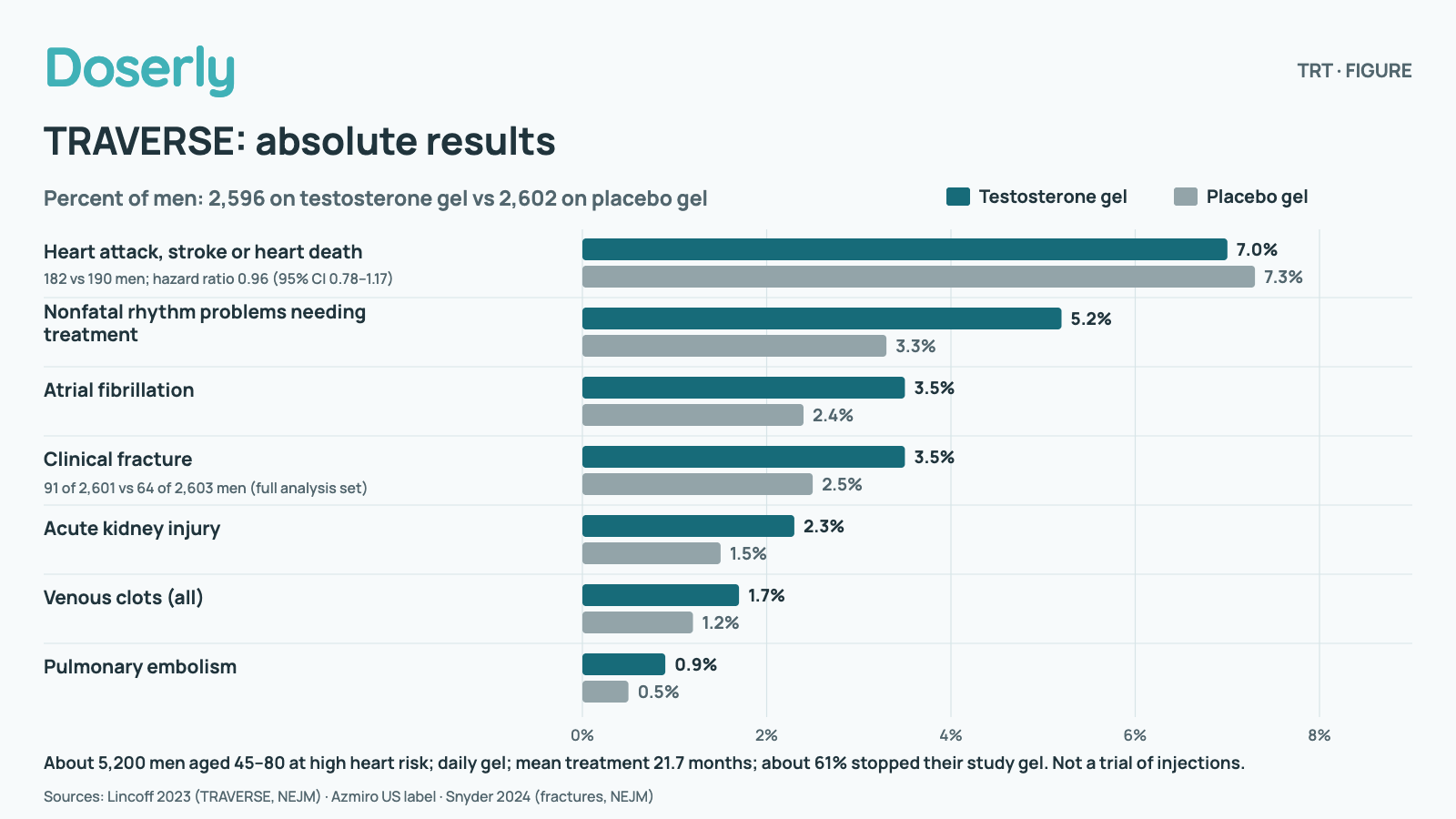
TRAVERSE: absolute results
Testosterone gel (2,596 men)Placebo gel (2,602 men)
- Heart attack, stroke or heart death
- Testosterone 7.0% vs placebo 7.3% (182 vs 190 men; hazard ratio 0.96, 95% CI 0.78–1.17; met the 1.5 safety margin)
- Nonfatal rhythm problems needing treatment
- Testosterone 5.2% vs placebo 3.3%
- Atrial fibrillation
- Testosterone 3.5% vs placebo 2.4%
- Clinical fracture
- Testosterone 3.5% vs placebo 2.5% (91 of 2,601 vs 64 of 2,603 in the full analysis set)
- Acute kidney injury
- Testosterone 2.3% vs placebo 1.5%
- Venous clots (all)
- Testosterone 1.7% vs placebo 1.2%
- Pulmonary embolism
- Testosterone 0.9% vs placebo 0.5%
About 5,200 men aged 45–80 at high heart risk; daily gel; mean treatment 21.7 months; about 61% stopped their study gel. Not a trial of injections.
In February 2025 the FDA added the TRAVERSE results to all testosterone labels, removed boxed-warning language about a higher heart risk and required blood-pressure warnings. It kept the limitation for "age-related hypogonadism", which matters less for primary and organic secondary hypogonadism because they have a clear cause. In June 2026 the FDA asked makers to remove that limitation and narrow the prostate cancer contraindication; as of September 2026 those requests are not yet in any label. See TRT and heart health. [100], [101], [97]
Other risks on treatment: testosterone raises hematocrit and blood pressure. In the T4DM trial of injections, hematocrit went above 54% in 106 of 491 men on testosterone (22%) against 6 of 484 on placebo (1%); see hematocrit on TRT. Clomiphene's label notes reports of breast growth and testicular tumors in men. [102], [100], [70]
What if you want children?
- Both types: testosterone is the wrong choice while trying to conceive. The AUA says not to prescribe it to men trying to conceive, the AUA and ASRM extend that to men interested in future fertility, and the EAU and ICSM agree. [3], [32], [4], [21]
- Secondary: hCG, with FSH when needed, can start sperm production, and SERMs usually keep it going. [1], [25]
- Primary: fertility medicines do not help; the options are sperm banking before treatment, sperm retrieval for ICSI, donor sperm or adoption. [1], [9]
- After testosterone: in contraceptive studies of healthy men, sperm returned in 67% within 6 months and in all within 24 months. Recovery after years of therapy, or with testes already failing, may be slower or incomplete. [103], [16]
See TRT and fertility and hCG vs gonadorelin vs enclomiphene.
Who should be especially cautious?
- Men who may want children: testing the type and banking sperm come before any testosterone. [1], [3]
- Men with headaches, vision changes, or very low testosterone with a low LH, who need a pituitary work-up first. [1], [3]
- Men with Klinefelter syndrome starting testosterone, at higher risk of blood clots and diabetes, particularly when treatment starts. [9]
- Men on opioids, whose blood pressure rose on testosterone in a trial, and who should not change opioids on their own. [75]
- Men with a prolactinoma, because testosterone may affect large tumors. [18]
- Men with a high hematocrit, untreated severe sleep apnea, a recent heart attack or stroke, or prostate or breast cancer, whom the Endocrine Society advises against starting. [1]
- Drug-tested athletes (see legal status), under-18s (testosterone for delayed puberty belongs in specialist care) and women (see testosterone therapy for women). [104]
Which medicines interact or change the results?
- Opioids lower testosterone, and testosterone raised blood pressure in men on opioids. [75]
- Insulin and other diabetes medicines: US testosterone labels say testosterone may lower blood sugar, so their doses may need to come down. [105]
- Medicines that raise prolactin, such as some antipsychotics, can cause a secondary pattern. [18]
- Steroid tablets lower testosterone, and biotin distorts LH and FSH tests. [42], [1]
Bring a complete list, including supplements, to a pharmacist or prescriber. Checked September 2026.
Is testosterone legal, and is it allowed in sport?
Checked September 2026. Rules differ by country and change often.
- United States. Testosterone and its esters are Schedule III controlled substances, prescription only. [10]
- United Kingdom. Testosterone is a Class C controlled drug, in Schedule 4 Part II of the Misuse of Drugs Regulations. [106]
- Canada. Testosterone is a Schedule IV controlled substance. [107]
- Australia. Testosterone is a Schedule 4 prescription-only medicine with extra controls on possession. [108]
- Sport. The World Anti-Doping Agency (WADA) prohibits testosterone, hCG and SERMs at all times, and its 2027 list keeps them prohibited. It grants an exemption for testosterone or hCG only for hypogonadism with an organic cause. Functional low testosterone from ageing, obesity, overtraining or past anabolic steroid use does not qualify, and neither does a low free testosterone alone. [104], [11]
For access, cost and coverage, see the country guides for the United States, the United Kingdom, Canada, Australia and Europe.
What do people report about primary and secondary hypogonadism?
Most public posts on this topic come before any treatment: men with a low result, an LH and FSH result they cannot read, and conflicting advice. The threads below are recent public Reddit discussions, read with their replies; they show what people go through, not how often it happens.
What is it like to be told LH and FSH are "normal"?
Confusing, by many accounts. A man in his 30s documented five results between 200 and 283 ng/dL over seven years, with LH and FSH inside the lab range. Three endocrinologists declined to act. His thyroid test was also high, and he wanted fertility-sparing options. Another, in his 20s, had 248 ng/dL with LH and FSH inside the lab range, a borderline prolactin of 18.8 ng/mL and a clear pituitary scan. He was still waiting for an explanation. A third had years of low results, low LH and FSH, and thyroid disease untreated through puberty. He at first tested even lower after losing weight. A later retest came back at 21.89 nmol/L, against 6.89 before, with larger testes on ultrasound. [109], [110], [111]
Can the label change?
Yes. A man in his 20s who had over-exercised and under-eaten was first told he had primary hypogonadism and later, as he ate more, that his results showed a secondary pattern. Another, called primary by one clinician and borderline by a specialist, saw his levels rise over two years without treatment. A man in his 40s whose LH fell below 1 IU/L after five weeks on gel was told it could mean a pituitary cause. Replies pointed out that the gel itself suppresses LH. [112], [113], [114]
What do people with a primary pattern describe?
Fertility decisions come first for many. A man in his 30s saw his sperm count fall to zero, with an FSH of 47 and testosterone of 212 ng/dL. Before starting testosterone, he was waiting for his chromosome result, a sperm-freezing session and possibly micro-TESE. A testicular cancer survivor with results of 280–350 ng/dL noted that hCG was not an option for him because it is a tumor marker in his cancer follow-up. A man in his 20s at 23 ng/dL explained that he had had no testes since infancy, after some replies first suggested weight loss. A man with past mumps orchitis found that enclomiphene raised his testosterone for years without restoring his libido. [115], [116], [117], [118]
What do people with prolactin problems describe?
A wide range. One man's high prolactin turned out to be mostly macroprolactin. A man in his 30s with a large prolactinoma saw prolactin fall from over 200 to 55.8 ng/mL over more than a year of cabergoline, while testosterone stayed at 75 ng/dL. Another's prolactin normalized within 90 days while testosterone stayed in the low 100s, and his clinician added weekly testosterone. A man in his 20s with no tumor rose from 14.6 to 23.7 nmol/L on cabergoline but felt no different. [119], [120], [121], [122]
What do men on opioids describe?
Hard trade-offs. A man in his 20s relied on buprenorphine for severe pain and had results from 107 to 382 ng/dL. He weighed stopping it to learn his true level against staying on it and adding testosterone. A man on methadone measured 173 ng/dL at 1 pm and 348 ng/dL on a repeat drawn at noon, and worried the second result would end his referral. [123], [124]
What happened with fertility-sparing treatment?
Numbers often moved more than symptoms. On prescribed enclomiphene, a man in his 20s went from 327 to 991 ng/dL in 38 days, but his fatigue stayed and his sex drive fell. A man in his 30s on hCG alone for 13 months reported better energy and muscle but libido still far below his old level, and lowered the dose after his hematocrit rose. A man with absent puberty and undetectable LH and FSH felt no better on hCG over 8 weeks, then much better after starting testosterone. [125], [126], [127]
How can you judge a primary-or-secondary story?
Ask: Were LH and FSH measured before any testosterone, hCG or tablets, on a morning when the person was well? Was prolactin repeated, and macroprolactin checked? Were opioids, steroid tablets, past anabolic steroids, weight change, sleep or thyroid problems in the picture? For a primary pattern, were a chromosome test and a semen analysis done? And what did the next test show?
These selected discussions show what people experience and the questions research has not answered. They are not a survey of all men with hypogonadism, a success rate or a substitute for the studies above.
What should you track?
Before a diagnosis: each testosterone result with its date, time and fasting status, and the LH, FSH and prolactin results that go with it. After a diagnosis: what your clinician monitors for your type and treatment. Use this summary to prepare questions; it is not a personal testing plan. [1], [3]
| What | Why it matters | Tracking category |
|---|---|---|
| Testosterone, with time of draw, fasting or not, lab and units | Two low morning results are the basis of the diagnosis | Blood work |
| LH and FSH, before any treatment | They decide the type; treatment suppresses them | Blood work |
| Prolactin, repeated if high | Points to a pituitary cause or a medicine | Blood work |
| Medicines, especially opioids, steroid tablets and supplements | Common reversible causes; biotin distorts tests | Other |
| Weight, waist, sleep and snoring | Drivers of functional secondary hypogonadism | Weight Management; Sleep Quality |
| Sexual symptoms, energy and mood | Show whether a change in numbers matters to you | Libido; Sexual Function; Energy Levels; Mood & Wellbeing |
| Semen analysis, if fertility matters | Needed before testosterone and during fertility treatment | Other |
| If treated: testosterone, hematocrit, blood pressure, PSA | What guidelines and labels monitor on treatment | Blood work; Blood Pressure |
A single result is one point on a line. Illness, food, time of day and the lab method all move testosterone and LH. A series of morning results under similar conditions says more than any one number. The TRT blood work guide covers monitoring on treatment. [1], [26]
Common questions about primary and secondary hypogonadism
What does low testosterone with normal LH mean?
Usually a secondary pattern. When testosterone is low, a working pituitary should raise LH, so an LH inside the normal range is "inappropriately normal". The next steps are usually prolactin and iron tests and a review of medicines, weight and sleep. A pituitary scan follows if testosterone is very low or prolactin stays high. [1], [3] See reading the pattern.
What does high LH with low testosterone mean?
A primary pattern: the testes are not answering the signal. Guidelines suggest a chromosome test when there is no obvious cause, especially with small testes, and a semen analysis if fertility matters. High LH with normal testosterone is the compensated pattern, which is watched rather than treated. [1], [14] See tests for a primary pattern.
Can secondary hypogonadism be reversed?
Often, when the cause is functional or a prolactinoma. In EMAS, 42.9% of men with the secondary pattern returned to normal, more often after weight loss. Cabergoline restored testosterone in about half or more of men with a prolactinoma. Pituitary damage and congenital causes usually need lifelong treatment, although 10–20% of men with congenital hypogonadotropic hypogonadism recover. [8], [67], [17] See is treatment lifelong.
Can clomiphene or hCG treat primary hypogonadism?
No. Both work by making the testes work harder, and failing testes cannot respond. The EAU says SERMs cannot work in primary hypogonadism and finds no substantial evidence that gonadotropins help in testicular failure. [4], [9] See why the type changes treatment.
Do opioids like methadone or Suboxone lower testosterone?
Yes, most opioids do with long-term use: 63% of men using opioids had low testosterone in pooled studies. Buprenorphine, the main ingredient in Suboxone, suppresses it less than methadone: 28% against 65% had low testosterone in one study. Testosterone often recovers when opioids fall, but any change needs a supervised plan. [7], [53], [59] See opioids.
Can you have children with primary hypogonadism?
Sometimes, with help. Sperm can be banked before testosterone if any is present, and in men with Klinefelter syndrome and no sperm, surgery finds sperm in about half, for IVF with ICSI. Donor sperm and adoption are the other routes. [1], [32] See what if you want children.
Will I need TRT for life?
For primary and organic secondary hypogonadism, usually yes. For functional secondary hypogonadism, sometimes not: the EAA says testosterone may be withdrawn after weight loss or when opioids can be stopped or swapped. [22], [15] See is treatment lifelong.
Glossary
Plain explanations of the medical, lab and research terms used in this guide. Underlined terms in the text link here.
- Compensated hypogonadism
- Normal testosterone with a high LH, as if the pituitary is working harder to keep testosterone up. Its meaning is unclear, and it is usually watched rather than treated.
- Dopamine agonist (cabergoline)
- A medicine that copies the brain chemical dopamine, which normally holds prolactin down. Cabergoline is the usual choice for a prolactinoma; it lowers prolactin and shrinks the tumor.
- FSH (follicle-stimulating hormone)
- A pituitary hormone that acts on the cells supporting sperm production. It is high in primary hypogonadism and low or normal in secondary hypogonadism.
- Functional vs organic hypogonadism
- Organic hypogonadism comes from permanent damage or a genetic cause. Functional hypogonadism is a suppression, for example from obesity, opioids or illness, that may reverse when the cause is treated.
- GnRH (gonadotropin-releasing hormone)
- The brain signal that tells the pituitary to release LH and FSH. Gonadorelin is a medicine that copies it.
- Gonadotropins
- The pituitary hormones LH and FSH, and medicines that act like them, such as hCG and FSH injections, which are used to start sperm production in secondary hypogonadism.
- Gynecomastia
- Growth of breast tissue in men, often tender at first. It can come with high prolactin or a higher estrogen-to-testosterone balance.
- Hazard ratio
- A measure comparing how often an event happens over time in two groups. A hazard ratio of 1 means no difference; 0.96 means about 4% lower in the first group.
- hCG (human chorionic gonadotropin)
- A hormone medicine that acts like LH and tells the testes to make testosterone. It is FDA-approved for men with hypogonadotropic hypogonadism and cannot help testes that have failed.
- Hematocrit
- The share of the blood made up of red blood cells. Testosterone therapy can raise it, which is why it is checked.
- Hypogonadotropic hypogonadism
- Another name for secondary hypogonadism: low testosterone because the brain and pituitary send too little LH and FSH. It can be present from birth or start later.
- Hypothalamus
- A small area at the base of the brain that controls many hormones. It starts the testosterone signal chain by releasing GnRH.
- ICSI (intracytoplasmic sperm injection)
- An IVF technique in which a single sperm is injected directly into each egg. It lets men with very few sperm, including sperm retrieved surgically, father a child.
- Kallmann syndrome
- Congenital hypogonadotropic hypogonadism together with a poor or missing sense of smell. Puberty usually does not start or finish without treatment.
- Karyotype
- A blood test that counts and checks a person's chromosomes. It diagnoses Klinefelter syndrome (47,XXY).
- Klinefelter syndrome
- A chromosome difference in which a male has an extra X chromosome (47,XXY). It is the most common genetic cause of primary hypogonadism and of having no sperm.
- Leydig cells
- Cells in the spaces between the testicle's tubules that make testosterone when LH or hCG reaches them.
- LH (luteinizing hormone)
- A pituitary hormone that tells the testicles to make testosterone. It is high in primary hypogonadism, low or normal in secondary, and switched off by testosterone therapy.
- Macroprolactin
- A large, inactive form of prolactin bound to antibodies. It raises the prolactin reading without causing symptoms, so labs can test for it when a result does not fit.
- Micro-TESE
- Microdissection testicular sperm extraction: surgery under a microscope to find areas of the testicle still making sperm, used for IVF with ICSI in men with no sperm in their semen.
- Odds ratio
- A measure comparing the odds of an outcome in two groups. An odds ratio of 2 means roughly twice the odds; 1 means no difference.
- Orchitis
- Inflammation of a testicle, most often from mumps after puberty. It can shrink the testicle and reduce sperm production.
- Pituitary gland
- A pea-sized gland below the brain that releases LH, FSH, prolactin and other hormones.
- Primary hypogonadism
- Low testosterone because the testicles themselves do not work well, even though the pituitary sends plenty of LH and FSH. Also called hypergonadotropic hypogonadism.
- Prolactin and prolactinoma
- Prolactin is a pituitary hormone; too much of it switches off the signal to the testes. A prolactinoma is a usually benign pituitary tumor that makes prolactin.
- Relative risk ratio
- A measure from studies that compare several outcome groups at once, showing how much more likely one group is than the comparison group. A value of 1 means no difference.
- Secondary hypogonadism
- Low testosterone because the brain and pituitary send too little LH and FSH to the testicles. Also called hypogonadotropic or central hypogonadism.
- SERM (selective estrogen receptor modulator)
- A tablet, such as clomiphene, enclomiphene or tamoxifen, that blocks estrogen's feedback in the brain so the pituitary releases more LH and FSH.
- TRT (testosterone replacement therapy)
- Prescribed testosterone, by injection, gel or other forms, for men with low testosterone. It switches off the brain's LH and FSH signals.
- Varicocele
- Enlarged veins in the scrotum around a testicle, similar to varicose veins. It is a common finding in men being checked for infertility.
- WADA
- The World Anti-Doping Agency, which publishes the list of substances banned in sport. Testosterone is banned at all times.
How this guide was researched
This guide is built from a thorough review of the sources cited throughout it: clinical guidelines from 13 medical bodies, product labels, regulatory documents, population studies, clinic records and clinical trials. We also reviewed public online forums where men describe their own tests, diagnoses and treatment decisions.
The guide cites 127 sources, including 58 original studies in people (14 of them randomized), 14 reviews and meta-analyses, 16 clinical guidelines and consensus statements, 8 product labels, and 19 public community discussions. Each type of source answers a different question. Guidelines and labels show what clinicians are told to do. Trials and studies show what was measured. Personal accounts show what individual people experienced. Every numbered citation links to its entry below, labeled by source type.
How this guide was made
Research and drafting were AI-assisted. Every cited source was checked against the original, and the guide was reviewed and edited by Doserly before publication. It has not had an independent clinical review, and Doserly does not currently have medical reviewers. Doserly makes a medication and health-tracking app and runs Doserly Academy, both of which are promoted in this guide. Read our editorial policy for how guides are researched, updated and corrected.
This guide is for educational purposes. It summarizes what the reviewed sources report so the research is easier to understand; it is not medical advice. For a deeper dive, or to check any point for yourself, go straight to the cited sources.
Explore the sources
These are the documents cited in this guide. Guidelines, labels, studies and personal accounts answer different questions. A source being listed does not mean every statement on its page is endorsed.
Showing 127 sources
- 01
Testosterone Therapy in Men With Hypogonadism: An Endocrine Society Clinical Practice Guideline ↗
Clinical guideline
Full document reviewed.
Detail: Measure LH and FSH in all men with hypogonadism; prolactin and iron saturation in secondary, karyotype in unexplained primary with testes under 6 mL; MRI triggers include testosterone below 150 ng/dL; nearly all opioids suppress testosterone at 30 mg methadone-equivalent, less with buprenorphine; gonadotropins restore fertility in secondary, not primary.
- 02
Characteristics of secondary, primary, and compensated hypogonadism in aging men: evidence from the European Male Ageing Study ↗
Human study
Original abstract reviewed.
Detail: In 3,369 men aged 40-79: 11.8% secondary, 2.0% primary and 9.5% compensated; BMI of 30 or more linked with the secondary pattern (relative risk ratio 8.74), age with the primary pattern (3.04).
- 03
Evaluation and Management of Testosterone Deficiency: AUA Guideline ↗
Clinical guideline (US)
Full document reviewed.
Detail: Two early-morning tests below 300 ng/dL with symptoms; measure LH in every man with low testosterone, prolactin if LH is low or low-normal, pituitary MRI below 150 ng/dL with low or low-normal LH; consider testing men on long-term opioids; no testosterone when trying to conceive; of the fertility-sparing medicines it weighs (aromatase inhibitors, hCG and SERMs), only hCG is FDA-approved for men.
- 04
EAU Guidelines on Sexual and Reproductive Health, Chapter 3: Male Hypogonadism (2026 edition) ↗
Clinical guideline (Europe)
Full document reviewed.
Detail: Threshold 12 nmol/L; analyse LH and FSH to tell the types apart; prolactin and pituitary MRI in secondary with triggers, MRI in severe secondary below 6 nmol/L (weak); lifestyle and interfering drugs first; SERMs and aromatase inhibitors need an intact axis and cannot work in primary hypogonadism; no testosterone when fathering children.
- 05
Prenatal and postnatal prevalence of Klinefelter syndrome: a national registry study ↗
Human study (registry)
Original abstract reviewed.
Detail: Klinefelter syndrome in 153 per 100,000 males; only about one in four adults with it diagnosed.
- 06
Fertility, gonadal and sexual function in survivors of testicular cancer ↗
Human study
Original abstract reviewed.
Detail: Testicular cancer survivors: low testosterone in 11% after surgery alone and 37% after chemotherapy plus radiotherapy; FSH raised in 41% after surgery alone.
- 07
Opioids and Their Endocrine Effects: A Systematic Review and Meta-analysis ↗
Systematic review
Original abstract reviewed.
Detail: Hypogonadism in 63% of opioid users (15 studies, 3,250 patients).
- 08
Development of and Recovery from Secondary Hypogonadism in Aging Men: Prospective Results from the EMAS ↗
Human study
Original abstract reviewed.
Detail: New secondary hypogonadism at 155.9 per 10,000 men a year; 42.9% recovered, more often without obesity and with weight loss (odds ratio 2.24); symptoms did not improve at the same time.
- 09
EAU Guidelines on Sexual and Reproductive Health, Chapter: Male Infertility (2026 edition) ↗
Clinical guideline (Europe)
Full document reviewed.
Detail: No substantial evidence that gonadotrophins help classical testicular failure, and no data for SERMs or aromatase inhibitors in primary hypogonadism; karyotype for all men with no sperm or under 5 million/mL (strong recommendation; its text cites 10 million/mL); men with Klinefelter syndrome are at higher risk of metabolic disease, heart disease and blood clots.
- 10
21 CFR 1308.13(f) Schedule III: anabolic steroids ↗
Regulation (US)
Original full text reviewed.
Detail: Anabolic steroids, including testosterone and its esters, are Schedule III.
- 11
TUE Physician Guidelines – Male Hypogonadism, Version 9 (January 2026) ↗
Anti-doping guidance
Original full text reviewed.
Detail: A therapeutic use exemption for testosterone or hCG is granted only for organic hypogonadism, not for functional low testosterone or low free testosterone alone.
- 12
The British Society for Sexual Medicine Guidelines on Male Adult Testosterone Deficiency, with Statements for Practice ↗
Clinical guideline (UK)
Full document reviewed.
Detail: Below 12 nmol/L usually needs treatment; measure LH and FSH when below 12 nmol/L; prolactin when LH and FSH are both low; pituitary MRI below 5.2 nmol/L with raised prolactin or low LH and FSH; lists causes of mixed hypogonadism.
- 13
Canadian Urological Association guideline on testosterone deficiency in men: Evidence-based Q&A ↗
Clinical guideline (Canada)
Full document reviewed.
Detail: Below 10 nmol/L is a reasonable threshold; measure LH to classify; a combined primary and secondary pattern is common with ageing.
- 14
Elevated luteinizing hormone despite normal testosterone levels in older men-natural history, risk factors and clinical features ↗
Human study
Original abstract reviewed.
Detail: High LH with normal testosterone often reverted, was not clearly linked with androgen deficiency, but carried much higher odds of later primary hypogonadism (odds ratio 15.97).
- 15
European Academy of Andrology (EAA) guidelines on investigation, treatment and monitoring of functional hypogonadism in males (endorsed by the European Society of Endocrinology) ↗
Clinical guideline (Europe)
Full document reviewed.
Detail: Functional hypogonadism: exclude organic causes first; borderline zone about 8-12 nmol/L; consider MRI below 6 nmol/L (175 ng/dL); testosterone may be withdrawn after weight loss or when opioids can be stopped or substituted.
- 16
Xyosted (testosterone enanthate) subcutaneous autoinjector 50, 75, 100 mg/0.5 mL prescribing information ↗
Product label (US)
Full label reviewed.
Detail: Confirm low morning testosterone on at least two separate days before starting; large doses of androgens suppress sperm production and reduced fertility may be irreversible.
- 17
Expert consensus document: European Consensus Statement on congenital hypogonadotropic hypogonadism--pathogenesis, diagnosis and treatment ↗
Consensus statement
Original abstract reviewed.
Detail: Congenital hypogonadotropic hypogonadism: more than 25 genes; smell loss in about half (Kallmann syndrome); about 10-20% recover spontaneously.
- 18
Diagnosis and management of prolactin-secreting pituitary adenomas: a Pituitary Society international Consensus Statement ↗
Consensus statement
Full document reviewed.
Detail: Men with the secondary pattern and gynecomastia, low libido, erectile dysfunction, infertility or galactorrhea should be checked for high prolactin; repeat results under five times the upper limit; review medicines; check macroprolactin; cabergoline preferred; large prolactinomas in men more aggressive; consider testosterone if hypogonadism lasts over 6 months on treatment.
- 19
Statement on Testosterone Replacement Therapy (Endocrine Society press statement, 16 July 2026) ↗
Society statement
Full document reviewed.
Detail: Diagnosis on at least two early-morning fasting tests, with a common threshold near 300 ng/dL; weight loss typically first-line for obesity-related hypogonadism with a BMI over 27.
- 20
Evaluation for and Management of Males with Low Testosterone: Recommendations for Use (January 2026) ↗
Clinical recommendations (US)
Full document reviewed.
Detail: 264 ng/dL on CDC-certified assays, two fasting tests between 6 and 10 am; LH and FSH once confirmed; prolactin and iron studies if they are low or inappropriately normal; refer to endocrinology below 150 ng/dL with low or normal LH and FSH; karyotype for unexplained primary.
- 21
Male hypogonadism: recommendations from the Fifth International Consultation on Sexual Medicine (ICSM 2024) ↗
Clinical recommendations
Full document reviewed.
Detail: Total testosterone of 12 nmol/L as the threshold; fasting morning tests repeated at least twice; no testosterone in men seeking to father children.
- 22
Society for Endocrinology guidelines for testosterone replacement therapy in male hypogonadism ↗
Clinical guideline (UK)
Full document reviewed.
Detail: Distinguishing primary from central hypogonadism is mandatory; Klinefelter about 1 in 660 males; mumps orchitis in about 25% of post-pubertal mumps; congenital hypogonadotropic hypogonadism 1 in 4,000-10,000 males; lifelong treatment expected, except perhaps compensated primary hypogonadism.
- 23
Endocrine Society of Australia position statement on male hypogonadism (part 1): assessment and indications for testosterone therapy ↗
Position statement (Australia)
Full document reviewed.
Detail: Measure testosterone with LH and FSH between 08:00 and 10:00 on at least two occasions; pituitary tests and iron studies when a pituitary cause or iron overload is suspected; no single numeric cut-off.
- 24
Primary, secondary and compensated hypogonadism: a novel risk stratification for infertile men ↗
Human study
Original abstract reviewed.
Detail: Infertility clinic: 80% normal, 15% secondary, 2% primary, 3% compensated; primary pattern had the highest odds of no sperm (24.54).
- 25
Oral enclomiphene citrate raises testosterone and preserves sperm counts in obese hypogonadal men, unlike topical testosterone: restoration instead of replacement ↗
Randomized trial
Original abstract reviewed.
Detail: Enclomiphene raised testosterone and LH and FSH and kept sperm concentration normal; testosterone gel lowered LH and FSH and markedly reduced sperm production.
- 26
Both hyper- and hypogonadotropic hypogonadism occur transiently in acute illness: bio- and immunoactive gonadotropins ↗
Human study
Original abstract reviewed.
Detail: Testosterone fell below normal in 62% of acutely ill men; both patterns appeared and passed.
- 27
Rate and Extent of Recovery from Reproductive and Cardiac Dysfunction Due to Androgen Abuse in Men ↗
Human study
Original abstract reviewed.
Detail: After stopping androgen abuse, hormones recovered in about 7 to 11 months on average and sperm output in about 14 months.
- 28
Prevalence of hypothalamic-pituitary imaging abnormalities in impotent men with secondary hypogonadism ↗
Human study
Original abstract reviewed.
Detail: 164 men with erectile dysfunction and secondary hypogonadism: serious lesions in 11 (6.7%); large tumors only at 104 ng/dL or less.
- 29
The value of pituitary magnetic resonance imaging in men with hypogonadism ↗
Human study
Original abstract reviewed.
Detail: 3 of 4 men with a pituitary adenoma had prolactin over twice the upper limit; 1 of 17 with testosterone under 200 ng/dL had one.
- 30
Prevalence of Macroprolactinemia in People Detected to Have Hyperprolactinemia ↗
Human study
Original abstract reviewed.
Detail: Macroprolactin explained 6.28% of high prolactin results in men and 15.03% in women.
- 31
Chromosomal abnormalities in 1663 infertile men with azoospermia: the clinical consequences ↗
Human study (records)
Original abstract reviewed.
Detail: 1,663 azoospermic men: chromosome problems in 20.2% with high FSH vs 4.9% with normal FSH; Klinefelter syndrome 83% of problems in the high-FSH group.
- 32
Diagnosis and Treatment of Infertility in Men: AUA/ASRM Guideline (2020; Amended 2024) ↗
Clinical guideline (US)
Full document reviewed.
Detail: Micro-TESE finds sperm in about 50% to 60% of men with 47,XXY; no testosterone for men interested in current or future fertility.
- 33
European academy of andrology guidelines on Klinefelter Syndrome Endorsing Organization: European Society of Endocrinology ↗
Clinical guideline (Europe)
Original abstract reviewed.
Detail: Klinefelter syndrome: attenuated sperm production and Leydig cell impairment; most are diagnosed as adults.
- 34
Testosterone Therapy in Men with Klinefelter Syndrome: Analysis of a Global Federated Research Network ↗
Human study (records)
Original abstract reviewed.
Detail: Of 1,581 men with Klinefelter syndrome tested, 70.4% had testosterone under 300 ng/dL; only 59.0% of those were prescribed testosterone.
- 35
A history of cryptorchidism is associated with impaired testicular function in early adulthood: a cross-sectional study of 6376 men from the general population ↗
Human study
Original abstract reviewed.
Detail: 6,376 young men: a history of undescended testes went with smaller testes, 28% lower sperm concentration and a 6% lower testosterone-to-LH ratio.
- 36
Biochemical Hypogonadism in Aging Testicular Cancer Survivors: A Clinical Challenge ↗
Human study
Original abstract reviewed.
Detail: In ageing testicular cancer survivors, biochemical hypogonadism rose from 12% to 41% vs 5% to 11% in controls.
- 37
Men treated with BEACOPP for Hodgkin lymphoma may be at increased risk of testosterone deficiency ↗
Human study
Original abstract reviewed.
Detail: Among 143 long-term survivors of malignant lymphoma, 15% had low calculated free testosterone; intensive Hodgkin lymphoma treatment and older age marked higher risk.
- 38
Effects of Varicocele Repair on Testicular Endocrine Function: A Systematic Review and Meta-Analysis ↗
Systematic review
Original abstract reviewed.
Detail: Testosterone 82.45 ng/dL higher after varicocele repair than before.
- 39
Effect of Varicocelectomy on Testosterone Parameters in Hypogonadism: A Systematic Review and Meta-Analysis ↗
Systematic review
Original abstract reviewed.
Detail: In men with low testosterone, varicocele repair raised testosterone 113.87 ng/dL.
- 40
Efficacy of varicocelectomy in the treatment of hypogonadism in subfertile males with clinical varicocele: A meta-analysis ↗
Systematic review
Original abstract reviewed.
Detail: After varicocele repair, testosterone rose 123 ng/dL in men with low testosterone and did not change in men with normal levels.
- 41
Hypogonadism in hereditary hemochromatosis ↗
Human study
Original abstract reviewed.
Detail: Low testosterone with low LH and FSH in 9 of 141 men with hereditary hemochromatosis; 8 had cirrhosis.
- 42
Testosterone levels during systemic and inhaled corticosteroid therapy ↗
Human study
Original abstract reviewed.
Detail: Testosterone 33% lower on long-term prednisolone tablets; not significantly lower with inhaled steroids.
- 43
Frequent occurrence of hypogonadotropic hypogonadism in type 2 diabetes ↗
Human study
Original abstract reviewed.
Detail: A third of 103 men with type 2 diabetes were hypogonadal, with lower LH and FSH.
- 44
Former Abusers of Anabolic Androgenic Steroids Exhibit Decreased Testosterone Levels and Hypogonadal Symptoms Years after Cessation: A Case-Control Study ↗
Human study
Original abstract reviewed.
Detail: About 2.5 years after stopping anabolic steroids, 27% of former users had testosterone below 12.1 nmol/L vs none of the controls.
- 45
OXYCONTIN (oxycodone hydrochloride) extended-release tablets prescribing information (DailyMed SPL) ↗
Product label (US)
Full label reviewed.
Detail: Cases of androgen deficiency with extended opioid use; opioids inhibit LH secretion and stimulate prolactin.
- 46
FDA Drug Safety Communication: FDA warns about several safety issues with opioid pain medicines; requires label changes (3-22-2016) ↗
FDA safety communication
Original full text reviewed.
Detail: Class-wide opioid label changes: long-term use may affect the hypothalamic-pituitary-gonadal axis and cause androgen deficiency; causal role not established; patients with symptoms or signs should have lab tests.
- 47
Opioid induced hypogonadism ↗
Review
Original full text reviewed.
Detail: Reported prevalence 21-86%; testosterone can drop more than 50% within hours of a dose and return within 24-72 hours, or up to a month.
- 48
Opioid-induced androgen deficiency in men: Prevalence, pathophysiology, and efficacy of testosterone therapy ↗
Review
Original abstract reviewed.
Detail: Opioid-induced androgen deficiency affects 20-80% of men, depending on the opioid, duration, age and definition.
- 49
Testosterone suppression in opioid users: a systematic review and meta-analysis ↗
Systematic review
Original abstract reviewed.
Detail: Testosterone about 165 ng/dL lower in male opioid users than controls.
- 50
Elucidating risk factors for androgen deficiency associated with daily opioid use ↗
Human study
Original abstract reviewed.
Detail: Androgen deficiency in 57% on long-acting vs 35% on short-acting opioids (odds ratio 3.39); odds 1.16 per 10 mg of short-acting opioid.
- 51
Establishing a Dose-Response Relationship Between Opioid Use and Hypogonadism: A Retrospective Case-Control Study ↗
Human study (records)
Original abstract reviewed.
Detail: Odds ratio 1.44 per 100-unit difference in maximum daily morphine-equivalent dose.
- 52
Plasma testosterone and sexual function in men receiving buprenorphine maintenance for opioid dependence ↗
Human study
Original abstract reviewed.
Detail: Testosterone 5.1 ng/mL on buprenorphine vs 2.8 ng/mL on methadone.
- 53
Hypogonadism in men receiving methadone and buprenorphine maintenance treatment ↗
Human study
Original abstract reviewed.
Detail: Testosterone under 12 nmol/L in 28% on buprenorphine vs 65% on methadone; testicular failure uncommon; no link with dose.
- 54
Endocrine consequences of long-term intrathecal administration of opioids ↗
Human study
Original abstract reviewed.
Detail: Intrathecal opioids: testosterone under 9 nmol/L in 25 of 29 men; low libido or impotence in 23 of 24.
- 55
Hypogonadism in men consuming sustained-action oral opioids ↗
Human study
Original abstract reviewed.
Detail: Sustained-action oral opioids: total testosterone low in 74%, free testosterone in 56%; 39 of 45 reported severe erectile dysfunction or low libido.
- 56
Gonadotoxic effect of tramadol administration: A prospective controlled study ↗
Human study
Original abstract reviewed.
Detail: Men dependent on high-dose tramadol had lower testosterone and higher prolactin.
- 57
Assessment of gonadotropins and testosterone hormone levels in regular Mitragyna speciosa (Korth.) users ↗
Human study
Original abstract reviewed.
Detail: 19 regular kratom users: no suppression of testosterone or LH and FSH found.
- 58
Opioid-Induced Hypogonadism in the United States ↗
Human study (records)
Original full text reviewed.
Detail: Long-term opioid users: 17.15% tested and 9.44% diagnosed with hypogonadism within 5 years.
- 59
Endocrinopathies and Their Recovery in a 20-Year Cohort Study of People With Heroin Dependence ↗
Human study
Original abstract reviewed.
Detail: 20-year heroin-dependence cohort: hypogonadism in 3.3% of opioid-free vs 26.7% of continuing users; none previously diagnosed.
- 60
The effects of opioid tapering on select endocrine measures in men and women with head and neck cancer-a longitudinal 12-month study ↗
Human study
Original abstract reviewed.
Detail: In 25 men tapering opioids after head and neck cancer, testosterone rose within the first month.
- 61
PBS item 10205D testosterone undecanoate 1 g/4 mL injection and restrictions 6910 and 6324 ↗
Subsidy rule (Australia)
Original full text reviewed.
Detail: Testosterone undecanoate injection: an established pituitary or testicular disorder qualifies through a specialist with no level stated; otherwise age 40 or older and below 6 nmol/L, or 6-15 nmol/L with a high LH, on two morning samples.
- 62
Sperm recovery and ICSI outcomes in Klinefelter syndrome: a systematic review and meta-analysis ↗
Systematic review
Original abstract reviewed.
Detail: Klinefelter syndrome: sperm found in 44% of retrieval attempts; pregnancy and live-birth rates about 43% per ICSI cycle.
- 63
Is genetic fatherhood within reach for all azoospermic Klinefelter men? ↗
Human study (records)
Original abstract reviewed.
Detail: Of 138 men with Klinefelter syndrome starting sperm retrieval and ICSI, 14 (10.1%) had their own biological child.
- 64
Surgical sperm retrieval in patients with nonmosaic Klinefelter syndrome (47,XXY) may be safely delayed until adulthood: a systematic review and meta-analysis ↗
Systematic review
Original abstract reviewed.
Detail: Median sperm retrieval 44%; adolescents 45% vs adults 42%; median live-birth rate 11.1%.
- 65
Can Hormonal Therapy Improve the Outcomes of mTESE in Patients With Non-Obstructive Azoospermia? ↗
Human study (records)
Original abstract reviewed.
Detail: In men with no sperm and failing testes, hormone treatment raised testosterone 3.1-5.6 nmol/L but did not improve sperm retrieval.
- 66
Cabergoline tablets, prescribing information (DailyMed SPL) ↗
Product label (US)
Full label reviewed.
Detail: For hyperprolactinemic disorders, idiopathic or from pituitary adenomas: start 0.25 mg twice weekly, increase by 0.25 mg twice weekly no sooner than every 4 weeks to normal prolactin, maximum 1 mg twice weekly; check for heart-valve disease with an echocardiogram before starting.
- 67
Recovery from hypogonadism in men with prolactinoma treated with dopamine agonists ↗
Human study (records)
Original abstract reviewed.
Detail: Recovery from hypogonadism in 43%, 50% and 54% at 6, 12 and 24 months (61%, 69%, 69% if prolactin normalized); testosterone below 7.4 nmol/L at 6 months predicted persistence.
- 68
Novarel (chorionic gonadotropin) for injection 5,000 and 10,000 USP units prescribing information ↗
Product label (US)
Full label reviewed.
Detail: Lists regimens for hypogonadotropic hypogonadism in males.
- 69
GONAL-f (follitropin alfa) for injection, prescribing information (DailyMed SPL) ↗
Product label (US)
Full label reviewed.
Detail: FSH (follitropin alfa) is indicated in men to start sperm production in hypogonadotropic hypogonadism when infertility is not due to primary testicular failure.
- 70
Clomid (clomiphene citrate) 50 mg tablets prescribing information ↗
Product label (US)
Full label reviewed.
Detail: Approved for ovulatory dysfunction in women; no adequate studies show effectiveness in male infertility; reports of testicular tumors and gynecomastia in men.
- 71
EnCyzix (enclomifene): refusal of marketing authorisation ↗
Regulatory decision (EU)
Original full text reviewed.
Detail: CHMP negative opinion on 25 January 2018; marketing authorisation refused on 6 April 2018; benefit on symptoms not shown and a risk of venous thromboembolism.
- 72
Bulk Drug Substances Nominated for Use in Compounding Under Section 503A (categories list) ↗
FDA list
Original full text reviewed.
Detail: Enclomiphene citrate is in Category 1 (under evaluation) for 503A compounding, which is not an approval.
- 73
Effects of testosterone replacement in men with opioid-induced androgen deficiency: a randomized controlled trial ↗
Randomized trial
Original abstract reviewed.
Detail: 84 men on opioids randomized (65 analyzed): 14 weeks of gel improved experimental pain sensitivity, desire and body composition; no difference in self-reported pain.
- 74
Testosterone replacement therapy of opioid-induced male hypogonadism improved body composition but not pain perception: a double-blind, randomized, and placebo-controlled trial ↗
Randomized trial
Original abstract reviewed.
Detail: Testosterone undecanoate injections for 24 weeks: lean mass +3.6 vs +0.1 kg; pain perception and quality of life unchanged.
- 75
Blood pressure responses to testosterone therapy are amplified by hematocrit levels in opioid-induced androgen deficiency: a double-blind, randomized, placebo-controlled trial ↗
Randomized trial
Original abstract reviewed.
Detail: Office systolic blood pressure +6.2 mm Hg on testosterone vs -7.0 mm Hg on placebo, a difference of 13.2 mm Hg.
- 76
The Role of Testosterone Supplemental Therapy in Opioid-Induced Hypogonadism: A Retrospective Pilot Analysis ↗
Human study (records)
Original abstract reviewed.
Detail: 27 men: lower pain scores and opioid doses with testosterone; retrospective, no randomization.
- 77
Open-label pilot study of testosterone patch therapy in men with opioid-induced androgen deficiency ↗
Human study
Original abstract reviewed.
Detail: Open-label patch pilot: better sexual function and mood; opioid use unchanged.
- 78
Reversal of idiopathic hypogonadotropic hypogonadism ↗
Human study
Original abstract reviewed.
Detail: 5 of 50 men recovered prospectively; in the 15 men who recovered, their own testosterone rose from an average of 55 to 386 ng/dL.
- 79
Reversal and relapse of hypogonadotropic hypogonadism: resilience and fragility of the reproductive neuroendocrine system ↗
Human study
Original abstract reviewed.
Detail: 44 of 308 patients (men and women) recovered, an estimated lifetime chance of 22%; 5 men later relapsed.
- 80
Reversibility of hypogonadotrophic hypogonadism associated with genetic haemochromatosis ↗
Human study
Original abstract reviewed.
Detail: Iron removal in hemochromatosis: no change in 5 men aged 47-66; no proven reversal in men over 40.
- 81
Recovery of male reproductive endocrine function after ceasing prolonged testosterone undecanoate injections ↗
Randomized trial follow-up
Original abstract reviewed.
Detail: After 2 years of testosterone undecanoate injections, LH and FSH recovered slowly over 12 months, and full recovery may take longer.
- 82
Cardiovascular Safety of Testosterone-Replacement Therapy ↗
Randomized trial
Original abstract reviewed.
Detail: 5,204 men with low testosterone and high heart risk: heart attack, stroke or cardiovascular death in 182 of 2,596 (7.0%) vs 190 of 2,602 (7.3%) (hazard ratio 0.96); mean treatment 21.7 months.
- 83
Effects of Testosterone Treatment in Older Men ↗
Randomized trial
Original full text reviewed.
Detail: 790 men aged 65 and older, a year of gel: better sexual function and slightly better mood; no gain in vitality or walking in their own trials.
- 84
Clomiphene or enclomiphene citrate for the treatment of male hypogonadism: a systematic review and meta-analysis of randomized controlled trials ↗
Systematic review
Original abstract reviewed.
Detail: Clomiphene or enclomiphene raised total testosterone by about 274 ng/dL vs placebo, similar to gel, and raised LH and FSH.
- 85
Meta-analysis and construction of simple-to-use nomograms for approximating testosterone levels gained from weight loss in obese men ↗
Systematic review
Original abstract reviewed.
Detail: Testosterone rose about 2.5 nmol/L after diet-based weight loss and 7.2 nmol/L after bariatric surgery.
- 86
Body weight loss reverts obesity-associated hypogonadotropic hypogonadism: a systematic review and meta-analysis ↗
Systematic review
Original abstract reviewed.
Detail: Testosterone rose about 2.9 nmol/L after diet and 8.7 nmol/L after bariatric surgery.
- 87
Effects of liraglutide on obesity-associated functional hypogonadism in men ↗
Randomized trial
Original abstract reviewed.
Detail: Liraglutide raised testosterone 2.6 nmol/L with 7.9 kg weight loss, vs 5.9 nmol/L and 0.9 kg on gel.
- 88
Outcome of cabergoline treatment in men with prolactinoma: effects of a 24-month treatment on prolactin levels, tumor mass, recovery of pituitary function, and semen analysis ↗
Human study
Original abstract reviewed.
Detail: Men with prolactinomas on cabergoline: testosterone normal again in 60.9% with large and 60% with small tumors after 6 months; 20 needed testosterone or gonadotropins.
- 89
Response to cabergoline treatment, gonadal axis recovery, and outcomes of drug withdrawal, in men with microprolactinoma: a retrospective cohort study ↗
Human study (records)
Original abstract reviewed.
Detail: Microprolactinoma: 89.4% reached normal prolactin, median 4 months, and had normal testosterone at the last visit.
- 90
Effects of glucagon-like peptide-1 receptor agonists on male reproductive hormones, semen parameters, and metabolic outcomes: a systematic review ↗
Systematic review
Original abstract reviewed.
Detail: GLP-1 medicines raised total testosterone in men with obesity or diabetes while keeping LH and FSH working.
- 91
Effect of Testosterone Treatment on Volumetric Bone Density and Strength in Older Men With Low Testosterone: A Controlled Clinical Trial ↗
Randomized trial
Original abstract reviewed.
Detail: Spine bone density rose 7.5% on testosterone vs 0.8% on placebo over a year.
- 92
Association of Testosterone Levels With Anemia in Older Men: A Controlled Clinical Trial ↗
Randomized trial
Original abstract reviewed.
Detail: In unexplained anemia, 58.3% on testosterone vs 22.2% on placebo were no longer anemic at 12 months.
- 93
Clomiphene citrate versus testosterone replacement therapy in male hypogonadism: a systematic review of literature and meta-analysis ↗
Systematic review
Original abstract reviewed.
Detail: Clomiphene raised testosterone about as much as testosterone therapy overall, but libido scores improved less.
- 94
Effect of raising endogenous testosterone levels in impotent men with secondary hypogonadism: double blind placebo-controlled trial with clomiphene citrate ↗
Randomized trial
Original abstract reviewed.
Detail: In men with secondary hypogonadism and erectile dysfunction, clomiphene raised LH, FSH and testosterone, but sexual function generally did not improve.
- 95
Long-Term Safety and Efficacy of Clomiphene Citrate for the Treatment of Hypogonadism ↗
Human study (records)
Original abstract reviewed.
Detail: 88% of men on clomiphene for over 3 years had normal testosterone; 8% reported side effects such as mood change, blurred vision or breast tenderness.
- 96
Late-onset hypogonadism and mortality in aging men ↗
Human study
Original abstract reviewed.
Detail: Severe late-onset hypogonadism: hazard ratio 5.5 for death from any cause; testosterone below 8 nmol/L: 2.3. An association, not proof of cause.
- 97
KYZATREX (testosterone undecanoate) capsules, prescribing information, section 5 and 6.1 (TRAVERSE class text) ↗
Product label (US)
Full label reviewed.
Detail: Class TRAVERSE text: atrial fibrillation 3.5% vs 2.4%, acute kidney injury 2.3% vs 1.5%, pulmonary embolism 0.9% vs 0.5%; about 61% stopped study gel; still carries the age-related hypogonadism limitation.
- 98
Testosterone Treatment and Fractures in Men with Hypogonadism ↗
Randomized trial substudy
Original abstract reviewed.
Detail: TRAVERSE fractures: 91 of 2,601 men on testosterone (3.50%) vs 64 of 2,603 on placebo (2.46%); hazard ratio 1.43.
- 99
Prostate Safety Events During Testosterone Replacement Therapy in Men With Hypogonadism: A Randomized Clinical Trial ↗
Randomized trial substudy
Original full text reviewed.
Detail: TRAVERSE prostate safety: high-grade prostate cancer in 5 of 2,596 men on testosterone vs 3 of 2,602 on placebo, not significant; men with PSA above 3.0 ng/mL were excluded.
- 100
FDA issues class-wide labeling changes for testosterone products ↗
FDA safety communication
Original full text reviewed.
Detail: Adds TRAVERSE results to all testosterone labels, removes boxed-warning language about heart outcomes, keeps the age-related limitation, and confirms that all testosterone products raise blood pressure.
- 101
HHS Announces Requested Updates to Testosterone Therapy Product Labels ↗
Government announcement (US)
Original full text reviewed.
Detail: FDA is requesting removal of the age-related limitation and a contraindication limited to metastatic prostate cancer; requests, not yet in labels.
- 102
Testosterone treatment to prevent or revert type 2 diabetes in men enrolled in a lifestyle programme (T4DM): a randomised, double-blind, placebo-controlled, 2-year, phase 3b trial ↗
Randomized trial
Original abstract reviewed.
Detail: Hematocrit above 54% in 106 of 491 men (22%) on testosterone undecanoate injections vs 6 of 484 (1%) on placebo over 2 years.
- 103
Rate, extent, and modifiers of spermatogenic recovery after hormonal male contraception: an integrated analysis ↗
Pooled analysis
Original abstract reviewed.
Detail: After hormonal contraceptive regimens in 1,549 healthy men, sperm returned in 67% within 6 months and in all within 24 months.
- 104
World Anti-Doping Code International Standard: Prohibited List 2027 (and explanatory note) ↗
Anti-doping list
Original full text reviewed.
Detail: The 2027 list keeps testosterone, hCG in males, aromatase inhibitors and SERMs prohibited at all times.
- 105
Depo-Testosterone (testosterone cypionate) 100 and 200 mg/mL prescribing information ↗
Product label (US)
Full label reviewed.
Detail: In diabetic patients, testosterone's metabolic effects may lower blood glucose and insulin requirements.
- 106
Misuse of Drugs Act 1971, Schedule 2 Part III (Class C drugs) ↗
Law (UK)
Original full text reviewed.
Detail: Testosterone is a Class C drug and in Schedule 4 Part II of the Misuse of Drugs Regulations 2001.
- 107
Controlled Drugs and Substances Act (S.C. 1996, c. 19): ss. 4, 6 and Schedule IV ↗
Law (Canada)
Original full text reviewed.
Detail: Anabolic steroids, including testosterone, are Schedule IV.
- 108
Therapeutic Goods (Poisons Standard—June 2026) Instrument 2026 (F2026L00633) ↗
Law (Australia)
Original full text reviewed.
Detail: Testosterone is Schedule 4 (prescription only) with Appendix D possession controls.
- 109
Three endocrinologists dismissed Total T of 200 (I'm 34) because 'LH/FSH are in range' and 'you have a kid.' Looking for perspective. ↗
Community account
Public thread reviewed: opening post and 26 comments.
Detail: Five results of 200-283 ng/dL over seven years with LH and FSH in range; three endocrinologists declined to act; TSH 7.28.
- 110
low testosterone&sperm, normal LH&FSH, elevated prolactin but MRI came back normal ↗
Community account
Public thread reviewed: opening post and 29 comments.
Detail: 248 ng/dL with LH and FSH in range and prolactin 18.8 ng/mL; pituitary MRI and scrotal ultrasound normal; cause still unexplained.
- 111
Is this functional secondary hypogonadism? ↗
Community account
Public thread reviewed: opening post and 15 comments.
Detail: Low LH and FSH with testosterone of 209-280 ng/dL after untreated thyroid disease in puberty; lower at first after weight loss, then 21.89 nmol/L on a later retest.
- 112
Primary to Secondary Hypogonadism ↗
Community account
Public thread reviewed: opening post and 14 comments.
Detail: First told primary after over-exercising and under-eating; later results called secondary as he ate more; clomiphene just started.
- 113
From a primary hypogonadism diagnosis to healthy in 2 years ↗
Community account
Public thread reviewed: opening post and 3 comments.
Detail: Called primary by one clinician and borderline by a specialist; levels rose over two years without testosterone.
- 114
LH fully suppressed on testosterone gel. Doctor now suspects pituitary issue. Anyone experienced this? (Germany) ↗
Community account
Public thread reviewed: opening post and 13 comments.
Detail: LH below 1 IU/L after five weeks on gel; urologist suspected a pituitary cause; replies noted gel itself suppresses LH.
- 115
Waiting for a treatment (primary hypogonadism) ↗
Community account
Public thread reviewed: opening post and 4 comments.
Detail: FSH 47, testosterone 212 ng/dL and no sperm; waiting for karyotype, sperm freezing and possibly micro-TESE before testosterone.
- 116
Looking to start TRT after testicular cancer ↗
Community account
Public thread reviewed: opening post and 17 comments.
Detail: After testicular cancer, 280-350 ng/dL; hCG ruled out because it is a tumor marker in his follow-up.
- 117
Severe Primary Hypogonadism (23 ng/dL) at 21yo: Looking for medical replacement insights. ↗
Community account
Public thread reviewed: opening post and 23 comments.
Detail: Testosterone 23 ng/dL with no testes since infancy; replacement planned.
- 118
32M – Primary Hypogonadism from Mumps Orchitis + Varicocele. Is TRT the right path? Would a urologist approve it? ↗
Community account
Public thread reviewed: opening post and 5 comments.
Detail: Mumps orchitis and varicocele; enclomiphene raised testosterone without restoring libido; off it, LH 7.78 and FSH 10.88.
- 119
Secondary hypogonadism ↗
Community account
Public thread reviewed: opening post and 5 comments.
Detail: High prolactin that tested positive for macroprolactin, with low LH and FSH; MRI proposed.
- 120
30M with severe secondary hypogonadism despite 1.2 years of cabergoline looking for experiences ↗
Community account
Public thread reviewed: opening post and 9 comments.
Detail: Large prolactinoma: prolactin from over 200 to 55.8 ng/mL on cabergoline over 1.2 years; testosterone still 75 ng/dL.
- 121
Prolactinoma Treatment and Manhood Size ↗
Community account
Public thread reviewed: opening post and 57 comments.
Detail: Large prolactinoma: prolactin normal by 90 days, testosterone still low; weekly testosterone added.
- 122
Blood work after 9 weeks on cabergoline (0.25mg twice a week) — 21M, no tumor — prolactin dropped below reference range, testosterone increased, but feel no different ↗
Community account
Public thread reviewed: opening post and 5 comments.
Detail: No tumor on MRI: testosterone 14.6 to 23.7 nmol/L on cabergoline, with no change in how he felt.
- 123
Would you stop an effective pain medication to see if testosterone recovers, or stay on it and use TRT? ↗
Community account
Public thread reviewed: opening post and 21 comments.
Detail: Buprenorphine controls severe pain; results 107-382 ng/dL; weighing stopping it against adding testosterone.
- 124
Endocrinology next month; first labs were 173 (normal is 240), next lab was normal at 348. But I messed up, and got my second set of blood drawn at 12pm and not in the AM ↗
Community account
Public thread reviewed: opening post and 6 comments.
Detail: On methadone: 173 ng/dL at 1 pm, then 348 ng/dL at noon; endocrinology referral pending.
- 125
[UPDATE] 26M Secondary Hypogonadism BLOODWORK HELP ↗
Community account
Public thread reviewed: opening post and 9 comments.
Detail: Prescribed enclomiphene: 327 to 991 ng/dL in 38 days; fatigue unchanged, sex drive lower.
- 126
13 months on HCG mono-therapy for secondary hypogonadism. My Experience ↗
Community account
Public thread reviewed: opening post and 121 comments.
Detail: 13 months of hCG alone: better energy and muscle, libido still low; dose lowered after hematocrit rose.
- 127
HCG Not Working Well for Hypogonadotropic Hypogonadism, Considering TRT ↗
Community account
Public thread reviewed: opening post and 10 comments.
Detail: Absent puberty with undetectable LH and FSH: no better on hCG over 8 weeks, much better after starting testosterone.
No matching sources
Try a different term or show the full list.
Updates and corrections
Published September 28, 2026. This is a new guide. It brings together three earlier Doserly guides, on primary hypogonadism, secondary hypogonadism and opioid-induced androgen deficiency, and corrects several of their statements: opioid-related low testosterone affects about 63% of men using opioids in pooled studies, not "50–90%"; the lower pain scores and opioid doses credited to a randomized trial came from a 27-man records study, while both randomized trials found no change in reported pain; one opioid study found low free testosterone in 56% of men, not 89%; unilateral removal of a testicle is not free of risk for low testosterone; and low-dose "supplemental" testosterone to protect fertility, restart schedules and LH and FSH bands without a source were removed. The date describes this version, not a fresh check of every source.
Found an error or a relevant study we missed? Report a correction with the guide title, the specific passage and a supporting source if available. Please leave out personal health records. See our editorial policy for how we handle attribution, evidence limits and corrections.