
Testosterone Injections Guide
On this page
Quick Reference Card
Attribute
Guide Topic
- Value
- Testosterone Injections
Attribute
Category
- Value
- Treatment Overview Guide
Attribute
Injectable Formulations
- Value
- Testosterone cypionate, testosterone enanthate, testosterone undecanoate, testosterone propionate
Attribute
Routes Covered
- Value
- Intramuscular (IM), Subcutaneous (SC)
Attribute
DEA Schedule
- Value
- Schedule III (all testosterone products)
Attribute
Common IM Doses
- Value
- 50-200 mg every 7-14 days (cypionate/enanthate); 750 mg every 10 weeks (undecanoate)
Attribute
Common SC Doses
- Value
- 50-100 mg weekly (enanthate autoinjector); 20-80 mg daily to twice-weekly (off-label cypionate/enanthate)
Attribute
Key Monitoring
- Value
- Hematocrit (threshold >54%), testosterone levels (trough), PSA, estradiol (if symptomatic)
Attribute
Primary Safety Concerns
- Value
- Polycythemia, fertility suppression, cardiovascular monitoring, injection site reactions
Attribute
Cost Advantage
- Value
- Injectable testosterone is the most cost-effective TRT delivery method
Overview / What Are Testosterone Injections?
The Basics
Injectable testosterone has been the backbone of testosterone replacement therapy for over seven decades. If your provider has recommended TRT, there is a good chance that injections are on the table as an option, and for many men they are the first-line recommendation. There is a simple reason for this: injectable testosterone works reliably, costs less than other formulations, and gives both you and your provider precise control over your dose.
The concept is straightforward. A testosterone molecule is attached to a chemical "tail" called an ester, which slows its release after injection. Different esters produce different release profiles. Testosterone cypionate and enanthate are the two most commonly prescribed short-acting injectable esters in the United States, and they behave so similarly that most providers consider them interchangeable. Testosterone undecanoate is a longer-acting ester that requires injections only every 10 to 14 weeks but must be administered in a clinical setting. Testosterone propionate, an older formulation with a very short half-life, is rarely used today for standard TRT.
Injections can be given into muscle (intramuscular, or IM) or under the skin into fat tissue (subcutaneous, or SC). IM injection has been the traditional standard, but SC injection is gaining popularity because it is easier to self-administer, uses smaller needles, and recent evidence suggests it may produce more stable testosterone levels with fewer spikes in hematocrit and estradiol. The testosterone formulation itself is identical for both routes; only the needle size and injection depth differ.
For many men, the idea of regular self-injection can feel daunting at first. That reaction is completely normal. Most people who self-inject report that the process becomes routine within a few weeks, and many come to prefer injections over daily topical applications because of their reliability and lower cost. This guide covers everything you need to understand about injectable testosterone: the different formulations, how they work in your body, how IM compares to SC, what the evidence says about safety and effectiveness, and practical guidance for getting the most out of this form of therapy.
The Science
Injectable testosterone formulations are ester prodrugs of testosterone. Esterification at the 17-beta hydroxyl position with fatty acid side chains of varying length creates lipophilic compounds that, when dissolved in an oil vehicle (cottonseed, sesame, or castor oil) and injected, form a depot from which testosterone is slowly released into systemic circulation. Non-specific tissue and plasma esterases hydrolyze the ester bond, liberating free testosterone that is biologically indistinguishable from endogenously produced testosterone [1].
The pharmacokinetic profile of each ester is determined by its carbon chain length, which influences depot absorption rate. Testosterone propionate (3-carbon) has a half-life of approximately 0.8 days, cypionate (8-carbon cyclopentylpropionate) approximately 8 days, enanthate (7-carbon heptanoate) approximately 4.5 days, and undecanoate (11-carbon) approximately 33.9 days when given intramuscularly in castor oil [2][3]. These differences dictate injection frequency: propionate requires every-other-day dosing, cypionate and enanthate support weekly to biweekly intervals, and undecanoate permits 10-14 week intervals after an initial loading phase.
The IM route delivers testosterone into highly vascularized skeletal muscle, producing relatively rapid absorption with peak serum concentrations typically reached within 24-72 hours for cypionate and enanthate. The SC route deposits the formulation into adipose tissue, which has lower vascularity, producing a slower absorption profile with lower peak concentrations and reduced peak-to-trough fluctuation [4][5]. This pharmacokinetic difference has clinical implications: SC administration has been associated with lower estradiol and hematocrit elevations compared to IM administration at equivalent doses in comparative studies [6].
Medical / Chemical Identity
Injectable Testosterone Esters Available for TRT:
Property
Chemical Name
- Cypionate
- Testosterone 17β-cyclopentylpropionate
- Enanthate
- Testosterone 17β-heptanoate
- Undecanoate
- Testosterone 17β-undecanoate
- Propionate
- Testosterone 17β-propionate
Property
Brand Names (US)
- Cypionate
- Depo-Testosterone
- Enanthate
- Delatestryl, Xyosted (SC)
- Undecanoate
- Aveed
- Propionate
- (generic only)
Property
Brand Names (Int'l)
- Cypionate
- —
- Enanthate
- —
- Undecanoate
- Nebido (EU/UK/AU)
- Propionate
- —
Property
DEA Schedule
- Cypionate
- III
- Enanthate
- III
- Undecanoate
- III
- Propionate
- III
Property
Oil Vehicle
- Cypionate
- Cottonseed oil
- Enanthate
- Sesame oil
- Undecanoate
- Castor oil
- Propionate
- Various
Property
Concentration
- Cypionate
- 100-200 mg/mL
- Enanthate
- 200 mg/mL (IM); 50-100 mg/0.5mL (Xyosted SC)
- Undecanoate
- 750 mg/3mL
- Propionate
- 100 mg/mL
Property
Route
- Cypionate
- IM, SC (off-label)
- Enanthate
- IM, SC (Xyosted FDA-approved SC)
- Undecanoate
- IM only (clinic-administered)
- Propionate
- IM
Property
Half-life
- Cypionate
- ~8 days
- Enanthate
- ~4.5 days
- Undecanoate
- ~33.9 days (IM in castor oil)
- Propionate
- ~0.8 days
Property
FDA-Approved Indication
- Cypionate
- Male hypogonadism
- Enanthate
- Male hypogonadism
- Undecanoate
- Male hypogonadism (REMS)
- Propionate
- Male hypogonadism
Autoinjector Devices:
- Xyosted (testosterone enanthate): FDA-approved SC autoinjector, 50/75/100 mg doses
- Azmiro (testosterone cypionate): Prefilled syringe for SC injection, newer to market
Mechanism of Action / How Injectable Testosterone Works
The Basics
When you inject testosterone, you are giving your body the same hormone it would normally produce on its own, just from an external source. The ester "tail" attached to the testosterone molecule acts as a time-release mechanism. After injection, your body's enzymes gradually clip off this tail, freeing the testosterone to enter your bloodstream and do its work.
Once free, this testosterone is identical to what your testes would produce. It circulates through your blood, bound mostly to proteins (sex hormone-binding globulin and albumin), with a small free fraction that enters cells and binds to androgen receptors. These receptors are found throughout your body, which is why testosterone affects so many systems: muscle, bone, brain, sexual function, mood, energy, and red blood cell production.
Your body also converts some of this testosterone into two other hormones. The enzyme 5-alpha reductase converts testosterone into dihydrotestosterone (DHT), a more potent androgen that drives effects on hair, skin, and prostate. The enzyme aromatase converts testosterone into estradiol (a form of estrogen), which men need in appropriate amounts for bone health, brain function, and cardiovascular protection. The balance between these three hormones is part of what your provider monitors during treatment.
One important consequence of injecting testosterone from outside the body: your brain detects the higher testosterone levels and reduces its signal (via LH and FSH) telling your testes to produce their own. This is why exogenous testosterone suppresses natural production and can affect fertility. Understanding this feedback loop is essential for anyone considering injectable TRT, particularly men who may want biological children in the future.
The Science
Exogenous testosterone administered via injection undergoes the same metabolic fate as endogenous testosterone once liberated from the ester by non-specific esterases. Free testosterone exerts its effects through binding to the intracellular androgen receptor (AR), a ligand-activated transcription factor of the nuclear receptor superfamily. The classical genomic pathway involves ligand-AR complex dimerization, nuclear translocation, and binding to androgen response elements (AREs) on target gene promoters, modulating transcription over a timeframe of hours to days. Non-genomic signaling through membrane-associated AR activates rapid second messenger cascades including MAPK/ERK, PI3K/Akt, and intracellular calcium mobilization within seconds to minutes [7].
Tissue-specific effects are mediated through differential expression of androgen receptors, co-regulators, and metabolizing enzymes. In skeletal muscle, testosterone promotes protein synthesis, satellite cell activation, and myogenic commitment of mesenchymal precursor cells while inhibiting adipogenic differentiation. In bone, both direct AR-mediated effects on osteoblasts and indirect effects via aromatization to estradiol (acting through ER-alpha) contribute to bone mineral density maintenance [8].
Two primary metabolic conversions modulate testosterone's biological profile. 5-alpha reductase (types I and II) irreversibly converts testosterone to 5-alpha-dihydrotestosterone (DHT), which has 2-3 times greater AR binding affinity and mediates androgenic effects in skin, hair follicles, and prostate tissue. Aromatase (CYP19A1), expressed predominantly in adipose tissue, brain, and bone, converts testosterone to 17-beta-estradiol (E2) [9].
Exogenous testosterone suppresses the hypothalamic-pituitary-gonadal (HPG) axis through negative feedback on GnRH pulse frequency and amplitude at the hypothalamus and direct suppression of LH and FSH synthesis at the anterior pituitary. Intratesticular testosterone concentrations, normally maintained at 40-100 times serum levels by LH-stimulated Leydig cell production, decline to near-serum levels, resulting in Sertoli cell dysfunction and spermatogenic arrest [10].
Pathway & System Visualization
Pharmacokinetics / Injectable Testosterone Comparison
The Basics
Understanding how different injectable testosterone formulations behave in your body helps explain why your provider might recommend one over another, and why injection frequency matters.
Think of each injection as creating a "deposit" of testosterone in your tissue. The size of the ester tail determines how quickly your body withdraws from that deposit. A short ester like propionate is like a checking account that depletes within a day or two. Cypionate and enanthate are like savings accounts that release steadily over about a week. Undecanoate is like a certificate of deposit that releases over months.
This matters because of peaks and troughs. After a cypionate or enanthate injection, your testosterone level rises to a peak within about 24-48 hours, then gradually falls over the following days. If you inject every two weeks (as some older protocols recommend), you may experience a "roller coaster" effect: feeling great for a few days after injection, then feeling progressively worse as levels drop below your baseline before the next dose. This is one of the most common complaints about injectable TRT and is a major reason the community and many providers now favor weekly or more frequent injection schedules.
The subcutaneous route adds another layer. When you inject the same testosterone formulation under the skin instead of into muscle, the absorption is slightly slower and produces lower peaks. This flatter curve means less dramatic fluctuation between injections, which may translate to fewer side effects related to high peaks (such as elevated estradiol, acne, or mood swings) and fewer symptoms of low troughs (fatigue, irritability).
The Science
The pharmacokinetic profiles of injectable testosterone esters differ substantially and have direct clinical relevance for injection frequency selection and side effect management.
Testosterone cypionate (IM): Following a standard 100-200 mg IM injection, peak serum testosterone (Cmax) of 800-1,200 ng/dL is typically reached within 24-48 hours. The terminal half-life is approximately 8 days. Trough levels at 7-10 days post-injection range from 300-600 ng/dL depending on dose and individual metabolism. The peak-to-trough ratio with biweekly 200 mg IM dosing can exceed 3:1, with peak values often reaching the supraphysiological range (>1,500 ng/dL) [11].
Testosterone enanthate (IM): Nearly identical PK to cypionate. A direct comparison of 200 mg IM enanthate found mean peak testosterone of 2,261 ng/dL [12]. Half-life approximately 4.5 days by some measures, though clinical behavior is functionally similar to cypionate for weekly dosing.
Testosterone enanthate (SC, Xyosted): 50-100 mg weekly SC. Mean steady-state trough at 52 weeks: 487.2 ng/dL. Demonstrated PK dose proportionality. 91.3% of patients achieved Cmax below 1,500 ng/dL; no patient exceeded 1,800 ng/dL. Steady-state profile with small peak-trough fluctuations [13].
Testosterone undecanoate (IM, Aveed/Nebido): 750 mg injection at weeks 0, 4, then every 10 weeks thereafter. Half-life approximately 33.9 days in castor oil vehicle. Produces near-normal range plasma T without the supranormal peaks and subnormal troughs seen with cypionate/enanthate on biweekly schedules. No polycythemia observed in published safety data, and no adverse lipid effects [14].
IM vs SC Comparative Data:
Parameter
Trough TT
- IM Cypionate 100mg/wk
- 536.4 ng/dL
- SC Enanthate 100mg/wk
- 552.8 ng/dL
- Significance
- NS (p=0.057)
Parameter
Post-Tx E2
- IM Cypionate 100mg/wk
- Higher
- SC Enanthate 100mg/wk
- Lower
- Significance
- p<0.001
Parameter
Post-Tx HCT
- IM Cypionate 100mg/wk
- Higher
- SC Enanthate 100mg/wk
- Lower
- Significance
- p<0.001
Parameter
Post-Tx PSA
- IM Cypionate 100mg/wk
- No sig change
- SC Enanthate 100mg/wk
- No sig change
- Significance
- NS
Understanding your personal risk profile isn't a one-time calculation — it evolves as your treatment progresses. Doserly helps you see the bigger picture by analyzing side effect patterns over time, showing whether issues are resolving, persisting, or emerging as your body adjusts to testosterone therapy.
The app's analytics can reveal connections between side effects and specific aspects of your protocol — like whether hematocrit creep correlates with a recent dose increase, or whether splitting your weekly dose into two injections reduced estrogen-related symptoms. This kind of insight helps you and your provider make informed adjustments based on your actual experience, not just population-level averages.
Connect protocol changes to labs and health markers.
Doserly can keep lab results, biomarkers, symptoms, and dose history close together so follow-up conversations have better context.
Insights
Labs and trends
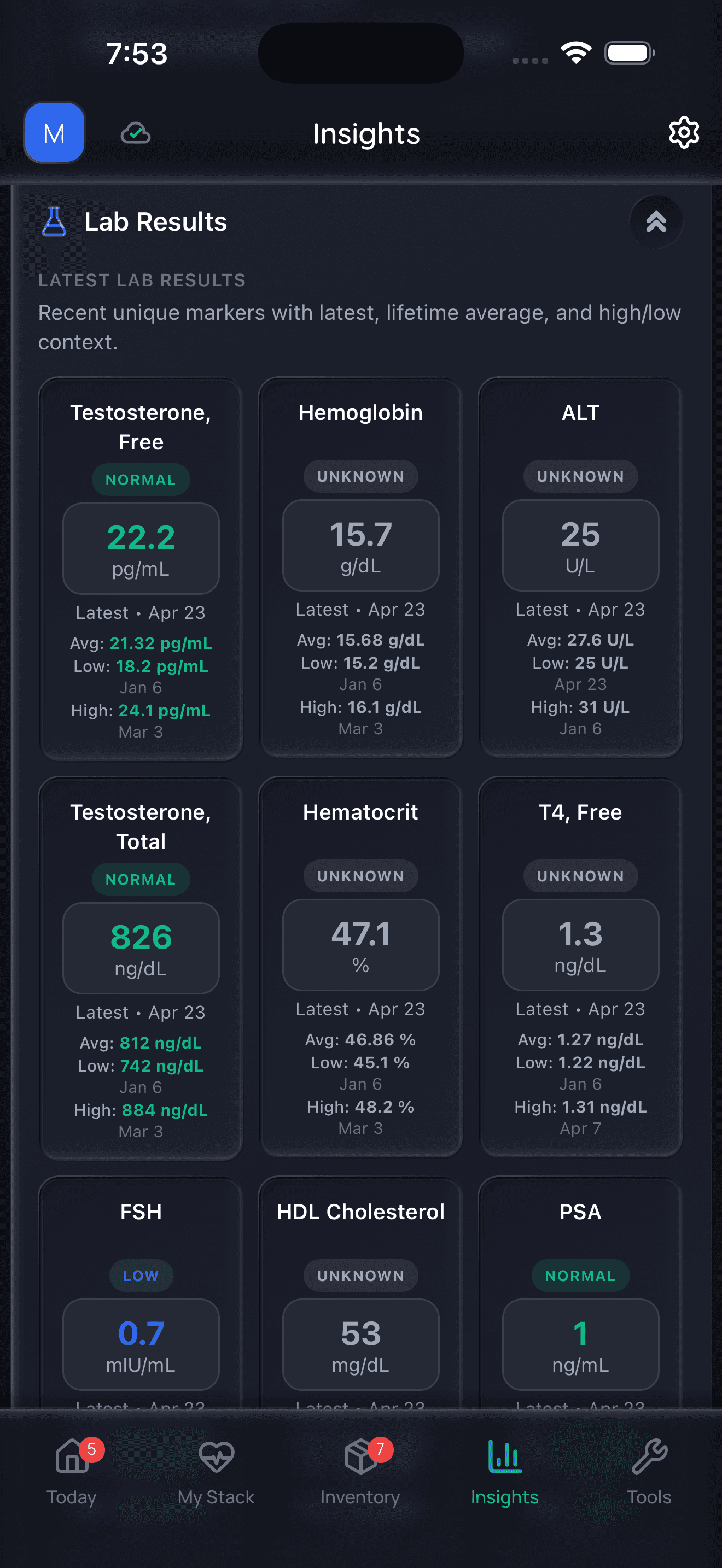
Doserly organizes data; it does not diagnose or interpret labs for you.
Research & Clinical Evidence
The Basics
The evidence base for injectable testosterone is extensive and continues to grow. The most important study for anyone considering TRT is the TRAVERSE trial, published in 2023 in the New England Journal of Medicine. This was the first large-scale randomized controlled trial specifically designed to answer whether testosterone therapy increases the risk of heart attacks and strokes. It enrolled over 5,200 men with low testosterone and either existing cardiovascular disease or high cardiovascular risk, and followed them for an average of 33 months.
The headline finding was reassuring: testosterone therapy was not associated with an increase in major adverse cardiovascular events compared to placebo. This resolved years of conflicting data from smaller studies and observational research that had created uncertainty about the cardiovascular safety of TRT. However, the trial did note increased rates of atrial fibrillation, pulmonary embolism, and acute kidney injury in the testosterone group, reinforcing that TRT is not risk-free and requires ongoing monitoring.
It is worth noting that the TRAVERSE trial used transdermal testosterone gel, not injections. The cardiovascular safety findings are generally considered applicable across routes for major events, though injection-specific effects on hematocrit (a risk factor for blood clots) are typically more pronounced than with gels.
Beyond cardiovascular safety, decades of clinical trials have consistently shown that injectable TRT improves sexual function and libido, increases lean muscle mass, reduces body fat, improves bone mineral density, and may improve mood and energy in men with confirmed hypogonadism. The TTrials (Testosterone Trials), which studied 790 men aged 65 and older, demonstrated significant improvements in sexual activity, physical function, and bone density with testosterone therapy [15].
The Science
TRAVERSE Trial (Lincoff et al., NEJM 2023): Randomized, double-blind, placebo-controlled, noninferiority trial. 5,246 men aged 45-80 with hypogonadism (median baseline T: 227 ng/dL, IQR 188-258) and preexisting CVD or elevated CV risk. Transdermal 1.62% testosterone gel vs placebo for mean 21.8 months treatment, 33 months follow-up. Primary composite endpoint (MACE: CV death, nonfatal MI, nonfatal stroke): HR 0.96 (95% CI: 0.78-1.17), meeting the prespecified noninferiority margin of 1.20. Secondary findings: increased atrial fibrillation, pulmonary embolism (absolute risk difference small), and acute kidney injury (2.3% vs 1.5%, p=0.04) in testosterone group [16].
TTrials (Snyder et al., NEJM 2016): Seven coordinated placebo-controlled trials in 790 men ≥65 years with unequivocally low testosterone. Demonstrated significant improvement in sexual function (IIEF), physical function (6-minute walk distance), and vitality. Bone density improvement demonstrated in the Bone Trial sub-study [17].
IM vs SC Route Comparison (2021, PMID 34694927): 234 hypogonadal men treated with IM-TC 100mg/wk vs SC-TE autoinjector 100mg/wk. Both achieved comparable trough testosterone. SC independently associated with lower post-therapy estradiol (p<0.001) and hematocrit (p<0.001). Neither route associated with significant PSA changes [6].
SC PK Studies (Kaminetsky et al., 2015-2019): Phase II/registration studies of SC testosterone enanthate autoinjector. 92.7% of patients achieved average TT 300-1,100 ng/dL. SC demonstrated steady-state PK with small peak-trough fluctuations. >95% reported no injection-related pain. Most common adverse events: increased hematocrit, hypertension, increased PSA [13].
Evidence & Effectiveness Matrix
Category
Sexual Function & Libido
- Evidence Strength
- 9/10
- Reported Effectiveness
- 8/10
- Summary
- Strong RCT evidence (TTrials, multiple meta-analyses). Community reports libido improvement as earliest and most consistent benefit of injectable TRT.
Category
Energy & Vitality
- Evidence Strength
- 7/10
- Reported Effectiveness
- 7/10
- Summary
- Moderate RCT evidence. TTrials showed vitality improvement but smaller effect size than sexual function. Community reports strong initial energy gains that attenuate at 3-6 months.
Category
Mood & Emotional Wellbeing
- Evidence Strength
- 7/10
- Reported Effectiveness
- 7/10
- Summary
- TTrials and multiple smaller RCTs show mood improvement. Community reports substantial mood stabilization with injectable TRT.
Category
Anxiety & Stress Response
- Evidence Strength
- 5/10
- Reported Effectiveness
- 5/10
- Summary
- Limited RCT data. Community reports are mixed; anxiety may worsen with peak-trough fluctuations or elevated E2.
Category
Cognitive Function
- Evidence Strength
- 5/10
- Reported Effectiveness
- 6/10
- Summary
- TTrials cognitive sub-study showed no significant benefit. Community reports modest brain fog reduction.
Category
Muscle Mass & Strength
- Evidence Strength
- 9/10
- Reported Effectiveness
- 8/10
- Summary
- Strong meta-analytic evidence for lean mass gain. Injectable TRT combined with resistance training produces reliable strength and hypertrophy gains.
Category
Body Fat & Composition
- Evidence Strength
- 8/10
- Reported Effectiveness
- 7/10
- Summary
- Meta-analyses (Corona 2016) show consistent fat mass reduction. Community reports meaningful body recomposition with diet and exercise.
Category
Bone Health
- Evidence Strength
- 7/10
- Reported Effectiveness
- Not Scored
- Summary
- TTrials Bone sub-study showed improved BMD. Insufficient community discussion specific to injectable route.
Category
Cardiovascular Health
- Evidence Strength
- 8/10
- Reported Effectiveness
- 4/10
- Summary
- TRAVERSE provides reassurance for MACE noninferiority. Community reports BP and hematocrit concerns.
Category
Metabolic Health
- Evidence Strength
- 6/10
- Reported Effectiveness
- Not Scored
- Summary
- Observational data shows metabolic improvement. Insufficient community data for scoring.
Category
Sleep Quality
- Evidence Strength
- 4/10
- Reported Effectiveness
- 6/10
- Summary
- Limited RCT evidence. Community reports modest improvement; OSA monitoring recommended.
Category
Fertility & Reproductive
- Evidence Strength
- 9/10
- Reported Effectiveness
- 3/10
- Summary
- Strong evidence for spermatogenesis suppression. Community well-aware of fertility impact. Score reflects negative outcome (suppression).
Category
Polycythemia & Hematologic
- Evidence Strength
- 9/10
- Reported Effectiveness
- 3/10
- Summary
- Well-documented hematocrit elevation, higher with IM than transdermal/SC. Community frequently discusses phlebotomy needs. Score reflects negative outcome.
Category
Prostate Health
- Evidence Strength
- 7/10
- Reported Effectiveness
- Not Scored
- Summary
- PSA monitoring required. Current evidence does not support causal link to prostate cancer. Insufficient community discussion for route-specific scoring.
Category
Skin & Hair
- Evidence Strength
- 6/10
- Reported Effectiveness
- 4/10
- Summary
- DHT-mediated effects well-characterized. Community reports acne and hair thinning as common injection-related side effects.
Category
Gynecomastia & Estrogen
- Evidence Strength
- 7/10
- Reported Effectiveness
- 4/10
- Summary
- Aromatization to E2 well-documented. IM associated with higher E2 peaks. Community extensively discusses E2 management.
Category
Fluid Retention & Edema
- Evidence Strength
- 5/10
- Reported Effectiveness
- 4/10
- Summary
- Dose-dependent sodium and water retention documented. Community reports bloating, particularly with higher doses.
Category
Overall Quality of Life
- Evidence Strength
- 8/10
- Reported Effectiveness
- 8/10
- Summary
- Multiple validated QoL measures show improvement. Community reports strong, sustained quality of life improvement with injectable TRT.
Benefits & Therapeutic Effects
The Basics
Injectable testosterone, when used to treat confirmed hypogonadism, can produce meaningful improvements across several areas of health and daily functioning. The benefits are not immediate for most men. Some changes, like libido improvement, can begin within the first few weeks. Others, like body composition changes and bone density improvement, take months to become apparent.
The most commonly reported benefits of injectable TRT include improved sexual desire and function, increased energy and reduced fatigue, better mood stability and reduced depressive symptoms, increased lean muscle mass and reduced body fat (particularly with exercise), and improved bone mineral density. For many men with confirmed low testosterone, these improvements are substantial enough to significantly improve daily quality of life.
It is important to set realistic expectations. Injectable TRT restores testosterone to normal physiological levels; it does not create supraphysiological enhancement. The degree of benefit varies between individuals and depends on factors including the severity of the deficiency, age, overall health, exercise habits, and diet. Some men experience dramatic improvement, while others notice more modest changes. Not all symptoms attributed to low testosterone will resolve with TRT alone, because some symptoms may have other contributing causes.
The Science
Systematic reviews and meta-analyses of testosterone therapy in hypogonadal men demonstrate consistent benefits across multiple domains. A meta-analysis by Corona et al. (2016, 59 RCTs, n=5,078) demonstrated significant lean mass gain and fat mass reduction with testosterone supplementation [4]. The TTrials (2016) provided the most rigorous evidence for sexual function improvement, with significant increases in IIEF scores and sexual activity frequency in men ≥65 with confirmed hypogonadism [17].
For injectable formulations specifically, benefits are considered equivalent to or marginally superior to transdermal routes for achieving target testosterone levels, with the advantage of guaranteed absorption (eliminating the application site variability and transfer risk associated with gels). The injection route provides dose precision and the ability to titrate based on measured trough levels, which is a key advantage for optimizing individual therapy [1].
Risks, Side Effects & Safety
The Basics
Like any medical treatment, injectable testosterone comes with potential risks and side effects that you and your provider should discuss openly. Understanding these risks in context is important. Many are dose-dependent and manageable with proper monitoring, and some are specific to the injection route while others apply to all forms of TRT.
The most common side effects of injectable TRT include acne or oily skin, injection site discomfort or soreness (more common with IM than SC), mild fluid retention in the first weeks, changes in mood or irritability (sometimes related to peak-trough fluctuation), and testicular shrinkage (from HPG axis suppression). These are generally manageable and often improve with dose adjustment or injection frequency changes.
The more serious risks require monitoring. Polycythemia (elevated red blood cell count) is the most common lab abnormality requiring intervention. Testosterone stimulates red blood cell production, and hematocrit levels above 54% significantly increase the risk of blood clots, stroke, and other cardiovascular events. Injectable testosterone, particularly IM at higher doses, tends to produce more hematocrit elevation than transdermal or SC routes. Regular blood monitoring is essential: your provider should check hematocrit at baseline, after 3-6 months, and then at least annually.
Cardiovascular safety was a major concern until the TRAVERSE trial provided reassurance. Among 5,246 men with low testosterone and high cardiovascular risk, testosterone therapy did not increase the rate of heart attacks or strokes compared to placebo (HR 0.96, 95% CI: 0.78-1.17). In absolute terms, major cardiovascular events occurred in 7.0% of the testosterone group versus 7.3% of the placebo group over a mean follow-up of 33 months. However, TRAVERSE did find increased rates of atrial fibrillation, pulmonary embolism, and acute kidney injury in the testosterone group, so cardiovascular monitoring remains important [16].
Fertility suppression is not a side effect in the traditional sense; it is an expected pharmacological consequence. Exogenous testosterone shuts down the brain's signal to the testes, which reduces or eliminates sperm production. This is discussed in detail in Section 14.
The Science
Polycythemia/Erythrocytosis: Testosterone stimulates erythropoiesis through both direct bone marrow effects and indirect effects via erythropoietin upregulation and hepcidin suppression. The hematocrit threshold of >54% is widely accepted as the point requiring clinical intervention (dose reduction, route change, or therapeutic phlebotomy). Rates of polycythemia are route-dependent: IM injections of cypionate/enanthate produce higher peak testosterone levels, which correlate with greater erythropoietic stimulation. A direct comparison found IM-TC associated with significantly higher post-treatment hematocrit than SC-TE at equivalent weekly doses (p<0.001) [6]. Testosterone undecanoate IM, with its lower peak levels, has shown minimal polycythemia risk in published data [14].
Cardiovascular Safety (TRAVERSE): The TRAVERSE trial (n=5,246, HR 0.96, 95% CI: 0.78-1.17 for MACE non-inferiority) established that testosterone therapy does not increase major adverse cardiovascular events in middle-aged and older men with hypogonadism and preexisting or high-risk cardiovascular disease over a mean 33-month follow-up [16]. Secondary safety signals included increased nonfatal arrhythmias, atrial fibrillation, pulmonary embolism, and acute kidney injury (2.3% vs 1.5%, p=0.04). These findings apply to transdermal testosterone; extrapolation to injectable routes is considered reasonable for MACE but requires caution for route-specific effects (e.g., polycythemia risk is higher with injections).
Prostate Safety: The AUA Guideline states: "Patients should be informed that there is no definitive evidence linking testosterone therapy to the development of prostate cancer" [18]. The saturation model, proposed by Morgentaler, suggests that prostate tissue androgen receptors become saturated at relatively low testosterone concentrations (~230 ng/dL), and further increases in serum testosterone do not proportionally increase prostate stimulation. PSA monitoring remains standard practice: check at baseline, 3-12 months, then per age-appropriate screening guidelines.
Contraindications (Endocrine Society 2018): Breast cancer, prostate cancer (active/untreated), palpable prostate nodule, PSA >4 ng/mL (or >3 with high risk without urological evaluation), elevated hematocrit at baseline, untreated severe obstructive sleep apnea, severe lower urinary tract symptoms, uncontrolled heart failure, MI or stroke within 6 months, thrombophilia, near-term fertility planning [1].
Dosing & Treatment Protocols
The Basics
The dosing of injectable testosterone is not one-size-fits-all. Your provider will start with a dose based on clinical guidelines and then adjust it based on your blood work (particularly trough testosterone levels), symptom response, and any side effects. The goal is to bring your testosterone level into the mid-normal physiological range, typically around 450-700 ng/dL at trough, though individual targets may vary.
Here is a general overview of the most common injectable protocols:
Testosterone Cypionate or Enanthate (Standard IM):
Commonly prescribed starting ranges are 50-100 mg weekly or 100-200 mg every two weeks. Biweekly dosing was the traditional standard but has fallen out of favor because it produces wider peak-trough swings. Most providers and guidelines now recommend weekly dosing for more stable levels.
Testosterone Enanthate (SC, Xyosted):
FDA-approved starting dose of 75 mg subcutaneously once weekly. Available in 50, 75, and 100 mg prefilled autoinjectors. Dose adjusted based on testosterone levels at week 7.
Testosterone Undecanoate (IM, Aveed):
750 mg IM at weeks 0 and 4, then every 10 weeks thereafter. Administered in a clinical setting (not self-injected) due to risk of pulmonary oil microembolism. Requires a 30-minute post-injection observation period.
Community-Discussed Protocols:
Many men in online TRT communities divide their weekly dose into two or more smaller injections per week to reduce peak-trough fluctuation. For example, instead of 100 mg once weekly, they may inject 50 mg every 3.5 days or 25-30 mg every other day. Some use daily subcutaneous micro-doses of 10-20 mg. These more frequent protocols are not specifically addressed in major clinical guidelines but are increasingly used in clinical practice.
The Science
The Endocrine Society (2018) recommends initiating TRT and monitoring testosterone levels at 3-6 months, aiming to maintain serum testosterone in the mid-normal range. The AUA guideline provides dosing profiles: cypionate and enanthate at 50-200 mg every 7-14 days IM, with the expectation that dose adjustments will be needed based on measured trough levels [1][18].
The Xyosted registration study demonstrated that dose-adjusted SC enanthate (50-100 mg weekly) achieved steady-state trough levels of 487 ng/dL at 52 weeks, with 92.7% of patients achieving the target range of 300-1,100 ng/dL and no patient exceeding 1,800 ng/dL [13].
Dosing protocols often change over the course of treatment — starting doses get adjusted, injection frequencies get split, esters get switched. Doserly maintains a complete history of every protocol change, giving you and your provider a clear picture of what's been tried and how each adjustment affected your symptoms and lab values.
The app's adherence analytics show your consistency patterns and can highlight whether missed doses or timing variations correlate with symptom changes. When your provider is considering a dose adjustment based on your trough levels, having this data available makes the conversation more productive and the decision more informed.
Turn symptom and safety notes into a clearer timeline.
Doserly helps you log doses, symptoms, and safety observations side by side so patterns are easier to discuss with a qualified clinician.
Pattern view
Logs and observations

Pattern visibility is informational and should be reviewed with a clinician.
What to Expect (Timeline)
Days 1-7: You may notice a subtle energy boost or mood lift within the first few days after your initial injection. Some of this may be a placebo effect from the positive step of starting treatment. Injection site soreness (if IM) is common and typically lasts 1-2 days. No significant hormonal changes are expected yet, as testosterone levels are still stabilizing.
Weeks 2-4: Libido changes are often the first noticeable benefit, with many men reporting increased sexual desire and improved morning erections during this period. Some men notice improved energy and reduced afternoon fatigue. Mood may begin to stabilize. Hematocrit may start to rise, though it is too early for clinical significance. Injection technique improves as you become more comfortable with the routine.
Months 1-3: Sexual function improvements become more consistent. Initial body composition changes may begin if you are exercising. Mood stabilization is typically more noticeable. Your provider will check trough testosterone and hematocrit levels at this stage and may adjust your dose. Some men experience acne or oily skin as testosterone and DHT levels normalize. Testicular volume may begin to decrease.
Months 3-6: Body composition changes become more apparent, particularly if combined with resistance training. Strength improvements are noticeable. Fat loss, especially visceral fat reduction, may become measurable. Full sexual function benefits are typically realized during this period. Bone density improvements are beginning but not yet measurable. Hematocrit should be monitored closely.
Months 6-12: Significant body composition changes are evident in most men who exercise regularly. Bone mineral density improvements become measurable on DEXA. Mood and cognitive effects reach steady state. Annual monitoring becomes the routine: hematocrit, PSA (if age-appropriate), testosterone levels, lipids, metabolic panel.
Ongoing Maintenance: Annual review with provider to reassess symptoms, continued indication, dose optimization, and risk-benefit discussion. Many men on injectable TRT report sustained benefits over years and decades of use. Dose adjustments may be needed as your body composition, health status, or goals change over time.
Fertility Preservation & HPG Axis
Injectable testosterone, like all forms of exogenous testosterone, suppresses the hypothalamic-pituitary-gonadal (HPG) axis. This is not a rare side effect; it is an expected pharmacological consequence of treatment.
When you inject testosterone, your brain detects the elevated serum levels and reduces its secretion of gonadotropin-releasing hormone (GnRH). This leads to decreased production of luteinizing hormone (LH) and follicle-stimulating hormone (FSH) from the pituitary. Without adequate LH stimulation, Leydig cells in the testes reduce their testosterone production. Without adequate FSH, Sertoli cell function declines and spermatogenesis is impaired. Intratesticular testosterone concentrations, normally 40-100 times higher than serum levels, drop dramatically, and the testes often shrink in volume.
Spermatogenesis Suppression: Approximately 40-60% of men on TRT achieve azoospermia (zero sperm) by 6 months, with the remainder typically showing severe oligospermia (fewer than 1 million sperm per mL). Sperm count decline typically begins within 2-3 months of starting treatment [10].
Fertility Preservation Strategies:
- Sperm banking before TRT: Recommended for all men of reproductive age before starting injectable TRT, particularly if biological children may be desired in the future.
- HCG co-administration: 250-500 IU subcutaneously 2-3 times weekly can maintain intratesticular testosterone and preserve spermatogenesis in some men during TRT. Not universally recommended by guidelines but widely used in clinical practice.
- Clomiphene or enclomiphene as alternatives: For men desiring fertility, selective estrogen receptor modulators (SERMs) can raise endogenous testosterone by stimulating LH/FSH without suppressing spermatogenesis. These are off-label uses but supported by growing evidence.
Recovery After Discontinuation: Recovery of the HPG axis and spermatogenesis after stopping injectable TRT is variable and not guaranteed. Most men recover to some degree, but the timeline ranges from 6 to 24 months or longer. Factors affecting recovery include duration of TRT use (longer use may delay recovery), age, pre-TRT hormonal status, and whether HCG was used concurrently. Men with primary hypogonadism (testicular failure) may have limited recovery potential regardless.
Clinical Importance: Fertility counseling should be part of every TRT initiation conversation for men of reproductive age. This is not a minor consideration. The decision to start injectable TRT should include a candid discussion about fertility goals, sperm banking options, and the availability of alternative treatments (SERMs, HCG monotherapy) that can raise testosterone without suppressing spermatogenesis.
Interactions & Compatibility
Drug-Drug Interactions:
- Anticoagulants (warfarin, apixaban, rivaroxaban, dabigatran): Testosterone may enhance anticoagulant effects. INR monitoring required for warfarin users. Cross-reference: Testosterone Cypionate for formulation-specific interaction data.
- Insulin and diabetes medications: Testosterone may improve insulin sensitivity, potentially requiring dose reduction of diabetes medications. Metabolic monitoring recommended.
- Corticosteroids: Additive fluid retention risk. May be clinically relevant in men with cardiac or renal conditions.
- 5-alpha reductase inhibitors (finasteride, dutasteride): Block conversion to DHT, affecting efficacy of androgenic effects (hair, prostate) and side effect profile. Some providers co-prescribe to mitigate hair loss on TRT.
- Aromatase inhibitors (anastrozole): Common co-prescription, though clinical guidelines do not recommend routine use. See Section Section 18. Cross-reference: Anastrozole
- Opioids: Suppress HPG axis and may be an underlying cause of low testosterone. Cross-reference: Opioid-Induced Androgen Deficiency
Supplement Interactions:
- DHEA: Additive androgenic effects. Use caution.
- Boron: May increase free testosterone by reducing SHBG. Generally considered safe.
- Zinc: Supports testosterone production. Supplementation may help men with zinc deficiency.
- Saw Palmetto: 5-AR inhibition properties. Cross-reference: Saw Palmetto
Lifestyle Factors:
- Alcohol: Suppresses testosterone production and increases aromatization to estradiol. Moderation recommended.
- Sleep: Critical for hormonal health. TRT may improve sleep quality but can worsen obstructive sleep apnea.
- Exercise: Resistance training is synergistic with TRT for body composition and strength benefits. Cross-reference: TRT and Body Composition
- Body composition: Weight loss in obese men may normalize testosterone without TRT. Cross-reference: Obesity-Related Hypogonadism
Decision-Making Framework
Choosing injectable testosterone as your TRT delivery method involves weighing several factors with your healthcare provider. This section provides a framework for that conversation, not a recommendation.
When Injectable TRT May Be Appropriate:
- Confirmed hypogonadism (two morning fasting total T below threshold, plus symptoms)
- Preference for guaranteed absorption and dose precision
- Cost is a significant factor (injections are the most affordable TRT option)
- Willingness to learn self-injection technique
- No contraindications to injection therapy
Advantages of Injections Over Other Routes:
- Lowest cost among TRT options (generic cypionate/enanthate are widely available)
- Reliable absorption (no skin variability, no transfer risk to partners or children)
- Precise dose control and ability to titrate based on trough levels
- Flexible injection frequency (can adjust from biweekly to daily)
- Well-established long-term safety record (70+ years of clinical use)
Disadvantages to Consider:
- Requires needle use (anxiety is common initially but usually resolves)
- Peak-trough fluctuation inherent to intermittent dosing (can be minimized with more frequent injection schedules)
- Higher polycythemia risk compared to transdermal testosterone, particularly with IM route
- IM injections may require clinic visits if not self-injecting
- Undecanoate (Aveed) requires clinic administration with 30-minute observation period
Questions to Ask Your Provider:
- Which injectable formulation do you recommend for my situation?
- How often should I inject, and can I self-inject at home?
- What should my target trough testosterone level be?
- How will we monitor for side effects, particularly hematocrit?
- Should I consider sperm banking before starting?
- What is the cost difference between injectable and other TRT options with my insurance?
Cross-reference: TRT for Beginners for a broader treatment decision overview.
Administration & Practical Guide
Intramuscular (IM) Injection:
Common IM injection sites include the vastus lateralis (outer thigh), ventrogluteal (upper outer hip), and deltoid (upper arm). The vastus lateralis is the most common site for self-injection due to easy access.
- Needle gauge: Typically 22-25 gauge, 1-1.5 inch length
- Technique: Clean the injection site with alcohol. Draw up the prescribed dose using a drawing needle (18G), then switch to the injection needle. Insert at a 90-degree angle into the muscle. Aspirate briefly (though aspiration is no longer universally recommended). Inject slowly over 10-30 seconds. Withdraw and apply gentle pressure.
- Site rotation: Alternate between left and right sides and between injection sites to prevent tissue buildup
- Post-injection: Light massage of the site may reduce soreness. Some discomfort lasting 1-2 days is normal
Subcutaneous (SC) Injection:
SC injection sites include the abdomen (periumbilical, avoiding 2 inches around navel) and outer thigh fat. SC injection is gaining acceptance due to ease, comfort, and potentially improved PK profile.
- Needle gauge: 27-30 gauge, 0.5-5/8 inch length (similar to insulin syringes)
- Technique: Pinch a fold of skin and fat. Insert needle at a 45-90 degree angle (depending on body fat). Inject slowly. Release skin fold and withdraw needle.
- Advantages over IM: Less pain, smaller needles, easier self-administration, potentially lower hematocrit and estradiol levels
- Note: SC administration of testosterone cypionate and enanthate from IM-labeled vials is an off-label use. The medication is identical; only the approved route differs. Xyosted and Azmiro are FDA-approved for SC use.
Self-Injection Tips:
- Your first few injections may feel nerve-wracking. This is completely normal. Most men report that it becomes routine within a few weeks.
- Warming the oil-based testosterone to body temperature (hold the vial in your hands for a few minutes) makes injection smoother.
- Use a separate drawing needle (larger gauge) and injection needle (smaller gauge) to reduce discomfort.
- Keep a sharps container for safe needle disposal. These are available at pharmacies.
This section is for educational purposes only and does not replace the instructions provided by your pharmacy and prescriber.
Getting the administration routine right can take some experimenting. Doserly tracks not just whether you took your dose, but when, where you injected, and how — building a picture of your actual routine that can reveal opportunities for optimization.
The app's analytics can show whether small timing shifts affect how you feel, whether your injection site rotation is balanced, and how your adherence has evolved since you started treatment. When your provider asks about compliance, you'll have real data — not an estimate — and when something feels off, you can check whether an administration change might be the reason.
Build reminders around the routine, not just the compound.
Doserly can keep timing, skipped doses, and schedule changes organized so the plan you read about becomes easier to follow and review.
Today view
Upcoming reminders
Reminder tracking supports consistency; it does not select a protocol for you.
Monitoring & Lab Work
Pre-TRT Baseline Labs:
Total testosterone (two morning fasting draws), free testosterone (calculated or equilibrium dialysis), LH, FSH, estradiol, SHBG, prolactin (if secondary hypogonadism suspected), CBC with hematocrit, PSA (age-appropriate), comprehensive metabolic panel, lipid panel, DEXA if osteoporosis risk factors present.
Initial Follow-up (4-12 weeks):
- Trough testosterone level (drawn the morning of or day before your next injection)
- Hematocrit (most critical safety marker for injectable TRT)
- Symptom assessment and side effect evaluation
- Dose adjustment if trough levels are outside target range
Ongoing Monitoring Schedule:
- Hematocrit: Every 6-12 months. Threshold for intervention: >54%. Options if elevated: dose reduction, switch from IM to SC or transdermal, therapeutic phlebotomy, increased injection frequency (to reduce peaks).
- PSA: Per age-appropriate screening guidelines (discuss with provider). Annually for men >40. Urological referral if confirmed increase >1.4 ng/mL above baseline or PSA >4.0 ng/mL.
- Testosterone levels: Trough levels for injectable formulations. Goal: mid-normal range (approximately 450-700 ng/dL at trough for most men).
- Estradiol: Only if symptomatic (gynecomastia, fluid retention, mood instability). Not routine per Endocrine Society guidelines.
- Lipid panel: Annually.
- Bone density (DEXA): If osteoporosis was an indication for TRT.
- Semen analysis: If fertility is a concern during treatment.
Annual Review Checklist: Symptom reassessment, continued indication review, risk-benefit discussion, dose optimization, side effect management review.
Estrogen Management on TRT
Aromatization of testosterone to estradiol is a normal physiological process, and men need estradiol for bone health, brain function, cardiovascular protection, and libido. When injectable testosterone levels peak (particularly with IM dosing at higher doses or infrequent schedules), aromatization increases proportionally, which can lead to symptomatic estradiol elevation in some men.
When Estrogen Management Matters:
Only when clinical symptoms or clearly elevated E2 levels are present. The Endocrine Society and AUA do not recommend routine aromatase inhibitor (AI) use or routine estradiol monitoring in asymptomatic men on TRT [1][18].
High E2 Symptoms: Gynecomastia (breast tissue growth), nipple sensitivity, excessive fluid retention, emotional lability, bloating.
Low E2 Symptoms (from over-suppression with AI): Joint pain and stiffness, low libido (paradoxically), dry skin, fatigue, depression, bone density loss. Low E2 symptoms can be more problematic than high E2 symptoms.
Injection-Specific Considerations:
Injectable TRT, particularly IM at standard doses, produces higher testosterone peaks than transdermal formulations. Higher peaks lead to more aromatization and higher E2. Strategies to reduce E2 without AI use include: increasing injection frequency (to reduce peaks), switching from IM to SC route (lower peaks, associated with lower E2 in comparative studies), and reducing total dose if levels are supraphysiological.
Cross-reference: Anastrozole, Estrogen Management on TRT
Stopping TRT / Post-Cycle Considerations
Stopping injectable TRT is a significant decision that should be made with your healthcare provider. When exogenous testosterone is discontinued, the HPG axis must recover, which takes time and is not guaranteed to return to pre-TRT levels.
HPG Axis Recovery:
After stopping injections, LH and FSH remain suppressed for weeks to months. Endogenous testosterone production may take 6-24 months or longer to recover. During this period, men typically experience symptom return: fatigue, low libido, mood changes, and physical decline.
Post-Cycle Therapy (PCT) Protocols:
PCT protocols are adapted from the anabolic steroid community and are not standardized in clinical guidelines for TRT discontinuation. They are community-derived practices with limited formal study.
- HCG taper: 1,000-2,000 IU every other day for 2-4 weeks to stimulate testicular function before SERM initiation
- Clomiphene citrate: 25-50 mg daily for 4-8 weeks to stimulate LH/FSH recovery
- Enclomiphene: Newer SERM with potentially fewer side effects than clomiphene
- Tamoxifen: 10-20 mg daily for 4-6 weeks (less commonly used for TRT PCT)
Primary vs Secondary Hypogonadism Recovery:
- Primary (testicular failure): Limited recovery expected. The testes may not respond adequately even with restored LH/FSH.
- Secondary (pituitary/hypothalamic): Better prognosis for axis recovery, especially with SERM support and after addressing underlying causes (weight loss, stopping offending medications, treating sleep apnea).
Is TRT Lifelong?
For many men with organic primary hypogonadism, yes. For secondary hypogonadism, addressing underlying causes (obesity, sleep apnea, opioid use) may restore endogenous production. For age-related decline, the answer is individualized.
Cross-reference: Stopping TRT & Post-Cycle Recovery, HCG, Clomiphene, Enclomiphene
Special Populations & Situations
Obese Men
Obesity is the strongest modifiable risk factor for testosterone deficiency. Weight loss alone may normalize testosterone levels without requiring TRT. For obese men who do start injectable TRT, higher aromatization from adipose tissue may lead to elevated estradiol. More frequent injections or SC route may help manage this. Cross-reference: Obesity-Related Hypogonadism
Men with Sleep Apnea
TRT may exacerbate obstructive sleep apnea. CPAP optimization should occur before and during TRT. Sleep study recommended before initiation in men with symptoms or risk factors. The Endocrine Society lists untreated severe OSA as a contraindication to TRT.
Men with Prostate Cancer History
Historically an absolute contraindication. Evidence is evolving: the saturation model suggests exogenous testosterone may not further stimulate prostate at physiological levels. Active surveillance patients are being studied. Requires specialized urological consultation.
Cardiovascular Disease History
TRAVERSE trial provides reassurance for MACE noninferiority in this population. Route consideration: transdermal or SC may be preferred to IM for hematocrit management. Close hematocrit and cardiovascular monitoring essential.
Type 2 Diabetes
TRT may improve insulin sensitivity, HbA1c, and metabolic parameters in hypogonadal diabetic men. Diabetes medication adjustments may be needed. The Endocrine Society recommends against using TRT primarily to improve glycemic control.
Transgender Men (FTM)
Different dosing goals (masculinizing doses). Voice changes are permanent. Body and facial hair growth timeline varies. Fertility counseling (oocyte preservation) is essential before initiation. Injectable testosterone is the most commonly used formulation in gender-affirming hormone therapy, with both IM and SC routes well-supported by clinical experience and growing evidence. Cross-reference: Testosterone Cypionate, Testosterone Enanthate
Older Men (>65)
Age-related testosterone decline versus true hypogonadism debate. TRAVERSE and TTrials data are primarily from this population. Lower starting doses often appropriate. Increased polycythemia risk. Prostate monitoring heightened. Cross-reference: Late-Onset Hypogonadism
Regulatory, Insurance & International
United States (FDA/DEA):
All injectable testosterone products are Schedule III controlled substances. FDA-approved indication: classical hypogonadism (testosterone deficiency due to testicular, pituitary, or hypothalamic dysfunction). Age-related testosterone decline is NOT an FDA-approved indication. Generic testosterone cypionate and enanthate are widely available and represent the lowest-cost TRT option. Aveed (testosterone undecanoate) is available under REMS with mandatory clinic administration and 30-minute observation. Xyosted and Azmiro are available as branded SC products at higher cost.
Insurance Considerations:
Many insurance plans cover injectable testosterone for documented hypogonadism. Prior authorization commonly required (two low morning testosterone values plus symptoms). Generic cypionate/enanthate typically have lowest copays. Step therapy may require trying less expensive formulations before branded products.
International Availability:
Sustanon 250 (testosterone blend) is widely available outside the US but not FDA-approved. Nebido (testosterone undecanoate) is the international equivalent of Aveed, available in the UK, EU, Australia, and many other countries, with longer injection intervals (every 10-14 weeks).
Travel Considerations:
Traveling with injectable testosterone (a controlled substance) requires a prescription label, original packaging, and awareness of destination country regulations. Some countries restrict import of controlled substances. Carry a letter from your prescribing provider.
Cross-reference: TRT Access in the United States, TRT Access in the United Kingdom, TRT Access in Australia
Frequently Asked Questions
Q: Is injectable testosterone the same as anabolic steroids?
A: Injectable testosterone used for TRT is the same molecule used by bodybuilders, but the context is fundamentally different. TRT doses replace testosterone to normal physiological levels (typically 450-700 ng/dL). Anabolic steroid use involves supraphysiological doses (often 500-2,000+ mg/week) for performance enhancement. The risks and benefits are completely different at these two dose ranges.
Q: How long does it take for testosterone injections to work?
A: Most men notice improved libido within 2-4 weeks. Energy and mood improvements typically follow within 4-8 weeks. Body composition changes take 3-6 months. Full benefits are usually realized by 6-12 months. Individual response varies.
Q: Does it matter whether I use testosterone cypionate or enanthate?
A: For practical purposes, cypionate and enanthate are clinically interchangeable. Both achieve similar testosterone levels at equivalent doses. Some men report a preference for one over the other based on subjective experience with the oil vehicle (cottonseed vs sesame oil) or local tolerance, but clinical guidelines consider them equivalent.
Q: Can I inject subcutaneously instead of intramuscularly?
A: Yes, and growing evidence supports SC injection as a valid alternative. The same testosterone vial labeled for IM use can be injected SC (off-label). Xyosted and Azmiro are FDA-approved for SC use. SC injection uses smaller needles, is easier to self-administer, and may produce more stable levels with lower hematocrit and estradiol elevations.
Q: Will testosterone injections make me infertile?
A: Exogenous testosterone suppresses sperm production, often to azoospermia. This is usually reversible after discontinuation (recovery takes 6-24 months), but recovery is not guaranteed. Sperm banking is recommended before starting TRT for men who may want biological children. HCG co-administration during TRT may help preserve fertility.
Q: How often should I get blood work while on injectable TRT?
A: At baseline, at 3-6 months after starting, and then at least annually. Hematocrit is the most critical lab for injectable TRT; check at each visit. Testosterone levels should be measured at trough (the morning of or day before your next injection).
Q: Will injections raise my hematocrit too high?
A: Polycythemia (elevated hematocrit) is the most common laboratory abnormality with injectable TRT. Risk is higher with IM than SC injection and with higher doses. The threshold for intervention is >54%. Management options include dose reduction, more frequent injections, switching to SC or transdermal route, and therapeutic phlebotomy.
Q: Are testosterone injections painful?
A: IM injections with standard 22-25G needles cause mild discomfort for most men, with some soreness lasting 1-2 days. SC injections with 27-30G insulin-type needles are described as virtually painless by most users. Needle anxiety is common initially but usually resolves within a few injections.
Q: Can I travel with injectable testosterone?
A: Yes, but testosterone is a controlled substance. Carry your prescription, keep the medication in its original packaging, and be aware of destination country regulations. Consider carrying a provider letter describing your medical need. Some countries may require import permits.
Q: Should I start TRT with injections or with gel?
A: This decision should be individualized with your provider. Injections offer lower cost, guaranteed absorption, and dose precision. Gels offer convenience and no needles but carry transfer risk and higher cost. Some providers start with gels for older men or those with cardiovascular risk factors, then switch to injections if preferred.
Q: Is there a risk of oil embolism from testosterone injections?
A: Pulmonary oil microembolism (POME) is a rare but recognized risk, primarily associated with large-volume IM injections (particularly testosterone undecanoate/Aveed). Symptoms include cough, shortness of breath, and chest tightness. This is one reason Aveed requires clinic administration with a 30-minute observation period. POME is extremely rare with standard-volume cypionate/enanthate injections.
Myth vs. Fact
Myth: Testosterone injections cause heart attacks.
Fact: The TRAVERSE trial (n=5,246), the largest randomized controlled trial of testosterone therapy, found no increase in major adverse cardiovascular events (heart attack, stroke, cardiovascular death) with testosterone therapy compared to placebo (HR 0.96, 95% CI: 0.78-1.17). In absolute terms, MACE occurred in 7.0% of the testosterone group vs 7.3% of placebo over 33 months. However, increased rates of atrial fibrillation and pulmonary embolism were noted, so cardiovascular monitoring remains important [16].
Myth: Once you start testosterone injections, you can never stop.
Fact: While many men with organic hypogonadism choose lifelong TRT, it is possible to stop. The HPG axis can recover, though recovery takes 6-24 months and is not guaranteed. Men with secondary hypogonadism who address underlying causes (obesity, sleep apnea, opioid use) may be able to discontinue successfully. PCT protocols can facilitate recovery.
Myth: Testosterone injections cause prostate cancer.
Fact: Current evidence does not support a causal link between testosterone therapy and prostate cancer. The AUA guideline states there is "no definitive evidence linking testosterone therapy to the development of prostate cancer." The saturation model suggests prostate androgen receptors are saturated at low physiological testosterone levels. PSA monitoring is standard practice [18].
Myth: Testosterone injections will make you permanently infertile.
Fact: Exogenous testosterone suppresses spermatogenesis, often to azoospermia. However, sperm production typically recovers after discontinuation, though the timeline is variable (6-24+ months) and full recovery is not guaranteed. Sperm banking before TRT and HCG co-administration during TRT are strategies to preserve fertility [10].
Myth: Intramuscular injection is the only way to inject testosterone.
Fact: Subcutaneous injection is a well-supported alternative. The same testosterone formulation can be injected SC (off-label from IM vials, or FDA-approved via Xyosted/Azmiro). Evidence shows comparable testosterone levels with potentially lower estradiol and hematocrit elevation [6].
Myth: Higher testosterone doses from injections are always better.
Fact: The goal of TRT is to restore testosterone to the normal physiological range, not to maximize it. Supraphysiological testosterone levels increase side effects (polycythemia, acne, fluid retention, estradiol elevation) without proportional benefit. The therapeutic sweet spot for most men is a trough testosterone of 450-700 ng/dL.
Myth: You need an aromatase inhibitor with every testosterone injection protocol.
Fact: The Endocrine Society and AUA do not recommend routine AI use during TRT. Most men on therapeutic doses do not need an AI. Estradiol monitoring should occur only if symptoms suggest elevation. Aggressive E2 suppression is harmful: it causes joint pain, mood disturbance, decreased libido, and bone density loss. Adjusting injection frequency or dose is preferred over adding an AI [1][18].
Myth: All TRT clinics that prescribe injectable testosterone are the same quality.
Fact: Quality varies significantly. Red flags include: prescribing without adequate lab confirmation, cookie-cutter protocols without individualization, inadequate monitoring, co-prescribing AI and HCG to all patients without clinical indication, and aggressive marketing. Reputable providers follow clinical guidelines, require confirmed hypogonadism, monitor regularly, and individualize treatment.
Sources & References
Clinical Guidelines
[1] Bhasin S, Brito JP, Cunningham GR, et al. Testosterone therapy in men with hypogonadism: an Endocrine Society clinical practice guideline. J Clin Endocrinol Metab. 2018;103(5):1715-1744. https://doi.org/10.1210/jc.2018-00229
[18] Mulhall JP, Trost LW, Brannigan RE, et al. Evaluation and management of testosterone deficiency: AUA guideline. J Urol. 2018;200:423-432. https://doi.org/10.1016/j.juro.2018.02.076
Landmark Trials
[16] Lincoff AM, Bhasin S, Flevaris P, et al. Cardiovascular safety of testosterone-replacement therapy. N Engl J Med. 2023;389:107-117. https://doi.org/10.1056/NEJMoa2215025
[17] Snyder PJ, Bhasin S, Cunningham GR, et al. Effects of testosterone treatment in older men. N Engl J Med. 2016;374(7):611-624. https://doi.org/10.1056/NEJMoa1506119
Systematic Reviews & Pharmacokinetic Studies
[2] Wang C, Swerdloff RS. Testosterone replacement therapy in hypogonadal men. In: Endotext. PMCID: PMC8994707.
[3] Yassin AA, Haffejee M. Testosterone depot injection in male hypogonadism: a critical appraisal. PMCID: PMC2686335.
[4] Corona G, Giagulli VA, Maseroli E, et al. Testosterone supplementation and body composition: results from a meta-analysis of observational studies. J Endocrinol Invest. 2016;39:967-981.
[5] Corona G, Torres LG, Vignozzi L, et al. Testosterone supplementation and body composition: results from a meta-analysis study. J Endocrinol Invest. 2016;39:967-981.
[6] Kuo C, Wang F, Perkins V, et al. Comparison of outcomes for hypogonadal men treated with intramuscular testosterone cypionate versus subcutaneous testosterone enanthate autoinjector. J Urol. 2022;207(3):677-683. PMID: 34694927.
[11] Sokol RZ, Palacios A, Campfield LA, et al. Comparison of the kinetics of injectable testosterone in eugonadal and hypogonadal men. Fertil Steril. 1982;37(3):425-430.
[12] Kaminetsky J, Jaffe JS, Swerdloff RS. Pharmacokinetic profile of subcutaneous testosterone enanthate delivered via a novel, prefilled single-use autoinjector: a phase II study. Sex Med. 2015;3:263-273. PMID: 26797061.
[13] Kaminetsky JC, et al. A 52-week study of dose adjusted subcutaneous testosterone enanthate in oil self-administered via disposable auto-injector. J Urol. 2019;201:587-594. PMID: 30296416.
[14] Yassin AA, Haffejee M. Testosterone depot injection in male hypogonadism. Clin Interv Aging. 2007;2(4):615-624. PMC2686335.
Pharmacology & Clinical Reviews
[7] Heinlein CA, Chang C. The roles of androgen receptors and androgen-binding proteins in nongenomic androgen actions. Mol Endocrinol. 2002;16(10):2181-2187.
[8] Khosla S, Monroe DG. Regulation of bone metabolism by sex steroids. Cold Spring Harb Perspect Med. 2018;8(1):a031211.
[9] Swerdloff RS, Dudley RE, Page ST, et al. Dihydrotestosterone: biochemistry, physiology, and clinical implications of elevated blood levels. Endocr Rev. 2017;38(3):220-254.
[10] Patel AS, Leong JY, Ramasamy R. Prediction of male infertility by the World Health Organization laboratory manual for assessment of semen analysis: a systematic review. Arab J Urol. 2018;16(1):96-102.
Government/Institutional Sources
[15] FDA Safety Communication. FDA cautions about using testosterone products for low testosterone due to aging. March 3, 2015. https://www.fda.gov/drugs/drug-safety-and-availability/fda-drug-safety-communication-fda-cautions-about-using-testosterone-products-low-testosterone-due
Related Guides & Cross-Links
Same Category (Treatment Overview Guides)
- Testosterone Gels & Topicals Guide
- Oral Testosterone Guide
- TRT for Beginners
- TRT Blood Work Guide
- Natural Testosterone Optimization
Related Medications (Injectable Testosterone)
- Testosterone Cypionate (Depo-Testosterone)
- Testosterone Enanthate (Delatestryl)
- Testosterone Undecanoate Injectable (Aveed/Nebido)
- Testosterone Propionate
- Testosterone Enanthate Auto-Injector (Xyosted)
- Testosterone Cypionate Auto-Injector (Azmiro)
- Sustanon 250