
Hexarelin: Complete Research Guide
On this page
Quick Reference Card
Attribute
Also Known As
- Detail
- Examorelin, EP-23905, MF-6003, Growth Hormone-Releasing Hexapeptide, Hexareline
Attribute
Administration
- Detail
- Injectable (subcutaneous); orally and sublingually active with reduced potency
Attribute
Research Status
- Detail
- Research Compound. Never approved by the FDA for human therapeutic use. WADA prohibited. Small human studies conducted but no regulatory application filed.
Attribute
Typical Dose Range
- Detail
- 100-200 mcg per injection, 1-2 times daily (subcutaneous)
Attribute
Half-Life
- Detail
- 50-71 minutes
Attribute
Cycle Length
- Detail
- 4 weeks on, 4 weeks off (desensitization risk requires mandatory cycling)
Attribute
Storage
- Detail
- Lyophilized: -20°C (-4°F) long-term; Reconstituted: 2-8°C (35.6-46.4°F), use within 4 weeks
Overview / What Is Hexarelin?
The Basics
Hexarelin is a synthetic peptide that belongs to the growth hormone releasing peptide (GHRP) family. It is a modified version of GHRP-6, its predecessor, with a small chemical tweak (the addition of two methyl groups) that makes it significantly more potent at triggering growth hormone release from the pituitary gland. In fact, hexarelin produces the strongest acute growth hormone spike of any peptide in its class.
Think of it as the high-performance option in a family of compounds that all do the same basic thing: tell your pituitary gland to release a burst of growth hormone. Where ipamorelin is considered the gentle, selective version and GHRP-6 is the raw, appetite-driving workhorse, hexarelin sits at the extreme end of the potency spectrum. It delivers the biggest GH pulse, but it also comes with the biggest set of trade-offs, including faster desensitization, more pronounced cortisol and prolactin elevation, and a stricter cycling requirement.
Beyond its growth hormone effects, hexarelin has attracted research attention for something unusual among GHRPs: direct cardioprotective activity. It binds to a receptor on heart cells called CD36, offering protection against damage from ischemia (reduced blood flow) through a mechanism entirely separate from its growth hormone effects. This dual action, as both a GH secretagogue and a cardiac protector, gives hexarelin a unique research profile among peptides in this class.
The Science
Hexarelin (Examorelin, EP-23905) is a synthetic hexapeptide (H-His-D-2-methyl-Trp-Ala-Trp-D-Phe-Lys-NH₂; molecular weight 887.04 Da) that functions as a potent agonist of the growth hormone secretagogue receptor type 1a (GHS-R1a) [1][2]. Structurally derived from GHRP-6 through the substitution of a 2-methyl-D-tryptophan residue at position 2, this modification confers enhanced metabolic stability and greater GH-releasing potency compared to its parent compound [3].
Hexarelin has been studied in multiple clinical contexts including GH deficiency evaluation, body composition, and cardiovascular protection. In comparative human studies, hexarelin demonstrated a more potent GH-releasing effect than ghrelin (the endogenous GHS-R1a ligand) while exhibiting similar endocrine activity profiles [1]. The peptide stimulates GH secretion in pubertal children and adults, though notably not in prepubertal children or elderly subjects, suggesting that its GH-releasing capacity is modulated by age and hormonal milieu [4].
A distinguishing feature of hexarelin is its direct cardiac activity via CD36 receptor binding, which is independent of GH release and has been investigated in ischemia/reperfusion injury models, diabetic cardiomyopathy, and cardiac fibrosis [5][6][7]. This cardioprotective mechanism sets hexarelin apart from other GHRPs in the research literature.
Molecular Identity
Attribute
Common Names
- Detail
- Hexarelin, Examorelin (INN), EP-23905, MF-6003
Attribute
Amino Acid Sequence
- Detail
- H-His-D-2-methyl-Trp-Ala-Trp-D-Phe-Lys-NH₂
Attribute
Sequence Length
- Detail
- 6 amino acids (hexapeptide)
Attribute
Molecular Formula
- Detail
- C₄₇H₅₈N₁₂O₆
Attribute
Molecular Weight
- Detail
- 887.04 Da
Attribute
CAS Number
- Detail
- 140703-51-1
Attribute
PubChem CID
- Detail
- 6918297
Attribute
FDA UNII
- Detail
- 09QF37C617
Attribute
Structure Type
- Detail
- Linear peptide with C-terminal amidation
Attribute
D-Amino Acid Content
- Detail
- D-2-methyl-Trp (position 2), D-Phe (position 5)
Attribute
Key Modification
- Detail
- 2-methyl substitution on D-tryptophan at position 2 (distinguishes from GHRP-6)
Attribute
Functional Class
- Detail
- Ghrelin receptor agonist (GHS-R1a), growth hormone secretagogue
Attribute
Salt Forms
- Detail
- Free peptide or acetate salt; supplied as lyophilized powder
Mechanism of Action
The Basics
Your pituitary gland releases growth hormone in pulses throughout the day, controlled by two opposing signals from the brain. One signal (GHRH, or growth hormone releasing hormone) tells the pituitary to release GH. The other signal (somatostatin) tells it to stop. Hexarelin works by activating the ghrelin receptor on pituitary cells, essentially pressing the "release" button through a pathway that is separate from the GHRH signal.
What makes this interesting is that these two pathways, the GHRH pathway and the ghrelin pathway, are not just separate; they are synergistic. When both are activated at the same time (for example, by combining hexarelin with a GHRH analog like CJC-1295 or sermorelin), the resulting GH release is dramatically larger than what either compound produces alone. Research has documented that this kind of combined stimulation can produce GH spikes exceeding 10-fold above baseline.
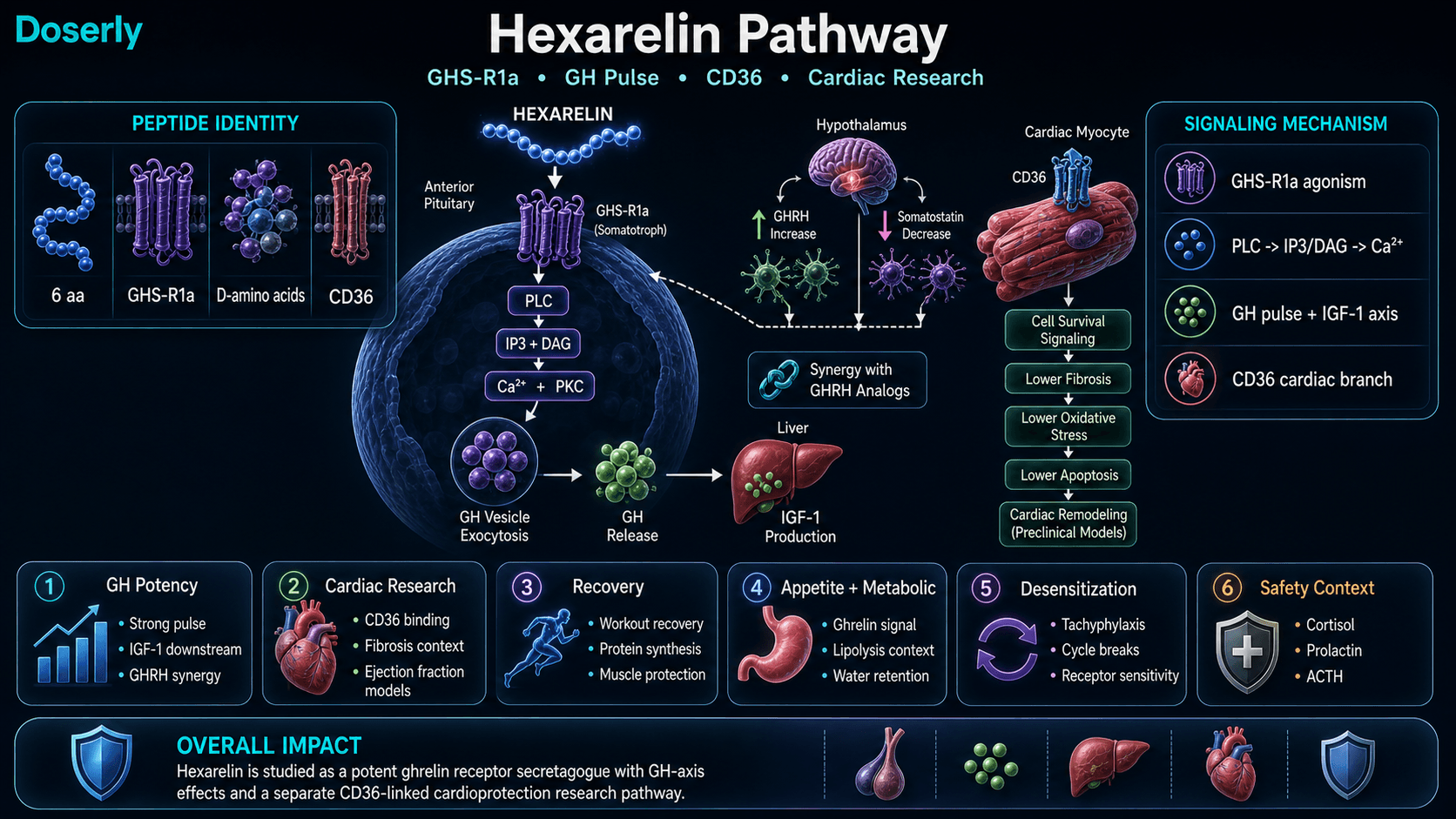
Hexarelin also has a second, entirely separate mechanism that other GHRPs lack. It binds to a receptor called CD36 on heart muscle cells. This binding activates protective pathways that help cardiac cells survive stressful conditions like reduced blood flow or oxidative damage. This cardioprotective effect does not require growth hormone release at all; it works through a different molecular pathway involving PTEN (a tumor suppressor and cell regeneration regulator) and modulation of programmed cell death signals.
The trade-off for hexarelin's extreme potency is that it also activates the ghrelin receptor more broadly than selective compounds like ipamorelin. This broader activation leads to measurable increases in cortisol (a stress hormone), prolactin, and ACTH (adrenocorticotropic hormone) alongside the desired GH release. These off-target effects are the primary reason hexarelin requires more careful management than its milder cousins.
The Science
Hexarelin functions as a potent agonist at GHS-R1a, the G-protein coupled receptor expressed on anterior pituitary somatotrophs and hypothalamic neurons [1][2]. Receptor binding initiates phospholipase C (PLC) activation, generating inositol triphosphate (IP₃) and diacylglycerol (DAG). IP₃ triggers intracellular calcium release from the endoplasmic reticulum, while DAG activates protein kinase C (PKC), driving GH vesicle exocytosis [8].
At the hypothalamic level, hexarelin stimulates arcuate nucleus neurons to release endogenous GHRH while concurrently suppressing somatostatin tone from periventricular neurons [8]. This dual hypothalamic effect amplifies the pituitary GH response beyond what direct somatotroph stimulation produces in isolation.
The GHRH-GHRP synergy has been quantitatively established. Veldhuis and Bowers (2009) demonstrated that GHRP-2 (a closely related compound) alone produced a 47-fold increase in pulsatile GH secretion, GHRH alone a 20-fold increase, and the combination a 54-fold increase, confirming synergy rather than simple additivity [8]. This principle extends to hexarelin combined with GHRH analogs. However, synergy magnitude declines approximately 55% in older men with low testosterone, higher visceral fat, and reduced IGF-1, with abdominal visceral fat, IGF-1, and IGFBP-3 collectively explaining 60% of the variability (P<0.001) [8].
The cardioprotective mechanism operates through CD36 receptor binding on cardiac myocytes, activating PTEN signaling and downregulating protein kinase B (Akt) expression [5][6]. In rat models of myocardial infarction, hexarelin treatment reduced cardiac fibrosis, improved ejection fraction, prevented myocardial remodeling, and decreased scar tissue formation [5][6][7]. Notably, hexarelin improved cardiac function in a streptozotocin-induced diabetic model by modulating intracellular calcium and potassium handling in cardiomyocytes [9]. Oral hexarelin (single dose) also demonstrated chronic cardiac protection post-MI in animal models [10].
A critical mechanistic constraint: ghrelin-pathway agents require intact endogenous GHRH signaling. GHRH-knockout models show markedly attenuated responses to GHRPs, confirming that the ghrelin receptor pathway depends on baseline GHRH tone [8].
Pathway Visualization Image
Pharmacokinetics
The Basics
Hexarelin enters your bloodstream quickly after a subcutaneous injection, reaching peak levels within about 15 to 30 minutes. It stays active for roughly 50 to 70 minutes before being cleared, making it one of the longer-lasting compounds in the GHRP family (GHRP-6 clears in about 20 minutes, GHRP-2 in 25-55 minutes). Despite this relatively longer half-life, hexarelin still produces distinct, sharp GH pulses rather than a sustained elevation, which is closer to how your body naturally secretes growth hormone.
The short working window means most protocols involve at least one, and sometimes two, injections per day. Timing matters: hexarelin works best on an empty stomach, and aligning administration with natural GH secretion windows (particularly the pre-sleep pulse) may amplify its effects.
The most important pharmacokinetic concern with hexarelin is desensitization. With repeated daily dosing, the pituitary's response to hexarelin weakens faster than with other GHRPs. This phenomenon, called tachyphylaxis, is the defining practical limitation of the compound and the reason cycling is considered essential rather than optional. Most sources describe meaningful response attenuation within 2 to 4 weeks of continuous daily use, though some community members report feeling desensitization effects even sooner.
The Science
Hexarelin demonstrates pharmacokinetic properties consistent with modified synthetic hexapeptides. Following subcutaneous administration, rapid absorption produces peak plasma concentrations within 15-30 minutes [1][2]. The plasma elimination half-life of 50-71 minutes reflects the enhanced enzymatic resistance conferred by the D-amino acid substitutions (D-2-methyl-Trp at position 2, D-Phe at position 5) and C-terminal amidation [3].
Hexarelin has demonstrated oral and sublingual bioavailability, though with reduced potency compared to parenteral administration. Human trials confirmed GH elevation via intravenous and subcutaneous routes, with milder responses via oral administration [11]. The compound's hexapeptide structure (MW ~887 Da) supports rapid subcutaneous absorption.
Tachyphylaxis is the primary pharmacokinetic concern. Repeated daily stimulation of GHS-R1a leads to receptor desensitization more rapidly with hexarelin than with other GHRPs, likely due to its higher receptor binding affinity and more complete receptor activation [4][12]. Studies have documented decreased GH responsivity with repeated administration of hexarelin and GHRH in combination [12]. This attenuation pattern necessitates cycling protocols to maintain pituitary sensitivity.
The half-life and clearance data above tells you how long the compound stays active, but what does that mean for your daily schedule? Doserly's pharmacokinetic tools let you plug in your dose and frequency to see a projected concentration timeline, helping you understand when you're at peak levels and when the compound has largely cleared.
This becomes especially useful when titrating. If you're increasing your dose gradually, the estimator shows how each step changes your projected peak and trough levels, giving you and your healthcare provider concrete data to discuss at check-ins rather than relying on subjective feel alone.
See how each compound fits into the whole protocol.
Doserly organizes compounds, supplements, peptides, medications, and hormone protocols together so overlapping routines are easier to understand.
Stack view
Connected protocol
Stack views improve organization; they do not determine compatibility.
Research & Clinical Evidence
Hexarelin and Growth Hormone Release
The Basics
Hexarelin's primary researched application is stimulating growth hormone release, and the data here is extensive compared to many research peptides. Studies in both animals and humans confirm that hexarelin produces powerful GH spikes, often described as the strongest among GHRPs. In animal studies, GH levels have been documented rising 10-20 times above baseline after hexarelin administration. In human studies, hexarelin outperformed ghrelin (the body's own GH-releasing hormone) in head-to-head comparisons.
However, this potency comes with nuance. The GH response varies by age and developmental stage: pubertal children and adults respond well, while prepubertal children and elderly subjects show diminished responses. Patients with certain conditions, such as beta-thalassemia, also respond to hexarelin, suggesting potential therapeutic applications beyond standard GH optimization.
The Science
Comparative endocrine studies in humans demonstrated that hexarelin produces a more potent GH-releasing effect than ghrelin while sharing similar overall endocrine activity profiles [1]. In conscious male rats, both repeated doses and continuous infusions of hexarelin produced significant GH elevation [13]. Cross-species studies in rats, dogs, and humans documented GH increases of 10-20x above baseline [11].
The age-dependent response pattern has clinical implications: hexarelin stimulated GH secretion in pubertal children and adults but not in prepubertal children and elderly subjects [4]. In patients with homozygous beta-thalassemia, hexarelin successfully induced GH release, providing evidence for therapeutic potential in certain disease states [14]. The peptide also stimulated prolactin secretion in patients with acromegaly but not in hyperprolactinemic patients [15], suggesting receptor-level modulation depending on endocrine status.
Hexarelin and Cardiovascular Protection
The Basics
Perhaps the most distinctive area of hexarelin research is its heart-protective effects. Unlike other GHRPs, hexarelin directly binds to a receptor on heart muscle cells called CD36. In animal models of heart attack, hexarelin treatment improved heart function, reduced scar tissue, and helped more heart cells survive the injury. This protection appears to work regardless of growth hormone levels, meaning the heart benefits come from a completely separate mechanism.
Studies in rats also showed that hexarelin reduced the structural remodeling that happens after a heart attack. Remodeling is a process where the heart changes shape and becomes less efficient over time, and it is one of the primary reasons heart attack survivors develop heart failure. Hexarelin appears to interfere with this process. There is even evidence that a single oral dose of hexarelin provided lasting cardiac protection in animal models.
The Science
Hexarelin's cardioprotective effects are mediated through CD36 receptor binding and GHS-R1a activation on cardiac myocytes [5][6]. In ischemia/reperfusion injury models, hexarelin treatment improved cardiac function, increased surviving heart cells, and decreased malondialdehyde production (a marker of oxidative cell death) through interleukin-1 signaling pathway modulation [5].
Chronic hexarelin administration attenuated cardiac fibrosis in spontaneously hypertensive rats [16]. Hexarelin treatment in ghrelin knockout mice post-MI preserved myocardial function and reduced fibrosis [17]. The mechanism involves PTEN upregulation and protein kinase B downregulation, shifting the balance from sympathetic to parasympathetic nervous system dominance and reducing long-term cardiac remodeling [6].
In streptozotocin-induced diabetic rats, hexarelin improved cardiomyocyte function by modulating intracellular calcium and potassium handling [9]. A single oral dose of hexarelin protected chronic cardiac function after myocardial infarction in animal models [10].
Hexarelin and Metabolic Effects
The Basics
Research in animal models suggests hexarelin may help correct abnormal blood lipid profiles (dyslipidemia) while simultaneously improving insulin sensitivity. In insulin-resistant mice, hexarelin treatment improved lipid metabolism and lowered blood sugar. These metabolic effects, combined with GH-mediated increases in fat oxidation, position hexarelin as a compound with potential relevance to metabolic health, though human data in this area remains limited.
The Science
In nonobese insulin-resistant male MKR mice, hexarelin improved lipid metabolic aberrations and corrected dyslipidemia in the setting of insulin resistance while simultaneously lowering blood glucose and improving insulin sensitivity [18]. These effects may be mediated through both GH-dependent mechanisms (increased lipolysis, enhanced fat oxidation) and direct CD36-mediated effects on lipid metabolism.
Hexarelin and Muscle Protection
The Basics
In animal models of cachexia (the severe muscle wasting that accompanies conditions like cancer and chemotherapy), hexarelin and related GHRPs protected muscle cells from damage. The protective mechanism involves regulating calcium flow within muscle cells and preventing mitochondrial dysfunction, both of which are disrupted by chemotherapy drugs. This research suggests potential applications in preserving muscle mass during disease states, though it has not been tested in humans for this purpose.
The Science
In rat models of cisplatin-induced cachexia, hexarelin and the related compound JMV2894 protected skeletal muscle from mitochondrial damage [19]. The mechanism involves regulation of intracellular calcium homeostasis, which is disrupted by chemotherapeutic agents [20]. Calcium dysregulation is a primary driver of skeletal muscle loss during cancer treatment, and GH secretagogues appear to offset these alterations by stabilizing sarcoplasmic reticulum function and mitochondrial membrane potential.
Biomarker Evidence Matrix
Category
Muscle Growth
- Evidence Strength
- 5/10
- Reported Effectiveness
- 5/10
- Summary
- Animal and mechanistic data supports GH-mediated anabolic effects. Community reports are mixed, with most users noting modest rather than dramatic muscle gains.
Category
Recovery & Healing
- Evidence Strength
- 5/10
- Reported Effectiveness
- 6/10
- Summary
- Limited direct clinical evidence, but GH elevation supports recovery. Community reports consistently cite faster workout recovery as a noticeable benefit.
Category
Physical Performance
- Evidence Strength
- 4/10
- Reported Effectiveness
- 5/10
- Summary
- No direct human performance trials. Community reports describe modest stamina improvements but frequently note hexarelin is not superior to alternatives for this purpose.
Category
Heart Health
- Evidence Strength
- 7/10
- Reported Effectiveness
- 5/10
- Summary
- Strong preclinical evidence for cardioprotection via CD36 binding in multiple animal models. No human cardiovascular outcome data. Community does not report measurable cardiac improvements.
Category
Sleep Quality
- Evidence Strength
- 3/10
- Reported Effectiveness
- 5/10
- Summary
- No clinical sleep studies for hexarelin specifically. Community reports are inconsistent, with some reporting deeper sleep and others reporting cortisol-driven insomnia.
Category
Appetite & Satiety
- Evidence Strength
- 6/10
- Reported Effectiveness
- 7/10
- Summary
- Mechanistically expected as a ghrelin receptor agonist. Community consistently reports noticeable appetite increase.
Category
Fat Loss
- Evidence Strength
- 5/10
- Reported Effectiveness
- 4/10
- Summary
- Animal data supports improved lipid metabolism. Community reports are conflicted; appetite stimulation and water retention counteract fat loss goals.
Category
Stress Tolerance
- Evidence Strength
- 4/10
- Reported Effectiveness
- 3/10
- Summary
- Cortisol elevation is documented in dose-response studies. Community consistently reports negative stress-related effects at higher doses.
Category
Fluid Retention
- Evidence Strength
- 5/10
- Reported Effectiveness
- 6/10
- Summary
- Expected pharmacological effect. Community consistently reports moderate water retention (face, hands, waist).
Category
Side Effect Burden
- Evidence Strength
- 6/10
- Reported Effectiveness
- 4/10
- Summary
- Well-documented cortisol, prolactin, and ACTH elevation in clinical studies. Community positions hexarelin as having the heaviest side effect burden among GHRPs.
Category
Bone Health
- Evidence Strength
- 4/10
- Reported Effectiveness
- N/A
- Summary
- GH/IGF-1 elevation supports bone density theoretically. No hexarelin-specific bone data. Community data not yet collected for this category.
Category
Mood & Wellbeing
- Evidence Strength
- 3/10
- Reported Effectiveness
- 4/10
- Summary
- No direct mood studies. Community reports are inconsistent, likely modulated by cortisol elevation and sleep disruption.
Benefits & Potential Effects
The Basics
Hexarelin's potential benefits center on three areas: growth hormone optimization, cardiovascular protection, and recovery support. For growth hormone, hexarelin is simply the most potent option in the GHRP family. It produces larger GH pulses than ipamorelin, GHRP-2, or GHRP-6 when measured head-to-head. This makes it of particular interest for individuals who specifically want maximum GH stimulation in short, strategic bursts.
The cardiovascular angle is what makes hexarelin distinctive. While other GHRPs offer growth hormone benefits, hexarelin is the only one with substantial preclinical evidence for direct heart protection through CD36 receptor binding. This has led some researchers to investigate it specifically for post-cardiac event recovery and for individuals with cardiovascular risk factors, though no human clinical trials have been completed for these indications.
Recovery from intense physical activity is the benefit most consistently reported by community members. Faster workout recovery, reduced soreness, and improved ability to handle high training volumes are the most common themes.
The Science
The primary evidenced benefits of hexarelin include:
Growth hormone stimulation: Hexarelin produces the strongest acute GH response among GHS-R1a agonists, with GH elevations of 4-fold above baseline reported in human studies and 10-20x in animal models [1][11]. The effect is synergistically amplified when combined with GHRH analogs [8].
Cardioprotection: Multiple preclinical studies demonstrate hexarelin-mediated protection against cardiac ischemia/reperfusion injury, reduction in cardiac fibrosis, prevention of pathological cardiac remodeling, and improvement in ejection fraction post-MI [5][6][7][16][17]. The dual mechanism (GHS-R1a + CD36) provides redundant cardioprotective pathways.
Metabolic modulation: Improvement of lipid profiles and insulin sensitivity in insulin-resistant animal models [18]. GH-mediated increases in lipolysis and fat oxidation may contribute to body composition changes.
Muscle protection: Prevention of mitochondrial damage and calcium dysregulation in skeletal muscle during cachexia models [19][20].
Bone density support: Indirect effect via GH/IGF-1 axis elevation. No hexarelin-specific bone density studies, but the mechanism is shared with all GH secretagogues [3].
Side Effects & Safety Considerations
The Basics
Hexarelin's side effect profile is the primary reason it requires more careful management than alternatives like ipamorelin or sermorelin. The key concerns are:
Cortisol and ACTH elevation. Hexarelin raises cortisol levels, and this is not subtle at higher doses. Some users report feeling "wired but tired," experiencing anxiety, and having disrupted sleep, particularly when dosing too close to bedtime. If background stress levels are already high, hexarelin can amplify the cortisol burden.
Prolactin elevation. Hexarelin raises prolactin more significantly than GHRP-2 and much more than ipamorelin (which does not raise prolactin at clinically relevant doses). Elevated prolactin can affect mood, libido, and, with sustained elevation, reproductive function.
Rapid desensitization (tachyphylaxis). This is hexarelin's defining limitation. The pituitary's GH response to hexarelin diminishes faster than with any other GHRP. Without proper cycling, the compound becomes progressively less effective, and the side effects (cortisol, prolactin) persist even as the GH benefit diminishes.
Water retention. Moderate fluid retention is commonly reported, manifesting as facial puffiness, swollen hands, and increased body weight that does not reflect actual fat gain.
Appetite increase. As a ghrelin receptor agonist, hexarelin reliably increases appetite. This is a benefit for some (those trying to gain weight) and a liability for others (those in a caloric deficit).
The Science
Dose-response studies in humans demonstrate that hexarelin stimulates GH, cortisol, and prolactin release in a dose-dependent manner [21]. The cortisol elevation is mediated through ACTH stimulation, though hexarelin shows no interaction with CRH (corticotropin-releasing hormone) on ACTH secretion, suggesting the effect operates through a separate pathway [22].
The tachyphylaxis profile is more aggressive than other GHS-R1a agonists. Studies on repeated administration of hexarelin demonstrated decreased GH responsivity, with the attenuation attributed to receptor downregulation following sustained high-affinity agonist exposure [12]. The desensitization pattern necessitates cycling strategies to maintain efficacy.
Somatostatin interaction represents an additional limiting factor. Hexarelin's GH-releasing effect can be partially attenuated by endogenous somatostatin surges, which may limit its effectiveness in certain physiological contexts [23].
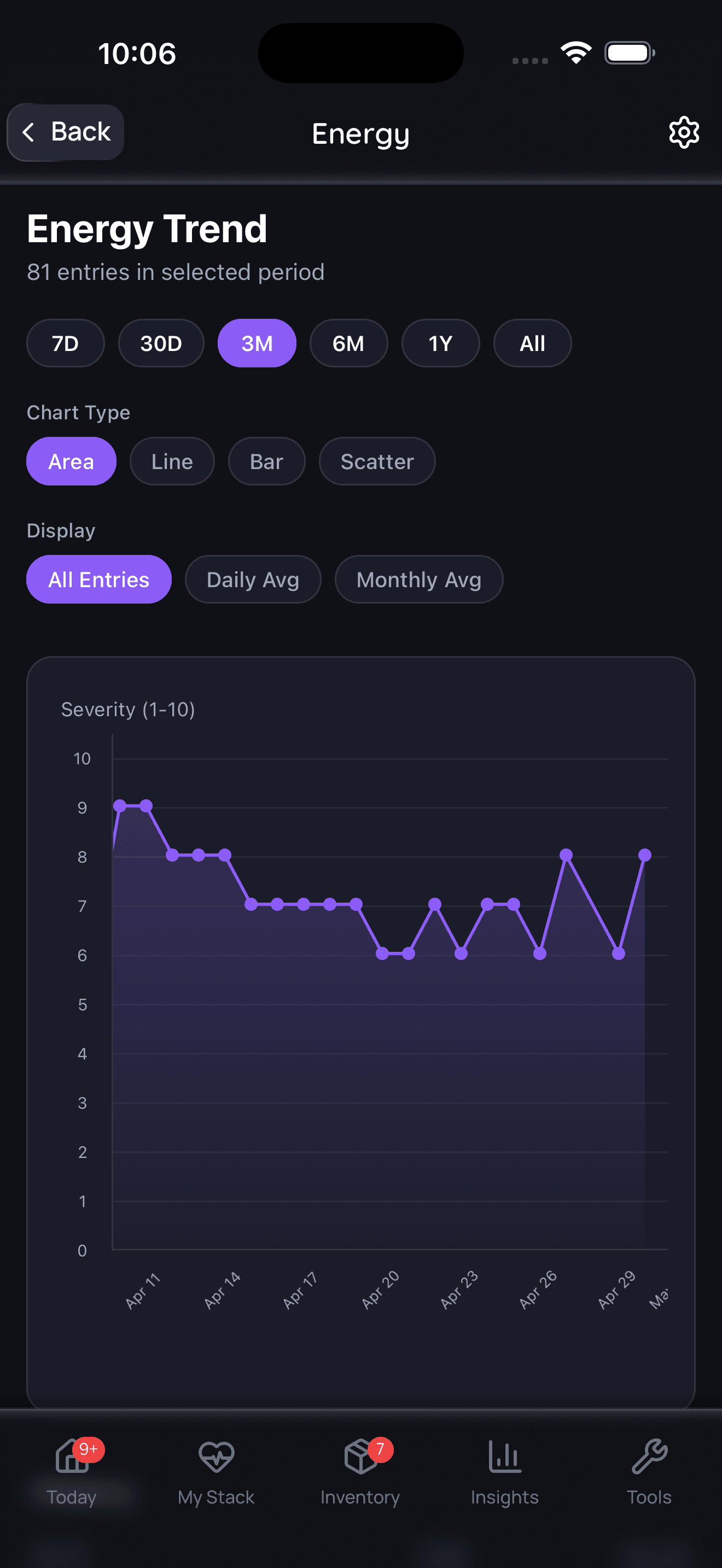
Side effect profiles are most useful when you can compare them against your own experience in real time. Doserly lets you log symptoms, severity, and timing alongside your dosing data, creating a side-by-side view of your protocol and your body's response.
This kind of systematic tracking catches things that memory alone misses. A subtle mood shift that began three days after a dose increase. Sleep disruption that correlates with evening administration. These patterns become visible when the data is laid out on a timeline, and they give your healthcare provider actionable information rather than vague concerns. Early detection of emerging side effects means earlier intervention.
Capture changes while they are still fresh.
Log symptoms, energy, sleep, mood, and other observations alongside protocol events so patterns do not live only in memory.
Trend view
Symptom timeline
Symptom tracking is informational and should be interpreted with a qualified clinician.
Dosing Protocols
The Basics
Hexarelin dosing is defined by the balance between potency and desensitization. Most sources report a dose range of 100-200 mcg per injection administered subcutaneously. The most commonly cited approach is once daily, though some protocols describe twice-daily administration for those willing to accept increased desensitization risk.
Timing typically centers on evening or pre-sleep administration to align with natural GH secretion patterns, though some users report that hexarelin's cortisol-elevating effect makes bedtime dosing counterproductive. Post-workout timing is another common choice.
Cycling is considered essential, not optional, with hexarelin. The most frequently cited protocols include 4 weeks on / 4 weeks off, or a pulsing schedule of 5 days on / 2 days off within a longer cycle. Some sources suggest even shorter on-periods (2 weeks on / 1 week off) to minimize desensitization.
Hexarelin should be administered on an empty stomach, with at least 2 hours of fasting before injection and 30-60 minutes after to avoid blunting the GH response.
The Science
Clinical and community sources report dose ranges of 100-300 mcg per administration via subcutaneous injection [3][11]. Dose-response relationships are well-established: GH, cortisol, and prolactin release all increase in a dose-dependent manner [21]. The optimal therapeutic window appears to be 100-200 mcg, balancing GH response against off-target hormonal effects.
Research protocols have used 1 mcg per pound of body weight as a dosing heuristic, though standardized fixed dosing (100 or 200 mcg) is more commonly cited in clinical studies [3]. For combination protocols with GHRH analogs (CJC-1295, sermorelin), hexarelin doses of 100-200 mcg paired with 100-300 mcg of the GHRH compound are most commonly described.
The reconstitution standard involves 2.0 mL bacteriostatic water per vial, producing a concentration of 1 mg/mL (for 2 mg vials) or 2.5 mg/mL (for 5 mg vials) [3].
The dosing protocols above involve numbers that matter: specific microgram amounts, reconstitution ratios, and timing windows. Getting any of these wrong compounds across every subsequent dose from that vial.
Doserly's dose and reconstitution calculators eliminate the guesswork. Enter your vial size, peptide amount, and target dose, and get the exact bacteriostatic water volume, units per tick mark, and doses per vial. The injection site tracker maps your administration history as a visual heat map across your body, flagging areas that need rest and suggesting rotation patterns. Combined with dose reminders that include compound name, amount, and route, every aspect of your daily protocol is handled with the precision it requires.
Turn symptom and safety notes into a clearer timeline.
Doserly helps you log doses, symptoms, and safety observations side by side so patterns are easier to discuss with a qualified clinician.
Pattern view
Logs and observations

Pattern visibility is informational and should be reviewed with a clinician.
What to Expect
The following timeline is compiled from available community reports and should be considered approximate. Individual responses vary significantly based on dose, protocol, body composition, and concurrent compounds.
Week 1-2:
Most users report noticeable appetite increase within the first few days. Some describe a mild euphoric feeling after initial injections that fades with continued use. Sleep quality may initially worsen before improving (one detailed report noted sleep was worse during days 1-5, then improved from day 5 onward). Some users experience mild tingling or warmth at the injection site. Carpal tunnel-like sensations in the hands and mild aches in the legs or feet have been reported shortly after injection.
Week 2-4:
Recovery improvements become the most commonly noticed effect. Reduced post-workout soreness and the ability to handle heavier training volumes are frequently cited. Sleep typically stabilizes or improves. Nail quality may visibly improve. Water retention becomes more apparent, with some puffiness in the face and hands. Body composition changes may begin: some users report looking leaner while scale weight increases slightly (suggesting simultaneous fat loss and water/lean mass gain).
Week 4-6:
Desensitization begins to emerge for many users, with GH pulses potentially becoming less pronounced. This is the point where most cycling protocols recommend a washout period. Strength gains, if present, tend to plateau or reverse as desensitization progresses. Users who continue beyond 4 weeks without cycling often report diminishing returns.
After Cycling Off (Washout Period):
During the 2-4 week off period, water retention subsides, appetite returns to baseline, and pituitary sensitivity gradually recovers. Some users report that the recovery and body composition benefits persist for a period after discontinuation, though this is anecdotal.
Interaction Compatibility
Synergistic Combinations ("Good With")
- CJC-1295 — GHRH analog; produces synergistic GH release when combined with hexarelin through complementary cAMP/PKA and PLC/PKC pathways. The most commonly used pairing for hexarelin.
- Sermorelin — Another GHRH analog option; same synergy principle as CJC-1295 but with prior FDA approval and different half-life profile.
- Ipamorelin — Can be combined to broaden the GH pulse (hexarelin for potency, ipamorelin for selectivity), though the rationale for combining two GHS-R1a agonists is debated. Some protocols use hexarelin in the morning and ipamorelin at night.
- DSIP — Delta sleep-inducing peptide; sometimes combined to counteract hexarelin's potential sleep-disrupting cortisol effects.
- BPC-157 — Healing peptide; may complement hexarelin's recovery benefits for injury rehabilitation protocols.
- TB-500 — Tissue repair peptide; similar complementary rationale as BPC-157 for recovery-focused stacks.
Compounds to Approach with Caution ("Not Good With")
- GHRP-2 and GHRP-6 — Combining multiple non-selective GHS-R1a agonists may amplify cortisol, prolactin, and appetite effects without proportional GH benefit. Generally considered redundant rather than synergistic.
- MK-677 — Oral ghrelin mimetic; combining with hexarelin would layer ghrelin-pathway stimulation, potentially worsening desensitization and off-target hormonal effects.
- Exogenous growth hormone (HGH) — Exogenous GH suppresses endogenous GH release pathways, potentially reducing hexarelin's effectiveness. The influence of exogenous GH on hexarelin-induced GH release has been directly studied and confirmed [24].
Administration Guide
Materials required:
- U-100 insulin syringes (29-31 gauge, 0.5 inch needle)
- Alcohol swabs (70% isopropanol)
- Bacteriostatic water for reconstitution
- Sharps disposal container
Recommended reconstitution solution:
Bacteriostatic water (0.9% benzyl alcohol preserved) is the standard reconstitution solution. For a 2 mg vial, adding 2.0 mL of bacteriostatic water yields a 1 mg/mL concentration. For a 5 mg vial, the same 2.0 mL yields 2.5 mg/mL. Use the reconstitution calculator for specific volumes based on your vial size and target dose.
Timing considerations:
Hexarelin should be administered on an empty stomach. Most sources recommend at least 2 hours of fasting before administration and waiting 30-60 minutes before eating afterward to avoid blunting the GH response. Evening or post-workout timing is most commonly cited. Some users find that bedtime dosing causes restlessness due to cortisol elevation; if this occurs, moving administration to earlier in the evening or post-workout may help.
Post-administration care:
Monitor for common immediate reactions including mild flushing, hunger, tingling in the hands (similar to carpal tunnel), and mild aches in the extremities. These typically resolve within 30-60 minutes. If persistent facial puffiness or significant water retention develops, note the timing and severity for discussion with a healthcare provider. Log any mood changes, sleep quality shifts, or appetite changes, as these may inform dose or timing adjustments.
Supplies & Planning
Typical vial sizes: Hexarelin is commonly available in 2 mg and 5 mg vials.
Reconstitution solution: Bacteriostatic water (BAC water), typically sold in 10 mL or 30 mL bottles. Each vial reconstitution requires approximately 2.0 mL.
Syringes: U-100 insulin syringes (1 mL capacity, 29-31 gauge). For doses under 10 units, 30-unit or 50-unit insulin syringes provide better measurement accuracy.
Storage containers: A small insulated bag or dedicated refrigerator space for reconstituted vials. Foil or opaque covers for light protection.
Additional supplies: Alcohol swabs, sharps container, labels (to mark reconstitution dates on vials).
Consult with a healthcare provider to determine the appropriate protocol duration and dose for your specific situation, and use the reconstitution calculator to determine exact volumes based on your chosen vial size and target concentration.
Storage & Handling
Lyophilized (powder) form:
Store at -20°C (-4°F) or below for long-term storage (up to 2-3 years at -80°C). Short-term storage at 2-8°C (35.6-46.4°F) is acceptable for weeks to months. Room temperature storage is acceptable only for brief periods (days) during transit or preparation.
Reconstituted (liquid) form:
Refrigerate immediately at 2-8°C (35.6-46.4°F) after reconstitution. Use within 4 weeks (28 days) when reconstituted with bacteriostatic water. Do not freeze reconstituted solutions, as freezing causes peptide denaturation. Avoid repeated freeze-thaw cycles.
Handling best practices:
Allow lyophilized vials to reach room temperature (10-30 minutes) before opening to prevent condensation inside the vial. Keep vials sealed with desiccant to minimize moisture exposure. Wrap reconstituted vials in foil or store in opaque containers to protect from UV light. Swab vial stoppers with alcohol before each draw. Inspect reconstituted solutions for clarity before each use; discard if cloudy, discolored, or containing particles. Label vials with the reconstitution date.
Lifestyle Factors
Diet: Maintain a high-protein, nutrient-dense diet to support the GH release and potential anabolic effects. Protein intake of 1.0-1.2 g per pound of body weight is commonly recommended alongside GH-elevating protocols. Be aware that hexarelin reliably increases appetite; if weight management is a goal, plan meals in advance to avoid unstructured eating during hunger surges.
Exercise: Resistance training is the most synergistic activity with GH secretagogue use, as GH supports protein synthesis, recovery, and connective tissue repair. Some community members report that hexarelin's recovery benefits are most noticeable when training volume is high (4-5 sessions per week). Cardiovascular training may also benefit from GH-mediated improvements in fatty acid oxidation.
Sleep: Ensure 7-9 hours of quality sleep per night. If hexarelin disrupts sleep when dosed before bed, consider shifting administration to earlier in the evening or post-workout. Monitor sleep quality closely, particularly during the first week, as the cortisol effects may cause initial disruption before the system adapts.
Monitoring: Periodic blood work is advisable during hexarelin use. Key markers to track include IGF-1 (to confirm GH axis activation), prolactin (to detect elevation before symptoms emerge), cortisol, and fasting glucose. Cardiovascular markers (lipid panel, blood pressure) may be relevant given hexarelin's cardioprotective research profile.
Regulatory Status & Research Classification
United States (FDA): Hexarelin has never been submitted for FDA approval and holds no IND (Investigational New Drug) status. It is classified as a research compound only. It is not approved, authorized, or regulated for human therapeutic use. Small human studies have been conducted in research settings, but no Phase II or Phase III clinical trials have been registered on ClinicalTrials.gov for hexarelin specifically.
Canada (Health Canada): No DIN (Drug Identification Number) or NPN (Natural Product Number) assigned. Not approved for sale or therapeutic use.
United Kingdom (MHRA): No marketing authorization. Available only through research chemical suppliers.
Australia (TGA): No scheduling or approval status. Available only as a research compound.
European Union (EMA): No marketing authorization application filed. Hexarelin has been studied in European academic settings (primarily Italian research groups), but no regulatory submissions have followed.
WADA Status: All growth hormone secretagogues, including hexarelin, are prohibited under the WADA Prohibited List (category S2: Peptide Hormones, Growth Factors, Related Substances, and Mimetics). Hexarelin is detectable in anti-doping tests and its use is banned in all competitive sports subject to WADA regulations.
Active clinical trials: No registered clinical trials are currently listed on ClinicalTrials.gov for hexarelin as of 2026.
Regulatory status changes frequently. Always verify the current legal status of any compound in your specific country or jurisdiction before making any decisions.
FAQ
What is hexarelin and how does it differ from other GH peptides?
Hexarelin is a synthetic hexapeptide that belongs to the growth hormone releasing peptide (GHRP) family. It is a modified version of GHRP-6 with enhanced potency and metabolic stability. Among GHRPs, hexarelin is generally described as producing the strongest acute GH spike but also carries the highest risk of desensitization and more pronounced cortisol and prolactin elevation compared to alternatives like ipamorelin or sermorelin.
How long can hexarelin be used before desensitization occurs?
Based on available data, most sources suggest that meaningful desensitization can occur within 2-4 weeks of continuous daily use. Cycling protocols (such as 4 weeks on / 4 weeks off, or 5 days on / 2 days off) are commonly recommended to maintain pituitary sensitivity. Some community members report noticing reduced effects as early as 2 weeks, while others maintain response for the full 4-week window.
Can hexarelin be taken orally?
Available research indicates that hexarelin has oral and sublingual bioavailability, though with reduced potency compared to subcutaneous injection. Human trials confirmed GH elevation via oral routes, though the response was milder than with injectable administration. Most protocols prioritize subcutaneous injection for consistent and measurable effects.
What is the recommended approach for someone considering hexarelin?
Sources suggest that hexarelin is generally considered appropriate for individuals who have prior experience with GH peptides and specifically want the strongest available GH pulse in short cycles. Most practitioners recommend starting at the lower end of the commonly cited dose range (100 mcg) and assessing tolerance before considering dose increases. Combination with a GHRH analog (such as CJC-1295 or sermorelin) is frequently described as more effective than hexarelin alone. As with any research compound, consultation with a qualified healthcare provider is essential before beginning any protocol.
Does hexarelin actually protect the heart?
Preclinical (animal) research demonstrates cardioprotective effects through CD36 receptor binding, including reduced cardiac fibrosis, improved ejection fraction post-MI, and prevention of pathological cardiac remodeling. However, no human clinical trials have evaluated hexarelin's cardiovascular effects, and no community members have reported measurable cardiac improvements from personal use. The cardioprotective potential is promising at the research level but remains unproven in humans.
What should be monitored during hexarelin use?
Based on available data, commonly monitored markers include IGF-1 (to assess GH axis response), prolactin (given hexarelin's known elevating effect), cortisol, fasting glucose, and general cardiovascular markers. Subjective monitoring of sleep quality, appetite changes, water retention, and mood is also advisable. Healthcare providers can help determine appropriate monitoring frequency and interpret results.
Sources & References
[1] Arvat E, et al. "Endocrine activities of ghrelin, a natural growth hormone secretagogue, in humans: comparison and interactions with hexarelin, a nonnatural peptidyl GH secretagogue, and GH-releasing hormone." Journal of Clinical Endocrinology & Metabolism. 2001;86(3):1169-1174. PubMed 9285939
[2] Sigalos JT, Pastuszak AW. "The Safety and Efficacy of Growth Hormone Secretagogues." Sexual Medicine Reviews. 2018;6(1):45-53. PubMed 28400207
[3] Ghigo E, et al. "Growth hormone-releasing peptides and their analogs." Journal of Pediatric Endocrinology & Metabolism. 1997;10(Suppl 1):145-150. PubMed 9465289
[4] Loche S, et al. "Hexarelin: A Powerful Stimulus of GH Secretion in Pubertal Children and Adults but Not in Prepubertal Children and Elderly Subjects." Journal of Clinical Endocrinology & Metabolism. 1998;83(11):4087-4090. PubMed 9801989
[5] Huang J, et al. "The Growth Hormone Secretagogue Hexarelin Protects Rat Cardiomyocytes From in vivo Ischemia/Reperfusion Injury Through Interleukin-1 Signaling Pathway." International Heart Journal. 2017;58(2):257-263.
[6] Agbo E, et al. "Modulation of PTEN by Hexarelin attenuates coronary artery ligation-induced heart failure in rats." Turkish Journal of Medical Sciences. 2019;49(3).
[7] McDonald H, et al. "Hexarelin treatment preserves myocardial function and reduces cardiac fibrosis in mouse model of acute myocardial infarction." Physiological Reports. 2018;6(9):e13699.
[8] Veldhuis JD, Bowers CY. "Determinants of joint GH-releasing hormone and GH-releasing peptide synergy in man." American Journal of Physiology -- Endocrinology and Metabolism. 2009;296(5):E1085-E1092. PubMed 19240251
[9] Zhang X, et al. "Improvement of cardiomyocyte function by in vivo Hexarelin treatment in streptozotocin-induced diabetic rats." Physiological Reports. 2018;6(4).
[10] Mao Y, et al. "One dose of oral Hexarelin protects chronic cardiac function after myocardial infarction." Peptides. 2014;56:156-162.
[11] Bowers CY. "Growth hormone-releasing peptide (GHRP)." Cellular and Molecular Life Sciences. 1998;54(12):1316-1329. PubMed 9893710
[12] Laron Z, et al. "Effect of repeated administration of hexarelin and GH-releasing hormone on GH responsivity." Hormone Research. 1995;43(1-3). [PubMed related entry]
[13] Fairhall KM, et al. "Repeated administration and continuous infusion of hexarelin leads to significant GH increase in conscious male rats." Journal of Endocrinology. 1995.
[14] De Sanctis V, et al. "Hexarelin-induced GH release in patients with homozygous beta-thalassemia." Journal of Pediatric Endocrinology & Metabolism. 1998.
[15] Ciccarelli E, et al. "Hexarelin stimulates prolactin secretion in acromegalic but not in hyperprolactinemic patients." Clinical Endocrinology. 1996.
[16] Xu X, et al. "Chronic administration of Hexarelin attenuates cardiac fibrosis in the spontaneously hypertensive rat." American Journal of Physiology -- Heart and Circulatory Physiology. 2012;303(6):H703-711.
[17] Mao Y, et al. "Hexarelin treatment in male ghrelin knockout mice after myocardial infarction." Endocrinology. 2013;154(10):3847-3854.
[18] Mosa R, et al. "Hexarelin, a Growth Hormone Secretagogue, Improves Lipid Metabolic Aberrations in Nonobese Insulin-Resistant Male MKR Mice." Endocrinology. 2017;158(10):3174-3187.
[19] Sirago G, et al. "Growth hormone secretagogues hexarelin and JMV2894 protect skeletal muscle from mitochondrial damages in a rat model of cisplatin-induced cachexia." Scientific Reports. 2017;7.
[20] Conte E, et al. "Growth hormone secretagogues prevent dysregulation of skeletal muscle calcium homeostasis in a rat model of cisplatin-induced cachexia." Journal of Cachexia, Sarcopenia and Muscle. 2017;8(3):386-404.
[21] Ghigo E, et al. "Dose-response study of hexarelin-induced GH, cortisol, and prolactin release." European Journal of Endocrinology. 1997.
[22] Pereira-Lima JF, et al. "Hexarelin shows no interaction with CRH on ACTH secretion in humans." Journal of Endocrinological Investigation. 1998. PubMed 9430449
[23] Arvat E, et al. "Hexarelin and interaction with somatostatin." Journal of Clinical Endocrinology & Metabolism. 1997.
[24] Ghigo E, et al. "Influence of exogenous GH on hexarelin-induced GH release." Journal of Clinical Endocrinology & Metabolism. 1996.
[25] "Growth Hormone Secretagogues and their Cardiovascular Effects." Frontiers in Cardiovascular Medicine. 2021. PubMed 34125740
[26] Ma Y, et al. "Growth hormone secretagogues protect mouse cardiomyocytes from in vitro ischemia/reperfusion injury through regulation of intracellular calcium." PLoS One. 2012;7(4):e35265.
Related Peptide Guides
- GHRP-2 — Closely related GHRP with moderate potency and side effect profile
- GHRP-6 — Hexarelin's parent compound; less potent but strong appetite stimulation
- Ipamorelin — Selective GH secretagogue with minimal cortisol/prolactin effects
- CJC-1295 — GHRH analog commonly combined with hexarelin for synergistic GH release
- Sermorelin — FDA-approved (withdrawn) GHRH analog; alternative GHRH partner for combination protocols
- Tesamorelin — FDA-approved GHRH analog with strongest clinical evidence among secretagogues
- MK-677 — Oral ghrelin mimetic; non-peptide GH secretagogue alternative
- DSIP — Delta sleep-inducing peptide; sometimes combined with hexarelin for sleep support
- BPC-157 — Healing peptide sometimes stacked with hexarelin for recovery protocols
- TB-500 — Tissue repair peptide; complementary recovery compound
- IGF-1 LR3 — Downstream GH mediator; related but different mechanism
- Cardiogen — Cardiac bioregulator peptide; related cardiovascular research interest
Need the reconstitution math for Hexarelin: Complete Research Guide?
Open the calculator with Hexarelin: Complete Research Guide prefilled to estimate concentration, draw volume, and related measurement math from the reconstitution details you already have.