
Prostamax: Complete Research Guide
On this page
Quick Reference Card
Attribute
Also Known As
- Detail
- KEDP tetrapeptide, Prostate bioregulator, Prostate peptide bioregulator, H-Lys-Glu-Asp-Pro-OH, SCHEMBL6660498
Attribute
Administration
- Detail
- Injectable (intramuscular primary; subcutaneous also reported)
Attribute
Research Status
- Detail
- Research Compound — No FDA Approval. Preclinical bioregulator peptide with animal model data (rat prostatitis). No human clinical trials published.
Attribute
Typical Dose Range
- Detail
- 0.5 mg to 10 mg per day, depending on protocol type (see Dosing Protocols)
Attribute
Half-Life
- Detail
- Not characterized. Expected to be seconds to minutes based on structural analogy with similar Khavinson tetrapeptides.
Attribute
Cycle Length
- Detail
- 10-20 days (therapeutic); 8-12 weeks (wellness/anti-aging); repeat courses every 1-6 months
Attribute
Storage
- Detail
- Lyophilized: -20 C long-term, 2-8 C short-term. Reconstituted: 2-8 C, use within 2 weeks. Protect from light. Avoid freeze-thaw cycles.
Overview / What Is Prostamax?
The Basics
Prostamax is a bioregulator peptide designed to support the prostate gland. It consists of just four amino acids (Lysine, Glutamic Acid, Aspartic Acid, and Proline) arranged in the specific sequence KEDP. It belongs to a class of short synthetic peptides developed through decades of Russian bioregulator research at the St. Petersburg Institute of Bioregulation and Gerontology under Professor Vladimir Khavinson.
The core idea behind Prostamax is targeted organ support. As men age, the prostate gland is prone to inflammation, enlargement, and declining cellular function. Chronic prostatitis (prostate inflammation) affects as many as 16% of men at some point, and benign prostatic hyperplasia (BPH, or enlarged prostate) becomes increasingly common after age 50. Conventional treatments for these conditions often rely on hormone-blocking drugs like finasteride or alpha-blockers like tamsulosin, which can come with unwanted sexual side effects.
Prostamax takes a different approach. Rather than blocking hormones or receptors, it is proposed to work at the level of gene expression, interacting directly with DNA to reactivate genes that may have become silenced through aging. This epigenetic mechanism makes it compatible with testosterone and other hormones, avoiding the sexual side effects associated with many conventional prostate treatments.
Research in rat models of chronic prostatitis showed that 15 days of Prostamax treatment reduced prostate swelling, vascular congestion, immune cell infiltration, and scarring [1]. These results are promising but limited: no large-scale human clinical trials have been published, and Prostamax has no regulatory approval for therapeutic use in any major jurisdiction.
The Science
Prostamax (H-Lys-Glu-Asp-Pro-OH, molecular formula C20H33N5O9, MW 487.5 Da, PubChem CID 9848296) is a synthetic bioregulatory tetrapeptide belonging to the Khavinson class of organ-specific bioregulators. It was originally derived from prostate tissue peptide complex research and subsequently synthesized via solid-phase peptide synthesis (SPPS) for experimental use [1][2].
Prostamax is classified as a cytogen, a synthesized bioregulator peptide with a defined amino acid sequence. This distinguishes it from cytomaxes, which are tissue extracts containing variable peptide mixtures. Its development was led by the research program at the St. Petersburg Institute of Bioregulation and Gerontology, which has produced organ-specific bioregulators for multiple tissue systems including cardiac (Cardiogen), neural (Pinealon), hepatic (Ovagen), pancreatic (Pancragen), and pulmonary (Bronchogen) tissue [2][3].
The tetrapeptide's small size and charge distribution (one positively charged lysine, two negatively charged residues in glutamic acid and aspartic acid, plus the conformationally constrained proline) enable cellular and nuclear membrane penetration without receptor-mediated endocytosis. This direct nuclear access allows chromatin interaction and modulation of gene transcription in target tissues [3][4].
Molecular Identity
Attribute
Common Names
- Detail
- Prostamax, KEDP tetrapeptide, Prostate bioregulator peptide, H-KEDP-OH
Attribute
Amino Acid Sequence
- Detail
- H-Lys-Glu-Asp-Pro-OH (KEDP)
Attribute
Sequence Length
- Detail
- 4 amino acids (tetrapeptide)
Attribute
Molecular Formula
- Detail
- C20H33N5O9
Attribute
Molecular Weight
- Detail
- 487.5 g/mol
Attribute
PubChem CID
- Detail
- 9848296
Attribute
Structural Type
- Detail
- Linear peptide with free N-terminal amino group and C-terminal carboxylic acid
Attribute
Source
- Detail
- Originally derived from prostate tissue peptide complex; now produced via solid-phase peptide synthesis (SPPS)
Attribute
Net Charge at Physiological pH
- Detail
- Weakly negative; two acidic residues (Glu, Asp) vs. one basic residue (Lys)
Attribute
Key Amino Acid Features
- Detail
- Lysine provides positive charge for nuclear penetration; proline imino acid provides conformational constraints and structural rigidity
Attribute
Appearance
- Detail
- White lyophilized powder
Mechanism of Action
The Basics
Prostamax works differently from most prostate medications. Rather than blocking hormones or relaxing smooth muscle, it is small enough to pass directly through cell membranes and into the cell nucleus. Once there, it interacts with DNA itself, influencing which genes are turned on and which are turned off.
Think of aging cells as libraries where some of the books have been locked away in storage. Over time, the DNA in your cells gets packed more tightly (a process called heterochromatin condensation), making certain genes harder for the cell to read. Prostamax appears to reverse this packing, effectively reopening access to instructions the cell had lost touch with.
For prostate cells specifically, this means reactivating repair programs, anti-inflammatory responses, and normal growth patterns. For immune cells like lymphocytes, it means restoring their ability to produce proteins and regulate the inflammatory response more effectively. This is why Prostamax has shown effects both in prostate tissue directly and in immune cells that contribute to prostate inflammation [2][3][4].
The important distinction from conventional prostate drugs is what Prostamax does not do: it does not block DHT (dihydrotestosterone), suppress androgens, or interfere with alpha-adrenergic receptors. This makes it compatible with testosterone replacement therapy and avoids the sexual side effects that are common complaints with drugs like finasteride.
The Science
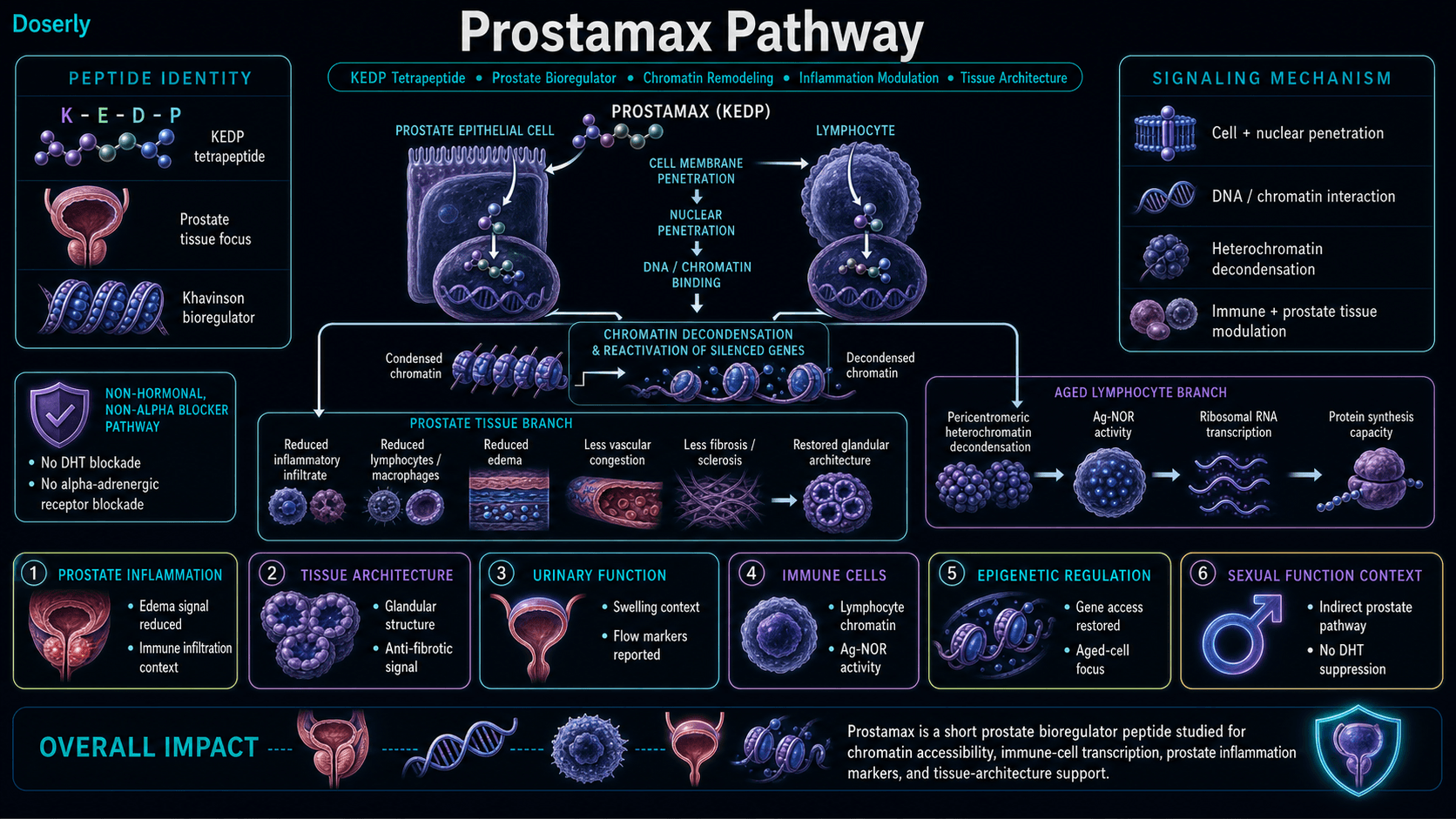
Prostamax exerts its biological effects through direct epigenetic modulation of gene expression via chromatin remodeling. The tetrapeptide crosses cellular and nuclear membranes, binds DNA, and promotes decondensation of heterochromatin, reactivating transcriptionally silenced genes [3][4].
In human lymphocyte studies, Prostamax induces pericentromeric chromatin decondensation, increases Ag-NOR (nucleolar organizer region) activity (indicating enhanced ribosomal RNA transcription), and alters sister chromatid exchange frequencies. These changes are consistent with broad transcriptional reactivation of silenced genomic regions [3][4].
Prostate-specific effects include:
- Reduction of inflammatory infiltrate (lymphocyte, macrophage) in chronic prostatitis models [1]
- Decreased vascular congestion (hyperemia) in prostatic tissue [1]
- Prevention of sclerotic and atrophic changes, indicating anti-fibrotic activity [1]
- Restoration of normal prostatic glandular architecture [1]
Immune system effects include:
- Increased ribosomal expression in lymphocytes, facilitating enhanced protein translation [4]
- Chromatin decondensation in aged lymphocytes comparable to effects of Epithalon and Vilon [4]
- Modulation of inflammatory signaling cascades, reducing pathological immune cell infiltration in prostate tissue [1]
The persistence of effects beyond active treatment is attributed to the epigenetic mechanism: once chromatin accessibility is restored, the resulting gene expression changes are maintained through cell division cycles until age-related condensation progressively reverses them [2][3].
Pathway Visualization Image
Pharmacokinetics
The Basics
Detailed pharmacokinetic data for Prostamax (how quickly it is absorbed, how long it circulates, how it is eliminated) has not been published in the available literature. What we know is based on structural analogy with other Khavinson tetrapeptides of similar size.
As a very small peptide (only 4 amino acids, 487.5 daltons), Prostamax is expected to be cleared from the bloodstream very quickly, likely within minutes. However, the biological effects of the peptide should not be confused with its circulation time. Because Prostamax works by changing gene expression patterns (an epigenetic mechanism), its effects persist long after the peptide itself has been broken down. This is why bioregulator protocols use short treatment courses (10-20 days) followed by months without treatment. The gene expression changes initiated during the active treatment window continue independently of the peptide's presence.
The route of elimination is presumed to follow standard peptide metabolism: enzymatic breakdown into individual amino acids that enter normal metabolic recycling pathways.
The Science
No formal pharmacokinetic studies (measuring Cmax, Tmax, AUC, elimination half-life, or bioavailability) for Prostamax have been published in peer-reviewed literature as of early 2026.
Based on structural analogy with other Khavinson tetrapeptides of similar molecular weight (approximately 400-600 Da), plasma half-life is expected to be on the order of seconds to minutes. Cardiogen (AEDR, MW 489.48 Da), the nearest characterized analog, has an estimated plasma half-life of 30-75 seconds [5]. Prostamax's comparable molecular weight (487.5 Da) suggests a similar clearance profile.
The pharmacodynamic profile is more informative than the pharmacokinetic profile for this class of compounds. Rat studies demonstrated anti-inflammatory and anti-fibrotic effects in prostatic tissue following 15-day treatment courses [1]. Cell culture studies show persistent chromatin remodeling effects following peptide exposure, consistent with epigenetic changes that outlast the peptide's physical presence [3][4].
The route of elimination is presumed to follow standard peptide catabolism via ubiquitous tissue peptidases, yielding the constituent amino acids (lysine, glutamic acid, aspartic acid, proline) for normal metabolic recycling.
Research & Clinical Evidence
Prostamax and Chronic Prostatitis
The Basics
The strongest preclinical evidence for Prostamax comes from a rat model of chronic abacterial prostatitis (CAP), the most common and most difficult-to-treat form of prostate inflammation. Unlike bacterial prostatitis, which responds to antibiotics, CAP often resists conventional treatment and frequently recurs.
In this study, rats with induced chronic prostatitis received Prostamax for 15 days. The results showed reduced prostate swelling, less blood vessel congestion, fewer immune cells infiltrating the tissue, and decreased scarring. This combination of effects suggests that Prostamax addressed multiple aspects of the disease simultaneously: the inflammation itself, the immune system's overreaction, and the tissue damage that follows chronic inflammation [1].
What makes these findings particularly interesting is that CAP rates have nearly tripled since the late 20th century, yet effective treatments remain limited. A compound that addresses the root cellular dysfunction rather than just managing symptoms could represent a meaningful advance for the millions of men affected [1].
The Science
Borovskaya et al. (2013) conducted a controlled study in a rat model of chronic aseptic prostatitis, demonstrating Prostamax efficacy in reducing multiple histopathological markers of disease [1]:
- Prostatic gland swelling (edema): significantly reduced vs. untreated controls
- Vascular congestion (hyperemia): resolved in treated animals
- Lymphocyte infiltration: decreased, indicating reduced inflammatory immune response
- Fibrotic/sclerotic changes: prevented, suggesting anti-remodeling activity
- Glandular architecture: restored toward normal morphology
The study duration was 15 days, with intramuscular administration. The authors noted that the anti-inflammatory effects exceeded expectations given the compound's primary classification as a tissue-targeted bioregulator rather than a conventional anti-inflammatory agent [1].
Prostamax and Chromatin Remodeling
The Basics
Research in cell cultures from older individuals shows that Prostamax can reverse one of the fundamental changes that occurs as cells age. DNA becomes more tightly packed (condensed) over time, effectively silencing genes that the cell needs for healthy function. Prostamax loosens this packing, allowing the cell to access instructions it had lost touch with.
This effect is not limited to prostate cells. Studies in human lymphocytes (immune cells) from elderly subjects showed that Prostamax opened up densely packed chromatin, increased the cell's protein-making machinery, and shifted the overall genetic profile toward a more youthful state [3][4].
An intriguing finding from comparative biology supports this mechanism: Prostamax and similar epigenetically active peptides are found naturally in long-lived rodent species like the naked mole rat but are absent in short-lived species. This suggests that the chromatin-remodeling effects observed in laboratory studies may be directly linked to longevity in nature [2].
The Science
Dzhokhadze et al. (2012) demonstrated that the oligopeptide bioregulator Lys-Glu-Asp-Pro induces deheterochromatinization of chromatin in aged human lymphocytes. Pericentromeric heterochromatin decondensation was quantified using thermal denaturation profiles, with treated cells showing measurable shifts in chromatin thermal stability consistent with increased transcriptional accessibility [3].
Meskhi et al. (2004) confirmed Prostamax's influence on heterochromatin structure in human lymphocytes in situ, documenting changes in chromatin condensation markers [4].
Khavinson et al. (2004) extended these findings by demonstrating that short peptides including Prostamax increase Ag-NOR activity (a marker of ribosomal gene transcription) in senile subject lymphocytes, indicating enhanced protein synthesis capacity [6].
Khavinson et al. (2017) reported that epigenetically active peptides including KEDP are present in the tissues of long-lived rodent species (e.g., naked mole rat, Heterocephalus glaber) but absent in short-lived species, providing an evolutionary context for the observed anti-aging effects [2].
Prostamax and Immune Function
The Basics
Although Prostamax is designed to target the prostate, research shows it also affects immune cells. In lymphocytes (white blood cells that play a central role in immune responses), Prostamax increases the activity of ribosomes (the cell's protein factories) and opens up tightly packed DNA. The result is immune cells that can produce more proteins and respond more effectively [4][6].
This dual action on both prostate tissue and immune cells is relevant because many prostate conditions, particularly chronic prostatitis, involve an overactive or misdirected immune response. By normalizing both the prostate cells and the immune cells that interact with them, Prostamax may address prostate inflammation from two directions simultaneously [1][4].
The Science
Khavinson et al. (2004) demonstrated that Prostamax treatment of aged human lymphocytes increased Ag-NOR counts (nucleolar organizer region silver-staining, a marker of ribosomal gene transcription), indicating enhanced protein synthesis capacity. Concurrent chromatin decondensation was confirmed through multiple cytogenetic markers [6].
Zakutskii et al. (2006) documented tissue-specific effects of Prostamax and related bioregulator peptides in organotypic tissue cultures from both young and old rats. The peptide demonstrated differential effects based on tissue type and donor age, with more pronounced activity in aged tissues, consistent with the concept of age-related gene silencing being reversed by bioregulator peptides [7].
Biomarker Evidence Matrix
The evidence base for Prostamax is primarily preclinical (rat models and cell culture studies) with growing community experience data. Community-reported effectiveness scores reflect anecdotal Tier 3 data only; no Tier 2 patient platform data is available for this compound.
Category
Inflammation
- Evidence Strength
- 6/10
- Reported Effectiveness
- 7/10
- Summary
- Rat prostatitis model demonstrates significant reduction in swelling, immune infiltration, hyperemia, and fibrosis [1]. Community reports consistently describe reduced prostate inflammation, particularly at higher doses (5 mg/day).
Category
Pain Management
- Evidence Strength
- 4/10
- Reported Effectiveness
- 5/10
- Summary
- Chronic prostatitis animal model shows resolution of inflammatory markers associated with pain [1]. Several community users report reduced prostate-related discomfort and painful ejaculation resolution.
Category
Immune Function
- Evidence Strength
- 5/10
- Reported Effectiveness
- 4/10
- Summary
- Cell culture studies demonstrate chromatin remodeling and enhanced ribosomal activity in aged lymphocytes [4][6]. Minimal direct community reporting on immune outcomes.
Category
Libido
- Evidence Strength
- 2/10
- Reported Effectiveness
- 6/10
- Summary
- No direct preclinical evidence for sexual health effects. Community reports describe improved erections and sexual function as an apparent secondary benefit of reduced prostate inflammation.
Category
Sexual Function
- Evidence Strength
- 2/10
- Reported Effectiveness
- 6/10
- Summary
- No preclinical data on sexual endpoints. Community reports of improved erectile function, increased ejaculate volume, and resolved painful ejaculation suggest indirect benefit through prostate tissue restoration.
Category
Side Effect Burden
- Evidence Strength
- 5/10
- Reported Effectiveness
- 8/10
- Summary
- Animal studies report no significant adverse effects. Community reports are remarkably consistent in describing minimal to zero side effects, with only mild injection site reactions noted.
Category
Daily Functioning
- Evidence Strength
- 3/10
- Reported Effectiveness
- 6/10
- Summary
- No functional endpoints measured in published studies. Community reports describe meaningful quality of life improvements through better urinary flow and reduced nighttime urination.
Category
Treatment Adherence
- Evidence Strength
- 2/10
- Reported Effectiveness
- 5/10
- Summary
- No published adherence data. Community discussion reveals widespread confusion over dosing protocols, likely contributing to variable results and suboptimal adherence.
Category
Energy Levels
- Evidence Strength
- 2/10
- Reported Effectiveness
- 4/10
- Summary
- No direct evidence. Occasional community reports of improved wellbeing and energy, though at very low volume and likely confounded.
Category
Longevity & Neuroprotection
- Evidence Strength
- 4/10
- Reported Effectiveness
- Community data not yet collected
- Summary
- Epigenetic mechanism and presence in long-lived species [2] provide theoretical basis. No community reports address anti-aging outcomes specifically.
Categories scored: 10
Categories with community data: 9
Categories not scored (insufficient data): Fat Loss, Muscle Growth, Weight Management, Appetite & Satiety, Food Noise, Sleep Quality, Focus & Mental Clarity, Memory & Cognition, Mood & Wellbeing, Anxiety, Stress Tolerance, Motivation & Drive, Emotional Aliveness, Emotional Regulation, Joint Health, Recovery & Healing, Physical Performance, Gut Health, Digestive Comfort, Nausea & GI Tolerance, Skin Health, Hair Health, Heart Health, Blood Pressure, Heart Rate & Palpitations, Hormonal Symptoms, Temperature Regulation, Fluid Retention, Body Image, Bone Health, Cravings & Impulse Control, Social Connection, Withdrawal Symptoms, Daily Functioning (duplicate removed), Other
Benefits & Potential Effects
The Basics
Prostamax's potential benefits center on prostate health and the broader effects that flow from healthy prostate function. Based on the available preclinical research and community reports, the primary areas of interest include:
Prostate inflammation reduction. The most well-documented benefit. Rat studies showed reduced swelling, less immune cell infiltration, and decreased scarring in chronic prostatitis models after just 15 days of treatment [1]. Community reports largely corroborate this, with multiple users describing significant improvement in prostate-related symptoms.
Urinary function improvement. By reducing prostate inflammation and swelling, Prostamax may help alleviate urinary symptoms associated with BPH and prostatitis, including weak stream, frequent urination, urgency, and nighttime waking. Community reports frequently cite improved urinary flow as a noticeable benefit.
Prostate tissue repair. Prostamax prevented the development of fibrotic (scarring) and atrophic changes in the rat prostatitis model, suggesting it protects prostate tissue architecture rather than just reducing symptoms [1].
Sexual function improvement. While not the primary target, several community members report improved erectile function, increased ejaculate volume, and resolution of painful ejaculation. These improvements appear to be secondary effects of reduced prostate inflammation rather than a direct hormonal mechanism. This is particularly noteworthy because conventional BPH medications (finasteride, dutasteride) often worsen sexual function.
Immune cell optimization. Research shows Prostamax enhances lymphocyte function by promoting chromatin decondensation and increasing ribosomal activity, potentially improving the body's ability to regulate inflammation appropriately [4][6].
Cellular rejuvenation potential. The epigenetic mechanism of action, reopening silenced genes in aging cells, suggests broader anti-aging applications beyond the prostate. This is supported by the observation that KEDP-like peptides are found naturally in long-lived rodent species [2].
The Science
The evidence base for Prostamax's benefits derives from preclinical animal studies and in vitro cell culture experiments:
- Anti-inflammatory and anti-fibrotic activity: In a rat chronic abacterial prostatitis model, 15-day Prostamax treatment significantly reduced edema, hyperemia, lymphocyte infiltration, and prevented sclerotic/atrophic tissue remodeling [1].
- Chromatin remodeling in immune cells: Treatment of aged human lymphocytes with Prostamax induced pericentromeric heterochromatin decondensation and increased Ag-NOR activity, indicating enhanced transcriptional capacity [3][4][6].
- Tissue-specific bioregulation: Organotypic tissue culture studies demonstrated that Prostamax exerts differential effects based on tissue type and donor age, with greater activity in aged tissues, consistent with the concept of targeted age reversal [7].
- Evolutionary context: KEDP and similar short epigenetic peptides are present in tissues of long-lived rodent species (naked mole rat) but absent in short-lived species, supporting the hypothesis that these peptides contribute directly to longevity through sustained chromatin maintenance [2].
Reading about potential benefits is the starting point. Knowing whether you're actually experiencing them is where real value begins. Doserly lets you track the specific health markers that matter for your protocol, from body composition and energy levels to sleep quality, mood, and recovery time, building a personal dataset that goes beyond subjective impressions.
The app's proactive monitoring doesn't wait for you to notice a problem. It surfaces patterns in your logged data that might suggest suboptimal timing, flags potential interactions with other items in your health stack, and helps you identify which benefits are tracking with what the research suggests and which aren't materializing. Think of it as a second set of eyes on your protocol, always watching the trends.
Keep sensitive protocol records in a purpose-built app.
Doserly is designed for private health tracking with structured records, offline-ready workflows, and exportable history when you need it.
Privacy
Health records

Privacy controls help you manage records; keep clinical records where required.
Side Effects & Safety Considerations
The Basics
Based on the available research and community experience, Prostamax appears to have a favorable safety profile. The most commonly reported side effect is mild, transient redness or soreness at the injection site. One community user reported mild fatigue during the first few days of dosing, which resolved on its own.
No serious adverse events have been reported in any published study or community discussion. This is consistent with the broader safety profile of Khavinson bioregulator peptides, which are generally described as having very low toxicity.
That said, the safety data is limited. Most evidence comes from Russian preclinical studies and a small but growing body of community anecdotes rather than the large-scale safety trials required for regulatory approval. The absence of reported side effects in a limited body of research is not the same as proven safety across diverse populations and conditions.
If you are considering Prostamax, discussing it with a healthcare provider is important, particularly if you have existing prostate conditions (including suspected or confirmed prostate cancer), are taking medications for BPH or prostatitis, or have immune system conditions. The compound's mechanism of altering gene expression raises theoretical considerations about off-target effects, though available data suggests tissue specificity concentrated in prostate and immune cells [3][4].
The Science
Safety data for Prostamax is limited to preclinical studies and anecdotal community reports:
- Borovskaya et al. (2013) reported no significant toxic effects in the rat chronic prostatitis model at therapeutic doses during the 15-day treatment period [1].
- Khavinson et al. (2004, 2017) documented chromatin remodeling effects in multiple cell types without reports of adverse cellular changes [2][6].
- Community reports across multiple forums (r/Peptides, r/Prostatitis) consistently describe the compound as well-tolerated, with only mild injection site reactions.
The compound's mechanism of action (epigenetic modulation of gene expression) raises theoretical considerations regarding off-target gene activation. However, available data suggests tissue selectivity, with predominant effects in prostate cells and lymphocytes [3][4]. This organ specificity is consistent with the broader Khavinson bioregulator class.
No drug-drug interaction studies have been published. Theoretical interactions to monitor include:
- Concurrent use with 5-alpha reductase inhibitors (finasteride, dutasteride): unknown interaction profile, though mechanisms are different
- Alpha-blockers (tamsulosin, alfuzosin): one community user successfully discontinued alfuzosin after starting Prostamax, suggesting potential but unproven redundancy
- Immunosuppressive medications: Prostamax's immune-modulating effects could theoretically interact with immunosuppressive therapy
The side effects and contraindications above give you a map of what to watch for. Doserly turns that map into a daily practice. Log the specific biomarkers and symptoms associated with this compound's known risk profile, and the app builds a timeline of how your body is responding across your cycle.
Trending in the wrong direction on a key marker? Noticing a pattern that started two weeks into your protocol? Doserly connects the dots between your protocol timeline and your logged data, making it easier to spot emerging issues early and have informed, data-backed conversations with your healthcare provider about what's working and what needs attention.
Keep side effects, flags, and follow-up notes visible.
Doserly helps you document safety observations, side effects, medication changes, and follow-up questions so important context is not scattered.
Safety log
Flags and notes

Safety notes are not emergency guidance; seek medical help when appropriate.
Dosing Protocols
The Basics
Prostamax dosing is one of the most confusing areas for this compound. Sources vary significantly, and community experience reveals a clear pattern: the dose you use appears to matter a great deal for whether you experience benefits.
There are essentially three dosing approaches reported across sources:
Therapeutic protocol (acute prostate support). Commonly reported ranges are 5 to 10 mg per day for 5 to 10 days. This higher-dose, shorter-duration approach is described in the context of managing active prostate conditions such as chronic prostatitis or BPH symptoms. Some sources suggest repeating this course every 1 to 6 months as needed.
Bioregulator standard protocol. Commonly reported ranges are 1 to 3 mg per day for 10 to 30 days. This mid-range approach follows the typical bioregulator cycle model: moderate doses for a defined period, then months without treatment. Multiple community members and community data suggest this range as a reasonable starting point.
Wellness/anti-aging protocol. Commonly reported ranges are 0.5 to 1 mg per day for 8 to 12 weeks (or longer). This lower-dose, longer-duration approach is presented as a proactive wellness strategy for men without acute prostate issues.
A striking pattern from community reports: multiple users who tried the lowest dose range (around 1 mg/day) reported little to no benefit, while those using 5 mg/day reported significant improvements. One community member specifically noted that 1 mg/day for two months "got zero benefit" while others at 5 mg twice daily for 20 days reported lasting results. This does not establish an optimal dose, but it suggests that dose selection may be a critical factor in outcomes.
Administration route: The majority of sources describe intramuscular injection as the primary route, though subcutaneous administration is also widely reported in community settings. There is active debate in community forums about whether route of administration meaningfully affects results. No comparative data exists.
The Science
No formal dose-response or pharmacokinetic studies have been published for Prostamax in humans.
Published animal data:
- Borovskaya et al. (2013): Intramuscular administration in a rat chronic prostatitis model for 15 days [1]. Specific doses were not translated to human-equivalent dosing in the publication.
Community-reported dosing data spans a wide range:
- Therapeutic (prostatitis/BPH): 5-10 mg/day IM for 5-10 days [community reports]
- Standard bioregulator: 1-3 mg/day for 10-30 days [community reports]
- Wellness/anti-aging: 0.5-1 mg/day for 8-12 weeks with gradual titration starting at 500 mcg [source data]
The variability in protocols reflects the absence of standardized human dosing studies and the relatively niche status of this compound. Healthcare providers experienced with bioregulator peptides should be consulted for individualized protocol design.
Consistency is the difference between a protocol that delivers results and one that wastes time and money. Doserly was built for exactly this: keeping you on track with the precision your protocol demands.
The built-in calculators handle the math you shouldn't be doing in your head. The reconstitution calculator tells you exactly how much bacteriostatic water to add for your target concentration. The dose calculator converts between units, milligrams, and syringe markings so you draw the right amount every time. The injection site heat map tracks where you've administered and when, helping you rotate sites systematically to reduce tissue damage, scarring, and absorption inconsistencies from overusing the same area. Pair that with smart reminders tuned to your protocol's timing requirements, and you build the kind of daily consistency that separates optimized protocols from haphazard ones.
Build reminders around the routine, not just the compound.
Doserly can keep timing, skipped doses, and schedule changes organized so the plan you read about becomes easier to follow and review.
Today view
Upcoming reminders

Reminder tracking supports consistency; it does not select a protocol for you.
What to Expect
Prostamax follows a timeline that depends heavily on which protocol you follow and the severity of any existing prostate condition. Because the compound is proposed to work through gene expression changes rather than providing a direct pharmacological effect, the experience may differ from fast-acting medications.
Days 1-5 (Therapeutic protocol, 5 mg/day): Some users at higher doses report early improvements in prostate-related symptoms. One community user described reduced inflammation and improved urinary stream within 5 days of 5 mg/day dosing. Minor injection site redness is the most commonly reported experience during this phase.
Days 5-15: If benefits are going to appear, they tend to become noticeable in this window. Community reports describe improved urinary flow, reduced urinary frequency and urgency, less prostate-related discomfort, and in some cases improved sexual function. One user noted "almost all of my inflammation has disappeared" by this point.
Weeks 3-6 (Lower-dose protocols): For those using the 1-3 mg/day range, effects may take longer to manifest. Community members on lower-dose protocols describe a more gradual onset of benefits.
Weeks 6-12 (Wellness protocols, 0.5-1 mg/day): Results at this dose range are inconsistent in community reports. Some users describe a general sense of improved wellbeing and balanced function, while others report no noticeable changes. The dose-dependent pattern in community data suggests that lower doses may not produce perceptible effects for everyone.
Post-cycle (weeks after stopping): Several community reports suggest that Prostamax effects may persist after discontinuation. One user reported that benefits continued even after missing doses. Another reported that anti-inflammatory and urinary improvements were still present months after completing a course. This persistence is consistent with the proposed epigenetic mechanism.
Interaction Compatibility
Potentially Synergistic
- BPC-157: Both compounds support tissue repair through different mechanisms. BPC-157's angiogenic and cytoprotective effects complement Prostamax's epigenetic tissue restoration.
- TB-500: Systemic tissue repair peptide that could support the healing promoted by Prostamax in prostate tissue.
- Epithalon: Fellow Khavinson bioregulator targeting telomerase activation and circadian rhythm. Commonly stacked in bioregulator protocols for comprehensive anti-aging.
- Thymosin Alpha-1: Immune modulator that complements Prostamax's lymphocyte-enhancing effects.
- Vilon: Immune bioregulator from the same Khavinson family. Both affect lymphocyte chromatin and may have additive immune-modulating effects.
- Cardiogen: Cardiovascular bioregulator. Commonly stacked with other organ-specific Khavinson peptides for multi-system anti-aging protocols.
Monitor Combination
- Cartalax: One community user reported taking both concurrently. No known contraindication, but as both are Khavinson bioregulators affecting chromatin, monitoring is reasonable.
Not Enough Data
- Semaglutide, Tirzepatide: No interaction data available. Different mechanisms and target tissues.
- Finasteride / Dutasteride (5-alpha reductase inhibitors): Unknown interaction. Different mechanisms, but both target prostate outcomes.
- Tamsulosin / Alfuzosin (alpha-blockers): One community user discontinued alfuzosin after Prostamax, suggesting possible redundancy, but no formal interaction data exists.
Administration Guide
Materials required:
- Prostamax lyophilized vial (typically 20 mg)
- Bacteriostatic water (0.9% benzyl alcohol preserved)
- Insulin syringes (U-100; 30- or 50-unit syringes recommended for small-volume precision)
- Alcohol swabs
- Sharps disposal container
Recommended reconstitution solution: Bacteriostatic water is the standard reconstitution solution for Prostamax. For the therapeutic protocol (higher concentration needed), reconstitute 20 mg with 1.2 mL bacteriostatic water for approximately 16.7 mg/mL. For the wellness protocol (lower concentration), reconstitute 20 mg with 2.0 mL for 10 mg/mL.
Timing considerations: No specific timing requirements have been established. Sources generally suggest any consistent time of day, with some recommending morning administration. For intramuscular administration, rotating injection sites among large muscle groups is recommended. For subcutaneous administration, standard abdominal and thigh rotation applies.
Post-administration care: Monitor injection site for redness, swelling, or persistent soreness. Mild, transient injection site reactions are commonly reported and typically resolve within hours. No specific post-administration dietary or activity restrictions have been described in the available literature.
Supplies & Planning
Peptide vials: Prostamax is commonly available in 20 mg lyophilized vials.
Reconstitution solution: Bacteriostatic water. Volume depends on target concentration:
- 2.0 mL per 20 mg vial yields 10 mg/mL (suitable for wellness/anti-aging protocol doses)
- 1.2 mL per 20 mg vial yields approximately 16.7 mg/mL (suitable for therapeutic protocol doses)
Syringes: U-100 insulin syringes. For small-volume doses (under 10 units), 30-unit or 50-unit syringes provide better measurement precision than standard 100-unit syringes. For intramuscular administration, 23-25 gauge needles of appropriate length for the target muscle group are described in available sources.
Storage containers: Vials should be stored protected from light. An opaque container or aluminum foil wrapping is recommended for reconstituted vials stored in the refrigerator.
General supply notes: The number of vials needed depends entirely on the chosen protocol and dose. Consult a healthcare provider to determine appropriate protocol parameters, and use the reconstitution calculator to plan supplies based on your specific concentration and dose.
Storage & Handling
Lyophilized (powder) form:
- Long-term storage: -20 C or below (freezer). Can be maintained for extended periods under these conditions.
- Short-term storage: 2-8 C (refrigerator) for weeks to months.
- Room temperature: Acceptable for brief periods (days) but not recommended for extended storage.
- Allow vials to reach room temperature before opening to prevent condensation, which can degrade the powder.
Reconstituted (liquid) form:
- Store at 2-8 C (refrigerator) immediately after reconstitution.
- Use within approximately 2 weeks when reconstituted with bacteriostatic water.
- Do not freeze reconstituted solution. Freezing denatures peptides.
- Avoid repeated freeze-thaw cycles if any aliquoting is performed.
General handling:
- Keep in original sealed packaging with desiccant until ready for use.
- Store in a dry, dark environment. Peptides are both hygroscopic and light-sensitive.
- Inspect reconstituted solution before each use: it should be clear and colorless. Discard if cloudy, discolored, or if particles are visible.
- Use aseptic technique: swab vial stopper with alcohol before each draw.
- Label vials with reconstitution date.
Lifestyle Factors
Certain lifestyle practices may complement a Prostamax protocol by supporting the underlying biological processes the compound targets.
Diet. A balanced diet rich in zinc, selenium, and lycopene provides micronutrients that support prostate health and cellular integrity. Zinc is particularly important for prostate function, as the prostate gland concentrates zinc at levels higher than almost any other tissue in the body. Foods rich in lycopene (tomatoes, watermelon, pink grapefruit) have been associated with prostate health in epidemiological studies.
Physical activity. Regular exercise improves pelvic circulation, supports metabolic health, and reduces systemic inflammation, all of which complement Prostamax's goal of restoring prostatic tissue homeostasis. Kegel exercises specifically target pelvic floor strength, which can improve urinary symptoms independent of any peptide protocol.
Sleep. Ensuring 7 to 9 hours of quality sleep supports the body's natural repair and immune regulation cycles. Since Prostamax's mechanism involves gene expression changes, adequate rest provides the cellular environment in which those changes can take effect most efficiently.
Inflammation management. Minimizing alcohol consumption and highly processed foods helps reduce systemic inflammation and oxidative stress. Since chronic inflammation is a primary driver of prostate pathology, reducing inflammatory inputs from diet and lifestyle may enhance the compound's anti-inflammatory effects.
Hydration. Adequate water intake supports urinary health and helps men with BPH or prostatitis symptoms manage urinary flow. Avoiding excessive fluid intake before bedtime can reduce nighttime urination.
Regulatory Status & Research Classification
United States (FDA): Prostamax has no FDA approval, no Investigational New Drug (IND) application on record, and no registered clinical trials on ClinicalTrials.gov. It is available only as a research compound through peptide suppliers. It is not classified as a dietary supplement, drug, or food.
Canada (Health Canada): No Drug Identification Number (DIN) or Natural Product Number (NPN) assigned. Not available through regulated channels.
United Kingdom (MHRA): No marketing authorization. Not classified or scheduled.
Australia (TGA): No scheduling or approval status. Not listed on the Australian Register of Therapeutic Goods.
European Union (EMA): No marketing authorization application on record.
Russia: Prostamax and related Khavinson bioregulator peptides have the most extensive use history in Russia, where they have been studied and used in clinical settings within the bioregulator research program. However, specific regulatory status details (registration numbers, approved indications) are not readily available in English-language sources.
WADA status: Prostamax is not specifically listed on the World Anti-Doping Agency prohibited list. However, athletes should verify current status before use, as peptide regulations evolve and the general prohibition on peptide hormones and growth factors could potentially apply.
Active clinical trials: No registered clinical trials for Prostamax have been identified in major trial registries (ClinicalTrials.gov, EU Clinical Trials Register, ISRCTN) as of early 2026.
Regulatory status changes frequently. Always verify the current legal status of any compound in your specific country or jurisdiction before making any decisions.
FAQ
What is Prostamax used for?
Prostamax is a research compound studied primarily for its effects on prostate tissue. Preclinical research has focused on chronic prostatitis (prostate inflammation) and the broader epigenetic effects of the KEDP tetrapeptide on cellular aging. It is not approved for any therapeutic use.
How is Prostamax different from finasteride or other prostate medications?
Conventional prostate medications like finasteride work by blocking the conversion of testosterone to DHT (dihydrotestosterone), which can cause side effects including reduced libido and erectile dysfunction. Prostamax operates through an entirely different mechanism: epigenetic modulation of gene expression. This means it does not interfere with hormones or hormone receptors, making it theoretically compatible with testosterone and avoiding the sexual side effects associated with 5-alpha reductase inhibitors. However, Prostamax lacks the human clinical trial data that supports finasteride and similar medications.
What dose of Prostamax do most people use?
Based on available sources, commonly reported ranges vary significantly. Some sources describe 0.5 to 1 mg per day for extended wellness protocols, while others describe 5 to 10 mg per day for short therapeutic courses. Community experience suggests that the lowest dose ranges may not produce noticeable effects for everyone, with multiple users reporting better outcomes at higher doses. Consult a healthcare professional to determine an appropriate approach.
Is Prostamax the same as Libidon or Prostatilen?
No. While all three target the prostate, they are different compounds. Libidon is an oral bioregulator capsule containing prostate-derived peptide complexes (a cytomaxe). Prostatilen (Samprost) is also a tissue extract containing a mixture of prostate-derived peptides, available as rectal suppositories and injections. Prostamax is a single, defined synthetic tetrapeptide (KEDP), which makes its composition more precise and reproducible.
Are there any human clinical trials for Prostamax?
No human clinical trials for Prostamax have been published in major Western medical databases as of early 2026. The evidence base consists of animal studies (primarily rat prostatitis models), in vitro cell culture studies (human lymphocytes), and a growing body of community anecdotal reports.
Can Prostamax be taken orally?
The available research and community protocols describe injectable (intramuscular or subcutaneous) administration. Oral bioavailability of peptides is generally very low due to gastrointestinal degradation. While some bioregulator peptides are available in oral capsule formulations (like Libidon for prostate), Prostamax is primarily used in injectable form.
How long do the effects of Prostamax last?
Several community reports suggest effects may persist for weeks to months after completing a treatment course. One user reported maintained benefits even after missing doses. This persistence is consistent with the proposed epigenetic mechanism: gene expression changes initiated during treatment may continue independently of the peptide's presence.
Sources & References
Animal Studies
- Borovskaya TG, Pakhomova AV, Vychuzhanina AV, et al. "Experimental studying of the drug efficiency Prostamax in the therapy of chronic aseptic prostatitis and its complications." Modern Research in Inflammation. 2013;2(3):21-25. doi:10.4236/mri.2013.23007
Cell Culture / In Vitro Studies
- Khavinson VK, Kormilets DY, Mar'yanovich AT. "Peptides (Epigenetic Regulators) in the Structure of Rodents with a Long and Short Lifespan." Bulletin of Experimental Biology and Medicine. 2017;163(5):671-676. doi:10.1007/s10517-017-3876-x
- Dzhokhadze TA, Buadze TZ, Gatozishvili MN, Baratashvili NA, Lezhava TA. "Deheterochromatinization of the chromatin in old age induced by oligopeptide bioregulator (Lys-Glu-Asp-Pro)." Georgian Medical News. 2012;(212):76-82.
- Meskhi T, et al. "The influence of the peptide bioregulator prostamax on heterochromatin of human lymphocytes in situ." Biofizika. 2004;49(6):1091-1093.
- Khavinson VK, Lezhava TA, Monaselidze JR, et al. "Peptide Epigenetic Regulators and Aging." Advances in Gerontology. 2012;2(4):277-286.
- Khavinson VK, Lezhava TA, Malinin VV. "Effects of short peptides on lymphocyte chromatin in senile subjects." Bulletin of Experimental Biology and Medicine. 2004;137(1):78-81. doi:10.1023/b:bebm.0000024393.40560.05
- Zakutskii AN, Chalisova NI, Ryzhak GA, et al. "The tissue-specific effect of synthetic peptides-biologic regulators in organotypic tissues culture in young and old rats." Advances in Gerontology (Uspekhi Gerontologii). 2006;19:93-96.
Reviews and Secondary Sources
- Khavinson VK. "Peptides and Ageing." Neuroendocrinology Letters. 2002;23(Suppl 3):11-144.
- Khavinson VK, Morozov VG. "Peptides of pineal gland and thymus prolong human life." Neuro Endocrinology Letters. 2003;24(3-4):233-240.
Clinical Context
- "Treating chronic prostatitis." Harvard Health Publishing. December 21, 2017.
Related Peptide Guides
- Epithalon — Telomerase-activating bioregulator from the same Khavinson research program
- Vilon — Immune bioregulator peptide that shares chromatin-remodeling mechanism
- Cardiogen — Cardiovascular bioregulator peptide, commonly stacked with Prostamax
- Cartalax — Connective tissue bioregulator, reported alongside Prostamax in community protocols
- Pancragen — Pancreatic bioregulator from the same Khavinson peptide family
- Pinealon — Neuroprotective bioregulator from the same research program
- Crystagen — Immune bioregulator peptide
- BPC-157 — Tissue repair peptide, potentially complementary mechanism
- TB-500 — Systemic tissue repair peptide
- Thymosin Alpha-1 — Immune modulator peptide
Need the reconstitution math for Prostamax: Complete Research Guide?
Open the calculator with Prostamax: Complete Research Guide prefilled to estimate concentration, draw volume, and related measurement math from the reconstitution details you already have.