
Cartalax: Complete Research Guide
On this page
Quick Reference Card
Attribute
Also Known As
- Detail
- AED, Ala-Glu-Asp, T-31, AC-4, Alanyl-glutamyl-aspartic acid, Cartilage bioregulator, Khavinson cartilage peptide
Attribute
Administration
- Detail
- Injectable (subcutaneous), Oral (capsule and sublingual forms available in some markets)
Attribute
Research Status
- Detail
- Research Compound — No FDA Approval. Primarily preclinical data (cell culture and rodent models).
Attribute
Typical Dose Range
- Detail
- 1–5 mg/day subcutaneous; 1–2 mg/day most commonly cited for short cycles
Attribute
Half-Life
- Detail
- Estimated 30–60 seconds (plasma); biological activity may persist longer
Attribute
Cycle Length
- Detail
- 10–20 days, repeated 3–4 times per year (some sources suggest 8–16 weeks continuous)
Attribute
Storage
- Detail
- Lyophilized: -20°C long-term or 2–8°C short-term; Reconstituted: 2–8°C (use within 28 days)
Overview / What Is Cartalax?
The Basics
Cartalax is one of the smallest peptides you will encounter in the bioregulator world. Built from just three amino acids, it was developed through decades of Russian research into how short peptides can influence tissue health and aging.
The primary interest in Cartalax centers on connective tissue, particularly cartilage. Your body's cartilage acts as a cushion between bones, absorbing shock and allowing smooth joint movement. Over time, whether from aging, repetitive stress, or conditions like osteoarthritis, this cartilage breaks down faster than your body can repair it. Cartalax was designed to shift that balance back toward repair.
What makes Cartalax unusual is that it does not target a single pathway. Instead, it works on fibroblasts, the versatile cells responsible for building and maintaining the structural framework of many tissues including skin, tendons, ligaments, and cartilage. By supporting fibroblast function, Cartalax may have effects that extend well beyond joints to include skin quality, kidney health, and general cellular aging.
The peptide was developed by Vladimir Khavinson and colleagues at the Saint Petersburg Institute of Bioregulation and Gerontology as part of a broader research program that produced tissue-specific bioregulators for different organs and systems throughout the body.
The Science
Cartalax (Ala-Glu-Asp, or AED) is a synthetic tripeptide classified as a bioregulatory peptide with polyfunctional effects centered on fibroblast regulation. It was originally identified as an active component within polypeptide isolates from calf kidney tissue and subsequently synthesized for independent study [1][2].
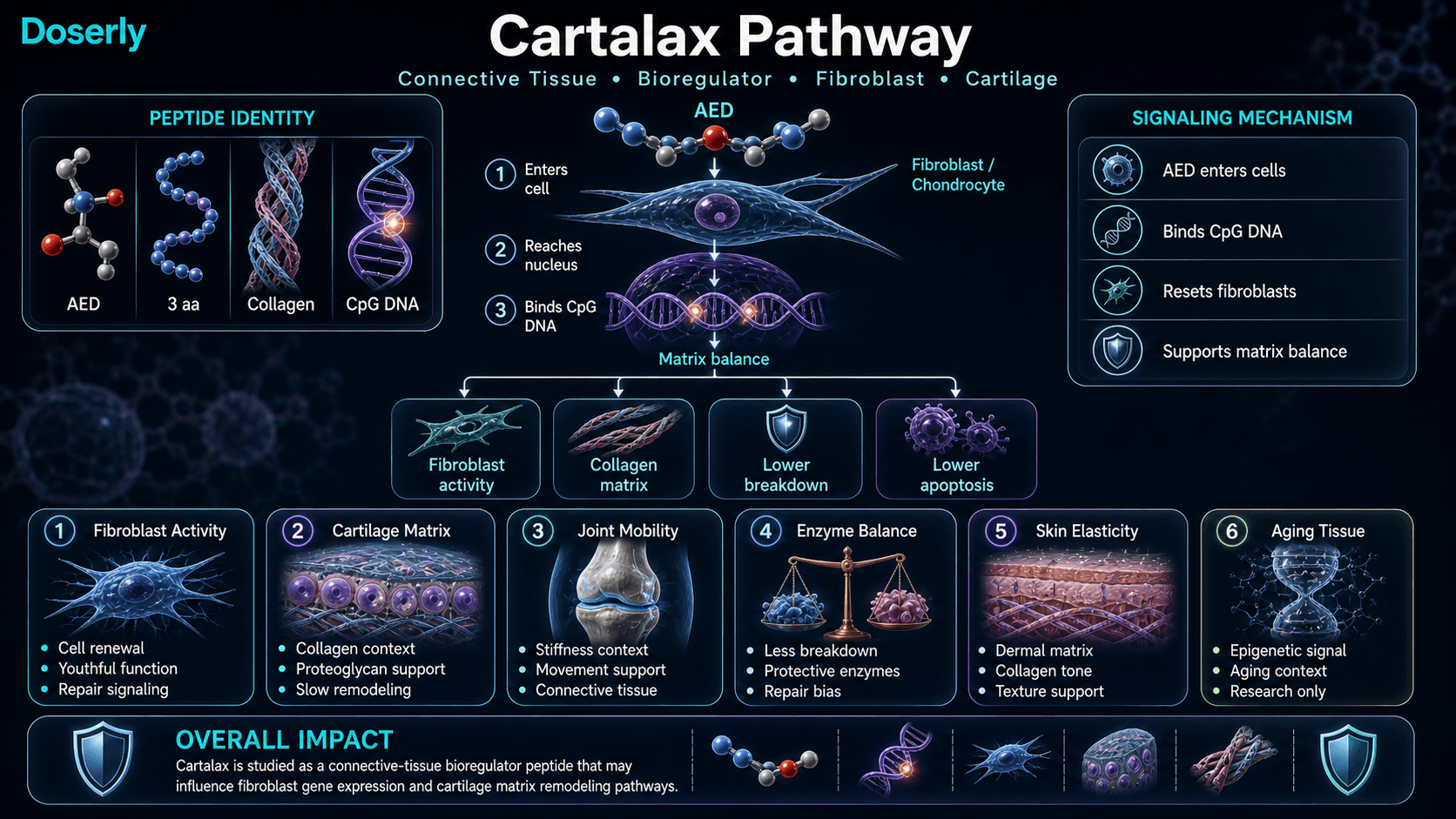
The peptide sequence corresponds to a motif found in the alpha-1 chain of type XI collagen, a structural protein critical for cartilage integrity [3]. At the molecular level, Cartalax is small enough (333.29 Da) to cross cell membranes and enter the nucleus, where it binds DNA at CpG dinucleotides and cytosine methylation sites without intercalating into the double helix structure [4].
In preclinical fibroblast and chondrocyte culture models, Cartalax has demonstrated multiple mechanisms: upregulation of Ki-67 (a proliferation marker), increased SIRT-1 and SIRT-6 expression, reduced p53 and caspase-3 activity (pro-apoptotic signals), and inhibition of MMP-9 synthesis (an enzyme linked to extracellular matrix degradation) [1][5][6]. Gene expression changes documented in mesenchymal stem cell cultures include 1.6- to 5.6-fold alterations in IGF1, FOXO1, TERT, TNKS2, and NF-kB pathways [7].
Khavinson characterizes Cartalax and related short peptides as "polyfunctional" because the fibroblast processes they modulate are ubiquitous throughout the body, making them less tissue-specific than some other bioregulatory peptides [6].
Molecular Identity
Attribute
Common Names
- Detail
- Cartalax, AED, Ala-Glu-Asp, T-31, AC-4, Alanyl-glutamyl-aspartic acid
Attribute
Amino Acid Sequence
- Detail
- Ala-Glu-Asp (AED)
Attribute
Full Condensed Form
- Detail
- H-Ala-Glu-Asp-OH
Attribute
Single-Letter Code
- Detail
- AED
Attribute
Molecular Formula
- Detail
- C₁₂H₁₉N₃O₈
Attribute
Molecular Weight
- Detail
- 333.29 g/mol
Attribute
CAS Number
- Detail
- Not assigned (referenced as SCHEMBL5324601)
Attribute
PubChem CID
- Detail
- 87815447
Attribute
Structural Type
- Detail
- Linear tripeptide
Attribute
Source
- Detail
- Fully synthetic (solid-phase peptide synthesis); originally isolated from calf kidney polypeptide extracts
Attribute
Net Charge at Physiological pH
- Detail
- -2 (two acidic residues: Glu, Asp)
Attribute
Appearance
- Detail
- White crystalline lyophilized powder
Attribute
DNA Interaction
- Detail
- Binds DNA at CpG dinucleotides; non-intercalating
Attribute
Structural Origin
- Detail
- Type XI collagen alpha-1 chain sequence homology
Attribute
Functional Class
- Detail
- Bioregulator peptide; chondroprotective agent; DNA-binding regulatory peptide; geroprotective agent
Mechanism of Action
The Basics
Cartalax works by entering your cells and interacting directly with your DNA. Despite being one of the smallest peptides studied, it carries a surprisingly broad set of instructions for your cells.
The core action centers on fibroblasts, the "construction workers" of your connective tissues. Fibroblasts build and maintain the scaffolding that holds tissues together, from cartilage to skin to tendons. As you age, these cells become less efficient. They divide more slowly, produce less collagen, and allow destructive enzymes to chip away at existing tissue unchecked.
Cartalax appears to reset fibroblasts toward a more youthful operating state. It tells them to keep dividing (rather than entering a senescent, "retired" state), ramps up protective enzymes while dialing back destructive ones, and reduces the cellular self-destruct signals that cause healthy cells to die prematurely.
Think of it like a tune-up for your body's maintenance crew. The workers are still the same cells, but they perform their jobs with renewed efficiency after receiving the signal.
The Science
Cartalax exerts its effects through direct DNA interaction and subsequent modulation of gene expression. The tripeptide binds to DNA at CpG dinucleotides and cytosine methylation sites, functioning as an epigenetic modulator at nanomolar concentrations [4][7].
The documented molecular mechanisms include:
Proliferation enhancement: Upregulation of Ki-67 expression and CD98hc, markers of active cell division and amino acid transport respectively, in aged fibroblast cultures [5].
Anti-apoptotic signaling: Reduction of p53 and caspase-3 activity, decreasing programmed cell death in stressed or aged cells. This also extends to decreased p16 and p21 expression, key mediators of cellular senescence [1][2].
Sirtuin pathway activation: Increased expression of SIRT-1 and SIRT-6, NAD-dependent deacetylases strongly correlated with longevity and cellular stress resistance. Low SIRT-6 levels are considered a trigger for senescence [1].
Extracellular matrix preservation: Inhibition of MMP-9 synthesis, an enzyme whose activity increases with age and drives degradation of the extracellular matrix in skin, cartilage, and other connective tissues [5][6].
Broader gene expression effects: Studies in human mesenchymal stem cell cultures documented changes in expression of IGF1, FOXO1, TERT, TNKS2, and NF-kB, with fold-changes ranging from 1.6 to 5.6 [7]. These pathways collectively regulate growth factor signaling, oxidative stress resistance, telomere maintenance, and inflammatory responses.
The effects are notably more pronounced in aged cells compared to young cells, suggesting Cartalax acts as a normalizing rather than stimulating agent [2][6].
Pathway Visualization Image
Pharmacokinetics
The Basics
Cartalax is an extremely short-lived molecule in the bloodstream. Like other tripeptide bioregulators, it is broken down within seconds to minutes after entering circulation. This does not necessarily mean it stops working quickly. The peptide's effects appear to be triggered at the DNA level, so even brief exposure may be enough to initiate gene expression changes that persist for much longer.
This rapid clearance is partly why some protocols favor higher doses (to ensure sufficient peptide reaches target tissues before degradation) and why oral formulations are available as an alternative to injection, despite the additional losses from gastrointestinal absorption.
The Science
Formal pharmacokinetic studies for Cartalax have not been published. The following parameters are estimated based on the broader class of Khavinson bioregulatory peptides:
Plasma half-life: Estimated at 30–60 seconds, consistent with the rapid enzymatic degradation typical of unmodified short peptides in circulation [4].
Absorption: Subcutaneous administration provides direct systemic access. Oral formulations (capsules, sublingual drops) are also available; intestinal absorption of di- and tripeptides occurs via PepT1/PepT2 peptide transporters, though bioavailability data specific to Cartalax has not been published [3].
Cellular uptake: Due to its small size (333.29 Da) and physicochemical properties, Cartalax readily crosses cell membranes and localizes intracellularly, including nuclear penetration where it interacts with DNA [4].
Duration of effect: While plasma clearance is rapid, the downstream biological effects (gene expression changes, epigenetic modifications) may persist for days to weeks following administration, consistent with the cycled dosing protocols commonly described in the literature [7].
The extremely short plasma half-life, combined with the hygroscopic nature of tripeptide bioregulators that makes lyophilization challenging [8], presents practical considerations for both manufacturing and clinical use.
Research & Clinical Evidence
Cartalax and Connective Tissue / Cartilage
The Basics
The name "Cartalax" suggests a direct connection to cartilage, and the peptide's influence on fibroblasts does support this link, though perhaps not in the way you might expect. There is no published research directly testing Cartalax on cartilage tissue. Instead, the connection is indirect: Cartalax powerfully affects fibroblasts, and fibroblasts are the primary regulators of cartilage homeostasis.
Research in animal models shows that peptides similar to Cartalax can boost the volume of new bone formed and reduce the activity of enzymes that break down cartilage during inflammation [9]. The effect is more like ongoing maintenance than a dramatic repair event. Users who explore Cartalax for joint concerns typically report gradual improvements over weeks, consistent with slow tissue remodeling rather than acute pain relief.
The Science
While no studies examine Cartalax directly in cartilage tissue, the peptide's sequence homology with type XI collagen alpha-1 chain provides a structural basis for cartilage-targeting properties [3]. In fibroblast culture models, Cartalax modulates multiple pathways directly relevant to cartilage homeostasis, including AP-1, NF-kB, c-jun, CCN1, TGF-beta, TNF-alpha, and matrix metalloproteinases MMP-1, MMP-3, MMP-8, and MMP-9 [9].
The peptide acts as a balancing agent rather than unidirectional stimulator, normalizing the activity of both constructive and destructive pathways. For example, MMP-1 is essential for tissue remodeling and adaptation, but pathological overactivity drives collagen breakdown in arthritis and metastasis. Cartalax promotes the equilibrium between matrix synthesis and degradation [9].
Animal studies on related short peptides demonstrate increased bone formation volume over 12-week observation periods and reduced MMP activity in inflammatory models [10].
Cartalax and Skin Health
The Basics
Because Cartalax targets fibroblasts throughout the body, its effects on skin have drawn research attention. Fibroblasts in the skin are responsible for producing collagen and maintaining the extracellular matrix that keeps skin firm and elastic. As you age, these processes slow down while enzymes that break down collagen speed up. Cartalax appears to help reverse this imbalance, particularly in older skin cells.
The Science
Research in skin fibroblast cultures demonstrates that Cartalax boosts proliferation, tissue regeneration, and extracellular matrix remodeling while decreasing apoptosis [5][6]. The effects are mediated through inhibition of MMP-9 synthesis (elevated during skin aging), enhancement of Ki-67 and CD98hc expression, and suppression of apoptosis through the caspase pathway [5].
Khavinson and colleagues have characterized Cartalax as a polyfunctional peptide that stimulates skin cell proliferation, improves microcirculation, and increases the functional activity of skin fibroblasts, leading to improvements in carnosine, collagen, cytokine, and growth factor levels [6]. These properties position the peptide as both an antioxidant and immunoprotector in dermal tissue.
Cartalax and Kidney Health
The Basics
One of the earlier discoveries about Cartalax came from kidney research. Scientists found that extracts from calf kidneys could stimulate cell renewal in aging rat kidneys. When they analyzed what was in these extracts, Cartalax was one of the active peptides identified. Follow-up research showed that Cartalax promotes kidney cell proliferation while reducing the markers your cells use to signal that they are aging and should stop dividing.
The Science
Polypeptide isolates from calf kidneys containing Cartalax (AED) and T-35 (EDL) demonstrated stimulation of cell renewal in aged rat kidney tissue, operating through upregulation of Ki-67 and downregulation of p53 [1].
Subsequent research in renal cell cultures confirmed that Cartalax increases cell proliferation while decreasing age-associated markers including p16, p21, and p53 proteins. Additionally, Cartalax upregulates SIRT-6 expression, a sirtuin whose depletion is considered a trigger for cellular senescence [1][2].
Cartalax and Aging
The Basics
Cartalax is classified as a geroprotective compound, meaning its primary research interest lies in slowing or reversing aspects of cellular aging. The consistent finding across studies is that its effects are most pronounced in older cells. Younger cells already function well and show modest responses, while aged cells undergo more dramatic improvements in proliferation, stress resistance, and gene expression profiles. This pattern, where a compound restores rather than enhances, is characteristic of the bioregulatory peptide class.
The Science
Research on Cartalax and related bioregulators demonstrates modulation of multiple gene products involved in the aging process. Documented targets include IGF1, FOXO1, TERT, TNKS2, and NF-kB, with expression changes ranging from 1.6- to 5.6-fold [7]. TERT upregulation is particularly notable, as telomerase reverse transcriptase is the catalytic component of telomerase, the enzyme responsible for maintaining telomere length [7].
The age-dependent response pattern has been consistently observed: Cartalax produces more pronounced effects in aged cell cultures compared to young cell cultures, consistent with a normalizing rather than supraphysiological mechanism of action [2][6].
Biomarker Evidence Matrix
Category
Joint Health
- Evidence Strength
- 4/10
- Reported Effectiveness
- 7/10
- Summary
- No direct cartilage studies on Cartalax, but strong mechanistic basis through fibroblast and MMP modulation. Community reports are predominantly positive for osteoarthritis pain, stiffness, and mobility.
Category
Pain Management
- Evidence Strength
- 3/10
- Reported Effectiveness
- 6/10
- Summary
- No clinical pain studies. Community reports describe gradual pain reduction, particularly for chronic joint and back pain. Effects slower than BPC-157.
Category
Skin Health
- Evidence Strength
- 5/10
- Reported Effectiveness
- 5/10
- Summary
- Multiple in vitro studies demonstrate fibroblast stimulation, MMP-9 inhibition, and collagen pathway activation. Limited community reports as a secondary benefit.
Category
Inflammation
- Evidence Strength
- 4/10
- Reported Effectiveness
- 6/10
- Summary
- Preclinical data shows cytokine modulation and NF-kB pathway effects. Community reports align with reduced joint swelling and improved mobility.
Category
Recovery & Healing
- Evidence Strength
- 3/10
- Reported Effectiveness
- 5/10
- Summary
- No direct healing studies. Community reports are mixed, with consensus that BPC-157 is superior for acute injury recovery.
Category
Bone Health
- Evidence Strength
- 3/10
- Reported Effectiveness
- 4/10
- Summary
- Animal data on related peptides shows bone formation effects. No experiential community data.
Category
Longevity & Neuroprotection
- Evidence Strength
- 4/10
- Reported Effectiveness
- 4/10
- Summary
- Strong mechanistic basis through SIRT-1/6, TERT, and FOXO1 modulation. No experiential data on anti-aging outcomes.
Category
Side Effect Burden
- Evidence Strength
- 3/10
- Reported Effectiveness
- 8/10
- Summary
- No formal safety studies. Community consensus is very well tolerated, with only minor injection site reactions reported.
Categories scored: 8
Categories with community data: 6
Categories not scored (insufficient data): Fat Loss, Muscle Growth, Weight Management, Appetite & Satiety, Food Noise, Energy Levels, Sleep Quality, Focus & Mental Clarity, Memory & Cognition, Mood & Wellbeing, Anxiety, Stress Tolerance, Motivation & Drive, Emotional Aliveness, Emotional Regulation, Libido, Sexual Function, Physical Performance, Gut Health, Digestive Comfort, Nausea & GI Tolerance, Hair Health, Heart Health, Blood Pressure, Heart Rate & Palpitations, Hormonal Symptoms, Temperature Regulation, Fluid Retention, Body Image, Immune Function, Cravings & Impulse Control, Social Connection, Treatment Adherence, Withdrawal Symptoms, Daily Functioning
Benefits & Potential Effects
The Basics
Cartalax is primarily explored for its potential effects on connective tissue health, particularly joints and cartilage. People who investigate Cartalax tend to fall into a few categories: those dealing with osteoarthritis or degenerative joint conditions, those recovering from joint injuries, and those interested in general anti-aging support for connective tissues.
The benefits most commonly discussed include improved joint mobility and reduced stiffness, gradual reduction in joint pain, better skin quality and elasticity, and support for kidney function in aging. Unlike fast-acting pain relievers or anti-inflammatory drugs, Cartalax works slowly. Most users describe changes that build over weeks, consistent with actual tissue remodeling rather than symptom suppression.
It is worth noting that Cartalax is generally considered complementary to other approaches rather than a standalone solution. Many people use it alongside physical therapy, other peptides like BPC-157 or TB-500, or conventional joint supplements.
The Science
The documented and hypothesized benefits of Cartalax derive from its polyfunctional effects on fibroblast biology:
Cartilage and joint support: Modulation of MMP-1, MMP-3, MMP-8, and MMP-9 promotes equilibrium between extracellular matrix synthesis and degradation. Combined with fibroblast stimulation through Ki-67 and CD98hc upregulation, this supports cartilage maintenance and repair capacity [5][9].
Anti-senescence effects: Reduction of p53, p16, and p21 expression, combined with SIRT-6 upregulation, decreases cellular senescence markers in aged fibroblast and kidney cell cultures [1][2].
Skin health: Enhanced fibroblast proliferation, improved microcirculation, and increased production of carnosine, collagen, and growth factors in skin tissue [6].
Geroprotective properties: Modulation of TERT (telomerase), FOXO1 (oxidative stress response), IGF1 (growth signaling), and NF-kB (inflammatory regulation) across 1.6- to 5.6-fold expression changes, collectively influencing multiple aging pathways [7].
Kidney cell renewal: Stimulation of proliferation and reduction of senescence markers in renal cell cultures, with effects more pronounced in aged cells [1][2].
Reading about potential benefits is the starting point. Knowing whether you're actually experiencing them is where real value begins. Doserly lets you track the specific health markers that matter for your protocol, from body composition and energy levels to sleep quality, mood, and recovery time, building a personal dataset that goes beyond subjective impressions.
The app's proactive monitoring doesn't wait for you to notice a problem. It surfaces patterns in your logged data that might suggest suboptimal timing, flags potential interactions with other items in your health stack, and helps you identify which benefits are tracking with what the research suggests and which aren't materializing. Think of it as a second set of eyes on your protocol, always watching the trends.
Capture changes while they are still fresh.
Log symptoms, energy, sleep, mood, and other observations alongside protocol events so patterns do not live only in memory.
Trend view
Symptom timeline
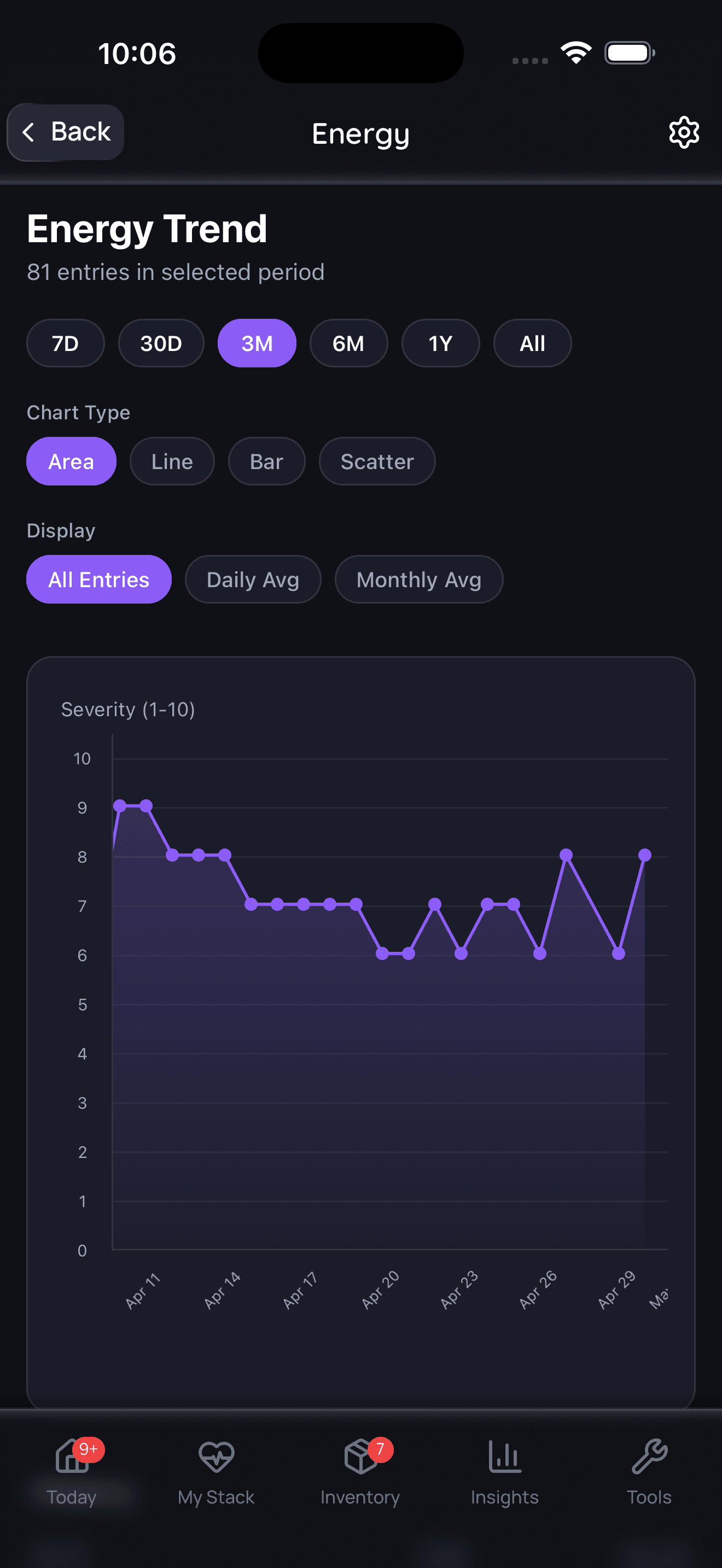
Symptom tracking is informational and should be interpreted with a qualified clinician.
Side Effects & Safety Considerations
The Basics
One of the more consistent findings across all available data is that Cartalax appears to be very well tolerated. No serious adverse effects have been reported in either preclinical studies or community experience. The most commonly mentioned issue is mild irritation at the injection site (redness or slight itching), which typically resolves quickly.
Some users report a temporary increase in joint discomfort during the first few days, which some interpret as an initial activation of repair processes at sites of existing damage. This pattern has been noted by multiple independent users and is consistent with an inflammatory or remodeling response.
A theoretical concern that comes up in community discussions is Cartalax's effect on p53, a well-known tumor suppressor protein. Since Cartalax reduces p53 activity, some people worry this could promote cancer growth. Based on the available data, Cartalax normalizes p53 in cells where it is pathologically elevated (driving excessive cell death), rather than disabling it systemically. No increase in cancer incidence has been observed in any published research on Khavinson bioregulators [11].
The Science
The safety profile of Cartalax is characterized by an absence of documented adverse effects rather than by robust safety study data. No formal toxicology studies, dose-escalation trials, or long-term safety monitoring has been published for Cartalax specifically.
Observations from preclinical research and observational settings include:
General tolerability: Khavinson bioregulatory peptides as a class have been described as well tolerated in observational settings, with occasional mild injection-site reactions [11].
p53 modulation: Cartalax reduces p53 expression in aged cells where it is pathologically elevated, functioning as normalization rather than suppression. The distinction is important: elevated p53 in aged cells drives apoptosis and prevents tissue repair. Restoring p53 to physiological levels does not eliminate tumor surveillance function [1][2].
Limitations: No large-scale human randomized controlled trials exist. Most safety data derives from in vitro cell cultures, animal models, and limited observational reports. Long-term effects of repeated cycling are unknown. The short cycle lengths typically used (10-20 days) may not reveal effects that emerge with prolonged exposure.
Dosing Protocols
The Basics
Cartalax dosing is one of the areas where available sources diverge most significantly. The peptide comes in lyophilized (freeze-dried) form, typically in 20 mg vials, and requires reconstitution before use.
Two broadly different dosing philosophies exist. The first follows the traditional Khavinson bioregulator approach: shorter cycles of 10-20 days at moderate doses, repeated a few times per year. The second is an extended titration approach that spans 8-16 weeks with gradually increasing doses. Both are described in the literature, and the choice between them may depend on individual goals and response.
Most commonly cited daily doses fall in the 1-2 mg range for short-cycle protocols, though some community members report using 5-10 mg per day and describe stronger responses at these higher levels.
The Science
No human randomized controlled trials have established optimal dosing for subcutaneous Cartalax. Available dosing frameworks are derived from preclinical data, the broader Khavinson bioregulator tradition, and community-derived protocols.
Short-cycle protocol (Khavinson tradition):
- Standard: 2 mg once daily, subcutaneous, for 20 days [12]
- Low dose: 1 mg once daily, subcutaneous, for 10-20 days [12]
- Repeat: 3-4 times per year
- Split dosing: Some sources describe 1 mg AM + 1 mg PM (total 2 mg/day) for 30 days [13]
Extended titration protocol:
Phase
Weeks 1-2
- Daily Dose
- 2,000 mcg (2.0 mg)
- Duration
- Introduction
Phase
Weeks 3-4
- Daily Dose
- 3,000 mcg (3.0 mg)
- Duration
- Escalation
Phase
Weeks 5-8
- Daily Dose
- 4,000 mcg (4.0 mg)
- Duration
- Maintenance
Phase
Weeks 9-12
- Daily Dose
- 5,000 mcg (5.0 mg)
- Duration
- Full dose
Route for both protocols is subcutaneous, once daily. Morning administration is commonly described [12][14].
Reconstitution: 2.0-3.0 mL bacteriostatic water per 20 mg vial, yielding concentrations of 6.67-10 mg/mL depending on volume used.
Community dosing observations: A dose-dependent response pattern has emerged in community reports, with users at 1-2 mg/day sometimes reporting no effect while users at 5-10 mg/day report significant joint improvements. This observation has not been validated in controlled studies.
Consistency is the difference between a protocol that delivers results and one that wastes time and money. Doserly was built for exactly this: keeping you on track with the precision your protocol demands.
The built-in calculators handle the math you shouldn't be doing in your head. The reconstitution calculator tells you exactly how much bacteriostatic water to add for your target concentration. The dose calculator converts between units, milligrams, and syringe markings so you draw the right amount every time. The injection site heat map tracks where you've administered and when, helping you rotate sites systematically to reduce tissue damage, scarring, and absorption inconsistencies from overusing the same area. Pair that with smart reminders tuned to your protocol's timing requirements, and you build the kind of daily consistency that separates optimized protocols from haphazard ones.
Track injection timing, draw notes, and site rotation.
Doserly helps keep syringe-related notes, injection site history, reminders, and reconstitution context together for easier review.
Injection log
Site rotation
Injection logs support record-keeping; follow clinician instructions for administration.
What to Expect
Cartalax is not a fast-acting compound. The timeline below reflects patterns from community reports and the known biology of connective tissue remodeling. Individual responses will vary based on the severity of existing conditions, dosing approach, and concurrent protocols.
Days 1-5: Most users report no noticeable effects during the first few days. Some individuals report a temporary increase in awareness of existing joint damage sites, described as mild discomfort or a "warming" sensation. This is interpreted by some as an early activation signal, though it may also be expectation bias.
Weeks 1-2: Subtle changes may begin to emerge for some users, particularly reduced morning stiffness and improved warm-up quality before exercise. These changes are generally described as mild and easy to overlook.
Weeks 3-4: For users who respond to Cartalax, this is typically when the most noticeable improvements appear. Reduced joint pain during daily activities, improved range of motion, and better tolerance of physical stress on joints are the most commonly reported changes.
Weeks 5-8: Continued gradual improvement for responders, with some users reporting effects that stabilize at this point. For those using the extended titration protocol, dose escalation during this period may enhance response.
After completion: The effects of Cartalax are generally described as persisting for some time after a cycle ends, consistent with the underlying mechanism of tissue remodeling and gene expression changes. Repeat cycles are typically scheduled every 3-6 months.
Important context: Not everyone responds to Cartalax. Some community members report completing full cycles with no perceptible benefit. Dose-dependent responses have been noted, with higher doses (5-10 mg/day) associated with stronger reports of improvement compared to lower doses (1-2 mg/day). These patterns are anecdotal and have not been validated in controlled studies.
The week-by-week expectations above are drawn from research and community reports, but your experience will be uniquely yours. Doserly's biomarker tracking transforms those general timelines into personal data points you can actually see and measure.
Log the specific markers relevant to this compound, whether that's pain levels, energy, sleep quality, body composition, recovery time, or mood, and watch your own trend lines emerge over weeks and months. Did your key markers start shifting in week three, like the research suggests? Is your experience tracking with what the community reports, or diverging? Over time, this creates something more valuable than any guide: an evidence-based picture of how your body responds to this specific compound, at your specific dose, within your specific health context.
See where a dose, cycle, or change fits in time.
Doserly gives each protocol a timeline so dose changes, pauses, restarts, and observations are easier to compare later.
Timeline
Cycle history
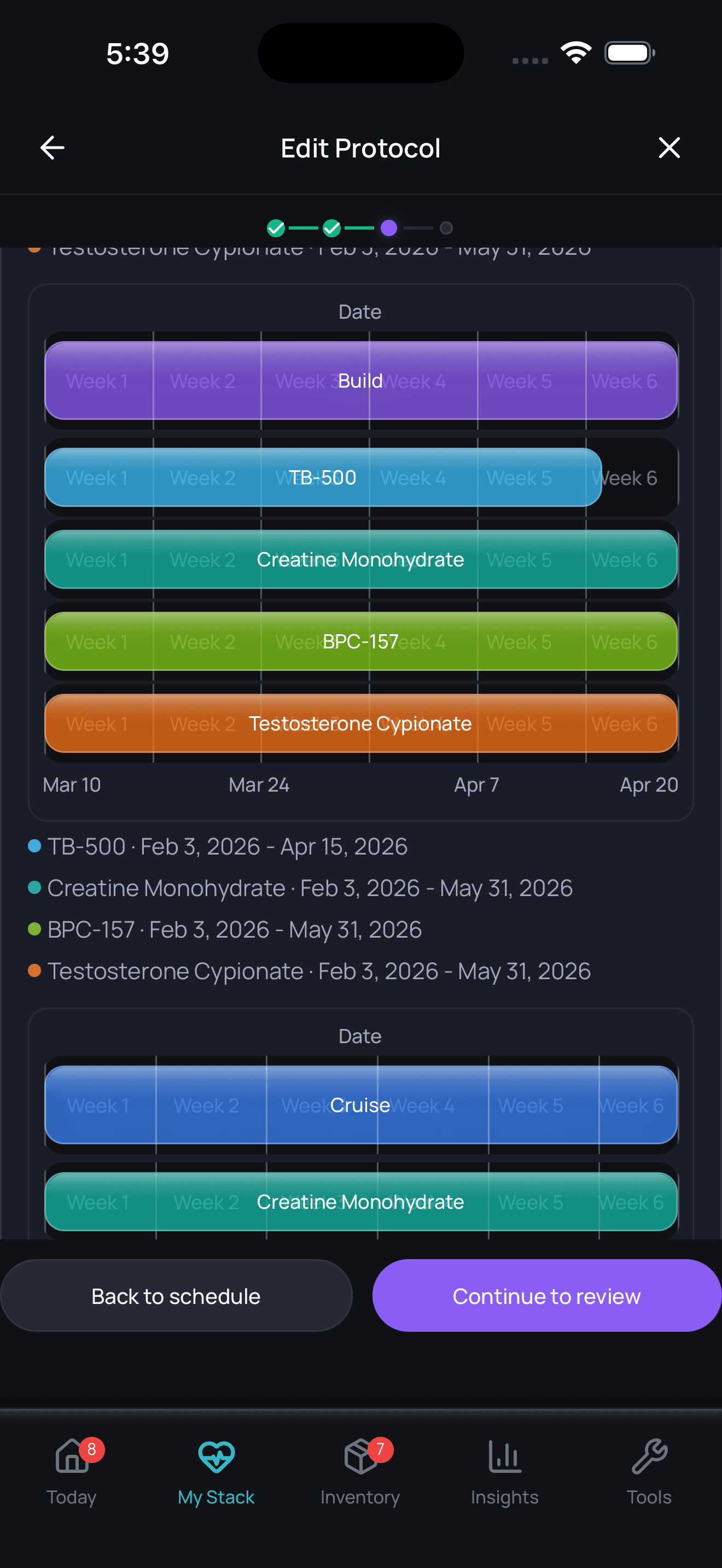
Timeline tracking helps with recall; it is not a treatment recommendation.
Interaction Compatibility
Good With (Synergistic)
- BPC-157: Frequently stacked for joint recovery. BPC-157 provides angiogenesis and acute healing signaling while Cartalax supports extracellular matrix maintenance and fibroblast function. Multiple community reports describe using both together.
- TB-500: Often combined as part of a comprehensive connective tissue support protocol. TB-500 promotes cell migration and tissue repair through the LKKTETQ actin-binding domain, complementing Cartalax's gene expression modulation.
- GHK-Cu: Both influence collagen synthesis and skin/connective tissue health through different mechanisms. GHK-Cu works through copper-dependent pathways while Cartalax operates through DNA binding and gene expression modulation.
- Epithalon: Both are Khavinson bioregulators with geroprotective properties. Epithalon targets telomerase activation through pineal gland mechanisms while Cartalax focuses on fibroblast and connective tissue pathways.
- Pinealon: Another Khavinson bioregulator, targeting neurological pathways. Sometimes used alongside Cartalax as part of a multi-organ bioregulator protocol.
- Collagen supplements: Described as synergistic in community discussions, with collagen providing raw structural material while Cartalax provides the cellular signaling for its utilization.
Use Caution With
- Other p53-modulating compounds: Since Cartalax reduces p53 expression, combining it with other compounds that suppress this pathway warrants caution and monitoring.
- Growth hormone secretagogues (e.g., Tesamorelin, Sermorelin): GH can cause mild joint swelling as a side effect. In joints with existing inflammation or cartilage degradation, additional fluid and tissue growth could worsen symptoms rather than help.
Not Recommended With
- No specific contraindicated combinations are documented in the available literature. The absence of formal interaction studies means this list reflects theoretical considerations rather than empirically demonstrated incompatibilities.
Administration Guide
Materials required:
- Insulin syringes (U-100, 29-31 gauge, 5/16" to 1/2" needle)
- Alcohol swabs
- Bacteriostatic water for reconstitution
- Sharps disposal container
Recommended reconstitution solution: Bacteriostatic water (0.9% benzyl alcohol preserved) is the standard choice. Add 2.0-3.0 mL per 20 mg vial depending on desired concentration.
Timing considerations: Morning administration is most commonly described in the literature. Cartalax does not appear to have specific requirements regarding fasting, meals, or sleep timing. Consistency in daily timing is considered more important than the specific time chosen.
Post-administration care: Monitor the injection site for redness, swelling, or itching. Mild injection site reactions are the most commonly reported side effect and typically resolve within hours. Document the injection site location to support systematic rotation.
Supplies & Planning
Typical supplies associated with a Cartalax protocol:
- Peptide vials: Cartalax is most commonly available in 20 mg lyophilized vials
- Bacteriostatic water: 10 mL bottles; approximately 2.0-3.0 mL needed per vial reconstitution
- Insulin syringes: U-100 insulin syringes (29-31 gauge) for subcutaneous injection; one per administration
- Alcohol swabs: Two per administration (one for vial stopper, one for injection site)
- Sharps container: For safe needle disposal
- Storage: Refrigerator space for both unreconstituted and reconstituted vials
Specific quantities will depend on the dosing protocol, cycle length, and dose selected by the user in consultation with their healthcare provider. Use the reconstitution calculator for preparation math based on your specific protocol parameters.
Storage & Handling
Lyophilized (powder) form:
- Long-term: Store at -20°C (-4°F) for maximum stability
- Short-term: Refrigerate at 2-8°C (35.6-46.4°F) for weeks to months
- Protect from light and moisture
- Allow vials to reach room temperature before opening to prevent condensation
Reconstituted (liquid) form:
- Refrigerate at 2-8°C (35.6-46.4°F) immediately after reconstitution
- Use within 28 days
- Do not freeze reconstituted solution
- Avoid repeated freeze-thaw cycles
- Inspect for cloudiness, discoloration, or particulates before each use; discard if any abnormalities are observed
Special handling note: Tripeptide bioregulators like Cartalax are highly hygroscopic (moisture-attracting), which makes lyophilization challenging. Some manufacturers add trehalose or similar excipients to achieve a stable dry powder [8]. This is a known manufacturing consideration and does not affect peptide quality when properly documented.
Lifestyle Factors
Complementary lifestyle strategies may support the goals people typically pursue with Cartalax:
Nutrition: A high-protein diet with adequate vitamin C, manganese, and collagen precursors provides the raw materials for connective tissue repair. Collagen supplementation is frequently discussed as synergistic with Cartalax, providing structural substrate while the peptide supplies cellular signaling.
Exercise: Low-impact activities like cycling, swimming, and controlled mobility work help maintain range of motion and stimulate synovial fluid circulation in joints. High-impact or heavy loading activities should be modulated based on individual joint status, as mechanical stress can drive both adaptation and further damage depending on the condition.
Sleep: 7-9 hours of quality sleep supports the body's circadian repair processes for cartilage and bone structures. Growth hormone release during deep sleep plays a role in tissue repair and regeneration.
Weight management: Maintaining a healthy body weight reduces mechanical stress on joints, particularly weight-bearing joints like knees and hips. Even modest weight reduction can meaningfully reduce joint loading.
Anti-inflammatory diet: Reducing intake of processed foods, refined sugars, and excessive omega-6 fatty acids while increasing omega-3 sources may support the anti-inflammatory aspects of a cartilage health protocol.
Regulatory Status & Research Classification
United States (FDA): Cartalax is not approved by the FDA for any therapeutic use. It is classified as a research compound. No Investigational New Drug (IND) applications or registered clinical trials on ClinicalTrials.gov are associated with Cartalax as of early 2026.
Russia and Eastern Europe: Cartalax is available as part of bioregulator product lines, including oral capsule formulations (marketed under the AC-4 designation) and sublingual drops. These products are available without prescription in some markets as dietary supplements or food supplements, though their regulatory classification varies by country.
Canada (Health Canada): Not approved. No DIN or NPN assigned.
United Kingdom (MHRA): Not approved. No marketing authorization.
Australia (TGA): Not scheduled or approved.
European Union (EMA): No marketing authorization.
WADA: Cartalax is not currently listed on the World Anti-Doping Agency's prohibited substances list.
Clinical trials: No clinical trials involving Cartalax have been registered in major international clinical trial databases. The published evidence base consists primarily of in vitro cell culture studies and animal models conducted by Khavinson and colleagues at the Saint Petersburg Institute of Bioregulation and Gerontology.
Regulatory status changes frequently. Always verify the current legal status of any compound in your specific country or jurisdiction before making any decisions.
FAQ
What is Cartalax, and how does it differ from other joint health peptides?
Cartalax is a synthetic tripeptide (three amino acids: Ala-Glu-Asp) that belongs to the Khavinson bioregulatory peptide class. Unlike BPC-157, which promotes healing through angiogenesis (blood vessel growth), Cartalax works at the gene expression level to support fibroblast function and extracellular matrix maintenance. It is generally considered slower-acting but more specifically targeted toward cartilage and connective tissue homeostasis.
What dose range is commonly reported in available sources?
Based on available data, commonly reported ranges span from 1 mg to 5 mg per day via subcutaneous injection. Short-cycle protocols (10-20 days, repeated 3-4 times yearly) typically use 1-2 mg/day, while extended protocols (8-16 weeks) may use 2-5 mg/day with gradual titration. Individual response appears to vary significantly by dose, and readers should consult a healthcare professional to determine an appropriate approach for their situation.
Does Cartalax increase cancer risk through p53 suppression?
This is a commonly raised concern. Based on available research, Cartalax reduces p53 expression in aged cells where it is pathologically elevated, rather than disabling p53 systemically. The distinction is between normalization of an overactive stress response and elimination of tumor surveillance. No increase in cancer incidence has been reported in any published bioregulator research. However, long-term human safety data is limited, and individuals with active malignancies or cancer history should discuss any peptide use with their oncologist.
How long does it take to notice effects?
Community reports indicate that most users who respond to Cartalax notice changes in the 3-4 week range, with continued improvement through weeks 5-8. Some users report no perceptible benefit after completing a full cycle. The gradual onset is consistent with the peptide's mechanism of action through tissue remodeling rather than symptom suppression.
Can Cartalax be taken orally?
Yes, oral formulations (capsules and sublingual drops) are available, particularly from Russian and Eastern European suppliers. The peptide can be absorbed through intestinal peptide transporters (PepT1/PepT2). However, bioavailability data comparing oral and injectable routes has not been published for Cartalax specifically.
Is Cartalax safe to combine with BPC-157 or TB-500?
These combinations are frequently discussed in community reports and are generally described as well tolerated. The peptides work through different mechanisms (BPC-157 through angiogenesis, TB-500 through actin regulation, Cartalax through gene expression modulation), which provides a theoretical basis for complementary effects. No formal interaction studies exist. Discuss any multi-compound protocol with a healthcare provider.
Sources & References
Reviews and Foundational Research:
[1] Khavinson VK et al. "Tripeptides slow down aging process in renal cell culture." Advances in Gerontology (Uspekhi Gerontologii), vol. 27, no. 1, pp. 651-656, 2014.
[2] Chalisova NI, Lin'kova NS, Nichik TE, Ryzhak AP, Dudkov AV, Ryzhak GA. "Peptide Regulation of Cells Renewal Processes in Kidney Tissue Cultures from Young and Old Animals." Bulletin of Experimental Biology and Medicine, vol. 159, no. 1, pp. 124-127, May 2015. doi: 10.1007/s10517-015-2906-9.
[3] Linkova N, Khavinson V et al. "Peptide Regulation of Chondrogenic Stem Cell Differentiation." International Journal of Molecular Sciences, 2023.
[4] Khavinson VK. Peptides and Ageing. Neuroendocrinology Letters, 2002. Overview of bioregulatory peptide development and geroprotective mechanisms.
[5] Lin'kova NS et al. "Peptide Regulation of Skin Fibroblast Functions during Their Aging In Vitro." Bulletin of Experimental Biology and Medicine, vol. 161, no. 1, pp. 175-178, May 2016. doi: 10.1007/s10517-016-3370-x.
[6] Khavinson VK, Linkova NS, Diatlova AS, Gutop EO, Orlova OA. "Short peptides: regulation of skin function during aging." Advances in Gerontology (Uspekhi Gerontologii), vol. 33, no. 1, pp. 46-54, 2020.
[7] Ashapkin V, Khavinson V, Shilovsky G, Linkova N, Vanuyshin B. "Gene expression in human mesenchymal stem cell aging cultures: modulation by short peptides." Molecular Biology Reports, vol. 47, no. 6, pp. 4323-4329, June 2020. doi: 10.1007/s11033-020-05506-3.
[8] LongeCity Forum. Reports on synthesis and lyophilization challenges for tripeptide bioregulators, including moisture management and excipient requirements. Community knowledge base.
Animal Studies:
[9] Ellman MB, Yan D, Ahmadinia K, Chen D, An HS, Im HJ. "Fibroblast growth factor control of cartilage homeostasis." Journal of Cellular Biochemistry, vol. 114, no. 4, pp. 735-742, April 2013. doi: 10.1002/jcb.24418.
[10] Short peptides in bone and cartilage healing models. PubMed, 2023. PMID: 37841660.
Safety and General References:
[11] Gutop EO, Diatlova AS, Linkova NS, Orlova OA, Trofimova SV, Khavinson VK. "Aging of skin fibroblasts: genetic and epigenetic factors." Advances in Gerontology (Uspekhi Gerontologii), vol. 32, no. 6, pp. 908-914, 2019.
Dosing and Protocol References:
[12] Khavinson bioregulator dosing protocols. Standard short-cycle approach: 1-2 mg/day subcutaneous for 10-20 days, repeated 3-4 times per year.
[13] BioLongevityLabs bioregulator stacking guide. Split dosing protocol: 1 mg AM + 1 mg PM for 30-day cycles.
[14] Extended titration protocols. Gradual dose escalation from 2 mg/day to 5 mg/day over 8-12 weeks.
Related Peptide Guides
- BPC-157 — Healing and tissue repair through angiogenesis; frequently combined with Cartalax for joint recovery
- TB-500 — Cell migration and tissue repair; complementary connective tissue support
- GHK-Cu — Copper peptide for collagen synthesis and wound healing
- Epithalon — Khavinson bioregulator for telomerase activation and anti-aging
- Pinealon — Khavinson bioregulator for neurological support
- Bronchogen — Khavinson bioregulator for respiratory tissue
- Cardiogen — Khavinson bioregulator for cardiac tissue
- Crystagen — Khavinson bioregulator for immune system support
- Pancragen — Khavinson bioregulator for pancreatic function
- Prostamax — Khavinson bioregulator for prostate health
- Vilon — Khavinson bioregulator for thymus and immune modulation
- KPV — Anti-inflammatory peptide; part of KLOW stack sometimes discussed alongside Cartalax
- NAD+ — Sirtuin pathway activator; mechanistic overlap with Cartalax's SIRT-1/6 modulation
Need the reconstitution math for Cartalax: Complete Research Guide?
Open the calculator with Cartalax: Complete Research Guide prefilled to estimate concentration, draw volume, and related measurement math from the reconstitution details you already have.