
Pancragen: Complete Research Guide
On this page
Quick Reference Card
Attribute
Also Known As
- Detail
- KEDW tetrapeptide, Pancreatic bioregulator, Pancreatic peptide KEDW, H-KEDW-OH, Khavinson pancreatic peptide
Attribute
Administration
- Detail
- Subcutaneous injection (primary); oral formulations under investigation
Attribute
Research Status
- Detail
- Research Compound — No FDA Approval. Preclinical bioregulator peptide with primate study data. No large-scale human clinical trials published.
Attribute
Typical Dose Range
- Detail
- 400 mcg to 2 mg per day subcutaneously, depending on protocol
Attribute
Half-Life
- Detail
- Not precisely characterized. Effects persist for approximately 3 weeks post-treatment in primate models.
Attribute
Cycle Length
- Detail
- 10-20 days per course; typically repeated every 4-6 months
Attribute
Storage
- Detail
- Lyophilized: -20°C long-term. Reconstituted: 2-8°C, use within 28 days. Protect from light. Avoid freeze-thaw cycles.
Overview / What Is Pancragen?
The Basics
Pancragen is a bioregulator peptide designed to support the pancreas, the organ responsible for producing insulin and the digestive enzymes your body needs to break down food. It consists of just four amino acids (Lysine, Glutamic Acid, Aspartic Acid, and Tryptophan) arranged in a specific sequence, and belongs to a class of short peptides developed through decades of Russian bioregulator research at the St. Petersburg Institute of Bioregulation and Gerontology.
The core idea behind Pancragen is targeted organ restoration. As you age, the cells in your pancreas gradually lose their ability to produce insulin efficiently and secrete the enzymes needed for proper digestion. Pancragen is proposed to act as a molecular reset signal, penetrating pancreatic cells and turning gene expression patterns back toward a more youthful state. In primate studies, this translated to measurable improvements in blood sugar handling within 10 days of treatment, with some effects lasting weeks after the last dose [1][2].
Pancragen should not be confused with PancraGEN, which is a DNA-based diagnostic test for pancreatic conditions. Pancragen is a synthetic peptide compound, not a diagnostic tool.
It is important to note that Pancragen remains a preclinical research compound. The strongest evidence comes from studies in aged rhesus monkeys and cell culture experiments, primarily conducted in Russian laboratories. No large-scale human clinical trials have been published in Western medical journals, and the compound has no regulatory approval for therapeutic use in any major jurisdiction.
The Science
Pancragen (H-Lys-Glu-Asp-Trp-OH, molecular formula C₂₆H₃₆N₆O₉, MW 576.25 Da, PubChem CID 68452887) is a synthetic bioregulatory tetrapeptide belonging to the Khavinson class of organ-specific bioregulators. It was originally isolated from bovine pancreatic tissue and subsequently synthesized via solid-phase peptide synthesis (SPPS) for research applications [3][4].
Pancragen is classified as a cytogen, a synthesized bioregulator peptide with a defined amino acid sequence, distinguishing it from cytomaxes, which are tissue extracts containing variable peptide mixtures. The compound's development was led by Professor Vladimir Khavinson at the St. Petersburg Institute of Bioregulation and Gerontology, a program that has produced organ-specific bioregulators for multiple tissue systems including cardiac (Cardiogen), neural (Cortagen, Pinealon), hepatic (Ovagen), and pulmonary (Bronchogen) tissue [3].
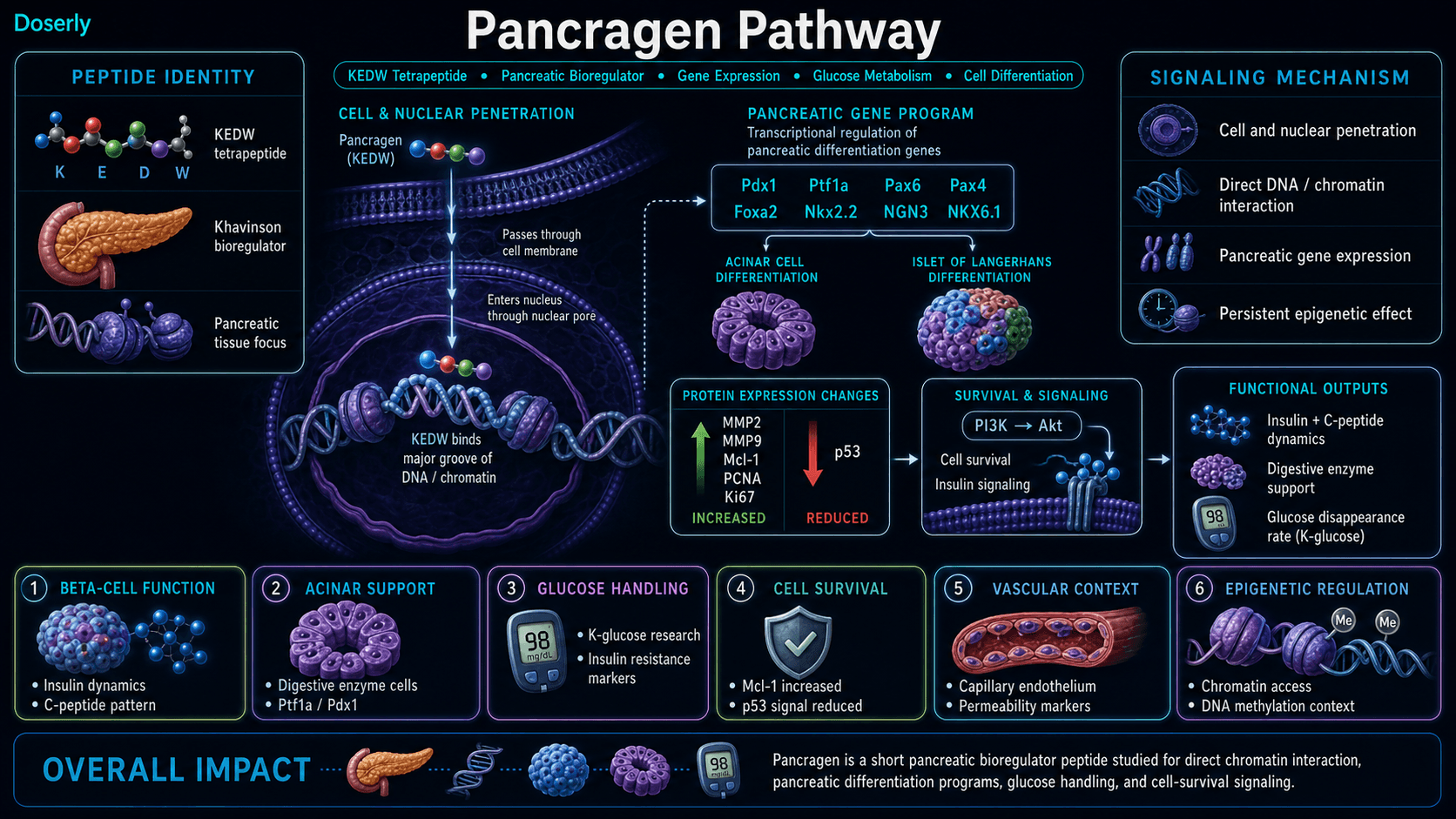
Pancragen's tetrapeptide structure enables cellular and nuclear membrane penetration without receptor-mediated endocytosis. The amphipathic character of the molecule, with positively charged lysine and aromatic tryptophan enabling chromatin interaction alongside negatively charged glutamic acid and aspartic acid, facilitates direct DNA binding along the major groove, where it modulates transcription of pancreas-specific genes [5][6].
Molecular Identity
Attribute
Common Names
- Detail
- Pancragen, KEDW tetrapeptide, Pancreatic bioregulator, Pancreatic peptide KEDW, H-KEDW-OH
Attribute
Amino Acid Sequence
- Detail
- H-Lys-Glu-Asp-Trp-OH (KEDW)
Attribute
Sequence Length
- Detail
- 4 amino acids (tetrapeptide)
Attribute
Molecular Formula
- Detail
- C₂₆H₃₆N₆O₉
Attribute
Molecular Weight
- Detail
- 576.25 g/mol
Attribute
CAS Number
- Detail
- 8057-49-6 (reported); no standardized CAS universally assigned
Attribute
PubChem CID
- Detail
- 68452887
Attribute
Structural Type
- Detail
- Linear peptide with free N-terminal amino group and C-terminal carboxylic acid
Attribute
Source
- Detail
- Originally isolated from bovine pancreatic tissue; now produced via solid-phase peptide synthesis (SPPS)
Attribute
Net Charge at Physiological pH
- Detail
- Weakly negative; two acidic residues (Glu, Asp) vs. one basic residue (Lys)
Attribute
Key Amino Acid Features
- Detail
- Lysine provides positive charge for nuclear penetration; tryptophan indole ring enables DNA/protein interaction capability
Attribute
Appearance
- Detail
- White lyophilized powder
Mechanism of Action
The Basics
Pancragen works differently from most peptides. Rather than binding to a receptor on the outside of a cell and triggering a signaling cascade, Pancragen is small enough to pass through cell membranes and travel directly into the cell nucleus. Once there, it interacts with DNA itself, influencing which genes are turned on and which are turned off.
Think of it as sending a software update to your pancreatic cells. Over time, aging causes certain beneficial programs to slow down or shut off, leading to reduced insulin production, weaker digestive enzyme output, and increased cell death. Pancragen appears to reactivate these programs, essentially telling pancreatic cells to behave more like they did when they were younger.
This is why the effects can persist for weeks after treatment ends. Unlike a drug that only works while it's in your bloodstream, Pancragen appears to change the underlying gene expression patterns. Once those genes are reactivated, the cells continue producing beneficial proteins even after the peptide itself has been cleared from the body [1][2].
The Science
Pancragen exerts its biological effects through direct epigenetic modulation of pancreatic gene expression. The tetrapeptide binds DNA along the major groove, creating stable peptide-DNA complexes that regulate transcription of critical pancreatic differentiation genes [5][6].
Specifically, Pancragen upregulates the expression of multiple transcription factors essential for pancreatic cell maturation and maintenance:
- Ptf1a and Pdx1 for acinar cell differentiation [3]
- Pax6, Pax4, Foxa2, and Nkx2.2 for islet of Langerhans cell differentiation [3]
- NGN3 and NKX6.1 for endocrine progenitor specification [5]
At the protein expression level, studies in aged pancreatic cell cultures demonstrate that Pancragen increases levels of matrix metalloproteinases MMP2 and MMP9, serotonin, glycoprotein CD79alpha, the anti-apoptotic protein Mcl-1, and proliferation markers PCNA and Ki67. Concurrently, expression of the pro-apoptotic protein p53 decreases [7][8].
This pattern of changes, increased differentiation markers alongside anti-apoptotic and pro-proliferative shifts, indicates that Pancragen restores functional capacity to aging pancreatic tissue through broad transcriptional reprogramming rather than targeting a single pathway. The epigenetic mechanism explains the persistence of effects observed in primate studies, where improvements in glucose metabolism continued for 3 weeks after cessation of treatment [1][2].
Pancragen also modulates the PI3K/Akt signaling pathway, which plays a role in cell survival and insulin signaling. However, the primary mechanism remains direct DNA interaction and chromatin remodeling [6].
Pathway Visualization Image
Pharmacokinetics
The Basics
Detailed pharmacokinetic data for Pancragen (how quickly it's absorbed, how long it circulates, how it's eliminated) has not been published in the available literature. What we do know comes primarily from observing its effects in primate studies rather than directly measuring blood levels.
The most notable pharmacokinetic characteristic is the persistence of its effects. In aged rhesus monkeys, a 10-day course of Pancragen produced improvements in glucose handling that lasted for approximately 3 weeks after the last dose [1][2]. This suggests the peptide's biological impact extends well beyond its time in the bloodstream, which is consistent with its proposed mechanism of altering gene expression rather than acting as a temporary receptor agonist.
As a small tetrapeptide, Pancragen is expected to have a very short plasma half-life (likely minutes, similar to other Khavinson bioregulators of comparable molecular weight). The compound's effects, however, should not be confused with its plasma presence. The gene expression changes it initiates persist independently of the peptide's circulation time.
The Science
No formal pharmacokinetic studies (measuring Cmax, Tmax, AUC, elimination half-life, or bioavailability) for Pancragen have been published in peer-reviewed literature accessible through major databases as of early 2026.
Based on structural analogy with other Khavinson tetrapeptides of similar molecular weight (approximately 400-600 Da), plasma half-life is expected to be on the order of seconds to minutes. Cardiogen (AEDR, MW 489.48 Da), the nearest characterized analog, has an estimated plasma half-life of 30-75 seconds [9]. Pancragen's slightly larger molecular weight (576.25 Da) may confer modestly longer circulation, but this has not been measured.
The functional pharmacodynamic profile is better characterized. In primate studies, 10 daily intramuscular injections produced glucose metabolism improvements detectable at 3 weeks post-treatment cessation, with partial effects persisting beyond that timeframe [1][2]. This pharmacodynamic persistence is attributed to epigenetic changes (altered chromatin accessibility and transcription factor expression) that outlast the peptide's physical presence.
The route of elimination is presumed to follow standard peptide catabolism: proteolytic degradation into constituent amino acids that enter normal metabolic recycling pathways.
Research & Clinical Evidence
Pancragen and Glucose Metabolism
The Basics
The strongest evidence for Pancragen comes from studies in aged rhesus monkeys with impaired glucose tolerance, a condition similar to prediabetes in humans. When these monkeys received Pancragen for 10 days, their ability to process blood sugar improved dramatically. Blood sugar levels became more stable, insulin secretion normalized, and C-peptide levels (a marker of natural insulin production) rebalanced [1][2].
What makes these findings particularly interesting is the comparison with glimepiride, a widely prescribed diabetes medication. While both compounds reduced blood sugar to normal levels, only Pancragen also normalized insulin and C-peptide levels. This suggests Pancragen addresses the underlying pancreatic dysfunction rather than just forcing blood sugar down through a different mechanism [2].
The glucose "disappearance rate" (how quickly the body clears sugar from the blood) improved by approximately 30% or more in Pancragen-treated animals compared to controls, reaching levels comparable to young, healthy monkeys [1].
The Science
Goncharova et al. (2015) conducted a controlled study in aged female rhesus monkeys (approximate human equivalent age: 60s) with documented impaired glucose tolerance. Subjects received intramuscular Pancragen injections for 10 consecutive days. Intravenous glucose tolerance tests (IVGTTs) were performed at baseline, immediately post-treatment, and at 3 weeks post-treatment [2].
Key findings included: normalization of fasting glucose, normalization of insulin and C-peptide peaks during glucose challenge (timing shifted from delayed elderly pattern to early youthful pattern), and glucose disappearance rate (K-glucose) improvement exceeding 30% relative to controls [1][2].
A parallel comparison with glimepiride (a sulfonylurea antidiabetic) demonstrated that while both compounds normalized glucose levels, Pancragen uniquely normalized insulin dynamics and C-peptide secretion patterns, suggesting restoration of beta-cell function rather than pharmacological glucose suppression [2].
Pancragen and Pancreatic Cell Differentiation
The Basics
Research in cell cultures has shown that Pancragen stimulates pancreatic cells to become more specialized and functional. It activates growth and differentiation factors in both types of pancreatic tissue: the acinar cells (which produce digestive enzymes) and the islets of Langerhans (which produce insulin and glucagon). This dual effect means Pancragen potentially supports both digestive and blood sugar regulation functions of the pancreas simultaneously [3].
The Science
Khavinson et al. (2013) demonstrated that Pancragen stimulates expression of differentiation factors in both "young" and "aged" pancreatic cell cultures. Acinar cell markers Pdx1 and Ptf1a were upregulated, alongside islet differentiation factors Pdx1, Pax6, Pax4, Foxa2, and Nkx2.2 [3]. Expression was more pronounced in aged cultures, suggesting greater restorative potential in cells with age-related functional decline.
Kvetnoi et al. (2007) demonstrated in a rat experimental diabetes model that Pancragen preserved pancreatic islet cell functional morphology, with treated animals showing improved islet architecture and reduced pathological changes compared to untreated diabetic controls [10].
Pancragen and Metabolic Syndrome
The Basics
Research suggests a surprising connection between Pancragen's effects on the pancreas and improvements in metabolic syndrome, a cluster of conditions including high blood sugar, excess body fat around the waist, and abnormal cholesterol levels. This connection appears to run through melatonin, the sleep hormone.
Disruptions in insulin signaling from the pancreas can alter melatonin production from the pineal gland, and melatonin deficiency in turn worsens metabolic dysfunction. By normalizing insulin secretion, Pancragen may help break this cycle, indirectly improving the broader metabolic picture [11][12].
The Science
Korkushko et al. (2011) demonstrated Pancragen's efficacy in correcting metabolic disorders in elderly patients. Administration reduced fasting glucose levels, decreased plasma insulin concentrations, and lowered the insulin resistance index (HOMA-IR), indicating improved peripheral insulin sensitivity rather than simply enhanced secretion [11].
The melatonin-pancreas axis represents an emerging research focus. Melatonin receptors (MT1 and MT2) have been identified in pancreatic islet cells, where they modulate insulin and glucagon secretion in a circadian-dependent manner [12]. Type 2 diabetes disrupts this feedback loop, creating a self-reinforcing cycle of metabolic deterioration. Pancragen's normalization of insulin dynamics may restore appropriate melatonin signaling, though this proposed mechanism requires direct experimental validation [11][12].
Pancragen and Vascular Protection
The Basics
One of the most concerning long-term consequences of diabetes is damage to small blood vessels (capillaries). Elevated blood sugar causes these tiny vessels to leak and eventually die, leading to complications like kidney disease, vision loss, and poor wound healing. Pancragen has shown promise in protecting the lining of these blood vessels from diabetes-related damage [13].
The Science
Khavinson et al. (2007) demonstrated that Pancragen normalizes mesenteric capillary endothelial adhesion in rats with experimental diabetes mellitus. Additionally, the compound improved blood glucose levels and capillary permeability parameters. These findings suggest a vascular protective effect that could potentially mitigate the microvascular complications associated with chronic hyperglycemia [13].
Pancragen and Epigenetic Regulation
The Basics
Perhaps the most fascinating aspect of Pancragen's mechanism is its ability to influence the epigenetic layer of DNA. Epigenetics refers to changes in gene activity that don't involve altering the DNA sequence itself, but rather how accessible those genes are for producing proteins. As cells age, certain beneficial genes become less accessible. Pancragen appears to reverse some of these age-related epigenetic changes, essentially reopening the instruction manual for healthy pancreatic function [6].
The Science
Ashapkin et al. (2015) investigated the epigenetic mechanisms of peptidergic regulation during aging in human cell cultures. Short bioregulatory peptides, including Pancragen, were shown to interact directly with chromatin, modulating DNA methylation patterns and histone modification states. This research provides a molecular basis for the observed persistence of Pancragen's effects: by altering the epigenetic landscape, the peptide initiates changes in gene expression that are self-sustaining through cell division cycles, independent of continued peptide exposure [6].
Biomarker Evidence Matrix
The evidence base for Pancragen is primarily preclinical (primate and rodent studies) with limited community experience data. Community-reported effectiveness scores reflect the compound's very low discussion volume in English-language communities.
Category
Gut Health
- Evidence Strength
- 5/10
- Reported Effectiveness
- 5/10
- Summary
- Pancragen supports acinar cell differentiation and digestive enzyme production in preclinical models. Community reports are extremely limited with no confirmed first-person digestive outcomes.
Category
Weight Management
- Evidence Strength
- 5/10
- Reported Effectiveness
- 4/10
- Summary
- Primate studies demonstrate glucose metabolism normalization and reduced insulin resistance. No direct weight loss data. Single community user reported A1C improvement but attributed results to concurrent GLP-1 use.
Category
Energy Levels
- Evidence Strength
- 3/10
- Reported Effectiveness
- 4/10
- Summary
- Improved glucose metabolism may translate to more stable energy levels, but no studies measured energy as an endpoint. No community reports on energy changes.
Category
Digestive Comfort
- Evidence Strength
- 5/10
- Reported Effectiveness
- 5/10
- Summary
- Exocrine pancreatic function support (digestive enzyme production) is supported by cell culture data. One practitioner recommended Pancragen for pancreatitis-related lipase issues.
Category
Side Effect Burden
- Evidence Strength
- 5/10
- Reported Effectiveness
- 7/10
- Summary
- Animal studies report no significant adverse effects at therapeutic doses. The single confirmed community user reported no side effects. Very limited safety data overall.
Category
Heart Health
- Evidence Strength
- 4/10
- Reported Effectiveness
- Community data not yet collected
- Summary
- Vascular endothelial protection demonstrated in one rat diabetes model [13]. Indirect cardiovascular benefit through metabolic improvement plausible but not directly studied.
Category
Longevity & Neuroprotection
- Evidence Strength
- 4/10
- Reported Effectiveness
- Community data not yet collected
- Summary
- Pancragen's anti-aging effects on pancreatic tissue are its core research proposition. Epigenetic mechanism data supports cellular rejuvenation concept. Broader longevity impact uncharacterized.
Category
Immune Function
- Evidence Strength
- 3/10
- Reported Effectiveness
- Community data not yet collected
- Summary
- CD79alpha glycoprotein upregulation noted in cell cultures [7]. Insufficient data to characterize immunomodulatory effects.
Categories scored: 8
Categories with community data: 5
Categories not scored (insufficient data): Fat Loss, Muscle Growth, Appetite & Satiety, Food Noise, Sleep Quality, Focus & Mental Clarity, Memory & Cognition, Mood & Wellbeing, Anxiety, Stress Tolerance, Motivation & Drive, Emotional Aliveness, Emotional Regulation, Libido, Sexual Function, Joint Health, Inflammation, Pain Management, Recovery & Healing, Physical Performance, Nausea & GI Tolerance, Skin Health, Hair Health, Blood Pressure, Heart Rate & Palpitations, Hormonal Symptoms, Temperature Regulation, Fluid Retention, Body Image, Bone Health, Cravings & Impulse Control, Social Connection, Treatment Adherence, Withdrawal Symptoms, Daily Functioning
Benefits & Potential Effects
The Basics
Pancragen's potential benefits center on pancreatic health and the metabolic cascade that flows from a well-functioning pancreas. Based on the available preclinical research, the primary areas of interest include:
Blood sugar regulation. The most well-documented benefit is improved glucose handling. In aged primate models, Pancragen restored blood sugar processing to levels comparable with younger animals, and these improvements persisted for weeks after treatment ended [1][2].
Insulin function restoration. Rather than simply lowering blood sugar (which many medications do), Pancragen appears to normalize the timing, quantity, and pattern of insulin release. This is a more fundamental correction that addresses the root of pancreatic dysfunction [2].
Digestive enzyme support. The pancreas produces enzymes critical for digesting fats, proteins, and carbohydrates. Pancragen stimulates the acinar cells responsible for enzyme production, potentially improving nutrient absorption and digestive comfort [3].
Metabolic syndrome improvement. Through its effects on insulin signaling and the downstream connection to melatonin regulation, Pancragen may help address the broader metabolic picture, not just blood sugar in isolation [11].
Pancreatic cell protection. The compound increases anti-apoptotic protein expression while decreasing pro-apoptotic signals, essentially helping pancreatic cells survive longer and resist stress-induced death [7][8].
The Science
The evidence base for Pancragen's benefits derives primarily from in vivo primate studies and in vitro pancreatic cell culture experiments:
- Glucose metabolism normalization: Aged rhesus monkeys receiving 10-day Pancragen courses demonstrated glucose disappearance rate improvements exceeding 30%, with normalization of insulin and C-peptide dynamics [1][2].
- Beta-cell functional restoration: Pancragen uniquely normalized C-peptide levels (unlike glimepiride comparison), indicating restored endogenous beta-cell insulin secretion rather than pharmacological glucose suppression [2].
- Exocrine function support: Upregulation of acinar differentiation markers Ptf1a and Pdx1 indicates support for digestive enzyme-producing capacity [3].
- Anti-apoptotic protection: Increased Mcl-1 expression with concurrent p53 suppression in aged pancreatic cell cultures demonstrates a pro-survival, anti-aging phenotype shift [7][8].
- Vascular endothelial protection: Normalization of capillary endothelial adhesion in diabetic rat models suggests potential protection against microvascular complications [13].
- Epigenetic rejuvenation: Direct chromatin interaction modulating DNA methylation patterns provides a mechanistic basis for persistent effects beyond the treatment window [6].
The benefits outlined above span multiple body systems, and your experience will be uniquely yours. Rather than guessing which effects are attributable to this compound versus other factors in your life, Doserly helps you log specific outcomes alongside your protocol details, building a clear picture of what's changing and when.
Over weeks and months, this creates something more useful than any anecdotal report: your own evidence-based record of how this compound affects you personally, at your specific dose, within the context of your full health protocol. When it's time to decide whether to continue, adjust, or discontinue, you have real data to inform that conversation with your healthcare provider.
Keep sensitive protocol records in a purpose-built app.
Doserly is designed for private health tracking with structured records, offline-ready workflows, and exportable history when you need it.
Privacy
Health records

Privacy controls help you manage records; keep clinical records where required.
Side Effects & Safety Considerations
The Basics
Based on the available research, Pancragen appears to have a favorable safety profile. Animal studies and the limited clinical use in Russian research contexts have not identified significant adverse effects at the doses studied. The most commonly noted side effect is minor, transient irritation at the injection site [4].
That said, the safety data is limited. Most evidence comes from Russian preclinical studies rather than the large-scale safety trials required for drug approval in Western regulatory frameworks. The absence of reported side effects in a small body of research is not the same as proven safety across diverse populations.
If you are considering Pancragen, discussing it with a healthcare provider is particularly important if you have existing pancreatic conditions, diabetes, or are taking medications that affect blood sugar levels. The compound's mechanism of altering gene expression in pancreatic tissue means it could theoretically interact with diabetes medications or insulin therapy.
The Science
Safety data for Pancragen is limited to preclinical studies and small-sample Russian clinical observations:
- Kvetnoi et al. (2007) reported no significant toxic effects in rat models of experimental diabetes mellitus at therapeutic doses [10].
- Korkushko et al. (2011) described Pancragen as well-tolerated in elderly patients during metabolic disorder correction protocols, with no adverse events specifically attributed to the compound [11].
- Goncharova et al. (2014, 2015) conducted primate studies without reporting adverse events during or after 10-day Pancragen administration courses [1][2].
The compound's mechanism of action (epigenetic modulation of gene expression) raises theoretical considerations regarding off-target gene activation. However, the available data suggests tissue specificity, with effects concentrated in pancreatic cells rather than systemic gene expression changes. This organ selectivity is consistent with the broader Khavinson bioregulator class, where each peptide demonstrates preferential activity in its target tissue [6].
No drug-drug interaction studies have been published. Caution is warranted when combining Pancragen with antidiabetic medications, as the compound's insulin-normalizing effects could potentiate hypoglycemia in patients already receiving glucose-lowering therapy.
Dosing Protocols
The Basics
Pancragen dosing information comes from a small number of studies and practitioner reports. There is no standardized, FDA-approved dosing protocol. The ranges presented here reflect what has been reported across the available sources, and there is some variation.
The most commonly described approach follows the Khavinson bioregulator protocol model: relatively short treatment courses (10-20 days), with the intent of initiating gene expression changes that persist for months. This is fundamentally different from most peptide protocols where you take a compound daily for weeks or months on end.
Commonly reported dosing parameters include:
- Dose range: 400 mcg to 2 mg per day, with 1 mg/day being the most frequently cited starting point
- Administration: Once daily, subcutaneously, 15-30 minutes before a meal
- Cycle length: 10-20 days per course
- Cycle frequency: Repeat every 4-6 months
- Timing: Morning administration is most common
The short cycle length is a defining feature of bioregulator peptides. Unlike peptides that require continuous daily administration, Pancragen is designed to initiate lasting epigenetic changes during a brief treatment window.
The Science
Published dosing data derives from Khavinson's research program and represents the bioregulator class standard protocol:
The primate studies by Goncharova et al. (2014, 2015) administered Pancragen intramuscularly for 10 consecutive days [1][2]. Khavinson et al. (2010) characterized the biological activity of the Lys-Glu-Asp-Trp-NH2 endogenous tetrapeptide in vitro and in vivo models [4]. Korkushko et al. (2011) documented clinical use in elderly metabolic disorder patients [11].
One community practitioner translated primate doses to arrive at approximately 400 mcg/day for human use, citing the Goncharova et al. (2014) study directly. The standard bioregulator protocol described across multiple Khavinson peptide sources reports 1-2 mg/day subcutaneously.
No dose-response studies have been published in humans. The optimal dose for any individual application remains undetermined.
The dosing protocols above involve numbers that matter: specific microgram amounts, reconstitution ratios, and timing windows. Getting any of these wrong compounds across every subsequent dose from that vial.
Doserly's dose and reconstitution calculators eliminate the guesswork. Enter your vial size, peptide amount, and target dose, and get the exact bacteriostatic water volume, units per tick mark, and doses per vial. The injection site tracker maps your administration history as a visual heat map across your body, flagging areas that need rest and suggesting rotation patterns. Combined with dose reminders that include compound name, amount, and route, every aspect of your daily protocol is handled with the precision it requires.
Turn symptom and safety notes into a clearer timeline.
Doserly helps you log doses, symptoms, and safety observations side by side so patterns are easier to discuss with a qualified clinician.
Pattern view
Logs and observations

Pattern visibility is informational and should be reviewed with a clinician.
What to Expect
Pancragen follows a different timeline than most peptide protocols. Because its mechanism involves changing gene expression patterns rather than providing a continuous pharmacological effect, the experience unfolds in distinct phases.
Days 1-3: Most users report no noticeable changes. The peptide is beginning to interact with pancreatic chromatin, but gene expression shifts take time to manifest as functional changes. Minor injection site irritation is possible.
Days 4-10: This is the active treatment window for a standard 10-day course. Some individuals may notice subtle changes in post-meal energy stability or digestive comfort, though these are difficult to distinguish from normal variation without tracking. Blood work during this period may begin to show early shifts in fasting glucose or insulin levels.
Weeks 2-3 post-treatment: Based on the primate study data, this is when the most measurable effects appear. Glucose handling improvements peak during this window. If tracking blood glucose or running lab panels, this is the optimal assessment period [1][2].
Weeks 4-6 post-treatment: Effects begin to gradually diminish, though primate data suggests partial persistence beyond 3 weeks. This is the period where practitioners evaluate whether the course achieved its goals and whether a repeat course is warranted at the 4-6 month mark.
Between courses (months 2-6): During the rest period between Pancragen courses, any persistent gene expression changes continue to function. The intent of the multi-month gap is to allow the body to consolidate the epigenetic changes before providing another round of stimulation.
Interaction Compatibility
Potentially Complementary
- Cardiogen — Fellow Khavinson bioregulator targeting cardiac tissue. Commonly used alongside Pancragen in multi-organ bioregulator protocols. No known interactions.
- Pinealon — Neurological bioregulator that may complement Pancragen through the melatonin-insulin feedback axis, given the established connection between pineal and pancreatic function.
- Epithalon — Telomerase-activating peptide from the same Khavinson research lineage. Often included in comprehensive anti-aging bioregulator stacks.
- Crystagen — Immune system bioregulator. May be combined in broad anti-aging protocols without expected interaction.
- Thymosin Alpha-1 — Immune modulator. One community practitioner discussed potential pairing with Pancragen for pancreatitis cases involving inflammatory components.
- KPV — Anti-inflammatory tripeptide. Community discussion suggests pairing with Pancragen for pancreatitis cases where inflammation management is also needed.
- Cartalax — Musculoskeletal bioregulator. Community members note it is commonly included in multi-bioregulator protocols alongside Pancragen.
Use Caution
- Semaglutide / Tirzepatide / Retatrutide — GLP-1 receptor agonists with potent glucose-lowering effects. Combining with Pancragen could theoretically potentiate hypoglycemia. One community user combined Pancragen with Tirzepatide but found it "hard to tell if it moved the needle." No formal interaction data exists. Monitor blood glucose closely if combining.
- Sulfonylureas (glimepiride, glyburide) — Antidiabetic medications that stimulate insulin secretion. Pancragen's insulin-normalizing mechanism could compound the hypoglycemic risk.
- Exogenous insulin — Pancragen's restoration of endogenous insulin production could alter insulin requirements. Close glucose monitoring essential.
Insufficient Data
- No formal drug-drug or peptide-peptide interaction studies have been published for Pancragen.
Administration Guide
Materials typically required:
- Pancragen lyophilized vial (commonly available as 10 mg or 20 mg)
- Bacteriostatic water or sterile saline for reconstitution
- U-100 insulin syringes (29-31 gauge)
- Alcohol swabs
- Sharps disposal container
Recommended reconstitution solution: Bacteriostatic water (0.9% benzyl alcohol) or sterile normal saline. For a 10 mg vial, adding 2.0 mL of bacteriostatic water produces a concentration of 5.0 mg/mL, which simplifies dose measurement.
Timing considerations: Most protocols specify administration 15-30 minutes before a meal, once daily. Morning administration is commonly preferred to align with the body's natural circadian insulin and glucose regulation patterns.
Post-administration care: Monitor the injection site for transient redness or minor irritation. These effects are generally mild and resolve quickly. If tracking metabolic markers, baseline blood work before starting and follow-up panels at 2-3 weeks post-completion of the course provide the most informative comparison points.
Supplies & Planning
Typical supplies associated with Pancragen protocols:
- Peptide vials: Pancragen is commonly available in 10 mg and 20 mg lyophilized vial formats
- Reconstitution solution: Bacteriostatic water (10 mL vials) or sterile normal saline
- Syringes: U-100 insulin syringes (29-31 gauge, 0.5 mL or 1 mL)
- Alcohol swabs: For vial stopper and injection site preparation
- Sharps container: For safe needle disposal
- Storage: Refrigerator space for reconstituted vials
The specific quantities needed depend on the dose and cycle length determined with a healthcare provider. Use the reconstitution calculator to determine the exact volume of bacteriostatic water needed for your specific vial size and target dose.
Storage & Handling
Lyophilized (powder) form:
- Optimal: Store at -20°C (-4°F) or below for long-term storage (up to 2-3 years)
- Acceptable short-term: Refrigerate at 2-8°C (35.6-46.4°F) for weeks to months
- Room temperature: Acceptable for brief periods (days) if dry and protected from light, but not recommended for extended storage
- Keep in original sealed packaging with desiccant to minimize moisture exposure
- Allow vials to reach room temperature before opening to prevent condensation on the lyophilized powder
Reconstituted (liquid) form:
- Refrigerate at 2-8°C (35.6-46.4°F) immediately after reconstitution
- Use within 28 days when reconstituted with bacteriostatic water
- Do NOT freeze reconstituted solutions; freezing denatures peptides
- Inspect for clarity before each use; discard if cloudy, discolored, or containing particles
- Maintain aseptic technique: swab stopper with alcohol before each draw
Light sensitivity: Protect from direct light exposure. Store in a dark environment or wrap vials in foil.
Lifestyle Factors
Pancragen's effects on pancreatic function are influenced by the metabolic environment in which the pancreas operates. The following lifestyle factors can support or undermine the compound's intended mechanisms:
Diet: A nutrient-dense, low-glycemic diet supports the bioregulator's role in maintaining healthy pancreatic function and insulin sensitivity. Minimizing processed sugars and refined carbohydrates reduces the burden on insulin-producing beta cells, allowing Pancragen's gene expression changes to operate in a favorable metabolic context. High-quality protein intake supports the amino acid pool needed for pancreatic enzyme synthesis.
Alcohol: Excessive alcohol consumption places significant stress on the pancreas and can counteract Pancragen's regenerative effects on cellular DNA. For anyone using Pancragen with pancreatic health as a primary goal, alcohol reduction or elimination during treatment courses is commonly recommended.
Physical activity: Regular exercise improves glucose metabolism and reduces the workload on the endocrine system, complementing the peptide's goal of restoring pancreatic tissue homeostasis. Both resistance training and aerobic activity enhance insulin sensitivity through mechanisms that are additive to Pancragen's gene expression effects.
Sleep: Ensure 7-9 hours of quality sleep to support the body's natural circadian regulation of hormones and glucose levels. The documented melatonin-insulin feedback loop makes sleep quality particularly relevant for Pancragen users, as disrupted sleep can undermine the metabolic improvements the compound is designed to promote [12].
Glucose monitoring: Wearing a continuous glucose monitor (CGM) during and after a Pancragen course provides the most granular view of how treatment affects glucose dynamics. Several community members have noted the value of tracking pre- and post-meal glucose responses to assess whether Pancragen is producing measurable metabolic shifts.
The lifestyle factors above, nutrition, exercise, sleep, stress management, are not just nice-to-haves alongside a peptide protocol. They're force multipliers. Doserly lets you track these inputs alongside your compounds, building a complete picture of what your body is receiving and how it's responding.
When everything lives in one dashboard, patterns emerge. You can see whether training days correlate with better biomarker trends, whether your sleep scores predict next-day recovery quality, or whether stress spikes derail your progress in measurable ways. This kind of integrated tracking turns the lifestyle recommendations in this section from abstract advice into actionable, personalized insight.
Connect protocol changes to labs and health markers.
Doserly can keep lab results, biomarkers, symptoms, and dose history close together so follow-up conversations have better context.
Insights
Labs and trends
Doserly organizes data; it does not diagnose or interpret labs for you.
Regulatory Status & Research Classification
United States (FDA): Pancragen is not approved by the FDA for any medical indication. It is classified as a research compound. As of early 2026, Pancragen appears on the FDA's Category 2 bulk drug substances list, which prohibits compounding by both 503A traditional compounding pharmacies and 503B outsourcing facilities. No Investigational New Drug (IND) application has been filed, and no registered clinical trials appear on ClinicalTrials.gov for Pancragen.
Russia: Pancragen has been developed and studied within the Russian regulatory framework under the direction of the St. Petersburg Institute of Bioregulation and Gerontology. Russia's Ministry of Health has approved several bioregulator peptides from the Khavinson lineage, and Pancragen is available commercially in Russia as a dietary supplement product. This regulatory pathway does not carry equivalent weight to FDA or EMA drug approval.
European Union (EMA): The European Medicines Agency does not recognize bioregulator peptides as approved medicinal products. Pancragen would require clinical trial authorization for any human therapeutic use within EU jurisdictions.
Canada (Health Canada): No Drug Identification Number (DIN) or Natural Health Product number (NPN) has been issued for Pancragen.
United Kingdom (MHRA): No regulatory approval or classification has been issued.
Australia (TGA): No scheduling or approval status.
WADA status: Pancragen does not currently appear on the World Anti-Doping Agency prohibited list, though athletes should verify the most current list before use.
Active clinical trials: No registered clinical trials for Pancragen were identified on ClinicalTrials.gov or other major trial registries as of March 2026.
Regulatory status changes frequently. Always verify the current legal status of any compound in your specific country or jurisdiction before making any decisions.
FAQ
What is Pancragen used for?
Pancragen is a research compound studied primarily for its effects on pancreatic cell function, glucose metabolism, and age-related pancreatic decline. Based on the available preclinical research, it is of interest for supporting blood sugar regulation, improving insulin dynamics, and promoting pancreatic cell health. It is not approved as a treatment for any medical condition.
How is Pancragen different from diabetes medications?
Based on primate research comparing Pancragen to glimepiride (a sulfonylurea), Pancragen appears to normalize the underlying insulin secretion dynamics rather than pharmacologically forcing blood sugar reduction. Where glimepiride lowered glucose, Pancragen also normalized insulin levels, C-peptide levels, and the timing of insulin secretion [2]. However, this comparison is limited to one primate study and has not been validated in human clinical trials.
How long do the effects of Pancragen last?
In the primate studies, improvements in glucose metabolism persisted for approximately 3 weeks after a 10-day treatment course, with some partial effects continuing beyond that timeframe [1][2]. This persistence is attributed to the compound's epigenetic mechanism rather than continued pharmacological activity.
Can Pancragen be taken with GLP-1 medications?
No formal interaction studies exist. One community member reported using Pancragen alongside Tirzepatide without adverse effects, though they found it difficult to determine whether Pancragen provided additional benefit on top of the GLP-1's effects. Because both compound classes affect glucose metabolism, close blood glucose monitoring would be prudent if combining. Discuss any combination protocol with a healthcare provider.
Is Pancragen safe?
The available preclinical data suggests a favorable safety profile with no significant adverse effects reported at the doses studied. However, the safety evidence is limited in scope and sample size. No large-scale human safety trials have been conducted. The compound's mechanism of altering gene expression raises theoretical considerations that warrant discussion with a healthcare professional.
What dose of Pancragen do people typically use?
Based on available sources, commonly reported ranges include 400 mcg to 2 mg per day administered subcutaneously, with 1 mg/day frequently cited as a standard starting point. Treatment courses are typically 10-20 days, repeated every 4-6 months. There is no established consensus on optimal human dosing, and anyone considering use should consult a healthcare professional.
Should Pancragen be confused with PancraGEN?
No. Pancragen is a synthetic tetrapeptide bioregulator. PancraGEN is a completely unrelated DNA-based molecular diagnostic test used to evaluate pancreatic cyst fluid for cancer risk. They share a similar name but have no connection.
Sources & References
[1] Goncharova ND, Ivanova LG, Oganyan TE, Vengerin AA, Khavinson VKh. "Correction of impaired glucose tolerance using tetrapeptide (Pancragen) in old female rhesus monkeys." Adv Gerontol Uspekhi Gerontol. 2015;28(3):579-585. https://pubmed.ncbi.nlm.nih.gov/28509500/
[2] Goncharova ND, Ivanova LG, Oganian TE, Vengerin AA, Khavinson VKh. "Impact of tetrapeptide pancragen on endocrine function of the pancreas in old monkeys." Adv Gerontol Uspekhi Gerontol. 2014;27(4):662-667. https://pubmed.ncbi.nlm.nih.gov/25946840/
[3] Khavinson VKh, Durnova AO, Polyakova VO, Tolibova GH, Linkova NS, Kvetnoy IM, Kvetnaia TV, Tarnovskaya SI. "Effects of Pancragen on the Differentiation of Pancreatic Cells During Their Ageing." Bull Exp Biol Med. 2013;154(4):501-504. doi: 10.1007/s10517-013-1987-6
[4] Khavinson VKh, Gapparov MMG, Sharanova NE, Vasilyev AV, Ryzhak GA. "Study of biological activity of Lys-Glu-Asp-Trp-NH2 endogenous tetrapeptide." Bull Exp Biol Med. 2010;149(3):351-353. doi: 10.1007/s10517-010-0944-x
[5] Fedoreyeva LI, Kireev II, Khavinson VKh, Vanyushin BF. "Penetration of short fluorescence-labeled peptides into the nucleus in HeLa cells and in vitro specific interaction of the peptides with deoxyribooligonucleotides and DNA." Biochemistry (Moscow). 2011;76(11):1210-1219.
[6] Ashapkin VV, Linkova NS, Khavinson VKh, Vanyushin BF. "Epigenetic mechanisms of peptidergic regulation of gene expression during aging of human cells." Biochemistry (Biokhimiia). 2015;80(3):310-322. doi: 10.1134/S0006297915030062
[7] Khavinson VKh, Sevostyanova NN, Durnova AO, Linkova NS, Tarnovskaya SI, Dudkov AV, Kvetnaia TV. "Tetrapeptide stimulates functional activity of pancreatic cells in aging." Adv Gerontol. 2013;3:220-224. doi: 10.1134/S2079057013030053
[8] Khavinson VKh, Sevostyanova NN, Durnova AO, Linkova NS, Tarnovskaya SI, Dudkov AV, Kvetnaia TV. "Tetrapeptide stimulates functional activity of the pancreatic cells in aging." Adv Gerontol Uspekhi Gerontol. 2012;25(4):680-684.
[9] Anisimov VN, Khavinson VKh. "Peptide bioregulation of aging: results and prospects." Biogerontology. 2010;11(2):139-149. doi: 10.1007/s10522-009-9249-8
[10] Kvetnoi IM, Ryzhak AP, Kostyuchek IN, Tafeev YA. "Effect of tetrapeptide pancragene on functional morphology of the pancreas in rats with experimental diabetes mellitus." Bull Exp Biol Med. 2007;143(3):368-371. doi: 10.1007/s10517-007-0114-y
[11] Korkushko OV, Khavinson VKh, Shatilo VB, Antonyk-Sheglova IA, Bondarenko EV. "Prospects of using pancragen for correction of metabolic disorders in elderly people." Bull Exp Biol Med. 2011;151(4):454-456. doi: 10.1007/s10517-011-1354-4
[12] Peschke E, Bahr I, Muhlbauer E. "Melatonin and pancreatic islets: interrelationships between melatonin, insulin and glucagon." Int J Mol Sci. 2013;14(4):6981-7015. doi: 10.3390/ijms14046981
[13] Khavinson VKh, Gavrisheva NA, Malinin VV, Chefu SG, Trofimov EL. "Effect of pancragen on blood glucose level, capillary permeability and adhesion in rats with experimental diabetes mellitus." Bull Exp Biol Med. 2007;144(4):559-562. doi: 10.1007/s10517-007-0377-3
[14] Khavinson VKh, Malinin VV, Grigoriev EI, Ryzhak GA. "Tetrapeptide regulating blood glucose level in diabetes mellitus." US Patent 7,491,703. February 17, 2009.
Related Peptide Guides
- Cardiogen — Heart-targeting bioregulator from the same Khavinson research lineage
- Pinealon — Neurological bioregulator supporting circadian rhythm and cognitive function
- Epithalon — Telomerase-activating anti-aging peptide from the Khavinson program
- Crystagen — Immune system bioregulator
- Cartalax — Musculoskeletal bioregulator for cartilage and bone
- Bronchogen — Pulmonary bioregulator for lung tissue
- KPV — Anti-inflammatory peptide discussed in combination with Pancragen
- Thymosin Alpha-1 — Immune modulator discussed alongside Pancragen for pancreatitis
- Semaglutide — GLP-1 receptor agonist (use caution when combining)
- Tirzepatide — Dual GIP/GLP-1 agonist (use caution when combining)
- MOTS-C — Mitochondrial-derived metabolic regulator with complementary glucose metabolism effects
- Vilon — Immune bioregulator from the Khavinson series
Need the reconstitution math for Pancragen: Complete Research Guide?
Open the calculator with Pancragen: Complete Research Guide prefilled to estimate concentration, draw volume, and related measurement math from the reconstitution details you already have.