
Chondroitin Sulfate: The Complete Supplement Guide
On this page
Quick Reference Card
Attribute
Common Name
- Detail
- Chondroitin Sulfate
Attribute
Other Names / Aliases
- Detail
- Chondroitin, CS, Chondroitin 4-sulfate, Chondroitin 6-sulfate, Chondroitin sulfuric acid, Chonsurid, Galactosaminoglucuronoglycan sulfate, CDS, CSA, CSC
Attribute
Category
- Detail
- Glycosaminoglycan (GAG) / Joint Health
Attribute
Primary Forms & Variants
- Detail
- Chondroitin sulfate sodium (most common supplement form), Chondroitin 4-sulfate (chondroitin sulfate A), Chondroitin 6-sulfate (chondroitin sulfate C), Chondroitin polysulfate. Source-dependent: bovine (most studied), porcine, avian (chicken), shark/marine. Pharmaceutical-grade vs. supplement-grade quality varies significantly.
Attribute
Typical Dose Range
- Detail
- 800 to 1,200 mg/day orally, often divided into 2-3 doses
Attribute
RDA / AI / UL
- Detail
- No established RDA, AI, or UL. Not classified as an essential nutrient.
Attribute
Common Delivery Forms
- Detail
- Capsule, tablet, softgel, powder. Often combined with glucosamine and/or MSM in joint health formulas.
Attribute
Best Taken With / Without Food
- Detail
- Generally taken with meals for improved GI tolerance
Attribute
Key Cofactors
- Detail
- Glucosamine (commonly co-administered), MSM (often combined in joint formulas), Vitamin C (supports collagen synthesis), Manganese (cofactor in cartilage metabolism)
Attribute
Storage Notes
- Detail
- Store in a cool, dry place away from direct sunlight. No refrigeration required. Shelf life typically 2-3 years when sealed.
Overview
The Basics
Chondroitin sulfate is one of the most popular joint health supplements in the world. It is a naturally occurring substance found in the cartilage that cushions your joints, and it plays a critical role in giving cartilage its resistance to compression. Think of cartilage as the shock absorber between your bones: chondroitin helps that shock absorber stay springy and functional.
The supplement is most often extracted from animal cartilage, primarily bovine (cow) or porcine (pig) sources, though shark and chicken cartilage versions also exist. In the United States, chondroitin sulfate is sold as an over-the-counter dietary supplement, usually alongside glucosamine. In several European countries, pharmaceutical-grade chondroitin is available as a prescription drug for osteoarthritis [1].
According to a 2017 U.S. survey, chondroitin (with or without glucosamine) was the most commonly used dietary supplement among adults over 35 who had been diagnosed with osteoarthritis [2]. This widespread use persists despite a genuinely mixed evidence base. Some clinical trials show meaningful pain relief and improved joint function, while others show no benefit beyond placebo. A significant portion of this inconsistency appears to trace back to differences in product quality, something that matters more for chondroitin than for most supplements [3].
The most important thing to understand about chondroitin is that not all products are created equal. Clinical trials using pharmaceutical-grade formulations consistently show better results than those using supplement-grade products, many of which have been found to contain far less chondroitin than their labels claim [4].
The Science
Chondroitin sulfate (CS) is a sulfated glycosaminoglycan (GAG) composed of repeating disaccharide units of N-acetylgalactosamine (GalNAc) and glucuronic acid (GlcA), with sulfate groups attached at varying positions. The two most abundant forms are chondroitin 4-sulfate (CS-A) and chondroitin 6-sulfate (CS-C), which differ in the position of sulfation on the GalNAc residue [5].
CS is a structural component of the extracellular matrix (ECM) in articular cartilage, where it exists covalently linked to core proteins as part of proteoglycan aggregates (primarily aggrecan). These proteoglycan complexes interact with hyaluronic acid and link proteins to form large macromolecular assemblies that provide cartilage with its characteristic compressive resistance and viscoelastic properties [6].
The molecular weight of naturally occurring CS ranges from 50 to 100 kDa, though extraction and purification processes typically reduce this to 10 to 40 kDa [4]. CS carries a strong negative charge due to its sulfate and carboxylate groups, which enables it to attract and retain water molecules, contributing to cartilage hydration and biomechanical function [5].
CS is classified as a SYSADOA (symptomatic slow-acting drug for osteoarthritis) in European pharmacological frameworks, reflecting its delayed onset of action (typically several weeks) and sustained post-treatment effect [7]. It has also been investigated as a potential DMOAD (disease-modifying osteoarthritis drug) based on evidence suggesting it may slow structural joint deterioration [8].
Chemical & Nutritional Identity
Property
Chemical Name
- Value
- Chondroitin sulfate (poly[beta-1,4-GlcA-beta-1,3-GalNAc-4/6-sulfate])
Property
Molecular Formula
- Value
- (C₁₄H₁₉NO₁₄SNa₂)ₙ (sodium salt)
Property
Molecular Weight
- Value
- ~50,000 Da (varies by source and preparation; 10-40 kDa after extraction)
Property
CAS Number
- Value
- 9007-28-7 (chondroitin sulfate); 9082-07-9 (chondroitin sulfate sodium)
Property
PubChem CID
- Value
- 24766 (chondroitin sulfate A); 6857445 (chondroitin 6-sulfate)
Property
Category
- Value
- Glycosaminoglycan (sulfated mucopolysaccharide)
Property
Key Subtypes
- Value
- Chondroitin 4-sulfate (CS-A), Chondroitin 6-sulfate (CS-C), Chondroitin sulfate B (dermatan sulfate)
Property
Natural Sources
- Value
- Bovine tracheal cartilage, porcine cartilage, shark cartilage, chicken/avian cartilage
Property
FDA Classification
- Value
- Dietary supplement under DSHEA (US); prescription drug in parts of Europe
Property
RDA / AI / UL
- Value
- None established. Not classified as an essential nutrient.
Form Differences
The source and purity of chondroitin sulfate products vary considerably and appear to influence both biological activity and clinical outcomes. Bovine-derived CS has demonstrated the most consistent anti-inflammatory and chondroprotective effects in comparative studies. Porcine-derived CS at lower purity levels has paradoxically shown pro-inflammatory activity in some pharmacoproteomic analyses [4]. A 2013 study found bovine CS was most effective at suppressing osteoclast activity, while fish and porcine CS were less consistent [9].
Mechanism of Action
The Basics
Chondroitin sulfate works through several complementary mechanisms that together support joint health. Rather than acting like a painkiller that masks symptoms, chondroitin appears to address some of the underlying processes that drive joint deterioration. The trade-off is that it takes weeks to months to produce noticeable effects.
The most straightforward mechanism is structural. Chondroitin is a building block of cartilage, so providing it as a supplement may give your body additional raw material for cartilage maintenance and repair. Your joints contain specialized cells called chondrocytes that continually produce and replace cartilage components, and chondroitin sulfate is one of the key molecules they need to do their work.
Beyond the structural role, chondroitin has demonstrated anti-inflammatory properties. It appears to dial down the inflammatory signaling pathways that drive cartilage destruction in osteoarthritis. It also seems to reduce the activity of enzymes called metalloproteases, which are essentially the molecular demolition crew that breaks down cartilage tissue in arthritic joints [10].
One additional mechanism worth noting: chondroitin may help protect chondrocytes from programmed cell death (apoptosis). In osteoarthritic joints, chondrocytes die at higher rates than normal, which accelerates cartilage loss. Studies suggest chondroitin can reduce this elevated cell death rate [11].
The Science
The pharmacological activity of exogenous chondroitin sulfate involves multiple molecular pathways relevant to osteoarthritis pathology:
Anabolic effects on cartilage matrix: CS stimulates the synthesis of proteoglycans, type II collagen, and hyaluronic acid by chondrocytes. Bassleer et al. demonstrated that CS counteracted the IL-1beta-mediated suppression of ECM component production while simultaneously reducing prostaglandin E2 (PGE2) synthesis in human articular chondrocyte cluster cultures [12]. In a rabbit model, oral and intramuscular CS administration significantly increased proteoglycan component synthesis in chymopapain-damaged cartilage [13].
Anti-catabolic effects: CS limits the synthesis and activity of matrix metalloproteinases (MMP-1, MMP-3, MMP-13) responsible for ECM degradation. Wang et al. showed that chondroitin polysulfate restored cell-associated matrix molecule expression in IL-1beta-treated chondrocyte cultures, likely through downregulation of MMP activity [14]. Holzmann et al. provided evidence that CS modulates signaling events in chondrocytes concurrently with MMP-13 downregulation [15].
Anti-inflammatory signaling: CS of bovine origin inhibits NF-kappaB nuclear translocation and reduces p38 MAPK and ERK1/2 phosphorylation induced by IL-1beta in chondrocytes [16]. In vivo, CS has demonstrated the ability to reduce synovitis in both animal models and human subjects [17]. CS also modulates pro-inflammatory cytokine cascades through interference with IL-1beta-activated signaling involving JNK, NF-kappaB, and AP-1 transcription factors [18].
Anti-apoptotic effects: CS reduces the number of apoptotic chondrocytes, which are found at elevated levels in OA cartilage compared to healthy tissue [11]. This anti-apoptotic effect may help preserve the chondrocyte population necessary for ongoing cartilage maintenance.
Antioxidant and anti-angiogenic properties: CS demonstrates antioxidant activity through reduction of reactive oxygen species (ROS) [19]. Lambert et al. showed that CS reversed the IL-1beta-mediated inhibition of anti-angiogenic factors (VEGI, thrombospondin-1) in osteoarthritic synovial membranes, which may help limit the pathological angiogenesis that contributes to joint inflammation [20].
Absorption & Bioavailability
The Basics
Chondroitin sulfate has one of the most challenging bioavailability profiles of any popular supplement. The molecule is large, 50 to 300 times bigger than glucosamine, which makes it difficult for the body to absorb intact through the intestinal wall. Estimates of oral bioavailability range from essentially zero to about 13%, depending on the study and measurement method [21].
This low absorption rate is a common criticism of chondroitin supplementation, and it is a legitimate concern. However, the story is more nuanced than the raw percentage suggests. Even low levels of circulating chondroitin appear to reach joint tissues, and some of the breakdown products generated during digestion may themselves have biological activity. Studies in healthy humans show that after a single oral dose, chondroitin sulfate reaches peak blood levels at approximately 8 to 9 hours, with detectable levels persisting for an extended period [21].
There is some evidence that splitting the daily dose into multiple smaller doses throughout the day may improve overall absorption. Animal studies have shown that multiple daily administrations increase bioavailability compared to a single large dose [22].
The Science
Pharmacokinetic studies of oral chondroitin sulfate demonstrate limited but measurable systemic absorption. In 22 healthy subjects receiving a 4 g oral dose of CS, peak plasma concentrations were reached at approximately 8.7 hours, with estimated bioavailability of approximately 12% [21]. The large molecular size of CS (MW ~50,000 Da) is the primary limiting factor, as the molecule must either be absorbed intact through paracytosis or undergo partial depolymerization in the gastrointestinal tract before absorption of smaller fragments [23].
CS is partially degraded by gastrointestinal enzymes and bacterial metabolism, producing lower-molecular-weight fragments and individual disaccharide units. These metabolites retain sulfate groups and may contribute to biological activity at target tissues [23]. Chondroitin sulfate accounts for approximately 60% of glycosaminoglycans found in human urine, indicating substantial renal excretion of absorbed CS and its metabolites [21].
Animal studies suggest that divided dosing (multiple administrations per day) improves bioavailability compared to single daily dosing [22], though this has not been rigorously confirmed in human pharmacokinetic trials.
Research & Clinical Evidence
Knee Osteoarthritis
The Basics
The clinical evidence for chondroitin sulfate in knee osteoarthritis is extensive but frustratingly inconsistent. Dozens of clinical trials have been conducted over more than 25 years, producing results that range from meaningful pain relief to no benefit whatsoever. This inconsistency has led to deeply divided opinions among medical organizations, with some strongly recommending chondroitin and others strongly recommending against it.
The largest and most influential single trial was the GAIT study, published in the New England Journal of Medicine in 2006. It enrolled 1,583 patients and found that chondroitin sulfate, taken alone, did not significantly outperform placebo for overall pain reduction. However, a subgroup analysis showed that in patients with moderate-to-severe knee pain, the combination of glucosamine and chondroitin provided statistically significant relief (79.2% responded versus 54.3% for placebo) [24].
A key insight from more recent research is that the quality and grade of the chondroitin product may explain much of the inconsistency. When researchers analyzed only trials using pharmaceutical-grade preparations, the results were more consistently positive [3].
The Science
A 2019 comprehensive meta-analysis by Honvo et al. pooled data from 18 randomized, placebo-controlled trials (3,791 participants). The overall analysis found that CS significantly reduced pain (SMD: -0.63; 95% CI: -0.91, -0.35) and improved function (SMD: -0.82; 95% CI: -1.31, -0.33), though with very high heterogeneity (I² = 94-95%). When restricted to studies with low risk of bias, pharmaceutical-grade CS showed a significant effect on pain (ES: -0.18; 95% CI: -0.25, -0.12) [3].
The 2015 Cochrane review (Singh et al.) analyzed 43 studies with 9,110 participants and concluded that chondroitin was better than placebo in improving pain with a small-to-moderate effect size: 8-point greater improvement on a 0-100 pain scale and 2-point greater improvement on the Lequesne index (0-24 scale). These differences were described as "likely clinically meaningful." Importantly, chondroitin showed a lower risk of serious adverse events compared to control [25].
A 2018 meta-analysis by Simental-Mendia et al. of 29 studies (6,120 participants) found that chondroitin taken separately significantly reduced global pain in knee OA, though the combination of glucosamine and chondroitin did not show a significant combined benefit over either alone [26].
A 2024 meta-analysis by Rabade et al. of 13 RCTs for CS specifically confirmed significant pain intensity reduction and improved physical function compared to placebo [27].
Disease Modification (Joint Structure)
The Basics
Beyond symptom relief, one of the most intriguing questions about chondroitin is whether it can actually slow the structural deterioration of joints. Several long-term studies have examined this by measuring changes in the space between bones in the knee (joint space width), which narrows as cartilage wears away. The results have been mixed but include some genuinely promising data.
The STOPP study, a 2-year trial with 622 patients, found that chondroitin sulfate significantly slowed joint space narrowing compared to placebo. A separate study using MRI technology showed that CS reduced cartilage volume loss and even outperformed the anti-inflammatory drug celecoxib in preserving cartilage structure [28][29].
However, not all studies confirm these structural benefits, and the overall evidence is not yet strong enough to definitively establish chondroitin as a disease-modifying agent.
The Science
The STOPP study (Kahan et al., 2009) was a 2-year, randomized, double-blind, placebo-controlled trial enrolling 622 patients with knee OA. Patients receiving CS (800 mg/day) showed significantly reduced joint space narrowing compared to placebo (0.07 mm vs. 0.31 mm loss, p < 0.0001) [28].
Pelletier et al. (2016) conducted a 2-year multicentre MRI study comparing CS versus celecoxib in knee OA. CS demonstrated superiority over celecoxib in reducing cartilage volume loss, providing structural evidence beyond joint space width measurements [29].
Two meta-analyses support a modest disease-modifying effect. Lee et al. found a small but significant protective effect on minimum joint space narrowing after 2 years (SMD 0.261, 95% CI 0.131-0.392, P < 0.001) [30]. Hochberg found a significant reduction in the rate of decline in minimum joint space width of 0.13 mm (95% CI 0.06-0.19, P = 0.0002) [31].
Hand Osteoarthritis
The Basics
While most chondroitin research focuses on knee OA, one well-designed study examined its effects on hand osteoarthritis. In a 6-month trial with 162 participants, chondroitin significantly reduced hand pain and improved hand function compared to placebo. Notably, the 2019 ACR/AF guideline, which recommends against chondroitin for knee OA, conditionally recommends it for hand OA [2][32].
The Science
Gabay et al. (2011) conducted a randomized, double-blind, placebo-controlled trial of chondroitin 4 and chondroitin 6 sulfate (800 mg/day) for symptomatic hand OA in 162 patients over 6 months. The chondroitin group showed significantly greater reductions in pain (VAS) and improvements in hand function (Functional Index for Hand OA) compared to placebo [32].
Evidence & Effectiveness Matrix
Category
Joint Health
- Evidence Strength
- 7/10
- Community-Reported Effectiveness
- 6/10
- Summary
- Multiple meta-analyses show small-to-moderate benefit for OA pain and function. Pharmaceutical-grade CS shows more consistent results. Community reports are polarized but lean positive.
Category
Pain Management
- Evidence Strength
- 6/10
- Community-Reported Effectiveness
- 5/10
- Summary
- Cochrane review confirms 8-point improvement on 100-point pain scale. Effect is modest but statistically significant. Community reports are mixed, with some experiencing dramatic relief and others reporting nothing.
Category
Inflammation
- Evidence Strength
- 6/10
- Community-Reported Effectiveness
- 5/10
- Summary
- Strong in vitro and animal evidence for anti-inflammatory mechanisms (NF-kappaB inhibition, MMP reduction). Clinical inflammatory marker data is limited. Community rarely distinguishes inflammation from pain.
Category
Bone Health
- Evidence Strength
- 5/10
- Community-Reported Effectiveness
- Not Scored
- Summary
- Some evidence for disease-modifying structural effects (reduced joint space narrowing, cartilage volume preservation) over 2+ year periods. No direct community feedback on structural outcomes.
Category
Recovery & Healing
- Evidence Strength
- 4/10
- Community-Reported Effectiveness
- 4/10
- Summary
- Limited evidence for cartilage repair capacity. Categorized as SYSADOA with slow onset. Sparse community reports on recovery; those that exist are confounded by multi-supplement stacks.
Category
Physical Performance
- Evidence Strength
- 3/10
- Community-Reported Effectiveness
- 4/10
- Summary
- No direct evidence for performance enhancement. Used by athletic populations for joint maintenance rather than performance gains. Community feedback is incidental rather than targeted.
Category
Side Effect Burden
- Evidence Strength
- 8/10
- Community-Reported Effectiveness
- 8/10
- Summary
- Excellent safety profile confirmed by Cochrane review and multiple meta-analyses. Adverse events comparable to placebo. Community reports essentially no side effects.
Categories scored: 7
Categories with community data: 6
Categories not scored (insufficient data): Fat Loss, Muscle Growth, Weight Management, Appetite & Satiety, Food Noise, Energy Levels, Sleep Quality, Focus & Mental Clarity, Memory & Cognition, Mood & Wellbeing, Anxiety, Stress Tolerance, Motivation & Drive, Emotional Aliveness, Emotional Regulation, Libido, Sexual Function, Gut Health, Digestive Comfort, Nausea & GI Tolerance, Skin Health, Hair Health, Heart Health, Blood Pressure, Heart Rate & Palpitations, Hormonal Symptoms, Temperature Regulation, Fluid Retention, Body Image, Immune Function, Longevity & Neuroprotection, Cravings & Impulse Control, Social Connection, Treatment Adherence, Withdrawal Symptoms, Daily Functioning
Benefits & Potential Effects
The Basics
The primary established benefit of chondroitin sulfate is modest pain relief and improved function in people with osteoarthritis, particularly of the knee and hand. For the right person, using the right product, chondroitin may help reduce the daily discomfort of arthritic joints and make activities like walking, climbing stairs, and gripping objects easier.
It is worth setting realistic expectations. Chondroitin is not a fast-acting pain reliever. Most clinical benefits take weeks to months to appear, and the magnitude of improvement, while statistically significant in many studies, is moderate rather than dramatic. People with mild-to-moderate OA appear to benefit more than those with severe disease.
The most intriguing potential benefit goes beyond symptom relief: some evidence suggests chondroitin may actually slow the physical deterioration of joint cartilage over time. If confirmed, this would make it one of very few supplements with genuine disease-modifying potential for osteoarthritis.
The Science
Well-established benefits (supported by meta-analyses):
- Pain reduction in knee OA: small-to-moderate effect size (SMD -0.18 to -0.63 depending on analysis and study selection criteria) [3][25]
- Functional improvement in knee OA: significant improvements on WOMAC and Lequesne indices [3]
- Symptom relief in hand OA: significant pain reduction and functional improvement in one well-designed RCT [32]
- Favorable safety profile: adverse event rates comparable to placebo in meta-analyses [33]
Emerging/preliminary benefits (evidence accumulating):
- Joint space narrowing reduction: 2-year trials show significantly reduced cartilage loss with pharmaceutical-grade CS [28][31]
- Cartilage volume preservation: MRI evidence of superiority over celecoxib in preserving cartilage structure [29]
- Anti-inflammatory effects: in vitro and animal evidence for NF-kappaB pathway modulation, though clinical inflammatory marker data remains limited [16]
- Antioxidant effects: demonstrated reduction of reactive oxygen species in experimental models [19]
Side Effects & Safety
The Basics
Chondroitin sulfate has an excellent safety record. Across multiple large clinical trials and meta-analyses spanning up to 6 years of use, the rate of side effects has been comparable to placebo. This means chondroitin is about as likely to cause side effects as a sugar pill, which is one of its genuinely strong points.
The most commonly reported side effects, when they occur at all, are mild digestive complaints: nausea, diarrhea, constipation, or stomach discomfort. These tend to be transient and often improve when the supplement is taken with food.
There are a few specific cautions worth noting. Chondroitin may interact with blood-thinning medications like warfarin, potentially increasing bleeding risk. People with asthma should be aware that rare cases of asthma exacerbation have been reported. And because chondroitin is derived from animal cartilage, people with shellfish allergies should exercise caution with shark-derived products (though bovine and porcine sources do not carry this risk) [34][35].
The Science
A systematic review and meta-analysis of SYSADOA safety by Honvo et al. (2019) provided strong evidence for the safety of CS in osteoarthritis treatment. The incidence of adverse events was low and statistically similar to placebo [33].
The 2015 Cochrane review (43 studies, 9,110 participants) concluded that chondroitin had a lower risk of serious adverse events compared to control groups [25].
Documented adverse reactions (rare):
- Gastrointestinal: nausea, diarrhea, constipation, epigastralgia [34]
- Dermatologic: alopecia (hair loss), skin symptoms (rare) [34]
- Edema: eyelid edema, lower limb edema (rare) [34]
- Cardiac: extrasystoles (very rare) [34]
- Respiratory: potential asthma exacerbation [35]
Toxicology: No mutagenic effects were observed at doses up to 320 mcg/plate. No acute toxicity was noted for doses up to 2,000 mg/kg in mice [34].
Pregnancy and lactation: Safety and efficacy data in pregnancy and lactation are lacking. Chondroitin may pass into breast milk. Use is not recommended without medical guidance [34].
Contamination considerations: Because CS is extracted from animal cartilage, potential contamination with bacteria, viruses, prions, and co-extracted polysaccharides (such as keratan sulfate, which may provoke immunologic reactions) is a theoretical concern, particularly with lower-quality products [4].
Knowing the possible side effects is the first step. Catching them early in your own experience is what keeps a supplement routine safe. Doserly lets you log any symptoms as they arise, tagging them with severity, timing relative to your dose, and whether they resolve on their own or persist.
The app's interaction checker cross-references everything in your stack, supplements and medications alike, flagging known interactions before they become a problem. It also monitors your total intake against established upper limits, alerting you if your combined sources of a nutrient are approaching thresholds where risk increases. Think of it as a safety net that works quietly in the background while you focus on the benefits.
Keep side effects, flags, and follow-up notes visible.
Doserly helps you document safety observations, side effects, medication changes, and follow-up questions so important context is not scattered.
Safety log
Flags and notes
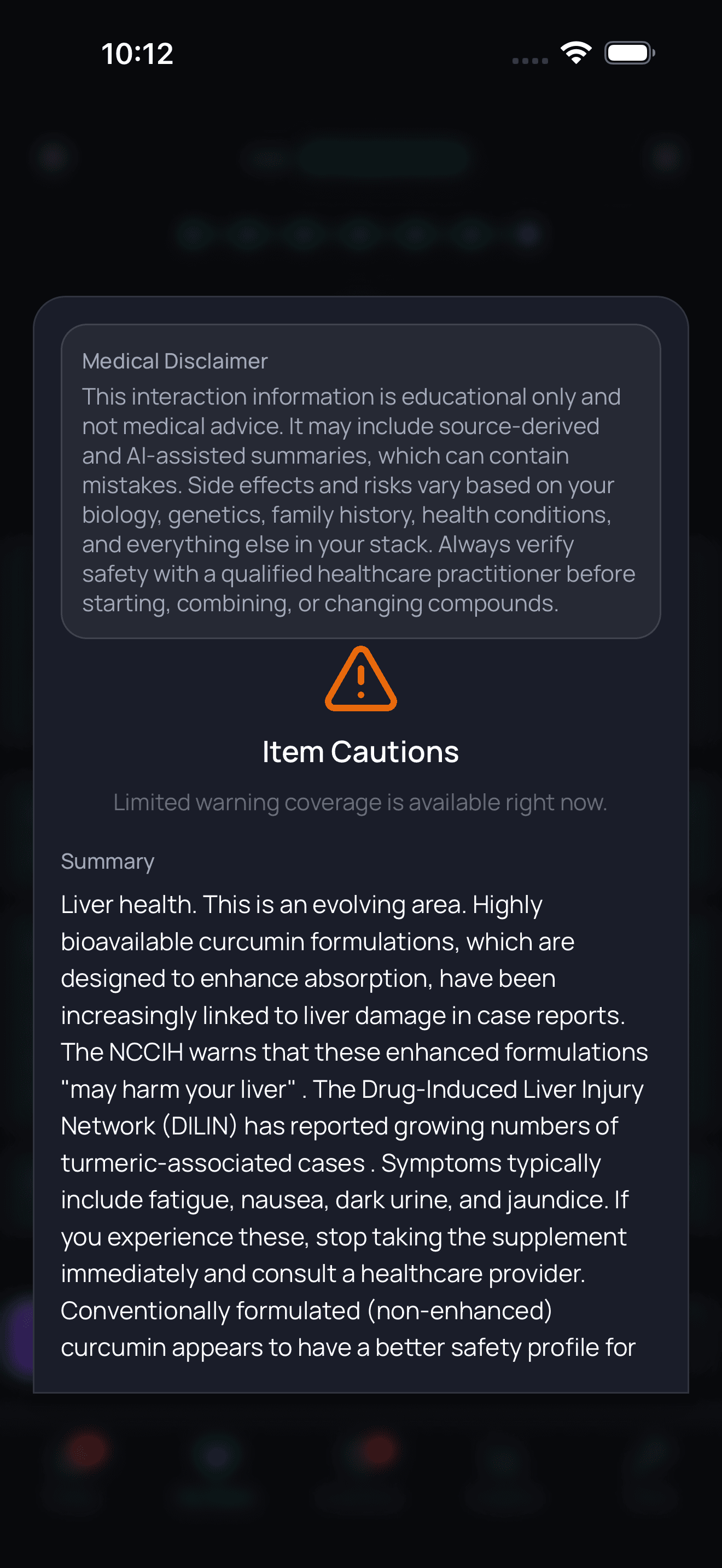
Safety notes are not emergency guidance; seek medical help when appropriate.
Dosing & Usage Protocols
The Basics
The most commonly studied and cited dosage of chondroitin sulfate for osteoarthritis is 800 to 1,200 mg per day, taken orally. This range appears consistently across clinical trials, guidelines, and practitioner recommendations.
There are two main dosing approaches: a single daily dose of 800 to 1,200 mg, or the same total divided into two or three smaller doses throughout the day. Some animal research suggests that divided dosing may improve absorption, though this has not been definitively confirmed in humans.
One important aspect of chondroitin dosing is patience. Unlike over-the-counter pain relievers that work within hours, chondroitin is classified as a slow-acting agent. Most clinical trials report that meaningful symptom improvement takes several weeks to several months. Some studies observe a post-treatment carry-over effect, meaning benefits persist for a period after stopping supplementation [22].
Higher daily doses (1,200 mg) appear to produce greater benefit than lower doses in some analyses, though the difference is not dramatic [36].
The Science
Clinical trial dosing protocols have predominantly used 800 mg/day or 1,200 mg/day of CS for knee OA.
The GAIT study used chondroitin sulfate 1,200 mg/day (three 400 mg doses) [24]. The STOPP study used 800 mg/day as a single dose [28]. Structum, the most-studied pharmaceutical-grade CS, is typically dosed at 1,000 mg/day.
Onset of action is characteristically delayed. Most trials requiring 3 to 6 months of administration before primary endpoints are assessed [7]. A post-treatment carry-over effect has been documented, with symptom improvement persisting for weeks after cessation in some trials [22].
Getting the dose right matters more than most people realize. Too little may be ineffective, too much wastes money or introduces risk, and inconsistency undermines both. Doserly tracks every dose you take, across every form, giving you a clear record of what you're actually consuming versus what you planned.
The app helps you compare RDA recommendations against therapeutic ranges discussed in the research, so you can see exactly where your intake falls. If you switch forms, say from a standard capsule to a liposomal liquid, Doserly adjusts your tracking to account for different bioavailabilities. Pair that with smart reminders that keep your timing consistent, and the precision that makes a real difference in outcomes becomes effortless.
Build reminders around the routine, not just the compound.
Doserly can keep timing, skipped doses, and schedule changes organized so the plan you read about becomes easier to follow and review.
Today view
Upcoming reminders

Reminder tracking supports consistency; it does not select a protocol for you.
What to Expect (Timeline)
Chondroitin sulfate has one of the slowest onset profiles of any popular supplement. Setting realistic expectations upfront is essential to avoid premature discontinuation.
Weeks 1-2: Most users report no noticeable changes during this initial period. Chondroitin is building up in the system but has not yet reached levels sufficient to produce symptomatic effects. Some community users report noticing improvement within the first week, though this timeframe is faster than clinical trials typically support and may reflect placebo response or concurrent anti-inflammatory effects.
Weeks 3-6: The earliest point at which modest symptom improvement may begin to appear. Some users notice reduced joint stiffness, particularly in the morning or after prolonged sitting. Pain intensity may begin to decrease subtly. Clinical trial protocols typically have their first assessment at 4 to 6 weeks.
Weeks 6-12: This is the window where most clinical trials demonstrate statistically significant differences between chondroitin and placebo. Users who are going to respond generally notice meaningful improvement by this point: reduced daily joint pain, improved ability to perform weight-bearing activities (climbing stairs, walking longer distances), and decreased need for rescue pain medication.
3-6 months: Maximum therapeutic effect is typically reached in this timeframe. The GAIT study assessed primary outcomes at 24 weeks (approximately 6 months) [24]. Some disease-modifying structural benefits (cartilage preservation) require 2+ years of continuous use to manifest [28].
Post-treatment: A carry-over effect has been documented in several studies, meaning symptom relief may persist for weeks to months after discontinuation. Multiple community users report noticing a return of joint pain 1 to 2 weeks after stopping supplementation.
Timelines in the research give you a general idea of when to expect results, but your body has its own schedule. Doserly tracks your progress against those benchmarks, letting you see whether your experience aligns with typical response curves or whether something in your protocol might need adjusting.
By logging biomarkers and subjective outcomes alongside your supplement intake, you build a personal timeline that shows exactly when changes started appearing and how they've progressed. The app's trend analysis highlights inflection points, weeks where things shifted for better or worse, so you have concrete data when deciding whether to continue, adjust your dose, or try a different form.
Keep sensitive protocol records in a purpose-built app.
Doserly is designed for private health tracking with structured records, offline-ready workflows, and exportable history when you need it.
Privacy
Health records
Privacy controls help you manage records; keep clinical records where required.
Interactions & Compatibility
SYNERGISTIC
- Glucosamine: The most common pairing. The GAIT study found that the combination showed significant benefit in the moderate-to-severe pain subgroup (79.2% vs. 54.3% placebo) [24]. Often taken together at 1,200-1,500 mg glucosamine + 800-1,200 mg chondroitin daily.
- MSM (Methylsulfonylmethane): Frequently combined in triple-strength joint formulas. Limited evidence for additive benefit, but the combination is widely used and well-tolerated.
- Vitamin C: Essential cofactor for collagen synthesis. May support the cartilage-building effects of chondroitin through complementary pathways.
- Manganese: Cofactor in glycosaminoglycan synthesis. Sometimes included in joint health formulas alongside chondroitin.
- Omega-3 Fatty Acids (Fish Oil): Anti-inflammatory properties may complement chondroitin's mechanisms. Frequently stacked by joint health-focused users.
- Collagen (Type II): Provides structural cartilage proteins that complement chondroitin's glycosaminoglycan contribution.
- Hyaluronic Acid: Another GAG component of synovial fluid. May complement chondroitin's effects on joint lubrication.
- Boron: Trace mineral associated with improved joint outcomes in some epidemiological data.
CAUTION / AVOID
- Warfarin (Coumadin): Several case reports describe increased anticoagulant effects (elevated INR) when chondroitin (often combined with glucosamine) is taken with warfarin. Medical supervision is essential for anyone taking anticoagulants [34].
- Other anticoagulants and antiplatelet drugs: Theoretical increased bleeding risk based on chondroitin's structural similarity to heparin-like compounds. Caution with aspirin, NSAIDs (ibuprofen, naproxen), heparin, enoxaparin [34].
- Asthma medications: Rare reports of asthma exacerbation with chondroitin use. Individuals with asthma should discuss with their healthcare provider before starting [35].
How to Take / Administration Guide
Chondroitin sulfate is available in capsules, tablets, softgels, and powders. It is most commonly found in combination products with glucosamine and/or MSM, though standalone chondroitin products exist.
With meals: Most practitioners recommend taking chondroitin with food to improve GI tolerance and potentially enhance absorption. No specific food pairing requirements exist, though taking it with a meal that includes some protein may be beneficial given the amino sugar structure of the compound.
Divided vs. single dosing: Animal data suggests multiple daily doses may improve absorption [22]. If using 1,200 mg/day, dividing into three 400 mg doses with meals is a reasonable approach. If using 800 mg/day, a single dose or two divided doses are both common.
Reconstitution (powders): Chondroitin powder dissolves readily in water. No special reconstitution requirements.
Combination products: The vast majority of chondroitin users take it as part of a combination product (typically glucosamine + chondroitin or glucosamine + chondroitin + MSM). When using combination products, verify that the chondroitin content per serving meets the therapeutic range of 800-1,200 mg/day, as some products contain sub-therapeutic amounts of chondroitin.
Cycling: No evidence supports cycling chondroitin on and off. Given its slow onset (weeks to months) and documented carry-over effect, consistent daily use appears to be the most appropriate approach for those who choose to use it.
Duration: Clinical trials have studied chondroitin use for periods ranging from 3 months to 6 years. There is no established maximum duration of use. Many users take it continuously as a long-term joint maintenance strategy.
Choosing a Quality Product
Product quality is arguably the single most important factor in determining whether chondroitin sulfate will provide any benefit. The clinical evidence strongly suggests that pharmaceutical-grade preparations produce more consistent results than supplement-grade products, and independent testing has revealed alarming quality variations in the over-the-counter market.
The quality problem: A study by da Cunha et al. found that CS content in food supplements conformed to label specifications in less than half of samples tested [37]. In another analysis of 16 CS samples, only 5 contained more than 90% CS, while 11 contained less than 15% CS, with maltodextrin as the main contaminant [38]. This means many users may be taking products that contain little to no actual chondroitin sulfate.
What to look for:
- Third-party testing: USP, NSF, or ConsumerLab certification provides independent verification of ingredient identity and quantity.
- Pharmaceutical-grade designation: In countries where pharmaceutical-grade CS is available, these products have undergone more rigorous quality control.
- Source identification: Look for products that specify the CS source (bovine, porcine, avian, marine). Bovine-derived CS has the most consistent evidence base [9].
- Purity information: Products that disclose purity percentage and molecular weight range indicate greater transparency.
- Standardized CS content: Ensure the label specifies chondroitin sulfate content per dose, not total "joint blend" weight.
Red flags to avoid:
- Proprietary blends that do not disclose individual ingredient amounts
- Extremely low-priced products (quality CS extraction is expensive)
- Products that do not specify the source of CS
- Labels claiming CS content that seems disproportionately high for the price point
- Products not manufactured in GMP-certified facilities
Third-party certification programs:
- USP Verified Mark: tests identity, strength, purity, and performance
- NSF International (NSF/ANSI 173): dietary supplement certification
- ConsumerLab: independent testing with CL Seal of Approval
- Informed Sport: batch testing for banned substances (relevant for athletes)
Storage & Handling
Chondroitin sulfate supplements are generally stable under normal storage conditions.
- Temperature: Store at room temperature (59-77°F / 15-25°C). No refrigeration required.
- Light sensitivity: Keep away from direct sunlight. Amber or opaque containers are preferable.
- Moisture sensitivity: Moderate sensitivity. Store in a dry location and keep container tightly sealed. Do not store in bathrooms.
- Shelf life: Typically 2-3 years from manufacture when sealed. Follow the expiration date on the product label.
- Travel: No special travel precautions. Stable at typical travel temperatures.
- After opening: Use within the timeframe indicated on the label, typically within 6-12 months. Ensure cap is tightly sealed after each use.
Lifestyle & Supporting Factors
Several lifestyle factors can influence the effectiveness of chondroitin sulfate supplementation and overall joint health.
Exercise and movement: Regular, moderate physical activity is one of the most evidence-based interventions for osteoarthritis, independent of supplementation. Low-impact activities like swimming, cycling, walking, and yoga help maintain joint mobility and strengthen the muscles that support joint function. Excessive high-impact activity or rapid increases in training load may counteract any benefit from CS.
Weight management: Excess body weight places additional mechanical stress on weight-bearing joints. Even modest weight loss (5-10% of body weight) has been shown to meaningfully reduce knee OA symptoms. Weight management may be more impactful than any supplement for joint outcomes.
Diet and nutrition: An anti-inflammatory dietary pattern (rich in fruits, vegetables, fatty fish, and whole grains; low in processed foods, sugar, and saturated fats) may support the anti-inflammatory effects of CS. Adequate protein intake supports overall connective tissue maintenance.
Hydration: Cartilage is 65-80% water by composition. Maintaining adequate hydration supports the tissue environment where CS functions.
Other supplements to consider: Omega-3 fatty acids for anti-inflammatory support, Vitamin D for bone and joint health, Collagen for structural support, and Curcumin for its anti-inflammatory properties are commonly discussed alongside CS in joint health protocols.
Lab work and monitoring: While no specific biomarker directly tracks chondroitin status, inflammatory markers (CRP, ESR) and joint imaging (X-ray for joint space width, MRI for cartilage volume) can help assess overall joint health trajectory over time.
Regulatory Status & Standards
United States (FDA)
Chondroitin sulfate is classified as a dietary supplement under the Dietary Supplement Health and Education Act (DSHEA). It is not evaluated by the FDA for efficacy in treating any disease. Supplement-grade CS products are not subject to the same manufacturing, testing, and quality standards as prescription drugs. The FDA has not established an RDA, AI, or UL for chondroitin.
Canada (Health Canada)
Chondroitin sulfate is available as a Natural Health Product (NHP) with approved claims related to joint health. Products require an NPN (Natural Product Number) for legal sale.
European Union (EFSA)
In several EU member states (France, Italy, Spain, and others), pharmaceutical-grade chondroitin sulfate (e.g., Structum, Condrosulf) is available as a prescription medication for osteoarthritis. EFSA has not authorized specific health claims for CS as a food supplement. The ESCEO strongly recommends pharmaceutical-grade CS for knee OA management [7].
Australia (TGA)
Chondroitin sulfate is listed as a complementary medicine in the Australian Register of Therapeutic Goods (ARTG).
Athlete & Sports Regulatory Status
WADA: Chondroitin sulfate does not appear on the World Anti-Doping Agency Prohibited List and is not classified as a prohibited substance in or out of competition. Athletes may use CS freely from an anti-doping perspective.
National Anti-Doping Agencies (USADA, UKAD, Sport Integrity Canada, Sport Integrity Australia): No specific guidance or alerts have been issued regarding chondroitin sulfate.
Professional Sports Leagues (NFL, NBA, MLB, NHL, NCAA): Chondroitin sulfate is not prohibited by any major professional sports league or the NCAA. However, NCAA athletes should ensure their chondroitin products are NSF Certified for Sport or Informed Sport certified, as athletic departments are required to provide only certified supplements.
Athlete Certification Programs:
- Informed Sport (sport.wetestyoutrust.com): Batch testing available for CS products
- NSF Certified for Sport (nsfsport.com): Some glucosamine/chondroitin products carry this certification
- Cologne List (koelnerliste.com): Testing available
- BSCG (bscg.org): Certification available
GlobalDRO: Athletes can verify chondroitin supplement status at GlobalDRO.com across US, UK, Canada, Australia, Japan, Switzerland, and New Zealand.
Regulatory status and prohibited substance classifications change frequently. Athletes should always verify the current status of any supplement with their sport's governing body, their national anti-doping agency, and a qualified sports medicine professional before use. Third-party certification (Informed Sport, NSF Certified for Sport) reduces but does not eliminate the risk of contamination with prohibited substances.
Frequently Asked Questions
Does chondroitin actually work for joint pain?
Based on available clinical evidence, chondroitin sulfate provides small-to-moderate pain relief for osteoarthritis in some individuals. The 2015 Cochrane review found an average 8-point improvement on a 100-point pain scale compared to placebo. Results vary considerably between individuals, and product quality appears to influence outcomes. Pharmaceutical-grade preparations show more consistent benefits than supplement-grade products [25].
How long does chondroitin take to work?
Chondroitin is classified as a slow-acting agent. Most clinical trials require 3 to 6 months to demonstrate significant differences between chondroitin and placebo. Some individuals report improvement starting at 3 to 6 weeks, while others take 3 or more months. A reasonable trial period, consistent with practitioner recommendations, is at least 3 months [7].
Should I take chondroitin with or without glucosamine?
Both approaches have clinical support. The GAIT study found that the combination showed particular benefit in moderate-to-severe knee OA, while each taken alone showed benefits in other analyses. Most commercial products combine the two. There is no strong evidence that one approach is definitively superior to the other [24][26].
Is chondroitin safe for long-term use?
Clinical trials have studied chondroitin use for up to 6 years without identifying major safety concerns. Adverse events in these studies were comparable to placebo. The Cochrane review found chondroitin had a lower risk of serious adverse events compared to control groups [25][33].
Can I take chondroitin with blood thinners?
Chondroitin may increase the effects of anticoagulant medications like warfarin. Case reports describe elevated INR values in patients taking chondroitin alongside warfarin. Anyone on anticoagulant therapy should consult their healthcare provider before starting chondroitin [34].
Does the source of chondroitin matter (bovine vs. shark vs. porcine)?
Available evidence suggests that source matters. Bovine-derived CS has shown the most consistent biological activity in comparative studies. Shark-derived CS is popular but has less evidence. Porcine-derived CS has shown inconsistent results, with lower-purity porcine products even demonstrating pro-inflammatory effects in some research [4][9].
Why do some studies say chondroitin works and others say it doesn't?
The inconsistency in clinical evidence appears to be driven primarily by differences in CS product quality, study design (including risk of bias), and to some extent, funding source. When meta-analyses restrict their analysis to studies using pharmaceutical-grade CS with low risk of bias, the results are more consistently positive [3].
Is chondroitin the same as glucosamine?
No. Chondroitin sulfate and glucosamine are both naturally occurring compounds involved in cartilage health, but they are chemically distinct. Glucosamine is an amino sugar (MW ~179 Da), while chondroitin is a large glycosaminoglycan polymer (MW ~50,000 Da). They work through different mechanisms and are often taken together because they target complementary aspects of joint health.
Can vegetarians or vegans take chondroitin?
Traditional chondroitin is derived from animal cartilage (bovine, porcine, shark, chicken) and is not suitable for vegans. Some newer products use microbial-derived CS produced through biotechnological methods from bacterial sources, though these are not widely available and have limited clinical data [39].
Does chondroitin help with conditions other than osteoarthritis?
Chondroitin has been investigated for dry eyes, interstitial cystitis, and cardiovascular conditions. However, the evidence for these uses is very limited compared to osteoarthritis, and current data does not support recommending chondroitin for these purposes [34].
Myth vs. Fact
Myth: Chondroitin rebuilds damaged cartilage to like-new condition.
Fact: While chondroitin supports cartilage maintenance and may slow the rate of cartilage loss, there is no clinical evidence that it can reverse established cartilage damage or restore joints to a pre-OA state. The best evidence shows it may slow progression of joint space narrowing over 2+ years of use, which is meaningful but distinct from regeneration [28][31].
Myth: All chondroitin supplements are the same.
Fact: This is perhaps the most important myth to dispel. Independent testing has found that many chondroitin supplements contain far less CS than their labels claim, with some containing as little as 15% of the stated amount [37][38]. Pharmaceutical-grade products consistently outperform supplement-grade products in clinical trials. Source, purity, and manufacturing processes all significantly impact quality and potentially efficacy [4].
Myth: Chondroitin is just a placebo.
Fact: While the debate about chondroitin's efficacy is genuine and ongoing, characterizing it as pure placebo is not consistent with the totality of evidence. The 2015 Cochrane review (43 studies, 9,110 participants) found statistically significant benefits for pain and function that were described as "likely clinically meaningful." Multiple meta-analyses confirm a small-to-moderate effect when using quality-controlled preparations [25].
Myth: You will feel results within a few days of starting chondroitin.
Fact: Chondroitin is explicitly classified as a slow-acting agent. Clinical trials show that meaningful benefits typically take weeks to months to emerge. Claims of immediate pain relief within days are inconsistent with chondroitin's known mechanism of action and are more likely attributable to placebo response or concurrent use of other interventions [7].
Myth: Chondroitin is dangerous because it comes from animal cartilage.
Fact: While contamination is a theoretical concern with any animal-derived product, the safety data for chondroitin is robust. Multiple meta-analyses and the Cochrane review confirm adverse event rates comparable to placebo. Purchasing from reputable manufacturers with third-party testing minimizes contamination risk [25][33].
Myth: Combining glucosamine and chondroitin is always better than either alone.
Fact: The evidence does not consistently support the combination over individual use. The GAIT study found no overall advantage for the combination, though a subgroup with moderate-to-severe pain did benefit. A 2018 meta-analysis found that each taken separately reduced pain, but the combination did not show additional benefit [24][26].
Myth: Chondroitin is bad for diabetics.
Fact: Some concern exists because glucosamine (not chondroitin) may affect blood glucose levels, and the two are often taken together. For chondroitin specifically, there is no established evidence of adverse effects on blood sugar. However, individuals with diabetes taking combination products containing glucosamine should discuss this with their healthcare provider [2].
Sources & References
Clinical Trials & RCTs
- [24] Clegg DO, Reda DJ, Harris CL, et al. Glucosamine, chondroitin sulfate, and the two in combination for painful knee osteoarthritis. N Engl J Med. 2006;354:795-808.
- [28] Kahan A, Uebelhart D, De Vathaire F, Delmas PD, Reginster JY. Long-term effects of chondroitins 4 and 6 sulfate on knee osteoarthritis: the study on osteoarthritis progression prevention (STOPP), a two-year, randomized, double-blind, placebo-controlled trial. Arthritis Rheum. 2009;60(2):524-533.
- [29] Pelletier JP, Raynauld JP, Beaulieu AD, et al. Chondroitin sulfate efficacy versus celecoxib on knee osteoarthritis structural changes using MRI: a 2-year multicentre exploratory study. Arthritis Res Ther. 2016;18:256.
- [32] Gabay C, Medinger-Sadowski C, Gascon D, et al. Symptomatic effects of chondroitin 4 and chondroitin 6 sulfate on hand osteoarthritis: a randomized, double-blind, placebo-controlled clinical trial. Arthritis Rheum. 2011;63(11):3383-3391.
- [11] Michel BA, Stucki G, Frey D, et al. Chondroitins 4 and 6 sulfate in osteoarthritis of the knee: a randomized, controlled trial. Arthritis Rheum. 2005;52:779-786.
Systematic Reviews & Meta-Analyses
- [3] Honvo G, Bruyere O, Geerinck A, Veronese N, Reginster JY. Efficacy of chondroitin sulfate in patients with knee osteoarthritis: a comprehensive meta-analysis exploring inconsistencies in randomized, placebo-controlled trials. Adv Ther. 2019;36:1085-1099.
- [25] Singh JA, Noorbaloochi S, MacDonald R, Maxwell LJ. Chondroitin for osteoarthritis. Cochrane Database Syst Rev. 2015;(1):CD005614.
- [26] Simental-Mendia M, Sanchez-Garcia A, Vilchez-Cavazos F, et al. Effect of glucosamine and chondroitin sulfate in symptomatic knee osteoarthritis: a systematic review and meta-analysis. Rheumatol Int. 2018;38(8):1413-1428.
- [27] Rabade A, Viswanatha GL, Nandakumar K, et al. Evaluation of efficacy and safety of glucosamine sulfate, chondroitin sulfate, and their combination regimen in knee osteoarthritis: a systematic review and meta-analysis. Inflammopharmacology. 2024;32:1759-1775.
- [30] Lee YH, Woo JH, Choi SJ, Ji JD, Song GG. Effect of glucosamine or chondroitin sulfate on the osteoarthritis progression: a meta-analysis. Rheumatol Int. 2010;30:357-363.
- [31] Hochberg MC. Structure-modifying effects of chondroitin sulfate in knee osteoarthritis: an updated meta-analysis. Osteoarthritis Cartilage. 2010;18(Suppl 1):S28-S31.
- [33] Honvo G, Reginster JY, Rabenda V, et al. Safety of symptomatic slow-acting drugs for osteoarthritis: outcomes of a systematic review and meta-analysis. Drugs Aging. 2019;36(Suppl 1):65-99.
- [36] Knapik JJ, Pope R, Hoedebecke SS, Schram B, Orr R. Effects of oral chondroitin sulfate on osteoarthritis-related pain and joint structural changes: systematic review and meta-analysis. J Spec Oper Med. 2019;19:113-124.
Preclinical & Mechanistic Studies
- [12] Bassleer CT, Combal JP, Bougaret S, Malaise M. Effects of chondroitin sulfate and interleukin-1 beta on human articular chondrocytes cultivated in clusters. Osteoarthritis Cartilage. 1998;6:196-204.
- [13] Uebelhart D, Thonar EJ, Zhang J, Williams JM. Protective effect of exogenous chondroitin 4,6-sulfate in the acute degeneration of articular cartilage in the rabbit. Osteoarthritis Cartilage. 1998;6:6-13.
- [14] Wang L, Wang J, Almqvist KF, Veys EM, Verbruggen G. Influence of polysulphated polysaccharides and hydrocortisone on the extracellular matrix metabolism of human articular chondrocytes in vitro. Clin Exp Rheumatol. 2002;20:669-676.
- [15] Holzmann J, Brandl N, Zemann A, et al. Assorted effects of TGFbeta and chondroitinsulfate on p38 and ERK1/2 activation levels in human articular chondrocytes stimulated with LPS. Osteoarthritis Cartilage. 2006;14:519-525.
- [16] Jomphe C, Gabriac M, Hale TM, et al. Chondroitin sulfate inhibits the nuclear translocation of nuclear factor-kappaB in interleukin-1beta-stimulated chondrocytes. Basic Clin Pharmacol Toxicol. 2008;102:59-65.
- [17] Clegg DO, Reda DJ, Harris CL, et al. [cited above as 24]
- [18] Fan Z, Soder S, Oehler S, Fundel K, Aigner T. Activation of interleukin-1 signaling cascades in normal and osteoarthritic articular cartilage. Am J Pathol. 2007;171:938-946.
- [19] Campo GM, Avenoso A, Campo S, Ferlazzo AM, Calatroni A. Antioxidant activity of chondroitin sulfate. Adv Pharmacol. 2006;53:417-431.
- [20] Lambert C, Mathy-Hartert M, Dubuc JE, et al. Characterization of synovial angiogenesis in osteoarthritis patients and its modulation by chondroitin sulfate. Arthritis Res Ther. 2012;14:R58.
- [9] Cantley MD, Rainsford KD, Haynes DR. Comparison of the ability of chondroitin sulfate derived from bovine, fish and pigs to suppress human osteoclast activity in vitro. Inflammopharmacology. 2013;21:407-412.
- [39] Sevimli R, Erenler AS, Karabulut AB, Akpolat N, Geckil H. Microbial chondroitin sulfate in experimental knee osteoarthritis model investigation of chondroprotective effect. Eur Rev Med Pharmacol Sci. 2021;25:5402-5411.
Government/Institutional Sources
- [1] Bruyere O, Honvo G, Veronese N, et al. An updated algorithm recommendation for the management of knee osteoarthritis from ESCEO. Semin Arthritis Rheum. 2019;49(3):337-350.
- [2] NCCIH. Glucosamine and Chondroitin for Osteoarthritis: What You Need To Know. Accessed 2026-03-23. https://www.nccih.nih.gov/health/glucosamine-and-chondroitin-for-osteoarthritis
- [7] Kolasinski SL, Neogi T, Hochberg MC, et al. 2019 ACR/AF Guideline for the Management of Osteoarthritis of the Hand, Hip, and Knee. Arthritis Rheumatol. 2020;72(2):220-233.
- [34] Drugs.com. Chondroitin Uses, Benefits & Dosage. Accessed 2026-03-23. Professional monograph with full citation list.
- [35] Drugs.com. Chondroitin Uses, Side Effects & Warnings. Accessed 2026-03-23.
Quality & Analytical Studies
- [4] Brito R, Costa D, Dias C, Cruz P, Barros P. Chondroitin Sulfate Supplements for Osteoarthritis: A Critical Review. Cureus. 2023;15(6):e40192.
- [5] Silbert JE, Sugumaran G. Biosynthesis of chondroitin/dermatan sulfate. IUBMB Life. 2002;54:177-186.
- [6] Nelson F, Billinghurst RC, Pidoux I, et al. Early post-traumatic osteoarthritis-like changes in human articular cartilage following rupture of the anterior cruciate ligament. Osteoarthritis Cartilage. 2006;14:114-119.
- [8] Uebelhart D, Malaise M, Marcolongo R, et al. Intermittent treatment of knee osteoarthritis with oral chondroitin sulfate: a one-year, randomized, double-blind, multicenter study versus placebo. Osteoarthritis Cartilage. 2004;12:269-276.
- [10] Chou MM, Vergnolle N, McDougall JJ, et al. Effects of chondroitin and glucosamine sulfate in a dietary bar formulation on inflammation, interleukin-1beta, matrix metalloprotease-9, and cartilage damage in arthritis. Exp Biol Med. 2005;230:255-262.
- [21] Drugs.com Professional Monograph. Pharmacokinetics section. Multiple primary citations referenced.
- [22] Drugs.com Professional Monograph. Dosing section and animal bioavailability data.
- [23] Volpi N. Quality of different chondroitin sulfate preparations in relation to their therapeutic activity. J Pharm Pharmacol. 2009;61:1271-1280.
- [37] da Cunha AL, de Oliveira LG, Maia LF, de Oliveira LF, Michelacci YM, de Aguiar JA. Pharmaceutical grade chondroitin sulfate: structural analysis and identification of contaminants in different commercial preparations. Carbohydr Polym. 2015;10:300-308.
- [38] Bruyere O, Cooper C, Al-Daghri NM, Dennison EM, Rizzoli R, Reginster JY. Inappropriate claims from non-equivalent medications in osteoarthritis: a position paper endorsed by ESCEO. Aging Clin Exp Res. 2018;30:111-117.