
Testosterone Undecanoate Oral (Andriol)
On this page
Quick Reference Card
Attribute
Brand Name(s)
- Value
- Andriol (original), Andriol Testocaps (reformulated); also sold as Restandol, Virigen, Undestor in various markets
Attribute
Generic Name
- Value
- Testosterone undecanoate (oral capsule)
Attribute
Drug Class / Type
- Value
- Androgen, oral testosterone ester (non-17-alpha-alkylated, castor oil vehicle)
Attribute
DEA Schedule
- Value
- Schedule III (CIII)
Attribute
Approved Indications
- Value
- Testosterone replacement therapy in adult males with conditions associated with deficiency or absence of endogenous testosterone (primary and hypogonadotropic hypogonadism)
Attribute
Available Strengths
- Value
- 40 mg capsules
Attribute
Common Starting Dose
- Value
- 120-160 mg daily in 2 divided doses for 2-3 weeks
Attribute
Maintenance Dose
- Value
- 40-120 mg daily
Attribute
Route of Administration
- Value
- Oral (must be taken with food containing at least 19 g of fat)
Attribute
Dosing Schedule
- Value
- Twice daily (morning and evening, with meals)
Attribute
Absorption
- Value
- Intestinal lymphatic system (bypasses hepatic first-pass metabolism)
Attribute
Key Monitoring Requirements
- Value
- Serum testosterone, hematocrit, PSA, lipid panel, liver function
Attribute
FDA Approval
- Value
- NOT FDA-approved; available in 80+ countries (Canada, Europe, Australia, Asia)
Attribute
Original Manufacturer
- Value
- Organon (now part of MSD/Merck)
Attribute
Unique Considerations
- Value
- NOT a 17-alpha-alkylated androgen (no hepatotoxicity signal); highly food-dependent absorption (~7% oral bioavailability); elevated DHT:T ratio; not interchangeable with US-approved oral TU products (Jatenzo, Kyzatrex, Tlando)
Overview / What Is Testosterone Undecanoate Oral (Andriol)?
The Basics
Andriol is a prescription oral testosterone capsule that has been available in many countries around the world since the 1970s. It was developed to solve a problem that had plagued oral testosterone for decades: liver toxicity. Earlier oral testosterone pills (methyltestosterone, fluoxymesterone) had to be chemically modified to survive passing through the liver, and those modifications caused serious liver damage in many patients.
Andriol took a different approach. Instead of modifying the testosterone molecule itself, the developers attached it to a long fatty acid chain (undecanoate) and dissolved it in oil inside a soft gelatin capsule. When you take the capsule with a meal containing fat, the testosterone undecanoate hitches a ride with the fats from your food through the lymphatic system in your gut wall, bypassing the liver entirely. This was a significant advance because it meant oral testosterone could be delivered safely, without the liver damage that had given oral testosterone a bad reputation.
There is an important caveat, though. Andriol is not available in the United States. It was never submitted for or granted FDA approval, primarily because of its variable absorption and the difficulty of maintaining consistent testosterone levels throughout the day. In the US, three newer oral testosterone undecanoate products have been approved instead: Jatenzo (2019), Tlando (2022), and Kyzatrex (2022), all using improved self-emulsifying formulations that provide more consistent absorption. Andriol remains widely available and commonly prescribed in Canada, Europe, Australia, the Middle East, Asia, and Latin America.
Andriol comes as a 40 mg capsule. The usual starting dose is 120 to 160 mg per day (3 to 4 capsules), split between morning and evening meals, for the first 2 to 3 weeks. After that, your provider adjusts to a maintenance dose of 40 to 120 mg per day based on your response and blood test results.
The Science
Andriol (testosterone undecanoate, TU) was the first commercially available oral testosterone formulation to exploit intestinal lymphatic absorption, avoiding the hepatotoxicity associated with 17-alpha-alkylated androgens. Originally developed by Organon in the early 1970s, the product was initially formulated as TU dissolved in oleic acid and required refrigeration. In the early 2000s, the formulation was updated to Andriol Testocaps, using castor oil with propylene glycol laurate (60:40 w/w) as the vehicle, which improved storage stability and allowed room-temperature storage with a shelf life of approximately 3 years [1][2].
The original Andriol formulation received marketing authorization in more than 80 countries but was never submitted for FDA approval. The primary pharmacokinetic limitations that prevented US market entry include high intra- and inter-individual variability in serum testosterone levels (coefficient of variation approximately 40-50%), food-dependent absorption requiring co-administration with dietary fat, and a peak-to-trough pattern that produces testosterone levels in the eugonadal range for only a portion of each dosing interval [2][3].
Despite these pharmacokinetic limitations, Andriol has accumulated a substantial safety record. A 10-year longitudinal study by Gooren (1994) confirmed the long-term safety of oral TU in hypogonadal men, with no hepatotoxicity, no clinically significant PSA elevation, and no prostate cancer diagnoses [4]. This safety record, combined with the convenience of oral administration, has sustained Andriol's clinical use internationally for over 50 years.
Medical / Chemical Identity
Property
Generic Name
- Detail
- Testosterone undecanoate
Property
Brand Name(s)
- Detail
- Andriol (original), Andriol Testocaps (reformulated), Restandol, Virigen, Undestor
Property
Chemical Name
- Detail
- 17beta-hydroxyandrost-4-en-3-one undecanoate
Property
Empirical Formula
- Detail
- C30H48O3
Property
Molecular Weight
- Detail
- 456.7 g/mol
Property
CAS Number
- Detail
- 5949-44-0
Property
Drug Class
- Detail
- Androgen; oral testosterone ester (non-17-alpha-alkylated)
Property
Ester Type
- Detail
- Undecanoate (C11 fatty-acid ester at 17-beta position)
Property
Active Moiety
- Detail
- Testosterone (released via ester hydrolysis)
Property
Capsule Strength
- Detail
- 40 mg testosterone undecanoate per capsule
Property
DEA Schedule
- Detail
- Schedule III (CIII) (US classification for all testosterone products)
Property
FDA Approval
- Detail
- NOT FDA-approved
Property
Original Developer
- Detail
- Organon (Netherlands)
Property
Current Manufacturer
- Detail
- Organon/MSD (Merck); generic manufacturers vary by country
Formulation Details
Original Andriol: Testosterone undecanoate dissolved in oleic acid in a soft gelatin capsule. Required refrigeration (2-8 degrees C). Limited shelf life.
Andriol Testocaps (current): Each oval, orange, soft gelatin capsule contains 40 mg testosterone undecanoate in castor oil with propylene glycol laurate (60:40 w/w). Inactive ingredients include gelatin, glycerol, sunset yellow (E110). Does not require refrigeration; store between 15-25 degrees C, protect from light and moisture, use within 90 days of opening [1][5].
Ester Chemistry
Testosterone undecanoate features an undecanoic acid (11-carbon) ester chain attached to the 17-beta hydroxyl group of testosterone. This long-chain fatty acid ester promotes lipophilicity, enabling incorporation into intestinal chylomicrons during digestion and subsequent lymphatic transport. After lymphatic absorption, non-specific tissue and plasma esterases cleave the undecanoate side chain to release free, bioactive testosterone [1][2].
The undecanoate ester is the same ester used in long-acting injectable formulations (Aveed, Nebido), but the oral and injectable forms have completely different pharmacokinetic profiles due to their different absorption mechanisms. The injectable oil-based formulation relies on slow release from an intramuscular depot over weeks, while the oral capsule depends on lymphatic absorption with each dose, producing much shorter-acting testosterone delivery.
International Availability
Andriol/Andriol Testocaps is available in Canada, Europe (EU/UK), Australia, New Zealand, South Africa, Middle East, Southeast Asia, Latin America, and other markets. Availability of specific generics varies by country.
How It Works / Mechanism of Action
The Basics
When you swallow an Andriol capsule with a meal, the fatty acid ester dissolves in the fats from your food. As your intestine processes those fats, it packages them into tiny fat-carrying particles called chylomicrons. The testosterone undecanoate hitches a ride inside these chylomicrons, getting absorbed through the lymphatic vessels in your gut wall rather than being sent to the liver through the portal vein like most oral medications.
This is the key innovation behind Andriol. By taking the lymphatic "back road" into your bloodstream, the testosterone bypasses the liver entirely. Earlier oral testosterone drugs went straight through the liver, which destroyed most of the testosterone before it reached your bloodstream and, worse, caused liver damage over time. Andriol avoids both problems.
Once the testosterone undecanoate reaches your bloodstream via the lymphatic system, enzymes in your blood and tissues clip off the undecanoate ester chain, releasing free testosterone. This free testosterone then does what testosterone naturally does: it binds to androgen receptors throughout your body, influencing muscle, bone, brain, sexual organs, and other tissues.
Some of this testosterone gets converted to dihydrotestosterone (DHT) by the enzyme 5-alpha reductase. Oral testosterone undecanoate actually produces proportionally more DHT than injectable testosterone does. This means you may experience more DHT-related effects (both positive and negative) than you might expect. Some testosterone also gets converted to estradiol by the enzyme aromatase, though oral TU tends to produce less estradiol elevation than injectable formulations.
Because Andriol's absorption depends entirely on dietary fat triggering chylomicron formation, taking it on an empty stomach or with a very low-fat meal results in dramatically reduced absorption. A normal meal containing approximately 19 grams of fat is sufficient; a high-fat meal is not necessary [3].
The Science
Testosterone undecanoate in the castor oil/propylene glycol laurate vehicle undergoes intestinal lymphatic absorption via chylomicron incorporation, bypassing hepatic first-pass metabolism. The absorption mechanism involves: (1) dissolution of TU in dietary lipids during digestion, (2) incorporation of TU into mixed micelles and subsequently into chylomicrons during enterocyte processing, and (3) chylomicron transport via intestinal lacteals into the thoracic duct and systemic circulation [2][6].
In a validated canine lymph duct cannulation model, Shackleford et al. (2003) demonstrated that lymphatic absorption accounts for the majority of testosterone entering the systemic circulation after oral TU administration [7].
Following systemic entry, TU undergoes ester hydrolysis by non-specific esterases in plasma and tissues to release free testosterone. Testosterone binds to intracellular androgen receptors (AR), initiating both genomic signaling (nuclear translocation, transcription at androgen response elements) and non-genomic rapid signaling pathways (MAPK/ERK, PI3K/Akt). Approximately 40% of circulating testosterone is bound to sex hormone-binding globulin (SHBG), with the remainder bound to albumin (~54%) or circulating as free testosterone (~2%) [2].
A notable pharmacological characteristic of oral TU is the disproportionate elevation of DHT relative to testosterone. The DHT:T ratio increases approximately 3-fold after oral TU administration compared to baseline, likely due to significant 5-alpha reductase activity in the intestinal wall during absorption. De-esterification of TU to produce testosterone and 5-alpha reduction to produce dihydrotestosterone undecanoate (DHTU) occur rapidly in the intestinal mucosa [2][8]. Estradiol levels, by contrast, remain relatively close to baseline during oral TU therapy, possibly because the lymphatic absorption pathway delivers TU to tissues with lower aromatase activity compared to the direct vascular route used by injectable testosterone [8].
Excretion occurs primarily as urinary glucuronide and sulfate conjugates, with 77-93% of an orally administered dose excreted in urine and feces within 3-4 days [1].
Historical Context
Oral testosterone therapy has a complicated history that directly explains why Andriol matters and why it remains relevant despite its pharmacokinetic limitations.
The earliest oral androgens, particularly methyltestosterone (developed in the 1930s) and fluoxymesterone, used 17-alpha-alkylation to survive hepatic first-pass metabolism. While effective at raising testosterone levels, these compounds caused dose-dependent liver damage ranging from cholestatic jaundice and peliosis hepatis to hepatic adenomas and hepatocellular carcinoma with long-term use [9].
The development of oral testosterone undecanoate by Organon in the early 1970s represented the first major advance in oral testosterone safety. By leveraging the lymphatic absorption pathway, TU in an oil vehicle avoided hepatic first-pass metabolism entirely. The first pharmacokinetic studies by Nieschlag et al. (1975) demonstrated that oral TU produced measurable increases in plasma testosterone and DHT without the hepatotoxicity of alkylated androgens [10].
The original Andriol formulation required refrigeration and showed high variability in absorption. The reformulation as Andriol Testocaps (castor oil base) in the early 2000s improved storage stability and provided slightly more consistent absorption, though the fundamental food-dependence limitation remained [5].
The development of self-emulsifying drug delivery systems (SEDDS) for oral TU in the 2000s and 2010s led to three FDA-approved products in the United States: Jatenzo (March 2019, first US approval), Tlando (January 2022), and Kyzatrex (July 2022). These SEDDS formulations use combinations of lipophilic and hydrophilic surfactants to enhance emulsification and improve the consistency of lymphatic absorption compared to Andriol's simpler castor oil vehicle [2][8].
Despite the arrival of these newer products, Andriol continues to be prescribed in markets where the FDA-approved alternatives are not available or where cost considerations favor the established generic product.
Pharmacokinetics / Hormone Physiology
The Basics
Understanding how Andriol moves through your body helps explain both its benefits and its limitations.
After you swallow a capsule with food, the testosterone undecanoate dissolves in the fats from your meal and gets absorbed through the lymphatic vessels in your gut. Peak testosterone levels are typically reached 4 to 5 hours after taking the capsule, and levels return to near-baseline by about 10 to 12 hours after the dose. This means that with twice-daily dosing, you experience two peaks and two troughs each day, creating a somewhat "wavy" testosterone pattern that is quite different from the steady levels provided by gels or the longer peaks and troughs of injectable testosterone.
The most critical practical point about Andriol's pharmacokinetics is the food effect. Research has shown that taking Andriol with a meal containing approximately 19 grams of fat produces optimal absorption. Taking it on an empty stomach or with only a very small amount of fat results in dramatically lower testosterone levels, potentially 5 to 10 times lower than when taken with adequate food. However, a "fatty" meal is not necessary. A normal meal with moderate fat content (a couple of eggs, some cheese, or avocado with toast) is sufficient [3].
One characteristic of oral testosterone undecanoate that your provider should be aware of is the elevated DHT:T ratio. After taking Andriol, your DHT levels rise proportionally more than your testosterone levels, producing a DHT:T ratio about 3 times higher than baseline. The clinical significance of this elevation is debated, but it may influence androgenic side effects like acne, oily skin, and hair loss [2][8].
The Science
Absorption: Oral bioavailability of testosterone from Andriol Testocaps is approximately 7% [11]. Absorption is critically food-dependent: Schnabel et al. (2007) demonstrated in a four-way crossover study (n=24) that AUC for testosterone was 30.7 nmol h/L with a near-fat-free meal (0.6 g lipid) vs. 146 nmol h/L with a normal meal (19 g lipid), a nearly 5-fold difference. Increasing lipid content beyond 19 g (to 44 g) did not further increase testosterone AUC (154 nmol h/L), indicating a plateau in lymphatic absorption capacity [3].
Peak/trough dynamics: Tmax for testosterone occurs at 4-5 hours post-dose. Levels return to near-baseline by 10-12 hours. With BID dosing, steady-state trough levels are reached by approximately day 7 [2][8].
Distribution: Testosterone is approximately 40% bound to SHBG, 54% to albumin, with approximately 2% circulating as free testosterone. Oral TU administration decreases SHBG by approximately 38% over 28 days of treatment [2][8].
Metabolism: Two primary metabolic conversions: (1) 5-alpha reductase converts testosterone to DHT, with oral TU producing DHT:T ratios of approximately 0.3 (3-fold baseline increase); (2) aromatase (CYP19A1) converts testosterone to estradiol, though E2 elevation is modest with oral TU compared to injectable formulations [2][8].
Elimination: 77-93% of an orally administered dose is excreted in urine and feces within 3-4 days, primarily as glucuronide and sulfate conjugates [1].
Route comparison:
Parameter
Dosing
- Andriol Testocaps
- 40-120 mg/day (BID)
- Jatenzo (SEDDS)
- 158-396 mg BID
- IM Cypionate
- 100-200 mg weekly
- Transdermal Gel
- 50-100 mg daily
Parameter
Tmax
- Andriol Testocaps
- 4-5 hours
- Jatenzo (SEDDS)
- 4-5 hours
- IM Cypionate
- 24-48 hours
- Transdermal Gel
- 2-4 hours
Parameter
Half-life
- Andriol Testocaps
- ~4-5 hours (effective)
- Jatenzo (SEDDS)
- ~8 hours
- IM Cypionate
- ~8 days
- Transdermal Gel
- 1-3 hours (topical)
Parameter
Food requirement
- Andriol Testocaps
- Critical (19+ g fat)
- Jatenzo (SEDDS)
- With food
- IM Cypionate
- None
- Transdermal Gel
- None
Parameter
DHT:T ratio
- Andriol Testocaps
- ~0.3 (elevated)
- Jatenzo (SEDDS)
- ~0.3 (elevated)
- IM Cypionate
- ~0.1 (normal)
- Transdermal Gel
- ~0.1 (normal)
Parameter
Steady state
- Andriol Testocaps
- ~7 days
- Jatenzo (SEDDS)
- ~7 days
- IM Cypionate
- ~4-6 weeks
- Transdermal Gel
- 24-48 hours
Parameter
FDA-approved
- Andriol Testocaps
- No
- Jatenzo (SEDDS)
- Yes
- IM Cypionate
- Yes
- Transdermal Gel
- Yes
Knowing the pharmacokinetics is the foundation. Seeing how your own body responds to your specific formulation and dosing schedule turns that knowledge into actionable insight. Doserly correlates your dosing schedule with how you feel day to day, helping you and your provider identify whether your current protocol is delivering stable levels or causing peak-and-trough swings.
The app's analytics can surface patterns you might not notice on your own, like whether symptoms correlate with the trough period before your next dose or whether adjusting your meal timing improved absorption consistency. Data like this makes protocol adjustments more precise and less guesswork.
See where a dose, cycle, or change fits in time.
Doserly gives each protocol a timeline so dose changes, pauses, restarts, and observations are easier to compare later.
Timeline
Cycle history
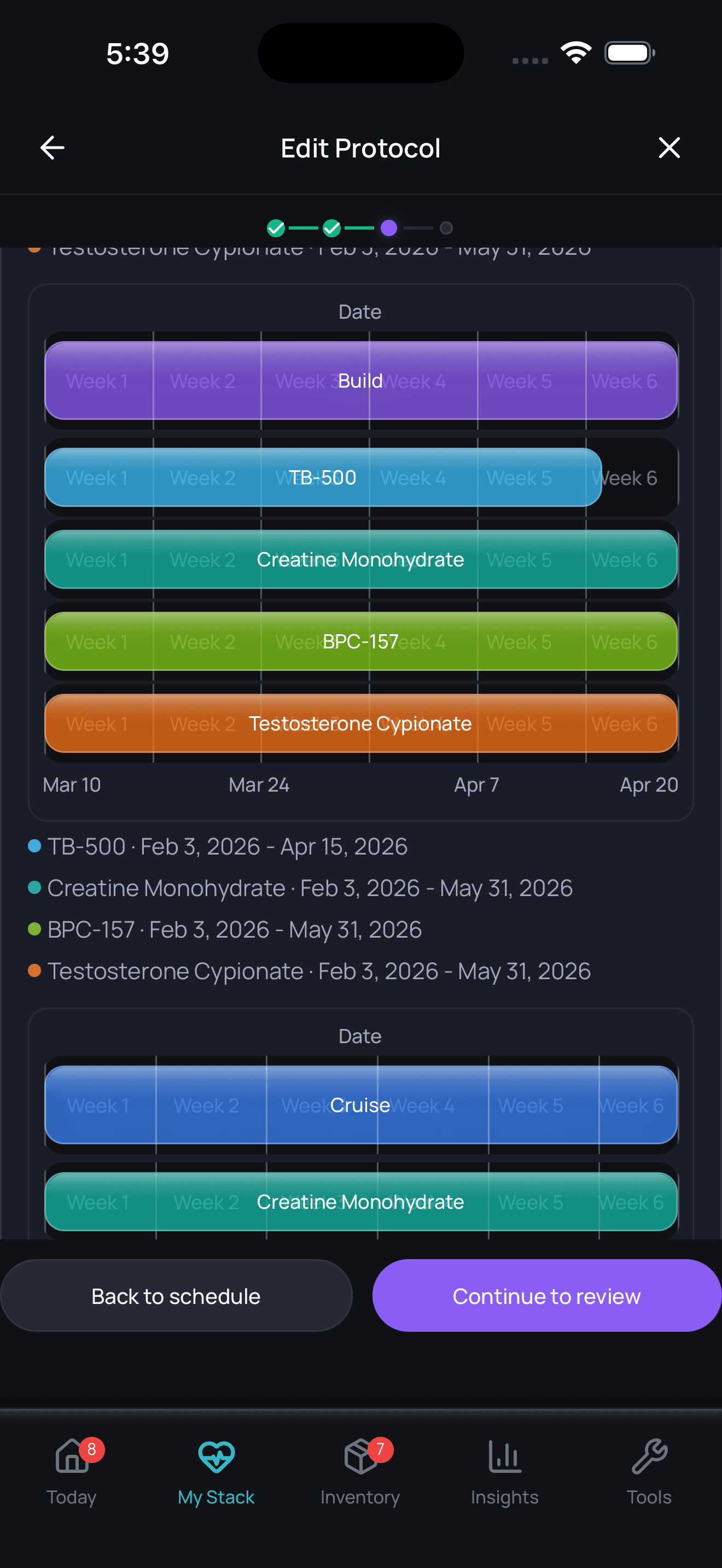
Timeline tracking helps with recall; it is not a treatment recommendation.
Research & Clinical Evidence
The Basics
Andriol has been studied for over 50 years, which gives it one of the longest safety track records of any testosterone product. However, the quality and design of these studies are quite different from the large randomized controlled trials that support newer TRT products.
The most reassuring finding is the 10-year safety study by Gooren (1994), which followed a small group of hypogonadal men on Andriol for a full decade and found no liver toxicity, no prostate cancer, and no serious cardiovascular events [4]. For an oral testosterone product, this was an important milestone.
The Austrian surveillance study (Jungwirth et al., 2007) provided real-world evidence from 43 medical centers, showing that 3 months of Andriol Testocaps (160 mg/day) increased testosterone by more than 50% and improved hypogonadism symptoms, with no significant PSA changes [12].
For broader TRT safety data, the most important study is the TRAVERSE trial, which is the largest cardiovascular safety trial ever conducted for testosterone therapy. While TRAVERSE specifically studied testosterone gel (not Andriol), its findings are relevant to all forms of TRT, including oral testosterone.
The Science
Long-term safety (Gooren, 1994): A 10-year open-label safety study in hypogonadal men receiving oral TU demonstrated no hepatotoxicity, no clinically significant changes in PSA, and no prostate cancer diagnoses. Hemoglobin and hematocrit remained within normal limits throughout the study period [4].
Austrian surveillance study (Jungwirth et al., 2007): Multicenter study (n=189) across 43 centres. Oral TU 160 mg/day (2 x 80 mg) for approximately 14 weeks. Serum testosterone increased from 8.7 +/- 4.3 to 13.2 +/- 6.7 nmol/L (p<0.001). ADAM and AMS symptom scores improved. No significant PSA changes. SF-36 quality of life scores did not change significantly [12].
Body composition (Wittert et al., 2003): Oral TU supplementation (160 mg/day) in elderly males with low-normal gonadal status increased muscle mass and decreased fat mass, with effects comparable to injectable and transdermal testosterone at standard doses [13].
Food effect (Schnabel et al., 2007): Definitive four-way crossover study establishing that 19 g of dietary lipid is sufficient for optimal Andriol absorption, and that higher fat content provides no additional benefit [3].
SEDDS PK comparison (Yin et al., 2012): The SEDDS formulation (later developed into Jatenzo) achieved 2.1-2.4-fold higher Cavg and Cmax compared to Andriol at the recommended dose of 80 mg BID, with 77-87% of men achieving eugonadal Cavg vs. a lower proportion with Andriol [2].
TRAVERSE trial (Lincoff et al., 2023): The definitive cardiovascular safety trial for TRT (n=5,246, men aged 45-80 with hypogonadism and preexisting or high cardiovascular risk). Testosterone gel vs. placebo showed non-inferiority for MACE (HR 0.96, 95% CI: 0.78-1.17) over a mean follow-up of 33 months. While TRAVERSE studied gel rather than oral TU, the FDA's July 2025 label revisions for oral TU products (removing boxed warnings for blood pressure, removing cardiovascular risk warnings) reflect the broader reassessment of TRT cardiovascular safety [14].
Bioequivalence (PMC12992283, 2026): A recent bioequivalence study confirmed that generic TU soft capsules are bioequivalent to Andriol Testocaps under fed conditions in the Chinese market [15].
Evidence & Effectiveness Matrix
The following matrix uses the 18 TRT symptom/outcome categories. Evidence Strength scores are derived from KB source quality for Andriol specifically. Reported Effectiveness scores are from community sentiment analysis. Categories without sufficient data are listed as Not Scored.
Category
Sexual Function & Libido
- Evidence Strength
- 6/10
- Reported Effectiveness
- 6/10
- Summary
- Austrian surveillance study showed ADAM scale improvement. Consistent with class-level TRT data for sexual function improvement, though Andriol's variable PK may produce less consistent results than injectable T.
Category
Energy & Vitality
- Evidence Strength
- 5/10
- Reported Effectiveness
- 5/10
- Summary
- Limited Andriol-specific data. Symptom improvement reported in surveillance studies. The twice-daily peak-trough pattern may create inconsistent energy throughout the day.
Category
Mood & Emotional Wellbeing
- Evidence Strength
- 5/10
- Reported Effectiveness
- 5/10
- Summary
- AMS scale improvement in Austrian study. Class-level evidence supports mood improvement with TRT. Andriol-specific data is limited.
Category
Muscle Mass & Strength
- Evidence Strength
- 6/10
- Reported Effectiveness
- 5/10
- Summary
- Wittert et al. demonstrated increased muscle mass and decreased fat mass comparable to other TRT formulations. However, community reports suggest higher doses may be needed for noticeable effects.
Category
Body Fat & Composition
- Evidence Strength
- 5/10
- Reported Effectiveness
- N/A
- Summary
- Wittert et al. showed decreased fat mass. No community-specific data for Andriol.
Category
Bone Health
- Evidence Strength
- 4/10
- Reported Effectiveness
- N/A
- Summary
- Class-level evidence supports bone density improvement with TRT. No Andriol-specific bone density studies identified.
Category
Cardiovascular Health
- Evidence Strength
- 7/10
- Reported Effectiveness
- N/A
- Summary
- TRAVERSE trial provides class-level cardiovascular safety data (HR 0.96 for MACE). Gooren 10-year study showed no cardiovascular events.
Category
Fertility & Reproductive
- Evidence Strength
- 7/10
- Reported Effectiveness
- 4/10
- Summary
- Like all exogenous testosterone, Andriol suppresses the HPG axis and spermatogenesis. CPS monograph warns of oligospermia.
Category
Polycythemia & Hematologic
- Evidence Strength
- 5/10
- Reported Effectiveness
- 4/10
- Summary
- Oral route may produce lower hematocrit elevation than injectable T. Gooren 10-year study showed hemoglobin/hematocrit remained normal. Safety review confirms elevations did not reach upper limit of normal in long-term studies.
Category
Skin & Hair
- Evidence Strength
- 5/10
- Reported Effectiveness
- 4/10
- Summary
- Elevated DHT:T ratio (~3-fold increase) with oral TU predicts increased androgenic side effects. Acne listed as known side effect.
Category
Overall Quality of Life
- Evidence Strength
- 5/10
- Reported Effectiveness
- 5/10
- Summary
- Austrian study: ADAM/AMS improvement but no SF-36 change. Park et al. (2003) reported QoL improvement.
Categories not scored (insufficient data for Andriol specifically): Anxiety & Stress Response, Cognitive Function, Metabolic Health, Sleep Quality, Prostate Health, Gynecomastia & Estrogen, Fluid Retention & Edema.
Benefits & Therapeutic Effects
The Basics
Andriol's benefits are fundamentally the same as any form of testosterone replacement: it replaces what your body is no longer producing adequately. The specific advantages of Andriol relate to its delivery method.
The primary therapeutic benefits reported with Andriol use include improvement in sexual function and libido (often the first symptom to improve), increased energy and reduced fatigue, improved mood and reduction in depressive symptoms, increased muscle mass with decreased fat mass, and improved bone mineral density over time.
The benefits that are unique to Andriol as a delivery method include the absence of injection-related pain and anxiety, no risk of skin-to-skin transfer (a major concern with gels), no liver toxicity (unlike older oral testosterone), and the convenience of a pill rather than an injection, patch, or gel.
However, it is important to acknowledge that Andriol's benefits may be less consistent than those achieved with injectable testosterone or newer oral TU formulations. The rapid rise and fall of testosterone levels throughout the day means that symptom relief may fluctuate during each dosing interval.
The Science
Sexual function: The Austrian surveillance study demonstrated significant improvement on the ADAM (Androgen Deficiency in Aging Males) questionnaire with 160 mg/day oral TU over 14 weeks [12]. This is consistent with class-level evidence from the TTrials showing that testosterone therapy improves sexual desire, erectile function, and sexual activity in hypogonadal men [16].
Body composition: Wittert et al. (2003) reported that oral TU supplementation (160 mg/day) in elderly males with low-normal gonadal status produced increases in lean mass and decreases in fat mass comparable to injectable and transdermal testosterone preparations [13].
Quality of life: Park et al. (2003) demonstrated that Andriol supplementation improved quality of life scores in men with testosterone deficiency [17].
Mood and cognitive function: AMS scale improvements in the Austrian study include mood-related items. Class-level evidence from TTrials and meta-analyses supports modest improvement in depressive symptoms with TRT, though Andriol-specific cognitive data is limited.
Risks, Side Effects & Safety
The Basics
Every TRT formulation carries risks, and Andriol is no exception. The reassuring news is that Andriol has one of the longest safety track records of any testosterone product, with over 50 years of international use and a 10-year safety study showing no serious adverse events.
The most common side effects include headache, nausea, GI discomfort (likely related to the castor oil vehicle), and acne. Andriol's elevated DHT production may make acne, oily skin, and hair-related side effects somewhat more prominent than with injectable testosterone.
The serious risks are the same as for all testosterone replacement: polycythemia (elevated red blood cell count), fertility suppression, and cardiovascular considerations. However, Andriol may offer some advantages in the hematologic risk category. Because oral testosterone produces lower and shorter-lived testosterone peaks than injectable formulations, the stimulus for erythropoiesis (red blood cell production) may be less sustained, resulting in smaller hematocrit elevations. In Gooren's 10-year study, hemoglobin and hematocrit remained within normal limits throughout [4].
The Science
Common side effects (from CPS monograph and clinical studies): Headache, nausea, GI discomfort, acne, oily skin, changes in libido (increased or decreased), fluid retention, mood changes (irritability, anxiety, depression), injection site reactions (not applicable to oral formulation) [1].
Polycythemia/erythrocytosis: Testosterone stimulates erythropoiesis. The hematocrit threshold for intervention is >54%. In Gooren's 10-year study and the PMC safety review, hemoglobin and hematocrit elevations with oral TU did not reach the upper limit of normal, suggesting oral TU may carry lower polycythemia risk than injectable formulations [4][18]. This is consistent with the observation that transdermal and oral routes produce lower hematocrit elevations than intramuscular injections, likely due to lower peak testosterone concentrations.
Cardiovascular safety: The TRAVERSE trial (n=5,246) demonstrated non-inferiority of testosterone therapy vs. placebo for MACE (HR 0.96, 95% CI: 0.78-1.17) over 33 months in a high-cardiovascular-risk population. TRAVERSE also noted increased incidence of atrial fibrillation, pulmonary embolism, and acute kidney injury in the testosterone group [14]. While TRAVERSE studied gel, the FDA's July 2025 label revisions for oral TU products reflect the broader cardiovascular reassessment.
Hepatotoxicity: Andriol (testosterone undecanoate) is NOT a 17-alpha-alkylated androgen and does NOT carry the hepatotoxicity risk of methyltestosterone or fluoxymesterone. The lymphatic absorption pathway bypasses hepatic first-pass metabolism. In the 10-year safety study, no hepatotoxicity was observed [4]. In the SEDDS PK study, one participant had a transient AST/ALT elevation that resolved spontaneously [2].
Fertility suppression: Like all exogenous testosterone, Andriol suppresses the HPG axis. LH decreased 77.5% and FSH decreased 60.1% from baseline in a 28-day study of oral TU [2]. Oligospermia to azoospermia should be expected with continued use. See Section Section 13 for detailed fertility discussion.
Prostate effects: No new prostate cancer diagnoses in the 10-year safety study. PSA monitoring is recommended per standard TRT guidelines. Current evidence does not support a causal link between TRT and prostate cancer initiation at physiological replacement levels [4][14].
Gynecomastia: Listed as a possible side effect. However, the relatively modest estradiol elevation with oral TU (compared to injectable testosterone) may reduce the incidence of estrogen-related side effects.
Blood pressure: Oral TU products (Jatenzo) initially carried a boxed warning for blood pressure increases, which was removed in July 2025. Blood pressure monitoring remains prudent.
Contraindications: Breast cancer, known or suspected prostate cancer, serious cardiac/hepatic/renal disease, hypercalcemia, and in women who are pregnant [1].
Understanding your personal risk profile is not a one-time calculation; it evolves as your treatment progresses. Doserly helps you see the bigger picture by analyzing side effect patterns over time, showing whether issues are resolving, persisting, or emerging as your body adjusts to testosterone therapy.
The app's analytics can reveal connections between side effects and specific aspects of your protocol, like whether hematocrit trends correlate with dose changes, or whether adjusting your meal timing improved absorption and reduced GI side effects. This kind of insight helps you and your provider make informed adjustments based on your actual experience, not just population-level averages.
Keep side effects, flags, and follow-up notes visible.
Doserly helps you document safety observations, side effects, medication changes, and follow-up questions so important context is not scattered.
Safety log
Flags and notes
Safety notes are not emergency guidance; seek medical help when appropriate.
Dosing & Treatment Protocols
The Basics
Andriol dosing follows a simple pattern: start higher, then taper to maintenance.
The typical starting protocol is 120 to 160 mg daily (3 to 4 capsules), divided into two doses taken with meals, for the first 2 to 3 weeks. After this loading period, your provider reduces the dose to a maintenance level of 40 to 120 mg daily (1 to 3 capsules), adjusted based on your symptoms and blood test results.
The capsules should be swallowed whole (not chewed) with food. The food component is not optional. A meal with at least 19 grams of fat is optimal. Both meals (morning and evening) should contain adequate fat for proper absorption.
The Science
Dosing recommendations (CPS monograph): Initial dose 120-160 mg/day in 2 divided doses for 2-3 weeks. Maintenance dose 40-120 mg/day, adjusted according to individual patient response [1].
PK-guided dosing considerations: Given the 4-5 hour Tmax and approximately 10-12 hour effective duration, BID dosing (morning and evening) is essential for maintaining testosterone levels throughout the day. Even with BID dosing, trough levels between doses often fall below the eugonadal range, particularly at lower maintenance doses [2][3].
HDL cholesterol impact: In the 28-day SEDDS PK study, HDL cholesterol decreased 19.1% (from 36.1 to 29.2 mg/dL). This is less than reported for injectable T enanthate (36% decrease) but more than transdermal gel (10% decrease) [2].
SHBG reduction: Oral TU decreases SHBG by approximately 38% over 28 days, from 22.2 to 13.3 nmol/L [2]. This may partially compensate for modest total testosterone levels by increasing free testosterone availability.
Dose adjustment strategy: Since Andriol does not have standardized dose-titration lab timing like US products, providers typically assess total testosterone levels in the morning (pre-dose trough) or 4-5 hours post-morning dose (peak). Both measurements provide useful but different information about treatment adequacy.
Dosing protocols often change over the course of treatment, as starting doses get adjusted and providers fine-tune based on lab results and symptoms. Doserly maintains a complete history of every protocol change, giving you and your provider a clear picture of what has been tried and how each adjustment affected your symptoms and lab values.
The app's adherence analytics show your consistency patterns and can highlight whether missed doses or timing variations correlate with symptom changes. When your provider is considering a dose adjustment based on your levels, having this data available makes the conversation more productive and the decision more informed.
Build reminders around the routine, not just the compound.
Doserly can keep timing, skipped doses, and schedule changes organized so the plan you read about becomes easier to follow and review.
Today view
Upcoming reminders

Reminder tracking supports consistency; it does not select a protocol for you.
What to Expect / Timeline
Days 1-7: Most men will not notice dramatic changes in the first week. Some report a mild energy surge 2-3 hours after each dose as testosterone peaks. Your provider may order baseline labs before starting treatment.
Weeks 2-4: If absorption is adequate, subtle improvements in energy and mood may begin. Morning erections may start to return. Some men experience initial GI side effects (nausea, mild diarrhea) from the castor oil vehicle. These are usually transient.
Months 1-3: Improvements in sexual function, energy, and mood typically become more consistent. Body composition changes are beginning at the cellular level but are not yet visible. Hematocrit should be checked. If symptoms are not improving, absorption adequacy should be assessed; some men do not achieve adequate testosterone levels with Andriol and may need to switch to a different formulation.
Months 3-6: Men with adequate absorption typically report their most noticeable improvements during this period. Body composition changes (modest increases in lean mass, modest decreases in fat mass) may become measurable. The Austrian surveillance study showed significant symptom improvement at 14 weeks.
Months 6-12: Continued gradual improvement. Bone mineral density changes begin to be measurable based on class-level TRT evidence. Annual monitoring of hematocrit, PSA, lipids, and overall symptom assessment.
Beyond 12 months: Gooren's 10-year study confirms long-term safety. Ongoing monitoring remains important. If symptom control is inadequate despite optimal dosing and meal timing, discuss alternative TRT delivery methods with your provider.
Fertility Preservation & HPG Axis
This is one of the most important sections in this guide, especially if you are a man who wants to have children now or in the future.
Exogenous testosterone, regardless of how it enters your body, sends a signal to your brain that your testosterone levels are adequate. Your brain responds by reducing the hormonal signals (LH and FSH) that tell your testes to produce both testosterone and sperm. The result: your testes may shrink, and sperm production drops dramatically. Approximately 40-60% of men on testosterone therapy reach azoospermia (zero sperm count) within 6 months, with most of the remainder showing severely reduced counts.
This applies to Andriol. The CPS monograph warns that "oligospermia may occur after prolonged administration or excessive dosage" [1]. In the 28-day SEDDS PK study, LH decreased 77.5% and FSH decreased 60.1% from baseline, confirming HPG axis suppression even with short-term oral TU use [2].
Some providers have hypothesized that oral testosterone's shorter-acting pharmacokinetic profile might suppress the HPG axis less completely than long-acting injectables. However, this remains unproven, and until clinical data confirms otherwise, men should assume that Andriol will suppress fertility in the same manner as other testosterone products.
Fertility preservation strategies to discuss with your provider before starting Andriol:
- Sperm banking: The most reliable method. Bank sperm before starting any form of TRT.
- HCG co-administration: Human chorionic gonadotropin (250-500 IU, 2-3 times weekly) can maintain intratesticular testosterone and preserve spermatogenesis in some men on TRT.
- Clomiphene or enclomiphene monotherapy: These SERMs stimulate endogenous testosterone production without suppressing the HPG axis. They may be appropriate if your hypogonadism is secondary (pituitary-driven).
Recovery after discontinuation: HPG axis recovery after stopping TRT is variable and not guaranteed. Most studies report recovery within 6-24 months, but a subset of men (estimated 5-10%) may not fully recover. Factors affecting recovery include duration of TRT use, age, pre-TRT hormonal status, and use of adjunctive therapies during TRT.
Primary vs secondary hypogonadism: Men with primary hypogonadism (testicular failure) may have limited recovery capacity regardless of TRT cessation. Men with secondary hypogonadism (pituitary/hypothalamic dysfunction) generally have a better prognosis for axis recovery.
Cross-reference: HCG, Clomiphene, Enclomiphene, Fertility Preservation on TRT
Interactions & Compatibility
Drug-Drug Interactions
SYNERGISTIC (use with appropriate monitoring):
- Insulin and oral hypoglycemics: Testosterone may improve insulin sensitivity and reduce blood glucose. Dose adjustments to diabetes medications may be needed [1].
CAUTION (requires monitoring or dose adjustment):
- Oral anticoagulants (warfarin): Androgens may increase sensitivity to oral anticoagulants. More frequent INR monitoring is recommended when starting or stopping Andriol [1].
- Corticosteroids: Concurrent use may enhance fluid retention and edema [1].
- Cyclosporine: Andriol may potentiate cyclosporine and increase risk of nephrotoxicity [1].
- 5-alpha reductase inhibitors (finasteride, dutasteride): These block DHT conversion. Given oral TU's elevated DHT:T ratio, concurrent use may be considered for men experiencing androgenic side effects.
Supplement Interactions
- DHEA: May increase total androgen load. Generally unnecessary when on TRT. See DHEA guide.
- Zinc: Supports testosterone production. Supplementation at 15-30 mg/day is generally compatible with TRT. See Zinc guide.
- Boron: Limited evidence suggests modest effects on free testosterone and SHBG. See Boron guide.
- Saw palmetto: Natural 5-alpha reductase inhibitor. May be relevant given oral TU's elevated DHT profile. See Saw Palmetto guide.
Lifestyle Interactions
- Dietary fat: Critical interaction. Low-fat meals significantly reduce Andriol bioavailability. Meals with at least 19 g fat are necessary.
- Alcohol: Excessive alcohol impairs testosterone production and increases aromatization. Moderate consumption does not appear to interfere with oral TU absorption.
- Exercise: Regular resistance training complements TRT's anabolic effects.
- Grapefruit: Some studies have suggested grapefruit may affect drug metabolism, though no specific interaction with oral TU has been established.
Decision-Making Framework
Deciding whether Andriol is the right TRT option involves several considerations.
When Andriol may be particularly appropriate:
- You live in a country where Andriol is available and US-approved oral TU products are not
- You have confirmed hypogonadism and prefer an oral option over injections, gels, or patches
- You have experienced hematocrit elevation on injectable testosterone and want a potentially lower-impact option
- You have skin sensitivity issues that make patches or gels impractical
- You are needle-averse or have conditions that make self-injection difficult
- Cost is a significant factor and Andriol is available as a generic in your market
When Andriol may not be the best fit:
- You have difficulty maintaining consistent meal timing with adequate fat content
- You need very stable, consistent testosterone levels throughout the day
- You are in the United States (where Andriol is not available; Jatenzo, Kyzatrex, or Tlando are alternatives)
- You have tried Andriol and your lab work shows inadequate testosterone levels despite optimal dosing and meal compliance
- You have significant GI issues that may affect absorption
Questions to ask your provider:
- Is my hypogonadism primary or secondary, and does this affect my treatment options?
- Based on my baseline labs and symptoms, is oral TU likely to provide adequate levels?
- How will we monitor treatment adequacy with Andriol's variable PK?
- What should I do if my levels remain low despite optimal dosing?
- Should we discuss fertility preservation before starting?
Administration & Practical Guide
Taking Andriol Testocaps:
- Swallow the capsules whole with water. Do not chew, crush, or open the capsules.
- Take with a meal containing adequate fat (at least 19 grams, equivalent to roughly 2 tablespoons of olive oil or a serving of cheese and eggs).
- Split your daily dose between morning and evening meals.
- Try to take your doses at approximately the same times each day for consistent absorption.
Meal planning for optimal absorption:
- A normal meal with moderate fat is sufficient. You do not need a "fatty meal."
- Examples of meals with adequate fat: eggs with toast and butter, oatmeal with nuts and full-fat milk, a sandwich with cheese and avocado, chicken with rice cooked in oil.
- Avoid taking Andriol with fat-free or very low-fat meals (e.g., plain fruit, juice only, fat-free yogurt without additions).
Storage:
- Store between 15-25 degrees C (room temperature).
- Protect from light and moisture.
- Use within 90 days of opening the bottle.
- Do not freeze.
Missed dose: If you miss a dose, take it with your next meal. Do not double up on doses.
Travel: Because testosterone is a controlled substance in most countries, carry your prescription documentation when traveling internationally. Regulations vary by country.
Monitoring & Lab Work
Pre-treatment baseline labs:
- Total testosterone (two morning draws before 10 AM)
- Free testosterone (calculated or equilibrium dialysis)
- LH, FSH
- SHBG
- Estradiol
- CBC with hematocrit and hemoglobin
- PSA (age-appropriate)
- Lipid panel
- Comprehensive metabolic panel (including liver function)
- DEXA scan if osteoporosis risk is present
Initial follow-up (4-12 weeks):
- Total testosterone (timing varies: pre-dose trough or 4-5 hours post-morning dose)
- Hematocrit
- Symptom assessment
- Blood pressure
- Dose adjustment consideration
Ongoing monitoring:
- Hematocrit: Every 6-12 months. Threshold for intervention: >54%.
- PSA: Per age-appropriate guidelines, annually for men over 40.
- Testosterone levels: Periodically to confirm treatment adequacy.
- Estradiol: Only if symptomatic (gynecomastia, fluid retention, mood changes).
- Lipid panel: Annually (HDL may decrease 15-20% on oral TU).
- Liver function: Periodically, though hepatotoxicity is not expected with non-alkylated oral TU.
- SHBG: Periodically (expected to decrease ~38% on oral TU).
Annual review: Symptom reassessment, continued indication review, risk-benefit discussion, dose optimization.
Estrogen Management on TRT
Oral testosterone undecanoate has a distinctive estrogen profile compared to injectable testosterone. Estradiol levels tend to remain relatively close to baseline during Andriol therapy, likely because the lymphatic absorption pathway delivers testosterone to tissues with lower aromatase activity compared to the direct vascular route used by injectable testosterone [2][8].
This means that estrogen-related side effects (gynecomastia, excessive fluid retention, emotional lability) may be less common with Andriol than with injectable testosterone. Most men on Andriol at recommended doses will not need an aromatase inhibitor.
However, the elevated DHT:T ratio means that men on Andriol may be more likely to experience androgenic side effects (acne, oily skin, hair thinning) and less likely to experience estrogenic side effects. This trade-off is an inherent pharmacological characteristic of oral TU.
If estrogen-related symptoms do develop, the same management principles apply as with other TRT forms. Clinical guidelines (Endocrine Society, AUA) do not recommend routine AI use; symptom-based management is preferred over number-chasing. Excessively suppressing estradiol causes joint pain, mood disturbance, decreased libido, and bone density loss.
Stopping TRT / Post-Cycle Considerations
What happens when you stop Andriol:
When exogenous testosterone is discontinued, LH and FSH remain suppressed for weeks to months. Endogenous testosterone production may take 6-24+ months to recover, and recovery to pre-TRT levels is not guaranteed.
Is Andriol different from injectable T in this regard?
Some providers and patients have hypothesized that Andriol's shorter-acting PK profile might allow for faster HPG axis recovery after discontinuation compared to long-acting injectables. While this is pharmacologically plausible (shorter suppression periods between doses), there is insufficient clinical data to confirm this.
Recovery support strategies:
- HCG taper (1000-2000 IU every other day for 2-4 weeks, then taper)
- Clomiphene citrate (25-50 mg daily for 4-8 weeks) to stimulate LH/FSH recovery
- Enclomiphene (emerging alternative with potentially fewer side effects)
- Note: These PCT protocols are community-derived and not standardized in clinical guidelines for TRT discontinuation.
Primary vs secondary hypogonadism recovery: Men with primary hypogonadism (testicular failure) have limited recovery capacity. Men with secondary hypogonadism (pituitary/hypothalamic) generally have better recovery prognosis.
Realistic expectations: Not everyone recovers fully. Discuss the possibility that TRT may be a lifelong therapy before starting treatment.
Cross-reference: Stopping TRT & Post-Cycle Recovery
Special Populations & Situations
Obese Men
Weight loss alone may normalize testosterone in obese men. If TRT is initiated, oral TU absorption may be affected by altered gut physiology. Higher aromatization rates in obese men are partially offset by oral TU's lower estradiol production.
Men with Sleep Apnea
TRT may exacerbate obstructive sleep apnea. CPAP optimization before and during TRT is recommended. Sleep study should be considered before initiation.
Men with Prostate Cancer History
Evolving evidence: the saturation model suggests exogenous testosterone may not further stimulate the prostate at physiological levels. Remains controversial. Requires specialized urological consultation.
Cardiovascular Disease History
TRAVERSE trial provides reassurance for non-inferiority. Oral TU may have lower hematocrit impact than injectable T, potentially advantageous for cardiovascular risk management. Blood pressure monitoring is recommended.
Type 2 Diabetes
TRT may improve insulin sensitivity, HbA1c, and metabolic parameters. Diabetes medication dose adjustments may be needed. The Andriol CPS monograph specifically notes this interaction [1].
Transgender Men (FTM)
Andriol is used for masculinization in some countries where it is available. Reports from the FTM community indicate gradual changes over months to years including voice deepening, increased body hair, cessation of menstruation, and body composition changes. Dosing goals for masculinization may differ from male hypogonadism replacement.
Older Men (>65)
Age-related decline vs true hypogonadism must be distinguished. Lower starting doses are often appropriate. The Austrian surveillance study included men up to 65+ with good tolerability [12].
Regulatory, Insurance & International
United States: Andriol is NOT available in the United States. It was never submitted for FDA approval. US patients seeking oral TU have three FDA-approved alternatives: Jatenzo (NDA206089), Tlando (NDA215171), and Kyzatrex (NDA213953). All testosterone products are Schedule III controlled substances in the US.
Canada: Andriol Testocaps is available by prescription. Listed in the Canadian CPS (Compendium of Pharmaceutical Specialties). Schedule status varies by province. Generic versions may be available.
Europe (EU/UK): Available in many European countries under various brand names (Andriol, Restandol, Undestor). Prescribing practices vary by country. In the UK, available through NHS or private prescriptions.
Australia: Listed on the Therapeutic Goods Register. Schedule 4 (prescription only). Available through the Pharmaceutical Benefits Scheme (PBS) under certain conditions.
Other markets: Available in the Middle East, Southeast Asia, Latin America, South Africa, and other regions. Brand names and regulatory status vary by country.
Travel considerations: Testosterone is a controlled substance in most countries. Carry prescription documentation when traveling internationally. Some countries restrict the quantity that can be imported for personal use.
Cost considerations: Andriol is often more affordable than the newer US-approved oral TU products, particularly where generic versions are available. Cost varies significantly by country and insurance coverage.
Frequently Asked Questions
Is Andriol safe for the liver?
Yes. Unlike older oral testosterone pills (methyltestosterone), Andriol is not processed through the liver. It uses the lymphatic system for absorption, which bypasses hepatic first-pass metabolism entirely. A 10-year safety study confirmed no liver toxicity with long-term use.
Why isn't Andriol available in the United States?
Andriol was never submitted for FDA approval, primarily due to its variable absorption and difficulty maintaining consistent testosterone levels. Three newer oral testosterone undecanoate products (Jatenzo, Kyzatrex, Tlando) with improved formulations have been approved in the US instead.
Can I take Andriol on an empty stomach?
No. Taking Andriol without food dramatically reduces absorption (up to 10-fold reduction). Always take it with a meal containing at least 19 grams of fat for adequate absorption.
How does Andriol compare to testosterone injections?
Injectable testosterone (cypionate, enanthate) provides more consistent testosterone levels and is generally considered more effective for symptom control. However, Andriol offers the convenience of oral dosing, no injection pain, no skin transfer risk, and potentially lower hematocrit elevation. The trade-off is variable absorption and the need for strict meal timing.
Does Andriol cause hair loss?
Andriol produces higher DHT levels relative to testosterone compared to injectable formulations. Since DHT is the primary hormone involved in male pattern baldness, men genetically predisposed to hair loss may experience acceleration. This is not guaranteed, but it is a known characteristic of oral testosterone undecanoate.
Will Andriol affect my fertility?
Yes. Like all exogenous testosterone, Andriol suppresses the HPG axis and can significantly reduce or eliminate sperm production. If fertility is a concern, discuss sperm banking or alternative treatments with your provider before starting.
Can I switch from Andriol to injectable testosterone (or vice versa)?
Yes, under medical supervision. Your provider will need to adjust the dosing and monitoring schedule when switching between formulations. The products are not interchangeable without clinical assessment.
How long does it take for Andriol to work?
Some effects (energy, mood) may begin within 2-4 weeks if absorption is adequate. Full sexual function benefits typically develop over 3-6 months. Body composition changes require 3-12 months.
Is Andriol the same as Jatenzo or Kyzatrex?
They all contain the same active ingredient (testosterone undecanoate), but the formulations are different. Jatenzo, Kyzatrex, and Tlando use self-emulsifying delivery systems that provide more consistent absorption than Andriol's castor oil vehicle. The products are NOT interchangeable.
Do I need to take Andriol forever?
For men with permanent primary hypogonadism, TRT is typically lifelong. For men with secondary hypogonadism where the underlying cause is addressable (obesity, sleep apnea, opioid use), treatment may not be permanent. Discuss your individual situation with your provider.
Myth vs. Fact
Myth: "Oral testosterone always damages the liver."
Fact: This was true for older 17-alpha-alkylated oral androgens (methyltestosterone, fluoxymesterone) but does NOT apply to testosterone undecanoate (Andriol). Andriol is absorbed through the lymphatic system, bypassing the liver entirely. A 10-year safety study confirmed no hepatotoxicity [4].
Myth: "TRT causes heart attacks."
Fact: The TRAVERSE trial (n=5,246), the largest cardiovascular safety trial for TRT, found no significant increase in major adverse cardiovascular events with testosterone therapy vs. placebo (HR 0.96, 95% CI: 0.78-1.17). Earlier observational studies that raised concerns had significant design limitations. Individual cardiovascular risk assessment remains important [14].
Myth: "TRT causes prostate cancer."
Fact: Current evidence does not support a causal link between TRT at physiological replacement levels and prostate cancer initiation. The androgen receptor saturation model suggests that prostate tissue is maximally stimulated at relatively low testosterone levels, and additional testosterone does not further increase prostate cancer risk. PSA monitoring remains standard practice [4][14].
Myth: "Andriol doesn't work because the dose is too low."
Fact: Andriol works, but its lower bioavailability (~7%) means it produces more variable testosterone levels than injectable or SEDDS-based oral formulations. Clinical studies show significant symptom improvement and testosterone elevation at recommended doses. However, some men may not achieve adequate levels and may need alternative formulations [12][13].
Myth: "TRT makes you permanently infertile."
Fact: Fertility suppression with TRT is usually reversible, but not always. Most men recover sperm production within 6-24 months after stopping TRT, though a small percentage (estimated 5-10%) may not fully recover. Sperm banking before starting TRT is recommended for men who want future fertility options.
Myth: "You need a high-fat meal every time you take Andriol."
Fact: Research shows that a normal meal containing approximately 19 grams of fat is sufficient for optimal absorption. A fatty meal provides no additional benefit. However, very low-fat or fat-free meals result in dramatically reduced absorption [3].
Myth: "All oral testosterone products are the same."
Fact: Andriol (castor oil vehicle) and the US-approved SEDDS products (Jatenzo, Kyzatrex, Tlando) are NOT interchangeable. The SEDDS formulations provide 2-2.5 times higher average testosterone levels than Andriol at comparable doses, use different dosing protocols, and have different monitoring requirements [2].
Myth: "Higher testosterone doses are always better."
Fact: Testosterone replacement aims to restore levels to the normal physiological range (typically 300-1000 ng/dL). Supraphysiological levels increase the risk of side effects (polycythemia, cardiovascular events, mood changes) without proportional benefit. More is not better in the context of TRT.
Sources & References
Clinical Guidelines
- Andriol/Andriol Testocaps Product Monograph (CPS). Organon/MSD. Current Canadian prescribing information.
- Yin AY, Htun M, Swerdloff RS, et al. Reexamination of Pharmacokinetics of Oral Testosterone Undecanoate in Hypogonadal Men With a New Self-Emulsifying Formulation. J Androl. 2012;33(2):190-201. PMC4168025.
- Schnabel PG, Bagchus W, Lass H, Thomsen T, Geurts TBP. The effect of food composition on serum testosterone levels after oral administration of Andriol Testocaps. Clin Endocrinol (Oxf). 2007;66(4):579-585. PMC1859980.
- Gooren LJ. A ten-year safety study of the oral androgen testosterone undecanoate. J Androl. 1994;15(3):212-215.
- Kohn FM, Schill WB. A new oral testosterone undecanoate formulation. World J Urol. 2003;21:311-315.
Landmark Trials
- Horst HJ, Holtje WJ, Dennis M, Coert A, Geelen J, Voigt KD. Lymphatic absorption and metabolism of orally administered testosterone undecanoate in man. Klin Wochenschr. 1976;54:875-879.
- Shackleford DM, Faassen WA, Houwing N, et al. Contribution of lymphatically transported testosterone undecanoate to the systemic exposure of testosterone after oral administration of two Andriol formulations in conscious lymph duct-cannulated dogs. J Pharmacol Exp Ther. 2003;306:925-933.
- Houwing NS, Maris F, Schnabel PG, Bagchus WM. Pharmacokinetic study in women of three different doses of a new formulation of oral testosterone undecanoate, Andriol Testocaps. Pharmacotherapy. 2003;23:1257-1265.
- Boyer JL, Preisig R, Zbinden G, et al. Guidelines for assessment of potential hepatotoxic effects of synthetic androgens. Contraception. 1976;13:461-468.
- Nieschlag E, Mauss J, Coert A, Kicovic P. Plasma androgen levels in men after oral administration of testosterone or testosterone undecanoate. Acta Endocrinol. 1975;79:366-374.
Observational Studies & Clinical Experience
- Tauber U, Schroder K, Dusterberg B, Matthes H. Absolute bioavailability of testosterone after oral administration of testosterone-undecanoate and testosterone. Eur J Drug Metab Pharmacokinet. 1986;11:145-149.
- Jungwirth A, Plas E, Geurts P. Clinical experience with Andriol Testocaps - the first Austrian surveillance study on the treatment of late-onset hypogonadism. Aging Male. 2007;10(4):183-187.
- Wittert GA, Chapman IM, Haren MT, et al. Oral testosterone supplementation increases muscle and decreases fat mass in healthy elderly males with low-normal gonadal status. J Gerontol A Biol Sci Med Sci. 2003;58:618-625.
- Lincoff AM, Bhasin S, Flevaris P, et al. Cardiovascular Safety of Testosterone-Replacement Therapy. N Engl J Med. 2023;389(2):107-117. (TRAVERSE trial)
- Bioequivalence study of testosterone undecanoate soft capsules in healthy postmenopausal women under fed conditions. Front Pharmacol. 2026. PMC12992283.
Government/Institutional Sources
- Snyder PJ, Bhasin S, Cunningham GR, et al. Lessons from the Testosterone Trials. Endocr Rev. 2018;39(3):369-386. (TTrials)
- Park NC, Yan BQ, Chung JM, Lee KM. Oral testosterone undecanoate (Andriol) supplement therapy improves the quality of life for men with testosterone deficiency. Aging Male. 2003;6(2):86-93.
- Safety Aspects and Rational Use of Testosterone Undecanoate in the Treatment of Testosterone Deficiency: Clinical Insights. Drug Healthc Patient Saf. 2023;15:39-56. PMC10072151.
Related Guides & Cross-Links
Same Category (Oral Testosterone)
- Testosterone Undecanoate Oral (Jatenzo)
- Testosterone Undecanoate Oral (Kyzatrex)
- Testosterone Undecanoate Oral (Tlando)
Related Treatment Options
- Testosterone Undecanoate Injectable (Aveed/Nebido)
- Testosterone Cypionate (Depo-Testosterone)
- Testosterone Enanthate (Delatestryl)
- Oral Testosterone Guide (Overview)
- TRT for Beginners
Fertility & HPG Axis
Estrogen Management
Complementary Approaches
Educational
- The TRAVERSE Trial Explained
- TRT Myths vs Facts
- TRT Blood Work Guide
- Stopping TRT & Post-Cycle Recovery