
In this guide
What is obesity-related hypogonadism?
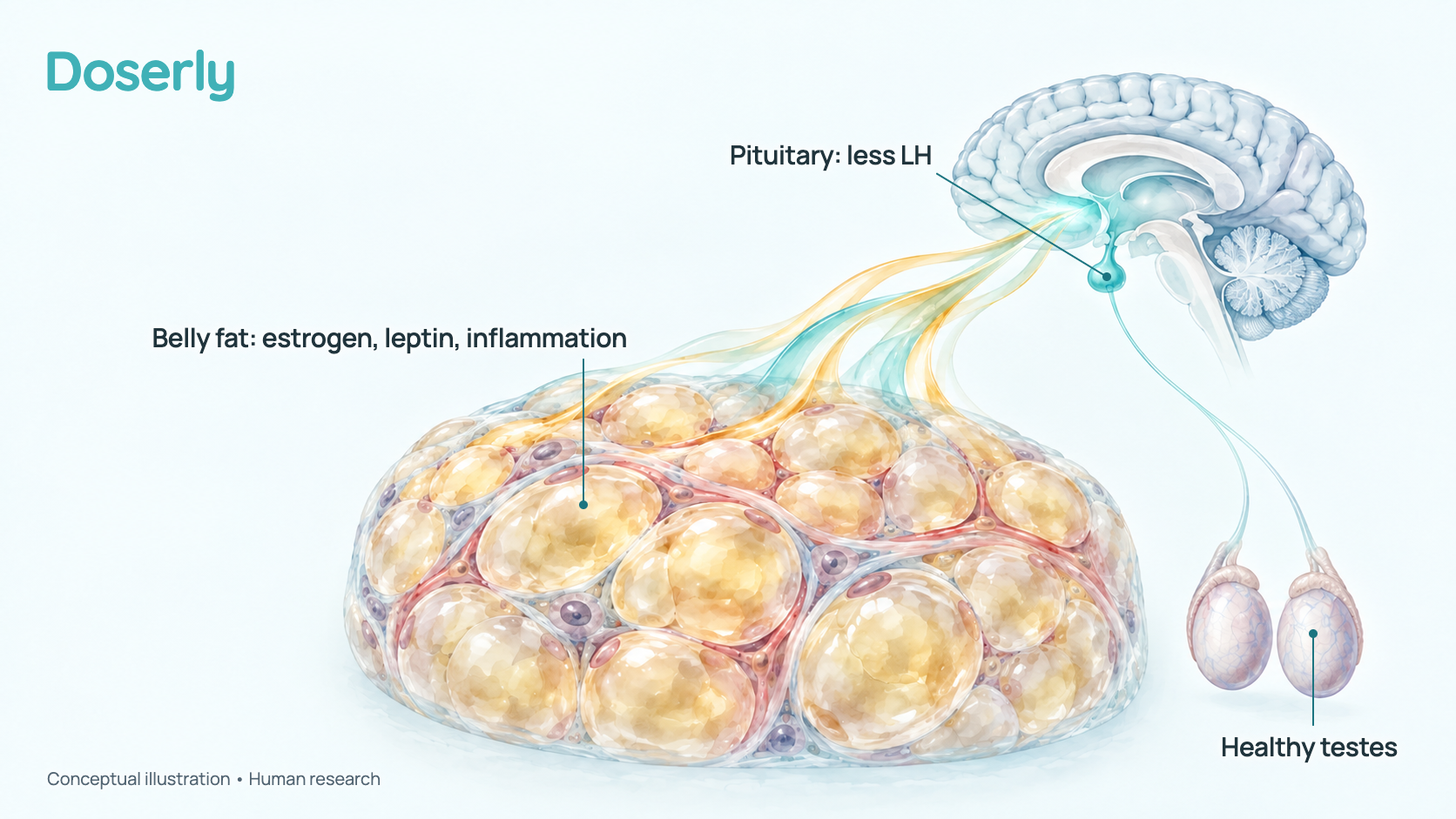
Obesity-related hypogonadism is low testosterone caused mainly by excess body fat. Hormones and inflammatory signals from fat tissue turn down the signal the brain sends to the testes, and high insulin lowers SHBG, the protein that carries testosterone in the blood, so levels fall even though the testes are healthy. It often improves when weight comes down. [4], [16], [17]
Hypogonadism means the testes are not making enough testosterone. Here the problem starts above the testes: the pituitary gland sends out normal or low amounts of LH and FSH, the hormones that tell the testes to work. That pattern is secondary hypogonadism, called functional when no disease of the pituitary or testes is found; the Endocrine Society lists obesity among functional causes that "might be reversible by treating the underlying condition". [3], [9]
Other names for it are functional hypogonadism, male obesity-associated secondary hypogonadism (MOSH) and non-gonadal illness. None is a separate disease with its own cut-off: the Endocrine Society calls "functional" hypogonadism "hard to define operationally", and US medical coding records it as testicular hypofunction (E29.1) alongside an obesity code. [9], [4], [11], [16], [10], [18]
How common is low testosterone in men with obesity?
Common, but the number depends on how it is measured.
- One total testosterone test. In the US HIM study of 2,162 men aged 45 and older in primary care, 52.4% of men with obesity had a single total testosterone under 300 ng/dL (odds ratio 2.38 against men without obesity); a national survey of 10,357 men found similar odds (2.69). One test overstates true deficiency. [1], [19]
- Free testosterone. Measured the more accurate way, 40% of men with obesity and without diabetes and 50% of men with both obesity and diabetes had low free testosterone, against 26% of lean men without diabetes. [20]
- The secondary type. In the European Male Ageing Study (EMAS) of 3,369 men aged 40–79, 11.8% had secondary hypogonadism, and a BMI of 30 or more went with a relative risk ratio of 8.74 for it; age was linked mainly with the primary type (a problem in the testes themselves). Men with a BMI of 30 or more had total testosterone about 5.09 nmol/L (147 ng/dL) lower than men with a BMI under 25. [2], [21]
The Endocrine Society's patient page puts it at 30–50% of men with obesity or type 2 diabetes; how many have the full diagnosis (symptoms and repeatedly low levels) is not well measured. [22]
Is it the same as low testosterone from ageing?
No, although the two overlap. Total testosterone fell about 1.6% a year in the same men in a US study, with obesity among the factors linked with lower levels, and the European Association of Urology calls the role of ageing up to 80 "relatively small" next to obesity and other illness. The late-onset hypogonadism guide covers age-related low testosterone. [23], [4]
How is obesity-related hypogonadism diagnosed?
The same way as any low testosterone: symptoms plus at least two low early-morning blood tests. What changes with obesity is that total testosterone alone can mislead, so guidelines add SHBG, free testosterone, and LH and FSH to find the type and the cause. [3], [4], [9]
The symptoms most closely tied to low testosterone are sexual: low sex drive, fewer morning erections and erectile dysfunction. Tiredness, low mood and poor sleep are common too, but they have many other causes, including obesity itself and sleep apnea, so on their own they do not point to low testosterone. [16], [24]
Who should get their testosterone checked?
- Test men with obesity. The American Urological Association (AUA) says men with a BMI of 30 or more or a waist over 40 inches should have their testosterone checked, noting that obese men were almost five times more likely to have low testosterone (odds ratio 4.89), and the American Association of Clinical Endocrinologists (AACE) says all men with obesity or a large waist should be assessed for hypogonadism and tested if indicated. [25], [26]
- Test only when something suggests it. The European Society of Endocrinology's 2020 obesity guideline recommends testing for male hypogonadism only when there is clinical suspicion, and the Endocrine Society's 2026 statement finds no support for screening men without symptoms. [27], [10]
What testosterone level counts as low?
This table shows the line each major clinical guideline uses and what it says about obesity, checked September 2026. There is no obesity-specific cut-off: the numbers are the same for every man.
| Guideline (version, year) | Threshold | How measured | What it says about obesity |
|---|---|---|---|
| AUA, American Urological Association (2018, validity reconfirmed 2024) | Below 300 ng/dL (10.4 nmol/L) | Two early-morning tests on separate days | Test men with a BMI of 30 or more or a waist over 40 inches; counsel weight-loss programs alongside any testosterone |
| Endocrine Society (2018 guideline) | 264 ng/dL (9.2 nmol/L) for CDC-certified assays | Two fasting morning tests; free testosterone when SHBG is altered | Obesity can lower total testosterone while free testosterone stays normal; the line comes from healthy non-obese young men |
| Endocrine Society (statement, 16 July 2026) | A common clinical threshold near 300 ng/dL | Two early-morning fasting tests | With a BMI over 27 and no other cause, weight loss is typically first-line |
| VA, US Department of Veterans Affairs (January 2026) | 264 ng/dL (9.2 nmol/L) for CDC-certified assays | Two fasting tests, 6–10 am | Low total testosterone in obesity "may normalize with weight loss" |
| EAU, European Association of Urology (2026) | 12 nmol/L (about 350 ng/dL); calculated free testosterone 220 pmol/L when SHBG is altered | Repeated fasting tests, 07:00–10:00 | Measure BMI and waist in everyone; improve lifestyle and reduce weight before testosterone |
| EAA, European Academy of Andrology (2020) | Borderline zone about 8–12 nmol/L (231–346 ng/dL); free testosterone under 220 pmol/L suggested, not validated | Two fasting tests before 11 am | Low SHBG in obesity can "spuriously" suggest hypogonadism; weight loss first |
| ICSM, International Consultation on Sexual Medicine (2024) | 12 nmol/L (about 350 ng/dL) | Repeated fasting tests, 07:00–11:00 | Notes a possible role for GLP-1 medicines in obesity-related low testosterone |
| BSSM, British Society for Sexual Medicine (2023) | Under 12 nmol/L (346 ng/dL) total or 225 pmol/L free usually needs treatment | Two tests, 8–11 am; SHBG when borderline, especially in obese men | Treat symptomatic prediabetes when total testosterone is under 14 nmol/L (404 ng/dL) |
| Society for Endocrinology, UK (2022) | No single line: symptoms more likely under 8 nmol/L (231 ng/dL), or under 11 nmol/L (317 ng/dL) with calculated free testosterone under 220 pmol/L | Repeated morning fasting tests | Free testosterone "is likely to be normal" in obese men with low SHBG |
| CUA, Canadian Urological Association (2021) | Under 10 nmol/L (about 290 ng/dL) | Morning draw, 7–11 am | Treat reversible causes such as obesity and sleep apnea first, then recheck |
| ESA, Endocrine Society of Australia (2016) | No single number | With LH and FSH, 08:00–10:00; calculated free testosterone not used for decisions | Reassess if testosterone stays low after weight loss |
| SIAMS, Italian andrology and endocrinology societies (2022) | Calculated free testosterone under 220 pmol/L | Measure SHBG in every man assessed | Strongly encourage weight loss in all overweight men |
[25], [3], [10], [28], [4], [9], [29], [11], [16], [17], [30], [31]
Every body wants symptoms plus repeated low morning tests. North American bodies draw the line at about 264–300 ng/dL (9.2–10.4 nmol/L), most European bodies at 12 nmol/L (about 350 ng/dL), and the UK Society for Endocrinology uses bands. What is specific to obesity is broad agreement that SHBG or free testosterone should be checked and that weight loss comes first. Australia's subsidy rule excludes low testosterone caused by obesity (see the legal section). [3], [4], [16], [15]
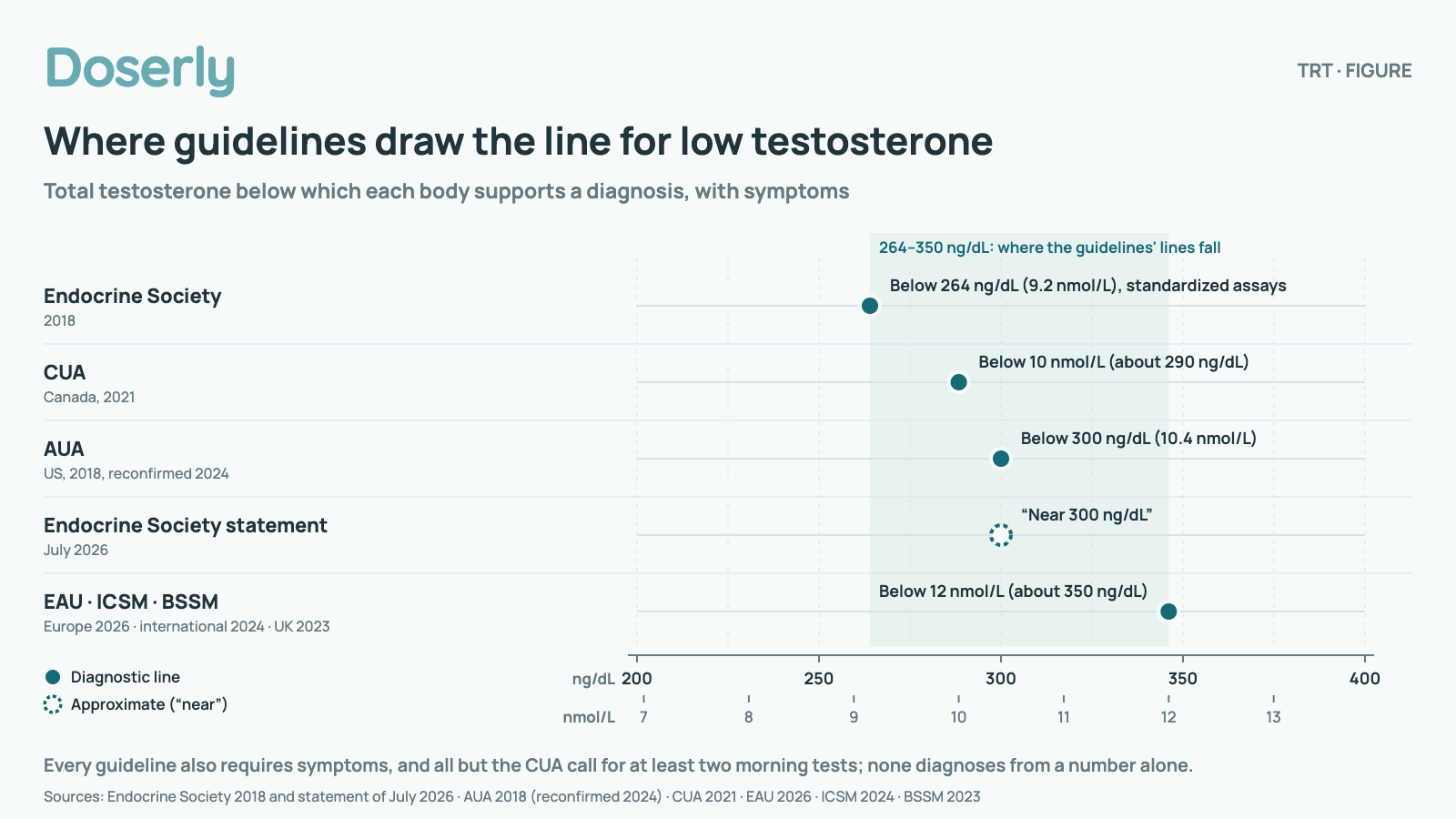
Where guidelines draw the line for low testosterone
Total testosterone below which each body supports a diagnosis, with symptoms.
Each line runs from 200 ng/dL (7 nmol/L, left) to 400 ng/dL (14 nmol/L, right); the shaded part is 264–350 ng/dL, where the guidelines' lines fall. A dashed circle means an approximate line.
- Endocrine Society (2018)
- Below 264 ng/dL (9.2 nmol/L), standardized assays
- CUA (Canada, 2021)
- Below 10 nmol/L (about 290 ng/dL)
- AUA (US, 2018, reconfirmed 2024)
- Below 300 ng/dL (10.4 nmol/L)
- Endocrine Society statement (July 2026)
- “Near 300 ng/dL”
- EAU · ICSM · BSSM (Europe 2026 · international 2024 · UK 2023)
- Below 12 nmol/L (about 350 ng/dL)
Every guideline also requires symptoms, and all but the CUA call for at least two morning tests; none diagnoses from a number alone.
Why can total testosterone look low when free testosterone is normal?
Because obesity lowers SHBG. About 98% of testosterone in the blood is bound to proteins (about 44% to SHBG and 50% to albumin) and about 2% is free. When SHBG falls, total testosterone falls with it, but the free, active part can stay normal. The UK Society for Endocrinology puts the low SHBG down to high insulin, which slows the liver's production of it. [25], [16], [32]
The effect is large. In 3,671 men referred for testing, each extra point of BMI went with SHBG about 1.26 nmol/L lower; men with obesity had lower total testosterone than men without (10.5 against 14.1 nmol/L, about 303 against 407 ng/dL) but the same calculated free testosterone. [5]
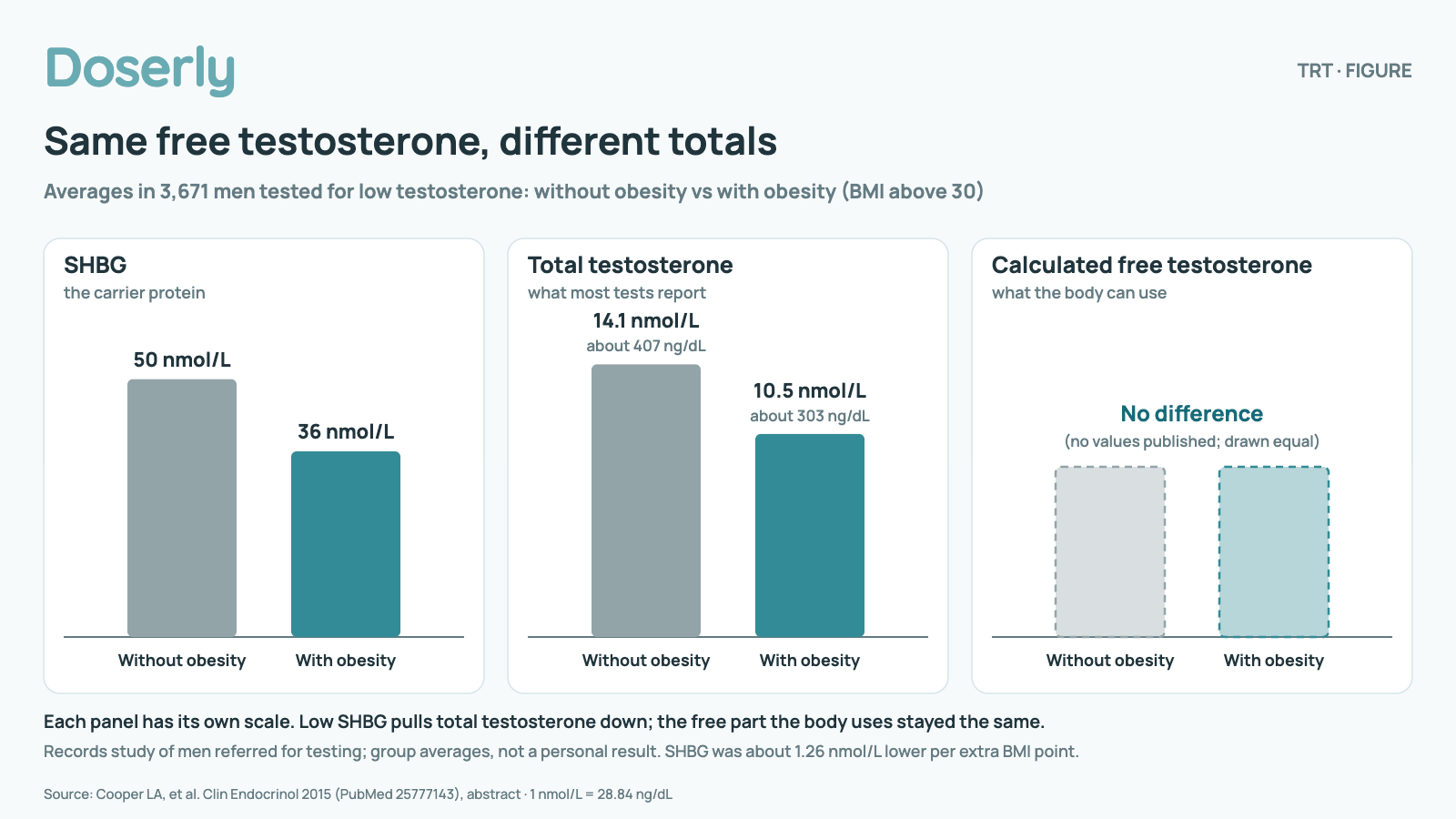
Same free testosterone, different totals
Averages in 3,671 men tested for low testosterone: without obesity vs with obesity (BMI above 30).
Grey bar: men without obesity. Teal bar: men with obesity. Each measure has its own scale.
SHBG (the carrier protein)
- Without obesity
- 50 nmol/L
- With obesity
- 36 nmol/L
Total testosterone (what most tests report)
- Without obesity
- 14.1 nmol/L (about 407 ng/dL)
- With obesity
- 10.5 nmol/L (about 303 ng/dL)
Calculated free testosterone (what the body can use)
- Without and with obesity
- No difference (the study published no values)
Low SHBG pulls total testosterone down while free testosterone stays the same, so men with obesity need SHBG or free testosterone checked. Records study; group averages, not a personal result.
It matters for symptoms too. In EMAS, 4.9% of men developed low total testosterone with normal free testosterone over 4.3 years, and 1.9% developed low total and low free testosterone; only the second group developed new sexual symptoms. [24] In 35 severely obese men, 25 met the definition by total testosterone but only 16 by free testosterone. [33]
So guidelines ask for free testosterone or SHBG in men with obesity, measured by equilibrium dialysis or calculated from total testosterone, SHBG and albumin, not by the direct free-testosterone kits the Endocrine Society advises against. [3], [11] They differ on how much weight to give it: the EAU, EAA, BSSM, VA and SIAMS use free testosterone when SHBG is altered (those that give a number put it at 220–225 pmol/L), while the AUA does not make it the primary test and the Endocrine Society of Australia does not recommend calculated free testosterone for decisions. [4], [9], [28], [31], [25], [30]
The testosterone unit and free T converter switches between ng/dL and nmol/L and estimates free testosterone from total testosterone, SHBG and albumin.
What other tests look for a cause?
LH and FSH come first. In men with obesity they are usually low or normal, which fits the secondary type; high levels point to a problem in the testes. Doctors then look for other causes before putting it down to weight: [3], [21], [34]
- Prolactin, when LH is low or low-normal, and a pituitary scan (MRI) when testosterone is very low: the AUA uses under 150 ng/dL with low or low-normal LH, the EAU under 6 nmol/L. [25], [4]
- Iron studies, because iron overload (hemochromatosis) is a treatable cause. [3], [17]
- Medicines: opioid painkillers and steroid tablets (glucocorticoids) lower testosterone; the Canadian Urological Association lists obesity, opioids, glucocorticoids and sleep apnea among causes to treat before rechecking. [17], [10]
- Blood sugar: the AUA suggests checking HbA1c in men with obesity or metabolic syndrome. [25]
- Biotin: the supplement can throw off LH and FSH tests; the Endocrine Society advises stopping it for at least 72 hours first. [3]
How should the blood test be done?
Early in the morning, fasting, and more than once; the time windows in the table differ by an hour or two between guidelines. Weight change matters for interpretation: the Endocrine Society of Australia says testosterone that stays low despite successful weight loss should prompt reassessment, in case a pathological cause was missed. We found no study of testosterone during rapid weight loss in men with obesity, so whether a steep calorie deficit itself lowers the reading is not settled (see what people report). [30]
Where these numbers come from
Each guideline row comes from that body's current document: the AUA testosterone deficiency guideline (published 2018, validity reconfirmed 2024), the Endocrine Society guideline (2018) and its statement of 16 July 2026, the VA clinical recommendations (January 2026), the EAU guidelines on sexual and reproductive health (2026 edition), the EAA guideline on functional hypogonadism (2020), the ICSM 2024 recommendations (published 2025), the BSSM guidelines (2023), the Society for Endocrinology guideline (2022), the CUA guideline (2021), the Endocrine Society of Australia position statement (2016) and the SIAMS guideline (2022). [25], [3], [10], [28], [4], [9], [29], [11], [16], [17], [30], [31]
The obesity figures come from the original study abstracts or full text: HIM (full text, table 5), EMAS (abstracts), the US national survey and the referral study of SHBG. [1], [2], [21], [19], [5]
Not used: a claim that obesity-related hypogonadism is diagnosed at a BMI of 30 or more with total testosterone under 300 ng/dL (no guideline defines it that way), a claim that only 0.6% of healthy and 0.4% of lean men develop it (not found in any EMAS paper we read), and an 8.7-fold risk of all hypogonadism with obesity (the 8.74 figure is a relative risk ratio for the secondary type only).
What causes obesity-related hypogonadism?
Several things at once, and they feed each other; guidelines list them without singling out one main cause, and the Canadian and UK guidelines call the link two-way because low testosterone also makes it easier to gain fat. [16], [17], [4]
- Less SHBG (human studies). Higher fasting insulin went with lower SHBG in a population survey of men, and lower SHBG means lower total testosterone (see above). [32], [16]
- A weaker brain signal (human studies). In EMAS, the lower testosterone that came with obesity came with unchanged or lower LH: the testes get less of a push. [21], [34]
- Estrogen feedback (human trials, with a conflict). Fat tissue contains aromatase, the enzyme that turns testosterone into estradiol, and estradiol tells the brain to cut LH. Blocking aromatase with letrozole in a 6-month trial of 42 men with obesity raised total testosterone from 8.6 to 21.5 nmol/L (248 to 620 ng/dL), so estrogen feedback plays a part. But tissue studies conflict: one found no difference in fat aromatase between obese and normal-weight men, and another found more, with no link to blood estradiol. [35], [36], [37]
- Leptin (human association; animal studies). In men from normal weight to very obese, leptin, a hormone made by fat cells, was the best hormonal predictor of lower testosterone, and obese men's testes made 30–40% less testosterone when stimulated; rodent studies suggest a direct effect on the testes. A proposed effect on kisspeptin, a brain signal upstream of LH, has not been shown in men. [38]
- Inflammation (human experiment). An infusion of one inflammatory messenger (interleukin-2) reduced LH-driven testosterone output in 35 healthy men, not men with obesity. [39], [4]
- The reverse direction (human trial). When 400 healthy men had their own hormones switched off and were given set amounts back, body fat rose at the lower testosterone doses, and the loss of estradiol, more than of testosterone, explained the fat gain. [40]
Weight change moves testosterone in the same men. In 2,395 EMAS men followed for 4.4 years, losing weight raised total testosterone and SHBG and gaining weight lowered them; free testosterone changed significantly only with a weight change of 15% or more. Of the men who developed secondary hypogonadism, 42.9% recovered to normal levels, more often if they were not obese or lost weight (odds ratio 2.24), although their symptoms did not improve at the same time. [41], [42] Type 2 diabetes adds to the effect: a third of 103 men with type 2 diabetes had low free testosterone, with LH and FSH low or normal rather than high (the secondary type). [34]
What role does sleep apnea play?
It travels with obesity, but weight seems to matter more than the apnea itself. In 623 Australian community men (average BMI 28.6), 51.5% had sleep apnea; its link with lower testosterone disappeared once age, BMI and SHBG were taken into account. The Endocrine Society of Australia says low testosterone levels in men with obstructive sleep apnea "are related primarily to obesity and will improve with weight loss". [43], [44]
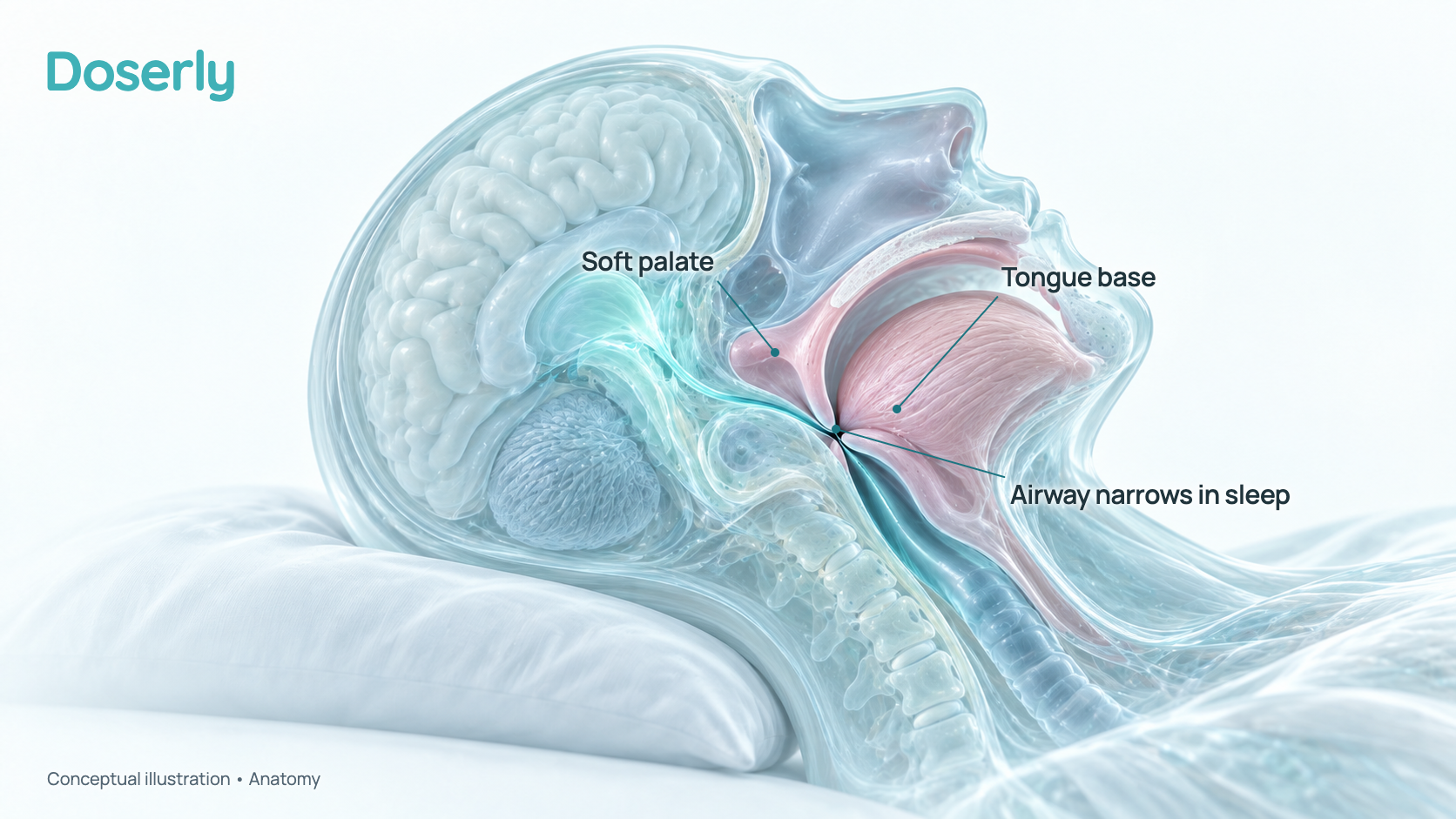
Does treating sleep apnea raise testosterone? Mostly no. CPAP (a machine that keeps the airway open with air pressure) did not significantly change total testosterone in a 2019 pooled analysis of 12 studies (a change of 1.08 nmol/L, too uncertain to count) or a 2014 analysis of 7 studies. A 1-month trial against sham CPAP in 101 men found only a rise in SHBG, and a 3-month study in 27 men found no change; one 2026 study of 14 men with severe obesity saw a rise, without a comparison group. Treat sleep apnea for its own sake, not to fix testosterone. [45], [46], [47], [48], [49]
Weight loss treats both. The AACE obesity guideline sets a weight-loss goal of at least 7–11% for sleep apnea, and tirzepatide (Zepbound) is approved in the US to treat moderate to severe obstructive sleep apnea in adults with obesity, alongside diet and exercise (checked September 2026). [26], [50]
What is estrogen doing?
Estradiol matters in the feedback loop, but routine estrogen testing and estrogen-blocking tablets are not part of guideline care. Weight loss lowers estradiol and raises LH and FSH, according to a pooled analysis of weight-loss studies, and the AUA measures estradiol before treatment only in men with breast symptoms or breast enlargement. Raising testosterone by blocking estrogen did not make men with obesity feel better (see aromatase inhibitors). The estrogen on TRT guide covers estradiol in detail. [7], [25], [35]
How is obesity-related hypogonadism usually treated?
By treating the weight first in most guidelines, with testosterone therapy (TRT) for men who have confirmed low testosterone, clear symptoms and no plans for children soon. This section describes the choices clinicians weigh; it is not a personal plan. [4], [9], [10], [25]
| Option | Who it suits, according to guidelines | Effect on testosterone | Effect on fertility | Read more |
|---|---|---|---|---|
| Lifestyle weight loss (diet, exercise) | Everyone who is overweight, first (EAU, EAA, Endocrine Society 2026; AUA counsels it for all) | About +2.5–2.9 nmol/L on average after diet | Improves sperm counts if the weight stays off | How much it helps; increasing testosterone naturally |
| Bariatric (weight-loss) surgery | BMI of 35 or more, or 30–34.9 with metabolic disease (surgical societies, 2022) | About +7.2–8.7 nmol/L on average | Sperm quality did not improve in pooled studies | Surgery |
| GLP-1 and GIP/GLP-1 medicines (semaglutide, liraglutide, tirzepatide) | Approved for weight management, not for low testosterone; the ICSM notes a "possible role" | About +2.5–5.2 nmol/L in small studies | Keep LH and FSH working | GLP-1 medicines; TRT with GLP-1 |
| Testosterone therapy | Confirmed low testosterone with bothersome symptoms, alongside weight loss (AUA, BSSM); not for weight loss (EAA, EAU) | Raises it into the normal range | Can switch off sperm production; usually, not always, recovers | Testosterone therapy; TRT guide |
| Clomiphene or enclomiphene (tablets that raise LH and FSH) | Off-label in men; mainly when fertility matters; enclomiphene is not approved | About +7.5–11.6 nmol/L over 1.5–4 months in men with obesity | Can keep sperm production going | Clomiphene and enclomiphene; clomiphene guide, enclomiphene guide |
| Aromatase inhibitors (letrozole, anastrozole) | Not generally recommended (VA); off-label | Raise it, without symptom benefit in trials | Keep LH and FSH working | Aromatase inhibitors; anastrozole guide |
| Treating sleep apnea (CPAP, weight loss, tirzepatide) | Anyone with sleep apnea, for its own sake | No consistent change with CPAP | Not studied | Sleep apnea |
[4], [9], [10], [25], [6], [7], [51], [52], [53], [29], [8], [54], [11], [55], [56], [57], [28], [35], [45]
Should you lose weight first or start TRT?
Most guidelines say weight first, but one major guideline disagrees, and none sets a fixed waiting time.
- Weight loss first. The EAU strongly recommends improving lifestyle and reducing weight before starting testosterone. The EAA recommends lifestyle change and weight loss for overweight men with functional hypogonadism, the Endocrine Society's 2026 statement calls weight loss "typically the first-line therapy" when obesity (a BMI over 27) is the only cause, a 2026 Brazilian joint position statement strongly recommends it as first-line, and the UK Society for Endocrinology calls lifestyle change, weight loss and treating sleep apnea the "mainstays of management". [4], [9], [10], [58], [16]
- Both together. The BSSM says current evidence "does not support the recommendation for lifestyle intervention alone as first-line therapy" and endorses lifestyle change together with testosterone in men with symptoms. The AUA counsels every man with low testosterone on lifestyle change and advises weight-loss programs alongside testosterone for men who are overweight. The Canadian guideline says lifestyle change may help, on weak evidence, and a 2024 review argues that because weight loss is hard to reach in practice, testosterone is often needed. [11], [25], [17], [59]
The disagreement comes down to two facts: weight loss raises testosterone less than many men hope unless the loss is large, and it is hard to keep off (the EAU notes that 60–86% of lost weight is regained within three years); and in EMAS, men whose testosterone recovered did not report better symptoms at the same time. A 2026 network meta-analysis of 23 trials (1,899 men with obesity) found testosterone plus a structured lifestyle program raised testosterone the most, but no single strategy was consistently better, with low or very low confidence in many comparisons. [4], [42], [60]
How much does losing weight raise testosterone?
On average, a few nmol/L with diet and much more with surgery.
| Source | Weight loss | Average rise in total testosterone |
|---|---|---|
| Pooled analysis of 24 studies (2013) | Low-calorie diet | 2.87 nmol/L (about 83 ng/dL) |
| Pooled analysis of 24 studies (2013) | Bariatric surgery | 8.73 nmol/L (about 252 ng/dL) |
| Pooled analysis of 44 studies, 1,774 men (2024) | Low-calorie diet | 2.5 nmol/L (about 72 ng/dL) |
| Pooled analysis of 44 studies, 1,774 men (2024) | Bariatric surgery | 7.2 nmol/L (about 208 ng/dL) |
| Endocrine Society of Australia (2016) | 10% of body weight | 2–3 nmol/L (about 58–87 ng/dL) |
| EAU (2026) | Low-calorie diet and physical activity | 1–2 nmol/L (about 29–58 ng/dL) |
| 36-month follow-up after diet or surgery (2024) | Each kilogram lost | About 0.6% higher total testosterone |
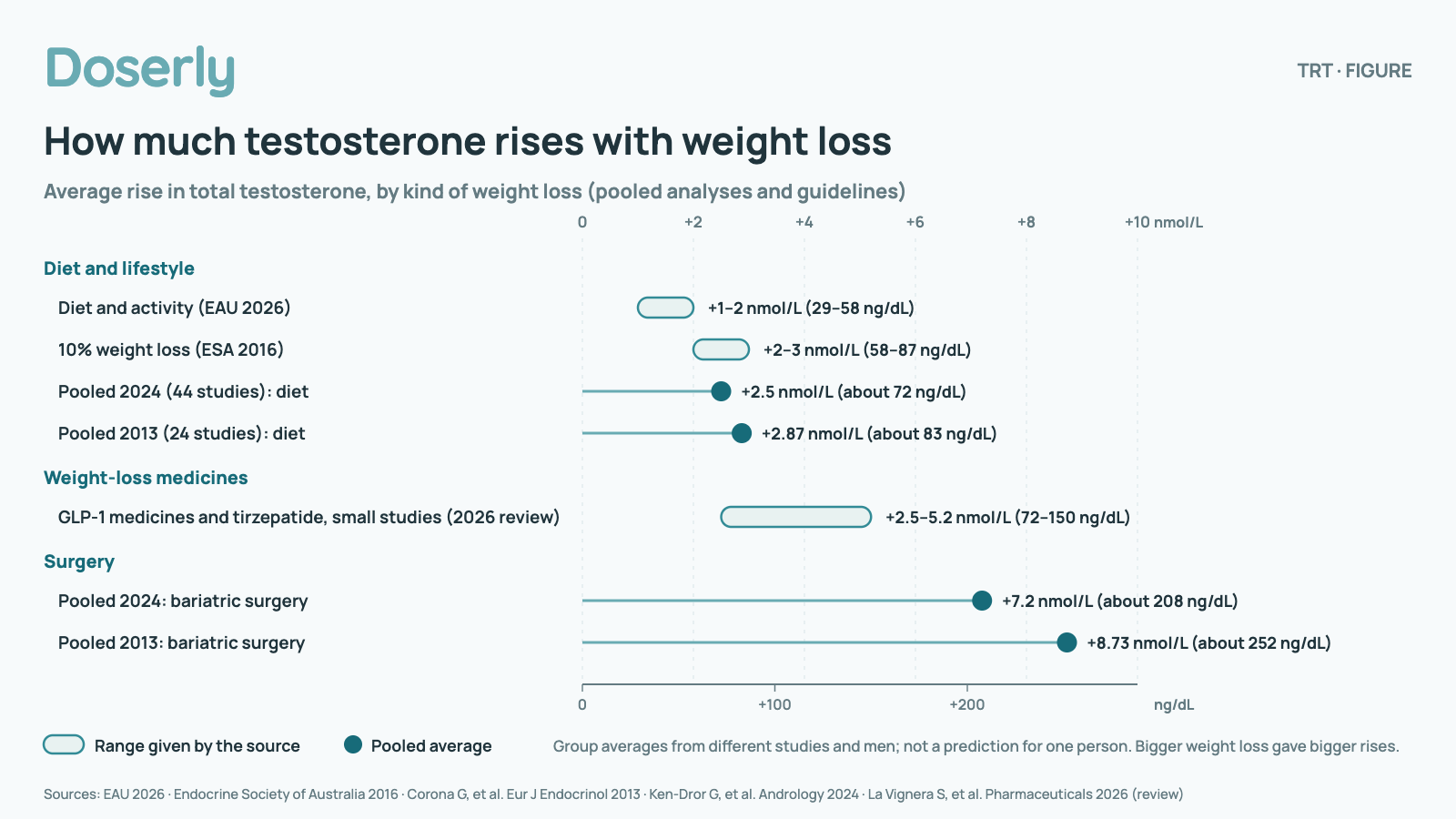
How much testosterone rises with weight loss
Average rise in total testosterone, by kind of weight loss (pooled analyses and guidelines).
Each line runs from 0 (left) to +10 nmol/L (right), about +288 ng/dL. A band is a range given by the source; a dot is a pooled average.
Diet and lifestyle
- Diet and activity (EAU 2026)
- +1–2 nmol/L (29–58 ng/dL)
- 10% weight loss (ESA 2016)
- +2–3 nmol/L (58–87 ng/dL)
- Pooled 2024 (44 studies): diet
- +2.5 nmol/L (about 72 ng/dL)
- Pooled 2013 (24 studies): diet
- +2.87 nmol/L (about 83 ng/dL)
Weight-loss medicines
- GLP-1 medicines and tirzepatide, small studies (2026 review)
- +2.5–5.2 nmol/L (72–150 ng/dL)
Surgery
- Pooled 2024: bariatric surgery
- +7.2 nmol/L (about 208 ng/dL)
- Pooled 2013: bariatric surgery
- +8.73 nmol/L (about 252 ng/dL)
Diet-based weight loss adds a few nmol/L on average; bariatric surgery adds more. Group averages from different studies and men, not a prediction for one person; GLP-1 medicines are not approved for low testosterone.
Bigger losses gave bigger rises, and so did starting heavier. On age the two pooled analyses differ: the 2013 analysis found larger rises in younger men without diabetes, while the 2024 analysis found total testosterone rose relatively more in older men and free testosterone more in younger men. The AACE says a weight loss of more than 5–10% is needed for a meaningful rise. [7], [6], [26] Individual trials fit: the type of diet made no difference in 118 men over 52 weeks; a 10.1 kg diet weight loss raised total testosterone by 71.0 ng/dL (about 2.5 nmol/L) in frail older men; 200–300 minutes a week of exercise raised it by 2.06 against 0.79 nmol/L with under 150 minutes, but with twice the weight loss; and in the Look AHEAD study of 890 men with type 2 diabetes, an intensive lifestyle program raised it by 14% at one year, an effect that faded over four years. [62], [63], [64], [65]
Does the rise last? It holds if the weight stays off: after a 9-week very-low-calorie diet in 58 men, free testosterone stayed up through a year of weight maintenance (185 to 208 to 212 pmol/L). No controlled study has tested whether it falls again when weight is regained. [66]
Is it true that every 10 lb lost adds 100 ng/dL? No study supports a rule like that; a 10% weight loss adds about 2–3 nmol/L (58–87 ng/dL) on average. [30]
Can bariatric surgery fix low testosterone?
For many men, yes, at least for the hormones. Current US and international surgical society criteria (2022) recommend weight-loss surgery at a BMI of 35 or more, whatever other conditions a person has, and suggest considering it at 30–34.9 with metabolic disease. They replace the older cut-offs of 40, or 35 with other illness, that are still widely quoted. [52]
- How often it normalizes. Of 29 very obese men, 22 (75.9%) had low total or free testosterone before surgery; 6 months after surgery, 22 of the 29 had normal total and calculated free testosterone (7 had normal levels to begin with). In 35 men, low testosterone (present in 25 by total testosterone) resolved after surgery in all but one. [67], [33]
- How long it lasts. In a randomized trial of 32 men with type 2 diabetes, free testosterone was 47.4% higher 5 years after surgery, against a 2.2% fall with medical treatment; in another 32 men, total testosterone and SHBG were still higher at year 4. [68], [69]
- Sperm. A pooled analysis found surgery "did not affect sperm quality", and in the BARIASPERM study of 46 men, total sperm count fell by 69.5 million 12 months after surgery. We found no guideline that sets a waiting period before trying for children. [53], [70]
Do semaglutide and tirzepatide raise testosterone?
Yes, in small studies, mostly through weight loss, but they are not approved as a treatment for low testosterone. GLP-1 medicines such as semaglutide (Wegovy, usually 2.4 mg once a week by injection or 25 mg once a day as a tablet) and tirzepatide (Zepbound) are approved in the US for weight management, and their labels have no hypogonadism indication (checked September 2026). [71], [50]
- The size of the rise. A 2026 review of small, short studies found GLP-1 medicines and tirzepatide raised total testosterone by about 2.5–5.2 nmol/L in men with obesity-related low testosterone. In a records study of 215 men without a comparison group, about 5% weight loss was followed by a rise from 332 to 399 ng/dL on average, and the share with normal testosterone rose from 67% to 86%. [8], [72]
- Against testosterone gel. In a 16-week trial of 30 men with obesity and low testosterone, liraglutide raised testosterone by 2.6 nmol/L with 7.9 kg of weight loss, while testosterone gel raised it by 5.9 nmol/L with 0.9 kg. Both improved sexual function. [73]
- The body's own system keeps working. A 2026 review of 10 studies (639 men) found GLP-1 medicines raised total testosterone while keeping LH and FSH working, unlike testosterone therapy, though free testosterone changes were inconsistent; one pooled analysis found no significant change in free testosterone at all. In 25 men with obesity and type 2 diabetes, normally shaped sperm rose from 2% to 4% on semaglutide, while sperm counts fell on testosterone. [54], [74], [75], [76]
- With testosterone. Evidence for combining a GLP-1 medicine with testosterone is thin: a 10-man pilot in men who lost little weight on tirzepatide, and a 93-man single-clinic series with no comparison group in which lean mass still fell 4.0–6.1 kg over a year of tirzepatide, testosterone and exercise coaching. [77], [78]
Only the ICSM 2024 panel mentions them, as a "possible role". The TRT with GLP-1 medicines guide covers using both together. [29]
Are clomiphene, enclomiphene or aromatase inhibitors an option?
They raise testosterone by boosting the body's own LH, which works only when the brain-to-testes system is intact, as it is here. They are off-label in men and the evidence is thin. [4]
- Clomiphene and enclomiphene (SERMs, tablets that block estrogen's brake on the brain). In a pooled analysis of 7 studies of 292 men with obesity, clomiphene raised total testosterone by 11.56 nmol/L and enclomiphene by 7.50 nmol/L over 1.5–4 months. In randomized trials, clomiphene 50 mg raised testosterone, LH and FSH in 78 men with obesity but lowered HDL ("good") cholesterol, and 25 mg a day raised testosterone from about 303 to 599 ng/dL (10.5 to 20.8 nmol/L) in 21 men taking metformin. In two phase 3 trials in overweight men, enclomiphene kept sperm counts normal while AndroGel 1.62% lowered them sharply. [56], [79], [80], [81]
- Their limits. The Endocrine Society notes clomiphene's efficacy and safety have not been shown in randomized trials of hypogonadism, the EAU calls the evidence poor and warns of a possible blood-clot risk, and the EU refused to approve enclomiphene in 2018 over unproven symptom benefit and a clot risk. See the clomiphene and enclomiphene guides. [3], [4], [57]
- Aromatase inhibitors (letrozole, anastrozole). They raised testosterone in men with obesity, from 7.5 to 23.8 nmol/L (216 to 686 ng/dL) in 6 weeks in a 10-man pilot and above the normal range for free testosterone in 7 of 12 men in another, but the two randomized trials found no benefit in how men felt, and a year of anastrozole in older men lowered spine bone density. The VA does not generally recommend them. See the anastrozole guide. [82], [83], [35], [84], [85], [28]
What does testosterone therapy involve?
The same medicines and monitoring as for any man with low testosterone. Testosterone comes as injections (cypionate, enanthate and the long-acting undecanoate injection), gels, oral capsules, nasal gel and pellets. [25]
Guidelines aim for the middle of the normal range (the AUA targets 450–600 ng/dL, or 15.6–20.8 nmol/L) and check testosterone and hematocrit at 3–6 months, at 12 months and then yearly. The EAU suggests starting with a gel rather than a long-acting injection in men at higher risk, and it lists severe obesity among the risks for a high red-cell count. SHBG rises as weight comes off, which moves total testosterone readings, so results are best read with SHBG alongside. The TRT dosage guide covers doses, and the TRT dose calculator turns a prescribed dose into mL and syringe units. Testosterone for women uses different products and doses; see testosterone therapy for women. [25], [3], [4], [66]
What if you want children?
Then testosterone therapy is the wrong choice for now, and weight loss is on your side.
- Obesity itself lowers sperm counts. In a pooled analysis of 21 studies (13,077 men), the odds of a very low or absent sperm count were 1.28 times higher with obesity and 2.04 times higher with severe obesity than at a normal weight. Losing an average of 16.5 kg on a low-calorie diet raised sperm concentration 1.49-fold, and only the men who kept the weight off kept the gain. [86], [51]
- Testosterone can switch sperm production off. Outside testosterone lowers the LH and FSH the testes need to make sperm, and labels warn that reduced fertility may not be reversible in some men. The AUA says testosterone should not be prescribed to men trying to conceive. After stopping, sperm counts in contraceptive studies recovered in 67% of men within 6 months and in all within 24 months. [55], [25], [87]
- Options that keep sperm production going include weight loss, GLP-1 medicines (which keep LH and FSH working), clomiphene or enclomiphene, and hCG. See TRT and fertility and hCG vs gonadorelin vs enclomiphene. [54], [81], [25]
Can you stop TRT after losing weight?
Sometimes, and guidelines allow for trying. The EAA says testosterone "withdrawal may be considered following weight reduction", and the VA says significant weight change may prompt an earlier testosterone check. [9], [28]
Expect it to take time. After two years of long-acting injections in the T4DM trial, men's own LH and FSH recovered slowly over 12 months, and full recovery may take longer; in a survey of 599 of those men (316 former testosterone users, 283 former placebo users) about five years after the last injection, 6% of the former testosterone users had restarted testosterone, against 2.8% of the former placebo users. In men with obesity who had testosterone during a weight-loss program, the extra fat loss and lean-mass protection were gone about 82 weeks after stopping. [88], [89], [90]
Stopping is a decision to plan with your prescriber, with repeat blood tests; the stopping TRT guide covers what happens and when.
What does testosterone therapy do for men with obesity?
It improves some symptoms and body composition, but it does not reliably cause weight loss, and its effect on blood sugar depends on the trial. [91], [60]
| Study | Who and what | Main results | What it cannot show |
|---|---|---|---|
| T4DM (controlled trial, 2021) | 1,007 men aged 50–74 with a large waist and prediabetes or new type 2 diabetes, all in a lifestyle program; testosterone undecanoate injections or placebo for 2 years | Diabetes at 2 years in 12% (55 of 443) on testosterone vs 21% (87 of 413) on placebo; fat mass fell 4.6 vs 1.9 kg; hematocrit above 54% in 22% vs 1% | One long-acting injection; everyone also had a lifestyle program [12], [92] |
| Very-low-energy diet trial (2016–2017) | 100 men with obesity and low testosterone on a 10-week very-low-energy diet, then maintenance; testosterone undecanoate or placebo for 56 weeks | Same weight loss (11.4 vs 10.9 kg at the end); 2.9 kg more fat lost and 3.4 kg more lean mass kept; better symptom scores | Small; the gains were gone about 82 weeks after stopping [93], [94], [90] |
| Trials in type 2 diabetes (2014–2016) | 88, 44 and 39 men with type 2 diabetes and low testosterone; injections or gel against placebo for 24–40 weeks | Lean mass up about 2–3 kg and fat down in all three; insulin resistance and HbA1c did not improve in two, insulin sensitivity rose 32% in the third | Small [95], [96], [97] |
| Older men in a lifestyle program (2021, 2025) | 83 men aged 65 and older with obesity in an intensive lifestyle program; testosterone or placebo | Physical performance improved equally (17% vs 16%); less lean mass lost; HbA1c fell equally; HDL rise blunted | Older men only [98], [99] |
| Pooled trials in men with obesity (2021) | Randomized trials in men with obesity | About 2 kg more lean mass; waist and BMI results varied between trials | Mixed trial quality [91] |
Will testosterone therapy help you lose weight?
Not on the scale, in the trials. Across 29 randomized trials in middle-aged and older men, testosterone reduced fat by about 1.6 kg and added about 1.6 kg of fat-free mass without changing body weight, and in the diet trial above both groups lost the same weight (12.0 against 13.5 kg after the diet). [100], [94], [93]
Guidelines split on how to describe this:
- Against using it for weight. The EAA recommends against testosterone "as a treatment for weight reduction in obese men", the EAU advises not using it to reduce weight or improve heart and metabolic health, the 2026 Brazilian statement does not recommend it for weight loss alone, and the Canadian obesity guideline found "insufficient evidence" for testosterone as an obesity treatment. [9], [4], [58], [101]
- More positive. The AACE's 2016 obesity guideline says testosterone in men with true hypogonadism and obesity "results in weight loss, decreased waist circumference, and improvements in metabolic parameters" (its strongest grade). [26]
The big weight losses you may see quoted come from long-term registries, not trials: in one of 411 men followed for up to 8 years, men with class I obesity went from 102.6 to 84.1 kg on testosterone. These registries had no comparison group, overlap with each other and had authors employed or paid by the testosterone maker, so they cannot show that testosterone caused the weight loss. [102], [103], [104], [105]
Does testosterone therapy help blood sugar?
Only in one large trial, and only alongside a lifestyle program. In T4DM, testosterone plus lifestyle lowered new diabetes at 2 years (12%, 55 of 443, against 21%, 87 of 413), and loss of fat mass explained much of that. In the TRAVERSE trial, which had no structured lifestyle program, testosterone gel did not significantly reduce progression from prediabetes to diabetes (for example 7.8%, 45 of 575, against 10.7%, 57 of 533, at 12 months), and the smaller trials above gave mixed results. [12], [92], [106], [95], [97], [96], [99]
The guidelines split the same way. The Endocrine Society and the EAA recommend against testosterone to improve blood sugar, and the American Diabetes Association does not recommend it to prevent type 2 diabetes. The Italian SIAMS guideline suggests it for men with hypogonadism and metabolic syndrome or prediabetes, and the BSSM treats symptomatic prediabetes when total testosterone is under 14 nmol/L (404 ng/dL). [3], [9], [107], [31], [11]
Does it improve symptoms in men with obesity?
Some, mostly sexual. In pooled data from trials in men with testosterone under 12 nmol/L (about 350 ng/dL), erectile function scores rose by about 2 points whatever the men's weight or diabetes status. In T4DM, testosterone improved average scores in all five domains of a sexual-function questionnaire. A meaningful gain in sexual desire came to 32% of men on testosterone (131 of 430) against 22% on placebo (85 of 395), a significant difference; for erectile function it was 23% against 20%, which was not significant. The weight lost through the lifestyle program improved more quality-of-life measures than testosterone did. In the diet trial, testosterone improved symptom scores by 11% to 20% from starting scores of 40 to 60. [108], [109], [110], [94]
Is testosterone therapy safe for men with obesity?
It is an approved treatment with known risks, several of them more likely with obesity. The BSSM notes that obese men are more likely to have side effects than men of normal weight, and the UK Society for Endocrinology says the frequent rise in red blood cells makes the balance of benefit and risk "far less clear" in these men. [11], [16]
- Red blood cells. Testosterone raises hematocrit, the share of blood made up of red cells. In T4DM (men with a large waist), it went above 54% in 22% on testosterone (106 of 491) against 1% on placebo (6 of 484). Most guidelines act at 54%. See hematocrit on TRT. [12], [3]
- Sleep apnea. US labels warn that testosterone "may potentiate sleep apnea in some patients, especially those with risk factors such as obesity". In 67 obese men with severe sleep apnea, testosterone injections worsened night-time oxygen drops by 10.3 events an hour at 7 weeks but not at 18 weeks, and in a later survey of 599 T4DM men (316 on testosterone, 283 on placebo), 3.0% against 0.4% reported a new sleep apnea diagnosis during the trial. [13], [111], [112], [113], [89]
- Blood clots. The UK Society for Endocrinology notes that men with obesity were at higher risk of clots in veins on testosterone in an observational study, highest in the first 6 months. In TRAVERSE, clots in veins occurred in 1.7% on testosterone against 1.2% on placebo (44 of 2,596 against 30 of 2,602), a difference that could be due to chance. [16], [114]
What did TRAVERSE show about heart safety?
TRAVERSE is the largest trial of testosterone and heart safety, with about 5,200 men aged 45–80 with low testosterone and existing heart disease or high heart risk, on daily testosterone gel or placebo gel. Heart attack, stroke or cardiovascular death occurred in 7.0% on testosterone and 7.3% on placebo (182 of 2,596 against 190 of 2,602; hazard ratio 0.96), which met the trial's safety goal. Some problems were more common on testosterone: atrial fibrillation 3.5% against 2.4%, acute kidney injury 2.3% against 1.5%, pulmonary embolism 0.9% against 0.5%, and clinical fractures 3.50% against 2.46% (91 of 2,601 against 64 of 2,603). Two substudies matter for the questions above. In men with low libido, the gel raised sexual activity and desire but not erectile function. High-grade prostate cancer was rare in both groups (5 of 2,596 on testosterone, 3 of 2,602 on placebo). [115], [114], [116], [117], [118]
Its limits matter: it tested only a daily gel, men used it for an average of 21.7 months, about 61% stopped their study gel early, and no results for men with obesity specifically have been published that we could read. The TRT and heart health guide covers the trial in full. [115], [114]
Who should be especially cautious?
- Men with untreated sleep apnea. The Endocrine Society and the VA list untreated severe sleep apnea as a reason not to start. [3], [28]
- Men who want children soon (see fertility). [25]
- Men with a high hematocrit before starting. The Endocrine Society treats a baseline above 48% (above 50% at high altitude) as a reason for caution. [3]
- Men with a history of blood clots or an inherited clotting tendency (thrombophilia), a recent heart attack or stroke, uncontrolled heart failure, or breast or prostate cancer. [3], [28]
- Men taking diabetes medicines, because testosterone can lower blood sugar (see interactions). [119]
- Drug-tested athletes. Testosterone is prohibited in sport at all times. [120]
- Under-18s. Low testosterone in teenagers with obesity, including delayed puberty, belongs in specialist care.
- Women. This guide is written for men. See testosterone therapy for women.
Which medicines interact with testosterone?
- Insulin and other diabetes medicines. US labels say androgens may lower blood glucose and so reduce insulin needs, and the oral testosterone labels say this may mean lowering the dose of diabetes medicines. This matters for men also starting a GLP-1 medicine, insulin or a sulfonylurea. [119], [112]
- Blood thinners. Labels warn testosterone may increase sensitivity to oral anticoagulants such as warfarin, so clotting tests need closer checks. [119]
- SGLT2 inhibitors (empagliflozin, dapagliflozin). In US veterans with diabetes, taking an SGLT2 inhibitor with testosterone went with about 2.5 times the odds of a hematocrit above 54% compared with testosterone alone, and UK testosterone labels warn about the combination. [121], [122]
- Steroid tablets (corticosteroids). Taking them with testosterone may increase fluid retention, the labels say, and they lower the body's own testosterone. [13], [17]
- GLP-1 medicines. We found no study of a direct drug interaction with testosterone; the overlap is blood sugar.
- Opioid painkillers lower testosterone themselves; see primary vs secondary hypogonadism. [17]
Bring a complete list of what you take, including supplements, to a pharmacist or prescriber. Checked September 2026.
Is testosterone legal, and is it allowed in sport?
Checked September 2026. Rules differ by country and change often.
- United States. Testosterone and its esters are Schedule III controlled substances, prescription only. In June 2026 the FDA asked makers to change testosterone labels (for example, removing the age-related limitation); these are requests, not yet in any label. [14], [123]
- United Kingdom. Testosterone is a Class C controlled drug, in Schedule 4 Part II of the Misuse of Drugs Regulations 2001. [124], [125]
- Canada. Testosterone is a Schedule IV controlled substance. [126]
- Australia. Testosterone is a Schedule 4 prescription-only medicine. The government subsidy (PBS) for men without a pituitary or testicular disorder excludes low testosterone due to obesity, as well as age, heart disease, infertility or drugs. [127], [15]
- Sport. The World Anti-Doping Agency (WADA) prohibits testosterone at all times, and its 2027 list keeps the ban. Its guidance grants a therapeutic use exemption only for organic hypogonadism, not for functional low testosterone such as that caused by obesity. Semaglutide and tirzepatide are on WADA's monitoring program, which tracks use, not on the prohibited list. [120], [128], [129], [130]
What do people in public communities report?
Public forums are full of men with obesity weighing the same choice: keep losing weight and retest, or start testosterone now. The threads below are recent public Reddit discussions, read with their replies; they show what people experience, not how often it happens.
"My doctor says losing weight will fix it"
This is the most common starting point. One man at 190 ng/dL with low-normal LH and mild sleep apnea said his endocrinologist kept advising weight loss; an earlier TRT course had ended with erectile problems and a hematocrit of 51.3%. Another, with years of low SHBG, said two endocrinologists declined TRT because they linked his low testosterone to obesity. Others chose the weight route themselves: a man in his early 20s at 268 ng/dL who wants children decided to lose weight and retest first, and a man who had lost 63 lb on tirzepatide, with results of 308, 341 and then 277 ng/dL, planned to keep going before deciding. [131], [132], [133], [134]
What happens to testosterone after big weight loss?
Some men see large rises. One man who held off prescribed testosterone reported total testosterone of 144, 331, 455, 553 and 625 ng/dL as his weight fell from 498 to 302 lb with GLP-1 medicines; he had also had untreated sleep apnea at his heaviest. Another went from about 216–237 to 521 ng/dL after losing 93 lb on tirzepatide, with sleep apnea also treated. Others see little change: a man who lost 100 lb with diet and hard cycling stayed between about 230 and 400 ng/dL over three years of tests, with low energy and libido. [135], [136], [137]
Several posters wonder whether a hard diet lowered their reading, which research has not settled: one man tested at 4.9 nmol/L after a 30 kg loss with fasting days, then 11.0 nmol/L two months after eating at maintenance. [138] Another, who lost 60 lb in 5 months and felt worse at 9.2 nmol/L, chose to ease his calorie deficit before deciding on TRT. [139]
Do better numbers mean feeling better?
Not always. A man whose total testosterone rose from 11.9 to 21.9 nmol/L after about 8% weight loss and CPAP still felt exhausted and flat. A young man whose sleep apnea index fell from 44 to 1 on CPAP felt no benefit after six months. Another started TRT with a total testosterone of 540 ng/dL, not a low result, and reported no benefit after nine months at about 900 ng/dL, plus severe acne; he restarted CPAP and planned to focus on sleep and weight. [140], [141], [142]
What about weight and sleep on TRT?
Weight results vary. One man started TRT at 320 lb and reached 229 lb over two and a half years of lifting and running; as the weight came off, the same weekly dose pushed his level above 1,200 ng/dL and his dose was lowered. Another gained about 13–15 lb in his first five months while eating better without counting calories, though he felt stronger. [143], [144]
Worse sleep is a recurring theme. A man with long-standing sleep apnea on CPAP said his sleep and thinking got much worse on testosterone and began to clear 10 days after stopping. Another woke gasping at week 14; his doctors paused TRT until a sleep study, and he reported panic and low mood in the days after stopping. One poster who started 200 mg a week at about 350 lb described testosterone near 2,100 ng/dL, a hematocrit of 58% and sleep apnea found during treatment; the dose was lowered, and weight loss and a GLP-1 medicine followed. [145], [146], [147]
What happens with clomiphene or stopping?
Clomiphene stories mostly report bigger numbers with the cause hard to pin down: a man who wanted more children went from 252 to 723 ng/dL on 50 mg daily while his weight and thyroid tests were also changing, and another, on a weight-loss medicine, went from about 290–355 to 662 ng/dL and could not tell which change helped. [148], [149]
Few threads report what happens after stopping. A man who started TRT at 310 lb and 175 ng/dL lost about 95 lb, stopped for cost, and measured 328 ng/dL six months later with his symptoms back. [150]
How can you judge an obesity and testosterone story?
Ask: Were there at least two early-morning fasting tests? Was SHBG or free testosterone measured, and what were LH and FSH? Was the man losing weight fast at the time of the test, and on which medicines? Was sleep apnea checked and treated? Did several things change at once, such as diet, training, a weight-loss medicine and TRT? And what did the next test show? One poster asked whether every 10 lb lost adds 100 points, based on three readings; replies pointed out how much single readings vary. [151]
These selected discussions show what people experience and the questions research has not answered. They are not a survey of all men with obesity, a success rate or a substitute for the studies above.
What should you track?
Testosterone with SHBG or free testosterone, LH and FSH, and the things weight changes: waist, blood sugar and blood pressure. On testosterone therapy, hematocrit and PSA join the list. Use this to prepare questions for your clinician; it is not a personal testing plan. [4], [25], [3]
| What | What guidelines say | Tracking category |
|---|---|---|
| Total testosterone with SHBG or free testosterone | Two early-morning fasting tests to diagnose; reassess if it stays low after weight loss (ESA); on treatment, significant weight change may prompt an earlier check (VA) | Blood work |
| Weight and waist | The EAU strongly recommends measuring BMI and waist in everyone | Weight Management; Fat Loss |
| HbA1c or fasting glucose | The AUA suggests checking in men with obesity or metabolic syndrome | Blood work |
| Hematocrit (on testosterone) | Before starting, at 3–6 months, at 12 months, then yearly; most guidelines act at 54% | Blood work |
| PSA (on testosterone) | Before starting and during the first year in most guidelines, by age and risk | Blood work |
| Blood pressure | Testosterone can raise it; labels say to measure it periodically | Blood Pressure |
| Sleep | Snoring, pauses in breathing or daytime sleepiness point to sleep apnea, which testosterone can worsen | Sleep Quality |
[28], [30], [3], [4], [25], [13]
Weight loss changes SHBG, total testosterone and blood sugar over months, so a series of results drawn the same way (early morning, fasting, same lab) says more than any one number. The TRT blood work guide covers when to draw each test.
Common questions about obesity-related hypogonadism
Is my low testosterone caused by my weight?
It may be. Obesity is probably the condition most often linked with low testosterone in men, but the diagnosis needs symptoms, two low morning tests, SHBG or free testosterone, and LH and FSH, plus a look for other causes such as opioids, steroid tablets or a pituitary problem. A normal free testosterone with low total testosterone points to low SHBG rather than a true deficiency. [20], [2], [3], [5] See how it is diagnosed.
Can I raise my testosterone just by losing weight?
Often, but by less than many people hope unless the weight loss is large. On average, diet-based weight loss raised total testosterone about 2.5–2.9 nmol/L and bariatric surgery about 7.2–8.7 nmol/L, and a 10% weight loss adds about 2–3 nmol/L. Whether that is enough depends on how low you started. [6], [7], [30] See how much weight loss helps.
Should I start TRT or lose weight first?
Most guidelines say weight first for obesity-related low testosterone, but the British Society for Sexual Medicine advises lifestyle change together with testosterone for men with bothersome symptoms. Fertility plans, how severe the symptoms are and how low the levels are all shift the balance; it is a decision to make with your clinician. [4], [10], [11] See weight first or TRT.
Will TRT help me lose weight?
Not on the scale, in trials. Testosterone reduces fat and adds lean mass by about the same amount, so body weight barely changes, and dieting men lost the same weight on testosterone or placebo. The European andrology guideline recommends against using it for weight loss. [100], [94], [9] See what TRT does.
Does Ozempic, Wegovy or Zepbound raise testosterone?
In small studies, yes: GLP-1 medicines and tirzepatide raised total testosterone by about 2.5–5.2 nmol/L in men with obesity-related low testosterone, mainly through weight loss, and kept LH and FSH working. Wegovy and Zepbound are approved for weight management (Zepbound also for sleep apnea with obesity), not for low testosterone. [8], [54], [71], [50] See GLP-1 medicines.
Does CPAP raise testosterone?
Usually not. Pooled studies found no significant change in testosterone with CPAP, and low testosterone in men with sleep apnea seems to follow weight rather than the apnea itself. CPAP is still worth using for the sleep apnea, which testosterone therapy can worsen. [45], [43], [13] See sleep apnea.
Can bariatric surgery cure low testosterone?
For many men the hormones return to normal: in one study of 29 very obese men, 22 had normal total and free testosterone 6 months after surgery (7 had normal levels to begin with), and pooled studies found rises of about 7.2–8.7 nmol/L. Sperm quality has not improved as reliably. [67], [6], [53] See surgery.
If I start TRT, will I be on it for life?
Not necessarily. The European andrology guideline allows stopping after weight loss, but the body's own LH and FSH can take a year or more to recover after long-term injections, and some men restart. [9], [88], [89] See stopping after weight loss.
Glossary
Plain explanations of the medical, lab and research terms used in this guide. Underlined terms in the text link here.
- Aromatase
- The enzyme that turns testosterone into estradiol. Fat tissue contains it, so body fat is one of the places estradiol is made in men.
- BMI (body mass index)
- Weight in kilograms divided by height in meters squared. A BMI of 30 or more counts as obesity in most guidelines; it does not measure where fat sits, which is why waist size is measured too.
- Controlled trial
- A study that compares people who receive a treatment with a similar group who do not, often receiving a placebo instead. Randomly assigning people to each group makes the comparison fairer.
- CPAP
- Continuous positive airway pressure: a bedside machine that blows air through a mask to keep the airway open during sleep. It is the standard treatment for obstructive sleep apnea.
- Equilibrium dialysis
- The reference laboratory method for measuring free testosterone directly. Calculating free testosterone from total testosterone, SHBG and albumin is the usual alternative.
- Free testosterone
- The small share of testosterone, about 2%, that is not bound to proteins in the blood and can act on the body. It is measured by equilibrium dialysis or calculated.
- Functional hypogonadism
- Low testosterone caused by something that can change, such as obesity, illness or medicines, with no disease of the pituitary or testes. It may improve when the cause is treated.
- GLP-1 medicines
- Weight-loss and diabetes medicines, such as semaglutide (Ozempic, Wegovy), liraglutide and tirzepatide (Mounjaro, Zepbound), that copy a gut hormone which reduces appetite. Tirzepatide also acts on a second gut hormone, GIP.
- Clinical guideline
- Recommendations written by a medical society or health system, based on its review of the evidence and expert judgment. Different guidelines can reach different conclusions.
- Hazard ratio
- A measure comparing how often something happens over time in two groups. A hazard ratio of 1 means no difference; 0.96 means about 4% fewer events in the first group.
- HbA1c
- A blood test that shows average blood sugar over about the last 3 months.
- Hematocrit
- The share of the blood made up of red blood cells. Testosterone therapy can raise it, which is why it is checked.
- Hypogonadism
- Symptoms of testosterone deficiency together with testosterone levels that are low on repeated morning blood tests.
- LH and FSH
- Luteinizing hormone and follicle-stimulating hormone, made by the pituitary gland. LH tells the testes to make testosterone; FSH, with testosterone inside the testes, drives sperm production.
- Meta-analysis and systematic review
- A systematic review gathers all studies on a question in a planned way. A meta-analysis combines their results statistically. A network meta-analysis compares several treatments at once, even ones never tested head to head.
- Pituitary MRI
- A magnetic scan of the pituitary gland at the base of the brain, used to look for a growth when testosterone is very low with low LH or prolactin is high.
- Odds ratio
- A measure comparing the odds of an outcome in two groups. An odds ratio of 2 means roughly twice the odds; 1 means no difference.
- Placebo
- A dummy treatment with no active ingredient, used as a comparison in studies.
- Prolactin
- A pituitary hormone. A high level can switch off LH and lower testosterone, and it can point to a pituitary growth.
- Relative risk ratio
- A measure of how much more likely an outcome is in one group than in another, compared with a reference outcome (here, normal testosterone). A ratio of 1 means no difference; 8.74 means far more likely.
- Secondary hypogonadism
- Low testosterone caused by too little signal from the brain (the pituitary's LH and FSH are low or normal), rather than a problem in the testes themselves (primary hypogonadism).
- SERM (selective estrogen receptor modulator)
- A tablet, such as clomiphene or enclomiphene, that blocks estrogen's feedback on the brain so it releases more LH and FSH. It is used off-label in men.
- SHBG (sex hormone-binding globulin)
- A protein made by the liver that carries testosterone in the blood. Obesity and high insulin lower it, which lowers total testosterone even when free testosterone is normal.
- Obstructive sleep apnea
- Repeated blocking of the airway during sleep, causing pauses in breathing and drops in oxygen. Loud snoring and daytime sleepiness are common signs.
- Thrombophilia
- An inherited or acquired tendency to form blood clots more easily than normal.
- Total testosterone
- All the testosterone in a blood sample, bound and free. It is the standard first test for low testosterone.
- TRT (testosterone replacement therapy)
- Prescribed testosterone, by injection, gel or other forms, for men with low testosterone.
- WADA
- The World Anti-Doping Agency, which publishes the list of substances banned in sport. Testosterone is prohibited at all times.
How this guide was researched
This guide is built from a thorough review of the sources cited throughout it: clinical guidelines from medical, obesity and surgical societies, product labels, published clinical trials and studies, and regulatory documents. We also reviewed public online forums where men describe their own experiences with weight, low testosterone and treatment.
The guide cites 151 sources, including 72 original studies in people, 19 clinical guidelines and position statements, 9 product labels and 21 public community discussions. Each type of source answers a different question. Guidelines and labels show what clinicians are told to do. Trials and studies show what was measured. Personal accounts show what individual people experienced. Every numbered citation links to its entry below, labeled by source type.
How this guide was made
Research and drafting were AI-assisted. Every cited source was checked against the original, and the guide was reviewed and edited by Doserly before publication. It has not had an independent clinical review, and Doserly does not currently have medical reviewers. Doserly makes a medication and health-tracking app and runs Doserly Academy, both of which are promoted in this guide. Read our editorial policy for how guides are researched, updated and corrected.
This guide is for educational purposes. It summarizes what the reviewed sources report so the research is easier to understand; it is not medical advice. For a deeper dive, or to check any point for yourself, go straight to the cited sources.
Explore the sources
These are the documents cited in this guide. Guidelines, labels, studies, laws and personal accounts answer different questions. A source being listed does not mean every statement on its page is endorsed.
Showing 151 sources
- 01
Prevalence of hypogonadism in males aged at least 45 years: the HIM study ↗
Human study
Original full text reviewed.
Detail: HIM, 2,162 men aged 45 and older: 52.4% of men with obesity had a single total testosterone under 300 ng/dL (odds ratio 2.38).
- 02
Characteristics of secondary, primary, and compensated hypogonadism in aging men: evidence from the European Male Ageing Study ↗
Human study
Original abstract reviewed.
Detail: EMAS, 3,369 men aged 40–79: 11.8% secondary hypogonadism; BMI of 30 or more had a relative risk ratio of 8.74 for it.
- 03
Testosterone Therapy in Men With Hypogonadism: An Endocrine Society Clinical Practice Guideline ↗
Clinical guideline
Full guideline reviewed.
Detail: Obesity can lower total testosterone below normal while free testosterone stays normal; measure free testosterone by equilibrium dialysis or calculation when SHBG is altered; obesity is a functional cause that may be reversible; recommends against testosterone to improve blood sugar.
- 04
EAU Guidelines on Sexual and Reproductive Health, Chapter 3: Male Hypogonadism (2026 edition) ↗
Clinical guideline (Europe)
Full guideline chapter reviewed.
Detail: Measure BMI and waist in everyone; improve lifestyle and reduce weight before testosterone (strong); do not use testosterone to reduce weight (weak); diet and activity raise testosterone only 1–2 nmol/L; SERMs and aromatase inhibitors are off-label with poor evidence.
- 05
The association of obesity with sex hormone-binding globulin is stronger than the association with ageing ↗
Human study (records)
Original abstract reviewed.
Detail: 3,671 men: SHBG 1.26 nmol/L lower per BMI unit; obese vs non-obese total testosterone 10.5 vs 14.1 nmol/L with no difference in calculated free testosterone.
- 06
Meta-analysis and construction of simple-to-use nomograms for approximating testosterone levels gained from weight loss in obese men ↗
Systematic review
Original abstract reviewed.
Detail: 44 studies, 1,774 men: total testosterone +2.5 nmol/L after diet and +7.2 nmol/L after bariatric surgery; larger gains with higher starting BMI.
- 07
Body weight loss reverts obesity-associated hypogonadotropic hypogonadism: a systematic review and meta-analysis ↗
Systematic review
Original abstract reviewed.
Detail: 24 studies: total testosterone +2.87 nmol/L after low-calorie diet and +8.73 nmol/L after bariatric surgery; bigger weight loss, bigger rise; estradiol falls and gonadotropins rise.
- 08
Effects of Incretin-Based Therapies on Testosterone Levels and Incretin Response in Men with Hypogonadism: A Systematic Literature Review ↗
Systematic review
Original abstract reviewed.
Detail: GLP-1 drugs and tirzepatide raised total testosterone about 2.5–5.2 nmol/L in small, short studies of obesity-related low testosterone.
- 09
European Academy of Andrology (EAA) guidelines on investigation, treatment and monitoring of functional hypogonadism in males (endorsed by the European Society of Endocrinology) ↗
Clinical guideline (Europe)
Full text reviewed.
Detail: Functional hypogonadism: lifestyle change and weight loss first in overweight and obese men (Rec 6); against testosterone as a treatment for weight reduction (Rec 11) or blood sugar (Rec 12); testosterone withdrawal may be considered after weight reduction.
- 10
Statement on Testosterone Replacement Therapy (Endocrine Society press statement, 16 July 2026) ↗
Society statement
Full statement reviewed (archived copy of the publisher page).
Detail: For hypogonadism due to overweight or obesity (BMI over 27) with no other cause, weight loss is typically first-line; no screening of men without symptoms; 'functional' hypogonadism is hard to define operationally.
- 11
The British Society for Sexual Medicine Guidelines on Male Adult Testosterone Deficiency, with Statements for Practice ↗
Clinical guideline (UK)
Full text reviewed.
Detail: Check SHBG when total testosterone is borderline, particularly in obese men; lifestyle change alone is not supported as first-line therapy, so lifestyle change together with testosterone for symptomatic men; obese men are more likely to have side effects.
- 12
Testosterone treatment to prevent or revert type 2 diabetes in men enrolled in a lifestyle programme (T4DM): a randomised, double-blind, placebo-controlled, 2-year, phase 3b trial ↗
Human trial
Original abstract reviewed.
Detail: T4DM: 1,007 men with a large waist in a lifestyle program; diabetes at 2 years 12% on testosterone vs 21% on placebo; hematocrit above 54% in 22% vs 1%.
- 13
AndroGel 1.62% (testosterone gel) pump and packets prescribing information ↗
Product label (US)
Full label reviewed.
Detail: May potentiate sleep apnea, especially with risk factors such as obesity or chronic lung disease; can raise blood pressure, so measure it periodically; corticosteroids may increase fluid retention.
- 14
21 CFR 1308.13(f) Schedule III: anabolic steroids ↗
Regulation (US)
Official text reviewed.
Detail: Lists anabolic steroids, including testosterone and its esters, in Schedule III.
- 15
PBS item 10205D testosterone undecanoate 1 g/4 mL injection and restrictions 6910 and 6324 ↗
Subsidy rule (Australia)
Official page reviewed.
Detail: For men without a pituitary or testicular disorder, the subsidy excludes low testosterone due to age, obesity, cardiovascular disease, infertility or drugs.
- 16
Society for Endocrinology guidelines for testosterone replacement therapy in male hypogonadism ↗
Clinical guideline (UK)
Full text reviewed.
Detail: Obese men often have low SHBG from high insulin, so free testosterone is likely to be normal; the mainstays are lifestyle change, weight loss and treating sleep apnoea; men with obesity had a higher clot risk on testosterone in an observational study.
- 17
Canadian Urological Association guideline on testosterone deficiency in men: Evidence-based Q&A ↗
Clinical guideline (Canada)
Full text reviewed.
Detail: Obesity lowers testosterone through less LH release and more aromatization, and the link is two-way; treat reversible causes (obesity, opioids, glucocorticoids, sleep apnea, hemochromatosis) and recheck; diagnostic line 10 nmol/L.
- 18
ICD-10-CM codes E29.1, E66.01, E66.09, E66.9, E66.811-813 ↗
Medical coding (US)
Full document reviewed.
Detail: ICD-10-CM: E29.1 testicular hypofunction; obesity codes E66, including classes 1–3.
- 19
Unmasking Masculinity: Biological, Behavioral, and Social Determinants of Testosterone Deficiency in U.S. Men, 2011-2023 ↗
Human study
Original abstract reviewed.
Detail: US national survey, 10,357 men: 25.7% under 300 ng/dL on one test; obesity adjusted odds ratio 2.69.
- 20
Testosterone concentrations in diabetic and nondiabetic obese men ↗
Human study
Original abstract reviewed.
Detail: Low free testosterone in 40% of obese men without diabetes and 50% with diabetes, vs 26% of lean men.
- 21
Hypothalamic-pituitary-testicular axis disruptions in older men are differentially linked to age and modifiable risk factors: the European Male Aging Study ↗
Human study
Original abstract reviewed.
Detail: EMAS: BMI of 30 or more went with total testosterone 5.09 nmol/L and free testosterone 53.72 pmol/L lower than BMI under 25, with LH unchanged or lower.
- 22
Hypogonadism in Men (patient resource) ↗
Society patient page
Full document reviewed.
Detail: Estimates 30–50% of men with obesity or type 2 diabetes have hypogonadism; page updated January 2022.
- 23
Age trends in the level of serum testosterone and other hormones in middle-aged men: longitudinal results from the Massachusetts Male Aging Study ↗
Human study
Original abstract reviewed.
Detail: Massachusetts Male Aging Study: total testosterone fell 1.6% a year within the same men; obesity among factors linked with lower levels.
- 24
Symptomatic androgen deficiency develops only when both total and free testosterone decline in obese men who may have incident biochemical secondary hypogonadism: EMAS ↗
Human study
Original abstract reviewed.
Detail: EMAS: new low total with normal free testosterone in 4.9%, low total and free in 1.9% over 4.3 years; only the second group developed new sexual symptoms.
- 25
Evaluation and Management of Testosterone Deficiency: AUA Guideline ↗
Clinical guideline (US)
Full guideline reviewed.
Detail: Men with a BMI of 30 or more or a waist over 40 inches should have testosterone checked (obese men almost five times more likely to have low testosterone, OR 4.89); diagnose below 300 ng/dL on two morning tests; counsel weight-loss programs alongside testosterone; no testosterone for men trying to conceive.
- 26
American Association of Clinical Endocrinologists and American College of Endocrinology Comprehensive Clinical Practice Guidelines for Medical Care of Patients with Obesity ↗
Clinical guideline (US)
Full document reviewed.
Detail: All men with obesity or a large waist assessed for hypogonadism; more than 5–10% weight loss needed; surgery improves hypogonadism; testosterone with lifestyle for men not seeking fertility.
- 27
European Society of Endocrinology Clinical Practice Guideline: Endocrine work-up in obesity ↗
Clinical guideline (Europe)
Original abstract reviewed.
Detail: Endocrine work-up in obesity: test for male hypogonadism only with clinical suspicion.
- 28
Evaluation for and Management of Males with Low Testosterone: Recommendations for Use (January 2026) ↗
Clinical recommendations (US)
Full document reviewed.
Detail: Low total testosterone in obesity may normalize with weight loss; free testosterone by equilibrium dialysis when SHBG is altered; for men on testosterone, significant weight change may prompt earlier measurements; aromatase inhibitors not generally recommended.
- 29
Male hypogonadism: recommendations from the Fifth International Consultation on Sexual Medicine (ICSM 2024) ↗
Consensus recommendations
Full text reviewed.
Detail: Diagnostic threshold 12 nmol/L on repeated fasting morning tests; notes a possible role for GLP-1 receptor agonists in obesity-related functional hypogonadism.
- 30
Endocrine Society of Australia position statement on male hypogonadism (part 1): assessment and indications for testosterone therapy ↗
Position statement (Australia)
Full text reviewed.
Detail: A 10% weight loss raises testosterone by 2–3 nmol/L and bariatric surgery can raise it by more than 10 nmol/L; reassess if it stays low after weight loss; calculated free testosterone not recommended for decisions.
- 31
Adult- and late-onset male hypogonadism: the clinical practice guidelines of the Italian Society of Andrology and Sexual Medicine (SIAMS) and the Italian Society of Endocrinology (SIE) ↗
Clinical guideline (Italy)
Full document reviewed.
Detail: Weight loss strongly encouraged; measure SHBG and calculated free testosterone; suggests testosterone for blood sugar in metabolic syndrome or prediabetes.
- 32
Inverse association between serum insulin and sex hormone-binding globulin in a population survey in Sweden ↗
Human study
Original abstract reviewed.
Detail: Population survey: fasting insulin inversely associated with SHBG in men.
- 33
Effects of bariatric surgery on male obesity-associated secondary hypogonadism: comparison of laparoscopic gastric bypass with restrictive procedures ↗
Human study
Original abstract reviewed.
Detail: 35 severely obese men: low testosterone in 25 by total and 16 by free testosterone; resolved after surgery in all but one.
- 34
Frequent occurrence of hypogonadotropic hypogonadism in type 2 diabetes ↗
Human study
Original abstract reviewed.
Detail: A third of 103 men with type 2 diabetes had low free testosterone, with lower LH and FSH.
- 35
Somatic and psychological effects of low-dose aromatase inhibition in men with obesity-related hypogonadotropic hypotestosteronemia ↗
Human trial
Original abstract reviewed.
Detail: 42 obese men, letrozole vs placebo for 6 months: total testosterone 8.6 to 21.5 nmol/L, with no physical or psychological benefit.
- 36
Determinants of testosterone levels in human male obesity ↗
Human study
Original abstract reviewed.
Detail: 82 men: no difference in fat-tissue aromatase between obese and normal-weight men; testosterone normalized 2 years after gastric bypass in 14.
- 37
Altered Expression of Aromatase and Estrogen Receptors in Adipose Tissue From Men With Obesity or Type 2 Diabetes ↗
Human study
Original abstract reviewed.
Detail: Fat-tissue aromatase higher in men with obesity but not linked with blood estradiol.
- 38
Leptin and androgens in male obesity: evidence for leptin contribution to reduced androgen levels ↗
Human study
Original abstract reviewed.
Detail: Leptin was the best hormonal predictor of lower testosterone; obese men's testosterone response to stimulation was 30–40% lower.
- 39
Proinflammatory Cytokine Infusion Attenuates LH's Feedforward on Testosterone Secretion: Modulation by Age ↗
Human study (experimental)
Original abstract reviewed.
Detail: 35 healthy men: an inflammatory messenger infusion reduced LH-driven testosterone secretion.
- 40
Gonadal steroids and body composition, strength, and sexual function in men ↗
Human trial
Original abstract reviewed.
Detail: 400 healthy men with hormones suppressed: body fat rose at low testosterone doses, mainly from estrogen deficiency.
- 41
Age-associated changes in hypothalamic-pituitary-testicular function ... modified by weight change and lifestyle factors: longitudinal results from EMAS ↗
Human study
Original abstract reviewed.
Detail: EMAS, 2,395 men over 4.4 years: weight loss raised and weight gain lowered total testosterone and SHBG; free testosterone changed only with a 15% or larger weight change.
- 42
Development of and Recovery from Secondary Hypogonadism in Aging Men: Prospective Results from the EMAS ↗
Human study
Original abstract reviewed.
Detail: EMAS: 42.9% of men with secondary hypogonadism recovered over 4.3 years, more often without obesity or with weight loss (OR 2.24), but symptoms did not improve at the same time.
- 43
Obstructive sleep apnea is not an independent determinant of testosterone in men ↗
Human study
Original abstract reviewed.
Detail: 623 community men: sleep apnea in 51.5%; its link with testosterone disappeared after adjusting for age, BMI and SHBG.
- 44
Endocrine Society of Australia position statement on male hypogonadism (part 2): treatment and therapeutic considerations ↗
Position statement (Australia)
Full text reviewed.
Detail: Part 2: in men with obstructive sleep apnoea, low testosterone is related primarily to obesity and will improve with weight loss; CPAP improved testosterone in one study but not another or a meta-analysis.
- 45
Effects of CPAP on Testosterone Levels in Patients With Obstructive Sleep Apnea: A Meta-Analysis Study ↗
Systematic review
Original abstract reviewed.
Detail: 12 studies: CPAP did not significantly change total testosterone (mean difference 1.08 nmol/L, 95% CI −0.48 to 2.64).
- 46
Efficacy of continuous positive airway pressure on testosterone in men with obstructive sleep apnea: a meta-analysis ↗
Systematic review
Original abstract reviewed.
Detail: 7 studies: no change in total or free testosterone or SHBG after CPAP.
- 47
Endocrine effects of nasal continuous positive airway pressure in male patients with obstructive sleep apnoea ↗
Human trial
Original abstract reviewed.
Detail: 101 men with sleep apnea: 1 month of real vs sham CPAP raised SHBG.
- 48
Effect of continuous positive airway pressure therapy on sexual function and serum testosterone in males with type 2 diabetes and obstructive sleep apnoea ↗
Human study
Original abstract reviewed.
Detail: 27 men with sleep apnea: no change in total or free testosterone after 3 months of CPAP.
- 49
The Role of Obstructive Sleep Apnea and CPAP Therapy in the Functional Hypogonadism of Male Patients With Severe Obesity ↗
Human study
Original abstract reviewed.
Detail: 204 men with severe obesity: 127 had low total testosterone; testosterone rose after 3 months of CPAP in 14 men, without a comparison group.
- 50
ZEPBOUND (tirzepatide) prescribing information ↗
Product label (US)
Relevant label sections reviewed.
Detail: Zepbound: weight management and moderate to severe obstructive sleep apnea in adults with obesity; no hypogonadism indication (checked September 2026).
- 51
Sperm count is increased by diet-induced weight loss and maintained by exercise or GLP-1 analogue treatment: a randomized controlled trial ↗
Human trial
Original abstract reviewed.
Detail: 56 men: a 16.5 kg diet weight loss raised sperm concentration 1.49-fold, kept only if the weight stayed off.
- 52
2022 ASMBS and IFSO: Indications for Metabolic and Bariatric Surgery ↗
Surgical society guideline
Full document reviewed.
Detail: Weight-loss surgery recommended at BMI above 35 regardless of other conditions; considered at 30–34.9 with metabolic disease.
- 53
Impact of Bariatric Surgery on Male Sex Hormones and Sperm Quality: a Systematic Review and Meta-Analysis ↗
Systematic review
Original abstract reviewed.
Detail: Bariatric surgery raised testosterone but did not change sperm quality.
- 54
Effects of glucagon-like peptide-1 receptor agonists on male reproductive hormones, semen parameters, and metabolic outcomes: a systematic review ↗
Systematic review
Original abstract reviewed.
Detail: 10 studies, 639 men: GLP-1 drugs raised total testosterone while keeping LH and FSH working; free testosterone changes inconsistent.
- 55
Xyosted (testosterone enanthate) subcutaneous autoinjector 50, 75, 100 mg/0.5 mL prescribing information ↗
Product label (US)
Full label reviewed.
Detail: Confirm low testosterone with morning tests on at least two separate days; exogenous androgens suppress sperm production, and reduced fertility may be irreversible.
- 56
Selective modulation of estrogen receptor in obese men with androgen deficiency: A systematic review and meta-analysis ↗
Systematic review
Original abstract reviewed.
Detail: 7 studies, 292 obese men: clomiphene raised total testosterone 11.56 nmol/L and enclomiphene 7.50 nmol/L over 1.5–4 months.
- 57
EnCyzix (enclomifene): refusal of marketing authorisation ↗
Regulator decision (EU)
Official page reviewed.
Detail: EnCyzix (enclomiphene) refused: testosterone rose but symptom benefit was not shown, with a blood-clot risk.
- 58
Care of Patients with Male Hypogonadism: A Joint Position Statement from SBEM, SBU and ABEMSS ↗
Position statement (Brazil)
Full text reviewed.
Detail: Lifestyle change strongly recommended as first-line for men with overweight or obesity and functional hypogonadism; testosterone not recommended solely for weight loss, blood sugar or heart risk.
- 59
Management of male obesity-related secondary hypogonadism: A clinical update ↗
Review
Original abstract reviewed.
Detail: Narrative review: lifestyle change first, but testosterone is often necessary because weight loss is hard to achieve.
- 60
Treatment strategies for functional hypogonadism in obese men: a systematic review and network meta-analysis ↗
Systematic review
Original abstract reviewed.
Detail: Network meta-analysis of 23 trials (1,899 men): testosterone plus lifestyle raised testosterone most, but no single strategy was consistently superior; low or very low confidence.
- 61
Sex-differential testosterone response to long-term weight loss ↗
Human study
Original abstract reviewed.
Detail: Men followed 36 months after diet or surgery: total testosterone rose 0.6% per kg lost.
- 62
Long-Term Effects of a Randomised Controlled Trial Comparing High Protein or High Carbohydrate Weight Loss Diets on Testosterone, SHBG, Erectile and Urinary Function in Overweight and Obese Men ↗
Human trial
Original abstract reviewed.
Detail: 118 overweight or obese men, 52 weeks of two diets: total testosterone, SHBG and free testosterone rose, with no difference between diets.
- 63
Effect of Lifestyle Intervention on the Hormonal Profile of Frail, Obese Older Men ↗
Human trial
Original abstract reviewed.
Detail: 40 frail obese men aged 65 and older: diet weight loss of 10.1 kg raised total testosterone 71.0 ng/dL and lowered estradiol.
- 64
Comparing effects of low- and high-volume moderate-intensity exercise on sexual function and testosterone in obese men ↗
Human trial
Original abstract reviewed.
Detail: 90 abdominally obese men: 200–300 minutes a week of exercise raised testosterone 2.06 vs 0.79 nmol/L, with more weight loss.
- 65
Weight Loss Differentially Impacts Sex Hormones in Women and Men With Type 2 Diabetes: Look AHEAD Sex Hormone Study ↗
Human trial (secondary analysis)
Original abstract reviewed.
Detail: Look AHEAD: in 890 men with type 2 diabetes, the intensive lifestyle program raised total testosterone 14% at year 1; the effect faded over 4 years.
- 66
Changes in sex hormone-binding globulin and testosterone during weight loss and weight maintenance in abdominally obese men with the metabolic syndrome ↗
Human study
Original abstract reviewed.
Detail: 58 men: SHBG rose then fell back partway during a year of maintenance after a very-low-calorie diet; free testosterone stayed up.
- 67
Changes in Testosterone Levels and Sex Hormone-Binding Globulin Levels in Extremely Obese Men after Bariatric Surgery ↗
Human study
Original full text reviewed.
Detail: 29 very obese men: 22 had low total or free testosterone before surgery; 22 of the 29 (75.9%) had normal total and calculated free testosterone 6 months after (7 were normal at the start).
- 68
Increased Free Testosterone Levels in Men with Uncontrolled Type 2 Diabetes Five Years After Randomization to Bariatric Surgery ↗
Human trial (follow-up)
Original abstract reviewed.
Detail: Men with type 2 diabetes randomized to surgery or medical therapy: free testosterone +47.4% vs −2.2% at 5 years.
- 69
Sexual functioning and sex hormones in men who underwent bariatric surgery ↗
Human study
Original abstract reviewed.
Detail: 32 men after bariatric surgery: total testosterone and SHBG higher through year 4.
- 70
Changes in total sperm count after gastric bypass and sleeve gastrectomy: the BARIASPERM prospective study ↗
Human study
Original abstract reviewed.
Detail: BARIASPERM, 46 men: total sperm count fell 69.5 million 12 months after surgery.
- 71
WEGOVY (semaglutide) injection and tablets prescribing information ↗
Product label (US)
Relevant label sections reviewed.
Detail: Wegovy: maintenance 2.4 mg weekly injection or 25 mg daily tablet; no hypogonadism indication (checked September 2026).
- 72
Effect of Incretin-Based Weight Loss Drugs on Testosterone Concentrations in Men ↗
Human study (records)
Original abstract reviewed.
Detail: 215 men starting incretin weight-loss drugs: total testosterone 332 to 399 ng/dL; no comparison group.
- 73
Effects of liraglutide on obesity-associated functional hypogonadism in men ↗
Human trial
Original abstract reviewed.
Detail: 30 obese men, 16 weeks: liraglutide +2.6 nmol/L with 7.9 kg weight loss vs testosterone gel +5.9 nmol/L with 0.9 kg.
- 74
Effects of glucagon-like peptide 1 receptor agonists on testicular dysfunction: A systematic review and meta-analysis ↗
Systematic review
Original abstract reviewed.
Detail: 7 studies, 680 men: GLP-1 drugs raised total testosterone (standardized mean difference 1.39).
- 75
Effect of GLP-1 agonists on testosterone levels: a systematic review and meta-analysis ↗
Systematic review
Original abstract reviewed.
Detail: 4 studies: GLP-1 drugs did not significantly change free testosterone or SHBG.
- 76
Semaglutide improved sperm morphology in obese men with type 2 diabetes mellitus and functional hypogonadism ↗
Human trial
Original abstract reviewed.
Detail: 25 men with obesity and type 2 diabetes: normal sperm morphology rose from 2% to 4% on semaglutide; sperm concentration and count fell on testosterone.
- 77
Effects of testosterone undecanoate as add-on therapy in obese hypogonadal men that are late responders to tirzepatide: a pilot study ↗
Human study
Original abstract reviewed.
Detail: 10 obese men who lost little weight on tirzepatide: adding testosterone undecanoate in 5 was linked with more lean mass; too small to show cause.
- 78
Increasing skeletal muscle mass and strength during incretin-based weight loss ↗
Human study (case series)
Original abstract reviewed.
Detail: 93 men on tirzepatide, testosterone and exercise coaching at one clinic, no comparison group: lean mass still fell 4.0–6.1 kg.
- 79
Effects of clomiphene citrate on male obesity-associated hypogonadism: a randomized, double-blind, placebo-controlled study ↗
Human trial
Original abstract reviewed.
Detail: 78 obese men, clomiphene 50 mg vs placebo for 12 weeks: testosterone, LH and FSH rose; lean mass up; HDL fell.
- 80
Clomiphene citrate effect in obese men with low serum testosterone treated with metformin due to dysmetabolic disorders: A randomized, double-blind, placebo-controlled study ↗
Human trial
Original abstract reviewed.
Detail: 24 obese men on metformin, crossover: clomiphene 25 mg a day raised testosterone from 3.03 to 5.99 ng/mL, with higher LH and FSH.
- 81
Oral enclomiphene citrate raises testosterone and preserves sperm counts in obese hypogonadal men, unlike topical testosterone: restoration instead of replacement ↗
Human trial
Original abstract reviewed.
Detail: Two phase 3 trials in overweight men: enclomiphene raised testosterone and kept sperm concentration normal; AndroGel 1.62% markedly reduced it.
- 82
Letrozole normalizes serum testosterone in severely obese men with hypogonadotropic hypogonadism ↗
Human study
Original abstract reviewed.
Detail: 10 severely obese men, letrozole for 6 weeks: total testosterone 7.5 to 23.8 nmol/L; no comparison group.
- 83
Letrozole once a week normalizes serum testosterone in obesity-related male hypogonadism ↗
Human study
Original abstract reviewed.
Detail: 12 severely obese men, weekly letrozole for 6 months: total testosterone 5.9 to 19.6 nmol/L; free testosterone above normal in 7.
- 84
Aromatase Inhibitors Plus Weight Loss Improves the Hormonal Profile of Obese Hypogonadal Men Without Causing Major Side Effects ↗
Human trial
Original abstract reviewed.
Detail: 23 obese men losing weight: anastrozole improved hormones but not symptoms or muscle strength vs placebo.
- 85
Effects of aromatase inhibition on bone mineral density and bone turnover in older men with low testosterone levels ↗
Human trial
Original abstract reviewed.
Detail: Anastrozole for a year in older men with low testosterone lowered spine bone density vs placebo.
- 86
BMI in relation to sperm count: an updated systematic review and collaborative meta-analysis ↗
Systematic review
Original abstract reviewed.
Detail: 21 studies, 13,077 men: odds of low or absent sperm count 1.28 with obesity and 2.04 with severe obesity.
- 87
Rate, extent, and modifiers of spermatogenic recovery after hormonal male contraception: an integrated analysis ↗
Human study (pooled)
Original abstract reviewed.
Detail: After hormonal contraceptive regimens, sperm recovered in 67% of men within 6 months and in all within 24 months.
- 88
Recovery of male reproductive endocrine function after ceasing prolonged testosterone undecanoate injections ↗
Human study (trial follow-up)
Original abstract reviewed.
Detail: After 2 years of testosterone undecanoate in T4DM, LH and FSH recovered slowly over 12 months; full recovery may take longer.
- 89
Long-term Outcomes of Testosterone Treatment in Men: A T4DM Postrandomization Observational Follow-up Study ↗
Human study (trial follow-up)
Original abstract reviewed.
Detail: Follow-up email survey of 599 T4DM men (59% answered; 316 on testosterone, 283 on placebo): new sleep apnea diagnosis reported during the trial in 3.0% vs 0.4%; 6% vs 2.8% restarted testosterone afterwards.
- 90
The effects of testosterone on body composition in obese men are not sustained after cessation of testosterone treatment ↗
Human trial (follow-up)
Original abstract reviewed.
Detail: In obese men who had testosterone during a weight-loss program, the extra fat loss and lean-mass protection were gone about 82 weeks after stopping.
- 91
Effectiveness of testosterone replacement in men with obesity: a systematic review and meta-analysis ↗
Systematic review
Original abstract reviewed.
Detail: Men with obesity: about 2 kg more lean mass on testosterone; waist and BMI effects varied between trials.
- 92
Mediation analysis of the testosterone treatment effect to prevent type 2 diabetes in the T4DM trial ↗
Human trial (secondary analysis)
Original full text reviewed.
Detail: T4DM: fat mass fell 4.6 kg on testosterone vs 1.9 kg on placebo; loss of fat mass was the main mediator of the lower diabetes rate.
- 93
Effects of testosterone treatment on body fat and lean mass in obese men on a hypocaloric diet: a randomised controlled trial ↗
Human trial
Original abstract reviewed.
Detail: 100 obese men on a very-low-energy diet: testosterone gave 2.9 kg more fat loss and a 3.4 kg lean-mass advantage over 56 weeks.
- 94
Symptomatic response to testosterone treatment in dieting obese men with low testosterone levels in a randomized, placebo-controlled clinical trial ↗
Human trial
Original abstract reviewed.
Detail: 100 obese men dieting: same weight loss on testosterone or placebo (−11.4 vs −10.9 kg at the end); better symptom scores and erections in men with erectile dysfunction.
- 95
Effect of testosterone treatment on glucose metabolism in men with type 2 diabetes: a randomized controlled trial ↗
Human trial
Original abstract reviewed.
Detail: 88 men with type 2 diabetes: testosterone did not improve insulin resistance or HbA1c; fat −2.38 kg, lean +2.08 kg.
- 96
Insulin Resistance and Inflammation in Hypogonadotropic Hypogonadism and Their Reduction After Testosterone Replacement in Men With Type 2 Diabetes ↗
Human trial
Original abstract reviewed.
Detail: 44 men with type 2 diabetes and secondary low testosterone: insulin sensitivity +32% on a clamp test; lean mass +3.4 kg.
- 97
Effect of testosterone on insulin sensitivity, oxidative metabolism and body composition in aging men with type 2 diabetes on metformin monotherapy ↗
Human trial
Original abstract reviewed.
Detail: 39 men with type 2 diabetes on metformin: gel added 1.9 kg lean mass and cut 1.3 kg fat; insulin sensitivity and HbA1c unchanged.
- 98
Testosterone Replacement Therapy Added to Intensive Lifestyle Intervention in Older Men With Obesity and Hypogonadism ↗
Human trial
Original abstract reviewed.
Detail: 83 older men with obesity in an intensive lifestyle program: physical performance +17% vs +16%; less lean mass lost; hip bone density +0.5% vs −1.1%; hematocrit +5% vs +1%.
- 99
Metabolic Effects of Testosterone Added to Intensive Lifestyle Intervention in Older Men With Obesity and Hypogonadism ↗
Human trial
Original abstract reviewed.
Detail: Older men with obesity in an intensive lifestyle program: adding testosterone gave no extra HbA1c fall and blunted the HDL rise.
- 100
Effects of testosterone on body composition, bone metabolism and serum lipid profile in middle-aged men: a meta-analysis ↗
Systematic review
Original abstract reviewed.
Detail: 29 trials: fat −1.6 kg and fat-free mass +1.6 kg with no change in body weight.
- 101
Canadian Adult Obesity Clinical Practice Guideline: Pharmacotherapy for obesity management in adults (2025 update, v3) ↗
Clinical guideline (Canada)
Full document reviewed.
Detail: Obesity pharmacotherapy chapter: insufficient evidence for hormonal treatments such as testosterone to manage obesity.
- 102
Effects of long-term treatment with testosterone on weight and waist size in 411 hypogonadal men with obesity classes I-III: observational data from two registry studies ↗
Human study (registry)
Original abstract reviewed.
Detail: 411 men with obesity on testosterone for up to 8 years, no comparison group: class I obesity 102.6 to 84.1 kg. Authors employed or paid by the maker.
- 103
Long-term treatment of hypogonadal men with testosterone produces substantial and sustained weight loss ↗
Human study (registry)
Original abstract reviewed.
Detail: 255 men on testosterone for 5 years, no comparison group: weight 106.22 to 90.07 kg; maker-affiliated author.
- 104
Hypogonadal obese men with and without diabetes mellitus type 2 lose weight and show improvement in cardiovascular risk factors when treated with testosterone: an observational study ↗
Human study (registry)
Original abstract reviewed.
Detail: 181 obese men on testosterone for 5 years, same registry family, no comparison group: weight 114.71 to 93.2 kg.
- 105
Long-term testosterone therapy in hypogonadal men ameliorates elements of the metabolic syndrome: an observational, long-term registry study ↗
Human study (registry)
Original abstract reviewed.
Detail: Overlapping registry population with the 2013 report; not an independent replication.
- 106
Effect of Testosterone on Progression From Prediabetes to Diabetes in Men With Hypogonadism: A Substudy of the TRAVERSE Randomized Clinical Trial ↗
Human trial (substudy)
Original abstract reviewed.
Detail: TRAVERSE: testosterone gel did not significantly reduce progression from prediabetes to diabetes (7.8% vs 10.7% at 12 months; overall P=0.49).
- 107
3. Prevention or Delay of Diabetes and Associated Comorbidities: Standards of Care in Diabetes-2026 ↗
Clinical guideline (US)
Relevant section reviewed.
Detail: Does not recommend testosterone therapy to prevent type 2 diabetes in men with hypogonadism.
- 108
Symptomatic benefits of testosterone treatment in patient subgroups: a systematic review, individual participant data meta-analysis, and aggregate data meta-analysis ↗
Systematic review
Original abstract reviewed.
Detail: Individual-patient data: erectile function +2.14 points, not dependent on age, obesity, diabetes or baseline testosterone.
- 109
Testosterone Treatment and Sexual Function in Men: Secondary Analysis of the T4DM (Testosterone for Diabetes) Trial ↗
Human trial (secondary analysis)
Original full text reviewed.
Detail: T4DM: meaningful gain in sexual desire in 32% vs 22% (significant) and in erectile function in 23% vs 20% (not significant); all five questionnaire domains improved on average.
- 110
Testosterone Treatment, Weight Loss, and Health-related Quality of Life and Psychosocial Function in Men: A 2-year Randomized Controlled Trial ↗
Human trial (secondary analysis)
Original abstract reviewed.
Detail: T4DM: weight loss from the lifestyle program improved more quality-of-life measures than testosterone.
- 111
Aveed (testosterone undecanoate) 750 mg/3 mL intramuscular injection prescribing information ↗
Product label (US)
Full label reviewed.
Detail: Testosterone may potentiate sleep apnea, especially in men with risk factors such as obesity.
- 112
Jatenzo (testosterone undecanoate) oral capsules 158, 198, 237 mg prescribing information ↗
Product label (US)
Full label reviewed.
Detail: Sleep apnea warning for men with risk factors such as obesity; blood sugar may fall, which may require a lower dose of diabetes medicines.
- 113
Effects of testosterone therapy on sleep and breathing in obese men with severe obstructive sleep apnoea: a randomized placebo-controlled trial ↗
Human trial
Original abstract reviewed.
Detail: 67 obese men with severe sleep apnea: testosterone worsened oxygen drops by 10.3 events an hour at 7 weeks, not at 18 weeks.
- 114
KYZATREX (testosterone undecanoate) capsules, prescribing information, section 5 and 6.1 (TRAVERSE class text) ↗
Product label (US)
Full label reviewed.
Detail: Class TRAVERSE text: atrial fibrillation 3.5% vs 2.4%, acute kidney injury 2.3% vs 1.5%, venous clots 1.7% vs 1.2%, pulmonary embolism 0.9% vs 0.5%; about 61% stopped gel or placebo.
- 115
Cardiovascular Safety of Testosterone-Replacement Therapy ↗
Human trial
Original abstract reviewed.
Detail: TRAVERSE: heart attack, stroke or cardiovascular death in 7.0% on testosterone gel vs 7.3% on placebo (hazard ratio 0.96); mean treatment 21.7 months.
- 116
Testosterone Treatment and Fractures in Men with Hypogonadism ↗
Human trial (substudy)
Original abstract reviewed.
Detail: TRAVERSE fractures: 3.50% on testosterone vs 2.46% on placebo (hazard ratio 1.43).
- 117
Effect of Testosterone Replacement Therapy on Sexual Function and Hypogonadal Symptoms in Men with Hypogonadism ↗
Human trial (substudy)
Original abstract reviewed.
Detail: TRAVERSE sexual function study: in men with low libido, more sexual activity and desire from 6 months, no improvement in erectile function.
- 118
Prostate Safety Events During Testosterone Replacement Therapy in Men With Hypogonadism: A Randomized Clinical Trial ↗
Human trial (substudy)
Original full text reviewed.
Detail: TRAVERSE prostate study: high-grade prostate cancer in 5 of 2,596 men on testosterone vs 3 of 2,602 on placebo; PSA rose slightly more on testosterone.
- 119
Depo-Testosterone (testosterone cypionate) 100 and 200 mg/mL prescribing information ↗
Product label (US)
Full label reviewed.
Detail: Androgens may lower blood glucose and insulin requirements in diabetic patients, and may increase sensitivity to oral anticoagulants.
- 120
World Anti-Doping Code International Standard: Prohibited List 2026 ↗
Anti-doping list
Full list reviewed.
Detail: Testosterone is prohibited at all times (S1.1).
- 121
Increased risk of erythrocytosis in men with type 2 diabetes treated with combined sodium-glucose cotransporter-2 inhibitor and testosterone replacement therapy ↗
Human study (records)
Original abstract reviewed.
Detail: US veterans with diabetes: SGLT2 inhibitor plus testosterone had adjusted odds ratio 2.49 for hematocrit above 54% vs testosterone alone.
- 122
Nebido 1000 mg/4 ml solution for injection (testosterone undecanoate) SmPC ↗
Product information (UK)
Full SmPC reviewed.
Detail: Warns that combining testosterone with SGLT2 inhibitors has been associated with more erythrocytosis.
- 123
HHS Announces Requested Updates to Testosterone Therapy Product Labels ↗
Regulator announcement (US)
Official page reviewed.
Detail: FDA is requesting testosterone label changes, including removal of the age-related limitation of use; requested, not yet in labels.
- 124
Misuse of Drugs Act 1971, Schedule 2 Part III (Class C drugs) ↗
Law (UK)
Official text reviewed.
Detail: Lists testosterone as a Class C drug.
- 125
Misuse of Drugs Regulations 2001, regulation 4 and Schedule 4 Part II (consolidated) ↗
Regulation (UK)
Official text reviewed.
Detail: Lists testosterone in Schedule 4 Part II of the Misuse of Drugs Regulations 2001.
- 126
Controlled Drugs and Substances Act (S.C. 1996, c. 19): ss. 4, 6 and Schedule IV ↗
Law (Canada)
Official text reviewed.
Detail: Lists testosterone among anabolic steroids in Schedule IV of the Controlled Drugs and Substances Act.
- 127
Therapeutic Goods (Poisons Standard—June 2026) Instrument 2026 (F2026L00633) ↗
Regulation (Australia)
Official text reviewed.
Detail: Poisons Standard: testosterone is a Schedule 4 prescription-only medicine.
- 128
World Anti-Doping Code International Standard: Prohibited List 2027 (and explanatory note) ↗
Anti-doping list
Full list reviewed.
Detail: Keeps testosterone prohibited at all times.
- 129
TUE Physician Guidelines – Male Hypogonadism, Version 9 (January 2026) ↗
Anti-doping guidance
Full document reviewed.
Detail: Therapeutic use exemptions for testosterone only for organic hypogonadism, not functional causes such as obesity.
- 130
WADA Monitoring Program 2026 and 2027 ↗
Anti-doping monitoring program
Full document reviewed.
Detail: Semaglutide and tirzepatide are monitored, not prohibited.
- 131
Doc keeps saying losing weight will fix 190 ng/dl total T ↗
Community account
Public thread reviewed: opening post and 15 comments.
Detail: A man in his 30s with total testosterone of 190 ng/dL, low-normal LH and mild sleep apnea says his endocrinologist keeps advising weight loss; an earlier TRT course ended with erectile problems and a hematocrit of 51.3%.
- 132
Help for Obese Male Struggling Everyday ↗
Community account
Public thread reviewed: opening post and 69 comments.
Detail: A man in his 30s at about 125 kg with low SHBG says endocrinologists declined TRT because they linked his low testosterone to obesity; he was starting thyroid medicine and asking about GLP-1 medicines.
- 133
22M, 6’1”, 286 lbs, low testosterone symptoms and confused about TRT, HCG and fertility ↗
Community account
Public thread reviewed: opening post and 26 comments.
Detail: A man in his early 20s at 286 lb with total testosterone of 268 ng/dL, who wants children, decided after the replies to lose weight and retest before considering TRT.
- 134
41M | 6'1" | 287 lbs | TT 277 | Free T 4.3 – Continue losing weight or consider TRT? ↗
Community account
Public thread reviewed: opening post and 32 comments.
Detail: A man in his 40s who lost about 63 lb in 7 months on tirzepatide saw total testosterone go 308, 341, then 277 ng/dL, and planned to keep losing weight and retest before deciding on TRT.
- 135
I'm 41 years old and I lost 200lbs and went from 144 > 625. My doctor prescribed me TRT but I never took it. ↗
Community account
Public thread reviewed: opening post and 39 comments.
Detail: A man in his 40s who held off prescribed testosterone reported total testosterone of 144, 331, 455, 553 and 625 ng/dL as his weight fell from 498 to 302 lb with GLP-1 medicines; he also had untreated sleep apnea at his heaviest.
- 136
T doubled on zepbound / weight loss ↗
Community account
Public thread reviewed: opening post and 6 comments.
Detail: A man in his 30s who lost 93 lb on tirzepatide reported total testosterone rising from about 216–237 to 521 ng/dL without TRT; sleep apnea was also treated.
- 137
T-Levels low after major weight loss, what to do? ↗
Community account
Public thread reviewed: opening post and 31 comments.
Detail: A man in his 40s lost 100 lb with diet and hard cycling; total testosterone stayed between about 230 and 400 ng/dL over three years of tests, and a clinic suggested TRT.
- 138
Starting my TRT Journey shortly.. ↗
Community account
Public thread reviewed: opening post and 7 comments.
Detail: A man in his 30s tested at 4.9 nmol/L after losing 30 kg on a severe deficit with fasting days, then 11.0 nmol/L two months later after eating at maintenance; his GP declined TRT and a clinic prescribed it.
- 139
Can weight loss significantly lower testosterone? What is your experience? Would you do TRT? ↗
Community account
Public thread reviewed: opening post and 55 comments.
Detail: A man in his 30s who lost 60 lb in 5 months (diet, daily long walks, then retatrutide) felt worse and measured total testosterone of 9.2 nmol/L with mid-range LH; he chose to ease the calorie deficit before deciding on TRT.
- 140
Testosterone improved massively after weight loss + CPAP, but I still feel absolutely exhausted and flat — anyone experienced this? ↗
Community account
Public thread reviewed: opening post and 11 comments.
Detail: A man in his 40s whose total testosterone rose from 11.9 to 21.9 nmol/L after about 8% weight loss and CPAP still felt exhausted and flat; he stopped tirzepatide, suspecting it added to the flatness.
- 141
Is my obesity causing my Testosterone to tank?? ↗
Community account
Public thread reviewed: opening post and 31 comments.
Detail: A man in his early 20s with a BMI of about 45 and total testosterone of 190 ng/dL after 7 months of dieting reported no felt benefit from CPAP despite his apnea index falling from 44 to 1.
- 142
9 months on TRT with zero benefits (Total T from 540 to 900), severe acne, and sleep apnea—where do I go from here? ↗
Community account
Public thread reviewed: opening post and 87 comments.
Detail: A man in his 40s who started TRT with a total testosterone of 540 ng/dL reported no benefit after 9 months at about 900 ng/dL, plus severe acne; he restarted CPAP and planned to focus on sleep and weight.
- 143
(38M) 2.5 years TRT Progress / 320lbs starting > 229lbs ↗
Community account
Public thread reviewed: opening post and 44 comments.
Detail: A man in his 30s started TRT at 320 lb and reached 229 lb over 2.5 years with lifting and running; as weight fell the same weekly dose pushed his level above 1,200 ng/dL and the dose was lowered.
- 144
Anyone else trying to lose weight on TRT but keep gaining? ↗
Community account
Public thread reviewed: opening post and 56 comments.
Detail: A man in his 30s gained about 13–15 lb in his first 5 months of TRT while lifting, walking and eating better without counting calories; he felt stronger and better.
- 145
Careful starting TRT if you have sleep apnea ↗
Community account
Public thread reviewed: opening post and 69 comments.
Detail: A man in his 40s with long-standing sleep apnea on CPAP says his sleep and thinking got much worse on testosterone injections at several doses, and began to clear 10 days after stopping.
- 146
Sleep apnea , urologist told me to stop TRT till results…. 😳 ↗
Community account
Public thread reviewed: opening post and 61 comments.
Detail: A man on 100 mg a week woke gasping at week 14; his doctors paused TRT until a sleep study, and he reported panic and low mood in the days after stopping.
- 147
Being on TRT for the last year has been infuriating. ↗
Community account
Public thread reviewed: opening post and 59 comments.
Detail: A poster who started 200 mg a week at about 350 lb reported testosterone near 2,100 ng/dL, a hematocrit of 58% and sleep apnea found during treatment; the dose was lowered, and later weight loss and a GLP-1 medicine followed.
- 148
My Clomid Story How My Testosterone Jumped ↗
Community account
Public thread reviewed: opening post and 21 comments.
Detail: A man in his 20s who wanted more children took clomiphene 50 mg daily; total testosterone went from 252 to 723, then 622 ng/dL about 70 days later, with weight down from 296 to 269 lb.
- 149
37 male 260lbs TRT Help ↗
Community account
Public thread reviewed: opening post and 49 comments.
Detail: A man in his 30s on retatrutide who lost 36 lb had total testosterone of 289 and 355 ng/dL, then 662 after a month of clomiphene; he could not tell which change made him feel better.
- 150
27yo, I was on TRT for ~15months then stopped ~6 months ago. Symptoms returned so I went to my pcp and he ordered tests, I got the results today. Do these results warrant a second test? Advice needed ↗
Community account
Public thread reviewed: opening post and 2 comments.
Detail: A man in his 20s started TRT at 310 lb with total testosterone of 175 ng/dL, lost about 95 lb, stopped for cost, and 6 months later measured 328 ng/dL with his symptoms back.
- 151
Is it fair to say for every 10 lbs of weight loss increases testosterone 100 points? ↗
Community account
Public thread reviewed: opening post and 33 comments.
Detail: A poster whose total testosterone read 430, 534 and 626 ng/dL at 175, 165 and 155 lb asked whether every 10 lb lost adds 100 points; replies pointed out how much single readings vary.
No matching sources
Try a different term or show the full list.